RSS
 

Archive for the ‘Creativity’ Category

Don’t Throw Stones: Modern Glass House is Super Sharp

06 Jan

[ By Steph in Architecture & Houses & Residential. ]

modern glass house 1

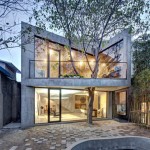
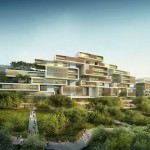
People who live in glass houses shouldn’t throw stones, or forget that they’re literally living in a fishbowl, if they have any modesty at all. Designed for a steep plot in Zurich, this ultramodern angular residence by L3P Architekten boasts all-glass, entirely transparent exterior walls that give the outside world more than a glimpse into the life of the family who lives there.

modern glass house 2

modern glass house 3

Naturally, you can’t be too concerned about privacy if you live in a house like this, but the architects have taken a few steps to provide a few spaces that prying eyes can’t see. One is setting the house into the earth to create a ground floor that’s partially walled in black exposed concrete, accessible from a subterranean entrance that opens onto the hillside.

modern glass house 4

modern glass house 5

modern glass house 7

The concrete continues throughout the interior, blocking off certain areas of the home without disturbing the views provided by all of that shimmering glass and adding a sense of weight and balance. The interior walls, floors and ceilings are all hewn in this solid material for contrast.

modern glass house 6

modern glass house 8

“This work on the vineyard slope copies the logic of a vine: a supporting middle wall, platforms and non-bearing windows follow the structure of the stem, the trunk and the hanging fruit,” says architect Boris Egli.

Share on Facebook


[ By Steph in Architecture & Houses & Residential. ]

[ WebUrbanist | Archives | Galleries | Privacy | TOS ]


WebUrbanist

 
Comments Off on Don’t Throw Stones: Modern Glass House is Super Sharp

Posted in Creativity


More Map Art: 27 Cool Cartographic Sculptures & Drawings

05 Jan

[ By Steph in Art & Drawing & Digital. ]

map art fairburn 2

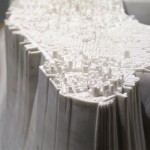
Rivers become veins in detailed portraits, mirrored city blocks resemble modernized Persian rugs and urban topographies emerge from rolls of tape in these map-based works of art. Some create the images of cities, countries and continents from unexpected materials, like Manhattan rendered in a 2.5-ton block of marble, while others use complex aerial imagery and cartography as an unexpected medium for drawings and sculpture.

Google Maps as Persian Rugs by David Thomas Smith

map art persian rugs 1

map art persian rugs 2

map art persian rugs 3

Images composited from Google Maps screencaps are reconstructed piece-by-piece into mirrored images inspired by Persian rugs in ‘Anthropocene,’ a series by David Thomas Smith. The Dublin-based artist chooses locations that are centers of global capitalism, including Dubai, the Beijing International Airport, and industrial sites like the Delta Coal Port in Vancouver, British Columbia. “This collision between the old and the new, fact and fiction, surveillance and invisibility, is part of a strategy to reflect on the global order of things,” says the artist.

Manhattan in 2.5 Tons of Marble

map art marble manhattan 1

map art marble manhattan 2

Japanese sculptor Yutaka Sone did, in fact, use Google Maps and aerial photographs to render an accurate replication of Manhattan in this whopping 2.5-ton block of white marble. But most of his inspiration actually came from a series of helicopter rides in which he got a feel for the city, ultimately carving it as if it were an elevated plateau. The details of the sculpture are so accurate, residents of the city can locate their own buildings by counting the blocks.

Topographical Tape Maps by Takahiro Iwasaki

map art tape 1

map art tape 2

Best-known for his intricate thread sculptures, Japanese artist Takahiro Iwasaki has also created topographical maps carefully sliced into fat rolls of gray and blue electrical tape. The landscape replicated on the gray roll is Victoria Peak, a mountain located on the western half of Hong Kong Island.

Map Portraits by Ed Fairburn

map art fairburn 1

map art fairburn 3

Ed Fairburn uses paper maps as canvases for incredibly detailed portraits, rendering human features as topographical landscapes on top of street maps, star charts, railroad blueprints and other types of maps. The portraits seem to blend seamlessly with the landscape features, with rivers and roads running through them like veins.

Next Page – Click Below to Read More:
More Map Art

Share on Facebook


[ By Steph in Art & Drawing & Digital. ]

[ WebUrbanist | Archives | Galleries | Privacy | TOS ]


WebUrbanist

 
Comments Off on More Map Art: 27 Cool Cartographic Sculptures & Drawings

Posted in Creativity


Trashed Resort: Japan’s Abandoned New Muroto Sky Rest

05 Jan

[ By Steve in Abandoned Places & Architecture. ]

abandoned Sky Rest New Muroto
Vacation not “vacant” enough? Abandoned in 1978, Japan‘s New Muroto Sky Rest resort is apparently patronized only by zombies or those hiding from them.

abandoned Sky Rest New Muroto 1b

abandoned Sky Rest New Muroto 1c

Little is known of the New Muroto Sky Rest resort before its closure and abandonment in 1978… perhaps that’s why the place closed and was abandoned. Certainly its location at the tip of Cape Muroto – a rocky, windswept peninsula jutting southeastward into the Pacific Ocean – was both scenic and accessible by major highways. Then there’s the “prehistoric robot” facade gazing menacingly out to sea. Credit Flickr user Craig Hunter (pictor ignotus) with the above images captured in June of 2009.

abandoned Sky Rest New Muroto 3a

abandoned Sky Rest New Muroto 3b

abandoned Sky Rest New Muroto 3c

Cape Muroto is the largest cape in Shikoku, the smallest of Japan’s four main islands. While considered by many to be Japan’s version of the boondocks, Shikoku is popular with tourists performing the traditional pilgrimage to 88 select temples and a number of hot spring inns and resorts cater to weary wanderers in search of rejuvenation. Kudos to Abandoned Kansai for the above images dating from April of 2011.

abandoned Sky Rest New Muroto 2a

abandoned Sky Rest New Muroto 2c

abandoned Sky Rest New Muroto 2b

The New Muroto Sky Rest did not have an on-site “onsen” – in fact, it had little to recommend itself as a resort besides its stunning seaside setting. According to urbex vet Jordy Meow, the complex featured a restaurant, a video-game parlor (de rigueur in the Seventies) and a pair of cantilevered side wings which offered unparalleled views of Cape Muroto and the ocean beyond.

abandoned Sky Rest New Muroto 4bb

abandoned Sky Rest New Muroto 4a

The wings are still extant, as are the aforementioned views but as for the rest… put it this way, if it wasn’t nailed down or too heavy to carry away, it’s gone for good. We should mention that those scenic views are towards the ocean: over the past couple of decades Cape Muroto has become infested with more than a few ugly telecommunications towers, radio antennae, and even a wind farm.

Next Page – Click Below to Read More:
Trashed Resort Japans Abandoned New Muroto Sky Rest

Share on Facebook


[ By Steve in Abandoned Places & Architecture. ]

[ WebUrbanist | Archives | Galleries | Privacy | TOS ]


WebUrbanist

 
Comments Off on Trashed Resort: Japan’s Abandoned New Muroto Sky Rest

Posted in Creativity


Casa Cargo: Containers Frame Photographer’s Sustainable Home

04 Jan

[ By WebUrbanist in Architecture & Houses & Residential. ]

green home exterior containers

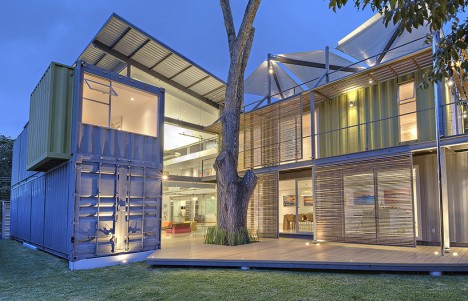
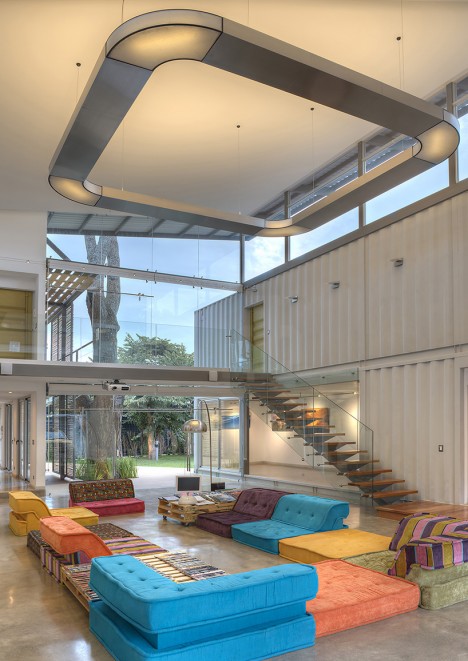
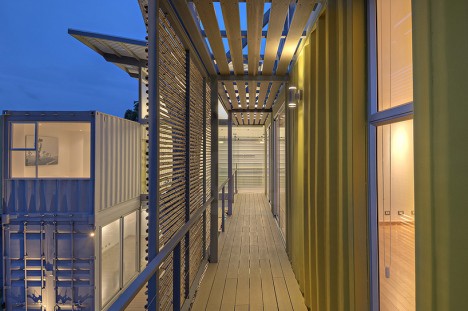
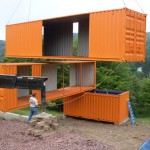
Shaping both living spaces and modular work studios, a set of shipping containers were combined with a series of green building strategies to make this a place the ultimate home for a versatile creative with professional spatial needs.

green house living room

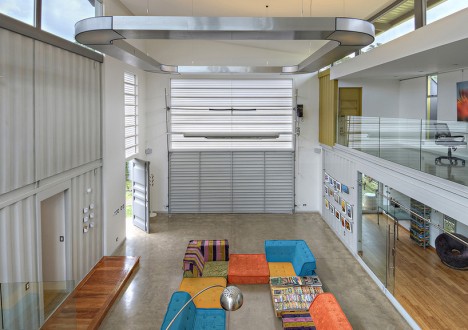
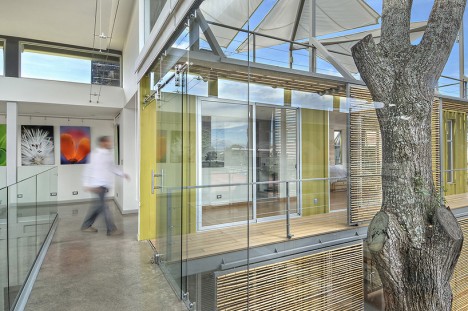
Eight used cargo containers provided a starting point for the design by architect Maria José Trejos in Costa Rica (photos by Sergio Pucci, enclosing rooms around the periphery of the plan and leaving a central day-lit void for photography, gatherings and natural cross-ventilation.

green house side slide

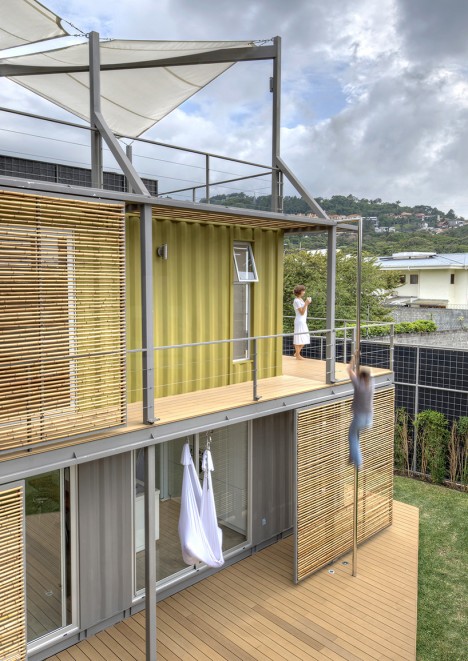
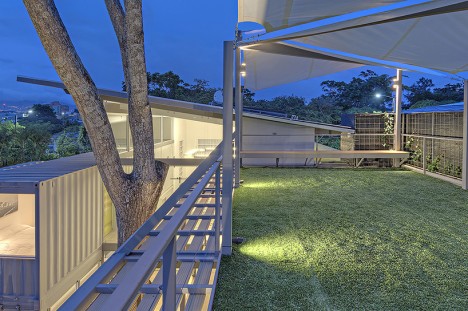
The staggered containers create porches, patios and decks on the upper levels while framing social spaces, including a kitchen and dining room, on the main floor.

green upper deck designs

green wood bamboo halls

As the architect describes it, “The house dresses and undresses according to what you want to use it for, be it a living room, an audiovisual space, a photographic or advertising studio.”

green house passive strategies

green enclosed tree interior

green recycling building systems

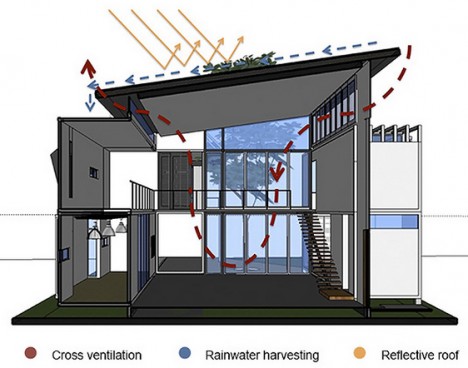
A reflective roof and rain harvesting techniques help keep the building cool and create graywater reserves, while the central open volume has raised windows for cross-ventilation purposes. Natural light and cooling help reduce energy consumption and associated costs.

Share on Facebook


[ By WebUrbanist in Architecture & Houses & Residential. ]

[ WebUrbanist | Archives | Galleries | Privacy | TOS ]


WebUrbanist

 
Comments Off on Casa Cargo: Containers Frame Photographer’s Sustainable Home

Posted in Creativity


Darth Vader Goes Fishing: Unwanted Paintings, Reimagined

03 Jan

[ By Steph in Art & Drawing & Digital. ]

david irvine 1

Storm troopers mow the lawn, Jesus rides a Segway, Ceiling Cat lurks in the sky and the Stay-Puft marshmallow man gazes out over a nonchalant 19th century crowd in dusty, unwanted thrift store paintings altered by David Irvine. The Toronto-based artist inserts characters from contemporary pop culture into unexpected settings, like bucolic rural pastures and traditional religious imagery.

david irving 2

david irving 7

michael myers

Irvine picks through yard sales, secondhand stores and sidewalk piles destined for the landfill to find rejected paintings to alter, rescuing them from obscurity and placing them in the hands of collectors all over the world. According to his website, “David will never paint over the existing signature and depending on the project will adapt the traits of the original (coloring, lighting, brushstrokes etc.) or will go in a complete opposite direction and achieve a high contrast in imagery.”

david irving 3

david irving 4

david irving 8

Characters from Star Wars and comic books are some of Irvine’s favorite subjects, with Darth Vader enjoying a relaxing afternoon fishing on the lake and Jabba the Hut getting his portrait painted. In a painting entitled ‘Not the Gardener,’ Leatherface raises his bloody chainsaw in a rose garden. An otherwise unremarkable painting of a dirt road becomes the backdrop for a 1970s car chase.

david irvine 5

david irving 6

jesus segway

The pieces have become so popular, he can’t keep them stocked in his Etsy shop, but if you want your very own romantic beach scene of Batman and Wonder Woman or Spock appearing to an angel on an oversized donut, you can keep tabs on Irvine’s work at his Facebook page. Prints are also available at Society6.

Share on Facebook


[ By Steph in Art & Drawing & Digital. ]

[ WebUrbanist | Archives | Galleries | Privacy | TOS ]


WebUrbanist

 
Comments Off on Darth Vader Goes Fishing: Unwanted Paintings, Reimagined

Posted in Creativity


Form Follows Footprint: Forest Retreat Just Fits Local Codes

02 Jan

[ By WebUrbanist in Architecture & Houses & Residential. ]

forest pavillion for sweden

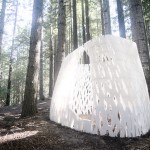
A creative response to a new legal loophole, this structure is designed specifically to test the limits of a Swedish planning law allowing buildings under a certain size to be constructed without prior structure-specific approval.

forest pavillion at night

forest retreat structure model

Jägnefält Milton of Stockholm worked with Arup engineers to work within the confines proposed by the legislation, which include dimensional limits of 25 square meters and 4 meters in height.

forest pavillion side view

forest pavillion covered view

The intent, though, is not to push the limits but to respect their intent and create a low-footprint, eco-friendly pavilion that respects its environment.

forest building materials natural

The design calls for using the timber cleared from the site to construct the structure and use a tension system of structural anchors to maximize views, minimize outside materials and take advantage of a large stone on the site.

forest pavillion simple interior

forest leaf site plan

Supported off the ground, the lower platform is mirrored by a roof of the same organic leaf-like shape and a fabric cover can be deployed around the entire building to provide some privacy as well.

Share on Facebook


[ By WebUrbanist in Architecture & Houses & Residential. ]

[ WebUrbanist | Archives | Galleries | Privacy | TOS ]


WebUrbanist

 
Comments Off on Form Follows Footprint: Forest Retreat Just Fits Local Codes

Posted in Creativity


Star Gore: Simpsons vs. Star Wars Stop-Motion LEGO Battle

01 Jan

[ By Steph in Drawing & Digital. ]

Star Gore Simpsons Lego 5

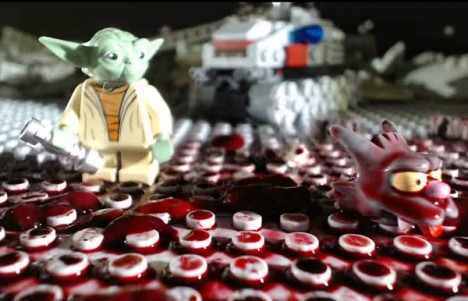
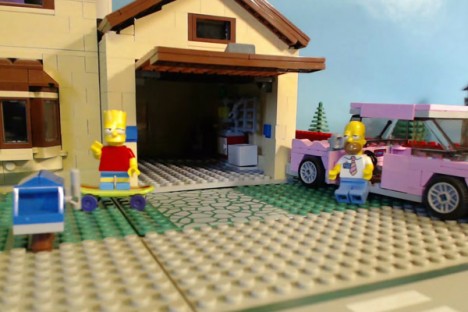
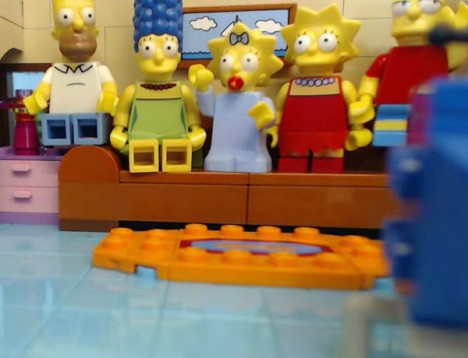
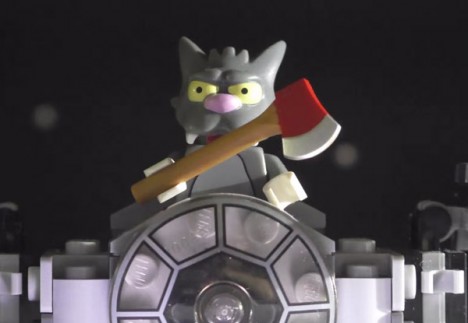
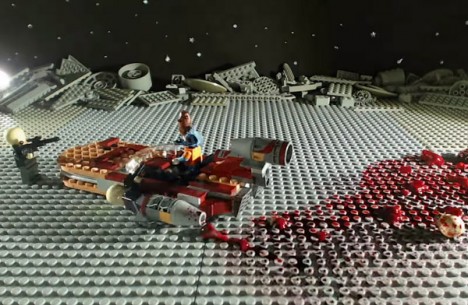
A million nerd fantasies come true with this bloody stop-motion fusion of Star Wars, The Simpsons and LEGOs entitled ‘Star Gore.‘ Reto Hochstrasser created an animated short that has Itchy and Scratchy battling it out in the Star Wars universe, with Yoda ultimately showing up to save the day. The scenes are epically bloody, fitting with the tradition of the Itchy & Scratchy Show, and the video opens with a re-creation of The Simpsons’ title sequence.

star gores simpsons lego 1

star gore simpsons lego 2

Hochstrasser reveals how he created Star Gore with a second behind-the-scenes video, painting sets and embedding them with LED lights before setting up the LEGOs. Fog machines add atmosphere while bowls of disturbingly realistic substances mimicking blood and entrails provide the necessary vomit factor.

Star Gore Simpsons Lego 3

Star Gore Simpsons Lego 4

This mashup of cartoons, live-action sci-fi/fantasy and everybody’s favorite childhood engineering toys is just the latest case of adults using LEGOs to create amazing and unexpected things. Check out 20 essential works of LEGO art, 12 LEGO architecture sets, and 13 LEGO gadgets.

Share on Facebook


[ By Steph in Drawing & Digital. ]

[ WebUrbanist | Archives | Galleries | Privacy | TOS ]


WebUrbanist

 
Comments Off on Star Gore: Simpsons vs. Star Wars Stop-Motion LEGO Battle

Posted in Creativity


Holdout Houses: 10 Stubborn Structures That Won’t Make Way

01 Jan

[ By Steph in Architecture & Cities & Urbanism. ]

holdout houses

Despite the emergence of highways, shopping malls, frighteningly deep pits and even moats around them, the tenacious owners of these older structures refused to give in to developers, remaining in their increasingly incongruous homes. In China, they’re referred to as ‘nail houses,’ like stubborn nails in wood that can’t be pounded down; American developers call them ‘spikes.’ Most of them are ultimately demolished, but some stand like strange little monuments to the past.

Edith Macefield’s ‘Up’ House, Seattle

holdout houses up seattle

Framed on three sides by concrete, Edith Macefield’s tiny cottage in the Ballard neighborhood of Seattle is strikingly out of place. But really, what’s out of place is the development that has sprung up around her 108-year-old farmhouse, which served as inspiration for the Pixar movie ‘Up’. Macefield purchased the house in the ’50s and lived there until her death in 2008, even after the rest of the homes on her street were gone, refusing to give in to developers who ultimately ramped up their compensation offers to $ 1 million plus a new home and nursing care for the rest of her life. Macefield felt she was too old and frail to move. But during the last years of her life, she struck up a friendship with the superintendent of the construction project, and left her home to him. Instead of allowing it to be swallowed by the complex, he sold it to someone who turned it into an office. As of 2014, the house still stands.

Luo Baogen House

holdout houses luo baogen

Drivers cruising along a highway in Wenling, China, had to slow down and drive around one heck of an unusual roadblock: the five-story home of duck farmer Luo Baogen, the sole holdout from a neighborhood that was demolished to make way for the new thoroughfare. When Luo refused developers’ offers, they simply built around him, assuming that being in the middle of a construction zone and later, a highway would drive him out. In the end, it was all the media attention that did it. Despite having paid $ 95,000 to build it just a few years earlier, Luo accepted an offer of $ 41,000 and consented for the house to be razed.

Pinghe Crossroads House, Fujian Province, China

holdout houses pinghe crossroads

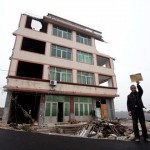
What happens when multiple people own space in a single building, and some sell while others won’t? In some cases, builders literally tear down everything but the sliver of the structure belonging to the holdout. This jagged nail house at a crossroads in Pinghe, China is all that’s left of an entire apartment building.

Austin L. Spriggs House, Washington D.C.

holdout houses washington dc

A tiny townhouse clung to its little plot of land in Washington D.C. even as a four-story-deep crater appeared around it, with just three feet of earth separating its walls from a 40-foot drop-off. Owner Austin L. Spriggs, who used the building as an office for his architecture firm, refused to even engage with the developers, who finally decided they would just build around it. It’s now a curiosity crammed between condos and commercial buildings. In 2011, it sold for $ 800,000 to someone who plans to turn it into a restaurant.

Next Page – Click Below to Read More:
Holdout Houses 10 Stubborn Structures That Wont Make Way

Share on Facebook


[ By Steph in Architecture & Cities & Urbanism. ]

[ WebUrbanist | Archives | Galleries | Privacy | TOS ]


WebUrbanist

 
Comments Off on Holdout Houses: 10 Stubborn Structures That Won’t Make Way

Posted in Creativity


Fictional Bridges from Euro Banknotes Now Built in Real Life

31 Dec

[ By WebUrbanist in Architecture & Public & Institutional. ]

fictional bridge really built

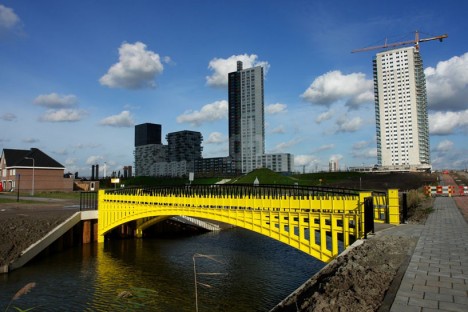
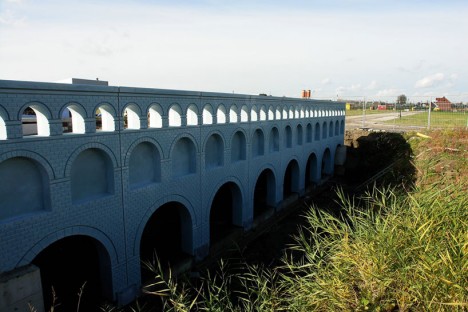
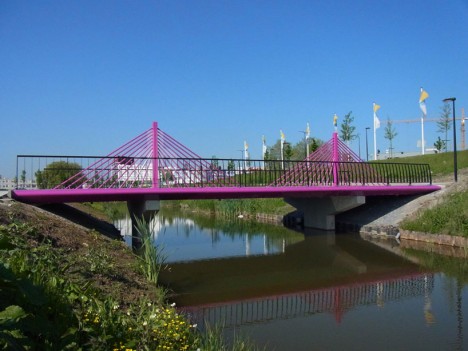
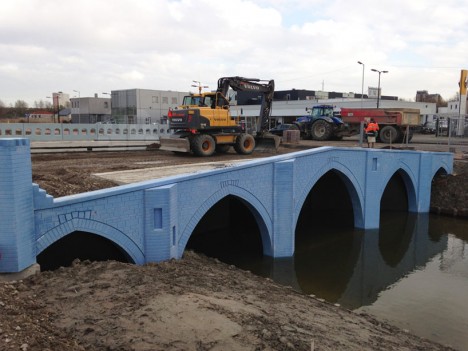
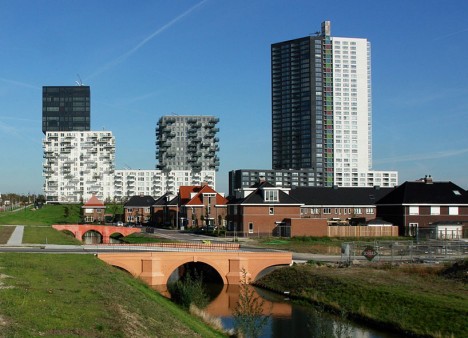
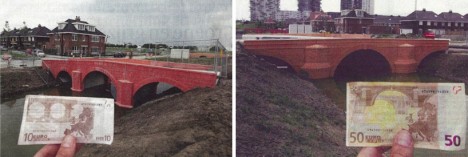
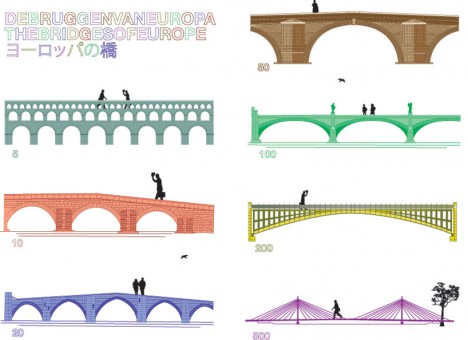
In a strange case of fact following fiction, a Dutch designer was inspired to create physical versions of faux-historical bridges first drawn on European currency in 2002.

fictional crossing aquaduct style

fictional bridge suspended structure

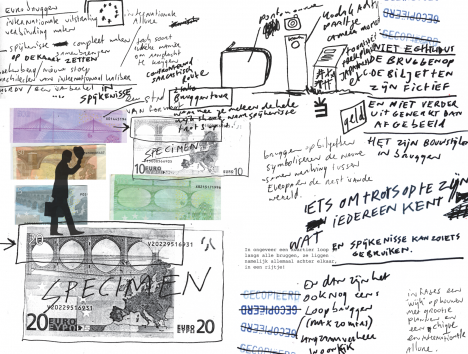
The original two-dimensional illustrations of Austrian Robert Kalin were intended to represent periods rather than built objects, spanning Baroque, Classical, Gothic, Romanesque, Rococo and Modern 20th-Century styles.

fictional bridges being built

fictional bridge euro notes

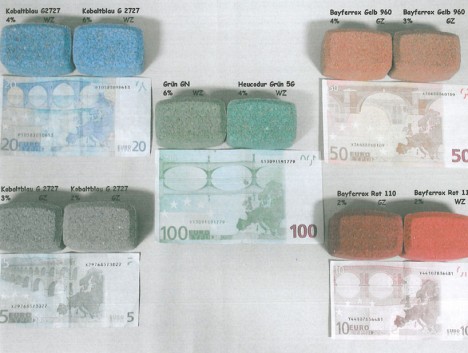
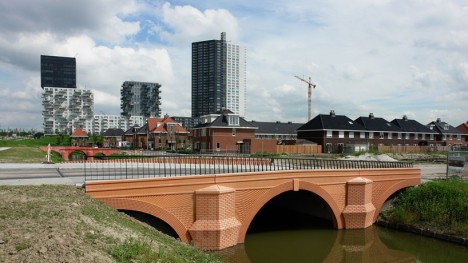
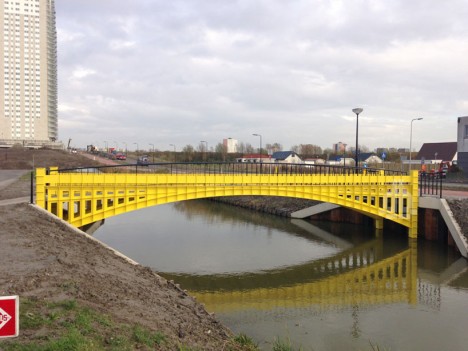
Their three-dimensional counterparts, meticulously designed by Robert Stam draw on every detail of the notes, right down to the colors used. His works were erected as part of a housing project in Spijkenisse, Holland (near Rotterdam).

fictional bridge color study

fictional bridges notes side by side

The European Bank wanted infrastructural art that would (so to speak) span cultures and nationalities, thus avoided mimicking existing structures in the semi-abstracted bridges on their new banknotes.

fictional bridges from banknotes

fictional bridge holland design

While they may look garish in color and strange in scale at first glance, pedestrians, cyclists and visitors reportedly appreciate them once they understand the unusual story behind their creation.

fictional bridge design diagram

fictional bridge illustration

More from their designer: “On the first of January 2002 new banknotes were introduced in Europe. In addition to windows and gateways, these seven banknotes also depict several bridges. Each bridge has an individual appearance, all of which can be recognized as having originated throughout certain periods in European cultural history: Classical Antiquity, the Roman period, the Gothic period, the Renaissance, Baroque and Rococo, Iron- and glass architecture and lastly contemporary, twentieth century architecture. Now wouldn’t it be amazing if these fictional bridges suddenly turn out to actually exist in real life?”

Share on Facebook


[ By WebUrbanist in Architecture & Public & Institutional. ]

[ WebUrbanist | Archives | Galleries | Privacy | TOS ]


WebUrbanist

 
Comments Off on Fictional Bridges from Euro Banknotes Now Built in Real Life

Posted in Creativity


Parasitic City: Micro-Metropolis Attaches Itself to a Bridge

30 Dec

[ By Steph in Architecture & Cities & Urbanism. ]

bridge city 1

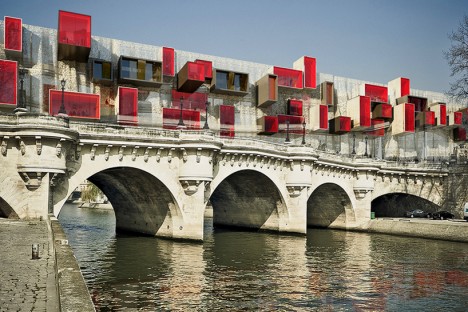
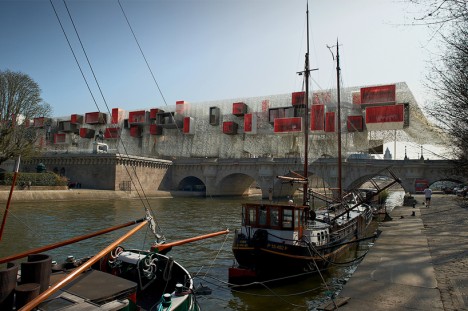
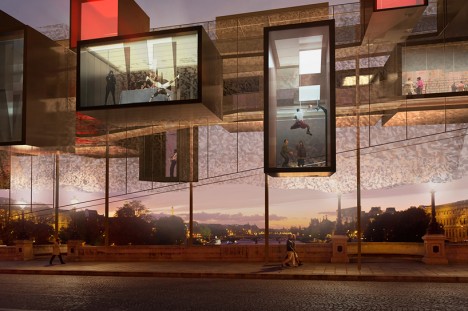
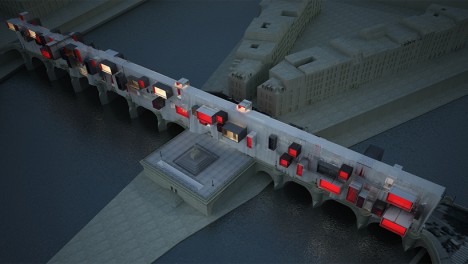
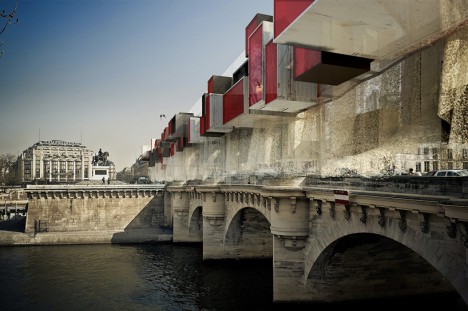
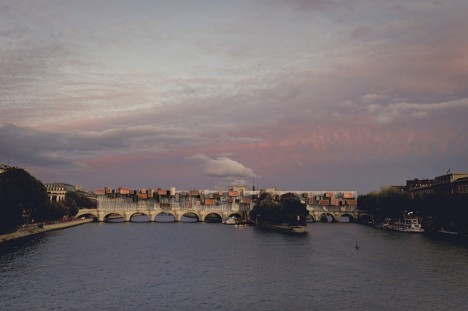
As the economic divide grows and affordable land becomes more scarce, local residents could re-take outlying spaces and even iconic local structures with self-governed parasitic micro-cities. In French architect Stephane Malka’s concept ‘P9 Ghetto-Mobile,’ a collection of rectilinear rooms in a shocking hue of red seems to float within a lace-like structure, hovering above the Pont Neuf bridge in Paris.

bridge city 2

bridge city 3

The modular system of private and public spaces, connected by footbridges, could be adapted for all sorts of disused urban settings. The designer describes the scheme as a ‘voluntary ghetto’ in which local residents choose to create their own miniature city with residences, offices, galleries, night clubs, shops and playgrounds, all owned and run by themselves.

bridge city 4

Mounted on scaffolding, the structures can be quickly assembled and disassembled to move on to a new location when necessary, adapting into new configurations as the site and number of participants changes. Says Malka, “It is a voluntary ghetto, an organized community of ideas, a hood built from an appropriation of land both conquered and controlled.”

bridge city 5

bridge city 6

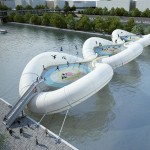
The concept calls to mind other bridge city designs, which either reinvent existing bridges like the London Bridge and abandoned stretches of highway in Italy, or create entirely new infrastructure to stretch architecture across canyons or bodies of water.

Share on Facebook


[ By Steph in Architecture & Cities & Urbanism. ]

[ WebUrbanist | Archives | Galleries | Privacy | TOS ]


WebUrbanist

 
Comments Off on Parasitic City: Micro-Metropolis Attaches Itself to a Bridge

Posted in Creativity