RSS
 

Archive for the ‘Creativity’ Category

Hoverboard Creators Patent Hovering Homes for Disaster Zones

15 Jun

[ By WebUrbanist in Architecture & Houses & Residential. ]

patent image

The creators of the world’s first working hoverboard have turned their sights toward larger-scale projects, patenting a three-part hovering foundation system to defend houses in earthquake- and flood-prone areas facing threats from natural disasters. The basic idea: decouple buildings from the ground temporarily, isolating them from unwanted movement happening below and around them.

floating box

arxpax hoverboard technology

Arx Pax, based in Silicon Valley and the creators of the Hendo Hoverboard using Magnetic Field Architecture (MFA), designed this new approach to floating homes during emergencies, using a buffer medium over a construction platform. Their physical technologies will be connected to ShakeAlert, an automatic warning software developed in part by the University of California, Berkeley and the U.S. Geological Survey.
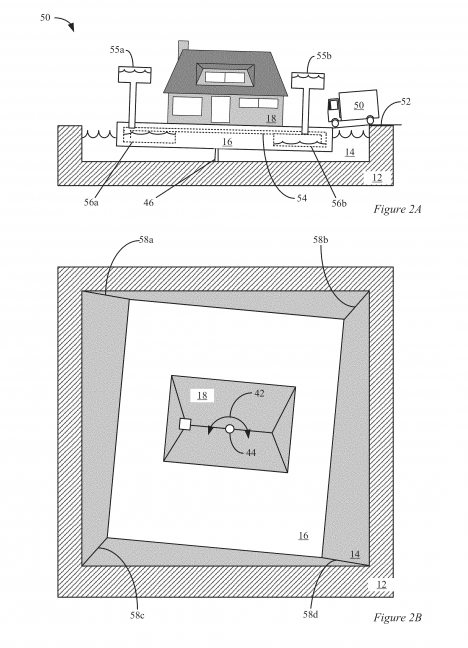
patented natural disaster home

“The ShakeAlert program aligns well with our long-term vision,” said Greg Henderson, co-founder and CEO at Arx Pax. “Weaving ShakeAlert into our MFA seismic isolation solution provides a valuable new tool to architects, engineers, and developers who are looking for a better way to build in areas affected by earthquakes. Our goal is to eliminate structural movement by pinpointing the exact time an object or building’s ‘landing gear’ should retract and activate the hover engines.”


patented earthquake proof architecture

Currently, many large buildings already have countermeasures to protect them from strong winds or earthquake forces, but few small structures can afford similar protections. Arx Pax hopes to make similar approaches cost-effective for individual houses and lower buildings in general, raising them up in the face of floodwaters or shaking ground.

sensitive equipment

earthquake floating building system

In addition to helping homeowners, Arx Pax sees applications for this technology for places including surgical operating rooms where stability is essential or laboratories, server farms and other spaces with sensitively calibrated equipment.

Share on Facebook


[ By WebUrbanist in Architecture & Houses & Residential. ]

[ WebUrbanist | Archives | Galleries | Privacy | TOS ]


WebUrbanist

 
Comments Off on Hoverboard Creators Patent Hovering Homes for Disaster Zones

Posted in Creativity


Inner City Visions: 12 Eye-Opening Urban Eye Charts

15 Jun

[ By Steve in Architecture & Offices & Commercial. ]

urban eyechart 1a

Have no illusions, these awesome urban optical eye charts test not only your vision but the varied ways in which we visualize the world around us.

urban eyechart 1b

If you can’t read the characters on this downtown Toronto eye chart, what the heck are you doing behind the wheel?? Flickr users jbjelloid and John Tavares captured this clever use of an optician’s rear facade (the front is remarkably unremarkable) on January 27th of 2011 and December 4th, 2012 respectively.

What’s In Your Wallet?

urban eyechart 11

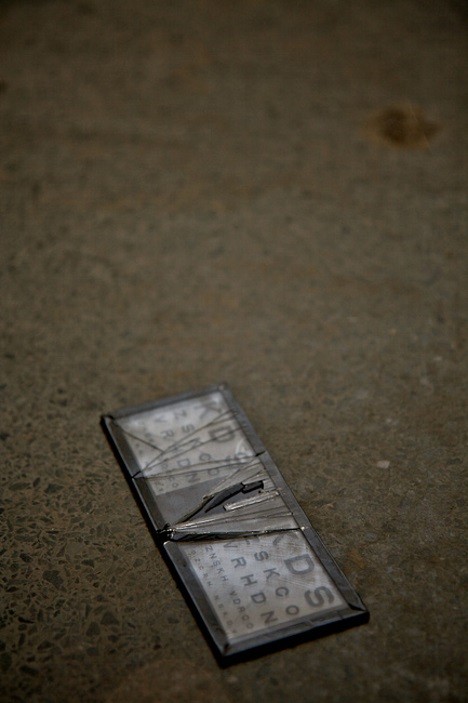
If you were an optometrist working at the now-abandoned Alameda Naval Air Station, then this handy-dandy portable eye chart would rest cheek-by-jowl with your cash and credit cards. How this particular  mini-chart ended up on the clinic floor is a mystery. Maybe the doctor was mugged… one might say he was robbed blind.

Optical Illumination

urban eyechart 2a

urban eyechart 2b

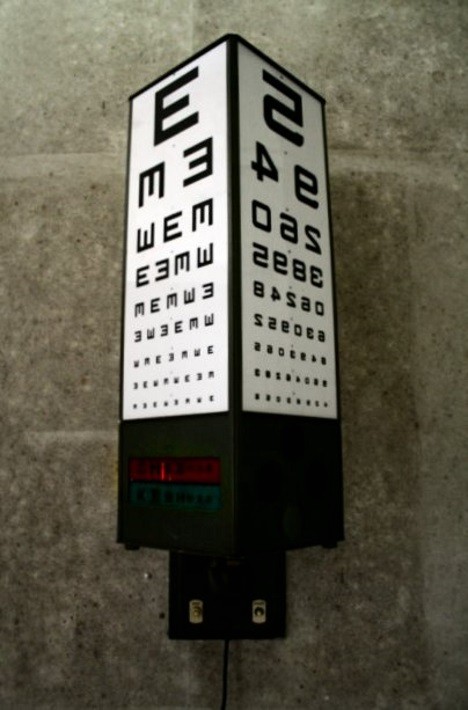
Maybe we’re wrong but these curious eye chart wall sconce thingies (for want of a better term) would seem to be the optician’s equivalent of the iconic barber pole. This one isn’t lit – photographer Adam Slater captured several images shortly before the abandoned West Park Hospital/Asylum was demolished – and it’s a pity someone didn’t “liberate” it for creative re-use. Then again, maybe someone did: as far as we know it might be illuminating Slater’s living room right now.

Real And Spectacle-er

urban eyechart 3a

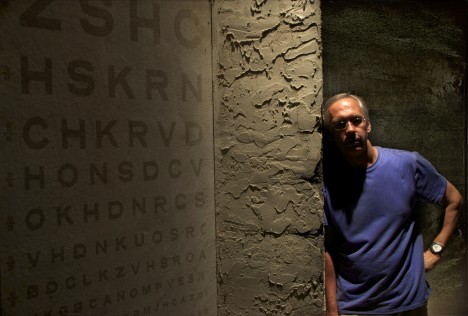
Flickr user Bill Walker celebrated Self Portrait Thursday on June 23rd of 2011 with the above entry posted the previous day. Walker’s composition is all about texture, normally an attribute related to touch but in this case focused on vision.

Next Page – Click Below to Read More:
Inner City Visions 12 Eye Opening Urban Eye Charts

Share on Facebook


[ By Steve in Architecture & Offices & Commercial. ]

[ WebUrbanist | Archives | Galleries | Privacy | TOS ]


WebUrbanist

 
Comments Off on Inner City Visions: 12 Eye-Opening Urban Eye Charts

Posted in Creativity


Future of Wayfinding: Augmented Reality for Urban Bicyclists

13 Jun

[ By WebUrbanist in Conceptual & Futuristic & Technology. ]

1augmented

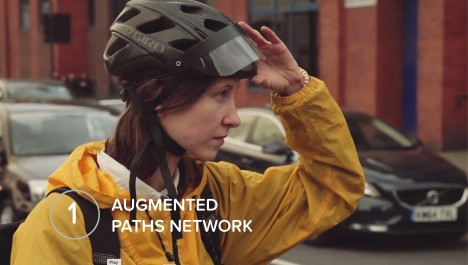
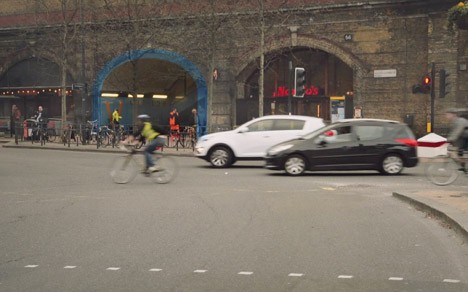
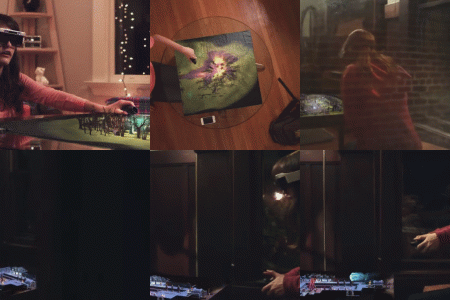
Using augmented reality highlights, hints and cues to guide bikers through complex city paths and streets, this conceptual system addresses issues of wayfinding and safety, speculatively asking: “Could a cycle path be created, or at least augmented, using connected technologies?”

augmented urban path highlight

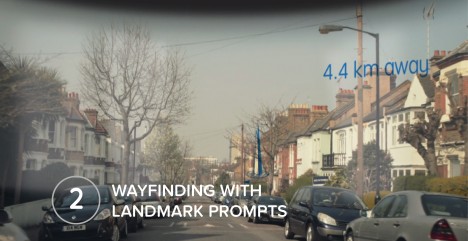
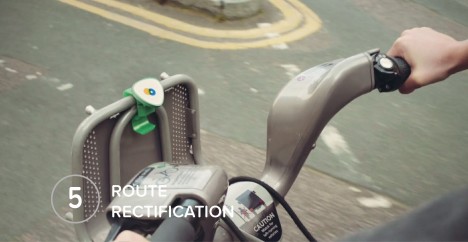
Five initial functions are proposed by the Connected Cyclists project for this wearable prototype, all around themes of navigation in London, a place notorious for the variety of its path types and unexpected route shifts. With so many transitions between street paths, parks and alleyways, it can be hard for bikers new to the city to know where to go – subtle highlights of next steps could solve that problem.

2wayfind

“We see that cyclists often take bearings when paused at traffic lights—this interface could essentially simply provide the next direction, reinforcing the journey. We also feel that the visual nudge implied here, using the fabric of the city itself, is more akin to how cyclists move and navigate—a more fluid movement through and sometimes across the streetscape, as opposed to the very directed navigation delivered for drivers.”

3pollution-1

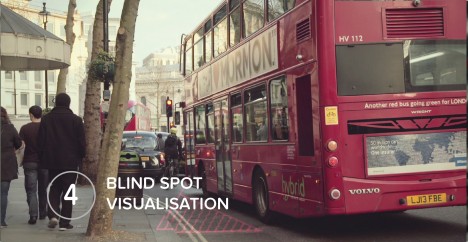
Blind spot visualization assists travelers as they pass in the shadows of cars, buses and trucks, while an overall approach promoting backstreet network paths helps avoid traffic and poor air quality in the first place. Monuments, icons and landmarks displayed subtly in the background can also give clues to riders about where they are in the city.

4Blind-1

Already there are many programs like CityMapper built on OpenStreetMaps that contain the necessary information about routes and paths but using those on the go via a typical mobile device means either unsafe cycling practices or frequent stops, hence the augmented heads-up display. “If these displays talked to the city around them—if they knew where the cyclist was and what they were looking at—they could give much more subtle spatial and contextual information that builds on the surroundings of the cyclist.”

5route

The key is making such technology accessible and seamless, a distraction-free overlay to other visual information being taken in by those on bikes moving through the urban environment.

augmented reality headset

“Many cities are spending serious money, time and attention on improving the ‘hard infrastructure’ of cities to make cycling safer, more convenient, more attractive,” but “there is potential of a ‘soft infrastructure’ which can be overlaid on existing urban fabric to further support cycling, which takes advantage of contemporary technologies such as wearables, the internet of things, real-time sensor data, and so on.”

augmented city bike device

While none of this is a reality quite yet, “‘Design stories’ allow you to try on a future for size, and to imagine how a prototype might fit into its urban context. With prototypes to point at, critique and discuss we can begin to imagine other externalities or knock-on effects and build up both understanding and language to discuss what can otherwise be fairly abstract and technical ideas.”

Share on Facebook


[ By WebUrbanist in Conceptual & Futuristic & Technology. ]

[ WebUrbanist | Archives | Galleries | Privacy | TOS ]


WebUrbanist

 
Comments Off on Future of Wayfinding: Augmented Reality for Urban Bicyclists

Posted in Creativity


Like a Ninja: Tokyo Apartment is Only for the Nimble

12 Jun

[ By Delana in Architecture & Houses & Residential. ]

1 ninja house

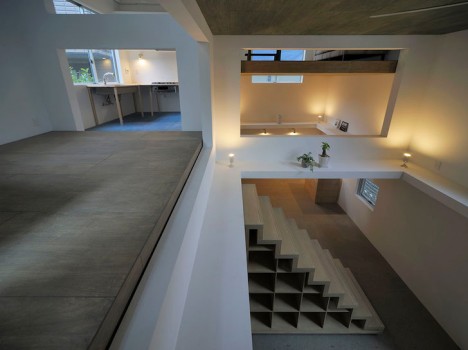
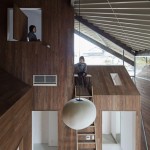
A tiny 750 square foot apartment is definitely not a lot of space for two people, but this couple was lucky enough to find an exceptionally creative architect. This Tokyo home had a lot of room to grow vertically, so Hiroyuka Shinozaki Architects used floating floors and a series of stairs and ladders to create a spacious living area and studio.

2 open home layout ninja house

3 top floor unfinished space ninja house

The interior of the home is virtually free of walls and even features huge cutout areas in some of the floors. The architects named it House T, but the owners call it a “ninja house.” Their reasoning behind the name? The couple feels that they have to be as nimble as ninjas to navigate the innovative interior.

4 nimble interior ninja house

5 house t tokyo

Large hanging lights and the wide-open space fill the combination home/studio with bright, cozy light. Part of the space is largely unfinished, with plywood floors and very little furniture. It contributes to the austere yet homey feel of the apartment.

6 light filled open floor plan ninja house

7 nimble ninja house tokyo

In addition to the absence of walls, many of the home’s functions and features were built into the walls to maximize available floor space. A decent amount of storage is built into the home’s central set of stairs. While walking along ledges and tiptoeing around holes in the floor might not be for everyone, the pair who live in the apartment say that the unique layout – and the unusual way in which they have to navigate it – has made them healthier.

Share on Facebook


[ By Delana in Architecture & Houses & Residential. ]

[ WebUrbanist | Archives | Galleries | Privacy | TOS ]

WebUrbanist

 
Comments Off on Like a Ninja: Tokyo Apartment is Only for the Nimble

Posted in Creativity


Blind Ambitions: 11 Assistive Ideas for the Visually Impaired

12 Jun

[ By Delana in Conceptual & Futuristic & Technology. ]

technology concepts for the blind

Technology to assist visually impaired people is progressing far beyond the dog and cane. These technology concepts  – all of which are still in the design stages and not available for purchase – could someday bring the world into focus for those who can’t necessarily see it unassisted.

The Tactile, Temperature-Enhanced Wristwatch

rub-feel-know-watch-concept

Watches for blind folks are all about feeling, rather than seeing, the time. This concept from designer Jung Hoon Lee is known as the Rub Feel Know watch. It puts a rather unusual twist on the expected raised bumps on the watch face. The hour hand is represented by an indentation near the center of the watch. The minute hand is a small bump which is situated closer to the outside of the face.

temperature-watch-for-the-blind

If feeling the positions of the indentation and the bump doesn’t give enough haptic information, there is another helpful element. The hour indicator feels warm when you touch it, and the minute hand feels cool – along with the concave and convex indicators, the temperature lets users feel exactly what time it is.

The Finger Mounted World-Seeing Camera

eyering

The 3D-printed EyeRing, developed by a team at MIT, is worn on the finger like a ring. It’s equipped with a tiny camera, a processor, a Li-ion battery, and a Bluetooth module.

eyering-2

To identify an object, the user only has to point the EyeRing at it and then press a small button on the side of the device. It snaps a picture, which it then sends to the user’s smartphone. After giving it a simple voice command, the app can then identify colors, currency, text, or price tag information and relay the information to the user’s Bluetooth earpiece.

The concept still needs a lot of development to be viable as a real-world product, but the creators think that they’ll be able to produce the module at a consumer cost of less than $ 100.

The Solar-Powered Retinal Implant That Could Restore Sight

solar-powered-retinal-implant

Retinal implants are nothing new, but current iterations aren’t perfect. They’re often painful and need to have a physical link between the implant and a pair of sunglasses – an arrangement that doesn’t sound pleasant at all. Researchers at Stanford took the traditional retinal implant idea a step further by making the implant wireless.

The user still needs to wear sunglasses which contain a small camera. The camera projects images directly onto the user’s retina so – while they won’t be able to see perfectly – it will restore at least some of their vision. As a bonus, the entire setup is solar-powered so there’s no need to wear a bulky battery.

The Smart-Talking, Walk-Guiding Brick

blind-guider-concept

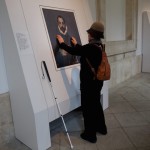
Using a white cane to navigate sidewalks is a huge help to people who can’t see well enough to navigate by sight alone, but the cane can’t tell you where you are or how to get to your destination. The Blind Guider concept works by embedding “smart bricks” into city sidewalks that work with sensors on an electronic cane.

guide-brick

The cane comes with a Bluetooth earpiece that fits into the cane’s top when not in use. When the earpiece is in use, it relays information from the smart bricks. Each brick is equipped with an RFID tag that transmits information when the cane makes contact. It tells the user what intersection they are standing at and, when moved around to other parts of the brick, can give information about the surrounding areas as well.

visually-impaired-guide-brick

Using this system, visually impaired walkers could easily find their way around a city with minimal knowledge of its layout. It seems that this product is just a dream, though, because the infrastructure needed to make it work would be expensive and complex for cities to install.

Next Page – Click Below to Read More:
Blind Ambitions 11 Game Changing Visual Assistive Concepts

Share on Facebook


[ By Delana in Conceptual & Futuristic & Technology. ]

[ WebUrbanist | Archives | Galleries | Privacy | TOS ]


WebUrbanist

 
Comments Off on Blind Ambitions: 11 Assistive Ideas for the Visually Impaired

Posted in Creativity


Art Lies: Air Collages Superimpose Paintings Onto Reality

11 Jun

[ By Steph in Art & Photography & Video. ]

air collages 1

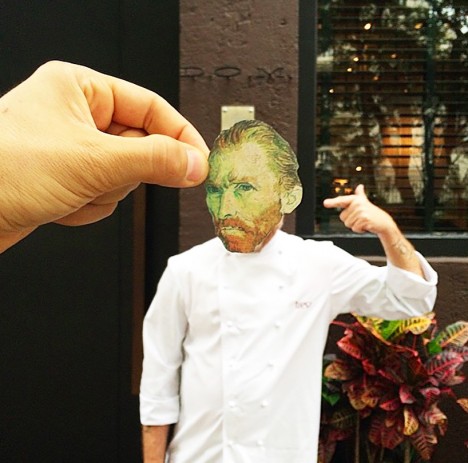
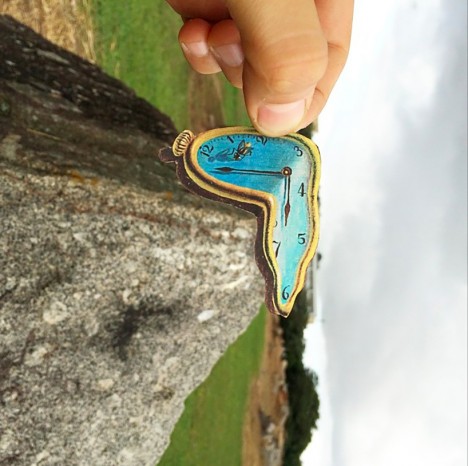
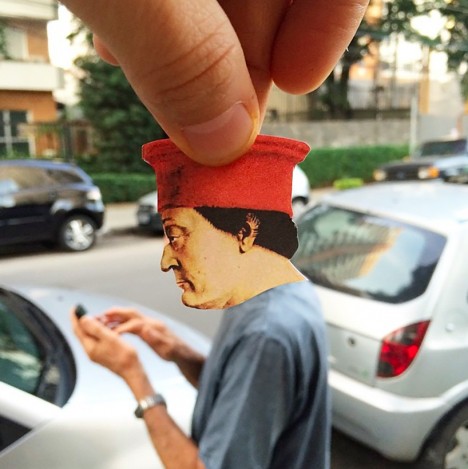
The art of superimposition alters the way we see real-life environments, substituting cut-outs or figurines for 3D elements in the scene and capturing the resulting image on film. This technique can blur the lines between past and present, bring fictional characters to vivid life or otherwise mash up imagery that you wouldn’t normally see together.

air collages 3

air collages 4

We’ve seen striking war imagery juxtaposed with the same locations in the present day, monuments seemingly miniaturized, and Star Wars characters invading urban Paris. Now, Brazilian artist Lorenzo Castellini brings fine art to the streets of her home city of São Paulo by superimposing cut-outs of masterpieces onto real human figures and settings.

air collages 2

air collages 5

A Shell gas station logo becomes the shell from which Botticelli’s Venus springs. A man on the street holding a bottle of Coke turns into Albrecht Dürer. Dali’s melting clocks appear on rocks in the park, and a woman from Picasso’s ‘Les Demoiselles d’Avignon’ casually makes her way down a sidewalk.

air collages 7

air collages 6

Similar projects have brought classical paintings to modern contexts, like a fun Photoshop series by Alexey Kondakov that blends religious imagery with unexpected urban settings – putting the Virgin Mary and baby Jesus on the subway, for example, with violin-playing angels as buskers.

Share on Facebook


[ By Steph in Art & Photography & Video. ]

[ WebUrbanist | Archives | Galleries | Privacy | TOS ]


WebUrbanist

 
Comments Off on Art Lies: Air Collages Superimpose Paintings Onto Reality

Posted in Creativity


Great Crates: 10 Beautiful Shipping Container Conversions

10 Jun

[ By Steph in Architecture & Houses & Residential. ]

converted shipping containers cantilevered office 1

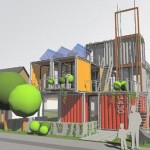
Incredibly strong, durable, lightweight and affordable, shipping containers are integrated into into all sorts of architectural projects, whether they’re still highly visible components or completely disguised. Since the focus is on practicality and price, the resulting structures aren’t typically too pretty. These 10 converted shipping container houses, schools, galleries and train stations prove that in the right hands, reclaimed crates can be beautiful, too.

WFH Shipping Container House

converted shipping container wFH 1

converted shipping containers wfh 4

converted shipping containers wfh 2

You can’t even tell, from inside or out, that this home in Wuxi, China by ArcAgency was made from three shipping containers. It’s set on a steel frame and covered with a sustainable bamboo facade, and even features a solar cell-clad green roof. Producing more energy than it consumes, the modular unit is a prototype for this new way of building. In addition to being made into a single-family home, it could be stacked into multi-story townhouses.

Maison IEDEKIT Quebec Container House
converted shipping containers idekit 1

converted shipping continers idekit 2
Seven shipping containers form the basis of the Maison Idekit in Quebec, which disguises them from the outside but leaves them visible inside. The container shapes, covered in timber, can still be discerned from the house’s silhouette, some jutting out at angles and others stacked in the center. Maison Idekit helps homeowners craft containers into their own custom-designed, low-cost homes.

Container Corner House

converted shipping containers corner tokyo

converted shipping containers corner tokyo 2

converted shipping containers corner tokyo 3

Two shipping containers stacked at an angle take advantage of a tiny sliver of land in urban Tokyo, and can easily be moved as needed. Tomokazu Hayakawa architects split one of the containers in half to form the ground floor gallery spaces, with the second crate functioning as an office. They simply painted the exteriors black, but framed out the interiors as required by Japanese law. The hatch doors still open to let in light and air.

Whitney Studio Gallery + Education Space

converted shipping containers lot ek whitney 3

converted shipping containers lot ek whitney 2

converted shipping containers lot ek whitney

When New York’s Whitney Museum of American Art needed a new gallery and education space, they turned to shipping container experts LOT-EK to craft a temporary low-cost structure that would see them through until the museum moved to a new location in 2015. Six containers stacked two-high are sliced diagonally, the operable windows highlighted in neon yellow. This cut-out detail makes the structure more dynamic, and improves air flow inside.

Rooms Within Rooms at the Adriance House

converted shipping containers adriance house

converted shipping containers adriance house 2

converted shipping containers adriance house 3

Not only do the 12 shipping containers that make up the Adriance House in Maine help hold up the glazed envelope that surrounds them, they also function as individual rooms within a room. Two of the containers are cut open on the ground level to connect the kitchen and living rooms to the common area, while the rest hold bedrooms, bathrooms, offices and lounges. The whole home measures 4,000 square feet and can be opened to the outdoors via a double-height garage door.

Next Page – Click Below to Read More:
Great Crates 10 Beautiful Shipping Container Conversions

Share on Facebook


[ By Steph in Architecture & Houses & Residential. ]

[ WebUrbanist | Archives | Galleries | Privacy | TOS ]

WebUrbanist

 
Comments Off on Great Crates: 10 Beautiful Shipping Container Conversions

Posted in Creativity


New 42,000 Sq Ft Rooftop Farm in NYC is One of World’s Largest

10 Jun

[ By WebUrbanist in Architecture & Offices & Commercial. ]

rooftop farm nyc

Retrofitting an existing roof, this project has turned the top of a commercial loft in Long Island City into a working urban farm with close to 1,000,000 pounds of soil supporting tens of thousands of square feet of growing space (able to produce hundreds of tons of produce annually). Efficiently designed, projects of this kind can produce food in cities with 20 times less land and 10 times less water than conventional fields.

rooftop farm conversion project

Working with Acumen Capital Partners and the building managers of Brooklyn Grange,  designers from Bromley Caldari Architects, this redesigned roof was conceived of as both a space for retreating from the city but also a functioning laboratory for urban agriculture and source of fresh local greens for surrounding neighborhoods.

rooftop farming retrofit converted

A series of tightly-packed rows grow a variety of crops, all packed in between existing rooftop features including a water tower, elevator and HVAC system accessories. New York City is home to an increasing number of converted rooftop farms but this is the largest in the area to date and one of the biggest on the planet.

rooftop farm largest world

The rest of the 300,000-square-foot building below is a seven-story loft housing businesses in media, architecture, film, fashion, printing, design and other creative industries.

rooftop gardening aerial view

rooftop farm plan diagram

As part of the $ 10,000,000 renovation project, energy-efficient windows, exterior lighting and signage were added to the structure in addition to plumbing, electrical and elevator retrofits.

Share on Facebook


[ By WebUrbanist in Architecture & Offices & Commercial. ]

[ WebUrbanist | Archives | Galleries | Privacy | TOS ]


WebUrbanist

 
Comments Off on New 42,000 Sq Ft Rooftop Farm in NYC is One of World’s Largest

Posted in Creativity


Black Gold: Turning Oil Tankers into Giant Land Architecture

09 Jun

[ By WebUrbanist in Conceptual & Futuristic & Technology. ]

black gold ship reuse

For an inevitable future when oil gives out in the Middle East (or nautical supply chains are replaced by pipes), a series of designers have envisioned creative ways to reuse the behemoths that currently ship this infamous commodity around the world.

oil tanker at night

oil tanker permanent dock

The Black Gold Project proposes a different kind of design revolution for an area of the world currently striving to build the tallest and most stunning structures on the planet: pragmatic conversions of shipping vessels into functional land structures.

oil tanker inteiror design

oil tanker open space

A joint project of  Chris Collaris Design, Ruben Esser, Sander Bakker, and Patrick van der Gronde, the resulting renderings take advantage of the versatility found inside such huge and open interior volumes.

oil tanker at sunset

oil tanker section diagram

Cultural exhibitions, shopping centers and art museums could all be housed inside these massive hulls, not to mention residential and office spaces. The decks above could become public parks and performance spaces.

oil shipping frieight conversion

oil tanker aerial plan

There are practical drawbacks to be considered, however, including the impact of waves, saltwater and wind over time as well. Still, as a conceptual project, the idea is compelling (if more poetic than realistic): turn the very vessels responsible for the rise and fall of these oil-producing nations into something new that remains, at the same time, a monument to days gone by.

Share on Facebook


[ By WebUrbanist in Conceptual & Futuristic & Technology. ]

[ WebUrbanist | Archives | Galleries | Privacy | TOS ]

WebUrbanist

 
Comments Off on Black Gold: Turning Oil Tankers into Giant Land Architecture

Posted in Creativity


Church Champing: Spend a Night in a Historic British Chapel

09 Jun

[ By Steph in Destinations & Sights & Travel. ]

champing main

Spend an entire night climbing bell towers, composing your own sermons from a pulpit, examining historic artifacts up close or virtually anything else you want to get up to in one of England’s most picturesque rural churches. ‘Champing,’ or church camping, is somewhere in between mosquito-bitten nights in the wilderness and luxurious ‘glamping,’ with modest beds placed right in the nave of a centuries-old place of worship so paintings of Jesus can watch your every move.

champing 4

England’s Churches Conservation Trust, an organization that takes care of 347 churches that are no longer used for regular worship, has opened three of its buildings to the public for overnight stays. You can have St. Mary the Virgin in Kent, All Saints Church in Northamptonshire or St. Cyriac & St. Julitta in Cambridgeshire all to yourself. Once the medieval-looking iron key is in your hand, you’re free to act like you own the place.

church camping 2

champing 3

The experience is sort of like sleeping in a museum exhibit, getting all the time you want to look at every last detail of stained glass windows, architectural details, organs and sacred objects. St. Mary the Virgin, in England’s smallest and least-populated town, is quaint and provincial, while St. Cyriac’s features ornate Gothic windows. All Saint’s, with its soaring ceilings, can fit groups of up to twelve.

champing 6

champing 5

You’ll have to wash up with a jug and bowl, and the Conservation Trust offers to “very creatively turn a vestry into a champing toilet,” but for rates starting at roughly a hundred U.S. dollars per night, you’ll at least get breakfast delivered. Funds go to the continued preservation of these historic structures throughout Britain.


Share on Facebook


[ By Steph in Destinations & Sights & Travel. ]

[ WebUrbanist | Archives | Galleries | Privacy | TOS ]


WebUrbanist

 
Comments Off on Church Champing: Spend a Night in a Historic British Chapel

Posted in Creativity