RSS
 

Archive for the ‘Creativity’ Category

Hilltop Village: Mini Neighborhood Tops a Green-Walled Store

27 Jun

[ By Steph in Architecture & Cities & Urbanism. ]

hilltop village 1

Fittingly enough for a city that’s all about sprawl, this hilltop village concept for Los Angeles combines residential and retail functions in a way that preserves the conventional house-and-yard format rather than stacking it all in a skyscraper. MAD Architects cover a retail building in vertical greenery to transform it into a hilly setting for a miniature neighborhood on its roof.

hilltop village 3

8600 Wilshire essentially distills the visual identity of Beverly Hills into a single development, clustering white living volumes with their own outdoor spaces atop high-end shops with exterior walls covered in succulents and vines. The complex includes three townhouses, five villas, two studios and eight condominiums, though from street level, you can only see the uppermost structures.

hilltop village 4

Made of white glass, the living volumes appear opaque from the street, but bear transparent facades facing an interior courtyard set on the roof of the single-story retail space. The green wall mimics both the city’s iconic hills and the tall privacy hedges seen around upscale houses, and replicating the established hierarchy found around the city: expense real estate above versus less-valuable property below. “In high-density cities, Modernist and Post-Modernist housing typically prioritizes functions and formats over human relationships to the environment,” say the architects. “For 8600 Wilshire, MAD considers the possibility of a new model for West Coast vernacular amid the sprawling density of Los Angeles. MAD purposes a harmonious architectural space of human experience by placing residents in the spiritual landscape of nature.”

Share on Facebook


[ By Steph in Architecture & Cities & Urbanism. ]

[ WebUrbanist | Archives | Galleries | Privacy | TOS ]


WebUrbanist

 
Comments Off on Hilltop Village: Mini Neighborhood Tops a Green-Walled Store

Posted in Creativity


Room in a Box: Portable Tool-Free Bedroom Set in 30 Minutes

26 Jun

[ By WebUrbanist in Design & Furniture & Decor. ]

room boxxx

Containing a room’s worth of essential furniture you can take on the bus or train, this all-in-one-box solution costs just $ 150, is easier to assemble than IKEA equivalents and much lighter too, with wheels as well for added mobility.

room box assembly

room box in a box

While requiring no tools or glue, the would-be catch is that the kit is made of cardboard – however, its makers have delivered on over 40 projects of that same material to date, making them experts at rendering it robust and durable. For those who only need some of the composite pieces: each element can also be converted to other purposes – the bed supports, for instance, can be stacked into shelves or other forms of storage.

room box bed

room box design

The box contains a chair, desk, bin, dresser and bed supports which double as storage, each designed to be load-bearing as well as water-resistant, able to be reused for years by students or other young adults. The entire system can be assembled or deconstructed within a half hour and the pieces weigh around seven pounds each, all making moves between dorm rooms and storage much simpler.

room box shelves

room in a box

From the creators of Room in a Box: “Every piece of furniture can be assembled with no tools or glue by folding and slotting the pieces, and can be taken down and packed back into the box.  When you are done with the furniture it can be recycled or reused in its entirety. This makes for versatile furniture which can be used in many different ways and configurations.  The design of the furniture also includes sliding drawers for storage (with stoppers) which double as handy moving boxes.  “

Share on Facebook


[ By WebUrbanist in Design & Furniture & Decor. ]

[ WebUrbanist | Archives | Galleries | Privacy | TOS ]


WebUrbanist

 
Comments Off on Room in a Box: Portable Tool-Free Bedroom Set in 30 Minutes

Posted in Creativity


Subterranean Solar: $100K Raised for Daylit Underground Park

25 Jun

[ By WebUrbanist in Architecture & Cities & Urbanism. ]

low line warehouse section

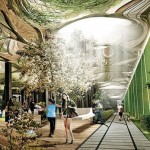
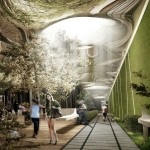
With two weeks left to go in its crowdfunding campaign, the Lowline has already raised over $ 100,000 from over 1,000 backers, promising to turn an old trolley station in Manhattan into the Earth’s first underground park. Inspired in part by the High Line, an NYC park reusing old elevated rail infrastructure, this project aims to add space to one of the most crowded cities on the planet.

low line money shot

The design by Raad Studio is supported by a custom lighting technology being developed specifically for this project, specifically: a “remote skylight” combinating solar harvesting and fiber optics to pipe daylight directly down into the subterranean spaces and paths of the park below.

low line green trees

low line underground design

This system will pipe sunlight from the surface via mirrors and tubes, building on existing designs to route natural light to subsurface labs. As shown below, some tech prototypes have already been tested in an above-ground warehouse but there is still a good deal of research, testing and other work to be done.

low line test warehouse

low line canopy design

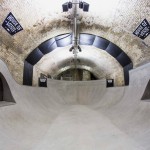
Built over a century ago but abandoned for over 50 years, this 40,000-square-foot Williamsburg Bridge Trolley Terminal is in remarkably good shape despite years of neglect. Located in the Lower East Side, the project aims to bring a green retreat to a part of New York City sorely lacking in public landscapes.

low line tech image

In this phase, the funding will further support technological development as well as public exhibitions to raise further interest for the project: “Partnering with the solar device maker SunPortal, we are shipping cutting edge equipment via ocean freighter from South Korea to New York City, and will begin installation over the summer. These devices will track the sun throughout the sky every minute of every day, optimizing the amount of natural sunlight we can capture. These will be connected to a tube-based distribution system and 40-foot-wide canopy inside the warehouse, to help reflect natural sunlight into the Lowline Lab. Once this natural sunlight is filtered into the space, we can test for the quality of the light, taking specific note of spectrum, distribution and intensity.”

low line prototype idea

This campaign will also provide funds for exploring types of plant life possible in underground spaces: “Our design inspiration is Mannahatta– a verdant vision of the city before modern civilization– and we expect to feature edible plants, and a science fiction palette of greenery forming stalactites, stalagmites, and whimsical passageways.  Again, because we are testing in the fall and winter– the two toughest times to grow plants– we will gain valuable insight into which species will perform best throughout the year.”

Share on Facebook


[ By WebUrbanist in Architecture & Cities & Urbanism. ]

[ WebUrbanist | Archives | Galleries | Privacy | TOS ]


WebUrbanist

 
Comments Off on Subterranean Solar: $100K Raised for Daylit Underground Park

Posted in Creativity


Android Dreams: Google’s Neural Network Reveals AI Art

25 Jun

[ By Steph in Gaming & Computing & Technology. ]

google AI dreams 8

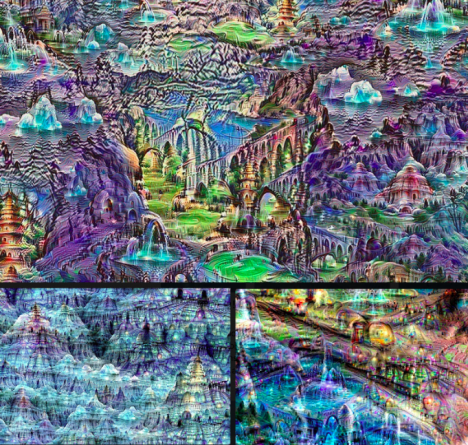
Those of us working in creative fields have often consoled ourselves that although automation may claim many other jobs, at least robots can’t make art. That’s not exactly true for a variety of reasons (depending on how you define ‘art’), but it really goes out the window when you look at these astonishing images released recently by Google. The landscapes produced on the company’s image recognition neural network reveal the answer to the question, “Can artificial intelligence dream?”

Screen Shot 2015-06-24 at 5.40.06 PM

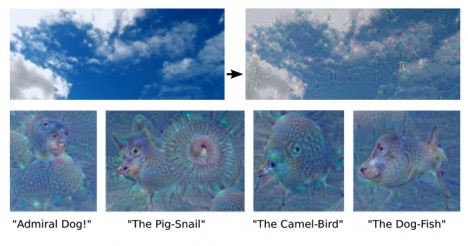
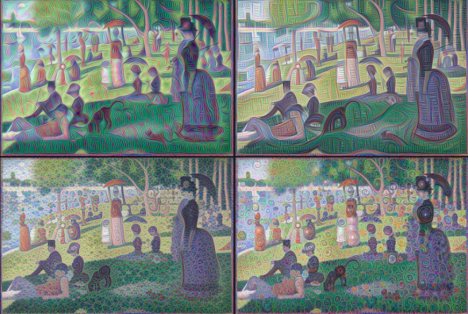
It turns out that it can – sort of. Google created a method to ‘teach’ its neural network to identify features like animals, buildings and objects in photographs. The computer highlights the features it recognizes. When that modified image is fed back to the network again and again, it’s repeatedly altered until it produces bizarre mashups that belong in a gallery of surreal art.

google AI dreams 2

Suddenly, an image of a knight on a horse is filled with ghostly impressions of frogs, fish, dogs and flowers. The knight’s arm seems to have sprouted a koala head, while the head of another unrecognizable animal emerges from beneath the horse’s tail. In another image, a tree and field turn cotton candy pink, and the clouds transform into conjoined sheep monsters.

google AI dreams 7 Google AI dreams 6

Technically, it’s more like the computers were fed psychedelics and asked to paint, rather than capturing random images that might flash through their artificial ‘minds’ when they’re idle. The computers look for patterns and edges within the photos and paintings when they’re trying to identify objects and shapes, leading to those strange ghostly images scattered randomly throughout. Those edges are brought out more in each successive layer until the network starts thinking it sees all sorts of things within them.

google AI dreams 3

Google describes it as “inceptionism,” saying “We know that after training, each  layer progressively extracts higher and higher-level features of the image, until the final layer essentially makes a decision on what the image shows.”

Screen Shot 2015-06-24 at 5.39.47 PM

“So here’s one surprise: neural networks that were trained to discriminate between different kinds of images have quite a bit of the information needed to generate images too. Why is this important? Well, we train networks by simply showing them many examples of what we want them to learn, hoping they extract the essence of the matter at hand (e.g., a fork needs a handle and 2-4 tines), and learn to ignore what doesn’t matter (a fork can be any shape, size, color or orientation).”

“If we choose higher-level layers, which identify more sophisticated features in images, complex features or even whole objects tend to emerge. Again, we just start with an existing image and give it to our neural net. We ask the network: “Whatever you see there, I want more of it!” This creates a feedback loop: if a cloud looks a little bit like a bird, the network will make it look more like a bird. This in turn will make the network recognize the bird even more strongly on the next pass and so forth, until a highly detailed bird appears, seemingly out of nowhere.”

Check out lots more examples on Google’s research blog.

Share on Facebook


[ By Steph in Gaming & Computing & Technology. ]

[ WebUrbanist | Archives | Galleries | Privacy | TOS ]


WebUrbanist

 
Comments Off on Android Dreams: Google’s Neural Network Reveals AI Art

Posted in Creativity


Enter the Void: 14 Creatively Concave & Sliced-Out Structures

24 Jun

[ By Steph in Architecture & Public & Institutional. ]

concave twin moon 2

Cutting curves or slices into the facades of buildings doesn’t just make them more visually dynamic, it can create terraces, divert prevailing winds, concentrate sunlight and direct the eye to particular views.  These seemingly random depressions and voids completely transform the shapes of each structure, often leading to an alien appearance.

Twin Moon Cut-Outs

concave twin moon 3

concave moon 5

concave twin moon 1

Two buildings set side-by-side look like they were dented by a massive sphere, the concave cut-out creating two moon shapes recessed into the concrete facades. Architect Moon Hoon designed the mixed-use Two Moon buildings for a South Korean client who needed one building for himself and another for his brother. The structures were envisioned as twins, with one sitting ever-so-slightly closer to the street than the other.

TEK Building by BIG Architects

concave tek 2

concave tek 3

concave tek 4

concave tek

Each ‘slice’ that you see in the main volume of the TEK building by BIG Architects is a functional step, with the entrance spiraling throughout the interior to create one big continuous outdoor staircase leading to a series of terrace-like spaces before finally exiting onto the roof. The building, which is full of exhibitions paces, conference rooms, shops, restaurants and galleries, consists of a system of stacked plate-like pieces that also create solar shading for the interior spaces.

Barn House Sliced Like a Cake

concave barn house 1

concave barn house 2

concave barn house 3

This barn-shaped house looks like a massive black-frosted cake that’s had slices randomly taken from its perimeters, revealing its white interior. These concave cut-outs act as terraces, reflecting and maximizing natural light.

DUO Skyscrapers with Concave Walls

concave duo skyscrapers

Singapore’s historic Kampong Glam district is set to get a pair of curving skyscrapers arranged in a half-circle, one containing apartments, the other offices and a hotel. The DUO towers by Buro Ole Scheeren feature a stepped design that creates large outdoor spaces at various levels, and are covered in a distinctive grid of hexagonal windows.

The Bow by Foster + Partners

concave the bow 1

concave the bow 2
Calgary’s tallest building, The Bow by Foster + Partners is a 58-story wave-like structure with a concave side gathering sunlight and a convex side reducing the load of prevailing winds. Atriums within the concave side separate the glass facade from the offices within, offering meeting spaces, lounges and sky gardens.

Next Page – Click Below to Read More:
Enter The Void 14 Creatively Concave Sliced Out Structures

Share on Facebook


[ By Steph in Architecture & Public & Institutional. ]

[ WebUrbanist | Archives | Galleries | Privacy | TOS ]


WebUrbanist

 
Comments Off on Enter the Void: 14 Creatively Concave & Sliced-Out Structures

Posted in Creativity


Grimm Abandonment: Derelict Australian Fairy Tale Park for Sale

24 Jun

[ By WebUrbanist in Abandoned Places & Architecture. ]

abandoned park castle

Inspired by classical fairy tales, this deserted theme park recently opened its doors to an urban explorer and photographer, giving outsiders a glimpse into the current state of the place as well as its potential to be reborn in the hands of the right buyer. Traveling to the site from Tasmania, Urbexography has done a remarkable job at documenting this strangely magical place.

abandoned castle in context

abandoned fairy tale setting

abandoned welcome sign

From the Fantasy Glades website: “In the 1960’s a family of ‘Little People’ George and Rosemary Whitaker, along with their children James and Lynette, and Rosemary’s parents, Aub and Lin Gribble, set out on a journey from Sydney to Port Macquarie in NSW Australia with a dream to create their very own children’s Fairy Tale Theme Park.” It was closed 35 years later in 2002 and has remained so since.

abandoned theme park shoe

abandoned australia brothers grimm

deserted fairy tale park

The main attractions were based on the works of the Brothers Grimm, aided by the experience of the park’s founders in theatrical stage and set design work around such themes. Located in a patch of natural bushland at Parklands Close in Port Macquarie, the location features Snow White’s cottage, bedrooms of the Seven Dwarves and other features of similarly famous fairy tales and fables.

abandoned park building

abandoned chapel interior

abandoned park graffiti tag

Whether the magic is gone forever or can be maintained and rebuilt is ultimately a question of economics – the current owners would love nothing more than to sell the place to someone who has an interest in bringing it back to life.

abandoned stairs seating

abandoned moat draw breidge

abandoned park fairy castle

In the words of the photographer: “Fantasy Glades was an absolutely magical, special place for many people including myself as a child and also my children when they were little.  It has been visited and enjoyed by numerous families from all around the world since 1968 when it first opened. Fantasy Glades is a hidden piece of paradise in one of Australia’s best locations.”

Share on Facebook


[ By WebUrbanist in Abandoned Places & Architecture. ]

[ WebUrbanist | Archives | Galleries | Privacy | TOS ]


WebUrbanist

 
Comments Off on Grimm Abandonment: Derelict Australian Fairy Tale Park for Sale

Posted in Creativity


Two World Trade Center: BIG Redesign Deconstructs Skyscraper

24 Jun

[ By WebUrbanist in Architecture & Offices & Commercial. ]

two wtc stacked boxes

A long-standing design proposal from Foster + Partners has been scrapped by developers in favor of a new scheme from BIG (Bjarke Ingels Group) that presents a different face to viewers depending on their approach or view within the city, rejecting conventional skyscraper typology and cultivating visual transitions between neighborhoods on all sides.

two world trade stack

As the last project slated to be built on the World Trade Center site, the would-be 2 WTC skyscraper is a critical piece of the Lower Manhattan landscape, but its future tenants wanted something that stood apart from the more straightforward tall buildings associated with finance and Wall Street.

two tower foster partners

The prior scheme, shown above, featured four connected verticals, each terminating in an angled plane at the top, essentially a tower with slots centrally located along each face. The new scheme, endorsed by occupants including 21st Century Fox and News Corp and shown below, intentionally shies away from the skyscraper aesthetic and creates space for greenery on a series of platforms created by recessed sections of structure.

two memorial site view

two box tower view

Its facade shows off a slim and modest structure when viewed from the memorial site on one side below but creates a stacked-box effect when seen from adjacent lower-rise parts of the city above like Tribeca: “From Tribeca, it will appear like a vertical village of singular buildings each tailored to their individual activities stacked on top of each other, forming parks and plazas in the sky.”

two platforms gardens levels

two interior exterior bridge

two wtc interior

two news media studio

two news broadcast pit

two newsroom open space

By keeping larger boxes at the base and similar overall square footage (nearly 3,000,000 square feet), the building also is designed to accommodate sizable studio spaces for the aforementioned media companies. Lower levels will be occupied by these giants while upper floors will be rented out to smaller commercial clients. Set alongside One, Three and Four World Trade Center, this structure will stand apart, its broken-down scale visually bridging the gap between the southern tip of the island and the rest of the city to the north.

Share on Facebook


[ By WebUrbanist in Architecture & Offices & Commercial. ]

[ WebUrbanist | Archives | Galleries | Privacy | TOS ]


WebUrbanist

 
Comments Off on Two World Trade Center: BIG Redesign Deconstructs Skyscraper

Posted in Creativity


Tesla Thunderstorms: Miniature Bolts of Man-Made Lightning

23 Jun

[ By Steph in Art & Photography & Video. ]

mini thunderstorms 1

Tiny bolts of lightning are captured on camera as they shoot off an antique electrotherapy medical device, turning the discharge of electricity into a form of art. Germany-based photographer Marc Simon Frei purchased the 1920 violet ray, invented by Nikola Tesla, on eBay and began to experiment with visual effects.

mini thunderstorms 6 mini thunderstorms 3

The device is basically a portable tesla coil, an electrical resonant transformer circuit used to produce alternating-current electricity. Frei used various methods to create sparks and caught them at just the right split-second with his Nikon Df, 50mm f/1.8 lens and a macro extension tube.

mini thunderstorms 5 mini thunderstorms 4

He has also played around with wiring, and creating miniature storms within tufts of wool stuffing taken from a teddy bear. Frei notes that if you want to try it yourself, you’d better be prepared for possible equipment damage from the high frequency voltage; the LCD screen on his camera flickered whenever it came too close to the coil.

mini thunderstorms 7 mini thunderstorms 2

Nikola Tesla would likely be disappointed that his ingenious creations are mostly relegated to exhibits and experiments these days, rather than becoming a viable wide scale source of energy, but it seems likely he’d approve of this project.

Share on Facebook


[ By Steph in Art & Photography & Video. ]

[ WebUrbanist | Archives | Galleries | Privacy | TOS ]

WebUrbanist

 
Comments Off on Tesla Thunderstorms: Miniature Bolts of Man-Made Lightning

Posted in Creativity


Modern Motorcycles: 15 Super-Sleek Custom Rides

23 Jun

[ By Steph in Technology & Vehicles & Mods. ]

modern motorcycles eve2

With their streamlined silhouettes, exposed mechanical parts, high-end detailing and powerful motors, these 15 modern motorcycle designs represent a new era of aesthetics in the industry, even when they’re customs built on the bases of classic bikes.

Akrapovic Full Moon

modern motorcycles akra

modern motorcycles acra 2

Looking unlike any motorcycle we’ve ever seen on the streets, the Akrapovic Full Moon motorcycle concept features a massive 30-inch aluminum and carbon front wheel and a sculpted, aerodynamic metal sheet frame that envelops the rear wheel. Hydraulic suspension keeps the bike upright when it’s parked, and automated steering keeps the handlebars looking sleek.

BMW Apollo Streamliner

modern motorcycles apollo

modern motorcycles apollo 2

A combination of traditional styling and futuristic looks keeps this concept by industrial designer Mehmet Doruk Erdem firmly rooted within the BMW brand, while bringing it into this century and beyond. Designed for speed rather than everyday use, the Apollo Streamliner features a pointed front end to reduce wind drag on the rider.

Rectilinear T005 Cross

modern motorcycles too5

modern motorcycles too5 2

In contrast to the sleeker curvilinear designs, the Thrive Motorcycle T005 Cross goes for a chunky rectilinear look. The whole thing is actually a modified 1984 Yamaha – the designers stripped it down, fitted it with off-road tires and added a custom body made of sheet aluminum, updated for the modern era with a smartphone slot.

Bandit9 Bishop

modern motorcycles bandit9

modern motorcycles bandit9 2

Another custom modification takes a Honda Supersport and transforms it into a minimalist design enthusiast’s dream, with wood burl side panels contrasting with the steel unibody. Bandit9 released only nine models of this bike, with a 90cc or 125cc engine.

Bandit9 Eve
modern motorcycles eve

modern motorcycles eve4

Bandit9 also used a 1967 Honda SS bike as the basis of a custom design, pairing it with fashions from Konstantin Kofta in this editorial for a futuristic effect. The bullet-like chrome-finished unibody puts the focus on the exposed mechanical parts.

Next Page – Click Below to Read More:
Modern Motorcycles 15 Super Sleek Custom Rides

Share on Facebook


[ By Steph in Technology & Vehicles & Mods. ]

[ WebUrbanist | Archives | Galleries | Privacy | TOS ]


WebUrbanist

 
Comments Off on Modern Motorcycles: 15 Super-Sleek Custom Rides

Posted in Creativity


Climactic Table: Zero-Energy Furniture Regulates Temperature

22 Jun

[ By WebUrbanist in Design & Furniture & Decor. ]

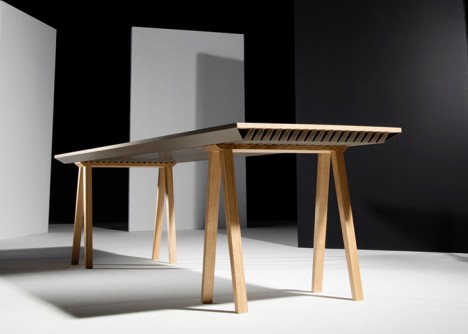
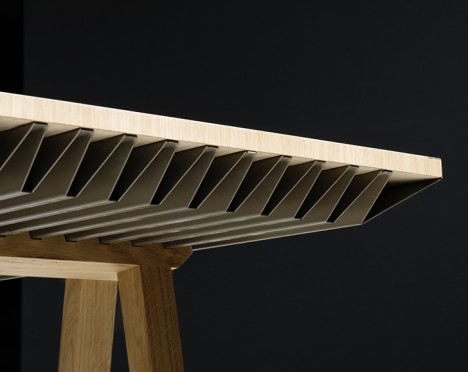
phase change material furniture

Able to reduce cooling costs by up to 30% and heading expenses by as much as 60%, this series of temperature-regulating furnishings stores thermal energy without requiring an external power source, helping maintain room temperatures both during the day and at night.

temperature controlling furniture

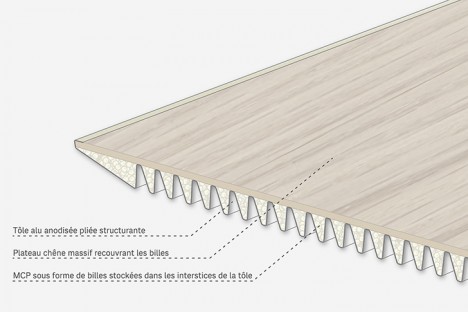
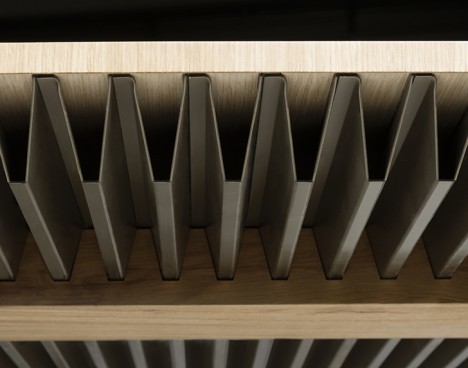
Designed by Raphaël Ménard and Jean-Sébastien Lagrange, designs in this series such as the Climactic Table are composed of a combination of solid oak and corrugated aluminum with phase-change materials (PCM) sandwiched in between.

temperature furniture structural design

The wood contributes to desired thermal properties while the shaped aluminum provides structural support and conductivity. As a passive heating and cooling strategy, these objects can augment existing systems or replace them entirely in moderate climates.

temperature regulating wood aluminum

A familiar phenomena in the realm of architecture, the idea of using materials to store and discharge heat or cold naturally is an old one. Stone, concrete or brick, for instance, are often placed to pick up warmth during the day then mitigate the temperature change at night, releasing that stored heat energy. While there is no specific control mechanism in play, such systems naturally create a level of equilibrium that reduces the next for external active (HVAC) systems.

Share on Facebook


[ By WebUrbanist in Design & Furniture & Decor. ]

[ WebUrbanist | Archives | Galleries | Privacy | TOS ]

WebUrbanist

 
Comments Off on Climactic Table: Zero-Energy Furniture Regulates Temperature

Posted in Creativity