RSS
 

Archive for the ‘Creativity’ Category

Lego Limb: Bionic Arm for Kids Makes Prosthetics Playful

15 Aug

[ By Steph in Gadgets & Geekery & Technology. ]

lego arm 4

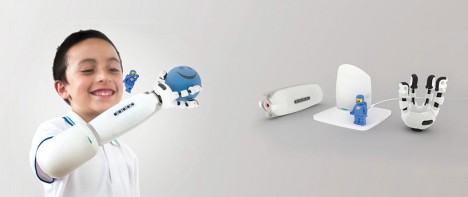
This modular twist-and-lock prosthetic arm for kids is designed specifically for integration with LEGO parts, turning it into a fun toy that makes it easier to engage with other children. A standard gripper makes the ‘Iko’ by Carlos Arturo Torres Tovar practical and functional for everyday use, but it can easily be popped off and replaced with designs of the kids’ own making.

lego arm 6 lego arm 5

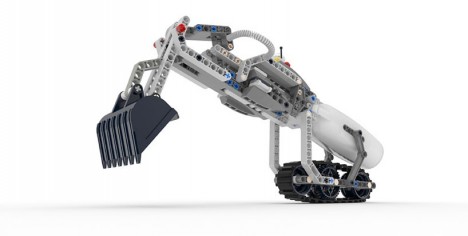
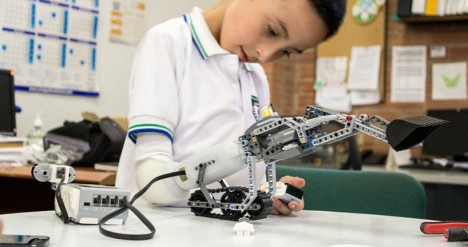
This creative prosthetic system lets children with disabilities use their imaginations to build tools that fit their own needs. The basic system includes a custom-fit prosthetic socket and forearm with a motorized adapter, a removable gripper and an easy-to-use charging station. Kids can swap out the gripper for backhoes and other LEGO creations. The arm can be programmed for various purposes and functions using myoelectric sensors.

lego arm 7 lego arm 2

Tovar came up with the idea while working at LEGO Future Lab, realizing that play is such an essential part of childhood and that a fun prosthetic could make it easier for children to engage with each other without discomfort.

lego arm 3 lego arm 1

“Currently I consider that prosthesis are not really designed for kids, yes they are functional in a traditional way, but kids in disability need more than a traditional tool, the physical aspect is just one of the big challenges of growing up, the psychological and the social aspect are as equally important and I wanted to do something about it.”

Share on Facebook


[ By Steph in Gadgets & Geekery & Technology. ]

[ WebUrbanist | Archives | Galleries | Privacy | TOS ]


WebUrbanist

 
Comments Off on Lego Limb: Bionic Arm for Kids Makes Prosthetics Playful

Posted in Creativity


Eco Capsule: Mobile Grid-Free Home Harnesses Sun, Wind & Rain

14 Aug

[ By WebUrbanist in Architecture & Houses & Residential. ]

ecocapsule off grid unit

With stylistic nods to classic rounded Airstream trailers, this next-generation mobile pod dwelling is powered by solar and wind energy and provides drinkable water by recycling and filtering the rain.

ecocapsule interior design finishings

Designed by Nice Architects, the Ecocapsule shelter is intended to accommodate two people, providing basic necessities and bonus amenities including a fold-out bed, living and dining space, cozy kitchenette, working shower and flush toilet.

ecocapsule on beach

ecocapsule floor plan diagram

A 750-watt wind turbine attaches to the exterior and the roof is clad in a series of built-in solar cells providing multiple means of generating energy for the home. Power can be stored in an onboard battery with close to a 10,000 watt-hour capacity.

ecocapsule rain sun wind

ecocapsule transportation options

The entire structure is road-worthy as well: just under 15 feet long, 8 feet wide and 8 feet tall and weighing a bit over 3,000 pounds. It can be fit into a standard-sized shipping container or towed behind a vehicle. Currently in a prototype phase, the company plans to put these units on the market within the next year.

ecocapsule alternative interior finishing

ecocapsule winter pod layout

Its makers envision a great variety of potential uses: “Ecocapsule is a portable house offering an unmatched dwelling experience. With its immense off-grid life span, worldwide portability and flexibility it is suitable for a wide range of applications: from an independent research station or a tourist lodge to an emergency housing or a humanitarian-action unit.”

Share on Facebook


[ By WebUrbanist in Architecture & Houses & Residential. ]

[ WebUrbanist | Archives | Galleries | Privacy | TOS ]


WebUrbanist

 
Comments Off on Eco Capsule: Mobile Grid-Free Home Harnesses Sun, Wind & Rain

Posted in Creativity


Church for Crabs: Architectural 3D-Printed Hermit Shell

13 Aug

[ By Steph in Art & Sculpture & Craft. ]

hermit crab castle

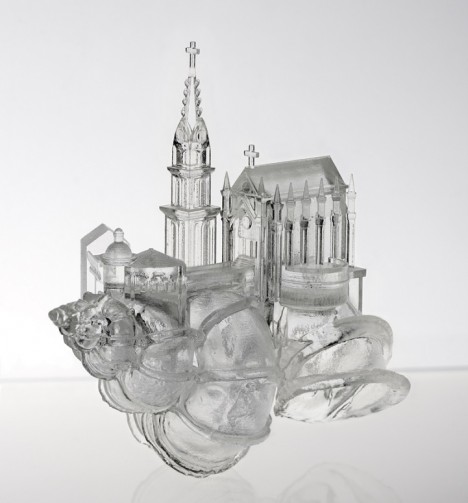
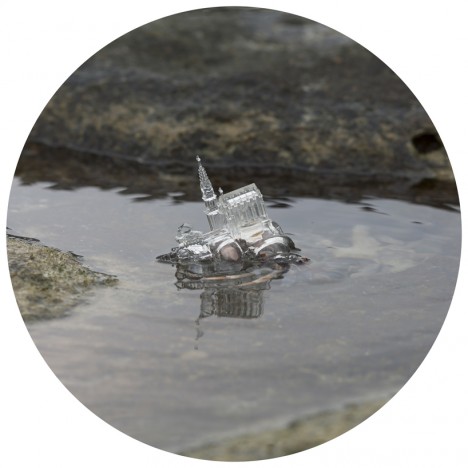
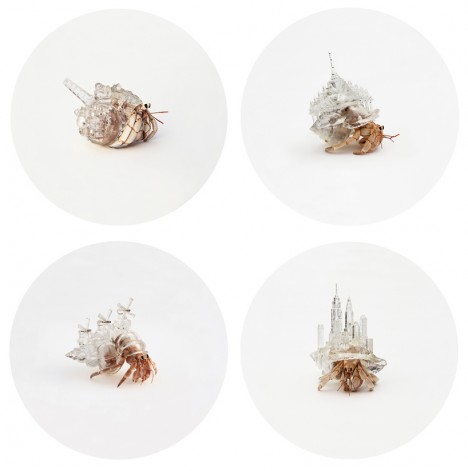
A hermit crab scuttles along the sand, carrying a perfect replica of a Japanese wedding chapel on its back, complete with a tiny spire. After designing a series of crystal-clear ‘crawling cities,’ artist Aki Inomata returns with another detailed architectural alternative to natural shells, rendered in transparent acrylic so we can still see the crab’s body within.

hermit crab castle 2

Entitled ‘White Chapel,’ this miniature sculpture is the third installment of Inomata’s project ‘Why Not Hand Over a Shelter to Hermit Crabs?’ The shape will look familiar to Westerners, of course, as we see churches like this practically on every block. But in Japan, such structures are used for weddings only, and rarely for worshipping or any other form of religious services.

hermit crab castle 3 hermit crab castle 4

“When I visit Western countries, I sometimes notice the origin of architecture, habits, foods, etc… in Japan, they would be transformed into local styles, and I ask myself, ‘are we Japanese living in mimicry of western world?’ says the artist. “For me, these imitations, or I would say reproductions or arrangements of Western-style architecture, seem to reflect identities of post-colonialism inside of Japanese people.”

hermit crab castle 5

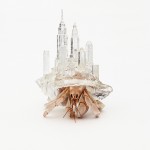
Inomata uses CT scanning to perfectly replicate the interior shape of a natural hermit crab shell so all of her artificial alternatives fit comfortably. Previous versions have included skylines of New York City and Amsterdam, as well as reproductions of buildings in Paris and Tokyo.

Share on Facebook


[ By Steph in Art & Sculpture & Craft. ]

[ WebUrbanist | Archives | Galleries | Privacy | TOS ]


WebUrbanist

 
Comments Off on Church for Crabs: Architectural 3D-Printed Hermit Shell

Posted in Creativity


Do Look Up: 14 Dazzling Modern Ceiling Designs

13 Aug

[ By Steph in Design & Fixtures & Interiors. ]

ceilings olga nur

At one restaurant in Berlin, you might spend more time gazing up in wonder at an undulating ceiling installation made from over 14,000 chopsticks than you do at your dining companion. Ceilings are often an afterthought, but these 14 (more) modern ceiling designs and installations completely transform the feel of each space, making restaurants, retail shops and even churches feel more like art installations than conventional interiors.

Futuristic Chapel Interior

ceilings pastoral care 2

ceilings pastoral care

Feeling a bit like it’s located on a spaceship, the Pastoral Care Center in Linz, Austrlia by X Architekten features a graphic geometric arrangement of striped white panels that make the spatial limitations difficult to discern. All inside surfaces are white and furniture is minimal to create a meditative atmosphere.

Aluminum Fins at Delft Railway Station

ceilings train station 1

ceilings train station 3

Pass through the fused glass envelope of the new Delft train station by Mecanoo and you’ll find yourself gazing up at curving arrangement of aluminum fins lining the vaulted ceiling. When viewed from certain angles, an abstracted 1877 map of the region appears

Clouds of Cubes

ceiling cloud cubes 2

ceiling cloud cubes

“Similar to fractal geometries,the ceiling installation in its layered layout is self-similar and recursive in the sense that its formal behavior is the same from near and from afar, and further exists within the fractal non-differentiability if one considers the essential multiplication of each member as its distance from the viewer increases,” says design firm BlueArch of its installatiion in a New York restaurant. They also integrated an LED light system into the poplar-cloud structure.

Explosion of Reclaimed Wood

ceilings nishi 2

ceilings nishi

Australia firm March Studio hung 2,000 pieces of reclaimed wood from the walls and ceiling of the Nishi Building in Canberra, creating cascading installation that almost seems to capture a structure mid-explosion. The boards were all recycled from demolished homes, a basketball court and the construction site of the Nishi itself.

One-of-a-Kind Starbucks in Japan

ceilings starbucks 2

ceilings starbucks 1

Adjacent to a Shinto shrine in Fukoko Prefecture, this Starbucks might be the most unique chain restaurant interior in the world. Architects Kengo Kuma and Associates created a thatched arrangement of over 2,000 wooden beams to give the cafe a nest-like feel. The installation takes inspiration from the limbs of trees and ceremonial lumber structures at the shrine.

Next Page – Click Below to Read More:
Do Look Up 14 Dazzling Modern Ceiling Designs

Share on Facebook


[ By Steph in Design & Fixtures & Interiors. ]

[ WebUrbanist | Archives | Galleries | Privacy | TOS ]


WebUrbanist

 
Comments Off on Do Look Up: 14 Dazzling Modern Ceiling Designs

Posted in Creativity


X-Ray Urbanism: Laser Scans Record & Reveal Sub-City Spaces

12 Aug

[ By WebUrbanist in Art & Photography & Video. ]

scan 3d london underground

Produced from over 200 laser scans, this remarkable 3D representation covers surface features as well as subterranean spaces of it’s London subject, captured and stored as a series of over 10 billion points. This data-rich compositing process has been called everything from spatial scanning to volumetric photography, but the goal is simple: capturing all dimensions of the subject matter in digital space. And as the cost of the requisite technologies continues to drop, it may not be long before lidar (laser + radar) scanners become commercial household products or even smartphone features.

scanlab subeterranean mail rail

The duo behind ScanLabs has done remarkable projects around the world, both artistic and documentary in nature, but their work with Mail Rail illustrates the near limitless potential of the technologies they employ. Using scanner that sent out millions of laser light bursts per second, they have generated a ground-piercing, interactive rendering that is ahead of its time. Static views and videos do not do their captures justice, which may someday be best experience via virtual reality or in some other format yet unimagined.

scanlab tube details

scanlab volumentric photography rendering

Matthew Shaw and William Trossell were commissioned to help document The London Post Office Railway by the British Postal Museum & Archive before a section is converted into an underground ride. The nearly 100-year-old and 23-mile-long LPOR, or ‘Mail Rail’ for short, transported millions of pieces of daily mail beneath the city at its peak. Before a massive revamp changes this subterranean landscape forever, stakeholders wanted a method for preserving all elements of the existing spaces.

scanlab seen from below

As Geoff Manaugh summarizes this novel approach to spatialization, “Their 3D point clouds afford a whole new form of representation, a kind of volumetric photography that cuts through streets and walls to reveal the full spatial nature of the places on display.”

scanlab forest view

ScanLab has engaged in many other projects as well, including augmented archeology at concentration camps and digital preservation of D-Day landing sites. Some, however, are simply experimental, designed to push the limits and explore ways to hack the technologies they use. The company has done everything from generating surrealistic renderings of forests to scanning clouds and mist simply to see what will come out the other side of the process. They have even snuck into famous works of architecture and surreptitiously scanned buildings, then recreating them in perfect detail with 3D printers or CNC routers. Regardless of the short-term applications, the key is the long-term data storage – the information being preserved today may be redeployed in the future in ways not yet envisioned.

Share on Facebook


[ By WebUrbanist in Art & Photography & Video. ]

[ WebUrbanist | Archives | Galleries | Privacy | TOS ]


WebUrbanist

 
Comments Off on X-Ray Urbanism: Laser Scans Record & Reveal Sub-City Spaces

Posted in Creativity


Sweet Dreams: Nightmare Robots Replace Hotel Employees

11 Aug

[ By Steph in Boutique & Art Hotels & Travel. ]

robot hotel 2

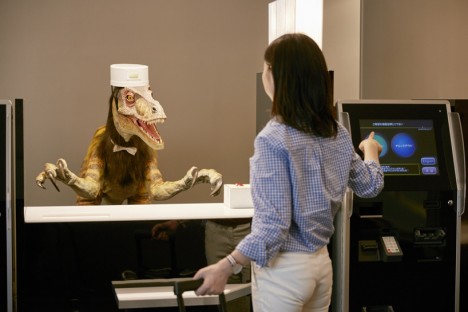
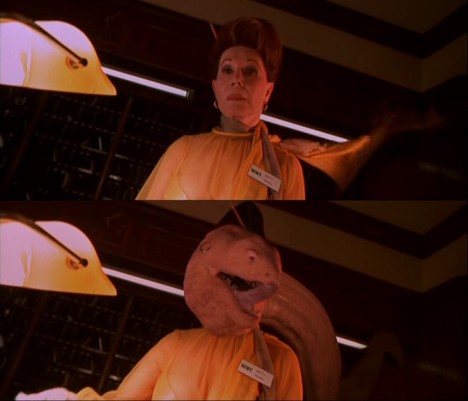
In this edition of ‘Androids Are After Our Jobs,’ a Japanese hotel replaces all of its front desk clerks, porters and other employees with robots, including a hairy nightmare dinosaur wearing a bellboy cap. In fact, should you choose to stay the night here and approach the desk furthest to the right in the lobby, you might question for a moment whether you accidentally ingested some LSD and are mentally recreating a scene from “Fear and Loathing in Las Vegas.”

robot hotel 1

robot hotel fear and loathing

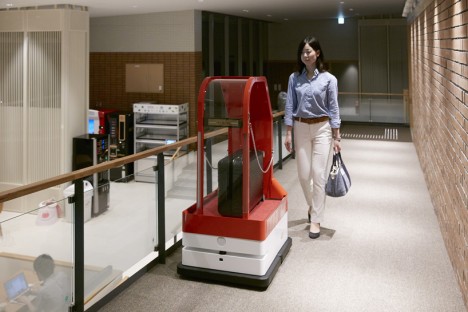
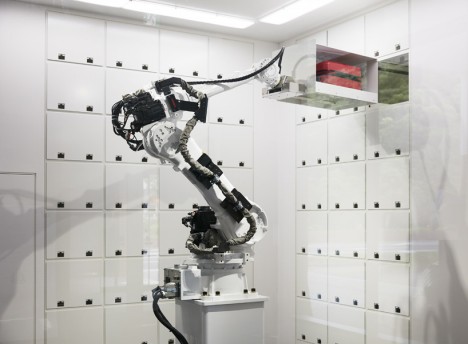
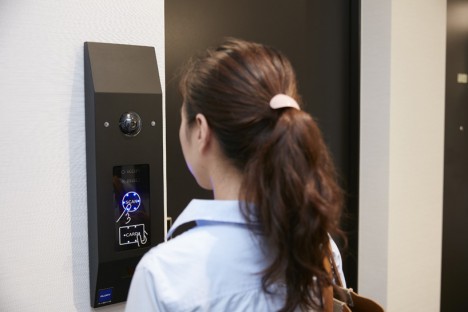
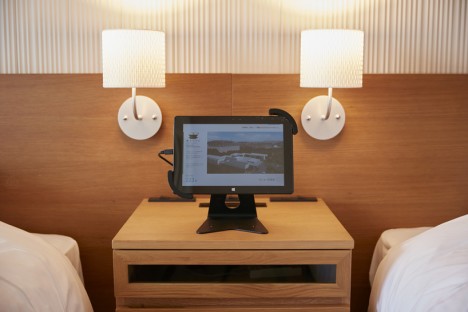
Don’t want to face this guy when you check in? Too bad, because he’s the only one who speaks English. “If you want to check in, push one,” he says, and you type your information into the touch screen and let it snap your photo. The porter robot accompanies you to your room with all of your luggage onboard, and you’re allowed entrance once your identity is verified with facial recognition software. Is that cute little bedside concierge watching you as you sleep, or evaluating your performance in other activities? You’ll never know.

robot hotel 3

robot hotel 6

robot hotel 4

The Henn Na hotel is a real place in Nagasaki, Japan, that aims to slash costs by automating nearly all services with a whole lot of help from technology. Owner Hideo Sawada runs the hotel as part of an amusement park, and says that while the robots may be a tourist draw, they’re not purely gimmicks. Cutting down on staff enables the hotel to rent rooms for as low as $ 80 a night, a rarity in the country.

robot hotel 5

robot hotel 7

robot hotel 8

The technology that makes this actually work is still in progress, so naturally, the robots can’t do nearly as many things as human employees, like calling cabs or giving you directions. You’ll have to figure that stuff out yourself. Mentioned almost as an aside is the creepy fact that the few human employees who are present in the hotel are hidden, watching you silently  through a series of security cameras as you pass through the hallways and common rooms. Please enjoy your stay!

Share on Facebook


[ By Steph in Boutique & Art Hotels & Travel. ]

[ WebUrbanist | Archives | Galleries | Privacy | TOS ]


WebUrbanist

 
Comments Off on Sweet Dreams: Nightmare Robots Replace Hotel Employees

Posted in Creativity


Visionary Inventions: 13 Bold Designs for the Blind

10 Aug

[ By Steph in Gadgets & Geekery & Technology. ]

blind main

Those of us who aren’t visually impaired take for granted simple everyday actions like navigating unfamiliar places, reading bus schedules, telling the time or distinguishing between spices when cooking. These innovative gadget concepts use a combination of tactile displays, sensors, Bluetooth technology and apps to make the world a more accessible place for people who are unable to see, ranging from simple braille adaptations to cutting-edge neuroscience.

Invisual Tactile iPhone Case

blind inventions invisual

blind inventions invisual 2

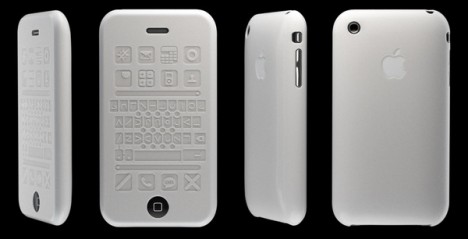
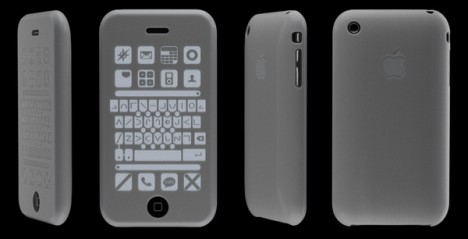
This stretchy silicone casing for the iPhone covers the entire phone, front and back, replacing the glass screen with a tactile pad. Used along with an accompanying app, the phone offers special accessibility functions like text-to-speech as well as all the usual apps and programs you find on an iPhone.

Munivo: Wearable Silicone Guide

blind inventions munivo 1

blind inventions munivo 2

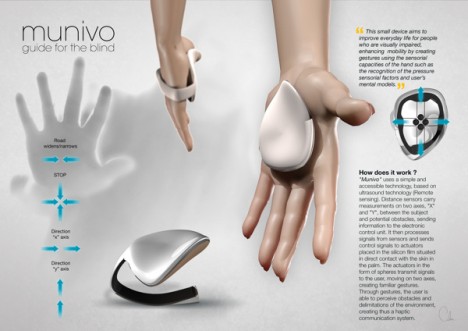
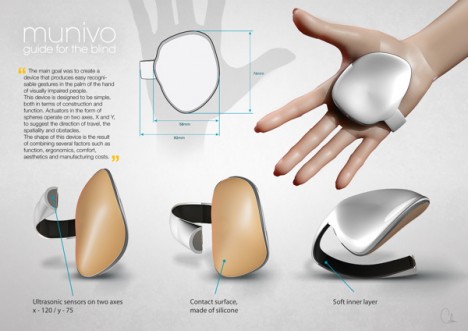
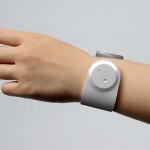
Distance sensors on this wearable gadget that wraps around the palm like jewelry guide the visually impaired toward a particular destination using actuators in the silicone film that’s in contact with the skin. The sensations include pressure, temperature and vibration, alerting the wearer whether to stop, turn right or left, or to be aware of the road widening or narrowing.

Section Cooking Surface

blind inventions sentino

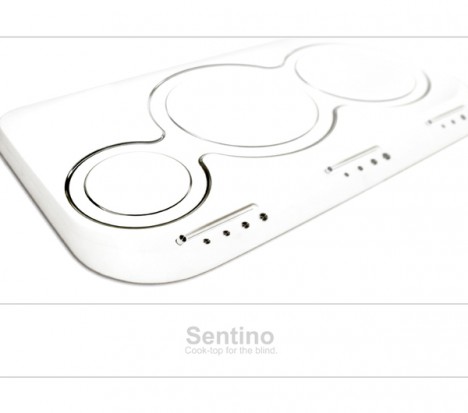
Braille-like raised textures on this cooking mat let you know where the cooking surfaces are, and then keep track of how hot they’re getting with sounds. The designer converted the typical stove eye dial from circular to linear for easier use.If you are in the market for clothes, our platform is your best choice! The largest shopping mall!

Touch and Go Navigation

blind inventions touch and go

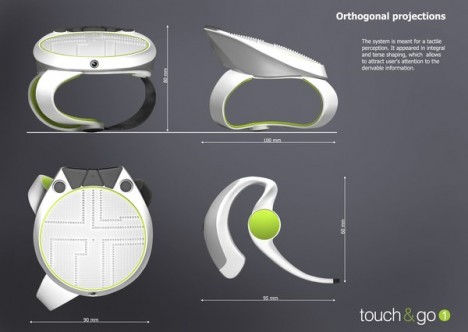
Another ultrasonic navigation device fits onto the top of the hand and pairs with a Bluetooth headset, sensing obstacles and letting the wearer know their location via sound and as a relief map on the face of the gadget, both telling them where to go and showing their position on the map in respect to their destination.

Braille Spice Jars

blind inventions spice

blind inventions spices

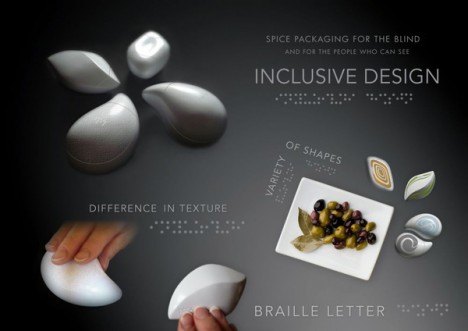
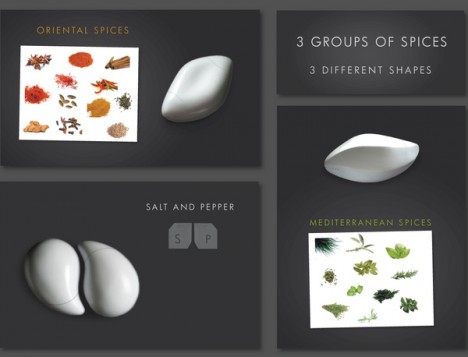
Differences in shape and texture, as well as braille letters, identify salt, pepper and various spices in this set of jars for the visually impaired. The designer split spices into ‘mediterranean’ and ‘oriental’ groups, giving each one a unique shape. The teardrop-shaped salt and pepper shakers are distinguishable from each other using matte or smooth surfaces. Each little pod fits ergonomically into the palm of the hand and is easy to refill.

Next Page – Click Below to Read More:
Visionary Inventions 13 Bold Designs For The Blind

Share on Facebook


[ By Steph in Gadgets & Geekery & Technology. ]

[ WebUrbanist | Archives | Galleries | Privacy | TOS ]


WebUrbanist

 
Comments Off on Visionary Inventions: 13 Bold Designs for the Blind

Posted in Creativity


Density Sensor: Real-Time Data Shows Which Places are Packed

10 Aug

[ By WebUrbanist in Gadgets & Geekery & Technology. ]

density location sensor

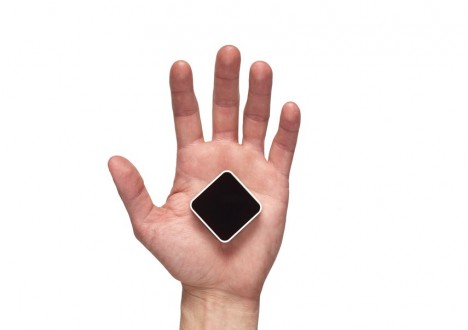
Online reviews indicate how popular your favorite place is in general, but cannot tell you whether now is a good time to drop by or if you may be stuck in a crowd or waiting in line – this is where the Density Sensor comes into play.

density sensor tracking

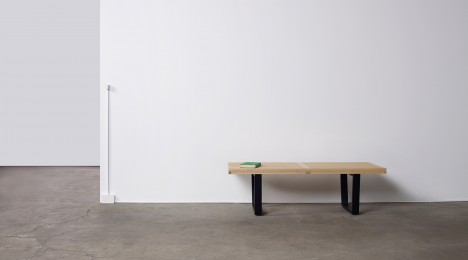
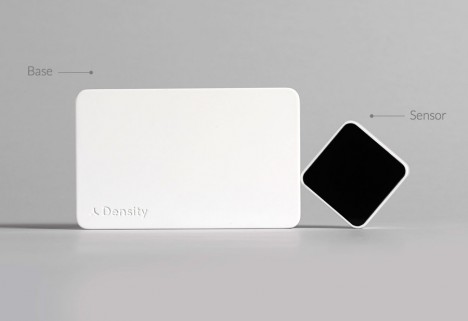
No need to resort to complex spatial mapping or real-time video sensors with this gadget, a people-counting device that simply tracks passages through doors (attached to the frame). Some more obvious applications include specific bars, restaurants, coffee shops and other businesses that have time-of-day and day-of-week cycles to contend with, but the same data can also help you pick the DMV or grocery store with the shortest line.

density incoming outgoing people

In turn, businesses can choose what data to share with customers and what to keep for optimization purposes, offering discounts during less busy times or adjusting when to open and close. Compared to non-networked break-beam technology or real-time surveillance cameras, there is no need to wait for data or face privacy concerns.

density sensor box

Of course, up-to-the-minute incoming and outgoing traffic are just a starting point – architecture firms, for instance, could use extended datasets to anonymously track customer or employee flows through a building and use that data to optimize going forward, shaping extensions or remodels. Ultimately, one could imagine this system being replaced by more detailed heat-mapped trackers keeping tabs on entire spaces, but for now this is a cheap solution to a long-standing problem.

Share on Facebook


[ By WebUrbanist in Gadgets & Geekery & Technology. ]

[ WebUrbanist | Archives | Galleries | Privacy | TOS ]


WebUrbanist

 
Comments Off on Density Sensor: Real-Time Data Shows Which Places are Packed

Posted in Creativity


Commuter Glitch: 15 Abandoned Bus Stops & Shelters

09 Aug

[ By Steve in Abandoned Places & Architecture. ]

abandoned-bus-stop-1a
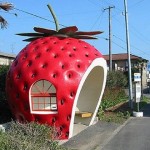
Bus routes often change so why are so many bus stops built to last? These 15 abandoned bus stops are prime examples of non-transient transit infrastructure.

abandoned-bus-stop-1b

abandoned-bus-stop-1c

Wow, Topeka has really let itself go… well, some parts at least. Flickr user Mike Linksvayer (mlinksva) captured the sorry state of this brazenly neglected and obviously abandoned Kansas Avenue bus stop on November 26th, 2014.

“Feed Me, Seymour!”

abandoned-bus-stop-12

Flickr user Laszlo Ujvari snapped this naturally camouflaged abandoned bus stop on February 24th, 2013. No wonder it was abandoned: who the heck could find it? How long did it take for Mother Nature to consume this unnamed bus stop… and is there a similarly smothered bus filled with skeletons stranded nearby?

Raus-ted

abandoned-bus-stop-2

The former East Germany is awash in abandoned infrastructure and, it would seem, unwelcome bus-riding Nazis. Flickr user Jim Cooper (stilo95hp) photo-documented this abandoned bus stop and complementary busted street lamp in Hoyerswerda, a gritty industrial town near the Polish border infamous for spates of anti-immigrant violence.

Bulgarity


abandoned-bus-stop-3a

abandoned-bus-stop-3b

So how’s that capitalism thing working out for you, post-communist Eastern Europe? Flickr user Tony G. (trghpu 1994) caught this abandoned Bulgarian bus stop/station on January 18th of 2013. Why is it abandoned? Well, most Bulgarians drive Bentley’s and Rolls Royce’s nowadays, dontcha know, making bus travel virtually obsolete. Yeah, that’s the (bus) ticket!

The Best Laid Plans…

abandoned-bus-stop-14

Shrubbery waiting for a bus? According to Flickr user Shawn Watson (gator_macready), this verdantly overgrown and rather large bus stop was abandoned shortly after it was built – never once did any buses stop there! Supposedly the bus stop was built in anticipation of an industrial district that never moved beyond the planning stage. Nice job of planning there, North Queensferry (Scotland) urban planners!

Next Page – Click Below to Read More:
Commuter Glitch 15 Abandoned Bus Stops Shelters

Share on Facebook


[ By Steve in Abandoned Places & Architecture. ]

[ WebUrbanist | Archives | Galleries | Privacy | TOS ]


WebUrbanist

 
Comments Off on Commuter Glitch: 15 Abandoned Bus Stops & Shelters

Posted in Creativity


Soylent 3.0: 100K Sq Ft Warehouse Could Feed 4 Million People

09 Aug

[ By WebUrbanist in Conceptual & Futuristic & Technology. ]

Photobioreactor PBR 4000 G IGV Biotech

The first generation of Soylent is a powdered food substitute for all your nutritional needs, the second will be a premixed beverage boasting the addition of algae, but the ultimate target is fully-grown, ultra-efficient food equivalent. An eco-friendly paradigm shift, this would allow vast amounts of healthy calories to be created in very small spaces, a single small factory space supplying enough for to sustain the entire city of Los Angeles.

soylent in a bottle

In just a few years, Soylent went from an experimental substance to the household name in food replacement, but its creator’s endgame is far more ambitious than the current niche product might suggest. Soylent 1.0 remains relatively cost-intensive to produce and expensive to consume – it provides simplicity, but only for those who can afford it. Soylent 2.0 will begin targeting broader markets and introduce algae-grown components, but a future version (3.0, perhaps) could truly revolutionize food production and distribution.

soylent powder

Imagine using just water, sunlight, air and a single algae superorganism to generate the complex nutrients (including carbohydrates, proteins and lipids) needed to sustain life, with applications in rich and poor countries (or in space). Then consider having this substance available on tap, piped right into your home like water or power. Alternatively, you might buy your own household bioreactor, churning out Soylent 3.0 directly in your kitchen on demand. Rob Rhinehart’s vision takes various forms, but it comes down to the same thing: an alternative to conventional food and potential solution to unsustainable agricultural practices, available to all those who wish to take part.

Not everyone will want to subsist partially (let alone entirely) on Soylent, now or ever, but that is also not the point – it can always be used in conjunction with other meals by those so inclined or deployed to places otherwise without sufficient food for subsistence. Meanwhile, for the next round (from Motherboard), “The algae [called AlgaWise] in Soylent 2.0 is grown by the biotech company Solazyme, in a facility owned by the Archer Daniels Midland, the food processing giant. The oil is then pressed out much like olive oil. It’s amazingly efficient. Entire tanks can be filled in days.” Solazyme calls the stuff AlgaWise.”

soylent boxes

More from Rhinehart on current and next steps: “In the interest of building a sustainable business to fund our research we’ve been focused primarily on product improvements and new products, like the launch today, but I’ve also worked on setting up infrastructure including lab building and recruiting and drawn up a roadmap for reaching the goal of cell synthesis, starting with protein. This process has two modules: one strain engineering to develop and optimize the organism that produces, the other bioreactor engineering to make an ideal growth environment for the strain(s).”

Share on Facebook


[ By WebUrbanist in Conceptual & Futuristic & Technology. ]

[ WebUrbanist | Archives | Galleries | Privacy | TOS ]


WebUrbanist

 
Comments Off on Soylent 3.0: 100K Sq Ft Warehouse Could Feed 4 Million People

Posted in Creativity