RSS
 

Archive for the ‘Creativity’ Category

Holloway Roads: Tunnels Eroded by Passage of People Over Time

21 Oct

[ By WebUrbanist in Culture & History & Travel. ]
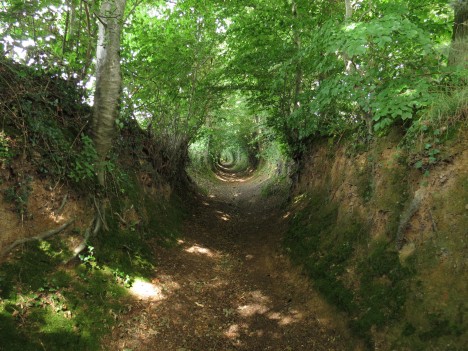
holloway tunnels

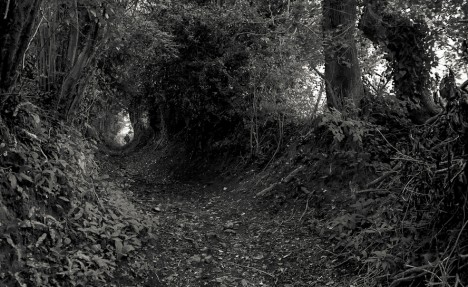
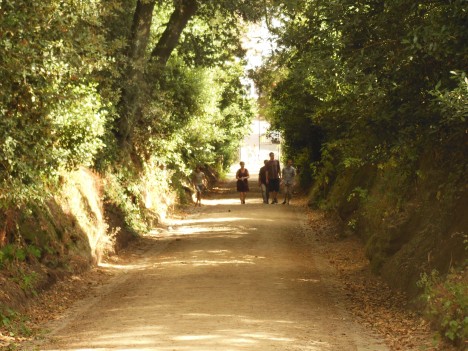
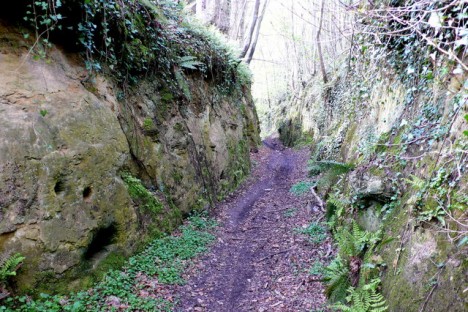
Holloways (or: hollow ways) are desire paths gone wild, reflecting centuries or even millennia of informal, slowly transforming them from flat paths to sunken lanes and, in some cases, semi-subterranean tunnels worn right into the Earth.
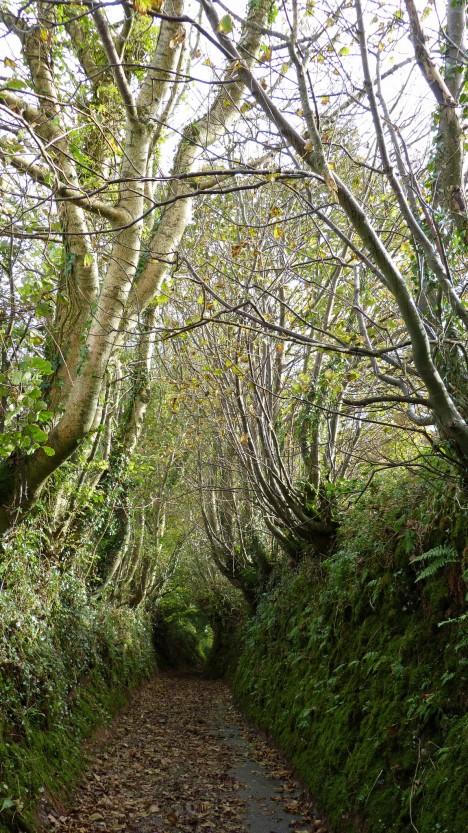
holloway roads

Eroded by foot traffic, farm animals, laden carts and the passage of water, many of these remarkable half-tunnels are thought to date back to Roman times. Their development is often aided by the presence of softer ground materials like sandstone and chalk.
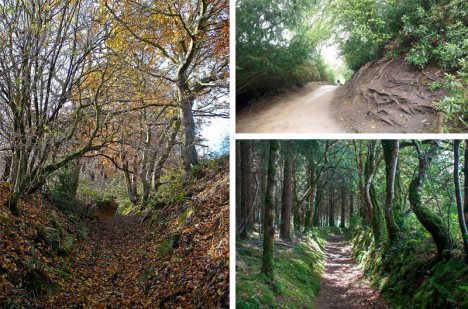
holloway paths

Over time, trees can be found on either side, reinforcing the impression of a completely-enclosed tunnel. Some plants also thrive in the peculiar light and temperature conditions formed by these passageways.
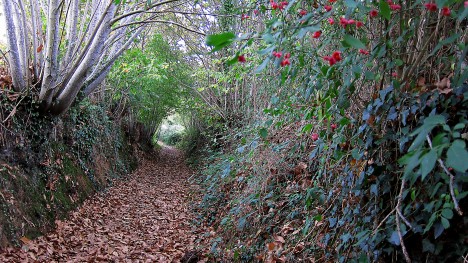
holloway flowers

In times of war, holloways have served as passages as well as defensive positions, effectively serving as already-existing trenches for troops in the Civil War and World Wars. In Germany, a network of holloway hiking trails winds for dozens of miles at up to 15 feet deep. In the Middle East, many holloways are thought to be thousands of years old.
holloway france

holloway rock

holloway black white

While most examples formed naturally over time, some younger ones were simply created for irrigation or other purposes, their presence then reinforced by foot or vehicle traffic over the years. Photographs by Jean-François Gornet, Olybrius, Romain Bréget, Jean-François Gornet, David Coombes, Nigel Mykura, Jibi44, Tim Green, Andrew.

Share on Facebook


[ By WebUrbanist in Culture & History & Travel. ]

[ WebUrbanist | Archives | Galleries | Privacy | TOS ]

WebUrbanist

 
Comments Off on Holloway Roads: Tunnels Eroded by Passage of People Over Time

Posted in Creativity


Phantom City: Thousands Spot Towers Floating in the Clouds

20 Oct

[ By Steph in Architecture & Cities & Urbanism. ]

Screen Shot 2015-10-19 at 3.54.54 PM

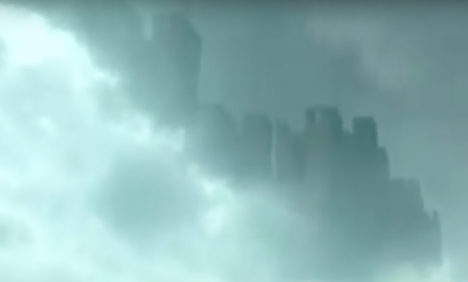
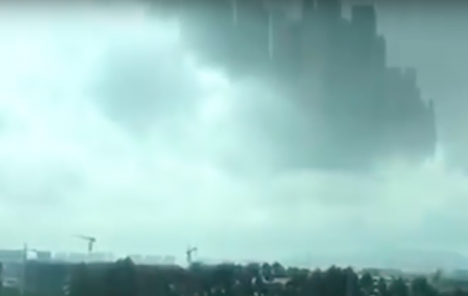
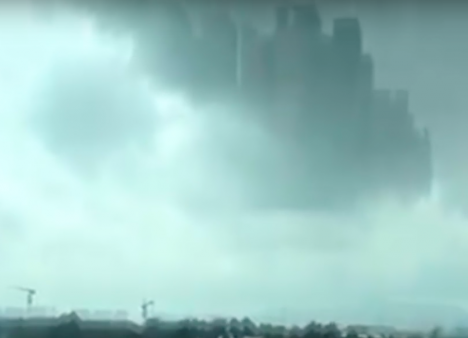
When thousands of residents of the Chinese cities of Jiangxi and Foshan reported seeing a ‘floating city’ in the clouds earlier this month, theories attempting to explain it ran wild, speculating everything from experimental holographic technology to glimpses of an alternate reality. A shaky video captures what appears to be the silhouette of a city skyline high above the horizon, at a larger scale than that of the real skyscrapers on the ground.

Naturally, conspiracy theorists are having a field day with this one, even going so far as to wonder aloud whether NASA is attempting to establish a new world order through something called the ‘Blue Beam Project.’ The most likely explanation may not be quite as exciting, but it’s still a fascinating phenomenon that has mystified people for centuries.

Screen Shot 2015-10-19 at 3.54.44 PM

Screen Shot 2015-10-19 at 3.56.53 PM

As Wired explains, a Jesuit priest named Father Domenico Giardina swore that he saw a crystal city floating in the air over Siciily in 1643, which quickly transformed into a garden and a forest crawling with armies before it all disappeared. You might think he’d claim he had a mystical vision sent from God, but he actually mused that perhaps minerals and salts were rising up into vapors in the clouds and condensing to become a sort of moving mirror. That may not be entirely accurate, but it’s relatively close to the truth.

Fata_morgana_of_the_ships

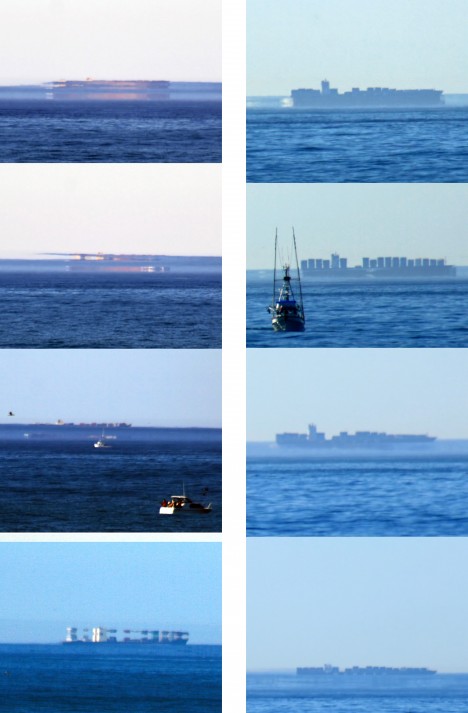
What we’re actually seeing in the video from China is most likely a ‘Fata Morgana,’ a rare type of mirage caused by a certain set of weather conditions bending light rays in just the right way. The clouds are essentially reflecting the nearby city. It’s most often seen above bodies of water, which explains the origins of the legendary ship the Flying Dutchman and hundreds of other age-old sailor stories about disappearing castles.

Superior_mirage_of_the_boats_painting

The images above show how two ships appear to change shape from one second to the next as well as an illustration of the Flying Dutchman, and a video of a ‘ghost boat’ that looks awfully similar to it. In the second video, what looks like a landscape becomes an amorphous, dissipating blob.


Share on Facebook


[ By Steph in Architecture & Cities & Urbanism. ]

[ WebUrbanist | Archives | Galleries | Privacy | TOS ]


WebUrbanist

 
Comments Off on Phantom City: Thousands Spot Towers Floating in the Clouds

Posted in Creativity


Brutalist but Beautiful: 12 Spacey Sci-Fi Soviet Structures

20 Oct

[ By Steph in Abandoned Places & Architecture. ]

bulgaria-communist-monument

The single most divisive architectural movement, Brutalism is harsh, jagged and geometric, calling to mind massive concrete spaceships – and nobody did it better (or stranger) than the Soviets. Some people say that these stark structures, which were most popular in communist countries, are too cold to be beautiful, but they often manage to be both sculptural and unapologetically utilitarian at once.

Abandoned Circus, Chisinau, Moldova

brutalist circus

brutalist circus 2

brutalist circus 3

(images: abandoned journey)

This incredible abandoned circus in Moldova’s capital city remains surprisingly intact inside, decades after a revolution and political upheaval destroyed the small nation’s economy and rendered such structures unusable. Hank Snaffler of Abandoned Journey traveled to Chisinau and got inside, taking a striking series of photographs that give us an idea of just how magnificent the building must have been at its prime.

Palace of Ceremonies, Tbilisi, Georgia

brutalist palace of ceremonies

(images: frederic chaubin)

Crowning a hilltop in Tbilisi, Georgia, the Palace of Ceremonies could easily stand in for a mythical castle in a futuristic fantasy movie made in the 1970s. It was built as a secular wedding venue by the Soviets, and still performs that function today. The Palace of Ceremonies is one of dozens of stunning Soviet Brutalist buildings captured on film by French photographer Frédéric Chain for his book ‘CCCP: Cosmic Communist Constructions Photographed.’ Chaubin began traveling throughout the former Soviet Union in 2003, ultimately photographing 90 buildings in fourteen former Soviet Republics.

Druzhba Holiday Center Hal, Yalta

brutalist druzhba

CIT38 ARCHI SOV 18

CIT38 ARCHI SOV 18

(image: frederic chaubin)

When this joint creation of the Russians and the Czechs was built in 1984 to pay tribute to space exploration, Czechoslovakia was the only nation that had sent a man to space with a Russian launcher. Rising from the ground on pillars, the circular Druzhba Holiday Center was so strange, the United States Department of Defense was worried it was some kind of functioning rocket launcher. In reality, it was just a summer camp.

Georgia Ministry of Highways, Tbilisi

brutalist georgian ministry

(image: frederic chaubin)

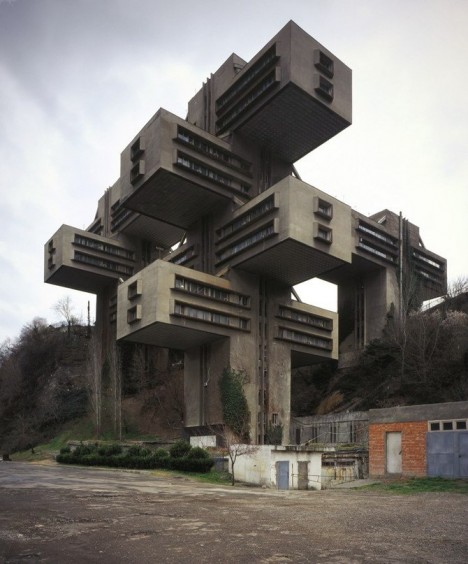
A Jenga-like stack of concrete rectangles looms rather ominously on the outskirts of Tbilisi in Georgia, bringing together Brutalism and Russian constructivism into one strange structure. The 18-story building is lifted off the ground to enable nature to proliferate below it. Built as the headquarters for the Georgian Ministry of Highways, it was abandoned for a while before being renovated by the Bank of Georgia in 2007.

Shumen Monument, Bulgaria

brutalist shumen

brutalist shumen 2

shumen monument 3

(images: yomadic)

The sheer scale of the Monument to 1300 Years of Bulgaria, especially with all of the harsh lines on those statues embedded into the walls, arguably makes it one of the most impressive Soviet structures and one that will likely still stand as imposing as it looks today many centuries into the future. Towering 230 feet into the air, it’s officially the heaviest Communist monument and has been well maintained. It’s captured here by the blog Yomadic.

Het Poplakov Cafe, Ukraine

brutalist het poplakov cafe

(image: frederic chaubin)

Built in 1976, the Het Ppoplakov Cafe in Ukraine seems to hover above the surface of the water, perfectly doubled in its reflection, looking like nothing more than a flying saucer that has remained stationary and earthbound for decades.

Polytechnic Institute of Minsk, Belarus

brutalist polytechnic

(image: frederic chaubin)

A series of stacked lecture theaters call to mind the decks of a cruise ship in the long and narrow Polytechnic Institute of Minsk in Belarus, built in 1983.

Monument of the Bulgarian-Soviet Friendship, Varna, Bulgaria

brutalist bulgarian monument

brutalist bulgarian monument 2

brutalist bulgarian monument 3

(images: yomadic, bohemian blog)

The Monument of the Bulgarian-Soviet Friendship in Varna is actually a nuclear bunker and is made of over 10,000 tons of concrete and 1000 tons of armature wire. Standing atop a mass grave of soldiers lost to the Russian-Ottoman War, it was built at the end of a grand boulevard designed to run through the city for Communist parades and other celebrations, though this boulevard was never completed. The Bohemian Blog has a haunting series of images of this structure in its abandoned and vandalized state.

Read the rest of this entry »

 
Comments Off on Brutalist but Beautiful: 12 Spacey Sci-Fi Soviet Structures

Posted in Creativity


Crash Pads: Sleeper Vans Let You Stay in NYC for $20 a Night

19 Oct

[ By WebUrbanist in Boutique & Art Hotels & Travel. ]

nyc van bnb

Hotel rooms in Manhattan cost hundreds and even a cheap hostel-style hotel with partition walls in the Bowery runs nearly $ 100 per night, but starting around $ 20 you can stay on the streets in style in a plush converted van found via Airbnb. For adventurous travelers on a budget the rates are impossible to beat.

surprise secret cab bnb

One such Airbnb ‘host’ (Jonathan) has a fleet over of 50 vehicular conversions and his pads get remarkably high reviews (many with 4.5 out of 5 stars). Fans seem to appreciate the affordability as well the views and locations, often central or at least along subway lines.

sketchy bed truck bnb

At these prices, it is better not expect breakfast with your accommodations or even a restroom, though the vehicles are generally parked close to public bathrooms or otherwise accessible facilities. Some do come equipped with wifi, perhaps provided by a nearby building, but few can even charge your electronics.

van back bnb

One enthusiastic listing reads more like a room in a fancy hotel than space in the back of a truck: “Super spacious. All brand new furnishings. Only 3 Stops from Times Square – less than 10 minutes to 50 major attractions. Located in Super Safe Community. Quiet at nighttime. Best Views of NYC. Sleeps 2 comfortably.”

truck airbnb

plush truck trunk airbnb

And while Airbnb continues to face legal challenges, political difficulties or public backlash in many cities (including the Big Apple), it is apparently not technically against the law to sleep in vehicles in New York City. For now, at least, the car-centric business model appears safe – whether guests are as well is another question (ride at your own risk).

Share on Facebook


[ By WebUrbanist in Boutique & Art Hotels & Travel. ]

[ WebUrbanist | Archives | Galleries | Privacy | TOS ]


WebUrbanist

 
Comments Off on Crash Pads: Sleeper Vans Let You Stay in NYC for $20 a Night

Posted in Creativity


Taped Shut: 15 More Closed & Abandoned Video Stores

18 Oct

[ By Steve in Abandoned Places & Architecture. ]

video-store-tape-headz-1a
Since you can’t rewind time, these 15 abandoned video stores sit paused in retail limbo waiting for hipsters to spark an unlikely VHS cassette revival.

video-store-tape-headz-1b

video-store-tape-headz-1c

Now you see it, now you don’t… a phrase that applies equally to video rental stores AND the movie cassettes they rented. Take Tape Headz Video in Washington D.C., which appeared to be a thriving concern when Flickr user jm3 snapped its brightly-lit overhead outdoor sign in May of 2005. Fast-forward to July of 2006 and, courtesy of Flickr user Daniel Lobo (Daquella manera), we note that Tape Headz Video has joined countless other video rental stores in retail limbo. Hope you returned that tape… well, never mind.

25th Hour

video-store-24-hours-2a

video-store-24-hours-2b

Looks like time finally ran out for 24 Hrs Video, a picturesque yellow-painted video cassette sales & rental store in beautiful Brooklyn, NYC. Flickr user TIA (This is Awkward) snapped the sad but somehow soothing scene on September 2nd, 2013, a short time after the official notice of lease termination was taped (ironic, that) to the store’s front door.

Video Empty

video-store-MD-14

Video MD in Passaic, NJ appears to have died of natural causes: Netflix and Redbox, to be exact. Talk about yer Prognosis Negative. Flickr user Jeffs4653 snapped the storefront (complete with abandoned shopping cart and overflowing trash bin – stay classy, New Jersey) on August 6th, 2010. Still no cure for Snookie.

Desire To Expire

video-store-named-desire-4a

video-store-named-desire-4b

The delightfully-named “A Video Store Named Desire” made quite an impression on tape-renting Angelenos, though whether said impression was positive or negative depended much upon one’s dealings with Mike, the Santa Monica Blvd store’s oft-crusty owner. The vast majority of Yelp reviews bemoan the store’s closing in the summer of 2015, however, and note the loss of a beloved local film-culture icon.

Pat’s Passed

video-store-pats-video-5

We’re not sure how long Pat’s Video in Carrollton, Kentucky was in business but that sign wouldn’t be out of place a century ago… except for the “video” part, of course. Flickr user Joey Harrison captured the lonely state of this abandoned video store in November of 2011.

Next Page – Click Below to Read More:
Taped Shut 15 More Closed Abandoned Video Stores

Share on Facebook


[ By Steve in Abandoned Places & Architecture. ]

[ WebUrbanist | Archives | Galleries | Privacy | TOS ]


WebUrbanist

 
Comments Off on Taped Shut: 15 More Closed & Abandoned Video Stores

Posted in Creativity


Volcanic Architecture: World’s Largest 3D-Printed Structure

18 Oct

[ By WebUrbanist in Architecture & Public & Institutional. ]

3d printed time lapse

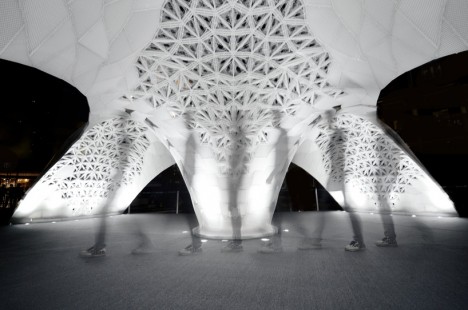
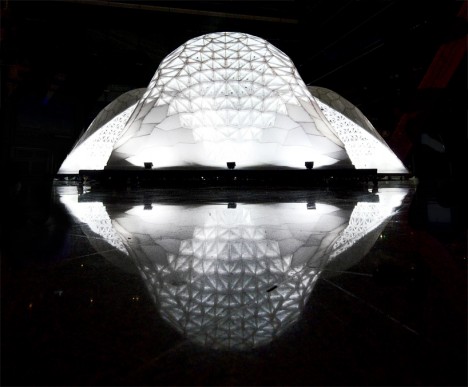
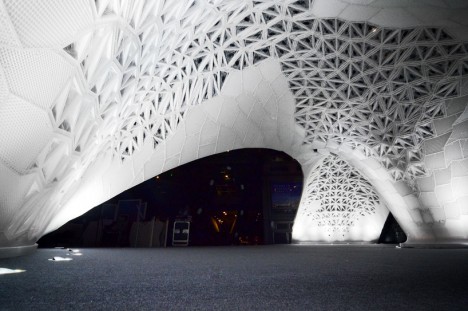
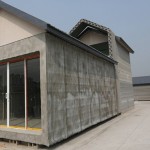
Inspired by the complex organic shape of a volcanic eruption, this 1,086-piece pavilion in Beijing has just been awarded a Guinness Book of World Records distinction for the largest 3D-printed structure in the world.

3d whole structure

3d printed structure above

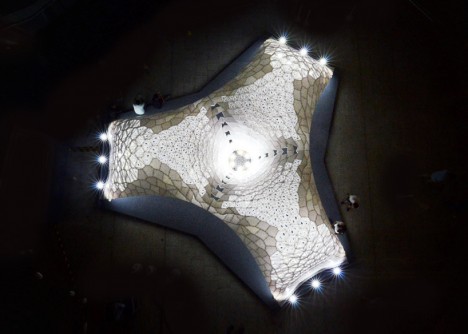
Created by the Laboratory for Creative Design, the VULCAN stands nearly 10 feet tall and spans 24 feet across, named after the Latin name for the Roman god of fire.

3d printed silk cocoon

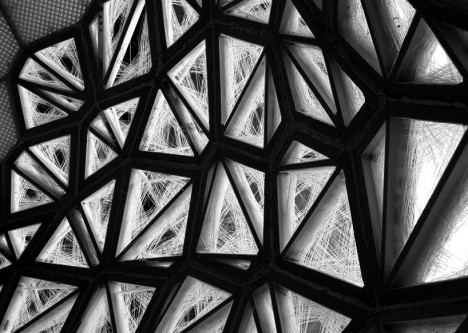
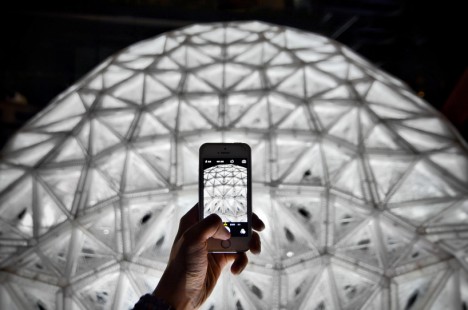
Its robust geometric components reference the divine, while a fragile web of cocoon-inspired interconnections between panels are inspired by man.

3d printed pavillion

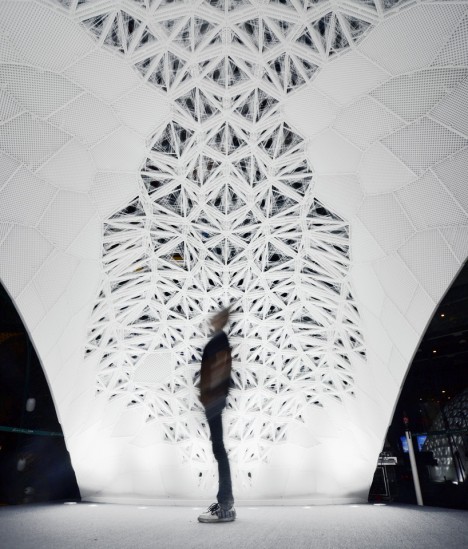
Human-scaled arches overhang an open space below, formed by three ramping forms flanking each entry and rising up from fragile points of floor contact.

3d under dome

Th endeavor took 30 days and 20 large-scale 3D printers to complete, then 15 people for 12 days to assemble the pieces on site into the whole pavilion.

3d details

3d selfie

“VULCAN represents a new reality – that modern architects are able to achieve their ideal design quality from concept to construction using digital design and fabrication methodologies,” said Yu Lei at Beijing Design Week. “This development will increasingly blur the boundaries between technology and art.”

Share on Facebook


[ By WebUrbanist in Architecture & Public & Institutional. ]

[ WebUrbanist | Archives | Galleries | Privacy | TOS ]


WebUrbanist

 
Comments Off on Volcanic Architecture: World’s Largest 3D-Printed Structure

Posted in Creativity


Shocking Aftermath: Nature Reclaims Post-Disaster Fukushima

17 Oct

[ By Steph in Art & Photography & Video. ]

fukushima 1

Looking at photographs of highways entirely eaten by vines and destroyed shops filled with trash and cobwebs, it’s easy to downplay their tragedy by comparing them to the set of a post-apocalyptic film. All of these images of Fukushima, Japan, taken four years after the earthquake and tsunami that caused the local nuclear power plant to melt down, almost seem too shocking to be real. But they are, and photographer Arkadiusz Podniesinski doesn’t want you to forget it. Within the exclusion zone, contaminated by radiation, lies a haunting ghost town with signs of its abrupt abandonment strewn everywhere you look.

fukushima 2

fukushima 3

fukushima 5

If this all sounds reminiscent of another nuclear disaster, that’s part of the point of Podniesinski’s photo series. The photographer has visited Chernobyl a number of times over the past seven years, documenting its deterioration and subsequent reclamation by nature in the hopes that he could help remind the world that it’s human error that keeps causing these events to occur.

fukushima 7

fukushima 11

fukushima 12

fukushima 9

“It is not earthquakes or tsunami that are to blame for the disaster at the Fukushima Daiichi nuclear power station, but humans. The report produced by the Japanese parliamentary committee investigating the disaster leaves no doubt about this. The disaster could have been foreseen and prevented. As in the Chernobyl case, it was a human, not technology, that was mainly responsible for the disaster.”

fukushima 17

fukushima 16

fukushima 15

fukushima 10

“I came to Fukushima as a photographer and a filmmaker, trying above all to put together a story using pictures. I was convinced that seeing the effects of the disaster with my own eyes would mean I could assess the effects of the power station failure and understand the scale of the tragedy, especially the tragedy of the evacuated residents, in a better way. This was a way of drawing my own conclusions without being influenced by any media sensation, government propaganda, or nuclear lobbyists who are trying to play down the effects of the disaster, and pass on the information obtained to as wider a public as possible.”

fukushima 14

fukushima 8

fukushima 13

See dozens more incredible images and read the accompanying story of Podniesinski’s journey through the Fukushima Exclusion Zone on the photographer’s website.

Share on Facebook


[ By Steph in Art & Photography & Video. ]

[ WebUrbanist | Archives | Galleries | Privacy | TOS ]


WebUrbanist

 
Comments Off on Shocking Aftermath: Nature Reclaims Post-Disaster Fukushima

Posted in Creativity


Built of Bombs: Unexploded Ordinance Turned Into Boats & Homes

16 Oct

[ By WebUrbanist in Culture & History & Travel. ]

A legacy of living in the most-bombed country per capita in world history, Laotian citizens have spent decades since the Vietnam War dealing with close to 100 million undetonated objects of local destruction.

In the 1960s and 1970s, the US covertly dropped hundreds of millions of bombs on the country, at an average rate of one bomb per eight minutes. Today, converted bomb remnants are visible across the country, used virtually intact to loft houses above flood planes, hollowed out and turned into watercraft or containers, or stripped down for scrap.

bomb architecture scrap lift

An entire (now shrinking) nationwide industry has grown up around finding, stripping and transforming cluster bombs into metal pieces and parts deconstructed or refit for various new uses. In many villages, bombshells are visible throughout the built environment.

Photographer Mark Watson took a cross-country bike trip and documented these remarkable cases of reuse. “Scrap from such widespread bombing has been utilized in people’s homes and villages,” Watson said, “for everything from house foundations to planter boxes to buckets, cups and cowbells.”

bomb boat riverfront

While it may sound at first like an uplifting story of turning swords into ploughshares, there is a dark side to this tale. To this day, over 100 people die annually from accidental detonations, either from bombs still loose in the countryside or in attempts to deactivate or convert found ordinance.

Non-profit organizations working to clear the country of this danger estimate it may yet take another century to complete the cleanup process (via Inhabitat and Mark Watson of Highlux Photography).

Share on Facebook


[ By WebUrbanist in Culture & History & Travel. ]

[ WebUrbanist | Archives | Galleries | Privacy | TOS ]

WebUrbanist

 
Comments Off on Built of Bombs: Unexploded Ordinance Turned Into Boats & Homes

Posted in Creativity


Temporary Retrofit: Micro-Dwellings for Unoccupied Buildings

15 Oct

[ By WebUrbanist in Architecture & Houses & Residential. ]

modular housing soluation

Designed for empty warehouses or buildings under construction, these material-light shelters provide functionality for liminal interiors either past their prime not yet in use. Places like the infamous Tower of David, a restarted project previously inhabited by skyscraper squatters, would be an ideal candidate for this sort of system.

modular light house

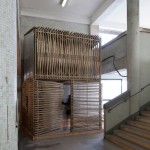
A polyethylene-coated metal grid frames these modest shelters, serving as walls and doors and supporting interior shelves and an exterior fabric facade. A plastic-laminated plywood floor floats above concrete or whatever raw surface is found in a target structure. Nylon nets provide a degree of privacy while letting in light and can be covered by opaque cloth as well.

modular dwelling inside concrete

modular micro warehouse dwelling

modular parking lot structure

Each dwelling can be completed with just $ 1200 and while no heating or cooling is included the system is intended to work well in tropical or other climates supporting open-air living. Since a stable roof and floor are provided, the main task is simply filling in gaps for habitation.

modular dwelling interior design

modular home entrance

All(zone) drew inspiration for their Light House from traditional architecture of Thailand, often designed to be collapsed and moved as needed.

modular housing prototype

modular space visualizatoin

The light and flat-packable materials make it easy to ship these systems in conventional containers or other forms of transit, making them suitable possibilities for emergency shelters as well.

modular sleeping bed space

modular wire shelving

modular living room

The designers tested their prototype by deploying it in a parking garage and staying within their mockup module for a few nights.

Share on Facebook


[ By WebUrbanist in Architecture & Houses & Residential. ]

[ WebUrbanist | Archives | Galleries | Privacy | TOS ]

WebUrbanist

 
Comments Off on Temporary Retrofit: Micro-Dwellings for Unoccupied Buildings

Posted in Creativity


Bold Border Checkpoint: Cantilevered Curves Welcome Visitors

15 Oct

[ By Steph in Architecture & Public & Institutional. ]

sarpi checkpoint main

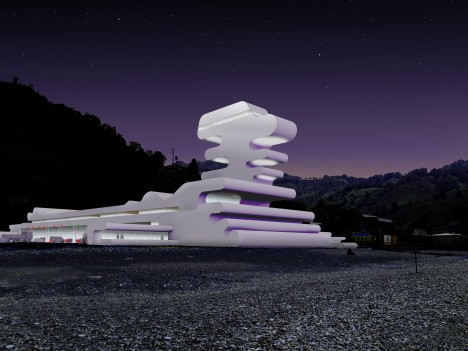
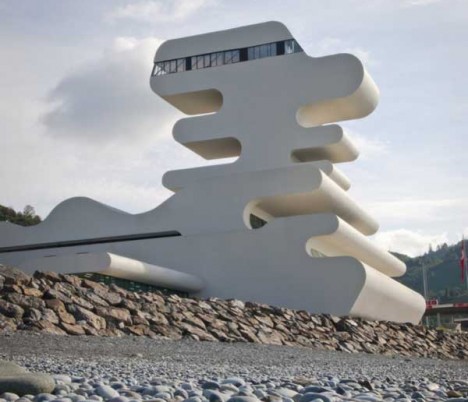
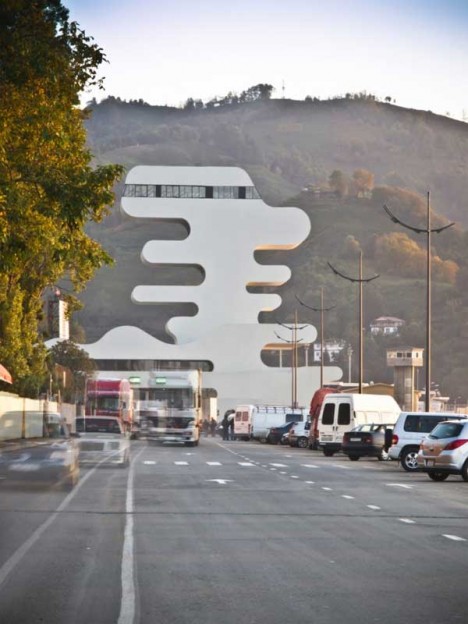
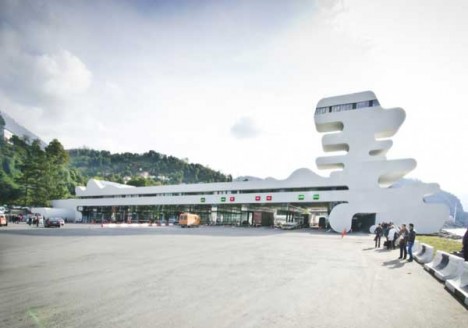
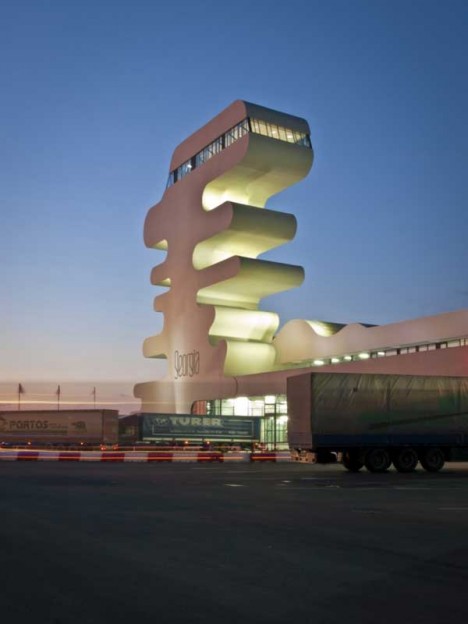
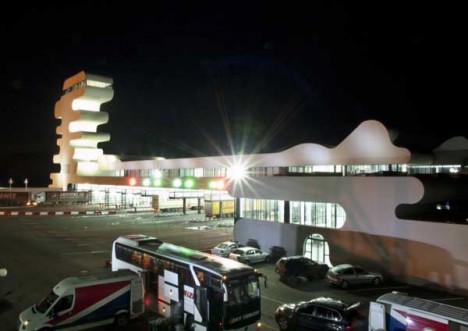
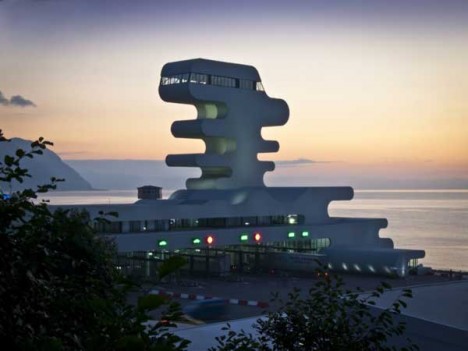
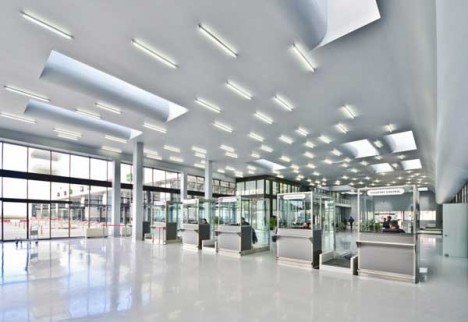
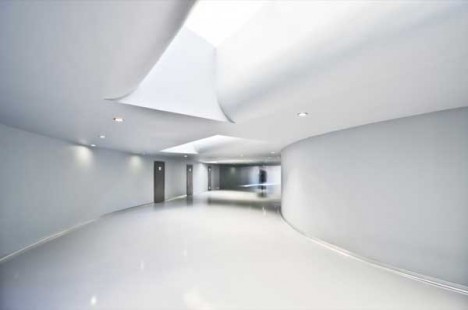
Passing over the border between Turkey and Georgia isn’t an experience you’re soon to forget thanks to the surreal, undulating concrete customs checkpoint structure looming over the Black Sea. A major stop for business travelers, yet located in the sleepy village of Sarpi, the building offered a chance for the client – Georgia’s Ministry of Finance – to make a lasting impression on visitors, representing the new, modern incarnation of the formerly Soviet-run country.

Sarpi checkpoint 1

sarpi checkpoint 4

sarpi checkpoint 5

sarpi checkpoint 3

sarpi checkpoint 9

The main volume of the building is low and long, lean as a ship, as if it’s making its way through the streets to launch itself into the water. From one end of this structure rises a strange tower with multiple cantilevered levels overlooking the coastline. It’s topped with a viewing platform, and in addition to the customs facilities, houses a cafeteria, staff rooms and a conference room.

sarpi checkpoint 6

sarpi checkpoint 3

sarpi checkpoint 7

sarpi checkpoint 8

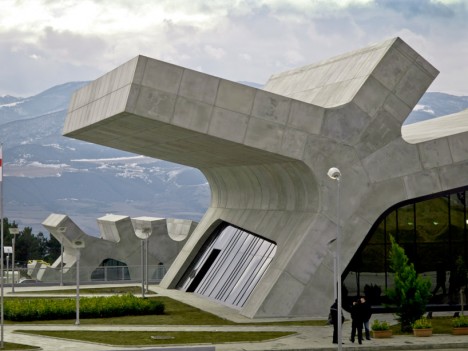
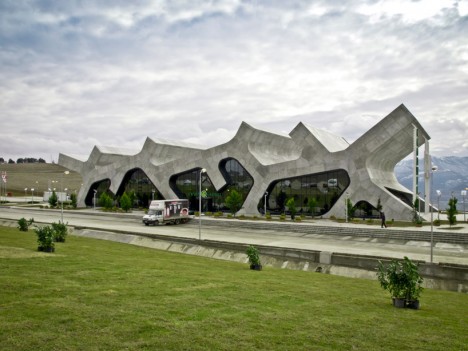
Berlin-based architect J. Mayer H. wanted to represent “the progressive upsurge of the country” in visual form, departing from the usual architectural style of the region. While the highly unorthodox shape of the building fits in well with the rest of the architect’s oeuvre, including the Georgia rest stop pictured below, it’s also somehow fitting for a region still filled with bizarre Soviet monuments.

j mayer h rest stop 2

j mayer h rest stop

With its sculptural profile, the structure almost seems more like an oversized piece of public art than a functional building, reminiscent of the incredible futuristic concrete monuments built by the Soviets that can still be found in Yugoslavia today. In this sense, the Sarpi checkpoint almost seems retrofuturistic. Some people say it looks like an abstracted profile of Snoopy.

Share on Facebook


[ By Steph in Architecture & Public & Institutional. ]

[ WebUrbanist | Archives | Galleries | Privacy | TOS ]

WebUrbanist

 
Comments Off on Bold Border Checkpoint: Cantilevered Curves Welcome Visitors

Posted in Creativity