Blog

  • Upper Yosemite Falls & Half Dome Moonbow

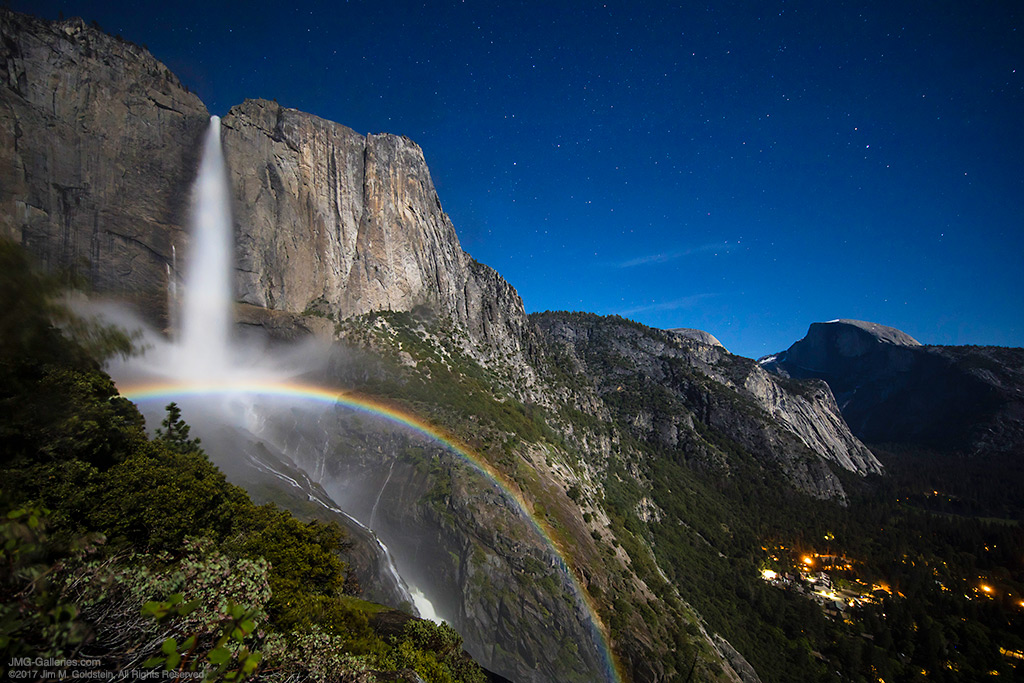
    A wide arcing moonbow stretching across Upper Yosemite Falls on a clear night moonlit night in Yosemite National Park.

    A wide arcing moonbow stretching across Upper Yosemite Falls on a clear night moonlit night in Yosemite National Park.

    This past week was the optimal time to photograph moonbows in Yosemite Valley. I revisited photographing the moonbow at Upper Yosemite Falls as I had last year, but this time there was considerable more water and as a result the moonbow (rainbow by moonlight) was more easily seen. It was considerably larger, more vivid in color and wider arching. Conditions were great and at times a little too good as the 3 cameras I set up were completely drenched. If you’d like to read about what it took to get this photo be sure to check out my last blog post, Upper Yosemite Falls Moonbow – Getting The Shot, as it goes into a lot of detail about the hike and the challenges I faced.  If you’re curious about gear and settings this was taken with a Canon 5D Mark IV and Canon 11-24mm f/4 lens. Settings were ISO 640, 15 seconds at f/4.

    The post Upper Yosemite Falls & Half Dome Moonbow appeared first on JMG-Galleries – Landscape, Nature & Travel Photography.


    JMG-Galleries – Landscape, Nature & Travel Photography

  • GIMP 2.8.22 fixes crash issues and 10-year-old bug

    Developers of the GNU Image Manipulation Program, or GIMP, have released an updated version that corrects a number of problems that could cause the software to crash. The free-to-use ‘Photoshop alternative’ is now in version 2.8.22 for Mac and PC and includes fixes for a number of operations, such as drag-and-drop/copy-and-paste uses of the clip board and use of the color picker, that could make the program crash.

    A new arrangement for the way the main image window appears in single-window mode is also said to make painting easier when particular themes created in the GIMP tool kit are in use. A further issue solved is one that has bothered the developers since 2007 – that of a vulnerability that allowed attackers to crash the import plug-in for ICO files.
    For more information see the GIMP website. 

    Developer’s information

    GIMP 2.8.22 Released

    We are releasing GIMP 2.8.22 with various bug fixes.

    All platforms will benefit from a change to the image window hierarchy in single window mode, which improves painting performance when certain GTK+ themes are used.

    This version fixes an ancient CVE bug, CVE-2007-3126. Due to this bug, the ICO file import plug-in could be crashed by specially crafted image files. Our attempts to reproduce the bug failed with 2.8 and thus the impact had likely been minimal for years, but now it is gone for good.

    Users on the Apple macOS platforms will benefit from fixes for crashes during drag&drop and copy&paste operations. On the Microsoft Windows platforms, crashes encountered when using the color picker with special multi-screen setups are gone, and picking the actual color instead of black from anywhere on the screen should finally be possible.

    Check out the full list of fixed issues since 2.8.20.

    The source code, the Microsoft Windows installer and the Apple Disk Image for GIMP 2.8.22 are available from our downloads page; so yes, this time we made an effort to publish everything in one go 🙂

    Overview of Changes from GIMP 2.8.20 to GIMP 2.8.22
    ===================================================

    GUI:

    – improve drawing performance in single window mode, especially with
    pixmap themes

    macOS DMG:

    – Make the launcher script also set BABL_PATH
    – Add patch for GTK+ Bug 743717 to the build which concerns crashes
    during clipboard operations with a clipboard manager active
    – Add patch for GTK+ Bug 767091 to the build which concerns crashes
    on some drag & drop operations
    – generate OSX package metadata during build

    Plug-ins:

    – Fix for CVE-2007-3126, a bug in the ICO plug-in which allowed
    context-dependent attackers to cause a denial of service (crash)
    via an ICO file with an InfoHeader containing a Height of zero.
    We couldn’t reproduce any crash in recent version, but fixed the
    error messages for good measure
    – Avoid creating wrong layer group structure when importing PSD
    files (already fixed in 2.8.20, didn’t make it to the NEWS)
    – Prevent a crash in PDF plug-in if images or resolution are large
    – stop parsing invalid PCX files early and prevent a segmentation fault

    General:

    – if NOCONFIGURE is set, autogen.sh won’t run configure
    – VPATH builds for win32 targets have been fixed

    Updated Translations:

    – Basque
    – Brazilian Portuguese
    – Catalan
    – Chinese (PRC)
    – Finnish
    – Greek
    – Hungarian
    – Italian
    – Kazakh
    – Norwegian
    – Polish
    – Slovenian
    – Spanish
    – Swedish

    Articles: Digital Photography Review (dpreview.com)

  • Architecture in Miniature: 13 Modern Dollhouse & Other Tiny Buildings

    [ By SA Rogers in Art & Sculpture & Craft. ]

    Fit for the most discerning fans of modern architecture, these dollhouses and other miniature architectural creations feature tiny moving parts, high-end designer furniture, swimming pools, built-in lighting and other fun details, rendered in astonishing realism. You’ll almost wish you could shrink yourself small enough to tour their often-fantastical layouts, which range from the luxurious to the gritty.

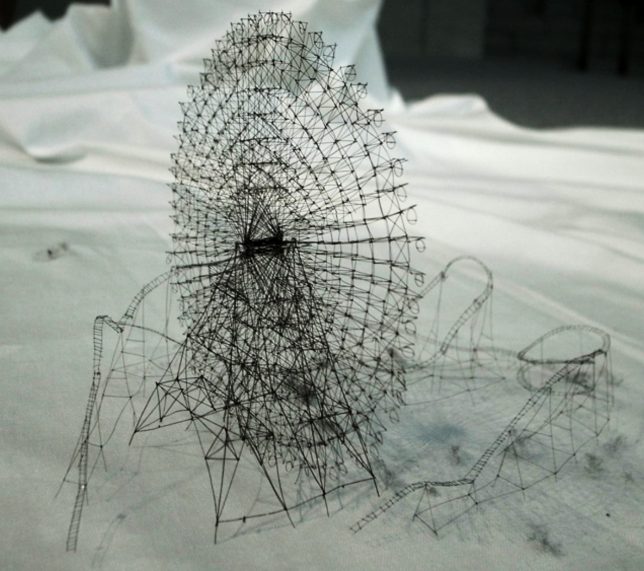
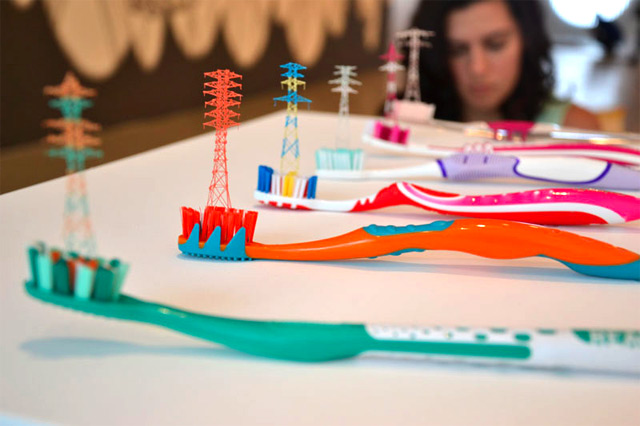
    Flipped Structures & Tiny Towers by Takahiro Iwasaki

    Japanese artist Takahiro Iwasaki makes mirrored wood architectural models and tiny towers made of toothbrush bristles, both in ongoing series inspired by the structures commonly found in Japan. The artist says ‘Reflection Model’ is meant to show that everything can become vastly different depending on your perspective.

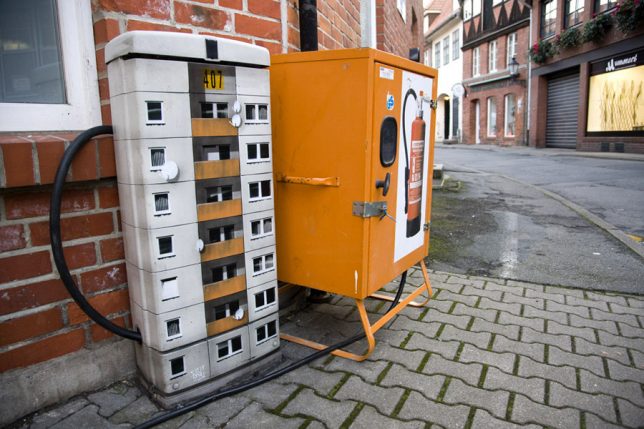
    Urban Utility Buildings by EVOL

    Grimy rectilinear urban objects become weathered, aging apartment buildings in the hands of street artist EVOL, who uses cardboard, stencils and spray paint to transform them into micro cities.

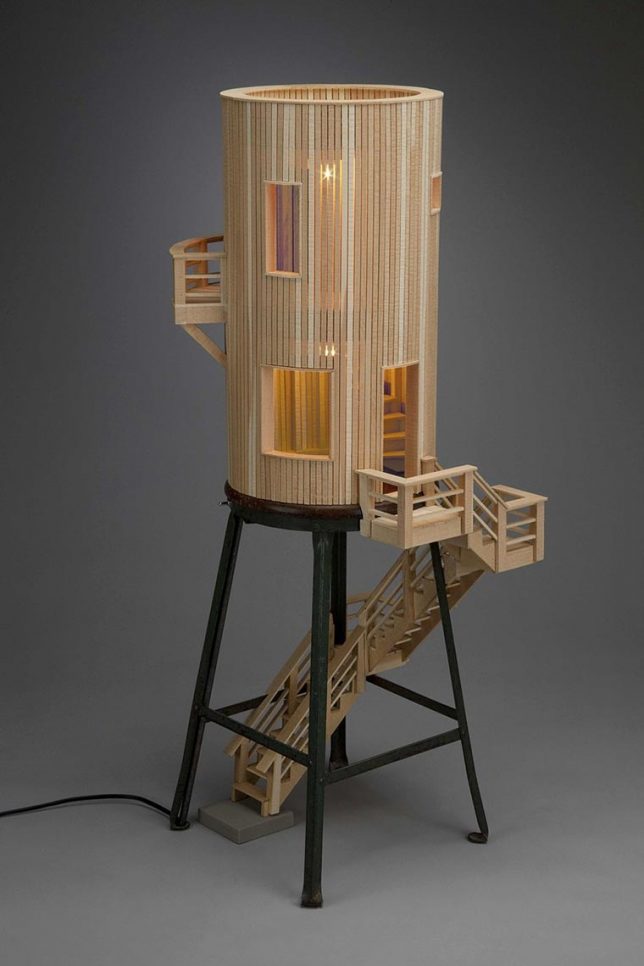
    Architectural Furniture by Ted Lott

    Wooden stools and chairs act as the structural basis for tiny timber-frame buildings by artist Ted Lott. Using found furniture and pine, the artist re-contextualizes stick frame construction, adapting it to the curves of the base object in works that are remarkably skeletal.

    Hyperrealistic Architectural Models by Joshua Smith

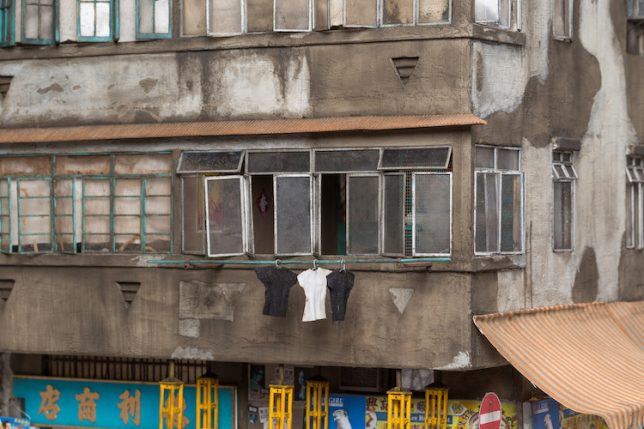
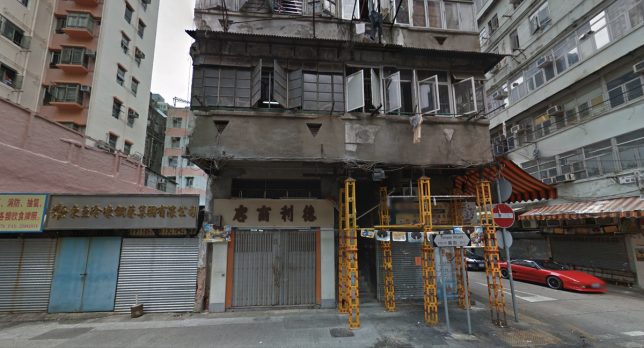
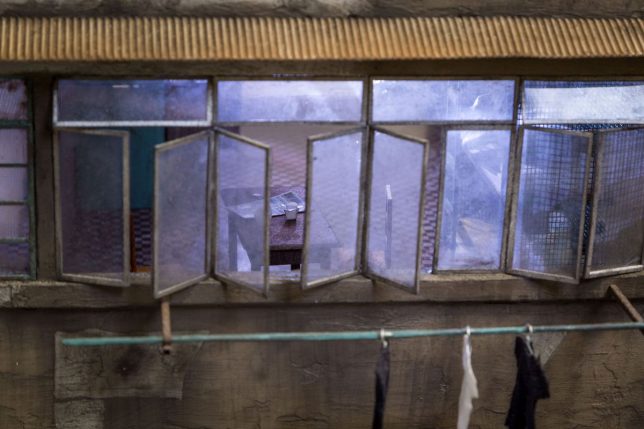
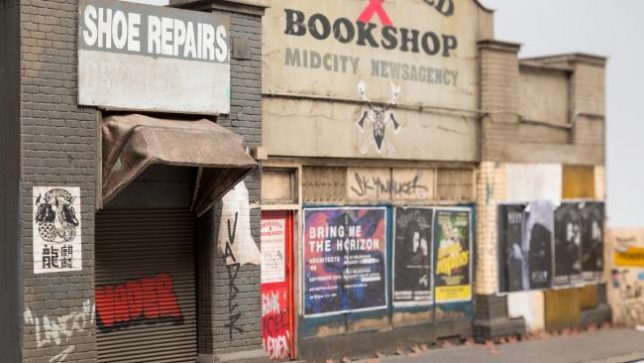
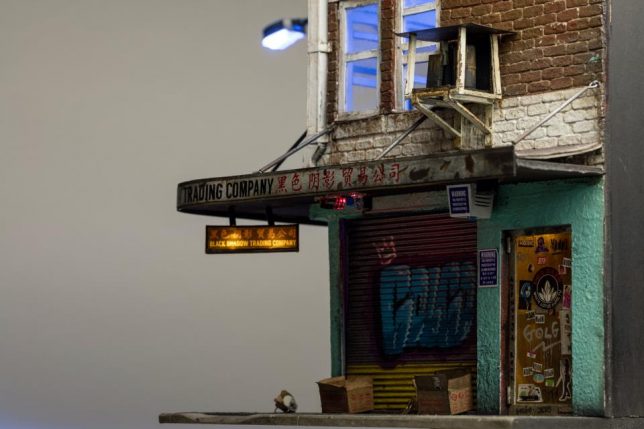
    Every last detail on Joshua Smith’s incredible architectural models looks aged, weathered and utterly realistic, from peeling paint and stained awnings to graffiti and posters wheat pasted onto the walls. The artist finds real-life urban buildings to use as a starting point and crafts everything from trash bags in a dumpster to Chinese takeout on tiny rooftop dining tables, from the restaurant on the bottom floor.

    Next Page – Click Below to Read More:
    Architecture In Miniature 13 Modern Dollhouse Other Tiny Buildings

    Share on Facebook


    [ By SA Rogers in Art & Sculpture & Craft. ]

    [ WebUrbanist | Archives | Galleries | Privacy | TOS ]


    WebUrbanist

  • Which DSLR Lens Should You Choose?

    Nothing gives you more creative control over your photo snapping, than venturing into the world of DSLR photo-ing.

    You can trick out your camera with new lenses, lights, tripods, and more to get just the photo-style you’re looking for. But, figuring out what lens to pick up first can be daunting.

    So, we asked our Twitter followers (that’s you! Or … it could be) what lenses they first bought (or wish they had) after their kit lens – and we got lots of great answers and advice!

    We’ve put these tips into this helpful guide so buying your first lens will be easy-peasy.

    (…)
    Read the rest of Which DSLR Lens Should You Choose? (838 words)


    © Meg for Photojojo, 2017. |
    Permalink |
    No comment |
    Add to
    del.icio.us

    Post tags:


    Photojojo

  • A slow motion dive onto a trampoline covered with mouse traps

    You’ve said it to yourself at least 100 times: ‘Hey, if only I had a trampoline, and maybe 1,000 mouse traps, I could have a jolly good time by climbing up a ladder and throwing myself on top of them all.’

    We understand this is a bucket list item for an awful lot of people. After all, with trampolines readily available online, and mouse traps that can be ordered in bulk, why the heck not? Of course, if you’re being really honest with yourself, you’ll admit that the only thing holding you back from acting out this all-too-common fantasy is not having a $ 100,000 Phantom Flex 4K camera so that you share the experience in super-slow-motion on social media.

    Thankfully, the Slow Mo Guys are around to help. It took them four hours to set everything up, and just a few seconds to take the plunge, but with super-slow-motion we get to see every detail.

    Of course, this got us curious. If you had access to a Phantom Flex 4K, what would you shoot in slow motion?


    Articles: Digital Photography Review (dpreview.com)

  • Shiftcam is a 6-in-1 lens case for the iPhone 7 Plus

    The dual-camera of the iPhone 7 Plus with its 28 and 56mm equivalent lenses, offers more flexibility in terms of focal length and framing than most smartphones. The Kamerar attachment we tested some time ago increases this flexibility even further by adding more tele reach, macro capability and a fish-eye lens. 

    The new Shiftcam camera lens case that is now on Kickstarter takes things one step further by adding even more lens options. The concept it similar to the Kamerar, with a system that is built around a shock-proof case that comes with a camera grip and an optional wrist strap. A snap mechanism and sliding lens module allow for quickly switching between telephoto, wide-angle, fisheye and macro options. The current prototype design includes the following lenses:

    • 120 Degree Wide-angle
    • 10X Macro
    • 20X Macro
    • 180 Degree Fisheye Lens
    • 2X Telepho

    The makers of the Shiftcam are currently collecting funds for finalization of the design and mass production on the Shiftcam Kickstarter page where you can also secure a Shiftcam case by pledging $ 59. Shipping is planned for August 2017. We are hoping to get our hands on a review unit soon for a more in-depth look.

    Articles: Digital Photography Review (dpreview.com)

  • Can you build a cheaper X100 with a mirrorless body and pancake lens?

    One of the ones to beat: the Fujifilm X100F offers excellent image quality in a relatively compact and, dare I suggest, quite attractive package.

    As a bunch of (perhaps above-averagely tech devoted) photographers, one of the unifying factors in the office is our love of larger sensor, fixed prime lens cameras. Obviously there are still arguments about whether they should be 28mm or 35mm equivalent and whether the compactness and lower price of APS-C outweighs the image quality benefits of full-frame, but that’s because we’re an awkward, opinionated bunch. We’re broadly agreed that they’re a great concept.

    But is there another way of getting the same result? Of putting together a small mirrorless camera and one of the newly prevalent pancake primes, and ending up with a cheaper and more flexible combination?

    There’s always something enticing about the prospect of doing something your own way, of cleaving from the path prescribed by the marketeers, and coming up with a better solution.

    So what are your options? Let’s looks at the lenses available and then see if there’s an appropriate body to match.


    The lenses

    First it helps to decide what focal length you want. I’ve mapped the most common pancake lenses on a graph, showing equivalent focal length and equivalent aperture. This lets us compare field of view, depth of field and, to a reasonable approximation: low light image quality. I’m not going to argue about this, it just does.

    As this chart shows, you broadly speaking get to choose from roughly 24, 28, 35 or 40mm equivalent lenses. I’ve included a couple of our favorite fixed-lens prime cameras on for reference.

    Looking at the chart, you might think: ‘great, I’ve got lots of choices.’ But please let me ‘manage your expectations,’ if you don’t mind me using one of the most loathsome phrases I’ve ever encountered.

    Why don’t I want you to get your hopes up too much? Well, mainly because some of these lenses just aren’t very good. The precise reasons for my skepticism vary but a recurrent concern is that far too many of these lenses use ‘unit focus’ or ‘group focus’ design, where a most, if not all of the lens groups have to be moved around to focus the lens. This is probably the worst way to design a lens that’s going to be used with contrast detection AF: accelerating lenses in one direction and then the other rewards the lightest of focusing elements. By contrast, trying to heft multiple groups around takes rather longer. On the other hand, this design can give good optical results. Eventually.

    Then you’ve got the lenses that are optically iffy. The Sony 16mm F2.8 E may stand out because it’s the only 24mm equivalent option here, but there’s the slight downside that it’s legendarily indifferent. In fairness, there may be examples that don’t have corners or whole sides of the lens that are a bit mushy, I’ve just never encountered one.

    28mm equiv.

    28mm equivalent lenses allow you to shoot slightly wider-angle scenes. Or this picture of a train.

    There are two stand-out choices here: the tiny but seeming end-of-life Panasonic Lumix G 14mm F2.5 II Aspherical II and the not-really-a-pancake at all Sigma 19mm F2.8 DN for Sony E-mount. Both are fast-focusing and, at around $ 280 and $ 200 respectively, are rather keenly priced. And, to add to the appeal, the main camera they’re likely to have to face down is the Ricoh GR II, which has only a moderately fast F2.8 maximum aperture (and unit focus, would you believe), so either of these lenses should be able to offer a credible alternative.

    35mm equiv.

    At 35mm equiv, again there are two obvious choices. Personally I’d prefer the Olympus 17mm F1.8 over the Canon 22mm F2, just on the basis that it uses a single, internal focus element. This means it’s much faster than the Canon, whose group focus design holds it back a little, even on the latest EOS M bodies with their clever Dual Pixel AF.

    That said, the Canon is a jolly reasonable $ 250, rather than the $ 400 that the Oly will set you back. Also, the Olympus is again a little stout to really class as a pancake lens. But, given it can be paired with some very small bodies and because I like its snap-back manual focus ring, I’m keeping it in the running.

    40mm equiv.

    The GX85 isn’t as small as the GX850 (which makes us mourn the end of the GM line all the more), but it still pairs rather well with the 28mm equiv 14/2.5 or the 40mm equiv 20/1.7.

    40mm equiv used to be a fairly standard lens for fixed prime lens cameras. It doesn’t really have the hint-of-wide-angle charm of a 35mm equiv, but some people like it. It’s Panasonic’s 20mm F1.7 that’s the obvious choice here. It’s the same old story: ‘first pancake design? let’s use unit focus,’ but it’s a pretty reasonable $ 270 and it’s fast enough so long as you don’t have ambitions of using it in AF-C mode all the time.

    Fujifilm’s 27mm F2.8 is a little slower, in equivalent terms, but it’s really the combination of this and a $ 450-odd price tag that puts me off.


    The cameras

    So, what are the best cameras to pair these little lenses with? Personally, I’d argue that the perfect pancake-shooting camera will carefully balance three key properties: size, price and a degree of external control. I don’t expect all three to be optimal, but those are the things I need, if I want to get anywhere close to the experience of something like a Ricoh GR or a Fujifilm X100 series.

    I’m not going to insist on a viewfinder, since Ricoh, Fujifilm, Leica and Sony have sold prime lens cameras without them and presumably they’ve done some sort of market research before committing hundred of thousands of dollars to that decision. But it’s a nice thing to have.

    There’s more to this than lens depth. A 60mm equiv camera with a full-depth SLR mount and single control dial isn’t quite what I’m talking about.

    Sony E-mount

    This one’s easy, I reckon. The Sony a6000 is small, it offers a degree of external control plus a little bit of customization, has a viewfinder and is available for $ 500. Even though I have mixed feelings about the small, convenient and frequently slightly wonky 16-50mm power zoom, you can pick it up as part of a kit for just one hundred extra dollars. And, in doing so, take some advantage of the extra flexibility that comes from going down the ILC route.

    The a5100 is also worth a look. It’s essentially the same hardware but with fewer controls and less scope for customization so would seems to fall foul of my rules almost immediately, but the flip-up touchscreen is going to appeal to some people.

    I wouldn’t, personally, try to save money by picking up an NEX-6, at this point. On paper it doesn’t look that different from an a6000 (it was slightly higher spec in a couple of respects), but having got used the to improved menus and customizable function menu of the a6000, I couldn’t go back. Especially not for a camera I actually want to enjoy.

    Canon EF-M

    Canon has bounced around all over the shop in terms of who it’s targeting with its EOS M cameras. Whether this is an attempt to protect its DSLR sales or a sincere belief that only entry-level users want mirrorless cameras, it’s meant there aren’t many options if you want an enthusiast level of direct control.

    The Canon 22mm F2 isn’t the fastest focusing lens but it’s better on the company’s more recent cameras and makes a great ‘world as I see it’ documentary lens.

    The EOS M3 was the first model to include both a command dial and a dedicated exposure comp dial, so is one of the few I’d consider for this task. You can pick one up for around $ 430 at the moment, so it’s pretty well priced, too.

    Like the Sony a5100, the EOS M10 is a simplified, primarily touchscreen-controlled model, which isn’t really my thing, but might be yours.

    Sadly, both of these models are built around the company’s last generation Hybrid AF CMOS sensors. It works reasonably well but it’s not a patch on the Dual Pixel AF that arrived with the M6. The M6 would be a much better fit for this role than either of the bodies I’ve mentioned, but sadly it’s currently around $ 900, which significantly undermines the aim of putting together a cheap kit. If the price drops, though…

    Micro Four Thirds

    The Micro Four Thirds system has two great advantages, here: as the world’s first Mirrorless Interchangeable Lens Camera system, both Olympus and Panasonic have had enough time to develop some inexpensive bodies with a good level of control. Then, of course, its slightly smaller sensor allows the camera bodies and lenses to be that bit smaller, too.

    The Panasonic 20mm F1.7 pairs well with a small camera body, meaning it’s with you when a stranger unexpectedly throws straw at you.

    This leaves you with a good choice of bodies. On the Panasonic side of things, there’s the GX850/GX800, which is currently the company’s smallest body. Sadly it’s not quite as small as the ‘GM’ series it replaces. The GM5 would be perfect for this application, but it’s only going to get harder to find one at a decent price, now. The slightly larger GX85/GX80, which gives more direct control. If you’ve spotted anything of a trend so far, you won’t be surprised that this is the one I’d go for.

    The Olympus rival here would be the E-PL8 (or the PL7 if you can find one). With a little bit of button reassignment and customization, the PL8 makes a pretty good hands-on shooter and also offers a flip-up touchscreen. The JPEG color is lovely, too, which is a bonus if that was one of the factors pushing you towards the X100F.


    Recommendations:

    28mm equiv:

    • Sony a6000 + Sigma 19mm F2.8
      ~ $ 700 ($ 800 with kit zoom)

    As I say, this one’s easy. It’s a capable camera at a fiercely competitive price. The Panasonic GX85 + 14mm lens will be a bit smaller, feels a bit better in the hand and offers 4K video, but it ends up being around $ 900 and you don’t even get the kit lens for that, so I’d go with the Sony/Sigma combination.

    35mm equiv:

    • Olympus E-PL8 + 17mm F1.8
      ~ $ 950 ($ 1050 with 12-32mm kit zoom)
    • Fujifilm X-A3 + 23mm F2
      ~$ 1050 (including 16-50mm kit zoom)
    • Canon EOS M6 + 22mm F2
      ~$ 1020 ($ 1150 with 15-45mm kit zoom)

    As you can see, you get plenty of choices if you prefer the 35mm equiv focal length (which, as right-thinking people, you should). The Olympus is both pretty and pretty small, the Canon is the most expensive but fits more honestly into the Mirrorless+Pancake definition and requires much less reconfiguration to adapt it to the task.

    But, since this is an opinion piece, not a review, I’m going to cheat and choose something that I’ve not even mentioned yet: the Fujifilm X-A3 and 23mm F2. Sorry to spring it on you like that.

    He just came out of nowhere! Grabbed shot with the Fujifilm X100F

    Clearly I’m not sorry, though. The X-A3 isn’t as well built as the Canon, and the Fujifilm 23mm F2 doesn’t fit any sensible definition of a pancake, but it’s the closest you’ll get to the capabilities of the X100 series. On top of this, the X-A3 has twin control dials, a 24MP sensor and a sensible price tag, so it’s in. And, just to add to the appeal, it is part of a system with the best range of circa-$ 500 prime lenses I can think of. So there.

    Fixed lens or ILC?

    Swings and roundabouts: there are advantages and disadvantages to each solution, but both these 35mm equivalents have a lot going for them, whether as main or secondary camera.

    Ultimately, going down this route, whichever brand and combination you choose doesn’t buy you such an photographer-focused camera as the likes of the Ricoh GR II or the Fujifilm X100F. You usually have to settle for a darker lens and significantly less control. Worse still, you don’t even necessarily save that much money.

    However, the clear benefit of slapping a pancake (or something vaguely like it) on a little mirrorless camera is flexibility. Because, as soon as you want to expand your horizons beyond the pancake’s field of view, you can can put on another lens and do just that. So please think carefully about which other lenses are available and, whatever you decide, I hope you enjoy the prime lens shooting experience.

    Articles: Digital Photography Review (dpreview.com)
  • Flat-Pack Life Support: NASA’s Inflatable Hydroponic Space Greenhouse

    [ By WebUrbanist in Conceptual & Futuristic & Technology. ]

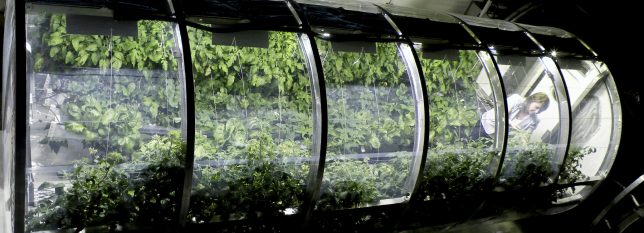
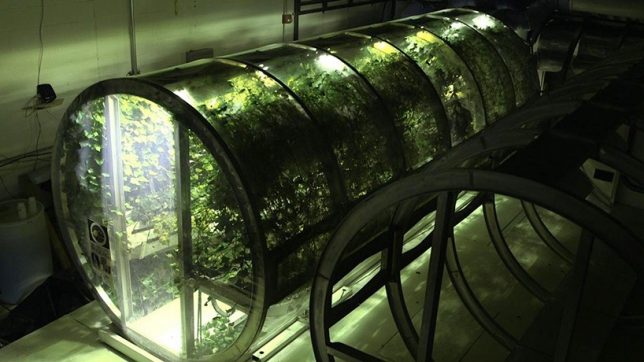
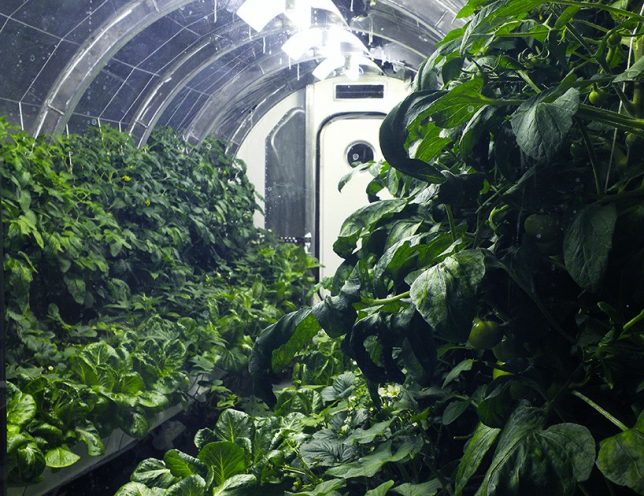
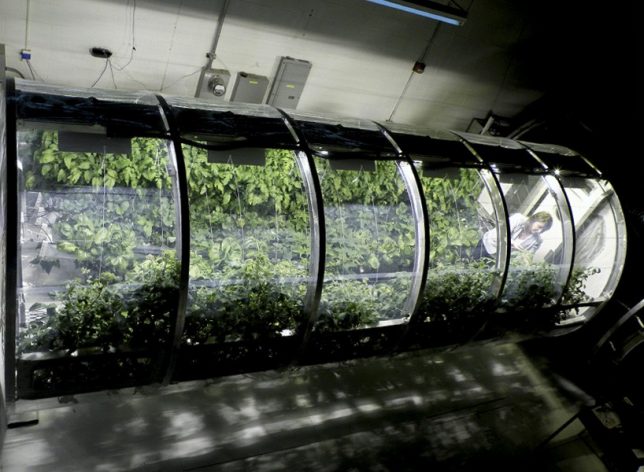
    A key development in the quest to create sustainable ecosystems in space, this expandable greenhouse prototype aims to generate essential food and oxygen for long-term astronaut travel.

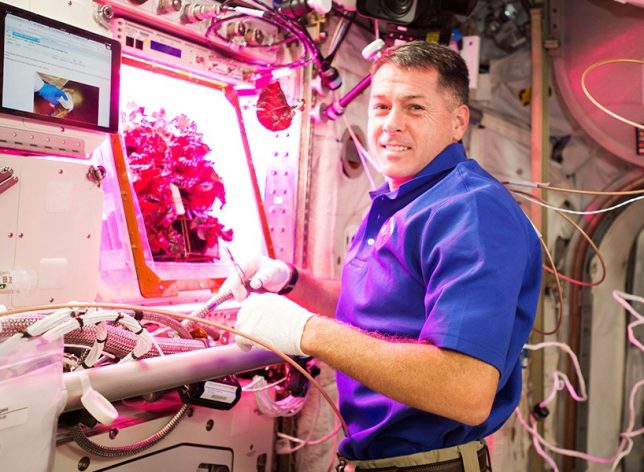
    Recently, Peggy Whitson broke the record for longest stay in space (534 days) and astronauts have started growing their own vegetables on the International Space Station. This collapsible growing unit aims to take things to the next level, enabling longer-term settlements on places including the moon and Mars.
    Developed by NASA and agricultural researchers at the University of Arizona, the test unit spans 7 by 18 feet. Its primary functions: convert carbon dioxide from crew, support plant photosynthesis. This bio-regenerative approach to life support is an essential system for recycling scarce resources off-planet.

    It also takes its queues directly from our own world: “We’re mimicking what the plants would have if they were on Earth, and using of these processes for life support. The entire system of the lunar greenhouse does represent, in a small way, the biological systems that are here on earth.”

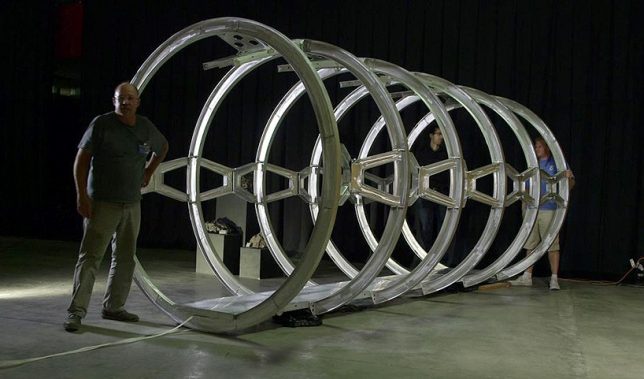
    But a big trick to the design is simply its portability: materials take up space, so engineering minimal frameworks that will work when the system is expanded is critical to getting space greenhouses into (and out of) orbit in the first place.

    Meanwhile, on the ISS, astronauts continue to grow (and consume) plants outside of Earth’s normal gravity, paving the way for a better understanding of how agriculture will really work off-planet in the future.

    Share on Facebook


    [ By WebUrbanist in Conceptual & Futuristic & Technology. ]

    [ WebUrbanist | Archives | Galleries | Privacy | TOS ]


    WebUrbanist

  • Cookin’ With Gas: 12 Abandoned Food Trucks

    [ By Steve in Culture & History & Travel. ]

    Food trucks and snack vans are mobile kitchens that offer meals on wheels to busy folks on the go… until the day they break down and are left abandoned.

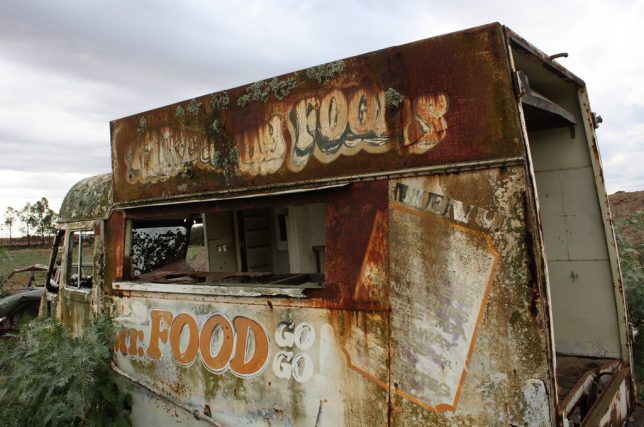
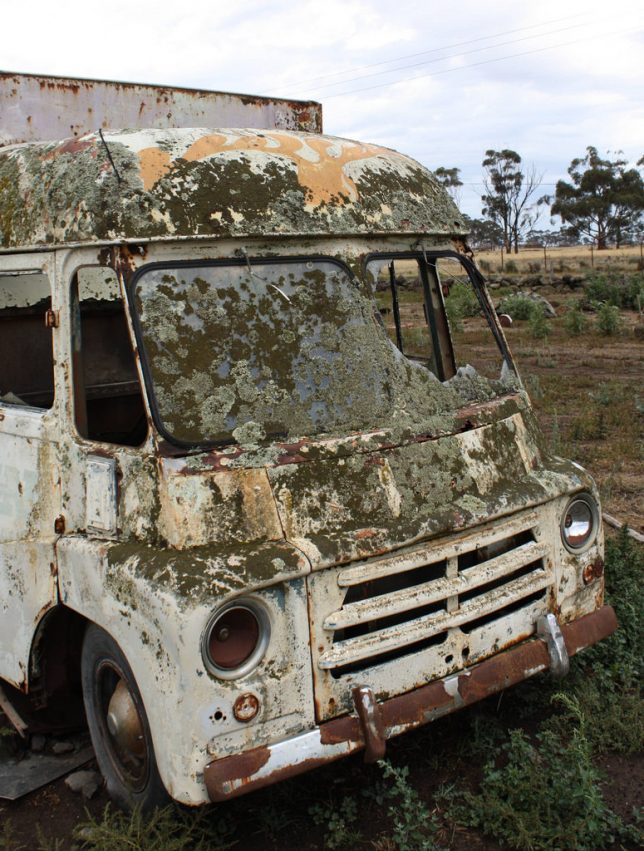
    Food trucks are specialized vehicles that aren’t easily un-specialized – especially by owners who presumably have fallen on hard times. Sometimes the only thing to do is abandon the chewed-up hulk in a field somewhere. In the case of the former “Mr. Food Go Go!”, that field is situated in Ravenhall, just west of Melbourne, Australia, and it’s brought to us by Flickr user Ken O’Toole (KENO Photography).

    Riddle Me This

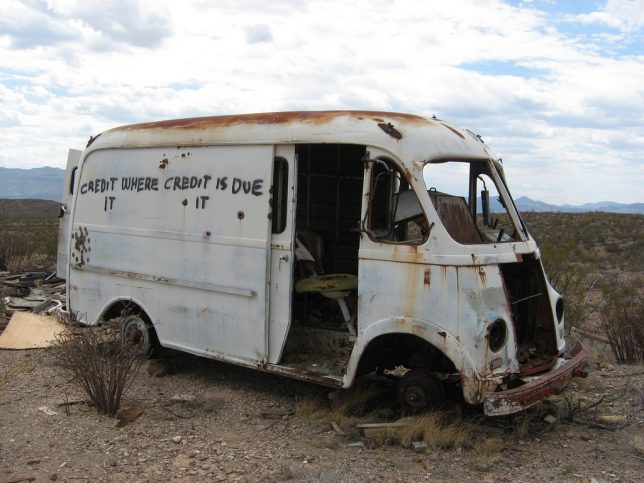
    In the Old West, cowboys saddled with a terminally ill or mortally wounded horse would “take it behind the barn and shoot it”. Times have changed but it seems were still shooting our meal tickets, for example this rough & ravaged former food truck parked permanently in driest West Texas. Flickr user food shark gets the “credit” for snapping the bullet-riddled step van above on April 18th of 2008 near Chinati Hot Springs.

    Gratefully Dead

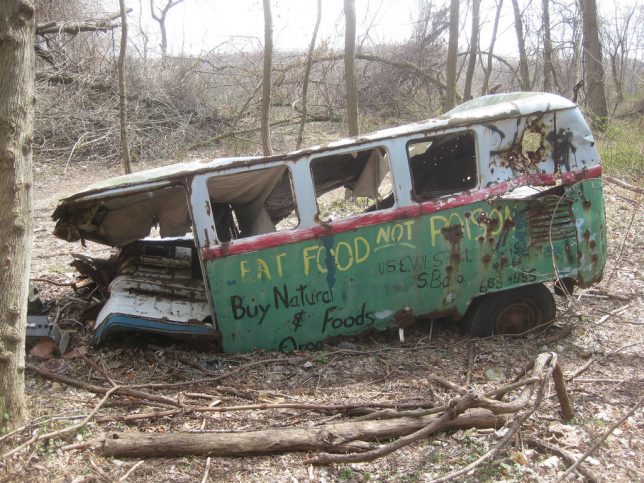
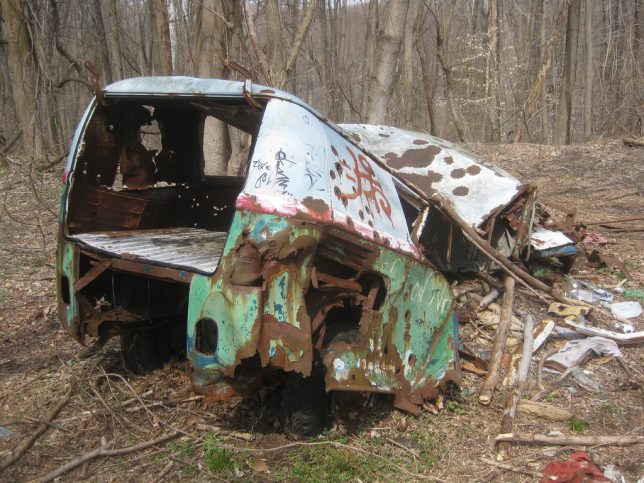
    Tired old VW Microbuses are fetching big bucks on the collector car market these days but this particular trippy hippie transport looks to be far too er, wasted for that. At least it lived out its last days doing what most minibuses dream of: serving up natural non-poisonous vittles to a new generation of Deadheads. Flickr user travelr16 caught up with the busted bus on April 3rd, 2011 on the campus of abandoned St Mary’s College near Ellicott City, Maryland.

    Sailing Into The Sunset

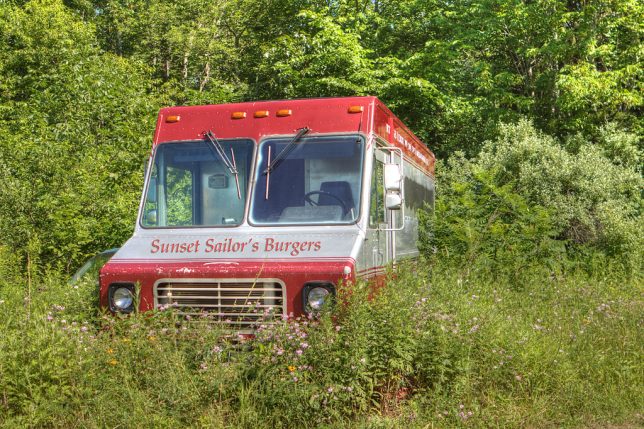
    “Sales are slow,” states Flickr user Alan (sunset sailor) of the above land-locked former burgermobile. Judging from his user name, this would appear to be his very own retired rolling fast-food emporium. The truck looks to be in respectable shape, at least compared to some of our other examples, though it’s in danger of being swallowed whole by the steadily encroaching vegetation. Sean Spicer, are you in there?

    Next Page – Click Below to Read More:
    Cookin With Gas 12 Abandoned Food Trucks

    Share on Facebook


    [ By Steve in Culture & History & Travel. ]

    [ WebUrbanist | Archives | Galleries | Privacy | TOS ]


    WebUrbanist

  • Microsoft unveils Windows Story Remix, a video editor for Windows 10

    Windows Movie Maker is revived in Story Remix, an app announced today for Windows 10 users at Microsoft’s Build conference. It allows users to easily edit together photos and videos from their mobile and desktop collections into movie clips.

    Microsoft’s presentation emphasizes its ease-of-use and collaboration features, but the attention-getter is the ability to easily drop in special effects. Fireballs, 3D-figures and text can be added to a scene and anchored to objects for a realistic-looking cinematic effect. 

    For those less interested in customizing their video, Story Remix can automatically edit photos and videos into a movie with basic input from the user, presenting the option to ‘remix’ the whole thing if you don’t like what you get. The demonstrations certainly look clever – we’ll be interested to see how end users take to the final product.

    Articles: Digital Photography Review (dpreview.com)