Blog

  • Seagate’s 12TB BarraCuda Pro is the fastest, highest capacity desktop drive on the market

    As storage needs grow with the rise of VR content and ubiquity of 4K video, it looks like more and more hard drive options are becoming available that boast better reliability and performance at even bigger capacities. Case in point: Seagate has just announced new 12TB versions of its IronWolf, IronWolf Pro, and BarraCuda Pro hard drives, following hot on the heels of Western Digital’s recent 12TB drive launch.

    These new Seagate drives come in a 3.5-inch form factor, with the BarraCuda Pro drive designed for desktop use, while both IronWolf drives are designed for Network-attached Storage (NAS) devices.

    According to Seagate, the new 7200rpm 12TB BarraCuda Pro is “the fastest, highest-capacity and most reliable hard drive for desktop computing available on the market today.” The inclusion of Intel Optane non-volatile memory offers responsiveness and performance akin to that of an SSD, as well as twice the load and boot speeds compared to standard drives. This tech allows the drive to offer sustained data transfer rates of 250MB/s and burst data speeds up to 6Gb/s.

    The IronWolf drives, meanwhile, are designed for creative professionals and others who prefer centralizing data onto a NAS unit. Both of the new 12TB drives support Seagate’s IronWolf Health Management software, which is designed for use with the Asustor NAS, Synology DiskStation NAS, and QNAP NAS units and helps to protect data with ‘prevention, intervention, and recovery’ solutions.

    The IronWolf 12TB drive has a sustained data transfer rate of 210MB/s and the IronWolf Pro 12TB has a sustained transfer rate of 250MB/s. Both the IronWolf and IronWolf Pro 12TB HDDs are listed on Newegg for $ 470 and $ 540, respectively. Unfortunately, the ‘world’s fastest’ of the bunch, the BarraCuda Pro 12TB drive, isn’t currently listed, but you can probably expect a price north of $ 600.

    Press Release

    Seagate Expands Guardian Series Portfolio With 12TB Drives For NAS And Desktop Computing

    12TB IronWolf, IronWolf Pro and BarraCuda® Pro deliver highest capacity, reliability and performance available on the market

    CUPERTINO, CA – Seagate Technology plc (NASDAQ: STX) announced today its IronWolf, IronWolf Pro and BarraCuda® Pro hard drives are now available at capacities up to 12TB. Offering the highest capacity, reliability and performance in the industry among network-attached storage (NAS) and desktop HDDs, Seagate’s 12TB IronWolf and BarraCuda Pro drives further extend the capabilities of the leading Seagate Guardian Series to meet the growing data needs of large enterprise business, small and medium-sized businesses (SMBs), and creative professionals.

    Across the globe, we are experiencing a massive increase in the volume of data created, with a recent study by IDC and Seagate finding that data creation will swell to a total of 163 zettabytes (ZB) by 2025, 10x more than today. Seagate’s latest portfolio of 12TB drives are designed for today’s media storage needs – including augmented reality (AR), virtual reality (VR), 4K resolution and 360-degree videos – and offer scalability for the future with increased space and speed.

    “Our storage hungry customers and partners continue to ask for our latest and greatest technology along with increased capacity and performance in our purpose built products,” said Matt Rutledge, senior vice president of Business Marketing at Seagate Technology. “With the 12TB Pro products, Seagate buyers are overcoming capacity constraints in their systems and can access vast amounts of digital data anytime, from anywhere.”

    12TB BarraCuda Pro Desktop Drive
    Seagate’s 12TB BarraCuda Pro HDD is the fastest, highest-capacity and most reliable hard drive for desktop computing available on the market today. With 12TB of capacity – double the space of its closest competitor – the BarraCuda Pro can meet any number of demanding data management needs from creative editing workflows to gaming to desktop computing. The drive’s high speed means that data-intensive activities like large file transfers and photo-editing are faster when using BarraCuda Pro.

    12TB IronWolf and IronWolf Pro for NAS
    Offering the highest capacity, reliability, performance and system scalability in the industry, Seagate’s 12TB IronWolf and IronWolf Pro HDDs empower customers to centralize their data onto NAS systems to ensure round-the-clock access for multiple users. At 12TB and in only a 3.5 inch form factor, IronWolf and IronWolf Pro offer more capacity in less space, meeting the needs for file-sharing, remote access and backup for SMBs, enterprises and creative professionals.

    “Whether it’s storing your family photos, collaborating on important documents at work, or protecting your home with our video surveillance solutions, Synology NAS enthusiasts will be excited by the addition of Seagate’s 12TB IronWolf drives,” said Alex Wang, CEO of Synology America Corp. “By working together, Seagate and Synology are providing great ways for people to safeguard their digital lives and get the most out of their private cloud.”

    The new 12TB drives also support Seagate’s leading IronWolf Health Management (IHM) software. Designed to operate on enabled Synology DiskStation NAS, Asustor NAS, and QNAP NAS, populated with Seagate IronWolf or IronWolf Pro drives, IHM improves the overall system reliability by displaying actionable prevention, intervention or recovery options for the user and will be available within the next quarter with NAS partners.

    “We are excited with Seagate’s launch of the industry’s largest capacity NAS drive – the 12TB IronWolf and IronWolf Pro,” said Meiji Chang, general manager of QNAP, adding, “QNAP has collaborated with Seagate for many years on product and technology enhancements, working with them to create the best hard drives for NAS users. We believe that Seagate’s new IronWolf family provides the performance, reliability, and capacity needed to dependably store the vast data generated by virtualization, high-resolution media workflows, the Internet of Things, and other applications driven by modern QNAP NAS solutions.”

    The 12TB versions of IronWolf, IronWolf Pro and BarraCuda Pro are now shipping to customers worldwide. For more information on the Seagate Guardian Series, please visit www.seagate.com/internal-hard-drives.


    Articles: Digital Photography Review (dpreview.com)

  • Aputure launches 2K watt Light Storm 300D LED light, its brightest light yet

    Aputure has launched the Light Storm 300D, a 4.6lbs / 2.1kg LED light measuring 13.5in / 34.29cm long with up to 142,000 lux and an output equivalent to a 2,000 watts tungsten. The light can be powered with batteries or through AC power, and can be wirelessly controlled from distances up to 150m / 492ft. Control is also possible through what Aputure calls an intuitive control box.

    The light’s low temperature coupled with its Bowens mount enables users to attach nearly any Bowens mount accessory (if you can find them…), according to Aputure. Additionally, an integrated ultra-silent fan works alongside internal thermometers to intelligently adjust its speed based on the light’s temperature.

    Color accuracy is exceptional with a CRI rating of ?95 and TCLI rating of ?96 alongside a 5500K±200K color temperature.

    The Light Storm 300D is currently listed on Amazon with an in-stock date of November 15th and a $ 1,100 USD price tag.

    Articles: Digital Photography Review (dpreview.com)

  • Inflatable Luggage: Air-Framed ‘Zippelin’ Bags Made of Old Tarps & Bike Tubes

    [ By WebUrbanist in Design & Products & Packaging. ]

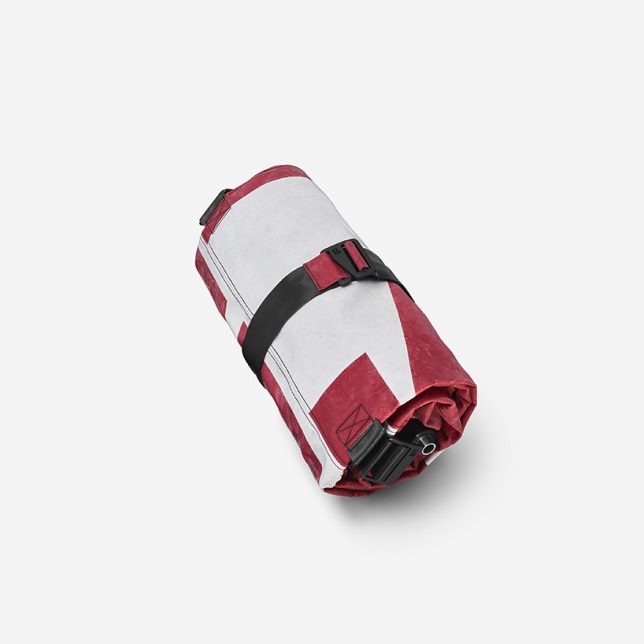
    Lightweight, durable and compact, this new recycled Zippelin bag series features wheels for rolling like any good luggage. But instead of metal or plastic frames, these bags employ bicycle tire inner tubes that can be inflated instead. This strategy also allows the bags to pack into tiny space for storage when not in use.

    Using truck tarpaulins that are made to resist water and withstand wear, the bags have evolved — early versions still included frames, which added weight. These were swapped out for bike tubes which, conveniently enough, can be inflated using a standard bike pump (no need to buy a specialized device).

    FREITAG is not stranger to recycling — its headquarters in Zurich, Switzerland, is housed in a stacked shipping container building that boasts a similar rugged look, worn materials and an upcycling ethos.

    Like the variegated containers that make up its home, the company’s Zippelin bags are all different. Helpfully, this also makes each bag easier for its owner to spot and identify, since each one is unique.

    A product engineer at FREITAG and former architect, Nicola Stäubli says she’s “familiar with air-supported structures” and she also “used to be a bike messenger and was impressed by folding bikes that are fully functional when mounted, and compact when you stow them away.”

    Share on Facebook


    [ By WebUrbanist in Design & Products & Packaging. ]

    [ WebUrbanist | Archives | Galleries | Privacy | TOS ]


    WebUrbanist

  • From Mundane to Magical: Tips on Taking Your Photos to the Next Level

    You may be at a point with your photography where you are comfortable operating your camera and are capable of taking a good picture. You can work with exposure, you understand composition, and can even enhance your photos in post-processing. You should be pleased with this, as this puts you ahead of the vast majority of other photographers. But at the same time, perhaps you are not seeing the elevation in your results that you expect. You are beginning to wonder why you aren’t getting more stunning pictures. Are you doing something wrong? Is there some part of this you’re not getting?

    From Mundane to Magical: Tips on Taking Your Photos to the Next Level

    We all go through a phase where we feel like we know what we’re doing but are frustrated by a lack of great results. In fact, for some of us, it always feels like this. You’ll never go through a time where you’re hitting magical shot after magical shot. It just doesn’t work like that. You are after something extraordinary, and by definition that is rare.

    How do you maximize your chances of finding these great shots? The short version is, “through a lot of effort,” and – while true – that isn’t very helpful. So here are some areas where I focus my efforts and perhaps they will help you too.

    1. It Starts with Location

    We all seem to want to take our cameras down to the local park or take a stroll around a nearby lake and then come home with stunning pictures. For the most part, it just doesn’t work like that. You typically need a great location in order to end up with a great picture.

    You have likely heard that “you can take a great picture anywhere” – and that is true. But just because it is possible doesn’t mean it is probable. Magical lighting or sheer genius may allow some to get great shots in ordinary places, but it is extremely unlikely. To put the odds in your favor, you need to start with an extraordinary location.

    How to Scout Your Photography Locations

    From Mundane to Magical: Tips on Taking Your Photos to the Next Level

    Everyone from tourists to photographers, to the producers of the Game of Thrones use this location as the background for their shots. Dark Hedges, County Antrim, Northern Ireland.

    How do you find such a location? There are lots of ways. If you are going to a well-traveled place such as a large city or a national park, some enterprising photographer has likely done the work for you. They will have written a book on how to photograph that particular place. These guides are invaluable and often all you will ever need. Beyond that, there are a plethora of online resources. I personally start with the 500px World Map and look at where great shots have been taken. I also like to check out the work of photographers who specialize in whatever I am going.

    These resources will help you pick out good places to go. But they will also help you pinpoint specific spots to head to once you are in the area. None of this is to say you should slavishly copy any of these people, but rather that you should let their work inspire you and give you an idea of great locations that might serve as a backdrop for your upcoming stunning picture.

    2. Getting that Magical Lighting

    A great location alone will not result in a stunning picture. I’ve been to countless areas of great natural beauty or stunning urban environments only to walk away empty-handed. To create the stunning picture you are after, you are also going to need great lighting.

    Some of you will create your own lighting through the use of flash. In that case, you’ll be able to create your own stunning lighting – and the whole thing is up to you. But that doesn’t work for me since I am always out and about photographing scenes, which aren’t as conducive to using flash.

    Assuming you are like me and are relying on natural lighting, you just cannot guarantee great lighting. We all have to deal with bad weather and occasionally things don’t work out. That said, you can put the odds more in your favor.

    Photograph at Sunrise and Sunset

    From Mundane to Magical: Tips on Taking Your Photos to the Next Level

    When you are photographing the outdoors, the sky is often a big part of the picture. A great sunrise or sunset, therefore, goes a long way toward helping you create a great picture.

    The first thing to do is make sure you are photographing around sunrise or sunset. I cannot tell you the number of times people have asked me how to elevate their photography and when I look at their pictures I find that they were all taken in the middle of the day. Usually, that’s just not going to work.

    Photographing at sunrise or sunset has a myriad of advantages. The sky will often be very colorful. You will also not have to deal with the extreme contrast created by bright light and dark shadows. The diffuse rays of the sun are more pleasing as well. Think about it this way: there is a reason people sit outside and watch the sun come up or go down. Take advantage of that.

    Don’t Overlook Bad Weather

    Keep in mind that bad weather can often lead to the best shot. It is very much a risk/reward situation. Most of the time, cloudy hazy conditions result in failure. Sometimes, however, the sun might peek through or do something interesting such that you get magical rays in your photo. Typically, nice weather will result in nice pictures. Dramatic weather can result in dramatic pictures, and that is what you are going for.

    From Mundane to Magical: Tips on Taking Your Photos to the Next Level

    Even an average marina can become a great shot when there is a storm approaching.

    3. Creating the Composition

    A great scene does not necessarily make a great photo. You’re probably familiar with rules of composition such as the rule of thirds. That is great, but this alone won’t result in the stunning photos you are after. To get there, you need something more. Here are some ideas to think about.

    Start with a Center of Interest

    The first thing you need is a subject or center of interest. Again, simply capturing a scene in front of you might create a nice picture, but not the shot that will cause people to say “wow” that you are after. You need something to hold the picture together. I cannot tell you exactly what that is since there are so many different things to use in this world, just be on the lookout for that.

    Lead the Viewer’s Eye

    Another thing that will help you is if you think about leading the viewer’s eye. You might immediately leap to the concept of leading lines, but it goes further than that. Think about where you want the viewer’s eye to start in your picture and then the route you want them to travel around it. Many times this is done in the post-processing phase. Remember that the eye is attracted to areas of brightness and sharpness. You might darken areas where you don’t want the viewer to concentrate while sharpening areas where you do want their eyes to go.

    From Mundane to Magical: Tips on Taking Your Photos to the Next Level

    A nice view made more interesting by the path leading the viewer’s eye into the picture.

    Concentrate on the Foreground

    While you’re setting up your picture, be sure to think hard about the foreground. Think of your pictures as consisting of a background, subject, and foreground. The background is already largely set by your choice of location and lighting. The subject might be the thing that caused you to raise your camera to your eye in the first place (or in any event, you will already have thought about it). That leaves the foreground as the final variable. Don’t give it short shrift. Very often, getting low to the ground gives a sense that the viewer can walk into the picture and really enhances the image.

    Add Mood and Emotion

    Finally, be sure to think about the mood of your picture. A great picture stirs some emotion in your viewer. Therefore you’ll need to think about the emotion or mood as you are creating it. In the field, you might underexpose a bit to add some drama to your shot. Later, when you are on your computer, you will have time to consider this further and tweak your photo with an eye towards setting this mood.

    4. Enhancing the Shot with Post Processing

    There are photographers who shun the use of post-processing and devote all their time and energy to getting the shot right in the field. I’m not one of them. I have never taken a shot that I didn’t think could be improved with the use of post-processing.

    From Mundane to Magical: Tips on Taking Your Photos to the Next Level

    Of course, there are a million things you can do to enhance your photos in post-processing. It is not my intent to walk through them all here. Rather, I just want to stress the importance of taking your time and thinking about what you want to accomplish with your picture when you sit down with it at your computer. When you are sitting down in front of your computer, you have time to think it through and work on it. In the field, you may have been rushed – dealing with a moving subject or fleeting light. Now you have as much time as you want.

    Think about what your picture is about. If a part of your image does not support that idea, crop it out. Use some selective sharpening and brightening/darkening to lead the viewer’s eye. Set the mood of your picture using brightness values.

    The point is not to take a mundane picture and try to post-process it into some masterpiece. Rather, selectively take a few shots and enhance them with an eye towards both (a) what you were trying to accomplish and (b) what you want the viewer to think/feel when they are looking at your photo.

    From Mundane to Magical: Tips on Taking Your Photos to the Next Level

    5.  Have Realistic Expectations

    Finally, it is important to have realistic expectations. You aren’t going to go out and come home with a stunning picture every time. I fail all the time, and to avoid getting frustrated about it, I think about the words of Ansel Adams. He once said that he got about one great picture a month. Only one a month! If this master of photography was forced to settle for that kind of hit rate, then who am I to think I can do better? I ought to be happy with one shot a year.

    From Mundane to Magical: Tips on Taking Your Photos to the Next Level

    Creating the Magic

    This all takes time and effort. In a lot of ways, it is like waiting for the stars to come together. There is no magic formula for going out and getting a stunning picture every time. If there were, we would all do it. Again, the whole idea is that you are looking for the extraordinary – and that doesn’t happen all the time.

    Of course, these factors all work together somewhat. You can have magical lighting at a mundane location and end up with a stunning picture. Or the right post-processing can take a B+ picture and turn it into a winner.  The point is not to get you to wait around for perfect conditions. Rather just to keep moving forward with the mindset that it isn’t always going to work, but when it does it is magic.

    These are the things I look for in trying to create a great photo. But that’s not to say there aren’t other – even better – ways to go about it. What do you look for in trying to elevate your photos from the mundane into something magical? Please let us know in the comments below.

    The post From Mundane to Magical: Tips on Taking Your Photos to the Next Level by Jim Hamel appeared first on Digital Photography School.


    Digital Photography School

  • Throwback Thursday: Google Nexus One

    On October 4th Google introduced two new smartphones: the Pixel 2 and Pixel 2 XL. These phones pack the latest 8-core Qualcomm Snapdragon processors and large displays, along with the impressive AI systems that make these devices stand out from many of their peers.

    You have to be a real phone aficionado to remember the Nexus One – Google’s first smartphone (codeveloped with HTC) – which debuted in 2010. In 2017 terms the One’s specs are almost laughable, with its single-core processor, half gigabyte of RAM, 5MP rear camera and whopping 3.7″ display. The Nexus One actually had two different displays. It initially shipped with a PenTile AMOLED display but later switched to a Super LCD that promised better power efficiency and color accuracy (though saturation and deep blacks got worse as a result). It also had a trackball reminiscent of Blackberry phones of that era.

    The phone launched with Android 2.1 (Eclair) preinstalled and supported voice-guided navigation and voice-to-text transcription. Not long after the One got upgraded to Android 2.2 (Froyo), which added support for Adobe Flash (which was short-lived), a new home screen and Wi-Fi tethering. The final update the Nexus One received was to Android 4.0 (Ice Cream Sandwich), as its hardware couldn’t keep up with subsequent versions.

    Were you one of the lucky few who owned a Google Nexus One? Let us know in the comments.

    View our Google Pixel 2 launch coverage

    Product mockup by Zach Vega.

    Articles: Digital Photography Review (dpreview.com)

  • Live coverage of the Google Pixel 2 launch on DPReview

    10:45am PT

    That’s all folks! You can learn more about these products on the Google Store right now. As for us, we’ll be running over to get our hands on the new Pixel 2 and Pixel 2 XL in person, and see if they really are the world’s best smartphone camera. Stay tuned or our hands-on take later today!

    10:43am PT

    The Google Clips camera looks for clear moments to capture. You can clip it anywhere. It features an F2.4 lens, 130° field of view, and captures short ‘clips’ that can be saved as motion photos, videos, or high res stills. You can choose which high-res still to save by navigating through a clip. When reviewing clips on your phone, just swipe right to save any one.

    Will cost $ 250 and is “coming soon.”

    10:40am PT

    “A camera that takes photos for you, so you can enjoy the moment and get shots you could never get before.”

    Starts with an AI engine at the core of the camera. Google Clips looks for “moments” by analyzing the scene and capturing photos automatically, so you can be part of the moment you’re capturing.

    10:38am PT

    One more photography update, having to do with candid photography that lets you be part of the moment as the photographer.

    Meet Google Clips: a new lifelogging-style camera designed with parents and pet owners in mind.

    10:37am PT

    Here’s something they did NOT mention when talking about the new screen: the new Pixel 2 wide gamut display claims to offer “100% DCI-P3 coverage.” While OLEDs often offer close to full DCI-P3 coverage, our Technology Editor Rishi Sanyal is a bit skeptical of the 100% figure and wants to see an actual CIELAB diagram. Some estimates ‘cheat’ by counting extended gamut outside of the P3 space in one color to make up for the lack of gamut coverage in another color. We’ll have to wait and see, but most OLED coverage estimates max out at 99% DCI-P3 coverage.

    Plus, we’re still waiting to find out if the Pixel 2 phones offer proper color management to provide accurate color on these wide gamut displays. Even the original Pixel phones offered wide gamut displays, but displayed wildly inaccurate colors because of the lack of proper color management and display profiles.

    10:30am PT

    Worth noting about that DxOMark score of 98: that’s an aggregate of Photo and Video scores.

    The Samsung Galaxy Note 8 still beats the Google Pixel 2 in the Photo category, scoring 100 to the Google Pixel’s 99. The Pixel’s insane Video score of 96 is what gives it that high overall score. In Video, the iPhone 8 Plus scored an 89 and the Note 8 only scored an 84. We’re guessing this high score is largely due to the smooth video the combination of optical + electronic stabilization enables.

    Here’s DxOMark’s full review.

    10:27am PT

    Feature breakdown:

    • Ultra Vivid OLED Display
    • Super Fast Charging
    • Water Resistant
    • The Fastest Fingerprint Sensor
    • Smartest Assistant
    • First Phone with Google Lens
    • Exclusive AR Stickers
    • World’s Highest-Rated Camera

    Pre-orders start today.

    10:23am PT

    12MP F1.8 rear camera with OIS. Smaller 1/2.55″ sensor though (1/2.3″ on last year’s models). HDR+ still takes a burst of shorter exposure shots to preserve highlights, then combines (averages) them to reduce noise. The latter essentially simulates the effect of a larger sensor. While this works very well for static scenes, it can be problematic for moving objects like running kids.

    Portrait mode in the Pixel 2 uses Google’s computational photography tech. No second camera required. Just split pixels on the sensor combined with machine learning. This allows both the front and back camera to use Portrait Mode.

    It’s actually quite clever: the phone creates a rudimentary depth map using Dual Pixel technology and machine learning. Or, as our Tech Editor explains it, “The pixels are split just like on Canon Dual Pixel sensors. And the Samsung Galaxy. It’s used for phase-detect AF (fast focus) as well as to create a rudimentary depth map using the left and right perspectives viewed from behind one lens. Smart.”

    And you no longer have to move the camera upward while taking a photo in Portrait mode. You can just snap a shot. This would make it work better with slightly moving subjects compared to the original Pixel phones. Sadly, Portrait mode is not simulated in real-time as it is on recent iPhones.

    Oh, and the Video mode uses OIS and EIS at the same time. We’ve seen this on 1″-type compact cameras and some ILCs like Canon M-series and the Olympus E-M1 Mark II, but it’s a first for smartphones. This should lead to incredibly smooth video!

    10:20am PT

    Pixel camera now!

    “With Pixel 2, we have reimagined smartphone photography. DxOMark has issued Pixel 2 an unprecedented score of 98.”

    That trounces the iPhone 8 Plus and Samsung Galaxy Note 8 which both scored 94.

    10:18am PT

    Augmented reality updates now. Very similar to the AR updates we saw with Apple and the new iPhones—inserting furniture or games into the real world through augmented reality.

    Something ‘exclusive’ to Pixel 2 are AR stickers that interact with the world and with each other… because Google needed something to compete with Apple’s Animojis.

    10:14am PT

    Talking about Google Lens now. Using pictures, machine learning technology, and Google Assistant to pull information out of images and tell you all about them. Like pulling phone numbers off a flyer, or… telling the difference between muffins and chihuahuas (their example, not ours).

    10:10am PT

    Squeezing the phone triggers Google Assistant, so you can ask it to take a selfie. And it uses Machine Learning to tell if that squeeze was “intentional.”

    Still waiting on more comprehensive updates about the camera. Hopefully it’s not all software and AI-based improvements. We’re really hoping for some hardware updates like OIS and maybe a bigger sensor or better processor.

    *fingers crossed*

    10:05am PT

    Pixel 2: Full HD OLED display on the smaller 5-inch model. 100,000:1 contrast ratio. More than twice the contrast ratio of phones in its class (save for the iPhone X). Comes in three colors: Kinda Blue, Just Black, and Clearly White.

    Pixel 2 XL: Less bezel, ‘gently curved’ screen, wide color gamut display, integrated circular polarizer so you can view the screen through sunglasses, 538 ppi (up from 534 ppi in the first Pixel XL). Comes in two colors: Just Black and ‘stylishly simple’ Black and White. We’re told the screen is optimized for VR, which may mean a pixel arrangement more amenable to high magnification.

    “We don’t set aside better features for the larger device.” OOOO sick burn on Apple.

    And yes, they are both IP67 dust and water resistant! On par with the iPhone, but a bit short of Samsung’s IP68. That’s a big upgrade from the IP53 rating of last year’s phones (what do IP ratings mean?).

    10:00am PT

    Google VP Mario Queiroz on stage, getting ready to talk about a ‘smarter’ and ‘simpler’ smartphone.

    The Google Pixel 2, designed “with the best of Google built in.” Comes in 2 sizes, 5-inch and 6-inch XL. More Google Assistant capabilities and will “continue to offer the best photography.”

    9:58am PT

    One hour later, we’re FINALLY about to hear about Pixel 2 and Pixel 2 XL!!!

    9:55am PT

    The 12.3-inch Quad HD touchscreen is nice, it’s the first laptop with Google Assistant built in, and the laptop comes with the new Google Pen that can be used in concert with Google Assistant. 2,000 levels of pressure sensitivity… wonder how well photo editing in Lightroom on the Pixelbook works with the pen?

    9:49am PT

    *Sigh*…

    Still waiting on the Google Pixel 2 launch. Moving on to Pixelbook from Google Home. It’s like they’re TRYING to torture the photo nerds. Let’s see if there’s any photo-centric reasons to be excited about the Pixelbook…

    9:35am PT

    We’re getting a bunch of Google Home updates/announcements. There’s a small one now… something about fabric… they needed 100+ tries to find an appropriately grey grey… cool stuff… clearly we’re very interested in this part.

    *insert Jeopardy waiting music here*

    9:21am PT

    Next generation of Google devices are “fast” and “easy to use” and “anticipate your needs.” Products that get faster and more helpful over time thanks to machine learning.

    9:19am PT

    Rick Osterloh: “Pixel had the best and top rated smartphone camera. We’re really proud with how well the Pixel did as our first generation smartphone.”

    He’s not wrong. But there’s a lot of room to improve…

    Rick is talking about the challenges facing hardware development. So Google is going to take a “different approach” to smartphone [photography] advances by living at “the intersection of AI, software and hardware.”

    9:12am PT

    Pichai is confident that Google is at the forefront of driving the shift to this AI-first future.

    One of the major leaps forward Google has made, is in Object Detection, which he says is now at 45% accuracy! The company is using this tech in Google Lens and, says Pichai, in the Google Pixel smartphones.

    9:05am PT

    Google CEO Sundar Pichai on stage. Started with a somber note about the horrifying tragedy in Las Vegas, and the natural disasters around the world.

    Now talking about how Google is using machine learning technology to improve everything from Google Maps, to parking difficulty prediction, to Google Translate. Pichai is “excited about a shift from a Mobile-first to an AI-first world.”

    This shift will no doubt have a major impact on the future of mobile photography.

    8:59am PT

    Are you ready? The Google DJs are winding down the music.

    8:45am PT

    We’re officially inside the SF Jazz Center waiting for the presentation to start! A few things we’re hoping for: optical image stabilization, better depth of field simulation with live preview, and a much more durable Pixel 2/XL on par with the iPhones (IP67 rating) or even Samsung’s Galaxy Note 8 (IP68 rating).

    8:30am PT

    Hot on the heels of Apple’s own smartphone announcement, Google is taking on the iPhone 8 Plus and iPhone X with its own release. In T-minus 30 minutes, Google is set to unveil the Pixel 2 and Pixel 2 XL (among a few other things) and we’ll be covering the launch live from San Francisco on Twitter and on this page.

    Watch the livestream with us, and keep refreshing this page for up-to-the-minute takes on all things photography related from the Google event.


    Articles: Digital Photography Review (dpreview.com)

  • Sigma to reveal new lens at PDN PhotoPlus Expo 2017

    Lens maker Sigma will showcase its full range of Sigma Global Vision lenses, Cine high-speed primes and zooms as well as the Foveon sensor-based sd Quattro and Quattro H cameras at the upcoming PDN PhotoPlus Expo 2017 Expo trade show in New York City later this month, but that’s not all they’re doing.

    The company has also announced it will reveal one completely new lens at the show, teasing us with this little detail without revealing anything else about the upcoming glass.

    Additionally, a number of photographers and other imaging professionals will take the stage at the Sigma booth and talk about how they use Sigma products in the areas of aviation, editorial, glamour, landscape, travel and wedding photography.

    As if those weren’t enough reasons to pay a visit, PPE 2017 attendees who visit Sigma’s booth (#837) will also have a chance to enter and win a Sigma 24-70mm F2.8 Art lens. Something to think about if you happen to be in New York at the end of October…

    Sigma Reveals its PDN PhotoPlus Expo 2017 Line Up and a Brand New Lens

    The breakthrough year for Sigma Global Vision Art, Contemporary and Sport lenses on display; brand new lens addition to be unveiled; Sigma Pros light up stage with new presentations

    Ronkonkoma, NY – October 4, 2017 Sigma Corporation of America, a leading still photo and cinema lens, camera, flash and accessory manufacturer, will showcase its full line up of Sigma Global Vision lenses, including a brand-new addition to the line, at the upcoming PDN PhotoPlus Expo 2017 Expo held at the Jacob Javits Convention Center in New York City from October 26-28, 2017 (booth 837).

    The company will also have on hand its breakthrough optics for the cinema market – the Sigma Cine high-speed Primes and Zooms – as well as the Foveon sensor-based sd Quattro and Quattro H cameras.

    “Sigma has had a landmark year with the introduction of seven new lenses across our Global Vision and Cine product lines,” states Mark Amir-Hamzeh, president of Sigma Corporation of America. “Our research and development team is dedicated to creating superior optics that meet the ever-growing requirements of today’s high resolution cameras, taking advantage of every possible design and element to capture the greatest picture detail for both still and moving images. We look forward to showcasing the culmination of what has been a remarkable year in optical advancements for Sigma at this year’s PPE event.”

    Sigma 2017 introductions include the award-winning 14mm F1.4 DG HSM Art, 24-70mm F2.8 DG OS HSM Art, 135mm F1.8 DG HSM Art, 100-400mm F5-6.3 DG OS HSM Contemporary Sigma Global Vision lenses and the new Sigma Cine FF High Speed 14mm T2 and 135mm T2 prime lenses.

    Sigma Special PPE Presentation – Sigma Pro Phenom Jen Rozenbaum
    Sigma Pro Jen Rozenbaum will take the PPE stage on Wednesday, October 25, 11:00 AM – 12:30 PM to deliver a PPE Master Class on “How to make every woman look amazing.”Jen will share with attendees her vast experience in boudoir photography, providing top tips and secret tricks – from wardrobe to posing – that flatter all women. Jen’s presentation will help attendees understand how to best dress and pose any woman of any size and shape as well as gain confidence behind the camera whether they are shooting boudoir, wedding or seniors!

    Master Photographers Take the Sigma Stage
    Showcasing the very best in photography craft, the expanded Sigma Pro family will headline the Sigma stage and offer attendees a behind the lens look at the techniques and technology that captured some of the year’s most outstanding photographs in the areas of aviation, editorial, glamour, landscapes, travel and weddings.

    This year’s prestigious Sigma Pro PPE stage line-up includes outdoor sports and adventure travel photographer Liam Doran, aviation photo expert Jim Koepnick, renowned bird and travel photographer Roman Kurywczak, fearless woman photographer Jen Rozenbaum, and glamour and wedding photographer Jim Schmelzer.

    The exciting topics include (listed by Sigma Pro) and showcase lenses from Sigma Global Vision Art, Contemporary and Sport lines:

    • Liam Doran – Adventure Sports Photography: Get a behind the scenes look at the fast-paced world of editorial adventure sports photography with Liam Doran clients Powder, Bike, Ski, Mountain, Outside, Aka Skidor and many more. Showcasing Art and Sport lenses.
    • Liam Doran – Signature Images – A Visual Journey: From skiing in Switzerland to mountain biking in Colorado, Liam shares the backstory on how some of his favorite images were shot and which Sigma lenses helped him capture some of his best work. Showcasing Art and Sport lenses. Liam shoots extensively with the 12-24mm F4 DG HSM Art, 24-70mm F2.8 Art, 100-400mm F5-6.3 Contemporary and the 150-600mm F5-6.3 DG OS Contemporary and the 70-200mm F2.8 EX DG OS HSM lenses among others.
    • Jim Koepnick – Documentary Photography…A Single Lens Solution: While there is a mystique about street photography with an old rangefinder camera and one lens, the bottom line is the photo that is captured, and the story that photo tells the viewer. Jim shares what a pro can do with a Sigma 18-300mm F3.5-6.3 DC Macro OS HSM Contemporary lens.
    • Jim Koepnick – Air Show Photography – Sigma Has It Covered: Air shows are one of the most popular spectator events in the country, and the wide variety of Sigma lenses make it easy to photograph every aspect of exotic aircraft in the air and on the ground. Learn the best techniques for capturing fast moving planes in flight and making creative images of planes and personalities on the ramp using the Sigma 12-24mm F4 Art, 24-70mm F2.8 Art, 100-400mm F5-6.3 Contemporary and the 150-600mm F5-6.3 Contemporary lenses.
    • Roman Kurywczak – For the Love of Landscapes: Roman will take attendees on an inspirational journey showcasing the magic of landscape photography through useful tips, suggested camera settings, instruction on innovative techniques and recommendations for the optimal Sigma brand lenses and gear for capturing stunning images of your very own. Showcasing the Sigma 12-24mm F4 Art, 14mm F1.4 Art, 100-400mm F5-6.3 Contemporary and the 150-600mm F5-6.3 Contemporary lenses.
    • Roman Kurywczak – Getting Close for Impact: This educational lecture will show you the technical tips and tricks needed to take your close-up photography to the next level. Attendees will learn how to consistently capture sharp images, front to back, handheld, and all in a single frame with a variety of Sigma lens options including the Sigma 105mm F2.8 EX DG OS HSM, 150mm F2.8 EX DG HSM, APO Macro 180mm F2.8 EX DG HSM, 18-300mm F3.5-6.3 Contemporary, 100-400mm F5-6.3 Contemporary and the EM-140 DG Macro Flash.
    • Roman Kurywczak – Photographing Wildlife – from Portraits to Action: This exciting photographic journey will give attendees the important information they need to know about photographing wildlife out in the field – from camera settings to Sigma lens and accessory choices. Roman will share striking examples illustrating how the right lens choice positively impacts the image without breaking your budget. Showcasing the Sigma100-400mm F5-6.3 Contemporary, 150-600mm F5-6.3 Contemporary, 300-800mm F5.6 EX DF APO HSM and the 500mm F4 DG OS HSM Sport lenses.
    • Roman Kurywczak – Photography After Dark: This informative how-to program is designed to open up your eyes to the possibilities of photographing landscapes after dark, whether a natural landscape with the star filled sky as a backdrop, or dazzling city lights photographed from a helicopter using a variety of Sigma lenses including the Sigma12-24mm F4 Art, 14mm F1.4 Art and the 24mm F1.4 DG HSM Art lenses.
    • Jen Rozenbaum – Bulletproof Posing for All Women: Confidence is just as important behind the lens as it is in front of it! Posing women is a creative challenge for all photographers. Join Jen as she shows her bulletproof tips and tricks for posing women to make them look simply amazing, and give the photographer and subject the confidence that generates an incredible shoot. Showcasing the Sigma 50mm F1.4 DG HSM Art,85mm F1.4 DG HSM Art, and the 24-105mm F4 DG OS HSM Art lenses.
    • Jim Schmelzer – Glamour Photography Using Exotic Lenses for Impact: Jim will showcase a variety of glamour images shot with Sigma Art and Sport lenses. He will deconstruct shots –sharing tips, including those that he used to capture the stunning images of world-class models from his latest commercial glamour shoot in Cancun Mexico. Showcasing the Sigma 85mm F1.4 DG HSM Art, 120-300mm F2.8 DG OS HSM Sport and the 135mm F1.8 Art lenses.
    • Jim Schmelzer – Choosing the Right Lens for Your Wedding Day Assignment:Wedding day photographers must wear a variety of hats. They need to be an architectural photographer, photojournalist, portrait artist and most importantly, they need to be fast and accurate. Look over Jim’s shoulder as he demonstrates how he captures the versatility in images required of today’s modern wedding photographer. Showcasing the Sigma 12-24mm F4 Art, 24-105mm F4 Art, 35mm F1.4 DG HSM Art and the 85mm F1.4 Art lenses.

    For the Sigma Pro presentation schedule days and times, please visit:https://blog.sigmaphoto.com/event/photoplus-2017/ ?

    Sigma Super Giveaways at PPE 2017
    PPE 2017 attendees who visit Sigma at booth 837 will have a chance to enter and win a Sigma grand giveaway – a 24-70mm F2.8 Art – an MSRP value of $ 1299.00 USD!

    Re-engineered and introduced in 2017, the newly updated 24-70mm F2.8 Art lens is Sigma’s workhorse zoom lens. It touts a brand new Optical Stabilizer (OS), Hypersonic Motor (HSM) for highly efficient and fast autofocus, as well as a dust- and splash-proof mount with rubber sealing.

    The 24-70mm F2.8 Art lens embodies all the technical qualities and finesse that define the high-performance Sigma Global Vision Art series. A popular industry focal range covering a wide array of shooting scenarios, the 24-70mm’s optical design also includes three SLD (Special Low Dispersion) glass elements and four aspherical elements to ensure image accuracy and sharpness. The 24-70mm F2.8 Art aspherical elements use Sigma’s thicker center glass design and highly precise polishing process, delivering stunning images and bokeh effects. The lens’ purpose-built structure boasts a new metal barrel for optimal durability with TSC composite internal moving components designed to resist thermal contraction and expansion. Available for Canon, Nikon and Sigma camera mounts.

    Articles: Digital Photography Review (dpreview.com)

  • Google unveils Pixel 2 phones: Adds OIS, Dual Pixel powered Portrait Mode and more

    Ever since the iPhone 8 Plus and iPhone X were announced, we’ve been waiting for Google’s response. When the original Google Pixel came out, it quickly became one of the most raved about smartphone cameras in the world… would the Pixel 2 follow suit? The short answer, at least according to Google, is yes.

    Just this morning, we sat down in the SF Jazz Center and, after an hour of other updates, Google finally unveiled the 5-inch Pixel 2 and 6-inch Pixel 2 XL.

    The new phones house a 12.2MP sensor with 1.4um pixels, Dual Pixel phase detect autofocus and an F1.8 lens on the back, and an 8MP camera with 1.4um pixels, fixed focus and an F2.7 lens on the front. The newer 1/2.55″ sensor is smaller than the previous-gen’s 1/2.3″ sensor, but the brighter aperture nearly perfectly compensates.* Video specs for the rear camera max out at 4K 30fps (sorry, no 4K/60p like the new iPhones) while the front camera can do up to 1080p at 30fps. The camera units are now raised above the back glass surface, which remedies the nasty flare issues the previous Pixels had.

    As we hoped, the whole phone is encased in an IP67 water and dust resistant aluminum unibody, and is powered by the latest and greatest Qualcomm Snapdragon 835 processor.

    More impressive than the base specs are how Google uses its hardware in concert with software and machine learning technology to deliver a better photography and video experience.

    Instead of opting for a dual camera on the back of the phone, the Google Pixel 2 and Pixel 2 XL uses just one camera, and combines this with Dual Pixel technology (split left/right pixels) and computational photography to create the now-ubiquitous fake bokeh Portrait Mode effect. And since stabilization is incredibly important, they’ve worked out how to use both optical and electronic image stabilization at the same time when you’re shooting video, which should deliver incredibly smooth footage. (more on that from San Francisco shortly…)

    Unfortunately, in our brief time with the cameras so far, we discovered that Portrait mode is still not rendered live on either camera… it seems there are downsides to using a single camera instead of a dual cam setup, or in Google’s (we think correct) choice to use a more computationally intensive ‘lens’ blur as opposed to the more Gaussian (smooth) blur that Apple opts for.

    Finally, no modern smartphone is complete until you look at the display your photos and videos will be viewed on.

    Unfortunately, Google made no mention of color management or proper display profiles—which caused issues with the previous Pixel smartphones—but the new AMOLED (for the 5-inch model) and pOLED (for the 6-inch model) displays are wide-gamut. The Pixel 2 claims 93% DCI-P3 coverage while the Pixel 2 XL claims full 100% coverage of the same standard.

    We bring this up because last year’s Pixel phones also offered a wide color gamut and high contrast ratio, thanks to their OLED display technology, but often displayed wildly inaccurate colors due to the lack of color management. It’s still possible the displays will come calibrated properly for the P3 or sRGB color spaces, but without any explicit mention of calibrated display modes that the OS automatically switches between based on the color space of the content (as Apple claims to do), we remain skeptical.

    The lack of any talk of HDR display of video or photos was also a disappointment after the announcement of iPhone X’s support for HDR10 and Dolby Vision video, and HDR display of photos. The latter should make HDR photos pop on the bright contrasty OLED display of the iPhone X, rather than give them the flat tonemapped look we’re often used to. It seems Google has chosen to go the traditional method of compressing a high contrast scene into a flatter image, rather than take advantage of the HDR display capabilities of its OLED display.

    We’re currently spending some time with the Google Pixel 2 and Pixel 2 XL in person today at the Jazz Center, so stay tuned for our hands-on impressions as the designated photography nerds at this event.

    In the meantime, you can find out more about either of these phones on the Google Store, check out our Live Blog to see what we were thinking as the announcements were going up, or argue about your Apple vs Google allegiance in the comments.


    * At least for low light performance, but perhaps not dynamic range. The discussion is complicated by the use of computational photography, of course, so it’s difficult to speculate on the overall impact of the smaller sensor / brighter aperture.

    Articles: Digital Photography Review (dpreview.com)

  • Here’s Google’s impressive OIS + EIS video stabilization demonstrated

    Optical image stabilization is a welcome update in the Google Pixel 2, but what’s really impressive is that it can be used in tandem with electronic stabilization in video mode. If Google’s demo at its launch event today is any indication, it’s pretty darn effective and makes for super smooth clips that look like they were shot with a steadicam. While we’ve seen this in the traditional camera space in 1″-type compacts from Sony and Canon, as well as ILCs like the Canon M5 and Olympus E-M1 II, it’s a first for smartphones.

    We got a chance to see this same video in person; it was certainly impressive. We’re eager to give it a try ourselves when we get our hands on a review unit.

    Articles: Digital Photography Review (dpreview.com)

  • Google Pixel 2 trumps iPhone as ‘best smartphone camera’ with highest DxOMark score ever

    It’s been a couple weeks of amazing camera phone tests over at DxOMark. First the iPhone 8 Plus beat all former phones with a score of 94. Then the Samsung Galaxy Note 8 came in and earned the same overall score, beating the iPhone 8 Plus in the Photo category but falling short in Video. And now… now we have a new proper king.

    After testing the brand new Google Pixel 2, DxOMark has awarded the flagship phone its highest ever marks for a smartphone camera with an overall score of 98.

    As usual, you can read the full review over on DxOMark’s website, where they pit the Pixel 2 against its main rivals in a few head-to-head challenges, but the overall score results can be seen below:

    In the Photo category, the Samsung Galaxy Note 8 is still the best phone out there, besting the Google Pixel 2’s score of 99 by a single point. But when it comes to video, the Pixel 2 is totally and completely unmatched. Its Video score of 96 makes Samsung’s paltry 84 seem a bit weak, and even Apple’s respectable 89 is nowhere close.

    Ahead of doing our own tests with these phones, we’ve been looking closely at the results in the DxOMark tests, and we are very intrigued to say the least. Some of the numbers themselves are rather subjective, and we don’t entirely agree with DxO’s assessment in every category.

    For example, in their outdoor bokeh comparison, the new Pixel 2 fares the worst:

    Google Pixel (original) Portrait mode: 5MP sRGB JPEG.

    The original Pixel simulated lens blur well (note the circular appearance of out-of-focus highlights), but did so at a resolution cost (you only got 5MP files). You also had to move the camera upward while taking the photo – problematic for moving subjects. There are artifacts present if you look closely.

    Google Pixel 2 Portrait Mode: 12MP sRGB JPEG.

    The new Pixel 2 fares the worst in this comparison, with multiple aritfacts throughout the image. At least it’s instantaneous (no need to move camera) and a full 12MP now though. Hopefully Portrait mode fares better in other situations.

    iPhone 8 Plus Portrait Mode: 12MP DCI-P3 HEIF (10-bit).

    The iPhone 8 Plus uses dual cameras to create the most artifact-free blur. It’s more Gaussian in nature than like a true lens blur (whichthe original Pixel simulated quite well). It’s also worth noting Apple is encoding images in higher bit-depth wider color space using the High Efficiency Image Format.

    Something else overlooked by the DXO assessment: Apple now saves images in a new image format: HEIF, which allows for a wider color gamut (DCI-P3) and higher bit-depth (10-bit). That means the potential for more vivid images with less posterization compared to the conventional 8-bit sRGB JPEGs even the new Pixel phones (and most phones / cameras) continue to use today. In fact, even some of the colors in the iPhone 8 Plus image above are outside of the sRGB color space. Point: Apple.

    Another point of contention we have: the sometimes overly tonemapped (flat) images HDR+ renders may or may not suit your taste. The Pixel 2 vs. HTC U11 high contrast scene demonstration shows the Pixel 2 preserving more overall detail in shadows and highlights, but doing so at the cost of global contrast. With the display capabilities of wide gamut, high brightness/contrast OLED displays that are technically capable of HDR display, that may not always be the optimal result. The iPhone X will likely be first device to show how good photos can look when you pair HDR capture with HDR display. We’re a bit disappointed that Google didn’t even mention HDR display, despite the devices’ displays clearly being capable of it.

    Still, DxOMark’s conclusion doesn’t skimp on the superlatives… except that they’re running out of them:

    We’re in danger of running out of superlatives when describing the major image quality attributes of the Google Pixel 2. That makes sense for a device that tops our scoring charts —up from the 94 of the Apple iPhone 8 Plus and Samsung Galaxy Note 8 to a record-setting 98. So for just about any Photo or Video ” href=”https://www.dxomark.com/glossary/use-case/”>use case, it recommends itself as the phone camera with the best image quality.

    To read the full review for yourself, head over to the DxOMark website by clicking here.

    Articles: Digital Photography Review (dpreview.com)