Blog

  • Review of the Fujinon XF23mm F2 WR Lens

    In this review, I’ll take a look at the Fujinon XF23mm F2 WR Lens. If you shoot Fuji and have considered this one – read on to see why I rate it top marks!

    Review of the Fujinon XF23mm F2 WR Lens

    The Fujinon 23mm f2 lens

    First look

    With the Fuji XF 23mm F2 WR lens now being offered as a kit with the X-Pro2, and the new X-E3, it’s probably a good time to look at this little wonder if you shoot Fuji. This weather-sealed prime lens is 35mm equivalent field of view in full frame terms and makes a perfect street and general photography lens.

    The fast f/2.0 aperture is a stop slower than it’s f/1.4 predecessor, but it’s leaps and bounds faster in the focus department. It also has a much quieter motor, which is important for video and it’s weather resistant.

    Quiet motor great for video

    As the Fuji X-T2 body has 4k video, and with a firmware update to add 4K video to the X-Pro2 due, this is an essential feature for current users looking to do video. Personally, I’m shooting a lot more video of late, both for my YouTube channel and in the creation of shorts in general, so this feature made the lens enticing for me. The original Fuji X camera is, of course, the X100, which has a built-in 23mm f2 lens. The new 23mm lens is a better design though, making it a great option instead of getting an X100F.

    Review of the Fujinon XF23mm F2 WR Lens

    For this article, I’m including some “tourist in my own town” style shots as I’ve not had this lens long enough to travel with it – yet!

    Review of the Fujinon XF23mm F2 WR Lens

    The f/2.0 Trinity

    The 23mm is the widest currently in this range, which includes the XF35mm F2 and the XF50mm F2. In the community, they’ve been nicknamed the Fujicrons, as a kind of homage to the Summicron range of f/2 lenses from Leica. This weather sealed range offers great quality lenses in small, light packages, with quiet motors suited to video work as well as stills.

    They focus faster than the higher range primes in the Fuji range, such as the 23mm f/1.4, 35mm f/1.4, and the 56mm f/1.2. (It’s not fair to directly compare the 50mm and 56mm as they’re not quite the same, though they are close enough for this purpose). The F2 lenses are also really well priced; You can get two of them for the price of one of the faster primes.

    Review of the Fujinon XF23mm F2 WR Lens

    Specs of the XF23mm F2

    The XF23mm F2 WR lens has 10 elements in six groups which includes two aspherical elements. The original f/1.4 lens has only one. These elements increase the sharpness, a big plus for this small lens. The housing is metal, making this a robust lens in keeping with most of the Fuji range.

    The aperture ring runs in 1/3 EV steps and uses nine blades internally which leads to a smoother bokeh. The minimum focusing distance is 22cm (about 9″). The lens comes in at a sprightly 180 grams (0.4 lbs) too. Good news if you’re looking to shoot video on a gimbal or flying on budget airlines with low weight baggage limits! Fi, ally the filter size is 43mm.

    Review of the Fujinon XF23mm F2 WR Lens

    Comparisons

    The first lens people want this lens compared with is the Fuji 23mm f/1.4, because that’s usually the choice they’re trying to make. The XF23mm f/2.0 is a stop slower than then the 23mm f/1.4 but is faster to focus. The additional element makes it sharp, but the original 23mm is quite a sharp lens anyway. Weightwise the f/2.0 is 180g (0.4 lbs) versus the 300g (0.67 lbs) of the f/1.4.

    For close focusing the f/2.0 has a minimum focus distance of 22cm (9″) compared to the 28cm (11″) of the f/1.4. In terms of cost, the f/2.0 is half the price of the f/1.4 at $ 449 versus $ 899. The real question to ask yourself is, does the additional stop of light justify spending twice the money? Only you can decide that.

    Review of the Fujinon XF23mm F2 WR Lens

    The f/2 lens has a slightly wilder field of view than the f/1.4 below.

    Review of the Fujinon XF23mm F2 WR Lens

    For street work, a lot of people choose the XF27mm f/2.8 pancake lens. This makes your Fuji very pocketable. The lens doesn’t protrude much and is really unobtrusive. It’s the smallest lens Fuji makes. Yes, it is cute. The XF23 is much longer (52mm versus 23mm), but isn’t too obtrusive. Again it’s a faster lens and wider. Both are the same price, so it’s a question of speed and depth in this choice. The 23mm is the superior lens, but if you must have a pancake, the 27mm is the only choice really.

    Using the XF23mm F2 Lens

    Review of the Fujinon XF23mm F2 WR Lens

    I’ve found 23mm to be a great focal length to have with you. In fact, it’s probably the most versatile prime lens you could travel with. There’s no issue with general streets scenes, or even general landscapes. It’s great for shots including people in the scene. While it’s not a typical portrait focal length, it looks great for 3/4 length shots in landscape mode (a vertical composition) or portrait mode at a push.

    Review of the Fujinon XF23mm F2 WR Lens

    Even with just f/2, you still have the opportunity to shoot handheld evening shots while traveling.

    Photos from the lens have nice contrast and are generally sharp, even wide open. The lens focuses quickly, even in low light and I can’t say I’ve particularly noticed many misfires. Couple it with the XF56mm f/1.2 or even the XF50mm f/2.0, and you would have a great two-lens kit that covers most shooting situations.

    Review of the Fujinon XF23mm F2 WR Lens

    A typical low light situation where fast primes can help.

    Pros

    • Lightweight
    • Fast Focus
    • Quiet operation
    • One of Fuji’s less expensive lenses

    Cons

    • Not the fastest aperture at this focal length

    Verdict

    If you absolutely need a faster aperture, don’t get the Fujinon XF23mm F2 WR lens. Otherwise it’s utterly fantastic at what it does. I voted with my cash and got this over the 23mm f/1.4 and it hasn’t disappointed.


    The post Review of the Fujinon XF23mm F2 WR Lens by Sean McCormack appeared first on Digital Photography School.


    Digital Photography School

  • Adobe just made it way easier to import Lightroom collections into Adobe Portfolio

    Adobe has announced that Portfolio, its online website publishing service for CC customers, has a new integration with Lightroom that lets users import their collections and add photos to their website with next-to-no effort.

    As of this new update, a users’ Lightroom content will simply show up within Portfolio’s ‘Manage Content’ section under the ‘Integrations’ tab. From there, users are able to choose any of their Lightroom Collections to import to a Page on Portfolio. When added to the website, Adobe says the full Collection appears as a new Page with a photo grid, which you can then customize by removing images and/or rearranging the grid. Other elements, such as text and videos, can also be added to the page.

    Finally, Adobe also says that Portfolio will now automatically import new Behance projects to new Pages within a chosen gallery—assuming the user chooses a default import gallery and has their Adobe ID associated with a Behance account.

    Imported content is tagged with either a Lightroom or Behance badge in the Manage Content section to show where it was imported from.

    To learn more about these new features or give them a try for yourself, head over to the Adobe Creative Cloud blog or download the latest version of Portfolio and give Lightroom import a shot for yourself.

    Articles: Digital Photography Review (dpreview.com)

  • Metabones’ Devil’s Speed Booster turns Pentax Q cameras into ‘monster low-light machines’

    Metabones—the company known for its lens adapters and focal reducing Speed Boosters—has released a new Speed Booster that ought to have Pentax Q users salivating a bit. It’s called the Q666 0.5x ‘Devils Speed Booster’, because it allows Pentax Q owners to mount Nikon F and G lenses and produce a working aperture of f/0.666 when a lens with an f/1.2 aperture is used wide open.

    The booster has a magnification of 0.5x and produces a 2.8x crop factor when used with the Q and Q10, and a 2.3x factor with the Q7 and Q-S1.

    Metabones has used six elements in four groups inside this new Speed Booster, and has incorporated what it calls a ‘long-throw clickless aperture ring’ for G lenses that has eight marked positions. The adapter is compatible with all Nikkor and Nikon-mount lenses except the Nikkor 2.1cm f/4 and the 20mm f/2.8 AI-S.

    The idea for the adapter was launched in August, but this is the first version to emerge. Metabones promises one in a Pentax K mount as well.

    The Metabones Nikon G to Pentax Q Speed Booster Q666 0.50x costs $ 490. For more information, visit the Metabones website.

    Press Release

    Metabones Devil’s Speed Booster Q666 0.50x

    Caldwell Photographic Inc. and Metabones® is pleased to announce the Speed Booster Q666, a.k.a. “The Devil’s Speed Booster”, exclusively for Pentax Q series cameras. With its 0.5x magnification and world-record f/0.666 maximum speed it is crazy wicked fast. So make a deal with the devil today and turn your Pentax Q with its back-illuminated sensor into a monster low-light machine unlike anything ever seen in photography. Attach an f/1.2 lens and stop down a little to see how Stanley Kubrick made do with f/0.7 for filming those famous candle-lit scenes in “Barry Lyndon”. Or open up all the way to f/0.666 and probe the darkness in a way that no photographer has ever been able to do until now.

    With an advanced 6-element optical design, the Q666 packs lots of optical horsepower in a small package. Sharpness is excellent even at f/0.666, and is downright superb if you stop down to f/1.0. Distortion is very low, with a maximum value of, naturally, 0.666%. And thanks to the back-illuminated sensor used in Pentax Q cameras, the full f/0.666 maximum aperture can be utilized with minimal pixel vignetting effects commonly seen in other cameras used with high-speed lenses.

    Figures 2 through 4 below show MTF at 10, 20, and 40 lp/mm as a function of image height for output apertures of f/0.666, f/1.0, and f/2.01. At f/0.666 (i.e., with an f/1.2 master lens) the MTF is high near the axis, and only falls off gradually toward the corners. As the aperture is reduced to f/1.0 and then f/2.0 the MTF becomes very high and more even across the field. Figure 5 shows that there is less than 1 stop of corner illumination falloff even at f/0.666. And guess what – there is no vignetting at all after the output aperture reaches f/1.82. Figure 6 shows that rectilinear distortion added by the Speed Booster Q666 is negligible at less than 0.666%.

    Like all Metabones Speed Boosters, the Speed Booster Q666 is optimized to fully account for the camera’s filter stack located near the sensor surface. This is especially critical at the record-setting f/0.666 aperture now possible with the Q666. As a result, an enormous range of optics, from vintage film lenses to the latest digital designs, will function flawlessly when adapted to any Pentax Q camera. Planned lens mounts for the Speed Booster Q666 include a Pentax-K version and a Nikon F/G version with the most advanced Nikon G aperture adjustment mechanism in the industry.

    The Speed Booster Q666 will be available starting in Aug 2017 from the Metabones website (http://www.metabones.com/products/details/MB_SPNFG-Q-BM1) and its worldwide dealer network for US $ 489.00, plus shipping and applicable taxes and duties.

    Articles: Digital Photography Review (dpreview.com)

  • Samyang unveils 35mm F1.4 autofocus lens for Sony full-frame mirrorless

    Samyang has officially unveiled its fourth autofocus lens for Sony FE mount cameras: the long-rumored Samyang AF 35mm F1.4 FE. The new 35mm joins Samyang’s three other AF lenses—the AF 14mm f/2.8 FE, AF 35mm f/2.8 FE and AF 50mm f/1.4 FE—and offers Sony full-frame mirrorless shooters yet another affordable (and fast) prime to shoot with.

    As with all previous Samyang autofocus FE lenses, the company claims that they offer exceptional image quality across the whole image field.

    This particular lens features 11 lens elements in 9 groups, including 2 aspherical lenses and 2 high-refractive lenses. At its core is a 9 (circular) blade aperture that opens up all the way to F1.4, and a Linear Super Sonic Motor promises “fast, precise and quiet autofocus performance.”

    The lens is scheduled to ship in November at a suggested retail price of £600 and €650, which should put US pricing around $ 750. To learn more about the new lens, head over to the Samyang website.

    Press Release

    Samyang Announces the Fourth Autofocus Lens – AF 35mm F1.4 FE

    October 10th, 2017, Seoul, South Korea – Global optics brand, Samyang Optics (http://www.samyanglensglobal.com) is pleased to announce the release of their fourth autofocus lens: AF 35mm F1.4 FE. The bright F1.4 aperture and absolute resolution turn every moment into artwork. This lens now expands Samyang’s autofocus lens line-up to four which includes three existing autofocus lenses, AF 14mm F2.8 FE, AF 35mm F2.8 FE and AF 50mm F1.4 FE.

    Aim High, Create Artwork

    This new AF 35mm F1.4 FE works in harmony with full frame mirrorless cameras in Sony E mount such as Sony ?7 or ?9 series. It is designed to appeal to enthusiasts and professionals who are ready to take the next step up in photography. It is the excellent companion to create artworks from everyday moments, while the tiny AF 35mm F2.8 FE released in June of this year is the perfect partner for everyday photographers.

    High Performance beyond Expectation

    Absolute resolution across the entire image field is the key feature of Samyang AF 35mm F1.4 FE. The lens includes 11 elements in 9 groups and features 2 aspherical lenses and 2 high-refractive lenses, plus Ultra Multi Coating. The optical design minimises various aberrations and unnecessary light dispersion to deliver outstanding resolution. Fast, precise and quiet autofocus performance meets Samyang’s exceptional optical technology to capture any moments clearly. The bright F1.4 secures fast shutter speed and creates shallow depth of focus images in wide-standard angle of view. The new 35mm F1.4 lens is ideal for professional photography including low-light events, landscapes and portraits with expressive characteristics.

    Available from November 2017

    Samyang AF 35mm F1.4 FE, a lens for photographers aiming high in photography, will be available globally from November and will carry a suggested retail price of EUR 649.

    To celebrate launching, Samyang Optics will hold various consumer events on Facebook (http://www.facebook.com/samyanglensglobal) and Instagram (http://www.instagram.com/samyanglensglobal). For more information on product, visit Samyang Optics official website (http://www.samyanglensglobal.com/).

    Articles: Digital Photography Review (dpreview.com)

  • Sony Cyber-shot RX10 IV sample gallery updated

    Where better to take a 24-600mm equivalent superzoom than on a trip to the mountains? With a zoom range ideal for travel, our Sony RX10 IV review unit headed north to Whistler, BC almost as soon as it arrived. Take a look at our expanded sample gallery.

    See our updated Sony RX10 IV gallery

    $ (document).ready(function() { SampleGalleryStripV2({“galleryId”:”1816870055″}) })

    Sample photoSample photoSample photoSample photoSample photo

    Articles: Digital Photography Review (dpreview.com)

  • Doing Our Dirty Work: Crows Trained to Clean Up Cigarette Butts

    [ By SA Rogers in Gadgets & Geekery & Technology. ]

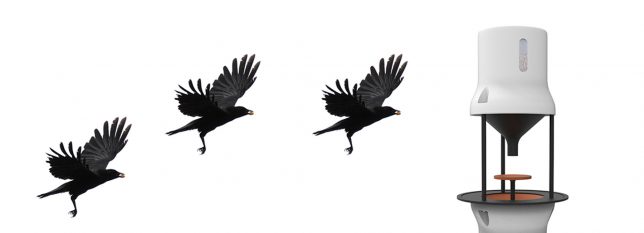
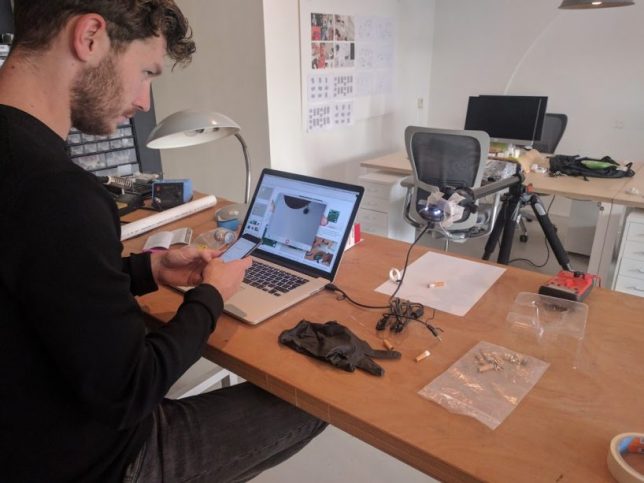
    Should we really be training ultra-smart birds to do our dirty work for us, picking up cigarette butts all over our cities in exchange for treats? One Dutch start-up hopes their clever ‘Crowbar’ will be an easy and mutually beneficial way to deal with the ongoing problem of this specific kind of urban litter, making use of the corvid’s unusual intelligence. Crowded Cities proposes hanging smart machines around the city that train the birds to clean up butts.

    ‘Crowbar’ is based on the ‘Crow Box,’ an open-source project that gives crows peanuts in exchange for coins. The birds learned that they only get rewarded for inserting a particular kind of object. The Crow Box is just one example of humans testing crows’ ability to understand cause and effect and documenting the results.  They explain the process as follows:

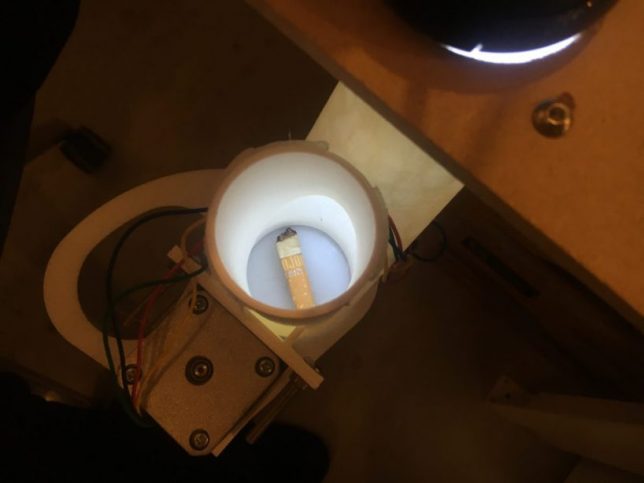
    “The crows bring a cigarette filter to the Crowbar, where they drop it into the bottom funnel to get it checked. After the camera has recognized the cigarette filter as  a filter, it returns a bit of food to the table in front of the crow. The crow goes out telling others, or keeps his secret to himself – we are not sure.”

    Apparently we’ll find out, as the team finishes assembling the CrowBar and puts it out into the world. In the Netherlands, more than 6 billion cigarette filters are tossed onto the street each year, and each one takes 12 years to degrade. It’s not hard to imagine this project seeing some kind of success – have you ever had a crow drop a nut right in front of your car while you’re driving, in the hopes that your tires will act as giant nutcrackers? They’re incredibly smart.

    But it’s a bit disturbing to imagine crows being repeatedly exposed to the carcinogens present in cigarette butts, potentially punishing them in the long term for a stupid human behavior. Plus, it’s only a matter of time before the crows start snatching lit cigarettes right out of people’s hands.

    Share on Facebook


    [ By SA Rogers in Gadgets & Geekery & Technology. ]

    [ WebUrbanist | Archives | Galleries | Privacy | TOS ]


    WebUrbanist

  • Google’s unlimited full-res photo storage for Pixel 2 owners ends in 2020

    Google is offering Pixel 2 buyers a special perk that allows them to store an unlimited number of full-resolution photos and videos through Google Photos, but it comes with a catch. Fine print listed at the bottom of Google’s Pixel 2 product page notes that the free unlimited full-res storage is only available until 2020; at that point, the handsets will revert to Google Photos’ typical ‘high-quality’ unlimited storage option.

    ‘High-quality’ is the term Google uses to denote a 1080p video resolution and 16MP image resolution.

    Google Photos allows any user to upload an unlimited number of photos and videos at up to this high-quality threshold; anything that exceeds it is compressed when uploaded and that compressed version is stored. The Pixel 2 will sidestep this restriction, but only for a couple years.

    Non-Pixel phone users can upload full-resolution videos and images for free up to a 15GB threshold. Once that threshold is reached—or, for Pixel 2 owners, once 2020 arrives—additional storage space can be purchased starting at $ 2/month (depending on location).

    Articles: Digital Photography Review (dpreview.com)

  • How to Make Your Photos More Creative Using Camera Angles

    A creative use of camera angles is one of the quickest ways to add interest and variety to your photos.

    Even if you don’t know how to use your camera very well, angles are easy! All you have to do is move your camera higher or lower to dramatically change the angle of your photo. It doesn’t matter what camera or what lens you’re using (even your smartphone), you can always make more creative photos by changing the camera or shooting angle.

    Five Different Camera Angles

    You have five main camera angles to choose from. Each one will add a different perspective, giving your photo the mood or feeling that you want it to have.

    #1 – Bird’s Eye View

    The highest camera angle is “bird’s eye view.” This is when you get up above the scene and look straight down. This angle is great for looking down and seeing all the details of a scene from above.

    A bird’s eye view is an unusual angle because you’re not normally up high looking down on a scene. Any angle that is beyond your usual daily experience will make your photo more interesting to look at.

    Bird Eye View How to Make Your Photos More Creative With Angles

    I chose a bird’s eye view for this photo of our sleeping baby. By choosing this angle, I was able to look down and frame him with blueberry branches.

    Bird Eye View - How to Make Your Photos More Creative With Angles

    A bird’s eye view is great for food photography, allowing you to see everything on the dish.

    #2 – High Angle

    A “high angle” is not quite as extreme as the bird’s eye view. You just need to be a little bit higher than the person or thing that you are photographing.

    Think of a high angle as a very normal view of the world for most adults. This is especially true for parents who are always looking down toward their kids.

    Even though you experience this angle or perspective a lot throughout the day, it can still be perfect for some of your photos. A high angle is useful for making your subject look smaller or more vulnerable and perhaps making the viewer seem more dominant.

    High Angle How to Make Your Photos More Creative With Angles

    This high angle allowed me to look down at my son and also work in some interesting background elements.

    How to Make Your Photos More Creative With Angles

    Since this is a photo of “little sister,” a high angle gives her a smaller more vulnerable appearance.

    #3 – Face-to-Face

    A face-to-face angle is taken at eye level to your subject. This is a very engaging angle and helps to establish a personal connection between the person in your photo and the person viewing it.

    This is a great angle for portraits, though a slightly higher than eye level angle is great for portraits too.

    Face to Face How to Make Your Photos More Creative With Angles

    When she came in from playtime covered in mud, I knew I had to use an engaging face to face angle.

    Face to Face How to Make Your Photos More Creative With Angles

    I love this captivating perspective.

    #4 – Low Angle

    For a low angle, you need to be below eye level. As you get down lower, you make the subject of your photo appear a larger. This may add a larger than life feeling to your photos and is great for emphasizing toughn s, or making things look scary or epic.

    Low Angle How to Make Your Photos More Creative With Angles

    A low angle is absolutely necessary when photographing sharks. It’s the only way to see their most frightening feature; teeth!

    Low Angle 2

    This moment was exploding with energy as the kids ran from the bus stop. Dropping down to a lower angle helps to emphasize the energy of the moment as well as bring the buses in the background in line with the kids.

    #5 – Bug’s Eye View

    Also known as “worm’s eye view,” this angle is just like it sounds. You get down as low as you can and look straight up toward your subject.

    Again, this is a very unusual angle. You rarely experience this point of view, so it will add an interesting or creative perspective to your photo.

    Bug Eye View How to Make Your Photos More Creative With Angles

    I had to lay down on the ground and look up for this photo. It seemed like the perfect angle to capture my son’s first major climb!

    Bug Eye View How to Make Your Photos More Creative With Angles

    It’s easy to get a bug’s eye view at a playground. Just wait for your kids to start climbing and then look straight up at them.

    One Scene – Three Angles

    It’s a great idea to capture more than one angle every time you take photos of a moment. It will push your creativity, help you to explore new perspectives and provide you with more views to tell the story.

    These next photos demonstrate how I captured one scene from three different angles.

    How to Make Your Photos More Creative With Angles

    In this first photo a higher angle was used to look down on the scene and see the puddle.

    Three 2

    A face to face angle is perfect for a muddy faced portrait.

    Three How to Make Your Photos More Creative With Angles

    This lower angle perspective makes the moment feel a little bigger and emphasizes the excitement she felt after having fun in the mud puddle.

    Beyond Everyday Perspectives

    Knowing these five camera angles, and practicing them will help you get unstuck anytime you’re uninspired or find that your photos are turning out boring or predictable. To spice up your photos, simply choose the most unusual angle. Once you’ve done that try at least two more angles and figure out which one has best captured the moment.

    As you experiment with angles you’ll boost your creativity by breaking out of everyday perspectives. Try capturing a few different angles right now. I would love to see your photos in the comment section below.

    The post How to Make Your Photos More Creative Using Camera Angles by Mat Coker appeared first on Digital Photography School.


    Digital Photography School

  • The Control Room app lets you control Lightroom from your smartphone

    Need to spice up your Lightroom editing experience on the desktop? No need to wait for whatever Adobe has waiting for us at AdobeMAX, you can try out the Control Room app instead. Available for both Android and iOS, the app lets you control all of your Lightroom sliders (and more) from your smartphone, allowing you to lean back and edit the photos on your desktop without touching a mouse or keyboard.

    The app was created by software engineer and photographer Aaron Vizzini, who only recently decided to share his creation with the general public.

    Using Control Room, you can both edit and manage (rate, flag, create rapid collections) your photos using your smartphone as the control pane. Any changes you make on your device will update in real time on the computer through a companion plugin. It’s exactly as seamless as it sounds:

    Whether or not this will actually help speed up your Lightroom workflow is entirely dependent on you, but the idea, at least, is pretty neat. To learn more about Control Room or get the $ 4 app for yourself, head over to the iTunes App Store or Google Play, and then visit the Control Room website to download that plugin as well.

    Articles: Digital Photography Review (dpreview.com)

  • Google shares high-resolution Pixel 2 sample photos

    $ (document).ready(function() { SampleGalleryV2({“containerId”:”embeddedSampleGallery_6275889395″,”galleryId”:”6275889395″,”isEmbeddedWidget”:true,”standalone”:false,”selectedImageIndex”:0,”startInCommentsView”:false,”isMobile”:false}) });

    As with the original Pixel handsets, Google is stressing the quality of its Pixel 2 phone’s 12MP camera, calling it the “world’s highest rated smartphone camera” thanks to its DxOMark score of 98. The smartphone doesn’t start shipping to buyers until November 15th, but ahead of that the company has shared a gallery of unedited images and videos taken with the handset.

    The gallery was shared on Saturday by Google employee Issac Reynolds, who explained that the content includes two videos that were edited to demonstrate the camera’s video stabilization through a side-by-side comparison. In addition, Reynolds says that the only equipment used in these shots, the Pixel 2 aside, were hand grips and, in certain instances, handheld reflectors.

    Anyone can view and download the gallery’s content for analysis using third-party software. As recently reported, Google will allow Pixel 2 owners to upload unlimited full-resolution videos and photos to Google Photos for free until 2020. Once that date arrives, and assuming the regular 15GB threshold is reached, Pixel owners will need to pay for additional storage or continue using free backups at a lower quality compressed resolution.

    Articles: Digital Photography Review (dpreview.com)