Blog

  • Oh, wow… Sony announces 24MP a6300 with incredible AF and 8 fps live view bursts

    $ (document).ready(function() { SampleGalleryV2({“containerId”:”embeddedSampleGallery_3250592731″,”galleryId”:”3250592731″,”isEmbeddedWidget”:true,”selectedImageIndex”:0,”startInCommentsView”:false,”isMobile”:false}) });

    Sony has introduced the long-awaited update to its popular a6000 mirrorless camera: the a6300. Featuring a newly developed 24 Megapixel APS-C sensor and a completely revamped ‘4D’ AF system with 425 phase-detection AF points, the a6300 sits at the top of Sony’s APS-C mirrorless lineup. It also appears poised to break down one of the last remaining strongholds of DSLR by a live feed of the action in between frames, with minimal blackout, at a respectable 8 fps shooting rate, with AF.

    Key Features:

    • 24MP CMOS APS-C sensor with copper wiring
    • 425-point on-sensor phase-detection AF system
    • 11 fps continuous shooting (8fps continuous live view)
    • Silent shooting 
    • Max ISO of 51200
    • 4K video capture up to 100 Mbps
    • Phase-detect AF compatible with A-mount lenses via LA-EA3 adapter

    Capable of continuous shooting at up to 11 fps with AF, the a6300’s 425-point hybrid AF system features ‘high-density’ tracking, which dynamically activated AF points around a subject and adjusts them depending on the motion of the subject itself. The 425 phase-detect points, impressively, reach all the way out to the corners of the frame.

    Perhaps the biggest news is that the a6300 is capable of uninterrupted live view at up to 8 fps, potentially addressing one of the biggest shortcomings of mirrorless cameras when it comes to fast action shooting. Traditionally, mirrorless cameras tend to show only a stop-motion sequence of last-shot images at the highest shooting frame-rate, which makes it hard to follow a subject and keep an AF point over it. Live view in between short blackouts at 8 fps brings the a6300 much closer to the experience of a DSLR with optical viewfinder. At the launch event in New York this morning, Sony showed a video reminiscent of Nikon’s recent DSLR vs. mirrorless comparison for fast action shooting at CES, albeit comparing the a6300 to a <$ 1000 DSLR. Results looked impressive.

    Notably, the a6300 can use all of its 425 phase-detect points to quickly focus A-mount lenses using a LA-EA3 adapter, which indicates this is now a standard feature that will be available across future E-mount cameras. We also expect phase-detect AF to work with other 3rd party lenses using adapters like the Metabones Smart Adapter.

    The a6300 is capable of 4K video capture at up to 100 Mbps. The camera uses a 20MP (6K) region of the sensor to offer 2.4x oversampled 4K video with full pixel readout, and no pixel binning. Videographers should be able to expect sharp, low noise footage, even in low light since almost the entire sensor is sampled.

    While the progress in technology is impressive, lack of true weather sealing, a touchscreen, or direct AF point selection with a dedicated joystick or control will continue to be problematic for some. The a6300 will be available in March for $ 1000 body only.

    Press Release:

    Sony Introduces New ?6300 Camera with World’s Fastest Autofocus 

    New Mirrorless Camera Features World’s Fastest AF speed1 and Highest Number of AF points2 plus Newly Developed 24.2 MP APS-C Sensor, High Resolution 4K video recording and more 

    NEW YORK, Feb. 3, 2016 – Sony Electronics, a worldwide leader in digital imaging and the world’s largest image sensor manufacturer, has today introduced the latest addition to their award winning lineup of mirrorless cameras, the ?6300 model. 

    The camera boasts an unrivaled 4D FOCUS™ system that can lock focus on a subject in as little as 0.05 seconds, the world’s fastest AF acquisition time1.  Additionally, the ?6300 has an incredible 425 phase detection AF points that are densely positioned over the entire image area – the world’s highest number of AF points on any interchangeable lens camera2, and can shoot images at up to 11 frames per second with continuous autofocus and exposure tracking,

    The impressive new mirrorless model also has the ability to  support full live-view continuous shooting on the Tru-finder or LCD screen at up to 8 frames per second, ultimately producing a real-time shooting experience that combines all the benefits of an electronic viewfinder with the immediacy of a through-the-lens optical viewfinder. 

    The versatile ?6300 is equipped with a newly developed 24.2 MP (approx.. effective) APS-C sized Exmor CMOS sensor that works together with a BIONZ X image processing engine to produce outstanding image quality throughout the entire ISO sensitivity range ISO 100 – 51200 3.  It can also shoot and record high resolution 4K video with full pixel readout and no pixel binning in the popular Super 35mm format.

     “The ?6300 is yet another example of the dominant innovation that Sony continues to bring to the industry, especially from the mirrorless space,” said Neal Manowitz, Vice President of Digital Imaging at Sony Electronics.  “With this new model, we’ve combined the world’s fastest and most extensive AF system with a superb image sensor and many of our most advanced imaging and video technologies, creating a package that can far exceed the performance of any DSLR in its class.   This camera connects you with the action like never before.” 

    Unrivaled AF Performance

    Sony’s new ?6300 camera builds upon the acclaimed 4D FOCUS performance of the ?6000 model, utilizing a Fast Hybrid AF system that combines high-speed phase detection AF with extremely accurate contrast AF and allows it to capture and lock on to moving subjects in as little as 0.05 seconds1.  The camera’s High-density Tracking AF technology positions 425 phase detection AF points over nearly the entire field of view, allowing it  to accurately focus throughout a wide area – even on small, fast objects that other cameras would fail to recognize. 

    In addition to the extensive AF coverage, the ?6300 debuts a new High-density tracking AF technology that significantly improves subject detection and tracking performance.  This new technology can quickly activate a large number of AF points surrounding a subject – approximately 7.5 times more density than the ?6000 – and intelligently adjust them in accordance with the subject’s motion.  This is a particularly powerful feature when used with high-speed 11 fps continuous shooting or the new 8 fps continuous live-view mode, which provides 100% accurate framing for fast moving subjects on the LCD screen or viewfinder.

    Of note is the fact that the camera’s 425 phase detection AF points, enhanced tracking and focus accuracy are all available on the ?6300 when using A-mount lenses4 with a mount adaptor like the Sony LA-EA3.  This is a first for Sony E-mount interchangeable lens cameras with an APS-C sized sensor, as the only other cameras to feature this capability are the full-frame ?7R II and ?7 II models.

    Other enhancements to the ?6300 include silent shooting functionality the ability to use AF in focus magnifier mode, expanded flexible spot AF, Eye AF in AF-C mode and more. 

    Powerful 24.2 MP Exmor CMOS Sensor and BIONZ X Processor

    In order to maximize efficiency and overall camera performance, the ?6300 features a new 24.2 MP sensor that is an ideal match for its BIONZ X image processing engine. 

    The new image sensor employs copper wiring in its structure, which improves light collection efficiency and significantly accelerates readout speed. The BIONZ X processor features an upgraded image processing algorithm designed to maximize the sensor’s overall capabilities.  Together, the two key components work together to produce images with low noise and exceptional resolution in sensitivity settings up to ISO512003, in particular in the mid-to-high sensitivity range. 

    Ultimate 4K Resolution and Other Professional Video Capabilities

    In another first for non-full-frame Sony interchangeable lens camera, the new ?6300 offers internal 4K movie recording in Super 35mm format.  When shooting in 4K, the camera uses full pixel readout without pixel binning to collect 20 megapixels of information – approximately 2.4x5 (6K equivalent) as many pixels as 4K UHD and then oversamples the information to produce high quality  footage with exceptional detail and depth.   

    The camera utilizes the XAVC S codec6 during video shooting, which records at a high bit rate of 100 Mbps7 during 4K recording and 50 Mbps during standard Full HD shooting, ensuring maximum detail and clarity in both video formats.  Additionally, the camera will focus approximately twice as fast as its predecessor during movie shooting thanks to its new and improved AF system.  AF speed and AF tracking sensitivity are also adjustable for expanded creativity.  

    Other professional caliber video features include the ability to record Full HD at 120 fps at 100 Mbps7, another first for ? interchangeable lens cameras with APS-C sized sensors.  This mode allows footage to be reviewed and eventually edited into 4x or 5x slow motion video files in Full HD8 (24p or 30p) resolution with AF tracking.   The new ?6300 also offers S-Log gamma recording9 for wide dynamic range shooting – approximately 14-stop latitude in S-Log3 gamma setting – and supports S-Gamut for a wider color space.  Both options allow for greater creativity for processing video post-production.

    Also included on the new camera is a microphone line input that accepts external microphones and also supports XLR input with Sony’s XLR adapter kit, as well as Gamma Display Assist, a new function that allows users to monitor images or check focus when recording S-Log movies. The new model has enhanced Zebra functionality for greater exposure control.  Picture profile settings are available, as well as Time Code / User Bit and much more. 

    Enhanced Operability and Ergonomics

    The ?6300 camera is equipped with a high contrast, high-resolution XGA OLED Tru-Finder with approximately 2.4 million dots that offers exceptional corner-to-corner visibility.  There is also a new mode available for the viewfinder that allows display of images at 120 fps, ensuring that action is displayed smoothly with very few afterimages, making subject tracking through the Tru-finder easier than ever.    

    Aesthetically, the new ?6300 camera features an extremely solid feel in hand thanks to its robust, magnesium alloy design.  It can be customized to fit nearly any shooting style or preferences, with 9 customizable buttons that one of 64 different functions can be assigned to.  The camera adds a digital level gauge as well as upgraded dust and moisture resistance10, a reinforced lens mount structure and a new shutter release button and mode dial with improved operability and grip.

    The new ?6300 camera is Wi-Fi® and NFC compatible and fully functional with Sony’s PlayMemories Mobile™ application available for Android™ and iOS platforms, as well as Sony’s growing range of PlayMemories Camera Apps™, which add a variety of creative capabilities to the camera.  It also supports QR code for easy connection to non-NFC smart phones.

    Pricing and Availability

    The Sony ?6300 interchangeable lens camera will be available in March for about $ 1,000 for the camera body or for about $ 1,150 paired with a 16-50mm F3.5 – F5.6 kit lens (model SELP1650).  Prices for the Canadian market will be about $ 1,350 CA for the body and about $ 1,500 CA for the camera kit.  It will be sold at a variety of Sony authorized dealers throughout each region.   

    1.      Among interchangeable lens cameras equipped with an APS-C sized sensor as of February 2016, based on Sony research.  Measured using CIPA-compliant guidelines and internal method with an E PZ 16-50 F3.5-5.6 OSS lens mounted.  Pre-AF off and viewfinder in use.

    2.      Among interchangeable lens cameras as of February 2016, based on Sony research

    3.      Expandable up to ISO 51200 for stills and up to ISO 25600 for movies

    4.      A-mount lenses with SSM or SAM only. Users can choose phase-detection AF or contrast-detection AF in AF System menu.

    5.      1.6x in 30p setting

    6.      An SDHC/SDXC memory card with a Class 10 or higher speed rating is required for XAVC S recording

    7.      UHS Class 3 memory card is required for recording at 100Mbps

    8.      Number of pixels required for Full HD movie recording is readout from the image sensor

    9.      S-Log2 and S-Log3 are based on processing pictures.

    10.   This camera is designed for optimal dust and moisture resistance, but is not waterproof or splashproof. For FE lens only

    Sony Alpha a6300 specifications

    Price
    MSRP $ 1000 (body only), $ 1150 (w/16-50mm lens)
    Body type
    Body type Rangefinder-style mirrorless
    Body material Magnesium-alloy
    Sensor
    Max resolution 6000 x 4000
    Other resolutions 3:2 (4240 x 2832, 3008 x 2000), 16:9 (6000 x 3376, 4240 x 2400, 3008 x 1688)
    Image ratio w:h 3:2, 16:9
    Effective pixels 24 megapixels
    Sensor photo detectors 25 megapixels
    Sensor size APS-C (23.5 x 15.6 mm)
    Sensor type CMOS
    Processor BIONZ X
    Color space sRGB, Adobe RGB
    Color filter array Primary color filter
    Image
    ISO Auto, 100-25600, expandable to 51200
    Boosted ISO (maximum) 51200
    White balance presets 10
    Custom white balance Yes
    Image stabilization No
    Uncompressed format RAW
    JPEG quality levels Extra fine, fine, normal
    File format
    • JPEG (Exif v2.3)
    • Raw (Sony ARW v2.3, 14-bit)
    Optics & Focus
    Autofocus
    • Contrast Detect (sensor)
    • Phase Detect
    • Multi-area
    • Center
    • Selective single-point
    • Tracking
    • Single
    • Continuous
    • Face Detection
    • Live View
    Autofocus assist lamp Yes
    Digital zoom Yes (2x-8x)
    Manual focus Yes
    Number of focus points 425
    Lens mount Sony E (NEX)
    Focal length multiplier 1.5×
    Screen / viewfinder
    Articulated LCD Tilting
    Screen size 3″
    Screen dots 921,600
    Touch screen No
    Screen type TFT LCD
    Live view Yes
    Viewfinder type Electronic
    Viewfinder coverage 100%
    Viewfinder magnification 0.7×
    Viewfinder resolution 2,359,296
    Photography features
    Minimum shutter speed 30 sec
    Maximum shutter speed 1/4000 sec
    Exposure modes
    • Auto
    • Program
    • Aperture Priority
    • Shutter Priority
    • Manual
    Scene modes
    • Portrait
    • Landscape
    • Macro
    • Sports Action
    • Sunset
    • Night Portrait
    • Night Scene
    • Handheld Twilight
    • Anti Motion Blur
    Built-in flash Yes
    Flash range 6.00 m (at ISO 100)
    External flash Yes
    Flash modes Flash off, Autoflash, Fill-flash, Rear Sync., Slow Sync., Red-eye reduction, Hi-speed sync, Wireless
    Flash X sync speed 1/160 sec
    Drive modes
    • Single
    • Continuous (Hi+ / Hi / Mid / Low)
    • Self-timer
    • Bracketing
    Continuous drive 11.0 fps
    Self-timer Yes
    Metering modes
    • Multi
    • Center-weighted
    • Spot
    Exposure compensation ±5 (at 1/3 EV, 1/2 EV steps)
    AE Bracketing ±5 (3, 5 frames at 1/3 EV, 1/2 EV, 2/3 EV, 1 EV, 2 EV steps)
    WB Bracketing Yes
    Videography features
    Resolutions 4K (3840 x 2160 @ 30p/24p), 1920 x 1080 (120p, 60p, 60i, 30p, 24p), 1280 x 720 (24p)
    Format MPEG-4, AVCHD, XAVC S, H.264
    Videography notes Supports X-AVC S up t0 100 Mbps, ACHD to 28Mbps
    Microphone Stereo
    Speaker Mono
    Storage
    Storage types SD/SDHC/SDXC
    Connectivity
    USB USB 2.0 (480 Mbit/sec)
    HDMI Yes (micro-HDMI)
    Microphone port Yes
    Headphone port No
    Wireless Built-In
    Wireless notes 802.11b/g/n with NFC
    Remote control Yes (via smartphone)
    Physical
    Environmentally sealed Yes
    Battery Battery Pack
    Battery description NP-FW50 lithium-ion battery & charger
    Battery Life (CIPA) 400
    Weight (inc. batteries) 404 g (0.89 lb / 14.25 oz)
    Dimensions 120 x 67 x 49 mm (4.72 x 2.64 x 1.93″)
    Other features
    Orientation sensor Yes
    Timelapse recording Yes (downloadable app)
    GPS None

    Articles: Digital Photography Review (dpreview.com)

  • Dylan Goldby and the Art of Adoption Photography

    Dylan Goldby shoots large projects for major clients. He is a Nikon Ambassador and a staff writer for F-Stoppers. He has held the title of photo editor for Groove Magazine and is the go to shooter for a multitude of international publications. As if these resume showstoppers aren’t enough, the Australian is the co-founder of Flash Light Expeditions, an endeavor Continue Reading

    The post Dylan Goldby and the Art of Adoption Photography appeared first on Photodoto.


    Photodoto

  • Video: A quick look at the Sony a6300

    Earlier today Sony introduced its new a6300 APS-C mirrorless camera, an update to the very popular a6000 model. DPReview’s Richard Butler was at the event in person and had a chance to get some hands-on time with the new body. In this video he gives us a quick look at Sony’s new crop-sensor flagship camera. 

    For more information about the Sony a6300, as well as full specifications, have a look at our news story.

    Articles: Digital Photography Review (dpreview.com)

  • Hands on with Sony’s a6300 and G Master lenses

    Hands on with Sony’s a6300 and GM lenses

    At a press event in New York City, Sony unveiled a new mirrorless camera and three new lenses – but not just any mirrorless camera, and not just any lenses. The Sony a6300 is the much-anticipated followup to the very successful a6000. And for its full-frame range, Sony introduced a new lens class: G Master. The company has placed the FE 70-200mm F2.8 GM OSS, FE 85mm F1.4 GM and FE 24-70mm F2.8 GM in a category unto themselves, with an emphasis on resolving power and bokeh. We spent some brief moments with all of the new hardware – take a look.

    Sony a6300

    Front and center of this morning’s announcements is the a6300. Boasting a newly designed 24MP APS-C CMOS sensor, the camera’s most impressive feature is arguably its 425 phase-detect AF points with ‘Advanced 4D Focus.’

    The a6300’s 4K video tech is impressive too. The camera reads the equivalent of 6K’s worth of data from its sensor and downsizes it to 4K/UHD – without pixel binning – which promises a big boost in video quality.

    Sony a6300

    Sony stuck with a familiar design when shaping the a6300, including these top plate mode and command dials, which will look very familiar to a6000 users. 

    Sony a6300

    It may look like its predecessor on the outside, but the a6300 uses a sturdier magnesium-alloy construction, with weather-sealing.

    Sony a6300

    The rear panel looks much the same as the a6000 as well, except for the addition of a switch toggling between AEL and AF/MF. The tilting 3″ 921k-dot LCD is still present, and still not a touchscreen, but the viewfinder has been significantly upgraded to a 2.36 million-dot OLED panel.

    Sony a6300

    A pop-up flash is another welcome carryover from the a6000. With a little pressure, the flash can be tilted backward at a slight angle for a bounce effect.

    Sony a6300

    The Sony a6300 is expected to ship in March, and will sell for $ 1000 body-only or $ 1150 paired with a 16-50mm F3.5-5.6 power zoom kit lens (not the more expensive 16-70mm F4 seen here).

    Sony a6300

    Autofocus speed was a strength of the a6000, and the a6300 brings the next evolution of that system with some lofty claims including focus acquisition in as little as 0.05 sec. The a6300 also boasts a minimal blackout period between shots, and can manage to supply a live view feed at up to 8fps – a major breakthrough for mirrorless cameras. 

    Sony FE 24-70mm F2.8 GM

    The first of Sony’s three ultra premium ‘G Master’ lenses is the FE 24-70mm F2.8 GM. The focus (no pun intended) of the GM lenses is resolution and bokeh, courtesy of high quality glass and a new XA (extreme aspherical) lens element. All three lenses are weather-sealed.

    The 24-70 has 18 elements in 13 groups which include the aforementioned XA element, as well as ED and Super ED elements. A Nano AR coating reduces flare and ghosting. The lens also features nine circular aperture blades.

    Sony FE 24-70mm F2.8 GM

    The minimum focus distance on the 24-70 is 0.38m/15in. with a max magnification of 0.24x. The lens uses 82mm filters. Control-wise the lens has switches for focus mode and zoom lock as well as a stop focus button.

    The 24-70mm F2.8 GM will be available in March for $ 2200.

    Sony FE 85mm F1.4 GM

    Next is the long-awaited fast 85mm prime. This constant F1.4 lens has a whopping 11 circular aperture blades – the most of any Sony lens yet – as well as XD and three ED elements.

    The lens’ Super Sonic wave Motor uses a pair of position sensors to ensure accurate focus.

    Sony FE 85mm F1.4 GM

    As you can see, the 85mm F1.4 GM has a manual aperture dial (with switchable click-stops), AF/MF switch, and focus hold button. 

    You’ll be able to pick up this monster of a lens in March for $ 1800.

    Sony FE 70-200mm F2.8 GM OSS

    The 70-200mm F2.8 steps into Sony’s FE line as the first fast constant aperture tele-zoom, looking the part of a sports shooter’s lens. Sadly, working samples were not available for press to use at the launch event, and its price is still TBD.

    Sony FE 70-200mm F2.8 GM OSS

    What we do know is that it will have 23 elements in 18 groups, which includes one XD, four ED and two Super ED elements. Like the 85mm lens, the 70-200 has 11 circular aperture blades. It uses two focus motors to optimize speed and accuracy. The front elements have a ring-type SSM while the rear parts use a double linear motor. The minimum focus distance is just 0.96m/38in.

    Controls are as you’d expect from a high-end tele-zoom. There are switches for AF/MF, focus distance limit, image stabilization, and IS mode. There are two IS modes: standard (mode 1) and panning (mode 2). The lens also has a zoom lock and buttons for holding focus.

    Articles: Digital Photography Review (dpreview.com)

  • Sony releases a6300 videos showing AF tracking and 8 fps live view burst performance

    Sony has released a video showing the AF tracking and 8 fps live view burst of the newly announced a6300, as well as a video demonstrating AF with subject tracking in 4K video.

    The camera appears to have impressive AF subject tracking accuracy, following not just the dog but the dog’s face in the demo. We’ll reserve judgement until we get our hands on one, but previous Sony cameras had a tendency to wander off to other areas of the subject when using general subject tracking, so these results indeed appear impressive. The expansive 425-point array also mean the camera can track the subject to almost any point in the frame, and all of these points purportedly work with A-mount lenses mounted via a LA-EA3 adapter (we expect Canon mount lenses to work as well, with appropriate adapters).* Have a look below.


    Sony a6300 ‘4D Focus’ demo


    The a6300 also potentially addresses one of the largest shortcomings of mirrorless cameras for action shooting: the often stop-motion playback of last-shot images, as opposed to a live feed, when shooting continuous bursts. We recently reported on Nikon’s calling out of this particular weak point of mirrorless cameras, so Sony’s response in the a6300 today seems timely. Essentially, the a6300 offers a live feed in the EVF or on the LCD during 8 fps continuous shooting, in between what seem to be very short blackouts. This should make it much easier to both pan the camera and still keep your subject in the frame, or keep your selected AF point(s) over your subject. 

    The video above, in addition to one Sony presented at the press event earlier today, demonstrate a promising live feed during 8 fps bursts, but ultimately its utility will be largely dependent on the length of those blackouts between shots. Sony claims that the length of blackouts is competitive when compared to a <$ 1000 DSLR.

    While that might seem like a relatively low bar, the fact that Sony is getting a live feed off the sensor at all in between shots at 8 fps represents significant progress in the realm of mirrorless cameras. In comparison, a DSLR doesn’t have to do anything but return the mirror to get you this ‘live feed’ through the optical viewfinder between shots.


    Autofocus in video


    Sony has also released a video demonstrating impressive AF in 4K video recording with native mount lenses. There appears to be little hunting, with fast refocusing and even subject tracking available during movie recording. Have a look above.

    This should be a boon for videographers, assuming Sony now allows one to easily specify the subject before tracking it. On the note of specifying a subject, it’s a huge shame that a touchscreen isn’t paired with this capable video AF system for focus point selection.

    At least on paper, we think that these advances mark some significant progress for mirrorless (it’s too bad we can’t say the same for the a6300’s ergonomics), and we’ll be curious to see how the systems perform when we get our hands on a production a6300.


    * It remains to be seen if subject tracking is available in any mode save for ‘Wide’ with 3rd party lenses though: subject tracking has been severely limited with 3rd party glass on the a7 II and a7R II due to the inability of the photographer to specify the subject, since it’s only available in Wide area mode.

    Articles: Digital Photography Review (dpreview.com)

  • Popping Off the Page: 15 Sculptural 3D Paper Art Creations

    [ By Steph in Art & Sculpture & Craft. ]

    paper rollercoasters 3

    Defying the typically two-dimensional and impermanent characteristics of paper, these artists cut, sculpt, glue, twist and fold the material into fantastical and unexpected forms. The notoriously thin and fragile material transforms into baroque wigs, complex architectural scenes, cars, animals, religious iconography and even rollercoasters, some retaining a sense of fragility and ephemerality while others seem surprisingly solid and strong.

    Baroque Paper Wigs and Costumes by Asya Kozina

    paper art wigs 1

    paper art wigs 2

    paper art wigs 3

    The elaborate towering hairstyles of yore are recalled in a new form by Russian artist Asya Kozina, who sculpts the wigs from sheets of paper. She also created a series of paper dresses inspired by Mongolian wedding costumes. “This is art for art’s sake, aesthetics for aesthetics – no practical sense, but they are beautiful. In this case, paper helps to highlight the main form and not be obsessed with unnecessary details.”

    Interior Impressions by Simon Schubert

    paper interior portraits

    paper interior portraits 2

    paper interior portraits 3 paper interior portraits 4

    Looking like rubbings from a more permanent relief sculpture, these paper impressions by Simon Schubert are actually relief sculptures in their own right, mimicking intricate interiors through careful folding. Says the artist, “The works often show interiors from the end of the 19th century reminding the spectator of ‘haunted mansions.’ The pictures of the endless hallways with closed doors, the blind windows, the empty halls and the winding staircases appear to be single views of tremendous, labyrinthine building, which seems to continue ever further into the white.”

    Cut Paper Rollercoasters

    paper rollercoasters

    paper rollercoasters 2

    paper rollercoaster 4

    Known for spectacularly detailed paper cutouts that take on three dimensional form, artist Bovey Lee is back with a new series depicting the culture clash she experienced after a move from Pittsburgh to Los Angeles. “Speaking to the motivation of my relocation, the works also feature imagery associated with romantic relationships, and wedding bouquets, engagement rings, cakes, and eternity symbols populate the pieces. In these works, I draw parallels between one’s romantic relationship and our relationship with nature.”

    Abandoned Architecture Paper Collages by Lucy Williams

    paper cut architecture collage 2

    paper architecture collage 3

    paper architecture collage 5

    paper architectural collage 6

    We’ve seen abandoned architecture incorporated into or transformed into art in a variety of different ways, but never before in the form of cut and layered paper. British artist Lucy Williams creates amazingly realistic-looking reproductions of deserted mid-20th century modernist architecture, from homes to swimming pools.

    Religious Iconography by Carlo Fantin

    paper art fantin

    paper art fantin 2

    paper art fantin 4

    paper art fantin 5

    Artist Carlo Fantin combines religious imagery with social media culture in a series of meticulously cut paper illustrations. “I want people to have a physical relationship with my art that tis not just confined to the distance of their arms. I want people to experience how the image changes as they walk away from it. At a very close look the piece seems to be abstract, when you step back the image comes to life.”

    Next Page – Click Below to Read More:
    Popping Off The Page 15 Sculptural 3d Paper Art Creations

    Share on Facebook


    [ By Steph in Art & Sculpture & Craft. ]

    [ WebUrbanist | Archives | Galleries | Privacy | TOS ]


    WebUrbanist

  • Sony releases three premium ‘G Master’ lenses for FE-mount

    $ (document).ready(function() { SampleGalleryV2({“containerId”:”embeddedSampleGallery_6678742178″,”galleryId”:”6678742178″,”isEmbeddedWidget”:true,”selectedImageIndex”:0,”startInCommentsView”:false,”isMobile”:false}) });

    Sony has created a new lineup of lenses for its full-frame cameras known as G Master (GM). These are the company’s high-end lenses that sit above its ‘G-series’ lenses and, as you might imagine, command a premium price. The first three GM lenses include FE 24-70mm F2.8, FE 85mm F1.4 and FE 70-200mm F2.8 OSS.

    In addition to the lenses, Sony also released a pair of teleconverters (1.4x and 2.0x) for use with the new 70-200mm F2.8 lens.

    At the press conference announcing the new lenses the company placed enormous emphasis on the importance of high resolution and high quality bokeh. Says Senior Technology Manager Mark Weir: “Being a leader in image sensor technologies, we have a unique insight into where sensor and camera technology is going, and we put this insight into our lens design.”

    Sony mentioned they’re now designing G Master lenses to a 50 lines per mm standard, a step up from the 10 and 30 lines/mm MTF traces we’re used to seeing. Regarding bokeh, Sony explained that the lifelike nature of an image in either still or video is determined by the nature of the transition from in-focus to out-of-focus areas, and that an abrupt shift between the sharp region and the background can look artificial. Their research shows that this often comes down to a lack of precision in the preparation of the lens elements, and less than optimal positioning the optical cavity. Sony indicated that G Master lenses can be shaped to within 1/100th of a micron of their design spec to address this problem. 11 aperture blades on the new 85mm and 70-200mm lenses also indicate a serious commitment to smooth out-of-focus areas.

    Additionally, each G Master lens employs a different drive mechanism for optimal AF performance. The 24-70mm uses a Direct Drive Supersonic motor (SSM), which we’ve previously noted to confer incredibly fast, accurate, and silent AF to the FE 35mm F1.4 lens. Sony boasts this focus motor to offer 0.01mm precision of focus group placement. The 85mm F1.4 uses a ring drive. The 70-200 sports a dual implementation: two focus groups at either end of the lens are drive by different actuators. A ring drive SSM drives the front AF group while dual linear motors drive a floating rear group. The result is fast continuous autofocus and silent AF for video, as well as in impressive minimum focus distance of <1m.

    Sony also emphasized their development of advanced simulation techniques that make it possible to control things like bokeh right from the design stage. Previously, it was difficult to judge the effects of optical design without first building the lens – simulation technologies now help Sony see the effects of iterations on the optical design.

    The first G Master lenses will be available in March, with the 24-70mm listing for $ 2200 and the 85mm listing for $ 1800 in the U.S. The 70-200mm will follow in May, with pricing yet to be determined.

    Press release:

    Sony Launches New G Master Brand of Interchangeable Lenses

    Three new models including 24-70mm F2.8 Zoom, 85mm F1.4 Prime and 70-200mm F2.8 Zoom deliver unrivaled imaging experiences 

    NEW YORK, Feb. 3, 2016 – Sony Electronics, a worldwide leader in digital imaging and the world’s largest image sensor manufacturer, has today introduced their flagship G Master™ brand of interchangeable lenses.           

    Sony’s new brand includes three new E-mount full frame lenses including a 24-70mm constant F2.8 standard zoom, an 85mm F1.4 prime and a 70-200mm constant F2.8 telephoto zoom.   Representing the ultimate blend of high resolution and beautiful bokeh, the new lenses feature Sony’s innovative optical element technology, design and calibration.  This allows them to produce still image and video content with a level of detail and expression that has never before been possible. 

    “The new G Master brand represents the finest and most impressive group of lenses that Sony has ever brought to market,” said Neal Manowitz, Vice President of Digital Imaging at Sony Electronics.  “With our knowledge of what the future will bring for digital imaging, we have designed these lenses and can ensure that the G Master brand will inspire and ‘wow’ photographers and videographers for years to come.”

    New FE24-70mm F2.8 GM Standard Zoom Lens

    Featuring some of the most advanced lens technologies in market today, the new FE 24-70mm F2.8 GM (model SEL2470GM) is the ultimate choice for those seeking the highest possible optical performance for portrait, travel and event photography or even simple everyday shooting1. 

    The new lens is built with three aspherical elements including a newly developed, extremely precise XA (extreme aspherical) element that reduces aberration and delivers the ultimate resolution throughout the entire zoom range and aperture range, as well as from corner to corner of all image files. Additionally, an ED (Extra-low-Dispersion) glass element and Super ED glass element keep chromatic aberration to a minimum while maximizing resolution and bokeh without any unnatural coloration. 

    The lens features a 9-bladed aperture that maintains a near circular shape at all settings and is coated with Sony’s original Nano AR coating to suppress reflections and ensure spectacular contrast and clarity.    

    The new FE24-70mm F2.8 GM lens has a direct drive SSM (Super Sonic Wave Motor) focusing system that works with incredible efficiency thanks to a new set of algorithms that positions the lens elements quickly and accurately. The motor is smooth and quiet, making it an ideal choice for shooting both still images as well as movies.

    To maximize usability, the lens is dust and moisture resistant and features a compact, streamlined design that includes AF/MF switch as well as focus hold, zoom lock and hood release buttons.

    Two new matching filters for the FE24-70mm F2.8 GM lens have also been introduced, including the VF-82MP MC protector and VF-82CPAM Circular PL filter..

    New FE 85mm F1.4 GM Telephoto Prime Lens

    Designed as the ultimate portrait lens, the long-awaited new FE 85mm F1.4 GM telephoto prime lens (model SEL85F14GM) strikes a perfect balance between resolution and bokeh in a compact package.

    The lens features a new XA (extreme aspherical) element as well as three ED glass elements that work together to ensure that the in-focus areas are captured in extremely high resolution while the surrounding out-of-focus areas dissolve smoothly into a beautiful soft backdrop. It has a circular aperture with 11 blades – the most ever used in an ? lens – that ensures bokeh is smooth and visually appealing.  Externally, the new model has Sony’s original Nano AR Coating, which is of particular importance in a portrait lens as it reduces flare and ghosting, even with backlit subjects or similarly challenging lighting conditions.

    For accurate autofocusing, the FE 85mm F1.4 GM lens includes a ring drive SSM motor system that provides ample power and speed to drive the lens’ large, heavy focus group. It’s also equipped with two position sensors to support flawless focus control of the large, heavy lens elements.   

    This new professional portrait lens is dust and moisture resistant and also has an aperture ring with on/off switchable click stops that can be adjusted based on whether a user is shooting still images or movies.  It also has an AF / MF switch and a focus hold button.2

    New FE 70-200mm F2.8 GM OSS Telephoto Zoom

    Covering the frequently used 70-200mm focal range, the new FE 70-200mm F2.8 GM OSS telephoto zoom lens (model SEL70200GM) offers extremely high rendering, AF performance and image stabilization, making it a versatile choice for shooting wildlife, sports, weddings and a variety of other events and locations1.

    The new flagship telephoto zoom model delivers extraordinary sharpness and clarity throughout the entirety of its zoom range thanks to its three advanced lens elements including XA, Super ED and ED glass components, as well as its Nano AR coating. 

    The new FE 70-200mm F2.8 GM OSS lens features a floating focusing system – implemented in an ? zoom lens for the first time – that contributes to an impressive minimum focusing distance of merely 0.96m and ensures AF performance is optimized during both still and video shooting. The lens includes a SSM (Super Sonic Motor) plus dual linear motors that work together to move large lens elements quickly – a task that requires a high level of drive control and ensures focus accuracy. The new model also has built in Optical SteadyShot™ image stabilization for capturing sharp, blur-free subjects at all focal lengths and a rotating tripod mount that allows the camera to be quickly removed from a connected tripod as needed. 

    The new 70-200mm telephoto zoom lens is dust and moisture resistant with an additional fluorine coating added to the front lens.  It also has a focus hold button as well as a focal range limiter. 

    Sony has also announced new compact 1.4x and 2x Teleconverters  – models SEL14TC and SEL20TC respectively – that offer even greater reach while maintaining the overall streamlined design and feel of the 70-200mm lens.3   

    Pricing and Availability

    The new FE 24-70mm F2.8 GM Standard Zoom and 85mm F1.4 GM Telephoto prime lenses will be available in March for about $ 2,200 and $ 1,800, respectively.  In Canada, they will be sold for $ 2,900 CA and $ 2,400 CA, respectively. 

    The new 70-200mm F2.8 GM Telephoto Zoom Lens and its compatible 1.4x and 2x Teleconverters will be available in May.  Pricing is not yet available for these models. 

    The new G Master Series of interchangeable lenses will be sold at a variety of Sony authorized dealers throughout North America.  

    1.      A software update may be required to provide compatibility of lenses with some cameras. See the Sony support site www.esupport.sony.com for additional details.

    2.      Limitations apply to AF operation when shooting movies with certain camera bodies. A software update may be required to provide AF compatibility of FE 85mm F1.4 GM with some cameras during movie shooting. See the Sony support site for lens/body compatibility details.

    3.      SEL70200GM is only compatible lens at the time of announcement

    Sony 24-70mm F2.8 GM & 70-200 F2.8 GM OSS specifications

      Sony FE 24-70mm F2.8 GM Sony FE 70-200mm F2.8 GM OSS
    Principal specifications
    Lens type Zoom lens
    Max Format size 35mm FF
    Focal length 24–70 mm 70–200 mm
    Image stabilisation No Yes
    Lens mount Sony FE
    Aperture
    Maximum aperture F2.8
    Minimum aperture F22.0
    Aperture ring No
    Number of diaphragm blades 9 11
    Optics
    Elements 18 32
    Groups 13 18
    Special elements / coatings One extreme aspherical, one super ED, one ED element + Nano AR coating One double-side aspherical and one extreme aspherical element + Nano AR coating
    Focus
    Minimum focus 0.38 m (14.96″) 0.96 m (37.8″)
    Maximum magnification 0.24× 0.25×
    Autofocus Yes
    Motor type Piezoelectric Ring-type ultrasonic
    Full time manual Yes
    Focus method Internal
    Distance scale No
    DoF scale No
    Focus distance limiter Yes
    Physical
    Weight 886 g (1.95 lb) 1480 g (3.26 lb)
    Diameter 88 mm (3.45″) 88 mm (3.46″)
    Length 136 mm (5.35″) 200 mm (7.87″)
    Sealing Yes
    Colour Black Gray
    Zoom method Rotary (extending)
    Power zoom No
    Zoom lock Yes
    Filter thread 82.0 mm 77.0 mm
    Hood supplied Yes
    Hood product code ALC-SH141 ALC-SH145
    Tripod collar No Yes

    Sony 85mm F1.8 GM specifications

    Principal specifications
    Lens type Prime lens
    Max Format size 35mm FF
    Focal length 85 mm
    Image stabilisation No
    Lens mount Sony FE
    Aperture
    Aperture ring Yes
    Number of diaphragm blades 11
    Optics
    Elements 11
    Groups 8
    Special elements / coatings Extreme Aspherical, Super ED, ED elements + Nano AR coating
    Focus
    Minimum focus 0.80 m (31.5″)
    Maximum magnification 0.12×
    Autofocus Yes
    Motor type Ring-type ultrasonic
    Full time manual Yes
    Focus method Internal
    Distance scale No
    DoF scale No
    Focus distance limiter No
    Physical
    Weight 820 g (1.81 lb)
    Diameter 90 mm (3.52″)
    Length 108 mm (4.23″)
    Sealing Yes
    Colour Black
    Filter thread 77.0 mm
    Hood supplied Yes
    Hood product code ALC-SH142

    Articles: Digital Photography Review (dpreview.com)

  • How to Avoid Fake Smiles in Your People Photography

    DPSarticledee_cover750

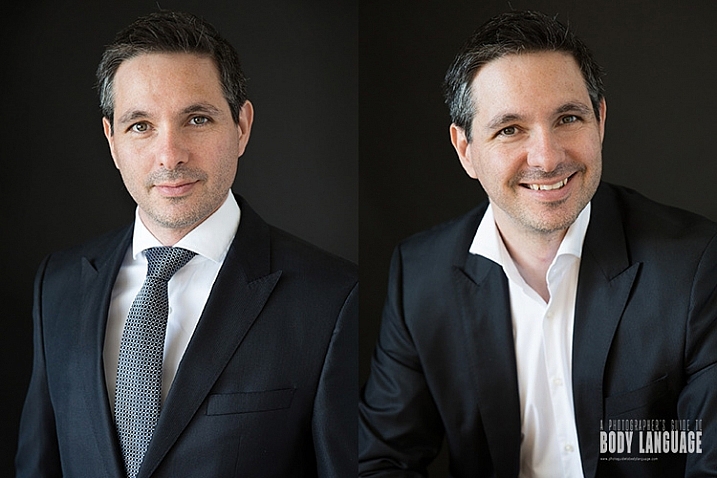
    A genuine smile is one of the most attractive expressions of the human face, and as photographers, we love them because they brighten up our pictures with warmth, and create connection.

    When you look at it on a body language level, you discover that a genuine smile informs others that we are:

    • A friend, not a foe
    • Happy
    • In a good place mentally.

    It’s a universal safety and happiness cue that we recognize on an instinctive level. It draws people in, and creates a sense of positive connection with the person in your image.

    I’ve been talking so far about a genuine smile, because a smile can also be deceiving. We humans have developed the ability to fake smile when we want to pretend that we’re happy or friendly, even when we’re not… and this happens a lot in front of the camera.

    DPSarticledee_danimontage_750

    Let’s face it, standing in front of a lens is not the most happiness inducing moment in most of our lives. To many people, this is actually really uncomfortable, but yet you are asking them to smile, which often ends up looking tense and fake.

    What a fake or tense smile says about the person in the image, is that they are not being honest, that they are uncomfortable, or even submissive.

    People will fake a smile to appease others, when:

    • They are nervous or uncomfortable
    • Showing submission
    • Being polite (when someone cracks a really bad joke for example)

    No matter the reason, a fake smile will give off a low-power impression of the person in the image.

    So what’s the difference between genuine and a fake smile?

    • A genuine smile is visible mainly in the eyes. Smiling eyes are relaxed, with raised cheeks, and a nice tension appearing on the side of the eyes. The mouth can be anywhere from slightly raised or wide open, but it’s the eye action (not the mouth) that communicates the honesty of a smile.
    • A fake smile on the other hand, will have no, or very little, eye engagement. The mouth smile can still be very wide, but you will not see any action in the upper cheek and eye areas. It looks more like a grin, than a smile.
    • The expression of contempt is often mistaken for a smile. The most obvious sign of disdain is a one sided smile, with the lip slightly pulled up.

    DPSarticledee_smilesmontage_750b

    How to get a real smile? Don’t say cheese!

    As a portrait photographer, your job is not only to make a beautiful image, but also to be the director of the shoot, helping your subject relax into the right emotion. If your subject is uncomfortable, you’ll most certainly end up with a fake smile or worse, an expression of contempt, and lose the warmth and honesty that comes from a genuine smile.

    It has become a habit for many photographers to shout out, “Say cheese!!!” to get someone to smile in front of the camera. But this method usually ends up with embarrassed grins, or fake smiles, instead of genuine ones.

    So what should you do instead?

    It’s impossible to fake a feeling (unless you’re a sociopath) and the only way you can get your subject to genuinely smile is to help them connect with a real feeling of happiness. Asking them to think of something, or someone, they love allows them to connect with a genuine feeling of happiness, and you’ll see their cheeks raise and create a beautiful honest smile within seconds. As soon as you see it, let them know so they can feel it for themselves, and reproduce it. I ask my clients to give me a keyword for what they just felt and I use that for the rest of the shoot.

    If they can’t think of anything, you can tell them a funny story, or a joke, and that can work really well, but can be a two edged sword if the joke falls flat and makes the situation very awkward instead.

    Smiles are also a very useful barometer of your clients comfort level. If they can’t seem to relax and connect with a happy thought, it’s a good time to check your own body language and see if you are sending off stress, or discomfort, cues that they are mirroring back to you.

    Differences between men and women

    DPSarticledee contemptmale

    Contempt

    DPSarticledee femalesmilerapport

    Genuine smile

    Smiling is recognized universally as a sign of happiness and safety, by both women and men, but there are a few differences:

    • For women, smiling is a way of creating rapport and a sign of appeasement, but to men a smile can come across as submissive.
    • Men smile less often, and less widely than women.
    • Women are attracted more to photos of men smiling, but men prefer more serious photos of other men.

    When coaching your client on the image selection, it’s important to know the usage they are going to make of their photos. A man needing a photo for a dating website would probably have more success with a smiling photo than a serious one. But if he’s looking for a job in a male dominated workplace, then he’d probably be better off choosing a more serious one for his LinkedIn profile.

    DPSarticledee_rehmontage_750

    I hope you have found these tips useful and I look forward to hearing about your own experiences with genuine and fake smiles. Please leave your comments below.

    googletag.cmd.push(function() {
    tablet_slots.push( googletag.defineSlot( “/1005424/_dPSv4_tab-all-article-bottom_(300×250)”, [300, 250], “pb-ad-78623” ).addService( googletag.pubads() ) ); } );

    googletag.cmd.push(function() {
    mobile_slots.push( googletag.defineSlot( “/1005424/_dPSv4_mob-all-article-bottom_(300×250)”, [300, 250], “pb-ad-78158” ).addService( googletag.pubads() ) ); } );

    The post How to Avoid Fake Smiles in Your People Photography by Dee Libine appeared first on Digital Photography School.


    Digital Photography School

  • Nikon apologizes for awarding prize to digitally altered photo

    Last week, Nikon Singapore chose an image submitted by photographer Chay Yu Wei as the winner of a ‘casual photo contest.’ Critics quickly pointed out that the airplane featured in the image had been digitally inserted, given away by the highly visible white square around the plane’s silhouette. Nikon and Yu Wei have both issued apologies over the submission, with Nikon saying it will bolster its image reviewing process ‘to avoid similar situations in the future.’

    Nikon, which has since deleted the original Facebook post awarding the photograph, posted a status update on Saturday that reads:

    We have heard your comments and feedback on this, and you are right – we should not compromise standards even for a casual photo contest. We have dialogued internally, with the community and with our loyal fans, and Yu Wei has also posted his own views on this issue. We have made an honest mistake and the rousing response from the community today is a reminder to us that the true spirit of photography is very much alive. Moving forward, we will tighten our image review process to avoid similar situations in the future. Thank you once again for all your responses today – for your humour and most of all, your candour and honesty. We hope not to disappoint you in the future and to continue to have your support.

    Most sincerely, your Nikon team

    Yu Wei posted his own lengthy apology on his Instagram account, saying in part:

    Like one user commented, I was on a photo walk in Chinatown and I chanced upon that set of ladders. I snapped a picture of it, and subsequently felt that a plane at that spot would make for an interesting point of view. Hence, I inserted the plane with PicsArt and uploaded it to Instagram. That’s how I use Instagram, sometime it’s to showcase the work I’m proud of, sometimes just to have fun. This case, that small plane was just for fun and it was not meant to bluff anyone. I would have done it with photoshop if I really meant to lie about it, but no, it was a playful edit using the PicsArt app and uploaded to Instagram. When my friends commented with some questions, I also answered it jokingly, saying it’s the last flight of the day and saying it was my lucky day that I did not wait too long. At that time, of course everyone who read it took it as a joke, before this issue arrived and it is taken seriously.

    However, I made a mistake by not keeping it to Instagram as a casual social media platform. I crossed the line by submitting the photo for a competition. I meant it as a joke and I’m really sorry to Nikon for disrespecting the competition. It is a mistake and I shouldn’t have done that. I also shouldn’t have jokingly answered Nikon that I caught the plane in mid-air and should have just clarified that the plane was edited in using PicsArt. This is my fault and I sincerely apologise to Nikon, to all Nikon Photographers, and to the photography community as general.

    While Nikon’s apology seems genuine, we can’t help wondering how such an obviously altered image slipped through. We’re also not quite convinced by Wei’s apology, and DigitalRev points out that the concept for the image may not even be his either. What’s your take on the controversy? Let us know in the comments.

    Articles: Digital Photography Review (dpreview.com)

  • Readers’ Choice Awards 2015: The winners

    Readers’ Choice Awards 2015: The Winners

    At the end of last year we asked you to vote for the best cameras and lenses of 2015. Across two rounds of voting DPReview readers did just that, selecting the top overall photography products of 2015. It was no easy feat, as 2015 brought huge advancements in stills and video technology, but with thousands of votes tallied it’s time to declare a winner. See how the votes stacked up.

    Runner-up: Nikon D7200

    In the runner-up position, coming third in our final poll is the Nikon D7200. The D7200 just edged out the Sony Cyber-shot RX100 IV to take the third highest number of votes at 9.9% of the overall vote. Both formidable cameras in their own categories, the D7200 nabs the runner-up title with its DX-format 24.2MP sensor, sophisticated AF system and enjoyable handling and ergonomics.

    Runner-up: Olympus OM-D E-M5 II

    ‘How do you follow up a classic?’ is the question we found ourselves asking of the OM-D E-M5 II. Taking the second-place position in our final poll with 12.9% of the overall vote, the E-M5 II does a fine job of following up its well-regarded predecessor, and its class-leading 5-axis image stabilization system helps it stand out among last year’s notable products.

    Winner: Sony a7R II

    It was our Product of the Year and now that the votes are in, we know it was yours too. The Sony a7R II left a major impression on the industry in 2015 with its sheer capability: a 42MP sensor, built-in image stabilization and 4K video, for starters. Winning by a landslide, the a7R II took 36% of the overall vote.

    Thanks to everyone that voted, and we hope that you’re all looking forward to more great gear in 2016!

    Articles: Digital Photography Review (dpreview.com)