Blog

  • 26 Images with a Hunger for a Good Meal – Photos at the Dinner Table

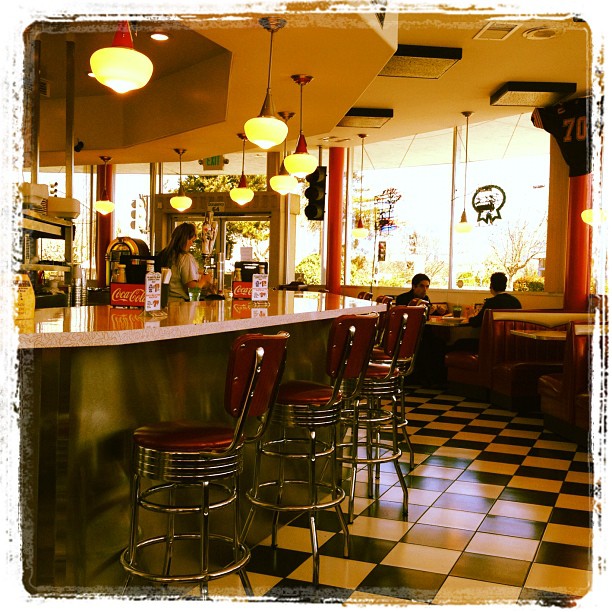
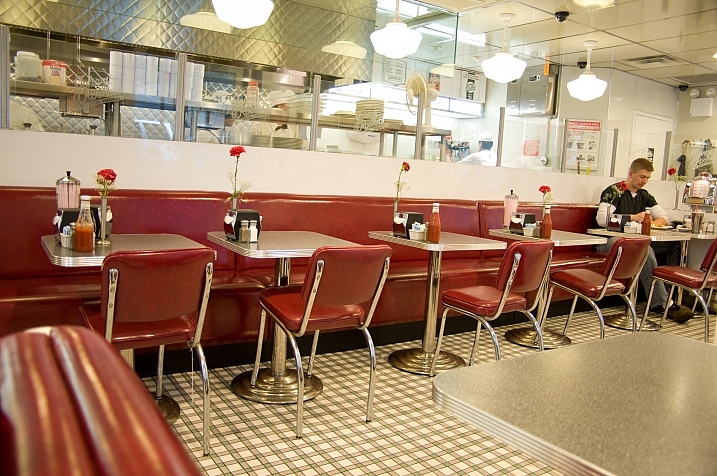
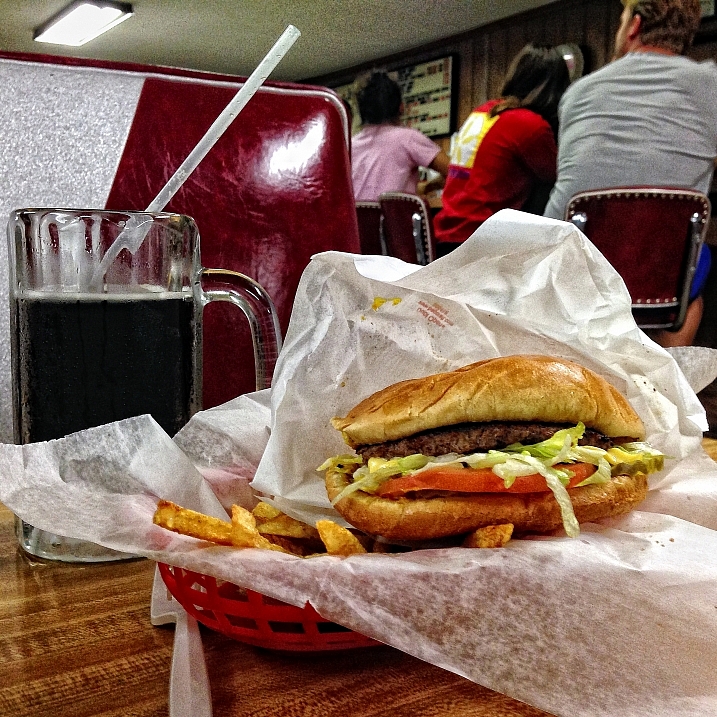
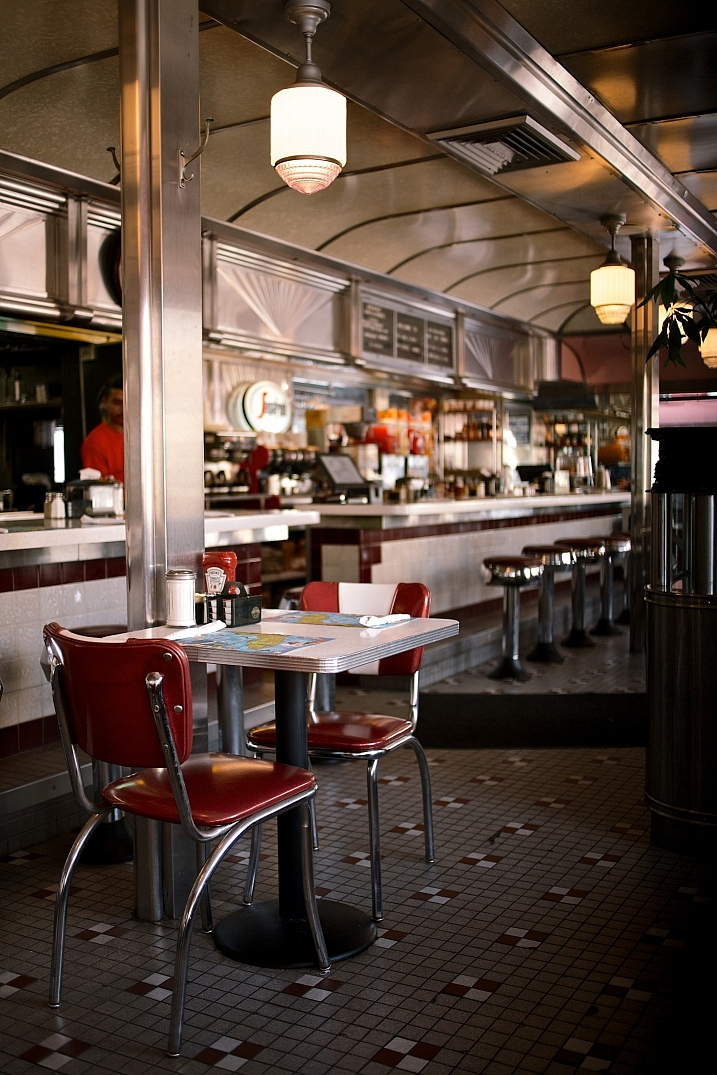
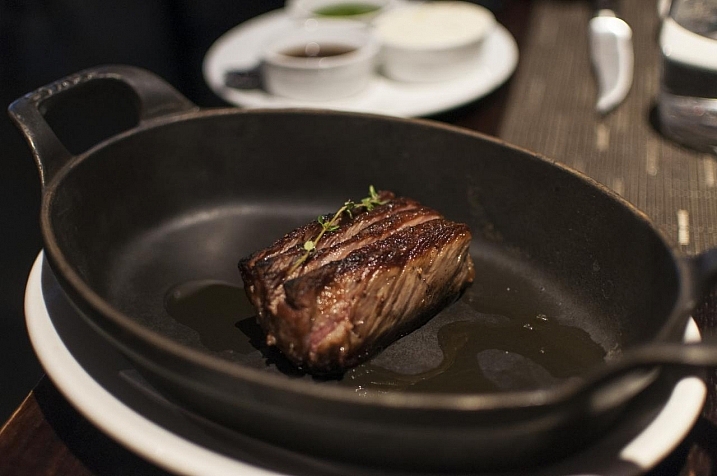
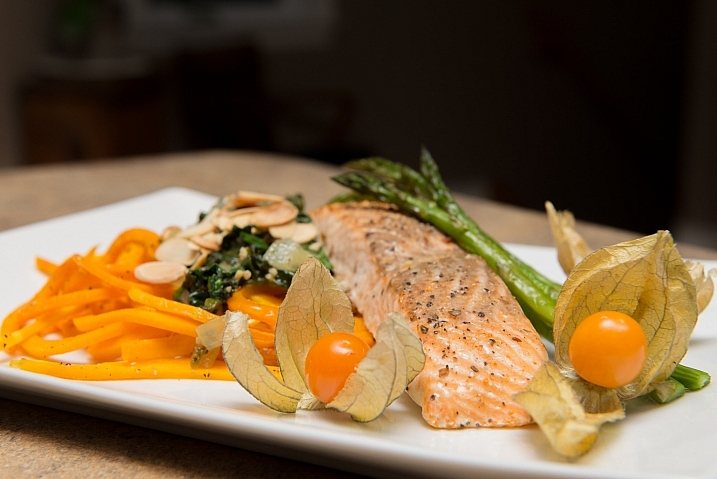
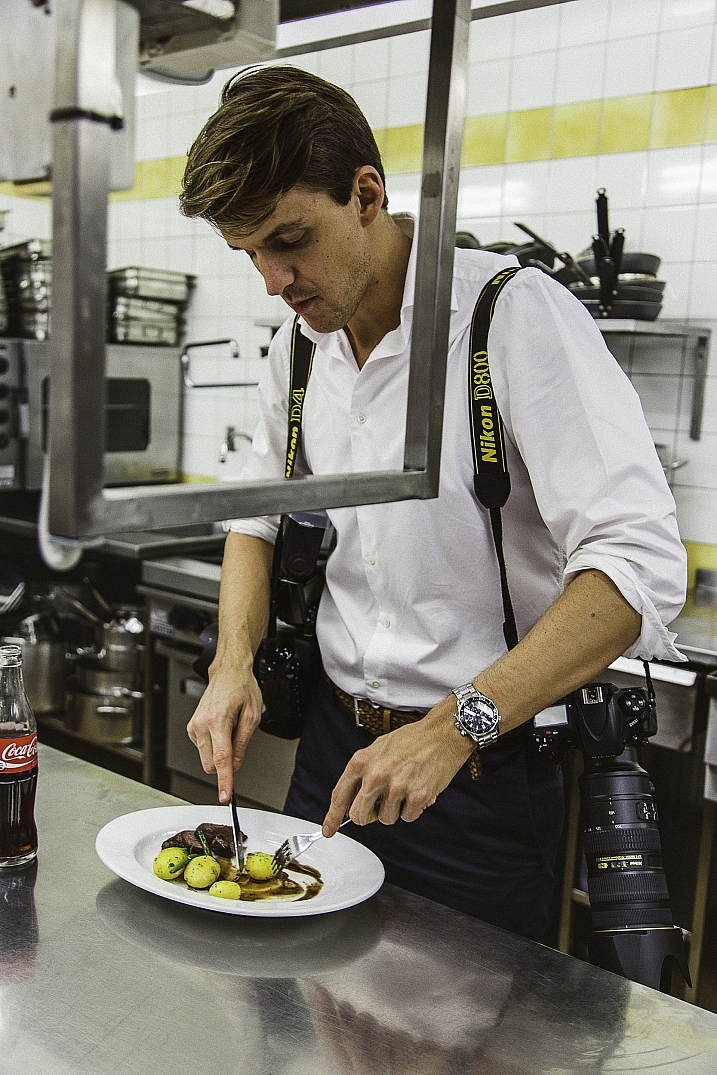
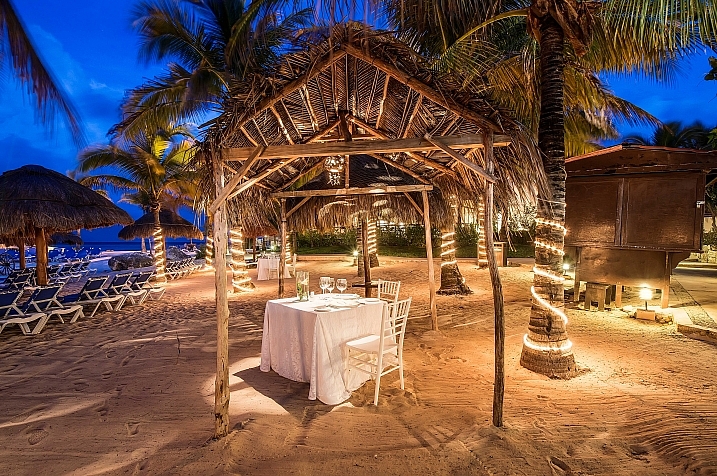
    Whether it be a fancy feast at a special occasion, a romantically set table for two, or burger and fries on a plate – the following images satisfy a hunger for not only a good meal, but some great photos at, and around the dinner table.

    Are you one to photograph your food in restaurants? Entire Instagram accounts are made up of such images. Note: remember to follow dPS over on Instagram! Even if you aren’t prone to that kind of photography, let’s see if these photos at the dinner table can inspire you, and/or make you hungry too!

    This is actually my photo taken of someone else's sandwich in Trinidad, Cuba. It just looked so amazing!

    This is actually my photo taken of someone else’s sandwich in Trinidad, Cuba. It just looked so amazing I had to photograph it!

    Radiowood

    By radiowood

    Antonin Rémond

    By Antonin Rémond

    Snugg LePup

    By Snugg LePup

    Dave Hensley

    By Dave Hensley

    Ron Frazier

    By Ron Frazier

    The Hamster Factor

    By The Hamster Factor

    JAPANKURU

    By JAPANKURU

    Ames Lai

    By Ames Lai

    Jitter Buffer

    By Jitter Buffer

    Shawn Harquail

    By Shawn Harquail

    Laura Thorne

    By Laura Thorne

    Marketa

    By Marketa

    Adam Wyles

    By Adam Wyles

    Mark Manguerra

    By Mark Manguerra

    Zlatko Vickovic

    By Zlatko Vickovic

    Tobias Lindman

    By Tobias Lindman

    Gunilla G

    By Gunilla G

    Kai Chan Vong

    By Kai Chan Vong

    Brian Wolfe

    By Brian Wolfe

    Foodswings

    By foodswings

    Brook Ward

    By Brook Ward

    Elias Quezada

    By elias quezada

    Stijn Nieuwendijk

    By Stijn Nieuwendijk

    Georgie Pauwels

    By Georgie Pauwels

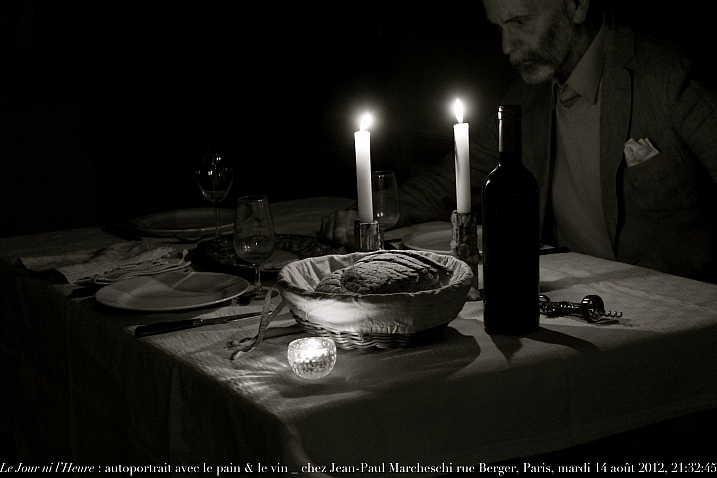
    Renaud Camus

    By Renaud Camus

    googletag.cmd.push(function() {
    tablet_slots.push( googletag.defineSlot( “/1005424/_dPSv4_tab-all-article-bottom_(300×250)”, [300, 250], “pb-ad-78623” ).addService( googletag.pubads() ) ); } );

    googletag.cmd.push(function() {
    mobile_slots.push( googletag.defineSlot( “/1005424/_dPSv4_mob-all-article-bottom_(300×250)”, [300, 250], “pb-ad-78158” ).addService( googletag.pubads() ) ); } );

    The post 26 Images with a Hunger for a Good Meal – Photos at the Dinner Table by Darlene Hildebrandt appeared first on Digital Photography School.


    Digital Photography School

  • Canon offers EF-S 18-135mm F3.5-5.6 IS USM, power zoom adapter and directional microphone

    $ (document).ready(function() { SampleGalleryV2({“containerId”:”embeddedSampleGallery_4897863870″,”galleryId”:”4897863870″,”isEmbeddedWidget”:true,”standalone”:false,”selectedImageIndex”:0,”startInCommentsView”:false,”isMobile”:false}) });

    Introduced alongside the Canon EOS 80D is an updated 18-135mm F3.5-5.6 IS USM, offered separately and as a kit with the camera. The 18-135mm offers a new ‘Nano USM’ motor and boasts between 2.5x (wide-angle) and 4.3x (telephoto) faster performance compared to the previous STM version. 

    Canon has also announced the PZ-E1 Power Zoom Adapter for the lens, a detachable device that can smoothly and silently operate the zoom at 10 different speed levels. The adapter can also be used remotely with Canon’s Camera Connect app.

    Emphasizing the 80D’s appeal to video enthusiasts, Canon has introduced its first external microphone for use with DSLRs, the Canon Directional Stereo Microphone DM-E1. It ships with a wind screen and offers a response range of 50Hz to 16kHz. 

    The EF-S 18-135mm F3.5-5.6 IS USM will ship in March for $ 599.99. The PZ-E1 Power Zoom Adapter will be sold for $ 149.99 and the DM-E1 Directional Microphone will be offered at $ 249.99; both will be available in June.

    Press release:

    SHARE YOUR PASSION THROUGH IMAGES USING
    THE NEW EOS 80D DSLR CAMERA AND EF-S 18-135mm NANO USM LENS

    Designed to Help Unleash the Creative Potential in Us All, New Imaging Technology
    Will Help You Shoot & Share Amazing Images and Video

    MELVILLE, N.Y., February 17, 2015 – Artists looking to turn their passion into popular online videos or to show the world their unique perspective through social networks now have a new tool available to them that helps them tear down creative barriers and produce dynamic visual content for both still and video.  Canon U.S.A., Inc., a leader in digital imaging solutions, is proud to introduce the new Canon EOS 80D Digital SLR camera, featuring an new 45-point AF system1, 24.2 megapixel CMOS sensor for crisp images with fine detail. For the budding videographer or online video star, the camera features Dual Pixel CMOS Autofocus (DAF) technology coupled with an intuitive touchscreen capability for easy focusing when shooting video.

    Canon is also introducing a new EF-S 18-135mm f/3.5-5.6 IS USM lens optimized for high-speed autofocusing when shooting stills and quiet and smooth zoom when shooting video. The lens is also compatible with Canon’s new Power Zoom Adapter for smooth cinematic ‘pulls’ when changing focal length on a subject, and responsive adjustments at the push of a button for stills or video.

    Updated features in Canon EOS 80D DSLR Camera include: 

    • New 45-point all cross-type AF system 
    • Intelligent Viewfinder with approximately 100% viewfinder coverage 
    • Newly Developed 24.2 Megapixel (APS-C) CMOS sensor
    • DIGIC 6 image processor for enhanced image quality
    • Improved Dual Pixel CMOS AF for smooth, fast and accurate autofocus with video and stills 
    • Built-in Wi-Fi®2 and NFCTM2 capability for easy transfer of images and movies to compatible mobile devices
    • 1080/60p Full HD video to capture brilliant results in MP4 format for easy movie sharing on select social networking sites
    • Vari-angle Touch Screen 3.0-inch Clear View LCD II monitor enables flexible positioning and clear viewing even outdoors 

    “In today’s world, where everyone is a photographer or videographer, we at Canon are looking to provide the tools and features that help creative-minded people stand out from the pack and get noticed. The right technology cannot make someone creative, but it will help bring a creative vision to life,” said Yuichi Ishizuka, president and COO, Canon U.S.A., Inc. “The right combination of camera and lens helps those with a vision stand out and be recognized. We look forward to seeing what this new generation of passionate artists will create with these new tools.” 

    New AF System and Dual Pixel CMOS AF
    The 45-point all cross-type viewfinder AF system in the new Canon EOS 80D DSLR camera, compared to 19-points in the Canon EOS 70D DSLR camera, is now wider both horizontally and vertically for easier compositions with off-center subjects. Low light AF performance has been improved all the way down to EV-3 at the center point to achieve sharp results even in extreme low-light situations. The camera’s AI (Artificial Intelligence) Servo AF II autofocusing system utilizes color tracking with a 7,560-pixel RGB+IR metering sensor that automatically detects skin tone and colors to enhance tracking sensitivity, even with moving subjects that are rapidly changing pace or direction.  Enhancing the ease-of-use of the new AF system is the Canon EOS 80D’s new Intelligent Viewfinder which features approximately 100% viewfinder coverage. The full coverage helps prevent photographers from missing objects that are in the corners of the scene, which can reduce the need to crop images later on. 

    Dual Pixel CMOS AF employs a new Canon CMOS sensor with which all of the effective pixels are able to perform both still imaging and phase-detection AF simultaneously to achieve dramatically improved AF performance during Live View and video shooting. The Dual Pixel CMOS AF technology in the Canon EOS 80D camera features enhanced tracking sensitivity and is compatible with the full line of Canon EF Series lenses, including the new Canon EF-S18-135mm f/3.5-5.6 IS USM  standard zoom lens. 

    High-Quality Still and Video Image Performance
    Featuring a new 24.2 megapixel APS-C Canon CMOS sensor and Canon’s superb DIGIC 6 Image Processor, as well as an improved still image ISO range of 100–16000 (Video ISO range 100–12800, both expandable to 25600), the Canon EOS 80D DSLR camera is capable of producing sharp, detailed images and videos even in low-light conditions. High-speed continuous shooting up to seven frames per second (fps) combined with the 45-point all cross-type AF allows photographers to capture fast moving subjects easily and accurately, while the camera’s Scene Intelligent Auto Mode delivers optimized photos and offers outstanding scene detection for amazing results even when shooting in low light. HDR mode provides creative filter effects, such as natural, art standard, art bold, art vivid and art embossed. For added convenience, the Canon EOS 80D camera features Anti-Flicker shooting, similar to that found in the EOS 7D Mark II DSLR camera. Anti-Flicker shooting produces consistently high-quality results even when shooting in areas with fluorescent lighting or other flickering light sources by detecting the flicker cycle of the light source and shooting when brightness is near its peak. 

    When users select the EOS Movie mode, the Canon EOS 80D DSLR camera offers the ability to shoot in 1080p Full HD video up to 60 fps, compared to 30 fps in the Canon EOS 70D, in MP4 format and in either ALL-I or IPB compression modes with optional embedded time code. For expanded creativity the Canon EOS 80D DSLR camera features HDR movie and Time-Lapse movie modes and Movie creative filters like fantasy, old movie, memory, dramatic monochrome and miniature. Movie Servo AF custom settings allow users to speed up or slow down focusing speeds, enhancing creativity and artistic expression. For added flexibility, the Canon EOS 80D digital SLR camera also features a built-in headphone jack, a built-in stereo microphone with manual audio level adjustment, and an additional stereo microphone jack.

    News Lens, Power Zoom Adapter, and Directional Stereo Microphone Enhance Video Quality
    In addition to the new Canon EOS 80D DSLR camera, Canon U.S.A., Inc., is also introducing the Canon EF-S18-135mm f/3.5-5.6 IS USM Lens, a newly designed lens with a premium exterior design that will serve as the kit lens for the new Canon EOS 80D camera. This the first Canon lens equipped with Nano USM, a new type of focusing motor that combines the benefits of a ring USM (ultrasonic motor) for high-speed AF during still photo shooting and lead-screw type STM (stepping motor) for smooth and quiet movie AF, and improved AF speeds up to 4.3x (Tele) and 2.5x (Wide) faster than the previous model. The Canon EF-S18-135mm f/3.5-5.6 IS USM Lens also provides up to four stops of optical image stabilization. A new lens hood, the EW-73D, is included with the new lens.

    To further enhance the ease-of-use when shootings movies with a Canon DLSR or Cinema EOS cameras, Canon is introducing the Power Zoom Adapter PZ-E1, specifically constructed to be compatible with the design of the new Canon EF-S18-135mm f/3.5-5.6 IS USM Lens. The Canon Power Zoom Adapter PZ-E1 is the world’s first detachable zoom adapter that provides silent and smooth zoom and can adjusted incrementally to 10 different levels of zoom speed3. Additionally, the PZ-E1 can be controlled remotely using the Canon Camera Connect app4.  

    In addition to the new lens and power zoom adapter, Canon is introducing the first Canon-branded external microphone for the EOS system, the Canon Directional Stereo Microphone DM-E1. This new accessory microphone will help improve sound quality while shooting video, allowing users to rotate the direction of the microphone up and down from 90 to 120 degrees depending on the shooting situation. The DM-E1’s durable shock mount construction helps to reduce camera operation noise and lens drive sounds and is built to withstand the rigors of a variety of shooting situations. Featuring a frequency response range of 50Hz to 16kHz, the DM-E1 comes with a wind screen to help limit peripheral sound from wind and other outside factors, allowing shooters to utilize the microphone in a broad amount of shooting situations. Featuring a built-in power supply from a single “button-type” lithium cell battery, the DM-E1 also has a power indicator lamp allowing users to easily check its battery level. 

    Availability
    The Canon EOS 80D Digital SLR camera and EF-S18-135mm f/3.5-5.6 IS USM Lens are currently scheduled to be available in March 2016 for an estimated retail price of $ 1,199.00 for the body only, $ 1,799.00 with the new EF-S18-135mm f/3.5-5.6 IS USM Lens and $ 599.99 respectively. 

    The Canon Power Zoom Adapter PZ-E1 and Directional Stereo Microphone DM-E1 are currently scheduled to be available in June 2016, for estimated retail prices of $ 149.99 and $ 249.99 respectively.  

    For more information visit, www.usa.canon.com/eos.

    1 The number of AF points, cross-type AF points and dual cross-type AF points vary depending on the lens used.

    2 Compatible with iOS® versions 7.1/8.4/9.0, AndroidTM smartphone and tablet versions 4.0/4.1/4.2/4.3/4.4/5.0/5.1.  Data charges may apply with the download of the free Canon Camera Connect app. This app helps enable you to upload images to social media services. Please note that image files may contain personally identifiable information that may implicate privacy laws. Canon disclaims and has no responsibility for your use of such images. Canon does not obtain, collect or use such images or any information included in such images through this app.

    3 As of 2/17/ 2016.

    4Data charges may apply with the download of the free Canon Camera Connect app. This app helps enable you to upload images to social media services. Please note that image files may contain personally identifiable information that may implicate privacy laws. Canon disclaims and has no responsibility for your use of such images. Canon does not obtain, collect or use such images or any information included in such images through this app.

    Canon EF-S F3.5-5.6 IS USM specifications

    Principal specifications
    Lens type Zoom lens
    Max Format size APS-C / DX
    Focal length 18–135 mm
    Image stabilisation Yes
    Lens mount Canon EF-S
    Aperture
    Maximum aperture F3.5 – F5.6
    Minimum aperture F22.0 – F38.0
    Aperture ring No
    Number of diaphragm blades 7
    Optics
    Elements 16
    Groups 12
    Special elements / coatings One UD and one aspherical elements
    Focus
    Minimum focus 0.39 m (15.35″)
    Maximum magnification 0.28×
    Autofocus Yes
    Full time manual Yes
    Focus method Internal
    Distance scale No
    DoF scale No
    Focus distance limiter No
    Physical
    Weight 515 g (1.14 lb)
    Diameter 77 mm (3.03″)
    Length 96 mm (3.78″)
    Materials Plastic barrel, metal mount
    Sealing No
    Colour Black
    Zoom method Rotary (extending)
    Power zoom No
    Zoom lock No
    Filter thread 67.0 mm
    Hood supplied Yes
    Hood product code EW-73D

    Articles: Digital Photography Review (dpreview.com)

  • Canon PowerShot G7 X Mark II boasts faster performance and improved ergonomics

    $ (document).ready(function() { SampleGalleryV2({“containerId”:”embeddedSampleGallery_3326063429″,”galleryId”:”3326063429″,”isEmbeddedWidget”:true,”standalone”:false,”selectedImageIndex”:0,”startInCommentsView”:false,”isMobile”:false}) });

    Canon has introduced the PowerShot G7 X Mark II with a new DIGIC 7 processor, bringing much-needed improvements to camera performance. Maintaining its predecessor’s 20.1MP 1″-type CMOS sensor and 24-100mm equiv. F1.8-2.8 lens, the G7 X II brings some updates to the camera’s exterior as well, with a re-designed grip, bottom-hinged 3″ 1.04M-dot LCD and a front control dial that can switch between clicking or smooth-turning operation.

    The new processor allows for face registration and better subject detection in scenes of low saturation or similar colors. In addition, it dramatically speeds up camera performance, with Canon claiming continuous 8 fps Raw shooting. Battery life is also 25% better than the original G7 X, with a CIPA-rated number of 265 shots per charge.

    Full 1080/60p HD video is offered, as in its predecessor, along with Wi-Fi and NFC. The G7 X II provides Picture Style processing modes borrowed from the EOS DSLR line, and time-lapse movie mode is included.

    The Canon PowerShot G7 X Mark II will be offered for $ 699 with availability in May.

    Press release:

    TAKE THAT CAMERA TO GO!  CANON U.S.A LAUNCHES COMPACT POWERSHOT G7 X MARK II AND POWERSHOT SX720 HS DIGITAL CAMERAS

    Newest Canon PowerShot Digital Cameras Offer Outstanding Quality in Convenient Compact Size 

    MELVILLE, N.Y., February 17, 2016 – Ideal for both advanced amateur and pro photographers looking for a convenient, high performance compact camera with the ability to connect to compatible digital devices, Canon U.S.A. Inc., a leader in digital imaging solutions, proudly introduces the compact PowerShot G7 X Mark II1 and lightweight PowerShot SX720 HS digital cameras.

    Canon’s new PowerShot G7 X Mark II digital camera pairs a 1.0-inch, 20.1 Megapixel* CMOS sensor with Canon’s new DIGIC 7 Image Processor to help reduce noise and deliver outstanding image quality, even in low light shooting situations. The PowerShot SX720HS digital camera boasts a new 40x Optical Zoom lens (equivalent to 24-960mm), providing outstanding performance, reach and resolution for everyday use and when shooting memorable family events, while easily slipping into a pocket or purse.

    “In today’s world, compact cameras must work well with other devices and still offer superb quality. The PowerShot G7 X Mark II and PowerShot SX720 HS cameras both provide outstanding image quality with amazing optical zoom lenses and they easily connect with compatible phones, tablets and other smart devices so great images can be shared and enjoyed” stated Yuichi Ishizuka, president and COO, Canon U.S.A., Inc.  

    Sleek and Sophisticated 
    The first Canon camera to feature Canon’s new high-speed DIGIC 7 Image Processor, the PowerShot G7 X Mark II digital camera is a model of compact sophistication and speed with a high-quality sleek body and optimum comfort grip. Building on the success of Canon’s PowerShot G7 X digital camera, the PowerShot G7 X Mark II digital camera features a fast startup and improved RAW continuous shooting speed of up to eight frames per second (fps) with short intervals between shots. Additional features include: 

    • Bright f/1.8 (W) – f/2.8 (T), 4.2x (24–100mm equivalent) optical zoom lens with Canon’s Intelligent Image Stabilizer (IS) and a 9-blade iris diaphragm;
    • Multi-angle 3.0-inch capacitive touch panel LCD with a screen resolution of 1.04 million dots and tilt options of 180° up and 45° down;
    • Ability to capture 1080p Full HD video in MP4 format with stereo sound;
    • Built-in Wi-Fi®** and Near Field Communications (NFC™)*** capability with a dedicated Wi-Fi button for easy sharing and transferring of images and videos;
    • Picture Style function that offers superb command of in-camera color, contrast, and sharpness;
    • In-camera RAW conversion, making it possible to preview customized image processing modifications on the camera, without the use of a computer;
    • Convenient control ring lever that enables users to quickly switch between stepped and continuous ring movement; 
    • Time-Lapse Movie feature to help capture images at preset intervals and combine them to create a short movie clip;
    • Panning feature that allows the camera to lock onto the main subject using Canon’s Intelligent IS technology to automatically adjust the shutter speed for beautiful background blur.

    The Canon PowerShot G7 X Mark II digital camera is currently scheduled to be available in May 2016 for an estimated retail price of $ 699.992.

    Powerful Zoom Delivers Virtually Shake-Free Images
    The Canon PowerShot SX720 HS digital camera is equipped with a new powerful zoom lens and is the ideal choice for amateur photographers looking to take a step up from a smartphone or entry-level digital camera to a lightweight, compact camera. The PowerShot SX720 HS digital camera’s new 40x Optical Zoom lens (24-960mm equivalent focal length range) uses one Hi-UD, three UD and three aspheric lens elements to help achieve high image quality and high magnification, while also utilizing Canon’s Intelligent Imaging Stabilizing (IS) technology for greater optical performance. 

    As the successor to Canon’s PowerShot SX710 HS digital compact camera, the PowerShot SX720 HS digital camera features increases its zoom range while maintaining compact size for maximum convenience. Additional features include:

    • A dedicated Wi-Fi® button for easy sharing and transferring of images and videos utilizing the camera’s built-in WiFi and NFCtechnology;
    • 20.3 Megapixel* CMOS sensor with Canon’s DIGIC 6 Image Processor to help deliver outstanding image quality, even in low light;
    • 1080p/60 Full HD video capture with stereo sound;
    • 3.0-inch LCD (approx. 922,000 dots) to allow for easy viewing, even from a wide angle;
    • Zoom Framing Assist that allows the lens to automatically zoom in or out while the camera follows subject movement  and helps keep it in focus;
    • Story Highlight feature that enables the camera to automatically compile images and videos3 from a certain day or event into a mini-highlight reel with music and effects;
    • Creative Shot mode that uses composition, color and lighting from an original image to create artistic images.
    • Canon’s PowerShot SX720 HS digital camera is currently scheduled to be available in March 2016 for an estimated retail price of $ 379.992.  

    1 This device has not been authorized as required by the rules of the Federal Communications Commission. This device is not, and may not be offered for sale or lease, or sold or leased, until authorization is obtained.

    2 Availability, pricing and specifications are subject to change without notice.  Actual prices are set by individual dealers and may vary.

    3 Videos must be shot in Hybrid Auto or Short Clip.

    * Image processing may cause a decrease in the number of pixels.

    ** Compatible with iOS® versions 7.1/8.4/9.0, AndroidTM smartphone and tablet versions  4.0/4.1/4.2/4.3/4.4/5.0/5.1.  Data charges may apply with the download of the free Canon Camera Connect app. This app helps enable you to upload images to social media services. Please note that image files may contain personally identifiable information that may implicate privacy laws. Canon disclaims and has no responsibility for your use of such images. Canon does not obtain, collect or use such images or any information included in such images through this app.

    *** Compatible with Android smartphone and tablet versions 4.0/4.1/4.2/4.3/4.4/5.0/5.1.

    PowerShot G7 X Mark II specifications

    Price
    MSRP $ 699
    Body type
    Body type Compact
    Sensor
    Max resolution 5472 x 3648
    Other resolutions 5472 x 3080, 4864 x 3648, 4320 x 2880, 4320 x 2432, 3840 x 2880, 2304 x 1536, 2048 x 1536, 1920 x 1080, 720 x 480, 720 x 408, 640 x 480
    Image ratio w:h 4:3, 3:2, 16:9
    Effective pixels 20 megapixels
    Sensor photo detectors 21 megapixels
    Sensor size 1″ (13.2 x 8.8 mm)
    Sensor type BSI-CMOS
    Processor DIGIC 7
    Color space sRGB
    Color filter array Primary color filter
    Image
    ISO Auto, 125-12800 (expandable to 25600)
    Boosted ISO (maximum) 25600
    White balance presets 8
    Custom white balance Yes
    Image stabilization Optical
    Uncompressed format RAW
    JPEG quality levels Super fine, fine
    File format
    • JPEG (EXIF v2.3)
    • Raw (Canon CR2, 12-bit)
    Optics & Focus
    Focal length (equiv.) 24–100 mm
    Optical zoom 4.2×
    Maximum aperture F1.8 – F2.8
    Autofocus
    • Contrast Detect (sensor)
    • Multi-area
    • Center
    • Selective single-point
    • Tracking
    • Single
    • Continuous
    • Touch
    • Face Detection
    • Live View
    Autofocus assist lamp Yes
    Digital zoom Yes (4x)
    Manual focus Yes
    Normal focus range 5 cm (1.97″)
    Macro focus range 5 cm (1.97″)
    Number of focus points 31
    Screen / viewfinder
    Articulated LCD Tilting
    Screen size 3″
    Screen dots 1,040,000
    Touch screen Yes
    Screen type TFT LCD
    Live view Yes
    Viewfinder type None
    Photography features
    Minimum shutter speed 15 sec
    Maximum shutter speed 1/2000 sec
    Exposure modes
    • Program
    • Shutter priority
    • Aperture priority
    • Manual
    • Custom
    Scene modes
    • Self Portrait
    • Portrait
    • Panning
    • Star Portrait
    • Star Nightscape
    • Star Trails
    • Star Time-Lapse Movie
    • Handheld Night Scene
    • High Dynamic Range
    • Underwater
    • Fireworks
    Built-in flash Yes
    Flash range 7.00 m
    External flash No
    Flash modes Auto, on, slow synchro, off
    Continuous drive 8.0 fps
    Self-timer Yes (2 0r 10 secs, custom)
    Metering modes
    • Multi
    • Center-weighted
    • Spot
    Exposure compensation ±3 (at 1/3 EV steps)
    AE Bracketing ±3 (3 frames at 1/3 EV steps)
    Videography features
    Resolutions 1920 x 1080 (60p, 30p, 24p), 1280 x 720 (30p), 640 x 480 (30p)
    Format MPEG-4, H.264
    Videography notes Also has time-lapse (normal and star), miniature effect, and digest modes
    Microphone Stereo
    Speaker Mono
    Storage
    Storage types SD/SDHC/SDXC (UHS-I compatible)
    Connectivity
    USB USB 2.0 (480 Mbit/sec)
    HDMI Yes (micro-HDMI)
    Microphone port No
    Headphone port No
    Wireless Built-In
    Wireless notes 802.11b/g/n with NFC
    Remote control Yes (via smartphone)
    Physical
    Environmentally sealed No
    Battery Battery Pack
    Battery description NB-13L lithium-ion battery and charger
    Battery Life (CIPA) 265
    Weight (inc. batteries) 319 g (0.70 lb / 11.25 oz)
    Dimensions 106 x 61 x 42 mm (4.17 x 2.4 x 1.65″)
    Other features
    Orientation sensor Yes
    Timelapse recording Yes
    GPS None

    Articles: Digital Photography Review (dpreview.com)

  • Canon EOS 80D updates Dual Pixel AF, bumps resolution with 24MP sensor

    $ (document).ready(function() { SampleGalleryV2({“containerId”:”embeddedSampleGallery_6720371049″,”galleryId”:”6720371049″,”isEmbeddedWidget”:true,”standalone”:false,”selectedImageIndex”:0,”startInCommentsView”:false,”isMobile”:false}) });

    Canon has updated its prosumer DSLR line with the EOS 80D, offering a newly developed 24.2MP APS-C sensor, 45-point all cross-type autofocus module, updated Dual Pixel AF for live view still and video recording, and Wi-Fi with NFC.

    Canon claims its new AF module, a notable improvement over the 70D’s 19-point system, is capable of focusing in low light conditions down to -3EV at the center point. Dual Pixel AF now offers continuous focus, and all pixels are able to perform phase detection focus while being used for still imaging. Video recording is offered at an improved 1080/60p.

    The 80D uses a DIGIC 6 processor and provides a native ISO range in stills shooting from 100-16,000, expandable to 25,600. Burst shooting at up to 7 fps is on par with the 70D. The 80D is equipped with an approximately 100% coverage optical viewfinder and a fully articulated 3″ 1.04M-dot touchscreen LCD, as well as built-in Wi-Fi with NFC.

    The Canon EOS 80D will be available in March for $ 1199 body-only or $ 1799 bundled with an updated EF-S 18-135mm F3.5-5.6 IS USM kit lens.

    Press release:

    SHARE YOUR PASSION THROUGH IMAGES USING
    THE NEW EOS 80D DSLR CAMERA AND EF-S 18-135mm NANO USM LENS

    Designed to Help Unleash the Creative Potential in Us All, New Imaging Technology
    Will Help You Shoot & Share Amazing Images and Video

    MELVILLE, N.Y., February 17, 2015 – Artists looking to turn their passion into popular online videos or to show the world their unique perspective through social networks now have a new tool available to them that helps them tear down creative barriers and produce dynamic visual content for both still and video.  Canon U.S.A., Inc., a leader in digital imaging solutions, is proud to introduce the new Canon EOS 80D Digital SLR camera, featuring an new 45-point AF system1, 24.2 megapixel CMOS sensor for crisp images with fine detail. For the budding videographer or online video star, the camera features Dual Pixel CMOS Autofocus (DAF) technology coupled with an intuitive touchscreen capability for easy focusing when shooting video.

    Canon is also introducing a new EF-S 18-135mm f/3.5-5.6 IS USM lens optimized for high-speed autofocusing when shooting stills and quiet and smooth zoom when shooting video. The lens is also compatible with Canon’s new Power Zoom Adapter for smooth cinematic ‘pulls’ when changing focal length on a subject, and responsive adjustments at the push of a button for stills or video.

    Updated features in Canon EOS 80D DSLR Camera include: 

    • New 45-point all cross-type AF system 
    • Intelligent Viewfinder with approximately 100% viewfinder coverage 
    • Newly Developed 24.2 Megapixel (APS-C) CMOS sensor
    • DIGIC 6 image processor for enhanced image quality
    • Improved Dual Pixel CMOS AF for smooth, fast and accurate autofocus with video and stills 
    • Built-in Wi-Fi 2 and NFC2 capability for easy transfer of images and movies to compatible mobile devices
    • 1080/60p Full HD video to capture brilliant results in MP4 format for easy movie sharing on select social networking sites
    • Vari-angle Touch Screen 3.0-inch Clear View LCD II monitor enables flexible positioning and clear viewing even outdoors 

    “In today’s world, where everyone is a photographer or videographer, we at Canon are looking to provide the tools and features that help creative-minded people stand out from the pack and get noticed. The right technology cannot make someone creative, but it will help bring a creative vision to life,” said Yuichi Ishizuka, president and COO, Canon U.S.A., Inc. “The right combination of camera and lens helps those with a vision stand out and be recognized. We look forward to seeing what this new generation of passionate artists will create with these new tools.” 

    New AF System and Dual Pixel CMOS AF
    The 45-point all cross-type viewfinder AF system in the new Canon EOS 80D DSLR camera, compared to 19-points in the Canon EOS 70D DSLR camera, is now wider both horizontally and vertically for easier compositions with off-center subjects. Low light AF performance has been improved all the way down to EV-3 at the center point to achieve sharp results even in extreme low-light situations. The camera’s AI (Artificial Intelligence) Servo AF II autofocusing system utilizes color tracking with a 7,560-pixel RGB+IR metering sensor that automatically detects skin tone and colors to enhance tracking sensitivity, even with moving subjects that are rapidly changing pace or direction.  Enhancing the ease-of-use of the new AF system is the Canon EOS 80D’s new Intelligent Viewfinder which features approximately 100% viewfinder coverage. The full coverage helps prevent photographers from missing objects that are in the corners of the scene, which can reduce the need to crop images later on. 

    Dual Pixel CMOS AF employs a new Canon CMOS sensor with which all of the effective pixels are able to perform both still imaging and phase-detection AF simultaneously to achieve dramatically improved AF performance during Live View and video shooting. The Dual Pixel CMOS AF technology in the Canon EOS 80D camera features enhanced tracking sensitivity and is compatible with the full line of Canon EF Series lenses, including the new Canon EF-S18-135mm f/3.5-5.6 IS USM  standard zoom lens. 

    High-Quality Still and Video Image Performance
    Featuring a new 24.2 megapixel APS-C Canon CMOS sensor and Canon’s superb DIGIC 6 Image Processor, as well as an improved still image ISO range of 100–16000 (Video ISO range 100–12800, both expandable to 25600), the Canon EOS 80D DSLR camera is capable of producing sharp, detailed images and videos even in low-light conditions. High-speed continuous shooting up to seven frames per second (fps) combined with the 45-point all cross-type AF allows photographers to capture fast moving subjects easily and accurately, while the camera’s Scene Intelligent Auto Mode delivers optimized photos and offers outstanding scene detection for amazing results even when shooting in low light. HDR mode provides creative filter effects, such as natural, art standard, art bold, art vivid and art embossed. For added convenience, the Canon EOS 80D camera features Anti-Flicker shooting, similar to that found in the EOS 7D Mark II DSLR camera. Anti-Flicker shooting produces consistently high-quality results even when shooting in areas with fluorescent lighting or other flickering light sources by detecting the flicker cycle of the light source and shooting when brightness is near its peak. 

    When users select the EOS Movie mode, the Canon EOS 80D DSLR camera offers the ability to shoot in 1080p Full HD video up to 60 fps, compared to 30 fps in the Canon EOS 70D, in MP4 format and in either ALL-I or IPB compression modes with optional embedded time code. For expanded creativity the Canon EOS 80D DSLR camera features HDR movie and Time-Lapse movie modes and Movie creative filters like fantasy, old movie, memory, dramatic monochrome and miniature. Movie Servo AF custom settings allow users to speed up or slow down focusing speeds, enhancing creativity and artistic expression. For added flexibility, the Canon EOS 80D digital SLR camera also features a built-in headphone jack, a built-in stereo microphone with manual audio level adjustment, and an additional stereo microphone jack.

    News Lens, Power Zoom Adapter, and Directional Stereo Microphone Enhance Video Quality
    In addition to the new Canon EOS 80D DSLR camera, Canon U.S.A., Inc., is also introducing the Canon EF-S18-135mm f/3.5-5.6 IS USM Lens, a newly designed lens with a premium exterior design that will serve as the kit lens for the new Canon EOS 80D camera. This the first Canon lens equipped with Nano USM, a new type of focusing motor that combines the benefits of a ring USM (ultrasonic motor) for high-speed AF during still photo shooting and lead-screw type STM (stepping motor) for smooth and quiet movie AF, and improved AF speeds up to 4.3x (Tele) and 2.5x (Wide) faster than the previous model. The Canon EF-S18-135mm f/3.5-5.6 IS USM Lens also provides up to four stops of optical image stabilization. A new lens hood, the EW-73D, is included with the new lens.

    To further enhance the ease-of-use when shootings movies with a Canon DLSR or Cinema EOS cameras, Canon is introducing the Power Zoom Adapter PZ-E1, specifically constructed to be compatible with the design of the new Canon EF-S18-135mm f/3.5-5.6 IS USM Lens. The Canon Power Zoom Adapter PZ-E1 is the world’s first detachable zoom adapter that provides silent and smooth zoom and can adjusted incrementally to 10 different levels of zoom speed3. Additionally, the PZ-E1 can be controlled remotely using the Canon Camera Connect app4.

    In addition to the new lens and power zoom adapter, Canon is introducing the first Canon-branded external microphone for the EOS system, the Canon Directional Stereo Microphone DM-E1. This new accessory microphone will help improve sound quality while shooting video, allowing users to rotate the direction of the microphone up and down from 90 to 120 degrees depending on the shooting situation. The DM-E1’s durable shock mount construction helps to reduce camera operation noise and lens drive sounds and is built to withstand the rigors of a variety of shooting situations. Featuring a frequency response range of 50Hz to 16kHz, the DM-E1 comes with a wind screen to help limit peripheral sound from wind and other outside factors, allowing shooters to utilize the microphone in a broad amount of shooting situations. Featuring a built-in power supply from a single “button-type” lithium cell battery, the DM-E1 also has a power indicator lamp allowing users to easily check its battery level. 

    Availability
    The Canon EOS 80D Digital SLR camera and EF-S18-135mm f/3.5-5.6 IS USM Lens are currently scheduled to be available in March 2016 for an estimated retail price of $ 1,199.00 for the body only, $ 1,799.00 with the new EF-S18-135mm f/3.5-5.6 IS USM Lens and $ 599.99 respectively. 

    The Canon Power Zoom Adapter PZ-E1 and Directional Stereo Microphone DM-E1 are currently scheduled to be available in June 2016, for estimated retail prices of $ 149.99 and $ 249.99 respectively.  

    For more information visit, www.usa.canon.com/eos.

    1. The number of AF points, cross-type AF points and dual cross-type AF points vary depending on the lens used.

    2. Compatible with iOS® versions 7.1/8.4/9.0, AndroidTM smartphone and tablet versions 4.0/4.1/4.2/4.3/4.4/5.0/5.1.  Data charges may apply with the download of the free Canon Camera Connect app. This app helps enable you to upload images to social media services. Please note that image files may contain personally identifiable information that may implicate privacy laws. Canon disclaims and has no responsibility for your use of such images. Canon does not obtain, collect or use such images or any information included in such images through this app.

    3. As of 2/17/2016.

    4. Data charges may apply with the download of the free Canon Camera Connect app. This app helps enable you to upload images to social media services. Please note that image files may contain personally identifiable information that may implicate privacy laws. Canon disclaims and has no responsibility for your use of such images. Canon does not obtain, collect or use such images or any information included in such images through this app.

    Canon EOS 80D specifications

    Price
    MSRP $ 1199 (body only), $ 1799 (w/18-135 lens)
    Body type
    Body type Mid-size SLR
    Body material Magnesium alloy
    Sensor
    Max resolution 6000 x 4000
    Image ratio w:h 1:1, 4:3, 3:2, 16:9
    Effective pixels 24 megapixels
    Sensor photo detectors 26 megapixels
    Sensor size APS-C (22.5 x 15 mm)
    Sensor type CMOS
    Processor DIGIC 6
    Color space sRGB, Adobe RGB
    Color filter array Primary color filter
    Image
    ISO Auto, 100-16000 (expands to 25600)
    Boosted ISO (maximum) 25600
    White balance presets 6
    Custom white balance Yes
    Image stabilization No
    Uncompressed format RAW
    JPEG quality levels Fine, normal
    File format
    • JPEG (Exif v2.3)
    • Raw (Canon 14-bit CRW)
    Optics & Focus
    Autofocus
    • Contrast Detect (sensor)
    • Phase Detect
    • Multi-area
    • Center
    • Selective single-point
    • Tracking
    • Single
    • Continuous
    • Touch
    • Face Detection
    • Live View
    Autofocus assist lamp Yes
    Manual focus Yes
    Number of focus points 45
    Lens mount Canon EF/EF-S
    Focal length multiplier 1.6×
    Screen / viewfinder
    Articulated LCD Fully articulated
    Screen size 3″
    Screen dots 1,040,000
    Touch screen Yes
    Screen type TFT LCD
    Live view Yes
    Viewfinder type Optical (pentaprism)
    Viewfinder coverage 100%
    Viewfinder magnification 0.95×
    Photography features
    Minimum shutter speed 30 sec
    Maximum shutter speed 1/8000 sec
    Exposure modes
    • Program
    • Shutter priority
    • Aperture priority
    • Manual
    • Bulb
    Scene modes
    • Food
    • Kids
    • Candlelight
    • Night Portrait
    • Handheld Night Scene
    • HDR Backlight Control
    • Portrait
    • Landscape
    • Close-up
    • Sports
    Built-in flash Yes
    Flash range 12.00 m (at ISO 100)
    External flash Yes (via hot shoe)
    Flash X sync speed 1/250 sec
    Drive modes
    • Single
    • High speed continuous
    • Low speed continuous
    • Silent single shooting
    • Silent continuous shooting
    • 10/2 sec self-timer/remote ctrl
    Continuous drive 7.0 fps
    Self-timer Yes (2 or 10 sec)
    Metering modes
    • Multi
    • Center-weighted
    • Spot
    Exposure compensation ±5 (at 1/3 EV, 1/2 EV steps)
    Videography features
    Resolutions 1920 x 1080 (60p, 30p, 24p), 1280 x 720 (60p, 30p)
    Format MPEG-4, H.264
    Videography notes Choice of ALL-I or IPB codecs
    Microphone Stereo
    Speaker Mono
    Storage
    Storage types SD/SDHC/SDXC (UHS-I support)
    Connectivity
    USB USB 2.0 (480 Mbit/sec)
    HDMI Yes (mini-HDMI)
    Microphone port Yes
    Headphone port Yes
    Wireless Built-In
    Wireless notes 802.11/b/g/n with NFC
    Remote control Yes (Wired, wireless, or via smartphone)
    Physical
    Environmentally sealed Yes
    Battery Battery Pack
    Battery description LP-E6N lithium-ion battery & charger
    Battery Life (CIPA) 960
    Weight (inc. batteries) 730 g (1.61 lb / 25.75 oz)
    Dimensions 139 x 105 x 79 mm (5.47 x 4.13 x 3.11″)
    Other features
    Orientation sensor Yes
    Timelapse recording Yes
    GPS None

    Articles: Digital Photography Review (dpreview.com)

  • In a nutshell: a video rundown of the Canon EOS 80D’s features

    Don’t have time to read through our rather tech-y hands-on overview of the Canon EOS 80D? We’ve put together a quick primer video on the camera’s features and changes to bring you up to speed. Lend us your ears for a mere 106 seconds and we’ll tell you what you need to know…

    Articles: Digital Photography Review (dpreview.com)

  • 14,000 Refugee Life Jackets Wrap Berlin Konzerthaus Entrance

    [ By WebUrbanist in Art & Installation & Sound. ]

    life jacket art project

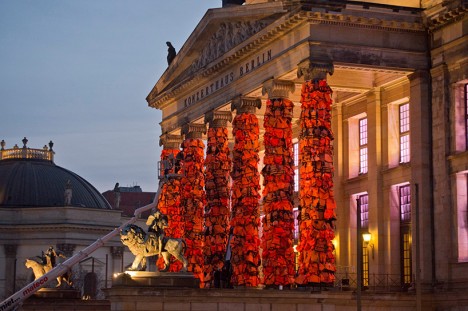
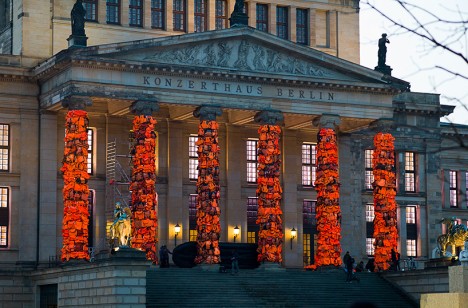
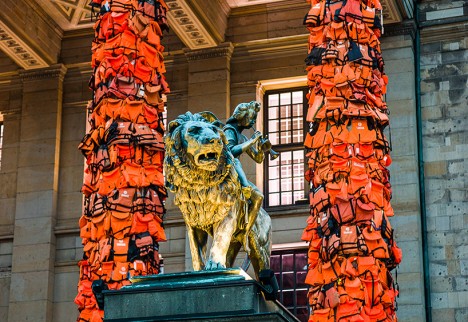
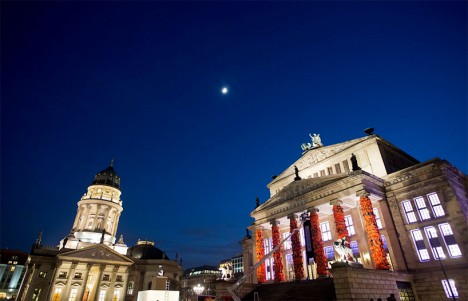
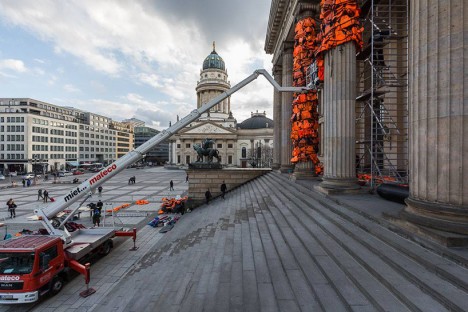
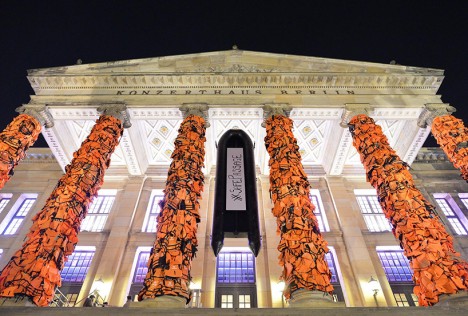
    In an effort to raise awareness about the growing refugee crisis, Chinese artist and activist Ai Weiwei has wrapped six giant entry columns to a landmark concert hall in central Berlin with life jackets collected in Greece.

    life jacket installation berlin

    Weiwei has been living on and working from the Greek Island of Lesvos, a destination currently swamped with income refugees, many coming across Mediterranean Sea from Turkey.

    life jacket columns berlin

    life jacket installation

    He regularly shares images and videos of asylum-seekers from his stay on the island via social media accounts, but the installation takes things a step further, bringing the point home to those living inland on mainland Europe.

    life jacket materials

    life jacket installed

    life boat hangs center

    These 14,000 jackets are by no means a complete collection, and that is also part of the point: they are just the tip of the proverbial iceberg, a sampling of the suffering and strife. Hundreds of refugees have also died trying to reach safety away from conflict (images via mompl and Frank Löschner / Konzerthaus Berlin).

    Share on Facebook


    [ By WebUrbanist in Art & Installation & Sound. ]

    [ WebUrbanist | Archives | Galleries | Privacy | TOS ]


    WebUrbanist

  • World Press Photo of the Year 2015 awarded for moonlight migrant portrait

    $ (document).ready(function() { SampleGalleryV2({“containerId”:”embeddedSampleGallery_4257680311″,”galleryId”:”4257680311″,”isEmbeddedWidget”:true,”standalone”:false,”selectedImageIndex”:0,”startInCommentsView”:false,”isMobile”:false}) });

    Australian photographer Warren Richardson has won the 2015 World Press Photo of the Year. Richardson’s winning photo, taken on the night of August 28, 2015 at the Hungarian-Serbian border, shows a baby being passed through a barbed wire fence by a refugee.

    Speaking about his photo, Richardson explained:

    I camped with the refugees for five days on the border. A group of about 200 people arrived, and they moved under the trees along the fence line. They sent women and children, then fathers and elderly men first. I must have been with this crew for about five hours and we played cat and mouse with the police the whole night. I was exhausted by the time I took the picture. It was around three o’clock in the morning and you can’t use a flash while the police are trying to find these people, because I would just give them away. So I had to use the moonlight alone.

    According to World Press Photo Foundation, the latest contest received 82,951 images from 5,775 photographers across 128 countries. A total of 41 photographers from 21 countries were awarded prizes across eight categories – see a few above (click for full captions) and a full gallery at World Press Photo’s website.

    Via: World Press Photo

    Articles: Digital Photography Review (dpreview.com)

  • Watch This: The Secret(s) to Alexis Cuarezma’s Success

    Up for a quick shot of knowledge, with an order of motivation on the side?

    Take a few minutes to watch this interview with photographer Alexis Cuarezma, a sports portrait specialist based in San Francisco and LA.

    The short version? Be like water finding downhill. But the video is full of good tips, strong work and solid dose of BTS pics to satisfy your jones for lighting.Read more »
    Strobist

  • Travel Photography Simplified: 4 Changes that Made me a Better Photographer

    Get Viktor’s Lightroom Rapid Editing System for Travel Photography Course 50% off now at SnapnDeals for a limited time only – February 9th-23rd, 2016.

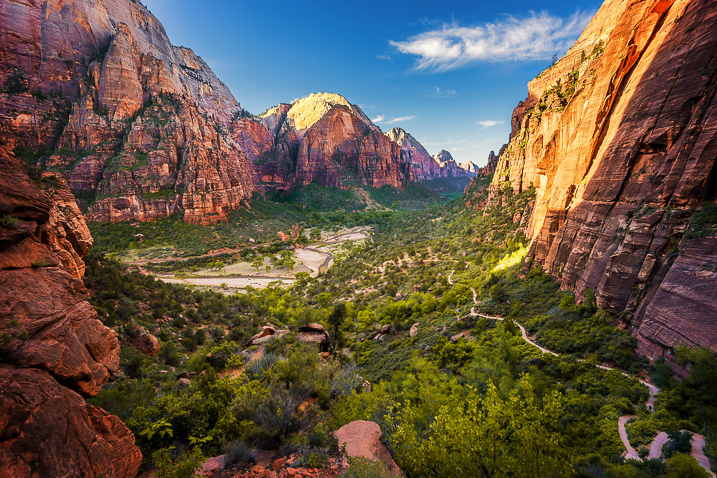
    When I look back and analyze how my photography has changed over time, I see that the last couple of years were the most eventful in regards to the evolution of my photography. I see that rapid advances in technology, in combination with my attempts to simplify various aspects of my photography, gradually changed my entire workflow.
    Images Travel Photography Simplified 01

    If I had to identify the key moments that triggered the rest of the changes, my switch from DSLR to a mirrorless system would be at the very top of the list.

    1. Mirrorless Setup

    Depending on the type of photography, the switch to a mirrorless system affects photographers differently. As a travel photographer, the effect of the change was huge for me, and even though the learning curve was steep, it was liberating from the very beginning.

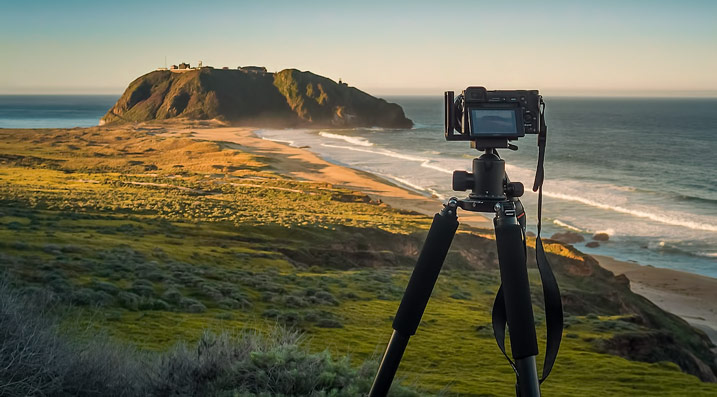
    The compactness of mirrorless systems was the most obvious factor for the switch. Here is the breakdown of my camera, plus lenses setup:

    • Sony A6000 (344g, 12oz)
    • Sony 10-18mm (220g, 8oz)
    • Sony 16-70mm (308g, 11oz)
    • Total: 874g (31oz)

    It’s hard to believe that a high-quality, wide angle zoom lens (10-18mm) can weigh only 220g (8oz). The full set, including the camera and two lenses that cover 90-95% of my needs, weighs less than 900g (32oz). I call it freedom.
    Images Travel Photography Simplified 02

    From a practical standpoint, it actually means that I can pack the entire setup into a carry-on when traveling by plane. It also means that I do not have to think about what equipment to bring when packing for a demanding hike. Instead, I bring everything with me.

    The other two factors of my switch that impacted my photography were the amazing dynamic range of the Sony sensor and its EVF (Electronic Viewfinder). The extended dynamic range of the sensor allows me to reduce the number of brackets I have to take, to cover the entire dynamic range of the scene. Also, it saves me time editing, since I do not have to use HDR, and Image Blending techniques, as often as before.

    The Electronic Viewfinder also allows me to more accurately assess the scene before taking the shot and, as a result, reduces the number of unsuccessful shots.

    Images Travel Photography Simplified 03

    2. Changing Travel Routine

    I did not expect that one small change to my travel routine would impact my photography so much. So what was the change? I simply stopped editing photos while traveling. Instead, I began concentrating all my efforts on finding interesting locations and capturing them – nothing else. This new focus makes my trips more enjoyable, reduces stress, and improves my photography in general.

    Before, I always loaded all of the new photos at the end of the day to Lightroom using my laptop. While checking the day’s results, I would often start culling and editing.

    Now, when I want to check if a shot is successful, I can do it while shooting, simply by wirelessly connecting my camera with my tablet. And, if it is absolutely necessary to post a couple of new photos to social media, I can edit them in seconds using Snapseed on my tablet, then easily post them online.
    Images Travel Photography Simplified 04

    3. Simplified Backup System

    Keeping photos safe while traveling is a big issue for any photographer. Up until recently, there was no reliable enough solution for a photographer, like myself, to go on an extended photography trip without bringing a laptop. For years, a laptop was the center of my backup strategy while traveling, which only added unnecessary bulk to my setup.

    Finally, I think this is starting to change. For the last few months I’ve been testing a laptop-less travel approach, and I am confident that a new setup this year will completely replace my outdated backup system.

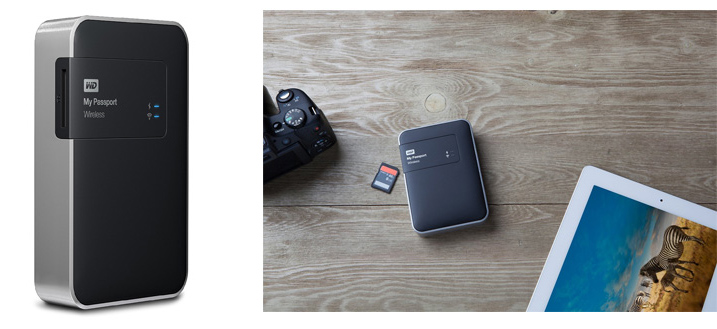
    This new workflow is possible because of a device that was recently released: WD My Passport Wireless. The device has a variety of interesting features, but the most important one, from a photography standpoint, is the SD Memory Card Reader. When you insert a memory card into the reader, it automatically backs up all the contents of the card to the drive. Plus, it supports incremental backups, which means that it backs up only new files rather than those previously transferred.
    Images Travel Photography Simplified 05

    Photo courtesy Western Digital

    This device makes it possible to travel without a computer. Also, it minimizes the risk of losing images due to memory card failure. Now, I incrementally backup my new images multiple times throughout the day, and by the end of the day back at the hotel, I already have all of my new images on two devices.

    Another feature of the WD My Drive Wireless that excites me as a photographer, is its ability to connect to the drive with a mobile app and grab any photos (JPEGs only) for editing.
    Images Travel Photography Simplified 06

    4. Rapid Editing

    Lightroom is my primary photography editing tool. At some point, I realized that 80% of my editing steps were identical for every photo. This meant that only 20% of my efforts were spent on what really mattered: making every photo unique. I also recognized that if I could automate the 80%, then I could drastically reduce the time I spend in front of the computer.

    The obvious choice for editing automation was Lightroom’s preset functionality. The presets allow users to record their editing steps in Lightroom for later use.

    The main obstacle in developing and implementing a new system was Lightroom’s presets limitations. You have probably already noticed that it is rare when you apply one of the presets to a photo that are happy with the final results. You still have to dive deeper into the Lightroom editing tools to compensate for the level of exposure, lighting conditions, shadows, and the dynamic range of the scene.

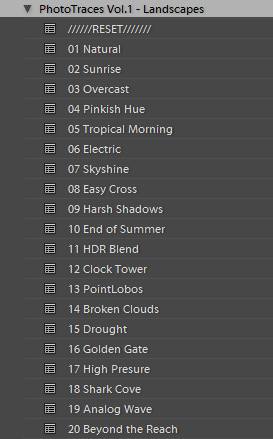
    I solved this problem by introducing a two-level editing system which I call Lightroom Rapid Editing. I separated my Lightroom presets into two categories:

    Style Presets: The presets that establish the artistic style and reflect our creative vision. For example, a dreamy, warm look or an aggressive and contrasted style, soft black & white or a vibrant cross processed treatment.
    Images Travel Photography Simplified 07

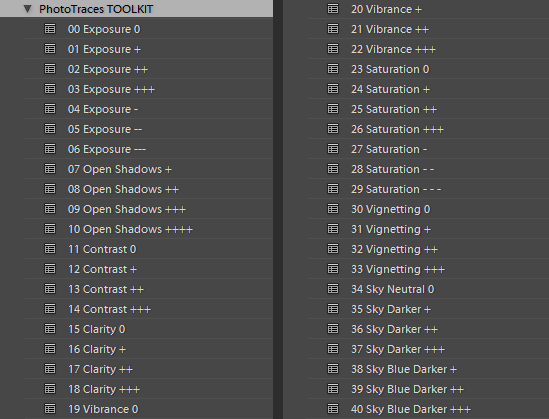
    Adjustment Presets: The presets that do affect the style of the photograph but help us to fine-tune the following parameters: exposure, shadow recovery, contrast, clarity, vignetting. I called the collection of the adjustment presets the TOOLKIT.
    Images Travel Photography Simplified 08

    This is how my workflow looked after I implemented the two level preset system:

    First, I applied one of the Style Presets. Then, I used the Adjustment Presets from the TOOLKIT to fine tune the image. Simple, effective, and automated. The Lightroom Rapid Editing System reduced my editing time by more than half and made my photography more consistent.

    Here is a quick demonstration:

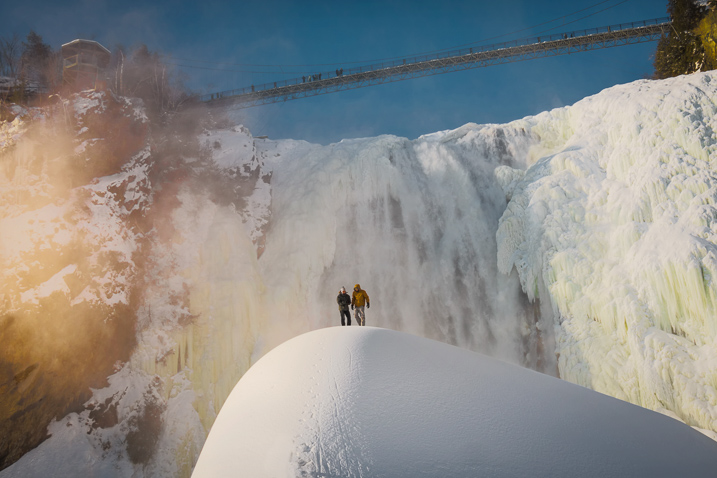
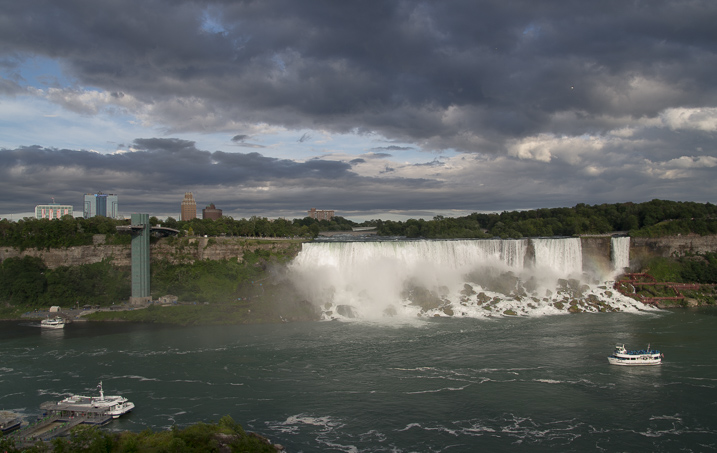
    For the demonstration, I selected a photo of Niagara Falls (American and Bridal Veil Falls). The scene was somewhat challenging as the water of the falls, was much brighter than the rest of the scene. I intentionally set exposure for the brightest areas, making sure I preserved enough details in the water. It resulted in an underexposed capture, making it more challenging to edit.
    Images Travel Photography Simplified 09

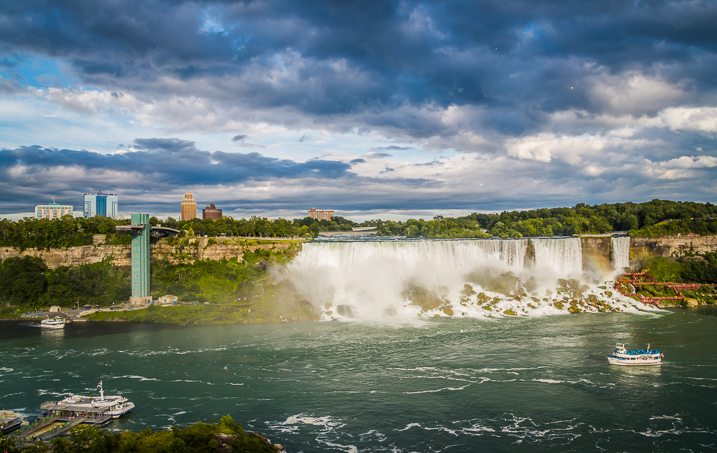
    First, I applied one of my favorite presets from the Landscape Collection – Natural. Second, I used the following TOOLKIT adjustments (Adjustment Presets):

    • 01 Exposure +
    • 08 Open Shadows ++
    • 17 Clarity ++
    • 31 Vignetting +

    Here is the result. It took me five clicks, and no more than two minutes to complete the editing. To record my editing steps for future reference and easy sharing, I used Lightroom Rapid Editing Formula: Natural (02, 08, 17, 31).
    Images Travel Photography Simplified 10

    Read a more detailed explanation of my travel photography workflow here: Photo Editing Workflow for Travel Photography

    Conclusion

    I believe that simplification is the key factor in mastering any complex process. If you reject unnecessary complexity by drastically simplifying it, you can invest more time and effort into what really matters. The changes I listed above did not happen overnight but they were always driven by the desire to simplify my photography.

    How have you simplified your photography? Share with us in the comments below.


    If you found this helpful, get Viktor’s Lightroom Rapid Editing System for Travel Photography Course 50% off now at SnapnDeals for a limited time only – February 9th-23rd, 2016.

    googletag.cmd.push(function() {
    tablet_slots.push( googletag.defineSlot( “/1005424/_dPSv4_tab-all-article-bottom_(300×250)”, [300, 250], “pb-ad-78623” ).addService( googletag.pubads() ) ); } );

    googletag.cmd.push(function() {
    mobile_slots.push( googletag.defineSlot( “/1005424/_dPSv4_mob-all-article-bottom_(300×250)”, [300, 250], “pb-ad-78158” ).addService( googletag.pubads() ) ); } );

    The post Travel Photography Simplified: 4 Changes that Made me a Better Photographer by Viktor Elizarov appeared first on Digital Photography School.


    Digital Photography School

  • Pigment Library: Harvard’s Collection of 2,500 Global Colors

    [ By WebUrbanist in Culture & History & Travel. ]

    pigment glass cabinetry

    Looking as much like a mad science laboratory as a conservator’s dream workshop, this pigment library is populated with color samples from around the world, all helping preservationists maintain and restore historical works of art and design.

    historical pigment collection

    pigment sample jars

    The Straus Center for Conservation and Technical Studies at the Harvard Art Museums puts is jars, bottles and glasses on display for the public to see in glass cabinetry, but also uses them like a witch doctor would employ esoteric medicines. An analogy could also be drawn to seed vaults, which likewise store and preserve precious and sensitive materials for future use.

    pigments of the world

    From Colossal, “The Forbes pigment collection was started by its namesake—Straus Center founder and former Fogg Art Museum Director Edward Forbes who began the collection at the turn of the 20th century. Forbes would collect his samples from his travels all over the world, bringing back pigments from excavated sites at Pompeii to rare lapis lazuli found in Afghanistan.”

    pigment library harvard

    Forbes became interested in preservation when a 14th-Century piece he purchased began to visibly fade, sparking him to learn more about the materials and processes around paintings and their preservation.

    pigments on display

    The origins of the various colors are often stories in themselves, from modern synthetics to obscure organics, like an ‘Indian Yellow’ made from the urine of cows fed only mango leaves. (Images via Peter Vanderwarker, Zak Jensen and Andrea Shea/WBUR)

    Share on Facebook


    [ By WebUrbanist in Culture & History & Travel. ]

    [ WebUrbanist | Archives | Galleries | Privacy | TOS ]


    WebUrbanist