Blog

  • Dual-cam Duel: Sony and LG Innotek rumored to be competing for Apple orders

    Judging by the number of rumors buzzing around the internet it seems almost certain that at least one version of the upcoming iPhone 7 will come with a dual-camera setup. Word on the street until now has been that in addition to the standard model Apple is planning to offer a premium version of the larger ‘Plus’ model with a dual-cam designed by Linx, an optical engineering company that was bought by Apple last year.

    According to new information this might be, at least partly, incorrect. Financial publication Barron’s quotes Citi Research in saying that all 5.5-inch iPhone models coming this fall will have dual-cameras on the back, not just a premium model.

    Barron’s also quotes Chris Chan of Asia-based financial services group Nomura:

    ‘We think Sony may not be able to deliver its full share of dual cameras to Apple due to: (1) lower-than-expected yield, and (2) damage to its production facility from the April earthquake in Kumamoto. As a result, we think LGI will gain majority share of the initial dual camera orders from Apple…’

    Looking at the amount of information out in the open there is almost no doubt that whatever the manufacturer of the modules, we’ll have a dual-cam iPhone to play with in September. The question is if the dual-lenses will be used for optical zooming, as on the LG G5, or to enhance image quality and simulate a shallow depth-of-field, as we’ve seen in the Huawei P9.  We’ll only have to wait a few more months to find out…

    Articles: Digital Photography Review (dpreview.com)

  • Weekly Photography Challenge – Flowing Water

    Franck Michel

    By Franck Michel

    Start by viewing these 23 images of flowing water to get some inspiration.

    Then read some articles on the subject:

    • 3 Tips for Waterfall Photography Beyond Just Using a Long Exposure
    • Simple Tips for Photographing Waterfalls
    • 7 Tips to Help Improve Your Seascape Photos by Controlling the Waves
    • How to Create a Silky Water Effect in Post-Processing without Using Filters or a Tripod
    • 9 Top Tips for Shooting Waterfalls, Creeks and Streams
    Jacob Surland

    By Jacob Surland

    Jon Rawlinson

    By Jon Rawlinson

    Andy Rothwell

    By Andy Rothwell

    Weekly Photography Challenge – Flowing Water

    This week your challenge is to find some running water and photograph it. Here are a few ideas, you don’t have to be near a waterfall:

    • River
    • Stream
    • Waterfall
    • Ocean waves
    • Fountain
    • Shower in your bathroom
    • Kitchen tap
    James Niland

    By James Niland

    Tarek

    By Tarek

    Riccardo Cuppini

    By Riccardo Cuppini

    Share your images below:

    Simply upload your shot into the comment field (look for the little camera icon in the Disqus comments section) and they’ll get embedded for us all to see or if you’d prefer upload them to your favourite photo sharing site and leave the link to them. Show me your best images in this week’s challenge. Sometimes it takes a while for an image to appear so be patient and try not to post the same image twice.

    googletag.cmd.push(function() {
    tablet_slots.push( googletag.defineSlot( “/1005424/_dPSv4_tab-all-article-bottom_(300×250)”, [300, 250], “pb-ad-78623” ).addService( googletag.pubads() ) ); } );

    googletag.cmd.push(function() {
    mobile_slots.push( googletag.defineSlot( “/1005424/_dPSv4_mob-all-article-bottom_(300×250)”, [300, 250], “pb-ad-78158” ).addService( googletag.pubads() ) ); } );

    The post Weekly Photography Challenge – Flowing Water by Darlene Hildebrandt appeared first on Digital Photography School.


    Digital Photography School

  • Novoflex releases Canon EF electronic adapter for Leica SL

    Just bought a Leica SL but can’t afford to buy a Leica lens to put on it? Don’t worry – German manufacturer Novoflex has just the thing for you.

    The new Novoflex SL-EOS adapter allows certain Canon EF lenses and teleconverters to be used on the Leica SL, with support for several functions including autofocus. 

    Novoflex has launched its new SL – EOS electronic adapter which, according to the manufacturer allows ‘around 30’ Canon EF lenses to be used with the Leica SL camera. The adapter transmits focal distance and aperture EXIF data, has an AF/MF mode, and supports autofocus, aperture control, and depth of field indication. According to Novoflex, ‘around 30’ Canon EF lenses and teleconverters work with the adapter, and image stabilization is not supported.

    The SL-EOS adapter is currently listed on Novoflex’s website for €499 (~$ 555)

    Articles: Digital Photography Review (dpreview.com)

  • Missing Pyramid: Louvre Installation Makes Iconic Monument Disappear

    louvre pyramid camouflage 1

    In a work of large-scale urban camouflage, French street artist JR has made the iconic glass pyramid standing outside the Musée du Louvre disappear. At least, it seems to disappear, when viewed from one very particular angle, thanks to a massive wrapping printed with a photograph of the museum’s facade. Known for paste-ups on a monumental scale as well as digital projections on architecture, JR transforms the 11,000-square-foot pyramid by I.M. Pei, which became a Paris landmark after its installation in 1989.

    louvre pyramid camouflage 2

    The illusion convincingly stands in for the entrance to the Louvre palace, despite being rendered in black and white, and matches up perfectly with the facade. Before the Pyramid became publicly accepted as an integral part of the Louvre, it was controversial, with some critics arguing that the clash of architectural styles was an affront to what the museum itself represents. In camouflaging it, JR takes us back to the days before it was built, leaving us with the distinct feeling that something is missing. The display will be in place through June 27th, 2016.

    louvre pyramid camouflage 3

    “Making the Pyramid disappear is a way for me to distance myself from my subject,” says JR. “The feud between traditional and modern tastes in art and architecture is nothing new. The Pyramid, Buren’s columns at the Palais-Royal, and the Pompidou Center – all of these caused controversy. My work is about transmitting history to better understand the present, and find echoes with our own times. What happened in the past is part of a broader context that can still have relevance for today.”

    “By erasing the Louvre Pyramid, I am highlighting the way Pei made the Louvre relevant for his time, while bringing the Louvre back to its original state. The Pyramid is one of the most photographed French monuments. I am redirecting its energy, because people are going to have to move around it. They are going to look for the best angle to get the full impact of the anamorphic image, and really make the Pyramid disappear.”


    WebUrbanist

  • Content-aware cropping coming soon to Adobe Photoshop CC

    Adobe Photoshop CC will soon offer content-aware cropping, the company has announced. The feature, as demonstrated in a video released today, will allow Photoshop users to automatically fill any white space around an adjusted photo with content that matches the original image. The tool can be used to add content (to change the aspect ratio, for example), or to fill in gaps that result from rotating or repositioning the image.

    Content-aware cropping has been a frequently requested feature, says Adobe. The company will include the new cropping tool ‘as part of an upcoming major release,’ though it doesn’t specify whether it will be the next major update or a later one.

    Via: Adobe

    Articles: Digital Photography Review (dpreview.com)

  • World’s First 3D-Printed Office Building Unveiled in Dubai

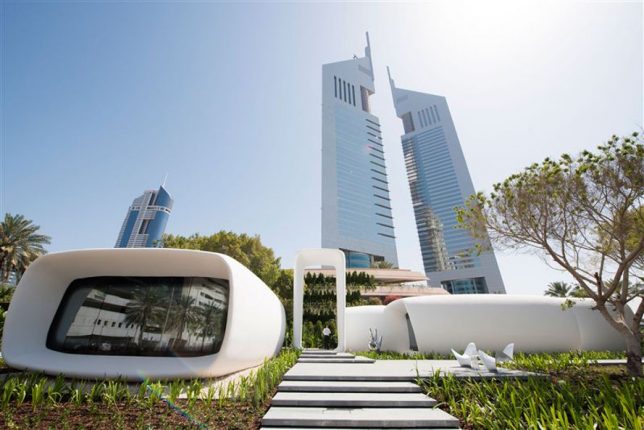
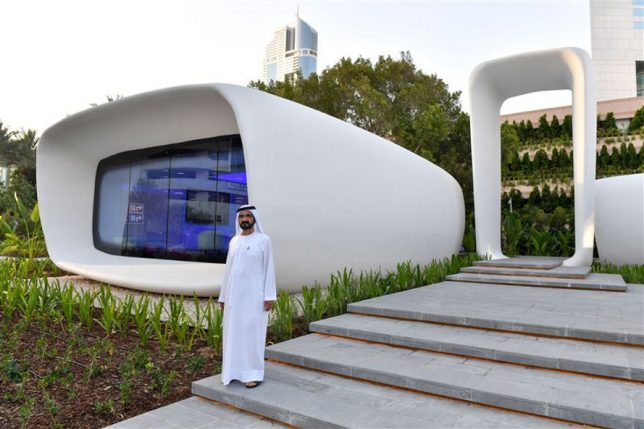
    3d office front dubai

    Printed layer by layer from the ground up using a special cement mixture, this rapidly-produced curvilinear structure is a functional example as well as proof of concept, illustrating the architectural potential of 3D printing.

    3d printed office

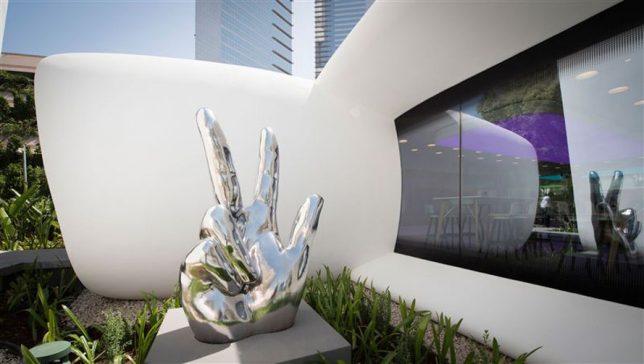
    3d scultupre interance

    The entire 2,700-square-foot structure was built for a relatively modest $ 140,000, requiring just one operator to oversee the printer plus an array of electricians, plumbers and detailers to outfit the completed shell for power, water, lighting and telecommunications. The modular machine assembled to do the printing measured approximately 120 by 40 feet and stood 20 feet high, able to build while sitting in one place.

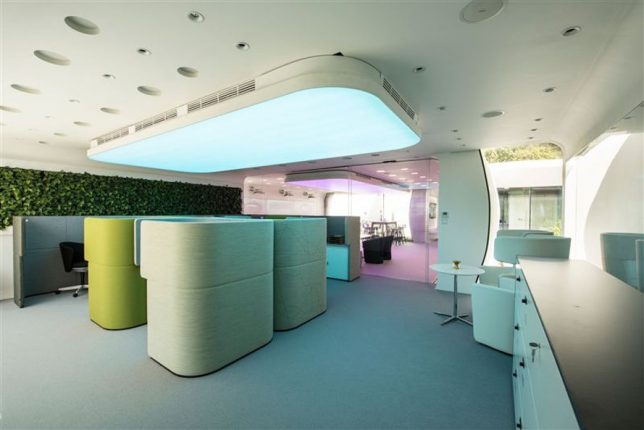
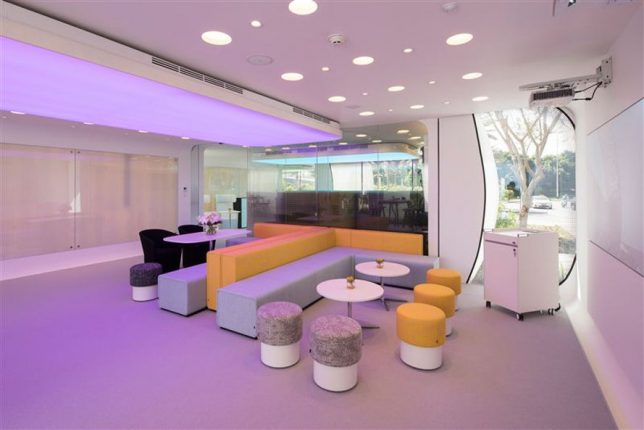
    3d interior curves

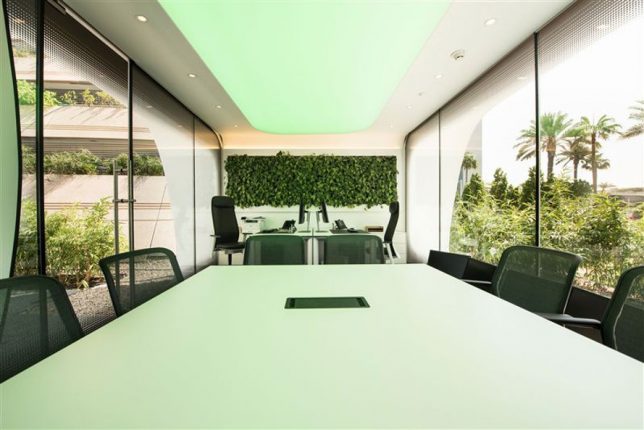
    3d interior

    The new building will (aptly enough) be home to the Dubai Future Foundation, providing space for offices, workshops and events. Global architecture firm Gensler designed the building in partnership with structural experts from Thornton Tomasetti and Syska Hennessy.

    3d lounge meeting area

    3d future foundation

    Complex curves on the interior and exterior were both considered part of the visual design but also a way to showcase the possibilities of 3D printing technology.

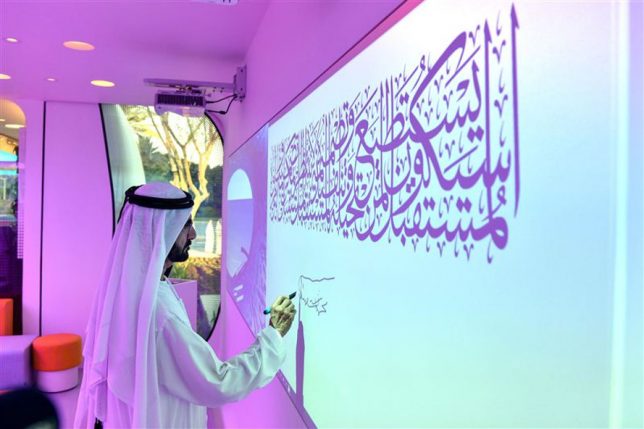
    3d office person

    3d bakc yard

    “We announce today the opening of the first 3D-printed office in the world, after less than one month of launching Dubai 3D printing strategy which showcases a modern model of construction. This is an experience we present to the world on utilizing future technology in people lives. It also represents a new milestone for the UAE as a global leader in strategic achievements,” Sheikh Mohammed said.


    WebUrbanist

  • Western Digital acquires SanDisk as more data moves to solid state memory

    Hard disk drive giant Western Digital has completed its acquisition of flash manufacturer SanDisk in a deal that will create a partnership that WD hopes will help it leap into the future of computer memory. The company announced plans to buy SanDisk last fall.

    Western Digital’s reliance on spinning disk technology in a world that is swiftly moving towards solid state drives has been a cause for concern for the company that currently claims 44% market share for HDDs. Acquiring the world’s largest producer of NAND flash memory should settle some nerves.

    Western Digital is said to be interested in cloud storage and computing solutions as PC sales continue to decline, so SanDisk’s know-how in flash data center technologies that provide more capacity in a smaller space, with less heat and faster communication have proven attractive. 

    All told, the deal cost Western Digital $ 17 billion in cash and shares, $ 2 billion short of initial estimates. The company expects to be able to make significant savings through economies of scale, expecting combined revenue of almost $ 20 billion with a better position to compete against Samsung and Micron.

    For more information visit the SanDisk and Western Digital websites.


    Press release:

    WESTERN DIGITAL COMPLETES ACQUISITION OF SANDISK, CREATING A GLOBAL LEADER IN STORAGE TECHNOLOGY

    Western Digital® Corporation (NASDAQ: WDC) today announced that its wholly-owned subsidiary Western Digital Technologies, Inc. has completed the acquisition of SanDisk Corporation (NASDAQ: SNDK). The addition of SanDisk makes Western Digital Corporation a comprehensive storage solutions provider with global reach, and an extensive product and technology platform that includes deep expertise in both rotating magnetic storage and non-volatile memory (NVM).
    The Company also indicated that the debt financing associated with this transaction has been consummated and that the previously obtained funds from this financing have been released from escrow to Western Digital Technologies, Inc.

    “Today is a significant day in the history of Western Digital,” said Steve Milligan, chief executive officer of Western Digital. “We are delighted to welcome SanDisk into the Western Digital family. This transformational combination creates a media-agnostic leader in storage technology with a robust portfolio of products and solutions that will address a wide range of applications in almost all of the world’s computing and mobile devices. We are excited to now begin focusing on the many opportunities before us, from leading innovation to bringing the best of what we can offer as a combined company to our customers. In addition, we will begin the work to fully realize the value of this combination through executing on our synergies, generating significant cash flow, as well as rapidly deleveraging our balance sheet, and creating significant long-term value for our shareholders.”

    The integration process will begin immediately through the joint efforts of teams from both companies. As previously announced, Steve Milligan will continue to serve as chief executive officer of Western Digital, which will remain headquartered in Irvine, California. Sanjay Mehrotra, co-founder, president and chief executive officer of SanDisk, will serve as a member of the Western Digital Board of Directors, effective immediately.

    “As a combined company, we will be best positioned to address the demands for data storage, which is growing exponentially every year,” said Sanjay Mehrotra. “Growth and change go hand in hand, and we couldn’t be happier to grow and change together with Western Digital. I look forward to contributing to realizing the potential of this combination as a member of the board.”
    Under the terms of the transaction, each outstanding share of SanDisk common stock was converted into the right to receive $ 67.50 per share in cash and 0.2387 shares of Western Digital common stock.

    SanDisk shareholders looking for information with regard to the payment of the merger consideration should review the Public FAQ available in the Investor Relations section of our website at investor.wdc.com or click here.

    Articles: Digital Photography Review (dpreview.com)

  • How to Improve the Impact of Your Urban Images Using Lines

    If you are struggling with getting your photos of cities and architecture to pop out, chances are that you are underestimating the power of lines in your images. Lines help you structure your images in ways that lead your viewers to look at different parts of the picture, and create interest in both your main objects and the surroundings.
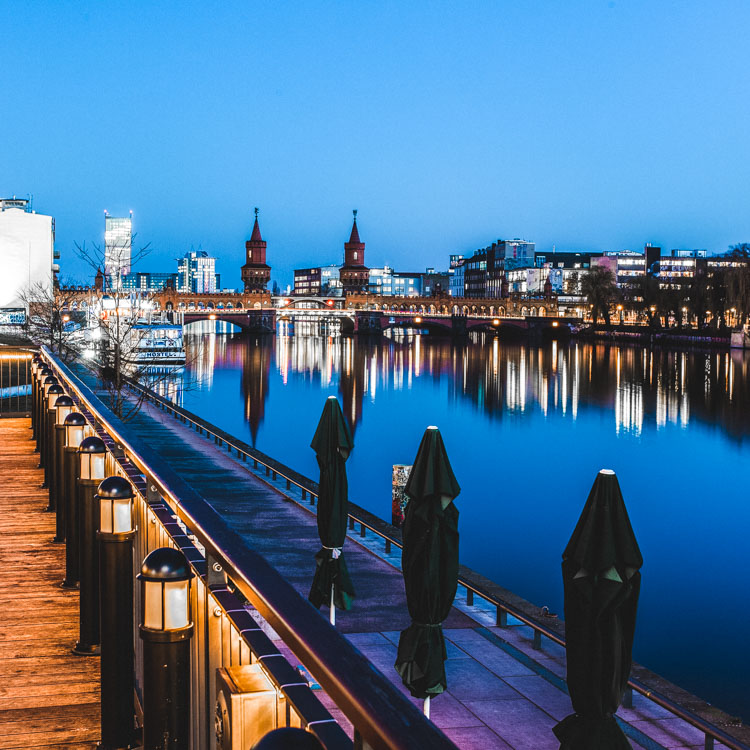
    using lines for more impact in your images

    The image above shows an example of how you can use lines to create a visual guidance within your city and architecture images, that will help your viewers find multiple points of interest and take a closer look.
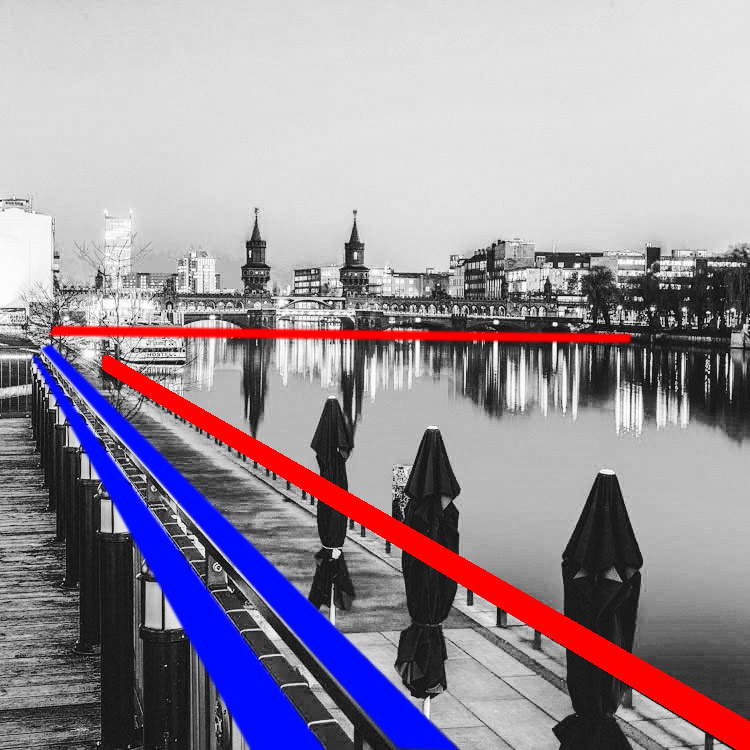
    using lines for more impact in your images

    To help you understand how the lines work in a rather complex image like this, reducing the image to a black and white version with high contrast, can help visualize the structures of the image without getting distracted by the color elements.

    Why lines are important especially for urban images

    While in many areas of photography, using depth of field and blurred backgrounds is a good way to lead the viewers’ eyes to the most important element, and add a sense of perspective, as city photographers we rarely have this choice. In architecture images, you want most elements to be in focus.

    When taking pictures of city scenes, you need to structure your images in different ways to provide perspective and a feel of scale. The conscious use of lines in your images can divide a photo into smaller pieces, separate elements from each other, provide a sense of perspective and lead your viewers’ eyes to where you want them to focus.
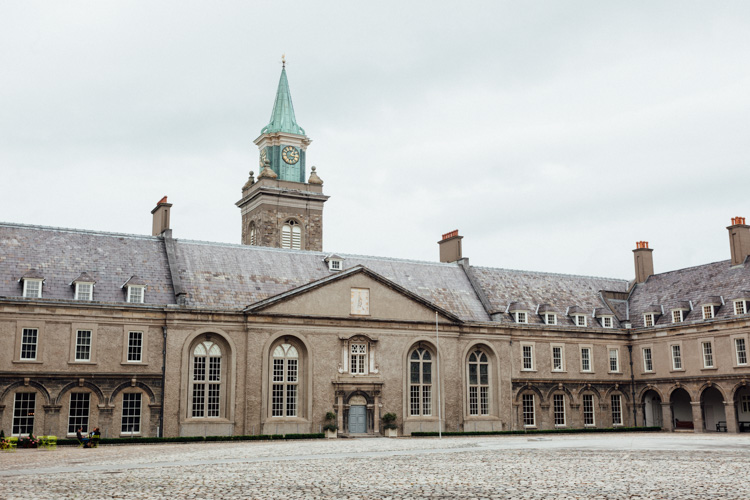
    using lines for more impact in your images

    The image above shows an example of a random shot without considerations for the use of lines. With its grey stones, the National Museum of Ireland in Dublin on a cloudy day, doesn’t offer much to work with when trying to create an interesting image. This is merely a documentation of the place, but probably wouldn’t make it as a header image.
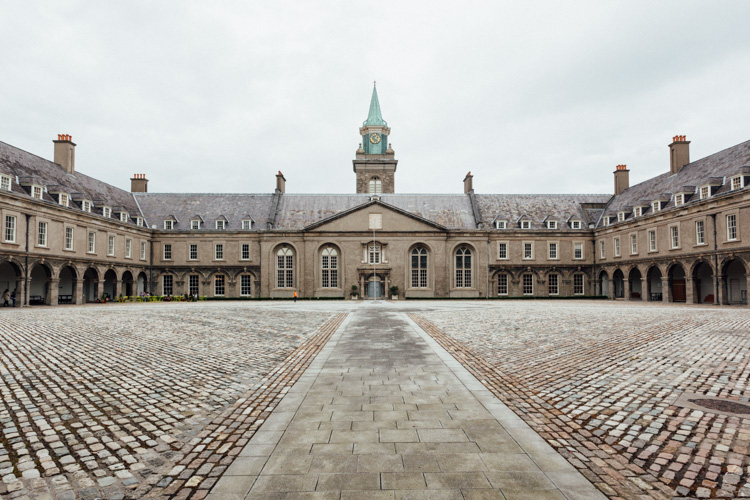
    using lines for more impact in your images

    However, beyond the documentary aspect, the use of lines to create perspective, orientation and symmetry can increase the impact, even of an otherwise dull looking image.

    Which lines can you use to increase impact?

    You can separate the lines in three categories which I call:

    • Dividing lines
    • Leading lines
    • Symmetrical lines

    A dividing line structures your images into separate areas of interest. It can be horizontal, vertical, or diagonal. You can use it to make a clear difference between bottom and top of an image, but also make sure to use dividing lines to show near and far. In many outdoor images, the horizon line is a natural dividing line.

    using lines for more impact in your images

    In this image, I am using a major dividing line to clearly separate the floor and the wall. Less noticeable, the additional line in the wall serves as another separation in the photo. Without the addition of this line, the right half of the image would be rather boring. By adding a simple line into the frame, it helps dividing the image into a left and right.

    Make sure that your dividing lines are in the right place. With very few exceptions, make sure to place your lines outside of the center of the image (both horizontally or vertically) but also not too close to the borders. The well known Rule of Thirds is good guidance, in many cases dividing images into a two-thirds and a one-third part works best.

    Leading lines are an important way to provide your viewers with an idea of perspective. They will lead the eyes into, and around the image. Leading lines often come in pairs, slowly merging into the distant part of the picture. But in fact, you can use multiple leading lines, even one can help the viewer find orientation. Leading lines don’t even have to be straight, you can use curves and angles just as well.

    using lines for more impact in your images

    The main street in this image serves as a single leading line, it helps the eye find orientation from the interesting space in the foreground, and puts it into the context of the big city.

    The third way of using lines to increase impact, is the use of symmetries. When looking for interesting images to capture in a city, try to find symmetrical lines in the architecture around you. Thankfully, architects also know the visual impacts of symmetries, and use them to create the buildings around us.
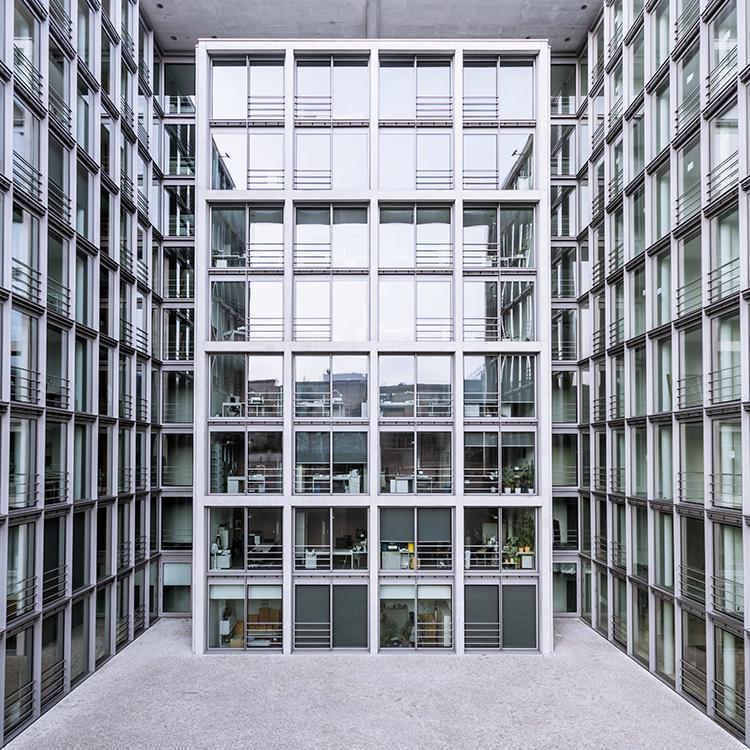
     

    Bürogebäude des Deutschen Bundestages in Berlin,, Deutschland.

    Buildings like this lend themselves to be taken in symmetries. While the content is not perfectly symmetrical due to the individual office decorations on the inside, the structure of the building makes an interesting frame for these individual elements. The symmetry helps to create interest, as you subconsciously start looking for the differences between the halves.

    Learn to focus on lines

    If you are shooting with a camera capable of RAW images, there is an easy way to train yourself to look out for lines: Use your camera settings, and change your camera to shoot in black and white!

    When shooting RAW, the camera will still capture and store all the data from the sensor, including the color information. So when you are back at your computer to edit images, you will find all the options to create color images as well. But while shooting, you can look at your images at the screen in black and white, which will eliminate distractions from the forms in your image.

    using lines for more impact in your images

    Going a step further, in most cameras you can set up your own image processing profile in camera: Increase the contrast and sharpness of the image as far as possible, and you will end up with a preview image on the camera screen that is mostly reduced to the lines.

    Additional ways to use lines

    using lines for more impact in your images

    Probably one of the most photographed objects in the world, the houses of parliament and the tower with Big Ben in London, UK, it is hard to come up with a unique version. In this image above, I added the light trails created by the passing traffic to add an interesting element. The light trails serve both a dividing lines between the other photographers in the foreground and the architecture in the background, as well as leading lines providing perspective from the left to the right part of the picture.
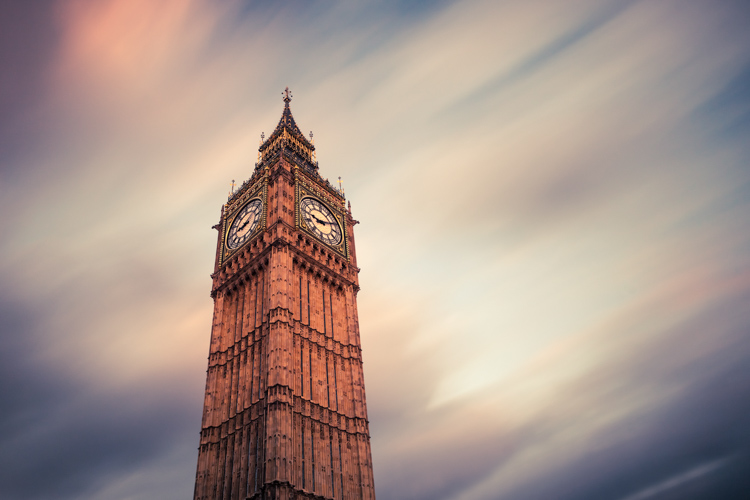
    using lines for more impact in your images

    When taking images of tall buildings, like in this case the tower of Westminster, the borders of the building will typically provide leading lines from the bottom (near) to the top (far). To generate an additional element of interest, I used a long exposure image to create another set of lines, through the moving clouds in the sky above the building. This helps add a dynamic element and interest, to an otherwise static and often boring background.
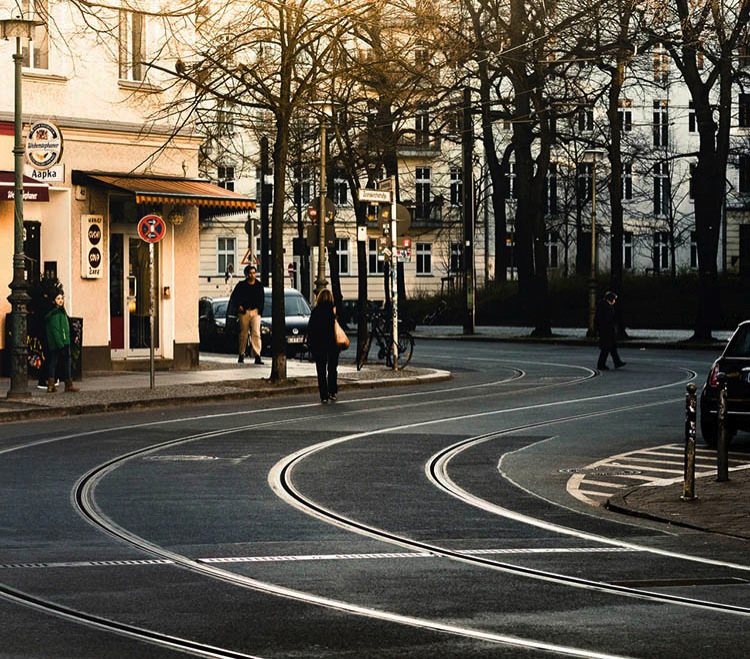
    curved leading lines

    Do not limit yourself to using only straight lines. While a horizon should always be straight and strictly horizontal, others, especially leading lines, can also be curved. In this image above, the cable car tracks take two turns that lead the viewer’s eyes from the bottom (near) to the center (far) part of the image.

    Even complex scenes win from the use of lines

    Once you become aware of the lines in your images, you can use them to structure even more complex scenes.
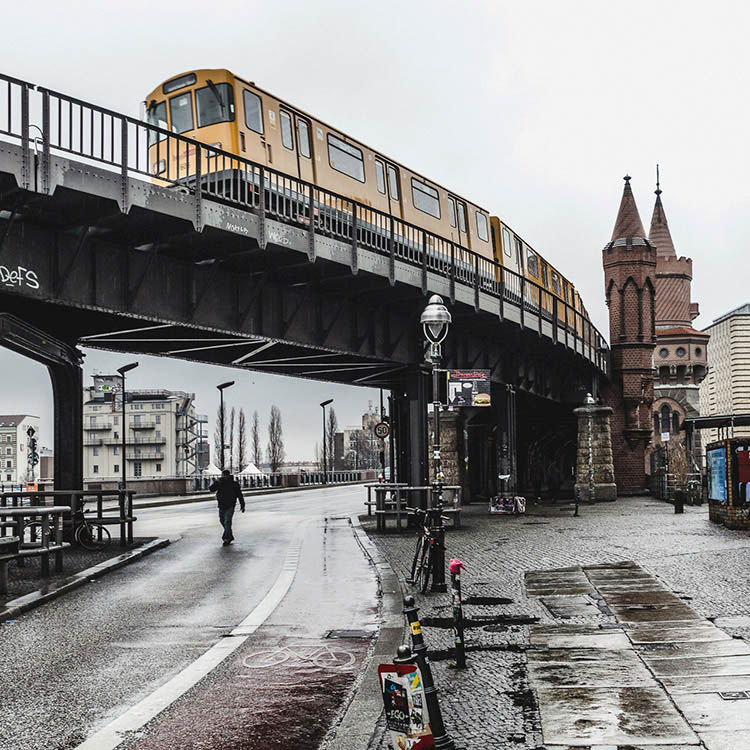
    using lines for more impact in your images

    While the above example might show the lines all that obvious, you will most likely see the curb of the street easily as a (curved) leading line into the image.
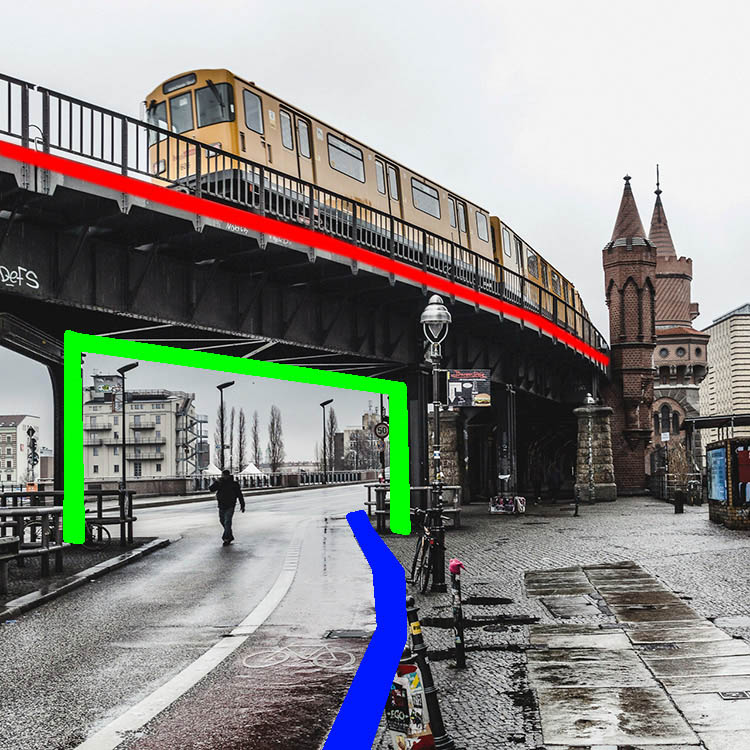
    using lines for more impact in your images

    However, upon a closer look, you can also note the use of a dividing line separating the photo into a top and bottom part to provide additional perspective and scale. Finally, a use of lines as a frame puts more emphasis on the silhouetted person crossing the scene, adding further scale to the size of the elements contained.

    These lines help the viewers structure the image into separate parts and make it easier for the brain to digest all the elements contained.

    How do you use lines in your compositions? Please share in the comments below.

    googletag.cmd.push(function() {
    tablet_slots.push( googletag.defineSlot( “/1005424/_dPSv4_tab-all-article-bottom_(300×250)”, [300, 250], “pb-ad-78623” ).addService( googletag.pubads() ) ); } );

    googletag.cmd.push(function() {
    mobile_slots.push( googletag.defineSlot( “/1005424/_dPSv4_mob-all-article-bottom_(300×250)”, [300, 250], “pb-ad-78158” ).addService( googletag.pubads() ) ); } );

    The post How to Improve the Impact of Your Urban Images Using Lines by Michael Zwahlen appeared first on Digital Photography School.


    Digital Photography School

  • Minimalist Tattoos: Elegant Body Art Drawn With Just One Line

    single line art

    Tattoos are generally lauded for their intricacy and complexity, but these bold, beautiful and simple alternatives become artfully different thanks to a simple trick: the use of a single continuous line.

    one line lips

    single line tattoo

    Made by Mo Ganji, a Berlin tattoo artist, each of these works (if you look closely) starts and ends at a single pair of points, no matter how they appear at first glance.

    one line koi fish

    one line hands together

    The zigs and zags required to make this approach work are what signal the viewer to make such a closer inspection in the first place.

    one line face

    one line bike

    Despite the simplicity and consistency of the method, the results are surprisingly varied, from very geometric shapes of human-made objects to organic curves of human and other natural forms.

    one line tree

    one line conifer

    In some cases, pointillist patterns are added to add texture, creating leaves, shadows or other details, but kept intentionally non-linear so as not to detract from the primary lone-line drawing. (via Colossal)


    WebUrbanist

  • Back in Stock, and Better than Ever

    These gizmos were too popular for their own good, and they ran right out.

    Whelp, they’re back, for now, so order ‘em up quick before they fly off our (internet) shelves.

    Turn your phone into a light meter, create a photo print masterpiece, eat your favorite camera and more. There’s a reason these gadgets are so well-loved.

    (…)
    Read the rest of Back in Stock, and Better than Ever (0 words)


    © laurel for Photojojo, 2016. |
    Permalink |
    No comment |
    Add to
    del.icio.us

    Post tags:


    Photojojo