Blog

  • Vote now for your favorite Nikon Small World 2016 entries

    Nikon Small World 2016 Finalists

    Mouse retinal ganglion cells. Photo by Dr. Keunyoung Kim

    Nikon’s Small World Microphotography competition continues to celebrate all things tiny, fanged and gross. This year they’re inviting you to participate in the judging by picking your favorite finalists in the Popular Vote competition. Head over to the Popular Vote page to cast your ballot, and flip through the slides above to see some of our favorite entries.

    Nikon Small World 2016 Finalists

    Leg of a water boatman (Corixidae). Photo by Marek Mis

    Nikon Small World 2016 Finalists

    Actin (pink), mitochondria (black), and DNA (red) in a bovine pulmonary artery endothelial cell. Photo by Talley Lambert

    Nikon Small World 2016 Finalists

    Parts of wing-cover (elytron), abdominal segments and hind leg of a broad-shouldered leaf beetle (Oreina cacaliae). By Pia Scanlon

    Nikon Small World 2016 Finalists

    Egg of a Gulf Fritillary butterfly, Agraulis vanillae. Photo by David Millard

    Nikon Small World 2016 Finalists

    Wildflower stamens. Photo by Samuel Silberman

    Nikon Small World 2016 Finalists

    Scales of a butterfly wing underside (Vanessa atalanta). Photo by Francis Sneyers

    Nikon Small World 2016 Finalists

    Slime mold (Mixomicete). Photo by Jose Almodovar

    Nikon Small World 2016 Finalists

    Beta-alanine and taurine crystals. Photo by Matt Inman

    Nikon Small World 2016 Finalists

    Poison fangs of a centipede (Lithobius erythrocephalus). Photo by Walter Piorkowski

    We told you there were fangs.

    Articles: Digital Photography Review (dpreview.com)

  • CFexpress cards with 8GB/s data rate on the way according to the CompactFlash Association

    The CompactFlash Association has announced that it is working on a new series of memory cards that will offer theoretical data rates of up to 8GB per second. Still very much in development, the CFexpress family of media storage will be available in a range of form factors to suit multiple kinds of device, but will all have the same physical interface and memory protocol. The Association says the cards will be good for professional photographers and videographers as well as for personal computing, servers and for industrial applications.

    The cards will have varying numbers of lanes that will govern their ultimate speed of communication. Those lanes will be based on the PCIE generation 3 interface which can deliver a theoretical 1GB/s per lane and cards will be supplied eventually that have up to eight lanes.

    The Association suggests that the need for such data rates is being driven by the increasing numbers of 4K cameras and that slow motion 4K footage recorded in raw format needs better communication speeds than currently exist.

    There is no indication of when these new cards will come to market, but you can read more information about the CompactFlash Association on its website.

    Press release

    THE COMPACTFLASH ASSOCIATION ANNOUNCES CFexpress FAMILY

    CFexpress Introduces a New Family of High-Performance Removable Media Based on PCIE® and NVM Express®

    Cupertino, California – The CompactFlash Association (CFA) announces the CFexpress Family of high-performance removable storage based on PCIE® and NVM Express®

    CFA has developed high-performance removable cards standards for the last 21 years with the popular CompactFlash®, CFast®, and XQD® formats. The CompactFlash Association was formed in 1995 as the initial digital film format and continues to serve professional imaging and industrial markets where high performance and high-quality recording media is essential for high-speed capture and high-speed transfer into the workflow.

    CFexpress is the next evolution in an open standard format for a broader set of applications, such as professional imaging, personal computing, servers, IoT and industrial. CFexpress differs from prior CFA standards in that CFexpress is a specification spanning multiple form factors and performance levels to match various market requirements while maintaining the same electrical/physical interface and memory/storage protocol. The new CFexpress specification is under development within the CFA CFexpress Working Group.

    CFA’s goals for the CFexpress family are:
    1) Unify the ecosystem around a removable storage specification that has longevity in the market
    2) Provide a platform that scales with performance increases in the PCIE® interface
    3) Leverages the technologies and skillsets of the larger volume compute markets
    4) Seamless compatibility with the capture ecosystem and workflow tools.

    CFexpress leverages the PCIE® physical interface for higher performance based on the high-volume compute industry. PCIE® CFA’s objective is to specify multiple removable storage devices that spans from two lanes architecture all the way up to eight lanes. With the current PCIE® Gen 3 delivering maximum theoretical interface speeds of 1.0GB/sec per lane, CFexpress would enable theoretical sequential speed of up to 8GB/s.

    CFexpress also utilizes the low latency NVM Express® memory/storage protocol across all of the form factors. This enables compatibility with a broader set of ecosystem components, such as controllers, OS, capture devices and workflow modules. In imaging, compute and industrial applications, the use of PCIE® /NVM Express® enables access to wide range of open standard platforms consisting of mature and proven drivers. In addition, the new CFexpress format also enable easy compatibility with the Thunderbolt® interface which is also based on PCIE®. Actual CFexpress products will vary in performance based on market requirements and protocol overheads.

    Professional video data rate requirements are growing at an exponential rate exceeding the capabilities of existing open standard formats. 4K RAW video at 30fps requires 400-500MB/sec of sustained performance not including any overhead to guarantee performance over the entire recording media. 4K RAW video at 120fps requires 1,600-2,000MB/sec. 4K RAW video at 240fps requires 3,200-4,000MB/sec. Even in High-Quality I-Frame compression formats, the data rates quickly exceed 1.0GB/Sec at high frame rates.

    Key Feature Benefits

    PCIE® Gen 3 Interface
    Provides a max theoretical interface speed of 1.0GB/sec per lane of PCIE®. This speed enhancement enables a new generation of higher performance cards to meet requirements for professional video recording.

    Family of Form Factors
    Provides multiple form factors to address multiple market segments with a unified physical interface and memory/storage protocol. 2 lane and 4 lane form factors will be the initial focus but anything from 1 lane to 8 lanes is possible. This provides a range of up to 8GB/Sec with PCIE® Gen3.

    NVM Express®
    A storage interface designed from the ground up for NVM storage. The NVM Express protocol features fixed length commands, an efficient queuing model, and very low non-cacheable PCIe accesses per command, delivering reduced I/O overhead and performance improvements in comparison to legacy storage device interfaces. NVM Express® is gaining popularity across various flash-based storage solutions and has driver support on all leading OSs.

    Mr. Tom Ando of Canon and CFA Co-Chairman of the board said; “As the Co-Chairman of the CompactFlash Association I am pleased and excited to introduce CFexpress as CFA’s continues the tradition of performance leadership. The higher performance provided by CFexpress formats will further increase the capabilities and value for photographers, videographers, cinematographers, industrial, and compute applications. I am very pleased and proud to see the CFA creating standards that address new market requirements.”

    Host and card manufacturers will be able to leverage the compute industry’s investment in PCIE® and NVM Express®. Media manufacturers will be able to leverage high volume solid state disk (SSD) controller technology to serve the high performance requirements of this market. The new format will have VPG (Video Performance Guarantee) capability with new VPG profiles at every increases performance levels. CFA’s goal for CFexpress is the development of a standard that can span many market segments and provide a stable and consistent format to fully leverage the industry’s R&D investments and less churn in the market of standardized and proprietary recording media formats.

    Mr. Koichiro Kawamura of Nikon and CFA Co-Chairman of the board said; “As the Co-Chairman of the CompactFlash Association I am also pleased and excited to introduce CFexpress. The specification is a family of form factors that can serve many market segments with a unified physical interface and unified memory/storage protocol. We are excited with the vision that CFexpress will unify the imaging and industrial ecosystems around formats that are easily compatible with the computing markets. CFexpress represents a unique opportunity to unify the market around truly open standard formats.”

    CFA invites host and media companies interested in supporting the new CFA specifications to also join CFA as members. Membership in the CompactFlash Association enables participation in CFA CFExpress Working Group and access to new specification before they are available for purchase by non-members. More information can be found at http://www.compactflash.org.

    Articles: Digital Photography Review (dpreview.com)

  • Horror House: Real Estate Listing Instantly Infamous for ‘Terrifying’ Decor

    [ By SA Rogers in Design & Fixtures & Interiors. ]

    horror-house-3

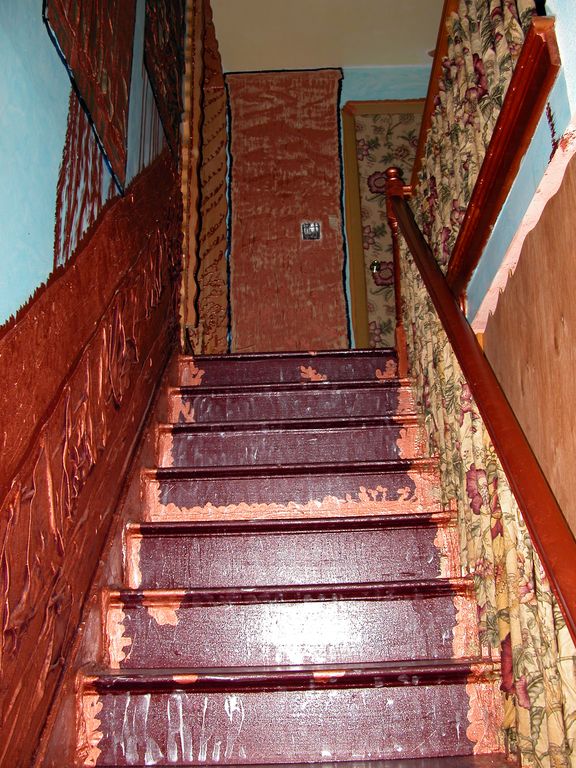
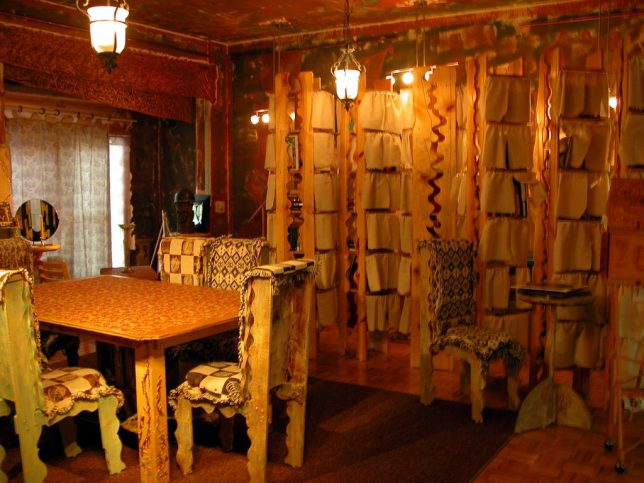
    Had Buffalo Bill escaped Clarice Starling and moved into a quaint suburban Connecticut home, his interior decor might have looked a little something like this. At 24 Brentwood Drive, an absolutely amazing color palette in shades of dried blood, glistening internal organs and Exorcist vomit green adorns every available surface in the form of hand-painted designs. And the best part is – all of this could be yours for just $ 339,900.

    horror-house-1

    horror-house-2

    horror-house-5

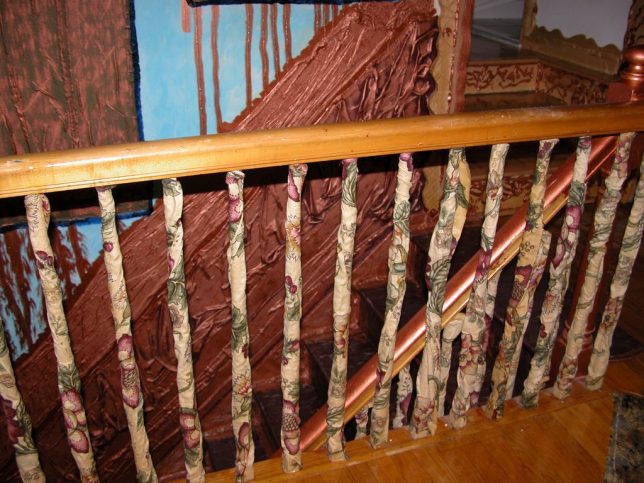
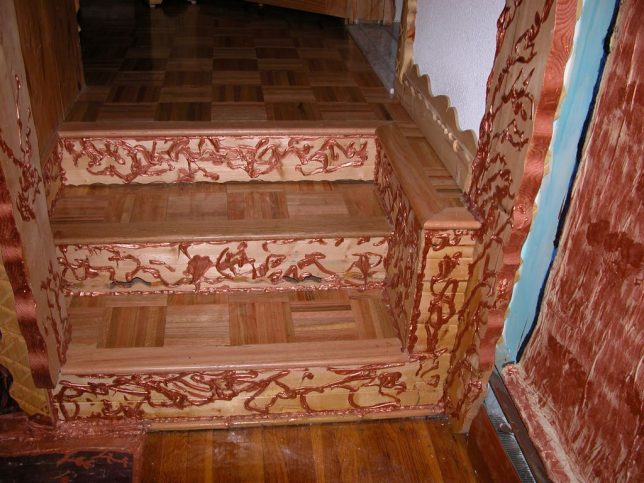
    Believe it or not, this is an actual real estate listing on Zillow.com, described by listing agent Ernie Rossi as a “unique one of a kind finishing completed by a professional!” The agents provide a full 51-photo tour on the site, showing off room after room filled with decoupaged stair rails, musty-looking floral curtains, decorative stamped paint in rust red and squiggly designs in shiny copper.

    horror-house-7

    horror-house-8

    horror-house-9

    Naturally, the listing went viral on social media upon discovery, with people describing the interiors as “serial killer chic,” “deranged” and “a portal to hell.” The real estate agents told The National Post that the sellers are artists, and remain optimistic that someone out there will fall in love with their designs. The home has only had one interested party in thirty days online, however.

    horror-house-10 \

    horror-house-11

    horror-house-12

    Who knows – maybe it’s actually some kind of viral horror marketing for a horror movie or a Halloween attraction, given that it’s mid-October and the house is located near the ominously named Mount Horr and Secret Lake – but there are elements of the home that feel earnest. Check out the full listing to decide for yourself.

    Share on Facebook


    [ By SA Rogers in Design & Fixtures & Interiors. ]

    [ WebUrbanist | Archives | Galleries | Privacy | TOS ]


    WebUrbanist

  • Stars Above Maui

    Stars Above Maui
    Stars Above Maui

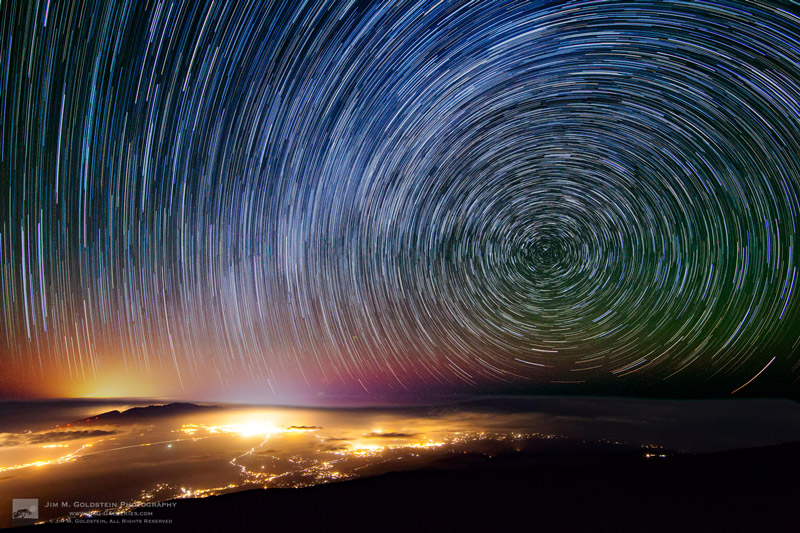
    Circumpolar star trails high above Haleakala National Park in Maui, Hawaii

    It’s an interesting feeling to be atop Haleakala, high above the South Pacific, with the feeling of being on top of the world. Atop Haleakala National Park you can see out for 50 miles in every direction when its cloud-free and you tower above the rest of Maui.  Yet when you take a star trail photo such as this you quickly realize that you were really on the side of our spinning globe. Star trail photos are always fun, but I’m particularly fond of this one because Polaris is so much closer to the horizon than I’m used to. One day it would be equally fun to head closer to the Arctic to see Polaris directly overhead.

    Happy Shooting!

    Photo Details
    Canon 5D Mark II + Canon 14mm f/2.8L II USM
    f/7.1, ISO 6400 at 90 min

    The post Stars Above Maui appeared first on JMG-Galleries – Landscape, Nature & Travel Photography.


    JMG-Galleries – Landscape, Nature & Travel Photography

  • Leica and ONA introduce more luxury bags for the red-dot-obsessed

    $ (document).ready(function() { SampleGalleryV2({“containerId”:”embeddedSampleGallery_7420218348″,”galleryId”:”7420218348″,”isEmbeddedWidget”:true,”standalone”:false,”selectedImageIndex”:0,”startInCommentsView”:false,”isMobile”:false}) });

    Leica and bag-maker ONA Bags have teamed up again, this time to launch a new premium lineup of exclusive camera bags called the ‘ONA for Leica’ collection. This new lineup is composed of half a dozen camera bags that will be available solely through Leica Camera AG, each of them featuring a red rivet and red lining, as well as space for Leica camera gear and, in some cases, other accessories and personal items as well.

    The new collection is composed of ‘The Bowery for Leica’ bag, ‘The Prince Street for Leica,’ ‘The Brixton for Leica,’ ‘The Berlin II for Leica,’ ‘The Camps Bay for Leica,’ and ‘The Roma for Leica.’ Though they all share a similar style, each bag is unique in its offerings, and some are available in multiple versions. There are five versions of ‘The Brixton,’ for example, while some of the others bags — particularly ‘The Camps Bay’ and ‘The Roma’ — are larger and more practical with less design variations. Both waxed Italian leather and waterproof canvas bags are offered in the collection.

    ONA’s website currently only lists the The Bowery for Leica bag, which is $ 279. Pricing for the other bags in this collection isn’t clear at this time. Availability is set for November.

    PRESS RELEASE

    Leica Camera and ONA present an exclusive collection of high-quality, premium camera bags

    13 October 2016: Leica Camera has today announced the ‘ONA FOR LEICA’ collection of high quality camera bags.

    To celebrate the 100th anniversary of the legendary 35mm camera in 2014, ONA – an American manufacturer of premium camera bags – created ‘The Berlin II’, a bag designed especially for the Leica M-System. As a follow-up to this collaboration, the two companies have once again joined together to present the ‘ONA FOR LEICA’ collection, featuring six distinctive models crafted by ONA. Each piece will be lined in red and will feature a red rivet, as a discreet reference to Leica. The series will be offered exclusively by Leica Camera AG in a range of materials and colour combinations.

    The Bowery for Leica: This special edition of ‘The Bowery for Leica’ camera bag represents a mutual commitment to the creation of exceptional products for photographers from both ONA and Leica. The bag is specially designed to provide stylish and practical protection for Leica camera equipment. Two of the five models are crafted from finest quality Italian leather with a lightly waxed finish. The remaining three models are made from a robust and waterproof canvas fabric. With five compartments, it offers enough space for a Leica M-Camera, one to two M-Lenses and various personal possessions or accessories. By detaching the carrying strap, the bag turns into a useful, padded insert for safely stowing camera equipment in a larger bag or case. Its cleverly designed features, variable storage options, compact size and minimalist design make it the perfect universal and modern camera bag.

    The Prince Street for Leica: Combining the look of a casual shoulder bag with the practical advantages of a camera bag, ‘The Prince Street for Leica’ offers a unique messenger style. Two models in finest leather and three in robust canvas with real leather trim offer generous capacity for photographic equipment. The two retro-styled clip-buckles ensure that the bag’s valuable contents are safely locked away. Six compartments allow an M-Camera with two to three lenses, an 11-inch laptop or tablet PC and other accessories to be safely and unobtrusively stowed away.

    The Brixton for Leica: This sophisticated bag has been designed to be particularly spacious, and is available in five different versions. The ‘Antique Cognac’ and ‘Dark Brown’ models are created from the finest Italian leather, with a wax finish. The water-repellent waxed canvas of the other three bags in the collection keeps cameras and equipment safely protected. All five hand-crafted models offer multiple practical features, numerous outer pockets and compartments and flexible storage space with room for a camera, two to three lenses, small personal items and even a 13-inch laptop computer. The bags are available in water-repellent canvas in the colours ‘Black’, ‘Field Tan’ and ‘Smoke’ (water-repellent canvas) and in real leather in ‘Antique Cognac’ and ‘Dark Truffle’.

    The Berlin II for Leica: This exclusive bag is hand-made from finest Italian leather in the colours ‘Black’ or ‘Vintage Bourbon’ and has been specifically designed for the Leica M-System. The premium leather style offers space for one camera, two to three lenses and small accessories, and develops a unique patina during years of use that reflects its truly unique character. Additional storage space inside the bag makes it particularly flexible. Lined in iconic Leica red, four dividers can be used to adapt the space to meet specific needs and can be completely removed, if required. The Berlin II, available in a choice of ‘Black’ or ‘Vintage Bourbon’ leather, offers space for documents in a compartment on the back and features a front pocket with a zip-fastener for storing small personal items.

    The Camps Bay for Leica: This stylish, high-capacity rucksack in water-repellent canvas and real leather appliqués is perfect for transporting a wide range of camera equipment, comfortably and flexibly. The space inside can be adapted to meet the needs of the owner’s individual products or to make room for additional accessories. The padded main compartment provides space for the safe storage of one camera with up to seven lenses and a 17-inch laptop computer, while smaller items can be secured away in a pocket with a zip-fastener on the front. Both the straps and the back of this ‘Smoke’ coloured canvas rucksack are padded and covered with breathable fabric, to ensure complete comfort when on the move.

    The Roma for Leica: This practical insert with five compartments transforms almost any standard bag into a camera bag. The robust, water-repellent canvas material offers optimum protection for valuable equipment and features real leather grips to make it easier to remove from bags. This cleverly-designed combination of bag and organiser is the ideal solution for photographers looking for a smart way to carry a single camera, one lens and a couple of small accessories.

    About ONA

    ONA is a purveyor of fine bags and accessories designed for, and inspired by, photographers and creative professionals. Each bag is meticulously hand-crafted from the highest quality materials, conveniently sized, built to last for years, with a particularly attractive, minimalist design. The bags provide durable protection for precious Leica cameras and lenses while reflecting the photographer’s inimitable personal style.

    Availability and pricing

    The ONA FOR LEICA Collection is scheduled to be available from November 2016 from Leica Stores and Boutiques. Pricing will be confirmed from the date of availability.

    Articles: Digital Photography Review (dpreview.com)

  • Monsoon III: Time-lapse captures the raw power of a monsoon

     
    You may remember Mike Olbinski’s storm chasing thriller Vorticity from July and, unsurprisingly, he’s back at it again. This time around he chased storms over the course of 36 days during the 2016 monsoon season in the Southwest. Though he says it was somewhat of a slower season in terms of activity, you wouldn’t know it from the time-lapse video that he put together. This is definitely worth a watch in full-screen HD with the lights turned off. Hope you enjoy it as much as we did!

    Articles: Digital Photography Review (dpreview.com)

  • Sony FE 70-200mm F2.8 GM galleries: Roller derby and daylight base ISO samples

    Our friend James McDaniel recently put Sony’s premium stabilized telezoom to the test, first in low light shooting roller derby WFTDA Playoff action and later in daylight, shooting at base ISO. This lens features built-in image stabilization and uses a linear motor to acquire focus quickly and silently, which could be real benefits to all kinds of photographers. We’ll be adding to the base ISO gallery as soon as we catch a break from the rainy Seattle weather. Until then, enjoy the two galleries below:

    Articles: Digital Photography Review (dpreview.com)

  • Modified Nikon D5500 keeps things cool for astro-photographers

    Italian astrophotography equipment brand PrimaLuceLab is selling a version of the Nikon D5500 that it has adapted for long exposures using a custom cooling system that manages the temperature of the camera’s sensor. The PrimaLuceLab Nikon D5500a Cooled uses dual Peltier cells to create a thermoelectric cooling effect that allows users to maintain the temperature of the sensor and to cool it by as much as 27°C below the ambient air temperature.

    Keeping the sensor cool allows long exposures to take place without the sensor heating up and creating image noise. This means very long shutter openings can be used to make images with very little additional noise. Just as importantly, the cooling system can keep the sensor at the same user-specified temperature throughout a shoot so that dark frames don’t have to be made directly after each image – they can be made at the end when the subject has passed.

    $ (document).ready(function() { SampleGalleryV2({“containerId”:”embeddedSampleGallery_1400173065″,”galleryId”:”1400173065″,”isEmbeddedWidget”:true,”standalone”:false,”selectedImageIndex”:0,”startInCommentsView”:false,”isMobile”:false}) });

    The camera is also fitted with a system that prevents air moisture from condensing on the surface of the cooled sensor. The Anti-Dewing system heats the front filter over the sensor but not the sensor itself. Presenting a warm surface to the air means no moisture gathers. The infrared-cut filter of the Nikon D5500 has been removed and replaced by a filter that allows longer red wave lengths, specifically those beyond the H-alpha line, to pass and be recorded.

    Touch sensitive buttons on the rear of the cooling block allow users to control the shutter opening and shutter time as well as set up sequences of different exposures with brackets of up to 900 seconds.

    The PrimaLuceLabs Nikon D5500a, which comes with a 4-year warranty, is available now and costs €2190 (about $ 2420).

    For more information visit the PrimaLuceLab website.

    Articles: Digital Photography Review (dpreview.com)

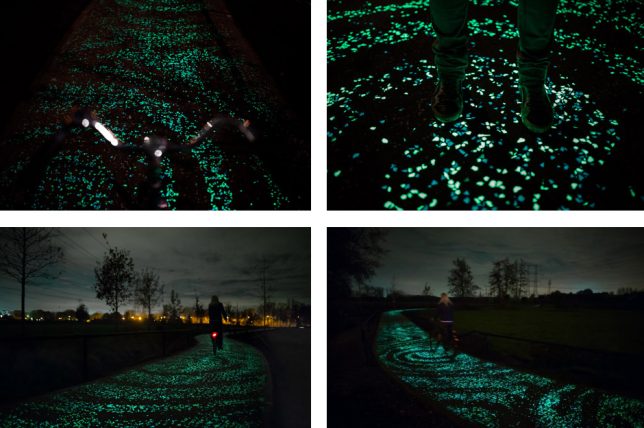
  • Night Riding: Glowing Blue Bike Trail in Poland Powered by Solar Energy

    [ By WebUrbanist in Architecture & Cities & Urbanism. ]

    glow-in-the-dark-path

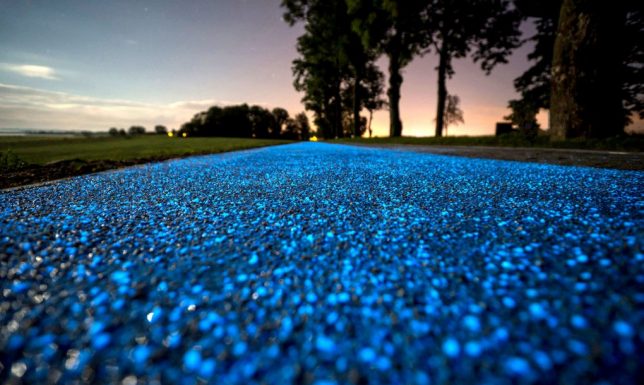
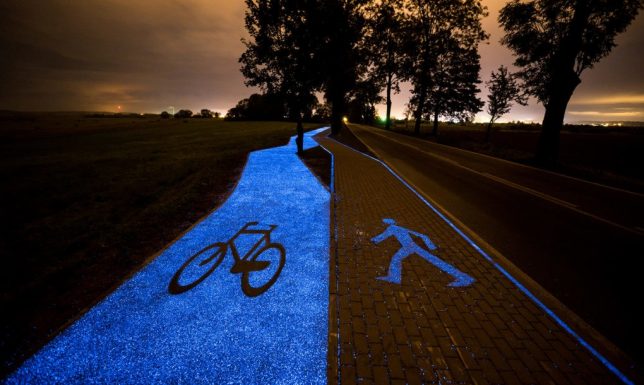
    Charged during the day and lighting up at night, this beautiful bicycle trail outside the town of Lidzbark Warmiski is designed to improve safety for riders out after dark.

    glowing-night-bike-path

    Luminescent phosphor can hold emit light of various colors, but blue was selected to match the surrounding landscape and conjure associations with the sky (the source of the path’s power). Once deployed, the passive system recharges itself, obviating the need for connectivity or continual maintenance.

    starry-night-bike-path

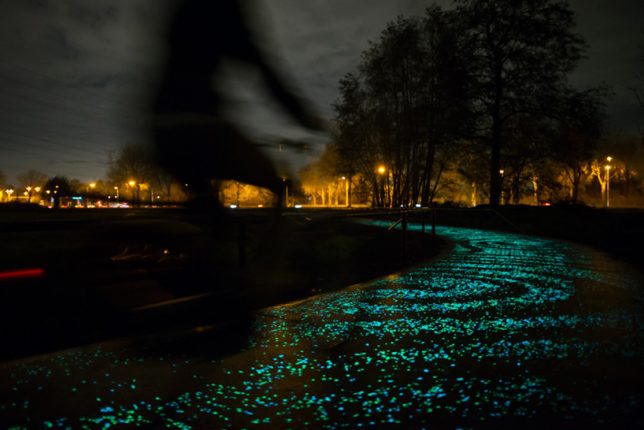
    Though the technologies behind the effects differ, the path in Poland was inspired in part by the Starry Night bike path created in the Netherlands by Studio Roosegaarde. Both are proofs of concept, tests meant in part to demonstrate the potential and durability of this trail-blazing lighting strategy.

    van-gogh-bike-path

    Other illumination options were considered, but this glow-in-the-dark approach was deemed both appealing and cost-effective by the Board of Regional Roads. Adjacent pedestrian paths are also bracketed by glowing blue lines and denoted for persons on foot with likewise-illuminated path signage underfoot.

    Share on Facebook


    [ By WebUrbanist in Architecture & Cities & Urbanism. ]

    [ WebUrbanist | Archives | Galleries | Privacy | TOS ]


    WebUrbanist

  • A look at Google Pixel’s sensor reveals potential HDR video tech

    Example of a sensor pattern with spatially varying exposure, in which pixels of the same color receive differing amounts of light. (From the Computer Vision Laboratory at Columbia University.)

    Steven Zimmerman over at XDA Developers has just published an article with some insights into the Sony IMX378 sensor used in Google’s recently announced Pixel smartphones. Although he covers a number of technologies likely familiar to DPReview readers, such as stacked BSI-CMOS technology and on-sensor phase detect autofocus, there’s an interesting section on Spatially Multiplexed Exposure (SME-HDR) which has the potential to provide improved HDR video capture. It’s an interesting read, and one worth taking a look at if you’re interested in sensor technology.

    Articles: Digital Photography Review (dpreview.com)