Blog

  • City of Ice: 20 Photos of China’s Amazing Annual Snow Sculptures

    [ By SA Rogers in Art & Sculpture & Craft. ]

    city-of-ice-illuminated-2015-jarod-carruthers

    Dozens of large-scale snow and ice sculptures are once again on display in Harbin, capital of northeast China’s Heilongjiang Province, for the Sun Island International Snow Sculpture Art Expo. By day, the massive sculptures depicting folklore, mythology, classical art, cartoon characters and castles almost blend into their icy surroundings like natural formations, and after dark, everything is illuminated with a rainbow of glowing lights. Here are some of the festival’s most impressive sculptures that visitors have captured over the years.

    Wild Hair Statue, 2012

    city-of-ice-hair-statue-cdschock

    Harbin has long, cold winters with temperatures dropping to -36 degrees Fahrenheit, making it cold enough to pack snow very tightly, mold it into place and expect it to stay put. Otherwise, statues with elements like this hair would be difficult to make (photo by cdschock.)

    Illuminated Ice Architecture, 2009

    city-of-ice-illuminated-architecture-2009-ian-carvell

    The annual winter festival is the largest ice and snow festival in the world, drawing international participants to show off their sculpting skills. The ‘Ice and Snow World’ portion, featuring full-sized buildings made from blocks of 2-3 inch thick ice, is best experienced after dark (photo by Ian Carvell.)

    Goddess Statue, 2016

    city-of-ice-goddess-statue

    Each year, the event has a ‘trial run’ between December 22nd and January 4th, officially open to the public between January 5th and February 25th. Every year has a different theme, with 2016’s revealed to be “The Wonderland in the Land of Snow, The Grand View in the World of Ice and Snow.” Not clear on what that means, but we’ll find out when photos are released in early 2017 (photo by Time Travelo.)

    Snow Sphinx, 2013

    city-of-ice-snow-sphinx-la-priz

    city-of-ice-sphinx-la-priz-2

    Maybe it’s not quite as large as the original, but this ‘snow sphinx’ photographed by Priscilla Dorresteijn is impressive nonetheless.

    Illuminated Ice City at Dusk, 2015

    city-of-ice-illuminated-2015-jarod-carruthers

    The combination of reflective ice and snow with colored lights creates a pastel scene at dusk (photo by Jarod Carruthers.)

    Massive Santa, 2009

    city-of-ice-snow-santa-morgann

    city-of-ice-santa-ran-zxzzy

    This large-scale Santa is downright mountainous, looming over life-sized snow sculptures of architecture and trees (photos by Morgann and rdog)

    Next Page – Click Below to Read More:
    City Of Ice 20 Photos Of Chinas Amazing Annual Snow Sculptures

    Share on Facebook


    [ By SA Rogers in Art & Sculpture & Craft. ]

    [ WebUrbanist | Archives | Galleries | Privacy | TOS ]


    WebUrbanist

  • Chris’ Gear of the Year part two: Canon 16-35mm F2.8L III

    The Canon 16-35mm F2.8L II USM has been a workhorse for landscape photographers like myself for many years. Although I use this lens nearly every time I head out to shoot a location, I do have sort of a love-hate relationship with it. The corners are always fairly soft and never seem to get sharp (even after you stop the lens down) and chromatic aberration can be an issue as well (it can be removed through post processing, but at a slight cost to sharpness). Coma is also a pretty big issue with this lens, which makes it a less than desirable choice for astrophotography, but I’ve always made do and corrected those issues through post-processing.

    This lens has impressive corner sharpness and amazing sunstars at very early apertures compared to its predecessor. Seattle, WA.

    Photo by Chris Williams

    Canon 5DSR, Canon 16-35mm F2.8L III, 16mm, F11, 1/160, ISO 100

    There was always one thing that prevented me from moving on to a wide-angle that outperformed the Canon lens in terms of sharpness, vignetting and CA: the sun star. The sun star that the Canon lens produces is simply jaw-dropping and there are even Photoshop actions that you can purchase to replicate it. That’s one of the main reasons that I decided to purchase the lens in the first place and one of the main reasons that I never moved on.

    This is an example of the type of sun star that the Canon 16-35mm F2.8L II produced. This lens is capable of taking some beautiful images, but it definitely did have its faults. This was taken in the Columbia Hills of Washington state.

    Photo by Chris Williams

    Sony a7r, Canon 16-35mm F2.8L II

    When Canon released the 16-35mm F4L USM a few years back, I have to admit, I was extremely excited because I was hoping that it would lead to the release of an updated version of the 16-35mm F2.8L. Finally, after years of waiting, the Canon 16-35mm F2.8L III was announced in Fall 2016.

    In this sample image you can see how well the lens handles coma at 16mm shot wide open at F2.8; this is a huge improvement over the previous iteration of the lens.

    Photo by Chris Williams

    Canon 5DMK IV, Canon 16-35mm F2.8L III, 16mm, 1.6sec, F2.8, ISO 100

    All of the major issues that plagued the previous iteration of the lens have been largely addressed by Canon. The CA is almost non existent, the distortion was handled gracefully and the corner sharpness has improved dramatically at 16mm and beyond. In fact the best performance occurs when the lens is shot wide open at 16mm. Coma was a fairly major issue in the previous iteration of the lens and Canon has reduced it a great deal; so much so that this lens is now an excellent alternative to a fast prime lens for astrophotography. I knew Canon had the engineering to fix the issues with the optics, but one of the biggest questions that remained was; how did the sunstar fair?

    Canon 16-35mm F2.8L III USM Sunstar

    Canon 5D Mk IV, 35mm, 1/100, F20, ISO 100

    Canon 16-35mm F2.8L II USM Sunstar

    Canon 5D Mk IV, 35mm, 1/100, F20, ISO 100

    I was actually pleasantly surprised by the sun stars that the new lens produces. It’s much more symmetrical and much cleaner in terms of flare than the previous iteration of the lens. The rays themselves are very clean and defined and very pleasing to the eye. Aesthetically pleasing sun stars are also achieved at much earlier apertures in the updated lens (as early as F10), which can minimize the effects of diffraction. All-in-all we see the changes as improvements, but it really comes down to personal preference. 

    Sun star aside, I’ve owned the Canon 16-35mm F2.8L II for a number of years and the performance wide open has always been a major point of frustration for me, especially in terms of coma, CA and corner sharpness. The update that was made to this lens addresses all of these points and corrects the major issues seen in its predecessor, and it’s really quite impressive. The lens is a bit soft in the corners at the long end, but once it’s stopped down it does sharpen up quite nicely at focal lengths at and beyond 24mm. The bottom line is that Canon really threw down the gauntlet with this one to get it right and the results speak for themselves. This lens really is a feat of engineering. They always say the third time is the charm, and I couldn’t agree more. 

    See our Canon 16-35mm F2.8L III
    sample gallery

    Articles: Digital Photography Review (dpreview.com)

  • Our favorite gear, rewarded: DPReview Awards 2016

    DPReview Awards 2016

    Here at DPReview we handle a lot of gear. This year, plenty of amazing cameras, lenses, accessories and other products came through our doors, and we hope you’ve enjoyed reading about them as much as we’ve enjoyed writing about and testing them.

    Last year, for the first time, we decided to get together as a team and discuss what we thought was the best gear of the year in multiple categories. This year we sat down again and made a list, checked it twice, then talked about it. And then talked about it some more, and then made a shortlist. And then we talked about it again, argued a bit, and finally voted, ranking our choices by first, second and third preference.

    After all that, we’re pleased to announce the results. Click through the slides above to learn which products made our list of the best gear of 2016.

    If you’d like to have your say, make sure to vote in this year’s Reader’s Poll for best product of 2016, which will be running through December 31st. 

    Best accessory

    Shortlist:

    • DJI Osmo+
    • Domke Chronicle Bag
    • Fuji Instax Share SP-2
    • Western Digital MyPassport WD Wireless Pro

    Runner up: Western Digital MyPassport WD Wireless Pro

    There were a lot of new accessories released this year, but the Western Digital Wireless Pro in particular impressed us, which is why it’s the runner-up for this category. A great choice for photographers working in the field, it features its own Wi-Fi network, a built-in SD card slot, excellent battery life and dedicated Android and iOS apps.

    Winner: Fuji Instax Share SP-2

    It wasn’t even close, the second generation Fuji Instax Share SP-2 printer was our favorite accessory of 2016. Why? Because there’s just nothing quite like holding a physical image in your hands. Faster and sleeker than the original and with more printing options, the SP-2 can easily link up with Fujifilm cameras or print from a compatible phone or tablet.

    Best mobile / VR Product

    Shortlist:

    • Apple iPhone 7 Plus
    • DJI Osmo Mobile
    • Google Pixel XL
    • Panono 360 camera

    Runner up: iPhone 7 Plus

    This category includes a wide range of products, from smartphones to hand-held gimbals, all of which have one thing in common: they are non-traditional cameras. The Apple iPhone 7 Plus is this year’s runner-up with its innovative dual lens design. It offers photographers the choice between a 28mm F1.8 and a more portrait-appropriate 56mm F2.8 (35mm equiv.) lens.

    Winner: Google Pixel XL

    The Google Pixel XL won this category by a wide margin and for good reason: It has an outstanding camera – so good that it received the highest DxOMark score of any smartphone ever. And features like Raw capture, on-sensor phase detect AF and the HDR+ mode only add it to its appeal. Plus, it’s the first product compatible with Google Daydream VR headset.

    Best prosumer camera drone

    Shortlist:

    • Autel X-Star Premium
    • DJI Mavic Pro
    • DJI Phantom 4 Pro
    • DJI Phantom 4

    Runner-up: DJI Phantom 4 Pro

    The DJI Phantom 4 Pro is a tour de force of just how much modern technology can crammed into a small, prosumer drone. It stands out in its class thanks to a 20MP 1″-type sensor that captures 4K/60p video, support for h.265 recording, 20MP Raw stills, photographer-friendly features like 14fps burst shooting and exposure bracketing, and an impressive collision avoidance system.

    Winner: DJI Mavic Pro

    The DJI Mavic Pro sets a new standard for portability among prosumer camera drones; it’s hard to believe just how compact it is until you see it in person. In fact, you could easily fit it inside a camera pack (with plenty of room left for other gear), a purse, or even a large pocket in your cargo shorts (wearing cargo shorts is not endorsed by DPReview staff).

    Don’t let the Mavic’s size fool you though – it has the same camera as the original Phantom 4, captures 4K/30p video, 12MP stills with DNG Raw support, and boasts a top speed that exceeds that of the Phantoms.

    Best zoom lens

    Shortlist:

    • Canon EF 16-35mm F2.8L III USM
    • Olympus M.Zuiko Digital ED 12-100mm F4 IS Pro
    • Sigma 12-24mm F4 DG HSM Art
    • Sigma 50-100mm F1.8 DC HSM Art

    Runner-up: Olympus M.Zuiko Digital ED 12-100mm F4 IS Pro

    Every year, more lenses are released than cameras, and this year the competition was especially tough. A lot of great zoom lenses were released in 2016 and of our shortlist of four, two belong to Sigma’s well-regarded ‘Art’ series. But the Olympus M.Zuiko Digital ED 12-100mm F4 IS Pro just pulled ahead of both of them to take the runner-up spot in this category.

    Winner: Canon EF 16-35mm F2.8L III USM

    Winner by a considerable margin of votes among the DPReview staff was the Canon EF 16-35mm F2.8L III USM. Canon is really on a roll with its high-end L-series, and the new version of the 16-35mm F2.8 is stunning. If you’re a Canon shooter looking for a high quality wide-angle zoom, the 16-35mm F2.8 III is as good as it gets.

    Best prime lens

    Shortlist:

    • Nikon AF-S Nikkor 105mm F1.4E ED
    • Olympus M.Zuiko Digital ED 25mm F1.2 Pro
    • Sigma 85mm F1.4 DG HSM Art
    • Sigma 30mm F1.4 DC DN | C

    Runner-up: Nikon AF-S Nikkor 105mm F1.4E ED

    If competition was fierce among zoom lenses this year, if anything it was even fiercer in the prime lenses category. New releases from several manufacturers really raised the bar, and Nikon’s excellent new 105mm F1.4 portrait lens took the runner-up spot in a very tough field.

    Winner: Sigma 85mm F1.4 DG HSM Art

    Realistically, as soon as we sat down to discuss which lens should win this category, there was only one serious contender. Winner by a convincing margin among DPReview staff was Sigma’s 85mm F1.4 DG HSM Art. Its big, it’s heavy, and it makes gorgeous pictures. If you’re a fan of the 85mm focal length for portraiture, the Sigma 85mm F1.4 Art is worth serious consideration. 

    Best compact camera

    Shortlist:

    • Canon PowerShot G7 X Mark II
    • Panasonic Lumix DMC-LX10
    • Sony Cyber-shot RX100 V
    • Sony Cyber-shot RX10 III

    Runner up: Sony Cyber-shot DSC-RX100 V

    There was some tough competition in this category, thanks partly to Sony, which seems set on maintaining its breakneck pace of new product announcements. The latest compact camera in Sony’s RX100-series is the best yet. We argued a lot about which camera should win in this category, and offering incredible speed, hybrid AF and excellent 4K video, the RX100 V took the runner-up spot.

    Winner: Panasonic Lumix DMC-LX10

    The winning position is occupied by the Panasonic Lumix DMC-LX10, thanks to its combination of small size, excellent lens and overall image quality. As well as great-looking stills, the LX10 is also capable of excellent 4K video, and hits an attractive price-point compared to the best of its competition.

    Best consumer stills/video camera of the year

    Shortlist:

    • Panasonic Lumix DMC-FZ2500
    • Sony a6500
    • Sony RX10 III

    Runner up: Panasonic Lumix DMC-FZ2500

    In this category, we’re looking for the best products for stills and video shooters who need one camera to do it all. This category spans compact, fixed-lens cameras up to 4K-capable ILCs, but our shortlist contained only the latter type of camera – testament to the advances that have been made in this category.

    Panasonic’s Lumix DMC-FZ2500 takes the runner-up spot in this category this year, thanks to its impressive 4K feature set and video-friendly ergonomics, coupled with excellent still image quality.

    Winner: Sony Cyber-shot RX10 III

    The Sony Cyber-shot RX10 III is one of the most impressive products to come through the doors of DPReview Towers in 2016. Although bulky and costly, this 1″ sensor compact can reach places that ILCs just can’t. A stunningly sharp 24-600mm lens, coupled with a class-leading 1″-type BSI-CMOS sensor and excellent 4K and HFR video features meant that DPReview staff were unanimous in voting the RX10 III the best consumer stills / video camera of 2016.

    Best entry-level ILC

    Shortlist:

    • Fujifilm X-A3
    • Nikon D3400
    • Panasonic Lumix DMC-GF8
    • Yi M1

    Runner-up: Nikon D3400

    Although it might seem less interesting than other market segments, the entry-level ILC market is critical for manufacturers, who need to persuade new photographers to join their system, and get on the upgrade path. This year saw some excellent entry-level ILCs released, and the Nikon D3400 took the runner-up spot. Small, unflashy and easy to use, the D3400 is a great beginners’ camera and a good entry-point into the wider Nikon system.

    Winner: Fujifilm X-A3

    The winner of this category is the Fujifilm X-A3. While not as feature-laden as its higher-end X-series peers, the 24MP, WiFi-equipped X-A3 is a great camera for someone just starting out in photography. It offers plenty of scope for beginners to grow, without being confusing or intimidating to use.

    Best mid-range ILC

    Shortlist:

    • Canon EOS M5
    • Canon EOS 80D
    • Panasonic Lumix DMC-G85
    • Sony a6300

    Runner Up: Sony a6300

    2016 was a pretty good year for enthusiast photographers, and there was stiff competition in the mid-range ILC category this year. In the end, half of our shortlist was made up of Canon EOS products, but both the EOS M5 and EOS 80D lost out to the Sony a6300, which took runner-up spot.

    Winner: Panasonic Lumix DMC- G85

    I guess we just gave it away, but the winner of this year’s title of best mid-range ILC is the Panasonic Lumix DMC-G85, which narrowly pipped the a6300 to take the winning spot. There’s not much that this compact Micro Four Thirds camera can’t do, and we love it for its versatility and excellent 4K video.

    Best high-end ILC

    Shortlist:

    • Canon EOS 5D Mark IV
    • Fujifilm X-T2
    • Nikon D500
    • Olympus OM-D E-M1 II

    Runner up: Fujifilm X-T2

    It was a two-horse race in this category, with two products way out in front of the rest of the pack (do horses run in packs?). The Fujifilm X-T2 came a close second place to take the runner-up spot in this category. DPReview staff praised its portability, ergonomics and image quality.

    Winner: Nikon D500

    With a convincing number of votes among DPReview staff, the Nikon D500 took the winning spot in our best high-end ILC category this year, as a near unanimous first choice. The D500 is one of our favorite ever DSLRs, and in a very competitive market segment it stands as a stunningly capable all-rounder.

    DPReview innovation award

    Shortlist:

    • Olympus OM-D E-M1 II
    • Sigma 85mm F1.4 DG HSM Art
    • Sony Cyber-shot RX100 V
    • Sony Cyber-shot RX10 III

    Runner-up: Sony Cyber-shot RX100 V

    We created this category last year to recognize products that we feel raised the bar for innovation in their product class. We narrowed down our selection to a shortlist of products, all of which are either cameras or lenses. Runner-up in this category is the Sony Cyber-shot RX100 V, in recognition of the incredible amount of technology that Sony has packed into this tiny camera.

    Winner: Olympus OM-D E-M1 II

    Just pipping the RX100 V to the post is the Olympus OM-D E-M1 II. We’re still not entirely sure how Olympus packed as much technology into the E-M1 II as it did, but the end result is an incredibly powerful stills and video hybrid camera. As well as ultra-fast capture rates and effective in-body stabilization, the E-M1 II is also built for use in the harshest of conditions. 

    DPReview product of the year, 2016

    Shortlist:

    • Nikon D500
    • Olympus OM-D E-M1 II
    • Sigma 85mm F1.4 Art
    • Sony Cyber-shot RX100 V

    Runner-up: Olympus OM-D E-M1 II

    In our discussions about overall best product of 2016, four products kept coming up. In different ways, we were highly impressed by all of the four products in our shortlist, all of which arguably represent the state of the art in their particular market segments, and any one of which could easily have won. In the end, we had to make a final decision. You’ll be able to find out the winner in the next slide, but our runner up for this year’s DPReview Award for product of the year is the Olympus OM-D E-M1 II.

    Winner: Nikon D500

    What the E-M1 II is for mirrorless ILCs, the D500 is for DSLRs. Although it lacks a really credible 4K video mode, the D500 is nevertheless an impressive all-rounder, combining some of the best elements of the flagship Nikon D5 with a (relatively) compact APS-C form factor, and a 1.5X focal length increase which is extremely handy for sports and wildlife photography. If you’re looking for a versatile, pro-grade DSLR which will still be current in years to come, the Nikon D500 is about as good as it gets. The Nikon D500 is our product of the year, 2016.

    As we approach the end of the year, we’d like to take this opportunity to thank all of you for your support, and your feedback. For a chance to vote for your own favorite product of 2016, our final Reader’s Poll is still open, and can be found here. Voting closes at midnight on Jan 31st (PT).

    Articles: Digital Photography Review (dpreview.com)

  • Google Sunroof: Search to Save Money With Home Solar Power

    [ By WebUrbanist in Architecture & Houses & Residential. ]

    google sunroof

    Google has rolled out a search engine with a specific target in mind: your house, more specifically how much area of your roof could be covered in solar panels, what that would save you and where you can look for companies to install a system for you.

    Interested homeowners can input their addresses and get realistic illustrations of how many solar panels would fit and what their potential cost savings on energy bills are likely to be.

    google solar savings calculation

    A complex data comprising everything from your home’s location and orientation to the presence of shade from adjacent trees or buildings – but this set is broken down into simple information for users.

    google solar energy savings

    Google, of course, is well-positioned to make this Sunroof tool effective, combining its Google Maps and Earth data that can sort out not just the footprint of a building but its 3D space too, and thus shadows. It also has all of the other information at hand, like average temperatures, sun exposure, cloud cover.

    new google solar energy

    Users of the tool can tinker with variables, but ultimately are given a recommended installation that maximizes the potential output and thus puts more back in homeowner pockets long-term. For now it is limited to the San Francisco Bay Area, Boston and a few other locations, but they have plans to expand around the country.

    Share on Facebook


    [ By WebUrbanist in Architecture & Houses & Residential. ]

    [ WebUrbanist | Archives | Galleries | Privacy | TOS ]


    WebUrbanist

  • Kamerar ZOOM is a lens attachment for the iPhone 7 Plus dual-camera

    With the 28 and 56mm equivalent lenses of its dual-camera, the iPhone 7 Plus offers more flexibility in terms of focal length than most smartphones. If that’s still not enough, the Kamerar ZOOM is now the first lens attachment designed for the iPhone’s dual-camera. 

    The system includes two lens attachments that slide into a special case and over the iPhone’s built-in camera lenses. One combines a fisheye lens for the iPhone’s wide-angle camera with a tele-converter for the 56mm lens. The other improves the macro capabilities of both lenses.

    In the product images the tiny lenses and the attachment don’t have the same premium look as some of the high-end smartphone lenses, for example from Moment or Zeiss. However, at only $ 45 plus import duties the Kamerar Zoom could be an inexpensive way of widening the creative potential of the iPhone 7 Plus even further. It can now be ordered on the Kamerar website. 

    Articles: Digital Photography Review (dpreview.com)

  • Strange Manger: The World’s Weirdest Nativity Scenes

    [ By Steve in Art & Sculpture & Craft. ]

    nativity-scene-1a

    No room at the inn? No kidding – the denizens of these strange nativity scenes would get even the kindest innkeeper flipping the switch on the No Vacancy sign.

    nativity-scene-1b

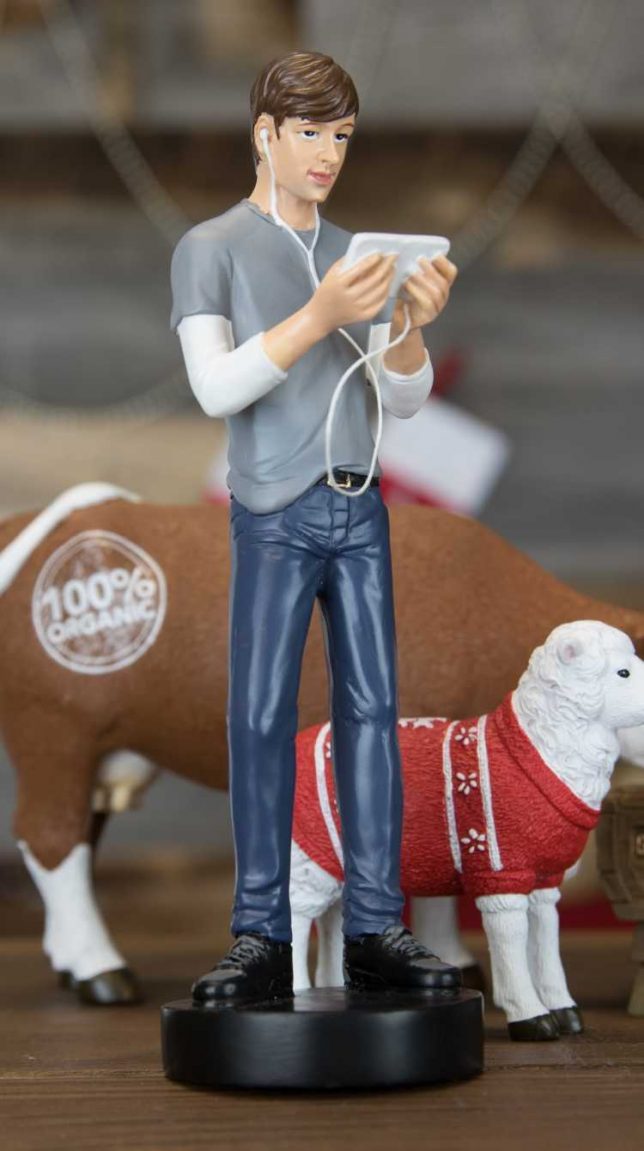
    The Modern Nativity Hipster Nativity Set throws tradition out the window and recasts the original nativity in a modern mold. “We started joking about how religions would be different if their sacred texts were set in modern times,” explains creator Casey Wright, who whipped up the concept while enjoying a few beers with his buddies. How hipster-ish is The Modern Hipster Nativity Set? Well, Joseph sports a man-bun and wears a denim shirt while he takes a selfie with Mary, who’s holding a coffee from a certain popular java purveyor as she puckers up with her best duck-face.

    nativity-scene-1d

    nativity-scene-1c

    Meanwhile, the fashionably sunglassed Three Wise Men roll in on Segways bearing gifts bought online at Amazon. The shepherd captures the miraculous event for posterity by posting it on Instagram using the hashtag #babyjesus. Clean green electric power for his tablet provided via solar panels on the manger’s roof because global warming.

    That Ain’t Kosher

    nativity-scene-9a

    nativity-scene-7b

    Y’know, we liked The Last Supper a lot better when Leonardo da Vinci painted it but hey – not everyone’s a vegetarian. Flickr user quik86 uploaded this iconic image of a baking bacon and sausage nativity back in December of 2010 but some things never get old, especially when they’re smothered in bacon.

    Kitty Nativity

    nativity-scene-3a

    nativity-scene-3b

    For over ten years, sisters Annette and Sue Amendola have been setting up a classic nativity scene outside their home in Red Hook, Brooklyn. The scene itself wasn’t out of the ordinary… at least it wasn’t until a bunch of stray cats arrived and made it their own.

    nativity-scene-3c

    The clowder of kittehs was first attracted by food the Amendola sisters would leave out but then stayed to enjoy the replica manger’s comfy bales of hay. “When the figurine of baby Jesus does finally appear on the hay bale,” explains Annette, “the cats usually push him right off to take their rightful spot.” Cats: doing the devil’s work since 0 AD.

    Praise Cheeses

    nativity-scene-10a

    We’ve got your cheesy nativity scene right here, highlighted by a Babybell Jesus and an Emmental angel personifying Oh Hole-y Night. Not suitable for the lactose intolerant.

    Next Page – Click Below to Read More:
    Strange Manger The Worlds Weirdest Nativity Scenes

    Share on Facebook


    [ By Steve in Art & Sculpture & Craft. ]

    [ WebUrbanist | Archives | Galleries | Privacy | TOS ]


    WebUrbanist

  • Sony launches Cyber-shot HX350 with 50x zoom outside US

    $ (document).ready(function() { SampleGalleryV2({“containerId”:”embeddedSampleGallery_6475505384″,”galleryId”:”6475505384″,”isEmbeddedWidget”:true,”standalone”:false,”selectedImageIndex”:0,”startInCommentsView”:false,”isMobile”:false}) });

    Sony has launched the Cyber-shot HX350 in European markets, offering a 50x zoom lens and 20.4MP BSI CMOS sensor like its HX300 predecessor. In fact, very little has changed compared to the previous model – as best we can tell, it adds an up-to-date BIONZ X processor, lock-on AF and a new blue ‘Zeiss’ badge on the same 24-1200mm equiv. F2.8-6.3 lens.

    It continues to offer a built-in EVF, optical image stabilization, 3″ tilting 921k-dot LCD, 1080/60p video recording and 10 fps burst shooting. Sony Germany lists the HX350 at €449 with availability in January 2017.

    Press Release:

    That’s so close! The compact 50x super zoom Cyber-shot™ HX350 is big on imaging power

    • ZEISS® Vario-Sonnar T* lens with 50x optical zoom and 100x Clear Image Zoom[i] for awesome close-ups
    • Shoot like a pro with manual controls and electronic viewfinder in a compact DSLR-style body
    • Back-illuminated Exmor RTM CMOS sensor with 20.4 effective megapixels and BIONZ X image processing engine
    • Optical SteadyShot and Intelligent Active Mode for smooth, stable stills and Full HD movies
    • Sharp, speedy focus of moving subjects with Lock-on AF and DMF (Direct Manual Focus)

    From expansive landscapes to exotic wildlife and family portraits: every scene’s covered with the Cyber-shot HX350 high-zoom camera from Sony.

    Discerning photographers graduating from smartphone snaps will love the mix of easy-to-use features and DSLR-inspired styling. Fitting beautifully in your hand, the HX350 packs big camera performance into a compact body – for limitless creative possibilities with a fixed lens.

    You’re good for any shooting situation, with the ZEISS® Vario-Sonnar T* lens offering a huge 50x optical zoom range – corresponding to 24mm wide angle to 1200mmsuper telephoto (equivalent in 35mm format).Clear Image Zoom doubles maximum magnification to a breathtaking 100xi, bringing distant buildings, people and animals jaw-droppingly close.

    Camera shake is the enemy of high-zoom shooting, as any pro knows. Optical SteadyShot cuts handheld wobbles for crisper stills, rapidly shifting a group of lens elements to correct for the slightest hand tremors. Intelligent Active Mode keeps Full HD videos equally sharp and blur-free with Sony’s proprietary frame analysis technology.

    Enthusiasts will be impressed by the high-resolution back-illuminated Exmor R CMOS sensor with 20.4 effective megapixels and speedy BIONZ X image processing engine. Even if you’re shooting handheld indoors or in low light, you’ll value crisp, low noise images and pristine Full HD video footage.

    The easy to use Cyber-shot HX350 is loaded with serious shooting options. There’s a manual ring for smooth adjustment of zoom/focus, plus an easily-accessible mode dial and custom button for quick adjustment of favourite settings. And with full P/A/S/M controls, you’ve got all the exposure options you need to craft stunning pictures and Full HD videos. Movie-makers will also welcome the extra detail of a 24p shooting mode that gives footage that authentically cinematic look.

    The choice is yours when it comes to framing shots with confidence. Look through the camera’s high-contrast electronic viewfinder – just like you’d expect on a DSLR – or switch to the manually tiltable 7.5cm (3.0-type) LCD with 921k dot resolution.

    Extra shooting refinements include Motion Shot Video that traces your tennis serve or golf swing as a split-second series of superimposed images. After shooting, connect the camera to your 4K television for a big, beautiful view of your photos. Support for TRILUMINOS™ Colour on compatible BRAVIA™ TVs ensures still shots bursting with vivid, vibrant colours.

    [i] At optical wide-end

    Sony Cyber-shot DSC-HX350 specifications

    Price
    MSRP €450
    Body type
    Body type SLR-like (bridge)
    Body material Composite
    Sensor
    Max resolution 5184 x 3456
    Image ratio w:h 1:1, 4:3, 3:2, 16:9
    Effective pixels 20 megapixels
    Sensor photo detectors 21 megapixels
    Sensor size 1/2.3" (6.17 x 4.55 mm)
    Sensor type BSI-CMOS
    Processor BIONZ X
    Color space sRGB
    Color filter array Primary Color Filter
    Image
    ISO Auto, 80-3200 (up to 12800 in Multi-Frame NR mode)
    Boosted ISO (maximum) 12800
    Image stabilization Optical
    Uncompressed format No
    JPEG quality levels Fine, standard
    File format
    • JPEG (Exif v2.3)
    Optics & Focus
    Focal length (equiv.) 24–1000 mm
    Optical zoom 41.7×
    Maximum aperture F2.8–6.3
    Autofocus
    • Contrast Detect (sensor)
    • Multi-area
    • Center
    • Selective single-point
    • Single
    • Continuous
    • Face Detection
    • Live View
    Autofocus assist lamp Yes
    Digital zoom Yes (2x)
    Manual focus Yes
    Normal focus range 1 cm (0.39)
    Macro focus range 1 cm (0.39)
    Screen / viewfinder
    Articulated LCD Tilting
    Screen size 3
    Screen dots 921,600
    Touch screen No
    Screen type TFT LCD
    Live view Yes
    Viewfinder type Electronic
    Viewfinder coverage 100%
    Viewfinder resolution 201,600
    Photography features
    Minimum shutter speed 30 sec
    Maximum shutter speed 1/4000 sec
    Exposure modes
    • Program
    • Aperture Priority
    • Shutter Priority
    • Manual
    Scene modes
    • High Sensitivity
    • Night Scene
    • Handheld Twilight
    • Night Portrait
    • Landscape
    • Portrait
    • Soft Skin
    • Anti Motion Blur
    • Beach
    • Snow
    • Fireworks
    • Advanced Sports Shooting
    • Gourmet
    • Pet Mode
    Built-in flash Yes
    Flash range 8.50 m (at Auto ISO)
    External flash No
    Flash modes Off, auto, fill, slow sync, advanced, rear sync
    Drive modes
    • Single
    • Continuous
    • Self-timer
    • Bracketing (Exposure, WB)
    Continuous drive 10.0 fps
    Self-timer Yes (2 or 10 sec, portrait)
    Metering modes
    • Multi
    • Center-weighted
    • Spot
    Exposure compensation -2–3 (at 1/3 EV steps)
    WB Bracketing Yes
    Videography features
    Format MPEG-4, AVCHD
    Modes
    • 1920 x 1080 @ 60p / 28 Mbps, AVCHD, MTS, H.264, Dolby Digital
    • 1920 x 1080 @ 60i / 24 Mbps, AVCHD, MTS, H.264, Dolby Digital
    • 1920 x 1080 @ 60i / 17 Mbps, AVCHD, MTS, H.264, Dolby Digital
    • 1920 x 1080 @ 24p / 24 Mbps, AVCHD, MTS, H.264, Dolby Digital
    • 1920 x 1080 @ 24p / 17 Mbps, AVCHD, MTS, H.264, Dolby Digital
    • 1440 x 1080 @ 30p / 12 Mbps, MP4, H.264, AAC
    Microphone Stereo
    Speaker Mono
    Storage
    Storage types SD/SDHC/SDXC + Memory Stick Pro Duo
    Connectivity
    USB USB 2.0 (480 Mbit/sec)
    HDMI Yes (micro-HDMI)
    Microphone port No
    Headphone port No
    Physical
    Environmentally sealed No
    Battery Battery Pack
    Battery description NB-BX1 lithium-ion battery & charger
    Battery Life (CIPA) 300
    Weight (inc. batteries) 652 g (1.44 lb / 23.00 oz)
    Dimensions 130 x 93 x 103 mm (5.12 x 3.66 x 4.06)
    Other features
    Orientation sensor Yes

    Articles: Digital Photography Review (dpreview.com)

  • Fresh out of the box: getting started with your first interchangeable lens camera

    Fresh out of the box: Getting started with your first ILC

    For the more established and experienced photographers of the internet, I will borrow the dedication page to Mark Z. Danielewski’s “House of Leaves:”

    This is not for you.

    This article is for your elderly neighbor, your young nephew or niece, or anyone whose photographic journey up to now begins and ends with a smartphone.

    If this describes you, then hello. Welcome. You, budding photographer, have decided to embark on a new hobby, or an extension of something you’ve enjoyed on a mobile device, and this holiday season you have purchased (or been gifted) an interchangeable lens camera of your very own. You may not  know why exactly you wanted or needed one – or even that some cameras come with lenses that detach in the first place.

    Let’s unravel the basics here, so you can get from the box-opening to the picture-taking as quickly and as free from headaches as possible.

    Opening the box

    In most interchangeable lens camera kits, you will have the following:

    • Camera body
    • Lens (or two)
    • Charger
    • Battery
    • Neck strap
    • Software CD (how quaint)
    • User manual
    • Warranty registration card

    The first thing to do is to remove the charger and set the battery on to charge. No point in being frustrated at not being able to take photos because of a low battery.

    The second task is to remove the camera and lens, remove the body cap from the camera and the back-end cap from the lens (it will be on the end with a metal or plastic mount with electrical contacts – the front of the lens will likely have the brand name and some other writing on it), and attach them.

    There will be red or white markings denoting where to line the lens up relative to the camera, and normally, you’ll turn it clockwise to lock it in – with Nikon lenses, however, you rotate the lens counter-clockwise to attach it.

    Get Strapped

    Now is also a great time to attach the included camera strap, because nothing is quite so effective at ruining complicated electronics and optics as an accidental tumble onto cement (it happens to the best of us). Also, very few cameras actually come with memory cards these days, so you’ll want to go pick one up – no need to go crazy, a decent 16GB memory card will be plenty for casual shooters, and should be affordable.

    Lastly, instead of throwing out that warranty card, fill it out. Cameras are complicated, and should you encounter any strange issues of yours that aren’t directly your fault, the warranty will help you out there.

    You can also add your camera to your homeowners’ (or renters’) insurance policy, which may cover theft, accidental damage, or more.

    Let’s take some pictures

    Okay, now that you’ve sat staring at your camera for a while and have killed the time by reading a couple more online reviews on it, let’s put the charged battery in and actually turn the thing on.

    You’ll be prompted to go through and set the date and time, which is advisable – when you go to put the photos on your phone, computer or the internet, the ‘date taken’ is a common method of keeping your images organized. If you notice any odd (read: buggy) behavior from the camera, go ahead and check the manufacturers’ website to see if there have been any firmware updates – and they’ll have easy instructions for installing them.

    Which mode?

    Keep the camera in fully ‘Automatic’ mode, which is usually the only option on the mode dial that’s green (the ‘Mode Dial’ will usually have P, A, S, M options among other icons such as a floating head for the ‘portrait’ preset, some small mountains for ‘landscape,’ and so on). On Olympus cameras, there’s a setting called i.Auto on the mode dial, and on Fujifilm cameras, you’ll want to flip the ‘Auto’ switch, or on the lower-end models, go to ‘SP+’ mode.

    The half press

    Unlike a smartphone, most interchangeable lens cameras provide you with a two-step process for taking a single picture. You’ll want to press the shutter button (it should be logically placed under your index finger while you hold the camera) very lightly – we call this a ‘half-press.’ What this does is signal to the camera that you’re intending to take a picture, at which time it will focus on whatever is in front of you, and it will pick an exposure (it will decide how bright to make the resulting image). Press the shutter down all the way now, and you’ll be greeted with some sort of shutter noise indicating that a photo has been taken. Yeehaw!

    Flash

    Many interchangeable lens cameras have flashes that you, the user, must pop up yourself if you wish to use them. General rule of thumb? If your photos are coming out too dark, too blurry or too grainy, pop up the flash. The camera should know to use it when it’s popped up and you’re in an automatic mode.

    On some cameras, such as Nikon and Canon models, the camera will choose for you whether to pop the flash up or not. They’re often wrong about this, particularly with subjects that are very far away (the flash isn’t that powerful). However, if you are shooting a photograph of a person on a bright day with the sun overhead, the flash pop will fill in some shadows on your subject’s face – this is called ‘Fill Flash,’ and it’s usually a good thing. The flash can also handy if you’re trying to take family photos indoors and are getting blurry or grainy results.

    In any case, those flash-happy Canon and Nikon models have a setting right next to the ‘Auto’ setting on the mode dial, that looks like a crossed-out lightning bolt. That’s the same automatic mode as before, but the camera will refrain from popping up the flash at all.

    Easy as that

    What’s next? Well, start taking pictures. They can be of anything, don’t worry about it. Take photos of things you find pretty, or funny, or just because you like them. Cats! Always take pictures of cats.

    Experiment with putting your subject slightly off-center (look up the Rule of Thirds for more on this – though it’s more of a guideline than an actual rule). It’s a common temptation to zoom in to a subject, instead of using your feet to actually get closer – experiment with both. Think about fun places to go in your own town that you can bring your camera to – a friend’s barbecue, or the zoo, a park, a museum (check photography rules beforehand, though). Be sure and keep the front of your lens clean, preferably with a microfiber cloth – you’ll inevitably get fingerprints and dust on it, which is fine, but they can make everything look a bit hazy.

    When you get a little more comfortable, start thinking about using lines to lead a viewer’s eye through the scene. Pay attention to contrast between light and shadow, and look out for interesting textures. There’s tons of free resources on the internet to help you out here.

    The most important thing you can do with that spiffy new camera, though? Just use it and have fun

    Articles: Digital Photography Review (dpreview.com)

  • Happy Holidays from DPReview

    Happy Holidays

    As we celebrate our eighteenth anniversary (the site officially launched December 25th, 1998, when some of our staff were still in elementary school) I’d like to wish each and every one of our visitors a very Merry Christmas/Happy Holidays/Season’s Greetings/Happy Hanukkah/Merry Festivus* (*delete as required).

    As you can might be able to spot from the picture above, I wasn’t personally able to attend the ‘put on a festive hat and pose for a portrait’ session due to the fact that some of us have actual work to do (or to put it more accurately, some of us had already left for two weeks of eating, drinking and being merry). And besides, there were no hats left. And I really, really hate being on the other side of the camera.

    And, whilst I may not be sure exactly which of the various bearded guys in the picture above is which, I can tell you that I’m incredibly proud of the work the entire team has done this year, and excited to see what they achieve in 2017. I wrote my first camera review 20 years ago (when working on the launch issue of the world’s first dedicated digital camera magazine), yet I still learn something almost every day by working with these talented, dedicated (and, yes, often bearded) people. It is their ideas (which, naturally, I steal and present as my own) and their boundless enthusiasm that keep our audience growing year on year, in the face of the continuing decline in camera sales (and the competition from viral cat videos and an unpresidented amount of twittering from high profile US political leaders.)

    2016 might have been a year many of us will be glad to see the back of, but I’m genuinely excited about what we have planned for 2017 here on DPR. You’re going to see some significant changes to our homepage, with much more photographic content and faster reviews. We’ve got big plans for the mobile site, and we have some cool new features that we think you’re really going to enjoy. Actually, let’s be honest, what I should say is that we have some cool new features that we hope you don’t hate…

    I can hear the mulled wine and mince pies calling, so I’ll just add my thanks to you, our loyal audience, because (as I say every year), there would be no DPReview without you. You keep us honest, you challenge us, and you often surprise and inspire us. We’re thankful that we’ve been able to continue bringing you reviews, videos, how-to’s, news coverage and much more – it’s a privilege and we’re always striving to do the best we can for our readers. We’re grateful for your contributions to our galleries, photo challenges, forums and spirited discussions, and hope that you’ve taken some photos you’re proud of this year.

    Have a fantastic holiday, and raise a glass with me to a pleasant, prosperous and peaceful 2017. 

    Merry Christmas!

    — Simon

    Happy Holidays

     “We spend our entire year shooting cameras, dissecting features, and arguing about pixels. It’s kind of the way things are at DPReview…

    …But when you receive a picture of your newborn niece two days before Christmas, it reminds you of what’s really important, and why photography really does matter.

    Happy holidays. I can’t wait to see what you all shoot in 2017!”

    Dale Baskin, New Content Editor

    Happy Holidays

    “2016 introduced a lot of exciting and innovative things in photography. New gear, glass, techniques, technology, accessories, talent…

    …so <ahem> why are you still sitting there? Go take some pictures!”

    Wenmei Hill, Editorial Manager

    Happy Holidays

    Abstractly, 2016 was much like any other year. I’ve had failures, which I’ve tried to learn from. I’ve had successes, which I’ve tried to learn from. The biggest challenge for me is to avoid becoming bogged down by the former, and too comfortable with the latter. In this sense, then, I honestly hope that 2017 will provide opportunities for more of each.

    Also, if it could provide me an opportunity to win the lottery so I can finally purchase a D5 and a 105mm F1.4 of my very own, that’d be great too.”

    Carey Rose, some guy we found who likes taking photographs and writing about things

    Happy Holidays

    “Photographically this was one of the most challenging and rewarding years I’ve had in a long time. I got to photograph lava on my honeymoon, shoot the canyon lands of Utah and enjoy wildflower season at home in the PNW; it doesn’t get much better than that! I’m looking forward to see what 2017 has to offer, but it will definitely be hard to top 2016! Happy holidays everyone!” 

    Chris Williams, Landscape Guru and Lens Reviewer

    Happy Holidays

    “Other than finally coming to terms with Windows after 12 years with Mac, I spent much of 2016 researching LED, CRI, reverse phase dimming, and redundancy in smart device operation… all to get the various technologies in my home and digital life working together in time for the birth of my first child. And you know what? A hands-free smart home makes me want a hands-free smart camera.

    All in good time. In the meantime, I’ve got a diaper to change and a once-in-a-lifetime smile to capture with my [insert brand that paid me off last here] camera. Happy Holidays!”

    Rishi Sanyal, Technical Editor

    Happy Holidays

    “Is 2016 over yet?”

    Barnaby Britton, Features Editor

    Happy Holidays

    “2016 for me included some great cameras and an increasingly ill-advised beard. It should probably also be the year I give up on watching elections.

    Still, if you’re wondering why I’m the only member of the team wearing a suit, it’s because I wanted to wish everyone a very moiré Christmas.

    And to apologise for that pun.”

    Richard Butler, Reviews Editor

    Happy Holidays

    “I think I actually shot more photos in 2016 than any other year of my life, despite the world seemingly crashing down all around us. There was also some fiiiine glass released this year, which I think was even more exciting than the big camera launches.” 

    Dan Bracaglia, Camera Reviewer

    Happy Holidays

    “I told a friend earlier this year it would be difficult to buy the wrong camera after Photokina 2016, but then the Yi M1 came out…”

    Sam Spencer, Studio Manager

    Happy Holidays

    “In the immortal words of Groucho Marx, ‘Time flies like an arrow. Fruit flies like a banana.’”

    Allison Johnson, Homepage Editor

    Happy Holidays

    “As the person responsible for all of the ads on the site, I’m sorry.

    Looking ahead to 2017, I’m reminded of some choice words from Prince, may he RIP:

    ‘Everyone has a rock bottom’

    ‘I have a lot of parties’ “

    Scott Everett, Senior Product Manager

    Happy Holidays

    “We managed to go the entire year without any software-related injuries! I consider that a success.”

    Josh Hays, Software Developer

    Happy Holidays

    “We will remember the 2016 Kumamoto earthquakes and how that impacted so many camera brands and product releases.  

    We may forget how the year’s promise of Virtual Reality (VR) everywhere for everyone didn’t quite end up that way.  (maybe next year)

    We will remember Pokemon Go by Niantic becoming the hottest craze and the most successful Augmented Reality (AR) game ever.

    I will remember how Nintendo made way too few NES Classics. (empty handed)” 

    Eugene Hsu, Geek, Product Manager Business Development

    Articles: Digital Photography Review (dpreview.com)

  • 48Hr Switch camera briefcase doubles as a backpack and messenger bag

    $ (document).ready(function() { SampleGalleryV2({“containerId”:”embeddedSampleGallery_5106963844″,”galleryId”:”5106963844″,”isEmbeddedWidget”:true,”standalone”:false,”selectedImageIndex”:0,”startInCommentsView”:false,”isMobile”:false}) });

    Kickstarter-born leather goods company Temporary Forevers has launched a campaign to fund production of its new 48Hr Switch camera bag. Like the 48Hr Classic it introduced earlier this year, the Switch is a convertible backpack/briefcase/messenger bag with padded dividers suitable for camera gear storage. The handcrafted leather bag offers room for other items like a laptop, accessories, and clothing thanks to its expandable design. In addition to the 48Hr Switch, T.Forevers also plans to launch a non-expandable 24Hr Switch model.

    The bag’s camera and lens dividers are detachable, enabling owners to rearrange or remove them as necessary for storing camera bodies and lenses. In addition to those dividers, the 48Hr Switch features a padded laptop pocket, dedicated document sleeve, pockets for a phone, pens and other small items, and a 3.9in / 10cm depth expandable to 6.5in / 16.5cm.

    The 48Hr Switch and non-expandable 24Hr Switch are made with full grain leather and 20oz British cotton, depending on the style. The company details multiple bag style options, including ‘Rum & Olive,’ ‘Desert & Black,’ ‘Rum Brown,’ and ‘Black.’ Buyers will be given two leather strap options: a strap that is 3.8cm in width and another that is 5cm in width.

    Temporary Forevers has raised more than double its Kickstarter goal, and is offering various styles of the Switch bags in exchange for pledges that start at £149 / $ 186 USD.

    Via: Kickstarter

    Articles: Digital Photography Review (dpreview.com)