Blog

  • Nikon D7500: What you need to know

    Nikon D7500: What you need to know

    The Nikon D7200 was, and still is, an extremely capable camera. So for Nikon to truly make its successor worth its salt, something other than a granular update was needed. Fortunately, the new Nikon D7500 features enough improvements, including a lot of tech pulled from the APS-C flagship D500, that all signs point to it being the successor we’d hoped for.

    After all, it uses the same 20.9MP sensor with no optical low pass filter as the D500, as well as its Expeed 5 image processor. This new processor is 30% faster than the Expeed 4 processor in the D7200, a speed advantage that gives the D7500 a leg up in a few key areas like: burst speed, buffer depth, video capability and native ISO sensitivity.

    Nikon D7500: What you need to know

    Before we jump into tech specs, let’s talk about the body of the D7500, because some minor changes should add up to an improved user experience, including a 3.2” 922k-dot tilting touch LCD. Sure it’s slightly lower resolution than the 1.2M-dot LCD of the D7200, but the touch capabilities are a welcomed inclusion. They can be used for selecting an AF point in live view, or navigating the camera menus.

    The D7500 is also 35 g / 1.2 oz lighter than its predecessor and its body is slightly more narrow. The slimmer body design results in a marginally deeper grip. Weather-sealing on the camera has also been beefed up over its predecessor, though the camera loses its second memory card slot.

    Nikon D7500: What you need to know

    The D7500 is now capable of 4K video capture in 30, 25 and 24p. Users can now also shoot 4K UHD timelapses. But don’t expect your lenses to offer the same field of view when shooting video as they do for stills, because like the D500, the camera uses a 1.5x crop of the sensor when capturing 4K (that’s a total crop factor of 2.25x relative to full-frame). Recording time is similarly cut off at 29:59.

    That processing speed boost also translates to an increased burst rate of 8 fps (up from 6 fps on the D7200) with a buffer depth of 50 14-bit Raw files or 100+ full-size JPEGs. The ISO range is 100-51,200, and expandable from ISO 50 to 1.6M – the same as the D500.

    Nikon D7500: What you need to know

    When shooting in movie mode, users can make use of both Auto ISO as well as power aperture to maintain exposure in a smooth manner. The camera also features helpful video tools like a flat picture profile (similar to log gamma) and zebras. In addition to 4K it can also shoot Full HD in 60p down to 24p, with no additional crop. And when in HD capture there is an electronic VR option to help stabilize footage. Users can also use Nikon’s Active D-Lighting (in HD only).

    Nikon D7500: What you need to know

    Other gains from the D500 includes its 180k-pixel RGB metering sensor for more accurate focus tracking and metering. The D7500 also now offers Nikon’s much-loved highlight-weighted metering mode.

    Not everything is borrowed from its big brother though: The D7500 uses the same 51-point AF system with 15 cross-type points as its predecessor, as opposed to the 153-point AF module found in the D500. That means more potential for hunting in challenging light with off-center points. It also does not support UHS II media, like the D500.

    Nikon D7500: What you need to know

    Despite using the same AF system as the D7200, there are important improvements to the overall AF experience. For instance the camera gains the D5/D500’s ability to fine-tune lens precision using Live View, thanks to ‘Auto AF Fine Tune’.

    And the updated 180k-pixel RGB metering sensor should allow for very precise subject (including face) recognition and tracking to maintain focus on subjects that move, even erratically, around the frame. Additionally, the camera gains Nikon’s group area AF mode.

    Nikon D7500: What you need to know

    Users can record 4K UHD directly to an external recorder via HDMI out, while also capturing compressed 4K to a memory card. The camera also offers a USB 2.0, microphone, headphone and a remote control port.

    The D7500 is also now compatible with Nikon’s radio transmitters for flash control.

    Nikon D7500: What you need to know

    The viewfinder remains the same as its predecessor, offering .94x magnification with nearly 100% coverage. Like the D500, the viewfinder uses an OLED info display for easy viewing.

    The camera’s shutter is rated for 150k shots and now features a shutter monitor, which automatically adjust shutter speeds to keep them accurate.

    Nikon D7500: What you need to know

    SnapBridge compatibility should come as no surprise in the D7500: it offers both Wi-Fi and Bluetooth connectivity for transmitting images and shooting remotely. However NFC has been removed. Speaking of transmitting images, the D7500 now offers an in-camera batch Raw processing option.

    Nikon D7500: What you need to know

    There is also a new Multiple Exposure mode that combines 10 images into one (but saves each of the 10 images individually as well). As well as a new Auto Picture Control function that analyzes the scene to provide a pleasing tone curve.

    Other improvements come in the form of a new battery, the EN-EL15a, which apparently manages power better than previous EN-EL15 batteries. Fortunately it is both backward and forward compatible. Less fortunate: the D7500 offers lower battery life than the D7200: CIPA rated 950 shots per charge vs 1110.

    Nikon D7500: What you need to know

    The Nikon D7500 will be available this coming summer for a body-only price of $ 1250 and a kitted with the Nikkor 12-140mm F3.5-5.6 ED VR for $ 1750.

    Articles: Digital Photography Review (dpreview.com)

  • Nikon Museum 100th Anniversary Special Exhibition showcases prototype cameras

    The Nikon Museum has launched its second 100th Anniversary Special Exhibition called ‘Prototype Cameras — Developers’ Memories.’ This exhibit, which will be running from April 4th through July 1st, showcases about 40 of the maker’s prototype cameras spanning dates from the 1940s through the 1980s, including its notable Nikon Model I Prototype 1 unit.

    This exhibition includes rare prototypes of cameras that never entered mass production, says Nikon, giving the general public a chance to check out cameras otherwise sealed away from public view. The museum is also offering special commentaries for the Nikon F3 prototype and the Nikon F prototype from 1975 and 1957, respectively. Those commentaries are by Nikon’s Imaging Product R&D Laboratory lab manager Tetsuro Goto.

    The Nikon Museum is located in Shinagawa, Tokyo. Those unable to make the trip in person can check out photos of the museum and the prototype exhibition here.

    Via: NikonRumors

    Articles: Digital Photography Review (dpreview.com)

  • Raining Pitchforks: Artist Lures Visitors Under 300 Spikey Forks of Doom

    [ By WebUrbanist in Art & Installation & Sound. ]

    When someone exclaims “It’s raining pitchforks and hammer handles out there” they rarely mean it quite so literally. Dubbed The Crusher, this installation sounds as much like a pro wrestler or horror movie as a piece of art. And as the ominous name suggests: it is something to be awed … and perhaps at least a little bit feared.

    British artist Simon Birch works in a variety of mediums, but this installation in a Los Angeles is a bit of a departure from his safely-on-the-canvass oil paintings. The 300 suspended forks feature three to five prongs for a total of over a thousand points on which one could be impaled.

    Visitors to this site-specific work are invited to view it now just from the side but also from beneath. The rundown appearance of the surrounding structure and variety of aged potential death traps above do little to assuage one’s anxiety while going below (or watching others do so).

    So far, the work has been hugely popular, but one has to wonder: what if there were an earthquake, or one of the forks slipped loose somehow?

    Simon Birch “has also ventured into film and installation work … These large multimedia projects integrated paintings with film, installation, sculpture, and performance housed in specifically configured spaces” (via MMM).

    Share on Facebook


    [ By WebUrbanist in Art & Installation & Sound. ]

    [ WebUrbanist | Archives | Galleries | Privacy | TOS ]


    WebUrbanist

  • Meet Your New DSLR

    Ooooh, fancy new DSLR you got there!

    (Or maybe you’re thinking of getting one, this guide is for you too).

    There are a lot of knobs and buttons on that thing, and some day you’ll get to know them all.

    But, for now, day one, we’re here to tell you our top tips for getting off of auto-mode (that’s what your phone was for!) and getting to know your new best friend.
    (…)
    Read the rest of Meet Your New DSLR (1,248 words)


    © laurel for Photojojo, 2017. |
    Permalink |
    No comment |
    Add to
    del.icio.us

    Post tags:


    Photojojo

  • GoPro launches camera trade-up program in the US

    Action-camera manufacturer GoPro has launched a trade-up program for its US-customers. Existing GoPro owners can receive $ 100 off a new HERO5 Black, or $ 50 off a HERO5 Session when they trade in any older GoPro HERO model.

    To participate in the program you should visit the Trade-up website, select the new camera of your choice, and follow instructions to return your old camera. Once GoPro has received the latter, it will process the discount and send you a brand-new HERO5 Black or HERO5 Session camera.  The company says returned cameras will be recycled responsibly via zero landfill and recycling methods appropriate to material type. 

    “Our HERO5 cameras are the best we’ve ever made. And when paired with GoPro’s new software, they unlock the simplest, most powerful mobile storytelling solution yet,” said CJ Prober, GoPro’s Chief Operating Officer. “Our Trade-Up Program allows us to introduce existing customers to the modern GoPro experience and prepare our community for the new software enhancements ahead.”

    The HERO5 Black and HERO5 Session currently retail for $ 399.99 and $ 299.99, so the trade-in discount can cut a nice chunk from that. If you own an older GoPro and like the idea of trading it in, you can find all the information on the GoPro website. 

    Articles: Digital Photography Review (dpreview.com)

  • Movie Maven: Panasonic Lumix DC-GH5 Review

    The Panasonic Lumix DC-GH5 is the fifth in the company’s industry-changing video and stills ‘hybrid’ lineup. With its 20MP Four Thirds sensor and deep video-centric feature set, it looks likely to pick up where the GH4 left off as a favorite of indie filmmakers and photographers whose interests venture into the realm of motion picture work.

    The GH5’s feature set moves on suitably far from its predecessor that the company says the GH4 will remain in its lineup as a lower-cost option for users who don’t need the additional capability that the GH5 brings.

    For many users, the addition of in-body stabilization and 4K video without cropping might be enough to make the camera a worthwhile upgrade, but Panasonic has revised and improved almost every aspect of the camera’s behavior and performance.

    Key Features

    • 20MP Four Thirds sensor (no OLPF)
    • 5-axis in-body image stabilization system with ‘Dual IS 2’ support
    • All 4K footage taken using full width of sensor (oversampled from 5.1K footage)
    • Internal 4K/30p 10-bit 4:2:2 video capture
    • 4K/59.94p and 50p shooting with 10-bit 4:2:2 output or 8-bit, 4:2:0 internal recording
    • 1080 video at up to 180p, enabling 7.5x slow-motion
    • 9 fps shooting with continuous autofocus
    • Advanced DFD autofocus
    • Dual UHS II card slots (V60 ready)
    • Autofocus point joystick
    • 802.11ac Wi-Fi, NFC and Bluetooth
    • Pre-configurable rack focus mode
    • Waveform and vectorscope monitors
    • Paid upgrade to enable V-LogL video capture with LUT-based preview display

    Two pre-announced firmware updates

    It’s worth noting that Panasonic already has two firmware updates planned for the camera, one expected around April, which will bring 10-bit 4:2:2 1080p capture, and a second at some point during the summer.

    The summer firmware update promises some very big improvements, including DCI/UHD 4K 4:2:2 10-bit recording at 400Mbps, and 1080/60p 4:2:2 10-bit recording at 200Mbps, both using All-Intra compression. Support for anamorphic 4K capture will also be added at that point.

    With attachments such as the DMW-XLR1 accessory microphone unit, the GH5 promises to be a great tool for video enthusiasts and pros.

    4K 60p video

    The eye-catching feature on the GH5 is its ability to shoot 4K footage at up to 59.94p and 48p (or 50p if you’re shooting for PAL). Footage is oversampled from 5.1K, thanks to full sensor readout, meaning sharp footage that takes advantage of the full size of the sensor. Internal recording will be limited to 8-bit 4:2:0 IPB encoding at up to 150Mbps but with higher quality available if an external recorder is used. 4K video is shot using the full width of the sensor and has no time restrictions.

    At lower frame rates, the camera can capture 10-bit, 4:2:2 footage internally: the kind of quality you needed an external recorder to capture from the GH4.

    To understand the distinction (and much of what is significant about the GH5), read our basic explanation of video capture terminology.

    Advanced DFD

    The GH5 features the latest iteration of Panasonic’s Depth From Defocus autofocus system, which uses pairs of images and an understanding of a lens’s out-of-focus rendering to create a depth map of the scene, to speed up focusing. The latest version samples the scene more often and builds up a higher-resolution depth map, for faster, more decisive focus.

    The GH5 also gains a more advanced algorithm for interpreting movement within the scene, to reduce the risk of the camera getting confused by movement as it builds its depth map. This, combined with faster sensor readout, should mean faster and more accurate autofocus. Further to this, Panasonic has added more AF configuration options to help the camera understand subject movement and the correct response to it.

    Still image processing

    Panasonic is keen to stress the GH5 is intended for stills as well as video. The greater processing power of the GH5 allows the camera to consider a wider area of the image when calculating the color values from each pixel. Panasonic says this makes it possible to extract greater JPEG resolution from the captured image.

    The GH5’s greater processing power also allows more sophisticated sharpening, promising reduced over-shoot that can cause unnatural-looking ‘halos’ on high-contrast edges.

    Updated noise reduction is also supposed to be better at distinguishing between noise and detail, meaning that detail is better preserved during the noise reduction process.

    ‘6K’ Photo and advanced video-derived shooting modes

    Also on the stills side of things, the GH5 offers higher resolution versions of its video-derived stills features such as 4K Photo, Post Focus and Focus Stacking. The GH5 uses its higher pixel count sensor and more powerful processor to add ‘6K Photo’ modes at up to 30 fps, in addition to 4K Photo at up to 60 fps. As before, there are various ways of triggering the mode to ensure you have a short video clip from which you can extract exactly the moment you wanted to capture.

    However, don’t go assuming that ‘6K Photo’ mode is taking images from an area of the sensor 6000 pixels across: it isn’t. Instead it’s capturing images with the roughly the same number of pixels as a very widescreen 6000 x 3000 video clip would have. It’s not the most misleading marketing statement we’ve ever seen, but be aware that 6K may not mean quite what you might expect.

    Availability

    The Panasonic GH5 will be available in late March for $ 1999 (body only).

    Articles: Digital Photography Review (dpreview.com)

  • Filling the Void: 25 Resin-Inlaid Wood Furniture Designs Become Whole Again

    [ By SA Rogers in Design & Furniture & Decor. ]

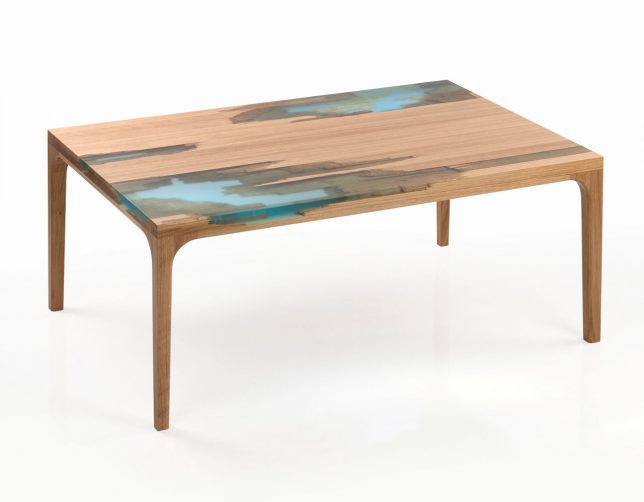
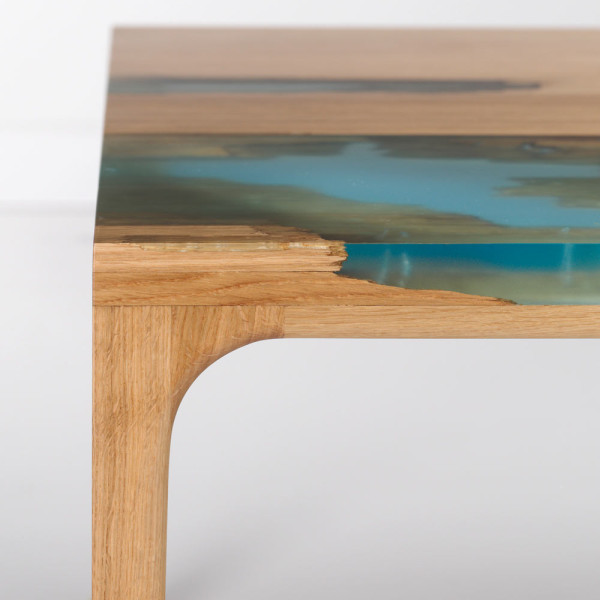
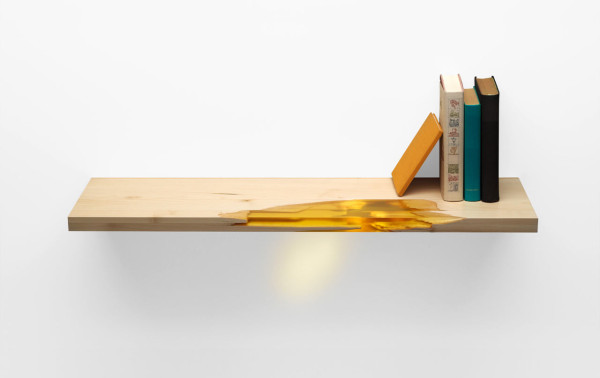
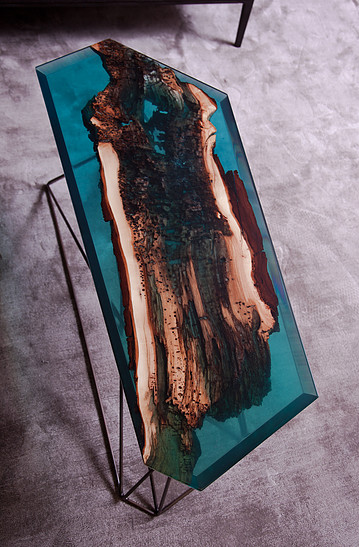
    When married with clear resin, voids in wood or stone created by years of use, natural burls, intentional damage and even shipworms are made whole again, while leaving their ‘wounds’ visible. Broken furniture is repaired with ghostly additions, splintery snapped boards are made smooth and literally ancient time-worn wood is preserved for posterity like insects caught in amber. The results not only salvage items though to be beyond repair, but also make them feel like museum-worthy artifacts.

    Disappearing Furniture: Broken Pieces Healed with Resin

    Pieces of furniture that seem broken beyond repair are proven salvageable after all, with their missing pieces seemingly made invisible. Tatiane Freitas created the series ‘My Old New chair’ using translucent acrylic, the new elements matching the scale of the older pieces but not the style. The results intentionally leave the ‘wounds’ of the old furniture visible and highly noticeable, as if the acrylic is a ghost of what once was or a hint at what it could evolve into.

    Broken Board Series by Jack Craig

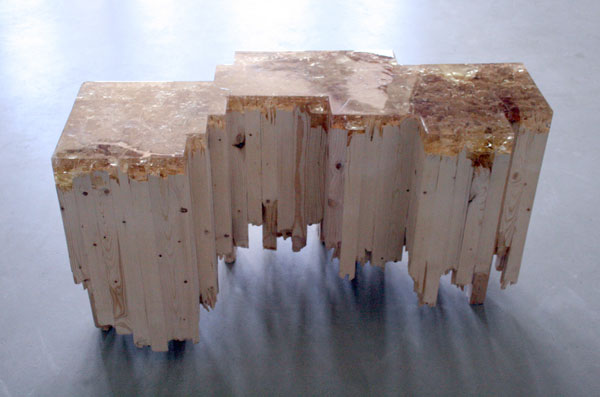
    Smashed and reconstituted pine wood gets a whole new purpose – and surface – thanks to Detroit-based industrial designer Jack Craig, who seals them with caramelized resin for his ‘Broken Board Series.’ The splintered ends of the wood are visible through the resin for an interesting textural effect.

    Forest Artifacts by Alcarol

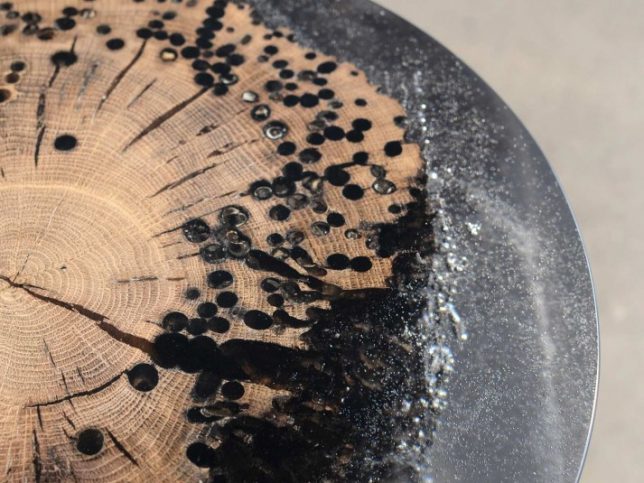
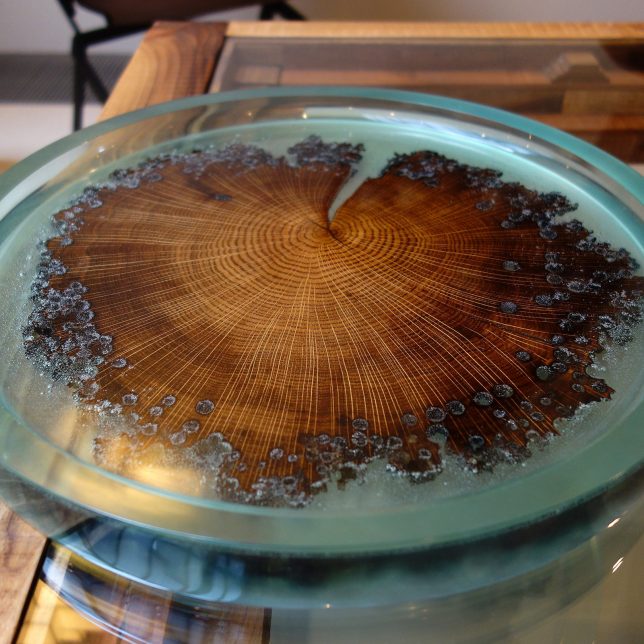
    Design duo Alcarol creates ‘forest artifacts’ by pairing wood and resin in various designs, from an irregular wooden bench made sharply rectilinear to ‘fisheye stools,’ the latter of which features timber poles salvaged from the foundations of the city of Venice. The poles, the designers explain, were “driven into the lagoon’s caranto layer – a mixture of solid clay and sand situated at great depths. In spite of everything, Venice continues its fight against the muddy ground and ever increasing water levels. Fish Eye, which is sculpted by water, salt, shipworms and time, is a tribute to this epic submarine struggle that has transcended millennia. During their stay in the Laguna, these Oak logs are deeply sculpted by Teredo Navalis, shipworms that leave traces of their passing on the wooden surface producing striking patterns of circular holes, whilst avoiding the inner core of the log, allowing it to maintain its health and strength. This creates a beautiful contrast between other decay and inner robustness.”

    MANUFRACT Furniture Inspired by Self-Healing Trees

    The MANUFRACT series of furniture by Marcel Dunger mimics the way trees heal themselves by releasing resin into their ‘wounds.’ The hand-crafted furniture is made of broken wood patched with tinted resin in a manner reminiscent of kintsugi, the Japanese art of repairing a broken piece of pottery with gold.

    VOLIS by Atelier Insolite

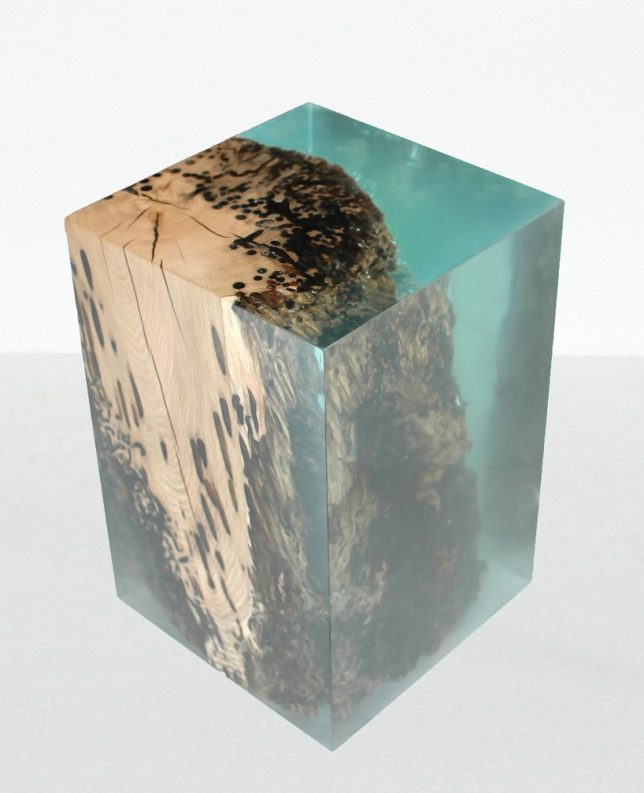
    The ‘VOLIS’ series by Atelier Insolite embeds objects with resin, including shelves, side tables, coffee tables, consoles and other furniture items. The designers intentionally seek out wood with natural voids and broken-off elements so they can fill in the spaces with blue-tinted resin, giving the finished pieces an oceanic feel.

    Next Page – Click Below to Read More:
    Filling The Void 25 Resin Inlaid Wood Stone Furniture Designs

    Share on Facebook


    [ By SA Rogers in Design & Furniture & Decor. ]

    [ WebUrbanist | Archives | Galleries | Privacy | TOS ]


    WebUrbanist

  • KeyMission 360 firmware update improves stability under iOS 10.2

    Nikon has issued a firmware update for its shockproof and waterproof KeyMission 360 spherical 360-degree action camera that improves stability under iOS 10.2. It specifically solves an issue with unstable connections between the camera and Apple devices running the iOS 10.2-compatible version of the Nikon SnapBridge 360/170 app.

    The new firmware can be installed by selecting Camera > Camera settings > Firmware version in the SnapBridge 360/170 app or Set > Firmware version in the KeyMission 360/170 Utility and checking the camera firmware version. More details and the firmware itself is available in the Nikon Download Center.

    Articles: Digital Photography Review (dpreview.com)

  • A Drunkard’s Dream: This Cloud Rains Tequila Whenever it’s Rainy Outside

    [ By SA Rogers in Design & Guerilla Ads & Marketing. ]

    It rains more in Berlin than it does in England, especially during the cold and dreary months of winter, so enticing Germans to vacation in Mexico with a cloud that literally rains tequila is probably pretty effective. And this isn’t just a cloud-shaped installation that pours a mist of tequila out of a showerhead or something equally predictable – it’s a real cloud of tequila condensation that turns liquid in response to vibration, timed to coincide with real-life rain outside.

    United States-based creative agency LAPIZ teamed up wit the Mexico Tourism Board to create an ad specifically tailored to boost German tourism to the sunny, margarita-soaked nation. Installed in Urban Spree, a Berlin art gallery, the project mimics the look of natural clouds by containing condensation within a cumulus-shaped sculpture. You can see the mist rolling off the cloud in Instagram videos of the installation.

    #tequilacloud Serving free shots of delicious Silver Tequila since 2016. Come to Urban Spree, Revaler Strasse 99 for a taste #mexico #travel #tequila #art #berlin

    A post shared by Ernesto Adduci (@eadduci) on

    this is how @pojpojberlin spends feierabend. with #tequilacloud @urban_spree come by. #pøjpøj #feierabend #feierabendtequila #mexico #olé #avocado #tequila

    A post shared by pøj pøj (@pojpojberlin) on

    Make it rain tequila. #tequila #cloud #artistic #installation #vapor #alcohol #mexico #agave #makeitrain #pouritup #kunst #innovation #wowfactor #cloudydrink #tequilacloud #liquid #tequilashots #shot #urbanspree #weather #cloudy #smoke #vape

    A post shared by Cristina Zambet (@cristinazambet) on

    A flash of lightning heralds an oncoming tequila storm, and onlookers gather to hold a shot glass under the cloud. It’s the third year in a row that Lapiz teamed up with the tourism board to get Germans to Mexico, and it seems certain that this would be their most successful effort yet. Who doesn’t like free tequila? “This time, we combined the Mexican thing Germans love most, tequila, with the type of weather they like the least, rain, and created the Tequila Cloud,” they explain.

    Share on Facebook


    [ By SA Rogers in Design & Guerilla Ads & Marketing. ]

    [ WebUrbanist | Archives | Galleries | Privacy | TOS ]


    WebUrbanist

  • 2017 Pulitzer Prize winners for photography announced

    The winners of the 2017 Pulitzer Prize for photography have been announced, which illustrate violence in two locations on opposite sides of the world.

    The award for breaking news photography went to freelancer Daniel Berehulak, whose work published in The New York Times showed the violence in the Philippines during a government crackdown on drug dealers and users.

    The other finalists include the AP Photography Staff and freelancer Jonathan Bachman.


    The Chicago Tribune’s E. Jason Wambsgans won the award for feature photography. His photos document the story of a 10-year-old boy and his mother as they try to recover from the child’s shooting in Chicago.

    The other contenders in this category were Katie Falkenberg of the LA Times and Jake May of The Flint Journal.

    Each prize winner receives a $ 15,000 prize as well as the famous Pulitzer medal.

    Via: The Pulitzer Prizes

    Articles: Digital Photography Review (dpreview.com)