Blog

  • Visionary High-Rises: Winners of the 2017 eVolo Skyscraper Competition

    [ By SA Rogers in Architecture & Cities & Urbanism. ]
    The way we design and engage with our built environments will rapidly change as we grapple with climate change and develop new technological innovations, and in some cases, radical new ideas will be required. The annual skyscraper design competition held by eVolo recognizes visionary ideas for high-rise projects that challenge our understanding of vertical architecture and its relationship with both nature and existing cities. Here are this year’s winners along with 7 honorable mentions, including an Antarctic skyscraper attempting to reverse global warming, research facilities housed in the trunks of Sequoia trees, and vertically stacked factories sharing smart waste disposal and recycling techniques.

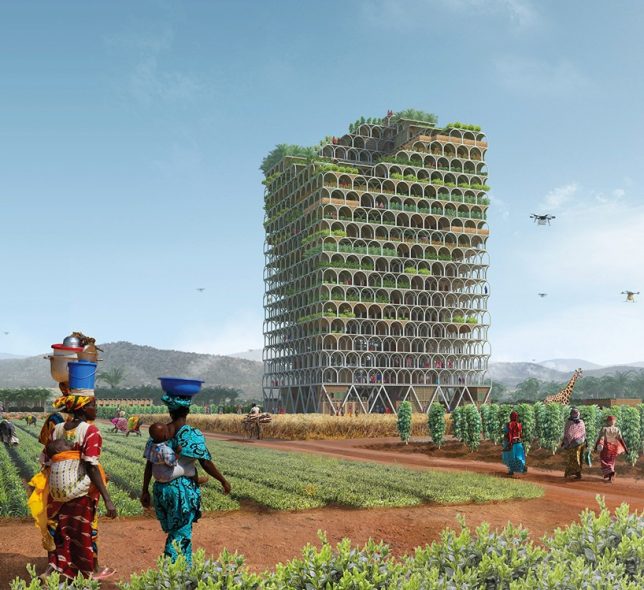
    First Place: Mashambas Skyscraper

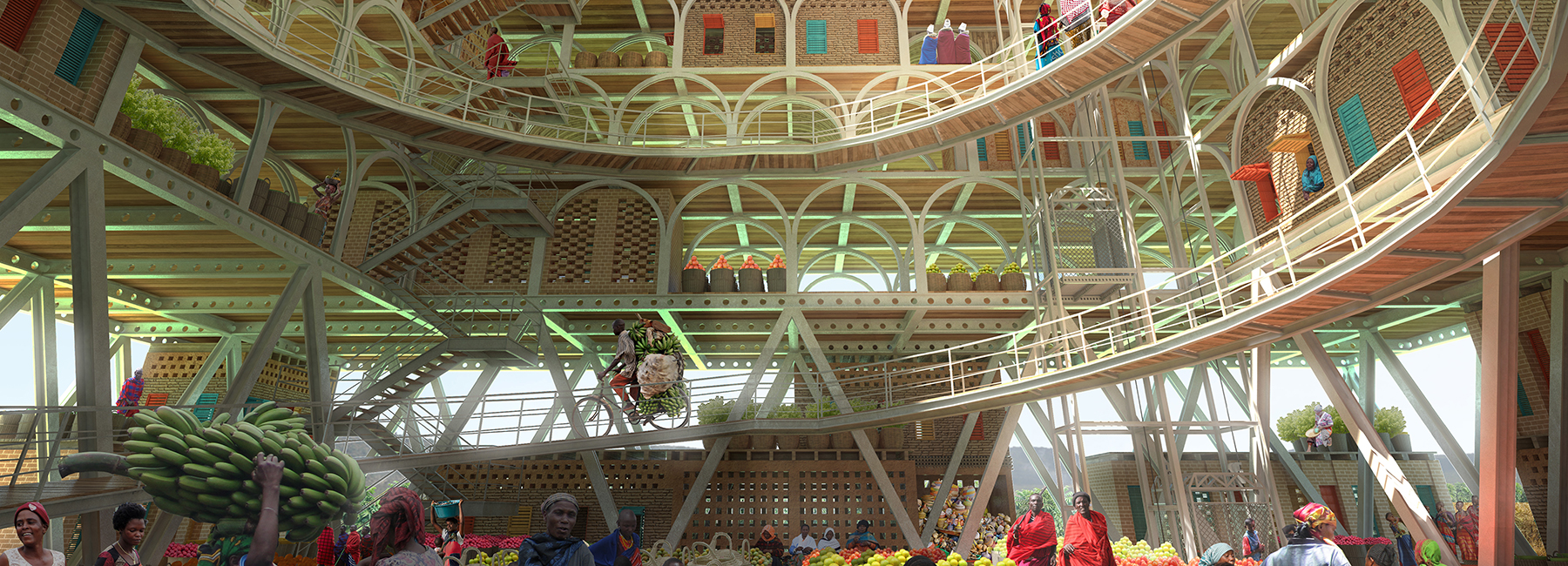
    Based on the Swahili word for ‘an area of cultivated land’ often including the dwelling of the farmer, ‘Mashambas’ by Polish designers Pawel Lipinksi and Mateusz Frankowski aims to bring the green revolution of expanded harvests to the poorest people so they can produce surplus food for themselves and their neighbors, helping to eradicate poverty and hunger in their communities. The skyscraper itself is a “movable educational center” providing education, training on agricultural techniques, cheap fertilizers, modern tools and a local trading area, and it’s made of simple modular elements that can expand or disassemble as needed.

    Second Place: Vertical Factories in Megacities
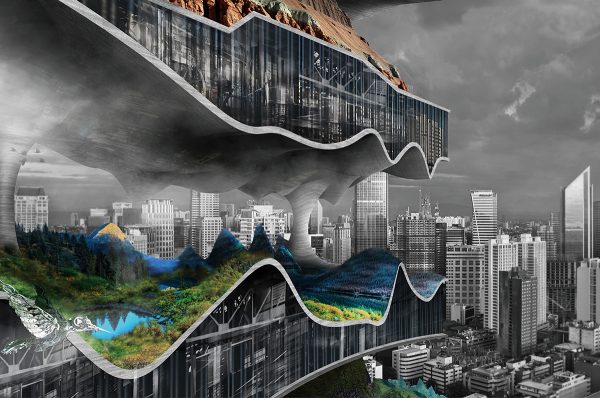
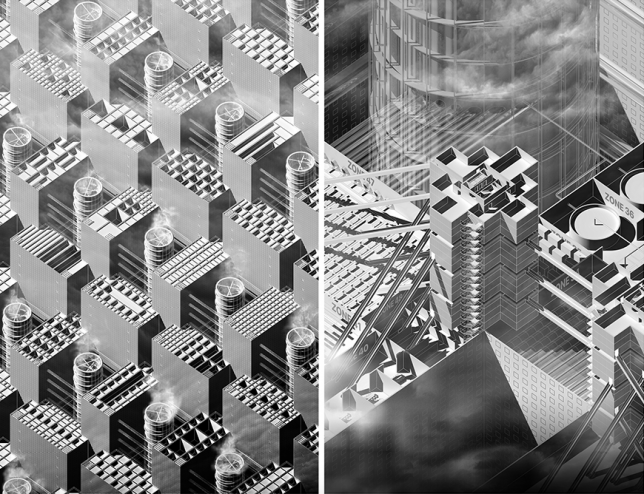
    In decades past, prior to a round of improvements that made them far less noisy and polluting, factories were often relegated to land outside cities, requiring workers to commute long distances or move to suburban areas. But we don’t exactly want them taking up valuable square footage in urban areas, either. This concept by Tianshu Liu and Linshen Xie stacks them on top of each other like a towering sandwich so they can all take advantage of the same modern technologies for waste removal, potentially even transforming those waste products into clean heat, electricity, fertilizer and water.

    Third Place: Espiral3500
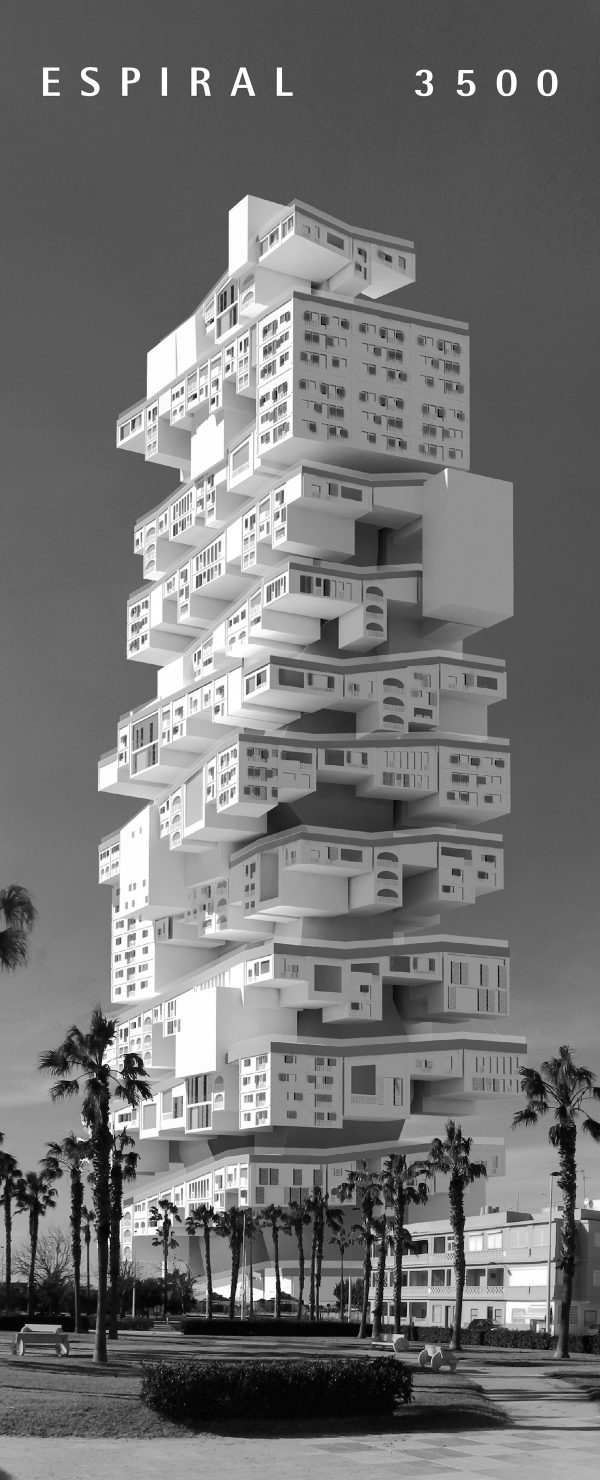
    In ‘La Albufera,’ a coastal area of Spain located within a natural agricultural park, a rapid increase in tourism during the summer has led to speculation-based development, threatening the very characteristics that make it so attractive in the first place. Population increases up to 1000% in some areas during high tourist season, and they empty out in winter. The Espiral3500 concept aims to meet the needs of tourists while protecting the natural resources of the territory via vertical growth, packing private and public spaces into a skyscraper with an ‘inverted street’ system. Visitors can wind their way up to the top, enjoying a wide range of shops, restaurants and hotels while taking in the view.

    Honorable Mention: Arch Skyscraper
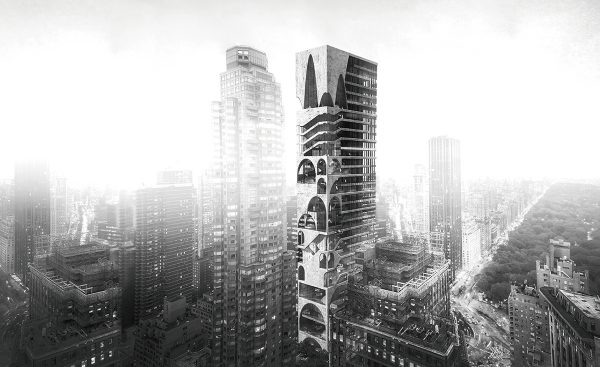
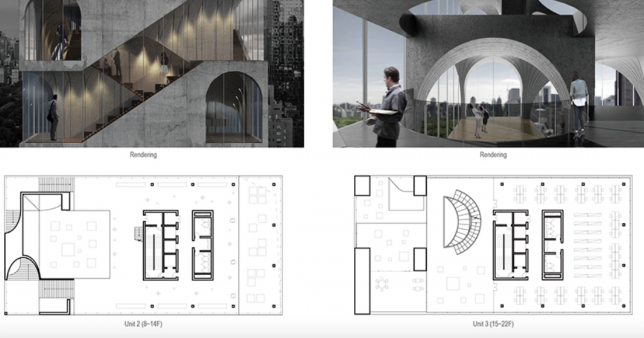
    The basis of the Arch Skyscraper is envisioned as “an arch that undergoes transformations through the changes of light, human behavior, and other factors to form different spaces/units, which overlap one another vertically to form the final design.” Double-layer arches inspired by those found in medieval cathedrals and ancient Chinese pagodas are combined with vertical transportation, creating a series of vaulted spaces that are fun to explore.

    Honorable Mention: The Forgotten Memorials

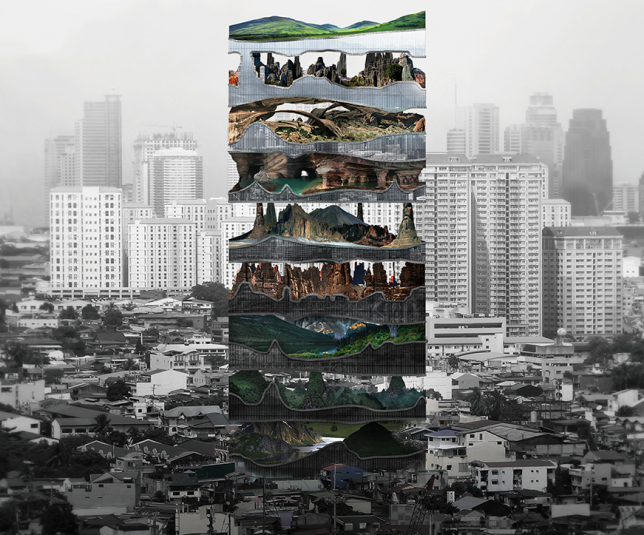
    Noting that in the past, older architecture was often demolished to make way for the new in the constant cycle of urbanization, the designers of The Forgotten Memorials skyscraper concept propose requiring every generation to construct new buildings underneath the older ones. This could help preserve the past while accommodating the future on limited land. “They gradually, generation by generation, penetrate the clouds and become memorials beyond the sky.”

    Next Page – Click Below to Read More:
    Visionary High Rises Winners Of The 2017 Evolo Skyscraper Competition

    Share on Facebook


    [ By SA Rogers in Architecture & Cities & Urbanism. ]

    [ WebUrbanist | Archives | Galleries | Privacy | TOS ]


    WebUrbanist

  • Panasonic GH5 gets 10-bit 4:2:2 1080 video in first of promised firmware updates

    When Panasonic introduced the Lumix DC-GH5, it made the bold promise that it would release not one, but two firmware updates that would significantly increase the performance of the camera. The first was to arrive in April and the second a bit later in ‘Summer 2017.’

    True to its word, Panasonic has announced firmware v1.1 for the GH5, bringing 4:2:2 10-bit Full HD video capture and a series of enhanced capture options for anamorphic shooters.

    The firmware brings 4:2:2 10-bit IPB capture at 100Mbps to 1080/59.97p resolution. Anamorphic shooters also get 10-bit 4:2:2 IPB capture but with the larger, 3328 x 2496 shooting region encoded at 150Mbps. The update also includes two minor bug-fixes.

    Higher resolution anamorphic video capture, along with 400Mbps All-I capture for 4K and 200Mbps All-I capture for Full HD will follow in the summer release.


    Press Release

    DC-GH5 Firmware Update Service Ver.1.1 for Expansion of 4:2:2 10-bit Video Recording Mode

    Panasonic is announcing the new firmware update program Ver.1.1 for DC-GH5 to further enhance its performance. The new firmware Ver.1.1 enables 4:2:2 10-bit video recording in either FHD [MP4(LPCM)] / [MOV] and Anamorphic (4:3) mode, in addition to the existing 4K video recording mode.

    4:2:2 10-bit FHD [MP4(LPCM)] / [MOV]

    Item

    System frequency

    Size

    Frame rate

    Bit rate

    YUV/bit

    Image compression

    [FHD/10bit/100M/60p]

    59.94Hz

    (NTSC)

    1920 x 1080

    59.94p

    100 Mbps

    4:2:2/10 bit

    Long GOP

    [FHD/10bit/100M/30p]

    1920 x 1080

    29.97p

    100 Mbps

    4:2:2/10 bit

    Long GOP

    [FHD/10bit/100M/24p]

    1920 x 1080

    23.98p

    100 Mbps

    4:2:2/10 bit

    Long GOP

    [FHD/10bit/100M/50p]

    50.00Hz

    (PAL)

    1920 x 1080

    50.00p

    100 Mbps

    4:2:2/10 bit

    Long GOP

    [FHD/10bit/100M/25p]

    1920 x 1080

    25.00p

    100 Mbps

    4:2:2/10 bit

    Long GOP

    [FHD/10bit/100M/24p]

    24.00Hz

    (CINEMA)

    1920 x 1080

    24.00p

    100 Mbps

    4:2:2/10 bit

    Long GOP

    ?When [Miniature Effect] is selected for Creative Control Mode, you cannot select the items used for 4:2:2/10 bit motion pictures.

    4:2:2 10-bit Anamorphic (4:3) mode

    Item

    System frequency

    Size

    Frame rate

    Bit rate

    YUV/bit

    Image compression

    [4K/A/150M/30p]

    59.94Hz

    (NTSC)

    3328 x 2496

    29.97p

    150 Mbps

    4:2:2/10 bit

    Long GOP

    [4K/A/150M/24p]

    3328 x 2496

    23.98p

    150 Mbps

    4:2:2/10 bit

    Long GOP

    [4K/A/150M/25p]

    50.00Hz

    (PAL)

    3328 x 2496

    25.00p

    150 Mbps

    4:2:2/10 bit

    Long GOP

    [4K/A/150M/24p]

    24.00Hz

    (CINEMA)

    3328 x 2496

    24.00p

    150 Mbps

    4:2:2/10 bit

    Long GOP

    ?[Anamorphic(4:3)] is available only when the camera is set to Creative Video Mode.

    The firmware version 1.1 also includes following firmware fixes that reflect customer feedback:

    • A problem in which the exposure adjustment did not operate properly during live view standby under specific conditions using [Variable Frame Rate].
    • A problem in which afterimages appeared when recording video under high ISO sensitivity settings in using [V-LogL]

    The new DC-GH5 firmware Ver 1.1 is scheduled to be released on 24 April, 2017 at the following LUMIX Customer Support website: http://panasonic.jp/support/global/cs/dsc/

    Articles: Digital Photography Review (dpreview.com)

  • Fujifilm’s SQ10 Instax Square camera is an instant/digital hybrid

    $ (document).ready(function() { SampleGalleryV2({“containerId”:”embeddedSampleGallery_2146233705″,”galleryId”:”2146233705″,”isEmbeddedWidget”:true,”standalone”:false,”selectedImageIndex”:0,”startInCommentsView”:false,”isMobile”:false}) });

    Fujifilm’s first square format Instax camera is here, and it’s a half-digital, half-analog beast with a $ 280 price tag.

    The SQ10 uses a 1/4″ CMOS sensor to capture 3.6MP color images, and offers a 3″, 460k-dot LCD for composition and camera operation. It’s a departure from the all-analog cameras in Fuji’s current Instax lineup, but provides benefits of digital capture like adding filters in-camera and saving files to microSD. Auto exposure control, facial recognition and autofocus are also offered.

    Images are printed in 1:1 format on 86 x 72mm film, which will sell for $ 17 for a pack of 10 sheets. The camera and its film go on sale in May.

    Press Release

    FUJIFILM ANNOUNCES THE NEW INSTAX SQUARE SQ10, A HYBRID INSTANT FILM CAMERA

    SQ10 gives users a simultaneous digital and traditional print photo experience that instantly changes how we take pictures today

    Valhalla, N.Y., April 19, 2017 – FUJIFILM North America Corporation today announced the all-new INSTAX® SQUARE SQ10, a sophisticated square format hybrid instant film camera that combines digital imaging technology with square film prints. The SQ10 uses a new INSTAX SQUARE Film format that delivers exceptional image quality with numerous artistic expressions. This new system takes the image quality of INSTAX to the next level and allows everyone to add a creative, artistic edge to their photography with an intuitive interface designed especially for the SQ10.

    Hybrid-powered Beautiful Image Quality
    The SQ10 is the first camera in the INSTAX series to be equipped with the newly developed hybrid INSTAX system – a digital image sensor and image processing technology integrated with the existing INSTAX system. These technologies allow the SQ10 to take brighter photos in low-light conditions (indoor and night scenes) and close-up shots from a distance as close as 4 in cm with new functions including automatic exposure control, facial recognition, and auto-focus.

    Simply Stunning Design
    The SQ10 has an iconic design and a thin, round, symmetrical shape for easy holding. It has a dual shutter system with two shutter buttons – one on the right and one on the left (buttons also work as function buttons to switch shooting modes). The lens ring is made with shaved metal, and specific areas add a sense of depth and texture throughout the solid black camera body.

    The SQ10 is simply designed to let users take fun, easy and creative pictures anywhere. The SQ10 allows simple operation with a 3” TFT color LCD monitor (460K dots), operation dial and buttons on the back of the camera. Three buttons arranged at the top of the operation dial correspond to the main functions — ten different filters, vignette control, and brightness adjustment. Users will see a live display of all operations throughout the composition during shooting, editing, processing and printing on the LCD monitor. This new interface enables photographers to edit and process photos with a simple and intuitive operation. Users may also choose to select and edit (e.g. zooming, cropping and filters) the image before printing. This is particularly useful when sharing multiple prints with a number of people.

    After a picture is taken, users can print, or save the image to the SQ10’s internal memory, save to the micro SD \ microSDHC card, or transfer from the camera to a computer using a micro-USB for ultimate flexibility.

    Stir Your Creativity with New Shooting Modes
    The SQ10 lets users shoot in various modes with several filters for outputting creative and trendy square photos. Ten different color filters, saturation and dramatic vignetting effect can be adjusted for truly artistic pictures.

    The vignette effect is especially suitable for portraits or still life images as it highlights the photographic subject at the center of the photo. The SQ10 features special shooting modes including, Double Exposure that can overlap two images onto one print by pushing the shutter twice, Bulb Exposure function for night scenes and creating pictures with dramatic light streaks, Division mode for putting up to nine images on one print, and Micro mode for photography as close as 4 in cm.

    New INSTAX SQUARE Film Format
    The SQ10 uses a brand new INSTAX SQUARE Film format with a 1:1 aspect ratio that has been especially popular with photo enthusiasts and mobile app shooters. All INSTAX film features excellent color reproducibility, taking full advantage of Fujifilm’s long-standing research on photographic film manufacturing and image design technology.

    An INSTAX Generation
    Since INSTAX cameras were originally launched in 1998, they have proven to be extremely popular with users all over the world, with cumulative shipment volumes reaching over 25 million units. This has made INSTAX the leader of the world’s instant photography market over the past several years.

    Fujifilm is committed to offering new products and services that meet various consumer needs by leveraging innovative technological advancements. The company is also dedicated to enhancing the enjoyment of photography worldwide, and encouraging users to experience the value of shooting, preserving, displaying and gifting photo images that deliver the message of “enriching your life with photographs.”

    INSTAX SQUARE SQ10 Key Features:

    • FUJIFILM INSTAX Square SQ10 with all-new hybrid INSTAX system
    • 3” TFT color LCD monitor with 460K dots resolution
    • ¼” CMOS image sensor with primary color filter
    • 1920×1920 recorded pixels
    • Rechargeable Li-ion battery (NP-50) for up to 160 images per charge
    • Images taken and edited / processed can be saved in the internal memory (up to about 50 images) or on microSD \ microSDHC card slot (sold separately)
    • 28.5mm fixed focal length (in 35m format equivalent)
    • F2.4 aperture
    • Micro USB for internal battery recharging
    • JPEG image file format
    • Print from internal memory or micro SD \ microSDHC card
    • Tripod mount
    • New INSTAX SQUARE Film format (color) sold in 10 sheets per pack
      o Screen size – 62mm×62mm (L×W)
      o Film size – 86mm×72mm (L×W)

    For a full list of specifications, visit INSTAX SQUARE SQ10.

    Availability and Pricing
    The INSTAX SQUARE SQ10 will be available in May 2017 in the U.S. and Canada for USD $ 279.95 and CAD $ 369.99.

    INSTAX SQUARE Film will also be available in May 2017 in the U.S. and Canada for USD $ 16.99 and CAD $ 15.99.

    Articles: Digital Photography Review (dpreview.com)

  • Upcoming Fujifilm GFX 50S firmware update promises to improve AF, exposure compensation

    In addition to announcing a handful of new medium format GF lenses, Fujifilm also unveiled plans for the first major firmware update for the GFX 50S medium format camera. According to the Fujifilm press release:

    “Fujifilm will release a free firmware update for the FUJIFILM GFX 50S later this spring, adding new functionality and improving operability. New functions include computer tethering via Wi-Fi and improved operability in exposure compensation and autofocus performance in difficult scenes.”

    We recently reviewed the Fujifilm GFX 50S and while we gave the camera a gold award, it was noted that AF speed and reliability was one area ripe for improvement. We also were disappointed in the lack of a dedicated exposure compensation button, so perhaps this update will make accessing that functions less annoying. Furthermore, the addition of a Wi-Fi tethering feature should go a long way to making the GFX 50S appeal to studio shooters.

    Articles: Digital Photography Review (dpreview.com)

  • Fujifilm releases GF 23mm and 110mm lenses, updates roadmap

    $ (document).ready(function() { SampleGalleryV2({“containerId”:”embeddedSampleGallery_0692535267″,”galleryId”:”0692535267″,”isEmbeddedWidget”:true,”standalone”:false,”selectedImageIndex”:0,”startInCommentsView”:false,”isMobile”:false}) });

    Fujifilm has released a pair of G-mount lenses for its GFX 50S medium format camera, an adapter for using legacy Fujifilm large format lenses and information about future GF lenses.

    The GF 23mm F4 R LM WR, equivalent to 18mm when mounted on the GFX 50S, has a linear focus motor, a nine-blade circular aperture, ED, super ED and aspherical elements, and a Nano GI coating. It’s also weather-resistant and functions down to -10°C/+14°F. It’ll ship in late June for $ 2599.

    Also coming in June is the GF 110mm F2 R LM WR, which also has a nine-blade aperture, weather-sealing, and a linear motor. It has three ED and one super ED elements and is equivalent to 87mm when mounted on the GFX 50S. It will be priced at $ 2799.

    Fujifilm also released a roadmap for future medium format lenses. Coming later this year is a 45mm F2.8 R WR (equivalent to 36mm), followed by a telephoto prime and teleconverter.

    Lastly, the company will soon be offering the ‘View Camera Adapter G,’ which allows you to use the GFX 50S with 4×5 format view cameras. The adapter allows the GFX 50S to be used on a standard Graflok-style mount camera, enabling the use of large format Fujinon lenses, such as the CM series.

    Press Release

    GFX MEDIUM FORMAT MIRRORLESS CAMERA SYSTEM ADDS TWO NEW GF LENSES FOR PORTRAITS TO PICTURESQUE SCENES

    FUJINON GF110mmF2 R LM WR and GF23mmF4 R LM WR Lenses expand the GFX user experience; updated GF lens roadmap announced and new GFX firmware coming soon

    Valhalla, N.Y., April 19, 2017 – As the leader in innovation for photographers, FUJIFILM North America Corporation today announces two new GF lenses for the FUJIFILM GFX 50S medium format mirrorless digital camera system, the GF110mmF2 R LM WR (equivalent to 87mm in 35mm format) and the GF23mmF4 R LM WR (equivalent to 18mm in 35mm format). A new GF lens roadmap is released today, along with plans for a new FUJIFILM GFX 50S firmware update this spring.

    FUJINON Lenses Guarantee Image Perfection

    As part of the GFX system, Fujifilm is launching newly developed, ultra-high resolution FUJINON GF lenses. Taking advantage of the mirrorless system’s structure, the G Mount has a short flange back distance of just 26.7mm that reduces the back focus distance as much as possible. This prevents vignetting and achieves edge-to-edge sharpness. All FUJINON GF lenses have been designed to support sensors of over 100MP.

    New Lenses Deliver Image Excellence

    The FUJINON GF110mmF2 R LM WR is a medium telephoto lens perfect for portraits. With a focal length equivalent to 87mm in the 35mm format, it achieves a brightness of F2.0 when used wide open to deliver stunning bokeh.

    The FUJINON GF23mmF4 R LM WR has a focal length equivalent to 18mm in the 35mm format and is expertly suited for landscape and architectural photography. Despite the super-wide angle of view, distortion is kept to a minimum, and with the high-resolution performance extending all the way to the edges, sharp depiction as if looking at an actual landscape is achieved.

    Both new lenses feature fast and quiet autofocus (AF) by using a linear motor, are dust and weather resistant, and are capable of operating in environments as cold as 14°F / -10°C. The lenses combine high performance and reliability for professionals looking for the ultimate in photography tools.

    Current Lens Lineup

    1. GF63mmF2.8 R WR (equivalent to 50mm in 35mm format)
    2. GF32-64mmF4 R LM WR (equivalent to 25-51mm in 35mm format)
    3. GF120mmF4 Macro R LM OIS WR (equivalent to 95mm in 35mm format)

    Coming Later in 2017

    1. GF45mmF2.8 R WR (equivalent to 35mm in 35mm format)

    FUJINON GF110mmF2 R LM WR Key Features

    • FUJIFILM G Mount is compatible with the FUJIFILM GFX 50S
    • Weather-resistant design capable of operating at temperatures as low as 14°F / -10°C
    • 14 elements in 9 groups, including 4 ED lens elements
    • Super ED lens and three ED lenses for suppressed chromatic aberration and high resolution performance all the way to the edges
    • 9 blade aperture creates smooth and circular bokeh

    FUJINON GF23mmF4 R LM WR Key Features

    • FUJIFILM G Mount is compatible with the FUJIFILM GFX 50S
    • Weather-resistant design capable of operating at temperatures as low as 14°F / -10°C
    • 12 groups and 15 elements construction using two aspherical lenses, one super ED lens, and three ED lenses
    • 9 blade aperture creates smooth and circular bokeh
    • Nano GI coating suppresses ghosting and flare

    The GFX 50S and FUJINON GF lenses culminate to create a new camera system capable of creating the world’s highest level of photographic expressions by combining the thorough incorporation of knowledge regarding camera operation, optical design, image capture, and image processing.

    New FUJINON GF Lens Development Roadmap

    Fujifilm has publicly announced six lenses for the G Mount lens lineup this year. After the release of the GFX 50S and three G Mount lenses, Fujifilm is now unveiling a new roadmap with the additions of a telephoto prime lens and tele converter, in order to expand products covering telephoto ranges, an area with many requests from users.

    With the addition of the two new lenses, the G Mount system lineup has been expanded to a total of eight lenses, achieving a fulfilling lineup to correspond to a wide range of user needs.

    Also coming in June 2017 is a new View Camera Adapter G that can be used when shooting with the GFX 50S when using previous FUJINON large format camera lenses, such as the CM FUJINON. The adapter is mounted in the film camera loading position of the view camera which adopts the film format of the 4×5 size.

    New Firmware Update Planned

    Fujifilm will release a free firmware update for the FUJIFILM GFX 50S later this spring, adding new functionality and improving operability. New functions include computer tethering via Wi-Fi and improved operability in exposure compensation and autofocus performance in difficult scenes.

    Availability and Pricing

    The GF110mmF2 R LM WR will be available in Late June, 2017 for USD $ 2,799.95 and CAD $ 3,599.99 and the GF23mmF4 R LM WR will be available in Late June, 2017 for USD $ 2,599.95 and CAD $ 3,399.99.

    The FUJIFILM GFX 50S Medium Format Camera Body is available now in the U.S. and Canada for USD $ 6,499.95 and CAD $ 8,499.99.

    Fujifilm GF 23mm F4 R LM WR / 110mm F2 R LM WR specifications

      Fujifilm GF 23mm F4 R LM WR Fujifilm GF 110mm F2 R LM WR
    Principal specifications
    Lens type Prime lens
    Max Format size 645
    Focal length 23 mm 110 mm
    Image stabilization No
    Lens mount Fujifilm G
    Aperture
    Maximum aperture F4 F2
    Minimum aperture F32 F22
    Aperture ring Yes
    Number of diaphragm blades 9
    Aperture notes Rounded blades
    Optics
    Elements 15 14
    Groups 12 9
    Special elements / coatings 2 aspherical, 3 extra-low dispersion, 1 super ED 4 extra-low dispersion elements
    Focus
    Minimum focus 0.38 m (14.96) 0.90 m (35.43)
    Maximum magnification 0.09× 0.16×
    Autofocus Yes
    Motor type Linear Motor
    Full time manual Yes
    Focus method Internal
    Distance scale No
    DoF scale No
    Physical
    Weight 845 g (1.86 lb) 1010 g (2.23 lb)
    Diameter 90 mm (3.54) 94 mm (3.7)
    Length 103 mm (4.06) 126 mm (4.96)
    Sealing Yes
    Filter thread 82.0 mm 77.0 mm
    Hood supplied Yes
    Tripod collar No

    Articles: Digital Photography Review (dpreview.com)

  • Hands-on with the Panasonic Leica 8-18mm F2.8-4

    Hands-on with the Panasonic Leica 8-18mm F2.8-4

    Panasonic has announced the second member of its Leica DG Vario-Elmarit F2.8-4 series of lenses: an ultra-wide 8-18mm (16-36mm equivalent) that offers fields of view ranging from as wide as 107 degrees down to 62 degrees.

    Hands-on with the Panasonic Leica 8-18mm F2.8-4

    The lens’s metal construction feels sturdy, with a smooth zoom action. It is dust and splash-proof, and freeze-proof down to -10?.

    Hands-on with the Panasonic Leica 8-18mm F2.8-4

    The optical design comprises 15 elements in 10 groups. To combat chromatic aberration and spherical distortion the lens features an aspherical extra-low dispersion element, three aspherical elements, two extra-low dispersion elements and one ultra high refractive index element.

    Hands-on with the Panasonic Leica 8-18mm F2.8-4

    When zooming, the front element moves back and forth, but the movement is inside the barrel. This keeps the overall length of the lens at a constant 88mm (~3.5 inches). The lens’s construction ensures ‘barycentric stability’, which means that whatever is in the center of the image at one focal length remains exactly centered as the lens is zoomed in and out. This is especially important for video work.

    The focus drive can use data read out from the sensor at 240 fps, assisting the contrast detect autofocus system in Panasonic cameras in taking measurements quickly.

    Hands-on with the Panasonic Leica 8-18mm F2.8-4

    Here’s the lens next to the first member of the F2.8-4 lineup, the 12-60mm. Both feature a micro-step drive system in the aperture control to allow the camera to smoothly open and close the aperture. The 8-18 lacks image stabilization, so it loses the switch to turn it on and off, but otherwise the two have a very similar external appearance.

    Hands-on with the Panasonic Leica 8-18mm F2.8-4

    Compared to the older 7-14mm F4, the new lens is bigger, but doesn’t gain a whole lot of extra heft. Even without a built-in hood it is longer and wider, but at 315 grams (0.7lb) it only weighs in at 15 grams more than the 7-14mm.

    With the included lens hood installed its increase in size over the 7-14mm with its built-in hood is a bit more apparent, thanks to the 8-18 gaining an extra stop of light on the wide end, and a bit more zoom range on the long end.

    Hands-on with the Panasonic Leica 8-18mm F2.8-4

    When mounted on a camera like the GH5, the lens feels as light and easy to use as the 7-14mm thanks to there being virtually no weight difference between the two. The black paintwork suits the GH5 nicely as well.

    Hands-on with the Panasonic Leica 8-18mm F2.8-4

    The 8-18mm will be released at the end of May with an asking price of $ 1099. Click here for detailed specifications and more information.

    Articles: Digital Photography Review (dpreview.com)

  • Panasonic Leica DG Vario-Elmarit 8-18mm F2.8-4 sample gallery

    While the name ‘Panasonic Leica DG Vario-Elmarit F2.8-4’ might be a mouthful, this compact ultra-wide zoom doesn’t fill the hand to the same degree, even with its upscale materials and weatherproofing. See how the lens performs in the real world in our sample gallery.

    See our Panasonic Leica DG Vario-Elmarit 8-18mm F2.8-4 Sample Gallery

    $ (document).ready(function() { SampleGalleryStripV2({“galleryId”:”0211271120″}) })

    Sample photoSample photoSample photoSample photoSample photo

    Articles: Digital Photography Review (dpreview.com)

  • PRIIME PRESETS FOR LIGHTROOM

    Disclosure: I am an advisor to Priime.

    A lot of people tell me that they know that they should shoot in RAW and edit their photos in Lightroom but that they just don’t have the time or desire to do the editing work. I’ve long been an advocate for photo editing, but also understand that time can be short sometimes and many people would rather spend more time behind a camera than behind a computer screen editing photos.

    Here is where Adobe Lightroom presets can be super helpful. There are many different preset packages out there that you can purchase, but one I’d like to highlight today is a new preset package put out by the photo editing company Priime.

    Lightroom presets are super easy to install with a few clicks and then when reviewing your photos in Lightroom you just hover over a preset to see which look makes your photos look the best. With a single click, instantly your photo is given the full editing process of that preset. Sometimes I’ll use a preset and just leave the photo exactly as edited in the preset and other times I’ll use the preset as a base doing 90% of the editing for me and make a few finishing tweaks from there. Either way good presets can save a ton of time and are a useful tool for photographers who want to edit their work quickly and professionally.

    One of the the things I like about the new Priiime preset package is that the presets were developed by photographers for photographers. My friend Art Chang, Founder and CEO of Priime, is also an amazing and accomplished photographer who personally helped design this package himself.

    Below are some before/after photos that I edited today using some of the new Priime presets so you can get an idea of the impact a particular preset can have.

    Priime’s preset package comes with 13 presets with 112 variants on the styles. Priime’s package sells for $ 49.99.

    You can learn more about these presets and purchase them at Priime here.

    Capitol Lights Pre Edit
    Capitol Lights no editing

    Capitol Lights
    Capital Lights edited with Priime’s Atlantic preset

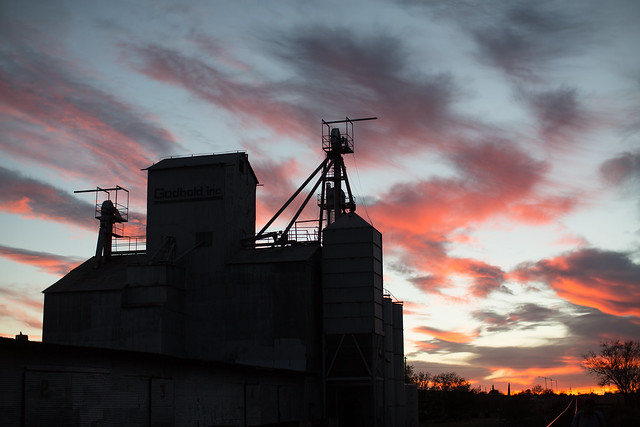
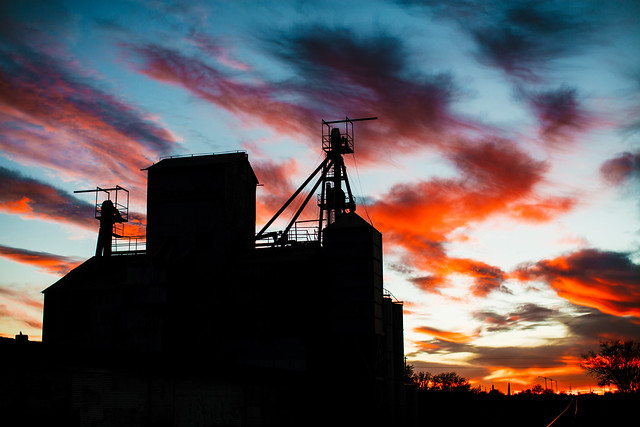
    Texas Sunset Pre Edit
    Texas Sunset no editing

    Sunset, Marfa, Texas
    Texas Sunset edited with Priime’s Montana + contrast preset

    Marfa Portrait Pre Edit
    Marfa Portrait no editing

    Marfa, Texas
    Marfa Portrait edited with Priime’s Utah preset

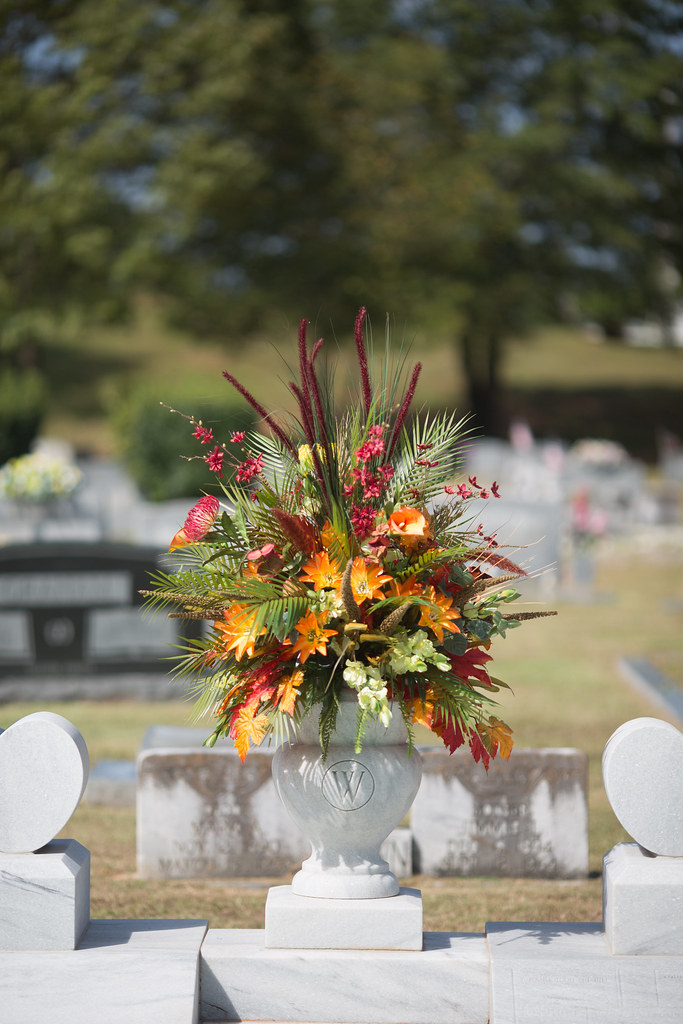
    Hank Williams Grave Pre Edit
    Hank William’s Grave, Montgomery Alabama, no editing

    Hank William's Grave, Montgomery, Alabama
    Hank William’s Grave, Montgomery Alabama, edited with Priime’s California vibrant preset

    Coca Cola Pre Edit
    Alabama Coca Cola, no editing

    Montgomery Alabama
    Alabama Coca Cola, edited with Priime’s California + green preset


    Thomas Hawk Digital Connection

  • Canon wants to get you ready for this year’s total solar eclipse

    Photographers throughout the U.S. will get a rare treat this upcoming August 21: a total solar eclipse visible throughout a significant part of the country, the first of its kind to affect the nation from coast-to-coast since 1918. Ahead of the celestial event comes a new blog from Canon titled ‘A Total Guide to Totality.’ In it, photographers will find a library of articles detailing how to prepare for and photograph the solar eclipse.

    As explained by Space.com recently, the upcoming solar eclipse will be visible to the general American public across a region spanning from the coast of Oregon to the coast of South Carolina. Canon details this and more in one of its new educational articles, as well as providing info on choosing the right lenses and the right cameras to photograph the event. 

    Overall, the blog is no doubt slanted toward Canon’s own array of products, but the information is applicable to all photographers regardless of which brand they use. The articles on the blog are co-authored by photographer Dave Henry and Canon Explorer of Light Ken Sklute. In addition to the blog, Canon is planning to offer eclipse photography workshops in July, though full details aren’t available at this time.

    Via: Canon

    Articles: Digital Photography Review (dpreview.com)

  • Still Life with Smoke Bombs: Artist Live-Paints Berkeley Protest Violence

    [ By WebUrbanist in Art & Street Art & Graffiti. ]

    This past Saturday, Trump supporters and counter-protesters from the left clashed violently in liberal Berkeley, all while one intrepid street painter captured the scene live on canvas. As reporters filmed and photographed the chaos, John Paul Marcelo biked his mobile painting station into place.

    The alt-right rally organizers and their opponents arrived ready for a brawl, variously equipped with shields, helmets, wooden poles, pepper spray and other weapons. “By mid-afternoon,” reports Blake Montgomery, “the dueling protesters were screaming insults at each other over a flaming pile of trash and using a dumpster as a battering ram.” In the end, dozens were arrested on both sides.

    But in the midst of the mayhem (or at least: slightly off to one side) was perhaps the most unexpected sight of all — Bay Area street artist John Paul Marcelo standing his ground and calmly painting the chaotic scene as it unfolded before him.

    Marcelo is a fixtures of the San Francisco community, a fifteen-year resident who can be found painting ordinary street scenes as well as timely and tragic still lifes, like: a building just after a fire, burnt out and abandoned.

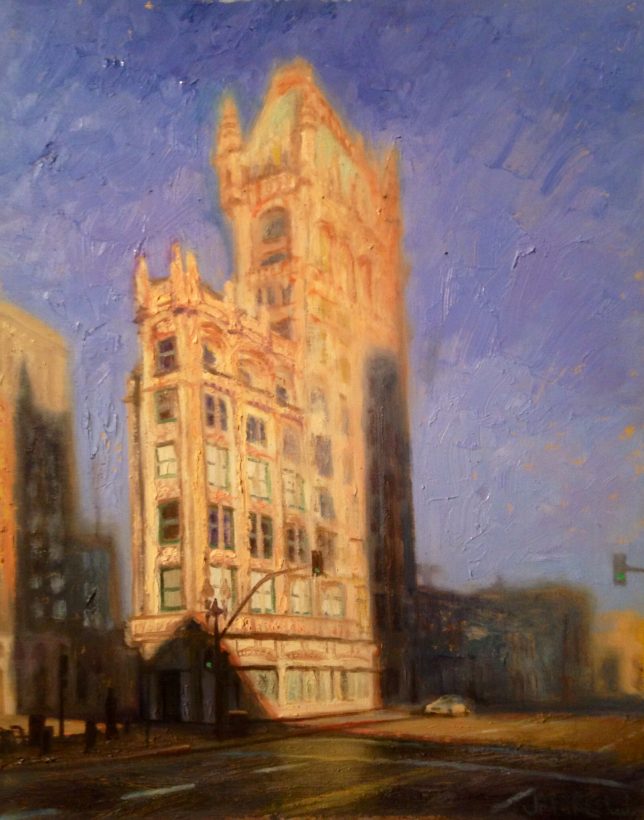
    His artistic gear collapses on demand, folding neatly for transportation by bike to events unfolding in around the Bay or calmer, more everyday still-life subjects (below: Morning on Broadway and Telegraph in Oakland as seen in Cafe 817).

    John Paul Marcelo studied graphic design and advertising, then started painting the urban decay of Chicago streets and decided to “reject modern technological mediums” and “paint exclusively en plein air, and migrate to the majestic California coastline.” And although he reports being “very content with painting existing idyllic scenes like Big Sur and Marin, past expeditions have brought him to places like post Katrina New Orleans and Cabrini Green housing projects.” His influences “include Claude Monet, James Nachtwey, and Ai Wei Wei.” (Images via AP, SfGate & KQED)

    Share on Facebook


    [ By WebUrbanist in Art & Street Art & Graffiti. ]

    [ WebUrbanist | Archives | Galleries | Privacy | TOS ]


    WebUrbanist