Blog

  • A Passion for Wrecks and Images Give a Photography Enthusiast a Second Career

    photography-wrecks

    Image: Pongsatorn Sukhum

    Pongsatorn Sukhum was on his way to becoming a professional photographer. A long-time camera enthusiast, he took a year off college while studying in the UK to work in a studio that shot advertising photography. He then moved into editorial photography, shooting for travel magazines and building up a collection of underwater stock images that combined his love of photography with his passion for Scuba diving. In the mid-nineties, his work was shown in a group exhibition in his native Thailand. Today, Pongsatorn runs an engineering business in Bangkok but his continued work in underwater photography, and in particular, his images of World War II wrecks off the coast of Thailand are an example of how talented enthusiasts can keep their professions while maintaining their passion for image-making and even contributing to the preservation of the subjects they love to shoot.

    Pongsatorn now produces fine art prints of his photography which he sells through his website. But publications call him whenever they need images to complement their editorials on wrecks in the region and he is still commissioned occasionally for advertising work. If he’s not working on an engineering project, he’ll dive one or two weekends each month and when he’s not on the water, he’ll find time each week to process images and research ships.

    Artistry Meets Expertise

    That demand for professional imagery from a photographer who only works in the profession part-time continues for a couple of reasons. The quality of Pongsatorn’s photographs is certainly one factor. Pongsatorn may not be a full-time photographer but his images are professional quality. He shoots in black and white to convey the sense of being in an environment in which color has been stripped away by the water, and to convey the mood at the depths where the ships rest.

    “I feel that the characteristics of high-speed b/w film faithfully capture the light and ambiance at these great depths,” he told us by email. “I also believe that entering the water loaded with b/w film is a mindset.”

    The result is a collection of atmospheric shots in which the fragility and graceful lines of the diver are set against the solidity of a slowly decaying steel hulk placed in front of a backdrop of silty grays.

    But the continued demand among buyers for Pongsatorn’s skills can also be put down to his expertise. Underwater photography is demanding. Photographers have to be skilled in diving as well as in image-making. They need to understand their equipment and the environment as well as the subject of the shoot.

    “Underwater, we can’t change lenses, add filters, or replace batteries so advanced planning is required,” says Pongsatorn. “Familiarity with the layout of the wreck is crucial to avoid delays associated with orientation.”

    Pongsatorn keeps a collection of construction blueprints related to the wreck he’s about to shoot, as well as sketches that he updates regularly. Before the dive, those plans are transferred to a waterproof slate for use underwater so that he’s not trying to communicate a new idea to a co-diver or assistant while they’re swimming. The choice of shots, too, poses a range of different problems. Wide angle images mean keeping other divers and their bubbles away from the scene long enough for Pongsatorn to get his shots. That’s not usually an issue when shooting wrecks that aren’t popular dive sites but for well-known locations, Pongsatorn usually pleads for a ten-minute head start. Before some shoots, he’s even asked the Thai Navy to cordon off a wreck for a day.

    While underwater photographers don’t have the same daylight worries as landscape photographers, they do have to cope with other challenges. Weather conditions can restrict accessibility to remote sites to certain times of the year, and sediment raised by the actions of a swimming photographer can reduce visibility.

    “This happens frequently as the wrecks are naturally on the sea bed (with the exception of the so-called vertical wreck) where there is a great deal of sediment just waiting to be disturbed,” says Pongsatorn. “Diver buoyancy control and proper finning techniques need to be practiced.”

    Learn How to Fin

    Often, the constraints of time and the limitations of depth mean that Pongsatorn can only make one or two dives to a low-lying wreck on any given day. Some dive profiles, he says, are so deep that he’ll only be able to stay at the site for as little as five minutes.

    “As you can imagine, deep wreck photography is a very low-yield activity. However, these challenges make it exciting and create opportunities for some truly creative work.”

    For other photographers looking to specialize in underwater photography, Pongsatorn notes that while no official training is required, there are numerous basic courses and workshops available that will explain how light behaves underwater and how to set up and look after equipment. Photographers who happen to live in tropical areas can start by photographing clown fish, he recommends, as they’re easy to find and tend to stay in one place. Once they’ve mastered finning and have control over their stability, photographers can pick a subject and study its behavior.

    Most important though is to respect the environment in which you’re shooting. On his blog, Pongsatorn has highlighted campaigns for shark preservation and attacked dive operators who remove artifacts from the wrecks they visit.

    “There are several operators who specifically set out to loot. It’s in their literature. They abuse the legal loopholes and lack of enforcement. It’s sad to see all these artifacts being hauled up day after day. These people need to be educated.”

    Similarly, divers who venture into a wreck exhale bubbles which can get trapped below decks and under bulkheads. In time, these air pockets corrode the metal and exert an upward pressure on the metal plates, causing them to collapse, Pongsatorn warns.

    It’s that kind of knowledge and that level of concern that combines with creativity and artistry to produce images that are attractive to buyers — both of art prints and for commercial use. Find a subject for which you feel passionate enough to want to study and understand completely, bring to it your photography skills, and you also won’t need to give up the day job to earn money from your photography.


    Photopreneur – Make Money Selling Your Photos

  • Sigma announces 14mm T2 and 135mm T2 Cine Prime lenses

    Sigma Cine FF High Speed 14mm T2

    Just in time for NAB, Sigma has announced an expansion to its Cine Prime line of lenses, adding the Cine High Speed 14mm T2 and Cine FF High Speed 135mm T2.

    The Cine FF High Speed 14mm T2 and Cine FF High Speed 135mm T2 lenses are designed for use with full frame cameras, and join five existing prime lenses in Sigma’s Cine Prime product line. With the addition of these lenses, Sigma now offers cine prime lenses covering a very useful focal length range of 14mm to 135mm.

    As with the other lenses in the set, both new lenses are available PL-mount, EF-mount, and E-mount.

    Sigma Cine FF High Speed 135mm T2

    In addition to the lenses, Sigma is now offering customers the option to order their cine lenses in metric or imperial measurements, as well as standard or full luminous paint markings. Sigma says that existing customers can swap from one measurement system to another for a fee.

    Finally, Sigma is now offering its mount conversion services for owners of its cine lenses, allowing users to switch lenses between EF- and E-mounts.

    We’re planning to get some hands-on time with these lenses next week at NAB next week and will share our experience with you.

    Press release:

    NAB 2017: Sigma Unveils Two New Cine Prime Lenses; Adds New Product Options?

    Sigma introduces brand new Sigma Cine FF High Speed 14mm T2 and 135mm T2 Prime Lenses

    April 20, 2017 – Sigma Corporation of America, a leading DSLR lens, camera, flash and accessory manufacturer, today announced its brand new Cine FF High Speed 14mm T2 and 135mm T2 prime lenses and new Cine Prime and Zoom product options.

    Sigma is expanding its Cine Prime line to include two brand new lenses: the Sigma Cine FF High Speed 14mm T2 and the Sigma Cine FF High Speed 135mm T2. The high-performance Sigma Cine Prime product line, which now includes the following focal lengths and apertures – 14mm T2, 20mm T1.5, 24mm T1.5, 35mm T1.5, 50mm T1.5, 85mm T1.5 and 135mm T2 – is compatible with the latest full-frame camera sensor technology. Compact in design, the Cine Prime line offers outstanding optical performance and is ready for higher resolution shooting (up to 6K-8K). Both the 14mm T2 and 135mm T2, along with the previously announced Sigma Cine Prime and Zoom lenses, will be available for test-shooting at the Sigma NAB booth C11525.

    In addition to this expansion of its Cine Lens Prime line, Sigma is now offering customers the option to order Cine lenses in metric or imperial measurements as well as standard or full luminous paint on markings. Existing customers who wish to swap from one measurement system to the other can do so for a paid fee.

    Also, Sigma is now offering its sought-after Mount Conversion Services for the Cine lens customers. The highly successful program ensures continued return on investment for customers, allowing them to convert their lenses to and from EF and E mounts.

    You can read the full Sigma announcement including tech specs here as well as download the new Sigma Cine 14mm T2 and 135mm T2 product images here.

    Articles: Digital Photography Review (dpreview.com)

  • Lighting 103: Using Gels to Shift the Ambient

    Abstract: By combining a white balance shift in your camera with a complimentary gelling of your flash, you can easily and efficiently alter the ambient color temperature of an entire environment.

    In addition to controlling the color of light from your flash, gels can also allow you to control the color of the ambient areas of your frame. This can allow you to tweak, enhance or drastically an ambient color environment. Read more »
    Strobist

  • 7 Secrets of Black and White Photography

    We’ve all heard it … “to master black and white photography you must learning to see in black and white” – but just how do you do that?

    It can sometimes seem like actually learning to see in black and white is a skill for only the chosen few. But trust us, it’s for you too!

    Here are seven (not-so-secret-anymore) secrets that will help you train your brain and expand your eye for the art of black and white photography.

    (…)
    Read the rest of 7 Secrets of Black and White Photography (844 words)


    © Meg for Photojojo, 2017. |
    Permalink |
    No comment |
    Add to
    del.icio.us

    Post tags:


    Photojojo

  • Collecting Inspiration: 3 Must-See Data Artists & Designers at Eyeo 2017

    [ By WebUrbanist in Art & Drawing & Digital. ]

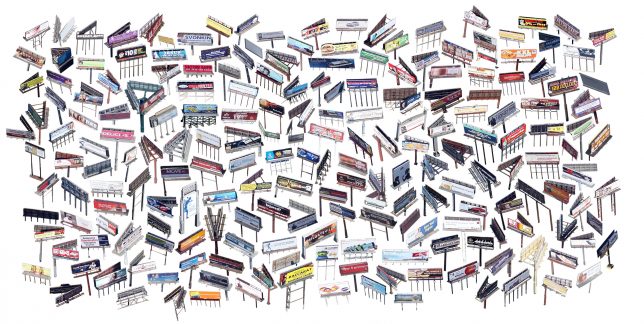
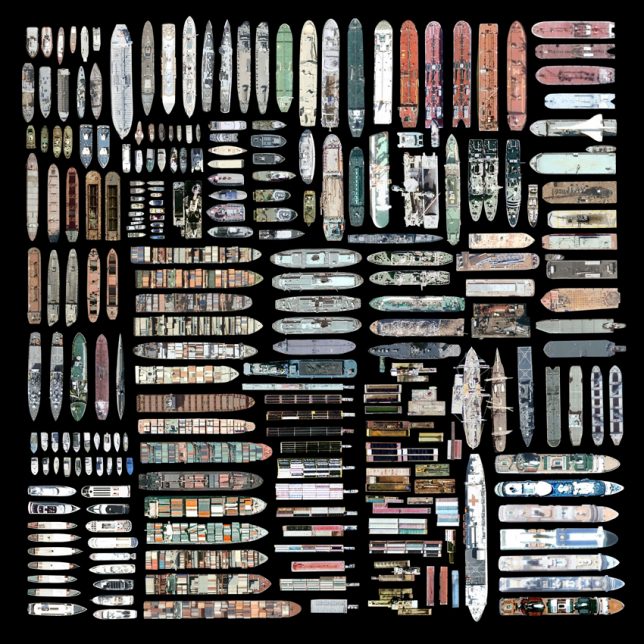
    Jenny Odell collects and organizes all kinds of things, from meticulously sorting digital finds on Google Maps to tracing the origins of everything she used, wore, ate or bought on one particular day in 2013.

    Her work often pulls objects out of context, aggregating and arranging something like a set of pools against a neutral backdrop (as seen above) or taking an entire industrial complex and carefully stripping it of its surroundings (like the facility below).

    On June 26th, she will join an assortment of other unusual, curious and brilliant creatives — experts in the realms of art, design, interaction and information — as a speaker at the annual Eyeo Festival in Minneapolis, MN.

    Designer, entrepreneur and artist Nicholas Felton, creator of the famously detailed and introspective data visualizations, will be back this year as well to talk about his recent work. His numerous personal annual reports condense the events of a year into a tapestry of maps, graphs and statistics.

    Artist and programmer Gene Kogan will bring his interest in “generative systems, artificial intelligence, and software for creativity and self-expression.” He has collaborated on various open-source software projects, working at the “intersection of code, art, and technology activism.”

    Others include: a smell researcher and artist with a collection of over 7,000 scents, a designer and software designer pursuing machine learning and news automation, and dozens of other fascinating folks from all over the world.

    Eyeo asks: “What data is, where it comes from, and how we utilize it, looks different than ever before. What can we do with it all? What can’t we do? Artists, designers and coders build and bend technology to see what’s possible. What’s next with interaction, what’s revealed by the data. Eyeo brings together the most intriguing and exciting people in these arenas today.” If you haven’t been, this is as good a year as any to go for the first time — it is a wonderful and unique experience. Get tickets here.

    Share on Facebook


    [ By WebUrbanist in Art & Drawing & Digital. ]

    [ WebUrbanist | Archives | Galleries | Privacy | TOS ]


    WebUrbanist

  • Canon will add C-Log to the EOS 5D Mark IV for $99

    Canon has announced it will make C-Log available to current EOS 5D Mark IV owners by way of a $ 99 feature upgrade. The update, which includes an unspecified hardware change, will be available at Canon’s service centers in the US starting July. C-Log will also be pre-installed in new 5D Mark IV bodies starting July, retailing for $ 3599.

    The camera’s internal capture and output remain 8-bit 4:2:0, so it is unlikely to match the degree of gradability that’s possible with the 10-bit 4:2:2 footage captured cameras such as the C700. We’re told the Log curve is the same across both cameras, though, to make it easy to match footage.

    Rumors that Canon was going to offer 4K video from a larger region of the sensor seem unfounded. Given how significant the 5D IV’s rolling shutter already is, this always seemed fanciful to us.

    Press Release

    CANON U.S.A. ANNOUNCES CANON LOG FEATURE UPGRADE FOR THE EOS 5D MARK IV CAMERA

    MELVILLE, N.Y., April 20, 2017 – In a move to help meet the demands of professional filmmakers, Canon U.S.A., Inc., a leader in digital imaging solutions, today announced the availability of a feature upgrade for the EOS 5D Mark IV DSLR camera that will add the ability to record with Canon Log. With this upgrade, the EOS 5D Mark IV can achieve a cinematic look similar to what can be achieved using Cinema EOS cameras, allowing it to serve as a second camera on a Cinema EOS shoot or to stand alone as a cinema camera. Current EOS 5D Mark IV camera owners can have the Canon Log feature upgrade installed for $ 99 at any of the Canon service centers across the U.S. starting in July. The camera will also be available for sale (body only) with the feature upgrade pre-installed starting in July, with an estimated retail price of $ 3,599.00*.

    Canon Log uses the image sensor’s characteristics in a way that allows for a wide dynamic range, minimal loss of detail in shadows and highlight areas and an increased range of choices when color grading. Color grading options available with Canon Log include optimized color saturation, accurate colors with minor color bias, visual continuity and accurate skin tones.

    Canon Log also works with and complements several EOS 5D Mark IV camera features including 4K shooting, Dual Pixel CMOS AF, high speed 119.9p shooting in HD and 59.94p shooting in Full HD. Additional features include Movie Servo AF allowing the camera to focus on a subject even when the shutter button is not used, the ability to register custom shooting modes in Canon Log and movie shooting in Canon Log on a compatible iOS® or Android™ device using the free Canon Camera Connect app1.

    To learn more about the feature upgrade and how to get it installed, please visit usa.canon.com/canonlog5d4.

    The EOS 5D Mark IV camera with Canon Log will be shown at the NAB show in Las Vegas, NV, April 24-27, in the Canon U.S.A., Inc. Booth #C4325 in the Central Hall of the LVCC. Follow Canon throughout the show on Instagram at @CanonUSA and Twitter at @CanonUSApro.

    * Availability, prices and specifications are subject to change without notice.

    1 Compatible with iOS® versions 8.0/8.1/8.2/8.3/8.4/9.0/9.1/9.2/9.3, Android™ smartphone and tablet versions 4.1/4.2/4.3/4.4/5.0/5.1/6.0. Data charges may apply with the download of the free Canon Camera Connect app. This app helps enable you to upload images to social media services. Please note that image files may contain personally identifiable information that may implicate privacy laws. Canon disclaims and has no responsibility for your use of such images. Canon does not obtain, collect or use such images or any information included in such images through this app.

    Articles: Digital Photography Review (dpreview.com)

  • Fractal Fruit: Produce Carved into Elaborate Geometric Patterns

    [ By SA Rogers in Art & Sculpture & Craft. ]

    S

    The mathematical precision of the patterns cut into raw fruits and vegetables is almost too perfect to be real, but on top of that, Japanese artist Gaku has to work as rapidly as possible to capture a photo of the finished product before it starts to turn brown. Imagine how hard that is with apples and avocados! ‘Mukimono’ is the Japanese art of food carving based in the idea of taking time to appreciate food before it’s consumed. But while many people are dazzled by the elaborate carvings, others are disturbed.

    Clearly, it takes a practiced eye and a steady hand to deftly carve out each temporary masterpiece, especially considering that the patterns are so perfectly sized and spaced, they could be computer generated. Gaku says he learned the art five or six years ago, and that he’s a chef by trade, but rarely gets to use his carving skills at work.

    You could say it’s too beautiful to eat – or maybe you’d say it’s terrifying. Buzzfeed rounded up a bunch of hilarious Twitter reactions to the work, ranging from “This kind of pisses me off and I don’t know why” to “I want to punch this food.” Perhaps these folks have undiagnosed cases of trypophobia (irrational fear of holes), intensified by the fact that it’s something you’re supposed to put in your mouth?

    See more of Gaku’s work on his Instagram.

    Share on Facebook


    [ By SA Rogers in Art & Sculpture & Craft. ]

    [ WebUrbanist | Archives | Galleries | Privacy | TOS ]


    WebUrbanist

  • Throwback Thursday: The DSLR-A900, Sony’s first full-frame camera

    Prior to September 2008, the only options for owners of Konica Minolta Alpha-mount lenses were APS-C DSLRs like Sony’s DSLR-A700 (Sony acquired KM’s camera business in 2006).

    Then came the DSLR-A900, Sony’s first full-frame DSLR, which had an expansive feature set for the relatively low price of $ 3000. The A900, whose large magnesium alloy body could practically drive nails, had a 24.6MP full-frame CMOS sensor paired with two Bionz processors. That combination gave users a fully expanded ISO range of 100-6400 and burst shooting that topped out at 5 fps.

    The A900 with its optional battery grip. As you can see, even the grip is full of buttons.

    The A900 was one of those cameras with buttons for everything. Heck, there was even a switch for turning its in-body image stabilization system on and off. It also had a joystick which you could use to set the focus point – something that’s a big new feature on the a9. Back then the A900’s 9-point AF system was pretty exciting, though it pales in comparison to what you’ll find on a modern camera. Still, my colleague Rishi would be pleased that the A900 had AF micro-adjustment way back in 2008.

    As you can see above, the A900 had a large pentaprism optical viewfinder, with 100% coverage and a magnification of 0.74x. The specs for its 3″, 921k-dot fixed LCD are the same as you’d see today. For those wondering: no, the A900 did not have live view.

    The A900 had CompactFlash and Memory Stick Duo (groan) card slots.

    Being a Sony camera of that era, the A900 had a few quirks. It had two memory card slots (good), but one of them was for Memory Stick Duo cards. The A900 carried over Minolta’s proprietary hot shoe, so if you wanted to use a flash with standard connectors, you’d need to use an adapter.

    The A900 sits between its full-frame peers: the Canon EOS 5D and Nikon D700

    As far as image quality goes, I think this quote from our review speaks for itself:

    The Alpha 900 sets a new standard for resolution, edging past the EOS-1Ds Mark III by a whisker, and leaving its 12-ish megapixel competitors in a cloud of dust. Next to the Canon models the output looks soft, but in terms of sheer detail capture it’s now the one to beat in the full-frame DSLR market.

    The main downsides were that the camera applied noise reduction to its Raw images and that things got pretty noisy once you passed ISO 400.

    Despite that, the Sony A900 was quite a camera for Sony’s first attempt at a full-frame DSLR. It fell behind some of its competitors in some areas, such as autofocus speed, but that wasn’t enough to keep it from earning a ‘Highly Recommended’ award.

    Have any fond memories of the A900? Share them below in the comments. If you have any ideas for a future TBT, be sure to let us know!

    Read our Sony Alpha DSLR-A900 review


    $ (document).ready(function() { SampleGalleryV2({“containerId”:”embeddedSampleGallery_5185531339″,”galleryId”:”5185531339″,”isEmbeddedWidget”:true,”standalone”:false,”selectedImageIndex”:0,”startInCommentsView”:false,”isMobile”:false}) });
    Articles: Digital Photography Review (dpreview.com)

  • Finally! Sony NPA-MQZ1K Multi-Battery Adaptor Kit provides power for E-mount users

    Announced alongside the a9 is an accessory that should excite existing E-mount camera owners, particularly videographers: the NPA-MQZ1K Multi-Battery Adaptor Kit. It comes with two of the new NP-FZ100 batteries and has space for another two. The kit not only works as a charging station for up to four Z type batteries, but also has a dummy battery that allows it to be used as an external power pack.

    The unit is compatible not only with the a9 but also with the a7, a7R, a7S, a7 II, a7R II, a7S II, a6000, a6300, a6500, a5000, a5100 and RX10 III, providing up to 8x their current battery capacity. It includes tripod-style mounting sockets for attachment to a video rig.

    The dummy battery is the same shape as the a9’s new ‘Z type’ battery but has an outer shell that can be removed, revealing a ‘W type’ adapter, which can slot into cameras that use the NP-FW50 battery.

    Articles: Digital Photography Review (dpreview.com)

  • Sony a9 first look videos

    With an all-new and world’s first stacked CMOS full frame sensor, the Sony a9 looks to be a force to be reckoned with. Check out our first look video to get yourself up to speed on Sony’s latest sports shooter in our brief first look video.

    We got some additional time with the camera, and captured some through-the-viewfinder video showing the new AF system in action. We start off showing Lock-On: Flexible Spot M in action, which does a seemingly improved job of sticking to our intended (initial) subject. Sony claims much improved subject tracking; our initial impressions confirm this, though Lock-on still experiences a delay in initially locking on to your subject. We then take a critical look at AF joystick usage: while responsive, it often misregisters a directional push for a downward one, which activates a completely different function (Center AF-S, by default).

    Lastly, we look at the newly added ability to tie a specific AF mode (with or without AF activation) to custom buttons, which is potentially game changing when it comes to quickly adapting to changing scenarios. Unfortunately, you can only ever switch to one other AF mode; but quickly switching back-and-forth between two AF area modes is still fantastic, and one of the things we truly enjoy and use when shooting high-end Canon/Nikon DSLRs.

    If you don’t see closed captioning, please enable it for the below video.

    Articles: Digital Photography Review (dpreview.com)