Comparison test of the Canon 18mm-135mm Lens VS Canon 10mm-22mm Lens on a Canon 60D Camera. Latest Michael Warbux Quick News Update www.youtube.com Latest Michael Warbux Show www.youtube.com Ask Bux #10 www.youtube.com EPIC WINK! www.youtube.com Canon 10mm-22mm Lens, Canon…
This is short video I put together while in New York City (December 2009). It’s my second test with the Canon 7D. Equipment used: Canon 7D, Nikkor 50mm/f1.4 (w/Fotodiox pro adapter), Canon 10-22 f/3.5-4.5. Canon 28-135 f/3.5-5.6 Transcoded with CineForm Neoscene. Edited and graded in Sony Vegas Pro 9. www.facebook.com
Testing a Canon 35mm F/2 Lens fitted to a Canon 60D All film is unedited (colour and contrast not touched) 1920×1080 25fps Video Rating: 4 / 5
New Channel! youtube.com This video shows you how to broadcast live on Ustream using your DSLR. Note- It may not be that good of a tip, but I think it’s pretty interesting and I broadcast this way a lot. Website: danielstratton.tumblr.com Twitter twitter.com Google +: plus.ly YouTube: youtube.com Ustream: ustream.tv Music from: incompetech.com
It was late on the scene but its arrival still surprised many. After all, it is four years since Panasonic appeared with the first model in this guise.
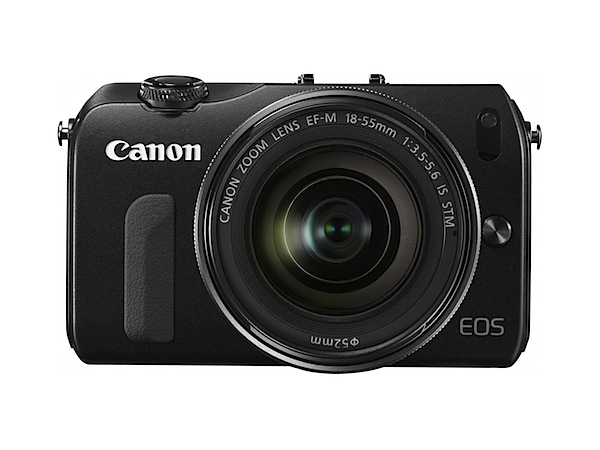
Canon’s first MILC (Mirrorless Interchangeable Lens Camera) or CSC (Compact System Camera) magnesium alloy body model followed many other marques’ entries but differed to some by immediately offering an adaptor that accepted the mainstream Canon EF lens range. Using 35 SLR lenses the magnification factor is 1.6x, surely not a deterrent factor.
At first glance, it’s a strange beast. The review camera was stark black in colour, with only the control labels picked out in off white — and few they are! It was tested with the f3.5/18-55mm lens.
I immediately looked for the exposure modes and quickly found only three on the top mode dial: intelligent auto, still photos and video. Where’s Program, aperture and shutter priority I queried?
Where? They’re accessible via a touch screen system that at first I found foreign, then quickly settled into its style.
Tap the upper left corner of the LCD screen and you’re presented with an array of M, Av, Tv, P: manual, aperture and shutter priority and Program. Easy!
Next to the mode dial is the on/off button — and tass all!
At the rear there is nowt else but menu and info buttons plus replay and the main dial with options for single/continuous shooting, a central Q-set button, erase and exposure lock (if your focus area differs from the main metering area).
As I mentioned, the text labels are in off white … and they are sure hard to see in dim light!
Canon EOS M Features
The 18 megapixel CMOS can capture a maximum 5184×3456 pixel image, enough to make a 44x29cm image.
Movies? Full HGD MPEG4 video at 1920×1080 pixel resolution is within its capabilities and can be happily recorded to SD cards rated as Class 6. You can shoot stills mid-video but the latter is interrupted.
Interestingly, the EOS-M kit is supplied with the new Speedlite 90EX flash unit as standard. A wireless master function allows the control of multiple flash guns wirelessly.
There some factors which seem to indicate that the EOS-M is not designed to attract the pros out there: the screen-driven control is one of them; another is the provision of a range of creative filters that includes toy camera, grainy B&W, fish eye distortion etc.
Overall, the camera appeals due to its compact dimensions, light weight and (once you get used to it), simple touch screen operation.
Canon EOS M ISO Tests
Clean performance al the way to ISO 3200. BY ISO 6400 noise is starting to appear but not badly so. At ISO 12800 noise is obvious but certain shots will accept it.
Canon EOS M Review Verdict
Quality: above average.
Why you’d buy the Canon EOS-M: compact camera with access to Canon’s full frame lens range.
Why you wouldn’t: touch screen operation deters you; a long tele, full size lens would look silly on the EOS-M; no vari angle screen.
The Canon EOS M is available in black, silver, white, red.
Welcome to another MILC! A lightweight, compact camera. Maybe the more ambitious out there should await for the next, higher specced model to arrive.
Canon EOS M Specifications
Image Sensor: 18 million effective pixels. Metering: Multi pattern, centre-weighted averaging, spot, partial. Exposure Modes: Auto, Program AE, shutter and aperture priority, manual. Sensor: 22.3×14.9mm CMOS. Lens Mount: Canon EF-M, EF (with adaptor). 35 SLR Lens Factor: 1.6x. Shutter Speed: 60 to 1/4000 second. Flashy sync: 1/200 sec. Memory: SD/SDHC/SDXC. Image Sizes (pixels): 3456×2304 to 720×480. Movies: 1920×1080 (30, 25, 24 fps), 1280×720 (60, 50 fps), 640×480 60/50 fps. LCD Screen: 7.7cm LCD (1,040,000 pixels). File Formats: JPEG, RAW (14-bit), JPEG+RAW, MPEG4. Continuous Shooting: up to 4.3 fps. Colour Space: sRGB, Adobe RGB. ISO Sensitivity: Auto, 100 to 12800; 25600 (with expansion). Interface: USB 2.0, HDMI mini, AV output, mic input, Eye-Fi. Power: Rechargeable lithium ion battery, DC input. Dimensions: 109x66x32 WHDmm. Weight: 298 g (inc battery). Prices: Get a price on the Canon EOS M with EF-M18-55mm IS STM Lens or the Canon EOS Mwith a EF-M 22mm STM Lensat Amazon.
Post originally from: Digital Photography Tips.
Check out our more Photography Tips at Photography Tips for Beginners, Portrait Photography Tips and Wedding Photography Tips.
Whatever one might think about Canon’s product strategy, they never let us down when it comes to innovative, interesting and hughly useful new lenses.
One such is the still-to-be released Canon 200-400mm f/4 IS, a critical focal length range that has been a Nikon exclusive for some time now. But Canon has upped the ante this time with a built-in 1.4X teleconverter.
Find out about this exciting new lens with an exclusive video review by Joshua Holko, being published today for the first time.
Irish photographer and teacher Peter Cox together with our friend Icelandic photographer Daniel Bergman, and Chas Glatzer are leading a workshop to the high Arctic and Svalbard island in August to photograph landscape and wildlife.
As a bonus, Phase One’s Kevin Raber will also joining-up, bringing a range of Phase One cameras, lenses, and backs for participants to use.
There are still a few spots left on this teriffic workshop.
Find out more.
"Every time I go back to a module I had already seen, I learn additional things. I have never seen tutorials that have the excellent mix of what the features are,
how to use them, enough of the under-the-hood information
and concepts so that I can utilize the features creatively and efficiently, and just enough humor to keep the motivation level high. Wow!"
Found out the the Canon T2i, 60D, an 5DMkII only allow Standard Definition Monitoring. This should work fine for people who want to be able to monitor their footage while in movie mode. Video Rating: 4 / 5
For the season 2 premiere, the DRTV team gets a suitcase full of UK pounds for the budget of the new season of DRTV shows. In this video, he takes a rather luxurious approach to reviewing the Sigma 70-200mm f/2.8 EX DG APO OS HSM vs the Canon 70-200mm f/2.8 IS II L USM. Sigma 70-200mm: www.digitalrev.com Canon 70-200mm f/2.8L IS II USM: www.digitalrev.com Video Rating: 4 / 5
First test with the pvc track dolly. Video Rating: 5 / 5