Sony Corporation is to split the part of its business that makes imaging sensors away from the Devices segment that it currently comes under, to form its own company called Sony Semiconductor Solutions Corporation. Sony has said that the degree of autonomy that the new company will enjoy will allow it to react more quickly to changing market forces and will encourage the business to grow more quickly. Read more
Month: October 2015
-
NYC Secrets: 10 Hidden Sights in The City That Never Sleeps
[ By Steph in Destinations & Sights & Travel. ]
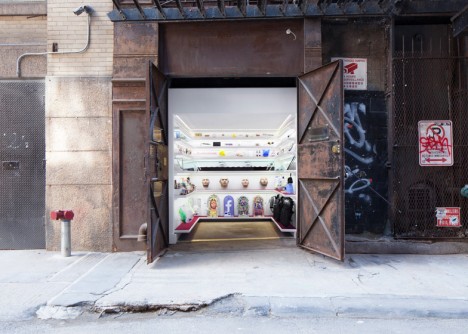
Even if you’re sick of the surface-level, tourist-friendly version of New York City, there are still many sights to be seen, including fun little secret installations right under your nose in busy places like Grand Central Terminal and subway platforms. These 10 unexpected and little-known attractions in the New York City area include a tiny gallery in an elevator shaft, a slice of punk history, an actual piece of Berlin and a scenic tram ride straight to a stunning abandoned hospital on an island in the East River.
Whispering Gallery, Grand Central Terminal
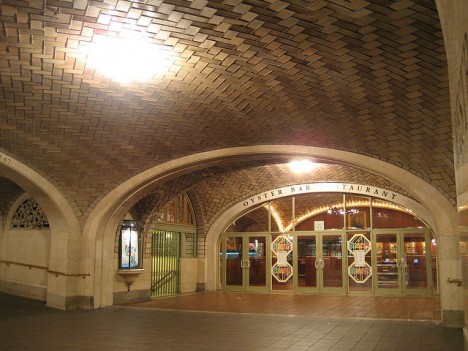
If you see someone with their face in a corner and their lips nearly touching the walls in the middle of Grand Central Terminal, don’t worry – they’re not acting out the last scene of Blair Witch Project. They’re just whispering. The ‘Whispering Gallery’ is an unofficial attraction created by the acoustic properties of the ceiling between two diagonal corners between the archways. Whisper, and the person standing at the opposite end can hear what you’re saying as if you’re talking into a megaphone. Have a friend stand on the other side, or just freak out random passersby, as seen in the video above. It’s located just outside the Oyster Bar.
Pedestrian Shortcut with Waterfall View
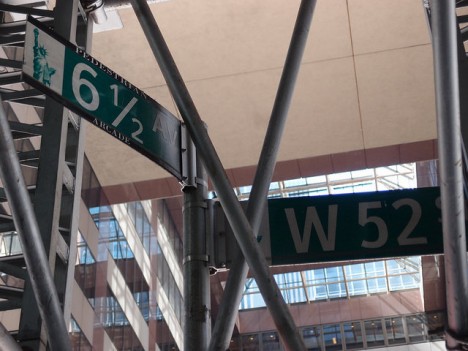
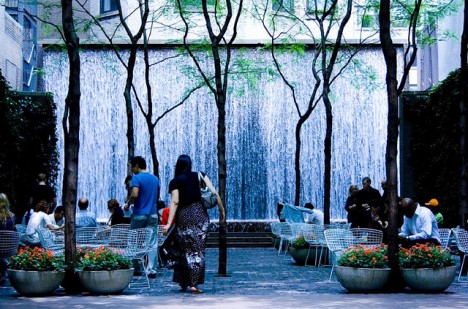
Like something out of Harry Potter, a street marked 6 1/2 Ave offers a semi-secret shortcut from 51st to 57th, and it’s only open to pedestrians. Take a break from screaming cabbies as you stroll (or whatever the New York City version of strolling would be called) down a slightly-slowed-down path through Midtown Manhattan, adjacent to the beautiful 20-foot waterfall in Paley Park. There’s another waterfall at Midtown East’s Greenacre Park at 217 East 51st St., as well as the five located within Central Park.
Remnants of the Berlin Wall
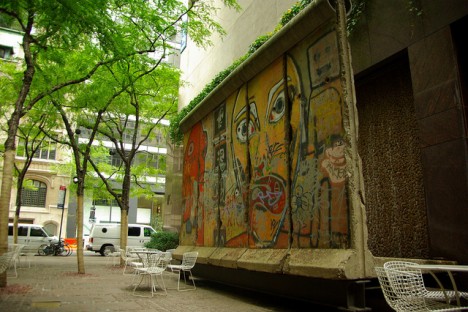
Speaking of Paley Park, this little pocket recreation space in the heart of Midtown at 3 East 53rd also boasts five sections of the Berlin Wall, originally located along the Waldemarstrasse and decorated by German artists Thierry Noir and Kiddy Citny in 1985.
C-Squat: Punk History in the East Village
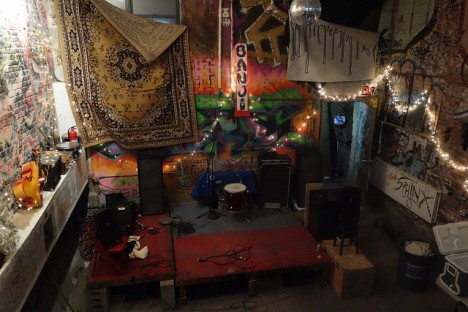
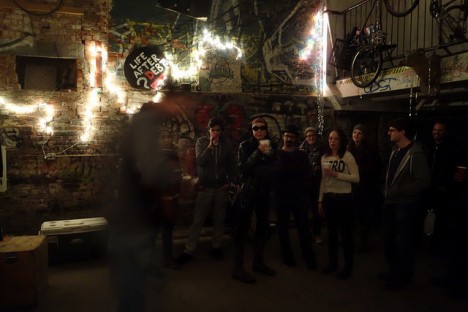
A little bit of New York City’s legendary punk heritage can still be found at 155 Avenue C, nicknamed C-Squat. Squatters claimed the abandoned space in the ‘80s, rebuilding it to make it habitable, and started throwing punk shows in the basement in the ‘90s. The city hammered out an agreement with the long-term residents, allowing them to stay as long as they bring it up to code, so it will soon officially pass into the hands of a bunch of artists and musicians. The walls are still covered in decades’ worth of graffiti and murals. One of the last holdouts of old school punk culture in the city, it’s still used as a location for underground parties.Musical Subway Installation
OLYMPUS DIGITAL CAMERA
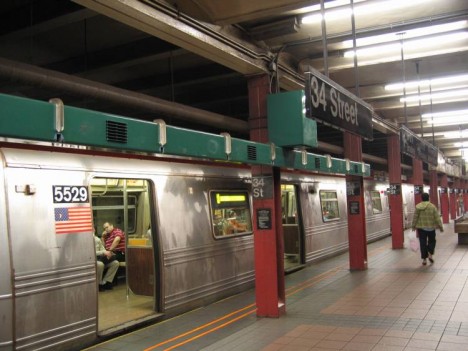
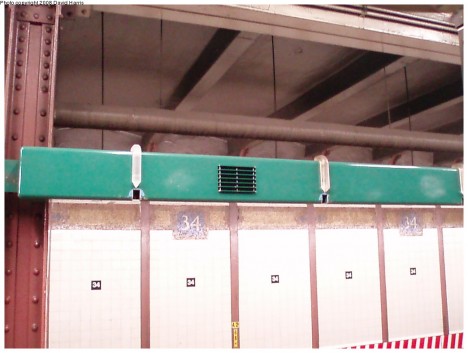
An unassuming pair of green metal bars blend into the walls of New York City’s 34th Street Subway Station, but pay closer attention and you’ll notice a sign alerting transit riders to an installation called REACH: New York. Created by Christopher Janney in 1995, this weird interactive exhibit features speakers embedded with motion sensors so that when you place your hand in front of one of the holes in the bars, you’ll trigger a sound. Move from one sensor to another to compose your own musical sequence. The artist changes out the sounds every year.
Roosevelt Island Smallpox Hospital
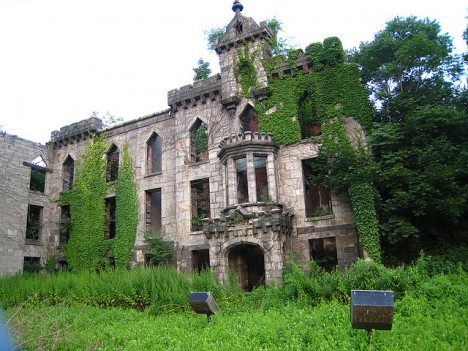
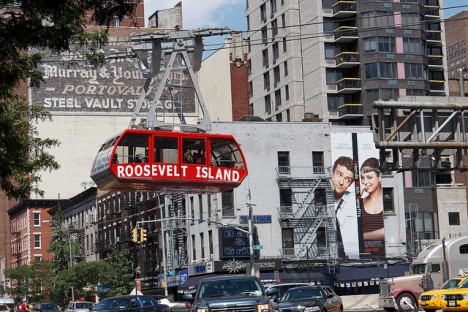
Patients infected with smallpox, leprosy and other highly infectious diseases were once kept quarantined in a hospital on New York City’s Roosevelt Island, which treated about 7,000 people per year between 1856 and 1875. It was abandoned altogether by the 1950s and fell into disrepair before the Landmark Preservation Commission declared it an important part of the city’s heritage, reinforcing the walls. The island has also been home to insane asylums and prisons, and is now a great place to take a riverside walk and get a nice view of the Upper East Side. For the swipe of a MetroCard, you can take a scenic tram to gaze up at the hospital facades, check out a lighthouse and view some public art.
Next Page – Click Below to Read More:
Nyc Secrets 10 Hidden Sights In The City That Never Sleeps
Want More? Click for Great Related Content on WebUrbanist:

Abandoned Hollywood Theater Hidden Above NY Shop
These photos give us a glimpse of a nearly century-old abandoned theater above a grocery store in New York, in a building which is due to be demolished.
Click Here to Read More »»

Extreme Street View: Google Employee Maps Deserted Island
Street View has mapped much more than roads in its, but sending a lone urban explorer through the haunting multistory ruins of a remote island may be one of …
Click Here to Read More »»
Urban Jungle Street View: 3D Hack Uses Hidden Depth Data
An explicitly illicit use of dimensional data buried in Google Street View, the Urban Jungle project adds eerie layers of post-apocalyptic green overgrowth to …
Click Here to Read More »»


[ By Steph in Destinations & Sights & Travel. ]
[ WebUrbanist | Archives | Galleries | Privacy | TOS ]
-
7. Oktober 2015
Das Bild des Tages von: Hilke Annegarn
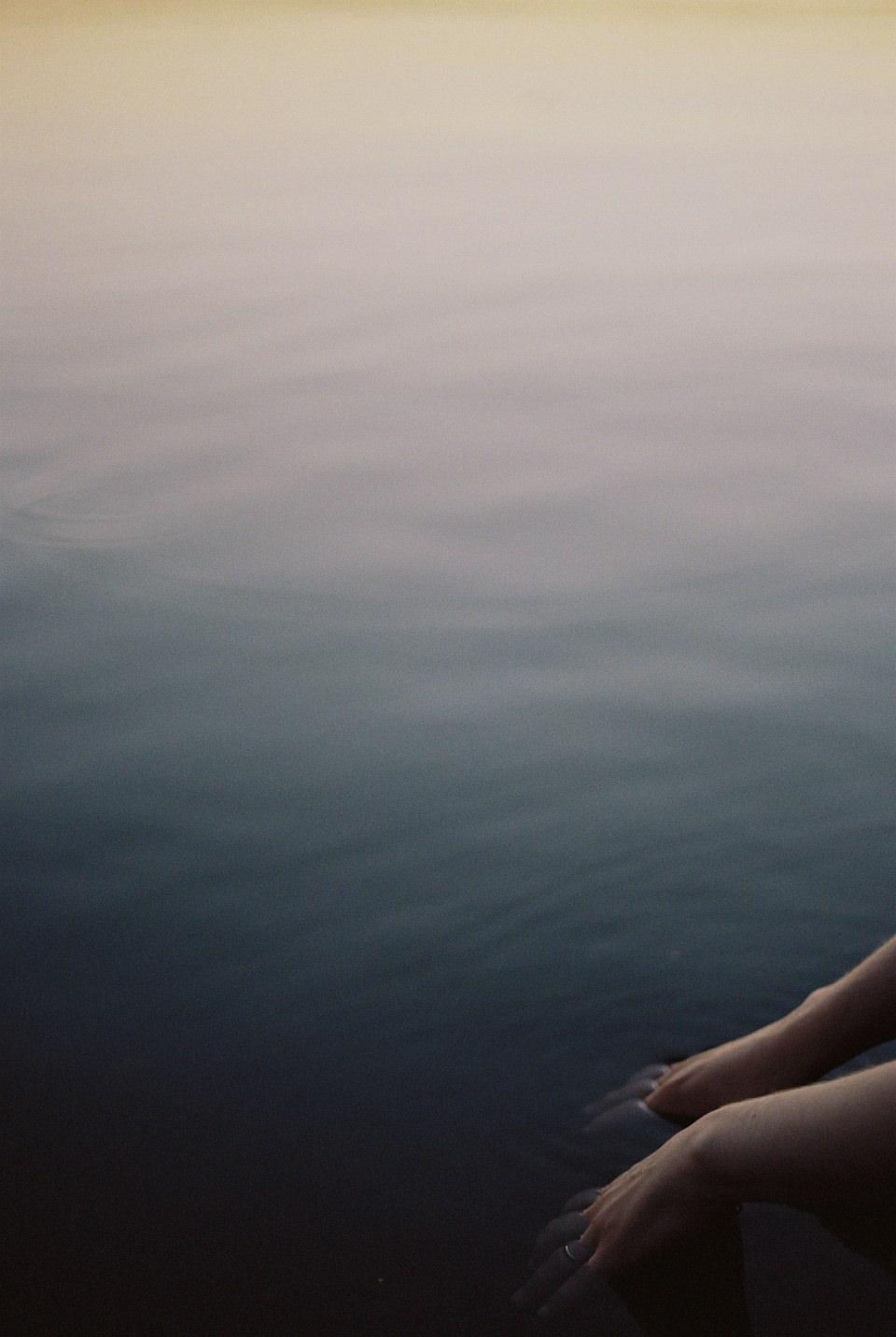
Im Ausblick: Japanische Fotografie um 1900, Wim Wenders und Fashion aus Müll.
kwerfeldein – Fotografie Magazin | Fotocommunity -
Microsoft Surface Pro 4 comes with larger screen and more power
Today Microsoft not only launched two new smartphones with PureView camera, but also the latest incarnation of its high-end Surface Pro tablet capable of running full desktop apps, such as Adobe Photoshop CC or Lightroom. Read more
-
Video: Cristina Mittermeier delivers PIX 2015 keynote
Day one of our PIX 2015 re:FRAME speaker lineup wrapped up with a moving keynote presentation from Cristina Mittermeier. Read more
-
Nordlichter und Sternenhimmel
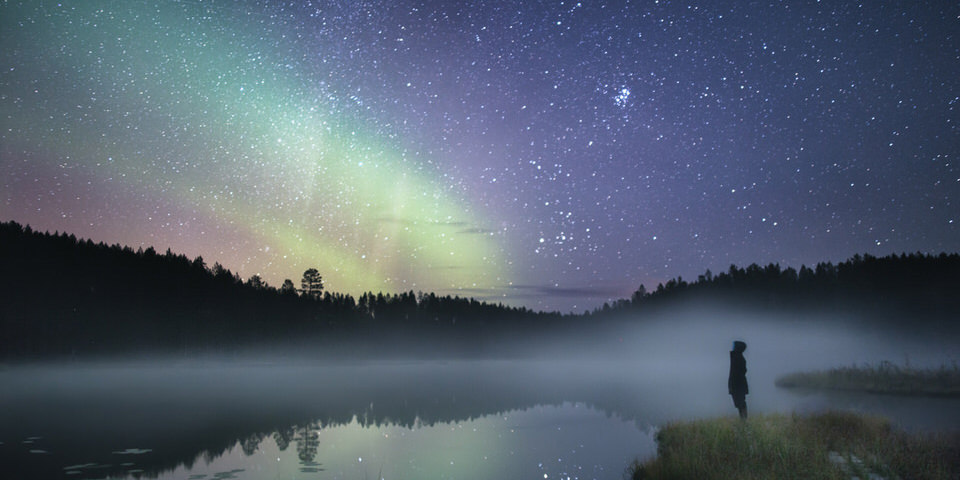
Tiina Törmänen lebt in Finnisch-Lappland und hält die beeindruckenden Landschaften ihres Landes fest. Ein Paradies für Fotografen liegt vor ihrer Haustür und sie nutzt es in vollen Zügen. Auf meine Frage, wohin sich ein finnischer Landschaftsfotograf wünscht, schreibt sie bescheiden, dass Schönheit überall ist, man muss sie nur sehen.
kwerfeldein – Fotografie Magazin | Fotocommunity -
Chinese Skywalk: World’s Longest Glass Bridge Spans Two Cliffs
[ By WebUrbanist in Destinations & Sights & Travel. ]
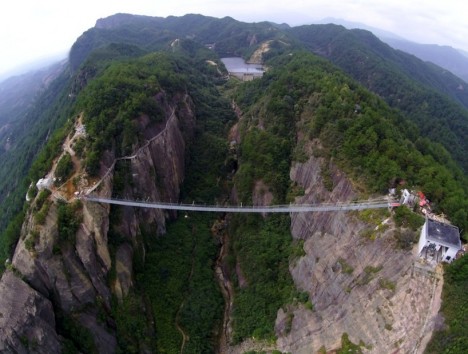
If you thought Twin Peaks was suspenseful, test your mettle on the new glass-bottomed Brave Man’s Bridge connecting two cliffs in the Hunan province of China and spanning nearly 1,000 feet.
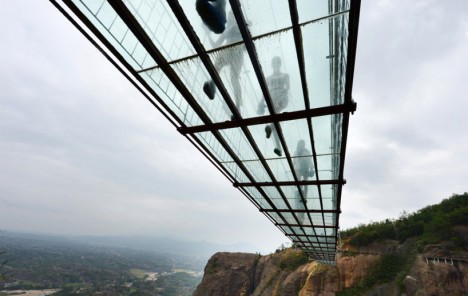
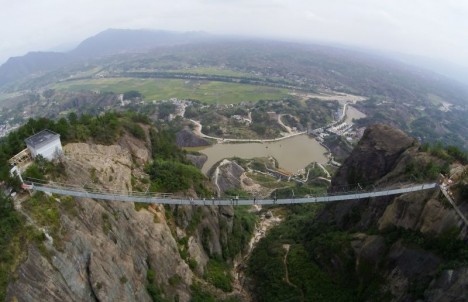
Located in the Shiniuzhai National Geological Park (images by Sina), the bridge employees a new type of glass 25 times stronger than the ordinary variety, achieving its structural purpose despite being just 1 inch thick.
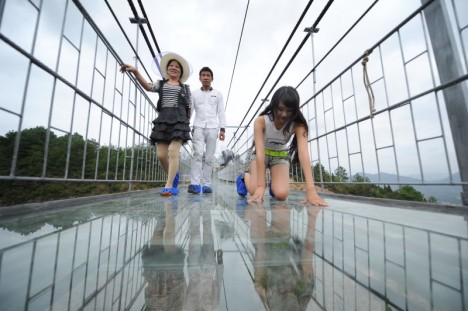
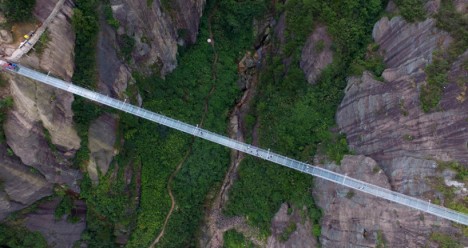
Framed in steel, the converted bridge previously held wooden walking platforms, but to compete with the rise of glass walkways around the world these were swapped out for glass equivalents.
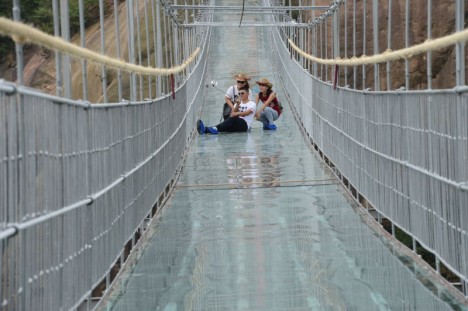
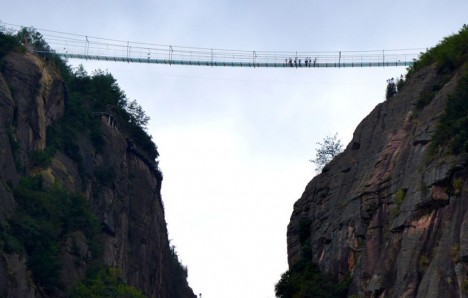
While there are other similarly glass-bottomed bridges arcing out over canyons or crossing natural expanses, this is the longest glass suspension bridge to date. Its engineers have assured the public that it is safe, even if feisty tourists jump on the panels.
Want More? Click for Great Related Content on WebUrbanist:
Recycled Cargo Container Bridge Spans Environmental Gap
Old shipping containers form a unique bridge in an environmental park in Israel, spanning the gap between new and old in a beautiful way.
Click Here to Read More »»

Neighborly Art: Surreal Sky Bridge Spans 2 Typical Homes
Houses can be isolating … but what happens when you break down – or bridge – the gap created by yards and fences between two otherwise-ordinary homes?
Click Here to Read More »»
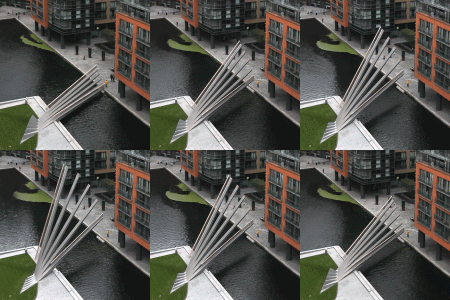
Looking Sharp: Blade-Like Bridge Slices Through the Air
Five blade-like beams slice into the sky when this cantilevered footbridge in London’s Merchant Square rises to make way for boats moving along the Grand …
Click Here to Read More »»
[ By WebUrbanist in Destinations & Sights & Travel. ]
[ WebUrbanist | Archives | Galleries | Privacy | TOS ]
-
4 Ways the Time of Day Affects Your Photographs
You have probably heard the saying, “The early bird gets the worm,” and in some ways that phrase can be repurposed to apply to photographers as well. “The early photographer gets the picture” isn’t always true in a literal sense, but learning to recognize changes that happen throughout the day, and how they affect your pictures is critical to developing a deeper understanding of photography in general. If you’re looking for a way to enhance your own photography, get better shots, or just try something new, getting up early to take some photos in the morning hours can have a dramatic impact on your pictures.
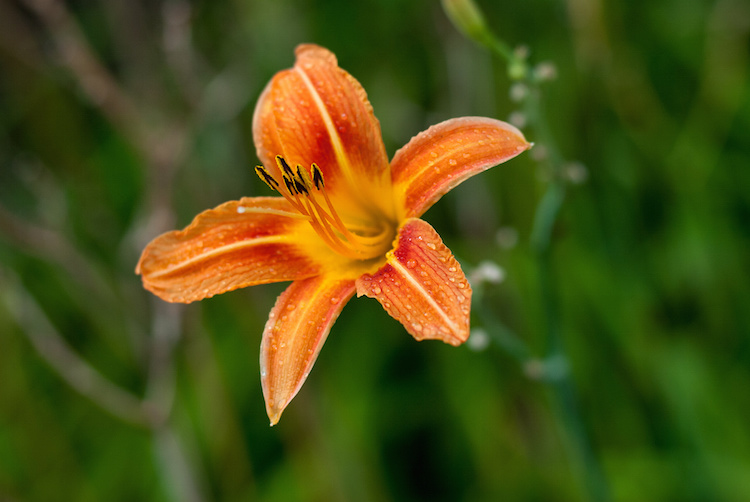
What you will see below is a collection of shots that are similarly-composed, but taken at different times of the day. The idea is not necessarily to see which picture is better, but to help you visualize and understand how much impact the time of day has on your outdoor pictures.
1 – Colors and Shadows
One advantage of shooting in the morning is that the sun is not directly overhead, which means light is diffused in the sky, and essentially coming from all directions. This helps your subjects have more even lighting, and makes it easier to get a good overall exposure since there isn’t the same degree of high contrast between light and dark areas that happens later in the day. This picture of some flowers in the morning illustrates the concept, and shows how diffused morning light can affect not just the shadows, but the color and vibrance of the picture as well.
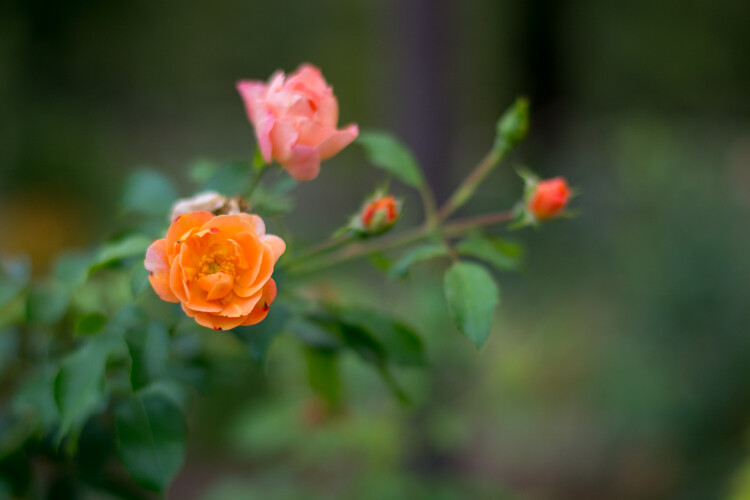
Flowers at 7:30am: 50mm, f/1.8, ISO 200, 1/180th of a second
Revisiting the same scene later in the day revealed an image that is similar in overall composition but quite different in some significant ways. The colors on the orange flower are not as rich and vibrant as they are in the morning photo, and the individual petals create harsh shadows that can be somewhat distracting.
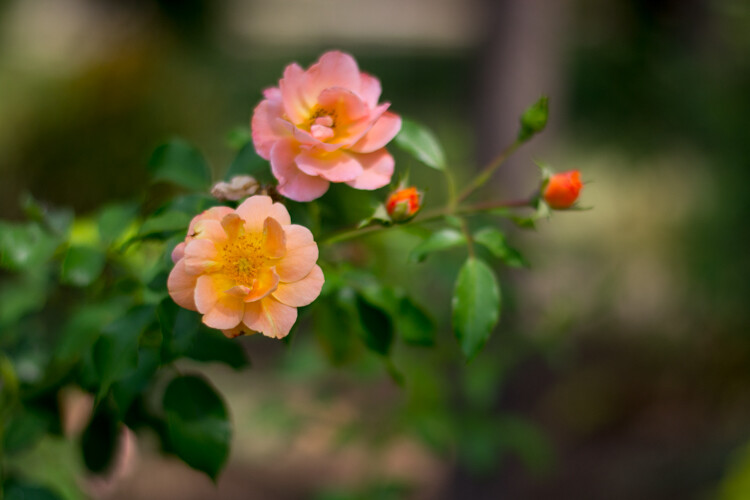
Flowers at 1:45pm: 50mm, f/1.8, ISO 200, 1/6000 second
While taking photos later in the day often means you have more light available, it comes with an important tradeoff: the midday sun often often leads to a greater degree of contrast with brighter highlights and darker shadows. However, this is not to imply that shooting later in the day is an inherently bad idea. Learning to shoot at different times of the day is not just about knowing how things are lit, but understanding how nature itself changes. Different times of day are not necessarily better or worse, but each has its own set of opportunities and challenges.
Notice how the pink flower has opened up and is much more vibrant than in the morning. No amount of early sunlight can coax a flower into full bloom, and sometimes you simply have no choice but to shoot later in the day if you want to get a particular picture. Wildlife shooters often take pictures in the morning or evening, but not necessarily because of the light. They do it because many animals are simply much more active at that time, than in the middle of the day.
One of the best solutions, which is not always possible but does offer some creative opportunities, is when you can get pictures in the middle of a cloudy or overcast day. That scenario gives you the nature advantages of shooting in the middle of the day, with the lighting advantages of morning or dusk. In this final picture, which was taken during a moment of thick cloud cover, you can see how the pink and orange flowers are in full bloom, while the light is much more similar to the morning image. The shadows are soft and diffused, which lends a warm and pleasant feeling to the image.
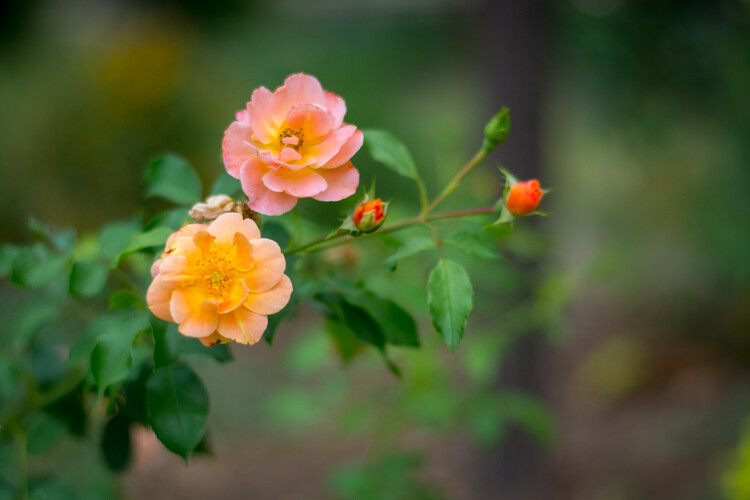
Flowers on an overcast day: 50mm, f/1.8, ISO 400, 1/6000 second
2 – Background Elements
One nice thing about shooting pictures in the morning is how the early sun can cast a nice even light on your subject. But, there are other elements of a photographic composition to take into account as well. Here are two pictures of some seed pods on a magnolia tree, taken a few hours apart. In these examples you can see that the morning light doesn’t just affect the color and shadows on the subject, but has a notable impact on the background elements, and other parts of the picture as well.
In the first image the subject (i.e. the seed pod in the foreground) is evenly lit, with nicely saturated colors, and the composition has a nice warm tone overall. There are a few drawbacks though – the building in the background which faces to the east is so brightly lit it’s distracting, and the sky does not yet have the rich blue tones that can happen later in the day.
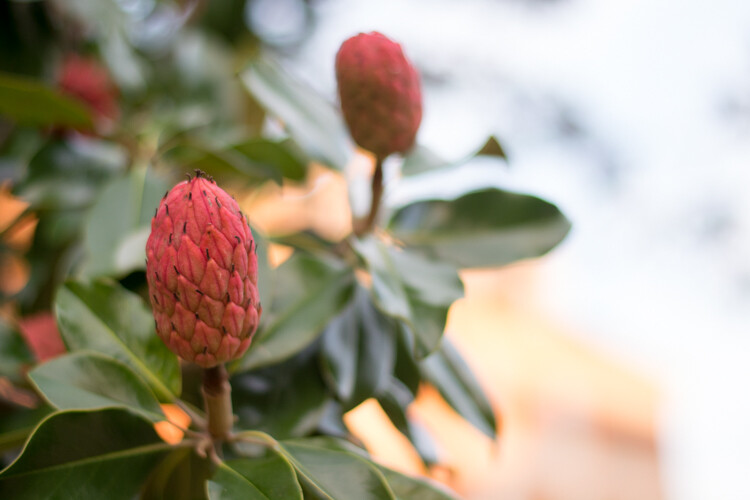
Magnolia seed pods at 7:30am: 50mm, f/1.8, ISO 400, 1/500 second
Here’s the same composition taken a few hours later, which illustrates that shooting in the bright sunlight has some tradeoffs tradeoffs that are both good and bad. While the building in the afternoon photo is not overexposed and the sky has more of a pleasing blue tint, the subject is somewhat backlit which causes a bit too much contrast for my liking.
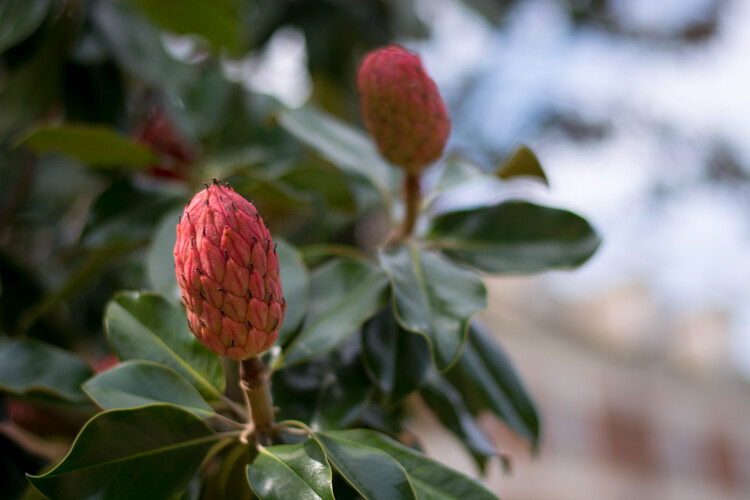
Magnolia seed pods at 2:35pm: 50mm, f/1.8, ISO 100, 1/1500 second
Again, the message here is not about why taking pictures at a particular time of day is better or worse, but understanding the effect it will have on your images. Some of the problems with the afternoon picture could be mitigated if I simply took the picture from a different angle or used another subject. I could also have used the pop-up flash on my camera as a fill flash which would have fixed some of the shadows on the subject. These challenges also become a little easier to work with if you are taking pictures of people and not immovable inanimate objects because you can tell them where to go, bring umbrellas, or use structures to manipulate the light.
3 – Even Lighting
I already gave some examples of how the early morning sun can have a pleasant effect on a single subject, but it can also cast an entire scene, or even a landscape, in an entirely different light compared to the afternoon. This image of a path on the Oklahoma State University campus is one of the most pleasing examples of how shooting in the morning can give you an incredible advantage when it comes to just working with light. The entire scene is evenly lit, and even the undersides of the tree branches are green. There are no harsh shadows and the morning light creates a warm and welcoming feeling overall.
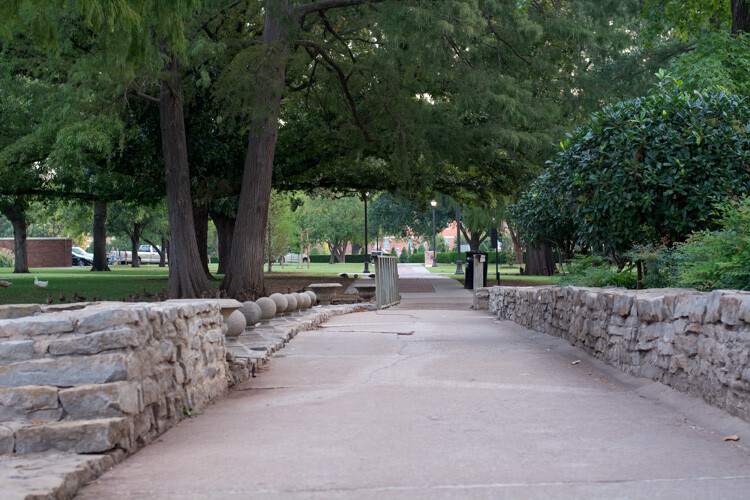
Path at 7:30am: 50mm, f/4, ISO 400, 1/60 second
In the next image you can clearly see evidence of some of the challenges posed by midday sunlight. The image is awash with contrasting areas of light and dark, and the shadows on the path are disjointed and distracting. There is no one clear focal point for the image, and the undersides of the leaves are so dark they are almost unrecognizable. It looks like an entirely different scene, even though it was the same location.
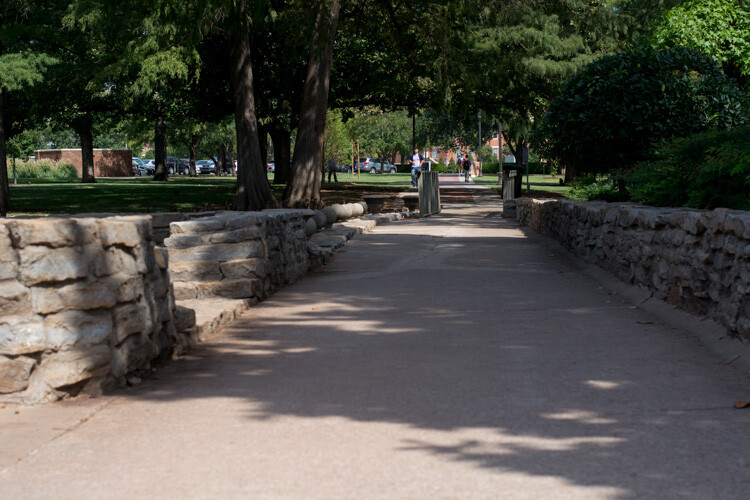
Path at 1:45pm: 50mm, f/4, ISO 200, 1/1500 second
The final image in this series illustrates one additional hurdle that must be overcome when shooting during the day – other people. In most parts of the world, and especially on a college campus, there simply is not much human activity in the early morning. Later in the day you will usually find yourself contending with workers, pedestrians, students, tourists, children playing, or a variety of other types of individuals who might inadvertently get in the way of letting you take the picture you want.
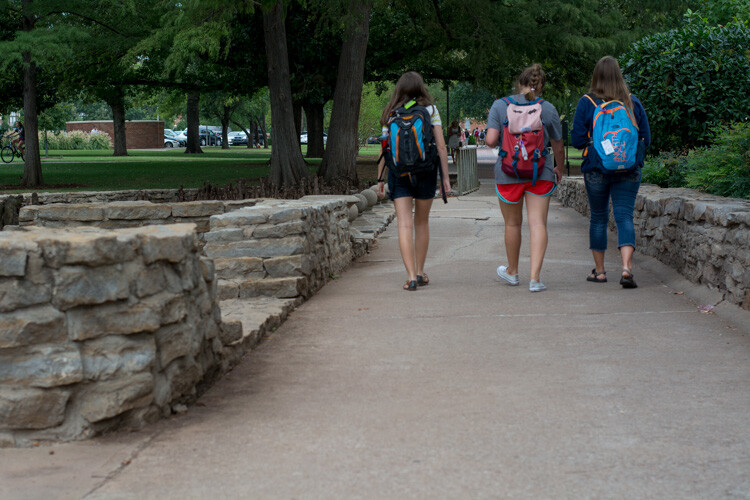
Path at 12:15pm: 50mm, f/4, ISO 400, 1/1500 second
Almost any outdoor photographic situation will have far fewer people around in the wee hours of the morning, which can not only give you better pictures, but a greater sense of peace and calmness as you go about the business of taking photos. The other point to note about the image above with the students walking, is that even though there was plenty of cloud cover which meant nice evenly-diffused lighting, the undersides of the trees are much darker than in the 7:30am photo. This illustrates how even though cloudy and overcast days are great for photos, there are still some aspects of shooting in the morning or evening that can be advantageous.
4 – The Human Impact
Finally, here’s one more example of how pictures in the morning can be much different than pictures later in the day. This bronze statue is a friendly sight for shoppers and drivers in downtown Stillwater, Oklahoma. Taking his photo as the sun is creeping over the horizon yields a well-lit image with a hometown feel, as the shops of main street recede into the background. Colors are even and not overly-saturated, and there is neither too much, nor too little, contrast on the statue itself.
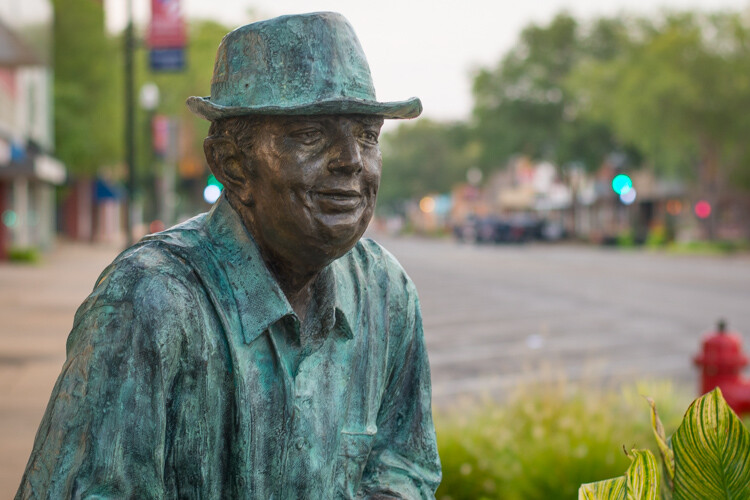
Bronze Man at 7:30am: 50mm, f/2.8, ISO 200, 1/60 second
The same photo in the late afternoon looks dramatically different, but not just because of the lighting. In the second picture (below) the light is clearly coming from overhead, as the top of his shoulders and side of his hat are much brighter and the contrasting light is creating much deeper shadows on his overcoat. This is not necessarily a bad thing, as the result is an image that shows more texture on the statue, even though one of the tradeoffs is that the side of his head is shrouded in shadow. However, the most critical difference here is the background, which is now filled with passing shoppers and parked cars. The picture seems cluttered, the focal point is less obvious, and instead of a friendly small town main street it now seems like a sterile commercial shopping center.

Bronze Man at 4:15pm: 50mm, f/2.8, ISO 200, 1/1500 second
Hopefully these examples give you a better idea of how the time of day in which you take pictures can dramatically affect not just the lighting, but many aesthetic elements of your photographic compositions as well. What are your favorite tips for shooting at different times of the day? Leave your thoughts in the comments below.
googletag.cmd.push(function() {
tablet_slots.push( googletag.defineSlot( “/1005424/_dPSv4_tab-all-article-bottom_(300×250)”, [300, 250], “pb-ad-78623” ).addService( googletag.pubads() ) ); } );googletag.cmd.push(function() {
mobile_slots.push( googletag.defineSlot( “/1005424/_dPSv4_mob-all-article-bottom_(300×250)”, [300, 250], “pb-ad-78158” ).addService( googletag.pubads() ) ); } );The post 4 Ways the Time of Day Affects Your Photographs by Simon Ringsmuth appeared first on Digital Photography School.
-
Adobe Camera Raw 9.2 adds local dehaze
Adobe has released Camera Raw 9.2, introducing a local version of its new dehaze adjustment. ACR 9.2 also adds support for the DxO ONE, though not for the camera’s SuperRAW files. Other cameras supported by the update are the Olympus OM-D E-M10 II, Sony Alpha 7S II and Leica S (Typ 007). Read more
-
Der Wandel der Steppe
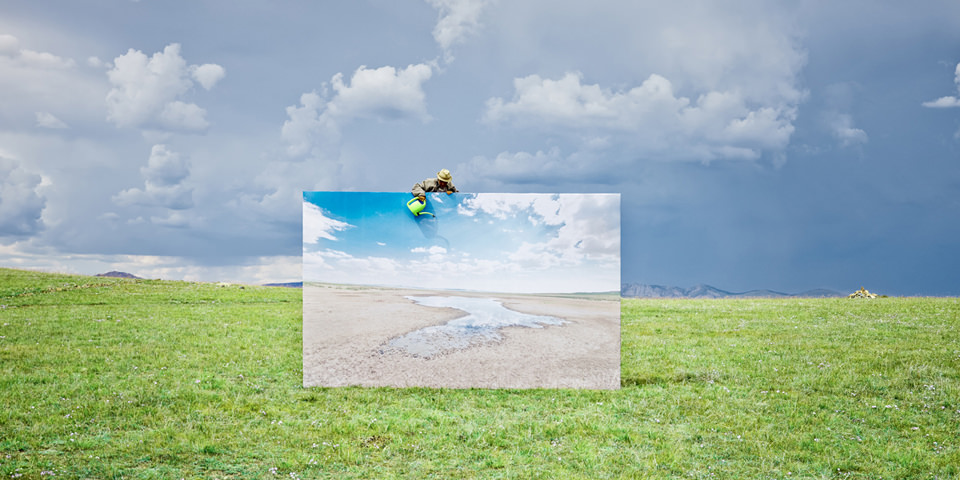
Ein Beitrag von: Daesung Lee
Zeit ihrer Geschichte war das Nomadentum ein wesentlicher Bestandteil der mongolischen Kultur. Gegenwärtig aber bedroht die fortlaufende Zersetzung des Ökosystems der Grassteppe die traditionelle Lebensweise der Nomaden.
kwerfeldein – Fotografie Magazin | Fotocommunity