Das Bild des Tages von: Marcel Pommer
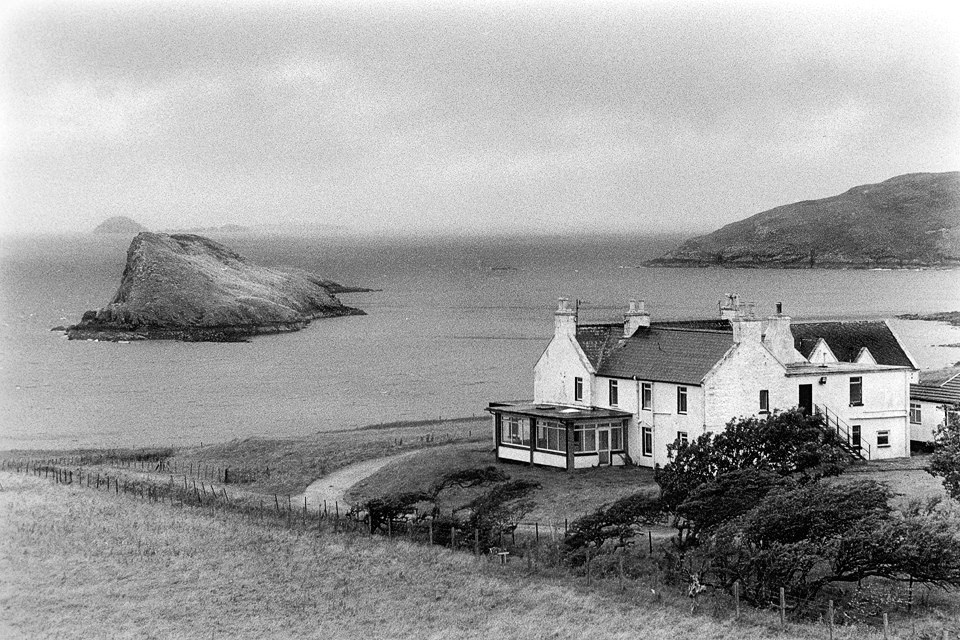
Im Ausblick: Sexismus in der Fotografie, junge Fotojournalisten und Fotorecht.
kwerfeldein – Fotografie Magazin | Fotocommunity
Das Bild des Tages von: Marcel Pommer
Im Ausblick: Sexismus in der Fotografie, junge Fotojournalisten und Fotorecht.
kwerfeldein – Fotografie Magazin | Fotocommunity
[ By Steph in Design & Fixtures & Interiors. ]

Who could be blamed for lounging around reading all day when you’ve got a cozy built-in nook surrounded by books or overlooking a scenic landscape? These nooks, niches, window seats and bunks create tiny sheltered spaces within larger rooms, sometimes stacking enough sleeping spots for eight people onto a single wall.
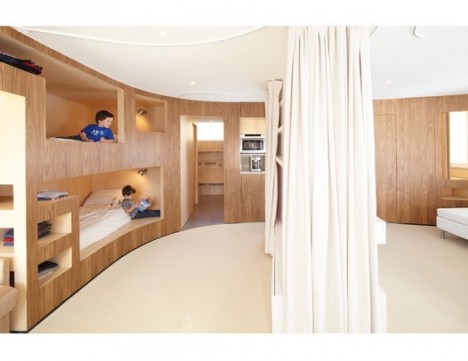


H2O Architects created an entire apartment full of nooks called ‘La Refuge’ in Menuires, France, embedding multiple levels of twin beds, reading areas and storage space into an oversized wooden cabinet that curves along the wall of the room.


Architecture firm Woods Bagot inserts cozy reading spaces right into the bookshelves at Raheen Library on the campus of Australian Catholic University in Melbourne.
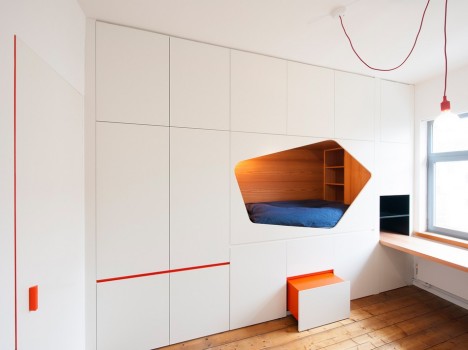
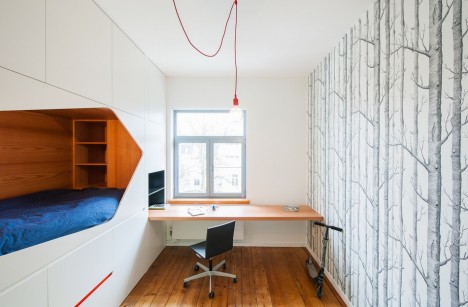
Inspired by an Alpine chalet but looking more like something you’d find in a spaceship, this clever bedroom by Van Staeyen Architects fits a partially-hidden bed, closets, a fold-down table and other amenities into a wall-mounted cabinet system in a tiny space.


An elegant curving chaise pulls right out of a bookshelf with the Recamier Reading Corner by Inbar Paradny Kalomidi, and can be tucked back in when you’re done reading.


A 240-square-foot apartment in New York City gets a more spacious, organized feel with a wooden built-in that adds tons of storage, countertops, a loft and even a tiny ‘library’ nook next to the bed.

If you want to live in a tiny apartment without murdering your significant other or feeling like your home is a jail cell, you might want to employ a few of …
Click Here to Read More »»

Multifunctional and convertible furniture solutions from Resource Furniture unfold and expand in unexpected ways, fitting lots of function into tiny rooms.
Click Here to Read More »»

Clever integration of storage, dangerous-looking alternating treads and unusual wall-mounted designs enable these 12 compact staircases to avoid the problem of …
Click Here to Read More »»


[ By Steph in Design & Fixtures & Interiors. ]
[ WebUrbanist | Archives | Galleries | Privacy | TOS ]
 |
|||
Fall has arrived. How stoked are you to start photographing those fall colors, chunky knits and steaming cuppas?
We are so ready. So we’ve raked together all the best fall goodies from our shop, and blog, to share with you. Check ’em out!
(…)
Read the rest of It’s Finally Fall! Check Out Our Festive Faves. (0 words)
© Erin for Photojojo, 2015. |
Permalink |
No comment |
Add to
del.icio.us
Post tags:
Adobe has officially launched Photoshop Fix, a mobile app it demoed at Apple’s iPad Pro launch in early September. Available today for iPad and iPhone, Photoshop Fix brings tools like the healing brush and liquify to mobile devices along with adjustments like paint and defocus. Read more

Sadly, you may one day grow out of your cell phone camera.
So you’ve decided it’s time to buy a real camera? Maybe the cell phone camera just isn’t cutting it anymore, or you read an inspiring travel blog bragging about how they quit their day job, and now roam the planet selling snapshots they take along the way.
Either way, the decision has been made, and now it’s time to take the next step and figure out what gear you’re going to need to support this new endeavour.
The photographic gear market isn’t lacking in options, and it’s all talk about megapixel this and shutter speed that, but without a bunch of technical experience, how do you know where to start? There really isn’t a one-camera-fits-all option or we would all be using it.
Let’s take a look at some of the considerations you are going to want to keep in mind as you attempt to navigate the consumer minefield of cameras and photographic equipment when selecting and buying a camera. We will look at the major features shared among most cameras, and how they may influence your decision.

Brace yourself: High-quality photography equipment often requires a significant investment.
That’s right, cameras all cost money, and sometimes lots of it. This is a logical place to start, unless, of course, money is of no consequence, in which case order a couple of Leica M Series cameras – one for you and one for me.
The easiest approach to budget is to come up with as narrow a budget window as possible. If you think you want to spend under $ 1,000, you will likely be overwhelmed with choices, while if you decide to look at the $ 800-$ 1,000 range, your options will be much more manageable to compare.
While you’re mulling over your photography budget, note what other accessories you may need or want. Don’t blow your entire budget on a camera body with no lens to mount on it. Do you want to acquire a tripod, external flash or even extra batteries and memory cards?
Generally speaking, there are point-and-shoot style cameras, mirrorless cameras and DSLRs (digital single lens reflex), but keep in mind that the lines can be pretty blurry between these.

By Nikolaj F. Rasmussen
Point-and-shoot cameras are mostly compact and convenient. The constant with them is that the lenses are built-in and non-interchangeable, but usually cover a wide zoom range. Quality-wise they run the gamut from cheap with uninspiring quality, to pretty sweet ones like the Canon G1.
Mirrorless systems are all the rage and most of them have interchangeable lenses like the big DSLRs, at a smaller size. They are a great compromise of quality and versatility. Some are super classy like the Olympus OM-D and others deliver high resolution like the Sony A7S.
DSLRs are the classic, fancy-looking cameras, with all the buttons and big lenses (sometimes). Lower-end ones offer good quality, and give users a ton of control. There is a mind-boggling assortment of lenses and flashes available, as well as a myriad of other gadgets to achieve all sorts of creative effects.
This is the part of the camera that replaced the film. The reason we care about these is because they range in size, resolution (megapixels) and sensitivity to light.

By ZEISS Microscopy
As you’ve probably already deduced, big sensors with high resolution that are more sensitive to light are pricey. The biggest sensors in the camera types we are talking about are called full frame, and are the size of a 35mm negative (film). The majority of cameras on the market use a variety of smaller versions that we usually call cropped frame (DX for Nikon and APS-C for Canon). There are other size but these two make up the lion’s share of the market.
Right now camera companies are in a death match to out-resolution one another. While the average camera might boast 16-20 megapixels, some models are double that.
What do all those megapixels get you? You can think of it as the same as film grain, or the resolution of your TV. If you have a 36-megapixel camera, you can crop out 2/3 of the photo taken with that camera and still have a 12-megapixel photo. Higher resolution=finer grain.
Sounds like the more the merrier, but not necessarily. Lower-megapixel cameras are often more sensitive to light and work better in dark conditions. Also, resolution is directly correlated to file size so you will fill up your memory cards, and computer hard drive much quicker. Often times lenses for full-frame cameras are more expensive as well.

High-megapixel cameras come at a price as they eat up storage on your memory cards and hard drives.
This may sound familiar because when you had a film camera (if you are old enough) you probably used 400 ISO film. This is a measurement of the sensor’s sensitivity to light (short meaning, the long one is very technical).
If you want good results shooting in low-light conditions without a flash, you want to look at cameras that not only shoot at high ISO (1600 or greater), but can do so while producing decent shots. The Fujifilm X-T1, Nikon D800, Canon 5D Mark 3 and Sony RX100 get high marks in this category, but be warned, it’ll cost you.
A sensor is only as good as the lens that you put in front of it. I just made that up but it’s true. Everything has to pass through the lens to get to the sensor.
If you’re going to go with a point-and-shoot camera, compare the zoom range (a number in millimeters) between several cameras. There are some that cover ridiculous ranges like the Nikon Coolpix P610 which zooms from 24-1,440mm. However, don’t be fooled by big numbers as you may never need that kind of range and another camera may have other features that are more useful to you.

Some cameras are equipped with a permanent fixed-focal-length lens like the Fujifilm X100T. Some photographers prefer simplicity.
Be aware that there are two types of zoom: optical and digital. Optical zoom is what the actual lens is capable of, while the latter digitally crops the photo and image quality is degraded significantly.
Some cameras like the Fujifilm X100T and the Sony RX1 are quality cameras which have permanently attached 35mm lenses. No changing lenses, no zoom. Some people love them, some people think it’s a stupid idea. In the end, it depends on your shooting style and your personal preference.
With DSLRs, the options for lenses are nearly endless. Original manufacturers make plenty, third party brands abound, and you can even get adapters to attach almost anything to almost anything else. Many DSLRs are offered as kits that come with the camera body and lens. Usually the lenses are of lower quality but can certainly produce good results.

Image courtesy of Canon
Some lenses are big and expensive because they let in a lot of light and work better in low-light conditions, produce very sharp undistorted images, have long focal lengths allowing you to take pictures of far away subjects, and are built to more exacting and durable standards or any combination of these features.
The lens department is where mirrorless cameras fall a little short. For most casual photographers, there are enough good choices to fulfill your needs, but fewer choices for professionals, or those wanting to focus on niche genres like macro or sports.
I know you wish the things mentioned thus far were the only things to consider, but there is plenty more. With so much competition out there, even simple cameras keep getting more complex. On that note, if you find a camera you’re interested in, find out how long that model has been on the market as the manufacturer might be about release a new version.

By Raymond Bryson
|
|
Of course this is not an exhaustive list, but it’s a good place to start. These days there are cameras as varied as the photographers using them so it will really pay off to do your research.
googletag.cmd.push(function() {
tablet_slots.push( googletag.defineSlot( “/1005424/_dPSv4_tab-all-article-bottom_(300×250)”, [300, 250], “pb-ad-78623” ).addService( googletag.pubads() ) ); } );
googletag.cmd.push(function() {
mobile_slots.push( googletag.defineSlot( “/1005424/_dPSv4_mob-all-article-bottom_(300×250)”, [300, 250], “pb-ad-78158” ).addService( googletag.pubads() ) ); } );
The post A Beginner’s Guide to Buying a Camera by Jeremie Schatz appeared first on Digital Photography School.
DPReview’s first major event – PIX 2015 – kicks off tomorrow! The best news? You don’t even have to book a last-minute flight to Seattle to participate. Starting Tuesday at 10AM PT, you can tune in right here and be part of the experience, or watch the archived content later, at your convenience. Read more
[ By WebUrbanist in Design & Products & Packaging. ]
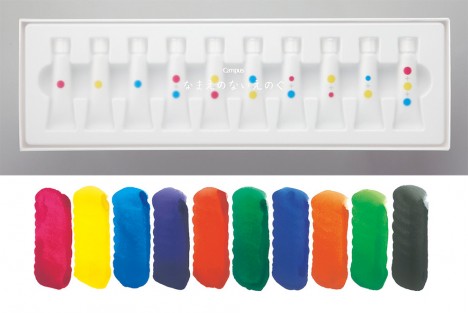
Instead of names or swatches, this series of minimalist paints comes in tubes that show off constituent colors that double as lessons about how complex hues and shades are created.
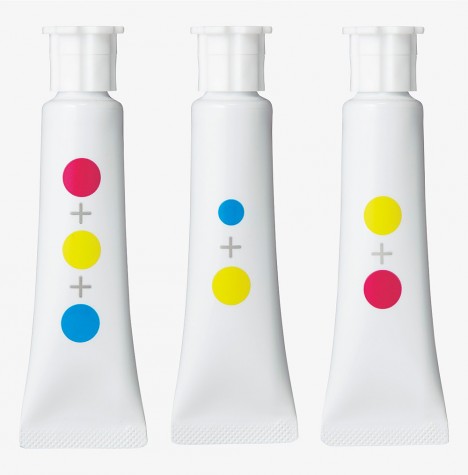
The nameless tubes are intended to eschew the use of words altogether and thus avoid existing associations, representing contents instead as a combination of three primary colors (cyan, yellow and magenta) with dots indicating relative amounts. The effect simultaneously divorces the product from names and looks in favor of a more abstract representation scheme that recalls unintuitive systems like binary.
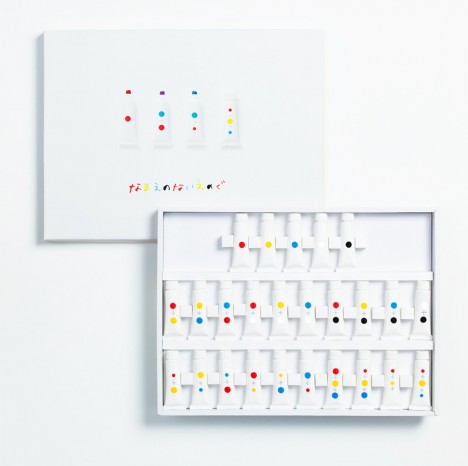
These 2012 Kokuyo Design Awards-winning visual labels hint at contents and teach kids how to make their own mixtures. The paints themselves will be on sale later this year.
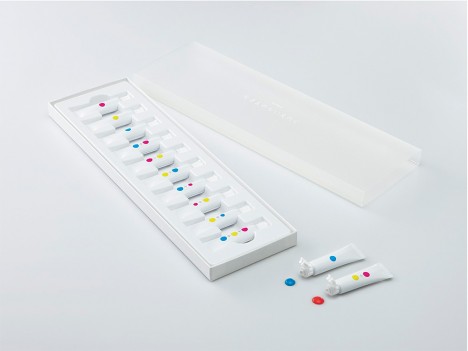
“By not assigning names to the colors we want to expand the definition of what a color can be, and the various shades they can create by mixing them” says creator Yusuke Imai, who made these with design partner Ayami Moteki (via Colossal and Spoon & Tamago).

If any design should be simple and intuitive, surely it would be an emergency medical kit – something you make lack time, treatment expertise or even a …
Click Here to Read More »»

There is no computer-generated imagery behind this surreal-seeming scenography, but rather a skillful remixing of reality to sort actual automobiles by color. …
Click Here to Read More »»

Hanging wallpaper is made much more fun when you get to paint and peel it, revealing intricate geometric patterns that won’t be found on any other wall.
Click Here to Read More »»
[ By WebUrbanist in Design & Products & Packaging. ]
[ WebUrbanist | Archives | Galleries | Privacy | TOS ]
There are images that immediately come to mind if someone mentions them. For instance, the image of the man being shot in the head during the Vietnam War, or the girl running naked down the road (also in Vietnam) after being burned by a napalm bomb. I don’t want to use the word iconic, but they are well-known, and very emotive images. The Vietnam War was like no other, and these images helped to show the devastation.
An image of an event, or a place, can create a lot more connection than written words or stories; humans are visual and we relate to visual cues. But images don’t have to be about war to generate a response from people.
In late-1970s Australia, the government wanted to dam part of a river in Tasmania. It was something that upset many people. It would mean that many parts of stunning rainforests in the area would be drowned and lost forever. When I think back to that time, there is a beautiful image of the place that immediately comes to mind. It is an image of the river by photographer Peter Dombrovskis, and its catchphrase was that it would be submerged by the dam.

Rock Island Bend, Franklin River, South West Tasmania, by Peter Dombrovskis, National Library of Australia, an6631500 (Bib ID#2899361)
Here I am 30 years later, and this image is still strong in my mind; it says, “This image stopped the Franklin Dam”. Images can very powerful. Who wouldn’t want to have an image that changed the world – well, at least helped save a small part of it? With so many images in existence now, it may be hard to imagine that any could have the same impact. With the world of digital perhaps we are in image overload.
It doesn’t mean you can’t try. There is no reason why you can’t highlight a cause that you are passionate about, using your photography.
In the area around where I live, there is a large green belt that follows the Yarra River, which is the main source of water for the City of Melbourne. It is wonderful that the land has been preserved and not given up to development. Parts of the area were still being farmed until very recently, around 2o years ago.
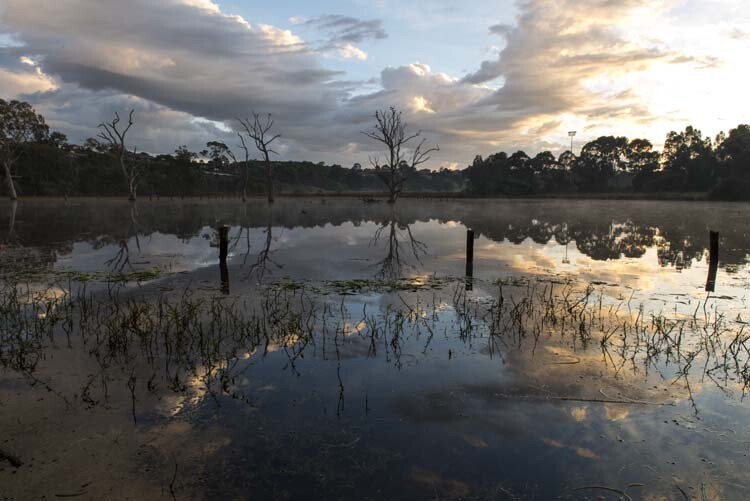
Morning Light over Banyule Flats. The area has been allowed to return to its natural state as it would have appeared over 250 years ago.
Part of the area is a swamp (wetland) and was here before European Settlement. Once the land was claimed, the swamp was drained and the water course moved so it didn’t fill anymore. Fences were put up, and cattle grazed there for over 150 years.
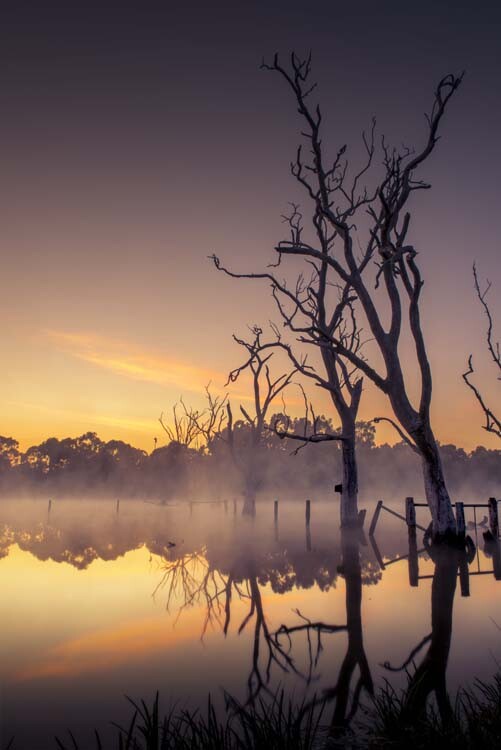
Early Autumn Mists on the Water.
Eventually, the land was sold to the local council, and they have helped the area recover over the last 20 years by revegetation, and putting the water course back, so the swamp would fill again. It did – and it has become a place rich with native birds and plants. The fence posts are still there, but the trees that grew while it was dry have since died from being waterlogged.
The area is ecologically and communally important and is in constant use – but there is a problem. Banyule Flats is situated right in the middle of where they want to connect two freeways. This is an area that I love and want to help protect, so I started thinking about how I could use my photography to help stop the freeway.
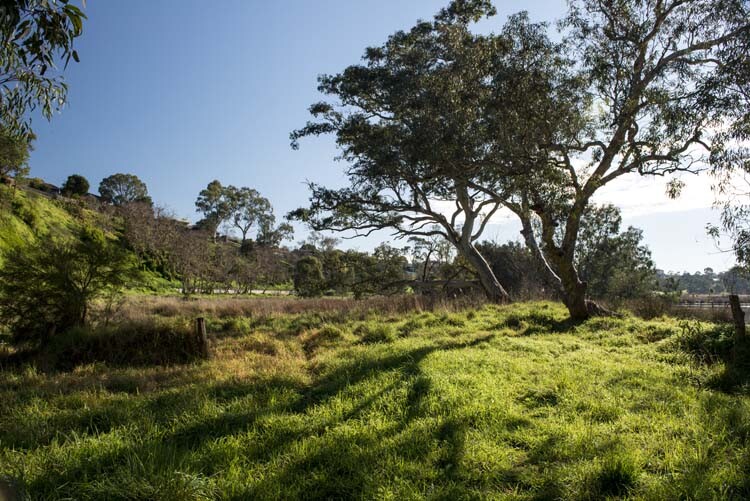
Winter Sun Casting Long Shadows.
My first thought was to start putting photos up on my blog. If I could get people from around the world to build a connection with Banyule Flats, perhaps I could get a whole lot more people to fight for its survival.
About 12 months ago my local council, Banyule City Council, was offering Environment Grants and I wondered if I could get one to do a book on the area using my photography. I rang the coordinator for the grants and spoke to her about my idea for the book. She seemed to really love it, and gave me ideas of what to put in the proposal. I had to join the Warringal Conservation Society to be eligible for it, but that was never a problem, and I have loved being a member.
The grant was approved, and I will use the photos I have been taking for two years now. It is time to put the book together and work out what is the best way to present the images. We can’t just put them all together with no story because, it has to be interesting. It has to be done in a way that people find not only beautiful, but helps build a connection to the area so they won’t want to see it destroyed.
This is an opportunity to use photography to bring about social change. If you can help people build a relationship or feel something for a cause, then that gives you a lot more people who want to fight for it with you. Your case becomes stronger, and there’s power in numbers.
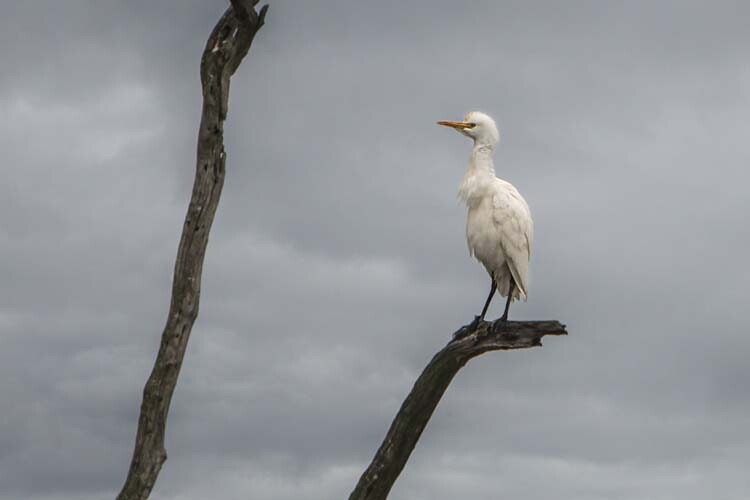
Cattle Egret Surveying the Water Below. One of many birds that inhabit the area.
One thing that is happening with the book on Banyule Flats is that we are inviting the Wurundjeri Elders and people to be involved. They are the traditional owners of this land, and having their input will help highlight the area, give the book a unique look, and help showcase part of their culture. Of course, I will not take advantage of them and will make sure that proper credit is given, and they will get a share in the royalties as well.
If we can make the book show off the area, we hope that more local people will get involved in the fight for the Flats, and we can then introduce the area to a much wider, potentially worldwide, community.
The book is going to be visual, have lots of photos throughout showing the area through the seasons, and contain big landscapes, as well as macro images of the flora that grow there. The photos have to be powerful to get our message accross: there will be no freeway through Banyule.

Bottle Brush. One of the indigenous plants at Banyule Flats.
Images are very strong. If I just tell you about the area then you are not going to want to protect it, but if I show you what it looks like then you start to feel a connection. Beauty has to be seen, and that is where photography becomes very powerful.
Think back to causes you have felt very passionate about. Do you think of them in words, or in images?
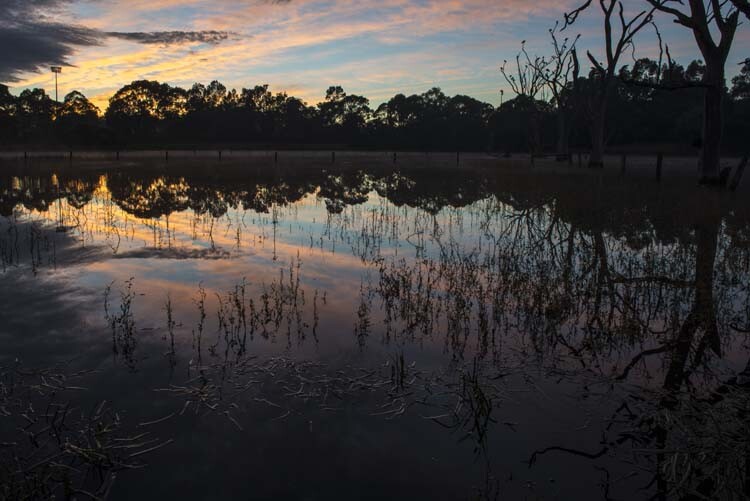
Sunrise Around the Back of Banyule Flats.
When I think about the Vietnam War, images come to my mind, like the two I already mentioned. The Franklin Dam project was one of the first major campaigns that I have a really good memory of. The image of the Franklin River gave people an understanding of what they were going to lose if the dam went ahead.
If you have a cause that you want to assist or save, use your photography to help. Get the best photos that you can, and show people what you want them to see. The stronger your photography is, the better the effect it will have. You want to create images that people will remember. In the years to come when people talk about Banyule Flats and how we stopped the freeway, I want them to think of my images in the book.
googletag.cmd.push(function() {
tablet_slots.push( googletag.defineSlot( “/1005424/_dPSv4_tab-all-article-bottom_(300×250)”, [300, 250], “pb-ad-78623” ).addService( googletag.pubads() ) ); } );
googletag.cmd.push(function() {
mobile_slots.push( googletag.defineSlot( “/1005424/_dPSv4_mob-all-article-bottom_(300×250)”, [300, 250], “pb-ad-78158” ).addService( googletag.pubads() ) ); } );
The post Using Your Photography to Create Social Change by Leanne Cole appeared first on Digital Photography School.
[ By Steve in Culture & History & Travel. ]
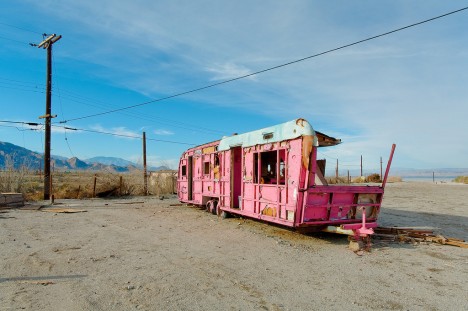
California’s Salton Sea was once a sparkling desert oasis, attracting vacationers in mobile homes and RVs. The people have gone but their trailers remain.
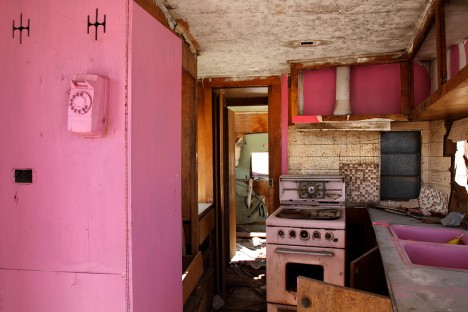
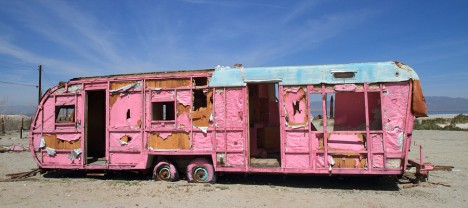
Located in Southern California’s Colorado Desert, the Salton Sea was created inadvertently in 1905 when a “perfect storm” of heavy rains and ill-advised construction of irrigation canals allowed the mighty Colorado River to divert into the bone-dry Salton Sink. Though saltier than the Pacific Ocean, the resulting below-sea-level lake sparked a development boom that included resorts, marinas and trailer parks.
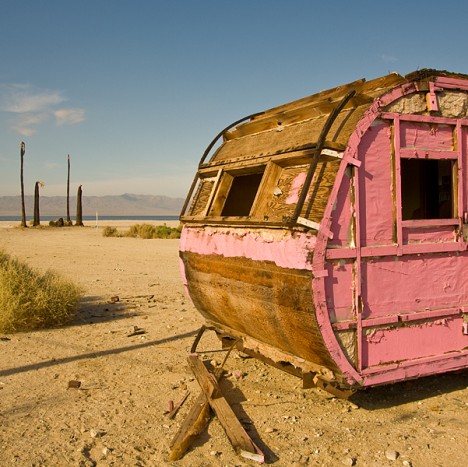
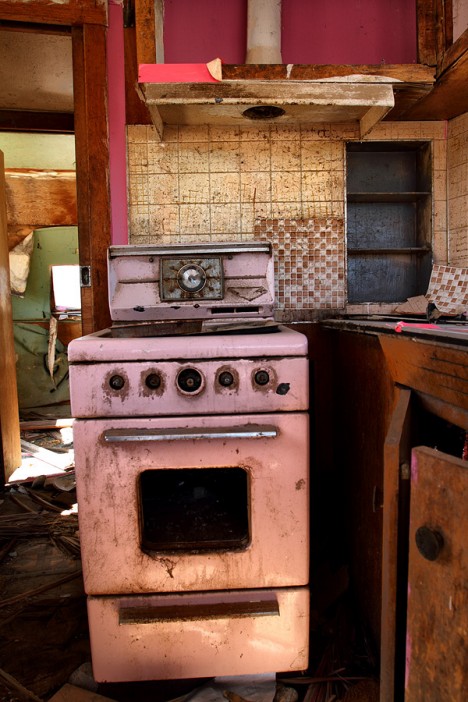
By the late 1950s, however, increasing pollution and a series of massive (and massively smelly) fish die-offs took the bloom off the rose – the number of visitors and residents dropped while many of those who left the area left their unwieldy trailers behind. Some of these long-abandoned trailers have achieved an unlikely sort of fame as photographic subjects – as symbols of post-apocalyptic failed consumerism, they can’t be beat! One of the most well-known abandoned Salton Sea motor homes is the very pink (even the kitchen sink is pink!) trailer photo-documented above by Flickr users nate2b and jawbox57.
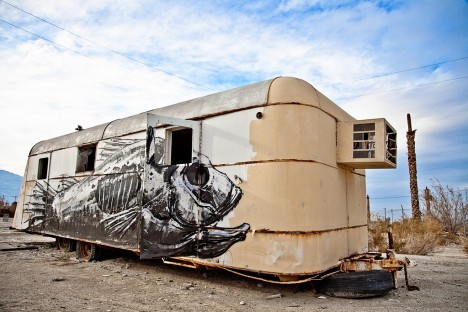

There are dozens – possibly several hundred – abandoned trailers scattered around the receding shores of the Salton Sea though very few are as artistically decorated as the rather “fishy” example above. Flickr users Jamie Valenta (Jamie V Photography) snapped the Tilapia Trailer in February of 2011 while Erin Yamagata captured one of many possible inspirations on a salt-encrusted beach in January of 2010.
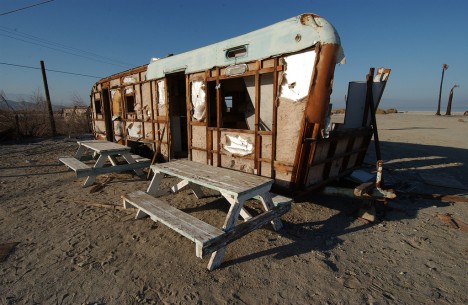
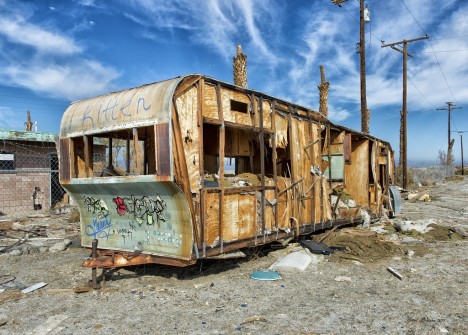
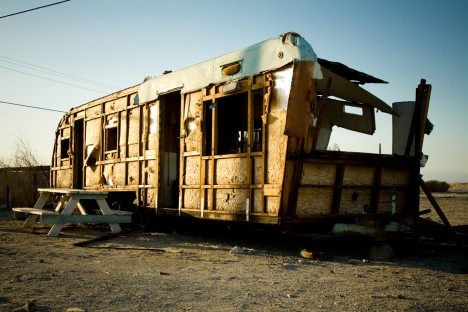
You won’t see much graffiti of any type on these abandoned Salton sea trailers but that’s not to say they’ve never been tagged. In recent times, metal scavengers and scrappers have been busily stripping away the siding from countless old trailers including the once-impressive RV above. Meth: it’s a hell of a drug. Kudos to Flickr users Hans Proppe (shadowplay), Brent (brentus69), and Patrick Maloney (analog_chainsaw) for stopping to snap instead of strip.

Advertising is so ubiquitous that billboards aren’t even restricted to fixed positions anymore; they’re often found moving from one spot to another …
Click Here to Read More »»
In the middle of Egypt’s inhospitable Sinai Desert, stacked on a rocky hillside overlooking a pile of sticks, row after row of worn wooden movie theater …
Click Here to Read More »»

If ice cream trucks are rolling symbols of childhood happiness, abandoned ice cream trucks are sadder than a dropped double-scoop cone on a hot summer day.
Click Here to Read More »»
[ By Steve in Culture & History & Travel. ]
[ WebUrbanist | Archives | Galleries | Privacy | TOS ]
Das Bild des Tages von: Thomas Giörtz

Der Ausblick heute: Es geht aufwärts.
kwerfeldein – Fotografie Magazin | Fotocommunity