Lomography has introduced the Lomo’instant Wide camera. Using Fujifilm Instax Wide film, the camera offers a 35mm equivalent lens and Auto, Bulb, and 1/30sec Fixed Shutter Speed modes. Features cater to those who want to take a little more control over their instant prints, including a multi-exposure button and a lens cap that functions as a shutter remote control. Read more
Month: October 2015
-
Divisible Design: Modular House Anticipates Partial Demolition
[ By WebUrbanist in Architecture & Houses & Residential. ]

While nothing is set in stone as yet, the city of Tokyo has plans to build a road through this residential plot, forcing architects working on the site to craft an ingenious future-proof solution for potential partial destruction.


Faced with a long history of earthquakes, Japanese architecture has a long history of ephemerality, but this challenge is of a more controlled nature: an expanded street is slated to eventually slice at an angle through the property, hence a home designed to break into pieces.


Japanese architects Starpilots call their creation Housecut, a direct reference to this core dilemma. The house-and-office they crafted for the site is composed of three structurally independent volumes, anticipating the possibility that one or two may be demolished.


The family runs a funeral home, lives in the structure and wants to maintain a business and domestic presence in the remaining space should part of their live/work building be removed. While the warehouse, break room and other elements may go, their goal is to at least maintain a reception area for clients if the city does eventually proceed with its plans.


For now, two residential areas border a central entry and are lofted above the business below. Everything is designed with dual endgames in mind, at once spacious and open but able to be reconfigured to make maximum use in a scenario where much of the building vanishes.
Want More? Click for Great Related Content on WebUrbanist:
Dream-House Designs: 10 Uncanny Ultramodern Homes
Modernism is style – ultramodernism is undefined, but for the purposes of this article is that amazing design approach which brings the future into the present.
Click Here to Read More »»
Mobile 3D-Printed House Factory in a Shipping Container
Dutch architects DUS plan to build the first 3D-printed house alongside a canal in Amsterdam using a mobile 3D printer in a shipping container.
Click Here to Read More »»

Slices of Home: Modular Mobile House-Shaped Micro-Rooms
Spatial separation can be as much about a feeling of enclosure as a physical divider, like this set of portable lounge structures that provide a semi-secluded …
Click Here to Read More »»


[ By WebUrbanist in Architecture & Houses & Residential. ]
[ WebUrbanist | Archives | Galleries | Privacy | TOS ]
-
Rex aeternae? Sony Cyber-shot DSC-RX10 II review
The Sony RX10 II is the follow-up to a camera we already thought quite highly of. While the 24-200mm F2.8 equivalent lens and external body design remain unchanged, the RX10 II sports a new stacked sensor and can record 4k video internally, with full sensor readout. It also features improved AF performance and a higher-res EVF, but is it worth the sticker price? Read more
-
12. Oktober 2015
Das Bild des Tages von: Jamens Chan

Im Ausblick: Die Folgen von Polio, Filmtipps und Leid fotografieren.
kwerfeldein – Fotografie Magazin | Fotocommunity -
DxOMark Mobile report: Apple iPhone 6s
The camera in the new Apple iPhone 6s comes with an increased pixel count, better responsiveness and an updated panorama mode. Our friends at DxO have just released their full report on the iPhone 6s camera, and you can read the whole thing at our sister site, www.connect.dpreview.com
-
13. Oktober 2015
Das Bild des Tages von: Tobias Gaulke

Im Ausblick: Etwas andere Familienbilder, dokumentarische Stillleben und Hilla Becher gestorben.
kwerfeldein – Fotografie Magazin | Fotocommunity -
Bergwerk Ost

Ein Beitrag von: Daniel Hofer
Nachdem ich in den Jahren 2006 und 2007 einige Zeit beim Celebrity-Fotografen Martin Schoeller in New York City verbracht hatte, entstand die Idee, mich in meiner Arbeit einmal näher mit Gesichtern auseinanderzusetzen. Zu dieser Zeit wurde bekannt, dass die Subventionen der deutschen Steinkohle in den kommenden Jahren auslaufen würden. Kohle aus Südafrika oder Australien war einfach viel preiswerter geworden als die Förderung deutscher Kohle.
kwerfeldein – Fotografie Magazin | Fotocommunity -
Canon debuts EOS M10 and collapsible EF-M 15-45mm F3.5-6.3 IS
The Canon EOS M10 makes its debut with a new collapsible 15-45mm F3.5-6.3 IS kit lens, taking up residence below the more advanced EOS M3 in that company’s mirrorless lineup. A replacement for the M2, the M10 offers an 18MP CMOS sensor, 3″ 1.04M dot tilting touch screen LCD, built-in Wi-Fi with NFC and 1080/30p video recording. Read more
-
5 Effective Methods of Creative Composition
It seems everyone has a camera these days, so you may be wondering, “How can I separate myself from the pack?” The answer does not involve a better camera, or a more expensive lens. In fact, the most important part of your equipment actually can’t be purchased in a store. It’s your own unique vision, and perspective on the world, that makes all the difference. The following five elements of creative composition are starting points to help you better express your point of view.
1) Leading Lines
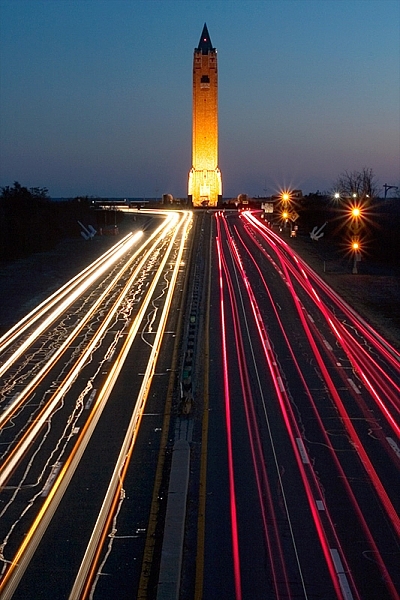
While using leading lines in composition sounds simple, it’s actually one of the harder styles to pre-visualize. The idea is to find a line that will lead the viewer’s eye through the frame, and direct them to the subject. Train tracks are an obvious example, but it’s dangerous to shoot there, and therefore not recommended. There’s no shortage of safe alternatives however. The key is learning to see these opportunities, and apply them accordingly. How do you do this? Slowing down is certainly a good place to start. If you’re chasing the light at sunset, chances are your composition will be rushed and sloppy. If you take the time to really scout a location, it’s possible to craft an image that far exceeds a routine snapshot.
2) Shutter Speed

Yes, even your camera settings can be used as a compositional element. In this instance, a fast shutter speed would have frozen the water, leaving it rather listless. By slowing the exposure down to several seconds, the circular motion of the stream becomes evident, and works to anchor the scene. This is a different way of thinking about composition. It’s not only about where you put your focus point, but how you apply your settings to create the scene.
3) Depth of Field and Selective Focus

The aperture you choose can also play a major role in your composition. At f/1.8 for example, you have such a shallow depth of field that only a small portion of the picture is in focus. From a strategic angle, this can be quite an effective way to bring attention to your subject. While the face of the monument is sharp, both the foreground and background are completely out of focus. Seeing like this in advance, takes practice and imagination. When you look at an object, try to visualize how the camera can render it at various settings.
4) Going the Extra Mile

When traveling, it’s easy to get swept up in the excitement of a location. Often, you have to balance shooting time with making time to eat, sleep, and well, be human. Still, you want to get the shot that will be good enough for your portfolio. This doesn’t necessarily mean you need to sleep in the field, with the camera as your pillow. Sometimes, the difference between an average shot and a great one is a little extra effort. I’ve seen this time and again in my own work, and therefore wanted to stress it here.
In the first shot (above), I got off the ship, turned around and made a quick mindless record shot. The light was pretty but the overall image is uninspiring at best. Taking my own advice, I asked the waiting cab to let it idle for a minute, and walked down the pier a few hundred feet. From this new perspective, an entire different view presented itself with the sun kissing the ship’s bow. To emphasize the shape and color I purposely underexposed the scene (to make a silhouette). The small aperture of f/16 turned the sun into a starburst. These two shots are vastly different but were taken merely 100 feet apart, separated by five minutes.

Second ship shot
5) Framing
There are of course times when you scout and plan well, but the light is just not flattering when you arrive. You can go home empty handed, or work with what’s been presented, to make something special. Framing is one of the most effective ways to eliminate bad light. By essentially hiding it behind foliage you can emphasize your subject in a clever way. For the viewer, this provides a sense of three dimensionality, almost like they’re peering through a window. A small aperture works best for this technique, as it will keep everything sharp from near to far.

So try to incorporate some of these creative composition techniques into your images as you shoot. Work intentionally and think about your image before you press the button. Share any additional tips you have in the comments below.
googletag.cmd.push(function() {
tablet_slots.push( googletag.defineSlot( “/1005424/_dPSv4_tab-all-article-bottom_(300×250)”, [300, 250], “pb-ad-78623” ).addService( googletag.pubads() ) ); } );googletag.cmd.push(function() {
mobile_slots.push( googletag.defineSlot( “/1005424/_dPSv4_mob-all-article-bottom_(300×250)”, [300, 250], “pb-ad-78158” ).addService( googletag.pubads() ) ); } );The post 5 Effective Methods of Creative Composition by Chris Corradino appeared first on Digital Photography School.
-
G-whizz: Canon unveils PowerShot G5 X and compact-sized G9 X with 20MP 1″-type sensors
Canon has introduced two new enthusiast compacts with 1″-type CMOS sensors: the PowerShot G5 X, which will sit above the PowerShot G7 X, and the entry-level G9 X which is roughly the size of the PowerShot S120. Read more