Month: December 2013

  • Testing New Flickr Web Embeds Feature

    New Flickr format for blogged photos

    Flickr Web Embeds

    To The Open Arms of the Sea
    Old Flickr format for blogged photos

    I like the old format a lot better. The new format forces a title and Flickr logo watermark on your photo. I do love Flickr but I don’t want a Flickr watermark on every single photo I blog. I don’t want *ANY* watermark on the photos that I blog.

    Also, look how bad the watermark looks on a white background. White text on a white photo becomes unreadable. Also, why is the r in Flickr cut off on the right on the flickr logo with the new iframe crap code?

    As it stands right now, users on Flickr have an option to use the new embed feature or they can also still get the old html code. On the new Flickr beta photo page though users are only given the option of the new iframe code. I hope when the new beta photo page becomes default, we still have an option to choose between the old, clean and simple code instead of the new forced watermark code.

    More conversation on today’s change in the Flickr help forum here.

    Update: More from TechCrunch here:

    “But perhaps a logo with more transparency would be nice, or one that faded away with navigation controls, appearing on interaction or mouse-over. It’s a fairly minor complaint for me, though some photogs might have an issue with it.”

    Yep, I’m one of those photogs that probably has an “issue” with a forced Flickr watermark on every single photo on blog on my paid Flickr Pro account that is supposed to exempt me from advertising on my photos.


    Thomas Hawk Digital Connection

  • The Art of Black and White Photography: 75% Off Today Only

    On the sixth day of Christmas dPS gave to me, a chance to master Black and White Photography.

    You’ll save 75% on acclaimed Udemy course “The Art of Black and White Photography“.

    To take advantage of todays deal head here.

    NewImage

    In this value packed 6 hour course you’ll learn how to create dramatic and compelling black and white images using a range of powerful Photoshop techniques.

    What Students Are Saying About This Highly Rated Course

    This course is rated as the #1 Photography course on Udemy. Here’s a snippet of what students are saying about this course.

    “Extremely comprehensive, completely understandable and even enjoyable. Worth the money, probably double!” – Jeffrey Puritz

    “This course showed me simple and effective ways to convert any picture good or bad and improve the life of the picture….. easy to follow steps and fantastic tips …. worth a look!!” – Jillian Martin.

    There are many more great reviews just like these.

    Discover the Secrets of Taking Beautiful Black and White Images Today

    So if you are confused about which black and white conversion techniques to use, unsure about how to adjust the tonal range and balance of your black and white photos using curves and masks, want to make more of your black and white portraits, and you want to learn how to tone your black and white images, this course is for you.

    You can enrol right now for just $ 24. Normally this would cost you $ 99 so it’s an absolute steal.

    And whilst this deal won’t be gone in 60 seconds, it will be in 24 hours. Don’t miss out!

    Grab this deal here.

    The post The Art of Black and White Photography: 75% Off Today Only by Darren Rowse appeared first on Digital Photography School.


    Digital Photography School

  • Great Ghost Cities of China: 7 Eerie Abandoned Wonders

    [ By Steph in 7 Wonders Series & Global. ]

    Abandoned China Main

    An ancient city made of intricately carved stone sits silent at the bottom of a lake, a replica of Paris complete with an Eiffel Tower is eerily empty, and a city leveled by disaster has been cordoned off indefinitely as a memorial to those who were lost. China might just be home to more ghost cities than any other nation on earth, and most of them are of the modern variety, as the push for economic progress has led developers to get a bit ahead of themselves constructing vast communities, malls and amusement parks that never caught on with the public.

    China’s Atlantis: Lost Underwater City

    Abandoned China Underwater Lion City 1

    Abandoned China Underwater Lion City 2

    Roughly one hundred feet below the surface of Thousand Island Lake (Qiandao Lake) is one of the world’s most stunning submerged historical treasures: Lion City. This ancient city was built during the Eastern Han Dynasty (25-200 CE) and measures about 62 football fields. The city, which is complete with incredibly intricate relief sculptures all over the stone walls of its buildings, was intentionally flooded in the 1950s to create a dam. Evidently, authorities felt that attempting to preserve the city wasn’t worth the trouble. But now that it’s underwater, it has become a diving destination, and various tours have popped up allowing visitors to explore it. Some have even proposed building transparent floating tunnels and other new construction that could make it more accessible to everyone.

    Paris of the East: Replica Ghost City

    Abandoned China Paris Replica 2

    Abandoned China Paris Replica 1

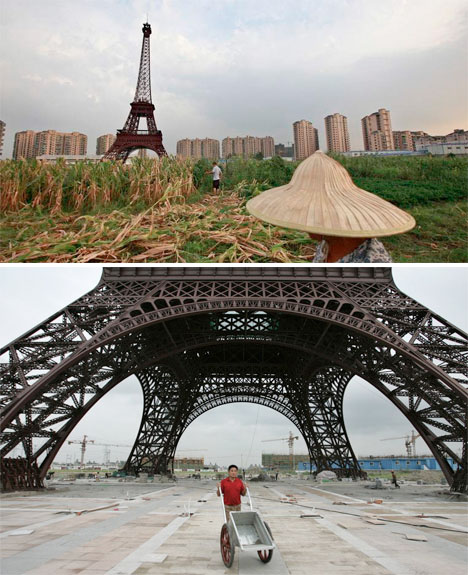
    Paris is one of the world’s most vibrant cities, bustling with hundreds of thousands of people. At least, the one in France is. The meticulously built replica city in China – not so much. Tianducheng, in China’s Zhejiang district, was modeled after the real Paris, complete with a 354-foot replica of the Eiffel Tower as well as other landmarks. Intended to be a luxurious gated community that could house 100,000 and draw rural families into a centralized urban location, the city has been a ghost town since its construction in 2007. Only about 2,000 people moved there, and that small number seems to be dwindling by the day. But work is still in progress, and officials are hoping to get more people there before the whole complex is totally complete in 2015.

    Ordos: A Modern Ghost Town

    Abandoned China Ordos 1

    Abandoned China Ordos 2

    It seems as if the entire population of a large city simply vanished into thin air. In reality, they were never here in the first place. The Kangbashi New Area of Ordos is a planned community for one million people, envisioned as the Dubai of Northern China – but only about 20,000 people live there, and you’d never even guess there are that many residents based on the eerie photos of deserted streets and empty skyscrapers. It’s close to abundant natural resources and has plenty of public infrastructure, and economic woes aren’t actually a problem. The government just can’t seem to convince people to move here. Some of the architecture, like the Ordos Art Museum, is really quite stunning, and it’s strange to see it accumulating dust as it waits for visitors that might never come. City officials are still hoping that many of the 1.5 million residents of the old section of Ordos, located 15 miles away, will decide to make the move.

    Beichuan: Left Behind After a Disaster

    Abandoned China Beichuan Disaster City 2

    Abandoned China Beichuan Disaster City 1

    Imagine an entire city leveled by an earthquake, roped off and left to rot as a sad and rather dangerous tribute to all that was lost. It happened in Christchurch, New Zealand (sort of – they do plan to rebuild, and the process has already begun) and it happened in Beichuan, China. A deadly earthquake killed thousands of residents and displaced tens of thousands more, and the damage is so extensive that reconstructing it would require leveling almost all of the remaining buildings. So, it’s now basically a memorial park that you shouldn’t enter unless you’re keen to get trapped in the rubble and join the other victims.

    Next Page – Click Below to Read More:
    Ghost Cities Of China 7 Eerie Abandoned Wonders

    Share on Facebook


    [ By Steph in 7 Wonders Series & Global. ]

    [ WebUrbanist | Archives | Galleries | Privacy | TOS ]


    WebUrbanist

  • 18 December, 2013 – The Full Frame Myth

    Given the advances in sensor technology over the past few years, is Full Frame really necessary? Up until recently I might have said "Maybe not…". The latest generation of smaller sensor cameras have gotten so good, and the appeal of smaller and lighter bodies and lenses is so great, that in many parts of the world DSLR sales are being trumped by Compact System Cameras.

    But now with Sony’s new A7 and A7r Full Frame cameras, which are actually smaller than some MFT models, which way are things going to go? Find out more.


    New Travel Video Online for Subscribers

    Subscribers will find that there is a new travel video online as of today. It is titled The Palouse: A Washington State Photo Trip. You’ll find it in your Video Library of your device, or it can be viewed online in your browser.


    You can win an all-expenses paid photographic expedition to Antarctica, along with air fare from anywhere in the world. The value of this prize is $ 15,000.

    The Luminous Landscape wants you to try any of our more than 60 training or travel videos and our new free video player. Each purchase is an entry, and an annual subscription that includes all previous as well as new videos counts as six entries. The winner of a free lifetime subscription is also chosen from each month’s entries.

    FIND OUT MORE 


    The Luminous Landscape – What’s New

  • Tips to Protect your Gear in Harsh Weather Conditions

    Do you live in a cold and snowy climate? Are you planning a trip to a desert or a tropical island? Although adverse weather or harsh environments can yield some of the best images, those situations can also play havoc with your camera gear if you don’t plan accordingly. Here are some simple steps to help you shoot without ruining your equipment.

    Tips to Protect your Gear

    Rain
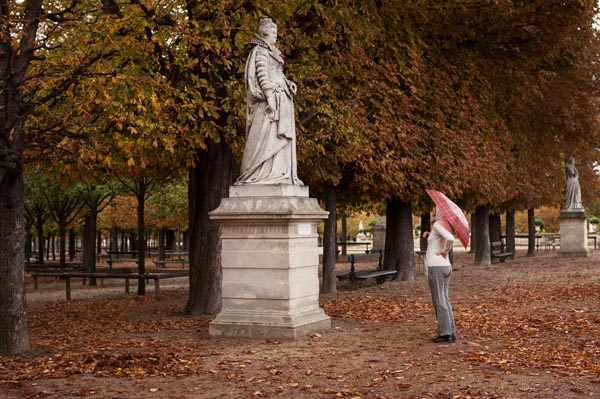
    I love photographing in the rain. Of all adverse weather conditions, rain is one of the easiest to deal with to protect your camera. ©Valérie Jardin

    I love photographing in the rain. Of all adverse weather conditions, rain is one of the easiest to deal with in regards to protecting your camera. ©Valérie Jardin

    Don’t let a rainy day stop you from making amazing photographs. Just protect your camera, and yourself, and get out there! Although some of the most expensive DSLRs and lenses are weather sealed and can be used in the rain without protection, most cannot. The good news is that they can easily be fitted inside a rain sleeve specifically designed to keep them dry on rainy days. Rain sleeves will cost from a few dollars for a clear plastic model, to $ 30+ for a more durable water proof material. The more expensive rain sleeves come is different sizes to fit your lens. Note that they work best when you use a lens hood.

    It’s harder to find rain protection for smaller camera systems. A makeshift cover with a shower cap or a freezer bag will usually do the trick. Since I mostly shoot street photography with a mirrorless camera, I find that holding an umbrella is quite convenient if it’s not too windy. The camera is small and light, one hand to shoot is all you need!

    Snow and cold

    Again, what most would consider adverse weather makes for a photographer’s ideal playground. Heavy snow falls should be treated like rain and the same protection applies. Dealing with the cold, on the other hand, is a different story. When out in the cold, your camera doesn’t need any special protection as long as it stays dry. One of the biggest issues with shooting in cold weather is the moisture and condensation that can build up on your camera and lens when you go from cold, to the warmth of your home or car. Excessive moisture on your lenses can cause mold to form inside the lens, which will ruin it.

    To prevent damage from condensation, here is what you need to do: Before you go back inside your house or car, make sure you seal your camera in an air-tight plastic bag. This will allow the camera to reach room temperature while the condensation builds on the outside of the bag, not on your precious gear.

    Mirror lock-up can also happen in very cold temperatures when the lubricant that helps activate the moving parts freezes. Cameras can usually handle colder temperatures than stated in the manual, but be aware that this type of lock-up could happen if you end up in the arctic circle.

    Another thing to worry about when the temperature dips, the battery will drain much faster. So, make sure you carry a spare or two that you keep in a pocket, as close to your body heat as possible. Smaller cameras don’t have as many moving parts, and no mirror freeze up to worry about, but their batteries will drain even faster, so be prepared for that.

    Your camera needs some special attention in cold and wet conditions. ©Valérie Jardin

    Don’t hibernate with your camera in cold weather. Just take some special steps to protect it and yourself! ©Valérie Jardin

    Extreme humidity

    Besides the obvious inconvenience of your lens fogging up as soon as you leave your air conditioned room and step into the hot and humid environment, humidity can also lead to mold. You can alleviate the fogging up of the lens by placing your gear in a sealed plastic bag and letting it slowly adjust to the change of temperature. Avoid changing lenses as much as possible and remember that zooming in and out will pump humidity inside. Favor prime lenses!

    Keep sensitive equipment in sealed bags and keep small silica desiccant packets in your camera bag to absorb some of the moisture. Dry your hands before you change batteries or memory cards to prevent trapping moisture in the compartment.

    Tropical environments bring a lot of great photo opportunities, just make sure the moisture doesn't get inside your camera! ©Valérie Jardin

    Tropical environments bring a lot of great photo opportunities. Just make sure the moisture doesn’t get inside your camera! ©Valérie Jardin

    Heat

    Just like extreme cold, the opposite can also give you some gear trouble. Use common sense and avoid prolonged exposure to direct sunlight. Keep your camera cool, and in the shade when not in use. Cameras can overheat and this can cause damage to the internal components. You can use an empty cooler which will help keep your camera cool when you’re not using it. It’s also a good idea to carry one of those space blankets when you are out in the wild or extreme weather. You can use it to protect your camera from the sun as well.

    Sand and dust

    Have you ever been on a beach during a sand storm? I have! No matter what you do, sand will get everywhere! If you are going to be in an extremely dusty environment, I would highly recommend protecting the front element of your lens with a good quality filter. An occasional scratch from wiping some of the dust or sand off the front of your lens won’t hurt as much if it happens on the filter rather than the lens itself. Also, don’t set your camera bag on the sand! Camera bags are perfect sand traps.

    Salt

    If you shoot near the sea on a windy day, there will surely be some spray of salty water on your gear. Again, a UV filter will help protect the front element of your lens. Make sure your battery is full and your memory card is empty before you head out so that you avoid opening the battery or memory card compartment at all costs to prevent corrosion to form inside. It may not be a good time to change lens on the beach either.

    Never leave home without them

    A blower such as the Giottos Rocket blower. It’s such a small investment and one of the best accessories you can have in your camera bag at all times. I not only use it to blow any dust from the lens before I wipe it with a lens cloth. But I also blow the back of the lens before I put it on the camera to prevent dust from reaching the sensor. I also use it to blow air on the lens and camera before I wipe them clean.

    Microfiber cloths. Keep one separate that you will use for the front of your lens only. Carry extras to wipe the dust or water from your lens and camera body. The key is to remove as must moisture or dust as quickly as possible.

    Common sense when changing lenses

    Avoid changing lenses in adverse weather. If you absolutely have to, follow these simple steps: Do it in your car if you can. If not, turn your back to the wind and be ready to do it quickly. Place the new lens on a clean, flat surface. Unscrew the back cover but leave it on. While shielding your camera from the elements with your body, put the camera upside down and quickly switch lenses. This should only take a second or two to minimize the amount of dust that will get to your sensor.

    Protect yourself

    Protecting your gear from extreme weather won’t do much good if you don’t make it back alive! Whether you are dealing with extreme cold or heat, don’t mess with extreme weather if you’re not prepared. No picture is worth risking your life for!

    I hope you found some of those tips useful. Please share your own with the community in the comment section below.

    More reading on this subject

    • How to protect your gear in extreme conditions
    • Storm jacket cameras cover – a review by Valérie Jardin
    • 7 digital camera predators and how to keep them at bay
    • Camera insurance – assure peace of mind


    The post Tips to Protect your Gear in Harsh Weather Conditions by Valerie Jardin appeared first on Digital Photography School.


    Digital Photography School
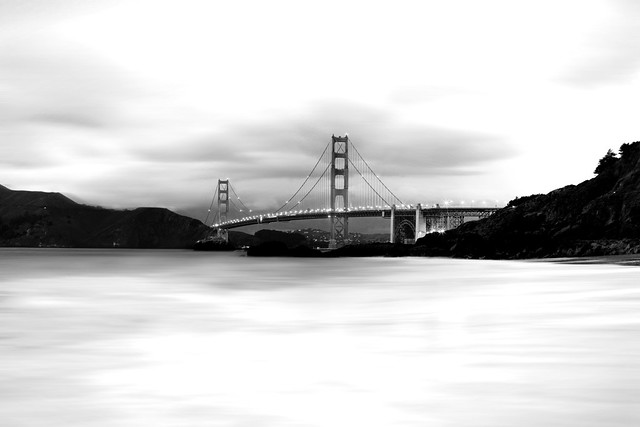
  • Blog Project: Your Best Photos From 2013

    The post Blog Project: Your Best Photos From 2013 appeared first on JMG-Galleries – Landscape, Nature & Travel Photography.


    Related Stories

    • The Old Guard – Bristlecone Pine Forest, California
    • The Old Guard – Bristlecone Pine Forest, California – Enclosure
    • Save 25% on my eBook and Star Trail Webinar Now Through Dec. 2nd
    Feed Ads by FeedBlitz
    powered by ad choices


    JMG-Galleries

  • Without Reservation: A Recommended Gear List

    This is something I get asked about a lot, and its inclusion on the site is far overdue. The following is a list of gear in which I have complete confidence, and would recommend wholeheartedly to any photographer.

    The Without Reservation list will be kept up to date going forward, so these are all subject to change at some point in the future. But as of now, this is the go-to gear that I rely upon day in and day out.

    Read more »
    Strobist

  • Excel at Underwater Photography Like You’re Part Fish

    Underwater photography is an acquired taste that is both an art form and a means of obtaining data. Usually, scuba divers are the ones taking underwater photos, but this art form can also be carried out while diving on surface supply, just swimming, snorkeling or safely inside a submersible. While underwater photography can be understandably difficult to successfully carry out, Continue Reading

    The post Excel at Underwater Photography Like You’re Part Fish appeared first on Photodoto.


    Photodoto

  • 18. Türchen: Wenzel

    18. Türchen

    Die eigenen Bilder drucken lassen und in den Händen zu halten, ist ein tolles Gefühl. Für alle, die das Haptische genauso sehr lieben wie wir, befindet sich in diesem Türchen etwas ganz Besonderes aus dem Hause Wenzel. Wenzel bietet unter anderem den Druck auf Naturmaterialien wie Stein und Holz an!

    Die Platten beim Druck auf Stein sind rau und sorgen so einen schön antiken Charakter. Ein Schutzlack über dem Bild garantiert eine lange Lebenszeit. Die Platten gibt es in drei Formaten: 15 x 15 cm, 20 x 20 cm oder 30 x 30 cm. Große Formate lassen sich aber auch durch den Druck über mehrere Steinplatten hinweg erreichen. Aber egal wie groß – es ist sicher ein Hingucker und vor allem ein Unikat.

    Der Druck auf Holz eignet sich natürlich besonders für Naturfotos, aber auch Winterlandschaften mit vielen Weißtönen wirken sehr schön. Die Holzmaserung ist immer sichtbar und verleiht den Bildern das Besondere. Die Wirkung funktioniert aber nicht unbedingt bei jedem Motiv, bei Portriats beispielsweise können Äste in Nasen- oder Mundhöhe liegen. Der Druck auf Holz ist in verschiedenen Formaten von 20 x 30 cm bis 60 x 80 cm möglich.

    Wenzel

    Ob sich Euer Motiv eignet, könnt Ihr auch ganz einfach bei Wenzel selbst erfragen. Hier werdet Ihr kompetent beraten von Menschen, die mit genau diesen außergewöhnlichen Druckverfahren schon Erfahrung haben. Testen dürfen es gleich sechs Gewinner, denn die Firma Wenzel hat drei Mal den Druck auf Stein mit den Maßen 15 x 15 cm, sowie drei Mal den Druck auf Holz mit den Maßen 20 x 30 cm in unser Türchen gelegt.

    Um einen der Drucke zu gewinnen, schreibe einen Kommentar mit Deinem Wunschgewinn unter bürgerlichem Namen und gültiger E-Mail-Adresse bis heute um 24 Uhr. Danach verlosen wir sie per Zufallsgenerator unter allen Kommentatoren. Die genauen Gewinnspielregeln findest Du hier. Viel Glück!


    kwerfeldein – Fotografie Magazin