Category: Uncategorized

  • A Little Grecco-To-Go for Your Tablet


    Michael Grecco's Lighting and the Dramatic Portrait has been one of my favorite lighting books since it was released back in late 2006. That was far enough back to where publishers were not yet insisting on all of the e-Rights. So Grecco has done what any smart photographer would do, and has just co-released LatDP as a multi-platform eBook.

    In fact, just thinking about all of the amazing photo books that were published before e-Anything makes me realize there is a huge i-Library just waiting to happen. And in a way which will see the royalties go where they rightly belong.

    On top of that, we can support photogs directly (no offense, 90%-taking mega-publishers) while toting around a bucketload of inspiration on our tablets, phones, pods, etc.

    In honor of the new LatDP medium, I asked Michael if he would give a little extra BTS on one of my favorite images from the book. You know, a lil sump'm sump'm just for us.

    And he did… Read more »


    Strobist

  • Panasonic GF1 first impressions

    As anyone who’s been following this blog knows, I’ve been very excited about the whole inception of the new micro four thirds standard… I decided not to jump on the EP-1, waiting to see the developments from Panasonic etc…  With the release of the GF1 and the announcement of the EP-2, I finally decided to get myself a GF1 for my birthday.   Of course my B-day isn’t for another month, but given the impossibility of actually finding the stupid thing in stock, when I saw one available from amazon I jumped on it and received it last week.

    Of course a week and a few shots are not nearly enough to get the real “feel” of a camera, but here are some initial thoughts:

    • I bought this camera as a replacement for my G9 (which I subsequently sold). my first thought was “this is just like my G9, only better”
    • Image quality is superb – particularly with the 20/1.7.  Plenty of detail, and the raw files hold up to processing well (using LR3 beta).  High ISO is perfectly adequate for me.  I’d use it comfortably up to 800/1250, and 1600/2500 are definitely usable with some NR/processing.  3200 is a bit noisy, but still seems perfectly usable for smaller prints etc… with some NR.
    • I don’t miss an OVF at all.  I don’t know why folks get hysterical about composing on a screen- to me it’s just another way of composing.  SLR finder, Rangefinder, Waist-level finder, ground glass… whatever.   as long as I can compose my image, it’s all good.
    • Much like the G9 it’s not truly “pocketable” it definitely needs a small bag or coat pocket.  To me this is basically a camera for “good pictures that’s lighter/easier to carry than an SLR”
    • Responsiveness is excellent.  Shutter lag is negligible, and focus is nice and snappy even in low light.  It’s not quite as good as my D700 (!) but it’s more than adequate.   I can’t see myself missing any shots due to lag (caveat: I don’t shoot kids or sports, so if you do YMMV!)
    • build quality is… decent… it’s not a leica, but it doesn’t feel like its going to fall apart either.  Probably the cheapest-feeling part of the whole thing is the zoom action on the 14-45 kit lens, but even that isn’t terrible (hey it’s a kit lens!)
    • Manual focus with the m4/3 lenses is actually not bad at all.  The “focus by wire” doesn’t bother me, and the focus rings (particularly on the 20/1.7) are surprisingly smooth and well damped, unlike many modern AF lenses.  I’m curious to try some real MF lenses on it with an adaptor.
    • I’m still getting a feel for the menus/controls, but they seem perfectly adequate.  I wasn’t sure about the whole “push-turn” control wheel but I actually really like it now.  All the necessary info is shown on screen, and all the settings I need to use regularly are easily accessible without digging through 27 menus (<cough> canon mirror lockup<cough>
    • I’m curious how the lack of a mirror will affect hand-holdability.  I know I can handhold a rangefinder at least a stop slower than an equivalent SLR, I wonder if the GF1 will have the same advantage…
    • So far the main “negative” I can find with the camera is that the grip on the front feels a little slippery (the rear has a nice rubber thumbpad, but the front “fingertip” area is too slick for me) Surprisingly this makes the grip less sure than my G9… it might be worth getting a little stick on pad for the front to alleviate this.

    Overall, the “gestalt” of this camera is the same to me as the G9 – not a “pocket camera” per-se, but a “real camera” that I can carry around more easily than a full SLR.  In this regard it succeeds superbly.   For my purposes, the GF1 realizes the dream of “SLR image quality in a compact body” perfectly, particularly with the superb 20/1.7.   I’m actually toying with using it fom a couple of “real” shoots coming up, to see if the ability to go ultralight/minimalist will give added freedom in location shooting.

    more to come…

    P1000075

    P1000053

    P1000058

    P1000067

    Tweet This Post Stumble This Post


    F/1.0

  • Cold Shoe Your Monoblocs for Better Radio Performance


    Here's an idea that is so simple I am surprised it did not strike me sooner.

    It's one of several neat little design improvements in the new Einsteins, but it never occurred to me how cheap and easy it would be to retrofit my old AlienBees. Read more »


    Strobist

  • LowePro, A Camera Bag Company You Can Count On

    LowePro, A Camera Bag Company You Can Count On

    About 7 years ago I bought my first speciality camera bag. I’d been using a regular backpack to lug my stuff around, but I needed something more targeted for camera gear and so I bought the LowePro CompuDaypack. It was an excellent lightweight bag that was perfect for carrying around my camera, a few lenses and my laptop computer. One of the reasons why I bought the bag from LowePro was because it had a lifetime guarantee. If something has a lifetime guarantee, the quality should be pretty high (assuming that they honor the guarantee).

    Over the course of the next 5 years or so I wouldn’t say I abused that bag, but I wore it every single day of my life. It went into abandoned buildings, over fences, through broken windows, up on bridges and roofs and on tons of trips — it went through rain, sleet, snow, deserts, mountains, beaches, everywhere. I’m not your typical weekend shooter and so I’m not sure that any bag could possibly withstand the sort of turmoil I put a bag through. Inevitably the bag began to wear out. When you use a bag like I do this will probably happen to any bag. The fabric literally began to tear apart at the bottom of the bag where I’d set it on the ground over and over and over again.

    I loved my LowePro though. It was perfect for me. I liked it so much that I bought another LowePro as my next bag purchase. This time a bigger bag to accomodate even more lenses, the CompuTrekker Plus AW. I had more to carry around and needed something even more robust for my photography adventures.

    Probably the biggest vulnerability on any bag is the zipper. After about 2 years, the zipper on my CompuTrekker Plus AW went out. Disappointed, I decided to send my bag back into LowePro to see if it could be repaired. Since I was mailing them my new backpack anyways, I thought I’d also through my old CompuDayPack bag in as well and see how well LowePro honored their lifetime guarantee on their bags.

    To my surprise after sending both bags into LowePro they sent me back two brand new bags. I don’t think they make the CompuTrekker Plus AW anymore so instead they replaced it with one of the best bags that they make, the Lowepro Pro Runner 450 AW. They also sent me a brand new CompuDaypack.

    When a company stands behind their products and honors their lifetime guarantee like this, I think it’s only fair to write up a blog post on them as a satisfied customer and share an example of excellent customer support with the rest of the world. Not only does LowePro make great camera bags, but they stand by their product even when someone puts it through the sort of workout that I do.

    Thanks, LowePro!


    Thomas Hawk Digital Connection

  • Small, Cheap and Underappreciated: Spill-Kill Reflectors

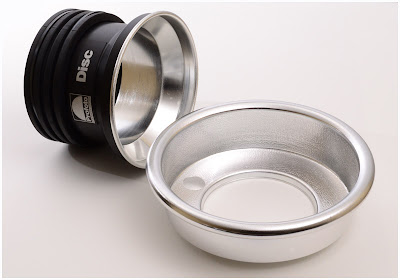
    I acquired my first spill-kill reflectors by accident. There were two, included in a set of used Profoto Acutes I bought from a dentist. (One of them is pictured above, at left.)

    My first thought: These things are useless. Should I throw them away or try to sell them on eBay?

    But these days, I generally do not stick a studio head into an umbrella without one. Read more »


    Strobist

  • Shootout in the Desert, Round Three


    Some advice is as good as it is self-evident: Don't whittle towards yourself. Don't pee into the wind. Don't enter into a land war in Southeast Asia.

    And to that I can now add: never, ever go up against Gregory Heisler in the Gulf Photo Plus Shootout… Read more »


    Strobist

  • Photo Talk Plus Episode 15, With Special Guest NPPA Attorney Mickey Osterreicher, TONIGHT 8PM PST LIVE!

    Photo Talk Plus LIVE Tonight 8PM PST!!!! http://vidcastnetwork.com with Special Guest Mickey Osterreicher, General Counsel National Press Photographers Association.

    Well we have a GREAT show lined up for you tonight. Mickey Osterreicher is the General Counsel for the National Press Photographers Association and is well versed on the nuances of various photography related legal issues. Come listen to an update on the legal hotspots for photographers, including your legal right to photograph the police vs. wiretapping laws that have been in the press lately.

    This will be a great chance for you to ask questions live in our chatroom from a real lawyer working in this important area of the law.

    Joining myself and co-host Lotus Carroll tonight will be panelists Dave Cohen (from Google Photos), Carlos Miller (who is currently defending his third arrest for photography and runs the excellent blog Photography is Not a Crime), Sandra Parlow, Tamara Pruessner and Vidcast Network’s Keith Barrett.

    In addition to our interview with Mickey, well talk about how to find out the view counts on your photos on Google+, an update on the new photo album organization tool released this week, an update on the Google+ SXSW phototwalk in Austin and our contest for the 5D Mark II giveaway from last week that was won by Cameron Siguenza.

    I’ll also have a copy of the new Plus One Collection book on hand to show everyone live on the broadcast as well. (Thanks Ivan Makarov!)

    Don’t miss this exciting episode and looking forward to seeing everyone tonight in the chat room! Thanks as always to our wonderful sponsors at Drobo and SmugMug for supporting our show. Be sure to check them out at http://drobo.com and http://smugmug.com


    Thomas Hawk Digital Connection

  • Q&A: Lighting Multiple People with Glasses

    After reading the Lighting 101 post about lighting for glasses, Z9Girl asks:

    "What if I were photographing an older couple for their 50th wedding anniversary and they both wear glasses? Of course there's always the natural light option, but if it has to be indoors with soft boxes or flash, what to do?"

    Read more »


    Strobist

  • Panasonic GF1 first impressions

    As anyone who’s been following this blog knows, I’ve been very excited about the whole inception of the new micro four thirds standard… I decided not to jump on the EP-1, waiting to see the developments from Panasonic etc…  With the release of the GF1 and the announcement of the EP-2, I finally decided to get myself a GF1 for my birthday.   Of course my B-day isn’t for another month, but given the impossibility of actually finding the stupid thing in stock, when I saw one available from amazon I jumped on it and received it last week.

    Of course a week and a few shots are not nearly enough to get the real “feel” of a camera, but here are some initial thoughts:

    • I bought this camera as a replacement for my G9 (which I subsequently sold). my first thought was “this is just like my G9, only better”
    • Image quality is superb – particularly with the 20/1.7.  Plenty of detail, and the raw files hold up to processing well (using LR3 beta).  High ISO is perfectly adequate for me.  I’d use it comfortably up to 800/1250, and 1600/2500 are definitely usable with some NR/processing.  3200 is a bit noisy, but still seems perfectly usable for smaller prints etc… with some NR.
    • I don’t miss an OVF at all.  I don’t know why folks get hysterical about composing on a screen- to me it’s just another way of composing.  SLR finder, Rangefinder, Waist-level finder, ground glass… whatever.   as long as I can compose my image, it’s all good.
    • Much like the G9 it’s not truly “pocketable” it definitely needs a small bag or coat pocket.  To me this is basically a camera for “good pictures that’s lighter/easier to carry than an SLR”
    • Responsiveness is excellent.  Shutter lag is negligible, and focus is nice and snappy even in low light.  It’s not quite as good as my D700 (!) but it’s more than adequate.   I can’t see myself missing any shots due to lag (caveat: I don’t shoot kids or sports, so if you do YMMV!)
    • build quality is… decent… it’s not a leica, but it doesn’t feel like its going to fall apart either.  Probably the cheapest-feeling part of the whole thing is the zoom action on the 14-45 kit lens, but even that isn’t terrible (hey it’s a kit lens!)
    • Manual focus with the m4/3 lenses is actually not bad at all.  The “focus by wire” doesn’t bother me, and the focus rings (particularly on the 20/1.7) are surprisingly smooth and well damped, unlike many modern AF lenses.  I’m curious to try some real MF lenses on it with an adaptor.
    • I’m still getting a feel for the menus/controls, but they seem perfectly adequate.  I wasn’t sure about the whole “push-turn” control wheel but I actually really like it now.  All the necessary info is shown on screen, and all the settings I need to use regularly are easily accessible without digging through 27 menus (<cough> canon mirror lockup<cough>
    • I’m curious how the lack of a mirror will affect hand-holdability.  I know I can handhold a rangefinder at least a stop slower than an equivalent SLR, I wonder if the GF1 will have the same advantage…
    • So far the main “negative” I can find with the camera is that the grip on the front feels a little slippery (the rear has a nice rubber thumbpad, but the front “fingertip” area is too slick for me) Surprisingly this makes the grip less sure than my G9… it might be worth getting a little stick on pad for the front to alleviate this.

    Overall, the “gestalt” of this camera is the same to me as the G9 – not a “pocket camera” per-se, but a “real camera” that I can carry around more easily than a full SLR.  In this regard it succeeds superbly.   For my purposes, the GF1 realizes the dream of “SLR image quality in a compact body” perfectly, particularly with the superb 20/1.7.   I’m actually toying with using it fom a couple of “real” shoots coming up, to see if the ability to go ultralight/minimalist will give added freedom in location shooting.

    more to come…

    P1000075

    P1000053

    P1000058

    P1000067

    Tweet This Post Stumble This Post


    F/1.0

  • Thaipusam in Penang 2012

    I have seen this event on TV and in magazines for many years now, it makes me wince when I see the extremes that these people go to for their religion.  When I found out about this event, I made all efforts to attend this whilst in Asia.

    So how do you go about photographing an event like this, without intruding on their religious beliefs and not offending anyone? It’s a tall order to be respectful and yet get some great images.  Also how do you prepare for seeing the extreme piercing that is before your eyes?  I said to myself I had to look for photographs that were bold, clean and accurate in photographing the persons piercing, and then move on to the next person after you had hopefully got the shot.  I only really started to see the extreme piercing I had photographed in detail when I got home and was reviewing the photographs, and then you see the detail in the photos. It was useless trying to edit them on the fly at the event, reasons: – too many people around you, too bright even in the shade to see the screen on the back of the camera, it was very busy, so you did not have time to review any shots on the two days.

    My worries were unfounded, as when I went towards the two Indian Temples where all the ceremonies’ etc were taking place and there were many thousands of people all around, a lot of them were taking part, being cleansed with the milk etc.

    The down and up side to the large crowds at this event, on the downside you missed images because of someone getting in your way or quite simply you could not get the angle you wanted, and on the upside you were invisible, you could get your shot and disappear, sometimes without any one knowing you had been there.  Also a smile and a simple “thank you” went a long way, if they did notice you, no one objected to being photographed, as there were a lot of people with camera phones and had being photographed along the route many times.

    Using the crowds as cover it is quite obvious when a “devotee” was approaching, so you had to look for a space in the crowds where you could slip in and get the shot.  However walking the route I found there was a policeman on a corner where they came off the main road and towards the temple, he was very good at crowd control all on his own (his assistant was not so good), he kept the spectators away from the devotees (to give them respect as they need space with what they are doing), this meant that I had space between me and the subject to get the shot as I followed them up the short path to the temple.

    Some the people were just walking too fast, and as they approached me quite quickly, directly after photographing another devotee, I had little time to compose the shot, and untimely I had to let the shot go, which was a shame, but with so many people doing this, it was not long before the next one was going to come by you.

    At this corner they often stopped, did a dance or a mini break before the final walk 200-300m before the long climb up the stairs to the final prayers at the top.  The other thing in my favor was a barrier that tried to keep the people moving in one direction either side e.g. left side up and right side down.  You have to use everything to your advantage and if someone look badly at you, or you just bump into them, just smile and say sorry, sounds to good to be true, but I did not cross words with anyone during the whole two days.

    The temperature was around 35 deg C and most of the route was in the sunshine, so it was hot for all, between photographs you did try and find a little shade from the searing sun, and yes I did go through a lot of water (4 litres when at the festival and lots more when I got home).

    Now for the coconut smashing, this was a little different, it was more of a party atmosphere there, as the road/path that the silver chariot was going pass on needed to be cleansed with coconut milk, it’s a serious event, but with a fun side to it.  However you had to dodge coconuts coming towards you as they were smashed to the ground and splitting open, and the pieces went flying, I had many hit my shins and feet.  Also the other thing you need to watch is the milk from the coconut, and it splashing all around you, hitting you and the camera lens, I was often had milk hit the lens, so frequent cleaning was the order of the day.  However I was told that being splashed by the milk brought you good fortune, so I did not mind.

    As these coconut smashing sessions were in small batches of around 100-200 meters long, you could photograph one and then wait for the next one to start, so you can correct your mistakes as you go, again, no one stopped me taking any photographs, you had to dodge some traffic on the other side of the road sometimes, but it was slow moving, so that was OK.  When photographing a crowd of people smashing the coconuts, it was good to let the camera be on continuous shooting, at what ever max frames per second it would allow, and then edit afterwards, as trying to time the shots, was near impossible as I started out like that, trying to photograph a person in full throw, so I gave up and photographed either the crowd or a particular person in the crowd smashing the coconuts, and then let the camera do its work at 3-5 frames per second and then review when you get home. I got some of my best shots this way along with some sequences of the coconuts being smashed along with the blurs of the milk splashes from the ground.

    Prior to the event I had contacted a news syndication agency and to see of they could sell any of these photographs to newspapers and magazines, they knew the shots were coming and currently I have 32 images up on their servers, this is hard to edit down from 1400 over the 2 days, I sent them around 90 in total and they did a final edit for me, as they know what might sell to these outlets.  All the photographs were shot on a Nikon D90, with 28-200 VR2 lens.  For more info on the actual event: Wikipedia http://en.wikipedia.org/wiki/Thaipusam

    Michael Crawford-Hick photography is an eclectic mix of all things water related e.g. sailing, windsurfing, powerboats, as well as abstracts of waves, reflections, beaches, sunset.

    Links:

    Websites: Images From Around the World, Prints by Post
    Twitter: http://twitter.com/mchphoto
    Blog: http://mchphoto2011.wordpress.com

    TweetShare on TumblrSubmit to StumbleUponSave on Delicious

    dslrBlog