Blog

  • Four Common Myths About Full-Frame Cameras Dispelled

    One of the beautiful things about modern digital photography is the astronomical degree of choice that is available to us. No matter whether you’re a professional photographer, a weekend warrior, or a casual enthusiast who just likes to take snapshots of your kids, your food, or your feet – there are dozens, even hundreds, of camera models and options to suit your needs. There are specialty cameras for recording extreme sports, underwater cameras for photographing the deep blue sea, and a slew of lenses available for DSLR and mirrorless cameras to suit any situation in which you might find yourself.

    There are also some clear differentiating factors between these various options that make some cameras better suited to certain situations. One of the most common issues I see discussed is that of full-frame versus crop-sensor cameras. To help clear the air regarding this particular question I’d like to address four common myths about full-frame, with the goal of helping you choose a camera that suits your needs.

    Four Common Myths About full-frame Cameras Addressed

    Taken with a 10-year-old crop-sensor Nikon D200 and 50mm f/1.8 lens.

    Myth #1: full-frame is better than crop-sensor

    I see this myth being perpetuated all the time, particularly in online forums but also when talking to people in person. It’s a shame because it’s just not true. full-frame is certainly better in some aspects compared to crop-sensor cameras, but to declare that they are universally better is colossally misleading.

    One analogy I like to use here is that of vehicles, particularly pickup trucks. A beast like the Ford F-150 is a fantastic and phenomenally well-rounded truck that excels at hauling, towing, and all the usual heavy-duty jobs for which one would typically buy such a vehicle. By comparison, the Toyota Tacoma is a smaller truck and not quite as powerful or capable, but actually beats its larger counterpart in some regards such as better gas mileage, smaller turning radius, and greater overall agility in a more urban environment.

    Four Common Myths About full-frame Cameras Addressed

    Taken with a full-frame Nikon D750 and 85mm f/1.8 lens. A crop-sensor camera would have worked, but would have required me to be farther back in order to get this same composition and there was simply not enough space in the room to do so.

    Different not necessarily better

    Neither truck is objectively better; both are well suited to the specific needs of the people who purchase them. The same is true for cameras in that full-frame cameras work very well in many regards. But to say they are better negates some of the unique advantages of smaller crop-sensor cameras.

    full-frame models, as a rule, have strengths like greater high ISO capabilities, improved dynamic range, and improved build quality. If these things are important to you, then a full-frame camera might suit your needs. However, smaller and less expensive crop-sensor cameras have some unique advantages as well such as:

    • Autofocus points that reach farther out to the edges of the viewfinder.
    • Faster shutter sync speeds.
    • Longer reach—a 200mm lens on a crop-sensor camera is basically like shooting with a 300mm lens on a full-frame camera.
    • Generally less expensive.

    These are all generalizations, of course, and there are always exceptions to the rule. But suffice it to say that just because full-frame cameras exist doesn’t mean you need to get one.

    Four Common Myths About full-frame Cameras Addressed

    Taken with a crop-sensor Nikon D7100, 50mm lens, and +10 close-up filter.

    Myth #2: Shooting full-frame will improve your photography

    This is a myth that’s closely related to GAS, or Gear Acquisition Syndrome – a condition that plagues many photographers and often causes them to continually buy more cameras, lenses, and accessories in the hopes that these things will help improve their photography. Getting a full-frame camera will certainly allow you to take advantage of the unique benefits that they offer, but it will by no means do anything to actually improve the quality of your photographs.

    No matter what camera you have, whether it’s a mobile phone, pocket camera, or crop-sensor DSLR, the best thing you can do to make yourself a better photographer is to learn more about photography, not spend money on new gear. In fact, sticking with the gear you have and learning to work within its limitations can have a profound impact on your photography and go quite a long way towards helping you improve.

    Four Common Myths About full-frame Cameras Addressed

    Taken with a full-frame Nikon D750 and 50mm lens, but it was years of learning about composition, lighting, and other photographic principles that helped me get this shot.

    To extend the vehicle metaphor just a bit, buying a Formula 1 car will not automatically make you a better driver. Certainly, it will allow you to have access to the unique capabilities of such a fine automobile. But simply parking an F1 racecar in your driveway will in no way upgrade your own ability to operate a motor vehicle. Some photographers mistakenly think that purchasing a full-frame camera will give their photography a boost. But in truth, it’s the day-in-day-out work of practicing the fundamentals of photography like composition, lighting, color, contrast, etc., that will lead to improvements.

    Myth #3 Full-frame is too expensive for casual photographers

    If you do decide that you want to invest in full-frame gear, you can take solace in the fact that price is no longer the barrier to entry that it once was. The first full-frame camera was the Canon 5D, which came out in August 2005 and cost about $ 3500 USD, which made it prohibitively expensive for all but the most dedicated professionals and ardent enthusiasts. Crop-sensor cameras were far cheaper, making them the default solution for many photographers around the world. To this day they remain a perfectly viable option for almost any type of photography.

    However, as prices have gone down over the years it is now much more feasible to purchase full-frame gear compared to days gone by. New full-frame cameras such as the Nikon D610 or Canon 6D are about $ 1400-1500 (at the time of writing this) and can often be found on sale, which is a steal compared to just a few years ago. And while more expensive models such as the Canon 1DX Mark II or Nikon D5 can easily cost as much as a used car, you certainly don’t need those high-end models to take advantage of many of the benefits of shooting full-frame.

    Four Common Myths About full-frame Cameras Addressed

    Taken with a full-frame Nikon D750 and 70-200 f/2.8 lens. I could have taken a similar shot with a crop-sensor camera and different lens, but I specifically wanted the wide aperture of this lens and the control over depth of field offered by the D750.

    Another benefit of the passing of time is that full-frame cameras which were cutting-edge a few years ago are significantly cheaper in price now that they have been replaced by newer models. Consider the Canon 5D Mark II, a camera which is so good it was used to film the season finale of the TV show House in 2010. While it can’t match the blistering high ISO performance and other tricks of its newer counterpart, it’s still a phenomenal camera and can be found used online for much cheaper than the shiny new models.

    Myth #4 All serious photographers will eventually go full-frame

    Friends and family members often ask me for advice when it comes to buying cameras and camera gear, and this used to be somewhat precarious territory due to the understanding that real photographers always ended up buying full-frame cameras. Thus, advising someone to buy a crop-sensor camera was to tread on dangerous ground because in a few years that person might realize his or her gear is a second-class citizen in the world of photography and it would have been better had a full-frame model been purchased from the start. Thankfully nowadays, as Princess Leia said to Han Solo at the end of Return of the Jedi, “It’s not like that at all.”

    Four Common Myths About full-frame Cameras Addressed

    Taken with a crop-sensor Nikon D7100 and 50mm f/1.8 lens.

    Sensor technology in cameras today is so good that you can shoot professional photos whether you have full-frame, crop-sensor, medium format, micro-four-thirds, or in some cases even just a mobile phone. Camera gear is not the limiting factor it once was. So while many professionals certainly like to shoot full-frame, there is a growing number who prefer the features, size, convenience, and price of smaller models especially in the world of mirrorless cameras like the Olympus OM-D EM1 Mark II or Panasonic GH5.

    If you have specific needs that are not being met by your crop-sensor camera then it may be a good idea to consider a full-frame camera. But otherwise, the gear you have is probably good enough and you’d be better off investing your money in lenses, lighting, and education rather than a new camera body.

    Four Common Myths About full-frame Cameras Addressed

    Taken with a full-frame Nikon D750 and 50mm f/1.8 lens. Why that particular setup? Honestly, I just like how that camera feels in my hands and I enjoy using it.

    Conclusion

    I’d like to hear from you, the DPS community, on this one. What type of camera gear do you shoot with, and is there any way in which you find it to be limiting? Do you shoot with full-frame and if so, what do you like about it? Are you content using crop-sensor cameras?

    For the record, I personally use both crop-sensor and full-frame cameras and have specific purposes for both. But it’s always interesting to hear from other photographers on subjects like this. Leave your thoughts in the comments below.

    The post Four Common Myths About Full-Frame Cameras Dispelled by Simon Ringsmuth appeared first on Digital Photography School.


    Digital Photography School

  • Videre 35mm is a build-it-yourself cardboard pinhole camera

    In an era where everyone has a camera in their pocket, incredibly, cardboard analog cameras are having a moment. It’s easy to see the charms of Videre 35mm, an adorable, assemble-it-yourself pinhole camera that’s seeking funding as part of Kickstarter’s Gold program right now.

    It’s a re-tooled version of the medium-format Videre, which was fully funded on Kickstarter in 2013 by creator Kelly Angood. Her second project, a smaller version called Viddy which took 35mm and medium-format film, was successfully crowdfunded a year later.

    $ (document).ready(function() { SampleGalleryV2({“containerId”:”embeddedSampleGallery_5146472518″,”galleryId”:”5146472518″,”isEmbeddedWidget”:true,”standalone”:false,”selectedImageIndex”:0,”startInCommentsView”:false,”isMobile”:false}) });

    Videre 35mm is smaller and easier to assemble than its medium-format predecessor, offering a tripod mount, redesigned film mechanism and a sturdier shutter. Angood claims that the whole thing can be assembled in about an hour, and shipping is anticipated for December 2017 – provided its $ 10,000 funding goal is reached. With 40 days to go the project has reached close to $ 4,000.

    Articles: Digital Photography Review (dpreview.com)

  • Pollution Pops: Sewage-Ridden Public Waters Frozen into Horrifying Popsicles

    [ By WebUrbanist in Art & Sculpture & Craft. ]

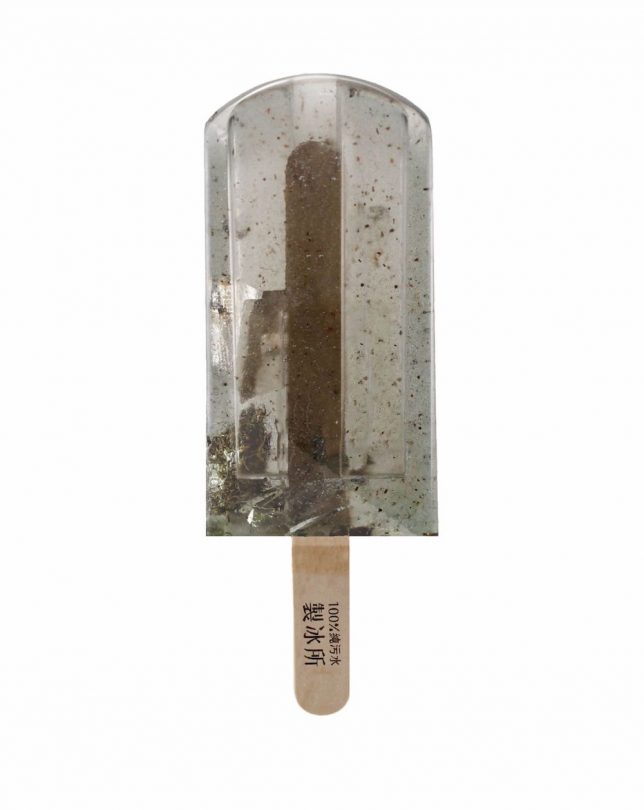
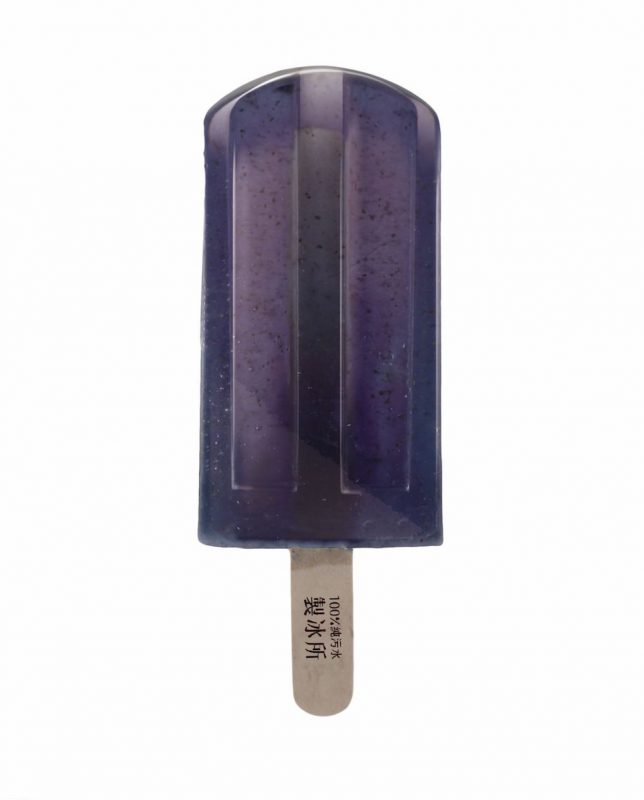
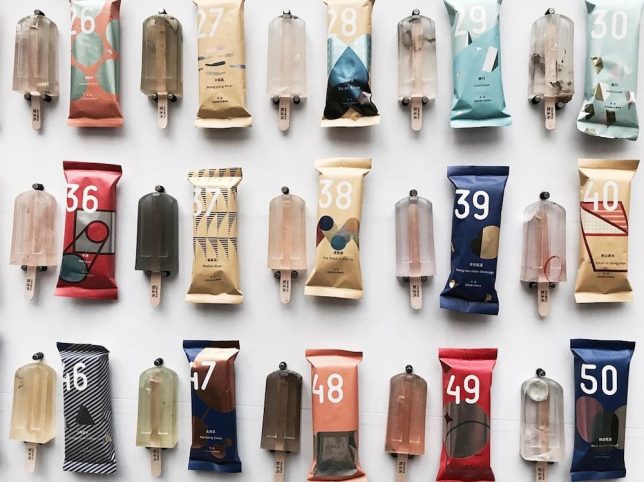
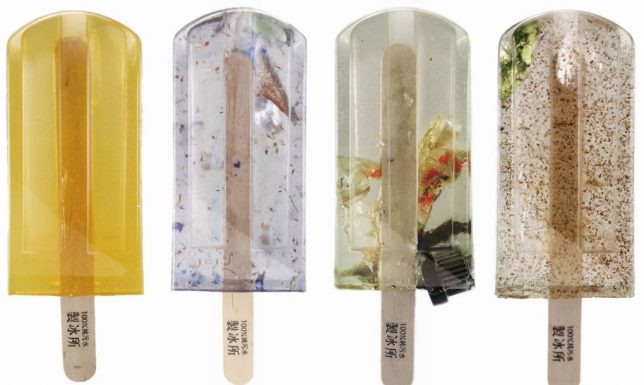
    A stomach-churning twist on classic frozen treats, 100 stabilized ice pops made from Taiwan’s polluted lakes, rivers, beaches and ports feature an unsettling array of sewage found in public waters.

    Each of these edible-scale popsicles was first frozen then preserved in polyester resin and wrapped in packaging. Diverse flavors feature ingredients such as plastic, arsenic, mercury and metal. Unappetizing titles include Yang-tzu-chou Drainage, The Large Ditch in Tianwei, and New Huwei Creek.

    Some even look tasty at a glance, like some kind of hand-crafted iced delight. But the game of choosing something to try quickly becomes a nightmare of deciding which might be least terrible. Surely one without bits of cork, bottle caps or candy wrappers would be better, but then again: invisible poisons could be much worse.

    Art students Hung I-chen, Guo Yi-hui, and Cheng Yu-ti from the National Taiwan University of the Arts concocted titled their line of less-than-delicious designs “Polluted Water Popsicles.” Their work was nominated for the Young Pin Design Award and featured in the New Generation of Design Exhibition this May at the Taipei World Trade Center.

    Share on Facebook


    [ By WebUrbanist in Art & Sculpture & Craft. ]

    [ WebUrbanist | Archives | Galleries | Privacy | TOS ]


    WebUrbanist

  • Saramonic unveils VMic series of high-end shotgun microphones for DSLRs

    Microphone maker Saramonic has launched the VMic series of high-end shotgun microphones for DSLRs. The top-of-the-range Saramonic VMic Pro is a super directional shotgun microphone that mounts directly onto your camera’s hotshoe. It comes with an integrated shock mount system that features an all-metal construction.

    There is a 150 Hz low cut filter and a high frequency boost (+6dB) feature that can be controlled independently. The VMic Pro also comes with three position level control (-10dB, 0dB, +20dB), a 3.5mm headphone jack for audio monitoring, and a low battery LED indicator. The microphone’s frequency response is 35 Hz ~ 20 kHz, signal-to-noise ratio is 75dB, and the microphone has a dynamic range of 120dB. Power is supplied by two AA batteries and the package includes a foam windshield as well as a detachable 3.5mm cable to connect to the camera.

    The VMic Recorder model features an integrated flash recorder that can store 16-bit / 48 kHz WAV audio files to a Micro SDHC memory card up to 32GB capacity. It also comes with an LCD monitor and a single-button recording function. The standard VMic model comes with similar specifications to the Pro variant but has to make do with a slightly reduced feature set. It will set you back $ 119.95; the Recorder is $ 199.95. No US pricing has been released yet for the VMiv Pro yet which in the UK will cost you £199.14.

    Articles: Digital Photography Review (dpreview.com)

  • OnePlus 5 camera samples

    Today OnePlus has launched its latest flagship smartphone, the OnePlus 5, which comes with a dual-camera setup that combines a main camera with a 1/2.8″ 16MP Sony IMX 398 sensor and F1.7 aperture with a 2x tele-lens that captures images on a 20MP 1/2.8″ Sony IMX 350 sensor features an F2.6 aperture.

    We already have our hands on a production unit and our full camera review will be available in the near future. To shorten the wait until then we have posted a selection of sample images that were taken with both wide angle and tele lens in a variety of lighting situations in the gallery below.

    Sample Gallery

    There are 17 images in our OnePlus 5 samples gallery. Please do not reproduce any of these images on a website or any newsletter / magazine without prior permission (see our copyright page). We make the originals available for private users to download to their own machines for personal examination or printing (in conjunction with this review), we do so in good faith, please don’t abuse it.

    Unless otherwise noted images taken with no particular settings at full resolution.

    $ (document).ready(function() { SampleGalleryV2({“containerId”:”embeddedSampleGallery_4311077055″,”galleryId”:”4311077055″,”isEmbeddedWidget”:true,”standalone”:false,”selectedImageIndex”:0,”startInCommentsView”:false,”isMobile”:false}) });
    Articles: Digital Photography Review (dpreview.com)

  • Have Fun with Boomerang Over and Over Again

    When it comes to phoneography one of our very favorite apps is Boomerang.

    Well, it was our fave, then not anymore, then it came back. And we threw it out again, and it came back. (hehe)

    The Boomerang app films a tiny clip then plays it back and forth in a loop forever (or three times if you post it as an Instagram story), just like magic. So why is that useful?

    Oh you can do the most amazing things with Boomerang. Read along to see all our favorite tricks. From levitation to magical hair-doin’.
    (…)
    Read the rest of Have Fun with Boomerang Over and Over Again (376 words)


    © laurel for Photojojo, 2017. |
    Permalink |
    No comment |
    Add to
    del.icio.us

    Post tags:

    The post Have Fun with Boomerang Over and Over Again appeared first on Photojojo.


    Photojojo

  • Trash Beats Tesla: This Powerful DIY Electric Car Cost Just $13K to Build

    [ By SA Rogers in Technology & Vehicles & Mods. ]

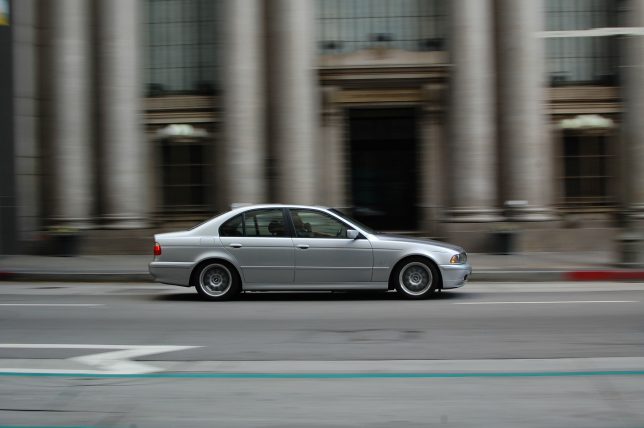
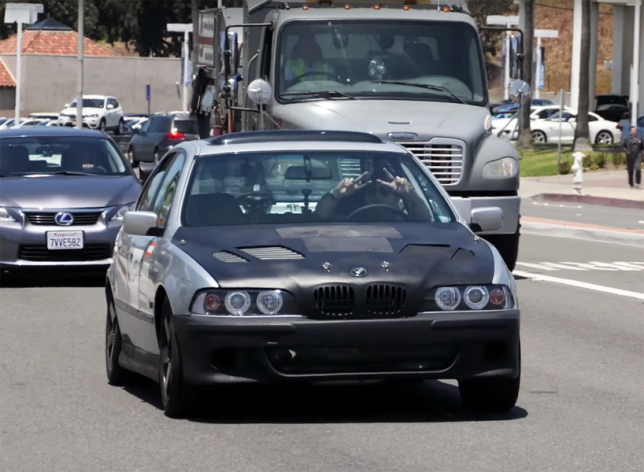
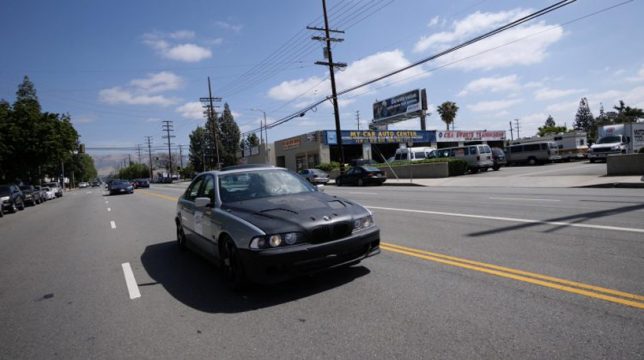
    Made from the corpse of a 1997 BMW 528i salvaged from a junkyard and other recycled parts, this DIY electric car beats the Tesla Model S P100D’s mile range at a tiny fraction of the cost. The Tesla boasts a range of 335 miles per charge, while the ‘Phoenix’ by Eric Lundgren gets 380 miles. Lundgren and his team built the Phoenix in 35 days for just $ 13,000, and hopes the attention his trash car is getting will encourage carmakers with more cash to do more material recycling.

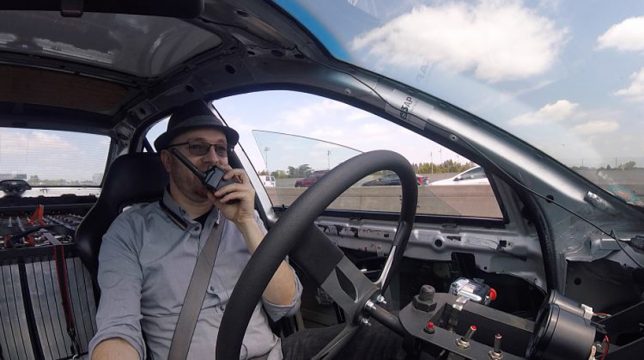
    Founder and CEO of information technology organization ITAP, Lundgren bought the 20-year-old E39 generation BMW 528i and removed most of the interior – including the rear seats, dashboard, center console and trim – in order to save weight (yes, that’s the catch.) He added a 130kWh battery pack that uses cells from EV and laptop batteries to power the car, which takes up most of the space where the backseat would normally be.

    To test his creation, Lundgren pitted it against three popular electric vehicles: the Tesla, a Chevy Bolt and a Nissan Leaf. All four competed in a trip across Southern California to see which one would last the longest. The Leaf ran out of juice first after 81 miles, followed by the Model S at 238 miles. The Bolt managed to squeak out 271. The BMW never ran out of range at all – instead, it blew a fuse after 340 miles with 32 percent of its charge left on its battery pack. In a second test, the Phoenix ran directly against the Tesla, getting 382 miles to the 100D’s 315.

    Clearly, the fact that so much of its weight has been removed while the Tesla is loaded down with luxury options makes a difference in the result, but so should the fact that Tesla is working with top-quality, brand-new parts. For Lundgren, that’s not really the point.

    “Re-use is the purest form of recycling. It creates zero carbon footprint. Re-using parts/components within broken/obsolete electroncis is called ‘hybrid recycling.’ This is a much-needed and often missing part of the recycling ecosystem.”

    Share on Facebook


    [ By SA Rogers in Technology & Vehicles & Mods. ]

    [ WebUrbanist | Archives | Galleries | Privacy | TOS ]


    WebUrbanist

  • Firmware v1.1.1 for Canon 5DS and 5DSR fixes HDR mode and level display

    Canon has released firmware version 1.1.1 for its EOS 5DS and 5DS R full-frame DSLR models. The new firmware fixes a number of user-reported bugs, including an issue in HDR mode that prevents the camera from completing a full bracket with certain settings.

    Other fixes include:

    • Err70 display which with certain combinations of settings
    • Correction of level display when the camera is held in vertical orientation with the hand grip pointing downward
    • Correction of a power-up delay of approximately five seconds when using certain CF cards

    You can download firmware version 1.1.1 for the Canon EOS 5DS and EOS 5DS R now on the Canon website.

    Articles: Digital Photography Review (dpreview.com)

  • Fujifilm X-A3 sample gallery

    Photo by Jeff Keller

    Despite its modest MSRP, Fujifilm’s entry-level X-A3 has dual control dials, a tilting touchscreen, and the same 24MP sensor from the company’s flagship models – but with a traditional Bayer color filter array instead of X-Trans. We’re pushing through our full review, but in the meantime, check out how it performs with a variety of the company’s prime and zoom lenses.

    See the Fujifilm X-A3 sample gallery

    Articles: Digital Photography Review (dpreview.com)

  • LG launches G6+ with wireless charging and improved G6 software

    If you liked the performance of the LG G6 dual-camera in our review but still weren’t quite convinced by LG’s 2017 flagship, maybe the G6+ – announced today – will win you over.

    The G6+ retains most of the original G6 specification including the 13MP dual-camera with super-wide-angle lens, but doubles the internal storage to 128GB and brings Qi wireless charging to the feature set. In addition, it will come with premium B&O headphones included in the box. The Plus model will also offer a few new color options, including Optical Marine Blue, Optical Terra Gold and Optical Black. A special coating will make the back panel change hue with the angle of reflected light. No information on the G6+ pricing and availability has been released yet.

    In addition to launching the Plus model, the original G6 is also getting a boost: a new software version brings face recognition functionality for unlocking the device. The new feature allows you to unlock by just lifting the G6 up and pointing the front camera towards your face.

    The Low Power Consumption feature is also new and makes use of the Qualcomm Snapdragon 821 chipset’s ability to improve battery usage. It collects data from sensors and optimizes power usage, depending on your location and movement. Other new features include fine volume control of the Hi-Fi Quad audio and automatic call recording for pre-defined numbers.

    Articles: Digital Photography Review (dpreview.com)