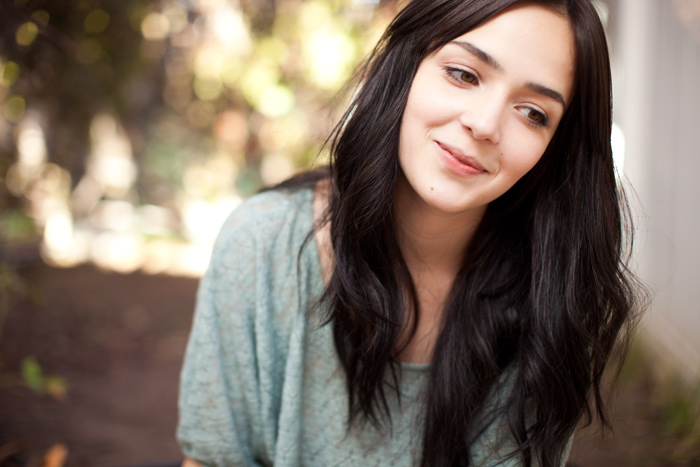
I feel like every story needs a girl with the snow white hair and angelic dew drop face, you know, the mystical being you read about in epic tales of dragons and adventure?
Starring Lindsi.


I feel like every story needs a girl with the snow white hair and angelic dew drop face, you know, the mystical being you read about in epic tales of dragons and adventure?
Starring Lindsi.
The thing is, sometimes I lose my words when I try to talk to her. It’s kind of a problem. She’s patient though.


 Model is Jillian Datwyler
Any Questions? Don’t Hesitate To Ask [; Video Was Edited With Sony Vegad Pro 8 And Recorded With Camtasia Comment, Rate + Subscribe : )
Video Rating: 4 / 5

i3D is an overview of Head-Coupled Perspective (HCP) on iOS devices. HCP uses the front camera of the device to track the face of the user in real time. This information tells the app how the user is looking at the display. The app updates the perspective of the 3D scene accordingly, giving the user the illusion that he looks at a small window. i3D contains several 3D scenes that you can observe with HCP. It only relies on face tracking. It does not use the accelerometers or the gyroscopes. The face tracking system does not detect and track the face in every lighting condition. Read the instructions in the app to get a good tracking. Head-Coupled Perspective does not create a stereoscopic display! It provides a kind of monocular 3D display: the same picture is seen by both eyes. In the future, it might be combined with a stereoscopic display for a better 3D effect. i3D has been developed by Jeremie Francone and Laurence Nigay at the Engineering Human-Computer Interaction (EHCI) Research Group of the Grenoble Informatics Laboratory (LIG), University Joseph Fourier (UJF).
Nikon has announced the J1 small sensor mirrorless camera. The J1 is the more compact, less expensive model in the line up and, like the V1, features Hybrid autofocus (combining phase detection and contrast detection AF) that allows the camera to shoot at up to 10 frames-per-second with autofocus. It’s built around a 1" type (13.2mm x 8.8mm) 10MP CMOS sensor, giving a 2.7x crop, which Nikon is calling ‘CX’ format. Like the V1, it can shoot 1080i60 video. The J1 kit with 10-30mm (27-81mm equiv.) lens will be $ 649.95. Again, the J1 is expected to arrive in the US around October 20th.
News: Digital Photography Review (dpreview.com)
Nikon has announced the V1 enthusiast small sensor mirrorless camera. Built around what the company is calling a ‘CX’ format 10MP CMOS sensors, the cameras is part of the company’s new Nikon 1 line. The V1 is intended as the higher-end model in the lineup and features magnesium allow construction and a 1.4M dot electronic viewfinder. It also has an accessory port allowing the connection of the SB-N5 mini speedlight or GP-N100 GPS unit. Like the J1, in can shoot 1080i60 video and combines both phase detection and contrast detection autofocus. The 1" type sensor (13.2mm x 8.8mm) gives a 2.7x crop. The V1 kit with 10-30mm (27-81mm equiv.) lens will be $ 899.95 and will be available around October 20th. An adapter allowing the use of Nikon F-mount lenses will follow.
News: Digital Photography Review (dpreview.com)

Vor einiger Zeit habe ich die Fotoserie „Mamika“ vorgestellt. In ihr fotografiert Sacha Goldberger seine Großmutter in sehr skurrilen und lustigen Momenten, wobei sie immer als Superheldin verkleidet ist.
Frederika Goldberger kann man jedoch auch ganz anders sehen. In der Serie „Age Perfect“ ließ sie sich zusammen mit dem 70 Jahre jüngeren Model Therese ablichten. Beide in selber Pose, selber Location und mit selben Accessoires. Wieder fotografiert von ihrem Enkel Sacha.
Diese ruhige und nachdenklich machende Serie hat mich so begeistert, dass ich sie ebenfalls vorstellen möchte, auch wenn sie bereits vor einiger Zeit im So chic Magazine veröffentlicht wurde.


„Ich wollte den Unterschied zeigen zwischen einer wunderschönen alten Lady (meiner Großmutter) und einer wunderschönen jungen Frau.“
Sacha Goldberger
Man kann natürlich nach Unterschieden suchen, die Bilder vergleichen. Man kann sie jedoch auch als Vorher-nachher-Bilder betrachten. Dann erzählen sie vom Verstreichen der Zeit, vom Älterwerden und machen vielleicht auch ein wenig melancholisch. Frederika Goldberger sieht dabei jedoch so schön und voller Würde aus, dass man nicht zu wehmütig wird. Man kann ihre Bilder alleine auf sich wirken lassen und sie sind einfach schön.

Aber sie wirken natürlich anders als die von der jungen Therese. Gerade auf Werbe- und besonders Modeaufnahmen sieht man meist junge Menschen. Ich möchte keine Grundsatzfragen diskutieren.
Ich verstehe vollkommen, dass sich Produkte besser verkaufen, wenn sie von einem jungen, attraktiven Menschen präsentiert werden und die Wirkung verfehlt mich genau so wenig wie jeden anderen auch. Aber ich finde es schön, dass die Fotoserie diese Tatsache ins Licht rückt. Nicht direkt und provokant, sondern auf eine ruhige, beinahe unauffällige Art und Weise.

Ich habe keine große Angst vorm Älterwerden. Wahrscheinlich, weil ich erst 26 Jahre alt bin und die ersten grauen Haare nur mir auffallen. Ich weiß nicht, wie lange ich selbst noch vor der Kamera stehen werde. Wie lange mich andere fotografieren wollen.
Wenn ich irgendwann einmal so alt bin wie Frederika, werden sicher noch immer junge Frauen von den Werbeplakaten lächeln. Und ich stehe dann daneben und erinnere mich vielleicht an diese Serie und an diese Zeit.
Ich hoffe, ich bin dann genau so cool wie Frederika. Und kann es einfach so annehmen, wie es eben ist. Man wird älter. Jeder.
I know it sounds odd, but, I only started to understand Lianna when I listened to the silence between my words.
Do you own a DSLR but use it mostly as a very expensive point-and-shoot? Time to take off the training wheels! Join us for DSLR 101! Don’t worry we’ll take it slow, and the little green rectangle of the auto setting will always be there for you to run back to if you find yourself in over your head!
Welcome to class, first up; auto exposure bracketing.
What?
Auto exposure bracketing allows you to automatically take a series (usually three but sometimes up to seven) of photos, each at different exposures. Basically the camera takes one image at what it perceives to be the correct exposure, one underexposed, and one overexposed.
Why?
What your camera views as the correct exposure may not necessarily be the exposure that suits a particular image best. You may find that you like your photos slightly overexposed, or that for a particular shot the underexposed version appeals to you more.
Auto bracketing allows you to take the different exposure shots in one quick succession, meaning it’s almost as fast as just taking the correct exposure shot. Especially for beginner photographers this is a great way to get shots in different exposures, and learn which ones you like best in which situations.

Overexposure is not always a bad thing, it can make for some interesting effects.
How?
Most DSLRs will let you choose the brackets you want (usually anywhere from a third-stop (not much variation in exposure) to two stops (lots of variation)), and the number of images you want to take. How you set auto exposure bracketing varies from camera to camera so you’ll need to check your camera’s manual (look for AEB), it’s often found as a menu setting but some cameras have a specific button for bracketing.
Extra tip
Auto exposure bracketing works differently, depending on if you have the camera in Aperture Priory Mode or Shutter Priority Mode. Basically the camera will change the setting that is not in priority to control the exposure (e.g. if you’re in shutter mode the aperture will be changed). Therefore if you want to maintain a certain shutter speed or aperture make sure you put the camera in the priority mode for the setting you want to keep set.
That’s it in a nutshell, get out and play! If you like you can add the results to the Photodoto Flickr group here.