Hong Kong-based SLR Magic has announced a 50mm F1.1 CINE lens for Sony E mount. Planned for early December 2015 availability, the FE lens will cover a full-frame sensor. Read more
Blog
-
Best from Above: Drone Views of 6 Philadelphia Abandonments
[ By WebUrbanist in Abandoned Places & Architecture. ]

Some of the most fascinating parts of certain deserted buildings in Philadelphia cannot even be seen from below, making this drone footage shot by Matt Satell of Philly by Air all the more revealing.

Take the Spring Garden Public School, for instance, the roof of which is enclosed in a an arched grid of fencing that wraps an outdoor gym and recreation area for students. “This abandoned public school was built in 1931 and designed by the Philadelphia School District” explains drone pilot and urban photographer Matt Satell. “There have been proposals discussed to convert the structure into a residential building, but nothing has been finalized yet.”

The PECO Delaware Station is situated adjacent to the Penn Treaty Park in Fishtown, its outcroppings of both natural overgrowth and artificial stacks far more visible by air. “This coal-fired power plant first opened its doors in 1920. It was originally designed by John T. Windram, who also designed the Franklin Institute. The plant was owned by Exelon Generation until 2015 when it was sold to Bart Blatstein and Joseph Volpe who have plans to build boutique hotels.”

Other buildings featured are on historical registers, or the subject of redevelopment plans or (as in the case of the Richmond Power Station) are already famous for being featured in films such as 12 Monkeys, Transformers 2 and The Last Airbender. The Quaker Storage Building, Dreuding Brothers Building and Willow Steam Plant (each shown in the embedded video above) all have elements best captured – and are perhaps only truly comprehensible as a whole – when viewed from above as well as below.
Meanwhile, if you enjoyed your brief tour of Philadelphia’s most prominent abandonments, you can take a further aerial flight around the city with the video above, likewise documented via Philly by Air.
Want More? Click for Great Related Content on WebUrbanist:

Philadelphia City Hall: Tallest Masonry Building in the World
Did you know that brick or stone-clad buildings you see today almost invariably hide a steel support structure that does the actual work?
Click Here to Read More »»
Collaborative Construction: Aerial Drone-Built Architecture
Unmanned aerial vehicles can do more than just take pictures, pick up and drop off objects – they can also work together to create solid structures, …
Click Here to Read More »»
Cult Classics: 5 Infamous Abandonments in Famous Movies
Have you ever wondered what really happened to that mall in The Blues Brothers or where Tarkovsky filmed those jarring and surrealistic scenes in Stalker?
Click Here to Read More »»


[ By WebUrbanist in Abandoned Places & Architecture. ]
[ WebUrbanist | Archives | Galleries | Privacy | TOS ]
-
17. November 2015
Das Bild des Tages von: blaendwaerk

Im Ausblick: Wie wichtig ist Equipment, Minimalismus und Magnum ganz nah.
kwerfeldein – Fotografie Magazin | Fotocommunity -
Der Geflüchtete David lebt auf der Straße
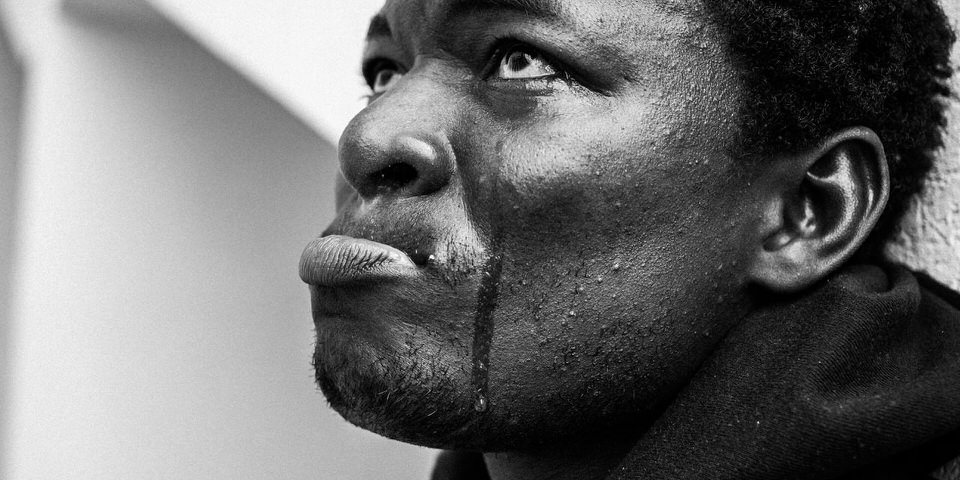
Oktober in Sizilien. Sein fester Blick ist entschlossen auf die Ausgangstür des Supermarktes gerichtet. In Minutenabständen verlassen Italiener*innen den Laden und der Mann, der auf einem alten Hocker sitzt, verabschiedet die vorbeiziehenden Menschen. Er ist die Freundlichkeit in Person.
kwerfeldein – Fotografie Magazin | Fotocommunity -
How to Photograph the Holidays: Download your Free Guide Today
With the end of 2015 and the holiday period approaching, we know that many dPS readers find themselves with cameras in hand more than any other time of year.
The holidays come with so many wonderful photographic opportunities – and we don’t want you to miss a single one!
So we have a special gift for dPS newsletter subscribers…
A free dPS mini-guide – How to Photograph the Holidays!

This 15-page downloadable PDF guide is filled with 12 practical tips and a fantastic printable checklist. It’s all about helping you discover how to capture the magic of the holidays and create memorable images that you’ll cherish for years to come.
A special thanks to our friends Lauren and Rob at Photography Concentrate for creating this download.
It’s completely free for all our subscribers as a thank you for being a valued part of our community.
To receive it, you can subscribe to our newsletter here. You’ll receive an email shortly after asking you to confirm your subscription, and on doing that, you’ll be taken to a page where you can download the guide and printable checklist.
We hope you find this little gift as useful as we do and that it helps you capture the joy and fun of the holidays.
googletag.cmd.push(function() {
tablet_slots.push( googletag.defineSlot( “/1005424/_dPSv4_tab-all-article-bottom_(300×250)”, [300, 250], “pb-ad-78623” ).addService( googletag.pubads() ) ); } );googletag.cmd.push(function() {
mobile_slots.push( googletag.defineSlot( “/1005424/_dPSv4_mob-all-article-bottom_(300×250)”, [300, 250], “pb-ad-78158” ).addService( googletag.pubads() ) ); } );The post How to Photograph the Holidays: Download your Free Guide Today by Darren Rowse appeared first on Digital Photography School.
-
Tamrac retires Gura Gear brand, introduces G-Elite Series camera bags
In June 2014, Gura Gear acquired the Tamrac brand and assets as part of the latter company’s bankruptcy proceedings. Now, more than a year later, it has been announced that the two brands have been consolidated under the Tamrac label, as the Gura Gear brand is retired. Read more
-
The Warning: Murals Painted On Fragments of a Melting Glacier
[ By Steph in Art & Installation & Sound. ]
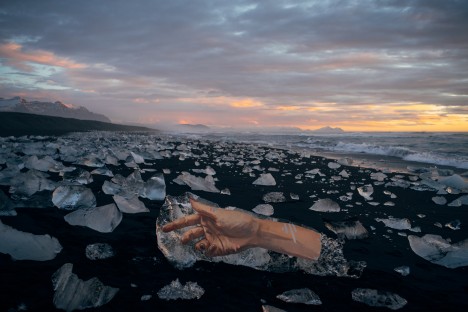
The face of a giant bathing woman seems to rise up from the icy waters of an undisclosed Arctic location beside the fragmented remains of a rapidly melting glacier, snow-capped mountains in the distance. That there are no other obvious signs of human activity in the lonely landscape scene only reinforces the sense that this figure is out of place. For Sean Yoro, the surfboard-balancing artist otherwise known as Hula, she’s putting a human face on a very pressing global problem.
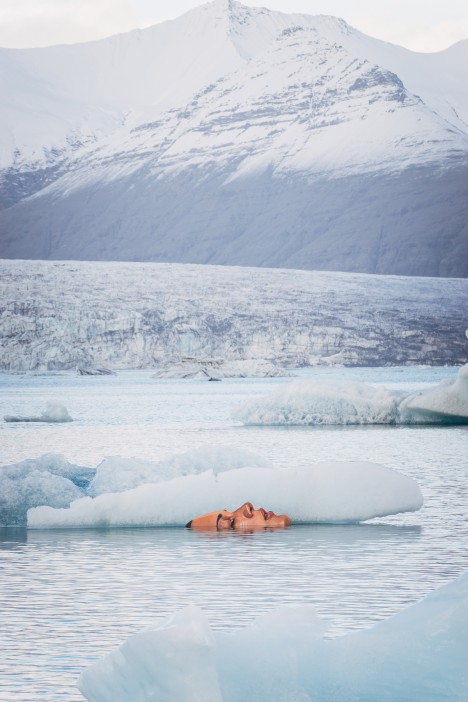
Having built a name for himself painting serene portraits of women in waterside locations and even onto the rusting remains of an abandoned ship, Yoro impresses both with his skills as an artist and the novelty of his method. While he normally paints in situ, this new setting required a different approach, and he painted on acrylic panels instead, mounting them on chunks of ice.
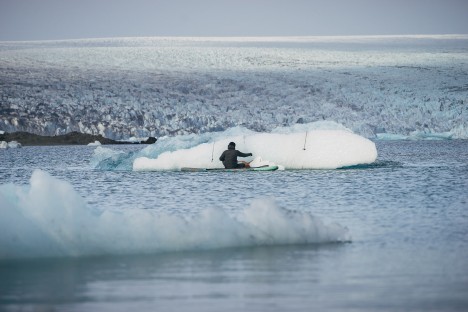
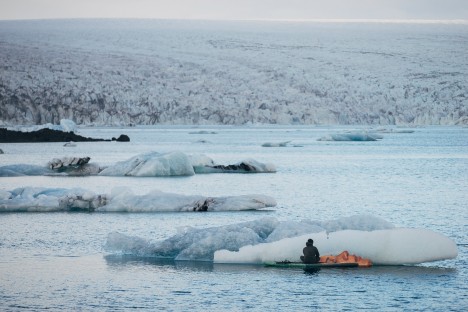
The paintings are designed to dissolve over time (presumably in a way that won’t harm the environment, given the earth-centric message of this piece), highlighting the time-sensitive nature of this issue.
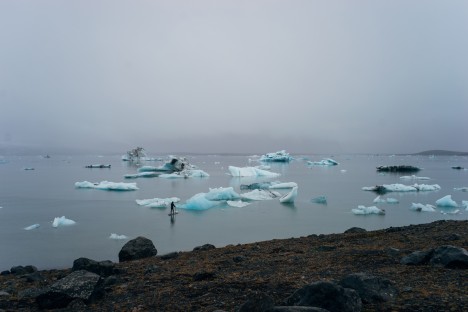
“In the short time I was there, I witnessed the extreme melting rate first hand as the sound of ice cracking was ac instant background noise while painting,” says Yoro. “Within a few weeks these murals will be forever gone, but for those who find them, I hope they ignite a sense of urgency, as they represent the millions of people in need of our help who are already being afflicted from the rising sea levels of climate change.”
Want More? Click for Great Related Content on WebUrbanist:
Balancing Act: Artist Paints Seaside Murals from a Surfboard
Painting a hyper-realistic mural outdoors is challenging enough on its own, and artist Sean Yoro not only pulls off incredible portraits, he does it all while …
Click Here to Read More »»

Painted Alive: 15 Boldly Brilliant Body Art Paintings
The human body can be and do so many things, but when it’s used as a canvas for fine art, truly magical things can happen.
Click Here to Read More »»
High-Speed Art: Murals Spray-Painted for Train Passengers
Made to been seen at high speeds, these colorful patterns intentionally form a sequential whole when experienced by commuters in adjacent railway cars. …
Click Here to Read More »»
[ By Steph in Art & Installation & Sound. ]
[ WebUrbanist | Archives | Galleries | Privacy | TOS ]
-
2015 Roundup: Interchangeable Lens Cameras $800-$1200
In late 2015, many (if not most) consumers are likely to shop based on price and capability, rather than according to whether a certain model contains a mirror or not. In this category, you’ll find both mirrorless and DSLR cameras that are highly capable under a variety of shooting situations, offer built-in high-spec viewfinders – either optical and electronic – and a bevy of external controls. Read more
-
Huawei demonstrates ultra-fast charging battery technology
While processing power and camera quality in smartphones have been improving at a fast pace in recent years, battery life and charging times have only made comparatively small steps forward and remain a major bottleneck in smartphone performance. Chinese manufacturer Huawei has presented some potential battery tech advancements: two prototype removable lithium-ion batteries that can be fully recharged in only a few minutes. Read more
-
How to use Focal Length and Background Compression to Enhance Your Photos
One of the most common uses for zoom lenses is, as their name suggests, to zoom in on objects that are far away. These lenses are fantastic for getting close-up views of nature, architecture, wildlife, or anything else that might be little more than a speck to the naked human eye.
Some cameras like the Nikon Coolpix P900 let you get a close-up view of objects a few miles away. While this flexibility might seem like a rather tempting proposition for getting close to objects without physically moving yourself, there is another often-overlooked benefit of zoom lenses when taking portraits or other types of pictures with one clear subject in front of a vast spread of scenery – background compression. Understanding how this works, and how you can manipulate it, can transform your approach to portrait photography and give your pictures the type of visual boost that you might have always wanted, but never knew how to achieve.

The basic idea with background compression is that you can take photos of something relatively close to you, such as a high school senior as shown in the image above, and bring elements of the background closer as well. This gives a more constrained feeling to the overall composition, and helps focus the viewer on your subject while not only bringing the background in, but often blurring it at the same time.
As an illustration of how this works, here are several photos of my dad taken at different focal lengths. Notice how he is framed similarly in each shot, but the background changes dramatically as I adjust the zoom on my camera lens.
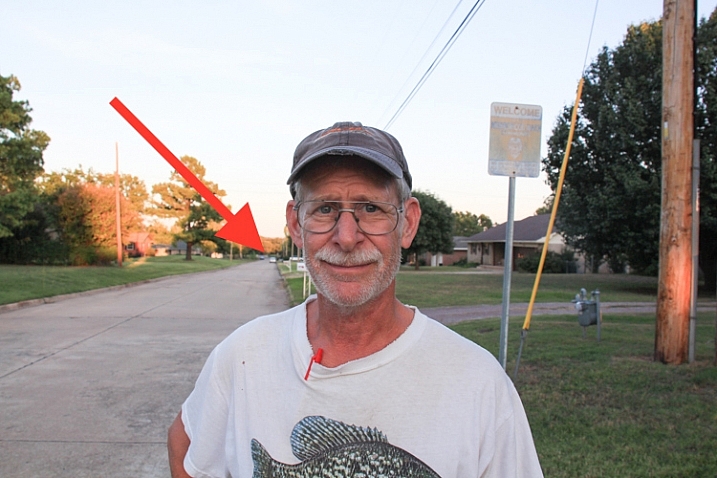
18mm focal length, f/7.1, 1/80th of a second, ISO 100
I used an 18-270mm zoom lens to take these shots, and this first one (above) at 18mm shows my dad along with a massive background: utility poles, houses, trees, mailboxes, and all sorts of other elements make up the picture in addition to the subject. Take note of the car several hundred yards behind him, as indicated by the red arrow, and notice what happens as I change focal lengths, but keep my dad similarly framed.
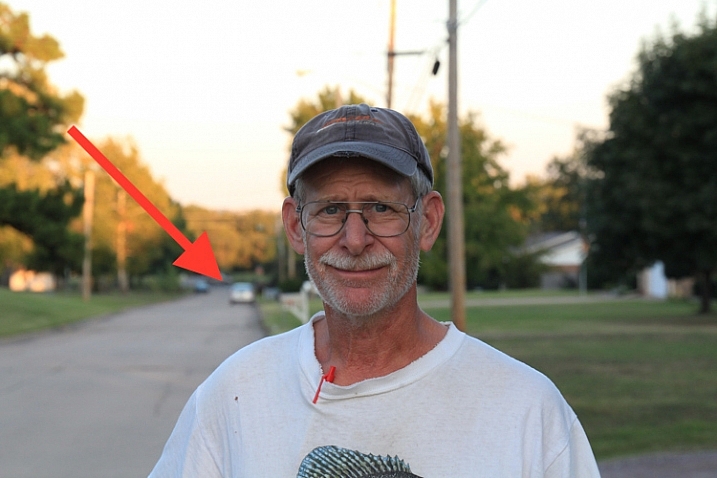
70mm, f/7.1, 1/125 second, ISO 320
Here you can already see several differences from the original image. The scene is now slightly claustrophobic with many of the elements along the perimeter of the original photo disappearing altogether. Mailboxes and utility poles have been brought closer, and notice how the same stationary automobile far in the distance has appeared to creep forward, and is now much larger. The background, in essence, is getting squeezed together or compressed.
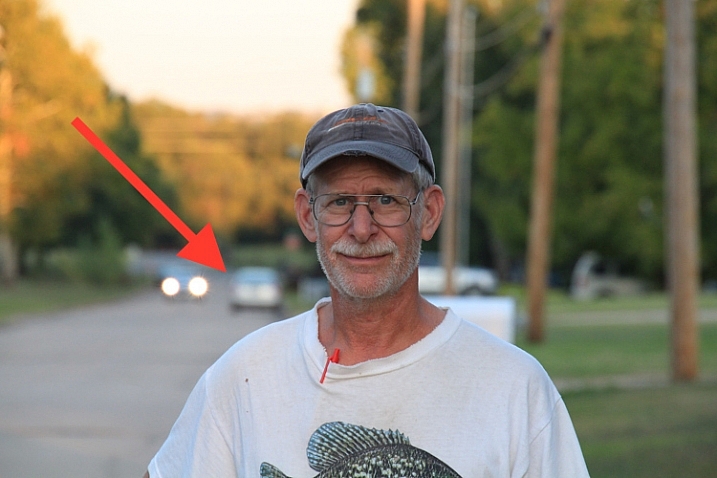
154mm, f/7.1, 1/250 second, ISO 800
At 154mm the vehicle in the background seems significantly closer, and various other elements such as trees and utility poles are now filling almost the entire frame. As I zoom in, while keeping my dad consistently framed in the shot, even the distance between the individual utility poles seems to be shortened, which further enhances the overall feeling of compression. It’s not just that things appear closer, but that the distances between all the elements of the frame look much smaller as well. This can be a powerful, and extraordinarily useful way to compose a picture, and you don’t even need a fancy camera or lens to do it. Most pocket cameras have optical zooms that can be used to accomplish the same effect.
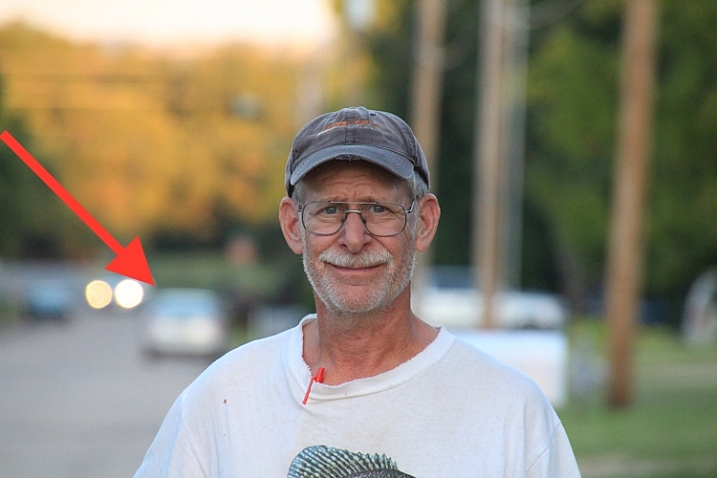
270mm, f/7.1, 1/400 second, ISO 1600
In this final shot, the background elements virtually dominate the frame and almost overpower my subject. The vehicle just over his shoulder is about a quarter of a mile (0.4 km) away, though it appears as if it’s a mere stone’s throw behind him.
Background compression can be a good or bad thing, depending on the type of picture you are taking. The key takeaway here is to know what it is, and how to utilize it to get the type of composition you are going for. The longer your focal length, the more you will be able to add this sense of compression to your background. But, it also helps if you have a great deal of distance between your subject and the elements behind it. If my dad were standing a few feet away from something, like a tree or a brick wall, there would be virtually no compression at all, even with a very long focal length.
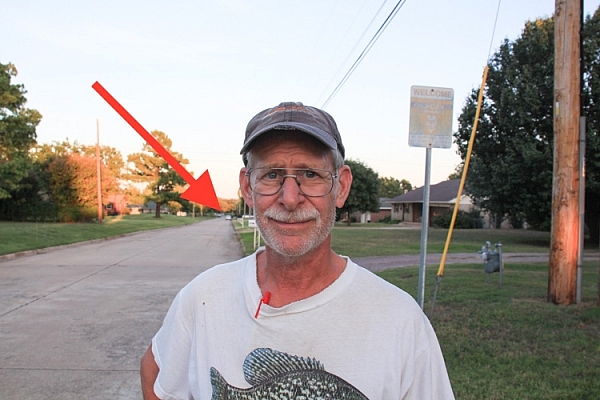
18mm lens
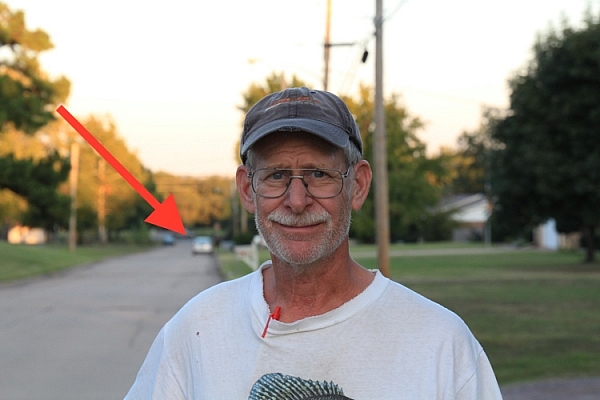
70mm lens
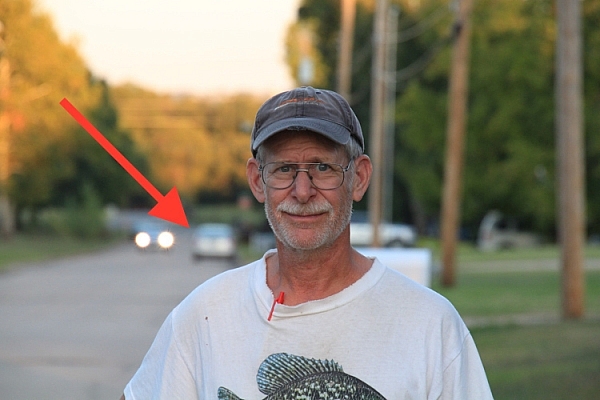
154mm lens
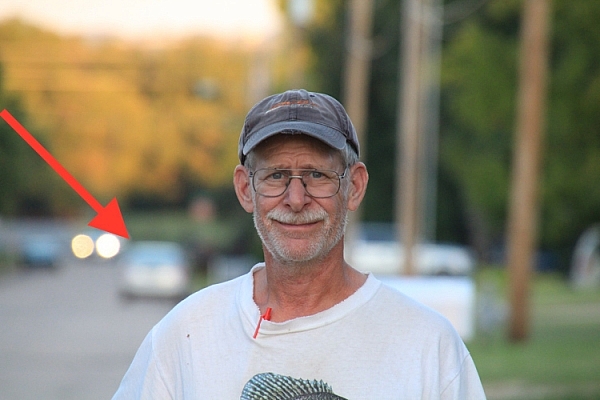
270mm lens
If the final example in the above series seems a bit extreme, here’s another set of images that show how background compression can be used effectively to enhance the overall composition, rather than overpower your subject.

35mm, f/2.8, 1/750 second, ISO 200
This is a perfectly serviceable portrait, although I purposely left a bit too much space on the right-hand side in order to illustrate the compression concept. Shot at 35mm, with a wide aperture of f/2.8, the background is nice and blurry, the focus is clearly on the smiling woman, and the background is not too distracting or bothersome. However, re-taking the same picture with a longer focal length, leads to a much more pleasing picture all around.

85mm, f/2.8, 1/750 second, ISO 200
The same compression shown in the first series of pictures is clearly evident here, though it is used to a much better overall effect. Even though the tree and cars create a background that is somewhat busy, shooting with a wide aperture blurred things out enough, that the focus is still clearly on the woman, while the background serves to add a bit of context to help put the overall composition in perspective.
One final note about compression: it doesn’t just work for foreground elements too as you can see in the following pictures.
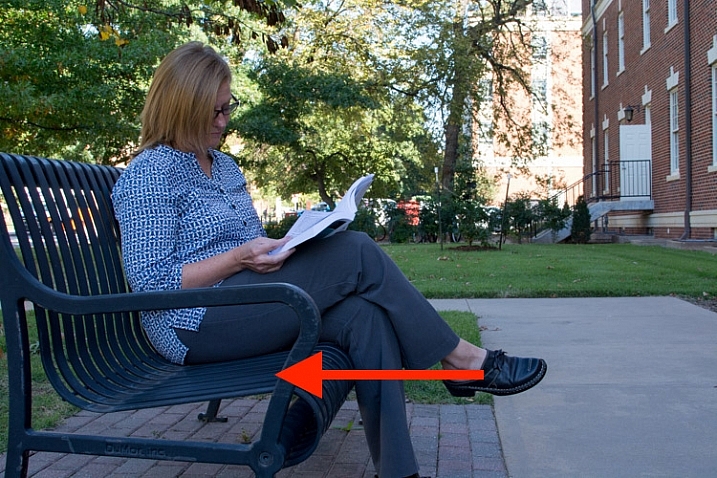
35mm, f/11, 1/125 second, ISO 400
I purposely shot this with a much smaller aperture in order to minimize the degree of background bokeh, lest compression be confused with blur. Notice how this woman is sitting squarely in the middle of the bench with plenty of room to her right, and about 50 yards (46 meters) between her, and the trees and cars in the background. Most of the picture is in focu,s which is a direct result of the small aperture.
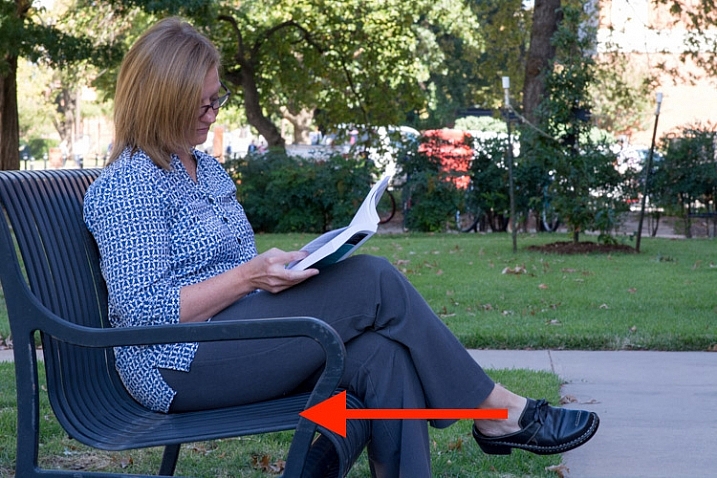
85mm, f/11, 1/90 second, ISO 400
Here the foreground and background have both been brought nearer to the subject. The trees and cars behind her are much closer, while the bench appears to take up almost no room on the woman’s right side. It might as well be little more than a chair in this picture, and yet, this is merely an illusion created by using a longer focal length while keeping my subject framed appropriately. Most of the picture remains in focus due to the small aperture, and you can clearly see that background compression is not always synonymous with background blur.
As one final example, here is the same woman, on the same bench, shot wide open at f/1.8 with my 85mm lens.
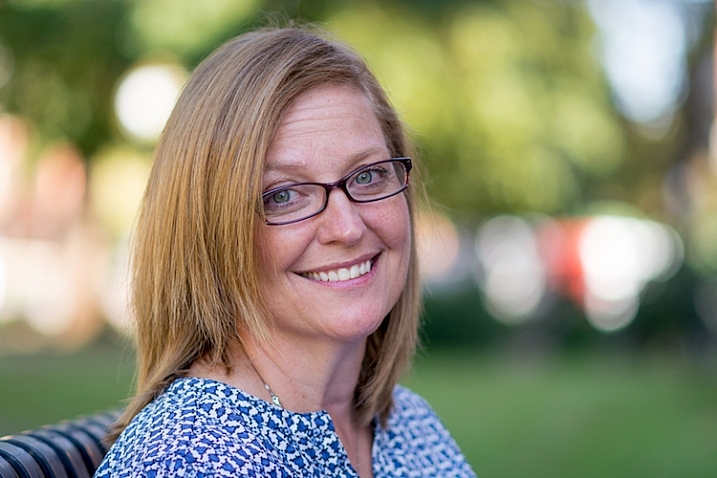
85mm, f/1.8, 1/1000 second, ISO 400
The overall compositional elements remain the same in this final image as the two above, except that I moved myself physically closer to the subject, while shooting at a very wide aperture of f/1.8. The background is severely compressed, and quite blurry, which leads to a rather pleasing portrait.
Background compression can be a bit tricky to understand, but if you play around with different focal lengths you should get the hang of it quickly. Then it’s just a matter of figuring out how to use it to your advantage to create the type of shot you want–especially when doing portraits.
Have you tried using this technique in your own photography? What other tips do you have to share about creative uses for background and foreground compression? Leave your thoughts in the comments below, and feel free to share any example images you have as well.
This week on dPS we’re featuring a series of articles about composition. Many different elements and ways to compose images for more impact. Check out the ones we’ve done so far:
- Using Framing for More Effective Compositions
- 7 Tips to Improve Your Skyline Photos
- 33 Images that Exemplify Compositional Elements
- Weekly Photography Challenge – Composition Craziness
- How to Take Control of Aperture and Create Stronger Photos
- How Cropping in Post-Production Can Improve Composition
- Good Crop Bad Crop – How to Crop Portraits
googletag.cmd.push(function() {
tablet_slots.push( googletag.defineSlot( “/1005424/_dPSv4_tab-all-article-bottom_(300×250)”, [300, 250], “pb-ad-78623” ).addService( googletag.pubads() ) ); } );googletag.cmd.push(function() {
mobile_slots.push( googletag.defineSlot( “/1005424/_dPSv4_mob-all-article-bottom_(300×250)”, [300, 250], “pb-ad-78158” ).addService( googletag.pubads() ) ); } );The post How to use Focal Length and Background Compression to Enhance Your Photos by Simon Ringsmuth appeared first on Digital Photography School.