Das Bild des Tages von: Simon Matzinger
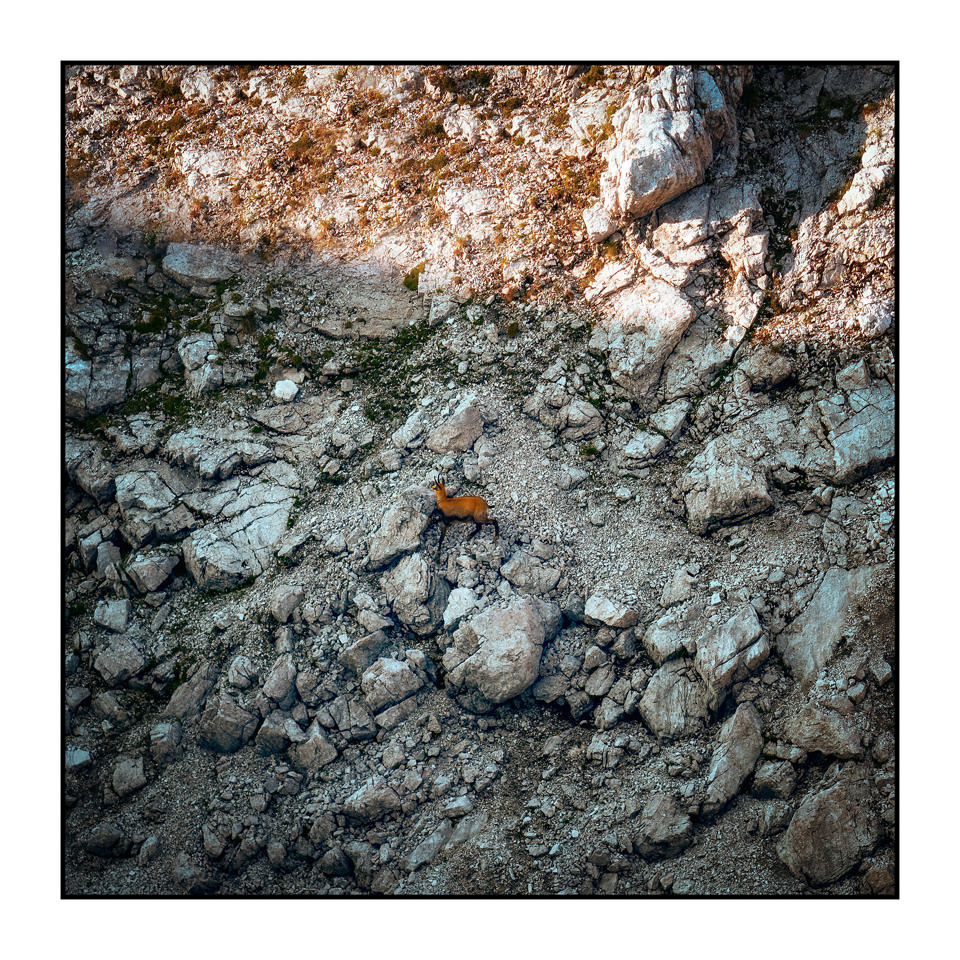
Im Ausblick: Eine ostasiatische Pflanze und zwei lustige Videos über Instagram.
kwerfeldein – Fotografie Magazin | Fotocommunity
Das Bild des Tages von: Simon Matzinger
Im Ausblick: Eine ostasiatische Pflanze und zwei lustige Videos über Instagram.
kwerfeldein – Fotografie Magazin | Fotocommunity

The PowerShot G5 X is one of the latest members of Canon’s 1″-type sensor family, which began with the G7 X in 2014. It takes what made that camera appealing – namely its sensor, lens, and direct controls, and puts them into a body that adds an electronic viewfinder, fully articulating touchscreen LCD, hot shoe, and additional control dial – all without a large increase in size.
The G5 X’s 20.2MP 1″-type BSI CMOS sensor – designed by Sony and first used in its RX100 II and III – performs very well and, given that the image pipeline on the G5 X is the same as its predecessor’s, should continue to do so. The 24-100mm F1.8-2.8 optically stabilized lens is also the same as on the G7 X, so there shouldn’t be any surprises there, either.
From a feature standpoint, the G5 X is essentially the same as the G7 X. You’ve got your manual exposure controls, customizable buttons and dials, built-in neutral density filter, Raw support, 6 fps continuous shooting (JPEG only), a fun star trail mode, 1080/60p video recording and Wi-Fi with NFC.
Sadly, two of the G7 X’s most disappointing traits have carried over to the G5 X, namely sluggish Raw shooting performance and lackluster battery life.
 |
| From left to right: the PowerShot G1 X Mark II, G3 X, G5 X, G7 X, and G9 X |
There are now five members in Canon’s premium compact’ family: the G1 X Mark II, G3 X, G5 X, G7 X and G9 X. The G1 X Mark II is the flagship model, using a considerably larger 1.5″-type sensor instead of the 1″-types used by the rest of the group.
The G7 X is Canon’s original 1″-type sensor camera, and the models that have followed are a variation on the same theme. The G3 X is the long zoom model, the G5 X is for the EVF crowd, and the G9 X is an ultra-compact model with a shorter, slower lens.
Here’s a quick table to help you sort out the differences between the five models:
|
||||||||||||||||||||||||||||||||||||||||||||||||||||||||||||||||||||||||||||||
That’ll do it for comparisons – let’s dive into the world of the PowerShot G5 X now.
 |
Japanese glass manufacturer Hoya says it has created a new coating that prevents dust, water and fingerprints from sticking to the surface of its filters. The company claims the coating acts like a ‘force field’ around its new Fusion series of filters, protecting them from stains as well as scratches. The idea of the coating is to make the filters easy to clean and to reduce the chance of damage while in use or storage.
The coating is said to consist of nine layers that work to reduce reflections from the surfaces of the glass and which aim to allow as much light through to the lens as possible. Hoya says the coating has ‘virtually no effect’ on the color balance, contrast, clarity or exposure of the final image.
The first Fusion filters will be for cutting UV, a circular polarizer and a plain protector glass. They are available in screw-in sizes from 37mm to 105mm (to 82mm in the UK) and come mounted in slim low-profile frames that are said to avoid interfering with the corners of images shot with wide angle lenses.
Prices start from £26.99 for a 37mm protector filter. For more information visit the Hoya website.
Press release:
9 layers of Super Multi-coating make Hoya Fusion filters antistatic, waterproof, stain proof, scratch resistant and very easy to clean!
Hoya engineers have developed a new ANTISTATIC coating that acts like a force field around the filter to repel dust. Perfect for environments where dust is common, these filters require less frequent cleaning and maintenance than traditional filters. Additionally, the hardened, antistatic top-layer is water repellent, stain and scratch resistant and cleans easily when smudges or fingerprints are introduced to the surface.
The new FUSION Antistatic professional filters are made in Japan using hand selected silicates that are carefully smelted and blended to yield high performance optical glass. Hoya then uses extreme care and precision to apply a new 9-layer Super Multi-coating formula that greatly reduces or eliminates reflections on the surface of the glass and yields very high light transmission rates. This means the filter has virtually no effect on the colour balance, contrast, or clarity of the final image.
The filters feature a lightweight, low-profile aluminium frame to house the glass. The low-profile frame eliminates vignetting when used on ultra-wide-angle lenses.
Fusion filters are available in UV, Circular Polariser and Protector and in sizes from 37mm through to 82mm. Prices start from £26.99 for a 37mm protector filter.
 |
On the face of it the SP-1 seems costly and pointless; it costs $ 0.75/shot to use, which is a unit of measurement long forgotten by hobbyist digital photographers who already share their images digitally. Plus, the prints are smaller than the venerable square Polaroids that have been nearly beaten to death in the fine art photography world. Even with their higher-quality origin, the digital files end up printing at a similar not-very-sharp quality that an instant camera would produce. And compared to an instant camera, the SP-1 printer requires more steps to produce the final result. It all sounds a bit fussy, expensive, and with little reward.
However, after using the SP-1, I believe it to be a unique little bridge between the digital and analog worlds that can be just as useful as it is nostalgic.
 |
It can be used it to print one’s phone images with the Wi-Fi app, but I don’t believe that’s the real way to get the most from the printer. At that point, a better choice would be skipping the phone and printer and buying a dedicated instant camera, like Fujifilm’s Instax Mini. The real joys of the SP-1 come with a prerequisite; a Wi-Fi enabled Fujifilm X-mount camera. When paired together they become a digital instant camera with interchangeable lenses, which is a big deal, especially when considering the X system takes its lenses seriously. Additionally, the printer takes up very little bag space and weighs a negligible amount. While the process could be improved, printing is relatively quick and easy through a Fujifilm X-T1 or X100T. Plus, the initial cost is the same as a cheap lens but produces results that aren’t limited to the rear LCD out in the field.
Admittedly, there is plenty of room for growth in terms of image quality and consistency. Sharpness is never perfect and leaves a bit to be desired, and sometimes a JPEG will need a quick re-process in the in-camera raw converter to get it looking right in instant format. With that said, I don’t think the Instax Mini format is meant for a photographer to print images with for themselves, and looking at the prints with a pixel-peepers fine-toothed comb is going about it the wrong way. These images are best for what made the square format inspired Instagram popular in the first place: sharing.
 |
When was the last time most people have had an instant image taken of them? Sure, there are ways of doing it if you look. Photo booths, for example, still offer that immediate tangible souvenir. People don’t expect results like that from a photographer using a digital camera these days, as I learned when I brought an XT-1, X100T and the SP-1 to my sister’s wedding in March.
After the ceremony there was a little lull in mandatory precious wedding moments as tables and chairs were re-configured from ceremonial purposes to a more social setup. I took the time to shoot and print a handful of candid images before doing groups. When the images were completely developed, I made a couple duplicates and handed them to their corresponding subjects.
Those exchanges were priceless. At first there would be a perplexed look on their face as they realized I wasn’t showing them an image on the back of a camera. That moment then led to even more confusion as I handed them a credit-card looking sort of thing. Then, after a closer look, eyes widened, smiles grew, hugs were exchanged, and ‘brownie points’ were earned. I had my party piece, and the shoot was in the bag. Plus, people left the wedding with tangible mementos tied to a happy memory. Isn’t that what a photographer’s job is? Also, my thrilled sister had 40 or so prints in her hand to hold her off until I could finish editing, which took a little pressure off me.
 |
This writer is joining the ranks of X fans that are begging for an Instax Wide format instant printer, just for the extra bit of size and quality to possibly match those venerable Polaroid Land Camera square images. Either way, Fujifilm is on the right track with the SP-1 and the Instax printer lineup deserves all the R&D money they can throw at it, if only to make the output slightly sharper. For now, it is doing a great job of freeing photography from the screen and bringing us back to a tangible medium, digitally.
 |
|||
It’s our *sniff* last gift guide of the season and we’ve saved the very best for last. A game-changing camera for your phone, our incredible Iris lens set and all the best selling gifts of the year. We’re also throwing a sweet enamel pin into every cart today only! So if you’ve waited until now to get all your shopping done, you clearly made the right choice.
(…)
Read the rest of Your Last Holiday Guide and Special FREE Gift From Us! (0 words)
© Erin for Photojojo, 2015. |
Permalink |
No comment |
Add to
del.icio.us
Post tags:
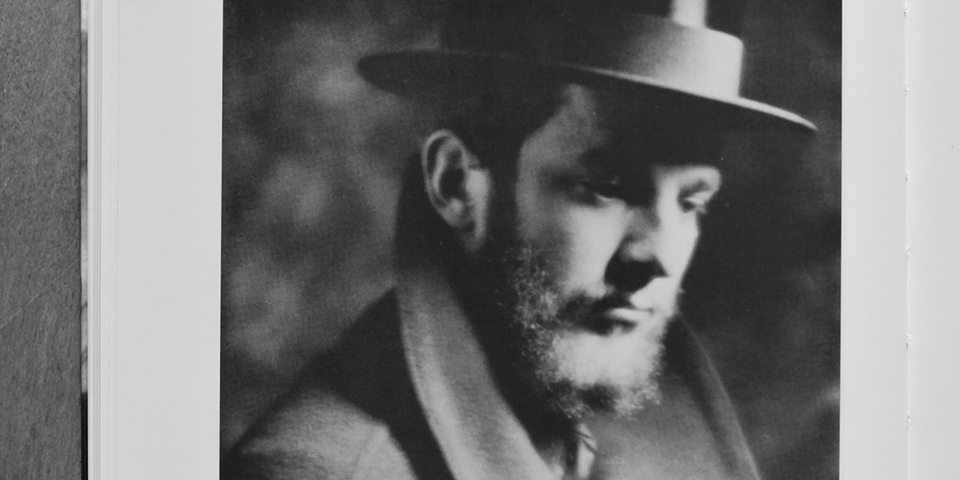
Ein Beitrag von: Laura Su Bischoff
„Es war einmal ein kleiner Junge namens Alvin“, schreibt Alvin Langdon Coburn in der ersten Hälfte der 1960er Jahre in seinem Haus im walisischen Küstenort Rhos-on-Sea, wo er seinen Lebensabend verbringt. Er, der schon früh als Meister der Fotografie gilt, blickt dort auf seine lebenslange Suche nach der Schönheit zurück: Er denkt an den Piktorialismus, jenes fotografisches Genre, das mit seiner bildhaft-symbolischen Ausgestaltung für die Anerkennung von Lichtbildern als Ausdruck der „schönen Künste“ kämpfte.
kwerfeldein – Fotografie Magazin | Fotocommunity
Das Bild des Tages von: Ronny Garcia

Mit diesem Ausblick wünschen wir Euch einen schönen dritten Advent.
kwerfeldein – Fotografie Magazin | Fotocommunity
[ By Steve in Art & Street Art & Graffiti. ]

Electric utility boxes don’t have to look utilitarian and these creatively painted examples illustrate art’s power to beautify urban neighborhoods.


What’s in the box? Your guess is as good as Amy Johnquest’s and since she was the artist commissioned to paint this utility box in Easthampton, MA, she oughta know! Situated at 50 Payson Avenue, the artwork approved by the Easthampton City Arts and the Massachusetts Cultural Council was completed in August of 2015


Johnquest’s bold interpretation of the utility box’s innards is “suggestive of a circus poster” according to the Photo-ops blog but one must admit, the design is both appealing and timeless. Well, except for the date.


In the summer of 2014, the City of Pleasanton’s Community Services Department, Civic Arts Division introduced Project Paint Box. The first phase of the program invited selected local artists to transform 6 traffic utility boxes in and around the downtown area into bonafide works of art. One of the chosen artists, Lisa Hoffman, brings us a rare two-fer: “The Outlet” and “Florescent Bulb”, which can be found just off Telegraph Avenue at 30th Street.


The city of Calgary, Canada “is still trying to articulate without artifice, its natural history, environment and cultural heritage beyond just cowboys and oil wells,” according to Jean of the Cycle Write Blog. One way of accomplishing this noble aim is to enlist local artists to express their vision of the Canadian city’s culture through their art – via city-owned electric utility boxes. Above are both sides of such a box located near the Erlton LRT station.

Commissioned by the San Francisco Municipal Transportation Agency, artist Mona Caron’s “Manifestation Station” projects a visionary streetscape onto a utility vault at the intersection of Church St. and Duboce Ave. While striking in and of itself, Caron’s artwork works on a number of levels.


“If you look at this box from a specific point and distance,” the artist explains, “its perspective lines will match the background, providing a glimpse into an alternative reality.” Compounding the illusion, an earlier installation by Caron entitled “Duboce Bikeway Mural” can be seen spreading across the Safeway store’s left front facade.

Traffic light signal boxes are found near traffic lights but unlike the latter, the former aren’t designed to attract the eye… unless they’re in Australia.
Click Here to Read More »»

Leaving those stand-up paddleboarders in the proverbial dust, these new battery-powered boards will let you cruise lakes, rivers, cannals and other bodies of …
Click Here to Read More »»
This look at execution by electrocution focuses on Old Sparky – the electric chair used exclusively by the United States and its dependencies since 1890.
Click Here to Read More »»


[ By Steve in Art & Street Art & Graffiti. ]
[ WebUrbanist | Archives | Galleries | Privacy | TOS ]
A few decades ago the Heinz company ran a series of commercials featuring people patiently waiting for their ketchup to be poured from glass bottles, each ending with the tagline, “The best things come to those who wait.” Even though these ads seem kind of silly now, they do have a lesson for photographers: sometimes it pays to be patient, especially when sharing photos with your clients.
Almost every time I return from a photo shoot, and start going through the pictures on my computer, I get caught up in the excitement and have a nearly unbearable urge to start sending pics, previews, and first-looks to my clients. I often can’t wait to share my work with them so they can see for themselves how things turned out. However, if you take the opposite approach and apply the brakes a bit, you and your clients will have a much more positive experience, and you will be better prepared for the long run and the rewards it brings. If you are the type of person who, like me, wants to send your clients a few sneak peeks or previews before you deliver your finished pictures, here’s a few reasons you might want to reconsider that practice.
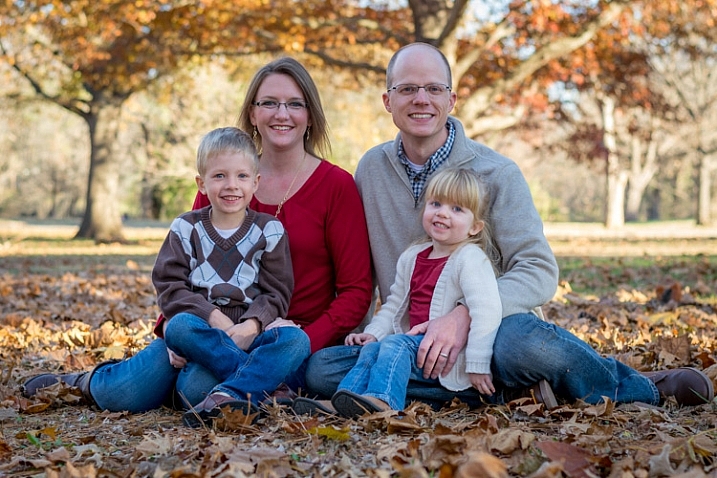
Recently I spent an hour in the park taking pictures of a family, and as I was going through nearly a thousand images in Lightroom later that evening, I came across a few that I just had to share with the parents. They were so precious, and their little girl looked like she was having the time of her life, so I knew they would be thrilled to get a couple photos right away. I sent them to the mother’s mobile phone and she responded with ecstatic adulations, and a few minutes later the pictures showed up on Facebook where they immediately got dozens of likes and a handful of comments like “Great shot!” and “Lovely family!” So far so good, right? I mean, where’s the harm in sending a few pictures the evening after a photo session if that is the result?
My goal in sending a few initial photos was to give my clients a sneak peek (that’s literally what I said when I texted her: “Here’s a sneak peek from today’s session!”) which would whet her appetite for the rest of the photos, but in doing so I essentially ruined the surprise. It’s like sneaking a peek, to use the expression, beneath the wrapping paper a week before Christmas and getting a glimpse at your presents–it’s fun, but it makes the actual unwrapping a bit anticlimactic, since you already know what to expect.
Another problem with this approach is I found a few other pictures later on that were even better, but by then the surprise had worn off. Yes the clients were still thrilled to get their images, but by the time I had the official gallery all put together, with watermarked proofs for sharing on social media, the excitement had worn off and her friends were not as interested as they were initially. I basically sacrificed quality on the altar of immediacy, and in doing so hurt my brand just a tiny bit in the process.
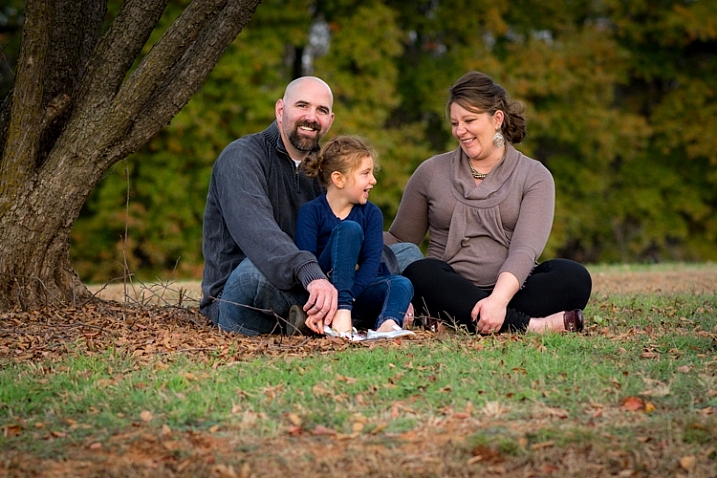
If I had simply waited until all the photos were finished and given my clients everything when I was truly ready to do so, I would have had much better results overall. Every photo would have been personally selected, properly edited, and appropriately watermarked for sharing on social media. My client’s photos would have looked better and so would my photography operation in general. This same scenario has repeated itself time and time again, and often my wife has to talk me down from the edge. I’m eager to share a few quick photos, but if I just wait a week or two until they are actually ready for sharing, the results are always better for everyone involved.
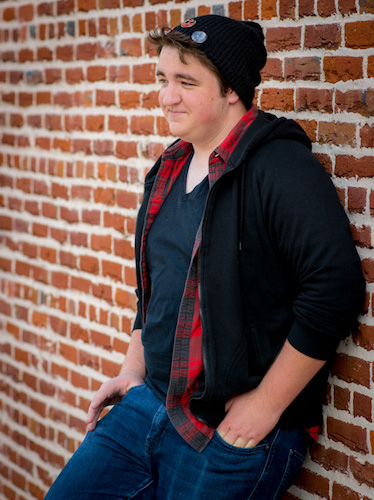 This second lesson is more practical and less emotional, but it rings true for me every time. My initial edits to my pictures are almost never the same as my final edits, and thus rushing to share images right away inevitably leads me to getting an inferior product into the hands of my customers. My editing workflow in Lightroom looks something like this:
If I share a preview of the session with my clients, it’s usually after step 4, or worse, step 3. (Which sadly has been known to happen more times than I care to admit.) That means I am giving my client, and everyone with whom they share those sneak peeks, images that are quantitatively inferior to what I am capable of producing. If you were baking a cake that you know needs 30 minutes in the oven, would you serve it after 25 minutes because you can’t wait for your guests to taste it? No way! You would serve it only when it’s done and give your friends the highest quality dessert possible as a result. We should give our photographs, and the people with whom they are shared, no less than the time they need to be the quality they deserve.

Think for a moment about something special you have in your life: a physical object, a trinket or knicknack, or something with function or purpose like a bookshelf or cabinet. More likely than not, the things we hold dear, and to which we assign greater value, have one thing in common – they were constructed with care over time. Humans often assign greater significance to things that we know took a long time to create. Spelunkers gaze in awe at natural rock formations and crystals that were formed bit by bit, over millions of years. We pay more for wines that has been aged over time, even though they are often no better than their one-year-old counterparts. Rome itself, so the saying goes, was not built in a day. Why then are we, as photographers, so quick to share photos with our clients, if people expect that quality takes time?
I know how tempting it can be to want to share a few pictures right after you are done with a photo session. It hapens to me almost every time! It might get you some immediate accolades from your clients, but can be somewhat counterproductive in the long run. Early sharing can send the wrong signal to your clients, and their friends, about the quality of your pictures. Think about it from your clients’ perspective – would you feel good about spending $ 500 on a photo session if the photographer finished editing your images in one day, or would you rather know that he or she spent a week or two to get the colors, the cropping, and other edits just right?
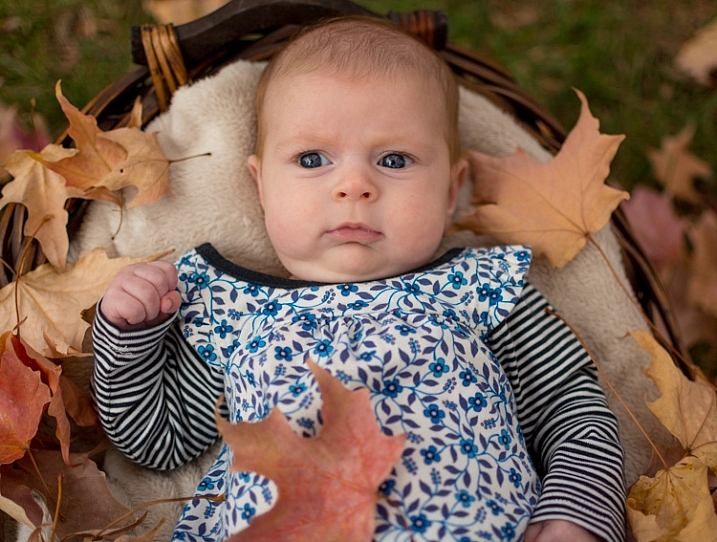
If your clients have to wait a week or two for their pictures they will assign a much greater value to them, because they know it took you longer to arrive at the final product. When I think about giving clients a preview or sneak peek, my wife, ever the voice of reason, usually pulls me back from the edge and reminds me that we’re only helping our business in the short term. That is not creating the type of high-quality perception we want people to have when they think about having us do their pictures.
One of the nice things about the prevalence of smartphones is that everyone has a camera. Of course the downside to this is many people also consider themselves photographers, when they may not have all the training, experience, and skill that most of their professional counterparts possess. While I’m not one to judge, and far be it from me to say whose work has value and whose work does not, I do know that if you want people to spend money on your photography services, you need to give them a reason to do so.
Why should I pay someone $ 1500 to shoot my wedding if my friend says he can do it for half that with his new Canon Rebel and a kit lens? Why should I pay $ 300 for pictures of my kids when my sister can just use her iPhone with its really nice camera? The reason is because you, as a photographer, are much more than just a person with a camera. People are paying you for your knowledge and skills, your ability to work with people and capture their emotions, and to create beauty and art with the press of a shutter button. You have experience shaped by years of trial and error. Sharing pictures within hours of taking them can send your clients a signal that your work is no different than anyone else with a halfway decent camera.

It was so tempting to share this photo with the girl’s mother right away, but after a week I had taken more time to properly edit it to where it was much better than the original.
By carefully culling your photos from a session, taking time to edit them to perfection, and choosing only the best of the best to eventually give to your clients, you are sending a message that you might not be the fastest game in town, but you mean business, and do quality work. To use another food analogy, anyone can stop at a fast food burger joint and get a quick meal. For a quality top-notch hamburger you need a sit-down restaurant where your food takes a decent amount of time to prepare. Even if both establishments get their beef from the same distributor, the public perception of the latter will almost always be greater than the former, partly for the simple reason that you don’t get your food right away. The same holds true for photography – the best things come to those who wait.

Of course one obvious problem here is how long to wait. As a general rule I like to give my clients their images within two weeks, and often a bit sooner. Much more than that and they can get a bit annoyed, as you would also have a problem waiting two hours for a hamburger, no matter how tasty it was. Every photographer is different, and the length of time depends on many different variables, but as long as you set your clients’ expectations upfront you should be fine. You might even benefit from over-estimating the length of time it will take, and then delivering your pictures a bit sooner. This type of under-promising and over-delivering can go a long way towards building goodwill with your clients, and give them an even more positive impression of you and your work.
What about you? Do you like to share your photos online right away or take your time? I’m interested to hear your thoughts in the comments section below.
googletag.cmd.push(function() {
tablet_slots.push( googletag.defineSlot( “/1005424/_dPSv4_tab-all-article-bottom_(300×250)”, [300, 250], “pb-ad-78623” ).addService( googletag.pubads() ) ); } );
googletag.cmd.push(function() {
mobile_slots.push( googletag.defineSlot( “/1005424/_dPSv4_mob-all-article-bottom_(300×250)”, [300, 250], “pb-ad-78158” ).addService( googletag.pubads() ) ); } );
The post 4 Good Reasons Why You May Want to Wait to Share Client Photos by Simon Ringsmuth appeared first on Digital Photography School.
 |
NYC April, 2007. New York in the rain is just so very photogenic. The Canon 50mm 1.2 does an amazing job of isolating subjects and accentuating texture. Photo by Rob Kearney
At the ripe age of 19, Rob Kearney had developed an encyclopedic knowledge of cameras and a position at a local camera shop (for which he was the only applicant). With his Leica M6 and 50mm Summicron, he fancied himself the Cartier-Bresson of New Haven, Connecticut. He continued his education as a freelance photo assistant in New York City, eventually detouring into full-time photo retouching, and now shoots street scenes and graphic-inspired still life for himself.
Learn more about his career in our Q&A, and see more of his personal work at his website. Would you like to be featured in an upcoming Readers’ Showcase? Let us know! Be sure to include your DPR user name and a link to your online portfolio.
 |
Photo by Rob Kearney
I was born in Texas, raised in Ohio and Connecticut, and have been living in NYC since 1989. I’m 47.
My interest in photography started around age 7 or 8, but began strictly as a fascination with cameras and lenses. For years, I was far more interested in the camera as a physical object than I was in taking photographs. I knew all the latest models and brands, but I never really took any pictures, save a few snaps with a cheap 110. Other kids had football posters on their walls; I had a home made collage of cutouts of cameras from Popular Photography. Looking back, I was a pretty weird little kid.
After a brief stint at the university of college, I lucked into a job at a camera shop chain in New Haven, CT., imaginatively called The Camera Shops. The manager was instantly intrigued (perplexed) by my level of knowledge of cameras, contrasted with my young age, and my utter lack of photographic skills. I was also the only one who applied.
Soon after starting the job, thanks to a generous employee discount, I got my first 35mm; a used Minolta X370 with a 50mm lens. Within a year I had worked my way up to a Nikon FM2 with a couple of lenses, and by the end of 2 years, I’d finagled my way into a Leica M6 with a 50mm Summicron.
I spent the rest of my money on Tri-X and processing. I fancied myself the Cartier-Bresson of New Haven, which of course I was not, even remotely. But I did manage to join a Yale camera club and was given lots of encouragement by the members. I was 19.
 |
Sagaponack, NY, August 2010. A favorite. Photo by Rob Kearney
(cont.) Through some of the connections I’d made with local photographers at the camera shop, I found out about an opening at a professional shop in NYC (which was eventually bought by Calumet). I got the job and had a start date before I even found an apartment.
I worked in the rental department and learned as much as I could about medium format, large format and studio strobes, hot lights, and grip equipment, while also building relationships with photographers and their assistants.
After a few months, with a nudge from of a couple of the shop’s customers, I quit and joined the freelance photo assistant pool. NYC still had a bustling photo district back then, with rental houses, labs and studios all concentrated within a few blocks around 20th St and 5th Ave.
I spent the next several years assisting over 100 photographers, my morning commute zig zagging across the photo district. For the first few years, I worked for anyone and everyone, from a guy who was merely cataloging machine parts with a view camera, to a luxury real estate photographer, to a guy who photographed ONLY gardens, to Annie Leibovitz. Towards the end of my assisting career, I concentrated on working with advertising still life photographers. I liked the attention to detail in still life, the slower, more methodical pace, not having to lug equipment on location, and the catered lunches.
 |
NYC AC. August, 2013. Photo by Rob Kearney
(cont.) While assisting, I started to put together my own portfolio of advertising/editorial work and shop it around town. Unfortunately, this was right around the time, in the late 90s, when stock photography started booming, digital started pushing aside film, and budgets started to plummet. Assignments were becoming harder to find, as art directors started using more stock. Lower budgets and digital cameras meant clients weren’t interested in paying for film and processing, which meant ditching my entire 4×5 view camera system. And relationships between photographers and ad agencies became more tenuous, as art directors wanted to work with the next new kid, who was shooting digital, with a cool new technique and look, and who worked cheap.
The days of big budget contract shoots with clients flying in and catered lunches was on the wane. I had apprenticed a little too long and was emerging at the wrong time into a marketplace that was very different from the one I’d signed up for.
 |
NYC March, 2007. This lady had so clearly spent a lot of time and effort on the way she looked, I had a hunch she wouldn’t mind me taking her photo. After I snapped the picture, she gave me a sort of knowing look and a half smile that said, ‘Yeah, I know, I look pretty awesome.’ Photo by Rob Kearney
(cont.) I had another small problem. I was trying to make my ‘schtick’ shooting in natural light. I had built up a decent portfolio, of advertising quality images, all shot with natural light, indoors and out, while every other competing photographer was shooting in a studio with strobes. Art directors all seemed to like my portfolio, but the concept of shooting something important for an advertisement using unpredictable, and generally unrepeatable, natural daylight was a bit too scary for them. If they hired me to shoot something with long hard shadows and it was cloudy come shoot day; game over. If they wanted me to shoot 20 handbags with the same lighting in a day, but the sun went down before we were done; game over.
In the end, my method of shooting simply wasn’t controlled enough for big agencies to take a chance on me. And I loathed the idea of putting all the time and effort into a laborious studio shoot, like I’d been doing as an assistant for the past several years, for half of the former going rate.
So I was faced with a decision; try to make a go of shopping my portfolio around and make a piece meal living with small editorial assignments and stock shooting, or forge a new direction.
 |
NYC September, 2013. This is one of my favorite images because it’s so flat, colorful and abstract, it could be a painting. In reality, it’s a carpet store window, with a beat up graffiti covered metal frame around it, reflecting traffic lights. Even though I took it, I still forget what it actually is sometimes. Photo by Rob Kearney
(cont.) I decided to learn Photoshop. I spent a few years honing my skills, then started doing retouching for some of the photographers I’d worked for as an assistant. Over time, I realized I had somewhat of an advantage over people who only knew Photoshop but never worked in studios. I spoke the same language and understood the photographers, especially the still life guys.
By 2005, I was freelance retouching 5 days a week. I stayed freelance for a few more years. Then in 2009, I took a position at a fashion retouching studio called Gloss. At the time, there were no dedicated ‘still life’ retouchers on staff, and there was very little still life work. Little by little, I carved a small niche at the studio, and everything related to still life came my way. Eventually the clients took notice and started sending more still life work our way.
Today I oversee a team of 7 retouchers, all focused strictly on still life – cosmetics, watches, jewelry, etc. All the while, I have been taking pictures, for myself and friends and family. It’s very freeing to shoot without worrying about getting paid for it. Of course, getting paid for it wouldn’t be so awful.
 |
NYC August 2012. Lamp with ceiling. Photo by Rob Kearney
As a full time retoucher, I’ve learned to make my own photos look better faster, more efficiently, and hopefully less noticeably post processed. With a few exceptions, I try not to take retouching too far on my personal work. I don’t do a lot of pixel level modifications (cloning/healing, etc), but I do use color and lighting adjustments to bring out the essence of what I see. And because I’m paid to have a critical eye, I tend to be more selective about which images of my personal work I choose to spend time processing, retouching, and ultimately share with others.
 |
Nantucket September, 2014. I try to avoid obvious shots, but I couldn’t NOT take this. Photo by Rob Kearney
Currently, I use a Sony RX1 and occasionally a Cyber-shot RX100. I’ve spent the vast majority of my career shooting with a 50mm, so the Sony’s 35mm has been both a bit of a compromise and a challenge. Since getting it, I’m more drawn to landscapes than previously, but my tighter ‘still life’ images have taken a bit of a back seat. For street and outdoor travel shooting, it’s a lot of fun. Truth be told, I am missing my old Canon full frame and 50mm F1.2 combo quite badly, though I certainly don’t miss the bulk or weight.
 |
NYC September, 2013. I’ve always been fascinated by the spectrum of greens, yellows, oranges and blues in the various light sources you see when looking at an apartment building from outside. But the people in the rooms just see the kitchen light, the bedroom light, the living room light, etc. They don’t perceive the different colors. Photo by Rob Kearney
The ergonomics, build quality, size and weight of the RX-1 are nearly perfect. I do wish it wasn’t quite so noisy in low light, and focused more quickly and decisively. When I get a noisy soft image, I just tell myself ‘that’s the look!’ and move on, but I am always on the lookout for a compact full frame that handles low light better, and focuses faster.
Previously, I’ve had Canons, Nikons, and Panasonic M43s. I’ve gotten great pictures from all of them, and an iPhone too. I don’t really care what I’m shooting with as long as I get an image that’s either reasonably sharp and well exposed, or beautifully messed up. I had a foggy Nikon 55mm macro that had a broken diaphragm for years. Everything that passed through that lens looked like a dream. I still miss it!
 |
NYC July, 2014. The city has such a wide variety of random lighting, and dogs. Photo by Rob Kearney
Working in advertising for 20 years will definitely have an affect on your sense of light, color, and composition. I’m always drawn to little vignettes; pools of light, or pockets of color that could pass for an ad. I prefer images that stand well alone and don’t need to be part of a group of images to tell the story. I don’t purposely shoot ‘themes’ or ‘series’. I like the concept of the photograph as a singular thing, like a painting. I try to shoot with the idea in the back of my mind that someone somewhere might like to hang the picture I’m making on their wall.
 |
Nantucket September, 2013. Once you see them, I think the birds are the stars of this image. Photo by Rob Kearney
A keeper to me can be many things. It can be funny. It can evoke a sense of calm. It can be something abstract that doesn’t seem photographic at all. I like images that are lush, or stark, colorful or monochromatic. Cold. Warm. Disturbing. Comforting. I’m definitely a photographic omnivore. If I had to ascribe one word or concept to my work, it would be simplicity. Less is definitely more in my book.
 |
NYC July, 2012. I work on the 12th floor of a building facing the Empire State. The view is always varied and often dramatic, but rarely this intense. I was literally waiting for the UFO to appear through the clouds. Believe it or not, there is very little post processing here. Photo by Rob Kearney
New York is a great muse because it’s so brimming with varied subjects and weird/dramatic/beautiful light, 24/7. There are so many people, places, and things, packed into such a small area, that you could swing a camera on a rope and get great shots. New York is also the city of change, for better or worse. Things are in such constant flux that nothing gets the chance to become old and boring.
The challenge is to hone in and isolate your subjects, in a sea of frenetic distractions (or embrace the distractions as the subject). The other great thing about living/shooting in New York is that when you travel away from it, the contrast of calm, serenity, and beauty outside the city is that much more inspiring. It’s always amazing to me how people who live outside the city so often take for granted the beauty that surrounds them, because they see it every day and have become blind to it.
 |
Photo by Rob Kearney
Don’t get caught up in tech specs; megapixels, corner sharpness, fall off, etc. Some of the greatest photographs ever taken are blurry and noisy. The most important pieces of equipment are your eye and your instinct, and the best camera in the world is the one you have with you. I rarely see a great photograph ruined by a so-so camera, but I’ve seen plenty of so-so pictures come out of state of the art cameras.