We’ve seen established members of the optical industry partner with smartphone makers before – Nokia high-end phones used to come with Carl Zeiss branded lenses, and Schneider Kreuznach optics have been used in various models from Chinese manufacturer Oppo. Now it seems we could soon see Leica-branded lenses and other imaging technology in Huawei smartphones. Read more
Blog
-
Weekly Photography Challenge – Square
Shapes are everywhere, have a look around you. Do you see any squares like these images I shared previously?

By Uqbar is back
Weekly Photography Challenge – Square
There are many ways you could choose to approach this week’s challenge. You could take it literally and photograph:
- Things which are square shaped
- Images cropped into a square format
- Patterns that include squares
Or you could take it a bit more off-beat and go for:
- Squares as in city parks or plazas, and things that take place there
- A person or thing which is a bit odd as in the old hippy phrase “He’s a square”
- Something that happens directly, or shooting square on to the subject

By Philippa Willitts

By Tom Waterhouse

By Uwe Potthoff

By Eivind Barstad Waaler

By Gianmaria Zanotti

By Steve Bailey
Share your images below:
Simply upload your shot into the comment field (look for the little camera icon in the Disqus comments section) and they’ll get embedded for us all to see or if you’d prefer upload them to your favourite photo sharing site and leave the link to them. Show me your best images in this week’s challenge. Sometimes it takes a while for an image to appear so be patient and try not to post the same image twice.
googletag.cmd.push(function() {
tablet_slots.push( googletag.defineSlot( “/1005424/_dPSv4_tab-all-article-bottom_(300×250)”, [300, 250], “pb-ad-78623” ).addService( googletag.pubads() ) ); } );googletag.cmd.push(function() {
mobile_slots.push( googletag.defineSlot( “/1005424/_dPSv4_mob-all-article-bottom_(300×250)”, [300, 250], “pb-ad-78158” ).addService( googletag.pubads() ) ); } );The post Weekly Photography Challenge – Square by Darlene Hildebrandt appeared first on Digital Photography School.
-
CP+ 2016: Canon shows off new EOS-1D X Mark II, EOS 80D and G7 X Mark II
CP+ 2016: Canon shows off new DSLRs and G7 X Mark II

As usual at the CP+ show in Yokohama, one of the longest lines can be found Canon’s booth. This year, Canon’s EOS 80D and EOS-1D X Mark II were in huge demand from both press and public attendees alike, and we fought our way through the crowd to get hands on with both new models – and the surprisingly nice PowerShot G7 X Mark II.
CP+ 2016: Canon shows off new DSLRs and G7 X Mark II

First up is the Canon EOS 80D. The 80D features a 24MP APS-C CMOS sensor, 45-point all cross-type autofocus system, and the company’s DIGIC 6 processor. Cosmetically similar to the popular 70D, the new model offers a number of significant updates.
CP+ 2016: Canon shows off new DSLRs and G7 X Mark II

The 80D will be familiar to users of the 70D of course, but operationally it shares a lot of features from much earlier cameras in Canon’s EOS lineup, going right back to the original D30 of 2000. It’s easy to dismiss this kind of homogeneity as conservative – even unimaginative, but there’s a reason that DSLRs in 2016 still look and function much like DSLRs from the early 2000s. It works.
CP+ 2016: Canon shows off new DSLRs and G7 X Mark II

When using live view or recording video users can take advantage of the 80D’s improved Dual Pixel CMOS AF system, which provides phase-detection autofocus with the mirror locked up in Live View. This particular iteration is Canon’s first attempt at Servo AF using Dual Pixel technology – and it works very nicely in our initial testing with moving subjects. So nicely, in fact, that we can’t to see it extended to all Canon DSLRs… and maybe even, well, that’s a lot of wishful thinking.
The 3″ rear LCD is touch sensitive and fully articulating, which is handy for shooting from low and high angles, and also for video. The 80D can record 1080/60p video and offers sockets for both a microphone and headphones. Wi-Fi is also built in, with support for NFC.
CP+ 2016: Canon shows off new DSLRs and G7 X Mark II

Although it lacks 4K, the 80D is a capable HD video camera. With the addition of the PZ-E1 Power Zoom Adapter (currently only compatible with the new 18-135mm kit zoom) and DM-E1 shotgun microphone it’s a powerful and surprisingly ergonomic package. We suspect that most serious Canon videographers will look towards the Cinema EOS line but students and beginner filmmakers will appreciate the 80D’s ease of use, and potentially its excellent autofocus – with no hunting – in video.
CP+ 2016: Canon shows off new DSLRs and G7 X Mark II

One camera that is definitely of interest to professionals is Canon’s new flagship stills model the EOS-1D X Mark II. The 1D X Mark II builds on the basic concept behind the 1D X, but offers increased resolution (from 16 to 20MP) increased speed (14fps in live view mode, 12fps in conventional DSLR mode) and 4K video capture.
CP+ 2016: Canon shows off new DSLRs and G7 X Mark II

The EOS-1D X Mark II’s autofocus system has also been upgraded. The 61-point AF array covers a greater area, and these AF points work in concert with a 360,000 pixel metering sensor which should, in theory, mean better tracking of moving subjects.
CP+ 2016: Canon shows off new DSLRs and G7 X Mark II

Ergonomically, the EOS-1D X Mark II is – like the 80D – very similar to its predecessors. Professional users are even less accepting of change than enthusiasts because with years of muscle memory built up, they need key controls to stay more or less in the same place from model to model. As such, the EOS-1D X Mark II looks and operates a lot like its predecessor, and indeed some key controls have barely moved since the original film EOS-1.
CP+ 2016: Canon shows off new DSLRs and G7 X Mark II

The EOS-1D X Mark II’s battery (which fits horizontally inside the base of the camera) should be good for more than 1200 images in normal use – a major differentiator of professional DSLRs compared to lower-end models (and any current mirrorless camera). Needless to say, the EOS-1D X Mark II is fully weather-sealed and feels like it’s been milled from a solid lump of something very solid, very expensive and very heavy.
CP+ 2016: Canon shows off new DSLRs and G7 X Mark II

Who would have thought that after 16 years, professional Canon DSLRs would still be using CompactFlash cards? But here we are in 2016, and the same media that fit inside the original EOS-1D can still be used in the EOS-1D X Mark II. New in the current flagship though is a second slot for cosmetically similar (but physically incompatible) C-Fast cards. C-Fast cards are capable of greater data throughput, which will help if you’re one of those people that likes to shoot extended bursts of 170 Raw files at 14fps.
CP+ 2016: Canon shows off new DSLRs and G7 X Mark II

If you are one of those people, you should pay attention ti the warning inside the EOS-1D X Mark II’s card slot. Don’t go burning your fingers after shooting. It gives a new meaning to the term ‘blazingly fast’…
CP+ 2016: Canon shows off new DSLRs and G7 X Mark II

Ethernet? Why yes. Although the EOS-1D X Mark II features built-in Wi-Fi, a 330Mbps wired connection is still the best option for absolute speed when shooting intensely at (say) the Olympics. It’s no coincidence that Canon (like Nikon) likes to release new professional cameras in Olympic years.
CP+ 2016: Canon shows off new DSLRs and G7 X Mark II

At the other end of Canon’s camera range is the 20MP PowerShot G7 X Mark II. We really liked the original G7 X for everyday ‘carry everywhere’ shooting but it had some limitations. The Mark II has not been significantly changed when it comes to ergonomics or core features (inside you’ll find the same excellent 20MP 1-inch sensor and 24-100mm equivalent lens), but Canon has made some improvements.
CP+ 2016: Canon shows off new DSLRs and G7 X Mark II

One of those improvements is a front dial that can be switched from clicking to non-clicking operation, and a subtle front grip, in place of the smooth body of the original G7 X.
CP+ 2016: Canon shows off new DSLRs and G7 X Mark II

A new Digic 7 processor brings very welcome performance improvements, especially in Raw mode. Raw capture is now possible at 8fps and while standing at Canon’s booth we shot for more than 20 frames before the camera that we used started to slow. Finally, a Canon PowerShot G-series compact that is genuinely usable in Raw mode…
CP+ 2016: Canon shows off new DSLRs and G7 X Mark II

The G7 X Mark II’s rear screen is a multi-angle 3.0-inch capacitive model with 1.04 million dots, capable of tilting up to 180° upwards (for selfies) and 45° down (for other things). The G7 X Mark II will be available in May for $ 699.
-
23 Geometric Images of Quadrangles or Squares
Finding geometric shapes to photograph is a great exercise for beginners. It helps train your eye to look for something specific.
A quadrangle (also known commonly as a square, of course) is easily found in many places. Look around you, how many do you see in your room?
Here are some images of squares – either cropped into the square format, or subjects the represent the shape – as interpreted by a few different photographers:

By Wicker Paradise

By torbakhopper

By stuart hines

By Dustin Gaffke

By The Hamster Factor

By John Catbagan

By Jordi E

By Michael Pardo

By David Santaolalla

By Jed Sullivan
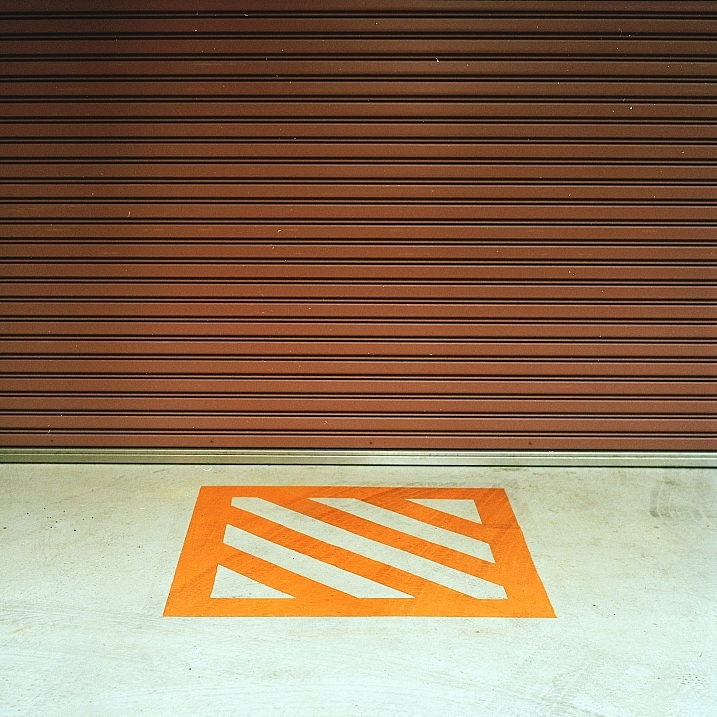
By ? ? ? ?

By Kevin Chan

By Vitor Antunes

By Marcy Leigh

By Ynot-Na

By Timothy Neesam

By DurhamDundee

By Carol Von Canon

By tommpouce

By Matthew G

By VirtualWolf

By Henk Sijgers

By jr2142
googletag.cmd.push(function() {
tablet_slots.push( googletag.defineSlot( “/1005424/_dPSv4_tab-all-article-bottom_(300×250)”, [300, 250], “pb-ad-78623” ).addService( googletag.pubads() ) ); } );googletag.cmd.push(function() {
mobile_slots.push( googletag.defineSlot( “/1005424/_dPSv4_mob-all-article-bottom_(300×250)”, [300, 250], “pb-ad-78158” ).addService( googletag.pubads() ) ); } );The post 23 Geometric Images of Quadrangles or Squares by Darlene Hildebrandt appeared first on Digital Photography School.
-
Nikon announces trio of long-zoom Coolpix cameras, two of which support 4K capture
$ (document).ready(function() { SampleGalleryV2({“containerId”:”embeddedSampleGallery_2887748447″,”galleryId”:”2887748447″,”isEmbeddedWidget”:true,”standalone”:false,”selectedImageIndex”:0,”startInCommentsView”:false,”isMobile”:false}) });
Nikon has announced a trio of new superzooms, two of which support 4K/UHD video capture. All three have a new naming scheme, with the A-series replacing the ‘L’ cameras and the B-series taking over for the ‘P’ models.
All three cameras offer what Nikon calls SnapBridge, which combines Wi-Fi (with NFC) and Bluetooth. By using a low energy version of Bluetooth, your phone can maintain a constant connection with the camera, meaning that you don’t have to re-pair every time you want to share photos.
The compact Coolpix A900, which offers a 20MP BSI CMOS sensor, 35X (24-840mm equiv.) F3.4-6.9 lens, 3″ tilting LCD and 4K video capture at 30p. It will be available in silver and black at a price of $ 399.
Next is the Coolpix B500, which loses 4K capture but uses four AA batteries for power – a real rarity these days. It sports a 40X (22.5-900mm equiv.) F3.0-6.5 lens, 16MP BSI CMOS sensor, tilting 3″ LCD and 1080/30p video recording. Your color choices for this model are black and red and the estimated selling price is $ 299.
The B700 has the most zoom of the bunch, with a 60X (24-1440mm equiv.) F3.3-6.5 lens, 20MP BSI CMOS sensor, fully articulating, touch-enabled 3″ LCD, a 921k-dot electronic viewfinder and 4K video capture. You can pick one up for $ 499 in black only.
All three models will be available later this spring.
GET CLOSER TO WHAT MATTERS: NIKON’S NEWEST LONG-ZOOM COOLPIX CAMERAS OFFER OUTSTANDING IMAGE QUALITY AND PERFORMANCE TO CREATIVELY CAPTURE FROM AFAR
With Nikon’s New SnapBridge, The New COOLPIX B700, B500 and A900 Provide a Simplified Way to Share and Transfer Images Easily
MELVILLE, NY (Monday, February 22, 2016 at 11:01 P.M. EST) – Today, Nikon Inc. announced three new COOLPIX cameras, the latest additions to its compact zoom camera lineup. Designed to capture stunning images, 4K UHD (in select models) and HD video from up close or far away, these new COOLPIX cameras boast super-long zoom lenses and superior performance while also offering Nikon SnapBridge for easy sharing of photos. Providing outstanding zoom capabilities ranging from 60x and 40x respectively, the COOLPIX B700 and COOLPIX B500 allow users to explore their creative freedom regardless of the distance. With a powerful 35x zoom lens, the COOLPIX A900 is a compact, stylish and feature-packed camera that fits comfortably in a pocket.
All of these COOLPIX cameras offer a new way to share photos wirelessly through the new Nikon SnapBridge. SnapBridge creates an “always on” Bluetooth® supported connection between the camera and compatible mobile device, making automatic upload and sharing of images possible.
“Nikon’s latest COOLPIX cameras are exciting options for creative photographers seeking a compact camera that is easy-to-use, yet features incredible zoom capabilities, superior performance and stunning image quality,” said Masahiro Horie, Director of Marketing and Planning, Nikon Inc. “The COOLPIX B700, B500 and A900 provide the lens power needed to get closer to subjects and capture sharp images and HD video.”
Easily Share and Transfer Images: The New Nikon SnapBridge
With more images being shared than ever before, Nikon has developed the new Nikon SnapBridge to help consumers automatically transfer images via Bluetooth®1 low energy (BLE) directly to a compatible smartphone2 or tablet, establishing an “always on” connection, making it easier than ever to share amazing images with the world. The Nikon SnapBridge app allows users to document the time and location images were taken, embed copyright or photographer information on any image, as well as operate the camera remotely, which is great for capturing group shots. Built-in Wi-Fi3 and NFC are also available to further increase connectivity and promote sharing great images.
Additionally, SnapBridge users can take advantage of Nikon’s free image storing service, Nikon Image Space, to store up to 20 GB of images and an unlimited number of thumbnail images (up to 2MB) to the cloud, while the application will also send registered users firmware updates directly to their smart device.
COOLPIX B700
The COOLPIX B700 is a compact superzoom camera that offers incredible range and outstanding image quality. Whether trying to capture birds in-flight or the star player from the sidelines, images captured will be rendered in amazing quality thanks to the camera’s impressive 20.3-megapixel BSI CMOS sensor, even when shooting in low-light. The B700 can capture impressive portraits or landscapes with a phenomenal 60x optical zoom NIKKOR ED glass lens (120x with Dynamic Fine Zoom4) that expands from wide-angle to telephoto zoom for accuracy and precision in every shot. Capable of shooting at 5 frames per second (fps), fast motion is captured with ease, while a 3-inch Vari-angle LCD display helps compose unique perspectives at any angle. Other user-friendly features include a myriad of Creative Modes, RAW (NRW) shooting support, new 4K UHD video capability (30p) and Nikon SnapBridge for seamless sharing of amazing images with friends and family.
COOLPIX B500
Another superzoom option from Nikon, the COOLPIX B500 is an ergonomically designed zoom camera powered by AA batteries for added convenience. A 16-megapixel BSI CMOS sensor alongside an impressive 40x optical zoom NIKKOR glass lens (up to 80x with Dynamic Fine Zoom), lets users capture high quality images from near or far. The camera also offers hybrid VR to combat camera shake when shooting on-the-go. To complement still images captured, the B500 can record full 1080p HD video, while framing every shot is made easy using the high resolution tilting 920k-dot 3-inch LCD screen that helps capture images at any angle. Users can easily upload their creations to social media via Nikon SnapBridge using any compatible smartphone or tablet.
COOLPIX A900
Ideal for travel, the COOLPIX A900 is a slim long zoom compact camera that fits comfortably into any user’s pocket. While the A900 may be small, it packs an amazing 35x Optical Zoom NIKKOR glass lens (70x with Dynamic Fine Zoom) that helps reach far away subjects. Supported by a 20-megapixel BSI CMOS sensor that renders amazing quality and detail, users can also capture 4K UHD video at 30p; an impressive feature set for such a lightweight and pocketable compact camera. A 3-inch tilting high resolution 920k-dot LCD display helps frame an image at any angle and easily navigate through numerous creative options at the user’s disposal. The A900 also makes it easy to share incredible images and video using Nikon SnapBridge.
Price and Availability
The Nikon COOLPIX B700, COOLPIX B500 and COOLPIX A900 will be available in Spring 2016 with suggested retail prices (SRP*) of $ 499.95, $ 299.95 and $ 399.95, respectively. The B700 will be available in Black, the B500 in Black and Red and the A900 in Silver and Black.
1 The Bluetooth® word mark and logos are registered trademarks owned by Bluetooth SIG, Inc. and any use of such marks by Nikon Corporation is under license.
2 WI-FI COMPATIBILITY
This camera’s built-in Wi-Fi® capability can only be used with a compatible iPhone®, iPad®, and/or iPod touch® or smart devices running on the Android™ operating system. The Nikon SnapBridge application must be installed on the device before it can be used with this camera. The SnapBridge app is not yet available (coming soon Spring 2016).
3 Wi-Fi and the Wi-Fi logo are trademarks or registered trademarks of the Wi-Fi Alliance. N-Mark is a trademark or registered trademark of NFC Forum, Inc., in the United States and/or other countries.
4 Dynamic Fine Zoom magnification is calculated from the full-wide end of optical zoom
Nikon Coolpix A900 specifications
Price MSRP $ 399 Body type Body type Compact Sensor Max resolution 5184 x 3888 Image ratio w:h 4:3 Effective pixels 20 megapixels Sensor photo detectors 21 megapixels Sensor size 1/2.3" (6.17 x 4.55 mm) Sensor type BSI-CMOS Color space sRGB Color filter array Primary color filter Image ISO Auto, 80-3200 White balance presets 5 Custom white balance Yes Image stabilization Optical Uncompressed format No File format - JPEG (Exif v2.3)
Optics & Focus Focal length (equiv.) 24–840 mm Optical zoom 35× Maximum aperture F3.4 – F6.9 Autofocus - Contrast Detect (sensor)
- Multi-area
- Center
- Selective single-point
- Tracking
- Single
- Continuous
- Face Detection
- Live View
Autofocus assist lamp Yes Digital zoom Yes (4x) Manual focus No Normal focus range 50 cm (19.69″) Macro focus range 1 cm (0.39″) Screen / viewfinder Articulated LCD Tilting Screen size 3″ Screen dots 921,000 Touch screen No Screen type TFT LCD Live view Yes Viewfinder type None Photography features Minimum shutter speed 8 sec Maximum shutter speed 1/4000 sec Exposure modes - Program AE
- Aperture priority
- Shutter priority
- Manual
Scene modes - Backlighting
- Beach
- Close-up
- Dusk/Dawn
- Easy Panorama
- Fireworks Show
- Food
- Multiple Exposure Lighten
- Night Landscape
- Night Portrait
- Party/Indoor
- Pet Portrait
- Portrait
- Scene Auto Selector
- Snow
- Sports
- Sunset
- Superlapse Movie
Built-in flash Yes Flash range 6.00 m (at Auto ISO) External flash No Drive modes - Single
- Continuous H
- Continuous L
- Continuous H (120/60)
- Pre-shooting cache
Continuous drive 7.0 fps Self-timer Yes (2, 5, 10 secs) Metering modes - Multi
- Center-weighted
- Spot
Exposure compensation ±2 (at 1/3 EV steps) Videography features Resolutions 3840 x 2160 (30p, 25p), 1920 x 1080 (60p, 50p, 30p, 25p), 1280 x 720 (60p, 30p, 25p) Format MPEG-4, H.264 Videography notes High speed modes: 1080/15p and 480/120p Microphone Stereo Speaker Mono Storage Storage types SD/SDHC/SDXC Connectivity USB USB 2.0 (480 Mbit/sec) HDMI Yes (micro-HDMI) Microphone port No Headphone port No Wireless Built-In Wireless notes Has 'always on' Bluetooth to maintain connection Remote control Yes (via smartphone) Physical Environmentally sealed No Battery Battery Pack Battery description EN-EL12 lithium-ion battery & charger Battery Life (CIPA) 300 Weight (inc. batteries) 289 g (0.64 lb / 10.19 oz) Dimensions 113 x 67 x 40 mm (4.45 x 2.64 x 1.57″) Other features Orientation sensor Yes GPS None Nikon Coolpix B500 / B700 specifications
Nikon Coolpix B500 Nikon Coolpix B700 Price MSRP $ 299 $ 499 Body type Body type SLR-like (bridge) Sensor Max resolution 4608 x 3456 5184 x 3888 Image ratio w:h 4:3 Effective pixels 16 megapixels 20 megapixels Sensor photo detectors 17 megapixels 21 megapixels Sensor size 1/2.3" (6.17 x 4.55 mm) Sensor type BSI-CMOS Color space sRGB Color filter array Primary color filter Image ISO Auto, 80-3200 Auto, 100-3200 White balance presets 5 Custom white balance Yes Image stabilization Optical Uncompressed format No File format - JPEG (Exif v2.3)
Optics & Focus Focal length (equiv.) 23–900 mm 24–1440 mm Optical zoom 40× 60× Maximum aperture F3.0 – F6.5 F3.3 – F6.5 Autofocus - Contrast Detect (sensor)
- Multi-area
- Center
- Selective single-point
- Tracking
- Single
- Continuous
- Face Detection
- Live View
Autofocus assist lamp Yes Digital zoom Yes (4x) Manual focus No Normal focus range 30 cm (11.81″) 50 cm (19.69″) Macro focus range 1 cm (0.39″) Screen / viewfinder Articulated LCD Tilting Fully articulated Screen size 3″ Screen dots 921,000 Touch screen No Screen type TFT LCD Live view Yes Viewfinder type None Electronic Viewfinder coverage 100% Viewfinder resolution 921,000 Photography features Minimum shutter speed 1 sec 15 sec Maximum shutter speed 1/4000 sec Exposure modes - Auto
- Scene
- Scene Auto Selector
- Smart Portrait
- Special Effects
- Program AE
- Aperture priority
- Shutter priority
- Manual
Scene modes - Backlighting
- Beach
- Bird-watching
- Close-up
- Dusk/Dawn
- Easy Panorama
- Fireworks Show
- Food
- Landscape
- Moon
- Night Landscape
- Night Portrait
- Party/Indoor
- Pet Portrait
- Portrait
- Scene Auto Selector
- Short Movie Show
- Snow
- Sports
- Sunset
- Backlighting
- Beach
- Close-up
- Dusk/Dawn
- Easy Panorama
- Fireworks Show
- Food
- Multiple Exposure Lighten
- Night Landscape
- Night Portrait
- Party/Indoor
- Pet Portrait
- Portrait
- Scene Auto Selector
- Snow
- Sports
- Sunset
- Superlapse Movie
Built-in flash Yes Flash range 6.90 m (at Auto ISO) 7.50 m (at Auto ISO) External flash No Drive modes - Single
- Continuous H
- Continuous L
- Continuous H (120/60)
- Pre-shooting cache
- Single
- Continuous H
- Continuous L
- Continuous H (120/60)
- Pre-shooting cache
- Interval timer
Continuous drive 7.4 fps 5.0 fps Self-timer Yes (2, 5, 10 secs) Metering modes - Multi
- Center-weighted
- Spot
Exposure compensation ±2 (at 1/3 EV steps) Videography features Resolutions 1920 x 1080 (60i, 50i, 30p, 25p), 1280 x 720 (60p, 50p, 30p, 25p), 640 x 480 (30p, 25p) 3840 x 2160 (30p, 25p), 1920 x 1080 (60p, 50p, 30p, 25p), 1280 x 720 (60p, 30p, 25p) Format MPEG-4, H.264 Videography notes High speed modes: 1080/15p and 12.5p, 480/100p and 125p High speed modes: 1080/15p and 12.5p, 720/60p and 50p, 480/120p and 100p Microphone Stereo Speaker Mono Storage Storage types SD/SDHC/SDXC Storage included 20MB Connectivity USB USB 2.0 (480 Mbit/sec) HDMI Yes (micro-HDMI) Microphone port No Headphone port No Wireless Built-In Wireless notes Has 'always on' Bluetooth to maintain connection Remote control Yes (via smartphone) Physical Environmentally sealed No Battery AA Battery Pack Battery description Four AA batteries (alkaline, lithium, NiMH) EN-EL23 lithium-ion battery & charger Battery Life (CIPA) 600 350 Weight (inc. batteries) 541 g (1.19 lb / 19.08 oz) 565 g (1.25 lb / 19.93 oz) Dimensions 114 x 78 x 95 mm (4.49 x 3.07 x 3.74″) 125 x 85 x 107 mm (4.92 x 3.35 x 4.21″) Other features Orientation sensor Yes Timelapse recording Yes GPS None -
Nikon covers all focal lengths with three ‘DL’ enthusiast compacts with 1″-type sensors
$ (document).ready(function() { SampleGalleryV2({“containerId”:”embeddedSampleGallery_8751365762″,”galleryId”:”8751365762″,”isEmbeddedWidget”:true,”standalone”:false,”selectedImageIndex”:0,”startInCommentsView”:false,”isMobile”:false}) });
Nikon is entering the 1″-type premium compact market in a big way, introducing three new models: the Nikon DL18-50, DL24-85 and DL-24-500. Between them, they cover pretty much every focal length. The ‘guts’ of all three ‘DL’ models are the same, in that they share a sensor, image processor, autofocus system and support for 4K video (with clean HDMI output, no less). Parts of the design, especially the control layout and font, strongly resemble that of Nikon’s 1-series mirrorless cameras.
Sensor-wise, the DLs use what is possibly the same 20.8MP 1″-type BSI CMOS sensor as Nikon’s J5 mirrorless camera. It’s paired with the company’s new EXPEED 6A image processor, which allows for a top ISO of 12800 and 4K/UHD video recording at 30p. All three cameras have ‘Dual Detect VR’, which combines data from the cameras’ angular velocity sensors and the scene itself to reduce shake. They also have fluorine coatings on their lenses to keep moisture and oil away. Each has a manual focus ring around the lens, as well.
They also have 3″ touch-enabled OLED displays, tilting on the 18-50 and 24-85 and fully articulating on the 24-500. Naturally, they all have Wi-Fi with NFC, plus Nikon’s ‘SnapBridge’ technology, which uses Bluetooth to maintain a connection between camera and phone, so there’s no need to re-pair. Battery life on all three DL models is rated at 290 shots/charge (per the CIPA standard).
One of the features that may set the DLs apart from the other 1″-type cameras is its Hybrid AF system, which combines 105 phase-detect with 171 contrast-detect points. This allows the camera to shoot at 20 fps with continuous autofocus, which is, by far, best-in-class (spec-wise). If you can live with single AF, then the DLs can shoot even faster: 60 fps.
Nikon DL18-50
The first camera is perhaps the most interesting, as it has the widest lens of any enthusiast compact on the market. That lens has an equivalent focal length of 18-50mm and a fast maximum aperture range of F1.8-2.8. The lens has a 3-stop ND filter and is Nikon’s first compact to have a Nano Crystal Coating, which reduces flare and ghosting. The lens has seven aperture blades and has a top shutter speed of 1/1600 sec (an electronic shutter, found on all three models, maxes out at 1/16000 sec). There is also built-in perspective correction, which is especially useful when shooting architecture.
The camera has full manual exposure control, Raw support, tilting touch OLED display and aforementioned 4K/30p support. The DL18-50 also supports an optional tilting OLED electronic viewfinder with 2.36M dots. The 18-50 is the only one of the camera cameras to lack a built-in flash, though like its siblings it does have a hot shoe.
Nikon DL24-85
The DL24-85 is very similar to its wider sibling, both inside and out. The main difference is its lens, which is a 24-85mm equiv. F1.8-2.8 model, though it lacks the Nano Crystal Coating. Its standout feature is the ability to take life-size, 1:1 macro photos, with a minimum focus distance of 3cm. Macro shooters can also take advantage of focus peaking and bracketing as well as manual priority AF. Again it includes a built-in ND filter.
Nikon DL24-500
For those seeking a long zoom model, there’s the DL24-500. As its name implies, it has a 24-500mm equiv. lens, with a max aperture range of F2.8-5.6. Unlike the other two models, the 24-500 has a fully articulating display and a built-in OLED viewfinder. It’s also the only of the DL models with a mic input jack, with support for Nikon’s ME-1 shotgun mic.
All three cameras will be available in early summer with suggested retail prices of $ 649 (24-85), $ 849 (18-50), and $ 999 (24-500).
Press Release:
THE NIKON DL PREMIUM COMPACT SERIES: PUTTING POCKETABLE POWER AND LEGENDARY NIKKOR LENS PRECISION INTO THE HANDS OF PASSIONATE PHOTOGRAPHERS
Pairing a Large 1-Inch Sensor with Superior NIKKOR Lens Technology, Nikon’s New Compact DL24-85, DL18-50 and DL24-500 Will Help Capture Stunning Images and 4K UHD Video
MELVILLE, NY (Monday, February 22, 2016 at 11:01 P.M. EST) – Today, Nikon Inc. announced the new DL Series of premium compact cameras. These pocketable yet powerful imaging tools offer an elite level of imaging prowess that fits easily in one’s palm. Equipped with a variety of focal lengths optimized for different types of shooters, the DL24-85, DL18-50 and DL24-500 combine powerful NIKKOR optics with a large 20.8-megapixel (CX-format) 1-inch BSI CMOS sensor to produce stunning image quality and amazingly detailed images, even when shooting in low-light. Cameras in the new DL line will also feature powerful performance, with high-speed Autofocus (AF) and 20 frames-per-second (60 fps with fixed AF) continuous shooting capability for fast action moments, as well as 4K UHD video recording for users to tell their stories in new ways. Ergonomically designed and familiar for advanced users, all three cameras will utilize the new Nikon SnapBridge connectivity to make it easier than ever to shoot and share with ease.
“We recognize consumers’ desire for smaller cameras capable of outstanding image quality,” said Masahiro Horie, Director of Marketing and Planning, Nikon Inc. “With the new DL line, Nikon is proud to fuse legendary NIKKOR optics with the latest innovations in imaging to provide advanced photographers amazingly compact tools capable of capturing photos and video that even the most discerned professional would be proud of.”
The Nikon DL Series: Powerful Performance, Superior Optics
The new DL line of premium compact cameras packs innovative and powerful imaging technology into elegantly designed yet remarkably compact camera bodies, making it easier than ever to carry pure imaging prowess in the palm of one’s hand. All of these new cameras are designed with a 20.8-megapixel CX-format (1-inch) BSI CMOS sensor, which when combined with fast, high quality NIKKOR glass, help to create stunning image quality for stills or 4K UHD video. Working alongside the new sensor is the new EXPEED 6A image processor that allows for impressive noise reduction and powerful, fast performance, making it possible to capture stunning low-light street photography, beautiful portraits or spectacular landscapes with ease.
For fleeting moments and fast-action, the DL line incorporates a high-speed hybrid autofocus (AF) system featuring 105 phase detect focus areas (with 171 focus points in contrast detect AF mode), as well as continuous shooting up to an incredible 20 fps, with capability to capture up to a blazing fast 60 fps with focus locked on the first frame. The DL series also features Dual Detect Optical VR technology to compensate for camera shake while handheld or at slower shutter speeds.
Continuing the impressive legacy of NIKKOR glass, each new DL camera features a unique lens design capable of amazing resolution and beautiful background blur (bokeh), with impressively fast apertures. The lens barrel also includes a manual focus ring, giving users enhanced control over focus on any subject.
Each NIKKOR lens is also equipped with a fluorine coating that helps repel dirt, water and oil, and also facilitates easy cleaning. For the first time in a Nikon compact camera, the DL18-50’s NIKKOR lens will utilize Nano Crystal Coat to help reduce ghost and flare, particularly useful when shooting at a wide-angle. With the best NIKKOR technologies now integrated into compact camera models, users will be able to capture phenomenal images with amazing detail time and time again.
Control and Versatility
The DL24-85, DL18-50 and DL24-500 put creative control in the hands of each photographer and are all operated using the familiar Nikon DSLR menu design and an assortment of physical controls. The series also supports RAW (NEF) image capture, full PSAM manual controls and over 20 preset creative options, for use in both still and video shooting (including Picture Control, Creative mode, Multiple Exposure Lighten) to help challenge each user to expand their photographic horizons.
The DL line provides the tools to frame nearly every shot, with all three cameras sporting high-resolution 1,037k-dot OLED Touch displays. While the DL24-85 and DL18-50 allow for tilting, the DL24-500’s display provides full Vari-angle capability, vitally important when shooting from unique perspectives. Even further customization and control is possible utilizing the hot shoe/accessory shoe available on DL24-85 and DL18-50 models that allows for complete system expandability with the DF-E1 optional electronic viewfinder. The DL24-500 also sports a hot shoe and a stereo microphone input jack, while all three models are compatible with Nikon i-TTL Speedlights.
Seamlessly Shoot and Share
Nikon SnapBridge makes it easier than ever to shoot and share amazing images with friends and family. Available throughout Nikon’s newest line of premium compacts, SnapBridge utilizes Bluetooth®1 low energy technology (BLE) to provide an “always on” connection to a compatible2 smart device. Users can now seamlessly send images from their camera to a smart device (utilizing the new SnapBridge app) for easy sharing via social networks or to the cloud for instant storage. An unlimited number of thumbnails and 20 GB of storage will also be available for registered Nikon owners and SnapBridge users on Nikon Image Space, Nikon’s free image storing service. Additionally, built-in Wi-Fi3 and NFC remain available to help facilitate easy connection and sharing.
Through Nikon SnapBridge, users can also operate their cameras remotely using the app, automatically synchronize time and location information to any image utilizing the camera’s constant connection to a compatible smart device, as well as embed information on any image, including copyright or photographers’ names. Lastly, firmware updates have never been easier, as Nikon will send registered users firmware information via the new SnapBridge application, directly to their smart device.
4K Video Capability
The DL series will be among Nikon’s first compact offerings to support 4K UHD video capability [3840×2160] at 30p, affording users the ability to capture incredibly beautiful video with remarkable detail, all with a compact camera. Multimedia photographers will have free reign over their creative vision with the ability to utilize PSAM selectable exposure modes while recording, alongside popular movie features like HDMI output to an external recorder, slow motion to 1200 fps and the ability to grab stills from video. Other creative video functions available include: Full HD movie, HD movie, Motion Snapshot, Slow motion, 4-second movie, Time-lapse movie, Superlapse movie and Jump cut.
DL24-85: The Premium Compact Camera Ready for Anything
Great for travel, portraits and general photography, the DL24-85 offers pocket-sized imaging power with a fast and versatile 24-85mm focal range. Compatible with 40.5mm threaded filters, the newly designed NIKKOR lens (11 elements in 9 groups) features a 3.6x zoom range (7x with Dynamic Fine Zoom4) and a wide f/1.8-2.8 aperture, empowering users to capture a wide variety of subjects with incredible detail and natural bokeh, even in low-light. The 24-85mm offering also features Dual Detect Optical VR, AF bracketing and a tilting Touch OLED display to make composing from creative angles easier than ever.
Exclusive to this DL model is a new Super Macro Mode (1:1) that helps capture even small subjects in life-size detail. Setting manual zoom on the camera to super macro position allows the user close-up shooting at a 35mm equivalent magnification, providing amazing detail whether shooting flowers in bloom or a wandering ladybug. Macro photographers can utilize a variety of camera functions within the mode, including focus bracketing, manual priority AF (M/A) mode and peaking indication, to truly customize the look and feel of every image.
DL18-50: A Premium Pocket Camera That Can Capture It All
For landscape and architecture shooters looking for compact, ultra-wide angle DL option, the DL18-50 provides a solution that fits easily into any photographer’s pocket. Starting at a wide 18mm and expanding to 50mm (2.8x zoom, 5.5x with Dynamic Fine Zoom) the camera sports a powerful NIKKOR lens with a wide f/1.8-2.8 aperture that makes it easier than ever to produce natural bokeh in any image, while capturing tack-sharp stills and video. This lens is compatible with 46mm filters and features Nikon’s Nano Crystal Coat to help reduce ghosting and flare.
Those who choose the wide-angle DL premium compact can also take advantage of perspective controls to help compensate for image distortion, particularly for shooting tall objects from the ground like landmarks and skyscrapers. Tailored for architecture shooters, this feature helps to capture the correct perspective with ease.
For use with the DL24-85 and DL18-50, a newly designed optional DF-E1 electronic viewfinder (EVF) will be available for discerning photographers who desire for a traditional eye-level viewfinder to frame their photos. The compact DF-E1 features a 2,359k-dot resolution with eye sensor, alongside a tilting mechanism, diopter adjustment and anti-reflection coating, helping provide further clarity and versatility for DL shooters.
DL24-500: Get Close and Connect
The DL24-500 offers the longest zoom capability of any DL premium compact, reaching an incredible 500mm focal length and 21x optical zoom (42x with Dynamic Fine Zoom). Combining Nikon’s new 1-inch sensor with this impressive super-zoom NIKKOR lens, the DL24-500 is an ideal choice for users eager to photograph and share anything from concerts to wildlife. Featuring an f/2.8-5.6 aperture, this lens (compatible with 55mm filters) integrates the newest NIKKOR technologies to help render amazing images and background blur, even from afar.
The DL24-500 also features Dual Detect Optical VR, particularly useful when shooting at extremely long focal lengths or without a tripod, a built-in electronic viewfinder (EVF) with 2,359k-dot OLED display and an eye-sensor and a Vari-angle 1,037k-dot OLED screen.
Price and Availability
The new DL24-85, DL18-50 and DL24-500 will be available in early summer 2016 for suggested retail prices (SRP) of $ 649.95*, $ 849.95*, and $ 999.95*, respectively. Pricing and availability for the optional DF-E1 electronic viewfinder, compatible with both the DL24-85 and DL18-50, is TBD. For more information on these new Nikon products, please visit www.nikonusa.com.
1 The Bluetooth® word mark and logos are registered trademarks owned by Bluetooth SIG, Inc. and any use of such marks by Nikon Corporation and its affiliates is under license.
2. WI-FI COMPATIBILITY This camera’s built-in Wi-Fi® capability can only be used with a compatible iPhone®, iPad®, and/or iPod touch® or smart devices running on the Android™ operating system. The Nikon SnapBridge application must be installed on the device before it can be used with this camera. The SnapBridge app is not yet available (coming soon in spring 2016) Apple, the Apple logo, iPhone, iPad and iPod touch are trademarks of Apple Inc., registered in the U.S. and other countries. App Store is a service mark of Apple Inc.
3. Wi-Fi and the Wi-Fi logo are trademarks or registered trademarks of the Wi-Fi Alliance. N-Mark is a trademark or registered trademark of NFC Forum, Inc., in the United States and/or other countries.
4. Dynamic Fine Zoom magnification is calculated from the full-wide end of optical zoom
* SRP (Suggested Retail Price) listed only as a suggestion. Actual prices are set by dealers and are subject to change at any time.
Nikon DL18-50 / DL24-85 specifications
Nikon DL18-50 Nikon DL24-85 Price MSRP $ 849 $ 649 Body type Body type Large sensor compact Sensor Max resolution 5584 x 3712 Image ratio w:h 3:2 Effective pixels 21 megapixels Sensor photo detectors 23 megapixels Sensor size 1″ (13.2 x 8.8 mm) Sensor type BSI-CMOS Processor Expeed 6A Color space sRGB Color filter array Primary color filter Image ISO Auto, 100-12800 White balance presets 7 Custom white balance Yes Image stabilization Optical Uncompressed format RAW File format - JPEG (Exif v2.3)
- Raw (NEF)
Optics & Focus Focal length (equiv.) 18–50 mm 24–85 mm Optical zoom 2.8× 3.5× Maximum aperture F1.8 – F2.8 Autofocus - Contrast Detect (sensor)
- Phase Detect
- Multi-area
- Center
- Selective single-point
- Tracking
- Single
- Continuous
- Touch
- Face Detection
- Live View
Autofocus assist lamp Yes Digital zoom Yes (4x) Manual focus Yes Normal focus range 15 cm (5.91″) 30 cm (11.81″) Macro focus range 3 cm (1.18″) Number of focus points 171 Screen / viewfinder Articulated LCD Tilting Screen size 3″ Screen dots 1,037,000 Touch screen Yes Screen type OLED Live view Yes Viewfinder type Electronic (optional) Photography features Minimum shutter speed 30 sec Maximum shutter speed 1/2000 sec 1/1600 sec Maximum shutter speed (electronic) 1/16000 sec Exposure modes - Program AE
- Shutter priority
- Aperture priority
- Manual
Scene modes - Bird Watching
- Close-up
- Food
- HDR
- Landscape
- Multiple Exposure Lighten
- Night Landscape
- Night Portrait
- Portrait
- Selective Color
- Sports
Built-in flash No Yes Flash range 5.00 m (at ISO 100) External flash Yes (via hot shoe) Continuous drive 60.0 fps Self-timer Yes (2 or 10 secs) Metering modes - Multi
- Center-weighted
- Spot
Exposure compensation ±5 (at 1/3 EV, 1 EV steps) Videography features Resolutions 3840 x 2160 (30p, 25p), 1920 x 1080 (60p, 50p, 30p, 25p), 1280 x 720 (60p, 50p, 30p, 25p) Format MPEG-4, H.264 Videography notes Slow motion: 1080/120p, 720/240p, 800 x 296 (400p), 400 x 144 (1200p) Microphone Stereo Speaker Mono Storage Storage types SD/SDHC/SDXC Connectivity USB USB 2.0 (480 Mbit/sec) HDMI Yes (micro-HDMI) Microphone port No Headphone port No Wireless Built-In Wireless notes Wi-Fi with NFC and constant connection via Bluetooth Remote control Yes (via smartphone) Physical Battery Battery Pack Battery description EN-EL24 lithium-ion battery & charger Battery Life (CIPA) 290 Weight (inc. batteries) 365 g (0.80 lb / 12.87 oz) 350 g (0.77 lb / 12.35 oz) Dimensions 106 x 63 x 58 mm (4.17 x 2.48 x 2.28″) 105 x 61 x 50 mm (4.13 x 2.4 x 1.97″) Other features Orientation sensor Yes Timelapse recording Yes (video) GPS None Nikon DL24-500 specifications
Price MSRP $ 999 Body type Body type Large sensor compact Sensor Max resolution 5584 x 3712 Image ratio w:h 3:2 Effective pixels 21 megapixels Sensor photo detectors 23 megapixels Sensor size 1″ (13.2 x 8.8 mm) Sensor type BSI-CMOS Processor Expeed 6A Color space sRGB Color filter array Primary color filter Image ISO Auto, 100-12800 White balance presets 7 Custom white balance Yes Image stabilization Optical Uncompressed format RAW File format - JPEG (Exif v2.3)
- Raw (NEF)
Optics & Focus Focal length (equiv.) 24–500 mm Optical zoom 20.8× Maximum aperture F2.8 – F5.6 Autofocus - Contrast Detect (sensor)
- Phase Detect
- Multi-area
- Center
- Selective single-point
- Tracking
- Single
- Continuous
- Touch
- Face Detection
- Live View
Autofocus assist lamp Yes Digital zoom Yes (4x) Manual focus Yes Normal focus range 30 cm (11.81″) Macro focus range 1 cm (0.39″) Number of focus points 171 Screen / viewfinder Articulated LCD Fully articulated Screen size 3″ Screen dots 1,037,000 Touch screen Yes Screen type OLED Live view Yes Viewfinder type Electronic (optional) Viewfinder coverage 97% Viewfinder resolution 2,359,000 Photography features Minimum shutter speed 30 sec Maximum shutter speed 1/2000 sec Maximum shutter speed (electronic) 1/16000 sec Exposure modes - Program AE
- Shutter priority
- Aperture priority
- Manual
Scene modes - Bird Watching
- Close-up
- Food
- HDR
- Landscape
- Multiple Exposure Lighten
- Night Landscape
- Night Portrait
- Portrait
- Selective Color
- Sports
Built-in flash Yes Flash range 10.00 m (at ISO 100) External flash Yes (via hot shoe) Continuous drive 60.0 fps Self-timer Yes (2 or 10 secs) Metering modes - Multi
- Center-weighted
- Spot
Exposure compensation ±5 (at 1/3 EV, 1 EV steps) Videography features Resolutions 3840 x 2160 (30p, 25p), 1920 x 1080 (60p, 50p, 30p, 25p), 1280 x 720 (60p, 50p, 30p, 25p) Format MPEG-4, H.264 Videography notes Slow motion: 1080/120p, 720/240p, 800 x 296 (400p), 400 x 144 (1200p) Microphone Stereo Speaker Mono Storage Storage types SD/SDHC/SDXC Connectivity USB USB 2.0 (480 Mbit/sec) HDMI Yes (micro-HDMI) Microphone port Yes Headphone port No Wireless Built-In Wireless notes Wi-Fi with NFC and constant connection via Bluetooth Remote control Yes (via smartphone) Physical Battery Battery Pack Battery description EN-EL20A lithium-ion battery & charger Battery Life (CIPA) 290 Weight (inc. batteries) 780 g (1.72 lb / 27.51 oz) Dimensions 123 x 90 x 139 mm (4.84 x 3.54 x 5.47″) Other features Orientation sensor Yes Timelapse recording Yes (video) GPS None -
Oppo announces first sensor-based IS for smartphones
Chinese smartphone manufacturer Oppo has a history of launching smartphone models with novel camera features and concepts, and has just launched the first sensor-based image stabilization system for smartphones at MWC. Oppo calls it the smallest image stabilizer of its kind, and claims it’s able to correct for shake with greater precision than current optical stabilization systems. Read more
-
CP+ 2016: Hands-on with new Panasonic lenses and ZS100
CP+ 2016: Hands-on with new Panasonic lenses and ZS-100

At this year’s CP+ show in Yokohama, Japan, Panasonic unveiled the Lumix G Vario 12-60mm F3.5-5.6 ASPH Power O.I.S. lens. Featuring a splash and dustproof design, the 24-120mm equivalent zoom is designed to be a lightweight, versatile companion to Panasonic’s Micro Four Thirds cameras.
CP+ 2016: Hands-on with new Panasonic lenses and ZS-100

The new 12-60mm is smaller and much lighter than we expected from the specification. Although it is weather-sealed and boasts 11 elements in 9 groups, it weighs a mere 210 g (0.46 lb).
CP+ 2016: Hands-on with new Panasonic lenses and ZS-100

The lens is constructed from polycarbonate, but the mount is metal. It’s hard to see in this image but there’s a rubber gasket around the lens throat which prevents dust and moisture from getting into the camera.
CP+ 2016: Hands-on with new Panasonic lenses and ZS-100

This is an O.I.S lens, which means that it is optically stabilized. In combination with the in-body stabilization of the Lumix DMC-GX8 this means that it supports Panasonic’s Dual IS feature, which we’ve found offers very good performance across a wide range of focal lengths, but especially at long telephoto settings, where in-body stabilization alone can sometimes struggle.
CP+ 2016: Hands-on with new Panasonic lenses and ZS-100

The Lumix G Vario 12-60mm F3.5-5.6 ASPH will be available in May for $ 499.99.
CP+ 2016: Hands-on with new Panasonic lenses and ZS-100

Announced before the show, CP+ was the first chance that most Panasonic users have had to play with the new Leica DG Vario-Elmar 100-400mm F4-6.3 telezoom. We got the chance to shoot with one recently and it certainly impressed us.
Covering a focal length range equivalent to 200-800mm when attached to a Micro Four Thirds body this powerful zoom appropriately features ‘Power’ optical image stabilization to keep things steady. It has has one aspherical, one UED, and two ‘regular’ ED elements, as well as a nine-bladed circular aperture. The minimum focus distance is 1.3m, with a magnification of 0.25x.
The Leica DG Vario-Elmar 100-400 F4-6.3 will be available in early April at a price of $ 1799.99.
CP+ 2016: Hands-on with new Panasonic lenses and ZS-100

Also annouced before the show, here’s the new Panasonic Lumix DMC-ZS100 (known as the TZ100 in most regions outside of North America). It’s a compact travel zoom of the kind that Panasonic has historically been particularly good at, but unusually it features a 20 megapixel, 1″-type sensor.
CP+ 2016: Hands-on with new Panasonic lenses and ZS-100

That 20MP sensor is paired with a 25-250mm equivalent F2.8-5.9 Leica DC lens which incorporates the company’s snappy Depth from Defocus autofocus technology. It offers a 3″ touchscreen LCD as well as a 1.04M-dot electronic viewfinder, Raw support, 10 fps continuous shooting (5 fps with AF) and Wi-Fi.
CP+ 2016: Hands-on with new Panasonic lenses and ZS-100

On the video side of things the ZS-100 can record 4K/UHD video at 30p and 24p as well as 1080/60p clips. Panasonic’s unique 4K photo mode lets you grab high quality 8MP stills from 4K video.
CP+ 2016: Hands-on with new Panasonic lenses and ZS-100

A built-in EVF, 25-250mm equivalent lens and plenty of manual controls make the ZS-100 a very attractive camera for traveling, in theory. We’re expecting a reviewable camera very soon and we’ll be posting sample images as fast as we can.
-
How to Capture Beauty in Ugly and Mundane Subjects
A huge part of your job as a photographer is to make people pause, and linger over a photograph. Sometimes it could be a stunningly lit portrait, or maybe an epic landscape. But, if you’re like me, more than likely you don’t live in an area that will provide you with daily majestic shots, and you likely don’t have a full studio set up. So, you need to find inspiration around you, in the day-to-day grind, which is not always obvious.

Albrect Dürer, the masterful Reformation period painter and engraver said, “Nature holds the beautiful, for the artist who has the insight to extract it. Thus, beauty lies even in humble, perhaps ugly things, and the ideal, which bypasses or improves on nature, may not be truly beautiful in the end.” His studies, such as The Great Piece of Turf, are great examples of this concept.
Even if you live in a concrete jungle, or the strip-mall suburbs, there is some sort of nature around you. And in nature lies the capability and potential for endless creativity. Nature may be trees, flowers and plants to you, but it’s also in the weeds, the decay, or in the ugly, neglected bits along the side of the road.

The other part to this truth of beauty in ugly is this – we are drawn to imperfection and fascinated by it, it’s human nature. Think about it – the last photo that captured your attention, was it a Photoshopped model with flawless skin in a magazine ad, or was it a side-lit portrait of an older man with a grizzled beard, and experience etched into his face? The more interesting things in life are usually the imperfect ones. We connect more to reality, not ideal perfection. So this search for interesting, compelling images in ugly, may turn you towards the neglected and forlorn places, where decay and rust run rampant.

In your search for beauty in ugliness, try to switch your mindset and look past the obvious subject matter.
A great way to start is to take a walk around where you live, or where you work. All the photos in this post were taken either on a 5-minute walk around the neighborhood, or a 15-minute walk around the campus where I teach. The goal is to stretch your mind on what could be an interesting photo. You could easily do this with your smartphone, as a way to actively work on photography at any time.
If you’re having difficulty getting started, think about these tactics:
Look down and look closely
Much of the decay and imperfection is at your feet, or at the edges of things. Peeling paint, rusting hinges, grass and leaves – all can make compelling images, equal or even more so than the roses or pretty blooms. You need to slow down, and look at the things you normally pass by quickly.

Shoot tight
Are you fortunate enough to have a macro lens? Use it. No such luck? Experiment with your lenses and find the minimal focal distance that works for you. Even without macro or close focus, think about shooting a quality image (ISO, resolution, etc.) that you can crop in on later. And if you’re doing this as a creative exercise, remember that your smartphone has an incredible macro on it–it’ll focus inches away from your subject. Ugly often works best as a subject in small details rather than big, wide shots.

Go for contrast
You’re not just looking for tonal contrast, but any contrast is a magical photo trick. Contrasting textures? Check. Contrasting colors? Check.

Texture, texture, texture. It’s really your best friend in the search for interesting shots in not-so-pretty settings.
Think deeper
Don’t underestimate the power of symbolism. You intuitively know that there are inherent themes of loneliness, isolation, or neglect in a powerful stark image of something ugly. There is a huge fascination in current society with photographing abandoned spaces, and areas that have been forgotten. These images resonate within people. Alternately, there is a hope that occurs when you see a small bloom emerging from a pile of rubble. Remember the power of a simple visual.

Remember the ultimate subject in photography – light.
Ordinary objects can be transformed through your use of light. When you find an object to shoot, circle around it and look to see if you have shafts of light streaming in, or if there’s misty diffused light to add a mood. Just remember that if you’re shooting at noon with a harsh direct sun, it’s a good time to head for the shaded areas.

In the end, you’ll find that by concentrating on finding interesting images in the weeds and gutters, it will actually help you in your other photography projects as well. By only documenting the ideal, perfect moments in life, you miss out on the whole story. Next time you’re shooting a wedding, or a child’s birthday party, you’ll be better prepared to capture the unplanned, imperfect moments. Those shots will be the ones that get talked about, and laughed over, for years to come.
googletag.cmd.push(function() {
tablet_slots.push( googletag.defineSlot( “/1005424/_dPSv4_tab-all-article-bottom_(300×250)”, [300, 250], “pb-ad-78623” ).addService( googletag.pubads() ) ); } );googletag.cmd.push(function() {
mobile_slots.push( googletag.defineSlot( “/1005424/_dPSv4_mob-all-article-bottom_(300×250)”, [300, 250], “pb-ad-78158” ).addService( googletag.pubads() ) ); } );The post How to Capture Beauty in Ugly and Mundane Subjects by Sharon Zoetewey appeared first on Digital Photography School.
-
7 Common Mistakes That Newbie Street Photographers Make
Over the last few years I have worked with enough budding new street photography enthusiasts, to notice a common thread of early mistakes that many of them make. A lot of these are very simple tendencies and changes, that can make a vast difference to the final output. It’s for this reason that I try to teach these 7 tips from the very start. Follow along so you can avoid the seven common mistakes that newbie street photographers make:

Grand Central, NYC.
1. Thinking too much while shooting
If you are reading this article, you are on the right back. You should read about photography to teach yourself, and study the work of great photographers. However, when you are out there, in the process of shooting, try to not over-think things too much. There are so many tips and tricks, and you may worry a lot about capturing bad images, but that can all get in the way sometimes.
Instead of worrying about the results, get lost in the process. You can assess your results during the editing phase. When you are out there shooting, have fun. Explore, take your time, relax, and just watch everything go by. This is a type of photography that you really have to enjoy to do well, and the best part about it is that you can go out and do it nearly anywhere and at any time. You can do it in 10 minute spurts, or during your lunch hour. You can even do it with your iPhone if you don’t have your camera. The more fun you have with the process of being out there, getting lost, and exploring, the more dedicated you will become, and the better street photographer you will become.
2. Traveling too heavy
There are many great videos of the old masters shooting street photography. You know what is the one common thread between many of them? It’s that they had manageable sized cameras, that they could easily take anywhere, and they more often than not they used small prime lenses. You can certainly shoot street with an SLR, and do it very well. There are top photographers that do just that, but at the same time are you really going to want to carry that tank of a camera around on a daily basis? That’s the big advantage of a smaller camera, and the technology is catching up quickly with the large bodies. A small Fuji camera, or a Ricoh, will do wonders, and you can even get an older used version for much cheaper than the new ones. There are many iPhone street shooters as well.
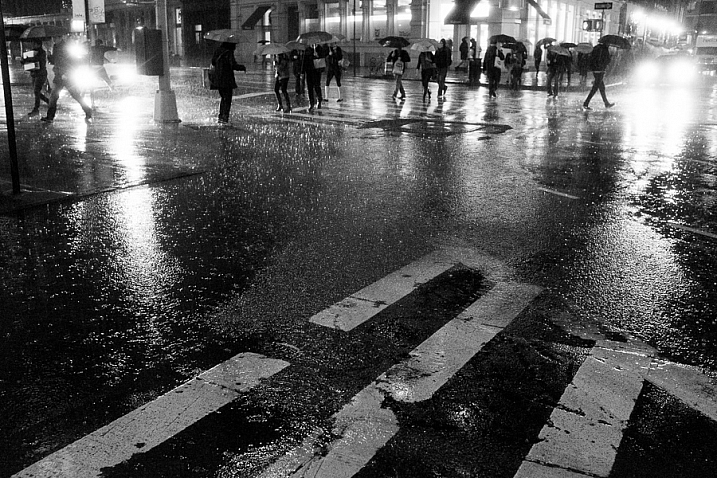
Astor Place, NYC.
Likewise, you do not need a big bag of lenses and filters. If you haven’t tried it, I can’t stress enough, how freeing going out for a day with a single small camera body, and a single prime lens, can make you feel. Leave the rest behind. Yes, you will miss out on that 200mm zoomed shot of the water tower, but you will come back in the long run, with so many more good photos, and you will have a lot of fun doing it.
3. Trying to get somewhere too quickly
We’re all in a rush these days, running from place to place. Luckily, that is one of the worst ways to do street photography. To do street photography well, you need to slow down, and take your time. You can’t always be in a rush. Look around, and wait for things to happen. Wait with your camera, and let the subjects come to you. The slower you go, the more aware you will be of your surroundings, and the more able you will be to capture those extraordinary fleeting moments. Use photography as a way to break out of the rushed lifestyle, and to get lost and slow down for awhile.
4. Not standing in the middle of the action

Broadway, SoHo, NYC.
It is so easy to get intimidated when you are first learning. Many people start by photographing from a distance, and they never really push themselves to get right in the middle of what’s happening. Carry your camera proudly, put a smile on your face, and get involved in the action. Get in the middle of the street.
You might notice that if you are standing too far away and shooting, then people will actually think you are up to no good. But, if you are directly in the middle of the action, people will walk right by thinking that you are doing nothing wrong. Sometimes you’ll even blend in more being in the middle. How could you possibly be doing something wrong if you are right there in the middle? Nobody that obvious would be doing anything bad, but that photographer creeping around over there in the corner, just has to be a stalker. Stop and wait right in the middle of an area where things are happening, and just let everything happen around you. Engulf yourself in the experience.
5. Not putting the camera to your eye enough
I hip shoot a decent portion of the time, particularly when things are happening incredibly fast, but I also try to look through the viewfinder as often as possible. A lot of new photographers only hip shoot, and it quickly becomes a crutch. After a while, they become even more afraid to put the camera to their eye, than when they started. Force yourself to get comfortable shooting through the viewfinder. Just stand in a busy place, with the camera to your eye for a while, until you feel comfortable. After that you can add in the hip shooting. There will be situations where a hip shot is beneficial, but you will get better shots, and better framing, when you look through the viewfinder. Take pride in seeing it all coming together, and capturing that split second moment where it does.

SoHo, NYC.
A tip that helps with this, is to not take the camera away from your eye right after you take a shot of someone. It’s a natural habit to remove the camera from your eye briefly when you take an image. Instead, get in position, and wait for a person to be in the right spot, Then, take the image, but continue to keep the camera to your eye as they walk through the scene and past you, as if they got in your way and you are trying to photograph what is behind them. This trick works incredibly well in areas with quite a few people walking around.
6. Rapid firing with the camera
Turn the machine gun setting on the camera off. A lot of people think that if they take 10 photos of the same scene, they will be guaranteed to get a good one. Where’s the art in that? I actually find that holding down the shutter button, and taking a stream of shots, is a way to guarantee that you will screw up the shot. You need to be able to visualize what you are getting. See the moment as it happens, then capture the elements as they all fall into place. That only takes one shot. Then, as a scene further develops, you can take more, but see the moment and grab it. If you miss it, and you will miss some, there’s always next time. Let go of the fear of missing a shot.
In addition, with rapid fire you will end up taking 10 times the number the photos, over the course of the day. How are you going to find the perfect moment in all of that? Nobody has the time, or the hard drive space. With less, and more purposeful photographs, comes a much more enjoyable editing session.
7. Under and over-editing

East Village, NYC.
A lot of new street photographers will both under, and over-edit their photos. What I mean is that they will show too many photos, and they will over-process them. Be ruthless with narrowing your photos down to the best ones. You want people to actually give your work attention, and if you show too many photographs at one time, they will tune out. By showing too many photos you are relying on the viewer to do the editing in their heads about what they like. That’s not fair to them, do that work yourself. Spend that extra time organizing. Use a starring system to give your photographs ratings and make sure that there are not too many five star images. Spend the time after each shoot to narrow it down to just the cream of the crop. If you don’t do this consistently, you will allow your archive to pile up into an unorganized mess.
When you do the actual editing to your photos, keep a light touch. You can, and should fix the exposure, blacks and whites, vignettes, color temperature or black and white tones, contrast, and all that other good stuff. However, a lot of new street photographers go way too far. Part of the extraordinary nature of street photography is that it was actually captured in the real world. It was not made up. If your photos are too edited, and lose that real feeling to them, it kills the thing that makes them special.
Are you guilty of any of these mistakes? How have you overcome them? Do you have any others you’d like to share? Please do so in the comments below.
googletag.cmd.push(function() {
tablet_slots.push( googletag.defineSlot( “/1005424/_dPSv4_tab-all-article-bottom_(300×250)”, [300, 250], “pb-ad-78623” ).addService( googletag.pubads() ) ); } );googletag.cmd.push(function() {
mobile_slots.push( googletag.defineSlot( “/1005424/_dPSv4_mob-all-article-bottom_(300×250)”, [300, 250], “pb-ad-78158” ).addService( googletag.pubads() ) ); } );The post 7 Common Mistakes That Newbie Street Photographers Make by James Maher appeared first on Digital Photography School.