Blog

  • Light raises $30M and provides update on L16 multi-lens camera

    Light, the startup that is developing the L16 multi-lens computational camera, has raised $ 30M in venture capital in a series C round of funding led by GV (formerly Google Ventures). The company says it will use the additional funds to scale its global supply chain in order to deal with customer demand.

    The company has also announced some changes to the L16’s specification after listening to feedback from its pre-order customers. Many voiced a preference for a wider angle of view at the short end of the zoom range, and the L16 will now provide a 28-150mm optical zoom equivalent instead of the initially announced 35-150mm.

    Additionally, the camera will ship with 256GB of built-in memory instead of the 128GB listed in the original specifications. You can see the fully updated L16 specifications here and watch the video below to see how the prototype cameras are being manufactured.


    Articles: Digital Photography Review (dpreview.com)

  • Floating Greenhouse: Mobile Barge to Grow Food & Cruise Danube

    [ By WebUrbanist in Architecture & Cities & Urbanism. ]

    eco barge

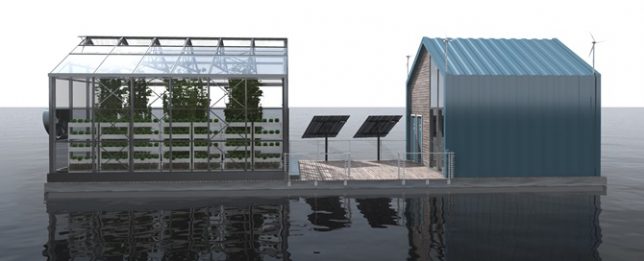
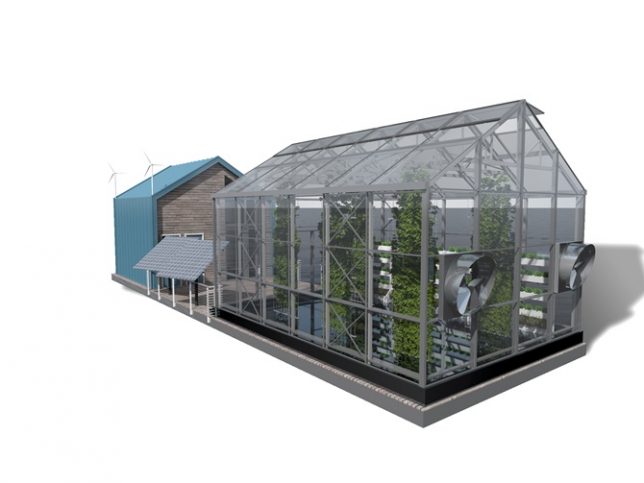
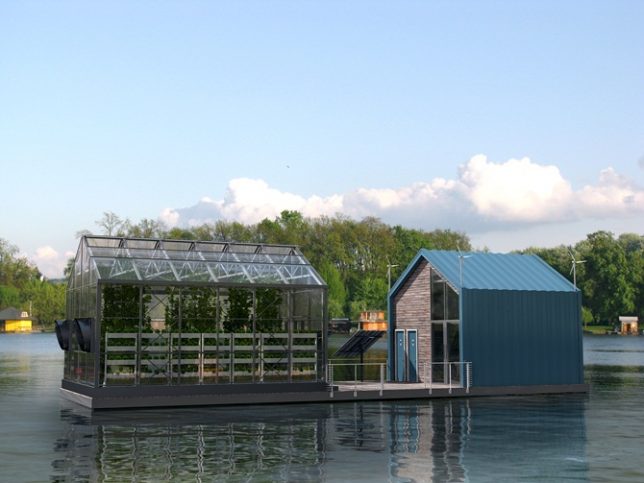
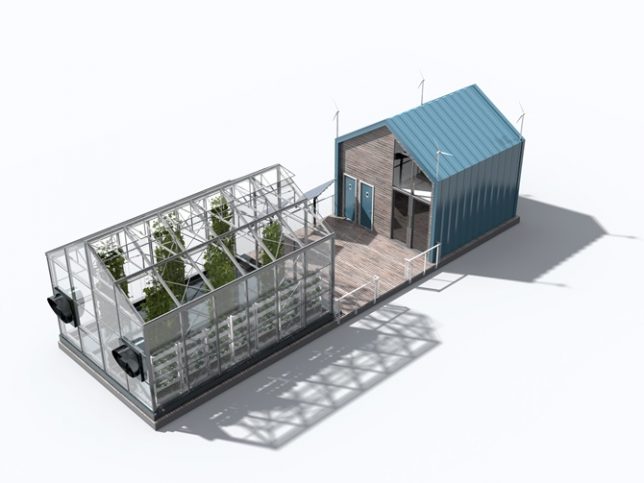
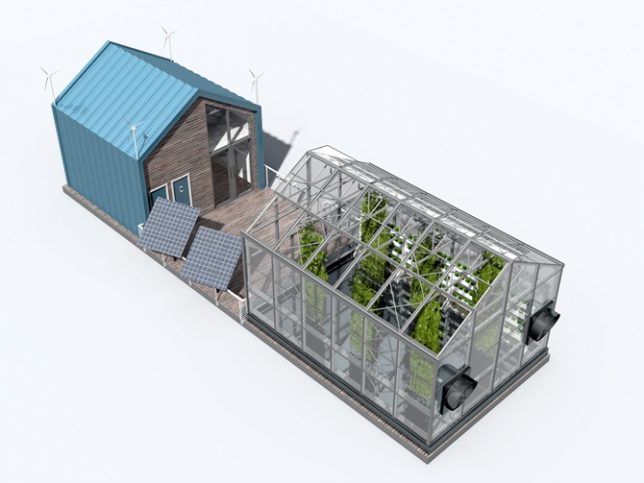
    Designed to float down the Danube river in Europe, the Eco Barge is a solar-powered floating greenhouse illustrating the possibilities of offshoring urban food production.

    floating eco barge concept

    floating greenhouse model

    In addition to growing usable organic produce on the water, the barge has educational components, aiming to host presentations and workshops for citizens of European cities along the river, starting in Belgrade. Growing on the water allows food production to remain local without taking up valuable urban land.

    floating solar greenhouse

    floating greenhouse design

    An indoor office and presentation space brackets one end of the barge while the greenhouse is situated at the other, an open space with solar panels sitting in between. Sun and wind power systems generate renewable energy used to power the vessel as well as its on-board irrigation system.

    floating hotel concept

    floatel

    Salt & Water, the architectural and yacht design firm behind the Eco Barge, are known for their floating projects, including a floating hotel concept made up of private yachts. These independent boats share common docks and community spaces, but can detach for explorations as well.

    Share on Facebook


    [ By WebUrbanist in Architecture & Cities & Urbanism. ]

    [ WebUrbanist | Archives | Galleries | Privacy | TOS ]


    WebUrbanist

  • Fujifilm to update X-Pro2 firmware, releases new lens roadmap

    Fujifilm has announced new firmware for its X-Pro2 mirrorless camera which, most notably, updates the autofocus algorithm to be in-line with the just-announced X-T2. The company promises better AF speed and accuracy, but notes that the use case-based system on the X-T2 will not be available on the X-Pro2.

    The firmware update also improves parallax correction when using the OVF and adds support for the new EF-X500 external flash. 

    X-Pro2 owners will be able to get their hands on the new firmware this October.

    Along with the new firmware, Fuji has also refreshed its X-mount lens roadmap (shown below), adding three new XF lenses: 23mm F2 R WR, 50mm F2 R WR and 80mm F2.8 R LM OIS WR Macro. The 23mm will be shipping this year, while the other two will arrive in 2017.

    One lens that was removed is the 120mm F2.8 R Macro, which has been replaced with the aforementioned 80mm Macro. Fuji states that this is ‘to meet the market demand for compact and lightweight lenses.’

    Press release:

    FUJIFILM ANNOUNCES NEW FIRMWARE UPDATE FOR THE X-PRO2 AND UPDATED XF LENS ROADMAP

    Valhalla, N.Y., July 7, 2016 – As a leader in advanced digital camera technology and outstanding image quality, FUJIFILM North America Corporation today announced a new Firmware Update Version 2.0 for the FUJIFILM X-Pro2 that includes improvements to the autofocus system, compatibility with the new FUJIFILM EF-X500 flash, new power management options and a more accurate and easier-to-use Optical Viewfinder.

    Firmware Update V.2.0 Key Features:

    1. The new autofocus algorithm* (found in the new FUJIFILM X-T2) produces faster and more accurate autofocus.
      * Excludes the new AF-C Custom Settings functions.
    1. Compatibility with the new hot-shoe mount FUJIFILM EF-X500 flash. The camera will now support high-speed flash sync and multi-flash lighting.
    2. AUTO POWER OFF will now have 15 second, 30 second, and 1 minute options, allowing more customizable power management.
    3. The parallax correction function will be improved to provide a more accurate and easier-to-use Optical Viewfinder.

    Availability

    The new firmware will be available for download in October 2016. 

    Updated XF Lens Roadmap

    Also announced is an updated roadmap for developing interchangeable lenses for the X Series line of mirrorless digital cameras. The latest roadmap adds three new lenses: the compact, lightweight and stylish semi-wide angle lens XF23mmF2 R WR, the compact mid-telephoto lens XF50mmF2 R WR and the mid-telephoto 1:1 macro lens XF80mmF2.8 R LM OIS WR Macro. The expanded 25-lens lineup covers extensive angles of view from ultra-wide angle to ultra-telephoto, and will now expand the macro category to further enhance photographic versatility.

    Changes from the previous roadmap released in February 2015

    The XF120mmF2.8 R Macro lens, listed in the previous roadmap, has been replaced with the XF80mmF2.8 R LM OIS WR to meet the market demand for compact and lightweight lenses. To support our customers who were expecting a telephoto macro lens, this new lens is compatible with the existing teleconverters to extend its reach into the telephoto range.

    Articles: Digital Photography Review (dpreview.com)

  • Now with 4K: Fujifilm X-T2 offers 24MP, improved AF and video specs

    $ (document).ready(function() { SampleGalleryV2({“containerId”:”embeddedSampleGallery_6056057871″,”galleryId”:”6056057871″,”isEmbeddedWidget”:true,”standalone”:false,”selectedImageIndex”:0,”startInCommentsView”:false,”isMobile”:false}) });

    Fujifilm has updated its premium SLR-style X-series lineup with the X-T2, bringing 4K video capture to its lineup for the first time.

    The camera uses the 24.3MP X-Trans CMOS III APS-C sensor first seen in the X-Pro2 and also includes an upgraded hybrid AF system with more focus points, as well as an AF-point selection joystick a la the X-Pro2. There’s also a faster top mechanical shutter speed of 1/8000 sec (1/32,000 sec with the electronic electronic), an improved AF-C algorithm and an overall boost in response times when using the camera. Like the X-T1, this camera is weather-sealed.

    The X-T2 offers an unchanged 2.36 million-dot OLED EVF carried over from its predecessor, but the 1.04 million-dot 3″ LCD has an additional hinge for waist-level portrait-orientation shooting. An optional ‘Vertical Power Booster Grip’ is offered. The grip houses two batteries and lives up to its name by ‘boosting’ mechanical shutter burst shooting to 11 fps (from 8 fps), reducing shutter lag and blackout time slightly and allowing for 30 minutes of 4K capture (as opposed to 10). 

    An EF-X500 hot shoe flash is also introduced for the system, offering a guide number of 50 with a tilting flash head.

    The Fujifilm X-T2 will be available in September for $ 1,599.95 body-only, or bundled with the XF18-55mm for $ 1,899.95. The EF-XF500 flash will also be available in September for $ 449.99.


    Press release:

    Fujifilm Unveils the New X-T2, the Ultimate Mirrorless Camera with New Autofocus System and 4K Video Shooting

    X-T2 gives users cutting-edge performance that delivers premium imaging quality in a classic design that is a joy to use; New FUJIFILM EF-X500 flash arrives

    Valhalla, N.Y., July 7, 2016 – As a leader in advanced digital camera technology and outstanding image quality, FUJIFILM North America Corporation today announced the new FUJIFILM X-T2, a splash-resistant premium interchangeable lens camera with a large OLED electronic viewfinder (EVF). The X-T2 houses the latest generation 24.3MP X-Trans CMOS III with an APS-C sensor with no low-pass filter, boasting the highest performance in the history of X Series. The new X-T2 produces crisp image resolution comparable to that of cameras equipped with larger sensors and higher pixel counts, all in a more compact and classically-designed body.

    And for the first time, the new FUJIFILM X-T2 now supports 4K video recording that can use each available Film Simulation mode, including ACROS, to easily produce premium-quality footage that is as unique as the photographer behind the viewfinder.

    Dramatic improvement to auto focus system The FUJIFILM X-T2 receives a dramatically improved auto focus system (AF) that increases the overall single AF points to 325, and the number of Zone focusing points to 91 (expanded from 49 in previous models). Approximately 40% of the imaging area (center area containing 49 focusing points) is covered with phase detection auto focus pixels to form a fast and precise phase detection auto focus area that can be used in a variety of scenes.

    With the high-speed X-Processor Pro and the use of improved algorithms, the X-T2 now refocuses more frequently, enabling predictive AF of advanced accuracy.

    The X-T2 also has an enhanced ability to autofocus on small points of light, low-contrast objects and subjects with fine and delicate textures such as bird feathers and animal fur.

    The X-T2’s performance of contrast detection AF, enabled for approximately 65% of the imaging area, has also been improved. The data read speed has been doubled compared to previous models to achieve AF performance of higher speed and precision. Photographers will enjoy accurate focusing is all shooting situations, even in low light with a -3EV.

    Another area of improvement is the AF-C algorithm that has been significantly enhanced for even higher accuracy when focus-tracking moving subjects in the AF-C mode. According to the type of movement, users can choose individual settings for Subject Retention Characteristic, Acceleration / Deceleration Tracking Characteristic and Focus Zone Characteristic, or select one of five presets or customize specific settings for these three elements.

    Image Quality
    Fujifilm’s commitment to superior image quality remains a guiding principle, and the FUJIFILM X-T2 is the latest effort to deliver outstanding picture resolution, all from a compact and sophisticated body that is both weather-sealed and easy to travel with in any location. With Fujifilm’s proprietary image design technology, produced through the development of photographic films, the X-T2 reproduces warm skin tones, bright blue skies and rich green foliage in beautiful colors, just as you remember seeing in real life. The X-T2 includes the ACROS Film Simulation for smooth gradation, deep blacks and beautiful textures to create monochrome images that far outperform even the most demanding expectations.

    The X-T2 also has the Grain Effect function for reproducing distinctive graininess seen in photographs taken with film cameras. The function is available in Strong and Weak options, and can be combined with any of the Film Simulation modes. You can easily obtain the effect of film-based photos, notable especially when the image is printed out.

    Speedy throughout
    Basic response specifications, such as startup time, shooting interval and shutter release time lag, have all been improved to the extreme in pursuit of a camera that operates exactly as the photographer demands. The high-speed processing power and the use of improved algorithms have significantly improved the basic autofocus performance, and X-T2 now gives users AF-C Custom Settings for even higher accuracy in focus-tracking moving subjects.

    The X-T2’s electronic viewfinder, which is used to continuously track a moving subject, is capable of displaying up to 100 frames per second, while also maintaining the magnification ratio of 0.77x and the display time lag of 0.005 seconds. The duration of the viewfinder blackout, in which the evf blacks out temporarily while the camera reads picture data, has been reduced by more than half, enabling continuous shooting to ensure tracking subject movements.

    Body and grip offer ultimate stability
    The X-T2’s body is fully made of magnesium alloy making it not only compact and lightweight, but also solid and highly durable. The X-T2 body has weather-proofing at 63 points to achieve a high level of resistance to dust and moisture, and coupled with its ability to operate in temperatures down to 14°F, is ready for full-fledged field photography. Similar ruggedness is applied to the new Vertical Power Booster Grip.

    The Vertical Power Booster Grip (optional VPB-XT2) is a dust-resistant grip, rugged and capable of operating at temperatures as low as 14°F that maximizes the performance of the X-T2 beyond expectations. It fits two batteries, bringing the total number of batteries the X-T2 can use to three, including the one in-camera, to increase the maximum number of frames that can be taken per charge to approximately 1,000 (Normal mode). In the Boost mode, multiple batteries can operate at the same time to give a boost to camera performance in continuous shooting, shooting interval, shutter release time lag and blackout time, while also extending the duration of 4K video recording to approximately 30 minutes.

    The Vertical Power Booster Grip also features a shutter release button, focus thumbstick, AE-L button, AF-L button, command dials, Q button and Fn button and headphone jack to enable audio monitoring during video recording to provide the same level of excellent operability in vertical shooting as you get in horizontal operation. The grip itself has battery-charging functionality where by using the AC adapter supplied (AC-9VS), users can fully charge two batteries at the same time in about two hours.

    FUJIFILM EF-X500 Flash
    The new high-end multi-function external FUJIFILM EF-X500 Flash is now official for the lineup of accessories for the X Series of digital cameras. The EF-X500 is a hot-shoe mount flash with a maximum guide number of approximately 50, and includes support for the FP mode (high-speed flash sync) so that the flash can be fired at any shutter speed. Photographers can now concentrate on shooting when a faster shutter speed is required, for example, in order to use a near-maximum aperture to produce beautiful bokeh.

    The EF-X500 also supports multi-flash lighting. Users can set up multiple flashes to freely control light on a subject and background for a creative result. Through-the-lens (TTL) lighting control is available with single flash and also in the multi-flash setup, so that users can start shooting without having to make cumbersome adjustments to light output.

    EF-X500 Flash key features: 

    • Maximum guide number of approximately 50 (ISO100?m) / 164 (ISO100·ft) • Zooming the illumination angle for the focal lengths of 24mm – 105mm, and covering the illumination angle of approximately 20mm when the wide panel is used
    • Flash head that can be tilted up by 90° degrees, down by 10° degrees, to the left by 135° degrees and to the right by 180° degrees for bouncing light
    • Equipped with LED video light that can also be used as AF assist light and catch light
    • Registers up to ten combinations of various setting to suit specific shooting conditions in advance for quick activation when needed

    FUJIFILM X-T2 key features:

    • 24.3MP X-Trans CMOS III Sensor
    • Dust and moisture-resistant body with approximately 63 points of weather sealing; Freeze resistance to 14°F
    • X-Processor Pro
      – Fast AF of 0.06 seconds
      – Startup time of 0.3 seconds
      – Shutter time lag of 0.045 seconds
      – Shooting interval of 0.17 seconds
      – Phase detection AF and motion predictive AF for continuous shooting up to 8 frames per second (fps)
      – Up to 11fps using Booster Grip
    • High-precision 0.48-inch, 2.36 million dot OLED viewfinder
      – Viewfinder magnification for digital cameras of 0.77x
      – Wide viewing angle (diagonal 38° and horizontal 31°)
      – Ultra-fast Real Time Viewfinder with a lag-time of 0.005sec (less than 1/10 of existing models)
      – Automatic Brightness Adjustment function
      – EVF refreshes at a rate of 60fps, or as high as 100fps in the Boost mode
      – Continuous shooting of 5fps in Live View
    • Full 4K 3840×2160 30P/25P/24P shooting (Using a card with the UHS Speed Class 3 or higher)
      – Continuous recording: up to approximately 10 minutes
      – Full HD 1920×1080 60P/50P/30P/25P/24P, Continuous recording: up to approximately 15 minutes
      – HD 1280×720 60P/50P/30P/25P/24P, Continuous recording: up to approximately 29 minutes
    • Four different display modes: Full, Normal, Dual and Vertical
      – Full mode: Displays shooting information at the top and bottom of the screen to avoid obstruction of the view
      – Dual mode: Adds a small second screen for checking focus point with Focus Peak Highlight or Digital Split Image
      – Normal mode: Lets you concentrate on framing the shot in Auto Focus mode while keeping you aware of how the shooting conditions are changing, making it the perfect setting for sports and action photography
      – Portrait mode: When in Full or Normal modes, it rotates the shooting information interface when the camera is turned vertically
    • Tempered glass 1.04 million dot high-precision 3” tilting LCD monitor
    • Digital Split Image and Focus Highlight Peaking
    • Wi-Fi and remote camera operation
    • ISO200 – 6400, extended ISO 100, 12800, 25600, Auto(maximum ISO setting from ISO 400 – ISO6400 available) with High ISO 51200 setting
    • Lens Modulation Optimizer technology maximizes each lens’ performance
    • In-camera RAW converter
    • Die-cast magnesium body provides a sturdy and durable, while compact and lightweight design
    • Two command dials and six Function buttons for instant control and customization
    • Interval timer shooting for Time Lapse photography is available with intervals of 1 second to 24 hours and up to “?” frames
    • Advanced filters and Film Simulations, including ACROS

    FUJIFILM X-T2 Accessories:

    • Vertical Power Booster Grip (optional VPB-XT2) New
    • X-T2 Metal Hand Grip (MHG-XT2) New
    • X-T2 Bottom Leather Case (BLC-XT2) New
    • X-T2 Cover Kit (CVR-XT2) New
    • NP-W126S Rechargeable Battery New
    • Five dedicated flash models to choose from depending on requirements (EF-X500 New, EF-X8, EF-X20, EF-20, EF-42)
    • Battery Pack EF-BP1, compatible with EF-X500 New
    • Protective Filters (PRF-39, PRF-52, PRF-58, PRF-62 and PRF-72)
    • M Mount Adapter for additional lens compatibility
    • Remote Release (RR-90)
    • Stereo Microphone (MIC-ST1)

    Availability and Pricing
    The new FUJIFILM X-T2 (body only) will be available in September 2016 in the U.S. for USD $ 1,599.95. The X-T2 and XF18-55mm (27-84mm) kit will be available in September 2016 in the U.S. for USD $ 1,899.95.

    The FUJIFILM EF-X500 Flash will be available in September 2016 in the U.S. for USD $ 449.99.

    Fujifilm X-T2 specifications

    Price
    MSRP $ 1599 (body only), $ 1899 (w/18-55mm)
    Body type
    Body type SLR-style mirrorless
    Body material Magnesium alloy
    Sensor
    Max resolution 6000 x 4000
    Other resolutions 3:2 (4240 x 2832, 3008 x 2000), 16:9 (6000 x 3376, 4240 x 2384, 3008 x 1688), 1:1 (4000 x 4000, 2832 x 2832, 2000 x 2000)
    Image ratio w:h 1:1, 3:2, 16:9
    Effective pixels 24 megapixels
    Sensor size APS-C (23.6 x 15.6 mm)
    Sensor type CMOS
    Color space sRGB, Adobe RGB
    Color filter array X-Trans
    Image
    ISO Auto, 200 -12800 (expands to 100-51200)
    Boosted ISO (minimum) 100
    Boosted ISO (maximum) 51200
    White balance presets 7
    Custom white balance Yes (3 slots)
    Image stabilization No
    Image stabilization notes Lens only
    Uncompressed format RAW
    JPEG quality levels Fine, normal
    File format
    • JPEG (Exif v2.3)
    • Raw (Fujifilm RAF, 14-bit)
    Optics & Focus
    Autofocus
    • Contrast Detect (sensor)
    • Phase Detect
    • Multi-area
    • Center
    • Selective single-point
    • Tracking
    • Single
    • Continuous
    • Face Detection
    • Live View
    Autofocus assist lamp Yes
    Manual focus Yes
    Number of focus points 325
    Lens mount Fujifilm X
    Focal length multiplier 1.5×
    Screen / viewfinder
    Articulated LCD Tilting
    Screen size 3
    Screen dots 104,000
    Touch screen No
    Live view Yes
    Viewfinder type Electronic
    Viewfinder coverage 100%
    Viewfinder magnification 0.77×
    Viewfinder resolution 2,360,000
    Photography features
    Minimum shutter speed 30 sec
    Maximum shutter speed 1/8000 sec
    Maximum shutter speed (electronic) 1/32000 sec
    Exposure modes
    • Program
    • Shutter priority
    • Aperture priority
    • Manual
    Built-in flash No (Small external flash included)
    External flash Yes
    Flash modes Auto, standard, slow sync, manual, commander
    Flash X sync speed 1/250 sec
    Continuous drive 14.0 fps
    Self-timer Yes (2 or 10 secs)
    Metering modes
    • Multi
    • Center-weighted
    • Spot
    Exposure compensation ±5 (at 1/3 EV steps)
    AE Bracketing ±2 (3 frames at 1/3 EV, 1/2 EV, 2/3 EV, 1 EV, 2 EV steps)
    WB Bracketing Yes
    Videography features
    Resolutions 3840 x 2160 (29.97p, 25p, 24p, 23.98p), 1920 x 1080 (59.94p, 50p, 29.97p, 25p, 24p, 23.98p), 1280 x 720 (60p, 50p, 30p, 25p, 24p)
    Format MPEG-4, H.264
    Microphone Stereo
    Speaker Mono
    Storage
    Storage types Dual SD/SDHC/SDXC UHS II
    Connectivity
    USB USB 3.0 (5 GBit/sec)
    HDMI Yes (micro-HDMI)
    Microphone port Yes
    Headphone port No
    Wireless Built-In
    Wireless notes 802.11b/g/n
    Remote control Yes (via smartphone or wired remote)
    Physical
    Environmentally sealed Yes
    Battery Battery Pack
    Battery description NP-W126S lithium-ion battery & charger
    Battery Life (CIPA) 340
    Dimensions 133 x 92 x 49 mm (5.24 x 3.62 x 1.93)
    Other features
    Orientation sensor Yes
    Timelapse recording Yes
    GPS None

    Articles: Digital Photography Review (dpreview.com)

  • Faster flagship: Hands-on with the Fujifilm X-T2

    Faster flagship: Hands-on with Fujifilm X-T2

    When the X-Pro2 was announced earlier this year, it seemed only a matter of time before Fujifilm unveiled a replacement to its ‘other’ flagship, the X-T1. The just-announced X-T2 boasts the company’s newest 24MP sensor, an AF joystick and a significant speed boost.

    Faster flagship: Hands-on with Fujifilm X-T2

    Externally, the X-T2 looks virtually identical to the older X-T1, which is no bad thing. Fujifilm got a lot right in the X-T1, and its replacement doesn’t change the basic recipe. The new camera is about 70g heavier, but side-by-side, you’d be hard pushed to tell it apart from its predecessor.

    Faster flagship: Hands-on with Fujifilm X-T2

    The traditional Fujifilm top-plate, with its array of dials. From left: ISO > Shutter speed > exposure compensation.

    One of the very few ergonomic differences between the X-T2 and its predecessor is the omission of a movie recording button from the upper-right of the top plate. This is made up for (sort of) by the addition of a movie recording position on the main exposure mode dial, but we’re not sure why Fujifilm would remove this button completely. 

    Since we’re looking at the hot shoe, it’s worth mentioning that the camera can sync with flashes at 1/250 sec. The overall shutter speed range on the X-T2 is 30 – 1/8000 sec with the mechanical shutter, with a top speed of 1/32000 when you switch to the e-Shutter.

    Faster flagship: Hands-on with Fujifilm X-T2

    Keen eyes will spot the new movie recording position on the mode dial (upper left in this image). The X-T2 offers by far the most advanced movie recording specification of any Fujifilm camera, including 4K (3840 x 2160) video, which to be honest, was a major surprise when we first saw the camera’s spec sheet.

    Traditionally a major weak point of Fujifilm’s X-series it seems like the company is really stepping up its efforts when it comes to video.

    The X-T2’s electronic viewfinder appears to be unchanged from the excellent 2.36 million-dot, 0.5″ OLED found in the original X-T1, which is absolutely fine by us. 

    Faster flagship: Hands-on with Fujifilm X-T2

    A predictable – but very welcome – addition to the X-T2 is a dedicated AF joystick (shown here just beneath the ‘Q’ button). Inherited from the X-Pro2, this joystick makes placing the AF point extremely fast and easy – something that could definitely not be said of previous X-series cameras (and many mirrorless cameras in general). 

    A less obvious change to the X-T2’s rear controls is a slightly longer travel and more positive tactile response from the buttons surrounding ‘Menu/OK’. These controls on the X-T1 were disconcertingly mushy. On the X-T2, when you push a button, you know it.

    Speaking of autofocus, the Hybrid AF system on the X-T2 has 325 points in total, 169 of which are phase-detect. Fujifilm says that the data readout speed has been doubled compared to previous (undisclosed) models and that all focus points are sensitive to -3EV.

    Faster flagship: Hands-on with Fujifilm X-T2

    Speaking of tactile feedback, we were really hoping that the X-T2 would feature a touchscreen, like its baby brother the X70. No such luck. But at least it’s partially articulating – unlike the X-Pro2’s LCD. 

    Faster flagship: Hands-on with Fujifilm X-T2

    As well as tilting straight out, the rear screen can also be folded out to 45 degrees….

    Faster flagship: Hands-on with Fujifilm X-T2

    …and hinged sideways!

    Faster flagship: Hands-on with Fujifilm X-T2

    The major benefit of this kind of articulation is that it makes waist-level shooting easy even in the vertical orientation. 

    Faster flagship: Hands-on with Fujifilm X-T2

    Twin card slots can be found under a sprung door located on the X-T2’s grip. A rubber gasket seals the slots against dust and moisture incursion. 

    Faster flagship: Hands-on with Fujifilm X-T2

    The X-T2’s NP-W126S battery can be found nestled inside the grip, accessible from a door on the base of the camera. According to Fujifilm, a single battery should be expected to last for approximately 340 images. Not great, but typical for a mirrorless interchangeable lens camera.

    You can’t quite see in this shot, but one deceptively major change in the X-T2 compared to its predecessor is that the tripod socket on the camera’s base has been centered to the lens axis, meaning that on most tripods, you won’t need to unscrew the camera from the tripod plate before you can access the battery compartment – a point of occasional frustration with the X-T1. 

    Faster flagship: Hands-on with Fujifilm X-T2

    If you need greater endurance (or you just have big hands) you might be interested in the optional VPB-XT2 grip. This grip takes two additional batteries, making three in total, extending the camera’s total battery life to more than 1000 shots.

    There’s a ‘boost mode’ on the camera which uses the grip, increasing burst shooting from 8 to 11 fps (with the mechanical shutter), reducing shutter lag and blackout times and permitting up to 30 minutes of 4K video capture. Do note that if you want continuous autofocus, you’ll need to drop the frame rate down to 5 fps.

    Faster flagship: Hands-on with Fujifilm X-T2

    The two additional batteries slot into a neat little tray which fits into the grip like so. Here you can also see a plug that accepts a 9V power adapter, so the grip can be charged separate from the camera.

    Faster flagship: Hands-on with Fujifilm X-T2

    Any self-respecting battery grip offers duplicated vertical controls, and the VPB-XT2 is no different. Here you can see the duplicated shutter button, rear control dial (there’s another one on the front) and secondary AF positioning joystick. 

    Faster flagship: Hands-on with Fujifilm X-T2

    The X-T2 ships with a dedicated compact flashgun, the EF-X8. This can be used to command a group of external flashguns wirelessly – always a welcome feature on high-end cameras.

    A new high-end flash – the EF-X500 – will also be available when the X-T2 launches. It has a guide number of 50m at ISO 100, supports high speed sync, includes a video lamp and covers a range of 24-105mm (or down to 20mm with the included wide panel). It’ll be priced at $ 449 when it ships in September.

    Faster flagship: Hands-on with Fujifilm X-T2

    The Fujifilm X-T2 will retail for $ 1599 body-only or with an 18-55mm F2.8-4.0 lens for $ 1899, and will be available in September. We’re headed to New York soon to interview senior Fujifilm executives – what should we ask them? Let us know in the comments. 

    Articles: Digital Photography Review (dpreview.com)

  • Elevating X-Trans? Fujifilm X-T2 First Impressions Review

    The Fujifilm X-T2 is an updated version of the company’s top-level DSLR-shaped APS-C camera. It’s built around the same 24MP X-Trans sensor as the X-Pro2 but ends up being much more than an X-T1 with more pixels. Instead, the X-T2 is a camera that does much to address the X-System’s remaining weaknesses, which can only broaden its already considerable appeal.

    Fujifilm X-T2 Key Features:

    • 24MP X-Trans CMOS III sensor
    • 325 AF points (169 of which offer phase detection)
    • AF point selection joystick
    • 2.36M-dot OLED EVF with 0.005 sec refresh time (60 fps or 100 fps in boost mode)
    • 3″ 1.04M-dot articulating LCD
    • 4K UHD video at up to 30 fps for up to 10 min (30 min with booster grip)
    • F-Log flat profile and 4K out over HDMI
    • 8 fps continuous shooting with AF (11 fps with booster grip)
    • 5 fps continuous shooting with live view updates between capture
    • Dual SD card slots (UHS-II compatible)
    • USB 3.0 socket

    The X-Pro2 represented a good step forward for image quality within the system and the X-T2 gains all of that improvement, but there are also some considerable changes in terms of autofocus, video and flash control, suggesting Fujifilm wants its the X-T2 to be an all-round more capable camera than its predecessor, rather than just building on its existing strengths.

    The body seems broadly unchanged at first glance but there’s a clever doubly-hinged flip-out screen that seems to offer many of the flexibility advantages of a fully articulated monitor while retaining the more compact form of a tilting screen.

    There’s also a Performance Boost mode that speeds up several aspects of the camera’s behavior (at the expense of some battery life), but that really comes into its own when the optional ‘Power Boost Vertical Grip’ is added. None of these additions comes for free, though: at $ 1599, body only, the X-T2’s launch price has jumped $ 300, compared to its predecessors’.

    Autofocus

    Part and parcel of that 24MP sensor are the 169 phase-detection points that we saw in a large central square region of the sensor on the X-Pro2. Beyond this, the X-T2 now gains an extra two columns of 13 contrast-detection AF points down each side of the frame, widening its AF area and bringing it to a total of 325 AF points in total.

    Fujifilm also promises a more powerful processor and revised algorithms, along with faster sensor read-out, to improve the camera’s speed, regardless of whether it’s using a combination of phase detection and contrast detection (Hybrid AF), or simply the latter alone.

    To get the best-possible performance out of the newly refined AF system, the X-T2 introduces a use case-based AF-C setup system. Much like the one we’ve seen on high-end Canon DSLRs, this lets you specify the types of movement you’re expecting from your subject, so that the camera can try to respond appropriately.

    Video

    The X-T2 makes a bigger leap forward into video than we were expecting. There was much chatter around the time of the X-Pro2’s launch that the camera’s hardware was, theoretically, capable of 4K capture, but that the company hadn’t pursued its development for such a stills-orientated model. Well, it has now.

    The X-T2’s movie capabilities are a big step forward for the system.

    But Fujifilm has done more than just do enough to be able to emblazon the phrase ‘4K capable’ on the box: the camera also gains a mic socket and on-screen audio monitoring with the ability to assign mic volume to a Fn button. There’s also an ‘F-Log’ flat profile to give flexibility while color grading.

    The good news is that our first shots of our test scene suggest the camera’s 4K footage is much more impressive than the 1080p that the first X-Trans cameras could muster. Combine this with 4K output over HDMI and the X-T2 looks like the first X-Trans camera that might appeal to shooters interested in shooting both stills and video.

    Flash control

    One of the missing pieces of an increasingly well fleshed-out XF mount system has been the lack of advanced flash control – something that the X-T2 is looking to address. Up until now, users have had to turn to third-party makers if they wanted to communicate TTL flash information to remote flash units.

    The newly introduced EF-X500 flash allows high speed flash sync and remote TTL flash control for the first time, making it significantly easier to use the X-T2 with strobes.

    Optional ‘Power Booster Grip’

    Along with the X-T2, Fujifilm has introduced the VPB-XT2, a vertical battery grip that holds two extra batteries. As well as significantly extending the camera’s battery life, the grip also extends the camera’s ‘Boost’ mode. With the grip attached, this is able to draw power from multiple batteries, increasing the camera’s maximum continuous shooting rate, as well as extending its video recording time to 30 minutes.

    The entertainingly-named ‘Vertical Power Booster Grip’ can house two addition batteries (without displacing the camera’s internal unit), helping increase capacity to around 1000 frames between charges. It also adds a headphone socket and a ‘Boost’ switch that improves responsiveness and ups the frame rate to 11 fps.

    This grip features the same level of environmental sealing as the camera body and also plays host to a headphone socket for audio monitoring while shooting video.

    Review History

    Review History
    6 July 2016 First Impressions, Studio Scene and Beta Gallery published,
    based on pre-production camera running f/w 1.34

    Articles: Digital Photography Review (dpreview.com)
  • Subterranean Singapore: Short Sci-Fi Film Envisions Dystopian Future

    [ By SA Rogers in Art & Drawing & Digital. ]

    subterranean singapore 2

    Instead of stretching upward toward increasingly polluted skies, could the solution to land scarcity issues in places like Singapore be found in subterranean development? Like something out of a dystopian film, this proposal by a student at Bartlett School of Architecture envisions a sort of mole city with inverted skyscrapers digging deep below street level, an extreme excavation of massive caverns and “a complex and continuously self expanding network of green canyons, tunnels, reservoirs and exploratory excavations into the granite rock below.”

    Screen Shot 2016-07-06 at 5.47.16 PM

    Screen Shot 2016-07-06 at 5.47.52 PM

    If you look at the sci-fi we humans have been producing for the past half-century, many of us have already accepted a future in which living on the surface of the Earth is no longer viable, whether that means we will have to build vertical cities, float on the oceans or leave the planet altogether. It’s not too far-fetched to imagine that a combination of climate change, pollution, overdevelopment and overpopulation would push us into building underground wherever possible, as well. This proposal by Finbarr Fallon envisions Singapore starting to plan the project by the year 2020, celebrating the idea before ultimately tearing it down and highlighting its many flaws.

    subterranean singapore

    Screen Shot 2016-07-06 at 5.48.55 PM

    Fallon presents Singapore 2065 as a darkly cinematic short film, with an engineer from the Subterranean Development Institute explaining how and why the development came about. The film takes us on a tour of the ‘World’s Greatest Engineering Feat’ and its luxurious architecture, which is clearly targeted at the well-to-do. The presentation seems fairly straightforward, but watch it all the way to the end for an unexpected plot twist.

    Screen Shot 2016-07-06 at 5.48.42 PM

    Screen Shot 2016-07-06 at 5.47.25 PM

    “The film follows a documentary created by the state led, Subterranean Development Institute which looks behind the scenes of the world’s largest construction project, from a highly corporate and nationalistic point of view,” says Fallon. “This concludes with spectacular scenes of celebration where the National Day Parade is reconfigured from traditional military use, to a choreographed march of robotic construction technology through the underground city.”

    Screen Shot 2016-07-06 at 5.49.26 PM

    “The documentary however, is interrupted by a subversive protagonist (the author), who gains access to secretive parts of the network by discovering hidden cave networks. This acts as a counter point critique to the corporate led masterplan, forming a social commentary on the ethics of large scale infrastructural projects and the resulting consequences, such as the exploitation of foreign workers.”

    Share on Facebook


    [ By SA Rogers in Art & Drawing & Digital. ]

    [ WebUrbanist | Archives | Galleries | Privacy | TOS ]


    WebUrbanist

  • Wanted: Homepage content tips and freelance writers!

    We’re on the lookout for freelance writers to contribute news and short feature content for our homepage. If you’re an experienced writer with great editorial instincts who loves ferreting out interesting and unusual photo-related content, we want to hear from you. 

    If you’re interested in contributing to dpreview.com, click here and tell us about yourself – preferably with links to published work. If we like the cut of your jib, we’ll be in touch.

    If you’re not interested in writing for DPReview, but you’ve found an interesting story that you think we should write about, you can submit suggestions here.

    Articles: Digital Photography Review (dpreview.com)
  • Camera Lift-Strap eases camera weight by clipping to a backpack handle

    A unique camera strap from PONTE Leather Co. called Camera Lift-Strap has surfaced on crowdfunding website Kickstarter, and it aims to ease the discomfort of carrying heavy cameras around the neck. Camera-Lift Strap features a clasp that is positioned behind the wearer’s neck. When a photographer is also wearing a backpack, the camera strap can be clasped to the backpack’s handle, moving the camera’s weight off the wearer’s neck and distributing it onto his or her shoulders.

    The Camera Lift-Strap is presented in two varieties: the Canvas Camera Strap, which is made of weather-treated nylon, and the Leather Camera Strap, which is made from ‘top grain leather,’ according to PONTE Leather Co. The strap’s metal components are made of brass with an oxide finish. The company plans to offer two attachment types, as well as a custom steel ring for securing all types of cameras to the strap. 

    PONTE Leather Co. is currently seeking funding for the product on Kickstarter where remaining pledge options include a canvas Camera Lift-Strap for $ 26, an early bird leather Camera Lift-Strap for $ 35, and various multi-strap bundle options at higher price points. The company anticipates shipping the straps to backers in November 2016.

    Via: Kickstarter

    Articles: Digital Photography Review (dpreview.com)
  • 5 Life-Saving Tips on How to Back Up Photos

    Everyone’s heard the horror stories about people who’ve lost their photos, and everyone knows that – no matter what they’re of or what they’re for – losing your pictures can be devastating. Whether it’s a folder of precious family photos, a portfolio, or a project for a client, replacing what was lost can be time consuming, expensive, and even impossible Continue Reading

    The post 5 Life-Saving Tips on How to Back Up Photos appeared first on Photodoto.


    Photodoto