Blog

  • Sigma announces pricing for 18-35mm T2 and 50-100mm T2 Cine lenses

    Sigma announced its new line of cinema lenses back in September. Today it announced that the first two lenses in that line to go on sale, the 18-35mm T2 and 50-100 T2, will both ship on December 9, 2016 for $ 4000 each. Both will be available in EF, E and PL mounts.

    These weatherproof lenses are completely mechanical and designed for use with ultra high resolution cameras, including those capable of 6 and 8K capture. And another five lenses are slated to join the new cinema line over the course of 2017 including a 24-35 F2.2 and a 20mm, 24mm, 35mm, 50mm and 80mm set of T1.5 primes.

    Press release:

    Sigma Announces Cine High Speed Zoom Lens Pricing and Availability

    Cine High Speed Zoom 18-35mm T2 and 50-100mm T2 lenses begin shipping on December 9 for a retail price of $ 3999.00 USD

    New York, NY – October 20, 2016 – Sigma Corporation of America, a leading DSLR lens, camera, flash and accessory manufacturer, announced today that the Cine High Speed Zoom 18-35mm T2 and 50-100mm T2 lenses will begin shipping on December 9, 2016 for a retail price of $ 3999.00 USD. Born from the new Sigma Cine family of products, the High Speed Zoom lenses leverage the outstanding optical design of the company’s world-renowned Global Vision still photography lenses. Combined with the 100% new mechanical lens body design, the Cine lenses meet needs of advanced 6k and 8k cinema production with the core optical quality DNA that has defined the Sigma benchmark of imaging excellence.

    See the Sigma Cine Family of Products at PDN/PPE 2016 Expo
    Demonstrated for the first time to the public in the United States, attendees to the 2016 PDN PhotoPlus International Conference + Expo (PPE), held at the Javits Convention Center in New York City from October 20-22, 2016, can see first-hand the new Sigma Cine family of lenses:

    Cine High Speed Zoom Line – 18-35mm T2 and 50-100mm T2
    The high speed zoom line, which is compatible with the Super35 image size standard, offers the constant aperture of T2 throughout the zoom range with superior optical performance that is capable of high-resolution 6K-8K shooting. Delivering the highest image quality in its class, the High Speed Zoom is ergonomically compact and designed for E, EF and PL camera system mounts.

    Cine FF Zoom Line – 24-35mm T2.2 FF
    Compatible with a full-frame image sensor, the FF Zoom’s outstanding optical performance also supports 6K-8K shooting. Because so few lenses cater to the requirements of the latest digital cinema cameras’ image sensors, this line provides a rare option for cinematographers. The FF Zoom is designed for E and EF camera system mounts.

    Cine FF High Speed Prime Line – 20mm T1.5 FF, 24mm T1.5 FF, 35mm T1.5 FF, 50mm T1.5 FF and 85mm T1.5 FF
    The Cine High Speed Prime lineup features lenses ranging from 20mm to 85mm, with all five touting an aperture of T1.5. Highly compact and compatible with full-frame sensors, these lenses offer superior resolution. They bring a consistent level of light to the production, offering greater consistency to any film’s color, contrast and overall look before it enters post-production. The FF High Speed Prime line is designed for E, EF and PL camera system mounts.

    For more information on the Sigma Cine Lenses, please visit https://www.sigmaphoto.com/cinema-lenses/?link=Sept-M-cine.

    About Sigma Corporation
    Craftsmanship. Precision. Dedication. Since 1961, Sigma has been devoted the pursuit of advancing photographic technology. Unique to the industry, the family-owned business produces its high-quality, award-winning camera lenses, DSLR cameras, flashes, filters and accessories from its state-of-the-art manufacturing facility located in Aizu, Japan.

    In 2012, the company introduced the Sigma Global Vision with three distinct lens lines: Art, Contemporary and Sport. Designed for industry camera mount systems including Canon, Nikon, Olympus, Pentax, Sony and Sigma, each lens is handcrafted and tested in Japan to ensure a high-performance, premium product that is purpose-built to last.

    Sigma continues its tradition of imaging excellence with the mirrorless sd Quattro, sd Quattro H and the compact dp Quattro camera line. Leveraging the ultra-high resolution Foveon sensor, the Sigma Quattro cameras are designed to produce the highest quality image with every shot.

    Articles: Digital Photography Review (dpreview.com)

  • Throwback Thursday: the Kodak DC265, a user-programmable compact

    Throwback Thursday: Kodak DC265

    When you think of unique cameras, the Kodak DC265 (announced in 1999 for $ 899) probably doesn’t come to mind. The first thing you probably notice is its unusual shape and ‘foot’ to keep it from tipping over. But what really made it unique is that it ran Flashpoint’s Digita OS, which was fully scriptable (the company and OS did not last long.) In other words, developers could add new features by writing some code and putting it onto a memory card. Several Kodak models at the time supported Digita, as did those from HP, Konica Minolta and Epson.

    Before we get to that, here’s a quick overview of the DC265. It had an F3.0-4.7, 38-115mm equivalent lens, which is so loud when it’s extending that it made my coworkers in other cubicles wonder what on earth was going on. It had a whopping 1.6 Megapixel CCD, an external autofocus sensor (that we think involves infrared light) and an optical viewfinder that isn’t nearly as large as it appears from this view.

    Throwback Thursday: Kodak DC265

    While the DC265 had a ‘regular’ menu system (more on that in a minute), you could also use the LCD info display and a pair of buttons to quickly adjust settings. In 1999 this was a pretty advanced camera, offering burst shooting (at a whopping 3 fps, with live view disabled), time lapse and manual focus. It takes the camera and absurd amount of time to save a burst of photos to its memory card; we’re talking like 90 seconds.

    While it looks like the DC265 doesn’t have much of a grip, it’s actually quite comfortable in the hand. The thumb rest is on the lower-right side of the back panel and works in conjunction with the ‘foot’ shown earlier, making this unusually shaped camera easy to hang on to.

    Throwback Thursday: Kodak DC265

    The DC265 was loaded with I/O ports. You’ve got your 8-pin Mini-DIN port for connecting to a Mac or PC, A/V out and DC-in. And what’s hiding under that last port? A flash sync port! There’s a dedicated volume button, a feature which didn’t really catch on.

    You can see that the previous owners – a school in Bellevue, WA – etched their name onto the side of the camera for all eternity.

    Throwback Thursday: Kodak DC265

    The DC265 had two doors on its right side. One holds 4 AA batteries, while the other is where you’ll put that CompactFlash card. I had to dig through my collection of ancient memory cards to find one that the camera could read (96MB in this case). 

    The battery life on the DC265 is terrible, which is why NiMH rechargeables were so popular in those days.

    Throwback Thursday: Kodak DC265

    There are lots of exciting things on the back of the camera which, as you can see, has had a rough life. You’ve got a tiny viewfinder, a mic and speaker, that nice rear thumb rest, plus the zoom controller at the top right.

    The mode dial (around the four-way controller) switches between record, playback, connect (to a PC or printer) and ‘info’ mode (which just listed the firmware version, copyright info and a link to Flashpoint’s website.)

    Then there’s the LCD, which is truly awful. It’s average-sized for that time period (2″) and the resolution was competitive. However, once you pan the camera or anything moves, everything turns blue and red and the refresh rate is around 3-4 fps (per Phil Askey’s original review.)

    To make matters worse: the menus are all in Comic Sans (or something that closely resembles it.)

    Throwback Thursday: Kodak DC265

    And that leads us to the Kodak DC265’s pièce de résistance: Digita. This scripting language, developed by the now-defunct Flashpoint, was easy for anyone with basic programming experience to learn. Kodak itself offered several scripts for Digita, including one for bracketing that you can see parts of above.

    There was also a pretty large home-brew community at the time, with scripts that could generate HTML galleries, have finer control over shutter speed or just play Tic Tac Toe. Scripting got more powerful on later DC-series models (notably the DC290), with the ability to create panoramas or embed GPS data. And while it couldn’t run Crysis, the DC290 could play Doom.

    As you probably know by now, Digita didn’t take off. But for a brief moment in time, it let photographers add features to cameras themselves, rather than waiting for the next model to come out.

    Kodak deserves a lot of credit for bringing something new to digital photography, whether it was the unique design of the DC265 (and its successor, the DC290) or putting users in control over camera features with Digita. 

    For more on the Kodak DC265, check out Phil Askey’s review here on DPR.

    Articles: Digital Photography Review (dpreview.com)

  • Attack of the Giant Spider! Watch This Optical Illusion Mural Come to Life

    [ By SA Rogers in Art & Street Art & Graffiti. ]

    spider-mural-1

    A nightmarishly oversized spider emerges from a gaping hole in a wall in this anamorphic optical illusion mural by French street artist Denys Pasco, better known as Densoner. Known for his highly detailed graffiti style as well as oversized murals frequently featuring creatures of the wild, Densoner created a creepy effect with the massive arachnid’s legs stretching out toward the viewer.

    resized

    The process of creating ‘Eat Me’ is captured on video and sped up so you can watch the spider come alive in the hands of the artist. Denoner starts off by painting a photorealistic black hole on a tattered urban wall, with the edges painted in shadow to make it appear 3D.

    densoner-spider-mural-1

    densoner-spider-mural-2

    densoner-spider-mural-3

    densoner-spider-mural-4

    Then, with a few strokes of white, the spider begins to appear, becoming more and more threatening as the artist works. Watch the video all the way to the end for a fun surprise.

    Share on Facebook


    [ By SA Rogers in Art & Street Art & Graffiti. ]

    [ WebUrbanist | Archives | Galleries | Privacy | TOS ]


    WebUrbanist

  • Attach a 1000 Watt LED panel to a drone and magic happens

    Drone photography has become hugely popular in the past few years and people are finding new, creative ways to utilize drones. Photographer Daniel Riley attached a 1000 Watt LED light panel to his Freefly Alta-8 Drone and filmed the entire process. The results have us impressed – take a look for yourself.

    Articles: Digital Photography Review (dpreview.com)

  • 3 Tips for Creating Double Exposures In-Camera Using Flash

    Have you ever wondered how double exposures are done in digital cameras? I have. Back in film days, we knew that to double expose a frame, all you needed to do is rewind it back to the frame you have just exposed, thereby taking two separate shots using one frame of the film. Nowadays with digital SLRs, there is no film to re-expose and no rewind mechanism to go back to a previous photo so you can re-shoot on top of it. However, double exposure and multiple exposures can be done in post-production quite easily. But this little tutorial will focus on how to take double exposure in-camera using a digital camera.

    double-exposures-in-camera-tutorial

    Equipment needed for double exposures

    What you will need:

    • A tripod.
    • Your camera.
    • Remote trigger, receiver or transceiver.
    • Flash guns (speedlights) or strobes (one or two).
    • Some light modifiers (optional) such as umbrellas, softboxes, or octaboxes.
    • A backdrop or wall.

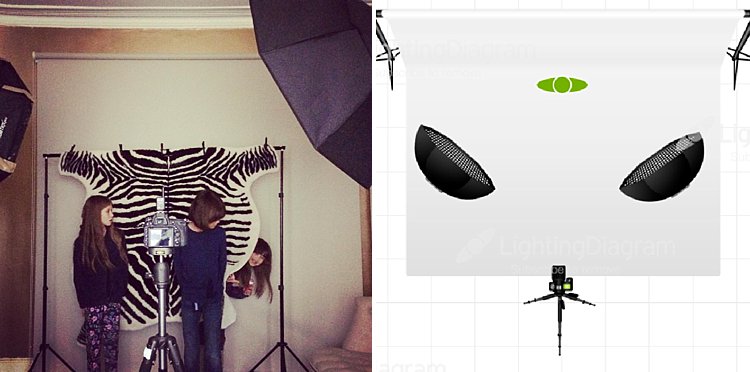
    For my experiment below, I used two strobes mounted on stands and modified by gridded octaboxes. I used Paul Buff’s Cybersyncs for the wireless remote transceiver system. I also had three backdrops: one black, one beige and one patterned. See the image below for my studio setup and an iPhone picture of behind the scenes.

    double-exposure-tutorial-in-camera

    The camera and flash settings

    The strobes were kept on a constant setting and I chose the lowest power. My ISO was also on the lowest setting (ISO 100) for most of the shots except for the f/16 ones where I cranked it up a little. The aperture varied between f/8 – f/16, depending on the look I was after and the length of my exposure. Shutter speed also varied between one second to a few seconds, to bulb. In other words, experiment until you get the look right.

    How to take the double exposure

    This is the trick. While the camera is exposing the image so that the shutter is open, keep triggering the flash. For these shots, I triggered the flash 2-4 times depending on the length of the exposure and how fast I could press the trigger button. The flash freezes the action so the more time the flash fires the more frozen actions you get on your image.

    This leads us nicely to the first tip.

    #1 Exaggerated movement is key

    double-exposures-in-camera-tutorial

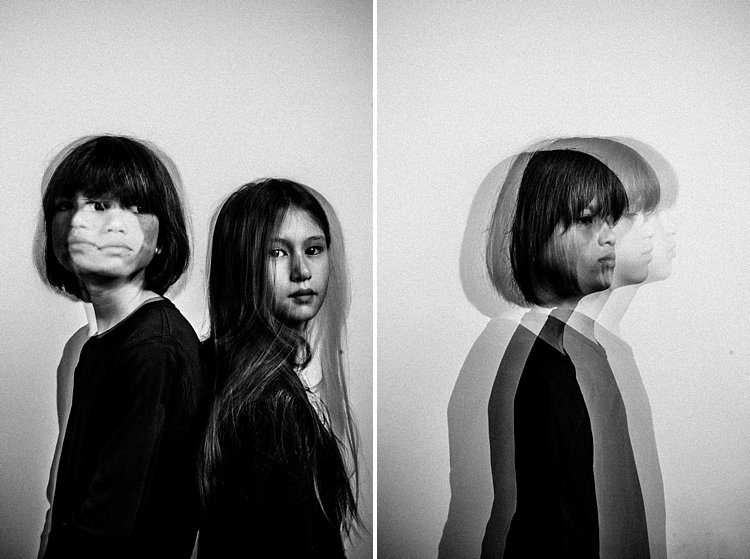
    If your subject makes very small and minor movements, the likelihood is the images will sit on top of each other. This may result in one final image that looks like a blurry mess as in the photo above rather than many separate frozen images on a single photo as shown in the photo below. It is better to tell your subject to move distinctly away from the first position so the movements are separate. The camera still captures the trail of movement as a blur. But when you trigger the flash, that particular moment is rendered sharp and still.

    double-exposures-in-camera-tutorial

    I asked my kids to walk across the frame, counting each step and on a certain count to turn their heads. I would trigger the flash when they moved sideways or turned their heads. At other times I asked one of the children to only join the frame on the third flash so that there is only one of her that registers. I also got them to walk towards me (see photo at top of article). It was at that stage that I changed my aperture to the smallest my lens allowed, in this case, f/16 so that I could still get the head sharp at various depths of field.

    double-exposures-in-camera-tutorial

    In the photo below, I got my kids to shake their heads as fast and as many times as they could. I wanted the focus here to be the movement rather than their frozen faces. Don’t be afraid to experiment. The beauty of digital is that unlike film, you have an infinite number of frames at your disposal so can afford to make many mistakes until you get what you are looking for.

    double-exposures-in-camera-tutorial

    #2 A dark background is better

    Compare the image above with the light background to the other images with the black background. The difference in the final image is vast. I prefer the dark background where my intention was to freeze several portraits and the lighter background where my focus was on capturing the trail of movements. Overall I shot and preferred more of the images with a dark background as the delineation between actions and the clarity of subjects are easier to see. Contrast between the skin and other lighter parts of the image was also easier to achieve compared to images shot with the beige background. In the photo below, I edited quite aggressively to get the contrast I wanted. I also added grain to simulate a film look.

    double-exposures-in-camera-tutorial

    #3 Experiment with materials and textures

    Bring in other materials such as aluminum foil. This one here is an emergency blanket. Two of my kids stood on either side, held and waved the blanket up and down in front of the middle child so the slow shutter captured some of the movement of the foil. The kids also carried  a torch (flash light) and did some light painting. The problem I found with both photos was the blurry look of their faces. Because they did not do big movements with their bodies, hence the frozen photos captured by each flash just got stacked up in roughly the same spot. Other things you can use are glow sticks, flashing lights, moving lights, iPhone and iPad screens – pretty much anything that reflects or emits light.
    double-exposures-in-camera-tutorial

    double-exposures-in-camera-tutorial

    Don’t be afraid to experiment with backgrounds too. In the photos below, I changed the background to a zebra striped black and white rug just because I wanted to see what would happen. I used the same movement techniques as above and the same camera and light settings but the results were very different and unique. The last image below was a happy accident. My third child popped her head up on the third flash, but she came closer to the camera than I had intended so the flash didn’t quite illuminate her face enough. However, I thought this looked really effective as it provided the gray tone of the image as well as a solid form in the middle thereby making the overall image more dynamic and interesting.
    double-exposures-in-camera-tutorial

    double-exposures-in-camera-tutorial

    double-exposures-in-camera-tutorial

    I hope you enjoyed this little tutorial on in-camera double exposures using flash. If you have more ideas, do share them here in the comments below!

    googletag.cmd.push(function() {
    tablet_slots.push( googletag.defineSlot( “/1005424/_dPSv4_tab-all-article-bottom_(300×250)”, [300, 250], “pb-ad-78623” ).addService( googletag.pubads() ) ); } );

    googletag.cmd.push(function() {
    mobile_slots.push( googletag.defineSlot( “/1005424/_dPSv4_mob-all-article-bottom_(300×250)”, [300, 250], “pb-ad-78158” ).addService( googletag.pubads() ) ); } );

    The post 3 Tips for Creating Double Exposures In-Camera Using Flash by Lily Sawyer appeared first on Digital Photography School.


    Digital Photography School

  • Macphun announces Luminar photo editing app for Mac

    Macphun, the company behind Aurora HDR, has announced Luminar, an all-in-one photo editing app for Mac. The photo editor was designed for users of all skill levels, and includes a user interface that can be tailored to each user’s specific needs.

    Luminar includes a variety of tools for processing images, including native Raw processing, more than 35 photo filter sets including Photo Filter Emulation and Cross-Processing, presets, layers, brushes and masking, spot healing, noise reduction and ‘personalized darkrooms’ called Workspaces. Macphun also mentions a sky replacement tool to tease some of the other more advanced features the software will offer.

    Macphun says it will open Luminar to pre-orders on November 2 with the official launch scheduled for November 17. New customers will pay $ 59, while existing customers will be charged less at $ 49. Those who pre-order the software will receive an exclusive video series dubbed Photography Essentials and Marketing Guide for Photographers by Will Burrad-Lucas.

    Via: Macphun Blog

    Articles: Digital Photography Review (dpreview.com)

  • Fujifilm gives us a glimpse of its upcoming Instax Square camera

    We’ve known for a while now that Fujifilm is developing a 1:1 format instant film, which measures 85.6mm x 72mm and provides a 62 x 62mm image, and an accompanying Instax camera. Unfortunately not much detail is known about the camera but now the Japanese manufacturer has released a teaser video on its Instax Square website that gives us at least a glimpse at some elements of the camera.

    On the website you get to see some Instax Square sample images but unfortunately most of the video consists of trippy graphics that remind us of a 1990’s techno music video. So watch closely, you don’t want to miss the important parts.

    Instant film fans will have to wait a little longer to get their hands on the new toy, as the release of both film and camera is scheduled for the Spring of 2017.

    Articles: Digital Photography Review (dpreview.com)

  • Leica re-launches the miniature Summaron 2.8cm F5.6 lens for the M system

    $ (document).ready(function() { SampleGalleryV2({“containerId”:”embeddedSampleGallery_9516636456″,”galleryId”:”9516636456″,”isEmbeddedWidget”:true,”standalone”:false,”selectedImageIndex”:0,”startInCommentsView”:false,”isMobile”:false}) });

    A modern version of the 1955 L-mount Summaron 2.8cm F5.6 lens is to be introduced by German camera manufacturer Leica. The new lens will be fitted for the current M series and will be named the Summaron-M 28mm F5.6. The company appears to have kept the optical design the same as was used in the original model – and indeed makes a feature of the vignetting – but has changed the mount and added 6-bit coding so the lens can communicate EXIF data to modern camera bodies. Internal mechanics remain as they were when the lens was first introduced, but the aperture ring and focusing knob have been redesigned to match the placement and feel of the current M series optics.

    With such a small maximum aperture the lens itself is especially compact and lightweight – measuring 51mm across and extending 18mm. This makes it ideal for street and documentary work on occasions when the photographer wants to remain unnoticed. It seems though that at this stage the lens will only be available in silver chrome, like the original, with no black paint alternative for those with black cameras.

    Leica says the focus throw is particularly long which should make focusing accurate, and the small aperture will deliver quite an extensive depth of field even when used wide open. The closest focus will be one meter and the smallest aperture will be F22.

    The original Summaron 2.8cm F5.6 was produced between 1955 and 1963, and was made in relatively small numbers – so prices have remained high for these older models. It was introduced as a replacement for the even flatter Hektor 2.8cm F6.3 and bought with it that faster aperture.

    There is no date for delivery yet for the new lens, but the company is asking users to pre-order due to ‘expected strong demand’. The price will be £1900.

    For more information visit the Leica website.

    Press release

    The Return of a Classic:
    The Ultra-Compact LEICA SUMMARON-M 28 mm f/5.6 wide-angle lens for Unobtrusive Reportage Photography with a Vintage Look

    October 19, 2016 – With the Leica Summaron-M 28 mm f/5.6, Leica Camera expands the lens portfolio of the Leica M rangefinder system with the modern reincarnation of a classic Leica lens. First introduced as a screw mount lens in 1955, the predecessor of this new lens is still one of the most compact wide-angle lenses in the Leica M-System and is famed for its characteristic visual signature. The new Summaron-M 28 mm f/5.6 takes its lead from the classically compact construction of its ancestor and brings the unique, analog look of its pictures into the age of digital photography.

    The optical design and mechanical construction of the Summaron-M 28 mm f/5.6 are identical to those of its predecessor, which was manufactured at the Leitz factory in Wetzlar until 1963. The perfect fusion of the latest optical developments, such as the highest quality finishing and manufacturing techniques, with this classic optical design make this new edition of the Summaron-M 28 mm f/5.6 much more than a reconstruction of an existing lens. While only slightly modernizing the shape and design of the lens, the new version of the Summaron-M 28 mm f/5.6 is reduced to the essentials but loses none of the character of its legendary ancestor. Its exceptionally short length of less than two centimeters makes it incredibly unobtrusive, and together with the inherent unassuming nature of a Leica M it is an ideal lens for street photography. The combination of a clearly laid out depth of field scale and long focus throw allow for very precise and easy zone focusing.

    The optical design of 6 elements in 4 groups, arranged symmetrically around the iris of the new Leica Summaron-M 28 mm f/5.6, is identical to that of its ancestor. The historic optical design of the original lens has remained completely unchanged. When shot at wide-open aperture, the new Leica Summaron-M 28 mm f/5.6 renders subjects with rich contrast across nearly the entire image field. The combination of a large depth of field, natural contrast rendition, excellent resolution of details and a slight visible vignetting create a unique visual signature, and lend pictures a special classic look reminiscent of earlier days of analog photography.

    The outward appearance of the new Leica Summaron-M 28 mm f/5.6 has been harmonized with the contemporary look and mechanics of the current portfolio of Leica M-Lenses. This is exemplified in the Leica M bayonet mount with 6-bit coding, the shape of the focusing lock button, the diameter of the aperture ring and the style of the knurling on the barrel and rings. The style and construction of the lens hood reflects the original, and recalls memories of the beginnings of rangefinder photography. It is machined from solid brass and finished in an elaborate manufacturing process.

    As is the case for all other Leica lenses, the Leica Summaron-M 28 mm f/5.6 was designed and developed by the precision engineers and optical specialists in Wetzlar. As a product made to stand the test of time with enduring value, the lens is made in Germany from only the finest materials, and assembled entirely by hand. The combination of cutting-edge technologies and painstaking manufacturing processes guarantees consistently excellent quality and long-lasting reliability.

    Customers wishing to purchase a Leica Summaron-M 28 mm f/5.6 lens must place a pre-order with a Leica Store, Boutique or Dealer. Deliveries will follow according to the sequence in which the orders are received. Due to the strong demand, long delivery times must be taken into account, especially in the first few months.


    Articles: Digital Photography Review (dpreview.com)

  • Leica introduces ‘Titanium gray’ version of its Q compact camera

    Leica has announced that it will release a new version of its Q (Typ 116) full-frame compact camera that will be finished in a gray paint instead of the usual black. The Leica Q ‘Titanium gray’ will be essentially the same camera as the black model, but its metal areas will be a light gray. The material body cover will be a dark gray. The company says that there are other ‘striking design features’ that make the camera different to the standard model, but all that’s evident is the distance scale markings on the lens are picked out in red paint, like the Rolf Sachs Summilux-M 35mm F1.4, instead of Leica’s usual yellow. The strap will also be made of a different material.

    The ‘Titanium gray’ model will be available from the middle of November and will cost £3800. The black version usually sells for around £3200/$ 4250, but is rather short supply.
    For more information see the Leica website.

    Press Release

    Leica Q ‘Titanium gray’

    A perfect fusion of technology, design and style

    Leica Camera has revealed the Leica Q ‘Titanium gray’, bringing a brand new, alternative design to its successful, high-performance compact camera, the Leica Q, which features a fixed fast prime lens and full-frame sensor.

    In contrast to the discreet black of the body, lens and leather-style trim of the original Leica Q, this stunning new model offers a titanium grey paint finish on the top and base plate and back of the camera, combining the premium look of precious metal with classic black elements.

    Elegant, yet extremely durable, the Leica Q ‘Titanium gray’ includes a series of striking design features not found on the standard model. For example, the distance scale in feet and the focal length on the lens are highlighted in red. Furthermore, the colour-coordinated carrying strap supplied with the camera has been manufactured from strong, robust material most commonly used to make climbing ropes.

    Offering the same impressive performance and technical specifications of the black Leica Q model, the Leica Q ‘Titanium gray’ features intuitive handling and an exceptionally fast lens. The perfect camera for street, architectural and landscape photography, its Leica Summilux 28mm f/1.7 ASPH. lens makes the Leica Q ideal for available light shooting and has an angle of view that reproduces scenes with natural perspectives and proportions.

    With a 24 MP, full-frame CMOS sensor precisely matched to its lens, the Leica Q ‘Titanium gray’ delivers richly detailed exposures with low noise at optimum quality, at ISO sensitivities of up to 50,000. This outstanding camera allows the greatest possible creative freedom for even the most demanding photographic ambitions, enabling the photographer to switch effortlessly between macro, automatic and manual focusing.

    Ensuring the decisive moment is never missed, the Leica Q full-frame compact camera has the fastest autofocus in its class and offers precision focusing almost in real-time. Furthermore, its Leica ultra-fast Maestro II image processor enables continuous shooting at up to ten frames per second at full resolution. Allowing reliable control of subject composition at this speed, the Leica Q also features an integrated viewfinder with a resolution of 3.68 MP – displaying even the finest details without any perceptible lag, as soon as the camera is brought up to the user’s eye.

    All functions of the camera are clearly laid out and logically placed, making it exceptionally ergonomic to use. The clear and logical menu provides rapid access to all essential functions and also enables photographers to programme their own personalised settings.

    In addition, the Leica Q delivers movie recording in full-HD quality. Depending on the scene and subject, users can choose between 30 and 60 full frames per second for video recording in MP4 format. The camera also features an integrated Wi-Fi module for wireless transmission of still pictures and video to other devices, and remote control by WLAN from a smartphone or tablet.

    The Leica Q app enabling these features can be downloaded free of charge from the Leica web site. As well as providing a remote release function and display of the viewfinder image, the app also allows the setting of parameters such as aperture and shutter speed from the device employed.

    Full product specifications can be found at: uk.leica-camera.com.

    Pricing and availability

    The Leica Q ‘Titanium gray’ is scheduled to be available from mid-November 2016, at a suggested retail price of £3,800 including VAT.

    Articles: Digital Photography Review (dpreview.com)

  • Paint it Black: 16 Mysterious Houses That Have Joined the Dark Side

    [ By SA Rogers in Architecture & Houses & Residential. ]

    black-houses-seven-gables-2

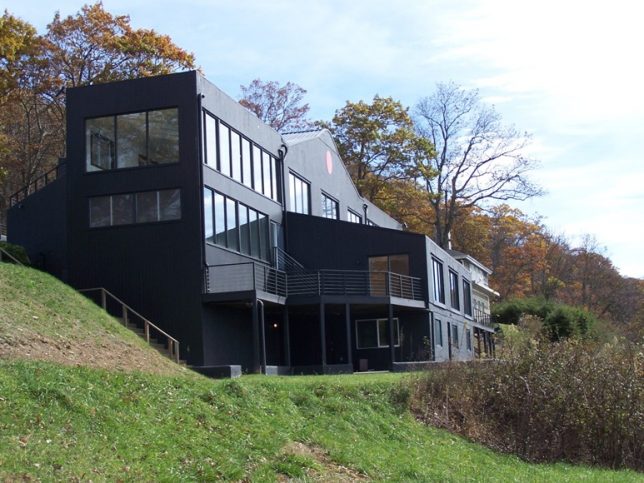
    Most people can be divided into two pretty clear-cut categories: those who think black houses are creepy in a bad way, and those who love them for all their mysterious allure. Victorian houses in San Francisco, famously witchy mansions in Salem, modern homes in Japan and gingerbread houses in the woods of New York all get cool points when they’re painted top-to-bottom in shades of coal and pitch, though one abandoned black house in North Carolina looks legitimately scary in its dark disarray.

    Black Ocean Firehouse, New York

    black-houses-ocean

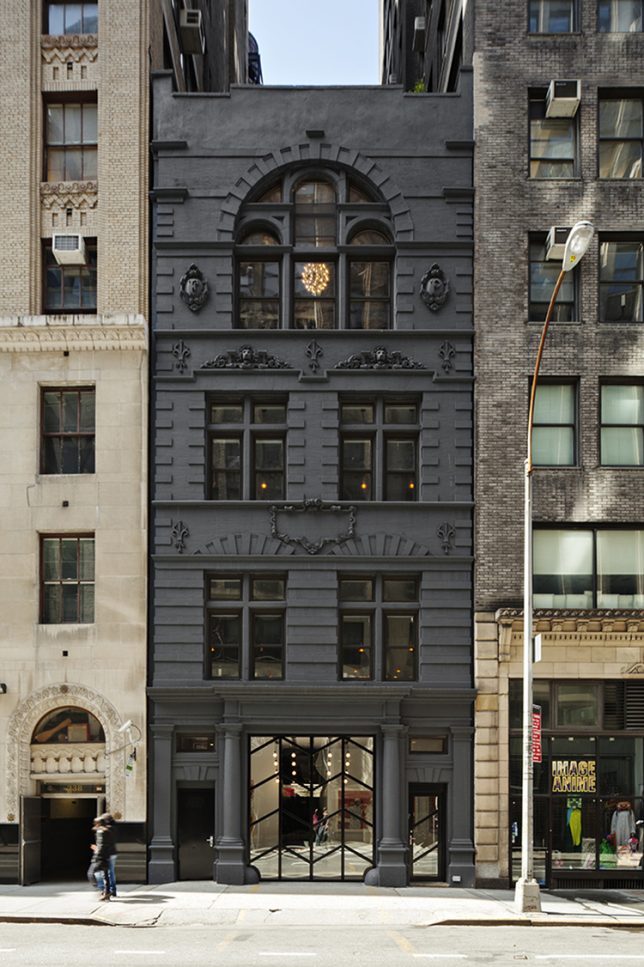
    The black paint on this facade of a former New York City firehouse highlights all of the ornate neo-gothic architectural details, modernizing the 1890s structure for its new life as the headquarters for Black Ocean, a digital media company.

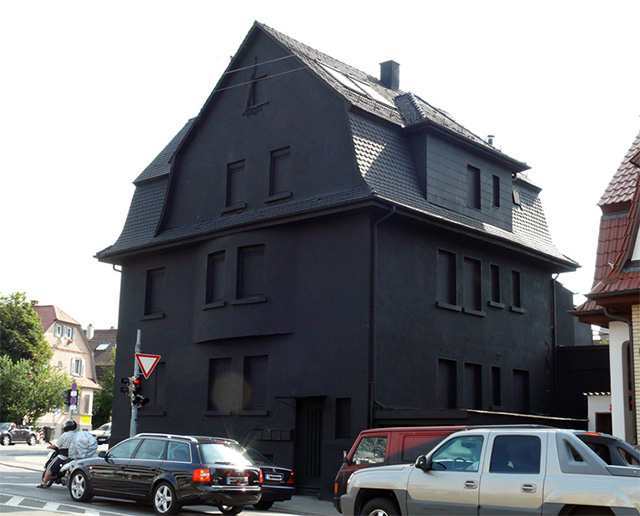
    Haus in Schwarz, Germany

    black-houses-schwarz-1

    black-houses-schwarz-2

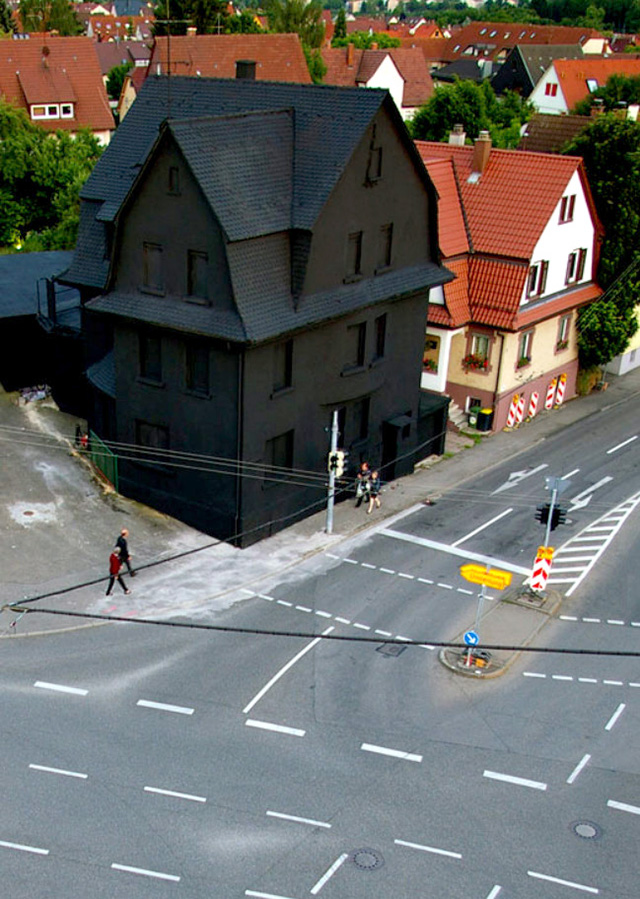
    This house in Germany wasn’t painted pitch black all over until after it was condemned, as a sort of tribute before it was demolished, and that’s kind of a shame. It looks way cooler than its similarly-shaped neighbors on the same street. At night, it virtually disappears into the sky.

    Shingle House by NORD

    black-houses-shingle-1

    black-houses-shingle-2

    black-houses-shingle-3

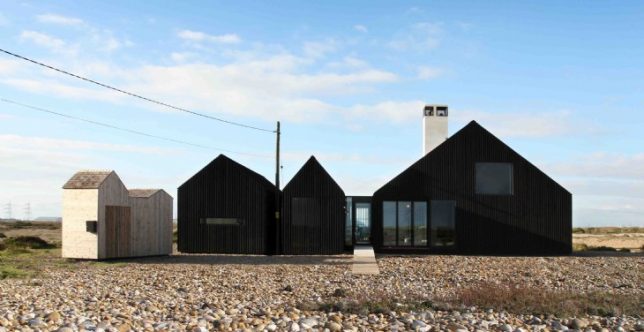
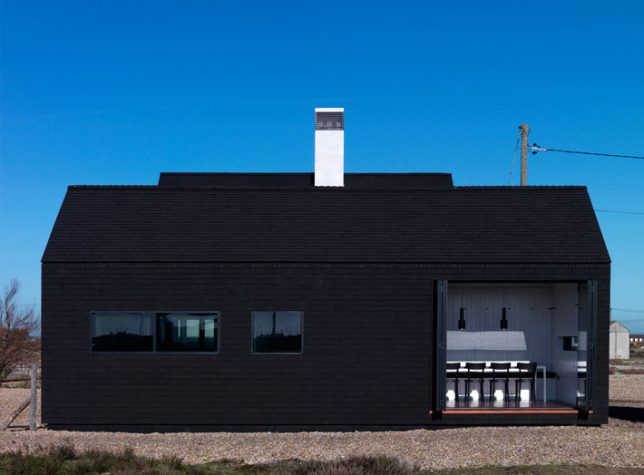
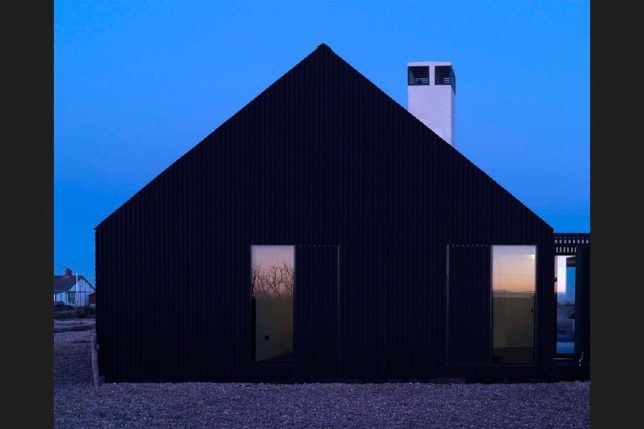
    Located on the shingle beach of Dungeness, one of England’s most unique landscapes, this home by NORD stands out from a sea of fisherman’s huts with its pitch paint and tarred black roof. It’s available for rent as part of Living Architecture, a project offering vacations in striking works of modern architecture.

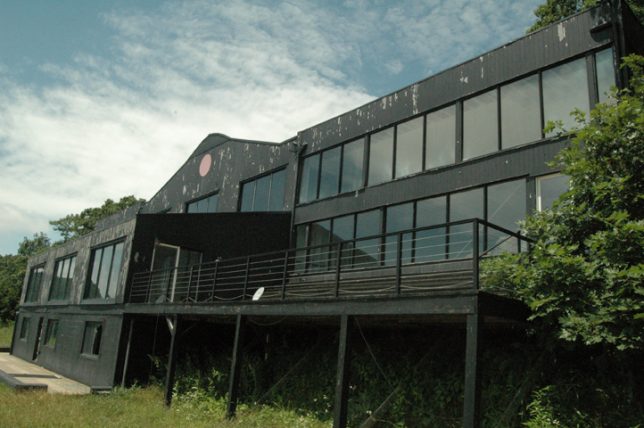
    Abandoned Black House in North Carolina

    black-houses-abandoned-1

    black-houses-abandoned-2

    black-houses-abandoned-3

    Unlike the other houses on this list, which simply don harmless black exteriors, this home on a peak in mountainous Western North Carolina is truly creepy. Located on Howard’s Knob in Boone, the home known as “The Cult House” has been abandoned for many years since its owners were went to prison, and has deteriorated after being broken into, vandalized and used as a party house. Once a million dollar home, it’s now peeling and crumbling.

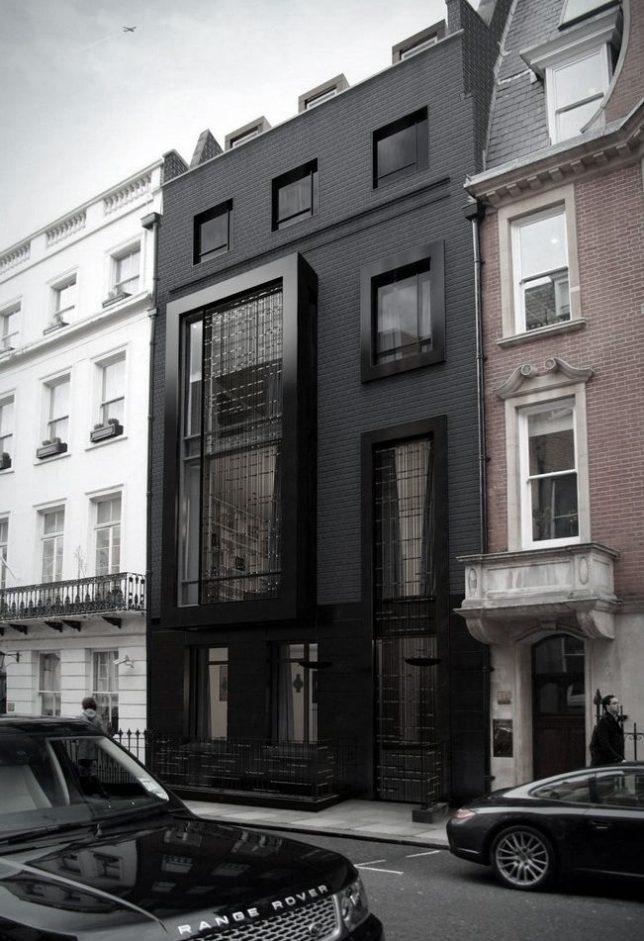
    Black-Fronted Residence for Park Place, London

    black-houses-park-place

    In London, SHH Architects won permission to convert a 1960s office into a home with a black facade. The original seven-story building was demolished and replaced with black brick, a double-story Oriel bay window with a decorative metalwork screen, and polished granite window frames.

    Next Page – Click Below to Read More:
    Paint It Black 16 Houses That Have Joined The Dark Side

    Share on Facebook


    [ By SA Rogers in Architecture & Houses & Residential. ]

    [ WebUrbanist | Archives | Galleries | Privacy | TOS ]


    WebUrbanist