Blog

  • ‘Camera Master’ Gian Luigi Carminati has been repairing cameras for almost 60 years

    A new short video introduces Gian Luigi Carminati, a 76-year-old technician from Milan, Italy, who has been repairing analog cameras for nearly 60 years. While the documentary is only a touch over two minutes long, it introduces viewers to Carminati’s analog camera collection and his thoughts on photography.

    Carminati, who considers himself a technician rather than a photographer, dabbles in photography himself, describing a particular fondness for old cameras and black-and-white images. The technician has been able to continue running his repair business despite the rise of digital cameras, stating in the video,’When the digital came, it felt like my job was over.’ The documentary was directed by David Drills.

    Articles: Digital Photography Review (dpreview.com)

  • 10 things I wish I knew when starting my photography business

    The moment I bought my first DSLR I knew that photography was my true passion. I didn’t consider myself a professional back then, but I was sure I wanted to become one. Well, the road  turned out a lot longer than I expected. I have learned there’s much more than meets the eye when it comes to the photographer profession. Continue Reading

    The post 10 things I wish I knew when starting my photography business appeared first on Photodoto.


    Photodoto

  • 2016 DPReview Readers’ Best Shots: Places

    2016 DPReview Readers’ Best Shots: Places

    Photo by Fred Gunnerson

    Every Spring people come from all over to view and photograph the orchards in bloom. It only lasts a few weeks so you have to be ready when the rain stops. The bottom half of the photo is Oregon and the top half is Washington. That’s Mt. Adams in the background.

    Hood River, Oregon, USA

    Picking your favorite image is never an easy task. Nevertheless, our readers were up to the challenge when we asked them to submit their best shots of 2016. We received a huge number of submissions, and it was no small job picking favorites. We didn’t need the reminder, but it underscored just how talented our readership is. Photos were divided into three categories and we settled on a small selection to feature in each.

    The category featured here is ‘Places’. We tried to include a variety of our favorite landscapes and cityscapes to feature. A huge thanks to everyone that participated and gave us a chance to see your work! You can find all of the submitted images here, here and here.

    2016 DPReview Readers’ Best Shots: Places

    Photo by Michele Palazzo

    New York City’s iconic Flatiron building emerges from the blizzard like the bow of a giant ship plowing through the wind and the snow. Taken during the historic coastal storm “Jonas” on January 23rd, 2016. Shot January 23rd, 2016 in New York City with a Ricoh GR.

    New York City, NY, USA

    2016 DPReview Readers’ Best Shots: Places

    Photo by Hans Kruse

    Morning sun at the Quiraing on Isle of Skye shot during a photo workshop I was leading on Isle of Skye, Scotland in September 2016.

    Isle of Skye, Scotland

    2016 DPReview Readers’ Best Shots: Places

    Photo by George Fowler

    This picture was taken a few weeks ago in Shiobara, an area about two and a half hours north of Tokyo in the countryside. The fall colors were at their peak and the footbridge across the small river was absent of any people.

    Shiobara, Japan

    2016 DPReview Readers’ Best Shots: Places

    Photo by Mike Sandman

    Designed by the architect Frank Gehry, inspired perhaps by an Escher woodcut. Magnetically attractive to the eye, but the roof leaks.

    Stata Center, MIT, Cambridge, Mass. USA 

    2016 DPReview Readers’ Best Shots: Places

    Photo by Derek Dammann

    An early spring dawn breaks at the Dark Hedges in County Antrim, Northern Ireland.

    County Antrim, Northern Ireland

    2016 DPReview Readers’ Best Shots: Places

    Photo by Morten Smedsrud

    Sunrise over the Troll Wall from Store Trolltind, the highest peak in the Trolltindene mountain ridge, Romsdal Norway.

    Romsdal, Norway

    2016 DPReview Readers’ Best Shots: Places

    Photo by Peter Alessandria

    Photo of Harvest Full Moon (Oct 2016) rising behind the Statue of Liberty in New York Harbor. This shot was planned weeks in advance to align the trajectory of the moon with Lady Liberty.

    Statue of Liberty, New York, NY, USA

    2016 DPReview Readers’ Best Shots: Places

    Photo by Maurice J Byatt

    Crater Lake National Park, OR, USA

    2016 DPReview Reader’s Best Shots: Places

    Photo by Damjan Sirca

    Taken on 28/10/16 in Yosemite valley – a bad weather forecast is not always bad news.

    Yosemite Valley, CA, USA

    Articles: Digital Photography Review (dpreview.com)

  • iPhone 7 Plus owners report overheating and black screen camera issues

    Some iPhone 7 Plus owners are reporting camera issues including streaks of color on images, a completely black screen instead of an image preview, and a warning that the iPhone needs to cool down before the camera can be used (despite no signs of overheating). Some affected owners state Apple replaced their iPhone or, in some cases, just the camera module.

    Reports of these issues can be found on social media sites and Reddit, where they date back several weeks. The issues appear to be hardware related, as they’ve persisted despite recent iOS updates. Affected users should take their iPhone to an Apple Store for servicing or replacement. It doesn’t appear any official workarounds have been provided.

    Via: TechTimes

    Articles: Digital Photography Review (dpreview.com)

  • GearEye is an RFID-based gear management system

    A new Kickstarter campaign is looking to fund further development and production of the GearEye gear management system. GearEye uses inexpensive, battery-free adhesive RFID tags, which are attached to all your equipment. This enables photographers to make sure that they’ve got everything that they need in their gear bag when going to a shoot and that they don’t leave anything behind when returning home.

    The GearEye RFID reader comes in two form-factors, either as a stand-alone device, which you leave in your bag, or a phone-cover that doubles as charger. Once your items have been tagged and the reader is in place everything in your bag can be accounted for via a single tap in the GearEye smartphone app. If something is missing the system also helps you locate it within its range.

    Additionally you can organize your equipment into customized lists. This way you can make sure to only bring the equipment you need for a specific type of photo shoot and leave unnecessary items at home, thus minimizing the weight of your bag. For this purpose the app tells you if there is anything in your bag which you won’t need. 

    GearEye has been created with photographers in mind, but of course would work with any other type of equipment or tools as well. The project has already passed its funding goal, so if all goes well the first units should be delivered in July 2017. Until tomorrow you can still secure a GearEye standard pack by pledging $ 129. This gets you a GearEye dongle or phone case and 20 RFID tags. Larger packages are available for those who need to tag more items. More information is available on the GearEye Kickstarter page and in the video below.

    Articles: Digital Photography Review (dpreview.com)

  • East Coast Greenway: Longest Bike Trail in US to Span 2,900 Miles

    [ By WebUrbanist in Destinations & Sights & Travel. ]

    east coast greenway

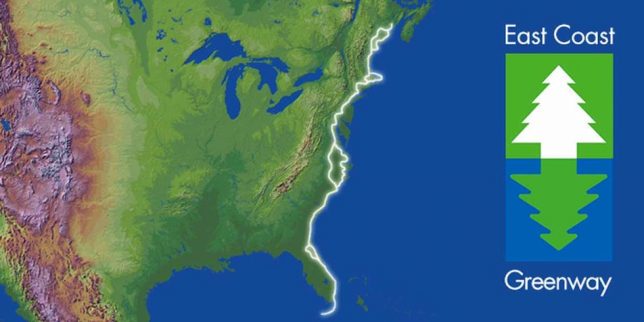
    The East Coast Greenway is already a third of the way to completion, and when finished will stretch from Calais, Maine, to Key West, Florida, passing through 16 states and 25 cities along the way.

    ecg

    Developed by the non-profit East Coast Greenway Alliance, the aim is to provide a continuous and ever-changing set of views and experiences to travelers on foot or in non-motorized vehicles.

    east coast trail

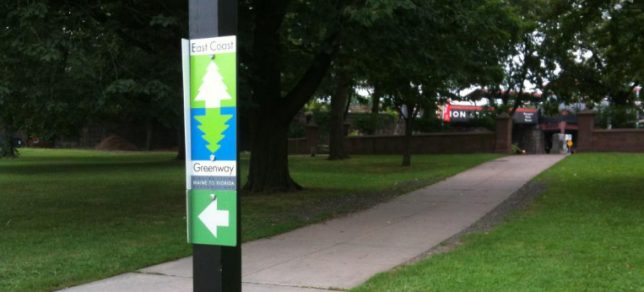
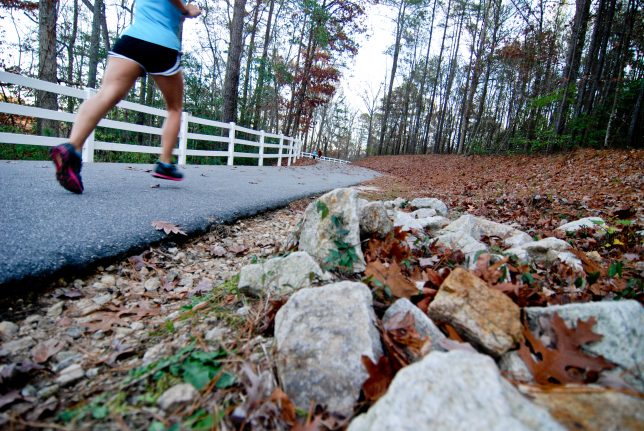
    Its creators note that the “route has been chosen to provide the traveler with an ever-changing, interesting and scenic landscape, whether urban, suburban, small town, industrial or rural,” accessible to cyclists, walkers, joggers and runners. Along the way, the Greenway also syncs up with public transportation at key spots, allowing easy access and egress for people seeking to pursue one stretch of it or another.

    “It’s about seeing America at the right speed, where you can take in all of the culture around you. And you don’t have a windshield between yourself and the community.” While the project has been in the works for years, new funding and permissions gained in the last year have propelled it forward more quickly, helping its facilitators connect the dots along the nearly 3,000-mile route.

    Share on Facebook


    [ By WebUrbanist in Destinations & Sights & Travel. ]

    [ WebUrbanist | Archives | Galleries | Privacy | TOS ]


    WebUrbanist

  • Rokinon 20mm F1.8 and Cine DS 20mm T1.9 Full Frame Super Wide Angle lenses now available

    Rokinon has announced the launch of its new Rokinon Digital Photo 20mm F1.8 and Cine DS 20mm T1.9 Full Frame Super Wide Angle lenses. Both lenses are made from high-strength aluminum alloy and feature a super-wide 94.8-degree view, a non-rotating 77mm filter mount, Rokinon’s Ultra Multi-Coating, and a quiet, smooth focusing control.

    These prime lenses, say Rokinon, offer both fast aperture and ‘the full frame perspective of 20mm,’ offering a solution that falls between the maker’s similar 14mm and 24mm models. These 20mm lenses have a 7.9in / 0.20m minimum focusing distance, 13 elements in 12 groups, three extra-low dispersion elements, and a pair of aspherical elements.

    In addition to the ‘common’ features shared between the lenses, the Cine DS lens features geared aperture and controls, a de-clicked aperture control ring, and dual right/left side distance and t-stop scales. 

    The Digital Photo lens is available for Canon, Nikon AE, Sony E, Micro Four Thirds, Pentax K, and Fuji X mounts (MSRP $ 599), while the Cine DS lens ($ 799 on B&H Photo) is available for Canon, Nikon, Sony E, and Micro Four Thirds mounts.

    Articles: Digital Photography Review (dpreview.com)

  • Yi 4K+ action camera and Carbon Fiber Drone announced ahead of CES 2017 debut

    Chinese company YI Technology, maker of the Yi Action Camera, and the YI M1, which we reviewed earlier this year, has announced the YI 4K+, an update to the company’s previous YI 4K model. This is the third action camera in YI Technology’s lineup, and it improves upon the previous model with 4K recording at 60fps rather than 30fps. Yi plans to unveil the camera at the Consumer Electronics Show (CES) 2017 next month.

    In addition to the YI 4K+ unveiling, YI Technology also plans to demonstrate its YI Erida smart drone at CES, marking the model’s first demonstration in the U.S.

    The YI Erida is described as a full-carbon ‘smart drone’ with a three-rotor design and support for the Yi 4K action camera. This drone has a top speed up to 75MPH and flight time rated up to 40 minutes per charge.

    Via: BusinessWire

    Articles: Digital Photography Review (dpreview.com)

  • 7 Tips – How to Add Depth and Dimension into Your Photos

    Photographers have the same dilemma that painters have faced for centuries – how to show a three-dimensional subject in a two-dimensional frame. When you add depth it helps create a sense of place and draw the viewer into your images. It also shows a deeper understanding of the principles of composition in photography.

    The techniques and tips listed in this article will help you convey a stronger sense of depth in your photos.

    1. Use leading lines

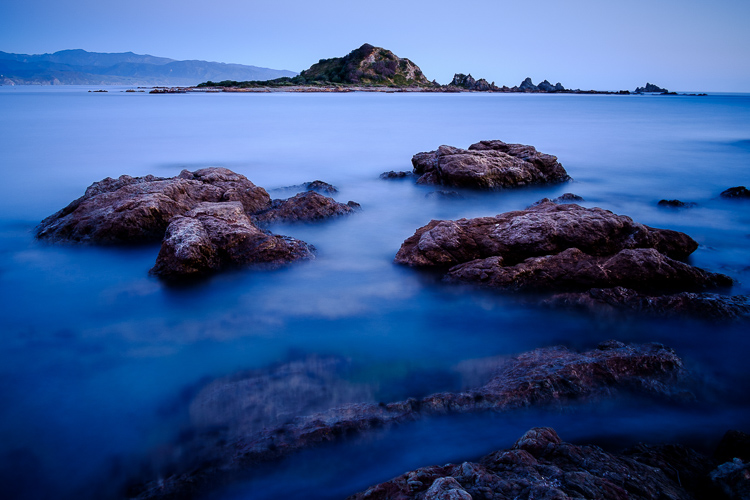
    One of the easiest ways to convey depth in an image is to use a wide-angle lens and include lines that move from the bottom of the frame to the top. This technique is used mainly in landscape and architectural photos.
    how to add depth and dimension in composition

    The lines don’t have to be obvious. Take this photo as an example.

    The rocks form natural lines that lead the eye from the foreground to the island on the horizon.
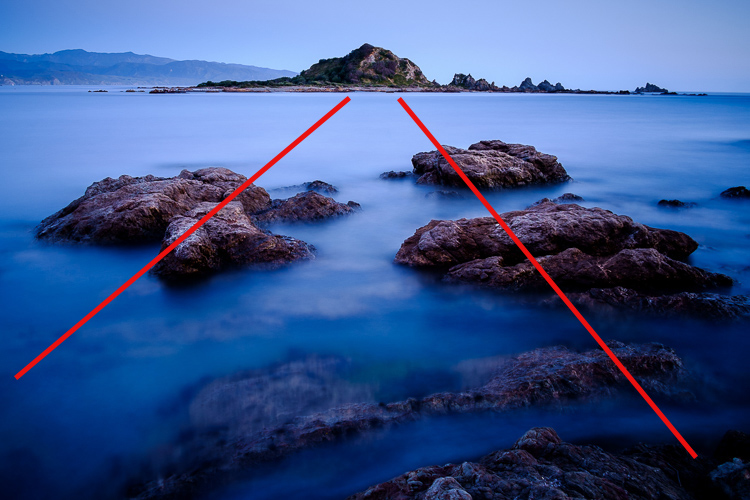
    how to add depth and dimension in composition leading lines

    In the image below, the waterways in the middle distance take the eye through the photo to the distant mountains. They are meandering, rather than straight, which helps give the image a more organic feel that fits well with the theme of landscape.
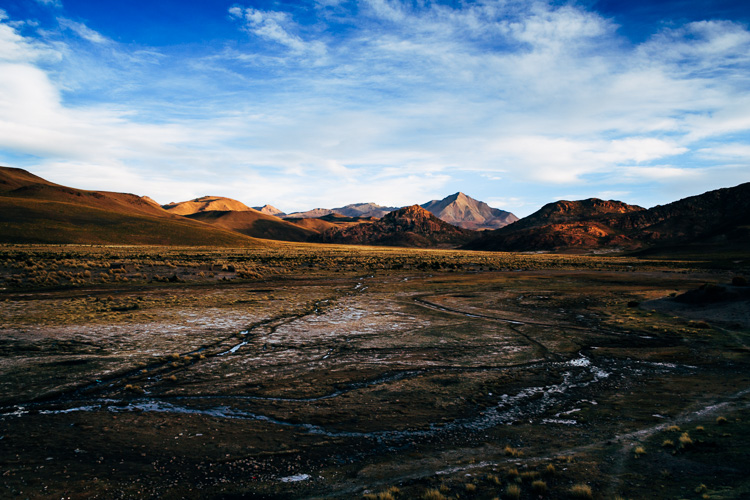
    how to add depth and dimension in composition

    2. Use perspective

    This photo demonstrates how lines can add depth in a different way.
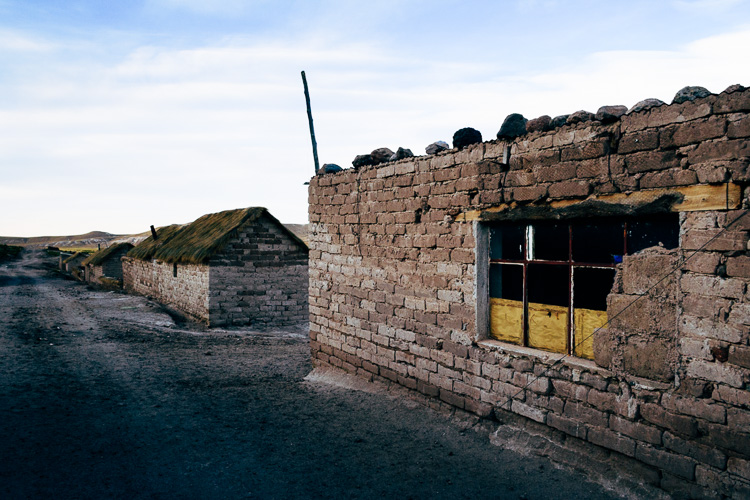
    how to add depth and dimension in composition - perspective

    The buildings form converging lines that disappear towards the horizon, creating a sense of depth very effectively. This technique is similar to an artist’s use of perspective. I’ve added lines so you can see how it works.
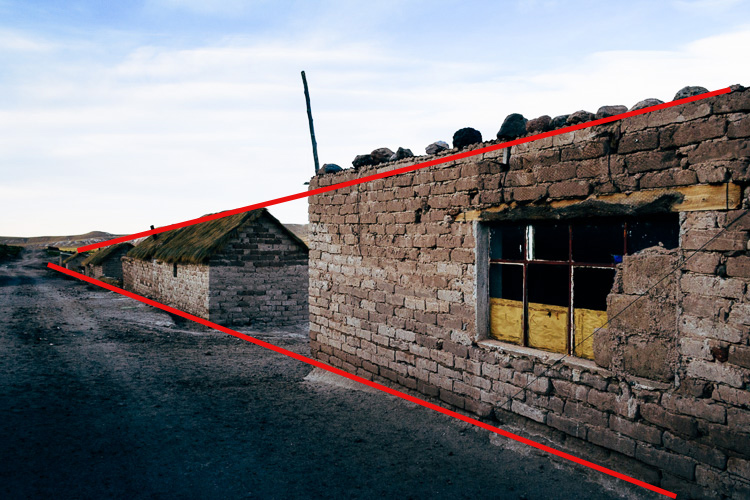
    how to add depth and dimension in composition - perspective

    3. Think foreground, middle ground, and background

    Most photographers are familiar with the rule of thirds, but when it comes to conveying a sense of depth it is helpful to break the photo up into a different set of thirds – the foreground, middle ground, and background. What you’re looking for is a way of connecting the three that pulls the eye through the photo. Having three distinct zones in the image helps create a sense of depth, three dimensionality.

    Leading lines are one way of doing this, but lines are not always present in a scene. When that happens you need to look for something else. Often, that simply means including something interesting in the foreground.

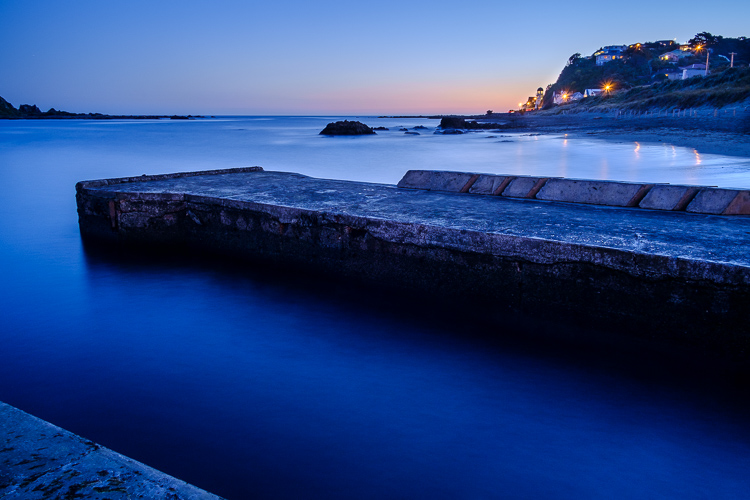
    For example, in this photo, there are some buildings in the background, a concrete jetty in the middle, and the edge of another jetty in the foreground. I included the last one deliberately to help create a sense of depth.
    how to add depth and dimension in composition

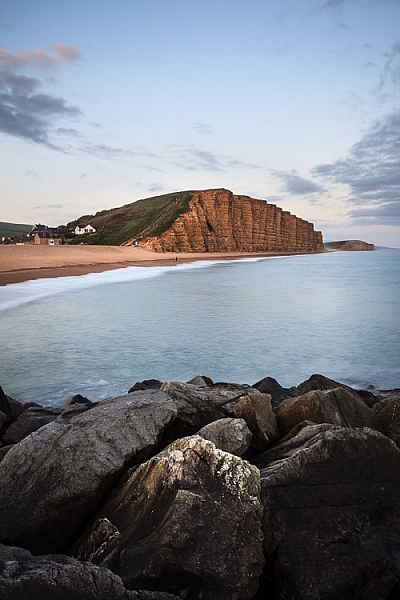
    Here’s another example below. Including the rocks in the foreground creates a composition with three distinct zones (foreground, middle ground, and background) that the eye moves through, creating depth in the image. It helps that the wide-angle lens that was used makes the rocks seem quite large in comparison to the distant cliffs.
    Depth and composition

    4. Use aerial perspective

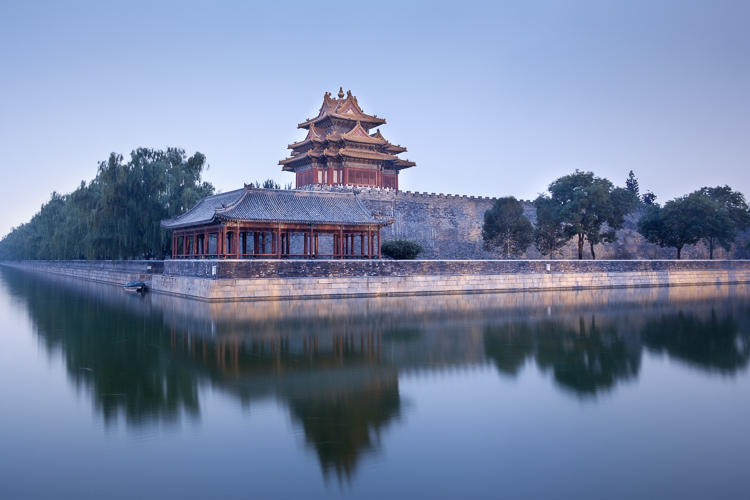
    Another technique that helps convey a sense of depth is aerial (or atmospheric) perspective. This is where the atmospheric conditions make things in the distance appear hazy. When you see this occur, it is a good idea to see if you can find a way to include it in your composition. In this photo, taken in Beijing, you can see that the trees in the distance on the left side are obscured by atmospheric haze.
    how to add depth and dimension in composition  - aerial perspective

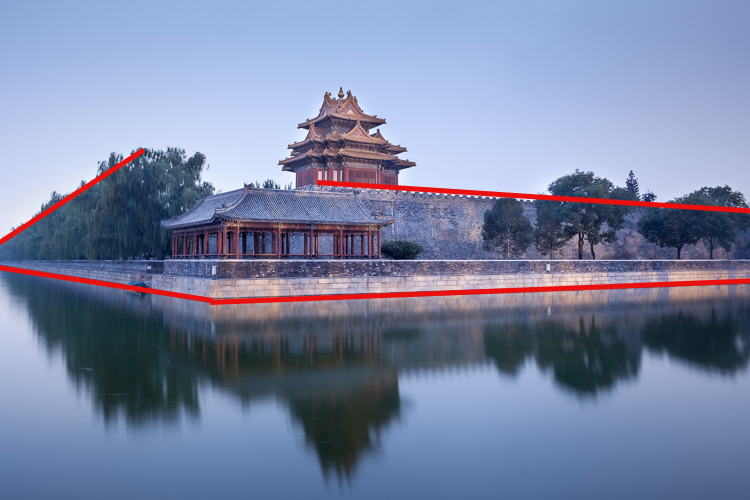
    This is reinforced by the converging lines formed by the walls. The two techniques are working together to show depth in the image.
    how to add depth and dimension in composition  - aerial perspective and lines

    5. Shoot through something

    The techniques explored so far work best with wide-angle lenses. The nature of a telephoto lens is that it puts distance between you and the subject, which leads to a flatter perspective that doesn’t show depth as well as a wide-angle lens. But there are different techniques you can use with telephoto lenses to create a sensation of depth.

    One method is to shoot through something that is between you and the subject. In the photo below, the subject is the setting sun. I shot through grass (and focused on the grass, throwing the sun slightly out of focus) to add a sense of depth to what otherwise could have been a very flat image.
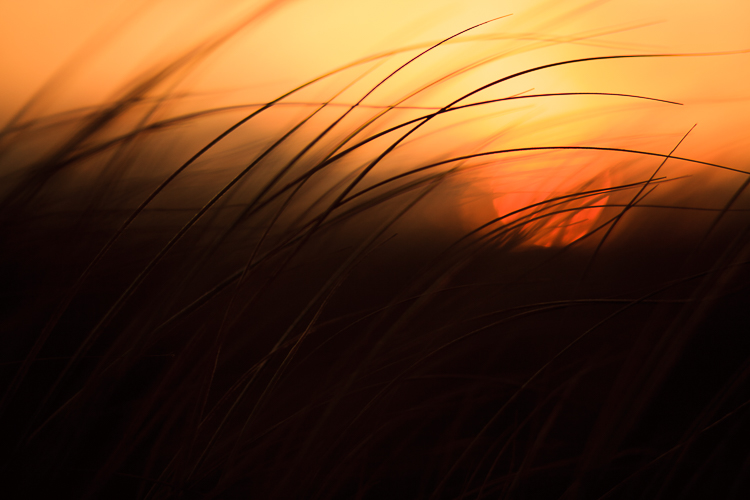
    how to add depth and dimension in composition  - telephoto

    The photo also makes a good use of another technique, including shadows in the frame, to reinforce the depth.

    You can also use this technique with portraits. I created the portrait below by shooting through the branches of a tree.
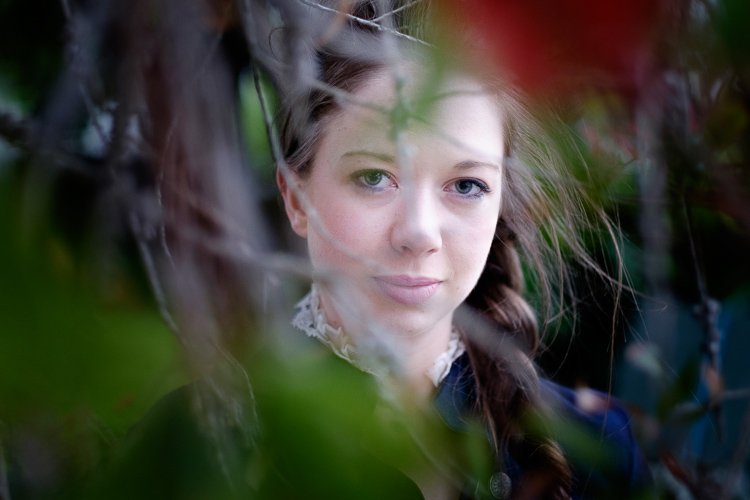
    Depth and composition

    6. Use selective focus

    Both of the photos shown for the previous technique also use selective focus. That’s where you deliberately set a narrow aperture and focus on the subject, throwing the background out of focus. It’s especially effective with portraits, as the blurred background helps separate the model from the background, in turn creating a sense of depth. The following portrait was taken at f/2.0 with the lens focused on the model’s eyes.
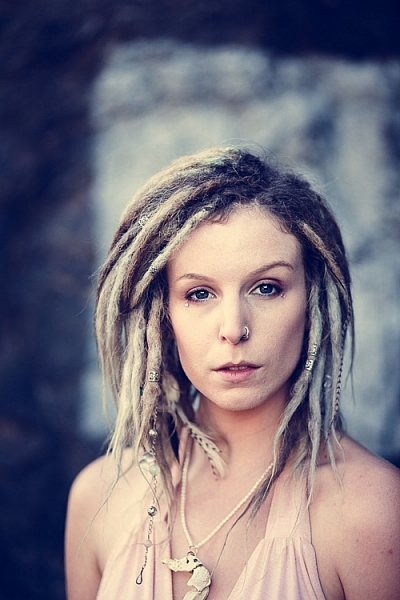
    Depth and composition

    7. Convey depth through color

    It’s also useful to think about what happens to colors in the background when you use a telephoto lens with a narrow aperture to make a portrait. When the background is out of focus, colors merge into each other. A good contrast between the colors in the background and those the model is wearing also helps convey depth.

    For example, in the next portrait the use of color is very subtle. The background is nearly white, without any distracting colors. It is out of focus and doesn’t distract from the model’s face. His sweater is the most colorful part of the photo, and helps separate him from the background.

    Depth and composition

    You can take this idea to its extreme by using off-camera flash fitted with an orange gel. When you do this, the model is lit by orange light (from the gelled flash), but the background is lit by colder ambient light. This technique works well at dusk when the ambient light has a natural blue color.

    In the example below, the model was lit by single Speedlite fitted with a 60cm softbox and a CTO (Color Temperature Orange) gel.
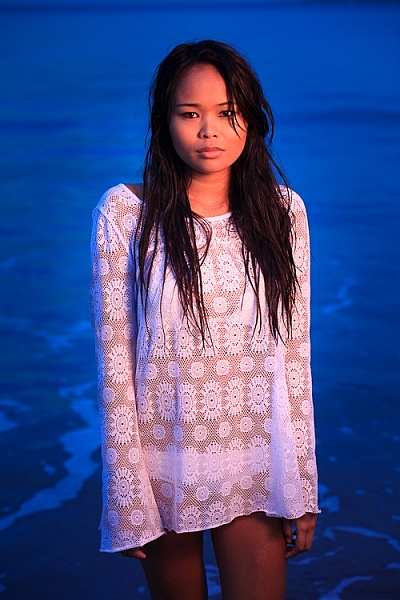
    Depth and composition

    Your turn

    These seven tips should help you create stronger photos with more depth. What other ideas do you have for creating and adding depth into your photos? Please let us know in the comments below.


    If you enjoyed this article and would like to learn more about composition then please check out my ebook Mastering Composition.

    googletag.cmd.push(function() {
    tablet_slots.push( googletag.defineSlot( “/1005424/_dPSv4_tab-all-article-bottom_(300×250)”, [300, 250], “pb-ad-78623” ).addService( googletag.pubads() ) ); } );

    googletag.cmd.push(function() {
    mobile_slots.push( googletag.defineSlot( “/1005424/_dPSv4_mob-all-article-bottom_(300×250)”, [300, 250], “pb-ad-78158” ).addService( googletag.pubads() ) ); } );

    The post 7 Tips – How to Add Depth and Dimension into Your Photos by Andrew S. Gibson appeared first on Digital Photography School.


    Digital Photography School

  • Cargotecture Travel: Shipping Container Hostel Opens in Vietnam

    [ By SA Rogers in Boutique & Art Hotels & Destinations & Sights & Travel. ]

    ccasa-shipping-container-hostel-5

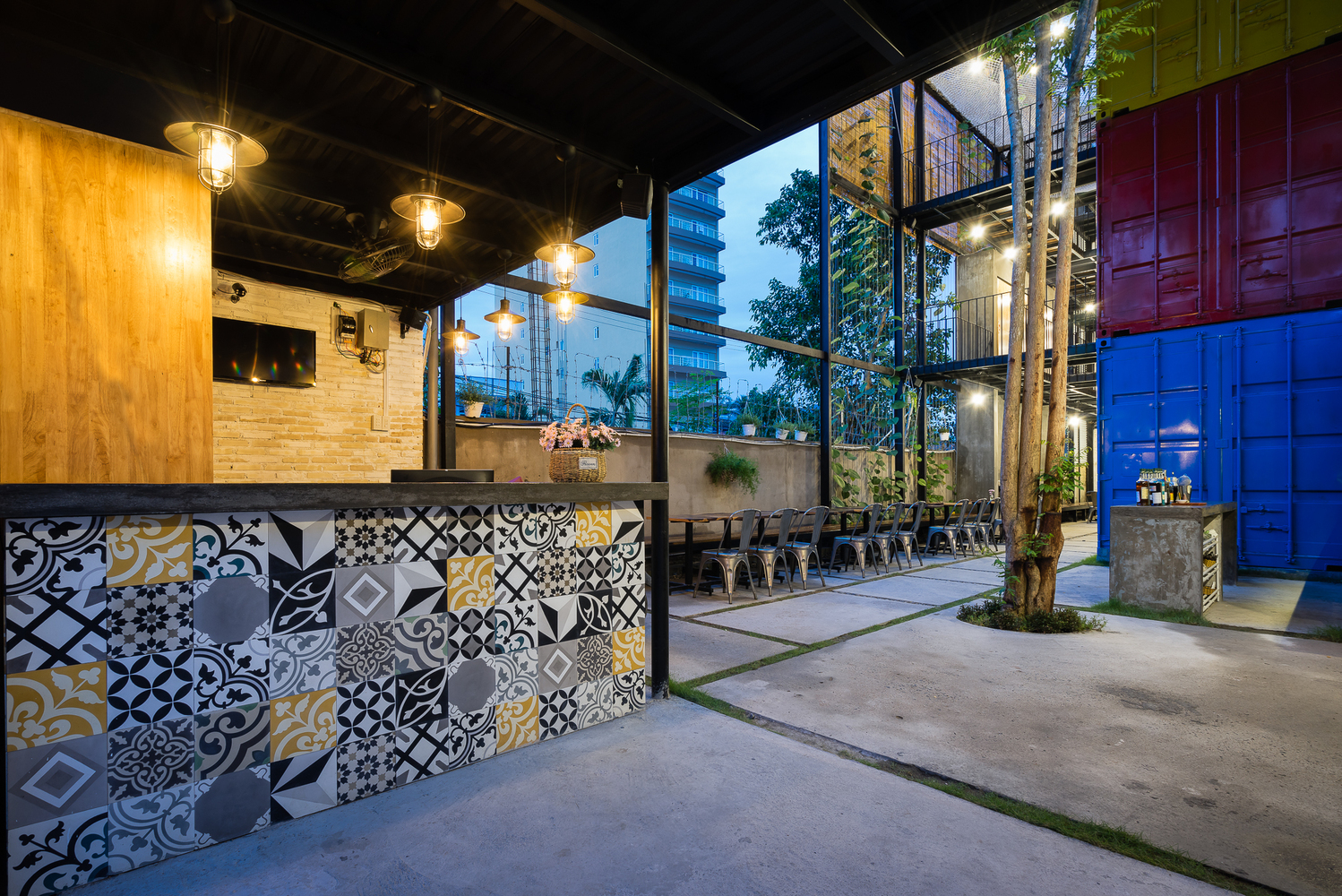
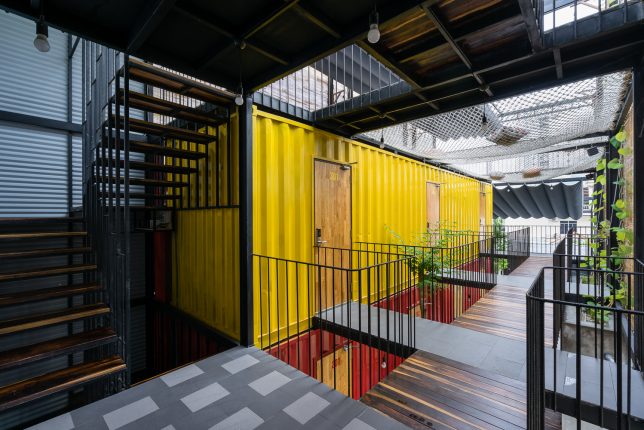
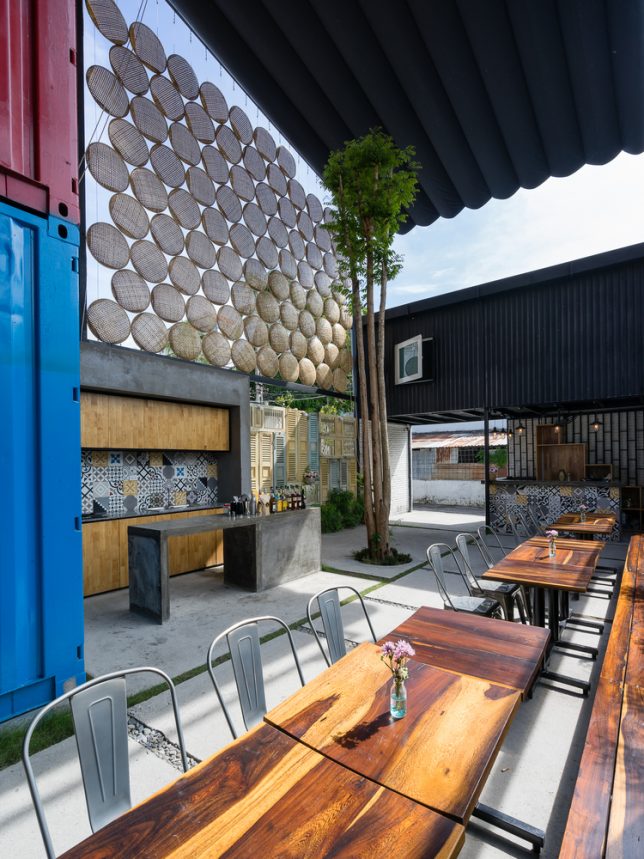
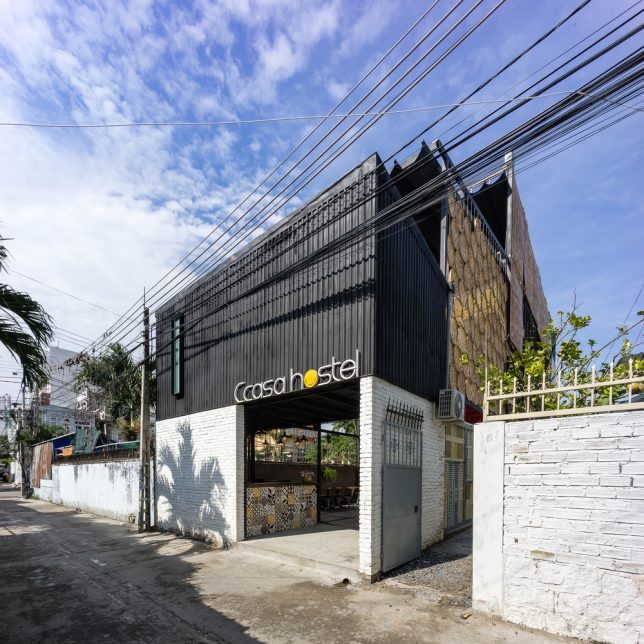
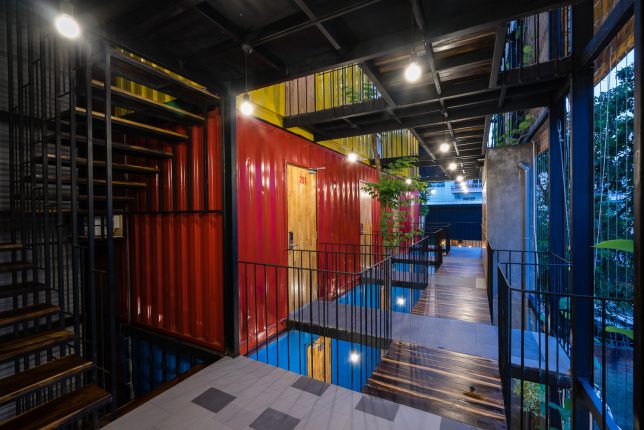
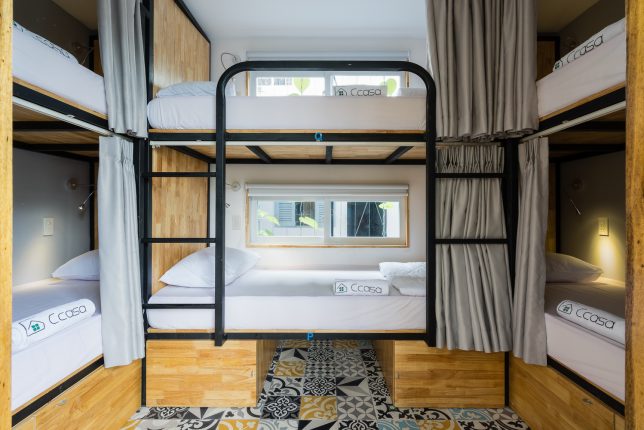
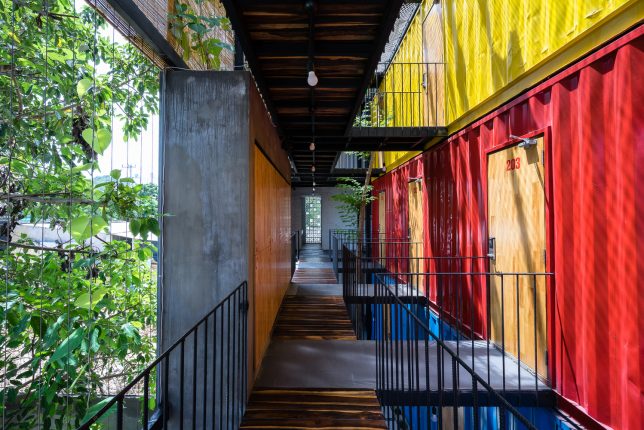
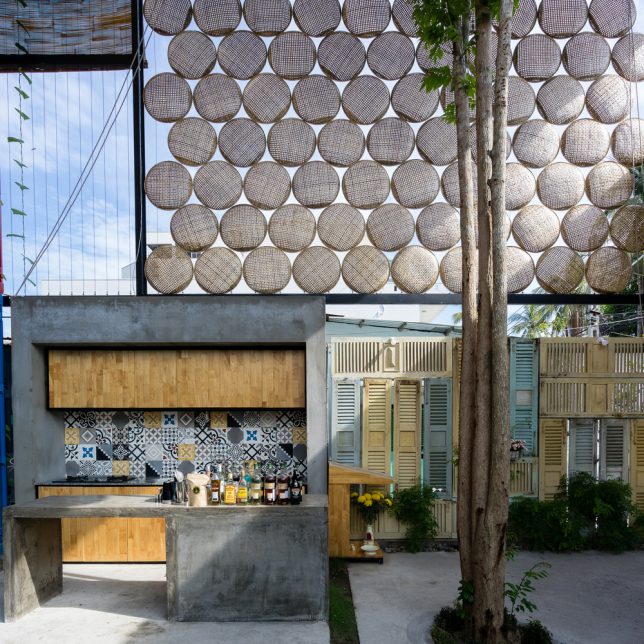
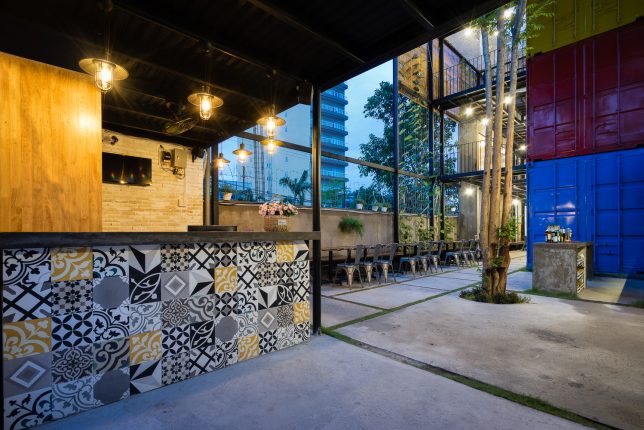
    You might not want to live in a shipping container permanently, but now you can test-drive one for a night or two at the affordable, streamlined and modern Ccasa Hostel in Vietnam. Colorful cargo containers are stacked on top of each other to create a tower of rentable rooms, set within an open air framework that takes advantage of the tropical local climate. Located in Nha Trang just a three-minute walk from the beach, it’s intended for backpackers who flock to the area to enjoy local mineral spring resorts and temples.

    ccasa-shipping-container-hostel-1

    ccasa-shipping-container-hostel

    ccasa-shipping-container-hostel-2

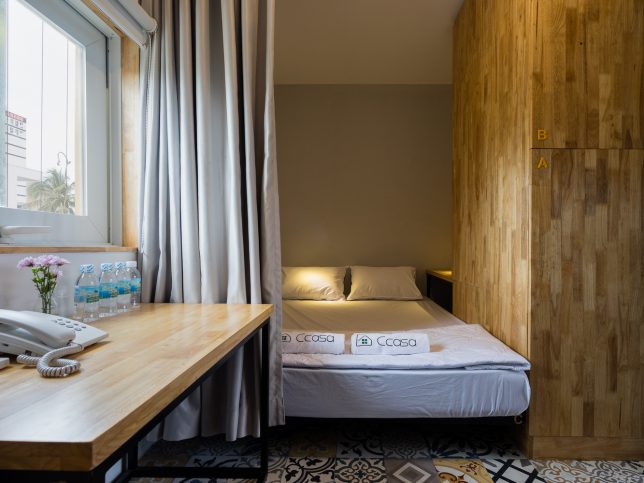
    The design of the hostel is based on that of a family home, with lots of beds sharing bathroom, kitchen and living room facilities. Some of the converted shipping containers offer private bedrooms, while others are packed full of bunks in traditional hostel fashion. The containers are seen as just a place to sleep or rest in between adventures or socializing in the common areas.

    ccasa-shipping-container-hostel-8

    ccasa-shipping-container-hostel-9

    ccasa-shipping-container-hostel-10

    ccasa-shipping-container-hostel-11

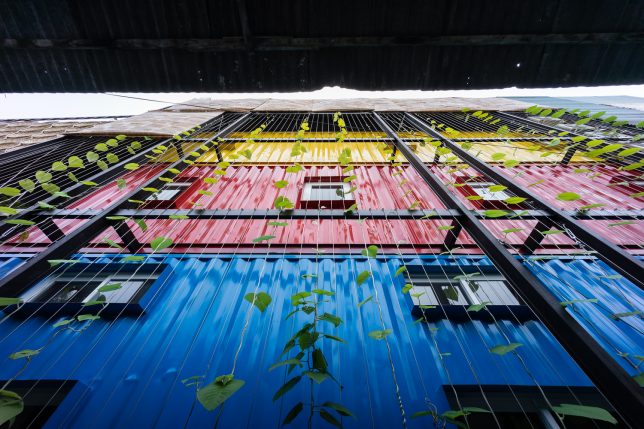
    Ccasa Hostel contains three functional blocks: the sleeping block, the washing block and the serving block. The serving block is made of steel frames and black painted metal sheets, and the washing block mimics typical Vietnamese architecture with white-painted bricks and concrete. The three colors of the shipping containers denote different kinds of bedrooms.

    ccasa-shipping-container-hostel-7

    ccasa-shipping-container-hostel-4

    ccasa-shipping-container-hostel-5

    ccasa-shipping-container-hostel-12

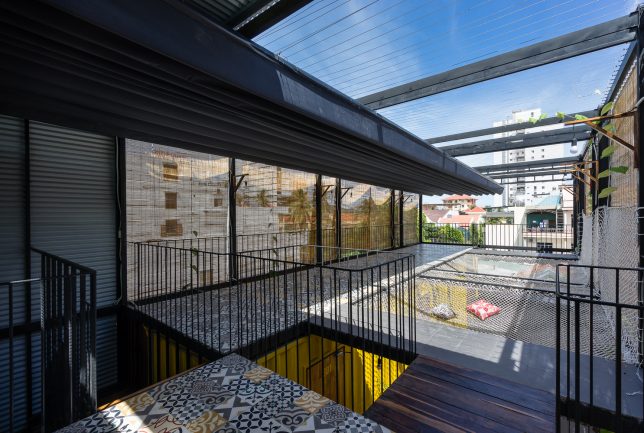
    Instead of the dank, dark corridors you’d usually find in a cheap hostel, there are breezy open-air walkways looking down onto the courtyard below, which is filled with trees. A system of ropes and steel framing encourages climbing vines to obscure the shipping containers on the rear of the building, and as it grows, it’ll create a living screen that filters air, light and noise.

    Share on Facebook


    [ By SA Rogers in Boutique & Art Hotels & Destinations & Sights & Travel. ]

    [ WebUrbanist | Archives | Galleries | Privacy | TOS ]


    WebUrbanist