Blog

  • Despite recent stumbles, GoPro still plans to release HERO6 this year

    GoPro’s HERO5 models were delayed last year due to production issues.

    Despite having a rough go of it over the last several months, GoPro is still committed to releasing a HERO6 action-cam later this year. The company experienced production delays with its HERO5 action-cam as well as a recall of its Karma drone, so some industry analysts were concerned that GoPro might be moving to a 2-year production cycle.

    That’s not the case, according to CEO Nick Woodman, speaking during the company’s earnings call transcript:

    “Yes, we can confirm there will be new cameras and other accessories released during the year and new camera namely being HERO6. But we’re not going to share any information as to the timing or any other details around the release of those new products as you can imagine.”

    It should come as no surprise that the company is keeping its next-gen HERO under wraps but regardless, it’s good news for action-cam lovers who want the latest and greatest.

    Source: Seeking Alpha via Engadget

    Articles: Digital Photography Review (dpreview.com)

  • Sony image sensor sales increase, camera and Xperia sales drop

    Sony has announced its financial results for Q4 2016 and the numbers show that the Japanese company’s image sensor division has performed well. Within the semiconductors segment, image sensor sales have increased by 40% year-on-year which is largely due to significantly increased sales of image sensors for mobile devices.

    Digital camera sales have slightly decreased from 1.8 to 1.6 billion units, resulting in a 9.6% revenue decrease. On the plus side, the company has noted a continued improvement in terms of product mix, with a shift to high value-add models.

    Sony upped its forecast for the financial year but the new figures would still mean a 34% fall in sales volume and a 17% fall in sales by value, compared with 2015.

    Things don’t look quite as good in the phone division. The company shipped a total of 5.1 million Xperia phones in the quarter, which is down by around 33% year-on-year. Total mobile revenue for the quarter was ¥249bn ($ 2.2bn). Sony blames lower than expected sales in Europe for the decrease. The forecast for the fiscal year, which ends in March, was also lowered from 17 million to 15 million units.

    You can find all of the details at Sony’s investor relations site.

    Articles: Digital Photography Review (dpreview.com)

  • Grab a free copy of DxO OpticsPro 9 while you can

    DxO is running a promotion through February giving away free licenses for OpticsPro 9, its Raw processing software. You’ll miss out on the latest camera/lens support and features offered by OpticsPro 11, but hey, it’s free.

    To get in on the offer you’ll just need to provide DxO with an email address to which you’ll be sent an activation code. Unfortunately, you won’t be able to upgrade the license, so you’ll have to buy the latest version outright if you want support for the most recent cameras and lenses. You can check DxO’s list of supported cameras and lenses here.

    Articles: Digital Photography Review (dpreview.com)

  • Studying high-res satellite images on your lunch break can help uncover new archaeology sites

    You gotta start somewhere – GlobalXplorer participants’ first mission is to look for pits that signal looting.

    If you’ve ever dreamed of becoming an archaeologist, you might want to take a look at GlobalXplorer: a browser-based app that trains ordinary citizens to analyze high-resolution satellite imagery for signs of looting and previously unknown sites. It’s the brainchild of Dr. Sarah Parcak, a National Geographic Fellow and Space Archaeologist (really!) whose techniques have identified 17 potential pyramids and 3,100 potential settlements in Egypt.

    Dr. Parcak won 2016’s $ 1 million TED prize to turn her vision for citizen-powered, satellite-based archaeology into a reality. Launched this week, GlobalXplorer is available to anyone with an internet connection. Participants register to the site, watch a training video and get started by looking for signs of potential looting in satellite images. There’s a ‘gamification’ factor too – you can level up once you’ve gained enough experience and start looking for the really exciting stuff, like signs of currently unknown archaeological sites. 

    GlobalXplorer’s imagery is provided by DigitalGlobe’s commercial satellites courtesy of a customized version of the Tomnod crowd-sourcing platform. For now, the journey starts in Peru, where citizen archaeologists are examining 200,000 square km of land. If you’d like to channel your inner Indiana Jones, head to the GlobalXplorer website and get started.

    Articles: Digital Photography Review (dpreview.com)

  • Stunning time-lapse captures the seasons of Norway

    Norway is an amazing place and this time-lapse by Morten Rustad definitely does the region justice. Morten says that he travelled some 20,000km, took some 200,000 images, filling 20 terabytes worth of hard drive space to put this film together. Sit back, turn off the lights, crank the sound and definitely enjoy this one in HD.

    To find out more about the film and how Morten went about putting it together please visit his website. 

    Articles: Digital Photography Review (dpreview.com)

  • Lighting 103: How to Gel Big Lights

    Abstract: How to economically gel umbrellas, beauty dishes and soft boxes

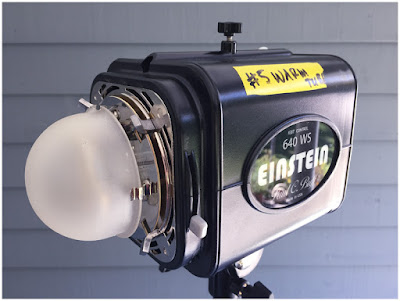
    When using bigger lights (such as an Einstein e640, seen above) gelling gets a bit more complicated and expensive. Why? Big lights have protruding flash tubes and modeling lights, and potentially big modifiers.

    But for each kind of modifier, there are workarounds that will allow you total gel coverage without having to buy large sheets of gels.Read more »
    Strobist

  • Nikon D5600 sample gallery

    New to the US (but not to the rest of the world), the Nikon D5600 builds on the strengths of its mid-range predecessor. Its well-regarded 24MP APS-C sensor is complemented now by SnapBridge (a Wi-Fi/Bluetooth/NFC combo), an improved touchscreen experience and a new time-lapse feature. We’ve had the D5600 on hand long enough to put together a preliminary sample gallery.

    $ (document).ready(function() { SampleGalleryStripV2({“galleryId”:”8757803421″}) })

    Sample photoSample photoSample photoSample photoSample photo

    See our Nikon D5600 sample gallery

    Articles: Digital Photography Review (dpreview.com)

  • Creative Cloud subscribers in the UK and Sweden can expect price hikes starting next month

    Citing ‘fluctuating foreign exchange rates’, Adobe has notified Creative Cloud subscribers in the UK and Sweden that they can expect to see their fees increase soon. The price hikes will take effect starting March 6 for month-to-month subscribers; members who have paid for a full year will see a price increase when they renew their plans.

    Prices vary by plan, but users are reporting around a £10 per month increase. Emails sent to affected members pointed to a page on Adobe’s support site with an explanation:

    ‘Currency exchange rates have fluctuated significantly over the last few years. Like many US-based global companies, Adobe is making pricing adjustments in a number of countries to offset fluctuations in foreign exchange rate. Starting on March 6, 2017, the price of Adobe products in the United Kingdom and Sweden will be increased. Existing customers will receive information about their subscription pricing directly from Adobe.’

    Are you affected by the price increase? Let us know in the comments.

    Articles: Digital Photography Review (dpreview.com)

  • Throwback Thursday: doing the twist with the Nikon Coolpix 950

    Few cameras in the early days of consumer digital photography are as legendary as the Nikon Coolpix 950. This graphic pulled from the DPReview archives says it all:

    In case you’re wondering, the answer was ‘yes’. It earned a ‘Highly Recommended’ award, with site founder Phil Askey calling it an ‘important camera at an important time for digital photography.’

    The thing about the Coolpix 950 that grabbed the most attention was, of course, its rotating lens (or was it the body that rotated?). It wasn’t Nikon’s first camera to use that design: the original Coolpix 900 has that honor. 

    The lens was reasonably fast (F2.6-F4), though its equivalent focal length of 38-115mm didn’t make it a great choice for wide-angle shooters (and forget about selfies which, thankfully, didn’t become a fad for another 15 years or so.) Nikon did offer accessory lenses for the 950: a telephoto adapter that doubled the focal length, a wide-angle adapter that dropped it to 24-72mm and a fisheye adapter with a 183° field-of-view.

    The CP950 had a whopping 1/2″, 2.1 Megapixel CCD, which saved those 1600 x 1200 images to a CompactFlash card. Nikon made a lot of noise about the camera’s autofocus system, boasting that it had 4,746 steps, allowing it to be ‘unerringly accurate.’ The CP950 could shoot continuously at a speedy 1.5 fps and featured Best Shot Selector, a feature which Nikon cameras offered for many years, which took three shots in a row and picked the sharpest one. Another feature that was a big deal then was automatic file numbering.

    The Coolpix 950 had a magnesium-alloy frame and feels as solid as a modern-era enthusiast camera.  As you can see, it had a built-in flash. What you can’t see is that it also had a flash sync terminal, and Nikon sold a flash bracket for off-camera Speedlights.

    As with most cameras those days, it had an optical viewfinder along with a 2″, 130k-dot LCD that doesn’t look very good in 2017. The physical controls and menus may have been competitive then, but they’re baffling now.

    The CP950 was priced at $ 899 back in 1999, which is just under $ 1300 in 2017. That would make this Coolpix one of the most expensive fixed-lens cameras on the market. While it’s hard to imaging paying that now, back in ’99 the Coolpix 950 was definitely worth the price.

    Read DPReview’s Coolpix 950 review

    Articles: Digital Photography Review (dpreview.com)

  • Sigma 85mm F1.4 Art DxO results: a new king is crowned

    $ (document).ready(function() { LensWidget({“containerElement”:”#reviewLensWidget”,”allowProductChange”:false,”enableKeyboardShortcuts”:false,”state”:{“lensId”:”sigma_85_1p4_dg_hsm_a”,”cameraId”:”nikon_d810″,”version”:”0″,”view”:null,”aperture”:null,”focalLength”:null}}) })

    DxO just published its score for the Nikon mount Sigma 85mm F1.4 DG HSM A. Drumroll please: it received the highest score ever for a lens on DxO, a 50 when mounted to a D810 and a 51 when mounted to the D800E. What’s even more impressive is that it actually scored a perfect 36 P-Mpix for image sharpness on a D810, which has a 36MP sensor.

    That’s pretty incredible. We know that sharpness isn’t everything when it comes to shooting portraits, but you have to admire the sheer feat of engineering that Sigma was able to accomplish with this lens. 

    See our Sigma Art 85mm F1.4
    sample gallery

    Articles: Digital Photography Review (dpreview.com)