Blog

  • Amazing Macros from Photojojo-ers Around the World

    For your viewing pleasure, we have gathered a ton of photos taken by YOU, our Photojojo pals, using our macro lenses and their phones.

    Yup. telephones. What a talented bunch you are!

    Take a look, then grab your own phone lenses in the shop.
    (…)
    Read the rest of Amazing Macros from Photojojo-ers Around the World (0 words)


    © laurel for Photojojo, 2017. |
    Permalink |
    No comment |
    Add to
    del.icio.us

    Post tags:


    Photojojo

  • CamFi wireless camera controller now supports Sony digital cameras

    Wireless camera controller CamFi now supports Sony digital cameras, the company announced recently. With CamFi 3.0, the latest version of the app, Sony camera owners can attach the CamFi wireless controller to their camera via a USB cable, then access and control the camera remotely using a laptop or tablet over Wi-Fi.

    CamFi supports live view from Sony digital cameras, as well as Nikon and Canon cameras, and also enables photographers to change camera settings and capture shots using a laptop or tablet. The controller supports multi-camera setups, and also adds support for the latest DNP wireless printer server. The company says CamFi 3.0 also supports both Raw and JPEG image formats.

    According to the CamFi Sony support page, the product presently supports the Sony a7R, a7R II, a7S, a7 II, a7, a6300, a6000, and a5100 models. Both MTP and PC Remote modes are supported; users can select their preferred mode in the camera’s ‘USB Connection’ menu. Check out the support page for full details on how to set up and use CamFi with Sony cameras.

    Press release:

    CamFi 3.0 Adds Wireless Tether Support for Sony Cameras

    GUANGDONG, CHINA. – February 23, 2017 – CamFi Limited, maker of wireless controllers for digital cameras, announced today that the new version of its app, CamFi 3.0, adds wireless tether support for Sony cameras. This feature allows the photographer to transmit photos from a Sony camera to a laptop or tablet via Wi-Fi automatically during a photo shoot. 

    “CamFi is the only wireless camera controller which can support Canon, Nikon and Sony currently. The support for other camera brands will be added in the future,” Said Mark Ma, CEO of CamFi, “We hope we can bring something new for the photography industry.” 

    CamFi 3.0 supports both raw and jpeg image file formats. It also supports live view for Sony cameras. That way, a photographer can see the live view of the camera, change the ISO, shutter speed and aperture and shoot remotely. Furthermore, the new version added support for the newest DNP wireless printer server. This allows the user to print the photo via Wi-Fi immediately after shooting. CamFi supports multiple camera control, which can be used to create a bullet time effect. 

    There are many advantages to using wireless remote capture. For one thing, the technology enables the photographer to see the preview image on a large screen, such as that of a tablet, versus the small viewfinder of the camera. The tether also makes it possible for the camera to be in a position that gets the right shot, but which is not necessary comfortable or safe for the photographer. For instance, the camera can be mounted on a high railing while the photographer can see the preview while standing on the floor below. Wireless tethers are helpful for time-lapse photography and self-portraits as well. 

    For more information and the full list of product specifications, please visit
    http://cam-fi.com

    Articles: Digital Photography Review (dpreview.com)

  • Extreme(ly Comfortable) Camping: 13 Rugged Off-Road Trailers

    [ By SA Rogers in Technology & Vehicles & Mods. ]

    camper trailer main

    If the standard camping trailer just isn’t extreme enough for you, maybe a compact ‘bug out trailer’ with monster wheels, a full kitchen and a pop-up roof tent will satisfy your survivalist impulses. Designed for adventurous off-roading types, these trailers are designed to facilitate max comfort no matter how far out into the wilderness you may wander.

    Schutt Xventure

    xventure

    xventure 2

    xventure 3

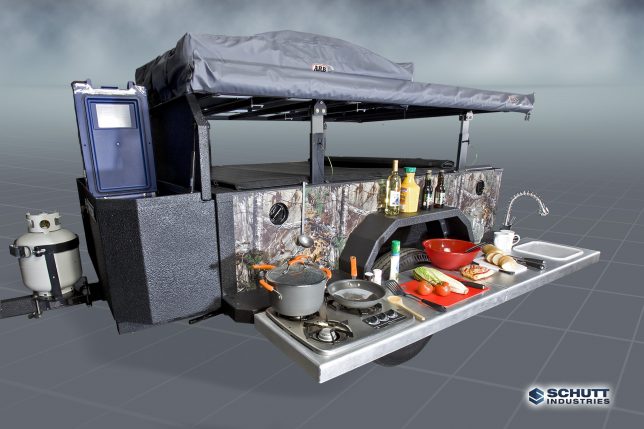
    From the same company building trailer platforms for the armed forces comes the ‘Xventure,’ a severe-duty trailer packed with military-grade gear. It’s got an all-aluminum weldless construction, electric brakes, a removable tailgate offering a heavy-duty work surface and a large front utility cabinet holding jerry cans, tools, lighting equipment and more.

    Turtleback Weekender

    turtleback weekender

    turtleback weekender 2

    turtleback weekender 3

    Made in Phoenix, Arizona, the Turtleback Weekender is a lightweight aluminum trailer with marine-grade electrical components, Lockable exterior compartments, cargo rack, kitchen, shower and more. It has a small frame to fit standard family vehicles, so you don’t need a huge beefy truck to transport it. Use the roof rack to carry items like kayaks, and as an elevated tent platform.

    Tigermoth Trailer

    tigermoth trailer 2

    tigermoth trailer 3

    tigermoth trailer 4

    This compact trailer is a workhorse, taking you off-grid in comfort while weighing just 900 pounds so it can be towed just about anywhere. The Tigermoth camping trailer boasts a side-hatch entrance, built-in LED lights, running water, power outlets, USB ports, a mounted toolbox, roof racks, cargo decks in the front and the back, and optional solar panels.

    Moab Fort by Bivouac Camping Trailer

    bivouac 1

    bivouac 2

    bivouac 3

    moab

    “Designed to go beyond pavement where camp sites are declared, not rented,” the Moab Fort by Bivouac Camping Trailer makes off-grid exploration more comfortable without requiring a huge, bulky setup. It’s a small utility trailer packed with cargo space for bikes, canoes, tents, propane tanks and any other gear you want to bring along. Various parts extend outward, like tables and sun shades.

    OPUS Self-Inflating Camper Trailer

    opus trailer 1

    opus trailer 2

    opus trailer 3

    opus trailer 4

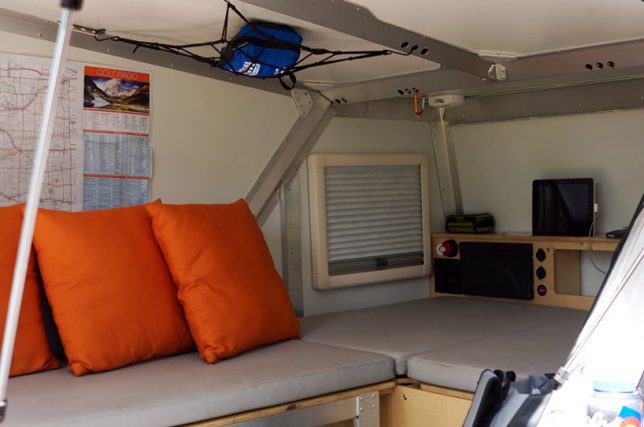
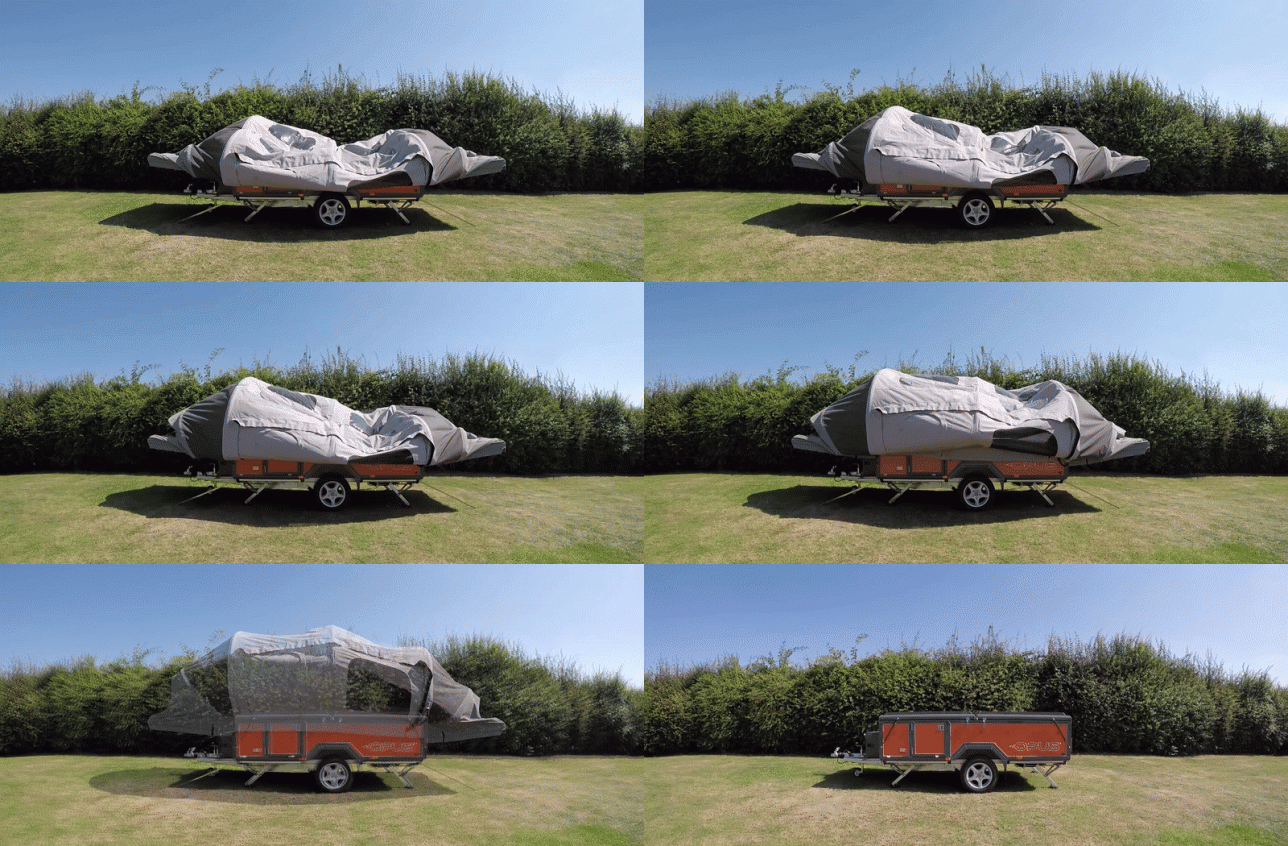
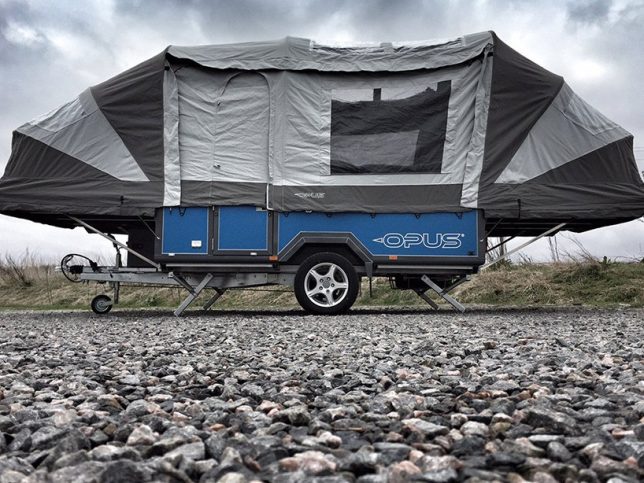
    The inside of this camper trailer is surprisingly swanky given its low profile, and unlike traditional pop-up camper trailers, the OPUS self-inflates within 90 seconds into a well-ventilated multi-room space. The full setup includes a kitchen with a stove, sink and refrigerator and a seating area that converts into a bed.

    Next Page – Click Below to Read More:
    Extremely Comfortable Camping 13 Rugged Off Road Trailers

    Share on Facebook


    [ By SA Rogers in Technology & Vehicles & Mods. ]

    [ WebUrbanist | Archives | Galleries | Privacy | TOS ]


    WebUrbanist

  • OPPO announces dual-cam 5x optical zoom technology for smartphones

    OPPO is not showing any new smartphone models at the Mobile World Congress but, as teased last week, the Chinese company has announced 5x Dual Camera Zoom system for smartphones. The system uses a periscope-style design and fits into a module that is only 5.7mm tall. Light is diverted through a prism and into the dual-camera’s telephoto lens which is arranged at  a 90-degree angle to the accompanying wide-angle. By shifting the path of the entering light Oppo is able to achieve a 3x optical zoom which is combined with a proprietary image fusion technology for digital zoom. The end results is a total 5x lossless zoom factor. 

    At longer focal lengths camera shake becomes more of a limiting factor which is why OPPO has also integrated optical image stabilization into the system. Both the prism and tele lens can sense vibrations and compensate for them in real time. The mechanism dynamically adjusts its angle at increments of 0.0025 degree and OPPO promises 40 percent better performance than previous OIS generations for stable shots even at the 5x zoom setting. 

    OPPO has not provided any information on sensor sizes and apertures, which would be critical to the image quality of the system, but nonetheless the technology looks like a very innovative approach to zooming on smartphones and we are looking forward to seeing it implemented in a device.

    Articles: Digital Photography Review (dpreview.com)

  • CP+ 2017 – Sigma interview: ‘We’ve learned that some customers require exceptional lens performance’

    Kazuto Yamaki, CEO of Sigma Corporation, pictured at CP+ 2017, with Sigma’s new 14mm F1.8.

    Sigma released four lenses at this year’s CP+ show in Yokohama – the 14mm F1.8 DG HSM Art, 24-70mm F2.8 DG OS HSM Art, 135mm F1.8 DG HSM Art and 100-400mm F5-6.3 DG OS HSM. We’re at the show, where we made time to sit down with Kazuto Yamaki, CEO of Sigma, to find our more about the new lenses. 


    You’ve told me previously that you really want Sigma to make more wideangle lenses. Do you think you’re achieving that goal with the 12-24mm and new 14mm?

    Yes, but I’m still not satisfied. I think we need to make more wide-angle lenses. A fast 14mm was one of the lenses that our customers were asking for. Most existing 14mm lenses are F2.8, so F1.8 was a challenge.

    The new Sigma 14mm F1.8 is the fastest lens of its kind, and according to Sigma, should outperform competitive, slower designs from other manufacturers.

    What have you learned, from making the Art series?

    We’ve learned that some customers require exceptional lens performance. We believe that our mission is to make products that other manufacturers don’t have. If we just released similarly-specified lenses to existing models, we wouldn’t be contributing to the industry, or benefiting customers. So our Art series is meant to provide the best performance.

    They’re bulky and heavy, it’s true, but our customers like them because of the performance. That’s what we learned.

    Hands-on with Sigma MC-11 (CP+ 2016)

    You now make a mount adapter for Sony E-mount, but are you planning native support for the Sony E-mount in the future?

    Yes, that’s our plan. Our plan is to develop full-frame lenses for Sony E mount, and in the future we will have more E mount lenses. But it takes time. Normally it takes about two years to develop one lens, sometimes three. So even if I start the process now, the lens might come out in two years time.

    Sigma’s new Art-series lenses have a degree of weather-sealing – why now?

    It’s based on customer demand. Some of our customers said that rain and snow sometimes got into the lens mount, so they wanted sealing. And the other reason is that it’s becoming a trend. Other manufacturers are offering sealed mounts.

    Does that make the design process more complex?

    No, not really. The only seal is around the lens mount. It’s not a perfect weather-proofing like our Sports series. The 150-600mm for instance has sealing everywhere, on the focus ring and zoom ring.

    Of the lenses in the Global Vision line, which were the most complex to bring to market?

    Our 12-24mm zoom. Because that lenses uses a very large aspherical element, and at the time, no other company was producing an element of this kind, and there were no machines capable of producing it. So we designed a custom machine to make that element. But as a result of developing that technology, we were able to create this new 14mm F1.8.

    The Sigma 12-24mm ultra-wide zoom is a complex design, containing a very large aspherical (front) element.

    The Global Vision line is almost five years old. What are you most proud of?

    Firstly, I’m still not satisfied. We need to do more. But these days, I’m pretty happy that people regard Sigma as a high-quality company. In the past, some people regarded Sigma as just another third-party lens manufacturer, and maybe even as a cheap, low-quality lens supplier. But people’s perception has been changing, gradually, and I’m very happy about that.

    One of the things that professional Canon and Nikon photographers rely on is the support networks for service, like CPS and NPS. Is a professional service support system something that Sigma is interested in creating?

    I think we’ll have to. In Japan we’ve already started a pro support project, and I hope we can create a global professional support system very soon.

    In the past you’ve expressed concern that you don’t want Sigma to grow too much, too quickly, because this might threaten some the magic of being a small company. Is this something that you’re still worried about?

    Growing too fast is not good. We need to grow, but we should grow gradually. We need to develop our capability to produce higher-quality products. That’s the priority. Then turnover, and sales, and profit will follow. We do not prioritize making the company bigger. We focus on product quality, and technology.

    Over the past five years, we’ve actually been making fewer lenses, because we decreased the number of cheaper lenses we were producing. But we’ve expanded our manufacturing capacity, because the higher-end lenses use more glass. Cheaper lenses might use 10-15 elements, but these higher quality lenses use 15-20, sometimes even more elements. So more capacity is needed to make a single lens. We’ve actually invested massively in the past five years.

    Sigma and Fujifilm have recently introduced lineups of cine lenses. How much growth do you see in this segment?

    We don’t know. Even before I decided to get into the cine lens market, I tried to collect market data, but there’s no data out there. It’s not available. It’s only anecdotal. But we guessed that this segment will grow in the future.

    Video has lower resolution demands than stills, but we’ve been designing lenses for 36+ megapixel sensors for several years. That is equivalent to 8K, in video terms. A lot of traditional cine lenses aren’t that high resolution. Our lenses might be more affordable, but they’re top quality.

    The Sigma Cine lens range includes a geared version of the company’s 18-35mm F1.8, now known as the 18-35mm T2. The lens covers the Super 35 format and requires a roughly 350 degree rotation to zoom from 18-35mm, allowing very precise control.

    Do you have a market share target for your cine lenses?

    No, we’re waiting to see how the market develops. We can dream, but it’s not the same thing!


    Editors’ note:

    We always enjoy speaking to Mr Yamaki, partly because on the occasions when we get the opportunity to do so, it’s usually because he’s just unveiled something really interesting. Mostly though, we enjoy speaking to Sigma’s CEO because he’s a nice guy. Open, honest, and candid about Sigma’s plans and ambitions, Mr Yamaki is well-liked in the photography industry, even by his competitors.

    Speaking of competitors, I get the feeling that Mr Yamaki was compelled to deliver the new 14mm F1.8 partly out of a general disappointment with the available options for photographers. Sigma has a strong history of innovating in the wide and ultra-wide market, and the new 14mm, alongside the previously-released 12-24mm certainly look like a confident statement of intent. If the 14mm is as good as Mr Yamaki claims (and we are rarely disappointed by the optical performance of Sigma’s Art series) it looks set to be a reference lens for landscape, architectural and astrophotographers. We’re hoping to be able to post a gallery of samples very soon – watch this space.

    Also interesting, is another statement of intent – Sigma’s move into affordable cine lenses. While the company is not competing (yet) with the Arris of this world, or with Canon’s Cinema EOS optics, Sigma (like Fujifilm) sees an opportunity to cater to a newer generation of videographers who are working with mirrorless systems. Optically, Sigma’s cine lenses should be top notch, although being based on existing stills lens designs, we’re told that some qualities, such as focus breathing, might cause issues for professional broadcast and film cinematographers. There is a reason, after all, that high-end professional cine lenses can cost tens of thousands of dollars.

    So what next for Sigma? We wouldn’t be surprised if Mr Yamaki is working on more wideangle lenses, and following the new 24-70mm F2.8, it seems likely that the company will refresh its 70-200mm F2.8 in the near future, too. More Sony E-mount optics are also on the way, we’re told, which will be welcome news to Sony a7-series users.  

    Articles: Digital Photography Review (dpreview.com)

  • LG G6 comes with dual-cam and 18:9 FullVision display

    LG has today announced its latest flagship smartphone, the LG G6 at the Mobile World Congress in Barcelona. For the new model LG has abandoned the G5’s modular concept and focused on usability and durability instead. The G6 comes with an elegant looking metal frame with chamfered edges and a brushed metal back plate. The body is now also water and dust proof. On the front you’ll find a 5.7″ QHD+ display with an 18:9 aspect ratio that LG calls FullVision.

    The unusual format allows for a device design that offers a large display but can still easily be held in one hand. It also makes the phone ideal for split-screen applications and movie-watching in cinematic formats. In the new camera UI it allows you to see a previously captured image in square format while already framing the next one. LG says that many apps are currently being optimized for the new format and streaming video providers are offering more and more content in 18:9 aspect ratio. The G6 is also the first mobile device to support Dolby Labs’ Dolby Vision high dynamic range video technology.  The display is framed by very thin bezels and LG says it is easier to view in bright sunlight than previous versions.

    Due to the waterproofing the battery is now non-removable but comes with an increased 3300 mAh capacity. Unlike some of its competitors the G6 still offers a 3.5mm headphone jack as well. Android 7.0 is powered by last year’s top-end chipset Snapdragon 821 and 4GB of RAM. 32 or 64GB of internal storage are expandable via a microSD slot.

    In the camera department LG sticks with the G5’s dual-camera concept but both sensors now offer the same 13MP resolution. The wideangle lens comes with a 71 degree angle of view and F1.8 aperture while the super-wideangle offers 125 degrees and a slower F2.4 aperture. Only the wideangle is OIS-equipped. In the camera app you can switch lenses at the press of a button and LG says it has improved the transition when zooming between the two. 4K video capture with stereo sound recording and a laser-assisted AF system are on board as well. The front camera comes with a 5MP resolution.

    With improved camera specs, the interesting new display format and the attractive and waterproof body, the LG G6 looks like an appealing option for mobile photographers in 2017. We are hoping to get our hands on a review unit soon. No information on pricing and availability has been released yet.

    Key specifications:

    • Dual-camera with two 1/3″ 13MP sensors
    • Wideangle, 71 degree angle of view, 3-axis OIS
    • Super-wideangle, 125 degree angle of view, F2.4
    • laser-assisted autofocus
    • 4K video with stereo sound recording
    • 5MP front camera with 100 degree angle of view, F2.2
    • Android 7.0
    • Qualcomm Snapdragon 821 chipset
    • 4GB RAM, 32/64GB storage
    • microSD support up to 256GB
    • 5.7″ 18:9 QHD+ IPS display, 2880 x 1440 resolution, 564 ppi
    • IP68 certified, water and dust resistant
    • Fingerprint reader
    • Google Assistant
    • 3300 battery with Quick Charge 3.0

    Articles: Digital Photography Review (dpreview.com)

  • Samsung Galaxy Book takes on Microsoft Surface and Huawei Matebook

    Samsung has announced the Galaxy Book, a competitor to the Microsoft Surface and Huawei Matebook 2-in-1 devices. The Galaxy Book comes in 10.6″ and 12″ screen sizes and with its Intel-powered Windows 10 operating system offers full PC functionality in a tablet form factor.

    Both Galaxy Book models offer a metal body with a thin design for optimized portability. The included keyboard cover comes with a large touchpad and the curved, island-style keys feature an adjustable backlight. The cover also allows for adjusting the tablet at different angles. 

    The Windows 10 operating system in both Galaxy Book model is powered by seventh-generation Intel Core processors. The 10.6″ version comes equipped with an Intel Core m3 dual-core processor, 4GB of RAM and either 64GB or 128GB of internal storage. The larger 12″ model features an Intel Core i5 dual-core processor and is available with either 4GB of RAM and 128GB of storage, or 8GB RAM and 256GB storage. All models feature a microSD slot for storage expansion.  

    The 12″ display offers a 2160 x 1440 resolution and AMOLED technology. The smaller 10.6″ model comes with a TFT-display that features a 1080p Full-HD resolution. The batteries provide up to 10 hours of power for the 10.6″ model and up to 10.5 hours for the larger version.

    Both models include Samsung’s S Pen stylus which offers improved accuracy over previous versions and comes with a 0.7mm tip and 4,096 levels of pressure. When drawing, the thickness of its strokes can be varied by tilting the pen. On the Galaxy Book the S Pen is fully supported by Adobe Photoshop, making it an appealing option for image editing on the go. The Galaxy Book models are also available as LTE-compatible versions for full connectivity on the go and come with a host of security features for business use. No information on pricing has been released yet.

    Samsung Galaxy Book 10.6 key specifications:

    • 10.6″ TFT FHD display with 1920×1280 resolution
    • 7th Gen Intel® CoreTM m3 processor, Dual Core 2.6GHz
    • 4GB RAM, 64GB/128GB storage, microSD up to 256GB
    • 5MP front camera

    Samsung Galaxy Book 12 key specifications:

    • 12″ Super AMOLED display with 2160×1440 resolution
    • 7th Gen Intel® CoreTM i5 processor, Dual Core 3.1GHz
    • 4GB RAM, 128GB storage / 8GB RAM, 256GB storage
    • microSD up to 256GB
    • 5MP front camera, 13MP rear camera with AF

    Articles: Digital Photography Review (dpreview.com)

  • Lenovo Moto G5 Plus camera first impressions review

    Lenovo has launched the latest model of its Moto sub-brand at the Mobile World Congress. The Moto G5 Plus is the successor to last year’s Moto G4 Plus and, like its predecessor, an upper mid-range device that puts a lot of emphasis on camera performance. For the new model’s camera resolution has been reduced from 16MP to 12MP and, with a 1.4µm pixel size, on-sensor phase detection and very fast F1.7 aperture, the main camera specifications look very similar to the Samsung Galaxy S7’s minus the optical image stabilization.

    On the video side of things the camera is capable of recording clips with 1080p Full-HD resolution and front camera specification remains unchanged with a 5MP sensor and F2.2 aperture. Compared to the predecessor the size of the IPS display has been reduced from 5.5″ to 5.2″, making the G5 Plus a little more compact, but the 1080p Full-HD resolution remains unchanged. The metal frame is a little more sturdy and gives the entire device more of a premium touch than its predecessor.

    The fingerprint sensor at the front now also serves as a touchpad, replacing the Android function buttons. Android 7.0 is powered by a Snapdragon 625 chipset and 2GB of RAM. 32 or 64GB of onboard-storage can be expanded via a microSD slot. The non-removable Li-Ion 3000 mAh battery supports fast charging and, unlike Lenovo’s high-end Moto Z models, the G5 Plus still features a 3.5mm headphone-jack.

    • 12MP CMOS sensor with 1.4µm pixel size
    • F1.7 aperture
    • On-sensor phase detection
    • 1080p video
    • 5MP / F2.2 front camera
    • Manual control over shutter speed
    • 5.2″ 1080p IPS display
    • Android 7.0
    • Qualcomm Snapdragon 625 chipset
    • 2GB RAM
    • 32/64GB storage
    • 3000 mAh battery with fast charging

    We have had the chance to use the Moto 5G Plus for a few days before launch and were impressed by the speedy general operation and how solid the new model feels in the hand. We have also shot a good number of sample images with the camera in a variety of situations. 

    Image Quality

    In our brief test we found the Moto G5 Plus to capture good detail, especially in lower light, good exposures and pleasant colors across the ISO range. In the ISO 50 image below some slight smearing of fine detail is noticeable at a 100% view but overall fine textures are rendered nicely and luminance noise in the blue sky is very well under control. Some highlight clipping is visible in bright areas of the frame but it’s well within acceptable limits for this class of device.  

     ISO 50, 1/1622 sec

    In sunlight colors are pleasant with a slightly warm touch. At close subject distance, like in the image below, the combination of a 1/2.5″ sensor with a very fast F1.7 aperture allows for some blurring of the background.  

     ISO 50, 1/2240 sec

    Thanks to its fast aperture the Moto G5 Plus can keep the ISO low in indoor scenes like the one below. That said, in low light the camera is slightly more prone to camera shake than models equipped with optical image stabilization.

     ISO 160, 1/30 sec

    The camera’s white balance system deals well with artificial indoor lighting. In the ISO 250 image below fine detail is starting to suffer a little bit but both luminance and chroma noise are very well under control. 

     ISO 250, 1/30 sec

    The indoor portrait below shows good detail and natural skin tones. The 1/30 sec shutter speed usually still gets you shake-free images.

     ISO 400, 1/30 sec

    For low-light shots like the one below, shutter speed is reduced to 1/15 sec and the camera engages a multi-frame night mode. There is now noticeably more noise in the image, especially the shadow areas, but the overall tonality is very pleasant and edge detail is still very well defined. The Moto G5 Plus is performing well in these light conditions.

     ISO 500, 1/15 sec

    The night shot below shows very good exposure, color and detail, considering the low light levels. Edges are very well defined and fine textures are still visible as well. Noise is noticeable when the image is viewed at a 100% magnification but finely grained and overall very well controlled. 

     ISO 640, 1/15 sec

    Special modes

    Panorama mode remains a bit of a weakness in the Moto camera app. The images tend to show good exposure and color but, compared to some competitors, are pretty small. In scenes with several moving subjects ghosting artifacts are almost unavoidable.

    Panorama 2704 x 920 pixels

    As you can see in the samples below, HDR mode is capable of maintaining better highlight detail than standard exposures. It also slightly lifts the shadows, making for a more balanced overall exposure in high-contrast scenes.

     ISO 50, 1/3763 sec, HDR off
      ISO 50, 1/3618 sec, HDR on

    First impressions

    We are hoping to spend more time with the Moto G5 Plus soon, but after our first brief test the new model looks, like its predecessor, like a great option for mobile photographers who don’t want to spend iPhone or Galaxy S money. The Moto G5 Plus offers responsive operation in all situations and very decent image quality across the ISO range. We especially liked the textures and low noise levels in low light scenes. 

    In terms of build quality the new model is a step up from last years G4 Plus as well and the touchpad-style fingerprint reader is an interesting touch. At its retail price point of $ 299 the Lenovo Moto G5 Plus looks like a great package for mobile photographers and general users alike. 

    Articles: Digital Photography Review (dpreview.com)

  • Huawei announces P10 and P10 Plus with ‘Leica-style’ portrait mode

    Huawei has launched its latest flagship smartphone duo at the Mobile World Congress today, the P10 and P10 Plus. The new models come with a refreshed design that features 2.5D curved Gorilla Glass 5, an all-metal backplate with a sandblasted finish and Huawei’s hyper-diamond cut on the edges. Both devices come in a range of colors including new green and blue options.

    With a dual-camera that combines a 12MP color sensor with a 20MP monochrome chip the specification of the Leica-designed camera in the Huawei P10 is the same as in the Mate 9. Both lenses have an F2.2 aperture and the color variant also features optical image stabilization. As before, color and monochrome image information is combined for better image detail, higher dynamic range and lower noise levels in the Huawei P10 images. There is also a laser-assisted autofocus, two-tone LED flash and 4K video recording.

    New on the camera is the ‘Leica-style’ portrait mode that uses 3D face detection and applies a combination of fake bokeh and adjustable illumination and ‘beautification’ effects to your portrait subjects. It works on both the main camera and the 8MP front camera that comes with an F1.9 aperture. The front camera can also automatically adjust the framing for individual or group selfies.

    Images can be viewed and framed on a 5.1″ IPS display with 1080p resolution and the Android 7.0 operating system is powered by Huawei’s HiSilicon Kirin 960 octa-core chipset and 4GB of RAM. 64GB of internal storage can be expanded via a microSD slot. Compared to the P9 the battery size has increased from 3,000 to 3,200 mAh and fast charging is supported as well. The Huawei P10 will launch in March in Europe and many other regions at 649 Euros (approximately $ 685). Unfortunately US comsumer will have to wait a little longer for the new device.

    The P10 Plus comes with a very similar design to the P10 but ups the display specification to 5.5″ and Quad-HD resolution. Like the P10 it is powered by the Kirin 960 chip, but in addition to the 4GB RAM/64GB storage version you can opt for a 6GB/128GB variant. In addition the P10 plus comes with slightly faster F1.8 apertures in the lenses of the dual-camera and a larger 3,750 mAh battery. The 64GB option will be priced at 699 Euros ($ 740), the 128GB model will set you back 799 Euros ($ 845).

    Huawei P10 key specifictions:

    • Leica-branded dual-camera with 12MP color and 20MP monochrome sensors
    • F2.2 aperture
    • OIS on the color sensor
    • 27mm equivalent focal length
    • On-sensor phase detection and laser-assisted AF
    • Daal-tone LED flash
    • 4K video
    • 8MP front camera with F1.9 aperture
    • Manual camera control
    • 5.1″ IPS display with 1080p resolution
    • Android 7.0
    • HiSilicon Kirin 960 octa-core chipset
    • 4GB RAM and 64GB storage
    • microSD support up to 256GB
    • 3200 mAh battery
    • Stereo speakers
    • Fingerprint reader

    Articles: Digital Photography Review (dpreview.com)
  • Amazon Calm: Rio’s Deteriorating Olympic Games Venues

    [ By Steve in Abandoned Places & Architecture. ]

    abandoned-rio-olympics-1h

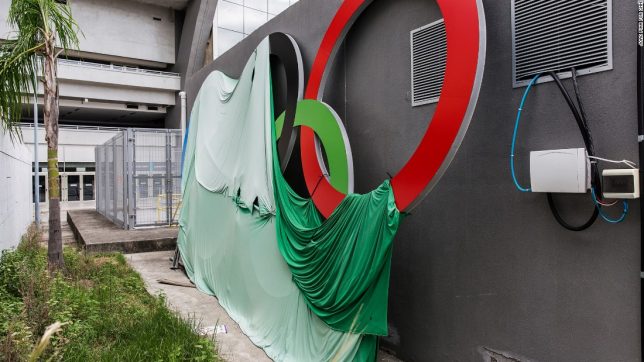
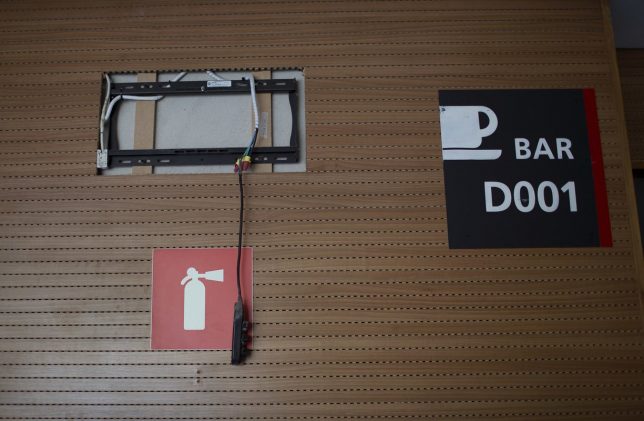
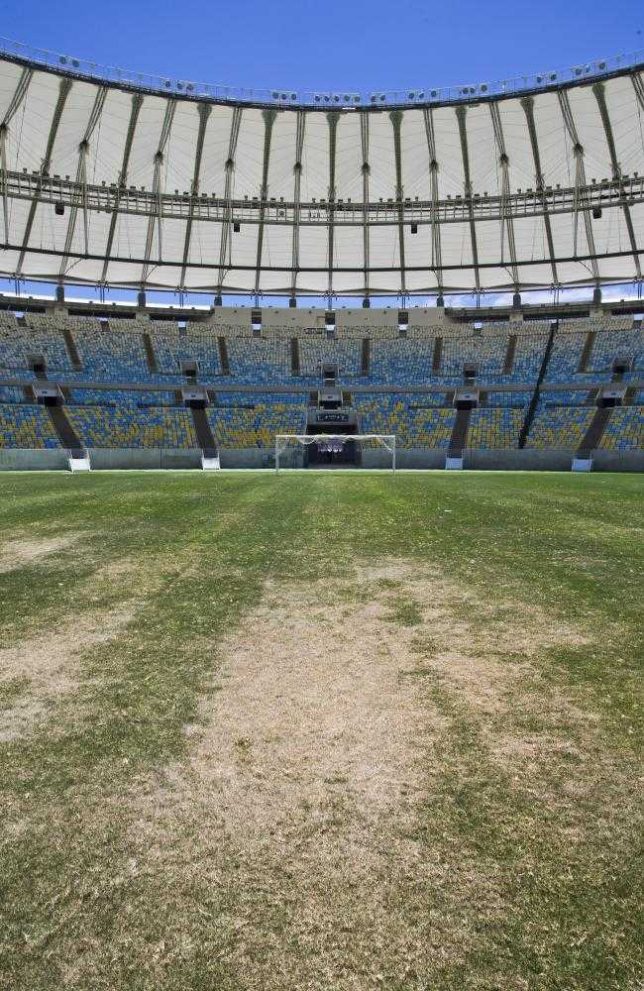
    Barely completed in time, venues at the 2016 Summer Olympic Games in Rio de Janeiro, Brazil are going south in a big way now that the athletes have left.

    abandoned-rio-olympics-1m

    The Games of the XXXI Olympiad – Rio 2016 for short – were meant to do for Brazil what the 2008 Summer Olympics in Beijing did for China: announce the host nation’s arrival on the world stage.

    abandoned-rio-olympics-1a

    abandoned-rio-olympics-1l

    abandoned-rio-olympics-1e

    Critics of Rio’s winning bid were placated by that old chestnut; “hosting the Games will bring improved infrastructure and services that will benefit residents far into the future.” So how’s that working out, less than a year after the circus left town?

    abandoned-rio-olympics-1i

    abandoned-rio-olympics-1f

    abandoned-rio-olympics-1g

    Rio’s Olympics weren’t all that popular with cariocas (Rio de Janiero-ians) from the get-go, and let’s recall that Brazil’s economy was booming back in October of 2009 when the Games were awarded. In 2014, a massive financial scandal coupled with the onset of Brazil’s worst economic recession since 1990 put a huge financial squeeze on preparations for the Games. With funds tighter than a gymnast’s tendons, corners were cut and, well, you know the story – it’s a wonder the Games were as problem-free as they appeared on TV.

    abandoned-rio-olympics-1j

    abandoned-rio-olympics-1k

    abandoned-rio-olympics-1d

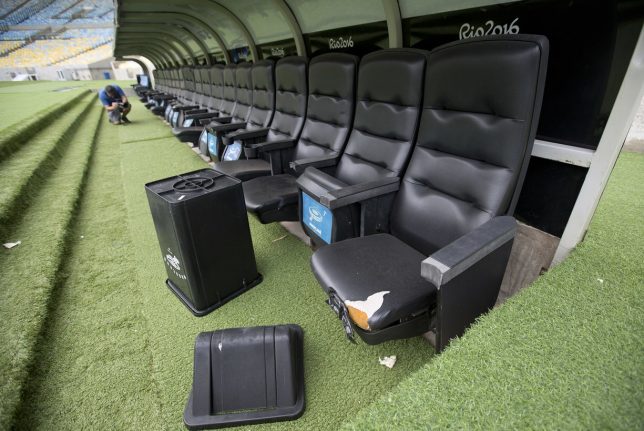
    Good thing Rio’s poorer residents had so much to look forward to once the Games ended. Too bad their hopes focused on looting the lightly-guarded facilities of anything valuable – payback, of a sort, for their sense of disenfranchisement and a conviction that the only ones to benefit from the Olympic Games were the rich and powerful. These images depict the jewel in Rio’s Olympic crown, Maracanã Stadium, mere months after the Games ended with a bang at the Closing Ceremonies.

    Next Page – Click Below to Read More:
    Amazon Calm Rios Deteriorating Olympic Games Venues

    Share on Facebook


    [ By Steve in Abandoned Places & Architecture. ]

    [ WebUrbanist | Archives | Galleries | Privacy | TOS ]


    WebUrbanist