Blog

  • Review of the Wine Country Camera Filter Holder System

    In this article, I will go over why I switched to using the Wine Country Camera filter holder system from others I’d previously used. As well I’ll cover some of the system’s key features so you can decide if it’s right for you as well.

    Since the late 60s and early 70s photographers have been using drop-in (slide-in) filters in front of their lenses. The holders which accept such products are usually used for neutral density filters, polarizers, color filters, and sometimes effect filters.

    But there has been a problem with this type of holder, even since its inception.  They’re usually poorly made with cheap plastic or mixed aluminum materials. And that’s just the holder’s materials. Other problems are the placement of the polarizers which can cause vignetting, manufacturing errors, and much more.

    Review of the Wine Country Camera Filter Holder System

    The Wine Country Camera filter holder and vaults.

    Although I inherited a Cokin filter kit from my grandfather, my first self-purchased kit was a Lee Filter Foundation Kit. The product is made of plastic, which makes it light weight. But it also makes it vulnerable to bending and breaking.

    Eventually, Formatt Hitech released their newer aluminum filter kit, and I made the switch and used it for a couple of years… until now.

    Wine Country Filter Holder Materials

    Review of the Wine Country Camera Filter Holder System

    One of the many tactile points of contact on the holder.

    Wine Country Camera was born out of the need for quality filter systems and ongoing standards. Every aspect of the filter kit has been deeply considered and well thought-out from the bottom up, or backward to forward.

    Instead of plastic or aluminum, premium materials are used, with purpose. For example, instead of a standard dial, a wooden dial is used, so your fingers don’t freeze in cold weather. That can also be said for the wooden grips on the front of the holder. Every part of the holder is tactile so you know when you’re turning, rotating, and pushing. It’s so tactile that you can even maneuver the holder and filters while wearing gloves.

    How It’s Unique

    By now you likely already recognize that the holder system from Wine Country Camera is unique. But to reiterate why I thought so, I wanted to point out some of the features that are unlike any other holder on the market.

    googletag.cmd.push(function() {
    ruleset_slots.push( googletag.defineSlot( “/1005424/_dPSv5topic-rhs(300×250)”, [300, 250], “pb-ad-0” ).addService( googletag.pubads() ) ); } );

    Coin locks

    Many locations around the system carry the Wine Country Camera logo, a wine glass. At first, you might think it’s about branding. While that might be true, the more important reasoning is so that you know when items are right side up. For example, the filter vaults have this beautiful coin which is turned to lock or unlock the filter. When the wine glass is upside down, the vault is unlocked. When it’s standing on its stem, the vault is locked.

    Review of the Wine Country Camera Filter Holder System

    The coin which locks and unlocks filters from the vaults.

    Vaults

    Speaking of the vaults, these are a new concept, already mastered. The vaults are made of a polymer, similar to that found in a Glock. They’re extremely strong. No joke – they can’t be bent. The moment I filled one of my vaults with a filter, I dropped it (I got it on video too). To my surprise, there was no damage to the glass filter inside. The vault serves multiple purposes.

    • The vault seals the space between filters and the holder so that you do not need those annoying foam gaskets.
    • Makes it extremely easy to insert and remove filters from the holder with or without gloves.
    • Protects the filters from normal wear and tear and minor dings.

    Vaults are available for 100mm square filters as well as graduated filters. Along with the vaults are two red buttons on the holder. The buttons are designed to remove the friction holding the two outer filters in place. That way you can safely move graduated filters up and down with ease, safely.

    Review of the Wine Country Camera Filter Holder System

    The red buttons which help adjust how the filters sit in the outer two slots.

    Customer service above and beyond

    It’s worth noting that due to the high-quality standards of Wine Country Camera, they have identified a flaw of other manufacturers. Although there are so-called standards among filters, they’re not always followed precisely while making the filters. Here is what they said:

    Service Advisory: We are noticing that some Lee grads have been produced at a thickness outside of their specification. If you experience difficulty installing your grad, contact us immediately and we will resolve it for you.

    As you can see, Wine Company Camera is replacing their filter vaults with new ones, for customers experiencing an issue of their filters not fitting. It’s not their fault, but they’re correcting the issue for their customers. Lots of thumbs up for that customer service decision!

    Using the filter holder

    The holder allows for three filters to be used at any given time. The reason for this is that the Wine Country Camera filter holder uses an internal polarizer. Because the holder keeps the polarizer in the back, instead of the front like most filter holders, it opens the doors for a third filter.

    googletag.cmd.push(function() {
    ruleset_slots.push( googletag.defineSlot( “/1005424/_dPSv5topic-rhs(300×250)”, [300, 250], “pb-ad-1” ).addService( googletag.pubads() ) ); } );

    Typically when a Circular Polarizer is placed in front of the Neutral Density filters, you lose a slot and have a giant 105mm ring to attach a Circular Polarizer (CPL) too. But with the Wine Country Camera system, the polarizer is easily removed with two red clips and turned using the beautiful wooden dial.

    Review of the Wine Country Camera Filter Holder System

    The wood dial which turns the internal polarizing filter.

    Last, and not least is that because of the extremely low profile of the filter holder, and the polarizer being in the back, there is a reduced the risk of vignetting. The system has been tested as wide as 17mm without any vignetting. That’s a huge jump from the 24mm limit I had with the Formatt Hitech and Lee systems (even with the wide angle adapter rings). I photograph at 20mm quite often and have always experienced vignetting, although minor. Until now.

    Is it worth the price?

    I’ll be the first to admit when the Wine Country Camera filter holder system was initially announced I was shocked by the price. Especially when compared to systems from other manufacturers. But after getting my hands on it, I understand why.

    The amount of pride, thought, and effort that went into every millimeter of the product is the highest possible quality. It’s not cheap plastic. It’s not cheap metal. But for the curious minded, I thought I would include a price comparison on my kit before and after. I will leave out my Neutral Density filters for right now I’m still using my Formatt Hitech Firecrest ones in the Wine Country Camera holder. (I’ll likely switch to WCC once they have their own ND filters)

    Wine Country Camera System

    • Holder with internal polarizer, two vaults, and one Adapter Ring: $ 449
    • Two extra 100x100mm square vaults (I have four square filters): $ 75
    • One 150x100mm rectangular vault: $ 35
    • Three Adapter Rings: $ 150
    • Total: $ 704

    Formatt Hitech

    • 100mm Aluminum Holder: $ 47.99
    • Four Wide-Angle Adapter Rings:
    • Polarizer Ring: $ 19.99
    • 105mm Firecrest Circular Polarizer SuperSlim: $ 229.99
    • Total: $ 481.92

    As mentioned, the price for the Wine Country Camera system is more. But keeping in mind the advantages of the system, the materials used, and that you have the vault advantage, it’s worth the extra money up front. The $ 257.08 savings on a different system might save you up front but could cost you in the long term. Maybe on parts falling apart, lower quality materials breaking, light leaks on your photographs, and potentially more.

    But I know that not everyone can afford the kit, so it may not be for you. But if you are like me and want the best of the best when it comes to your photography, then you’ll save up and take the plunge when it’s right for you.

    Review of the Wine Country Camera Filter Holder System

    Bonus for high megapixel cameras

    googletag.cmd.push(function() {
    ruleset_slots.push( googletag.defineSlot( “/1005424/_dPSv5topic-rhs(300×250)”, [300, 250], “pb-ad-2” ).addService( googletag.pubads() ) ); } );

    Something else to keep in mind, for anyone with a high megapixel camera, like a D810, A7RII or a medium format camera – is that many polarizers have an issue with reflections on higher resolution sensors. The one from Wine Country Camera does not have this issue. The polarizer fits inside the holder body, eliminating reflections and allowing geared rotation. Wine Country Camera worked with a high-end optics manufacturer to develop the highest possibly quality polarizer. Their polarizer uses 2.5mm thick Schott optical glass that is fire polished, and free of surface aberrations. Considering their CPL is less expensive (when purchased alone) than the previous one I was using, it’s nice to know my optics are protected.

    Keeping it together

    Before theWine Country Camera system, I was using the Mindshift Gear Filter Hive to hold everything in one place. The small bag is incredible, can be stored in a backpack, clipped to a belt, or hung from a tripod.

    I was happy to find the Wine Country Camera system almost completely fits in the same bag. Everything but the holder itself fits inside. But fortunately, Wine Country Camera provided a very protective case for the holder and its attached polarizer.

    Review of the Wine Country Camera Filter Holder System

    Final thoughts

    As I mentioned earlier, I was originally a skeptic for the Wine Country Camera system. But I have fallen in love with it. I am so gratefully that this company has now taken steps to improve the lens filter system, as the industry has needed this change for a long time.

    I love that every adjustment possible on the holder can be done with the left hand.  That way the right hand can be kept on the camera. To me, the price is worth it, the features are worth it, the quality in craftsmanship is worth it. I hope you recognize the same.

    Have you taken a look at the Wine Country Camera filter holder yet? What are your thoughts?

    googletag.cmd.push(function() {
    ruleset_slots.push( googletag.defineSlot( “/1005424/_dPSv5topic-rhs(300×250)”, [300, 250], “pb-ad-3” ).addService( googletag.pubads() ) ); } );

    The post Review of the Wine Country Camera Filter Holder System by Scott Wyden Kivowitz appeared first on Digital Photography School.


    Digital Photography School

  • How to do a Cake Smash Photo Session

    How to do a Cake Smash Photo Session

    One-year-olds are the best! They’re adorable, of course. They’re hilarious, and you never know what you’re going to get from them. Toddlers are full of wonder and inquisitiveness about everything. Truly, they’re a dream to photograph. One of my favorite moments to photograph is a one-year-old’s first birthday cake – often called a cake smash session.

    I’ve laughed so hard that I’ve cried during many of these sessions. Maybe you are lucky enough to have a one-year-old in your life who could enjoy a cake for your camera sometime soon. It’s not too hard to set up, and you almost always get photos that you’ll want to keep forever. Here are some cake smash photo session tips to help you.

    How to do a Cake Smash Photo Session

    Capture a few frames before it gets messy

    Once the cake is put in front of a one-year-old, you’re not going to get one more clean-faced shot. Even after you’re done with the cake, it’s a sure bet that your little subject will be done, and uninterested in posing for one more photo. To be honest, most sessions end with the little one crying because she realizes she’s a mess, or because you took the cake away from him.

    How to do a Cake Smash Photo Session

    So it’s best to catch a few photos before you even let the child see the cake. I love to capture who he is at the moment because this age is just so much fun. Grab a few photos with his favorite toy, or in her bedroom, or taking some wobbly toddler steps.

    googletag.cmd.push(function() {
    ruleset_slots.push( googletag.defineSlot( “/1005424/_dPSv5topic-rhs(300×250)”, [300, 250], “pb-ad-0” ).addService( googletag.pubads() ) ); } );

    Yes, it’s going to get messy

    Choose your location wisely, because you never know what’s going to happen. Some toddlers are very cautious and don’t want to do much except poke at the cake. Other toddlers like to fling cake and frosting across the room. I’ve found it best to do cake smash sessions outdoors in good weather, and in the kitchen if it’s too cold outside. The kitchen table works great, because it’s easy to maneuver around for different angles, it keeps the child somewhat contained (I have mom or dad standing close by in case she decides to dive off for some reason, although most one-year-olds are very aware that they don’t want to go near the edge.)

    The kitchen table works great, because it’s easy to maneuver around for different angles, it keeps the child somewhat contained (have mom or dad standing close by in case she decides to dive off for some reason, although most one-year-olds are very aware that they don’t want to go near the edge).

    How to do a Cake Smash Photo Session

    Put your cute little subject in clothes (or no clothes) that are okay to get ruined or dirty. The parent might want to be prepared to give their toddler a bath right after the session. I’ve seen cake in eyelashes, ears, and every nook and cranny you could think of.

    I prefer lighter colored cakes with some bright elements to them. Chocolate cake with chocolate frosting may taste the best (if you’re a chocolate lover like I am), but sometimes ends up looking like a bunch of mud on the little one’s face. Usually, the parent chooses whatever cake they’d like, and I make it work.

    Make it festive for the birthday boy or girl

    How to do a Cake Smash Photo Session

    Since you are celebrating the little one’s first birthday, it’s fun to have some photos where it’s very obvious that it’s a birthday celebration going on. Balloons, streamers, party hats, banners, flags, and festively wrapped gift boxes can all add a nice touch. However, these fun props can sometimes distract your overwhelmed little one, so you may have to just move them away and out of the frame if they aren’t helping to create a fun cake smash atmosphere.

    googletag.cmd.push(function() {
    ruleset_slots.push( googletag.defineSlot( “/1005424/_dPSv5topic-rhs(300×250)”, [300, 250], “pb-ad-1” ).addService( googletag.pubads() ) ); } );

    Remember to keep it fairly simple, because you want the focus to be on the birthday girl or boy, and you may not end up being able to use any of your thoughtful props anyway.

    Get close-ups

    How to do a Cake Smash Photo Session

    Dimpled fingers, cute little toes, and hilarious cake smashing action are a must to capture close up. I love to show cake in between the toes, or frosting in the eyelashes. I adore those little chubby hands grabbing the cake and shoving it in his mouth. Get shots of those dainty fingers poking at the cake, tentatively testing it out.

    You can tell a much better story of the cake fun if you get some close-ups of everything, along with the shots that take everything in. Get lots of angles; try shooting from above, from her eye level, from below, and from every side (as long as your light and your background are okay from all of the angles).

    Encourage smashing if needed

    How to do a Cake Smash Photo Session

    Sometimes you’ll get a little one that is really hesitant to dig in, and much more of a “taster” than a “cake shoveler”. Sometimes she might not even want cake on her hands at all. You will want to try to capture some photos showing that because photos showing her true personality will be much more valuable than something that is completely out of character and set up by you.

    However, there are only so many photos you can take with nothing happening. It may help to have mom or dad give the little guy a taste, making him want more. Maybe you might give him a baby spoon to attack the cake with. When all else fails, you might try breaking a piece out of the cake and putting it in her hand. Oftentimes, she just doesn’t know what she’s supposed to do. We don’t usually put an entire cake in front of our children and tell them to make a mess of it.

    Be prepared for all of the emotions

    How to do a Cake Smash Photo Session

    googletag.cmd.push(function() {
    ruleset_slots.push( googletag.defineSlot( “/1005424/_dPSv5topic-rhs(300×250)”, [300, 250], “pb-ad-2” ).addService( googletag.pubads() ) ); } );

    Something this new and different can bring out happiness in some kids, and overwhelmed tears in others. Be prepared for those tears, and make sure to capture a few photos before dad or mom comforts him and cleans him up.

    It’s okay if every photo isn’t smiling and happy, because, as any parent of a one-year-old can tell you, they are not always smiling and happy. Toddlers often dissolve into tears when things feel overwhelming. Try to keep the session as light and easy as you can, and don’t plan on everything going your way.

    Enjoy it all

    How to do a Cake Smash Photo Session

    You only get a first birthday once in your life, and it should definitely be something to celebrate! Enjoy every moment photographing your little one’s first cake tasting (smash) experience. Hopefully she will enjoy it as much as you do. After all, it’s not every day that you get an entire cake to yourself.

    Have you ever heard of cake smash sessions? Have you ever photographed one? I’d love to see your photos in the comments.

    googletag.cmd.push(function() {
    ruleset_slots.push( googletag.defineSlot( “/1005424/_dPSv5topic-rhs(300×250)”, [300, 250], “pb-ad-3” ).addService( googletag.pubads() ) ); } );

    The post How to do a Cake Smash Photo Session by Melinda Smith appeared first on Digital Photography School.


    Digital Photography School

  • CP+ 2017 Canon interview: ‘We want to be number one in the overall ILC market’

    Mr. Mizoguchi and Mr. Tokura took the time at CP+ 2017 to discuss Canon’s future with us. 

    Just prior to CP+ 2017, Canon announced three new consumer cameras in the mirrorless EOS M6, the DSLR EOS 77D and EOS Rebel T7i . We had the chance to catch up with Canon while in Japan covering CP+ and discussed the company’s current state of affairs, as well as its future (in relation to mirrorless).

    Specifically, we spoke with Go Tokura, Executive Officer and Chief Executive for Image Communication Business Operation and Yoshiyuki Mizoguchi, Group Executive of ICB Products Group, Image Communication Business Operation.

    Please note that this interview was conducted through an interpreter, and has been edited slightly for clarity and flow.


    What is Canon’s main strategic focus going forward into the next product cycle?

    We can break down our focus into two areas: improving our network connectivity and video. We still have a lot of room to grow in the video area in terms of what we can offer. And in terms of customer strategy, we want to continue to build new users, specifically enticing more entry-level users.

    Where do you see most demand for 4K, and are you beginning to see beginners ask for 4K video?

    Whether you’re a professional or at the entry-level, you likely want high-quality video. And we think there is potential for the entry-level to grow. So we will obviously be looking at introducing our 4K technologies down to the entry-levels at some point.

    But introducing 4K to the entry-level is linked to the 4K TV market. How quickly that takes off and penetrates will tell us how and when we should introduce 4K to more affordable cameras. 

    Looking at 4K TV saturation, what kind of time-frame does that suggest and when do you think it will be necessary to have 4K in every part of your product line?

    We obviously have to look at the technical feasibility of it, cost-wise, as well as [the challenge of power consumption]. Those factors will tell us how we will introduce 4K technologies going forward.

    We will continue to challenge and overcome these technical hurdles that we are seeing at moment in introducing 4K into our entire product lineup. But it is important to keep in mind that we don’t want to harm the original inherent concept of these products. 4K should compliment, rather than hinder.

    The Canon EOS Rebel T7i was announced earlier this month. It shoots 1080/60p. Will we ever see a Rebel with 4K video? Probably, it’s just a matter of when.  

    Does Canon have any ambitions to become a manufacturer of high quality monitor displays for enthusiasts and consumers?

    We don’t have any plans to enter the consumer display panel market.

    We’ve seen companies creating affordable cine lenses for mirrorless videographers. Do you see an opportunity in that market segment?

    The Cinema Lens market, including for mirrorless, is a great market. When it comes to cinema lenses you have demand for everything from the professional to the affordable. Overall we’d like to increase the breadth of our share of the market on the affordable end. So we will continue to spend our efforts on that.

    The EOS M series continues to expand. What is the long term goal of the M series in terms of market share?

    That is a difficult question to respond to with a simple answer because we don’t have a particular number set in terms of getting the market share for the mirrorless market. This is because we are a company that produces [both mirrorless and DSLR], as a total package.

    Our intention is to become number one in the overall ILC market: mirrorless and SLR. Different regions would have different penetration and different market share of mirrorless products.

    The EOS M5 is Canon’s flagship mirrorless camera. 

    Specifically, which markets are leaning more toward mirrorless and which more toward SLR?

    In the Southeast Asian market we’re seeing a real high demand for mirrorless, while the US has the least mirrorless penetration. In terms of the Japanese market we’re seeing a slight majority [of] mirrorless at this time. But having said that, compared to two years ago we’re now seeing a slowing down of mirrorless taking over. We were expecting to see more mirrorless taking off, keeping that momentum, but that has not happened.

    Do you think there could be a professional-level EOS M model sometime in the future?

    Obviously we think it could be possible, there is a potential, but we do not want to put a time frame on that.

    Do you think in a similar way, we may begin to see the L-series lens line expand into EF-M?

    The demand for that is still quite limited and so we won’t be able to say. But obviously as people start to look for more professional-level quality and performance, we will extend our lens line to respond to what the customer is looking for.

    Canon has yet to introduce a Dual I.S. system into its mirrorless cameras for fear the stabilized sensor will increase the size and weight.

    If the EOS M series begins to eat away at sales of Rebel DSLRs, do you regard that as a good thing or a bad thing, or is it just inevitable?

    We’re letting the customer, market and demand tell us how we should go about approaching different regions. Because if you’re looking at a market with a high level of mirrorless penetration, we would obviously look to push forward with the EOS M series in that region. And we will watch and see: are Rebel users moving on to the EOS M? Frankly, if that becomes inevitable, it is something we will support. Having said that, overall we are looking to simply be number one the combined SLR and mirrorless market, offering a total package.

    Has there been any demand from customers to introduce something like Dual IS into Canon’s mirrorless cameras?

    We do get customers saying they want more and better IS. However, in the mirrorless market for us, it’s all about satisfying the desire for a small, light-weight camera. In terms of introducing sensor-based stabilization into our EOS-M series, I think it will add weight, which might deter some of our mirrorless customers. Which is why we think optical IS is the way to go for us.

    That said, we are aware that our competitors have already introduced this style of sensor-based stabilization. And we do see the merits of having optical and sensor based IS working together. What we’re looking at is trying to evolve ourselves in terms of developing technology so that we can downsize and reduce the weight of a sensor-based IS system.

    You’d mentioned Wi-Fi capability being an area of focus in the future. Is that a result of user feedback? If so, what kind of feedback have users given?

    Yes that is the result of direct user feedback, like that from our customer service centers. Most responses are regarding “how to use” Wi-Fi, which implies that many customers find it difficult to use. Overall, we can summarize what customers are looking for, regarding connectivity, is overall ease-of-use. To respond to that demand, we’re working to make connecting simpler and have incorporated Bluetooth technology into some of our cameras.

    Do you have any plans to enter the VR or 360 markets?

    We’re always looking to see what sorts of new visual means of expression we can offer to our customers, 360 imaging included. So, yes, we are considering how we can leverage 360 technology.

    That said, we’re already seeing a lot of 360 cameras out there in the market. There are many players at the moment, but none have actually achieved big, great success. I think that’s telling, [and suggests that] that there is something lacking. In other words, if we were to come out with a Canon 360 camera, we would need to have Canon-like added value, ideas and concepts. Unless we do that I think there’s no meaning.

    Do you think 360 is going to become the next 3D, where people talk about it for a few years, then it just goes away?

    There is a lot of hype at the moment. But in terms of new visual expression, I think there is a value 360 technology adds to the visual world. i don’t think it will die out as 3D did.

    Another way to look at it is 360 technology is not just about taking the photo, or the satisfaction of making an image , but how to display it, and how to leverage what you’ve actually taken. I think there has to be a total package for 360 technology to advance into the future. 

    Will Canon introduce a VR camera like Nikon did with the KeyMission 360? Only if they see it adding value to the market.

    We’ve seen several brands put out retro-style cameras in recent years. Canon has a long history in the analog camera market. Has there been any talk of launching a product that is a throwback to Canon’s film heritage?

    I can’t give a detailed answer to this question, but we do have these customer demands and we’re hearing them. But it’s not to say we’ll be shifting a lot of focus onto such a product, but its rather we are feeling out of what the customer is looking for at the moment.

    However I don’t think making such a camera is just about the retro design, it’s about having a retro look and feel, but with the evolution of features Canon currently has to offer.

    Tokyo Olympics are coming up in 2020, obviously we’ll see Canon and Nikon DSLR lenses on the sidelines. but how long do you think it will be before we see mirrorless cameras shooting major sporting events?

    It’s difficult to project into the future. Looking at mirrorless and it’s current state at the moment, and the timeframe between now and 2020, I don’t think I can envisage mirrorless at the Olympic games.

    People [like Reuters, AP etc.] who come as press to something like the Olympics and bring their own gear, obviously they can’t make mistakes – its a once in lifetime opportunity. So my guess is the majority will still be using the cameras they are used to for the time being. In other words, DSLRs.

    Film sales are up in 2017. Has there been any talk of perhaps introducing a new Canon film camera? Like an EOS 1V Mark II?

    I can say in terms of new products: doubtful. But there are people who still love film and we still offer the EOS-1v from our existing line of film cameras.


    Editor’s note:

    We’ve interviewed Mr Tokura on several previous occasions, and we were pleasantly surprised with the responses what we received to a lot of questions. 

    Specifically, it is encouraging to hear just how much Canon values the feedback of its customers. It seems like a lot of decisions about the future are based, at least in part, on customer feedback. All the more reason to be a vocal consumer!

    On the same point, it’s exciting to hear that Canon is beginning to regard 4K video capture as something that perhaps it needs to offer in all ILC products, regardless of price. I just hope it makes its way to the Rebel series soon. 

    Canon’s response to our question about a potential entry in the VR realm was interesting. Essentially, they feel that it is something they will only commit to if they truly feel like they can launch a 360 product that will do right by their customers. 

    On a similar note, though we may never see an a digital reincarnation of the AE-1, it’s pretty cool to hear that Canon is aware of a customer desire for a retro-designed Canon camera, but (unsurprisingly) won’t make one unless it marries current tech with old-school design principles. 

    That said, we were a little disappointed to see Canon continue to view mirrorless as a consumer technology and not as something with a potential, in the near future, to be something pro sports and photojournalists reach for.

    Canon is a brand with a strong identity, and while we at DPReview may feel like perhaps they entered the mirrorless market a little on the late side, Canon’s caution into jumping into industry trends too quickly doesn’t seem to have done the company any obvious harm. But please, give us 4K at the consumer level. 

    Articles: Digital Photography Review (dpreview.com)

  • How to Make Custom Bokeh Shapes

    How to Make Custom Bokeh Shapes

    The theory

    Bokeh (pronounced b??k?) is a Japanese term that translates to blur in English. Bokeh is used by photographers to describe the quality of the unfocused or blurry parts of a photograph. Every photograph has a depth of field – the area of a photograph that is in focus.

    For example, in the image below, the upper half of foreground is sharp and in focus, meaning that it is inside the depth of field. The background, however, is blurry or outside of the depth of field. The reason the leaves in the upper foreground are focused is because I physically positioned myself close to them with my camera set to a wide aperture – resulting in a shallow depth field and an unfocused background. It’s this subsequent softness and shape in the background that is described as Bokeh.

    How to Make Custom Bokeh Shapes

    Looking at the image again, you’ll notice that the points of light in the unfocused areas of the photograph are circular in shape. That’s because my lens renders them to appear that way. However, you can change this shape to create your own patterns by making simple filters and attaching them to your lens.

    googletag.cmd.push(function() {
    ruleset_slots.push( googletag.defineSlot( “/1005424/_dPSv5topic-rhs(300×250)”, [300, 250], “pb-ad-0” ).addService( googletag.pubads() ) ); } );

    What you need to make custom bokeh

    How to Make Custom Bokeh Shapes

    • Camera
    • A large aperture lens (I used a Canon 50mm f/1.8, but the larger the aperture the better the effect)
    • Lens cap for the above lens
    • A sheet of black poster board
    • Scissors
    • Craft knife
    • Pen
    • Compass (optional)

    Making the filterHow to Make Custom Bokeh Shapes

    To begin, place the lens cap on the sheet of black poster board and carefully trace around the outside of the cap with a pen. Alternatively, you can measure the diameter of your lens, set a compass to the measurements and trace an outline with the compass instead. Mark out an extra little tab coming off of the outline to help remove the filter later.

    Cut around the outline of the lens cap and tab so that you have a circle that fits snugly in front of your lens. Usually, the filter diameter is about 0.5 mm smaller than the lens cap size, so you may have to trim the edges of the circle a little more for a tight fit.

    In the very center of the circle, draw the outline of the shape or design you want to use. Keep in mind that to work properly, the shape can’t too be too big or small. Making the shape too small blocks so much light that most of your photos will be underexposed and turn out black. Too large a shape and you won’t be able to see the effect in your photos at all. It’s a little fiddly, but keep the shape to at least 5mm and at most 20mm. As an example, I cut shapes that were about 15-20 mm on the longest side for my f/1.8 lens. It may take some experimentation to get perfect.

    googletag.cmd.push(function() {
    ruleset_slots.push( googletag.defineSlot( “/1005424/_dPSv5topic-rhs(300×250)”, [300, 250], “pb-ad-1” ).addService( googletag.pubads() ) ); } );

    How to Make Custom Bokeh Shapes

    Keep the design simple

    The simpler the design, the easier it is to cut with the craft knife, which will make for a more defined bokeh shape. I recommend shapes like 5-pointed-stars, triangles, hearts, crosses, or even question marks. Cut the outline of the shape out with the craft knife, tidying up any messy corners carefully or they will show up in your photographs.

    How to Make Custom Bokeh Shapes

    Take your filter and press it into the front of your lens so it sits snugly in the ridges.

    Using your custom bokeh filter

    Set your camera to Aperture Priority or Manual mode. For maximum effect, you want to set the f-stop to be as wide as possible. On my lens, the lowest aperture available is f/1.8 but depending on the lens you use, you might be able to go wider still (f/1.4 or f/1.2). Because the filter blocks a lot of light, you will need to make longer exposures and/or use a higher ISO, so having a tripod will prove handy.

    googletag.cmd.push(function() {
    ruleset_slots.push( googletag.defineSlot( “/1005424/_dPSv5topic-rhs(300×250)”, [300, 250], “pb-ad-2” ).addService( googletag.pubads() ) ); } );

    Remember that only unfocused points of light in the photograph will be affected by the filter. If you want a dramatic effect, try going out at night with your camera set to manual focus and see the results at different focal lengths. The most dramatic effect will be seen at the closest focus distance (when you’re close to the subject and the background is far away). Have fun with reflective objects, fairy lights, reflections, and even glitter to create some eye-catching bokeh patterns. My favorite shape is the heart, can you tell?

    How to Make Custom Bokeh Shapes

    How to Make Custom Bokeh Shapes

    The outline of a tree is marked out at night by the pretty fairy lights draped on its branches. I couldn’t resist the opportunity to test one of my heart-shaped bokeh filters.

    How to Make Custom Bokeh Shapes

    How to Make Custom Bokeh Shapes

    How to Make Custom Bokeh Shapes

    Moving the camera around during exposure with a custom bokeh filter can produce some interesting results

    How to Make Custom Bokeh Shapes

    googletag.cmd.push(function() {
    ruleset_slots.push( googletag.defineSlot( “/1005424/_dPSv5topic-rhs(300×250)”, [300, 250], “pb-ad-3” ).addService( googletag.pubads() ) ); } );

    How to Make Custom Bokeh Shapes

    Light filtered through an oak tree transforms into an intriguing array of diamonds.

    How to Make Custom Bokeh Shapes

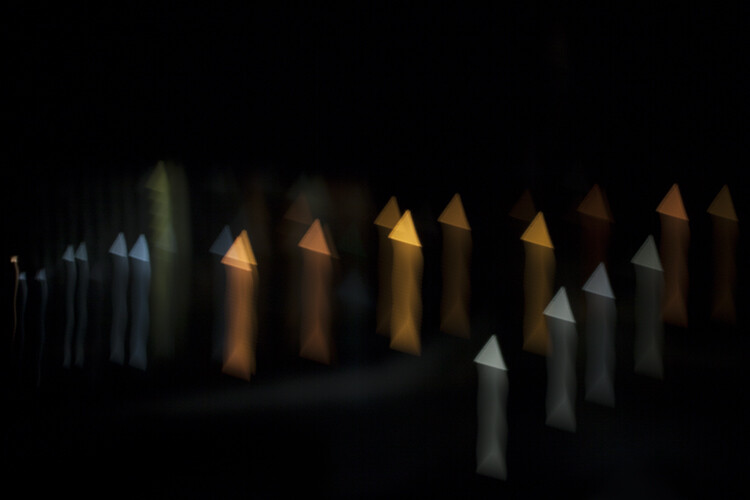
    This bokeh filter transforms car lights into a sprinkle of stars

    The post How to Make Custom Bokeh Shapes by Megan Kennedy appeared first on Digital Photography School.


    Digital Photography School

  • Opinion: Nikon’s ‘back to basics’ approach is a no-brainer

    Well-rounded, polished and reliable: mid-to-high end DSLR cameras have been Nikon’s bread and butter for years.

    In its first public statement since the DL series’ cancellation, Nikon has stated to the Japanese press (Google translated here) that it will be focusing chiefly on ‘mid-to-high end SLR cameras and lenses and mirrorless cameras that can make the most of their strengths.’

    Good gravy, it’s about time.

    A rough patch

    Sure, 2016 was the year of the D5 and widely adored D500 DSLRs, but those two cameras stand against a pretty dismal backdrop.

    That backdrop includes the continued release of low-end Coolpix cameras into a market segment that’s been obliterated by smartphones (though admittedly Nikon isn’t alone in this regard), the ailing Nikon 1 series which hasn’t seen a new camera body in almost two years or a new lens in almost three years, and the KeyMission series, which has had a tepid reception at best (and personally, I wish they’d taken whatever development costs the KeyMission ate up and poured those into the DL series instead).

    Ah, the Coolpix A300. This 2016 release features a 1/2.3″ sensor, 720p video and a low-resolution 230k-dot rear screen. Please Nikon, why?

    On most recent occasions when the company has stepped outside of its traditional DSLR realm, Nikon’s has stumbled somewhat. To illustrate, imagine for a minute that these various camera market segments are house parties (that’s a bit of a stretch these days, but bear with me here).

    The Nikon 1 series got stuck in traffic on the way to the mirrorless party, and finally arrived only to realize it totally misread the dress code. As for the KeyMission series, it’s way past fashionably late to the action camera party, and brought a twelve-pack of what everyone’s already sick of drinking.

    And the DL series, well, it seems to have just pre-funked too heavily and didn’t make it out at all.

    There are several things that are disappointing about this. With the 1 series especially, Nikon has had years and years to flesh out a lens lineup to really make the most out of that small package and incredibly fast sensor (remember, they could shoot 60 fps Raw bursts years before the likes of the Olympus OM-D E-M1 Mark II, and had incredible on-sensor PDAF to boot). The company has simply let the whole line stagnate into obscurity. This stands in stark contrast to the company’s DSLR line, which has used the same basic lens mount for the last fifty-eight years. So it clearly shouldn’t have issues with commitment.

    The KeyMission is also, in my opinion, an ill-conceived scheme – after all, they’ve come about just as GoPro’s stock and sales are tanking in the wake of competent and ever cheaper Chinese competitors. The KeyMission line is literally years too late, the rocky VR market in 2016 didn’t do the 360 model any favors. I can understand Nikon’s desire for some form of diversification given the state of the camera market as a whole, but this just wasn’t the right way to go.

    Sure, the KeyMission 170 is ruggedized without a case, but it’s entering a very crowded and very competitive market.

    Picking back up

    But perhaps what’s most disappointing about all this is that, contrary to the views most keyboard warriors seem to espouse these days, Nikon is capable of true greatness, and even some spurts of innovation. It’s just that most of that is wrapped up in the DSLR world of the D5 and D500. 

    Those two cameras remain in our possession, with Nikon’s permission, as the current autofocus tracking benchmarks against which most other cameras are measured; 3D Tracking was an incredible innovation with the D3 that has been steadily evolving ever since, and it changes the way you shoot for the better. The D5 / D500’s use of XQD slots combine with incredible overall responsiveness to ensure that you are never waiting for those cameras; they’ll only be waiting for you. They’re the first DSLRs with Automatic AF Fine Tune, bringing DSLR autofocus one step closer to the accuracy of on-sensor autofocus systems in mirrorless cameras. There’s also the AF-S 105mm F1.4G, a world’s-first lens for the company’s venerable DSLRs.

    Now that’s a nice combo.

    In short, if Nikon’s DSLRs are so competent already (QC issues such as the D600 fiasco notwithstanding), it’ll be interesting to see what the company can do with more focus and more resources available for their development. One thing’s for sure; we’re all hoping for some new ‘professional’ DX lenses to go with the ‘professional’ D500, but even taking this new statement into consideration, I’m not holding my breath.

    The rest

    The Nikon 1 V3, the latest ‘enthusiast’ offering in the 1-series lineup, was announced nearly three years ago.

    Stepping aside from the world of DSLRs, Nikon’s statement foregoes any specific claims concerning the KeyMission series (hmmm…), and promises a renewed focus on ‘mirrorless cameras that can make the most of their strengths.’ What that really means is anyone’s guess, though the stagnation of the 1 series indicates Nikon will be heading a different direction than continued development of the ‘CX’ system.

    The brief statement closes with the mention of a high-class compact in the future, but given the incident with the DL series, the company will ‘judge the next development carefully.’

    Coolpix A Mark II, please. But maybe with a name other than ‘Coolpix.’

    Articles: Digital Photography Review (dpreview.com)

  • Godox’s Wistro Pocket Flash AD200 is a pocket-sized powerhouse

    $ (document).ready(function() { SampleGalleryV2({“containerId”:”embeddedSampleGallery_8916282099″,”galleryId”:”8916282099″,”isEmbeddedWidget”:true,”standalone”:false,”selectedImageIndex”:0,”startInCommentsView”:false,”isMobile”:false}) });

    Small but mighty, Godox’s Wistro AD200 speedlight offers wireless support with Godox’s 2.4G X system and 200Ws / GN 52 output. That’s pretty incredible – for comparison, many speedlights struggle to put out just 100Ws.

    The unit is powered by a rechargeable lithium-ion battery pack rated for 500 full power flashes, and provides TTL support with Canon, Nikon and Sony systems when used via wireless control. Output can be adjusted in eight steps, and the AD200 can be used with a number of accessories and diffusers.

    The AD200 looks to be available for pre-order from Adorama under the FlashPoint brand for $ 330.

    Articles: Digital Photography Review (dpreview.com)

  • Brutal East: New Scale Models of Brutalist Architecture Made of Paper

    [ By SA Rogers in Art & Sculpture & Craft. ]

    brutal east main

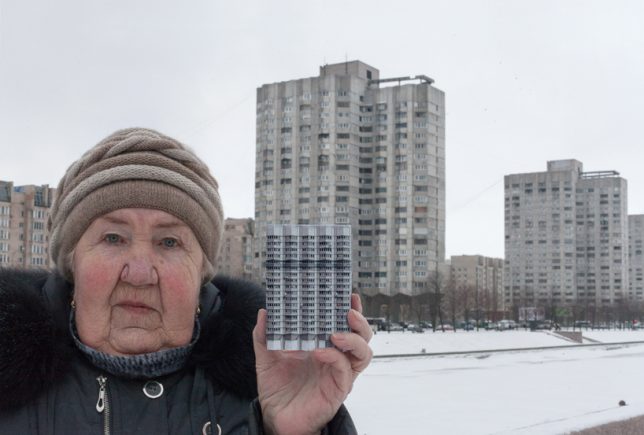
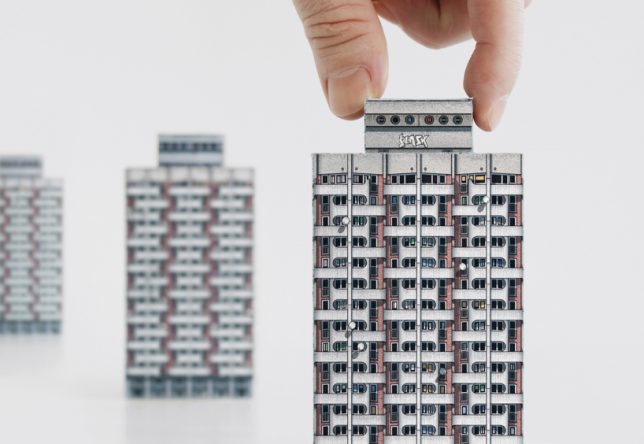
    Hold the most iconic and imposing of Eastern Europe’s Brutalist architecture in the palm of your hand with this new set of paper miniatures by Zupagrafika. The design studio presents ‘Brutal East,’ a kit of seven cut-outs you assemble yourself into tiny towers from Belgrade, Kaliningrad, Prague, St. Petersburg, Wroclaw and more. ‘Build Your Own Brutalist Eastern Bloc,’ the packaging reads, an enticing statement if any architecture nerd ever heard one.

    brutal east 3

    brutal east 5

    brutal east 2

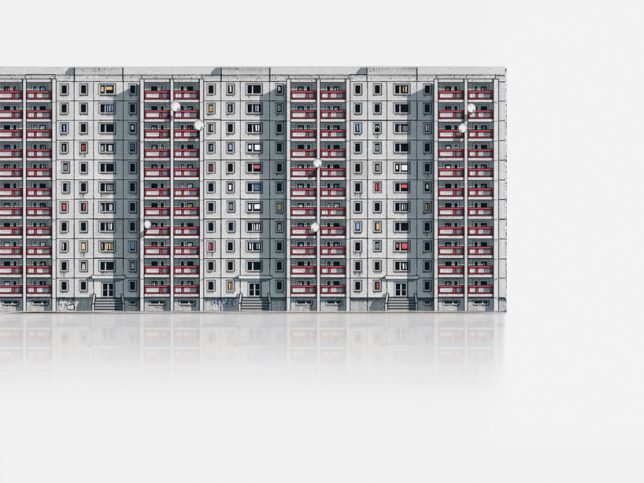
    “From the functionalist panelák estates to the otherworldly concrete grand designs, the charm of the former Eastern Bloc architecture is certainly brutal,” say the designers. “’Brutal East’ by Zupagrafika is a kit of illustrated paper cut-out models celebrating post-war architecture of Central and Eastern Europe that allows you to playfully explore and reconstruct some of the most controversial edificies erected behidn the Iron Curtain.”

    “Contains 7 Brutalist buildings to assemble, from omnipresent pre-cast housing estates to mighty Post-Soviet landmarks awaiting renovation or threatened by demolition.”

    brutal east 1

    brutal east 4

    The kit is appealingly packaged and beautifully detailed, each building bearing its tiny satellite TV dishes, stains, graffiti and weathering. It’s a neat way to hold on to divisive architecture that may soon be lost to history. While many people think these structures are ugly and depressing, they’re undeniably memorable.

    brutal east 6

    brutal east 7

    ‘Brutal East’ is just the latest kit of paper Brutalist models from Zupagrafika; the design studio previously released a set of Modernist Architectural Matryoshka it calls ‘Blokoshka’ as well as sets from London, Paris, Katowice and Warsaw. They also offer tiny paper models of Polish street icons like advertising columns, ticket validators and 1980s cars. All kits are available in the studio’s online shop.

    Share on Facebook


    [ By SA Rogers in Art & Sculpture & Craft. ]

    [ WebUrbanist | Archives | Galleries | Privacy | TOS ]


    WebUrbanist

  • Tips for Photographing Your Own Kids

    Are you one of those parents whose kids were born being comfortable in front of the camera? Are your kids complete naturals with no stage fright or anger management issues when you yell, “Look at me…for the last time…please look at me and don’t close your eyes”? If so, then just skip this article and move on to the next one that probably teaches some amazing tips and tricks on night photography, or posing or Lightroom tricks.

    But, if you are like me, a camera obsessed parent whose children sprint at what seems like a-mile-a-minute when they see you, camera in-hand, and a determined look on your face, coming towards them to snap a frame, then keep reading. I have a few tips and tricks to help you maintain your sanity and snap a few Kodak moments of your pride and joy that you can “oohhh” and “ahhh” at for years to come! In other words, top for photographing your own kids.

    Tips for Photographing Your Own Kids

    Is this a family portrait you can relate to?? Imperfect timing + Imperfect expression = Perfect Family Photo

    Note: Some of the images in this article are not edited and some are technically flawed – they are simply used to drive home the tips shared below. The images that I print of my family are edited to my particular style. You will find a lot of rules broken here but I am okay with these as my focus was not on photographic perfection but on capturing the moment.

    Know when to click and when to back off

    This one is a game changer in your relationship with your kids and your camera. Yes, the very definition of being a parent is that we are insanely in love with our kids and want to freeze every moment of their childhood, teen, and adult lives forever in our brain and forever in photographs. I mean, what parent doesn’t want to whip out images of their babies years later at their wedding. Not as a means of embarrassing them but as a way to cherish all the fun times they have had in their parent-child relationship.

    googletag.cmd.push(function() {
    ruleset_slots.push( googletag.defineSlot( “/1005424/_dPSv5topic-rhs(300×250)”, [300, 250], “pb-ad-0” ).addService( googletag.pubads() ) ); } );

    But sometimes, just sometimes, it is completely okay to skip that insane urge to freeze the frame and instead BE in the moment. I still remember many of my children’s “firsts”. Even though I may not have photographs to prove it, I have my memories that I have documented in their journals and talked about with them. I am okay with neither of us remembering these things decades later because I know that every day we create new memories that simply replace some of the old ones.

    Tips for Photographing Your Own Kids

    I tried for a good 20 minutes to try and get both of them to look at the camera and smile at the same time…but alas, this was the best I could get. But this is one of the most precious memories because a few months after this was taken, I lost my mom to cancer. So this grandmother-grandson memory is priceless…in all its flaws lies its perfection!

    Embrace the chaos

    This one is a little hard to digest because as photographers we tend to be perfectionists. The lighting has to be right, the styling has to be perfect, and the angle and composition has to be one of the allowed rules. You know, all those things that we learn in Photography 101, Photography 201 and perhaps even Photography 301!

    But guess what, all of that doesn’t quite matter when you have all of three seconds to take the shot. Most of the time that my family is together is in the evening hours. When the night is fading and I am only left with either using the overhead florescent light or pop on an off-camera flash, neither of which I really like. But sometimes it is okay to break the rules and just go with the flow. Yes, every frame here will not be PERFECT and more than likely, it will break all the rules of the photography but

    googletag.cmd.push(function() {
    ruleset_slots.push( googletag.defineSlot( “/1005424/_dPSv5topic-rhs(300×250)”, [300, 250], “pb-ad-1” ).addService( googletag.pubads() ) ); } );

    But sometimes it is okay to break the rules and just go with the flow. Yes, every frame here will not be PERFECT and more than likely, it will break all the rules of the photography but that’s okay. It may be more important to capture that fleeting moment than to be technically correct.

    Tips for Photographing Your Own Kids

    The first Lego car that he completed all on his own. I was just an observer and had one shot. The light was terrible, his clothes were completely mismatched, but it was a moment I wanted to cherish forever.

    Tips for Photographing Your Own Kids

    Another moment that means nothing to him but everything to me. My boys just hanging out doing their thing – reading and napping!

    Tips for Photographing Your Own Kids

    A creative lighting exercise gone wrong – thanks to a sleepy and nervous dog who was scared of the shutter clicking!

    Follow their lead

    This one is a little harder to experience especially if you have little ones. Right now, my kids are at the age where they are opinionated on what, where, and how they want to be photographed.

    My son plays soccer and insists I take pictures of his games every weekend. My daughter, who is an equestrian rider, wants several hundred shots of her horse – from every angle, covering every detail. But I have found that if I oblige their photography wants, they are more likely to listen to me when the tables turn (a.k.a a little bribery never hurts). Besides like any parent, I know that these moments are just as precious as their traditional portraits even if they are blurry because I missed focus when he was kicking the ball or when she rides her favorite horse.

    Besides like any parent, I know that these moments are just as precious as more traditional portraits – even if they are blurry because I missed focus when he was kicking the ball or when she rides her favorite horse.

    Tips for Photographing Your Own Kids

    A technically flawed image (out of focus) for my daughter. A shot of her favorite horse and her favorite instructor.

    Tips for Photographing Your Own Kids

    Something a little bit more my cup of tea – an action shot that makes me hold my breath every time she jumps!

    Tips for Photographing Your Own Kids

    This was the highlight of my son’s soccer game…for me and for him!

    Hand over the reins

    googletag.cmd.push(function() {
    ruleset_slots.push( googletag.defineSlot( “/1005424/_dPSv5topic-rhs(300×250)”, [300, 250], “pb-ad-2” ).addService( googletag.pubads() ) ); } );

    A few years back there was a beautiful article that was written for moms who were also photographers. This really hit home to a lot of us moms. It encouraged moms who are generally behind the camera to be brave and exist in photographs with their kids, for their kids. It is absolutely acceptable if your hair is not perfect, you are in your sweat pants, and have no makeup on. Being present in photographs is more important than taking several hundred photos where you are nowhere to be found.

    Since that day, I take the photos that I want but also hand over the camera to my husband or a stranger who volunteers to take our picture. Sometimes I even use the remote trigger so I can be a part of my kids’ childhood just as much as their dad, especially on important occasions like family vacations and birthdays.

    Tips for Photographing Your Own Kids

    The MUST have photo of any birthday party. Heads chopped off, goofy faces and partial cake – thanks to a helpful, willing volunteer! But I am with my child and that makes me happy!

    Tips for Photographing Your Own Kids

    Because out of focus photos are so very artistic! For a clearer picture, try switching to Auto mode and then handing the camera over to a willing helper!

    Tips for Photographing Your Own Kids

    The magic of a remote trigger! Our family in our element!

    What are some tips and tricks that work when you photograph your own children? When all else fails, perhaps chocolate and candy are the way to go, for adults and kids alike! Please sure your tips and photos in the comment section below.

    googletag.cmd.push(function() {
    ruleset_slots.push( googletag.defineSlot( “/1005424/_dPSv5topic-rhs(300×250)”, [300, 250], “pb-ad-3” ).addService( googletag.pubads() ) ); } );

    The post Tips for Photographing Your Own Kids by Karthika Gupta appeared first on Digital Photography School.


    Digital Photography School

  • WPO releases short listed winners for Sony World Photography Awards

    2017 Sony World Photography Awards shortlist announced

    Alex Andriesi, Romania,

    Shortlist, Open, Enhanced, 2017 Sony World Photography Awards

    The World Photography Organisation has announced the shortlisted photographers for what it claims is the world’s largest photography competition – the Sony World Photography Awards. The WPO says that it received 227,596 images in total across categories for amateurs, professionals and students. Photographers from 60 countries are represented among the shortlisted and commended photographs, while entries from 183 countries were submitted.

    Professional photographers are competing for the top prize of $ 25,000 plus Sony digital camera equipment, while the best amateur entry will win $ 5000 plus Sony kit and the best student will collect €30,000 of Sony equipment for his or her educational establishment.
    The overall and category winners will be announced at a ceremony in London in the 20th April and an exhibition of the winning images will be displayed at London’s Somerset House. Martin Parr has been announced as the winner of the Outstanding Contribution to Photography Prize and will be exhibiting alongside the winners, as well as holding a talk.
    For more information, and to see a gallery of all the shortlisted and commended images, visit the World Photography Organisation website.

    Press Release

    Shortlist revealed for 2017 Sony World Photography Awards, the world’s largest photography competition 

    • Shortlists for Professional, Open, Youth and Student Focus competitions revealed
    • Awards’ 10th anniversary sees record number of participating photographers
    • Photographers competing for cash prizes and Sony digital imaging equipment
    • Overall winners revealed April 20, 2017
    • Winning and shortlisted images to be exhibited in London April 21 – May 7, 2017

    Celebrating its 10th year anniversary, the Sony World Photography Awards is the world’s largest photography competition. The awards recognize and reward the finest contemporary photography from the last year entered into any of the awards’ four competitions.

    “There was a truly global reach to the Sony World Photography Awards judging this year- the images were more diverse and broad ranging than I have ever seen before. In its tenth year, I can confidently say that the Sony World Photography Awards and the fine art of photography are doing extremely well.” Zelda Cheatle, Chair of the Professional jury / Curator (UK)

    February 28, 2017: The shortlisted (top 10) and commended (top 50) photographers for all categories of the 2017 Sony World Photography Awards, the world’s largest photography competition, are announced today. Photographers entered 227,596 images across the awards’ Professional, Open and Youth competitions – shining a spotlight on the medium of photography and the beauty of its art.

    Produced by the World Photography Organisation, 2017 marks the 10th anniversary of the awards and a decade-long partnership with its headline sponsor, Sony.

    The Sony World Photography Awards’ shortlist represents the world’s finest contemporary photography captured over the last year, and displays a huge diversity of extraordinary images in terms of genres, styles and subject matter. Forty-nine countries are represented on the shortlist, reinforcing the awards’ international appeal and unique ability to present the greatest images taken by photographers from all corners of the world on a truly global scale. Photographers from a further 11 countries are seen within the commended list.

    The shortlisted photographers across the Professional, Open, Youth and Student Focus competitions impressed the judges with solid narratives and strong visual language complementing the subject matters. Within the shortlist are stunning architectural images and subtle landscapes alongside extraordinary series depicting the dominating world events of the last year. Stand out subject matters include a touching insight into the domestic life of women in Saudi Arabia, heartfelt confessions of Chinese school children, Russian body builders preparing to flex muscle on stage and an intimate series of a private battle with a rare medical condition.

    Key shortlists facts and stats

    • Strong increase in entries on 2016 from Asian and South East Asian countries including; China (90 %); Myanmar (183 %) Vietnam (108 %); The Philippines (71 %); and
    • Hong Kong (73 %).
    • Youth competition saw a 56 % increase in entries on 2016.
    • Entries to the Open competition increased 11 % on 2016.
    • Professional competition saw a 13 % increase in the number of photographers entering their work.
    • 183 countries were represented in the submissions – with the most entries coming from (in descending order): China, United Kingdom, Italy, United States, Germany, Russia, India, Spain, France and Poland.
    • 49 countries are represented on the shortlist, with the most shortlisted photographers coming from Italy (22), Germany (17), UK (15), China (14) and Russia (11)
    • Armenia, Cuba, Iceland and Saudi Arabia represented for the first time on the shortlist.

    To view the commended photographers of the Open competition please go to www.worldphoto.org/winners-galleries

    Commenting about this year’s shortlist, Scott Gray, CEO, World Photography Organisation, notes: “This year, more than any other, the entries to the Sony World Photography Awards have shown great integrity and are characterized by their considered approach. Beautiful works of photographic art, not snapshots, have been presented to the judges and I am delighted to see that our esteemed juries have chosen to reward the pure skill, artistic interpretation and thoughtfulness of the photographer, rather than simply the subject matter the photographer has captured.

    He continues: “The Sony World Photography Awards has celebrated photographers and photography throughout its ten-year history, we now look forward to ensuring that photography has a global platform and is recognised as the dynamic, exciting and accessible medium it is.”

    The Sony World Photography Awards are judged anonymously by internationally acclaimed industry professionals, carefully selected by the World Photography Organisation.

    The 2017 Professional competition was judged by Zelda Cheatle (Chair of the Judges), Curator (UK); Aida Muluneh, Founder/Director, Addis Foto Fest (Ethiopia); Allegra Cordero di Montezemolo, Curator & Head of Exhibitions, Centro de la Imagen (Mexico); Denis Curti, Curator and Journalist (Italy); Russ O’Connell, Picture Editor The Sunday Times Magazine (UK) and Françoise Callier, Program Director at Angkor Photo Festival & Workshops (France). The Open and Youth competitions were chaired by Damien Demolder, Photographer and Journalist (UK), and Student Focus was judged by Andrea Kurland, Editor-in-Chief of Huck (UK); Dan Rubin, Photographer & Artistic Director (UK) and Jennifer Shaw, Founder and Creative Director, PhotoNOLA (USA).

    Commenting on the Open and Youth shortlists, Damien Demolder said: “It has been a pleasure and an inspiration to be exposed to such a volume of great work, and a privilege too that I could share in the personal moments, the joys, tears, life and losses of photographers from all around the globe who recorded their experiences through their pictures. The Youth competition was a special delight to judge and I was touched on many occasions by the openness and fearless expression of the entries.”

    Student Focus judge Andrea Kurland adds: “This year’s shortlist helps cement why awards like these are more important than ever. The work submitted was original, thoughtful and brave – a healthy reminder that talent will always win out and rise above the noise.”

    The shortlisted photographers now compete for the latest Sony digital imaging equipment and inclusion in the 2017 awards’ book plus cash prizes of $ 25,000 (USD) for the Photographer of the Year, $ 5,000 (USD) for the overall Open winner and €30,000 (Euros) of equipment for the university of the Student Focus winner. All winners will be announced at an awards ceremony in London on April 20, 2017.

    The winning, shortlisted and commended images will all be exhibited as part of the Sony World Photography Awards & Martin Parr – 2017 Exhibition at Somerset House, London. The large-scale exhibition will open April 21 and will feature rarely seen work by Martin Parr, recipient of the awards’ Outstanding Contribution to Photography prize. The exhibition will run in London until May 7 and will then go on a worldwide tour. Exhibition tickets are available via www.worldphoto.org/2017exhibition

    NOTES

    • 227,596 images were submitted to the 2017 Sony World Photography Awards across all competitions
    • Professional competition: 110,270 entries
    • Open competition: 105,692 entries
    • Youth: 11,634 entries

    Sony World Photography Awards forthcoming announcements
    March 28, 2017 – Open and National Award winners announced
    April 20, 2017 – Photographer of the Year plus Professional category winners and Open, Youth and Student Focus Photographers of the Year revealed at ceremony held in London
    April 21 – May 7, 2017 – Sony World Photography Awards & Martin Parr – 2017 Exhibition at Somerset House, London

    SHORTLISTED PHOTOGRAPHERS

    PROFESSIONAL CATEGORIES
    Rewarding the best body of work across 10 categories. Up to 10 photographers shortlisted in each category. Category winners will be announced April 20, alongside the Photographer of the Year chosen from the ten category winners.

    Architecture
    Adi Bulboaca, Romania
    Alessandro Piredda, Italy
    Alissa Everett, US
    Diego Mayon, Italy
    Dongni, China
    Julien Chatelin, France
    Marvin Systermans, Germany
    Zsolt Hlinka, Hungary

    Conceptual
    Alexander Anufriev, Russia
    Carla Sutera Sardo, Italy
    Jeroen De Wandel, Belgium
    Joa?o San, Brazil
    Sabine Cattaneo, Switzerland
    Gao Peng, China

    Contemporary Issues
    Amber Bracken, Canada
    Andrea Foligni, Italy
    Danial Khodaie, Iran
    Javier Arcenillas, Spain
    Li Song, China
    Lorenzo Maccotta, Italy
    Tasneem Alsultan, Saudi Arabia

    Current Affairs & News
    Alessio Romenzi, Italy
    Asger Ladefoged, Denmark
    Ivor Prickett, Ireland
    Javier Arcenillas, Spain
    Joe Raedle, US
    Karl Mancini, Italy
    Pas?a I?mrek, Turkey
    Sebastian Castan?eda, Peru

    Daily Life
    Alice Cannara Malan, Italy
    Asger Ladefoged, Denmark
    Christina Simons, Iceland
    Ioana Moldovan, Romania
    Majlend Bramo, Italy
    Michael Tummings, UK
    Nader Saadallah, Egypt
    Sandra Hoyn, Germany
    Toby Binder, Argentina
    Yulia Grigoryants, Armenia

    Landscape
    Dino Kuznik, Slovenia
    Frederik Buyckx, Belgium
    Jayanta Roy, India
    Kurt Tong, UK
    Peter Franck, Germany
    Tom Jacobi, Germany

    Natural World
    Ami Vitale, US
    Christian Vizl, Mexico
    Esther Whyatt, UK
    Felicity McCabe, UK
    Mariusz Prusaczyk, Poland
    Tommaso Rada, Italy
    Will Burrard-Lucas, UK

    Portraiture
    Craig Easton, UK
    Dario Mitidieri, Italy
    George Mayer, Russia
    Giulia Piermartiri & Edoardo Delille, Italy
    Mahesh Shantaram, India
    Romina Ressia, Argentina
    Ren shi Chen, China
    Snezhana Von Buedingen, Russia

    Sport
    Andrea Rossato, Italy
    Eduard Korniyenko, Russia
    Jason O’brien, Australia
    Mark Gong, US
    Yuan Peng, China
    Luo Pin Xi, China

    Still Life
    Ansgar Sollmann, Germany
    Julien CAÏDOS, France
    Christoffer Askman, Denmark
    Grant Hegedus, UK
    Henry Agudelo, Colombia
    Paul Sanders, UK
    Shinya Masuda, Japan

    OPEN CATEGORIES
    Rewarding the best single images across 10 categories. Up to 10 photographers shortlisted in each category. Category winners will be announced March 28, and Open Photographer of the Year revealed April 20.

    Shortlist
    Architecture
    Barry Tweedy-Rycroft, UK
    Claudio Cantonetti, Italy
    Frank Machalowski, Germany
    Franklin Neto, Portugal
    Lester Koh Meng Hua, Singapore
    Nick Frank, Germany
    Oscar Lopez, Germany
    Robert Walker, UK
    Tim Cornbill, UK
    Ute-Christa Scherhag, Germany

    Culture
    Beniamino Pisati, Italy
    Emrah Karakoç, Turkey
    Jianguo Gong, China
    Mark Languido Vicente, the Philippines (based in Kuwait)
    Michal Plachta, Poland
    Pawe? J?drusik, Poland
    foley hits, Malaysia
    Radu Dumitrescu, Romania
    Salvatore Mazzeo, Italy
    Vito Leone, Italy

    Enhanced
    Alex Andriesi, Romania
    Andrea Torres Balaguer, Spain
    Chun Kin Tong, China
    Gil Josquin, Brazil
    Harry Botley,UK
    John Chen, China
    Julian Schievelkamp, Germany
    Lise Johansson, Denmark
    Sergey Dibtsev, Russia
    Yong Lin Tan, Malaysia

    Motion
    Jimmy Reid, Scotland
    Olga Sinenko, Russia
    K. W. Hon (OqWing), China
    Argus Paul Estabrook, US (based in South Korea)
    Gül Y?ld?z, Turkey
    Stacy Anguiano Cain, Mexico (based in the US)
    Mariusz Stanosz, Poland
    Oktay Suba?i, Turkey
    Camilo Diaz, Colombia
    Luigi Panico, Italy

    Nature
    Francesco Russo, Italy
    Miyono Okamoto, Japan
    Hiroshi Tanita, Japan
    Christina Roemmelt, German (based in Austria)
    Ann Ric Lau, Malaysia
    Sorin Rechitan, Romania
    Josselin Cornou, France (based in Australia)
    Sakuma Masayasu, Japan
    Elzbieta Kurowska, Canada
    Maximilian Conrad, Germany

    Portraits
    Dalibor Tomic, Serbia
    Carl Jeffers, UK
    Saeid Moridi, Iran
    Alexey Munich, Russia
    Carloman Macidiano Céspedes Riojas, Peru (based in Argentina)
    Anisleidy Martínez Fonseca, Cuba (based in the Netherlands)
    Alexander Vinogradov, Russia
    Tim Topple, UK
    Fajar Kristianto, Indonesia
    Tadas Kazakevicius, Lithuania

    Still Life
    Nick Pershai, Belarus
    Gijs van den Berg, the Netherlands
    Zani Arkadina, Ukraine (based in Germany)
    Sergey Dibtsev, Russia
    Iwona Czubek, Poland
    Maxim Korotchenko, Russia
    Wilson Lee, Hong Kong
    Esthaem, Austria
    Andres Gallardo Albajar, Spain (based in Estonia)
    Massimiliano Balo’, Italian (based in the UK)

    Street Photography
    Caio Vita, Brazil (based in the Netherlands)
    Jelena Jankovic Serbia
    Jian Seng Soh, Malaysia
    Gimmi Corvaro, Italy
    Konstantinos Sofikitis, Greece
    Ge Wang, China
    Dina Alfasi, Istrael
    Hendra Permana, Indonesia
    Ash, Japan
    Tavepong Pratoomwong, Thailand

    Travel
    Jose Maria Perez Nuñez, Argentina
    Stephane Couture, Canada (based in the US)
    Rob Wilson, Canada
    Placido Faranda, Italy (based in Switzerland)
    Zhu Jianxing, China
    Vladimir Zhoga, Russia
    Ralph Gräf, Germany
    Swapnil Deshpande, India
    Achim Thomae, Germany
    Fanjing Lu, Chinese

    Wildlife
    Andreas Hemb, Sweden
    Alessandra Meniconzi, Switzerland
    Jan Ryser, Switzerland
    Eugene Kitsios, The Netherlands (shortlisted twice)
    Fan Chen, China
    Bar Kaufman, Israel
    Natsumi Handa, Japan
    Nigel Hodson, UK

    Commended
    For the full list of commended photographers in the Open competition (up to 40 per category) please go to www.worldphoto.org/winners-galleries

    YOUTH COMPETITION
    Photographers aged 12-19 were asked to respond to a theme of ‘beauty’ with a single image. The Youth Photographer of the Year will be announced April 20.

    Helen Kiparissa, Greece
    Bella Wong, China (based in the UK)
    Andrej Kiripolský, Slovenia
    Taciu Rares, Romania
    Katelyn Wang, US
    Iryna Sylinnyk, Ukraine
    Yujia Dou, China
    Tanya Chinareva, Russia
    Frederik Marks, Germany
    Johnathan Chen, US

    STUDENT FOCUS
    Open to all students worldwide studying photography. The Student Photographer of the Year will be announced April 20.

    Shravya Kag, School of Visual Arts, US, (Indian nationality)
    Tatsuki Katayama, Kyoto University of Art and Design, Japan
    Stewart Main, Edinburgh Napier University, Scotland
    Ruby Gaunt, Nottingham Trent University, UK
    Cole Ndelu, Stellenbosch Academy of Design & Photography, South Africa
    Nursyafiqah Azlan, Multimedia University, Malaysia
    Nadine Hackemer, Nuremberg Institute of Technology Georg-Simon-Ohm Faculty of Design, Germany
    Sarah Schrimpf, Academy of Fine Arts Munich, Germany
    Michelle Daiana Gentile, Motivarte, Argentina
    Tayla Martin, Charles Sturt University, Australia

    FURTHER NOTES
    The Professional competition of the Sony World Photography Awards is judged by an independent panel of industry experts selected by the World Photography Organisation. The headline sponsor of the awards, Sony, is not involved in the image selection of judging of this competition.

    2017 Sony World Photography Awards shortlist announced

    Anisleidy Martínez Fonseca, Cuba,

    Shortlist, Open, Portraits, 2017 Sony World Photography Awards

    2017 Sony World Photography Awards shortlist announced

    Carloman Macidiano Céspedes Riojas, Peru,

    Shortlist, Open, Portraits, 2017 Sony World Photography Awards

    2017 Sony World Photography Awards shortlist announced

    Christian Vizl, Mexico,

    Shortlist, Professional, Natural World, 2017 Sony World Photography Awards

    2017 Sony World Photography Awards shortlist announced

    Emrah Karakoç, Turkey,

    Shortlist, Open, Culture, 2017 Sony World Photography Awards

    2017 Sony World Photography Awards shortlist announced

    Masayasu Sakuma, Japan,

    Shortlist, Open, Nature, 2017 Sony World Photography Awards

    2017 Sony World Photography Awards shortlist announced

    Tim Topple, United Kingdom,

    Shortlist, Open, Portraits, 2017 Sony World Photography Awards

    2017 Sony World Photography Awards shortlist announced

    Vito Leone, Italy,

    Shortlist, Open, Culture, 2017 Sony World Photography Awards

    Articles: Digital Photography Review (dpreview.com)

  • The Porsche Design Book One is a MacBook Pro competitor in a convertible form factor

    $ (document).ready(function() { SampleGalleryV2({“containerId”:”embeddedSampleGallery_8985827527″,”galleryId”:”8985827527″,”isEmbeddedWidget”:true,”standalone”:false,”selectedImageIndex”:0,”startInCommentsView”:false,”isMobile”:false}) });

    German company Porsche Design has teamed up with industry giants Intel, Microsoft and Quanta Computer to launch the first product in its new Porsche Computing product line, the Porsche Design Book One. 

    The Book One is a high-end 2-in-1 convertible device. The screen can be detached from the keyboard section and used as a tablet, or rotated up to 360 degrees using a hinge with stainless steel cog wheels that are inspired by the transmission of a sports car. The milled aluminum housing features a matte anodized surface finish and the minimalist design the brand is known for.

    In the interior, the Book One comes with high-end components all around. The Windows 10 Pro operating system is powered by a 7th-generation Intel Core i7-7500U processor and 16GB of RAM. An Intel SSD provides 512 GB of storage via the PCIe slot and the 13.3” QHD+ IPS display offers a resolution of 3200 x 1800 pixels.

    For easy expansion and connection of accessories a variety of ports is provided, including two multifunctional USB Type-C ports, two full-size USB 3.0 ports, and one USB 3.1 Type-C/Thunderbolt 3 port which allows for wired image transmission in accordance with the DisplayPort standard. In addition, the 5MP front camera with infrared sensor enables biometric authentication using the Windows Hello facial recognition software.

    In terms of input, Book One users can choose from the touch display, a precision touchpad, the detachable keyboard with backlit keys and a Wacom-made digital stylus that attaches magnetically to the housing. With its versatile design and powerful hardware the Porsche Design Book One looks like a great machine for image editing at home or on the road. It will be available in the US in April 2017 at a retail price of $ 2,495.

    Press Release:

    Porsche Design Adds Exclusive Laptop to Its Product Portfolio

    Porsche Design BOOK ONE: The Multifunctional 2in1 Running Windows 10 Pro

    Stuttgart, Germany. With the new Porsche Design BOOK ONE, the world’s first convertible and detachable 2in1, Porsche Design adds the category of Porsche Design Computing to its expanding product portfolio. The move sees the premium-lifestyle-brand playing to its strengths, merging form and function to yield a high-performance, multifunctional 2in1.

    The Porsche Design BOOK ONE underlines the brand’s focus on technology and innovation, making new strides in the mobile computing segment. The silhouette of the BOOK ONE uses a milled aluminum housing with a matte anodized surface finish and features subtle Porsche Design branding on the top of the tablet and the bottom edge of the screen. The patented hinge, designed entirely by Studio F. A. Porsche, allows the tablet unit of the 2in1 not only to detach, but also rotate 360°.

    In keeping with the traditional design philosophy of Professor Ferdinand Alexander Porsche, the well-crafted hinge and its stainless steel cog wheels are inspired by the transmission of a sports car. This approach, which combines superior engineering with modern design, allows Porsche Design to implement the latest in state-of-the-art technology.

    The features of the Porsche Design BOOK ONE include:
    Versatile functionality: High performance components and cutting-edge technology give the 2in1 its versatile functionality. The device comes with Windows 10 Pro, Microsoft’s most up-to-date, cutting edge OS.

    High performance: The powerful 7th-generation Intel® Core™ i7-7500U processor, which clocks in at up to 3.5 GHz, is able to max-imize its potential thanks to the computer’s 16 GB of RAM.

    Fast data storage: The noiseless Intel®, SSD with a storage capac-ity of 512 GB, guarantees fast data storage via the PCIe slot.

    Eye-popping resolution: With a resolution of 3200 x 1800 pixels, the 13.3” QHD+ IPS display is built to impress, whether working, surfing the web, or simply watching the latest movie.

    Convenient connections: The variety of available ports offered includes two multifunctional USB Type-C™ ports, two full-size USB 3.0 ports, and USB 3.1 Type-C™/Thunderbolt 3 port, which not only powers a variety of USB peripherals with just a single cable. It also guarantees fast, hassle-free data exchange, and allows wired image transmission in accordance with the DisplayPort standard. The 2in1 communicates wirelessly via dual-band WiFi and Blue-tooth®.

    Biometric authentication: A more secure and simplified login pro-cedure is enabled thanks to the 5-MP camera with infrared sensor, which is seamlessly integrated into the front of the housing and allows biometric authentication using Windows Hello facial recognition software.

    The themes of versatility and ease are further emphasized by the laptop’s cutting-edge input capabilities. Both the touch display and the Precision Touchpad for Windows 10 use high-precision, multi-gesture control interfaces. The keyboard, complete with dimming backlit keys, enables endless use in a variety of settings. And the digital stylus, developed by Studio F. A. Porsche to ensure ideal handling, is optimized for use with Windows Ink, providing a natural writing experience with all the benefits of digital connectivity. In order to prevent loss of the stylus, a magnetic holder is integrated into the right side of the tablet.

    “The Porsche Design BOOK ONE embodies the DNA of our brand down to the tiniest detail and, as our first 2in1 unit, has expanded our product portfolio by adding a new category: Porsche Design Computing. In Microsoft and Intel, we have two renowned partners who were a great help in implementing this strategically important project,” said Jan Becker, CEO of the Porsche Design Group.

    “We’re thrilled to work with Porsche Design – a world renowned premium-lifestyle-brand – that introduces for the first time a finely crafted 2in1 – the Porsche Design BOOK ONE,” said Peter Han, Vice President, Partner Devices and Solutions, Microsoft Corp. “Porsche Design’s first Windows PC combines a well-constructed hardware and functional design with popular Windows 10 features, including Windows Hello and Windows Ink, enabling a rich pen and touchscreen experience.”

    The Porsche Design BOOK ONE will be available in the US in April 2017 and available in other countries at Porsche Design Stores and specialty retailers. RRP in the US is $ 2,495 USD.

    Articles: Digital Photography Review (dpreview.com)