Blog

  • Google software engineer shows what’s possible with smartphone cameras in low light

    Image: Florian Kainz/Google

    On a full moon night last year, Google software engineer Florian Kainz took a photo of the Golden Gate bridge and the City of San Francisco in the background with professional camera equipment: a Canon EOS-1D X and a Zeiss Otus 28mm F1.4 ZE lens. 

    When he showed the results to his colleagues at Google Gcam, a team that focuses on computational photography, they challenged him to re-take the same shot with a smartphone camera. Google’s HDR+ camera mode on the Google Nexus and Pixel phones is one of Gcam’s most interesting products. It allows for decent image quality at low light levels by shooting a burst of up to ten short exposures and averaging them them into a single image, reducing blur while capturing enough total light for a good exposure. 

    However, Florian being an engineer, wanted to find out what smartphone camera can do when taken to the current limits of technology and wrote an Android camera app with manual control over exposure time, ISO and focus distance. When the shutter button is pressed the app waits a few seconds and then records up to 64 frames with the selected settings. The app saves DNG raw files which can then be downloaded for processing on a PC. 

    He used the app to capture several night scenes, including an image of the night sky, with a Nexus 6P smartphone, which is capable of shutter speeds up to 2 seconds at high ISOs. On each occasion he shot an additional burst of black frames after covering the camera lens with opaque adhesive tape. Back at the office the frames were combined in Photoshop. Individual images were, as you would expect, very noisy, but computing the mean of all 32 frames cleaned up most of the grain, and subtracting the mean of the 32 black frames removed faint grid-like patterns caused by local variations in the sensor’s black level.

    The results are very impressive indeed. At 9 to 10MP the images are smaller than the output of most current DSLRs but the photos are sharp across the frame, there is little noise and dynamic range is surprisingly good. Getting to those results took a lot of post-processing work but with smartphone processing becoming even more powerful it should only be a question of time before the sort of complex processing that Florian did manually in Photoshop can be done on the device. You can see all the image results in full resolution and read Florian’s detailed description of his capture and editing workflow on the Google Research Blog.

     Image: Florian Kainz/Google

    Articles: Digital Photography Review (dpreview.com)

  • World’s first 100-million-pixel drone launched by DJI and Hasselblad

    Chinese drone manufacturer DJI has announced that it is to launch a new drone later this year that will be fitted with a 100-million-pixel Hasselblad H6D-100c camera. The DJI M600 Pro will be aimed at those who need precise and detailed aerial pictures, as it will not only produce extremely high resolution images but users will be able to position the drone with what the company describes as ‘centimeter-level’ accuracy using the D-RTK GNSS navigation system.

    The H6D-100c will be attached to DJI’s Ronin-MX gimbal and will be carried by the M600 drone’s six-rotors, with images streaming back to Earth via the Lightbridge 2 system. The drone is set for release in the third quarter of the year, with a price no doubt as spectacular as the promised image quality.

    For more information see the DJI website.

    Press release:

    DJI And Hasselblad Introduce World’s First 100-Megapixel Integrated Aerial Photography Platform

    DJI M600 Pro Drone, Ronin-MX Gimbal And Hasselblad H6D-100c Camera Combine For Unparalleled Aerial Imaging Package

    DJI, the world’s leader in civilian drones and aerial imaging technology, and Hasselblad, the leader in high-quality professional medium format cameras, Tuesday marked the start of the next era of aerial photography by introducing the first 100-megapixel integrated drone imaging platform.

    The DJI M600 Pro drone, the Ronin-MX gimbal and the Hasselblad H6D-100c camera combine each company’s unparalleled technological expertise to create an unprecedented tool for precise, detailed and accurate aerial imaging. Professional drone users can continuously control camera operations in flight using the DJI GO app, in order to provide rich imagery for landscape and fine-art photography, robust data for surveying and mapmaking, and endless possibilities for future professional endeavors.

    The flight platform for the combination is the DJI M600 Pro drone, an advanced and adaptable six-rotor flight platform equipped with the powerful Lightbridge 2 transmission system, a dustproof propulsion system and six Intelligent Flight Batteries. The M600 Pro can be guided by the D-RTK GNSS navigation system, which can withstand strong magnetic interference to provide highly precise centimeter-level 3D positioning. This enhanced accuracy over typical barometer, compass and GPS systems makes it ideal for exacting commercial, industrial and scientific applications.

    The Hasselblad H6D-100c camera is a triumph of camera technology, with a large 53.4 mm x 40.0 mm sensor that offers outstanding detail, color reproduction and tonal range even in poor lighting conditions using the HC and HCD lens family. The camera mounts on the drone through the Ronin-MX three-axis stabilized gimbal, which uses powerful motors and inertial measurement units to resist high G-forces, maintain stability and hold the horizon.

    The M600/Ronin-MX/H6D-100c platform is the latest product collaboration since DJI assumed a stake in Hasselblad in late 2015, allowing the companies to explore fruitful collaborations on their advanced technology. Their first joint product, released in July 2016, combined the M600 drone platform with the A5D medium format camera. Hasselblad remains the only medium format camera company collaborating with DJI to bring unprecedented quality to drone photography.

    The M600/Ronin-MX/H6D-100c platform is on display through April 27 at the NAB Show in Las Vegas, Nevada, in DJI booth #C2807 in the Central Hall of the Las Vegas Convention Center. The combination will be released in the third quarter of 2017 at a price to be announced later.

    Articles: Digital Photography Review (dpreview.com)

  • More videos added to product overviews and getting started guides

    Are you shopping for a new camera? Or just looking for some advice about how to use your current favorite model? We’ve just added several new informational videos to our range of product overviews and getting started guides, including guides to how to get started with the Fujifilm X-T20 and Nikon D3400.

    You can find all of our recent overview and getting started guide videos from the links below, and subscribe to our YouTube channel to ensure you never miss a new video!

    Watch our series of product overview videos

    Watch our new ‘Getting Started Guides’ 

    Articles: Digital Photography Review (dpreview.com)

  • Alpha-better: Sony a9 versus a7R II

    Sony a9 versus a7R II

    The Sony a9 is a masterpiece of technology. Even if you have no intention of ever dropping $ 4500 to buy one, you have to admit that its key specifications are impressive. Aimed squarely at action photographers, it’s much faster than the a7R II, with a more sophisticated AF system, but it can’t match the older camera for sheer resolution.

    In this article, we’ll be comparing the a9 and a7R II directly, looking in detail at exactly where their differences lie. For some photographers, the a9 might meet their needs admirably, whereas for others, the older a7R II might be just as good – or better. Read on to decide for yourself. 

    Resolution

    Perhaps the most fundamental difference between these two cameras is their sensors. The a9 offers a resolution of 24MP, putting it in the middle of the pack in terms of full-frame cameras’ pixel-count.

    On the other hand, the 42MP sensor inside the 7R II offers the highest resolution of any Sony Alpha. In the entire full-frame market, it is second only to the Canon EOS 5DS/R when it comes to nominal resolution.

    Having so many pixels at your disposal is great for certain kinds of photography, like landscape and studio work, but of course it comes at the expense of large file sizes, and reduced operational speed.

    Our verdict: If you need the pixels, save some cash and buy an a7R II. If you need speed, read on…

    Speed

    The a9, on the other hand, features a significantly lower-resolution 24MP sensor, but one that’s been optimized for speed, rather than pure resolution. A maximum frame rate of 20 fps makes the a7R II look prehistoric, and 60 fps live view is available even during burst shooting. You don’t need that kind of performance for landscapes, but for sports and action, it’s extremely appealing. You can thank a stacked CMOS design, with built-in buffer memory for these tricks. In the image above, the sensor (1) sends data the signal processing circuitry (2) and on to a buffer (3) before pushing this data to the Bionz processor (4).

    But of course, a fast frame rate isn’t useful without…

    Autofocus

    …a decent autofocus system.

    The a7R II impressed us when it was released, offering probably the best all-around AF performance of any full-frame mirrorless camera. Its 399-point on-sensor PDAF system is very capable, and allowed for very good autofocus with adapted Canon EF lenses, as well as lenses from Sony’s own A-mount line. 

    The a9 takes things to a whole new level, offering 693 phase-detection points (represented above). Sony claims that autofocus acquisition has been improved by 25%, and eye and face-detection rates have improved by 30% compared to the a7R II.

    Autofocus

    We’ve yet to formally test the a9, but impressions from our initial shooting are extremely favorable. While it’s too early to say whether Canon and Nikon sports photographers will be tempted to make the switch, it certainly looks like the a9 can hold its own when it comes to capturing fast action.

    For Sony shooters though, if autofocus performance is a priority, the a9 is a clear winner.

    Ergonomics

    In terms of body design and handling, the a9 is a mixed bag when compared to the a7R II. Cosmetically, the two cameras are similar, but the a9 feels heftier and a little more substantial (it’s barely any larger, but it is slightly heavier). The most important changes are in how the controls work and feel, and the addition of a much more streamlined GUI. 

    For starters, the buttons and dials on the a9 just feel nicer than they do on the a7R II. Less mushy, more ‘clicky’. This, coupled with the reduced lagginess in control response makes the a9 feel more responsive than the a7R II even before you’ve taken a picture. The addition of an AF positioning joystick is another welcome improvement over the a7R II, which will be appreciated by all photographers – not just sports and action shooters.

    The a9’s menu system is vastly improved compared to the a7R II – a long overdue change that we’re very pleased to (finally) see.

    Viewfinder

    The a7R II’s viewfinder is really nice, but the a9’s is better. It offers greater resolution (3.7 million dots as opposed to 2.3M) and a higher framerate of 120 fps. This drops to 60 fps during continuous shooting, but a 60 fps refresh rate during 20fps shooting is nothing to sneeze at.

    LCD

    The a9’s rear LCD may sound like it only offers only a modest increase in resolution compared to the a7R II (1.44M dots compared to 1.23M) but there’s been a move from a 640 x 480 pixels to 800 x 600, which should be appreciable. The difference is that the previous panel had red, green, blue and white dots at each position, whereas the new screen uses three dots per pixel (red, green and blue, with some green positions replaced by white).

    Furthermore, the addition of touch-sensitivity is a welcome (and again, overdue) upgrade compared to the older camera. Finally, it seems, Sony is getting the message that all the features in the world can’t make up for a poor user experience.

    PC sync socket

    Well now, this is interesting… the action-oriented a9 has an ethernet socket, which makes sense for pro sports photographers, but it also has a PC sync socket, while Sony’s high-resolution flagship studio camera, the a7R II doesn’t?

    We’d be pretty confident that few, if any a9 buyers will ever use their camera’s PC sync socket. Many won’t use the Ethernet port either, but at least it’s an indication of the intended user-base. To us, the addition of a PC sync socket is a pretty good indication that a higher-resolution sister model is on its way. The a9 represents the third ergonomic iteration of the full-frame Alpha series, so it makes sense that physically, any future a9-series models will share the same basic chassis. Is there a higher resolution a9R in the works? If Sony’s past release schedules are any guide, we’d say it’s a near-certainty.

    Video

    As well as being highly capable stills cameras, the a9 and a7R II both offer advanced 4K video specifications. In terms of sheer output quality, the a9 is likely to offer the best-looking footage, thanks to 2.4X oversampling from 6K with no pixel-binning, no line-skipping, and no crop factor. The incredibly fast readout speed of the new sensor means that there’s little or no impact from rolling shutter, too.

    Both cameras offer headphone and microphone ports, plus HDMI and USB (the a9 is pictured above), although it’s a shame that even the a9 is still limited to an old-style micr USB 2 port. Despite the incredible speed of the camera, we’ll have to wait for a super-high-speed USB 3.0 interface.

    No S-Log

    Oddly though, the a9 lacks S-Log, and does not feature any of the Picture Profiles found on previous a7-series cameras (an example of what ungraded S-Log footage looks like is shown above). This limits its usefulness as part of a professional video rig, because it reduces the potential for grading footage in video editing software. Sony says this is because the a9 is offered primarily at stills photographers, but then why add 2.4X oversampled 4K video at all?

    Whatever the explanation, we’re hoping that S-Log will be added via firmware. Unless, of course, its exclusion leave room for an a9S or some other, more video-centric model?

    Our verdict: If you can live without S-Log, the a9 will capture better full-frame 4K video. Oh, and there’s something else it has to offer, too…

    Card slots

    The a9 offers twin card slots, one of which supports UHS-II media. This is an obvious improvement over the a7R II’s single slot, and one that might prove to be a big deal depending on the kind of photography you do. Having two slots is always useful for redundancy if nothing else, and for mixed stills and video shooters, it’s handy to be able to record movies to one card, and stills to the other. 

    We wish the a9 offered support for the much faster XQD card format, but we suspect that if it comes at all, XQD will arrive in the next generation of Alpha bodies. For now, two slots of any kind are definitely better than one. 

    New battery

    Oh happy day – we had almost given up hope. One of our perennial complaints about the a7-series was battery life. The weedy little FW50 inside the a7R II provides enough endurance for a couple of hundred stills, but for video work its low capacity of 7.7Wh meant frequent battery swapping during a typical day of filming.

    The a9 is introduced with a new NP-FZ100 battery, providing more than twice the capacity (16.4Wh). The boosted battery capacity, and a claimed 40% general reduction in power consumption compared to the a7R II should mean that the new camera will last a lot longer on a single charge.

    The introduction of a separate external 4-battery power pack, aimed at videographers and compatible with the a9 and all previous a7-series bodies is good to see, too.

    Final verdict

    The a9 is faster in all respects than the a7R II. Judging by our initial impressions, it should be a very capable tool for sports and action photography, certainly compared to its predecessor. Whether it can compete against the likes of Canon’s EOS-1D X Mark II and the Nikon D5 is another matter of course, and we’ll be testing that soon enough.

    From a more general user experience point of view the a9 is improved, too. Finally, a full-frame Sony camera with a menu system that doesn’t make us want to scream, and a touch-screen! Wonders will never cease… 

    Is there anything the a7R II can do that the a9 can’t? Not much, but the differences are important.

    Having almost 20 million more pixels means the a7R II can produce bigger prints, which might be a big deal for landscape and studio photographers. The a7R II’s autofocus system isn’t as good as the a9’s, but it’s still very good, and 5 fps is enough for most everyday shooting. For general photography (and more specialized high-resolution work) the a7R II will do the job admirably, for a lot less money than the a9. For now at least, the option of shooting in S-Log might make the a7R II a more attractive camera for video professionals too, despite the better resolution offered by the a9’s oversampled footage. Its lower capacity battery life is still a limitation, but the release of the NPA-MQZ1K Multi-Battery Adaptor Kit will definitely help.

    Ultimately, for Sony shooters that really need speed, the a9 is clearly a better camera than the a7R II. The option of 20 fps continuous shooting with a 60 fps live view feed should prove addictive for anyone shooting fast action. The a9 also looks like a better camera for 4K video, thanks to 2.4X oversampling from 6K, and a new – larger – battery. 

    What do you think of the new a9? Let us know in the comments.

    Articles: Digital Photography Review (dpreview.com)

  • Speedmaster 65mm and 85mm fast primes for Fujifilm GFX on the way

    $ (document).ready(function() { SampleGalleryV2({“containerId”:”embeddedSampleGallery_1143527949″,”galleryId”:”1143527949″,”isEmbeddedWidget”:true,”standalone”:false,”selectedImageIndex”:0,”startInCommentsView”:false,”isMobile”:false}) });

    Chinese manufacturer Zhong Yi Optics has shown of a pair of manual focus prime lenses for Fujifilm’s medium format GFX 50S at a tradeshow at Beijing. The lenses are currently the fastest yet announced for GF mount.

    The new lens is a Speedmaster 65mm F1.4, which is exclusively designed for the GFX system. Details are scarce, other than what can be seen from photos of the lens. It has manual aperture and focus rings and supports 77mm filters. Mounted on the Fujifilm it will be equivalent to a 51mm F1.1 lens on a full frame body.

    The second lens already exists and is being made available for the G-mount. The Speedmaster 85mm F1.2 is equivalent to 67mm F0.95 and features ED, HRI and low-dispersion elements. The lens has a minimum focus distance is 1 meter and 11 aperture blades. It too accepts 77mm filters.

    This pair of lenses will ship sometime in 2017 at prices to be announced later.

    Articles: Digital Photography Review (dpreview.com)

  • How To Choose Photo Paper for Printing?

    Photography is not a hobby nor a profession – it is an art. Although, being different from many other hobbies, it requires sheer dedication, skill and talent to end up making something outstanding. Choosing the optimum paper may not be as easy as we think. I would say this part is most challenging to a neophyte. Having no experience in Continue Reading

    The post How To Choose Photo Paper for Printing? appeared first on Photodoto.


    Photodoto

  • Shaolin Flying Monks Temple: Wind Tunnel Facilitates Midair Kung Fu Fighting

    [ By WebUrbanist in Architecture & Public & Institutional. ]

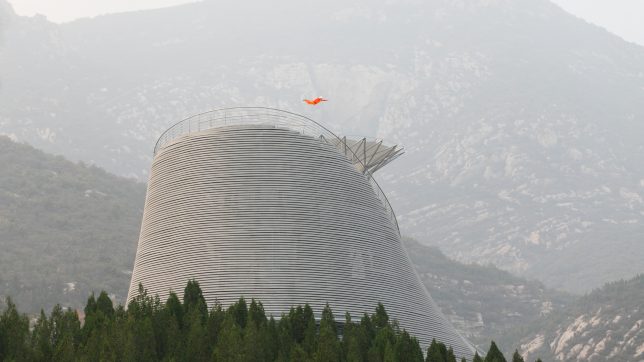
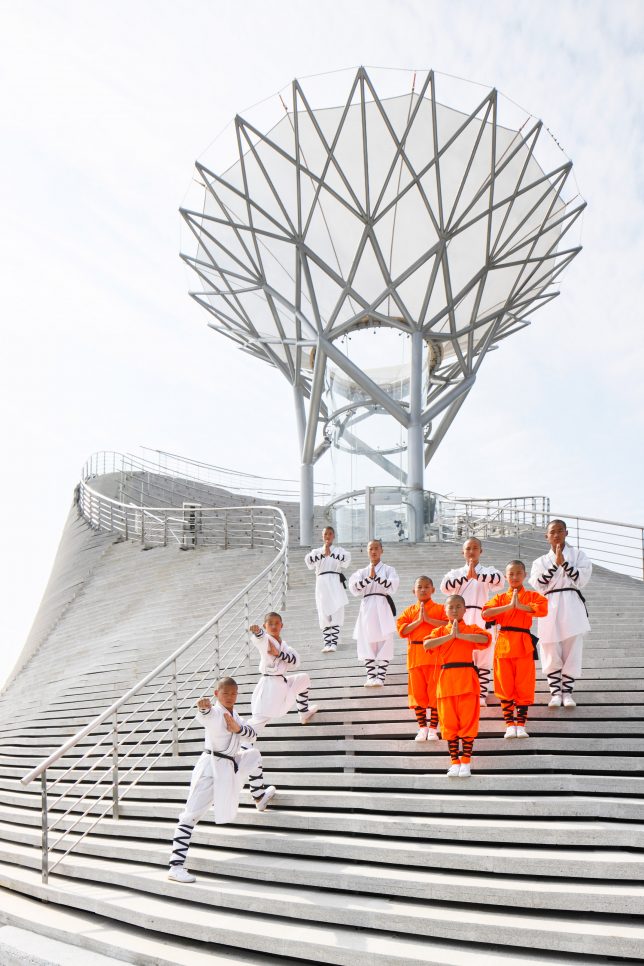
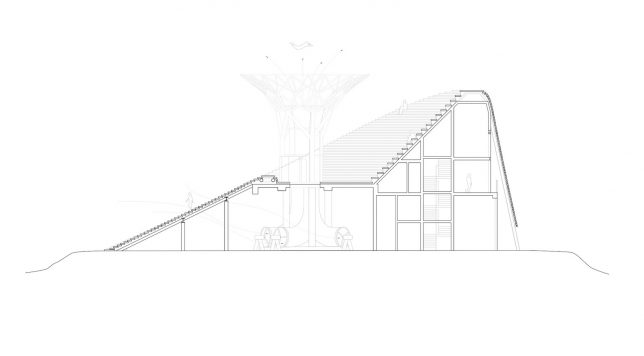
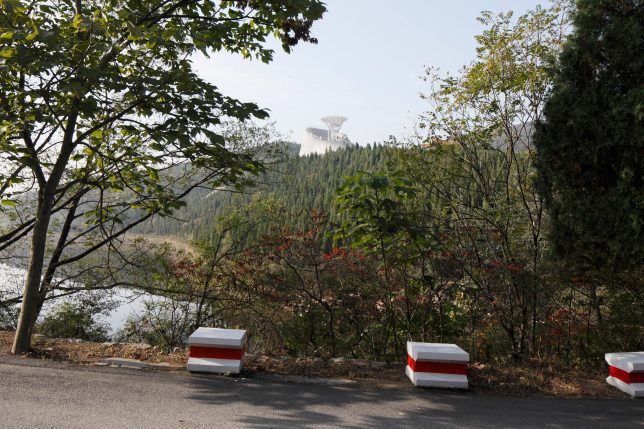
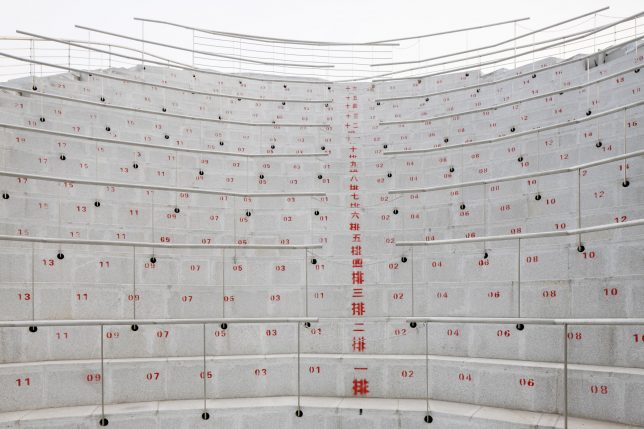
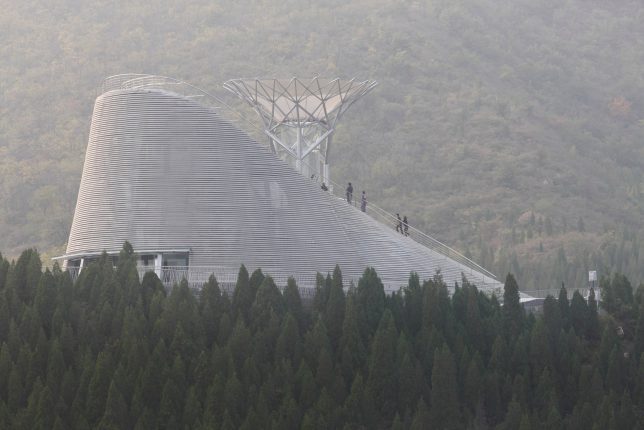
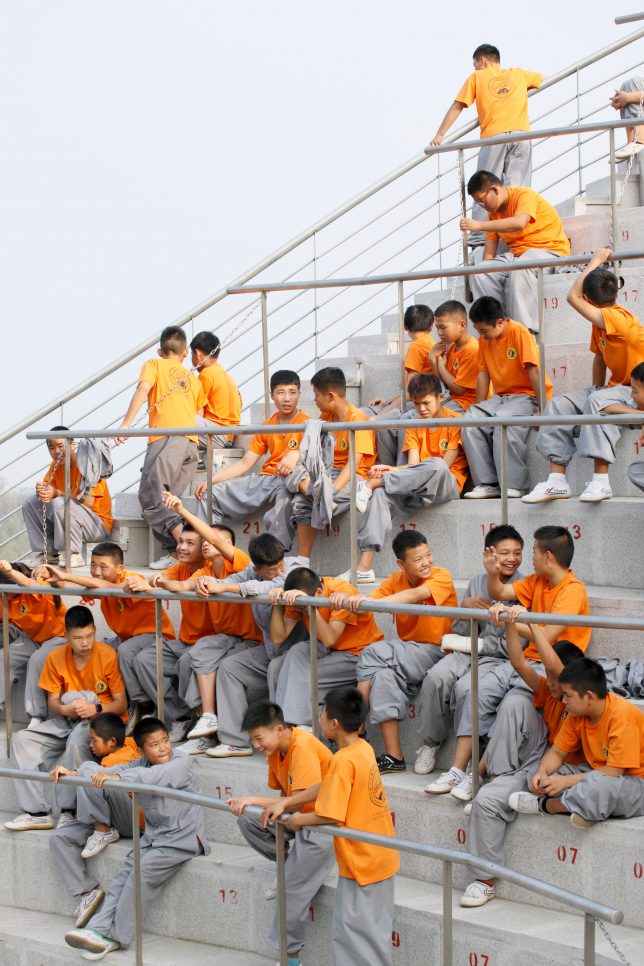
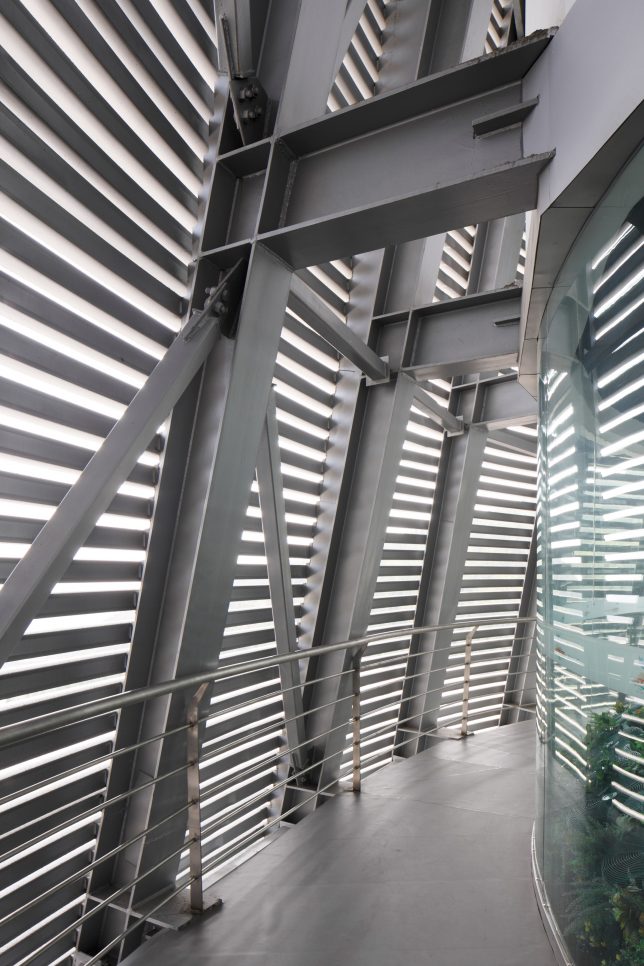
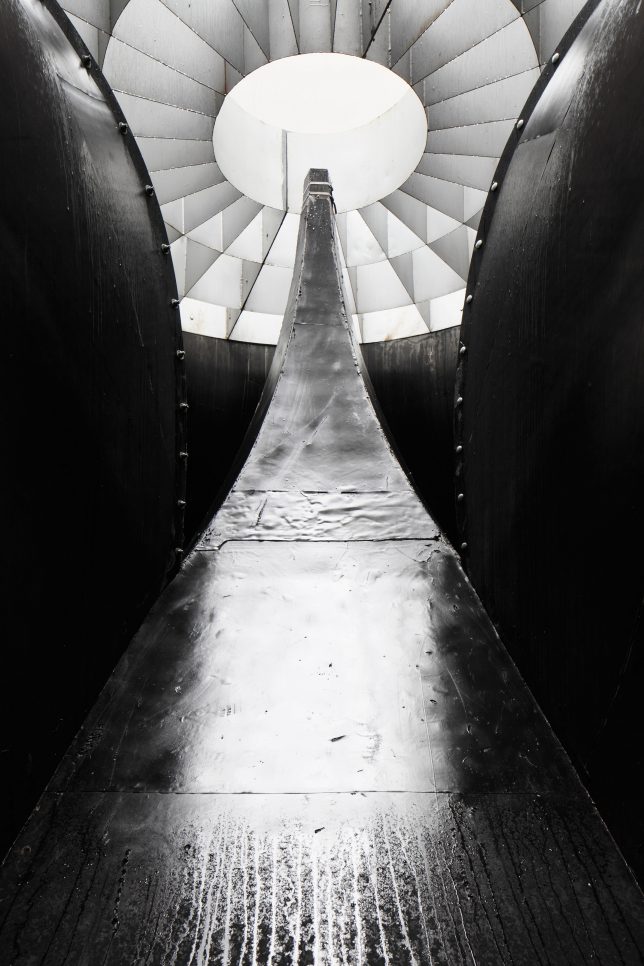
    Mixing modern architecture and traditional arena theater design, the Shaolin Flying Monks Temple features a massive wind tunnel that lets combatants in rural Henan, China, fly and fight in front of hundreds of fascinated observers.

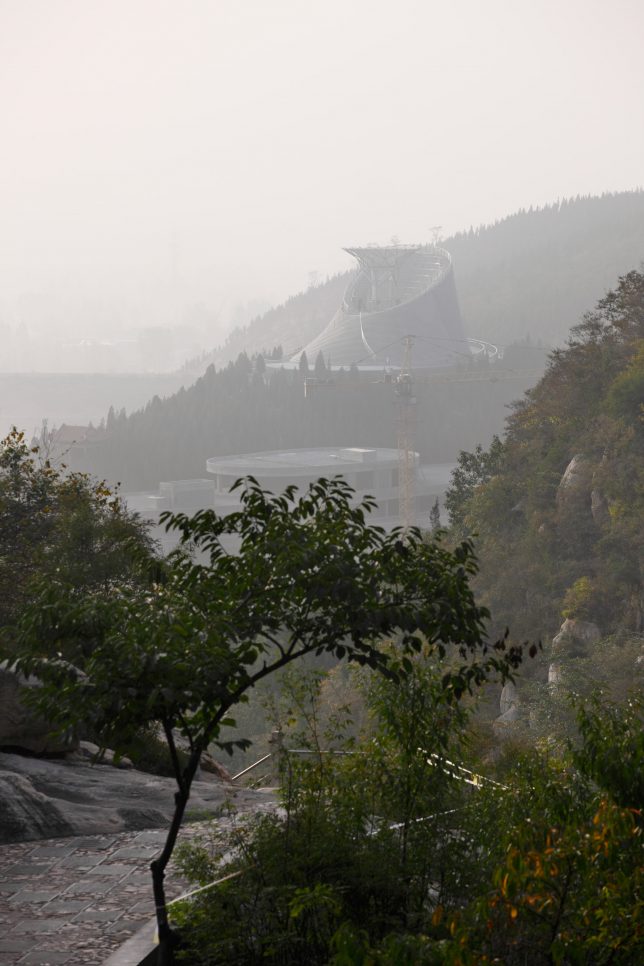
    The mountainous setting is home to the historical Shaolin Monastery (UNESCO World Heritage Site) and is considered the birthplace of Zen Buddhism and the Kung Fu martial arts practice (as well as the cradle of Chinese civilization more broadly).

    Designed by Latvian architect Austris Mailitis, the pavilion is designed to be both contemporary while also deferential to the region and its traditions. The designer was commissioned based on a chance meeting at the Shanghai Expo in 2010.

    The mounded shape of the complex and branching, trunk-like protrusion of the tunnel take their inspiration from a translation of Shaolin, meaning: mountain in the wood.

    “The architectural and conceptual image pays respect to the beauty of surrounding nature and the historical heritage of the site. Developed in the shape of two symbols – mountain and tree – it serves as a platform for any kind of scenic arts focusing especially on flying performances.”

    “The building method combines modern and ancient technologies,” explained the architect” — a laser-cut steel superstructure supports stone steps handcrafted using local quarry resources.”

    Share on Facebook


    [ By WebUrbanist in Architecture & Public & Institutional. ]

    [ WebUrbanist | Archives | Galleries | Privacy | TOS ]


    WebUrbanist

  • YI Technology announces consumer-level 360 live VR camera

    YI Technology today announced the YI 360 VR consumer-level live VR camera. The new model is capable of capturing 360-degree spheric video footage at 5.7K resolution and 30 frames per second. It also offers 4K instant in-device stitching and 2.5K live-streaming.

    The camera weighs only six ounces and can be controlled via basic on-device controls or a mobile app. It uses a pair of 220-degree lenses and 12MP Sony IMX377 CMOS sensors to record video footage or 5.7K 360-degree still images.

    “Virtual reality is exciting. It promises a whole new range of opportunities for creating and sharing truly immersive experiences,” said Sean Da, CEO of YI Technology, “but it can also be really intimidating. For VR to truly take off it has to be easy and fun. At YI Technology, we challenge ourselves to bring the most innovative technologies together in a way that is simple, enjoyable and useful for anyone, from kids to professionals. VR is no exception. Too many of today’s solutions are exciting in theory but really complicated in practice. That is why we worked so hard to perfect YI 360 VR. Using the best components, rigorous industrial design and many years of testing, we eliminated the cables, confusing interfaces and bulky components and added 5.7K fidelity, 4K in-device stitching and 2.5K live-streaming, all in a handy, affordable package so everyone can share exciting moments live, from any angle.”

    The camera is available for pre-order from today at $ 399. Delivery is scheduled for June 2017. The Yi 360 VR will also be on display at this week’s NAB 2017 show in Las Vegas.

    Press Release:

    YI Technology Announces YI 360 VR™, First High-end, Live VR Camera for Any Consumer

    Newest pocket-sized, camera combining 360-Degree 5.7K VR capture, 4K instant in-device stitching, and 2.5K live-streaming debuts at NAB 2017 today and releases in June

    LAS VEGAS–(BUSINESS WIRE)–NAB Show – YI Technology, the leading, international provider of advanced, intelligent imaging technologies, today announced the new YI 360 VR™, a major step in making truly high-end virtual reality video easy and accessible to anyone who wants to create and share content. Scheduled to be released in June 2017, the YI 360 VR™ is available for early ordering now and will be on display at this week’s National Association of Broadcasters (NAB) show in Las Vegas, NV.

    With a simple, handheld and mountable camera design, the YI 360 VR™ is the first VR camera to combine high-fidelity, 360-degree video capture, mobile application for easy use along with 4K instant, in-device stitching and 2.5K live-streaming to any sharing channel. With these innovations, the YI 360 VR™ provides a complete solution for anyone to create immersive, 360-degree video experiences easily, quickly and anywhere.

    “Virtual reality is exciting. It promises a whole new range of opportunities for creating and sharing truly immersive experiences,” said Sean Da, CEO of YI Technology, “but it can also be really intimidating. For VR to truly take off it has to be easy and fun. At YI Technology, we challenge ourselves to bring the most innovative technologies together in a way that is simple, enjoyable and useful for anyone, from kids to professionals. VR is no exception. Too many of today’s solutions are exciting in theory but really complicated in practice. That is why we worked so hard to perfect YI 360 VR. Using the best components, rigorous industrial design and many years of testing, we eliminated the cables, confusing interfaces and bulky components and added 5.7K fidelity, 4K in-device stitching and 2.5K live-streaming, all in a handy, affordable package so everyone can share exciting moments live, from any angle.”

    YI 360 VR™ CAMERA HIGHLIGHTS:

    VIVID: The camera delivers stunning video and images – in 360. YI 360 VR™ features professional-grade video quality at up to 5.7K/30fps in 360 degrees for post-production work, thanks to Ambarella’s virtual reality SOC H2V95 chip and a pair of sharp 220-degree lenses mated to a pair of 12MP SONY IMX377 CMOS sensors. It also captures 5.7K 360-degree still photos. Most other multi-lens VR cameras give you clunky, choppy video images and require streams to be stitched together on a computer. The YI 360 VR™ offers seamless in-device stitching without added software so anyone can make high-quality 4K, 360-degree VR videos instantly.

    EASY: YI 360 VR™ is lightweight and compact. At only six ounces and easily mountable wherever you put an action camera, it can go anywhere you go. Simple controls are on the device or the companion YI 360 VR™ mobile app allows you to control the camera, preview, playback, edit and share 360-degree videos from any smartphone. Record for over an hour on one battery charge (AC power also included) the YI 360 VR™ connects with WiFi so you can view, edit and share instantly and continuously right in the app.

    LIVE: YI 360 VR™ features up to 100Mbps high-speed WiFi (Dual-band Wi-Fi 2.4GHz & 5GHz) to enable users to live-stream 2.5K/30fps 360-degree videos or download photos and videos from camera to smartphone. Connect with a WiFi network and you can start live-streaming everything around you to Facebook, YouTube, and more at 2.5K in 360 Degrees. The high-speed WiFi makes photo auto-sync possible and video download extremely fast. Photos taken by the camera can be automatically synchronized to any smartphone instantly so manual download is no longer needed. Use the app to easily post photos or videos with one click to all your favorite social networks.

    Pricing & Availability

    At $ 399 MSRP, YI 360 VR™ will be available for early ordering beginning today, with scheduled delivery for limited release in June 2017. https://yitechnology.com/yi-360-vr-camera

    YI 360 VR™ is only one of YI Technology’s advanced 360-degree video solutions unveiled today at NAB 2017. The company also announced today the YI HALO™, the newest professional-grade 360-degree, stereoscopic camera for the Jump platform from Google.

    See and experience YI Technology’s two new products, YI 360 VR™ and YI HALO™, at NAB 2017 in the Virtual & Augmented Reality Pavilion, Booth N1121VR. Visit www.yitechnology.com for more information.

    Note, the company will also present its products at the Sixteenth Annual Las Vegas SuperMeet on Tuesday, April 25, 2017 from 7:00 pm – 11:00 pm in the Brasila Ballroom at the Rio Hotel.

    Articles: Digital Photography Review (dpreview.com)

  • Sonoma, Redux

    I am quickly becoming a big fan of Northern California. I first went out last year for my birthday, had a blast, drank lots of wine. This was my second trip up to SF/Sonoma – Hung out for a day or two in the city, then drove up to the wine country. Only carried my GF1, but it served me well. (although my buddy who isn’t a photographer himself had an old Hasselblad 503cw from his dad, which we took out for some shots!) Early winter seems the perfect time to go as well – the countryside was a rainbow of reds and yellows… the vine covered hillsides were shockingly bright, especially when viewed from afar – the highly maicured vines created an almost solid carpet of color across the rolling hills.

    Lots of pictures, lots of wine… what more could you ask for? (slideshow below)

    [portfolio_slideshow]

    Tweet This Post Stumble This Post


    F/1.0