Tag: world’s

  • What If? Apocalyptic Art Explores Ends of Industrial Worlds

    [ By WebUrbanist in Art & Drawing & Digital. ]

    skyscraper world close up

    What if we filled the world with nothing but cars, or skyscrapers, or if we simply started building an industrialized mountain (like a modern-day Tower of Babel) that reached forever upward?

    giant skyscraper filled world

    modern tower of babel

    Michael Kerbow is a San Francisco explores ways in which a world could end of industry were iterated to a point of near-infinite proportions – his works depict bottomless mines, planets covered (and carved out) with man-made structures and much more.

    world filled with cars

    hollow pursuits world

    With titles like Fool’s Gold, Hollow Pursuits, Witching Hour and Diminishing Returns, it seems clear where the artist stands on the issue of endless industrialization in the face of limited resources and finite space.

    industrialized future world

    While he works with assemblage and digitally-manipulated photography, Kerbow’s large-scale paintings in particular show fascinating possible worlds where urbanization has pushed past the limits of reason and sustainability.

    endless mining world

    Of himself, he writes: “My work explores the way in which we engage with our surroundings and the possible consequences our actions have upon the world in which we live. Through my work I attempt to question the rationale of our choices, and try to reveal the dichotomy that may exist between what we desire and what we manifest. Recently my work has focused upon the mechanisms that power our society and examines how they may influence the construct for a possible future.”

    Share on Facebook


    [ By WebUrbanist in Art & Drawing & Digital. ]

    [ WebUrbanist | Archives | Galleries | Privacy | TOS ]

    WebUrbanist

  • The Desertron: World’s Largest Super Collider Lies Abandoned

    [ By WebUrbanist in Abandoned Places & Architecture. ]

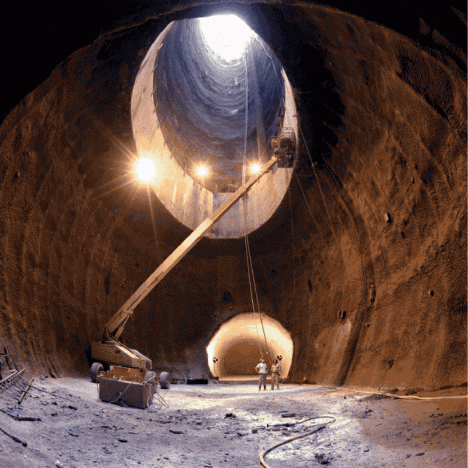
    super collider tunnel digging

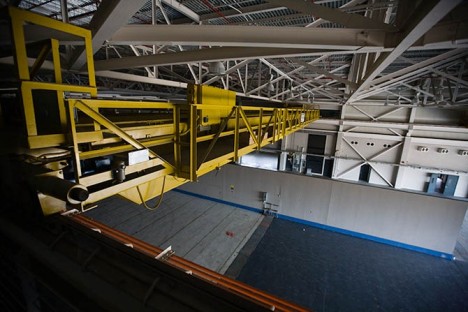
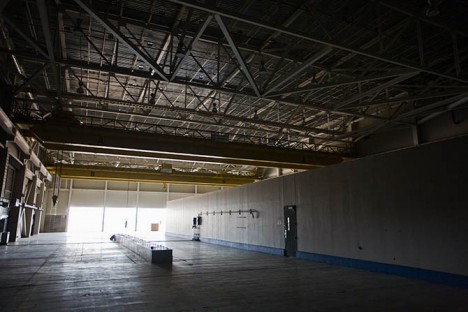
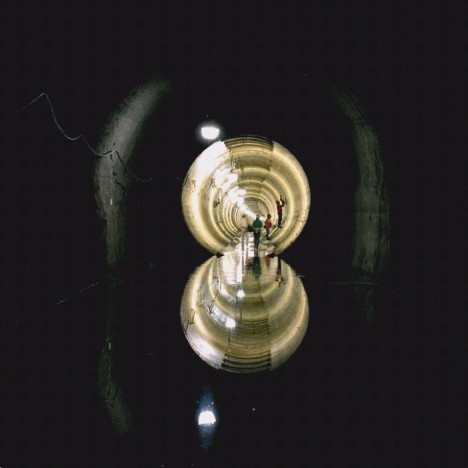
    Designed to break records held by the Large Hadron Collider at CERN, the Superconducting Super Collider built (and abandoned) in Texas features fourteen miles of unseen and unused underground tunnels.

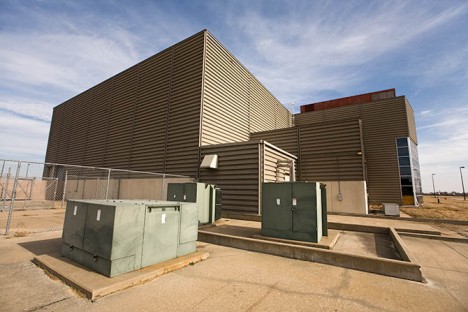
    abandoned tunnel surface complex

    abandoned super collider complex

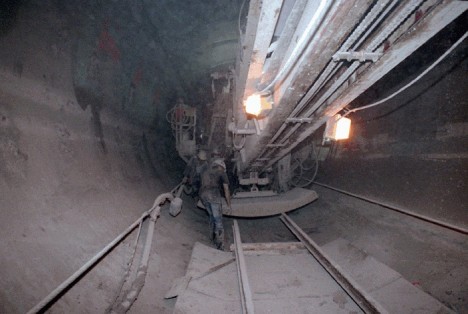
    Construction on what was to be the largest particle accelerator in the world started in the early 1980s but funding cuts in the early 1990s caused the entire project to be shut down. By that time, billions of dollars were already spent and the expected tag had tripled from 4 to 12 billion, 17 shafts were dug and 14 miles of tunnel excavated (out of a total of 51 planned).

    abandoned particle ssc texas

    abandoned underground tunnels texas

    abandoned tunnels urban exploration

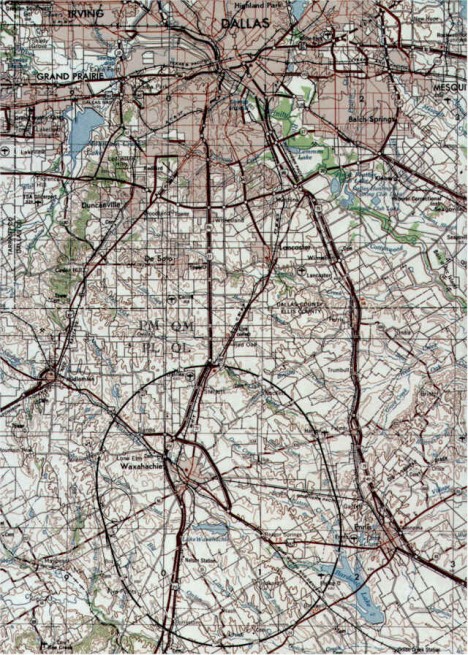
    Located on a site near Waxahachie, Texas (south of Dallas, shown on a map below) without existing tunnels (which helped in the building of the LHC), removing millions of tons of soil proved to be a budget-breaking expense for the SSC. The complex has since gained the apt nickname ‘Desertron’ for obvious reasons.

    abandoned subterranean super collider

    supercollider particle accelerator map

    Except for underground generators, most of the major machinery was removed from the site before it was deed to the local county, which in turn sold it to a private corporation planning to turn it into a data center. With an independent power grid and dedicated fiber optic line it seemed like a good fit, but when its would-be developer died in an accident the plans were scrapped. Since then it has remained empty, but has again been purchased, this time by a chemical company.

    super collider exploration

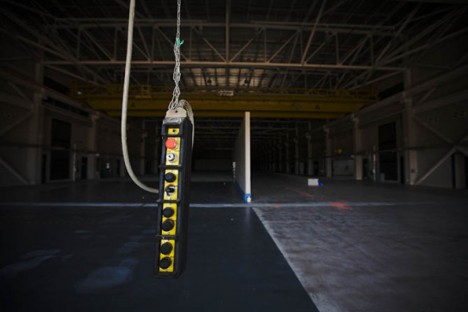
    super collider complex interior

    super collider abandoned inside

    Many factors have been cited as contributors to its abandonment, including the end of the Cold War with Russia and the comparable amounts being budgeted for the United States’ contribution to the International Space Station – at the time, it seemed to many to that spending as much on the SSC as the ISS would be folly (images via Jim Merithew, AmusingPlanet, Wired and Wikipedia).

    Share on Facebook


    [ By WebUrbanist in Abandoned Places & Architecture. ]

    [ WebUrbanist | Archives | Galleries | Privacy | TOS ]


    WebUrbanist

  • Racing Pigeons: Garbage City Hosts World’s Oddest Pastime

    [ By WebUrbanist in Culture & History & Travel. ]

    pigeon tower in motion

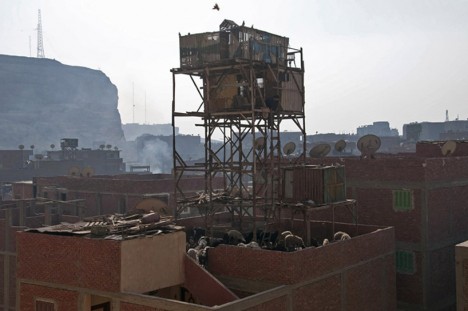
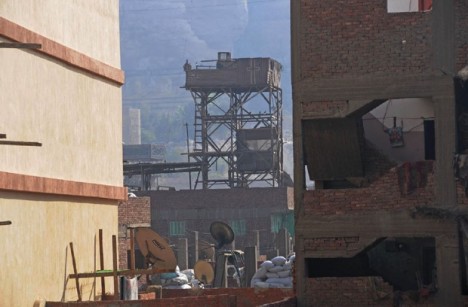
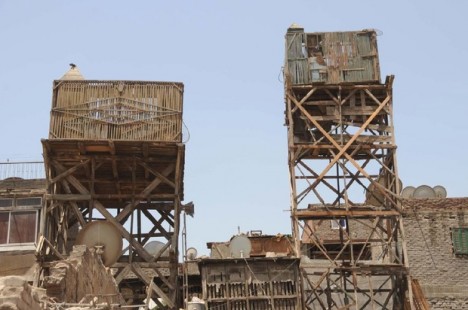
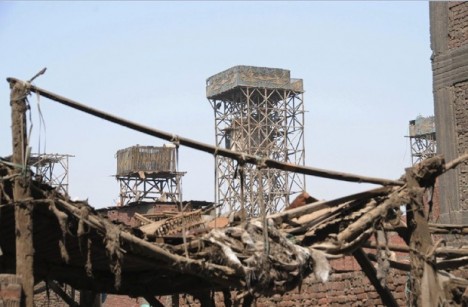
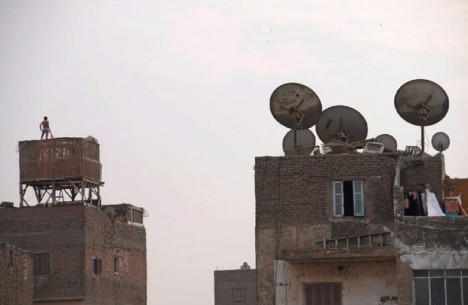
    In the trash-ridden outskirts of Cairo, Egypt, precariously lofted structures rise up on stilts, home to birds that, come sunset, are set loose as the strange race begins to reroute and capture the free-flying flocks of one’s neighbors. The goal: to use flags and whistles to navigate your own birds and bring them back to their roost, all while hopefully entrapping your neighbors’ pets in the process.

    pigeon architecture

    Photographer Manuel Alvarez Diestro (via CityLab) flew in from London to document this bizarre phenomenon. Dating as far back as 4,000 years ago in various forms, this sport-like activity involves breeding, raising, releasing and recapturing huge collections of pigeons.

    pigeon roost loft sport

    pigeon informal architecture

    Garbage City, the informal name of the trash-collecting suburbs surrounding Cairo, plays host to many of participants, its lack of building code regular contributing to the unsteady-looking structures used to house the birds.

    pigeon housing between rubble

    Not made to support heavy loads, many of these informal roosts are cobbled together from scraps and assembled like scaffolding from wood and whatever else is available.

    pigeon stacked housing

    PigeonNews gives a great deal of detail on everything from the types and ratings to behaviors of the birds and their masters, including stories of training, endurance and skill as well as sickness, predators and other mishaps.

    pigeon homes against rubble

    Notably, pigeon is also eaten in the region, so while many treat it as a hobby or sport, some participants may also have other incentives for breeding (or catching) these birds.

    pigeon rooftop caretaker

    pigeon racing garbage city

    There are as many as 2,000,000 people actively raising these birds in Egypt today, with some people spending hundreds of dollars a month on the upkeep of hundreds of birds.

    Share on Facebook


    [ By WebUrbanist in Culture & History & Travel. ]

    [ WebUrbanist | Archives | Galleries | Privacy | TOS ]

    WebUrbanist

  • 5,000 Residents Being Evicted from World’s Tallest Vertical Slum

    [ By WebUrbanist in Architecture & Cities & Urbanism. ]

    tower david shelf wall

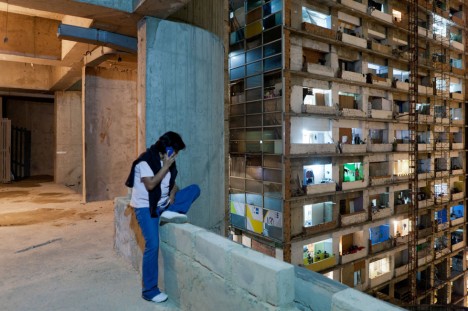
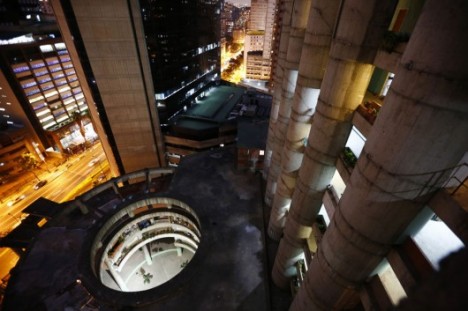
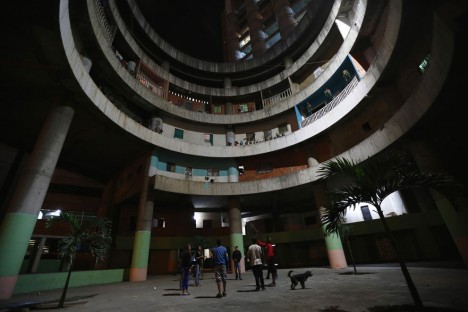
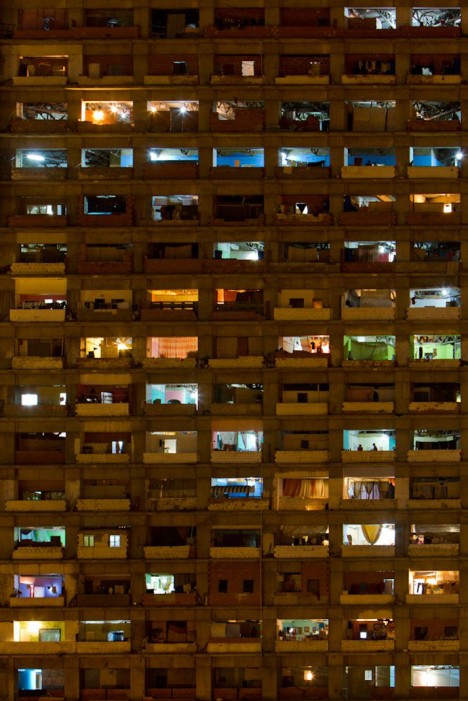
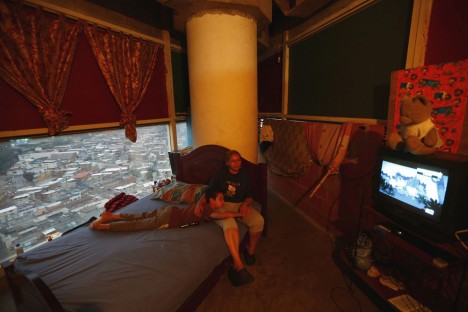
    A forced relocation is underway as thousands of squatters are moved by authorities out of their homes and the city of Caracas, some of whom have called the infamous half-finished Tower of David home for as long as seven years.

    tower of david view above

    Rumors began a few weeks back as Chinese bankers expressed interest in purchasing the unfinished structure in Venezuela, with the intention of turning it back toward the (official and licensed) commercial and office uses for which it was originally intended. Currently, however, over 1,000 families live and work in the first few dozen floors of this 44-story skyscraper.

    tower of david ground floor

    With surprising speed over the past week, the government has already shifted over 100 of these to a settlement outside of town (three floors a time) and is set to displace everyone living in the building, primarily to Valles del Tuy in the state of Miranda.

    tower david tall pic

    The tower was originally abandoned mid-construction in 1990 and eventually taken over by informal inhabitants who created not just homes but stores, offices, gyms, groceries, tailors, factories, churches tattoo parlors and even internet cafes within its walls.

    tower of david room tv

    Without an elevator (and with missing windows on the top levels), its most prized spaces for occupants have been on the lower floors, with scooter taxis that ferry people up ramps to some levels adjacent to the parking structure. Like Kowloon Walled City, the place has its own rules and informal systems of bringing in and sharing resources, including limited water and power.

    tower of david exterior view

    The Urban Think Tank, which spent years studying the building (and writing Torre David: Informal Vertical Communities), has weighed in on the significance of the building and its occupants as well as its sudden shift in direction: “What we found was neither a den of criminality nor a romantic utopia. Torre David is a building that has the complexity of a city. It merges formal structure and informal adaptation to provide urgently needed solutions, and shows us how bottom-up resourcefulness has the ability to address prevailing urban scarcities.”

    More from UTT: “When dealing with informal settlements, infusions of money for major public works and other approaches that involve large-scale rapid change – such as the razing of slums and relocation of poor populations – have generally failed in the complex setting of the city. The commercial housing market simply does not supply enough homes. There are too few units of social housing, and the majority of these are far beyond the reach of low-income families.”

    “The dire asymmetries of capital in the global south do little to help; yet various forms of structural neglect have not always diminished great entrepreneurial vigor. Shunned by governments and the formal private sector, city dwellers, like those in Torre David, have devised and employed tactics to improvise shelter and housing.” Images via The Atlantic and Torre David: Informal Vertical Communities.

    Share on Facebook


    [ By WebUrbanist in Architecture & Cities & Urbanism. ]

    [ WebUrbanist | Archives | Galleries | Privacy | TOS ]

    WebUrbanist

  • Earin: World’s Smallest Wireless Earbuds Raise $1,500,000+

    [ By WebUrbanist in Design & Products & Packaging. ]

    earin wireless mobile audio

    Stripping away all non-essential functionality, these sleek audio accessories are tiny enough to be effectively invisible and entirely wire-free. No need to worry about charging, either – their small carrying case lets you power them back up on the go.

    Earin just finished raising £972,594 on Kickstarter, over 5 times its original funding goal, reflecting how much so many of us wish to get rid of those pesky wires when listening to music on the move.

    earin mobile wireless earbuds

    earin detail bud specs

    Beyond long battery life, ergonomic comfort, snug sport-friendly casing other essential considerations, stretch goals for the project include waterproofing, phone adapters and battery monitors.

    erin capsule container

    From its creators: “No unnecessary functionality has been added. No sensors, no lights and no microphone, that’s right – no microphone! Not because we couldn’t but because we wouldn’t! We use balanced armature speakers, used in professional in-ear-monitors and hearing-aids to deliver the best possible sound and to keep power-consumption at its minimal. High-density rechargeable batteries are used to keep playback time up and size down.”

    earin package complete

    Much of the technical specs on their Kickstarter page will be of interest to audiophiles (and show just how much these makers have thought about their project), but in summary: “The architecture of the earbud is based on two main covers which are ultrasonically welded to create a water-tight seal, protecting the electrical components. The materials are carefully selected to withstand both climate and impact testing. As all project members have extensive experience of creating similar consumer products, we know what works and what does [not].”

    Share on Facebook


    [ By WebUrbanist in Design & Products & Packaging. ]

    [ WebUrbanist | Archives | Galleries | Privacy | TOS ]

    WebUrbanist

  • Archive from the world’s oldest photographic society to go on show

    London’s Science Museum is to host a major exhibition of prints and artifacts from the collection of the Royal Photographic Society, including prints and experimental cameras made by William Fox Talbot in the 1820s. Masters of Light: Treasures from the Royal Photographic Society Collection will display over 200 items from the archives of a collection that was started in 1853, and it will be held on the site of one of the UK’s first ever photographic exhibitions. Take a look at some of the historic work that will be on display. See gallery

    Articles: Digital Photography Review (dpreview.com)

  • Bounce Below: World’s Largest Underground Cave Trampoline

    [ By Steph in Destinations & Sights & Travel. ]

    Bounce World Underground Trampoline 1

    Deep in a former Welsh slate quarry mining cavern twice the size of St. Paul’s Cathedral, children and adults alike gleefully jump up and down on a system of netting suspended from the walls. Bounce Below, the world’s largest underground trampoline, will open to the public July 3rd in the mining town of Blaenau Ffestiniog.

    Bounce World Underground Trampoline 2

    Operated by Zip World, the new tourist attraction features three massive trampolines that ascend from twenty feet to 180 feet above the bottom of the cavern, with ten-foot net walls preventing anyone from falling over the edge. Customers get dressed in cotton overalls and put on helmets, then board a train that travels deep into the mountain.

    Bounce World Underground Trampoline 4

    Bounce World Underground Trampoline 3

    They disembark to the sight of the trampolines within the colorfully lit space. Each trampoline is linked by a slide for descending and a net walkway for getting back up. The largest slide is 60 feet long. A spiral staircase leads to the other side of the railway line.

    Bounce World Underground Trampoline 5

    Workers prepared the space by carrying about 500 tons of rubble out of the cavern, the task illuminated with portable lamps. The mining of slate in Wales dates back to Roman times and the industry peaked in 1898 with 17,000 employees, but by the end of World War II, the introduction of new roofing materials led to many of the mines closing.

    Share on Facebook


    [ By Steph in Destinations & Sights & Travel. ]

    [ WebUrbanist | Archives | Galleries | Privacy | TOS ]

    WebUrbanist

  • Fairytale Hotels: 15 of the World’s Most Magical Lodgings

    [ By Steph in Boutique & Art Hotels & Travel. ]

    Magical Hotels Main
    Waterfalls stream down the sides of mountain-shaped, moss-covered structures, while white horses gallivant in front of castles that look like they were ripped right out of a book of fairytales. These 15 hotels are among the most magical places to stay anywhere in the world, from ancient palaces in India to gleaming ice hotels in Quebec. While some are a peek at how the 1% live, others are surprisingly affordable.

    Magic Mountain Hotel, Chile

    Magical Hotels Magic Mountain 2
    Magical Hotels Magic Mountain Lodge Chile

    If elves took up residence in Hobbiton, this is what their homes would look like. The mountain-shaped structure is dotted with arched windows and obscured with lush greenery. Waterfalls stream down the sides to drench the moss, ferns and flowers. Located within the remote Huilo-Huilo Biological Reserve, the hotel requires an adventurous spirit to even access, but it’s well worth the effort. Nearly everything is constructed from locally, sustainably sourced wood.

    Neemrana Fort Palace, India

    Magical Hotels Neemrana

    A 15th-century palace built into the hillside in India is now a five-star, 55-bedroom hotel with kingly views over the nearby village. Neemrana Fort Palace is full of authentic decor from periods throughout India’s history and contains displays that educate guests about the palace’s fascinating past. Though rooms here start at just £50 per night, guests are given the royal treatment, with options including poolside spa treatments and hot balloon rides over the valley.

    Fairytale Hotel in Belgium

    Magical Hotels Balade Gnomes 1
    Magical Hotels Balade Gnomes 2

    Sleep in a surreal medieval-style chamber within a massive wooden Trojan Horse at Belgium’s La Balade des Gnomes Hotel. This bizarre retreat boasts ten unique rooms sculpted with the natural earthen building material known as cob to create all sorts of curved custom surfaces. The horse is just one of the hotel’s suites – others include a troll’s lair and a Macquarie Island room with a boat-shaped bed.

    Crazy House Hotel, Dalat, Vietnam

    Weirdest Hotels Crazy House 1
    Weirdest Hotels Crazy House 2

    The aptly named Crazy House Hotel in Vietnam began as the private residence of architect Hang Viet Nga, who clearly let her imagination run wild in creating an organically shaped structure reminiscent of the Barcelona ouvre of Antoni Gaudi. Made from the base of a dead tree, the house is full of ladders leading into hidden nooks and through tight tunnels. Rooms cost as little as $ 22 USD per night.

    Thorngrove Manor Hotel, Adelaide, Australia

    Magical Hotels Thorngrove

    The Thorngrove Manor Hotel could easily double as a princess castle at Disneyland, it’s so picturesque. Located in Adelaide, Australia, the castle-like structure looks centuries-old but was actually built in 1994 as part of a vineyard. Though all the rooms are together in one building, there are no common spaces, and couples staying there never need to see other guests.

    Next Page – Click Below to Read More:
    Fairytale Inn 15 Of The Worlds Most Magical Hotels

    Share on Facebook


    [ By Steph in Boutique & Art Hotels & Travel. ]

    [ WebUrbanist | Archives | Galleries | Privacy | TOS ]


    WebUrbanist

  • World’s Weirdest Hotels: 14 Unique Offbeat Accommodations

    [ By Steph in Boutique & Art Hotels & Travel. ]

    World's Weirdest Hotels Main

    There are art hotels with unusually creative and strangely-themed decor, and then there are hotels shaped like giant anuses, which are in a different class altogether. Hotels so strange and unusual that they qualify as roadside attractions whether you spend the night or not include a massive toilet, an operable crane, a survival pod with disco decor, a giant beer can and a manor where you can eat breakfast with giraffes hovering over your shoulder.

    Hotel Shaped Like a Giant Anus, Antwerp, Belgium

    Weirdest Hotels Anus
    Weirdest Hotels Anus 2

    It’s unlikely that you’ve ever thought to yourself, “Gee, I’d love to spend a night or two inside a giant anus,” but you have that opportunity anyway if you’re ever traveling through Antwerp, Belgium. Hotel Casanus began as a tongue-in-cheek work of art but is now actually a functioning rental on a small, isolated island as part of the 30-acre Verbeke Foundation Sculpture Park.

    Giraffe Manor, Nairobi, Kenya

    Weirdest Hotels Giraffe Manor

    It’s certainly not every day that you can enjoy a gourmet meal in a quaint historic mansion as giraffes lean in through the windows over your shoulder. Giraffe Manor is located on a 140-acre sanctuary for one of the most endangered subspecies of giraffes in the world, Rothschild’s giraffes. The manor, which has ten guest rooms, offers up plates of giraffe food that you can feed to these hungry guests so they don’t go after your breakfast.

    Sand Hotel, Dorset, England

    Weirdest Hotels Sand Dorset

    What’s the opposite of an ice hotel? A hot-weather alternative that’s no less ephemeral is the Sand Hotel in Dorset, England. Made of 1,000 tons of sand by British sculptor Mark Anderson, the hotel featured open ‘rooms’ that could be rented for only $ 21 a night.

    Sewer Pipe Hostel, Mexico City

    Weirdest Hotels Sewer Pipe

    In case staying inside an anus sculpture is too extreme for you, perhaps a sewer pipe will be more accommodating. Mexico City’s TuboHotel is made up of stacked, reclaimed concrete sewer pipes with little more than a queen bed and a lamp inside.

    Mount Gambier Jail Hotel, Australia

    Weirdest Hotels Jail Australia

    The spartan rooms of the Mount Gambier Jail hotel in Australia don’t look much different than they did when actual prisoners were staying there, and little has been changed about the entire facility since it was a functioning jail. It’s far from luxurious, but that’s kind of the point: the hotel markets itself as an ideal place to stay for penny-pinchers and the broke.

    Next Page – Click Below to Read More:
    Worlds Weirdest Hotels 14 Unique Offbeat Accommodations

    Share on Facebook


    [ By Steph in Boutique & Art Hotels & Travel. ]

    [ WebUrbanist | Archives | Galleries | Privacy | TOS ]

    WebUrbanist

  • Tour Tiny Worlds: 6-Camera Cube Creates 360-Degree Video

    [ By WebUrbanist in Gadgets & Geekery & Technology. ]

    3d bike ride video

    The ultimate at-home hacker project, this strange small-world effect was created using a half-dozen GoPro cameras, a 3D printer and a technique that turns ordinary panoramic shots into a surreal world-warping wraparound experience.

    German photographer, journalist and inventor Jonas Ginter cobbled together his cubic ball of cameras then mounted this oddball creation above his bike, all to generate the effect you see in the video above. Given the accessibility of the constituent technologies (and his helpful instructions), suddenly the idea of 3D video capture is within reach of any enthusiastic hobbyist.

    cubic 360 degree camera

    The stereographic distortion, while a neat effect, is also helpful in rendering a three-dimensional view into a two-dimensional frame. As for the idea, here is a bit more from the creator (summary translation to follow): “Ich habe mir seltsame Konstruktionen mit Spiegeln angeguckt und frustriert festgestellt, dass das absoluter Quatsch ist. Stück für Stück kam die Erkenntnis, dass ich 360-Grad-Videos nur realisieren kann, wenn ich das Bild in einem Take aufnehme. Die logische Konsequenz hieß also: Viele Kameras.”

    3d printed and go pro parts

    panoramic creation process illustration

    Above, Ginter explains his slow realization that to realize a 360-degree video he would have to do everything in a single take, which in turn means having multiple cameras.  While his takes so far are interesting in themselves, the possibilities are amazing – but consider just the fun consumer applications, like capturing a three-hundred-and-sixty-degree skydive or mounting this on the car roof for a road trip. You can read his summary on Ginter’s website, either in the original German or using Google Translate.

    Share on Facebook


    [ By WebUrbanist in Gadgets & Geekery & Technology. ]

    [ WebUrbanist | Archives | Galleries | Privacy | TOS ]

    WebUrbanist