As far as pocketable cameras go, the DxO ONE is the most likely to fit into the smallest of pockets. Built as a companion to Apple mobile devices, it connects directly via integrated Lightning connector to bring your iPhone a 20MP 1″-type sensor and 32mm equivalent F1.8 lens. We put its standard shooting mode as well as its SuperRAW mode up against our studio test scene. Read more
Tag: Test
-
Nikon D7200 Field Test: Desert dance photo shoot
Nikon’s flagship APS-C DSLR is a real workhorse. Offering a 24.2MP CMOS sensor, the D7200 provides a 51-point AF system sensitive to -3EV, an increased buffer depth with 6 fps continuous shooting and 1080 HD video at 60p. We tagged along with pro photographer Gabe Bienczycki on a desert photo shoot to push the D7200 to its limits. Read more
-
Sony Cyber-shot DSC-RX10 II added to studio test scene comparison
The Sony RX10 II is built just like its predecessor, but under the hood are a lot of interesting improvements. We’ve done a lot of real-world shooting with the camera, but now we’ve put its 20MP 1″-type stacked CMOS sensor to the test in our studio. Take a look at how it stacks up against its peers. Read more
-
Liberty City: Inside an Urban Governmental Drone Test Complex
[ By WebUrbanist in Travel & Urban Exploration. ]

If you have ever wondered how and where the Department Homeland Security evaluates drones for real-world applications, this Freedom of Information Act request reveals some of the secrets behind the operations taking place at one of these rather mysterious locations. Not to be confused with its video game namesake, tracing back to Grand Theft Auto’s own digital Liberty City, this real-world test site is fascinating to learn about remotely but not somewhere you want to have an actual vehicular adventure.

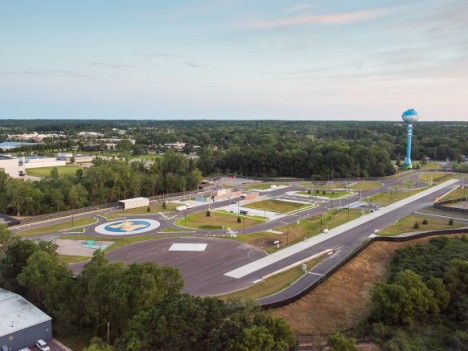
For years, the government has been testing drones for everything from monitoring infrastructure and special events to patrolling harbors and supporting first responders. Run by Robotic Aircraft for Public Safety (RAPS), Liberty City and sites like it let local, regional and national governments deploy different models of drone and decide which best suit their needs. Like Gravesend in the UK (pictured above), officers and troops are also called in on the ground to interact in these remarkably complete but staged environments.

Variegated urban terrains help those overseeing the tests determine a drone’s ability to identify key objects and individuals in the built environment, distinguish assailants and perpetrators in complex situations and track persons through challenging architectural landscapes. Simulations revolve around everything from ordinary robberies to hostage situations and terrorist attacks. The goal, ultimately, is to figure out what (completely or partially) autonomous vehicle technologies will work both generally and around specific purposes, for applications ranging from emergency search-and-rescue to broader everyday surveillance. While the work they are doing in these places is not classified as such, it is still highly secretive and much of it still remains undisclosed after years of inquiry.

Submitted via MuckRock, the FOIA request behind the details featured here sheds light on the reasons and methods behind these processes and places. Per Shawn Musgrave, “The broad objective of RAPS is to determine whether drones can play a practical role in a broad range of public safety deployments. Such applications include law enforcement, firefighting, disaster response, and search-and-rescue. The RAPS testing program evaluates each drone model for ease of operation, durability and performance in simulated scenarios. Reviewers compile their findings into a database for first responders nationwide to use when weighing a drone purchase.”
Want More? Click for Great Related Content on WebUrbanist:
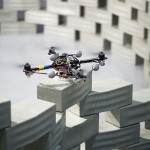
Collaborative Construction: Aerial Drone-Built Architecture
Unmanned aerial vehicles can do more than just take pictures, pick up and drop off objects – they can also work together to create solid structures, …
Click Here to Read More »»
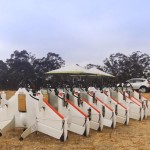
Project Wing: Google Testing Drone Delivery Service
Google sees Amazon’s Prime Air drone delivery service and raises it with the enhanced aesthetics of its own Project Wing, a series of autonomous aerial …
Click Here to Read More »»

Rise of Robotic Graffiti: Drone Vandal Sprays Paint in Midair
In what appears to be the first recorded work of public aerial drone vandalism, this off-the-shelf quadcopter was hacked to hold and use a can of spray paint, …
Click Here to Read More »»


[ By WebUrbanist in Travel & Urban Exploration. ]
[ WebUrbanist | Archives | Galleries | Privacy | TOS ]
-
Olympus ‘Pro’ wideangle lens Field Test: Rock n’ Roll and Skateboards
In our latest Field Test we put Olympus’s new M.Zuiko Digital ED 8mm F1.8 Fisheye Pro and M.Zuiko Digital ED 7-14mm F2.8 Pro in the hands of DPReview writer Dan Bracaglia. Dan put them to the test in some of his natural environments: a rock concert, skate park, and a beach landscape at sunset. See video
-
Canon PowerShot G3 X added to studio test scene comparison
We’ve already published an initial real-world gallery from the PowerShot G3 X, Canon’s newest enthusiast compact, and now we’ve put its capabilities to the test against our studio scene. The G3 X is weather-sealed and uses a 1″-type 20MP sensor with a 24-600mm equiv. lens, making it an appealing choice for outdoorsy types. Take a look at how it performs compared to its peers. Read more
-
Robot City: Entire Fake Town Built to Test Driverless Vehicles
[ By WebUrbanist in Technology & Vehicles & Mods. ]
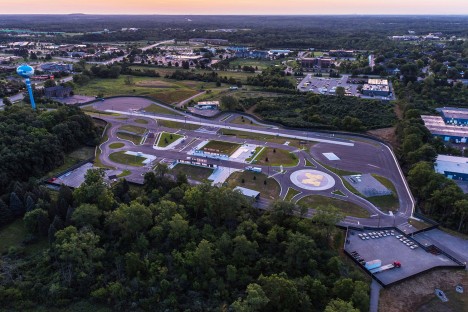
Opening this week, Mcity is a completely artificial village for self-driving cars, bringing the future of automobiles back to Michigan, the historical home of Motor City. Taking lessons from military testing facilities like Gravesend in England or Yodaville in the US, the complex is made to simulate a wide variety of conditions.
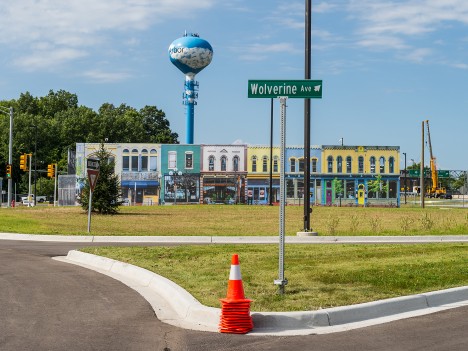
Featuring 32 acres of roads, intersections, sidewalks, streetlights, signals and building facades, Mcity is part of a statewide effort to advance connected technologies and test autonomous vehicles. More than a simulated combination of urban and suburban environments in their ideal forms, these experimental grounds also incorporate stress-testing defects like graffiti and faded lane markings as well as different street terrains, tunnels, roundabouts and multi-lane freeways on a combination of pavement, cobblestones, gravel, grass and dirt.
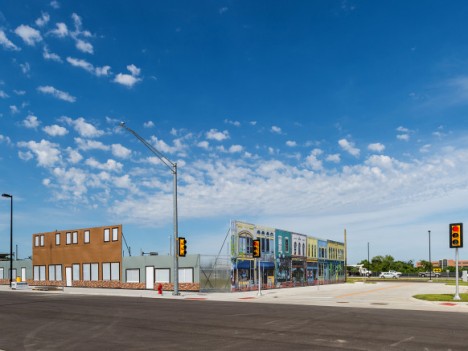
Given that all crashes to date involving autonomous cars have been caused by human error, it is critical not only to test the vehicles themselves but also the people they will interact with on the road. In addition to its proximity to Detroit, a key benefit of the Ann Arbor area is the varied weather in the area, with everything from hot humid midsummer days to serious rain, snow and hail in the winter. The test area can be reconfigured on demand to simulate complex intersections, blind corners and other real-world challenges.
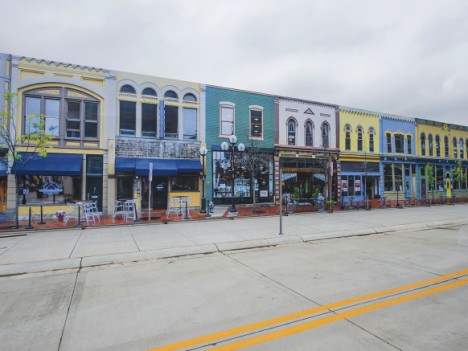
The project represents a $ 10,000,000 private/public partnership between the University of Michigan, local governments and various industries, including but also beyond regional and international automotive powerhouses (Ford, GM, Honda, Nissan, Toyota but also State Farm, Verizon, and Xerox).
“We believe that this transformation to connected and automated mobility will be a game changer for safety, for efficiency, for energy, and for accessibility,” said Peter Sweatman, director of the U-M Mobility Transformation Center. “Our cities will be much better to live in, our suburbs will be much better to live in. These technologies truly open the door to 21st century mobility.”
“In addition to Mcity, MTC has three on-roadway connected and automated vehicle deployments underway. With the help of the Michigan Economic Development Corporation, MTC is building on a nearly 3,000-vehicle connected technology project launched three years ago by the U-M Transportation Research Institute to create a major deployment of 9,000 connected vehicles operating across the greater Ann Arbor area. MTC is also partnering with industry and the Michigan Department of Transportation to put 20,000 connected vehicles on the road in Southeast Michigan. The third piece of the plan calls for deploying a 2,000-vehicle mobility service of connected and automated vehicles in Ann Arbor.”
Want More? Click for Great Related Content on WebUrbanist:

Gravesend: Fake Town for Simulating Crimes, Riots & Terrorism
Like the set of a movie or setting of a video game, this surreal suburban facility could easily be mistaken for a real place at first glance – in …
Click Here to Read More »»

Driverless Living Space: Future Car Envisioned as Mobile Room
Blending elements of rigorous automotive and interior design, this concept car may look like a streamlined vehicle but is more akin to a communal living room …
Click Here to Read More »»

Set Sail on Rail: Quirky Vehicles Explore Abandoned Tracks
Before the abandoned railroad tracks of Paris officially disappear – which is bound to happen, as cities realize the potential for reclamation as High …
Click Here to Read More »»
[ By WebUrbanist in Technology & Vehicles & Mods. ]
[ WebUrbanist | Archives | Galleries | Privacy | TOS ]
-
LensRentals applies copy variation test to short telephoto primes
LensRentals has embarked on a quest to investigate the complicated topic of sample variation among copies of the same lens. It’s the kind of fascinating, geeky stuff we’ve come to know and love from LensRentals, and in the latest round of tests they’ve taken a look at a group of short telephoto primes ranging from 85mm to 150mm. Read more
-
Nikon D810A added to studio test scene comparison
Nikon’s D810A is an astrophotography-oriented version of the D810. It’s the first full-frame camera dedicated to astrophotography, and is better able to capture the hydrogen alpha spectral line. It also expands long exposure options, and has garnered speculation as to improvements in low light capabilities. Take a look at its high ISO and color performance in our studio scene. Read more
-
Pentax K-3 II added to studio test scene comparison
We’ve just added Ricoh’s Pentax K-3 II to our studio test scene. An evolution of the K-3, it offers a 24MP stabilized CMOS sensor with a clever Pixel Shift mode that uses the camera’s stabilization system to record full color information from a scene. We tested it out on our studio scene – take a look at the results. Read more