The Canon EOS 7D II is the long-awaited follow up to the 7D, offering a 20.2MP APS-C sensor, dual-pixel AF with a 65-point phase detect system and continuous shooting at 10 fps. It’s also equipped with 1080/60p HD video capture and a number of compression options, as well as microphone and headphone ports. We put the 7D II (and its predecessor, the 7D) through its paces in our studio and have updated our first impressions review with the results. Read more
Tag: first
-
Inside RA001: World’s first Boeing 747 ‘Jumbo Jet’
The Boeing 747 ‘Jumbo Jet’ changed the world, bringing air travel to the masses, and allowing non-stop flights between distant cities across the globe. The prototype 747 – registration RA001 – first flew in February 1969, and is currently undergoing restoration at Seattle’s Boeing Field. DPReview editor Barnaby Britton has been documenting the process, inside and out. Click through for images
-
DxOMark Mobile report: Sony Xperia Z3 ties for first
The Sony Xperia Z3 is Sony’s latest waterproof flagship smartphone, picking up where the Z2 left off. Like that phone it’s 4K capable and also offers an atypically-large 1/2.3″-type sensor. Just like the Z2, that’s a 20.7MP Exmor RS stacked CMOS sensor nestling behind a 27mm equivalent F2.0 lens. All this has encouraged Sony to offer ISO 12,800, which it says is the highest of any smartphone. Learn more about how it performs
-
Bring on the competition: Canon PowerShot G7 X First Impressions Review
For the last two years, the only enthusiast compact with a large sensor you could buy says ‘Sony’ on the front. Finally, at Photokina 2014, we get some competition from Canon. The PowerShot G7 X uses what is likely the same 20MP sensor as the Sony RX100 III but offers a longer lens, flip-up touchscreen LCD, and arguably better controls. For all the details on this exciting new camera, head on over to our First Impressions Review.
-
Upsizing: Panasonic Lumix DMC-LX100 First Impressions Review
Panasonic’s LX-series of compact cameras have been favorites of both customers and reviewers alike for many years. Photographers who have been waiting for a more enthusiast-slanted LX can finally get out their wallets, because the Lumix DMC-LX100 is here. Find out what we thought about what sounds like the ultimate enthusiast compact camera in our First Impressions Review. Read on.
-
The wait is over: Canon EOS 7D Mark II First Impressions Review
Enthusiast photographers have been waiting in agony for a replacement to the Canon EOS 7D for five years. Their wishes have finally been granted – and in a big way – with the arrival of the EOS 7D Mark II. With a new sensor, improved AF system, faster image processor, and Full HD video, we think that it was worth the wait. For a lot more on the 7D II, read our detailed First Impressions Review.
-
Special FX: Nikon D750 First impressions review
The D750 is Nikon’s latest FX format camera, which borrows features from the D810 and marries them with a 24MP sensor, offering a faster frame-rate than any non-professional full-frame Nikon DSLR. Aimed squarely at enthusiasts and full-frame upgraders the D750 boasts a comprehensive video and still photography specification which includes a tilting rear LCD screen and (on paper) an improved version of the 51-point AF system found in the D810. We’ve been using a pre-production camera for a few days – click through for our first impressions.
-
Canon marks 80 years since the Kwanon, its first camera
In the build-up to Photokina, Canon is celebrating its 80th anniversary. The seed was planted in 1934 when a company called Seiki-Kogaku Kenkyusho placed an advert for a camera called the Kwanon in the Asahi Camera magazine. The company, whose name translates as Precision Optical Instruments Laboratory, was formed to develop the first Japanese 35mm rangefinder camera in a world where European brands, such as Leica and Contax, dominated. Read more
-
How to Secure Your First Music Gig Photo Pass
The hardest part about gaining a photo pass for a large gig is in needing a strong portfolio of concert photos – getting a portfolio of works together when you can’t get access to shows makes things quite tricky. This article will explore how to build your first portfolio and in turn how to secure your first photo pass.
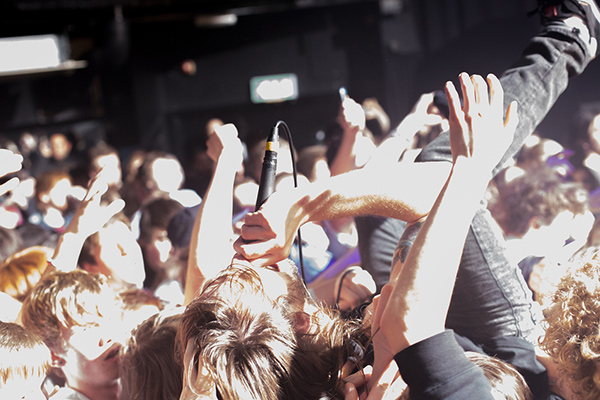
While She Sleeps, shot for Brighton Noise
Get the gear
A lot of photographers will say it doesn’t matter which gear you have, and that it’s all about how you use what you’ve got. I completely disagree with this for music photography, you will need a fast lens – gigs are one of the darkest and dingiest places you will ever shoot, you will need something with at least an f/2.8 aperture. I highly recommend, for those on a budget, a 50mm f/1.8 – these can be picked up for around $ 100, and when shot with the aperture wide open will immediately put your work above those shooting with an f/3.5-5.6 kit lens.
As you shoot more shows, you’ll find the style you want, and as such will slowly upgrade your kit. I find my current set-up a dream, the Canon 6D mounted with the Tamron 24-70 f/2.8, a coupling that is perfect for low-light gig photography.
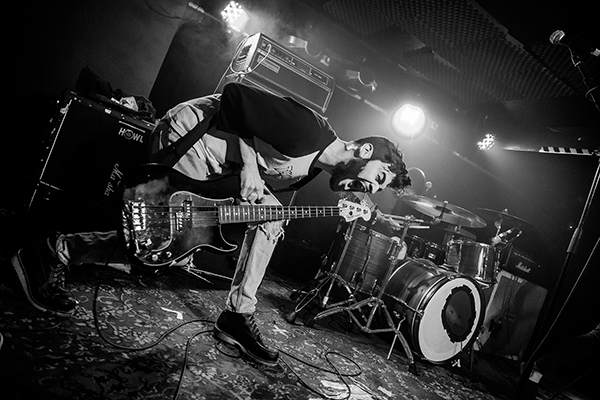
Howls, shot for Make a Scene Promotions
Know the rules
Before shooting any shows, it is important to know the rules. Unless you have explicit permission from the bands, managers or promoters, only shoot for the first three songs and don’t use a flash. These are rules you will have to stick to when shooting big shows so get used to them early. Learning to shoot in low light without a flash will push you as a photographer; while only having 10-15 minutes to cover a performance will make you think on your toes and focus on every opportunity.
Start local
Once you know the rules and have the right gear it’s time to start networking. A lot of photographers will just turn up to a gig and start shooting without knowing the bands, promoters or managers, or without asking. This can cause issues and I would not recommend it. Sometimes bands can be very protective about their image and might not actually want their photos taken, so always secure some sort of permission.
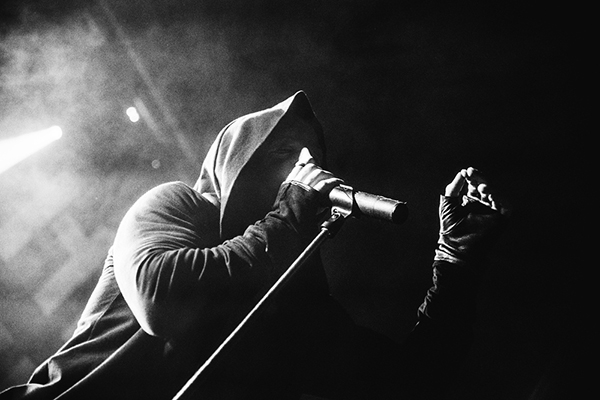
The Dillinger Escape Plan, shot for Brighton Source
The best way get in with the right people is to find a local venue and become a regular. Get to know the staff, the punters, the bands, and start networking. This isn’t to say push it in everyone’s face, but after you’ve watched a good band let them know you enjoyed it and mention that you’d love to shoot them live sometime, swap details, shake hands and continue drinking your beer while watching the next band.
Starting locally will offer you a chance to network with bands that are eager for good photos of themselves. They are all after strong imagery to promote themselves and will often be keen to have a photographer cover their shows. They will also be pretty poor, so don’t expect to get paid for anything when you first start. Shooting locally, in this way, will spread your name and will help you to start building a strong portfolio – thus give you the starting blocks for talking to the larger bands, promoters, venues and even magazines.
Once you’ve covered a good number of local gigs and have a variety of photos from different shows, it’s time to start looking for larger opportunities and looking at the bigger bands and venues.
Aim big
So now that you’ve got a portfolio of great photos from all the local shows you’ve covered, it’s time to market yourself. Chances are most of the people who have control of the photo passes have no idea who you are, so ensure you have an online presence. When talking shop you’ll need a simple way to show your work, so a website is best. You won’t need any big bands in the portfolio but simply proof that you’re an awesome band photographer. I’d also recommend getting a Facebook page, and a Flickr or 500px page that only shows your best work. You will be judged on the worst photo in your portfolio.
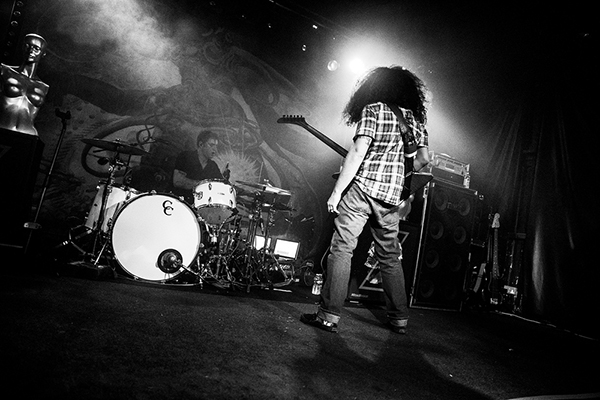
Coheed & Cambria, shot for Brighton Source
So the tricky part is now in finding a publication to work with, to get you your first major photo pass. I started by checking out all the gigs at the local major venues and Googling them a few days after the show to find out who covered it. Try something as simple as “Coheed and Cambria Brighton”. This will give you a list of publications to contact, and then simply drop them an email saying that you are looking to cover a few upcoming shows for them, and that they can see your work at your website. Chances are they will say that they already have it covered. However, it’s putting yourself in front of them so that when a photographer drops out of a show they will have someone to call, you.
What if there aren’t any local publications covering shows in your area? Then it gets a bit trickier, but the methodology is the same, find shows you want to cover and find out who is running them. Email the promoters and the band managers, show them your work, and offer them high resolution copies of all the best photos for them to use to promote themselves. The promoters will likely want these to show how good their shows are – although it’s important to remember that these bigger bands probably already have an awesome collection of photos, so you have to really shine both in your conversation and your portfolio.
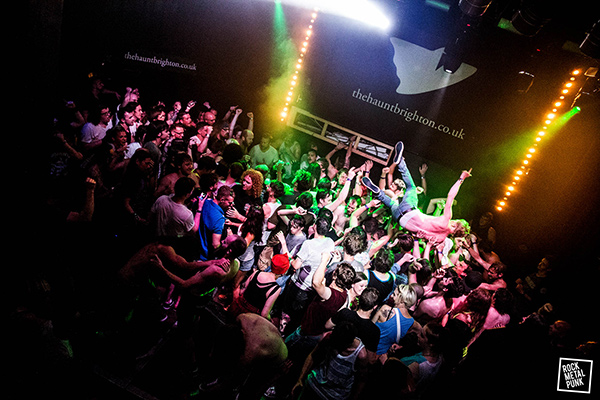
Andrew WK, shot for RMP Magazine
Success
So it’s finally happened, the local publication got back to you saying they love your work and they want some coverage of the next big show in town, now it’s time to do your thing. Remember to prepare everything way before hand; charge your batteries, empty your memory cards, clean your lenses, prepare your photo pass (if this is simply an email print it out), arrive on time, be polite to everyone and abide by the first three songs, no flash rules.
Once the show is over it’s important to ensure you get the photos to the relevant contact as fast as possible. I will normally edit all the photos as soon as I get home and submit them straight away. This is important because shows are time sensitive, people will be looking for the reviews and the photos the next day, so you need the photos with the promoters, bands or publications literally ASAP.
At this point you will now have an even bigger and stronger portfolio, so now you can start to outreach with even bigger publications, bands and promoters. Before you know it you’ll be the centre-fold of your favourite magazine.

Bleed from Within, shot for ALT.promotions
A few tips
You will likely get offered drinks at some point. Remember, don’t drink too much, you are representing either a promoter, a band or a publication, being a drunk photographer will not reflect well and will likely lose you access to the next show – drink Red Bull instead.
Also don’t forget how you managed to get to cover that Dillinger Escape Plan or Andrew WK show, it all started locally with small bands – always remember those guys and continue working locally where you have time. It will improve your techniques, give you an even bigger portfolio and will make you feel good for creating great photographs for local talent.
Are you ready to give it a go and get your first gig photo pass?
The post How to Secure Your First Music Gig Photo Pass by Will Barnes appeared first on Digital Photography School.
-
Self portrait: Olympus PEN E-PL7 First Impressions Review
At first glance the Olympus PEN E-PL7 looks like yet another compact, selfie-friendly mirrorless camera — but looks can be deceiving. The innards of the camera come largely from the excellent OM-D E-M10, and Olympus touts the E-PL7’s autofocus system as its best yet. For all the details on the latest PEN, check out our First Impressions Review.