Ein Beitrag von: Magdalena Roeseler


We’ve been shooting for a while with Fujifilm’s latest X-system lens, the XF 23mm F1.4R, and have prepared a gallery of real-world samples. They cover variety of subjects and lighting conditions, and were all shot on the X-E2. We’ve also quickly summarised our impressions of the lens’s handling and image quality. Click through to find out more.

Galileo Design unterstützt unser Magazin schon einige Zeit als Sponsor und hat natürlich auch einige Bücher des Verlags in unseren Adventskalender gelegt. Galileo Design ist ein deutscher Fachverlag, der in seinem Designbereich auch viele tolle Fotobücher zu bieten hat.
Das heutige Türchen steht dabei ganz unter dem Motto Studiofotografie. Viele hilfreichen Tipps und Informationen findet Ihr in den folgenden Büchern, mit denen Ihr einen guten Überblick im Bereich der Studiofotografie erhaltet.

Zum Beispiel „Fotografieren im Studio. Das umfassende Handbuch“ von Michael Papendieck hält, was es im Titel verspricht und gibt Einblick in die Studiotechnik und Lichtsetzung. Es zeigt Ausleuchtungsbeispiele von natürlich bis glamourös und hat Empfehlungen für Ausrüstung und Zubehör. Dabei zeigt es auch schon einmal Tipps für den Selbstbau, denn Technik muss nicht immer teuer sein.
Auf der Verlagsseite findet Ihr eine Leseprobe als PDF, wenn Ihr jetzt neugierig geworden seid. Das Buch ist 284 Seiten stark und kostet 39,90 €.

Habt Ihr dann die Technik bezwungen und arbeitet mit Modellen, ist dieses Buch sicher spannend: „Das Posing-Buch für Fotografen – Modelle perfekt inszenieren“ von Kathy Hennig und Lars Ihring. Das Buch zeigt nicht einfach nur Posen, sondern enthält auch einige Tipps und Hinweise rund um das Thema, wie Perspektiven, Bildbearbeitung, Make-up und Styling.
Auch hierzu gibt es wieder eine kleine Leseprobe, die einen guten Einblick ins Buch bietet. Das Buch hat 326 Seiten und einen Wert von 39,90 €.

Zum Schluss hat Galileo Design noch eine kleine Überraschung, denn hinter dem Titel „Creative Shooting“ verbirgt sich ein Videotraining mit Alexander Heinrichs und Matthias Schwaighofer auf DVD. Die beiden Fotografen geben darauf Tipps aus erster Hand und man kann ihnen bei einigen Shootings über die Schulter schauen.
Die DVD verspricht inspirierende Bildideen und Rezepte für kreative Foto-Shootings – inklusive Lichtführung, Technik und Fotofinish. Sie hat eine Laufzeit von 9,5 Stunden. Erhältlich ist sie für 49,90 €.
Um eines der drei vorgestellten Produkte zu gewinnen, schreibe einen Kommentar mit Deinem Wunschgewinn unter bürgerlichem Namen und gültiger E-Mail-Adresse bis heute um 24 Uhr. Danach verlosen wir sie per Zufallsgenerator unter allen Kommentatoren. Die genauen Gewinnspielregeln findest Du hier. Viel Glück!
French photographer Marc Riboud said, “Taking pictures is savouring life intensely, every hundredth of a second.” Although astounding, the human ability to capture and store moments in image rich memory is limited. Visual encoding start with perception follows through to the moment when it is committed to memory and then reaches the period after in which the memory is retained. Continue Reading
The post Film vs. Digital in Large-format Photography: Which Is Better? appeared first on Photodoto.
Mittlerweile dürfte auch der letzte unserer Leser den diesjährigen Adventskalender hier entdeckt haben. Aber nicht nur wir verwichteln fleißig jeden Tag etwas Neues. Deshalb haben wir in diesen browserFruits für Euch einige Adventskalender gesammelt, die Fotoprodukte verlosen. Falls wir einen tollen vergessen haben sollten, dürft Ihr unsere Liste natürlich gern in den Kommentaren weiter ergänzen.
Fotospecial: Intimität
Flickr


500px


Deutschsprachig
• Einen überaus verschmitzten Blick auf das kanarische Strandleben mit all seinen touristischen Klischees hat Oliver Weber.
• Ausdrucksstarke Bilder von Frauen, die vom Brustkrebs gezeichnet sind.
• Bist du bereit, kostenlos zu arbeiten? Eine praktische Hilfe bietet dieses Flowchart.
• Nur in der Adventszeit gibt es beim dpunkt.Verlag ausgewählte Bücher kostenlos zum Lesen. Natürlich sind auch Fotolehrbücher dabei.
International
• In seiner Arbeit „Future Imperfect“ hat David Ellingsen einen einzigartigen Weg gefunden, ruhigen, unberührten Landschaften Muster menschlicher Gemeinschaft gegenüberzustellen.
• Der Künstler Lam Pokyin hat in seinem Notizbuch Ideen und Gedanken niedergeschrieben und es gleichzeitig als Kamera verwendet.
• Der Fotograf Marcus Lyon zeigt überwältigende Bilder gigantischer urbaner Zentren aus den BRICS-Staaten, dem in der nahen Zukunft vermutlich dominierenden Wirtschaftsraum.
• J. A. Mortram ist Dokumentarfotograf. Mit seinem fotografischen Essay „Small Town Inertia“ erzählt er die intimen Geschichte von marginalisierten Menschen in ländlichen, kleinen Gemeinden.
• Die VSCO Cam, eine der besten Fotoapps, ist jetzt auch für Android erhältlich und noch dazu kostenlos.
• Auf der Facebookseite The Portfolio werden immer wieder tolle zeitgenössische Portraitfotografen vorgestellt, die unglaublich inspirierend sind.
• Unglaublich, dass diese Bilder gänzlich ohne Photoshop entstanden sind!
• Humorvolle Bilder des Fotografen Gary Salter.
• Alex Stoddard hat eine neue Fotoserie mit dem Titel „In the Wake of Thunder“ veröffentlicht, die momentan auf My Modern Metropolis gezeigt wird.
• Derartige Light-Paintings, wie der Finne Janne Parviainen sie macht, haben wir noch nie zu sehen bekommen.
• Diese Woche starb Nelson Mandela. Und Adrian Steirn war der Fotograf, der das letzte Fotoshooting mit ihm machte. Die Bilder sind nun auf dem Flickr-Blog zu sehen.
Neuerscheinungen und Tipps vom Foto-Büchermarkt

• „No Mercy“* heißt die Retrospektive der wichtigsten Arbeiten des finnischen Fotografen Jouko Lehtola (1963 – 2010). Einen guten Einblick in seine Arbeiten bekommt man auf dieser Seite. Das Buch kostet 49,90 €.
• Auf Zeit Online werden Fotos aus dem Bildband „The quest for the man on the white donkey“* von Yaakov Israel gezeigt. Das Buch ist bei Schilt Publishing erschienen und kostet 36,10 €
Adventskalender
• Bei Tamron gibt es jeden Tag wieder tolle Dinge rund um die Fotografie zu gewinnen.
• Das Fotomagazin öffnet nur jede Stunde 10 Minuten lang ihre Weihnachtskalendertürchen. Mit Glück schaut man zur richtigen Zeit und hat die Chance, etwas zu gewinnen.
• Auch Eizo hat seinen Kalender prall gefüllt und verlost jeden Tag etwas anderes Tolles.
• Bei Pixelsophie gibt es einen Adventskalender. Mit einem Kommentar kann man ähnlich wie bei uns teilnehmen.
• Das Fotoforum verlost auf Facebook jeden Tag einen neuen Gewinn.
• Auch auf der Facebookseite von Sigma gibt es Gewinne. Manchmal einfach nur Rezepte, Gerüchten zufolge aber auch hin und wieder Fotoprodukte.
Videos
Kirsty Mitchells Wunderlandserie haben wir bereits vorgestellt. Jetzt geht sie weiter und Kirsty zeigt eines der ersten Maiking-Of-Videos.
Ausstellungen
First Choice
Zeit: 14.Dezember – 25. Januar 2014
Ort: Galerie Springer, Fasanenstr. 13, 10623 Berlin
Link
Rinko Kawauchi: Ametsuchi
Zeit: 06. Dezember 2013 – 25. Januar 2014
Ort: Galerie Priska Pasquer (DGPh) Albertusstraße 9 – 11, Köln
Link
Esther Mathis: We Could Have Been Anywhere
Zeit: 06.Dezember 2013 – 28. Februar 2014
Ort: Christophe Guye Galerie Dufourstrasse 31 8008 Zürich
Link
Leo Kornbrust & Peter Braunholz: Fotografie
Zeit: 03.Dezember 2013 – 08. März 2014
Ort: Galerie Julia Philippi Hauptstr. 4, 69117 Heidelberg
Link
Mehr aktuelle Ausstellungen
* Das ist ein Affiliate-Link zu Amazon. Wenn Ihr darüber etwas bestellt, erhalten wir eine kleine Provision, Ihr bezahlt aber keinen Cent mehr.
Ein Beitrag von: Andrea Penisto
Ich habe Fotografieren schon immer für ein probates Mittel gehalten, Zeit in den wichtigen Momenten des Lebens einzufrieren. Die Fotos in meinen Familienalben sind dafür ein gutes Beispiel:
Ich und mein Vater sitzen auf einem gigantischen Ameisenhaufen, mein Vater bläst das Vorderrad seines Auto mit einer Fahrradpumpe auf, Landschaften, massive Felsen, meine Mutter fährt mit unserem kleinen Affen auf den Knien Auto. Mein Vater tut so, als ob er über einen Selbstmord am Rand eines überlaufenden Flusses nachdenkt.
Die Jahre vergingen und je öfter ich zurückschaue und diese Bilder ansehe, desto mehr sehe ich Details, die mir zuvor nie aufgefallen sind: Körperhaltungen, Kleidung, Gesichtsausdrücke, die Blickrichtung der Augen und schau, wie das Foto kippt!

War das Absicht? Wo schaut sie denn hin? Warum hat sie diesen traurigen Blick in ihren Augen? Und warum ist das Teil da drüben zur Hälfte abgeschnitten?
Ab einem gewissen Punkt in meinem Leben fing ich an, eine Menge Fragen zu stellen und Dinge anzusehen, für die ich bis dahin noch blind war. Die Fotografie half mir in diesem Prozess ungemein – sowie Bücher von Roland Barthes, Susan Sontag und Italo Zannier.

Zu Beginn war ich eher so der Minimalistik-Typ. Ich schaute nach Geometrien, sauberen Flächen und überkreuzenden Schatten. Doch irgendwann musste ich das menschliche Wesen ins Bild bringen. Ich wusste nicht warum, aber es musste so sein.
Dann entdeckte ich die so genannte Straßenfotografie und eine innere Leidenschaft war in mir geboren.

Soziale Netzwerke und der konstante Austausch von Feedbacks in Straßenfotografie-Gruppen wie FDS (eine italienische Gruppe, die für mich damals sehr attraktiv war) und HCSP lösten in mir das Bedürfnis aus, meine Realität zu dokumentieren.
Recht bald merkte ich, dass es sehr spezifische Regeln gibt, die es nach Ansicht der Puristen des Genres zu erfüllen gilt und ich spürte, dass ich da nicht dazugehörte.

Genres mit ihren Grenzen zu definieren, erzeugt mehr Verwirrung als Ordnung und eines Tages entschied ich, dass es so etwas wie Straßenfotografie nicht gibt. Sie existiert als eine Art Geistesverfassung und ist offen für jeden Aspekt und jeden Bereich, den man beobachten kann.
Als ich mir dann des großen Potentials der Fotografie bewusst wurde, begann ich, das zu nutzen. Ich spürte, dass dies ein Weg ist, Dinge zu sehen, Wissen zu vertiefen, Menschen kennenzulernen und neue Beziehungen aufzubauen.

Die Kamera ist nur ein Werkzeug und seine Aufgabe ist es, Dinge aufzunehmen. Es sind die gleichen Bilder, die meine nackten Augen wahrnehmen, bevor sie im unendlichen Fluss der Realität versinken.
Wenn ich es schaffe, diesen einzelnen Tropfen der Realität festzuhalten, dann kann ich Dinge sehen, wie sie wirklich sind. Der Akt der Beobachtung dieses Tropfens gibt mir den Eindruck (lies: Illusion), dass ich die ganze Szene verstehen kann.

Natürlich ist der Tropfen niemals der richtige und deshalb wird die Jagd danach immer heftiger, endloser, oft auch frustrierend, denn obwohl ich weiß, dass der richtige Tropfen nicht existiert, möchte der irrationale Teil in mir ihn einfangen.
Dieser Artikel wurde von Martin Gommel aus dem Englischen ins Deutsche übersetzt.

The Motrr Galileo works in combination with the Sphere iOS app to automate the panorama capturing process with much more precision than handheld shooting allows. This speeds the entire process up considerably and should, at least in theory, lead to better image results. We put it to the test on connect.dpreview.com.
The last time I counted, there were about seventy two quadrillion photos of birds on the internet. Therefore, if you’re dedicating your time to try to stand out as a bird photographer, there is a ton of competition out there. However, there is one thing that you can try to incorporate in your photos that will at least have them stand out a little bit.
Creating More Compelling Bird Portraits
Wait for the turn of the head. Sounds pretty simple doesn’t it? It sounds simple, but achieving it is often a bit trickier. Many bird species have their eyes placed on opposite sides of their heads. When photographing birds without their heads slightly angled towards the viewer, the images tend to lack a bit of intimacy. Consider the following two images of a Mountain Bluebird. In the first image, the bird’s head is angled away from the viewer, while the second image features the bird’s head angled just slightly towards the viewer.
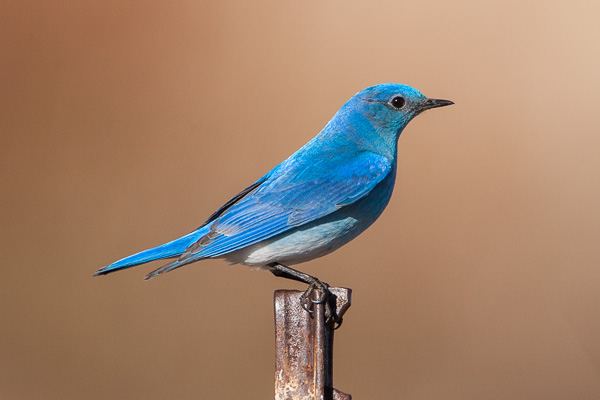
Mountain Bluebird looking away from the viewer
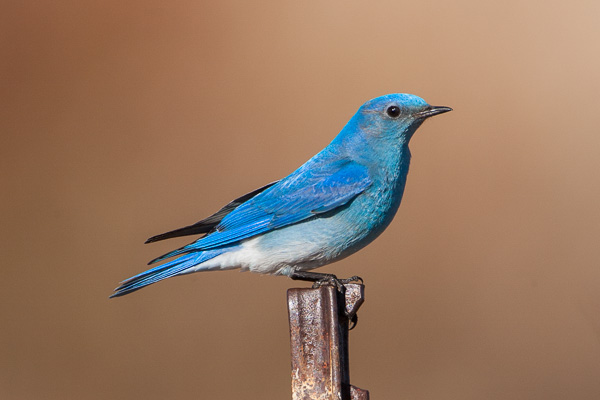
Mountain Bluebird looking toward the viewer
I’ll bet that for most of you, the second image is more compelling just because of that eye contact. Sure the perch is somewhat ugly (it’s the post used to mount the bird box above the ground), but even with an ugly perch, the second image is more compelling. Then if you’re patient, even with an ugly perch, you can still get a compelling image out of it, slight head turn included.
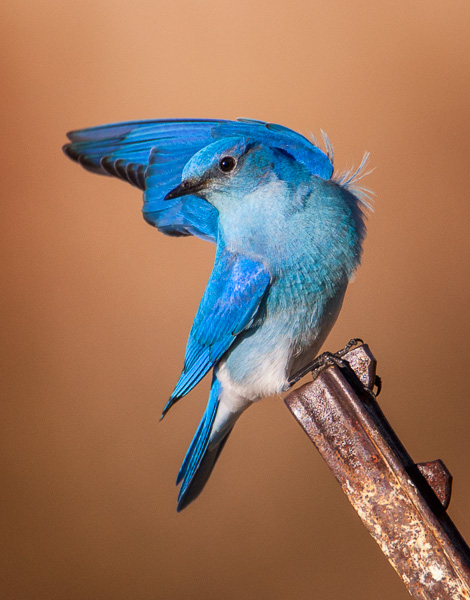
Mountain Bluebird posing pretty
Consider the following three photos of a Rough-legged Hawk.
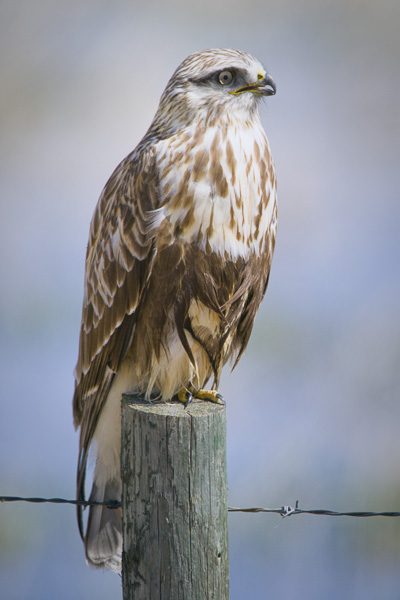
Rough-legged Hawk looking away from the viewer
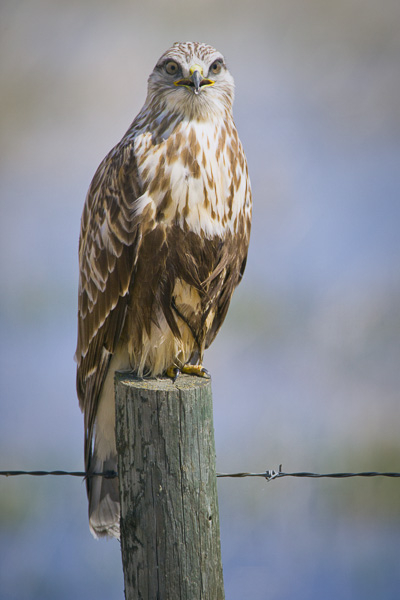
Rough-legged Hawk looking directly at the viewer
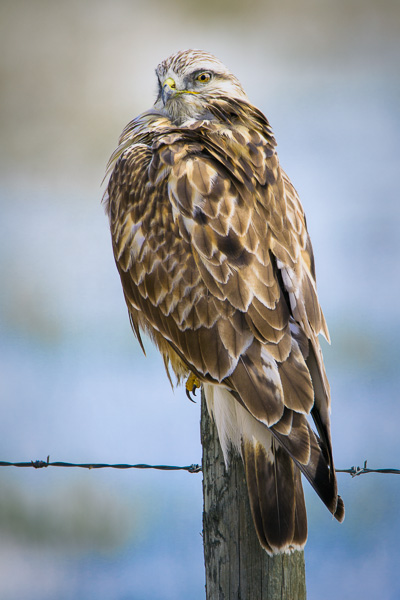
Rough-legged Hawk with the sexy over the shoulder look towards the viewer
In the first image, the bird is looking away from the viewer. In the second, he is looking straight on to the viewer, while the third image has my preferred head-turn. In my opinion, in terms of a compelling image, it isn’t even a close comparison. The perch still isn’t ideal (although this is the typical place we find these birds where I live), but the third pose with the head-turn makes that image into a keeper for me.
So, is it just a matter of patience and waiting for the preferred head-turn? Sometimes that is true. Other times I try to “encourage” my subject to look my way. How do I accomplish this? I imitate the squeak of a mouse. I purse my lips together and suck in air through my teeth to produce an irritating squeaking sound. Sometimes, not always, but some times, the bird is curious enough to look my direction.
I know of some photographers who prefer to use the “machine gun” approach where they just hammer-down on the shutter button, essentially shooting a slow frame-rate movie. Occasionally they’ll catch the bird with its head in the preferred position. I personally don’t favour that approach, but would rather just wait for the appropriate moment and cut down on my post-processing work once I get home.
In terms of the bird looking head-on into the camera, that can occasionally work, but for most birds it just isn’t their best angle. There are definitely exceptions to that and owls are the first bird that springs to mind. Consider this image of the tiny Northern Pygmy Owl for example.
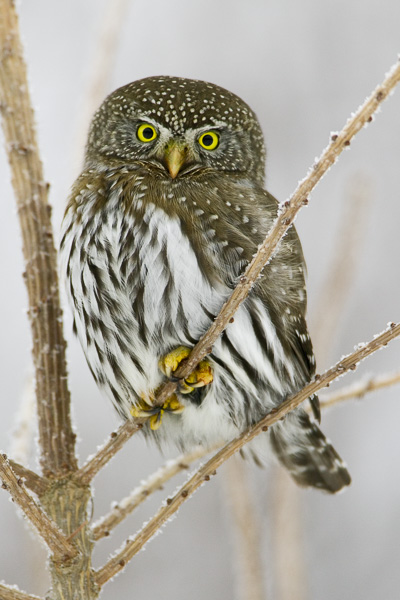
Northern-Pygmy Owl looking frosty
Here are a couple more images to consider:
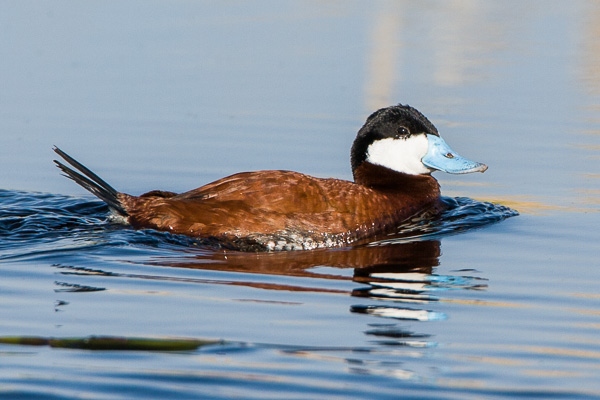
Ruddy Duck Drake looking towards the viewer
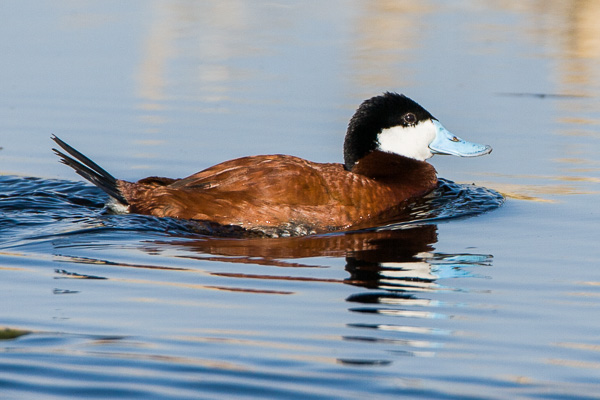
Ruddy Duck Drake looking away from the viewer
I made these two images of the Ruddy Duck just seconds apart. In the first image, the bird looked my way due to my incredible squeaking ability, while in the second, his patience expired and he was off to find his girl friend.
The following two images of a White Breasted Nuthatch also illustrate the point. In both images, the birds are in their traditional upside-down pose on the side of a tree. The difference between the images is that in the first the bird is looking slightly away from the viewer while in the second exhibits that classic slight head-turn towards the viewer that I strongly favour.
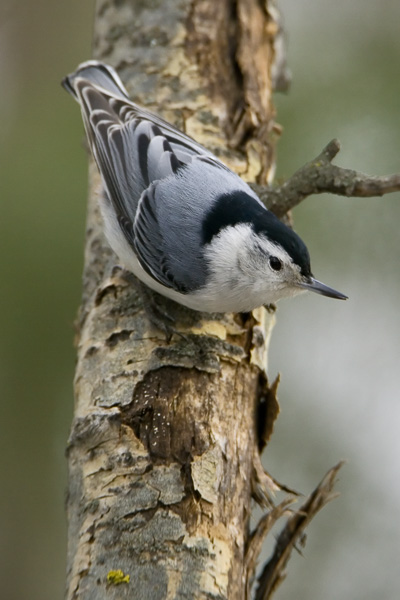
White-breasted Nuthatch looking away from the viewer

White-breasted Nuthatch looking towards the viewer
The last two images I present for your consideration are these two images of a Common Loon carrying a chick on its back.
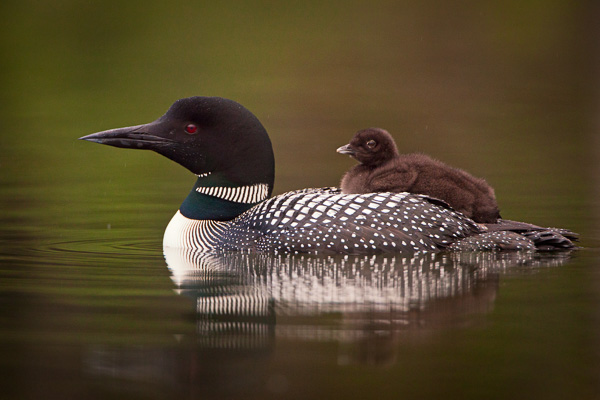
Common Loon carrying a chick on its back with both birds looking away from the viewer
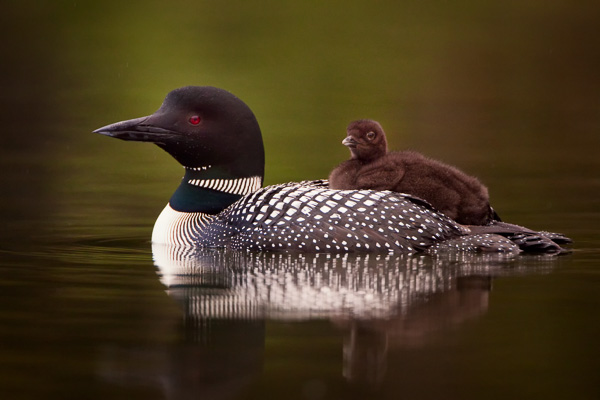
Common Loon carrying a chick on its back with both birds looking towards the viewer
In the first image, both adult and baby are looking away from the viewer. It’s a nice image but lacks a bit of intimacy. Whereas the second image features both birds looking towards the viewer. The second image is a result of the large goofy photographer, with his lens perilously positioned inches above the water, from an unstable boat squeaking his heart out. For me, there is no comparison between the two images; the second wins easily.
Therefore, the next time you’re out in pursuit of some bird images that might rank in the top thirty-six quadrillion instead of the bottom, look for the opportunity to capture those birds with their heads slightly turned towards you. Whether you achieve it through patience or “the squeak”, I’ll bet you’ll find your images a bit more compelling.
Post originally from: Digital Photography Tips.
Check out our more Photography Tips at Photography Tips for Beginners, Portrait Photography Tips and Wedding Photography Tips.
A Turn of the Head – Creating More Compelling Bird Portraits
The post A Turn of the Head – Creating More Compelling Bird Portraits by Paul Burwell appeared first on Digital Photography School.
[ By WebUrbanist in Art & Street Art & Graffiti. ]
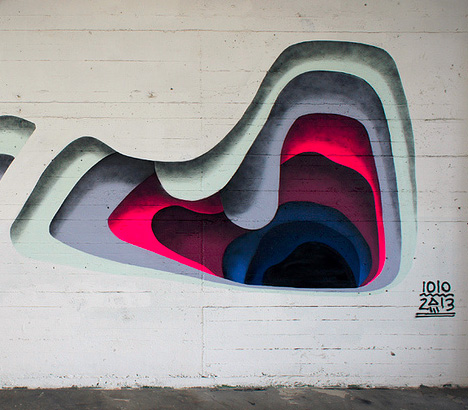
Worthy of a double-take twice over, these convincing wall artworks reveal imaginary depths and amazing arrays of color … all seemingly hidden behind dull peeling paint and inside innocuously crumbling facades.
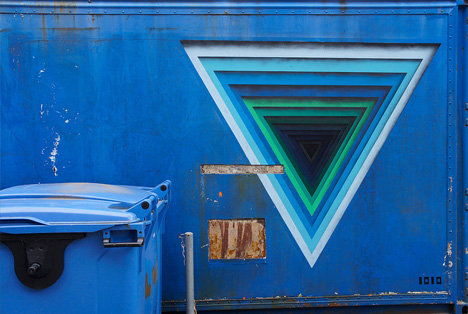
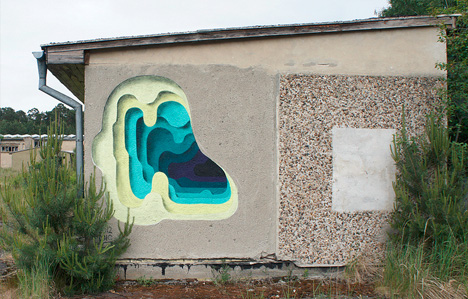
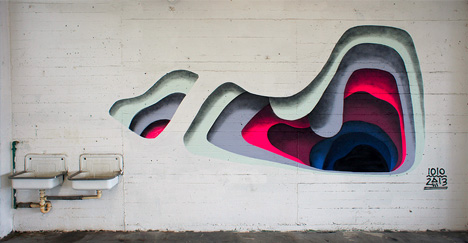
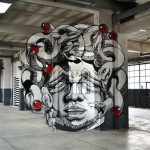
While he does not say much about himself, 1010 is both a gallery and street artist in Germany with a passion for surreal figures, geometric illusions and other visual trickery.
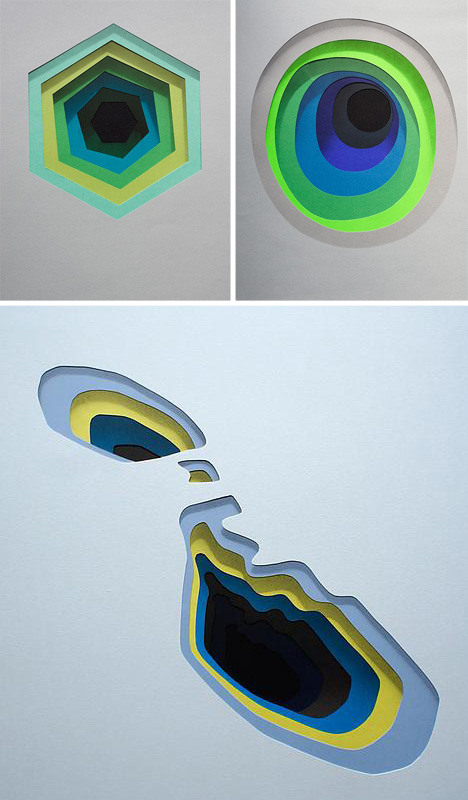
While the shapes are simple the shadows are incredibly complex, each layer built up with layers of color and light.
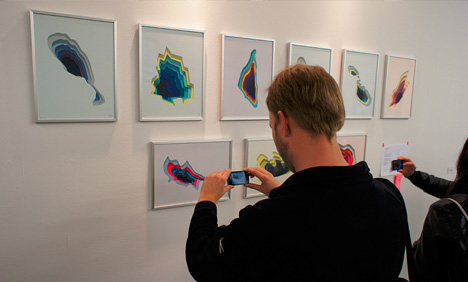
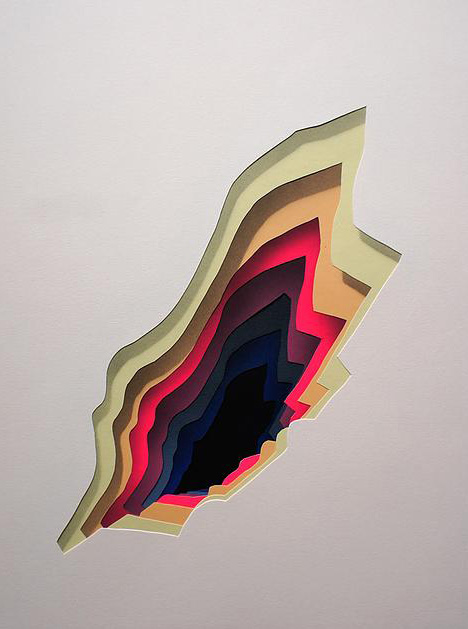
This particular series of optical illusion ‘holes’ spans both sides of his portfolio – smaller-scale works are framed and hung in galleries while larger-scale installations are set in rough exterior urban landscapes.
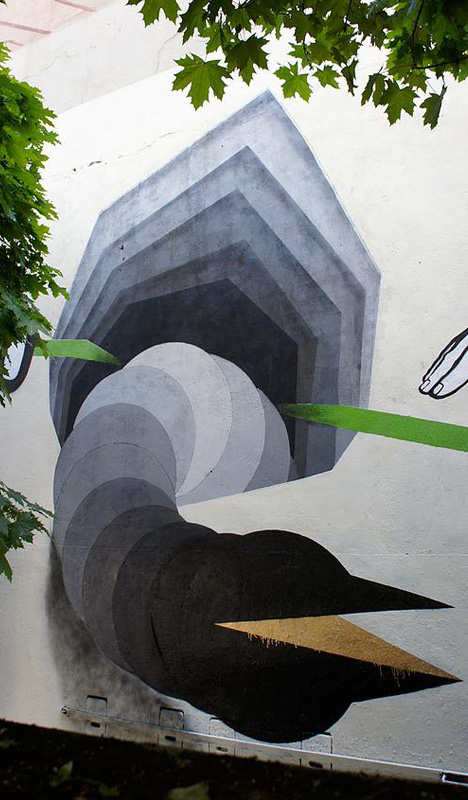
His other pieces that include characters like birds and snakes are of a similarly simplified style, but their cartoonish nature masks careful color and tone selection as well as time-consuming implementation.
Artists use either angled surfaces like shutters or lenticular lenses with holographic images to create ‘trick’ art that can only be seen from certain angles.
Click Here to Read More »»
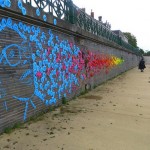
An urban art play in multiple acts, this staged installation colorfully spans brick walls, stone steps and wood facades as part of an art festival in Angers, …
Click Here to Read More »»
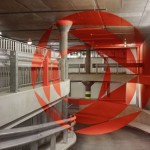
Artist Felice Varini creates large-scale anamorphic illusions on urban surfaces, which only come together when viewed from a certain perspective.
Click Here to Read More »»


[ By WebUrbanist in Art & Street Art & Graffiti. ]
[ WebUrbanist | Archives | Galleries | Privacy | TOS ]
Some camera makers are content to put new chrome and tail fins on last year’s model. Not Sony. They believe in pushing the envelope, and with the just shipping RX-10 they have created a new camera that blends characteristics of several previous categories and models, yet which manages to forge new territory. But how successful have they really been with the RX10 and can it justify its price?

You can win an all-expenses paid photographic expedition to Antarctica, along with air fare from anywhere in the world. The value of this prize is $ 15,000.
The Luminous Landscape wants you to try any of our more than 60 training or travel videos and our new free video player. Each purchase is an entry, and an annual subscription that includes all previous as well as new videos counts as six entries. The winner of a free lifetime subscription is also chosen from each month’s entries.
Find Out More