Month: November 2012

  • HACKED AGAIN!

    Please LIKE/FAVORITE it makes Jason happy! OLI WHITE as YAHOO USER: www.youtube.com HUGH M ADAMSON as CHATROULETTE PERVERT: www.youtube.com SCOTT STOKED as YAHOO USER: www.scottstoked.com —————————————————————————————— Donations www.elementanimation.com ———————————————————————- OFFICIAL “THE CRACK” MERCHENDISE ——————————– UK: elementanimation.spreadshirt.co.uk US elementanimation.spreadshirt.com ——————————– FOLLOW US ——————————– Facebook – www.facebook.com Twitter – twitter.com Website – www.elementanimation.com
    Video Rating: 4 / 5

  • DxO Optics Pro 8 hits v8.0.1 with Nikon 1 J2 and NEX-5R support

    shared:DxOLogo.png

    DxO Labs has updated its DxO Optics Pro software to version 8.0.1 with the addition of support for the Nikon 1 J2 and Sony NEX-5R mirrorless cameras. The latest update also includes over 200 additional camera/lens correction modules. The update is free for Optics Pro 8 users and is available immediately.

    News: Digital Photography Review (dpreview.com)

  • Photoshop CS5 Tutorial How to make a Picture look Old Fashioned

    Hey guys! Thanks for watching this basic Photoshop CS5 Extended tutorial on how to do a bit of color effects on an image. Leave a comment on anymore tutorials you’d like me to do in either Lightroom 3, Photoshop CS5, of After Effects CS5. By the way in case any of you were wondering, this was shot with a Canon 7D at: f/2.2, ISO-100, 1/200th shutter speed, and shot with a 50mm f/1.8 prime lens at 18mp (3456 X 5184). EXCELLENT lens, SUPER sharp and it’s high enough quality where you can actually max out the 7D’s full 18mp with NO grain, buy that lens if you don’t have it already, it’s only 0 new. TOTALLY worth it, I will never disown that lens no matter how nice of lenses I get. Here it is on amazon: www.amazon.com Please comment, rate and subscribe if you haven’t already, thanks!

  • Seeing The Light

    Robyn

    Bright midday sun can be harshest to work with. Using a reflector or fill flash can help soften the harshness.

    There are several factors that set apart good photos from mere snapshots, and good photos from great photos.  Things such as exposure, composition, and decisive moment all play a part in setting apart great photos. Equally important is light. Quality of light can make or break a photo.  Whether you take photos with a DSLR or take quick snaps with your cell phone, seeing the light will help improve your images.

    For the most part here, we are discussing natural light. Often, photographers will create their own light to match their vision.  But when photographing using available light, we are at nature’s mercy. There are many different kinds of light: harsh, soft, warm, or cool, among others. The direction of the light plays an equally important part. Direct, frontal light, low angular light, side light, and backlight all create different qualities in an image.  Learning to use the different types of light, and even manipulate them to taste, means always being able to find a photo.

    Midday light is  generally not a photographer’s friend.  The sun is bright, and high in the sky.  The light tends to be harsh.  Shadows are cast straight down, causing people to look less than their best with deep shadows in the eye sockets and under the chin.  On landscapes, this can cause things to flatten out and look uninteresting. When shooting portraits in this light, fill flash or a reflector can work wonders, creating a second light source that adds depth. Finding some shade can be helpful in using the bright light while the shade reduces the harshness.

    Late Afternoon Glow

    Late afternoon and early morning light tends to be very directional and warm. It creates soft shadows that can define your subject.

    Late afternoon and early morning sun tends to be the most beautiful light.  When the sun is close to the horizon, it shines at a low angle and casts long, deep shadows that add interest and define those subjects that catch the light.  The sun takes on a warmer, softer glow due to atmospheric haze when it is at this low angle, making it very pleasing for use in portraits as well as nature and landscape photography.  Add in a reflector to help soften shadows. Fill flash can be used but be aware that flash is much cooler compared to late afternoon and early morning sun.  Using a CTO (color to orange) gel on the flash can help to match the color temperature of the available light. That late day and early morning light is very directional, so depending on where you stand in relation to the sun, you could have front light, side light, or back light. Try all three and compare the quality of the light from each direction.  Each can provide beautiful, yet very different lighting.

    In addition to late afternoon and early morning light, there is what is knows as “The Blue Hour”.  This is the time just before the sun comes up in the morning, and just after the sun goes down in

    Montauk Point

    The Blue Hour, before the sun rises, as in this case, or after the sun sets, is a mystical time where the light takes on a soft blue hue.

    the evening.  While the horizon will have a pleasing warm glow, the ambient light takes on a bluer tint than what is usually seen during the day.  It’s a very mystical light that leaves a dreamy feeling over the scene, and is well worth getting out of bed early to photograph in, or staying out after sunset to capture.

    In terms of direction, front light tends to be the least interesting of light. The reason for this is the light is coming from directly behind the photographer, hitting the subject and fully lighting the scene.  Very few shadows are cast. While there are times when shadows are not desirable, more often than not shadows add interest to an image.  Light can reveal your subject, but shadows define your subject, so a direct, frontal light source is not usually what is wanted.  This is the kind of light direct, on-camera flash creates.  There is a reason most pros try to find ways to bounce the flash off of walls and ceilings rather than aiming it directly at their subject.

    Golden Canopy

    During midday sun, finding some shade can be a good way to reduce to the harshness of the light.

    Side light has the effect of splitting your subject in half.  This can be a very effective light when used properly.  The shadows created have the effect of slimming portrait subjects, and creating depth with other subjects. It can at times be very contrasty and harsh, but often it will provide soft, warm light that enhances the beauty of whatever it is you’re shooting.  For portraits, the use of a reflector can be helpful in softening the shadows.  It’s difficult to use fill flash in this situation due to the split lighting.  The flash will be coming from the front of the subject, so it will illuminate both the bright areas and the shadow areas. Off-camera flash positioned to the shadow side of your subject works well for this situation.

    Backlighting can be beautiful, but it’s also very difficult to work with.  Your subject is lit from behind, so for portraits some sort of fill will be necessary.  A reflector can work wonders in this situation.  When shooting with a cell phone or point and shoot camera, turn on the flash or use the HDR option, if available. For subjects where a reflector or fill flash is impractical, such as sports or wildlife, exposure compensation will be necessary to open up the shadows. Backlighting is nice in that it adds a nice rim light around your subject, really defining the outlines.  It creates the perfect conditions for dramatic silhouettes as well.

    Misty

    Fog, mist, and clouds create a soft, diffuse light that can add a mysterious or dreamy quality to an image.

    Fog, mist, and clouds create a softer, more diffuse light that can at times be boring, but ultimately is easy to work with because it is so even, creating soft shadows that aren’t too deep, and soft highlights that aren’t too bright.  It can create a mysterious or a dreamy mood depending on how thick it is.  It can help create beautiful landscapes, a soft even light portraiture, and be desirable for shooting wildlife and sports due to the even light.

    Paying attention to the light, watching how it falls on your subject, can help you improve your images, regardless of what you use to shoot them.  Learn to recognize the type of light you’re in, and how best to work with it. Doing so will help you create better images.


    Post originally from: Digital Photography Tips.

    Check out our more Photography Tips at Photography Tips for Beginners, Portrait Photography Tips and Wedding Photography Tips.

    Seeing The Light


    Digital Photography School

  • Living Magazine Cover and Spread – Outside Magazine

    Photographer Alexx Henry and his team show you how a magazine might look in the not-so-distant future with the October cover and spread for Outside Magazine. In this video, Alexx Henry takes you through the creation of the Living portrait of the triathlete Chris Lieto photographed using the revolutionary Red One cinema camera and the 5d Mark II.

  • Everett Middle School

    A few nice visual art images I found:

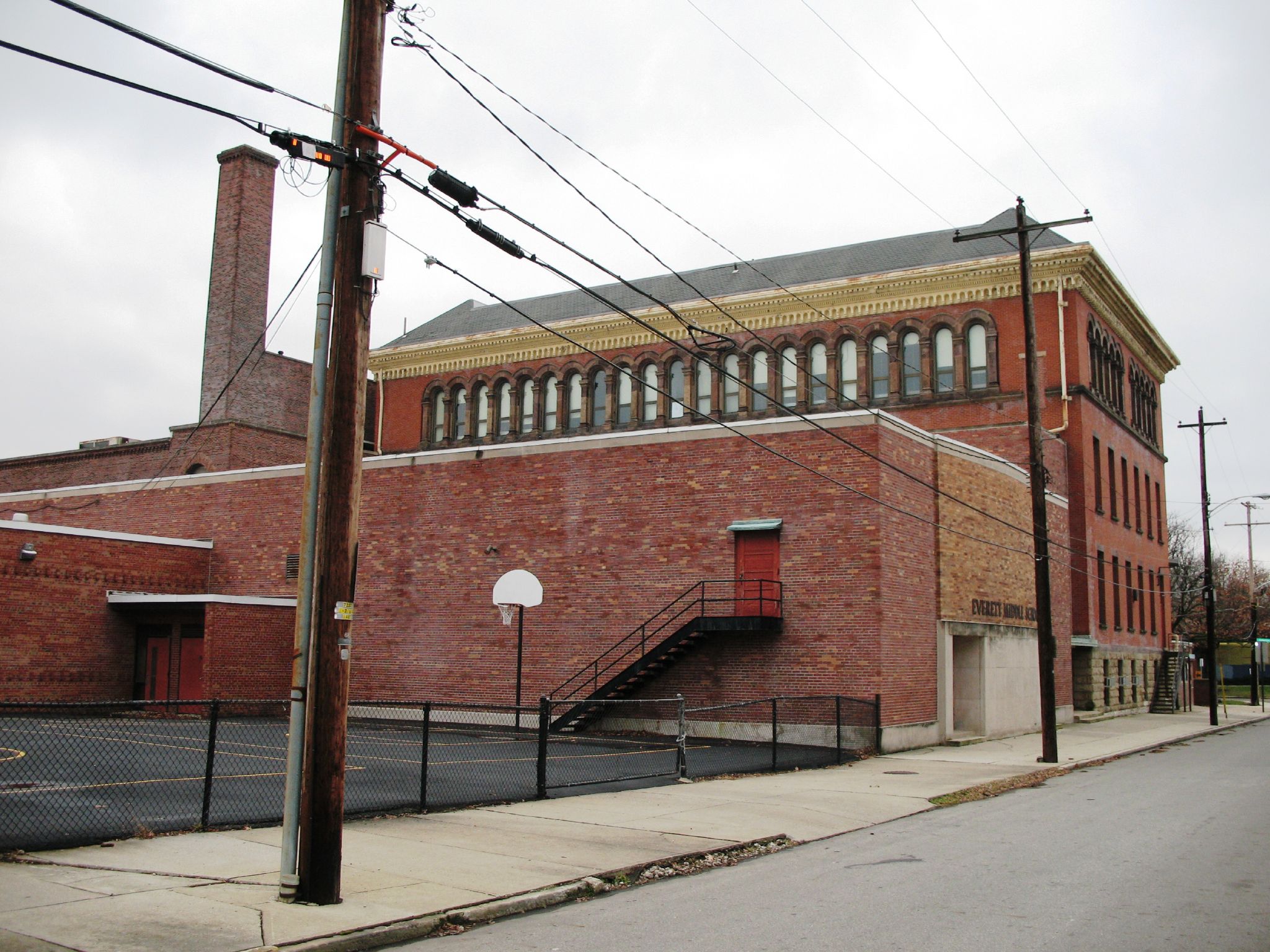
    Everett Middle School
    visual art
    Image by TheeErin
    From the Columbus Public Schools website: "AIMS arts specialists in Dance, Drama, Vocal Music, Instrumental Music and Visual Art teach in both arts classes as regular teachers and in traditional academic classes as arts impact teachers. Teachers of the traditional academic disciplines participate in the arts classes. Eighth grade students "major" and "minor" in their favorite arts."

    Everett Middle School was built in 1898 and was the original North High School for Columbus Ohio until 1925.

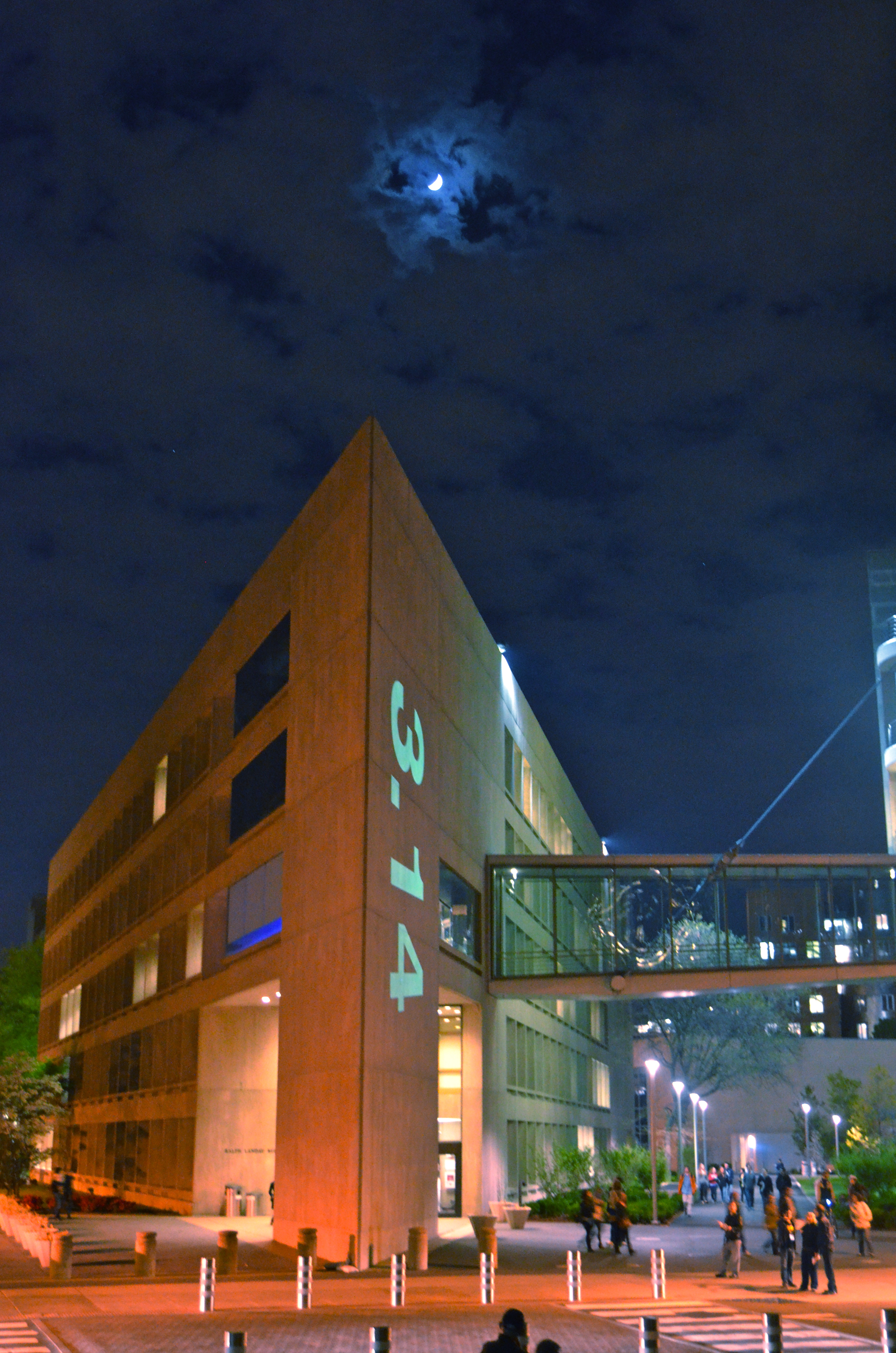
    MIT+150: FAST (Festival of Art + Science + Technology): FAST LIGHT — Night of Numbers: 3.14 Pi under a crescent moon (portrait)
    visual art
    Image by Chris Devers
    Quoting from the official pamphlet:

    FAST LIGHT • May 7 + 8, 2011, 7 pm – 10 pm

    Contemporary pioneers in art, science, and technology have come together at MIT to create one of the most exhilarating and inventive spectacles metro Boston has ever seen. On May 7 and 8, 2011, visitors can interact with 20+ art and architectural installations illuminating the campus and the Charles River along Memorial Drive at MIT.

    arts.mit.edu / fast

    Installations scattered around campus (we didn’t quite see all of them), again pasting from the official flyer:

    • aFloat
    MIT Chapel • Saturday, May 7th ONLY
    Inspired by water in the Saarinen Chapel’s moat, a touch releases flickers of light before serenity returns as a calm ripple.
    By Otto Ng, Ben Regnier, Dena Molnar, and Arseni Zaitsev.

    • Inflatables
    Lobby 7, Infinite Corridor
    A dodecahedron sculpture made of silver nylon resonates with gusts of air, heat from light bulbs, and the motions of passersby.
    By Kyle Barker, Juan Jofre, Nick Polansky, Jorge Amaya.

    • (now(now(now)))
    Building 7, 4th Floor
    This installation nests layers of the past into an image of the present, recursively intertwining slices of time.
    By Eric Rosenbaum and Charles DeTar.

    • Dis(Course)4
    Building 3 Stair, Infinite Corridor
    A stairwell transformed by a shummering aluminum conduit inspired by the discourse between floors and academic disciplines.
    By Craig Boney, Jams Coleman and Andrew Manto.

    • Maxwell’s Dream
    Building 10 Community Lounge, Infinite Corridor
    An interactive mural created by magnetic fields that drive patterns of light, Maxwell’s Dream is a visually expressive cybernetic loop.
    By Kaustuv De Biswas and Daniel Rosenberg.

    • Mood Meter
    Student Center & Building 8, Infinite Corridor
    Is the smile a barometer of happiness? Mood Meter playfully assesses and displays the mood of the MIT community onsite and at moodmeter.media.mit.edu
    By Javier Hernandez and Ehsan Hoque.

    • SOFT Rockers
    Killian Court
    Repose and charge your electronic devices using green solar powered technology
    By Shiela Kennedy, P. Seaton, S. Rockcastle, W. Inam, A. Aolij, J. Nam, K. Bogenshutz, J. Bayless, M. Trimble.

    • LightBridge
    The Mass. Ave Bridge
    A dynamic interactive LED array responds to pedestrians on the bridge, illustrating MIT’s ties to both sides of the river. Thanks to Philips ColorKinetics, CISCO, SparkFun Electronics.
    By Sysanne Seitinger.

    • Sky Event
    Killian Court, Saturday, May 7th ONLY
    Immense inflatable stars soar over MIT in celebration of the distinctive symbiosis among artists, scientists and engineers.
    By Otto Piene.

    • Liquid Archive
    Charles River
    A floating inflatable screen provides a backdrop for projections that highlight MIT’s history in science, technology, and art.
    By Nader Tehrani and Gediminas Urbonas.

    • Light Drift
    Charles River
    Ninety brightly glowing orbs in the river change color as they react to the presence of people along the shore.
    By Meejin Yoon.

    • Unflat Pavilion
    Building 14 Lawn
    This freestanding pavilion illuminated with LEDs flexes two dimensions into three. Flat sheets are bent and unfurl into skylights, columns, and windows.
    By Nick Gelpi

    • Gradated Field
    Walker Memorial Lawn
    A field of enticing mounts create a landscape that encourages passersby to meander through, or lounge upon the smooth plaster shapes.
    By Kyle Coburn, Karina Silvester and Yihyun Lim.

    • Bibliodoptera
    Building 14, Hayden Library Corridor
    Newly emerged from the chrysalis of MIT’s diverse library pages, a cloud of butterflies flutters above, reacting to the movement of passersby.
    By Elena Jessop and Peter Torpey.

    • Wind Screen
    Green Building Facade, Bldg 54
    A shimmering curtain of light created by micro-turbines displays a visual register of the replenishable source of wind energy.
    By Meejin Yoon.

    • String Tunnel
    Building 18 Bridge
    A diaphonous tunnel creates a sense of entry to and from the Infinite Corridor and frames the surrounding landscape.
    By Yuna Kim, Kelly Shaw, and Travis Williams.

    • voltaDom
    Building 56-66 Connector
    A vaulted passageway utilizes an innovative fabrication technique that creates complex double curved vaults through the simple rolling of a sheet of material.
    By Skylar Tibbits.

    • Night of Numbers
    Building 66 Facade & E15 Walkway
    A lighting installation enlivens MIT architectre with numbers that hold special or historical significance to the Institute. Can you decode them all?
    By Praveen Subramani and Anna Kotova.

    • Overliner
    Building E-25 Stairwell
    Taking cues from a stairwell’s spiraling geometry, Overliner transforms a familiar and busy passageway into a moment of surprise and repose.
    By Joel Lamere and Cynthia Gunadi.

    • Chroma District
    Corner of Ames and Main Streets.
    Lanterns react to visitors by passing sound and color from one to another, increasing in intensity along the way and illuminating the path to MIT’s campus.
    By Eyal Shahar, Akito van Troyer, and Seung Jin Ham.

    From the Salon to the Moshpit: Creating Spaces of Assembly

    visual art
    Image by Steve Rhodes

    In 2008, the Bay Area will be activated with a wealth of exhibitions and events examining the impact of feminist art and ideology on contemporary art.

    The panel took place last November, but two of the exhibits are opening this week

    Make You Notice opens tonight at SFAC Gallery & continues through May 24th

    sfacgallery.org/exhibitions_detail.fsp?id=382289

    And The Way That We Rhyme (from the Le Tigre song Hot Topic) opens Friday (with a bunch of events on Saturday) at YBCA and continues through June 29th

    www.ybca.org/tickets/production.aspx?performanceNumber=4024

    a selection of women artists, musicians and curators to discuss the legacy of feminist art and critique, especially as it affects the work of a younger generation of artists working locally and internationally.

    Panelists JD Samson, of the band Le Tigre, Emily Roysdon, an artist, writer and member of the collective LTTR, and San Francisco-based curator and educator Jill Dawsey will discuss the process of building collaborative networks of support that feed their own individual creative practices as well as those of their friends and peers.

    The panel will be moderated by YBCA’s Associate Visual Arts Curator Berin Golonu.

    www.lttr.org

    www.letigreworld.com

    www.indyweek.com/gyrobase/Content?oid=oid:161002

    en.wikipedia.org/wiki/JD_Samson

  • Hang Gliding a Morning Glory ( Jonny Durand ) Surfing the biggest wave Ever

    Jon Durand Hang Gliding / Sky Surfing a rare meteorological cloud phenomenon called a Morning Glory. It is like surfing a tsunami or tidal wave in the sky. It’s great for doing loops and flying fast. The Glider is towed in the Sky by a small ultra lite aircraft. Also called aerotow hang gliding. RedBull and Nikon Camera sponsored. It was filmed by Mark Watson near Burketown Barramundi Australia. For more info visit Jonny Durand jonnydurand.blogspot.com www.youtube.com Mark Watson www.nikon.com.au RedBull www.redbull.com
    Video Rating: 4 / 5

  • Asura vs. Augus, Asura’s Wrath Walkthrough (Part 14)

    Episode 14 of my Asura’s Wrath Let’s Play series. Want to help the channel grow? Help me out and click “Like” and share with friends/guildies! Be sure to pin my channel on your Homepage if you don’t want to miss a video! Twitter: twitter.com Facebook Page: www.facebook.com Asura’s Wrath…
    Video Rating: 4 / 5

  • 7 October, 2012 – Antartica by Air – A Few Berths Available

    The dust has settled, and somepeople who at first said they would book, haven’t. ‘Twas always thus.

    So – there are now a small number of cabins remaining on my January, 2014 Antarctica by Air Expediton. Act quickly. First come, first booked.


    The Luminous Landscape – What’s New