Month: November 2012

  • NF – browser Fruits November #2

    Liebe Leser, es wieder soweit, eine Woche ist vergangen und wir haben Euch ein fruchtiges Päckchen fotografischer Früchte geschnürt. Und wie ihr seht, haben wir schon vor längerer Zeit die browserFruits um einen Abschnitt erweitert: die Ausstellungshinweise. Die findet ihr vollständig und als Übersicht auf der entsprechenden Unterseite.

    Fotospecial: Punkte

    Flickr

    500px

    Deutschsprachig

    • Horst Hamann, der durch seine New York Verticals bekannt wurde, zeigt jetzt Amerika in der Horizontalen und ebenfalls in Panoramen. Die Zeit stellt besondere Aufnahmen aus der Serie vor.

    • Canon startet eine umfassende CashBack-Aktion* auf Amazon. Diese läuft bis 20.01.2013.

    ~

    International

    • Es gibt so einige Möglichkeiten für junge Künstler im Netz, aus der Masse hervor zu treten. Wir empfehlen heute mal worbz. Nebenbei auch noch eine schöne Möglichkeit sich Inspiration zu holen.

    • Wie man in die U-Bahn hineinruft, … so erhält man unkonventionelle Gruppenfotos mit entgeisterten Fahrgästen. Der Thailändische Fotograf Benz Thanachart hat da eine hübsche Serie zusammengetragen.

    • Das aktuelle Cover des New York Magazines ziert ein überwältigendes Luftbild einer Stadt die von einem großen Sturm mächtig was auf die Lichter bekommen hat. Der Architekturfotograf Iwan Baan erzählt in einem Interview, wie er das Bild aufgenommen hat.

    • Das Fenster zum Hof, oder was so bewegend daran ist den Nachbarn ins Wohnzimmer zu schauen. Die Fotografin Gail Albert Halaban erzählt.

    ~

    Neuerscheinungen und Tipps vom Foto-Büchermarkt

    • Wem oben die Fotos von Horst Haman* gefallen haben, der dürfte evtl. auch Interesse am dazugehörigen Buch haben.

    • “Leer” ? eine Untersuchung von Normalität, die im Gewand eines Stadtporträts daher kommt ? ist eine Eigenpublikation des Fotografen Nico Baumgarten. Der Verkauf der ersten 40 Exemplare wird es ihm ermöglichen die komplette Auflage von insgesamt 150 Stück zu produzieren. Hier kann man ein Exemplar erstehen und ihn damit unterstützen.

    • “Half Life” von Michael Ackerman ist leider ein Muss für jedes Bücherregal. Momentan auch noch relativ günstig zu haben. Wer filmische schwarzweiss Szenen, als auch verdichtete Augenblicke liebt sollte nicht lang überlegen.

    ~

    Videos

    Interessanter Vortrag von Amy Dresser zu Retouching und ihrer Philosophie dahinter.

    Chicago bei Nacht in Zeitraffer mit dem Ofenfrischesten erstellt, was die Fototechnikwelt zur Zeit zu bieten hat.

    ~

    Ausstellungen

    [?n?sa?d]
    Zeit: 18. November – 29. Dezember 2012
    Ort: Libauer Zwei, Berlin
    Link

    Joel Sternfeld – Retrospektive
    Zeit: 10. November 2012 – 13. Januar 2013
    Ort: C/O Berlin
    Link

    C´EST LA VIE – Das ganze Leben
    Zeit: 22. September 2012 – 7. April 2013
    Ort: Deutsches Hygiene Museum, Dresden
    Link

    Mehr aktuelle Ausstellungen

    * Das ist ein Affiliate-Link zu Amazon. Wenn Ihr darüber etwas bestellt, bekommen wir eine kleine Provision, Ihr bezahlt aber keinen Cent mehr.


    kwerfeldein – Fotografie Magazin

  • Just Posted: Canon PowerShot G15 studio sample images

    canon_g15.png

    Just Posted: Studio test samples from the Canon PowerShot G15. Although closely resembling the existing G-series cameras, the G15 is slightly smaller and features a faster lens than its predecessor. It also gains the latest version of Canon’s 12MP 1/1.7″-type CMOS sensor – promising what should be a significant performance improvement over the now rather dated 10MP CCD in its predecessor, the G12. What difference does that sensor make? Have a look at our studio test images to find out.

    News: Digital Photography Review (dpreview.com)

  • Halo 2: Walkthrough – Part 20 [Mission 10] Sacred Icon – Sentinels (Gameplay & Commentary)

    Halo 2 Walkthrough: Sacred Icon [Mission 10] Part 20 of my Lets Play series from Halo 2 Thanks for continuing to support this series like you have and if you enjoy this as before leave a Rating either way, always helps me out! Playlist: www.youtube.com Follow me on Twitter: www.twitter.com

  • Nice Visual Art photos

    A few nice visual art images I found:

    Sex (a.k.a. Wieners & Boobs) Press Photo
    visual art
    Image by arecity
    Easily the funniest photo I’ve ever taken.

    This is most of the cast of the upcoming play "Sex (a.k.a. Wieners and Boobs)". The play is an irreverent and hilarious story about a "bad guy" Tad Theaterman, and a "good guy" Sheriff Jack Greenberg. The second year of the staging of "Sex", all reports from last years show were of actual bellyaches from laughing so much during the show. Don’t miss it.

    Keep an eye out – I designed the costumes and am sourcing most of the props.

    Shot RAW with my Canon Rebel XTi and a 50mm lens using only overhead florescent lighting. I obviously fell in love with RAW photo manipulation possibilities, this image was created entirely in the Photoshop RAW import option window.

    I also realized just WHY a larger sensor improves your photos – it gives you so much more to work with when color correcting.

    Also, the actual costumes are not seen in this photo. For the shoot, i brought a bag full of wigs and props and the cast played with them until they found something they liked.

    Regardless, come see the play, it’s a RIOT!

    Army Photography Contest – 2007 – FMWRC – Arts and Crafts – I Can See You Now
    visual art
    Image by familymwr
    Army Photography Contest – 2007 – FMWRC – Arts and Crafts – I Can See You Now

    Photo By: SSG Robert Stewart

    To learn more about the annual U.S. Army Photography Competition, visit us online at www.armymwr.com

    U.S. Army Arts and Crafts History

    After World War I the reductions to the Army left the United States with a small force. The War Department faced monumental challenges in preparing for World War II. One of those challenges was soldier morale. Recreational activities for off duty time would be important. The arts and crafts program informally evolved to augment the needs of the War Department.
    On January 9, 1941, the Secretary of War, Henry L. Stimson, appointed Frederick H. Osborn, a prominent U.S. businessman and philanthropist, Chairman of the War Department Committee on Education, Recreation and Community Service.
    In 1940 and 1941, the United States involvement in World War II was more of sympathy and anticipation than of action. However, many different types of institutions were looking for ways to help the war effort. The Museum of Modern Art in New York was one of these institutions. In April, 1941, the Museum announced a poster competition, “Posters for National Defense.” The directors stated “The Museum feels that in a time of national emergency the artists of a country are as important an asset as men skilled in other fields, and that the nation’s first-rate talent should be utilized by the government for its official design work… Discussions have been held with officials of the Army and the Treasury who have expressed remarkable enthusiasm…”
    In May 1941, the Museum exhibited “Britain at War”, a show selected by Sir Kenneth Clark, director of the National Gallery in London. The “Prize-Winning Defense Posters” were exhibited in July through September concurrently with “Britain at War.” The enormous overnight growth of the military force meant mobilization type construction at every camp. Construction was fast; facilities were not fancy; rather drab and depressing.
    In 1941, the Fort Custer Army Illustrators, while on strenuous war games maneuvers in Tennessee, documented the exercise The Bulletin of the Museum of Modern Art, Vol. 9, No. 3 (Feb. 1942), described their work. “Results were astonishingly good; they showed serious devotion …to the purpose of depicting the Army scene with unvarnished realism and a remarkable ability to capture this scene from the soldier’s viewpoint. Civilian amateur and professional artists had been transformed into soldier-artists. Reality and straightforward documentation had supplanted (replaced) the old romantic glorification and false dramatization of war and the slick suavity (charm) of commercial drawing.”

    “In August of last year, Fort Custer Army Illustrators held an exhibition, the first of its kind in the new Army, at the Camp Service Club. Soldiers who saw the exhibition, many of whom had never been inside an art gallery, enjoyed it thoroughly. Civilian visitors, too, came and admired. The work of the group showed them a new aspect of the Army; there were many phases of Army life they had never seen or heard of before. Newspapers made much of it and, most important, the Army approved. Army officials saw that it was not only authentic material, but that here was a source of enlivenment (vitalization) to the Army and a vivid medium for conveying the Army’s purposes and processes to civilians and soldiers.”
    Brigadier General Frederick H. Osborn and War Department leaders were concerned because few soldiers were using the off duty recreation areas that were available. Army commanders recognized that efficiency is directly correlated with morale, and that morale is largely determined from the manner in which an individual spends his own free time. Army morale enhancement through positive off duty recreation programs is critical in combat staging areas.
    To encourage soldier use of programs, the facilities drab and uninviting environment had to be improved. A program utilizing talented artists and craftsmen to decorate day rooms, mess halls, recreation halls and other places of general assembly was established by the Facilities Section of Special Services. The purpose was to provide an environment that would reflect the military tradition, accomplishments and the high standard of army life. The fact that this work was to be done by the men themselves had the added benefit of contributing to the esprit de corps (teamwork, or group spirit) of the unit.
    The plan was first tested in October of 1941, at Camp Davis, North Carolina. A studio workshop was set up and a group of soldier artists were placed on special duty to design and decorate the facilities. Additionally, evening recreation art classes were scheduled three times a week. A second test was established at Fort Belvoir, Virginia a month later. The success of these programs lead to more installations requesting the program.
    After Pearl Harbor was bombed, the Museum of Modern Art appointed Mr. James Soby, to the position of Director of the Armed Service Program on January 15, 1942. The subsequent program became a combination of occupational therapy, exhibitions and morale-sustaining activities.
    Through the efforts of Mr. Soby, the museum program included; a display of Fort Custer Army Illustrators work from February through April 5, 1942. The museum also included the work of soldier-photographers in this exhibit. On May 6, 1942, Mr. Soby opened an art sale of works donated by museum members. The sale was to raise funds for the Soldier Art Program of Special Services Division. The bulk of these proceeds were to be used to provide facilities and materials for soldier artists in Army camps throughout the country.
    Members of the Museum had responded with paintings, sculptures, watercolors, gouaches, drawings, etchings and lithographs. Hundreds of works were received, including oils by Winslow Homer, Orozco, John Kane, Speicher, Eilshemius, de Chirico; watercolors by Burchfield and Dufy; drawings by Augustus John, Forain and Berman, and prints by Cezanne, Lautrec, Matisse and Bellows. The War Department plan using soldier-artists to decorate and improve buildings and grounds worked. Many artists who had been drafted into the Army volunteered to paint murals in waiting rooms and clubs, to decorate dayrooms, and to landscape grounds. For each artist at work there were a thousand troops who watched. These bystanders clamored to participate, and classes in drawing, painting, sculpture and photography were offered. Larger working space and more instructors were required to meet the growing demand. Civilian art instructors and local communities helped to meet this cultural need, by providing volunteer instruction and facilities.
    Some proceeds from the Modern Museum of Art sale were used to print 25,000 booklets called “Interior Design and Soldier Art.” The booklet showed examples of soldier-artist murals that decorated places of general assembly. It was a guide to organizing, planning and executing the soldier-artist program. The balance of the art sale proceeds were used to purchase the initial arts and crafts furnishings for 350 Army installations in the USA.
    In November, 1942, General Somervell directed that a group of artists be selected and dispatched to active theaters to paint war scenes with the stipulation that soldier artists would not paint in lieu of military duties.
    Aileen Osborn Webb, sister of Brigadier General Frederick H. Osborn, launched the American Crafts Council in 1943. She was an early champion of the Army program.
    While soldiers were participating in fixed facilities in the USA, many troops were being shipped overseas to Europe and the Pacific (1942-1945). They had long periods of idleness and waiting in staging areas. At that time the wounded were lying in hospitals, both on land and in ships at sea. The War Department and Red Cross responded by purchasing kits of arts and crafts tools and supplies to distribute to “these restless personnel.” A variety of small “Handicraft Kits” were distributed free of charge. Leathercraft, celluloid etching, knotting and braiding, metal tooling, drawing and clay modeling are examples of the types of kits sent.
    In January, 1944, the Interior Design Soldier Artist program was more appropriately named the “Arts and Crafts Section” of Special Services. The mission was “to fulfill the natural human desire to create, provide opportunities for self-expression, serve old skills and develop new ones, and assist the entire recreation program through construction work, publicity, and decoration.”
    The National Army Art Contest was planned for the late fall of 1944. In June of 1945, the National Gallery of Art in Washington D.C., for the first time in its history opened its facilities for the exhibition of the soldier art and photography submitted to this contest. The “Infantry Journal, Inc.” printed a small paperback booklet containing 215 photographs of pictures exhibited in the National Gallery of Art.
    In August of 1944, the Museum of Modern Art, Armed Forces Program, organized an art center for veterans. Abby Rockefeller, in particular, had a strong interest in this project. Soldiers were invited to sketch, paint, or model under the guidance of skilled artists and craftsmen. Victor d’Amico, who was in charge of the Museum’s Education Department, was quoted in Russell Lynes book, Good Old Modern: An Intimate Portrait of the Museum of Modern Art. “I asked one fellow why he had taken up art and he said, Well, I just came back from destroying everything. I made up my mind that if I ever got out of the Army and out of the war I was never going to destroy another thing in my life, and I decided that art was the thing that I would do.” Another man said to d’Amico, “Art is like a good night’s sleep. You come away refreshed and at peace.”
    In late October, 1944, an Arts and Crafts Branch of Special Services Division, Headquarters, European Theater of Operations was established. A versatile program of handcrafts flourished among the Army occupation troops.
    The increased interest in crafts, rather than fine arts, at this time lead to a new name for the program: The “Handicrafts Branch.”
    In 1945, the War Department published a new manual, “Soldier Handicrafts”, to help implement this new emphasis. The manual contained instructions for setting up crafts facilities, selecting as well as improvising tools and equipment, and basic information on a variety of arts and crafts.
    As the Army moved from a combat to a peacetime role, the majority of crafts shops in the United States were equipped with woodworking power machinery for construction of furnishings and objects for personal living. Based on this new trend, in 1946 the program was again renamed, this time as “Manual Arts.”
    At the same time, overseas programs were now employing local artists and craftsmen to operate the crafts facilities and instruct in a variety of arts and crafts. These highly skilled, indigenous instructors helped to stimulate the soldiers’ interest in the respective native cultures and artifacts. Thousands of troops overseas were encouraged to record their experiences on film. These photographs provided an invaluable means of communication between troops and their families back home.
    When the war ended, the Navy had a firm of architects and draftsmen on contract to design ships. Since there was no longer a need for more ships, they were given a new assignment: To develop a series of instructional guides for arts and crafts. These were called “Hobby Manuals.” The Army was impressed with the quality of the Navy manuals and had them reprinted and adopted for use by Army troops. By 1948, the arts and crafts practiced throughout the Army were so varied and diverse that the program was renamed “Hobby Shops.” The first “Interservice Photography Contest” was held in 1948. Each service is eligible to send two years of their winning entries forward for the bi-annual interservice contest. In 1949, the first All Army Crafts Contest was also held. Once again, it was clear that the program title, “Hobby Shops” was misleading and overlapped into other forms of recreation.
    In January, 1951, the program was designated as “The Army Crafts Program.” The program was recognized as an essential Army recreation activity along with sports, libraries, service clubs, soldier shows and soldier music. In the official statement of mission, professional leadership was emphasized to insure a balanced, progressive schedule of arts and crafts would be conducted in well-equipped, attractive facilities on all Army installations.
    The program was now defined in terms of a “Basic Seven Program” which included: drawing and painting; ceramics and sculpture; metal work; leathercrafts; model building; photography and woodworking. These programs were to be conducted regularly in facilities known as the “multiple-type crafts shop.” For functional reasons, these facilities were divided into three separate technical areas for woodworking, photography and the arts and crafts.
    During the Korean Conflict, the Army Crafts program utilized the personnel and shops in Japan to train soldiers to instruct crafts in Korea.
    The mid-1950s saw more soldiers with cars and the need to repair their vehicles was recognized at Fort Carson, Colorado, by the craft director. Soldiers familiar with crafts shops knew that they had tools and so automotive crafts were established. By 1958, the Engineers published an Official Design Guide on Crafts Shops and Auto Crafts Shops. In 1959, the first All Army Art Contest was held. Once more, the Army Crafts Program responded to the needs of soldiers.
    In the 1960’s, the war in Vietnam was a new challenge for the Army Crafts Program. The program had three levels of support; fixed facilities, mobile trailers designed as portable photo labs, and once again a “Kit Program.” The kit program originated at Headquarters, Department of Army, and it proved to be very popular with soldiers.
    Tom Turner, today a well-known studio potter, was a soldier at Ft. Jackson, South Carolina in the 1960s. In the December 1990 / January 1991 “American Crafts” magazine, Turner, who had been a graduate student in art school when he was drafted, said the program was “a godsend.”
    The Army Artist Program was re-initiated in cooperation with the Office of Military History to document the war in Vietnam. Soldier-artists were identified and teams were formed to draw and paint the events of this combat. Exhibitions of these soldier-artist works were produced and toured throughout the USA.
    In 1970, the original name of the program, “Arts and Crafts”, was restored. In 1971, the “Arts and Crafts/Skills Development Program” was established for budget presentations and construction projects.
    After the Vietnam demobilization, a new emphasis was placed on service to families and children of soldiers. To meet this new challenge in an environment of funding constraints the arts and crafts program began charging fees for classes. More part-time personnel were used to teach formal classes. Additionally, a need for more technical-vocational skills training for military personnel was met by close coordination with Army Education Programs. Army arts and crafts directors worked with soldiers during “Project Transition” to develop soldier skills for new careers in the public sector.
    The main challenge in the 1980s and 90s was, and is, to become “self-sustaining.” Directors have been forced to find more ways to generate increased revenue to help defray the loss of appropriated funds and to cover the non-appropriated funds expenses of the program. Programs have added and increased emphasis on services such as, picture framing, gallery sales, engraving and trophy sales, etc… New programs such as multi-media computer graphics appeal to customers of the 1990’s.
    The Gulf War presented the Army with some familiar challenges such as personnel off duty time in staging areas. Department of Army volunteer civilian recreation specialists were sent to Saudi Arabia in January, 1991, to organize recreation programs. Arts and crafts supplies were sent to the theater. An Army Humor Cartoon Contest was conducted for the soldiers in the Gulf, and arts and crafts programs were set up to meet soldier interests.
    The increased operations tempo of the ‘90’s Army has once again placed emphasis on meeting the “recreation needs of deployed soldiers.” Arts and crafts activities and a variety of programs are assets commanders must have to meet the deployment challenges of these very different scenarios.
    The Army arts and crafts program, no matter what it has been titled, has made some unique contributions for the military and our society in general. Army arts and crafts does not fit the narrow definition of drawing and painting or making ceramics, but the much larger sense of arts and crafts. It is painting and drawing. It also encompasses:
    * all forms of design. (fabric, clothes, household appliances, dishes, vases, houses, automobiles, landscapes, computers, copy machines, desks, industrial machines, weapon systems, air crafts, roads, etc…)
    * applied technology (photography, graphics, woodworking, sculpture, metal smithing, weaving and textiles, sewing, advertising, enameling, stained glass, pottery, charts, graphs, visual aides and even formats for correspondence…)
    * a way of making learning fun, practical and meaningful (through the process of designing and making an object the creator must decide which materials and techniques to use, thereby engaging in creative problem solving and discovery) skills taught have military applications.
    * a way to acquire quality items and save money by doing-it-yourself (making furniture, gifts, repairing things …).
    * a way to pursue college credit, through on post classes.
    * a universal and non-verbal language (a picture is worth a thousand words).
    * food for the human psyche, an element of morale that allows for individual expression (freedom).
    * the celebration of human spirit and excellence (our highest form of public recognition is through a dedicated monument).
    * physical and mental therapy (motor skill development, stress reduction, etc…).
    * an activity that promotes self-reliance and self-esteem.
    * the record of mankind, and in this case, of the Army.
    What would the world be like today if this generally unknown program had not existed? To quantitatively state the overall impact of this program on the world is impossible. Millions of soldier citizens have been directly and indirectly exposed to arts and crafts because this program existed. One activity, photography can provide a clue to its impact. Soldiers encouraged to take pictures, beginning with WW II, have shared those images with family and friends. Classes in “How to Use a Camera” to “How to Develop Film and Print Pictures” were instrumental in soldiers seeing the results of using quality equipment. A good camera and lens could make a big difference in the quality of the print. They bought the top of the line equipment. When they were discharged from the Army or home on leave this new equipment was showed to the family and friends. Without this encouragement and exposure to photography many would not have recorded their personal experiences or known the difference quality equipment could make. Families and friends would not have had the opportunity to “see” the environment their soldier was living in without these photos. Germany, Italy, Korea, Japan, Panama, etc… were far away places that most had not visited.
    As the twenty first century approaches, the predictions for an arts renaissance by Megatrends 2000 seem realistic based on the Army Arts and Crafts Program practical experience. In the April ‘95 issue of “American Demographics” magazine, an article titled “Generation X” fully supports that this is indeed the case today. Television and computers have greatly contributed to “Generation X” being more interested in the visual arts and crafts.
    Connect with us:
    www.Facebook.com/FamilyMWR
    www.Twitter.com/FamilyMWR
    www.YouTube.com/FamilyMWR

  • Prag

    Ein Beitrag von: Philipp Götze

    Am liebsten fotografiere ich Architektur in jeglicher Form. Und so kam es, dass ich das Foto einer Treppe sah, die sich geformt wie eine Glühlampe nach oben schraubte. Das wollte ich auch. Die Recherche nach dem Fundort ergab, dass sie sich in Prag befindet. Fortan suchte ich nach weiteren Fotozielen in Prag und fand eine ganze Menge. Futuristische Fahrstuhlschächte, schwedische Treppen und tanzende Häuser. Schnell wurde klar: Da muss ich hin!

    Der Plan

    Zuerst machte ich mich per Flickr und Google auf Locationsuche. In Ermangelung eines internetfähigen Telefons musste ich tatsächlich auf einen Oldschool-Stadtplan zurückgreifen, in dem ich erst einmal jedes in Frage kommende Motiv verzeichnete. Da man als Schüler praktisch immer knapp bei Kasse ist, hielt ich drei Tage mit Übernachtung im günstigen A&O-Hotel für angemessen.

    Außerdem wollte ich die meiste Zeit unterwegs in der Stadt sein, es würde also relativ egal sein, wo ich nächtigte. Um einmal vorzugreifen: Tatsächlich reichten die drei Tage perfekt aus. Für die Hin- und Rückfahrt buchte ich den sehr praktischen Bus, der jeden Tag für nur 16 Euro vom Dresdener Hauptbahnhof nach Prag fährt.

    Auch um die Fotos machte ich mir im Vorfeld erste Gedanken, um bereits beim Fotografieren auf das Endergebnis hinarbeiten zu können. Es sollte also hauptsächlich um interessante Architektur gehen. Diese wollte ich relativ schlicht und clean, mit möglichst wenigen störenden Elementen und ohne stürzende Linien darstellen.

    Weitere Überlegungen betrafen die mitzuführende Fototechnik. Ich nahm mit: Die Canon EOS 550D. Allen mir innewohnenden Vollformat-Träumen zum Trotz leistet sie doch durchaus gute Dienste. Dazu ein 10 – 20 mm Weitwinkelobjektiv von Sigma für die Acrhitekturaufnahmen.

    Das ist zwar nicht das schärfste Objektiv, das man haben kann, aber ich bekam es einst günstig und fokussiert man manuell, sollten die Schärfeprobleme zu minimieren sein. Als Stativ kam ein handliches Cullman Nanomax 260 zum Einsatz. Außerdem packte ich einen Graufilter der Stärke ND1000 der Firma Haida ein.

    Und dann ging es Ende Juli 2012 zusammen mit meiner Freundin auf nach Prag.


    Ort der Aufnahme

    Die Reise – Tag 1

    7 Uhr, der Bus mit der Aufschrift „Dresden – Prag“ setzte sich in Bewegung, verließ die Stadt, dann das Land. Tschechien begrüßte uns mit Nebelschwaden über der Elbe, alle zückten ihre iPhones. Mehrmals wäre ich am liebsten ausgestiegen, um die Landschaft zu fotografieren. Aber viel lieber wollte ich jetzt Prag sehen.

    Die Fahrt dauert auch gar nicht lang, sodass wir nach etwas über einer Stunde auch schon ankamen. Der Bahnhof Holešovice sah zunächst nicht allzu vielversprechend aus, was die Schönheit Prags betrifft, doch führte uns die U-Bahn ganz schnell in attraktivere Gebiete der Stadt. Über den Wenzelsplatz ging es in die Staré Město, die Altstadt.

    Wir verbrachten eine Weile in der U-Bahn-Station Starom&#283stská und warteten auf einen Moment, in dem keine Menschen vorbeilaufen würden. Ein geschäftiger Ort ist es allemal, aber es gelang mir, in dem kurzen Zeitfenster den Auslöser zu drücken und vier Sekunden zu belichten.

    In der Nachbearbeitung hellte ich auf, entfernte störende Elemente und spiegelte das Bild in der Mitte, um die perfekte Symmetrie zu erreichen. Außerdem zog ich die Färbung der Lichter ein wenig ins Blaue.??


    Ort der Aufnahme

    Das Einchecken im Hotel war erst später möglich, also besuchten wir noch ein Fotoziel, auf das ich mich sehr freute – den Turm des Altstädter Rathauses. Für 20 Kronen ging es nach oben zur hübschen Aussicht, doch noch besser fand ich das Innere des Turms, in dem sich ein verrückter Fahrstuhlschacht befindet. Das Ding ist halt schief gebaut, was sich auch auf dem Foto widerspiegelt, dennoch wirkt es ziemlich gut.

    An dem Foto verfremdete ich im Nachhinein nicht viel, um den historischen Charakter der Gemäuer im Gegensatz zum modernen Fahrstuhl zu erhalten. Lustig übrigens, wie viele Leute plötzlich auch fotografieren, sobald man dort mit Stativ rumsteht und die richtige Perspektive sucht.

    Auf dem Turm herrschte ein ziemliches Gedränge, schön war es trotzdem. Diese Aussicht würde mich mal im Winter reizen, mit Schnee auf den Dächern und rauchenden Schornsteinen.


    Ort der Aufnahme

    Angekommen im Bezirk St?ížkov suchten wir erst einmal zwei Stunden lang unser Hotel. Ein blauer Plattenbau, auf dem der Schriftzug „A&O-Hotel“ prangen sollte. Schlecht nur, dass alle anderen Gebäude auch Plattenbauten und oftmals sogar blau waren.

    Noch dazu kam unser Mangel an mobilem Internet und auch die Einwohner hatten leider keine Ahnung, wo das Teil steht. Auf dem Stadtplan war St?ížkov nicht mehr verzeichnet.

    Wir sponnen Verschwörungstheorien, man hätte uns abgezockt, wir müssten im Bahnhof schlafen und so weiter, als es schließlich – nach aller verlorenen Hoffnung – doch noch vor uns auftauchte.

    Eigentlich wollten wir längst wieder im Stadtzentrum sein, um die blaue Stunde aufzunehmen, doch die verging zu dem Zeitpunkt schon. Also checkten wir ein und gingen schlafen, um am nächsten Morgen zu schauen, was Prag im Sonnenaufgang so zu bieten hat.

    Tag 2

    4 Uhr, der Wecker klingelte. Ja, um 4 Uhr. Aber wir waren ja nicht zum Entspannen hier oder was man sonst so im Urlaub macht. An die Moldau sollte es gehen, auf die allseits bekannte Karlsbrücke.

    Die war überraschend bevölkert von anderen Fotografen, Betrunkenen und zwei amerikanischen Jungs, die uns ihre Deutschkenntnisse vorführten. Nur der erhoffte Nebel blieb aus. Immerhin kam es noch zu diesem silhouettenhaften Foto der Altstädter Turmlandschaft.


    Ort der Aufnahme

    Danach ging es im besten Morgenlicht zum nächsten großen Ziel – dem Dancing House. Erbaut nach Plänen von Frank Gehry und Vlado Milunić steht es irgendwie unpassend und doch ästhetisch zwischen den Altbauten. Ich bediente mich eines Graufilters, um den regen Verkehr auf der Straße unsichtbar zu machen.

    Das gelang nicht völlig, aber ich mag die leichten Spuren, die übrig blieben. Ansonsten hellte ich auch hier auf und entfernte die doch sehr störend wirkenden Bahnleitungen. Vor allem hatte ich einfach nur Glück mit dem Licht.


    Ort der Aufnahme

    Nach dem Frühstück (und dem Mittagsschlaf) ging es endlich zur Glühlampen-Treppe im „Haus zur Schwarzen Madonna“. Ein Gebäude im kubistischen Stil, mit einem Museum, einem Cafe, in dem einst Kafka gastierte und natürlich dieser originell geformten Treppe. Ein tolles Teil. Von unten übrigens wesentlich besser zu fotografieren als von oben.

    Man kann sich stundenlang dort aufhalten und die Perspektiven ausprobieren. Nach etwa 40 Minuten fand ich dann sogar eine, mit der ich ziemlich zufrieden war. In der Nachbearbeitung geschah nicht viel, lediglich den Beschnitt und die Kontraste passte ich an.


    Ort der Aufnahme

    Ein ebenfalls wichtiges Ziel war ein Aussichtspunkt auf einer Erhöhung im Stadtteil Holešovice. Auf dem Weg dahin fotografierte ich noch die U-Bahn-Station Hrad&#283anská im Abendlicht, das einen schönen Kontrast zum blauen Glasdach darstellte.

    Auch dieses Foto spiegelte ich der Symmetrie zuliebe in der Mitte. Außerdem sah die linke Seite einfach unschön aus. Weiterhin verstärkte ich die Farben und wählte den quadratischen Beschnitt.


    Ort der Aufnahme

    Nach einigem Suchen im fortschreitenden Sonnenuntergang erreichten wir endlich den Aussichtspunkt, den wir sogar ganz für uns hatten. Hatte ich anders vermutet. Jedenfalls sah das alles super aus von dort oben und ich machte mich ans Fotografieren. Es kam ein altes M42-Objektiv mit 50mm Brennweite zum Einsatz, das ich per Adapter an die Canon schraubte.

    Wirkt, wie ich finde, sehr gut bei Nachtaufnahmen. In der Nachbearbeitung reduzierte ich die Intensität der Gelbtöne, hob das Blau hervor und färbte es gleichzeitig etwas metallischer.


    Ort der Aufnahme

    Dann schauten wir noch beim nunmehr nächtlich angestrahlten Dancing House vorbei, bevor wir schließlich schlafen gingen und ich bemerkte: „Oh, ich hab’ ja Fieber!“.

    Tag 3

    10 Uhr – keine Anzeichen einer Krankheit mehr vorhanden. Die Pizza in der Nacht hatte offenbar heilende Kräfte, also konnten wir die zwei verbleibenden Ziele doch noch abgrasen.

    Erst einmal aus dem Hotel ausgecheckt, dann fuhren wir zur schwedischen Botschaft, wo sich eine schöne Treppe verbirgt. Leider konnten wir weder Schwedisch noch Tschechisch, was uns keine gute Ausgangssituation bot, als es galt, die Sekretärinnen von unserem Vorhaben zu überzeugen.

    Die Treppe befindet sich nämlich in dem Teil des Gebäudes, in dem die Diplomaten wohnen, sodass man dort offenkundig nicht einfach mal so reinspazieren kann. Glücklicherweise sind wir aber total sympathisch und die First Secretary gewährte uns den Eintritt.


    Ort der Aufnahme

    Nun blieb nur noch die Narodni Technicka Knihovna, die Technische Nationalbibliothek, übrig. Ein recht großer, moderner Bau, in seiner Umgebung irgendwie unwirklich und deplatziert wirkend, doch gerade das fand ich reizvoll.

    Das Wetter war mittlerweile nicht mehr so toll, ein Foto fand ich dann jedoch trotzdem ganz gut. Ich nutzte den Graufilter, nur sieht man das leider kaum, da große Wolkenbewegungen leider ausblieben. Ansonsten hellte ich vor allem den unteren Bereich auf.


    Ort der Aufnahme

    Wenige Stunden später fuhr der Bus. Es regnete nun sogar, wie das an letzten Urlaubstagen halt das Klischee ist und am Abend hatte Dresden uns mit drückenden Füßen, schmerzenden Schultern und vollen Speicherkarten wieder.

    Fazit

    Allgemein ausgedrückt: Prag ist super! Selbst ohne Fokus auf Architekturfotografie und meinen Location-Plan hätte ich mir dort die Speicherkarten vollpacken können, denn es steckt an jeder Ecke irgendein Motiv.

    Die unzähligen schönen Altbauten, Details in den Gassen und Straßen und vor allem gibt es etliche Möglichkeiten für die Streetfotografie, die ja auch sehr interessant ist. Aber das mache ich dann beim nächsten Mal.

    Was dem Fotograf in Prag wohl am meisten zugute kommt, ist die U-Bahn. Mit ihr kommt man von den Randbezirken innerhalb von maximal 15 Minuten ins Stadtzentrum. Zudem verkehren die Züge aller drei Minuten, sodass ein etwaiges Verpassen nicht wirklich schlimm ist.

    Das hat mich als Bewohner einer Stadt ohne U-Bahn, in der jedes knappe Verpassen der Bahn mit mindestens zehnminütigem Warten gestraft wird, wirklich begeistert.

    Prinzipiell ist Prag jedem zu empfehlen, nicht nur uns fotografisch Interessierten. Bisher besuchte ich noch nicht allzu viele Städte. Doch auch, wenn sich das vermutlich ändern wird, bleit Prag wohl immer eine der schönsten.


    kwerfeldein – Fotografie Magazin

  • Telmo and Tula – Tuna Sandwich – Cartoon Series for children

    Telmo and Tula little cooks show recipes ideas for cooking with kids, simple recipes and delicious desserts and food. For lunch, little cooks will prepare a tuna sandwich and a mango and pineapple shake. Is there any tuna song? Can Telmo sing any worse? Is a very funny animated series where children will learn how to cook the best breakfasts, sandwiches, salads and desserts in a safe and entertaining way. Telmo & Tula will teach children how much fun there is in preparing delicious meals step by step. Enjoy your meal! Children’s educational videos pictures, ideas, leisure, entertainment and learning for children cartoon series © Motion Pictures, SA – www.motionpic.com – coproduced with Disney Format 52×7′ – 3D HDTV Target: 4 to 8 years old Telmo and Tula Facebook: goo.gl View more recipes to cook with children – goo.gl See more arts&crafts videos for children – goo.gl Subscribe to know when there are new videos – www.youtube.com

  • Dragon in 3D by 3D Phil, YT3D Enabled

    A Dragon in Stereocopic 3D, choose your glasses below the animation then sit 3 feet from your monitor and enjoy. You can visit my websites at www.3dphil.co.uk or media55.co.uk or you can email me phil@media55.co.uk

  • Joe McNally – Repeating Flash

    “The best photographs move you—emotionally, intellectually, spiritually. There’s almost a visceral reaction to a really striking photograph that communicates on all those levels.” Joe McNally has been described as “perhaps the most versatile photojournalist working today,” a distinction earned for his ability to capture compelling images in locations as diverse as an operating room, the top of the Empire State Building and the cockpit of a jet aircraft. Noted for his technical mastery, what makes him unique is his ability to create and imaginatively render “the big idea”—the unique or startling concept that frames a single image or a long-term project. He has been published in virtually every major magazine, including Life, Newsweek, Time and Sports Illustrated (where he was a contract photographer for six years) and is a recipient of the Alfred Eisenstadt Award for outstanding magazine photography. To see more of Joe’s work visit his website at www.joemcnally.com.
    Video Rating: 4 / 5

  • Halo 2: Walkthrough – Part 15 [Mission 8] Delta Halo – Tank beats everything (Gameplay & Commentary)

    Halo 2 Walkthrough: Delta Halo [Mission 8] Part 15 of my Lets Play series from Halo 2 Please don’t forget to leave a Rating! Playlist: www.youtube.com Follow me on Twitter: www.twitter.com
    Video Rating: 4 / 5

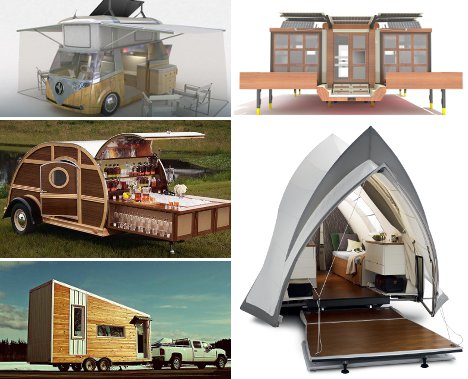
  • Happy Trailers: 11 Cool Campers & Mobile Home Concepts

    [ By Delana in Technology & Vehicles & Mods. ]

    Is there anything better than hitting the open road and going wherever the feeling takes you? It’s so much easier to pick up and set off on a spontaneous camping trip when you’ve got a camper or mobile home waiting to haul you and your gear to new surroundings. These mobile homes and rooms-on-wheels have the function and style to make your next camping trip unlike any of those cramped, bug-infested journeys that you probably remember from childhood.

    Modern Yukon Tiny Home

    (images via: Tiny House Blog)

    Yukon resident Laird Herbert built this tiny 160 square foot mobile home as a miniature alternative to a traditional home. The small house is tailored to its harsh environment with features like heavy-duty construction and extra insulation. It contains a surprising amount of storage considering its diminutive footprint, along with a fully functional kitchen and queen-size loft bed.

    252-Degree Mobile Home

    (images via: Yanko Design)

    Designers Stephanie Bellanger, David Dethoor, François Gustin, and Amaury Watine designed their unique mobile home idea with a spaceship in mind. The home opens up like a book, with every “page” revealing a new room. When you arrive at a campsite and decide to set up for the evening, a screen comes around to enclose the entire camper, keeping away the bugs and adding a sense of cohesion to the segmented home.

    Colim Caravan

    (images via: Tuvie)

    The Colim Caravan concept gives mobile home dwellers a choice between taking their entire home around with them or simply driving a run of the mill car. The Colim (Colors of Life in Motion, according to the designer, Christian Susana) is a mobile home in two pieces: a tiny, agile car and a large living space. The two are ordinarily attached, allowing the vehicle portion to haul around the living space. But when needed, the two can separate, leaving the living space sitting where it is and letting the vehicle be used to get around unencumbered.

    Mehrzeller Multicellular Caravan

    (images via: Mehrzeller)

    Travelers who have a hard time finding a mobile home or camper that works for them will be pleased to know that the Mehrzeller concept strives to be much more personalized. The Mehrzeller designers say that their plan is to work with customers to figure out exactly what they need, then to build a caravan that is completely personalized and seems as though it developed organically one cell at a time.

    VW Westfalia Solar Powered Mobile Home


    (images via: My Modern Met)

    The Volkswagen Westfalia has been a well-loved symbol of hippie culture and freedom for a very long time. When designer Alexandre Verdier set out to improve the experience of traveling in a Westfalia, he created an eco-friendly and luxurious Volkswagen. The top of the camper van is equipped with solar panels which follow the sun to collect the maximum amount of solar energy. A pneumatic suspension system lowers the van to the ground to increase stability when the camper is parked. Thanks to the pop-up top, the caravan even sports a second story. The camper is very different than the usual Volkswagen camping experience, and at $ 26,000 to $ 69,000 the unique experience it offers comes at a rather steep price.

    Eco Capsula

    (images via: Nice Architects)

    This diminutive trailer doesn’t seek attention from fellow travelers – in fact, it actually blends into its surroundings. The Eco Capsula is meant to be used in a community-type setting, with each unit connecting to the next to form a complete electric system. The units each include either a wind turbine or solar panels up on the roof, providing simple and eco-friendly ways to power the lives of the occupants. The shiny exterior is made from recycled drinks cans that reflect the surroundings, making each capsule blend in to wherever it happens to be at that moment. Meant for two to six people, the entire egg-like unit can open up in nice weather to let in the beauty of nature.

    Midget Bushtrekka

    (images via: Kamprite)

    Travelers looking to go ultra-green might choose to take a bike rather than a motorized vehicle. The Midget Bushtrekka makes that dream practical by putting a rugged trailer behind your bicycle. An optional “tentcot” provides a handy – if rather unconventional – place to sleep while you’re on the road.

    The Innovan

    (images via: Innovan)

    The Innovan line of products redefines just what a camper, caravan or trailer should be. Rather than the bulky, boxy things we are used to, Innovan products are smooth and aerodynamic. When driving, the top of the camper is low to the vehicle to reduce wind resistance. When parked, the top pops up to add an incredible amount of interior space.

    Bulleit Frontier Whiskey Woody

    (images via: Moore and Giles)

    There has probably never been a more stylish or fun-loving trailer than this one. Admittedly, you can’t camp in it or even stash your lawn chairs in its interior. But what it lacks in camping space, it makes up for in pure style. The Whiskey Woody is a full-service bar inside a classic trailer, including fun details like a poker set and lush leather furniture.

    Modern Mobile Home

    (images via: Yanko Design)

    If you were to head out on the highway with this mobile home in tow, passers-by likely would not even realize that you were hauling a small residence. Folded up, the design from Mehdi Hidari Badie looks like one of those mobile storage units. But when you get to your destination, this incredible modern mobile home unfolds into a house that looks nothing like the mobile homes we are used to. The lightweight but sturdy home is made of eco-friendly recycled materials and includes a bank of solar panels on top to keep the home powered up at all times.

    The Opera Mobile Suite

    (images via: Opera)

    Although most of us would refer to camping as “roughing it,” there is no reason to give up on luxury entirely during a camping trip. The Opera Mobile Suite is a gorgeous, elegant mobile home that takes on the shape and style of the iconic Sydney Opera House. It lets campers take a little piece of luxury with them wherever they might be.


    Want More? Click for Great Related Content on WebUrbanist:

    Bike Campers: 12 Mini Mobile Homes for Nomadic Cyclists

    Who says you can’t camp in luxury when taking a bicycle tour? These 12 bike trailers
    4 Comments – Click Here to Read More »»


    Futuristic Mobile Homes: Trailer Trash or Treasure?

    With global warming threatening coastal cities and a new era of mass migration on the horizon, going mobile just might be today’s bright idea – and tomorrow’s way of life. Here are a dozen tech-packed trailers that are full of Win… without the Winnebago.
    10 Comments – Click Here to Read More »»


    Share on Facebook


    [ By Delana in Technology & Vehicles & Mods. ]

    [ WebUrbanist | Archives | Galleries | Privacy | TOS ]


    WebUrbanist