Blog

  • Video: a grayscale method for matching colors in Photoshop

    Adobe Senior Creative Director Russell Brown recently posted this neat demo showing a technique for matching colors in Photoshop without touching a hue or saturation slider. His method uses adjustments in grayscale to individual color channels, comparing a swatch of the color he’s attempting to change directly to the color he’s trying to match. See how he does it in the video above.

    Articles: Digital Photography Review (dpreview.com)

  • Mashup Masterpieces: 48 Fusions of Art and Contemporary Pop Culture

    [ By SA Rogers in Art & Drawing & Digital. ]

    In centuries past, art has mostly depicted religious and political figures alongside artist’s models and ordinary people, but as future generations look back on our era, they’ll see a confusing mishmash of celebrities and fictional characters interwoven into our fine art legacy. Often removed from their context and mixed together, figures from music, movies, television and comic books presented as art subjects make a statement on our obsession with image, fame, heroes and the qualities we project onto the most famous faces our culture has created.

    Star Wars Recreations of Famous Photographs by David Eger

    For ‘365 Days of Clones,’ Canadian art teacher David Eger recreated famous photographs using Star Wars figurines, including play son ‘Raising the Flag on Iwo Jima,’ ‘Abbey Road,’ ‘American Gothic’ and even the iconic flying-across-the-moon-on-a-bicycle scene from E.T.

    Models Turned Celebrities with Body Paint

    Models are used as the basis of living sculptures, their features changed with globs of paint, plastic, paper, clothes and wigs so they roughly resemble celebrities like Karl Lagerfeld, Steve Jobs and Pamela Anderson. Artist Marie-Lou Desmeules refers to her creations as ‘pop zombies,’ asking viewers to consider what these artistic impersonations say about image in our society.

    Terra-cotta Characters by Lizabeth Eva Rossof

    Rather than the nameless soldiers of old who made up the historical Chinese terra-cotta army, the Xi’an-American Warriors by Lizabeth Eva Rossof bear the faces of Spiderman, Bart Simpson, Batman, Shrek, Mickey Mouse and other fictional characters, reflecting both the far reach of America’s media influence and modern-day China’s industry of counterfeiting these copyrighted properties.

    Hero-Glyphics by Josh Lane

    In ancient Egyptian hieroglyphics, artist Josh Lane saw a graphic style of art that lends itself surprisingly well to modern-day cartoon and comic book styles. For his ‘Hero-Glyphics’ series, he dropped modern characters into poses he thought best fit each one’s personality, using background details and symbols to tell a story.

    Next Page – Click Below to Read More:
    Mashup Masterpieces 48 Fusions Of Art And Contemporary Pop Culture

    Share on Facebook


    [ By SA Rogers in Art & Drawing & Digital. ]

    [ WebUrbanist | Archives | Galleries | Privacy | TOS ]


    WebUrbanist

  • Hands on with Halide, a new gesture-based iPhone camera app

    What do you get when a former Apple designer and a former Twitter developer combine forces? You get Halide — a brand new gesture-based iPhone camera app designed for those who want more control over the picture-taking process.

    Designed by Sebastiaan de With, developed by Ben Sandofsky, and released yesterday, Halide — a name reminiscent of film-based photographic processes — is designed with the aim that anyone from an amateur to a pro can achieve advanced results with minimal effort.

    Advanced apps like Camera+, ProCam, and ProShot offer vast shooting flexibility and go beyond the basics provided by Apple’s stock Camera app, but come with a higher learning curve. Unless you use such apps consistently, it’s hard to remember the location of various controls for a quick shot. In urgent situations, many shooters resort to the app they know best — the default Camera.

    Halide aims to be the ideal, elegant middle ground between ‘too simple’ and ‘airplane cockpit,’ peacefully co-existing with the iPhone’s default Camera app and perhaps occupying at least some of the same muscle memory space.

    Halide lets you compose your shot in portrait or landscape orientation.

    Halide starts out shooting in smart auto mode, but a single tap calls up a manual mode where you can adjust ISO, shutter speed and white balance. The same gestures you use with the iPhone’s native camera work for Halide, though with some variations. The zoom gesture, for example, does not work for some handset models, but instead adjusts exposure, which is similar to the original Camera app’s vertical swipe gesture.

    Toggle controls let you switch between automatic and manual settings, and the grid lights up when the camera is level. Tap focusing also works.

    Moreover, Halide’s sole concentration on shooting still photos gives it wider latitude within that narrow task. Halide doesn’t do panoramas, video or other special effects like HDR, but it does give you an optional, real-time live histogram, Raw capture and a friendly visual interface. It’s not an editor, so you can’t use it to open a photo from your Camera Roll.

    Halide focuses on three major points of interest: tactile controls, focus peaking and instant review. Smart Auto picks your ISO and shutter speeds while an EV feature lets you flick up or down to adjust exposure. Focus peaking automatically highlights in red the sharpest areas in the scene. You can enable an optional overlay grid that doubles as a level – the center tile glows when your camera is level – to help align your shot.

    Automatic and manual focus and focus peaking.

    Controls at the bottom of the interface let you tap to switch between auto and manual focus, as a toggle evokes focus peaking. You can also tap to focus. Finally, you can choose to shoot JPEG or Raw and customize which controls appear on screen.

    When you’re ready to check out your shots, Halide lets you view your recent captures via 3D touch and quickly swipe left or right to either favorite your picks or discard rejects.

    Halide runs on iPhone 5 and above — essentially any iPhone that can run iOS 10, but it works a little differently, depending on which device you own. The iPhone 6s and up supports both the real-time histogram and focus peaking. The test sample shots in this story are from an iPhone 6s. 

    The single layer of controls at the top are customizable. View, save or discard shots right away.

    Halide is available from the App Store now at a discounted price of $ 2.99. It is available in English, with Spanish, Dutch, German, and French localizations in progress. On June 6, the price goes up to $ 4.99. There are no plans for an Android version at this time.

    Articles: Digital Photography Review (dpreview.com)

  • Beastgrip launches Kickstarter to fund next generation DSLR lens adapter for smartphones

    Beastgrip has created a Kickstarter campaign to fund its latest series of adapters that allow smartphone photographers to shoot through SLR lenses and achieve the associated shallow depth of field. The company has not only officially launched the Mk2 model of its existing DOF Adapter but is also offering the new Pro Series 1.33x Anamorphic Lens and the Beastrail to attach focusing aids when using cinema lenses.

    Beastgrip says that it has redesigned some of the build and handling aspects of the DOF MK2 but has also given it new optics that are said to reduce the occurrence of aberrations while at the same time making the system compatible with a wider range of lenses – including zooms.

    $ (document).ready(function() { SampleGalleryV2({“containerId”:”embeddedSampleGallery_6367553279″,”galleryId”:”6367553279″,”isEmbeddedWidget”:true,”standalone”:false,”selectedImageIndex”:0,”startInCommentsView”:false,”isMobile”:false}) });

    The new anamorphic lens compresses a wider view onto the smartphone’s sensor which can then be worked in post-production to create videos with a 2.4:1 aspect ratio and stills in the 16:9 format. The lens has a 58mm filter thread on the front and is prone to ‘cool horizontal lens flare that you get when the lens is pointed towards a bright light source.’

    $ (document).ready(function() { SampleGalleryV2({“containerId”:”embeddedSampleGallery_2240018419″,”galleryId”:”2240018419″,”isEmbeddedWidget”:true,”standalone”:false,”selectedImageIndex”:0,”startInCommentsView”:false,”isMobile”:false}) });

    The Beastgrip DOF MK2 will cost $ 269.99 on its own or $ 409.98 with the Beastgrip Pro housing, while the 1.33x Anamorphic Lens will cost $ 175 or $ 314.99 with the Beastgrip Pro. The Beastrail will be $ 159.99. Each of the items, and various kit combinations, will be offered at a discount on the Kickstarter page for ‘early bird’ investors. 

    For more information see the Beastgrip DOF MK2 Kickstarter page or the Beastgrip website.

    Press Release

    Beastgrip is Releasing New Gear to Turn Your Smartphone Into a Pro Camera Rig

    Beastgrip is proud to announce the DOF Adapter MK2, the next generation of the best-selling DOF Adapter that allows photographers and filmmakers to mount a real SLR or DSLR lens to a smartphone for a stunning bokeh, shallow depth of field and manual focus control.

    “Smartphone cameras are great, but they have substantial limitations. Without true depth of field, larger sensors and/or the option to add lenses or camera gear, most photos/videos that are shot with one all look the same,” said CEO Vadym Chalenko. “We’re here to change that.”

    “Using lenses and depth of field adapters with your smartphone give you an entirely new look, by changing the focal length, perspective, and emotion of your shot so you can focus the viewer’s attention on what’s most important,” VP of Business Development Sean Lawrence explains.

    The original DOF Adapter has been a monumental advancement in “phoneography.” Since it was released on Kickstarter back in 2015, professional filmmakers have been pushing it to its fullest potential with films like Ghost Digital Cinema’s “MALTO,” Edward Sharpe and the Magnetic Zeros’ “No Love Like Yours,” National Geographic’s “Wasfia,” and Boat Magazine’s “Of Land and Sea.”

    “We couldn’t be happier to be a part of these projects, but we knew that the DOF Adapter could be – and should be – better, so that creators of any skill level can harness its power in their workflow,” added Chalenko.

    New Features for the DOF Adapter MK2

    • The new design dramatically improves the image quality from the first version and provides a simple, user-friendly experience. The MK2 also boasts the following new features:
    • Custom optics that dramatically reduce vignetting/hotspotting, chromatic aberration and distortion.
    • Compatibility with a much wider range of full-frame SLR/DSLR lenses, such as zoom lenses.
    • Sealed focusing screen and components for a maintence-free user experience.
    • Durable, black anodized aluminum casing with a rotating barrel that aligns the focusing screen and bayonet mount in one simple motion.

    Beastrail

    Beastgrip also created a rail support for attaching additional accessories like a follow focus to the DOF Adapter MK2 for a complete filmmaking system with the same features found on professional camera rigs.

    Pro Series 1.33X Anamorphic Lens

    Following the recent release of the Beastgrip x Kenko Pro Series .75X Wide Angle lens, Beastgrip is adding a 1.33X Anamorphic Lens to the Pro Series Lens Collection as well. This lens transforms videos into a widescreen 2.4:1 aspect ratio and adds a more dramatic perspective without the need to crop, resulting in a high resolution, cinematic look and creative lens flares like seen in Hollywood film

    Articles: Digital Photography Review (dpreview.com)

  • Avoid These 5 Common Camera Setting Mistakes Made By Beginners

    Over the years, I’ve taught many new photographers and observed how they used their cameras. I have noticed a handful of common mistakes that many of them make. While there is a lot more to learn about photography, if you can avoid or fix these issues alone, you will find that your photographs will be much sharper and of much better quality.

    Avoid These 5 Camera Setting Mistakes Typically Made By Beginners

    1. Not raising the ISO high enough

    It used to be commonly taught that you always needed to go as low as possible with the ISO for digital cameras. This was because early digital cameras had horrible noise at higher ISOs. These days, that has completely changed. Newer digital cameras can shoot with incredible quality at ISO 800, 1600, 3200, and even 6400 for higher end cameras. The noise is much less noticeable than it used to be, and it is much more pleasant looking.

    Avoid These 5 Camera Setting Mistakes Typically Made By Beginners

    This has changed how we can shoot. While your ISO should still be as low as possible when the camera is on a tripod when you’re shooting handheld you will often want to raise your ISO up much higher. Unless I am purposely shooting with a very large aperture such as f/2.8, I typically keep my ISO at 400 in sunlight, 800-1600 in light to dark shade, and 3200 and 6400 when handheld at dusk or at night. This allows me to use a faster shutter speed to offset handheld camera shake or motion in subjects, along with a decent depth of field. My shots are much sharper because of this.

    Unless you are shooting in Manual Mode, I suggest taking your camera off of auto-ISO. You never want to let your camera choose two of the three settings (shutter, aperture, and ISO) because it will mess up your photographs a lot of the time. The camera should only be choosing one of those three settings for optimal use.

    2. Using a shutter speed that’s too slow

    Avoid These 5 Camera Setting Mistakes Typically Made By Beginners

    To offset the handheld camera shake, the shutter speed always needs to be ONE over the focal length of your lens. So if you are shooting with a 50mm lens, your camera will need to be at 1/50th of a second (or faster) to make sure the image is sharp. This comes even more into play with a zoom lens because a 300mm lens will need a 1/300th of a second shutter speed in order for the image to not look blurry. This is because slight vibrations are much more noticeable when you magnify a small area in the distance. This is also why I will often raise my ISO when zooming at far distances.

    For subjects in motion, you will need a fast enough shutter speed to freeze them. I prefer a minimum of 1/250th of a second to freeze people walking. You will need an even faster shutter speed as you get to subjects such as cars.

    3. Not using exposure compensation (+/-) or the right meter mode

    Avoid These 5 Camera Setting Mistakes Typically Made By Beginners

    If you are using Aperture or Shutter Priority mode, Exposure Compensation is your best friend, particularly in scenes with tricky lighting. Your camera’s light meter is not creative – it wants to make everything look a neutral gray, but that is problematic in images with lots of dark or bright tones. Maybe you want those tones to look gray for creative purposes, but most likely, you will want them to be true to the scene. This is where Exposure Compensation (+/-) comes into play.

    For instance, in scenes with lots of bright snow or a bright sky, this could trick the camera into thinking that it needs to overly darken the image to make those white areas look gray. Or if you are shooting at night, or in a dark alleyway, the camera’s light meter will try to make those dark tones look like a lighter gray, thus brightening the image too much. Similar problems can also appear when shooting in areas with both bright highlights and dark shadows, or if your subject is backlit.

    On a related note, many photographers keep their camera on the wrong metering mode. There are three main metering modes; Evaluative, Center-weighted, and Spot metering. Evaluative will expose for the entire scene, Center-weighted will expose based on the spot that you focus on and an expanded area around it, and Spot metering will measure the light based on only the spot that you point to. I personally find Evaluative to be too broad and Spot to be too focused, so I mostly use Center-weighted metering mode.

    Read more here: Cheat Sheet: Understand Metering Modes On Your Camera

    4. Not getting the focus point right

    Avoid These 5 Camera Setting Mistakes Typically Made By Beginners

    Some photographers leave their focusing completely up to the camera. This is a terrible idea as the camera will often focus on the wrong point, ultimately ruining your image. You need to be in control of your focusing and put the focus on the most important subject in the image.

    On a similar note, it is common for photographers to get that new 50mm f/1.8 or f/1.4 lens and immediately think that they need to shoot everything at f/1.4 because they can. Some situations will be good for f/1.4, but it’s important to realize how shallow the depth of field is at that aperture.

    If you are shooting with a really shallow depth of field, the focus needs to be perfect and exactly right on the most important subject. If you are photographing a person and you put the focus point on the person’s ear or nose instead of their eyes, it will be noticeable and it will mess up the photograph. Often, I prefer to shoot portraits like this at f/4 instead of f/1.8 or f/2.8. There is still a beautiful background with bokeh, yet more of the person is in focus. This minimizes any focusing mistakes as well.

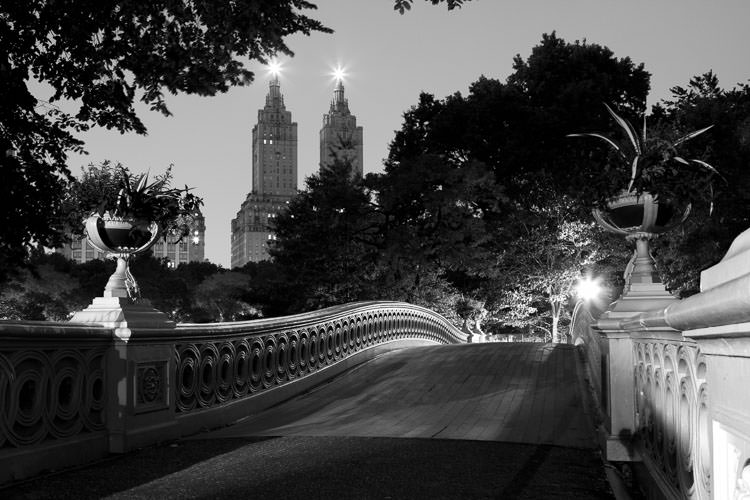
    5. Using image stabilization when using a tripod
    Avoid These 5 Camera Setting Mistakes Typically Made By Beginners

    The image stabilizer in your lens or camera will make your photographs sharper when handheld. However, it can also create minor vibrations while keeping the camera steadier, and these vibrations can actually backfire when you are on a tripod. Sometimes they will introduce blur. So always make sure to turn the image stabilizer off when you are using a tripod. If you ever notice your photographs on a tripod are slightly blurry, this issue and wind are the most likely culprits.

    Conclusion

    There you have it. The bottom line is that if you can learn to conquer and avoid these five common beginner mistakes, you’ll be on your way to better photography.

    The post Avoid These 5 Common Camera Setting Mistakes Made By Beginners by James Maher appeared first on Digital Photography School.


    Digital Photography School

  • Sigma Quattro H Review

    The Sigma Quattro H is a mirrorless interchangable lens camera with an APS-H (1.3x crop) sensor. It has a spacial resolution of 25.5MP but uses a sensor technology very different from other cameras, capturing around 38M pieces of information and capable of producing files with far higher levels of detail than you’d expect from a conventional 25.5MP camera.

    Key Features

    • 25.5MP Foveon X3 Quattro APS-H sensor
    • Hybrid (combined phase + contrast detection) autofocus system
    • JPEG, X3F Raw or DNG file output
    • 2.36m dot (1024 x 768 pixel) LCD viewfinder
    • 1.62m dot (900 x 600 pixel ) LCD rear screen
    • Dust and splash-resistant magnesium alloy body
    • In-camera Raw conversion (X3F only)

    In keeping with Sigma’s history of idiosyncratic innovation, there are two things that set it apart from the majority of mirrorless cameras: the use of a full-depth DSLR mount (the company’s own SA mount) and the use of a Foveon X3 Quattro sensor, which captures light and perceives color very differently from other cameras.

    Full depth SA mount

    This isn’t the first time we’ve seen a camera maker build a camera around a full depth DSLR mount, rather than taking advantage of the lack of mirror to make the camera smaller: Pentax’s K-01 took the same approach.

    There are two potential disadvantages of this approach. The first is, as you’d expect, the wasted space of building a mirror box for a camera with no mirror. The second, arguably more important downside, is that most DSLR lenses are designed and optimized for phase detection autofocus and they often perform poorly when asked to focus by contrast detection, meaning you have a wide choice of lenses but perpetually hamstrung performance. Sigma has tried to mitigate this by adopting on-sensor phase detection in the SD Quattro H.

    If nothing else, the use of the full-depth SA lens mount means you can use any of Sigma’s impressive Art series of lenses.

    The obvious appeal of using an existing mount is that the lenses already exist for it. Sigma produces SA mount versions of 39 of its lenses, which plausibly means the Quattro H has more native lenses available than any other mirrorless camera.

    Foveon X3 Quattro Sensor

    The X3 Quattro sensor is at the heart of what makes the SD Quattro H interesting and is, far more than any physical difference, the thing that most sets this camera apart from all its rivals.

    As with all Foveon chips, the sensor interprets color based on the fact that different colors of light have different amounts of energy and so can penetrate the sensor to different depths. This is radically different from conventional designs that place filters in front of the sensor, throwing away around half of all the light so that each pixel only ‘sees’ light of a predetermined color.

    Unlike previous Foveon chips, the Quattro design doesn’t attempt to capture full color information at every pixel, instead capturing more spatial resolution than color resolution. This is a fundamentally similar trade-off made by conventional sensors, so it’ll be interesting to see whether this latest design can maintain enough of what made Foveon distinctive while trying to offer more competitive results in other respects.

    DNG capability

    The other big difference is that the Quattro H can be set to shoot DNG files. These are produced by the camera deconvoluting its sensor’s output and writing them as ~150MB files with three 12-bit color channels. This means the files are significantly larger and theoretically less flexible than the camera’s native X3F Raw files.

    The DNGs can’t be used with the camera’s in-camera Raw converter and you can’t shoot DNG + JPEG, but it hugely expands choice of software for processing the files. For this reason, the rest of the review will primarily be based on the camera’s DNG output.

    Articles: Digital Photography Review (dpreview.com)

  • How to Remove Objects and Add Punch to Your Images with Photoshop

    In this article, we’ll look at an image I reprocessed after my initial edit. I’ll also share with you some tips on how to use Photoshop to remove objects from your scene that are unwanted and add some punch to your image.

    Original processed version

    Have you ever created an image, processed it, shared it with the world, and then decided it wasn’t quite finished? I have! In fact, I do it more often than I’d like to admit. A while back, I created a video tutorial for On1 Software showing how I used that software to process an image I took at Queen’s Bath on the island of Kauai. I was super excited to share the image because it was an incredible sunset, at an incredible location, shot during some incredible conditions, with a completely random and unscripted local in the scene to top it all off. Here’s a look at the image after processing it and creating the initial video.

    How to Remove Objects and Add Punch to Your Images with Photoshop

    After watching the video and looking at the final image, I decided I wasn’t 100% satisfied with the edit. I’ve used On1 Software for nearly a decade now, and still use it in my everyday workflow. It wasn’t any fault of On1, I just felt the image could be taken up another notch so decided to take it over into Photoshop to give it another go. I decided the image needed two adjustments…

    #1 Remove the local at the bottom climbing up the rocks.

    • Queen’s Bath is notorious for the massive waves that crash against the shore in the winter. Nearly 30 people have drowned at this location from being washed out to sea and this guy was close to being added to the list! I decided to remove him because his movements caused him to become blurred and I felt he ended up being more of a distraction in the image than a complementary part of it.

    #2 Add a bit more contrast and punch to the overall image.

    • I felt the sky and rocks were still a bit too washed out and needed a very subtle boost to bring it all together.

    Second edited version completed in Photoshop

    After a few minutes in Photoshop, I came up with this final (really this time!) result.

    How to Remove Objects and Add Punch to Your Images with Photoshop

    After working extensively in Photoshop over the past decade, I’ve developed a few tricks along the way. I’m not sure how mainstream some of them are, so I like to share them in hopes that they’ll help you as well. One of those tricks is how I remove objects that are up against other objects(as opposed to being out in the open). To do this, I use a combination of the Quick Selection Tool, Masking, and the Clone Stamp. Adding contrast and punch to the image is a bit more basic in this case, but still advanced if you aren’t super familiar with masking and brush techniques.

    Here’s the video where I walk through the process step-by-step.

    Let me know what you think and if you have any questions please put them in the comments section below.

    Get James’ video course POST II where he walks through his entire workflow in Lightroom, Photoshop, and more from start to finish with 10 of his favorite portfolio images. Be sure to use coupon code DPS25 at checkout for an exclusive DPS discount!

    The post How to Remove Objects and Add Punch to Your Images with Photoshop by James Brandon appeared first on Digital Photography School.


    Digital Photography School
  • Full-frame Nikon 8-15mm F3.5-4.5E ED fisheye zoom now available

    $ (document).ready(function() { SampleGalleryV2({“containerId”:”embeddedSampleGallery_3650555962″,”galleryId”:”3650555962″,”isEmbeddedWidget”:true,”standalone”:false,”selectedImageIndex”:0,”startInCommentsView”:false,”isMobile”:false}) });

    The Nikon AF-S Fisheye Nikkor 8-15mm F3.5-4.5E ED is a circular fisheye for the company’s full-frame DSLR bodies. At its wide end it has a 180-degree vertical and horizontal angle-of-view, changing to a non-circular 180-degree diagonal AOV at its long end. The lens has three ED and two aspherical elements as well as Nano Crystal and fluorine coatings.

    The 8-15mm F3.5-4.5E ED is available immediately for $ 1249.95.

    Press Release:

    NIKON ANNOUNCES THREE NEW WIDE-ANGLE NIKKOR LENSES

    • AF-P DX NIKKOR 10-20mm f/4.5-5.6G VR – Compact Ultra-Wide-Angle Perspective DX-format Zoom Lens
    • AF-S Fisheye NIKKOR 8-15mm f/3.5-4.5E ED -Circular Fisheye Zoom for the Ultimate in Versatility and a Unique Perspective
    • AF-S NIKKOR 28mm f/1.4E ED – Outstanding Definition and High Resolution Wide-Angle Prime Lens

     MELVILLE, NY (May 31, 2017 at 12:01 A.M. EDT) — Today, Nikon announced three exciting new wide-angle NIKKOR lenses to give a diverse array of users brilliant image quality and maximum versatility whether shooting vast landscapes, architecture, interiors, events and many other wide-angle applications. The new ultra-wide zoom and lightweight DX-format AF-P DX NIKKOR 10-20mm f/4.5-5.6G VR is an excellent value for budding shutterbugs and novice shooters looking to explore a wide-angle point of view, while the new AF-S Fisheye NIKKOR 8-15mm f/3.5-4.5E ED is an FX-format circular fisheye zoom lens for photographers and content creators who desire a truly unique perspective. Lastly, the new AF-S NIKKOR 28mm f/1.4E ED is a superior prime lens that provides professional and advanced photographers the ultimate in wide-angle image quality. Both the AF-S Fisheye NIKKOR 8-15mm f/3.5-4.5E ED and AF-S NIKKOR 28mm f/1.4E ED are the latest additions to the Gold Ring Series of NIKKOR lenses, a mark identifying Nikon’s premium lens offerings.

    “Nikon continues to push the limits of optical excellence, while making new perspectives more attainable than ever before with our latest wide-angle NIKKOR offerings,” said Kosuke Kawaura, Director of Marketing and Planning, Nikon Inc. “Whether a photographer is a novice learning the art of landscapes, an enthusiastic video creator or a working professional shooter, Nikon now makes the wide-angle perspective achievable for everyone.”

    The AF-P DX NIKKOR 10-20mm f/4.5-5.6G VR – Ultra-Wide Zoom Lens That’s Compact and Portable

    The new NIKKOR 10-20mm is an ultra-wide-angle DX-format zoom lens that opens new perspectives and possibilities for those new to photography, and is ideal for shooting travel and scenery, real estate, large group portraits or vlogging. This new lens combines superior image quality and an attainable price to give consumers wide-angle versatility with a lens that’s remarkably compact and lightweight.

    Like all NIKKOR lenses, the new AF-P DX NIKKOR 10-20mm f/4.5-5.6G VR provides advanced optical technologies for stellar image quality in any light, whether shooting a sun-drenched coastal vista, tight spaces or the night sky. The lens features the equivalent of 3.5 stops1 of Vibration Reduction (VR) performance, to help capture sharp images while handheld or in challenging light. Additionally, it utilizes Nikon’s Pulse Motor technology for super-fast and whisper quiet AF operation- which is especially useful when recording video. The optical formula contains three aspherical elements for excellent image quality with minimal distortion even at the widest focal length.

    This is a versatile lens that not only excels at shooting expansive horizons, but also offers a remarkably close working distance that’s useful for images or showing up-close details when making product-related videos or how-to content. To get closer to capture small objects with big details, the lens has a close minimum focusing distance of only 8.6 inches (0.22 meters), bringing small objects to life in glorious size.

    AF-S Fisheye NIKKOR 8-15mm f/3.5-4.5E ED – Circular Fisheye for Photographers and Content Creators

    Nikon’s first fisheye zoom gives photographers and filmmakers an FX-format lens with the look and feel of a circular fisheye and the versatility of a full-frame fisheye, all in one lens. The new lens design provides a creative circular 180-degree vertical / horizontal angle of view on full frame cameras, and zooms to a non-circular fisheye view (180-degree diagonal angle of view) on the long end of the focal range. The lens can also be used on DX-format cameras for a distinctive point-of-view and extreme wide-angle applications. When looking to push creative boundaries, the intriguing perspective from a fisheye lens should be considered to provide a distinct look to your photos and videos, such as a dramatic emphasis on a subject or an extremely wide interior point of view. 

    The AF-S Fisheye NIKKOR 8-15mm f/3.5-4.5E ED is also the latest in Nikon’s Gold Ring Series of premier lenses and features a next-generation design for high-resolution Nikon DSLR cameras. Made for advanced photographers and creators, this durable lens is constructed of lightweight magnesium alloy, and employs internal focusing (IF) to retain its compact size, even while focusing. It is also Nikon’s latest lens to use an electromagnetic diaphragm for consistent exposure during high speed shooting, or smooth exposure control while capturing video. 

    The optical formula of the Fisheye NIKKOR 8-15mm consists of three ED elements to reduce chromatic aberration, while two aspherical lens elements minimize coma even at the widest aperture, and enable a more compact lens size. Additionally, the front lens element is coated with Nikon’s non-stick Fluorine coat to help resist dirt, fingerprints and smudges, while Nikon’s exclusive Nano Crystal Coat helps reduce ghost and flare. 

    AF-S NIKKOR 28mm f/1.4E ED – The Latest in The Gold Ring Series of f/1.4 Primes in the NIKKOR Line

    The new AF-S NIKKOR 28mm f/1.4E ED is Gold Ring glass that provides maximum versatility for outstanding definition and sharpness regardless of shooting scenario. With a fast f/1.4 maximum aperture and nine blade rounded diaphragm, it affords a shallow depth of field with gorgeous bokeh and stellar low light performance, making it a great choice for shooting low light landscapes, interiors and events. 

    The superbly balanced and solid body is composed of lightweight magnesium alloy, and features dust and water drop resistant sealing to withstand the elements, combined with a fluorine coating to resist dirt and smudges. The optical construction of the lens is engineered for the best possible wide-angle image quality. It consists of 14 elements in 11 groups, with three aspherical elements that virtually eliminate coma, aberration and distortion, with two ED glass elements that minimize chromatic aberration. The lens also uses Nikon’s Nano Crystal coat to reduce instances of ghosting and flare. 

    The new AF-S NIKKOR 28mm f/1.4E ED is a welcome addition to Nikon’s stable of impressive f/1.4 primes that give professional photographers and creators the highest levels of image quality and performance, which also include; The AF-S 24mm f/1.4G ED, AF-S NIKKOR 35mm f/1.4G, AF-S NIKKOR 58mm f/1.4G, AF-S NIKKOR 85mm f/1.4G and AF-S NIKKOR 105mm f/1.4E ED.

    Price and Availability

    The Nikon AF-S Fisheye NIKKOR 8-15mm f/3.5-4.5E ED will be available immediately for a suggested retail price (SRP)* of $ 1249.95. The AF-P DX NIKKOR 10-20mm f/4.5-5.6G VR and AF-S NIKKOR 28mm f/1.4E ED will be available in late June for a suggested retail price (SRP)*, $ 309.95 and $ 1999.95, respectively. For more information on these NIKKOR lenses as well as the latest Nikon products, please visit www.nikonusa.com. 

    1: Based on CIPA Standard. This value is achieved when DX-format compatible lenses are attached to a DX-format digital SLR camera and zoom lenses are set at the maximum telephoto position. 

    *SRP (Suggested Retail Price) listed only as a suggestion. Actual prices are set by dealers and are subject to change at any time.

    Nikon AF-S Fisheye Nikkor 8-15mm F3.5-4.5E ED specifications

    Principal specifications
    Lens type Zoom lens
    Max Format size 35mm FF
    Focal length 8–15 mm
    Image stabilization No
    Lens mount Nikon F (FX)
    Aperture
    Maximum aperture F3.5–29
    Minimum aperture F4.5–29
    Aperture ring No
    Number of diaphragm blades 7
    Optics
    Elements 15
    Groups 13
    Special elements / coatings Three ED + two aspherical elements, Nano Crystal and fluorine coatings
    Focus
    Minimum focus 0.16 m (6.3)
    Maximum magnification 0.34×
    Autofocus Yes
    Motor type Ring-type ultrasonic
    Full time manual Yes
    Focus method Internal
    Distance scale No
    DoF scale No
    Physical
    Weight 485 g (1.07 lb)
    Diameter 78 mm (3.07)
    Length 83 mm (3.27)
    Materials Magnesium alloy
    Sealing No
    Colour Black
    Zoom method Rotary (extending)
    Power zoom No
    Zoom lock No
    Hood supplied Yes
    Tripod collar No

    Articles: Digital Photography Review (dpreview.com)

  • Nikon adds to fast prime series with AF-S Nikkor 28mm F1.4E ED

    $ (document).ready(function() { SampleGalleryV2({“containerId”:”embeddedSampleGallery_1116369042″,”galleryId”:”1116369042″,”isEmbeddedWidget”:true,”standalone”:false,”selectedImageIndex”:0,”startInCommentsView”:false,”isMobile”:false}) });

    Nikon has added a sixth lens to its collection of fast F1.4 primes (the others being 24mm, 35mm, 58mm, 85mm and 105mm). The AF-S Nikkor 28mm F1.4E ED lens features nine rounded aperture blades, two ED and three aspherical elements, and Nikon’s Nano Crystal Coating. The lens is made of magnesium alloy and is sealed against dust and moisture.

    As you might imagine, this is a pricey lens – it’ll go on sale in late June for $ 1999.95.

    Press Release:

    NIKON ANNOUNCES THREE NEW WIDE-ANGLE NIKKOR LENSES

    • AF-P DX NIKKOR 10-20mm f/4.5-5.6G VR – Compact Ultra-Wide-Angle Perspective DX-format Zoom Lens
    • AF-S Fisheye NIKKOR 8-15mm f/3.5-4.5E ED -Circular Fisheye Zoom for the Ultimate in Versatility and a Unique Perspective
    • AF-S NIKKOR 28mm f/1.4E ED – Outstanding Definition and High Resolution Wide-Angle Prime Lens

    MELVILLE, NY (May 31, 2017 at 12:01 A.M. EDT) — Today, Nikon announced three exciting new wide-angle NIKKOR lenses to give a diverse array of users brilliant image quality and maximum versatility whether shooting vast landscapes, architecture, interiors, events and many other wide-angle applications. The new ultra-wide zoom and lightweight DX-format AF-P DX NIKKOR 10-20mm f/4.5-5.6G VR is an excellent value for budding shutterbugs and novice shooters looking to explore a wide-angle point of view, while the new AF-S Fisheye NIKKOR 8-15mm f/3.5-4.5E ED is an FX-format circular fisheye zoom lens for photographers and content creators who desire a truly unique perspective. Lastly, the new AF-S NIKKOR 28mm f/1.4E ED is a superior prime lens that provides professional and advanced photographers the ultimate in wide-angle image quality. Both the AF-S Fisheye NIKKOR 8-15mm f/3.5-4.5E ED and AF-S NIKKOR 28mm f/1.4E ED are the latest additions to the Gold Ring Series of NIKKOR lenses, a mark identifying Nikon’s premium lens offerings.

    “Nikon continues to push the limits of optical excellence, while making new perspectives more attainable than ever before with our latest wide-angle NIKKOR offerings,” said Kosuke Kawaura, Director of Marketing and Planning, Nikon Inc. “Whether a photographer is a novice learning the art of landscapes, an enthusiastic video creator or a working professional shooter, Nikon now makes the wide-angle perspective achievable for everyone.”

    The AF-P DX NIKKOR 10-20mm f/4.5-5.6G VR – Ultra-Wide Zoom Lens That’s Compact and Portable

    The new NIKKOR 10-20mm is an ultra-wide-angle DX-format zoom lens that opens new perspectives and possibilities for those new to photography, and is ideal for shooting travel and scenery, real estate, large group portraits or vlogging. This new lens combines superior image quality and an attainable price to give consumers wide-angle versatility with a lens that’s remarkably compact and lightweight.

    Like all NIKKOR lenses, the new AF-P DX NIKKOR 10-20mm f/4.5-5.6G VR provides advanced optical technologies for stellar image quality in any light, whether shooting a sun-drenched coastal vista, tight spaces or the night sky. The lens features the equivalent of 3.5 stops1 of Vibration Reduction (VR) performance, to help capture sharp images while handheld or in challenging light. Additionally, it utilizes Nikon’s Pulse Motor technology for super-fast and whisper quiet AF operation- which is especially useful when recording video. The optical formula contains three aspherical elements for excellent image quality with minimal distortion even at the widest focal length.

    This is a versatile lens that not only excels at shooting expansive horizons, but also offers a remarkably close working distance that’s useful for images or showing up-close details when making product-related videos or how-to content. To get closer to capture small objects with big details, the lens has a close minimum focusing distance of only 8.6 inches (0.22 meters), bringing small objects to life in glorious size.

    AF-S Fisheye NIKKOR 8-15mm f/3.5-4.5E ED – Circular Fisheye for Photographers and Content Creators

    Nikon’s first fisheye zoom gives photographers and filmmakers an FX-format lens with the look and feel of a circular fisheye and the versatility of a full-frame fisheye, all in one lens. The new lens design provides a creative circular 180-degree vertical / horizontal angle of view on full frame cameras, and zooms to a non-circular fisheye view (180-degree diagonal angle of view) on the long end of the focal range. The lens can also be used on DX-format cameras for a distinctive point-of-view and extreme wide-angle applications. When looking to push creative boundaries, the intriguing perspective from a fisheye lens should be considered to provide a distinct look to your photos and videos, such as a dramatic emphasis on a subject or an extremely wide interior point of view. 

    The AF-S Fisheye NIKKOR 8-15mm f/3.5-4.5E ED is also the latest in Nikon’s Gold Ring Series of premier lenses and features a next-generation design for high-resolution Nikon DSLR cameras. Made for advanced photographers and creators, this durable lens is constructed of lightweight magnesium alloy, and employs internal focusing (IF) to retain its compact size, even while focusing. It is also Nikon’s latest lens to use an electromagnetic diaphragm for consistent exposure during high speed shooting, or smooth exposure control while capturing video. 

    The optical formula of the Fisheye NIKKOR 8-15mm consists of three ED elements to reduce chromatic aberration, while two aspherical lens elements minimize coma even at the widest aperture, and enable a more compact lens size. Additionally, the front lens element is coated with Nikon’s non-stick Fluorine coat to help resist dirt, fingerprints and smudges, while Nikon’s exclusive Nano Crystal Coat helps reduce ghost and flare. 

    AF-S NIKKOR 28mm f/1.4E ED – The Latest in The Gold Ring Series of f/1.4 Primes in the NIKKOR Line

    The new AF-S NIKKOR 28mm f/1.4E ED is Gold Ring glass that provides maximum versatility for outstanding definition and sharpness regardless of shooting scenario. With a fast f/1.4 maximum aperture and nine blade rounded diaphragm, it affords a shallow depth of field with gorgeous bokeh and stellar low light performance, making it a great choice for shooting low light landscapes, interiors and events. 

    The superbly balanced and solid body is composed of lightweight magnesium alloy, and features dust and water drop resistant sealing to withstand the elements, combined with a fluorine coating to resist dirt and smudges. The optical construction of the lens is engineered for the best possible wide-angle image quality. It consists of 14 elements in 11 groups, with three aspherical elements that virtually eliminate coma, aberration and distortion, with two ED glass elements that minimize chromatic aberration. The lens also uses Nikon’s Nano Crystal coat to reduce instances of ghosting and flare. 

    The new AF-S NIKKOR 28mm f/1.4E ED is a welcome addition to Nikon’s stable of impressive f/1.4 primes that give professional photographers and creators the highest levels of image quality and performance, which also include; The AF-S 24mm f/1.4G ED, AF-S NIKKOR 35mm f/1.4G, AF-S NIKKOR 58mm f/1.4G, AF-S NIKKOR 85mm f/1.4G and AF-S NIKKOR 105mm f/1.4E ED.

    Price and Availability

    The Nikon AF-S Fisheye NIKKOR 8-15mm f/3.5-4.5E ED will be available immediately for a suggested retail price (SRP)* of $ 1249.95. The AF-P DX NIKKOR 10-20mm f/4.5-5.6G VR and AF-S NIKKOR 28mm f/1.4E ED will be available in late June for a suggested retail price (SRP)*, $ 309.95 and $ 1999.95, respectively. For more information on these NIKKOR lenses as well as the latest Nikon products, please visit www.nikonusa.com. 

    1: Based on CIPA Standard. This value is achieved when DX-format compatible lenses are attached to a DX-format digital SLR camera and zoom lenses are set at the maximum telephoto position. 

    *SRP (Suggested Retail Price) listed only as a suggestion. Actual prices are set by dealers and are subject to change at any time.

    Nikon AF-S Nikkor 28mm F1.4E ED specifications

    Principal specifications
    Lens type Prime lens
    Max Format size 35mm FF
    Focal length 28 mm
    Image stabilization No
    Lens mount Nikon F (FX)
    Aperture
    Maximum aperture F1.4–16
    Minimum aperture F1.4–16
    Aperture ring No
    Number of diaphragm blades 9
    Optics
    Elements 14
    Groups 11
    Special elements / coatings 3 aspherical + 2 ED element, Nano Crystal and fluorine coatings
    Focus
    Minimum focus 0.28 m (11.02)
    Maximum magnification 0.17×
    Autofocus Yes
    Motor type Ring-type ultrasonic
    Full time manual Yes
    Focus method Internal
    Distance scale No
    DoF scale No
    Physical
    Weight 645 g (1.42 lb)
    Diameter 83 mm (3.27)
    Length 101 mm (3.98)
    Materials Magnesium alloy
    Sealing Yes
    Colour Black
    Filter thread 77.0 mm
    Tripod collar No

    Articles: Digital Photography Review (dpreview.com)

  • Thoughts and Field Test of the Sigma 12-24mm F4 DG HSM Art Lens

    In November 2016, Sigma introduced the world to its widest zoom lens offering to date: the Sigma 12-24mm f/4 DG HSM Art lens. This is actually Sigma’s third version of the 12-24mm DG (full frame) lens, but it is the first to have the “Art” designation and a constant aperture. Previous lens versions share the same focal length but differ in maximum aperture, weight, size, and price.

    Priced at $ 1,600, this isn’t the cheapest lens, but it is a steal compared to Canon’s EF 11-24mm f/4L USM, which runs just under $ 2,700. Here are some more details on the Sigma 12-24mm lens and reasons why it may or may not be for you.

    Sigma 12-24mm Art Lens

    Thoughts and Field Test of the Sigma 12-24mm F4 DG HSM Art Lens

    Sigma 12-24mm mounted on a Canon 6D.

    Specs of the Sigma 12-24mm

    • 12-24mm focal length
    • Maximum aperture of f/4
    • Minimum focusing of 0.24 m (9.45″)
    • Available in Canon EF, Nikon F (FX) and Sigma mounts
    • Ring-type hypersonic motor
    • Item dimensions of 3.3 x 4.7 x 3.3 inches
    • Item weight of 1.5 lbs
    • Weather sealing, dust and splash proof
    • Comes with a solid lens cap and a zippered carrying case with shoulder strap
    Sigma 12-24mm Art Lens

    A phenomenal lens for architecture and interiors. Shot at 12mm.

    Pros of the Sigma 12-24mm

    Solid build quality

    The build quality of the Sigma 12-24mm is impeccable. Constructed mostly of metal and glass, this is a solid and rather heavy lens. It takes up quite a bit of space in your bag and can make it difficult to travel with (more on that below). On the plus side, I would expect it to hold up well over time. Also, it is dust and splash proof as well as being weather sealed.

    Thoughts and Field Test of the Sigma 12-24mm F4 DG HSM Art Lens

    Excellent distortion control

    Ultra-wide angle lenses often suffer from distortion, where straight lines may appear more curved, and proportions may seem off. This can often be corrected in post-processing. Shots that were taken with my previous wide-angle lens, the Canon 16-35mm f/2.8, often needed quite a bit of Photoshop post-processing to straighten lines and correct distortion. The Sigma 12-24mm, however, does an outstanding job of keeping photo subjects pretty free of distortion, no matter what focal length you’re using.

    Sigma 12-24mm Art Lens

    Interior image shot at 12mm.

    Sigma 12-24mm Art Lens

    Same photo subject from above, but shot from a slightly closer angle at 24mm.

    Things to consider

    Not for everyday shooting situations

    Shooting with an ultra-wide angle lens takes a certain eye for composition. Not everything will photograph well at 12mm due to perspective distortion. People, for example, may end up with body parts that appear much larger or longer than they should be when they are photographed at wide focal lengths. Thus, it’s important to manage your expectations with a wide-angle lens and realize that not everything will photograph well with it. Generally speaking, ultra-wide angle lenses suit the needs of architecture and landscape photographers. Portrait and product photographers, not so much.

    Thoughts and Field Test of the Sigma 12-24mm F4 DG HSM Art Lens

    Not a great image due to poor composition and distortion of shooting at 12mm.

    Sigma 12-24mm Art Lens

    With better composition and positioning, 12mm can work in certain situations, like landscape or cityscape photos.

    Curved front lens element

    The Sigma 12-24mm f/4 has a bulbous, curved front lens element that makes it impossible to use standard, threaded filters. This might be a hindrance to landscape photographers needing to use circular polarizers and neutral density filters, or the average photographer who likes to stick a UV filter on for added lens protection. There are other filter solutions such as slip-in rear gel filters, but those can be quite large and cumbersome to deal with.

    Heavy lens

    While a solid lens is great in terms of being reliably built, the weight and bulk of this lens are undeniable. Combined with the aforementioned con of not being able to add a protective filter to the glass, the Sigma 12-24mm becomes very unfriendly as a travel lens. If you do travel with it, you’d need to be extremely careful to avoid damaging the glass.

    Thoughts and Field Test of the Sigma 12-24mm F4 DG HSM Art Lens

    Other Lens Options

    Since this is the third iteration of Sigma’s 12-24mm lens, there are two previous models to consider if you are looking for alternatives.

    • Sigma 12-24mm f/4.5-5.6 EX DG HSM lens (version 1)
    • Sigma 12-24mm f/4.5-5.6 DG II HSM lens (version 2)

    This Sigma lens is also going up against the Canon EF 11-24mm f/4L USM lens ($ 2699), the Nikon 14-24mm f/2.8G ($ 1899), and Tamron 15-30mm f/2.8 ($ 1199). Focal lengths, apertures, and prices all vary, so it really depends on which features are most important to you.

    In Conclusion

    In terms of image quality, I found the Sigma 12-24mm to be incredible for shooting architecture and interiors in particular. However, its weight and fragile, bulbous lens make it tricky to travel with.

    Would you pull the trigger on investing in this lens? Let me know in the comments below!

    The post Thoughts and Field Test of the Sigma 12-24mm F4 DG HSM Art Lens by Suzi Pratt appeared first on Digital Photography School.


    Digital Photography School