Blog

  • Shooting Greenland in Winter: Part 1 – Uummannaq Whiteout

    Earlier this year, I was sent on assignment to shoot Greenland in winter. This was a trip I had been wanting to do for years, but it always fell through due to scheduling conflicts and the fact that visiting Greenland would be quite expensive to do on my own. Luckily, I was approached by Air Greenland and Visit Greenland, in collaboration with my long-time friends and partners at Square Rock, and given the necessary financial support to finally realize this dream.

    Being sent on an assignment and given a green light to shoot whatever I wished and realize my passion was incredible. Indeed, on the one hand, I was a bit stressed by the need to justify the costs and produce good results for my sponsors. But on the other hand, I was completely free to go and do as I pleased, all taken care of.

    I was determined to take full advantage of the opportunity, and I’d like to tell you the story of my trip in this series of articles.

    Selecting the Destinations

    When Air Greenland is one of your sponsors, imagination flies. At the beginning, I naturally leaned toward destinations which I would never conceivably visit on my own. Qaanaaq, in the far Arctic north of Greenland, was a candidate. But I was very quickly made to understand that since I was to produce images that would promote tourism in Greenland, I would need to go somewhere where tourists might actually go!

    Domestic flights to Qaanaaq cost upward of $ 2,000, and that’s not including the flight to Greenland in the first place… not exactly tourist friendly. Alright, now what? A few options came to mind.

    The first was the southern tip of Greenland, which boasts fantastic fjords and mountains, and a good latitude for Northern Lights. It was a good option but the problem was that there is no stable sea ice to go on. I really wanted to drive or walk close to icebergs embedded in sea ice.

    Another option was Scoresby Sound, an excellent location to which I also hadn’t visited. There is plenty of stable sea ice there and an option to dogsled all around and get close to embedded icebergs. The problem with this one is that there wasn’t quite enough material there to fill my two-week time frame.

    Finally, I made the choice of going to Uummannaq and to Disko Bay. I had been in Uummannaq once in the summer for just a few hours, and I was seriously intrigued by its beauty and iconic grandeur. Uummannaq Mountain is a landmark which sparks the imagination, with its twin 1170-meter peaks and iconic heart-like shape (Uummannaq means heart-shaped in Greenlandic).

    It’s a perfect background for many types of shots, which would give me the diversity I wanted:

    Mount Uummannaq above Uummannaq town

    Uummannaq Island lies in the middle of Uummannaq Fjord, which was perfect in what it offered: solid, far-reaching sea ice and several glaciers which produce beautiful icebergs. The icebergs travel into the fjord and, in winter, they get stuck in the sea ice—some of them very close to town.

    Houses in Uummannaq and an iceberg stuck in sea ice next to town

    Uummannaq is a small town but not too small—the infrastructure was more than enough for my needs. I was housed in a very comfortable little guest house right next to the harbor, and there was a restaurant downstairs and a supermarket nearby. I was assigned a local guide who took very good care of me throughout my stay, accommodated my photographic needs and schedule, made sure I was safe and warm at all times and was fun to be around.

    First Day in Uummannaq

    Uummannaq is at about 70 degrees north, in the far west of Greenland. Getting there from Leknes, Norway, where I had been guiding beforehand, involved no less than eight flights, the last of them by helicopter. The views from the air were admittedly spectacular, but I would have appreciated a shorter route.

    Upon arriving at the heliport I was greeted by very cold weather. Even though I had already been in the Arctic for 1.5 months right before arrival, it had been in places with milder weather. For example, temperatures in the Lofoten Islands rarely go lower than -10 Centigrade. Greenland is a different story altogether, and your first breaths at -25 degrees are hard. I had never had to experience this type of temperatures for an extended period of time before—my lungs rejected the cold air and I started coughing until my body got used to the new situation.

    Bleak conditions upon my arrival in Uummannaq

    After meeting my guide Paaluk and settling into the guest house, I started exploring. That is, if you call being bombarded by snow and gale-force winds exploring.

    The first day was quite miserable. With temperatures down to -28 and strong winds, it was very hard to move around, much less shoot. My hands and feet went numb several times, I suffered frostbite on my nose, and was generally frustrated with the lack of light and the harshness of the situation.

    The upside was that the weather conditions supplied very interesting photographic material, and even though I sometimes had to go back to the guesthouse to get warm, I did get interesting shots of the locals working and handling their sled dogs.

    $ (document).ready(function() { SampleGalleryV2({“containerId”:”embeddedSampleGallery_1587933170″,”galleryId”:”1587933170″,”isEmbeddedWidget”:true,”selectedImageIndex”:0,”isMobile”:false}) });

    I also hiked to the icebergs embedded in the sea ice to shoot them during the whiteout. There were several beautiful icebergs right outside town, and all I had to do to get to them was go down to the harbor and walk for 20 minutes, which also warmed me up a bit. There were also several additional icebergs a bit further away, and I sometimes hiked there or took a ride on Paaluk’s snowmobile.

    $ (document).ready(function() { SampleGalleryV2({“containerId”:”embeddedSampleGallery_4760425467″,”galleryId”:”4760425467″,”isEmbeddedWidget”:true,”selectedImageIndex”:0,”isMobile”:false}) });

    Finally, I also took some images of the ice fishermen at work. It astounded me how these men were working throughout the day, no matter the weather. These guys are tough!

    $ (document).ready(function() { SampleGalleryV2({“containerId”:”embeddedSampleGallery_0982299960″,”galleryId”:”0982299960″,”isEmbeddedWidget”:true,”selectedImageIndex”:0,”isMobile”:false}) });

    Shooting in the snow and gale was very interesting but a bit hard. Luckily, the upcoming days were much nicer and offered other kinds of photography like the shot you see below. But more on that in Part 2.


    Erez Marom is a professional nature photographer, photography guide and traveler based in Israel. You can follow Erez’s work on Instagram and Facebook, and subscribe to his mailing list for updates.

    If you’d like to experience and shoot some of the most fascinating landscapes on earth with Erez as your guide, take a look at his unique photography workshops in Southern Iceland, Northern Iceland, The Lofoten Islands, Patagonia, Greenland in summer, Greenland in winter, Namibia and the Faroe Islands.

    Erez also offers video tutorials discussing his images and explaining how he achieved them.

    Selected Articles by Erez Marom:

    • Parallelism in Landscape Photography
    • Winds of Change: Shooting changing landscapes
    • Behind the Shot: Dark Matter
    • On the Importance of Naming Images
    • On Causality in Landscape Photography
    • Behind the Shot: Lost in Space
    • The Art of the Unforeground
    • Whatever it Doesn’t Take

    Articles: Digital Photography Review (dpreview.com)

  • My Thoughts on the SmugMug Flickr Acquisition

    Disclosure: I know people and am friends with people who work at both SmugMug and Flickr.

    Earlier today we learned that the photo sharing site Flickr has been acquired by the photo sharing site SmugMug. Terms of the acquisition were not disclosed. Flickr was purchased by Yahoo back in the early days of the internet in 2005 for probably somewhere around $ 40 million (give or take $ 10 million). Yahoo managed Flickr for many years, but more recently Yahoo’s core holdings were sold off last year to Verizon. Verizon folded Flickr into a new division called Oath which was made up of various Yahoo and AOL assets (another Verizon acquisition) run by ex-Google executive Tim Armstrong. Now Verizon/Oath has sold Flickr to SmugMug.

    As They Pulled You Out Of The Oxygen Tent You Asked For The Latest Party
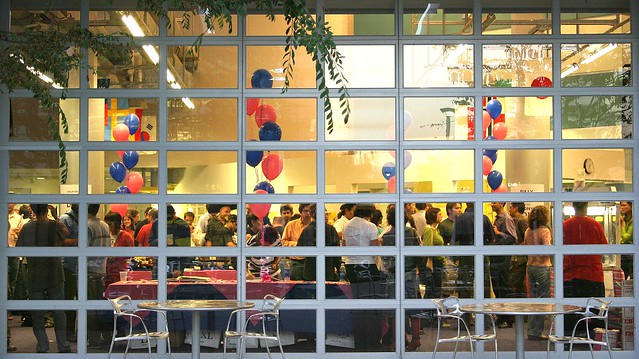
    Flickr Fiesta party celebrating Yahoo acquisition in 2005 at Yahoo Campus.

    Flickr Turns 2 (12)
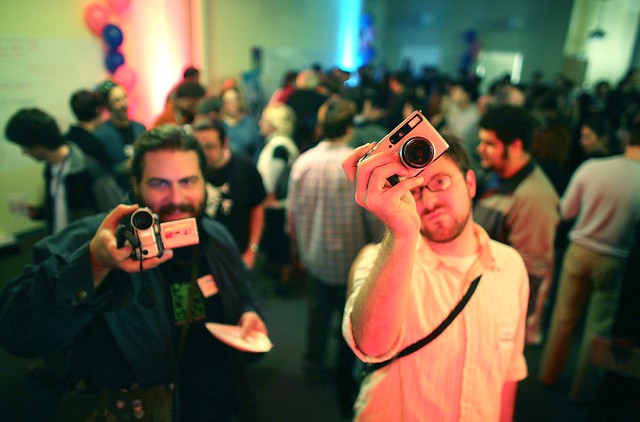
    Flickr Turns 2 Party, San Francisco, 2006.

    As someone who joined Flickr back in 2003 pre-Yahoo and has been on the site pretty much daily since then, I thought I’d share my own thoughts on what this acquisition might mean for Flickr users and the larger Flickr community.

    First off, I have to say that I think that today’s news is *very* good for Flickr users and the Flickr community. While time will tell how this acquisition goes, I have much more faith in SmugMug running Flickr than I do Verizon.

    Before getting into the particulars about why I think this is a good fit, I think you have to take a general look at the types of companies Yahoo/Verizon/Oath were/are and the type of company SmugMug is. Yahoo/Verizon/Oath like Google and Facebook are largely advertising companies. These companies offer you free content and use your personal data to advertise at you. One of the things that I always liked about Flickr was that advertising was largely secondary to paid subscription accounts. Sure, Flickr had a free account, but at least as it was initially designed, the free account (which limited you to only seeing your last 200 photos) was really more of a trial for the real thing, Flickr Pro, for which you paid a subscription.

    SmugMug has always been a profitable paid photo sharing service. They’ve never had a free option. This has served them well and has kept them profitable. At the same time it is hard to get people to pay for things on the internet so this in some ways limited their user growth compared to Flickr and other services offering a free option.

    My own view is that I think people are waking up to the fact that “free” on the internet doesn’t really mean exactly free. The age old adage of if you are not paying for the product, you are the product is becoming clearer and clearer, even to the point of Mark Zuckerberg having to head on up to Capitol Hill and try to explain how all this social media stuff works to Senators and Congress.

    Now, does this mean that SmugMug is going to kill the free Flickr account? Absolutely not. But I do think that they might try to nudge people in the direction of paid Pro — which I also think is smart and ultimately more sustainable than simply giving everyone a free terabyte. I LOVE that I have a complete ad free experience for my own use of Flickr AND also for the users who browse my pages of photos. I will happily continue paying for it indefinitely (assuming Flickr continues grandfathering my unlimited storage Pro account). I also think that SmugMug will likely be much better for Flickr from a privacy standpoint as well without having to worry about how to sell off our private information because we pay.

    Ivan Makarov, SmugMug HQ
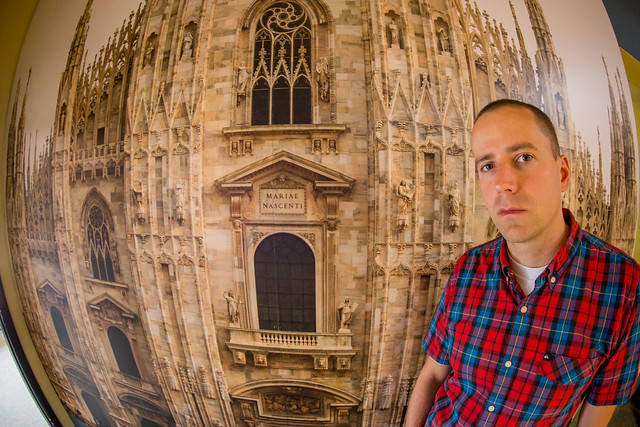
    Ivan Makarov, one of my early Flickr contacts (now SmugMug’s VP of Finance) posing in front of a giant wall print at SmugMug’s Mountain View office.

    In buying Flickr SmugMug more than anything is buying a community. I think that they are going to be very careful not to disrupt this community and look for ways to grow it thoughtfully. Having known the MacAskills (the family that owns SmugMug) for many years, one thing I can say for certain is that they LOVE photography and photographers. If you ever get a chance to visit their offices in Mountain View do it. What you will find is wall after wall covered with the biggest prints you have ever seen in your life. These are people who are passionate about photography, not advertising.

    Baldy Behind the Camera
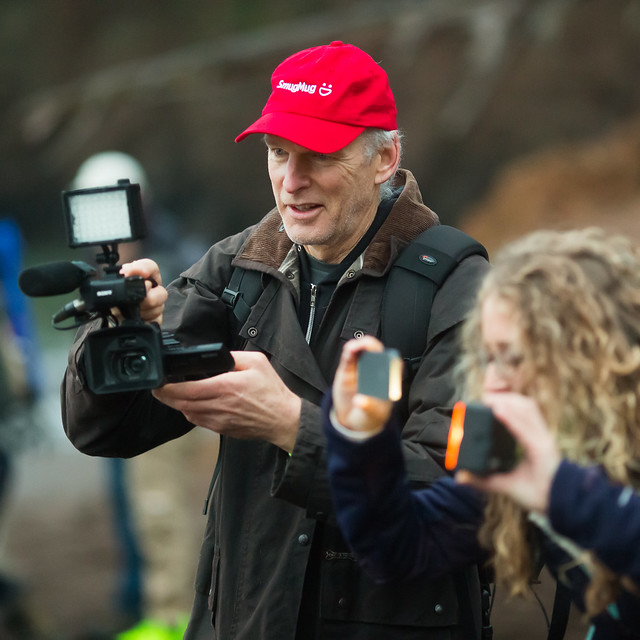
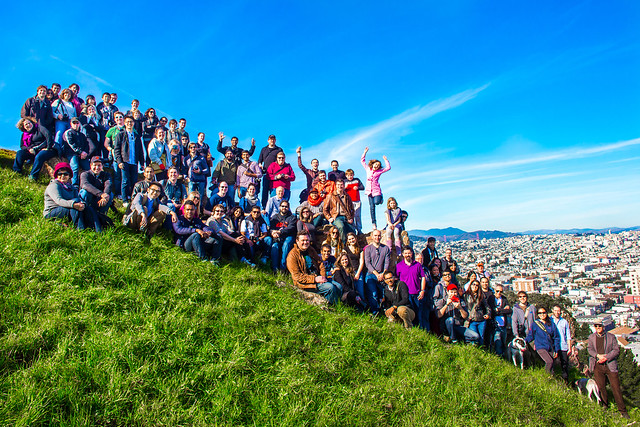
    Chris “Baldy” MacAskill on a SmugMug photowalk in 2013

    Flickr Over San Francisco
    Flickr Photowalk, Bernal Hill, 2013

    For SmugMug I think what is probably most exciting is that they are getting a very large community of photographers by purchasing Flickr. I think that this will allow them to do even more with community, photowalks, meetups, etc. They will need to make sure Flickr is profitable (and it will be) but they will have a much larger group to build a bigger and stronger community with. While Google+ sort of became a place for the photographic community for a bit, before Google largely abandoned it, there really is not a good place for a larger community of photographers today and I think with the acquisition of Flickr, SmugMug hopes that it can build this and I think they have a pretty good chance at doing it.

    I think the other thing that SmugMug owning Flickr will do is that it will allow them to be much more nimble in terms of hacking on and developing the site. Big organizations (like Yahoo and Verizon) have layers of bureaucracy that sometimes make things difficult to get done. Small organizations, by contrast, can move much more quickly. While I don’t expect any immediate changes to Flickr, I think that going forward it will improve more rapidly. I also think it’s great that from what I can tell the entire team at Flickr is being retained.

    Mostly what I’ve seen online since the acquisition was announced earlier today has been a positive response. Flickr co-Founders Stewart Butterfield and Caterina Fake have posted positive tweets on the acquisition as well.

    As far as I can tell from looking at the new SmugMug/Flickr TOS everything looks pretty much for things to be business as usual at Flickr for the immediate future.

    SmugMug and Flickr will be run as two different sites/properties.

    Since Flickr is one of the few sites on the web that allows moderated adult content, I did wonder how SmugMug would treat that — at least per the current TOS it looks like that is going to be handled as it always has been at Flickr. Make sure you moderate your adult content, keeping it away from the kids, and it’s allowed.

    If you want to read more in depth at what this might mean for Flickr users going forward I’d point you to a thread in the Flickr Help Forum where more details are provided and where the community is currently reacting to today’s news.

    A big congrats to both the Flickr and SmugMug teams. I’m looking forward to being an active user on Flickr for many years ahead and am looking forward to all the ways you will continue to improve both sites.

    You can find me on Flickr here.


    Thomas Hawk Digital Connection

  • Sample gallery: Nikon 180-400mm F4E TC1.4 FL ED VR

    $ (document).ready(function() { SampleGalleryV2({“containerId”:”embeddedSampleGallery_7878702702″,”galleryId”:”7878702702″,”isEmbeddedWidget”:true,”selectedImageIndex”:0,”isMobile”:false}) });

    Announced just in time for the 2018 Winter Olympics, the Nikon 180-400mm F4E TC1.4 FL VR has a built in 1.4x teleconverter – when engaged it provides a 252-560mm focal range with an F5.6 max aperture. Similar in design to Canon’s EF 200-400mm F4L IS USM Extender 1.4x, we expect this $ 12,000 lens to mostly find its way into the hands of working sports, action and wildlife photographers.

    Though we at DPReview are none of the above, we also weren’t going to pass up an opportunity to give it a try. An exhibition soccer (football) match between two local Seattle colleges provided the perfect chance to shoot with it mounted on the Nikon D5.

    Set up at the midfield line, the 180-400mm range was enough to effectively cover most game play. But the extra bit of reached provided by the teleconverter allowed me to occasionally punch in on the action when I felt comfortable. And engaging the teleconverter is as simple as flipping a switch near its base – a satisfying quiet ‘thunk’ sound lets you know it’s in place. By halftime, I’d mastered the art of flipping it on and off with my eye to the finder.

    Weighing about 9 pounds, a monopod is a must when using this lens.
    ISO 560 | 1/1000 sec | F4 | 180mm

    As you might hope from a camera and lens combination costing almost $ 20,000, the autofocus hit-rate from the soccer match was nearly perfect. A majority of the images were shot with the camera set to its Auto area mode, which for the most part locked on to my intended subject.

    Once back in the office, with the images up on a computer, I was impressed by the lens’s sharpness, even with the teleconverter engaged. And though there is some pretty heavy vignetting when the teleconverter is used, it can easily be corrected in post (we chose not to for the purposes of this gallery). Of course one soccer match is hardly enough time spent with Nikon’s 180-400mm F4 to truly test and appreciate what it is capable of. Fortunately we have a little more time with it and the weather in Seattle is just starting to get nice. So stay tuned for more samples, to be posted soon.

    See our Nikon 180-400mm F4E TC1.4 FL VR galleryNote: We ordinarily try to keep sample photos in our lens galleries at ISO 800 or below, however we’ve included some higher ISO images shot during the match after the sun set. No noise reduction was applied to these images beyond ACR default.

    Articles: Digital Photography Review (dpreview.com)

  • The 5-in-1 ‘One Backpack’ wants to be your do-it-all bag

    Design company ITR Studio has launched a Kickstarter campaign for its The One Backpack, a 5-in-1 modular backpack that can be used as a camera bag, work & gym pack, suit carry backpack, travel pack or tech-backpack, doing away with the need for multiple single-purpose bags.

    A magnetic system is used to attach modules to the base pack and adjust for different purposes and loads. Five modules are available to configure the pack: a camera module, a sports module, a sling module, a suit carry module and a pouch module.

    The padded camera module is designed to carry a DSLR and two lenses or a DJI Mavic Pro drone with extra battery. The sports module comes with a portable and washable shoe bag. All modular components can be used individually or in combination, depending on your requirements.

    The base pack has a capacity of 30 liters and is available on Kickstarter at an early bird price of $ 140 USD. The individual modules will set you back between $ 53 USD for the camera module and $ 85 USD for the suit carry module. For more information, check out the product video below or head over to The One Backpack Kickstarter page.

    Articles: Digital Photography Review (dpreview.com)

  • Venus Optics reveals four new Laowa lenses for Sony FE, Fuji GFX, and more

    Venus Optics has unveiled several new lenses today, including a wide-angle lens for the Fuji GFX mirrorless medium format camera, and the “world’s widest zoom lens for Sony full-frame E-mount cameras.” There are four new lenses in all: the Laowa 10-18mm f/4.5-5.6 FE Zoom, Laowa 100mm f/2.8 2X Ultra Macro APO, the Laowa 17mm f/4 GFX Zero-D, and the Laowa 4mm f/2.8 Fisheye MFT.

    All four will be on display at Venus Optics’ booth at the Beijing P&E Imaging fair. But in case you don’t happen to be in Beijing between May 3rd and the 6th, read on to find out what these lenses are all about.

    Laowa 10-18mm F4.5-5.6 FE Zoom

    The Laowa 10-18mm F4.5-5.6 FE Zoom is the aforementioned “world’s widest zoom lens for Sony full-frame E-mount cameras.” According to Venus Optics, the lens was primarily designed for travel photography, offering an angle of view between 102° and 130° in a package that weighs only 496g and is less than 100cm in length.

    Inside the 10-18mm F4.5-5.6 you’ll find 14 elements in 10 groups, including two aspherical elements and one extra-low dispersion element. The lens’ aperture can be de-clicked using a switch on the lens barrel, and if you like using filters, you’ll be happy to know the lens features a rear filter slot built to handle 37mm filters.

    This Laowa 10-18mm F4.5-5.6 FE Zoom will be available only in Sony FE mount.

    Laowa 100mm F2.8 2X Ultra Macro APO

    Next up, the Laowa 100mm F2.8 2:1 Ultra Macro APO is… well… it’s an ultra-macro lens that offers a maximum magnification of 2x with a minimum focusing distance of just 24.7cm. The lens can focus from 2:1 macro to infinity, and promises “crystal [clear] sharpness image in both macro and tele distances” thanks to an optical design consisting of 12 elements in 10 groups.

    The Laowa 100mm F2.8 2X Ultra Macro APO is the only lens released today that isn’t limited to a single mount. When it ships, you’ll be able to get it in Canon EF, Nikon F, Pentax K, and Sony FE mounts.

    Laowa 17mm F4 GFX Zero-D

    Third party options for the mirrorless medium format Fujifilm GFX camera are still somewhat limited—at least compared to more popular mounts like Sony FE, not to mention Canon EF or Nikon F. So it was a nice surprise to see Venus Optics release the 17mm F4 GFX Zero-D.

    The 14mm F4 GFX is another of Venus Optics Zero-D lenses, offering a full-frame equivalent focal length of 13mm and a field of view of 113° with “close-to-zero distortion.” The lens is made up of 21 elements in 14 groups, including two aspherical and three extra-low dispersion elements. Venus Optics claims this lens is “ideally suited for landscape, architecture and interior photography.”

    Laowa 4mm F2.8 Fisheye MFT

    Last but not least, we have the only Micro Four Thirds lens of the bunch: the Laowa 4mm F2.8 Fisheye MFT. This circular fisheye lens offers a 210° angle of view at a full-frame equivalent 8mm focal length. Made up of 7 elements in 6 groups, the ultra-portable lens weighs just 135g to keep your MFT kit light and agile.

    Here are detailed specs for all four lenses:

    All of the new lenses are expected to ship “in mid/late 2018” according to Venus Optics, although “exact ship date and pricing are to be confirmed.”

    Press Release

    Venus Optics announces 4 new & unique lenses in development, led by the Laowa 10-18mm f/4.5-5.6 FE, World’s widest zoom lens for Sony full frame E-mount cameras

    All 4 lenses will make their debut in the coming Beijing P&E Imaging Fair.

    Anhui China, Apr 20, 2018 – Venus Optics, the camera lenses manufacturer who had previously launched a number of unique Laowa camera lenses, is proud to announce 4 new and unique lenses.

    • Laowa 10-18mm f/4.5-5.6 FE Zoom
    • Laowa 100mm f/2.8 2X Ultra Macro APO
    • Laowa 17mm f/4 GFX Zero-D
    • Laowa 4mm f/2.8 Fisheye MFT

    Laowa 10-18mm f/4.5-5.6 FE Zoom

    This lens is currently the widest zoom lens available for Sony full frame E-mount cameras. Designed primarily for travel photography, Venus optics have managed to compress the size to smallest in its class, less than 10 inch (<100cm) and only 1.1 pounds (<500g). The 102° (18mm) to 130° (10mm) angle of view provides flexibility for photographers to compose landscape or architecture photos with ease. The lens houses with 14 elements in 10 groups with 2 aspherical elements & 1 extra-low dispersion element to deliver exceptional performance. It can focus as close as 15cm for some mini-macro shooting. A rear filter slot is included to fit with 37mm filter. Click/clickless aperture can be toggled by the switch on the lens barrel.

    Laowa 100mm f/2.8 2X Ultra Macro APO

    Followed by the success of the Laowa 60mm f/2.8 2:1 Macro, the 100mm f/2.8 2:1 Macro is the 2nd member of Laowa 2:1 macro line-up. This new 100mm lens can cover full frame sensor size and focus from 2:1 magnification to infinity. The wide magnification range allows macro photographers to capture subject at any sizes. This 100mm portrait lens also features an apochromatic (APO) characteristic that no chromatic aberration can be found. The 12 elements in 10 groups optics design delivers a crystal sharpness image in both macro and tele distances. Canon EF / Nikon AI / Pentax K / Sony FE mounts are available.

    Laowa 17mm f/4 GFX Zero-D

    This is currently the widest available native lens option for Fujifilm G-mount cameras. The new Laowa 17mm f/4 GFX has a field of view equivalent to 13mm in 35mm format (113°). Featuring a close-to-zero distortion and 86mm filter thread, this lens is ideally suited for landscape, architecture & interior photography. The 21 elements in 14 groups design with 2pcs of aspherical & 3pcs of Extra-low dispersion elements successfully help to control the distortion & chromatic aberrations to the minimal.

    Laowa 4mm f/2.8 Fisheye MFT

    Featuring a 210° angle of view, this lens delivers unique circular fisheye field of view on Micro four thirds cameras. The ultra-wide angle view allows photographers to create 360° panorama with ease. Despite the unique & ultra-wide perspective, the lens only weighs 0.3 pounds (135g).

    Availability

    All four lenses will be available for trial at Venus Optics’ booth (T225) in Beijing P&E Imaging fair during 3rd-6th May 2019. They are expected to be shipped in mid/late 2018. Exact shipping date and pricing are to be confirmed.

    Articles: Digital Photography Review (dpreview.com)

  • SmugMug snaps up Flickr, promises ‘the future is bright’

    Photo-sharing site Flickr has been acquired by photo hosting service SmugMug. According to USA Today, SmugMug CEO Don MacAskill is committed to ‘breathing new life’ into the once market-leading service, and will maintain it as ‘a standalone community of amateur and professional photographers’.

    One of the most important and popular services of the digital photography boom of the mid 2000s, Flickr was acquired by Yahoo more than a decade ago, but in recent years the site has been in decline as once-loyal users abandoned the stagnant platform in favor of competitive services. Flickr loyalists had hoped that Yahoo’s then-new CEO Melissa Mayer would be able to ‘make Flickr awesome again’ when she took over in 2012, but the once industry-leading photo site never regained its former relevance.

    Following Verizon’s acquisition of Yahoo and Flickr in 2017, it looked possible that the service might be shuttered, but it seems that with the SmugMug acquisition, this one-time giant of the digital photography landscape may have a brighter future than some users had feared.

    Articles: Digital Photography Review (dpreview.com)

  • These are the winners of the 2018 Sony World Photography Awards

    2018 Sony World Photography Award Winners Announced

    After first revealing the shortlist and later the Open category and National Award winners, the World Photo Organization has finally unveiled the overall winners of the 2018 Sony World Photography Awards. This includes the coveted Photographer of the Year, Open Photographer of the Year, Youth Photographer of the Year, and Student photographer of the year awards, as well as the 10 winners of the Professional categories.

    This year’s winners vary greatly in both style and substance: from stark portraiture, to dreamy landscapes, to an ecologically-minded photo project that sheds light on the problem plastic pollution.

    The overall winner and 2018 Photographer of the Year accolade goes to British photographer Alys Tomlinson, whose project Ex-Voto:

    The winning work encompasses formal portraiture, large format landscape and small, detailed still life images of the ‘ex- votos’ (offerings of religious devotion) found at pilgrimage sites of Lourdes (France), Ballyvourney (Ireland) and Grabarka (Poland).

    Tomlinson’s project was selected as the best from the 10 Professional category winners, where she also took home top prize in the Discovery category. The title comes with $ 25,000 worth of prize money.

    Open Photographer of the Year was awarded to IT specialist and self-taught photographer Vaselin Atanasov for his photograph Early Autumn; Youth Photographer of the Year was earned by 16-year-old Megan Johnson for her image Still; and Student Photographer of the Year went to Canadian student Samuel Bolduc for his series The Burden, shot on behalf of College de Matane, Quebec.

    Scroll through the slideshow to see the Overall, Open, Youth, Student, and all 9 remaining Professional category winners, then head over to the World Photo Organization website to see all of the 2018 winners and runners-up.

    Press Release

    Overall winners revealed for 2018 Sony World Photography Awards

    • British artist Alys Tomlinson named Photographer of the Year
    • 10 Professional category winners and finalists revealed
    • Overall Open, Youth and Student winners announced

    London, April 19, 2018 – The World Photography Organisation today names the overall winners of the prestigious 2018 Sony World Photography Awards at a London ceremony.

    The coveted Photographer of the Year title was presented to British artist Alys Tomlinson for her series Ex-Voto, winning the photographer $ 25,000 (USD). The work was praised by the jury for its beautiful production, technical excellence and sensitive illustration of pilgrimage as a journey of discovery and sacrifice to a greater power.

    Tomlinson was selected from the 10 category winners of the Professional competition who were announced today alongside those in 2nd and 3rd place in each Professional category. The overall winners of the Awards’ Open (best single image), Youth and Student Focus competitions were also revealed.

    All winners were flown to the London awards ceremony and received Sony digital imaging equipment, publication in the winners’ book and their work will be shown as part of the 2018 Sony World Photography Awards Exhibition at Somerset House, London.

    Outstanding Contribution to Photography recipient Candida Ho?fer was also at the ceremony to collect her prize.

    Produced by the World Photography Organization, the Sony World Photography Awards is the world’s most diverse photography competition. The 11th edition saw a record breaking 320,000 submissions by photographers from more than 200 countries and territories, presenting some of the world’s finest contemporary photography captured over the past year.

    The Awards’ annual London exhibition brings together the best established and emerging talent from around the world, providing winning and shortlisted photographers the opportunity to showcase their work on an international stage.

    Photographer of the Year – Alys Tomlinson, British

    Ex-Voto is a personal project by London-based photographer Tomlinson (age 43). The winning work encompasses formal portraiture, large format landscape and small, detailed still life images of the ‘ex- votos’ (offerings of religious devotion) found at pilgrimage sites of Lourdes (France), Ballyvourney (Ireland) and Grabarka (Poland).

    The photographer mainly explores themes of environment, belonging and identity. She recently completed an MA (Distinction) in Anthropology of Travel, Tourism and Pilgrimage and has been recognized by a number of photography prizes.

    Open Photographer of the Year – Vaselin Atanasov, Bulgaria

    Selected from 10 category winners as the best single image in the world, Atanasov is recognized for his work Early Autumn and receives a $ 5,000 (USD) prize. An IT specialist, Atanasov is a self-taught photographer who began shooting in 2014. The winning photograph captures autumn in the Central Balkan National Park.

    Professional Category Winners and Finalists

    From insightful documentation of worldwide cultural and political events to showcasing the natural world, the photographers below were selected by judges as the best series of photographs in the world.

    • Architecture: Gianmaria Gava, Italian with Buildings
      2nd Edgar Martins, Portuguese / 3rd Corentin Fohlen, French
    • Contemporary Issues: Fredrik Lerneryd, Swedish with Slum Ballet
      2nd Margaret Mitchell, British / 3rd Alfio Tommasini, Swiss
    • Current Affairs & News: Mohd Samsul Mohd Said, Malaysian with Life Inside the Refugee Camp
      2nd Luis Henry Agudelo Cano, Colombian / 3rd Rasmus Flindt Pedersen, Danish
    • Discovery: Alys Tomlinson, British with Ex-Voto
      2nd Antonio Gibotta, Italian / 3rd Maria Petrenko, Ukranian
    • Landscape: Luca Locatelli, Italian with White Gold
      2nd Rohan Reilly, Irish / 3rd Tomasz Padlo, Polish
    • Natural World & Wildlife: Roselena Ramistella, Italian with Deep Land
      2nd Mitch Dobrowner, American / 3rd Andrew Quilty, Australian
    • Sport: Balazs Gardi, Hungarian with Buzkashi
      2nd Behnam Sahvi, Iranian / 3rd Matteo Armellini, Italian
    • Still Life: Edgar Martins, Portuguese with Siloquies and Sililoquies on Death, Life and Other Interludes
      2nd Tristan Spinski, American / 3rd Werner Anderson, Norwegian

    Youth Photographer of the Year – Megan Johnson, American, Age 16

    Open to photographers aged 12-19, Johnson was awarded for her image Still.. Shot on the cliffs near her house in Connecticut, the black and white image captures the complex and intricate solitude the photographer faces in everyday life.

    Student Photographer of the Year – Samuel Bolduc, Canadian, Age 20

    Bolduc was chosen by the judges from students worldwide for his photographic series The Burden. The work beautifully illustrates the physical burden of plastic waste in the environment to highlight the urgent need to half plastic pollution. Bolduc represented College de Matane, Quebec and has won 30,000 Euros worth of Sony photography equipment for the institution.

    Outsanding Contribution to Photography – Candida Höfer

    As one of the world’s foremost contemporary photographers, German artist Candida Höfer is renowned for her precise methodology and technique. Her powerful portraits of vast, empty interiors are held in collections around the world. The Awards recognize the artist for her contribution to the medium.

    The news of the overall winners joins the March announcement of 2018’s 10 Open competition category winners and 63 National Awards winners, to complete the announcement of 2018’s awards. All winning, shortlisted and commended images can be seen at the 2018 Sony World Photography Awards Exhibition at Somerset House, London from April 20 – May 6th www.worldphoto.org/2018exhibition.

    Sony World Photography Awards

    The objective of the Sony World Photography Awards is to establish a platform for the continuous development of photographic culture. The Awards do this by recognizing great advancements in photography through the Outstanding Contribution to Photography prize as well as finding and promoting new talents of the future, whether this be in the Professional, Open, Youth or Student Focus competitions. Sony is committed to supporting global photography. This is demonstrated not only via the Awards, but also by its significant grant program which offers winners of the student competition $ 3,500 USD and professional competition $ 7,000 USD to develop personal projects.

    The 2019 Sony World Photography Awards opens for entries 1 June, 2018. All entries are free at www.worldphoto.org.

    Photographer of the Year and 1st Place, Discovery

    Photo © Alys Tomlinson, United Kingdom, Photographer of the Year and Winner Professional Discovery category, 2018 Sony World Photography Awards


    Image Description: Untitled from the series ‘Ex-Voto’

    Series Description: A handwritten note neatly folded and hidden in the crevice of a rock, crosses etched onto stone, ribbon carefully wrapped around piles of twigs. These are all offerings of religious devotion, known as ‘Ex-Votos’ and found at Christian pilgrimage sites worldwide. Often placed anonymously and hidden from view, pilgrims leave ex-votos as expressions of hope and gratitude, creating a tangible narrative between faith, person and the landscape.

    Taken at the pilgrimage sites of Lourdes (France), Ballyvourney (Ireland) and Grabarka (Poland), the project encompasses formal portraiture, large format landscape and small, detailed still-lifes of the objects and markers left behind.

    Shot on 5×4, large format film, the images evoke a distinct stillness and reflect the mysterious, timeless quality present at these sites of great spiritual contemplation. People and landscape merge as place, memory and history entwine. NB all images untitled and taken in 2016/2017

    Open Photographer of the Year

    Photo © Veselin Atanasov, Open Photographer of the Year, Open, Landscape & Nature (2018 Open competition), 2018 Sony World Photography Awards


    Image Description: The autumn has begun to decorate with its colors the woods of the Balkans. National Park – Central Balkan, Bulgaria.

    Youth Photographer of the Year

    Photo © Megan Johnson, United States of America, Youth Photographer of the Year, Youth, Your Environment (2018 Youth competition), 2018 Sony World Photography Awards


    Image Description: This image was shot on October 22, 2017 on the cliffs right near my house. It was taken on an iPhone 7 for the following: life, to me, has more detail in black and white.

    The image represents my current state at home and school. Despite having a social group and a caring family, I often find myself alone, left to watch what goes on around me, all the while being caught up in the very center of it. This glimpse through the trees of the figure on the cliff represents the courage it takes to be one’s self in today’s society, and how even when you’re on the inside, you can be pushed out.

    Student Photographer of the Year

    Photo © Samuel Bolduc, Canada, Student Photographer of the Year, Student Focus, 2018 Sony World Photography Awards


    Series Description: My photographic series for this second brief are staged poetic photographs illustrating people bearing the burden of plastic wastes in the environment. With these images, I want to show the actions we have to take regardless if pollution continues at this speed or not. Through commitment of my characters, I also want to evoke the hope of changes about the accumulation of plastic wastes in the environment. The vast winterly territories reveal the contrast between their magnitude and the small place humankind has.

    My creative process was guided by the three guidelines of AIR strategy: Avoid by the awareness of what should be done to counter this pollution, Intercept by the involvement of human in a realistic and durable solution and Redesign by the characters’ collaboration in the production of the staged photographs.

    These images were created in the Lower Saint-Lawrence region in Quebec, Canada, in February 2018. The characters represented in the photographs are friends, acquaintances and people from the recycling milieu who agreed to collaborate to this project. At each encounter, I explained the issues of the project and the impacts plastic wastes have on the environment.

    1st Place, Architecture

    Photo © Gianmaria Gava, Italy, 1st Place, Professional, Architecture (Professional competition), 2018 Sony World Photography Awards


    Image Description: November 2017. Vienna, Austria. Because the building had the right criteria to be photographed for my project “Buildings”. Shot on tripod.

    Series Description: The project Buildings is a research about the archetypical forms of architecture. When functional elements have been removed, the constructions appear as pure geometrical solid shapes. As such, they seem uninhabitable. Nevertheless, these buildings arise questions about the function and accessibility of architecture in both the public and private space.

    1st Place, Contemporary Issues

    Photo © Fredrik Lerneryd, Sweden, 1st Place, Professional, Contemporary Issues (Professional competition), 2018 Sony World Photography Awards


    Image Description: Lavenda and Wendy are rushing into the classroom where the ballet is held after changing clothes around the corner of the house

    Series Description: Every Wednesday at Spurgeons Academy, a school in the middle of the indecipherable maze of Kibera’s narrow streets and alleys, students take the chairs and benches out of a classroom and sweep the floor. The school uniforms are switched to bright-coloured clothes. When teacher Mike Wamaya enters the classroom, the students get into position and place one hand on the concrete wall as though it were a ballet bar. Classical music plays out of a small portable speaker, and the class begins.

    The Ballet class is part of Annos Africa and One Fine Days charity activities in slum areas around Kenya. In Nairobi they work together with two schools in Kibera and one school in Mathare, another slum closer to the city centre. The dance is a way for the children to express themselves and it strengthens their confidence in life, and a belief that they can become something great.

    Some of the children are now dancing several days a week in a studio called “Dance center Kenya” in a upper-class area of Nairobi and living in a boarding school, so thanks to their talent they have taken themselves away from the harsh conditions in the slum.

    1st Place, Creative

    Photo © Florian Ruiz, France, 1st Place, Professional, Creative (Professional competition), 2018 Sony World Photography Awards


    Series Description: In the snowy landscapes of the heights of Fukushima, I have captured the invisible pain of radiation. Inspired by the drawings of Japanese engravings, I hoped to capture the fleeting moments, the ever-shifting perceptions of nature, where radiation accumulates the most.

    The title is the measure of contamination of landscapes in becquerel (Bq), a unit that expresses atom disintegration and its mutation’s number per second. By a process of staggered superimpression, I intended to show the atom’s alteration in my pictures. The transparency effects, the broken perspectives give rise to a shape that is in motion, an impermanent world. Then, I created a vibration, a departure from the reality of the subject that reveals the presence of radiation in the image.

    The process reinvents and twists the very landscape, leading to a sort of vertigo, a threatening danger hidden behind the purity of the white of the landscapes.

    1st Place, Current Affairs & News

    Photo © Mohd Samsul Mohd Said , Malaysia, 1st Place, Professional, Current Affairs & News (Professional competition), 2018 Sony World Photography Awards


    Image Description: Bangladesh military control the situation, as Rohingya refugees wait to receive food aid at the distribution point in Balukhali refugee camp, Bangladesh on September 28, 2017.

    Series Description: Ethnic Rohingya in Rakhine state has taken a turn for the worse, where on Aug 25, more than 400 houses were burnt, and within this two weeks, nearly 125,000 Rohingya refugees left Myanmar for Bangladesh.

    International organizations have reported claims of human rights violations and summary executions allegedly carried out by the Myanmar army. Now Over 400,000 Rohingya Muslims have fled from Myanmar into Bangladesh since violence erupted in the Rakhine state. This pictures show their life inside the Balukhali camp in Cox’s Bazaar, Bangladesh

    1st Place, Landscape

    Photo © Luca Locatelli, Italy, 1st Place, Professional, Landscape (Professional competition), 2018 Sony World Photography Awards


    Image Description: A view of Torano’s “marble valley” in the Apuan Alps, one of Italy’s most marble-rich area, where the abundance is surreal. What we admire as pristine white stone was born hundreds of millions of years ago in overwhelming darkness. Countless generations of tiny creatures lived, died and drifted slowly to the bottom of a primordial sea, where their bodies were slowly compressed by gravity, layer upon layer, until eventually they all congealed and petrified into the interlocking white crystals we know as marble.

    Some eons later, tectonic jostling raised a great spine of mountains in southern Europe. Up went the ancient sea floor. In some places they rise more than 6,000 feet.

    Series Description: Rarely has a material so inclined to stay put been wrenched so insistently out of place and carried so far from its source. In Italy’s most marble-rich area, known as the Apuan Alps, the abundance is surreal. Hundreds of quarries have operated there since the days of ancient Rome and Michelangelo sculptured most of his statues from this stone. Now the trade is booming due to the demand in Saudi Arabia and other gulf states.

    The photographs of this area’s majestic quarries reveal their own isolated world: beautiful, bizarre and severe. It is a self-contained universe of white, simultaneously industrial and natural.

    1st Place, Natural World & Wildlife

    Photo © Roselena Ramistella, Italy, 1st Place, Professional, Natural World & Wildlife (2018 Professional competition), 2018 Sony World Photography Awards


    Image Description: Luigi a young Sicilian. The economic crisis, high unemployment rate is re-directing young Sicilians from small rural communities back to their lands and working in agriculture. Luigi helps his father cultivate small fields and take care of their farm animals.

    There isn’t a day in which he doesn’t dirty his hands to try to save some money to assist his young fiance’, a Romanian national that he met while working in the fields and can now pay for her trip back to Sicily and start a new life together.

    Series Description: Deepland is a personal journey that started on May 2016. I traveled on the back of a mule the old Sicilian trails, starting at Nebrodi, passing through the Madonie, Peloritani and all the way to the Sicani Mountains. The mule track is a rural road similar to a trail, but also suitable for the circulation of pack animals. Prior to the development of the modern road network itself, it represented the link and trade route between the towns and the farmland.

    Until about fifty years ago, mules had a prominent role in Sicilian country life providing employment and assistance to the local farmers. Due to the economic crisis, many people are moving back to the countryside, especially the young, who have chosen to react to this difficult historical moment by working the land, planting local crops and breeding livestock, creating a new rural economy.

    The project is divided into two parts, research of local communities still living in remote areas and the track of a new map, a document of what remains of the old mule tracks, the last update comes back to the 50’s. Ongoing.

    1st Place, Portraiture

    Photo © Tom Oldham, United Kingdom, 1st Place, Professional, Portraiture (Professional competition), 2018 Sony World Photography Awards


    Image Description: Colin Anthony, singer, in the back bar From the series ‘The Last of The Crooners’.

    Series Description: The Last of The Crooners is a portrait of what was. Long before Gilbert and George made art in the East End of London, in a corner of every pub at weekends you’d find pub singers crooning their way through a set of jazz standards, entertaining audiences all over Hackney and Bethnal Green.

    These sharply turned out ladies and gentlemen entertained the throngs—and kept them in the pub. The audience for this form of entertainment has obviously changed over the decades, with only one notable venue still continuing to honour this tradition, with the rigid commitment of consistently hosting guest singers, three times every single weekend for over forty years, The Palm Tree in Bow, E3.

    Rich in warmth and familiarity, The Palm Tree is world famous for maintaining its original East End atmosphere despite the impact of gentrification, land value, council pressures and independent pubs generally feeling the pressure of the shifts in habits of its clientele. It is a rich culture, though now sadly remains as a unique and lone stalwart. These really are The Last of The Crooners.

    After several years of asking, this family-run pub has finally allowed me access to document the many great characters who still perform here, in a bid to capture this slice of time while it hopefully remains as it always has been—a beautiful and celebrated discovery, cherished by every visitor.

    1st Place, Sport

    Photo © Balazs Gardi, Hungary, 1st Place, Professional, Sport (Professional competition), 2018 Sony World Photography Awards


    Image Description: Horsemen fight for a headless calf carcass during a buzkashi match on the day of Nawroz, or Persian New Year, in Mazar-e Sharif, Afghanistan on March 21, 2017.

    Series Description: In buzkashi, Afghanistan’s violent and ancient national pastime, riders battle for control of an animal corpse that they carry toward a goal. Sixteen years after the U.S.-led invasion that ousted the Taliban, the sport is dominated by rival warlords who will do anything to maintain power in a turbulent country that once again is up for grabs.

    1st Place, Still Life

    Photo © Edgar Martins, Portugal, 1st Place, Professional, Still Life (Professional competition), 2018 Sony World Photography Awards


    Image Description: Letter of departure written on an academic notebook.

    Series Description: Siloquies and Soliloquies was produced at the National Institute of Legal Medicine and Forensic Sciences (INMLCF), in Portugal. A significant number of the images produced at the INMLCF depict forensic evidence, such as suicide notes, letters and other objects used in suicides and crimes as well as inherent in the work of the pathologist. The images here included represent a variety of suicide letters written by individuals who took their own lives.

    The work explores the tension between revelation and concealment questioning, amongst other things, the ethical implications of representing and divulging sensitive material of this nature. Edgar Martins’ decision to work in the National Institute of Legal Medicine stems from his interest in highlighting the historic and symbolic role of one of the places that, in the context of modernity, institutionalized—through scientific practice and judicial discourse—the representation, analysis and scrutiny of death and the dead body.

    In this sense, the incursion of a photographic artist into a place so charged with scientific character (medical, judicial, ideological) necessarily calls on epistemological, psychological and semantic questioning: e.g. what distinguishes a documental image of a corpse or a crime scene from an image that reproduces the staged creation of a mental image of a corpse or a crime scene? What effect do these differences have in the viewer’s imagination? How do the retrospective and prospective horizons appear in the face of these different types of image?

    The Suicide tool as Destinerrance proposes to scrutinize the tensions and contradictions inherent in the representation and imagination of death, in particular suicide, and, correlatively, the decisive but deeply paradoxical role that photography—with its epistemological, aesthetic and ethical implications—has played in its perception and intelligibility.

    Articles: Digital Photography Review (dpreview.com)

  • Meike announces full frame 85mm F1.8, its first autofocus lens

    Chinese accessories brand Meike has announced it will introduce an autofocus 85mm F1.8 lens for Canon and Nikon full-frame DSLRs. In addition to adding another (very likely) affordable third party option to the mix, this will be the company’s first AF lens.

    Details are a little thin on the ground, but early marketing materials suggest it will be a lightweight and compact lens with an all-metal body construction. The optical formula will use nine elements in six groups, and all elements will be multi-coated on both sides. Close focus will begin at 0.85m with a maximum magnification of 1:1.8. The lens will be 79.5mm long and will accept a 67mm filter.

    $ (document).ready(function() { SampleGalleryV2({“containerId”:”embeddedSampleGallery_0708509948″,”galleryId”:”0708509948″,”isEmbeddedWidget”:true,”selectedImageIndex”:0,”isMobile”:false}) });

    In addition to the Nikon and Canon full-frame mounts, Meike will release the MK-85mm F1.8 lens for Sony APS-C models as well. No price has been announced as of yet, and the company hasn’t said when we should expect the lens to go on sale.

    For more information visit the Meike website.

    Articles: Digital Photography Review (dpreview.com)

  • Meyer Optik is reviving Dr. Rudolph’s APO Plasmat 105mm F2.7 lens

    Meyer Optik has announced its new APO-Makro-Plasmat 105 F2.7 lens, a modern version of one of the classic Plasmat lenses developed by Dr. Paul Rudolph 105 years ago. As with previous Meyer Optik revivals, the company is funding its product on Kickstarter, where it explains that the new Plasmat 105 “offers natural sharpness, unbelievable color reproduction, and a glowing bokeh united at every step of the aperture.”

    The name Makro, Meyer Optik explains, was chosen by Rudolph in reference to the Makro-Plasmat’s suitability for 35mm, not macro, photography. The company says that while its revamped version of the lens offers performance that’s “in the spirit of the Plasmat lenses,” it created the model with modern camera gear in mind.

    The APO-Makro-Plasmat 105 has a 105mm focal length, 60mm width, an F2.7 – F22 aperture, 1.1m / 3.6ft minimum focusing distance, manual focusing, 6 elements in 5 groups, as well as 15 steel aperture blades with an anti-reflex coating.

    As with the original Plasmat lenses, Meyer Optik says its remake offers a unique combination of glow, bokeh, plasticity, and sharpness, explaining:

    The lens is sharp but it takes away the razor cut, sterile, microscope like sharpness and replaces it by an even sharpness around the subject that flatters it and pleases the eye of the spectator. Thus the lens fills the whole space with amazing depth and at the same time with a smooth transition from focus to softness.

    The company plans to offer APO-Makro-Plasmat 105 for 35mm cameras in the following mounts: Canon EF, Nikon F, Sony E, Fuji X, and Leica M. A model will also be released for medium-format mirrorless cameras in both Fuji GFX and Hasselblad X1D mounts.

    The lens has already reached nearly three times its funding goal on Kickstarter, where backers who pledge at least $ 1,050 USD (offer expires in the next 17 hours) are promised an early bird lens with a serial number that matches where they fall on the backers’ list—the first person to pledge will receive serial number 001, the second person will receive 002, and so on. Once this first early bird offer is gone, backers will be able to get the lens for $ 1,100, $ 1,150, and eventually $ 1,300 when all early bird deals are gone.

    Initial shipments to backers are expected to start in February 2019; shipping costs depend on region. To learn more or secure your own, head over to the Kickstarter campaign page.

    Articles: Digital Photography Review (dpreview.com)

  • Sony’s updated 3D Creator app can use your smartphone’s front camera to scan your face

    Sony’s 3D Creator app with its 3D-face-scanning function was first introduced with the Xperia XZ1 and XZ1 Compact last year. Now the Japanese manufacturer is rolling out the update to version 2 of the app.

    The most important upgrade of the new version is the ability to create 3D models of your face with your smartphone’s front camera. This means, unlike with the previous version, you don’t need the help of another person to create a 3D-model of your face and head. Of course, the option to use the main camera and get someone else to do the job is still available.

    The updated app also lets you share the results straight to Facebook or order a 3D-printed copy of your model. And version 2.0 also comes with “post-scan cloud processing,” which allows you to render 3D models with 4K resolution textures for better detail and realism.

    3D Creator 2.0 is compatible with the Xperia XZ1, XZ1 Compact, and XZ Premium. If you’re lucky enough to own one of these devices, you can download the newest version of the app from the Play Store now. If you are an iPhone X user, check out the Bellus 3D app for similar face scanning capabilities.

    Articles: Digital Photography Review (dpreview.com)