Matt shows you how to create a cool photographic effect by making shapes out of the out of focus points of light in an image. For more information, check out: blog.makezine.com
Video Rating: 4 / 5
Matt shows you how to create a cool photographic effect by making shapes out of the out of focus points of light in an image. For more information, check out: blog.makezine.com
Video Rating: 4 / 5
 We’ve just published our review of the Epson Stylus Photo R3000. The R3000 is the top of Epson’s non-Pro photo inkjet lineup. It’s a 13" / A3+ format printer with nine pigment-based inks that can handle a variety of media, including roll-fed paper and CD/DVDs as well as board up to 1.3mm thick. As with our multi-function printer group test, this review was produced in collaboration with Vincent Oliver of Photo-i.co.uk.
News: Digital Photography Review (dpreview.com)

 Sony has released firmware v1.03 for its SLT-A77 and A65 cameras. Currently only available via the company’s Asia site (the first region in which the cameras are widely available), the upgrade promises to improve the responsiveness of the control dials and function buttons, along with the speed of switching between EVF and LCD modes. It also adds support for the HVL-MT24AM macro flash accessory.
News: Digital Photography Review (dpreview.com)
iceflowstudios.com – Read the Rain Brush tutorial and others! Facebook facebook.com Twitter: twitter.com Create a Snow Brush in Photoshop to add snow to your images!
Video Rating: 4 / 5
quick way to define your eyes and make them stand out more with these quick couple of steps! (:

Virtual Show Homes for selling new homes off plan – 3d computer-generated walkthroughs are revolutionising property marketing.
Video Rating: 4 / 5
Check out these visual art images:
California: Stanford University – Iris & B. Gerald Cantor Center for Visual Arts at Stanford University – Burghers of Calais
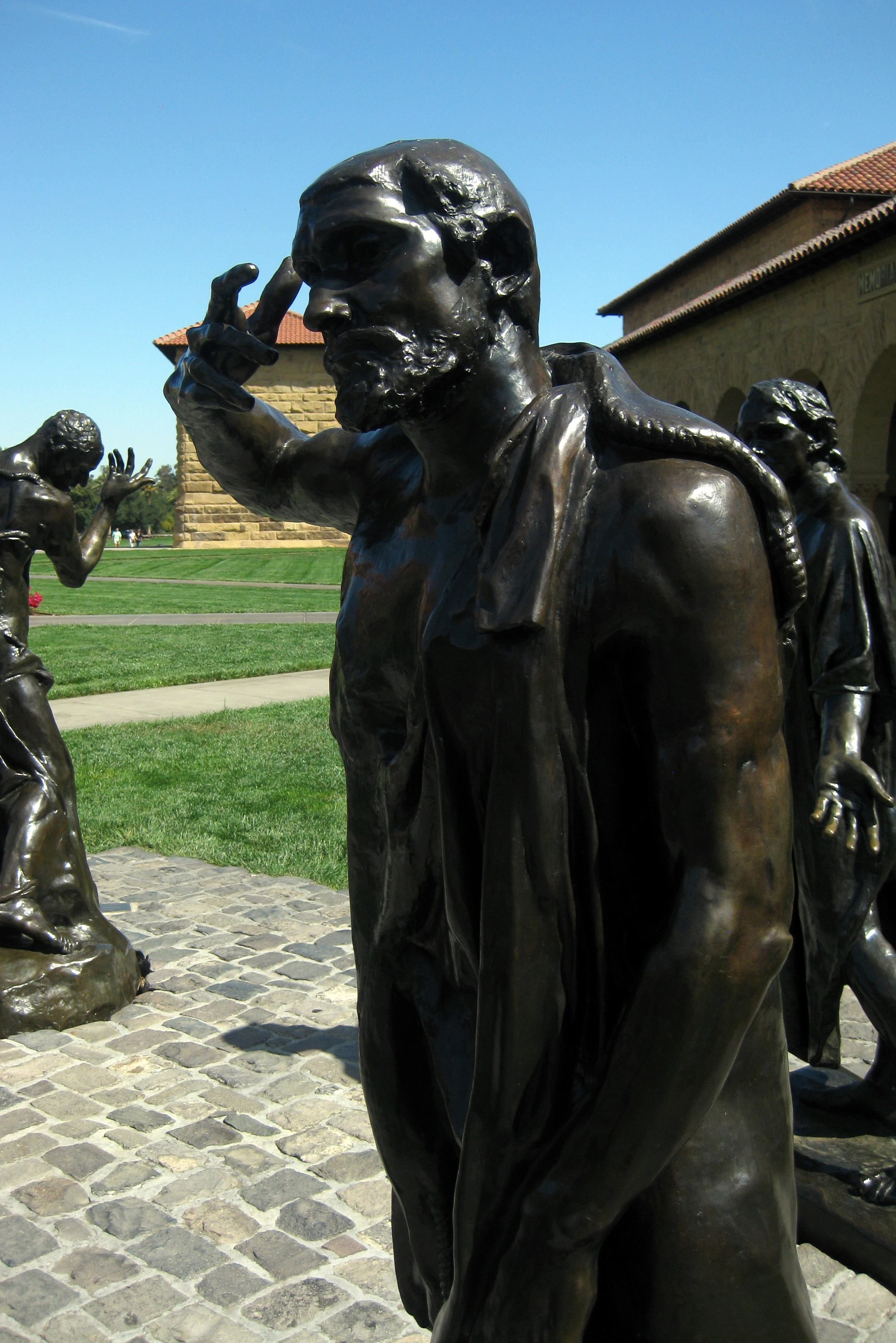
Image by wallyg
Les Bourgeois de Calais (The Burghers of Calais) is one of the most famous sculptures by Auguste Rodin. It serves as a monument to the heroism of six burghers in Calais during a siege by the England in the Hundred Years’ War in 1347.
After a victory in the Battle of Crécy, England’s King Edward III besieged Calais, an important French port on the English channel, and Philip VI of France ordered the city to hold out at all costs. Which it did for a over a year. Philip failed to lift the siege and starvation eventually forced the city to parlay for surrender. Edward offered to spare the people of the Calais if any six of its top leaders would surrender themselves. Edward demanded that they walk out almost naked, wearing nooses around their necks and carrying the keys to the city and castle. One of the wealthiest of the town leaders, Eustache de Saint Pierre, volunteered first and five other burghers–Jean d’Aire, Jacques and Pierre de Wissant, Jean de Fiennes, Andrieu d’Andres–soon followed suit. Though the burghers expected to be executed, their lives were spared by the intervention of England’s Queen, Philippa of Hainault, who persuaded her husband by saying it would be a bad omen for her unborn child. Rodin depicts a larger than life Saint Pierre leading the envoy of emaciated volunteers to the city gates, prepared to meet their imminent mortality.
The monument was initially proposed by Omer Dewavrin, mayor of Calais, for the town’s square in 1884. Unusual in that monuments were usually reserved for victories, the town of Calais had long desired to recognize the sacrifices made by these altruistic men. Rodin’s controversial design echoed this intent–the burghers are not presented in a heroic manner, but sullen and worn. His innovative design initially presented the burghers at the same level as the viewers, rather than on a traditional pedestal, although until 1924 the city, against Rodin’s wishes, displayed it on an elevated base.
The original statue still stands in Calais. Other casts stand around the world–the Victoria Tower Gardens, in the shadow of the Houses of Parliament in London; the Israel Museum in Jerusalem, the Rodin Museum in Philadelphia, the Metropolitan Museum of Art in New York City, the Brooklyn Museum in New York City, Musée Rodin in Paris, the National Museum of Western Art in Tokyo, the Rodin Gallery in Seoul, and Glyptoteket in Copenhagen, to name a few. Some installations have the figures tightly grouped with contiguous bases, while others have the figures separated. Some installations are elevated on pedestals, others are placed at ground level. This bronze cast, at Stanford University’s Iris & B. Gerald Cantor Center for Visual Arts, consists of six separate pieces which are slightly sunken, concealing the bottom few inches of the bases, and spaced such that viewers can walk between the figures. The museum claims this is how Rodin wished them to be displayed.
California: Stanford University – Iris & B. Gerald Cantor Center for Visual Arts at Stanford University – Burghers of Calais
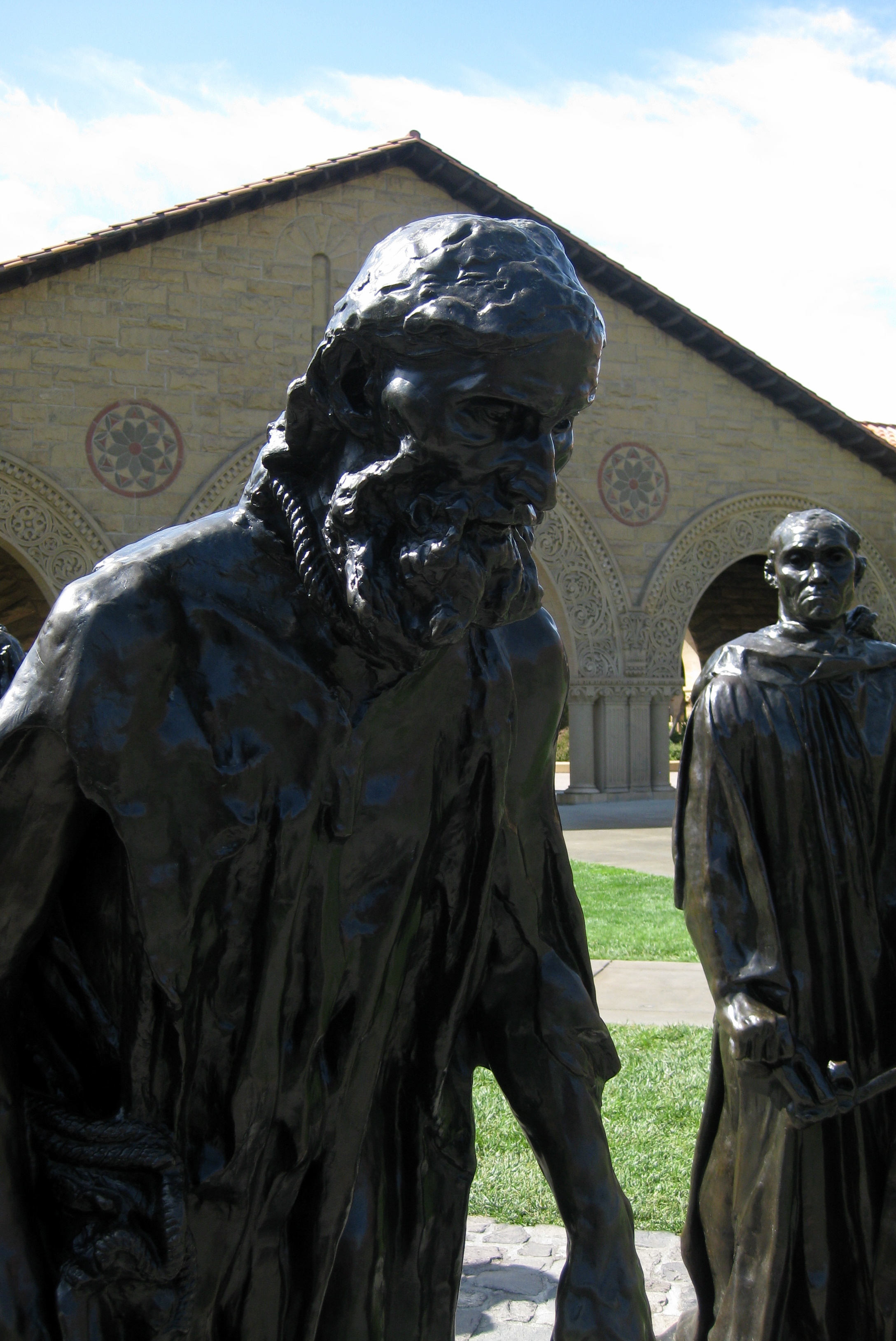
Image by wallyg
Les Bourgeois de Calais (The Burghers of Calais) is one of the most famous sculptures by Auguste Rodin. It serves as a monument to the heroism of six burghers in Calais during a siege by the England in the Hundred Years’ War in 1347.
After a victory in the Battle of Crécy, England’s King Edward III besieged Calais, an important French port on the English channel, and Philip VI of France ordered the city to hold out at all costs. Which it did for a over a year. Philip failed to lift the siege and starvation eventually forced the city to parlay for surrender. Edward offered to spare the people of the Calais if any six of its top leaders would surrender themselves. Edward demanded that they walk out almost naked, wearing nooses around their necks and carrying the keys to the city and castle. One of the wealthiest of the town leaders, Eustache de Saint Pierre, volunteered first and five other burghers–Jean d’Aire, Jacques and Pierre de Wissant, Jean de Fiennes, Andrieu d’Andres–soon followed suit. Though the burghers expected to be executed, their lives were spared by the intervention of England’s Queen, Philippa of Hainault, who persuaded her husband by saying it would be a bad omen for her unborn child. Rodin depicts a larger than life Saint Pierre leading the envoy of emaciated volunteers to the city gates, prepared to meet their imminent mortality.
The monument was initially proposed by Omer Dewavrin, mayor of Calais, for the town’s square in 1884. Unusual in that monuments were usually reserved for victories, the town of Calais had long desired to recognize the sacrifices made by these altruistic men. Rodin’s controversial design echoed this intent–the burghers are not presented in a heroic manner, but sullen and worn. His innovative design initially presented the burghers at the same level as the viewers, rather than on a traditional pedestal, although until 1924 the city, against Rodin’s wishes, displayed it on an elevated base.
The original statue still stands in Calais. Other casts stand around the world–the Victoria Tower Gardens, in the shadow of the Houses of Parliament in London; the Israel Museum in Jerusalem, the Rodin Museum in Philadelphia, the Metropolitan Museum of Art in New York City, the Brooklyn Museum in New York City, Musée Rodin in Paris, the National Museum of Western Art in Tokyo, the Rodin Gallery in Seoul, and Glyptoteket in Copenhagen, to name a few. Some installations have the figures tightly grouped with contiguous bases, while others have the figures separated. Some installations are elevated on pedestals, others are placed at ground level. This bronze cast, at Stanford University’s Iris & B. Gerald Cantor Center for Visual Arts, consists of six separate pieces which are slightly sunken, concealing the bottom few inches of the bases, and spaced such that viewers can walk between the figures. The museum claims this is how Rodin wished them to be displayed.
Pirates of the Caribbean 4 On Stranger Tides Trailer, in stereoscopic 3D ! How to see this trailer in in 3D 1. Under the video there is a menu titled “3D” 2. Open the menu and choose which glasses you have or choose cross-eyed if you do not have any glasses. 3. To watch with “crossed-eyed”, cross your eyes until the two separate screens merge into one 3D screen ! Enjoy and come back later for more 3D trailers !
Video Rating: 5 / 5
My photoblog wilsonchin.blogspot.com Shoot a series of Bugs with my Nikon D90, and a 90mm Tamron SP AF Macro lens. And compose it into a short clip.
Video Rating: 3 / 5
Got my D90 today, so here’s a test video I shot real quick to see what things would look like. LOVE IT SO FAR!!!
Video Rating: 5 / 5

Having shot the section front photo of Daytner out in the lobby, we quick-walked the lights into her office area. Working from the back and by swapping just one light mod, we were able to get something pretty different for the inside pages. Read more »

