Blog

  • NYC: Brooklyn Museum – Auguste Rodin’s Burghers of Calais

    A few nice visual art images I found:

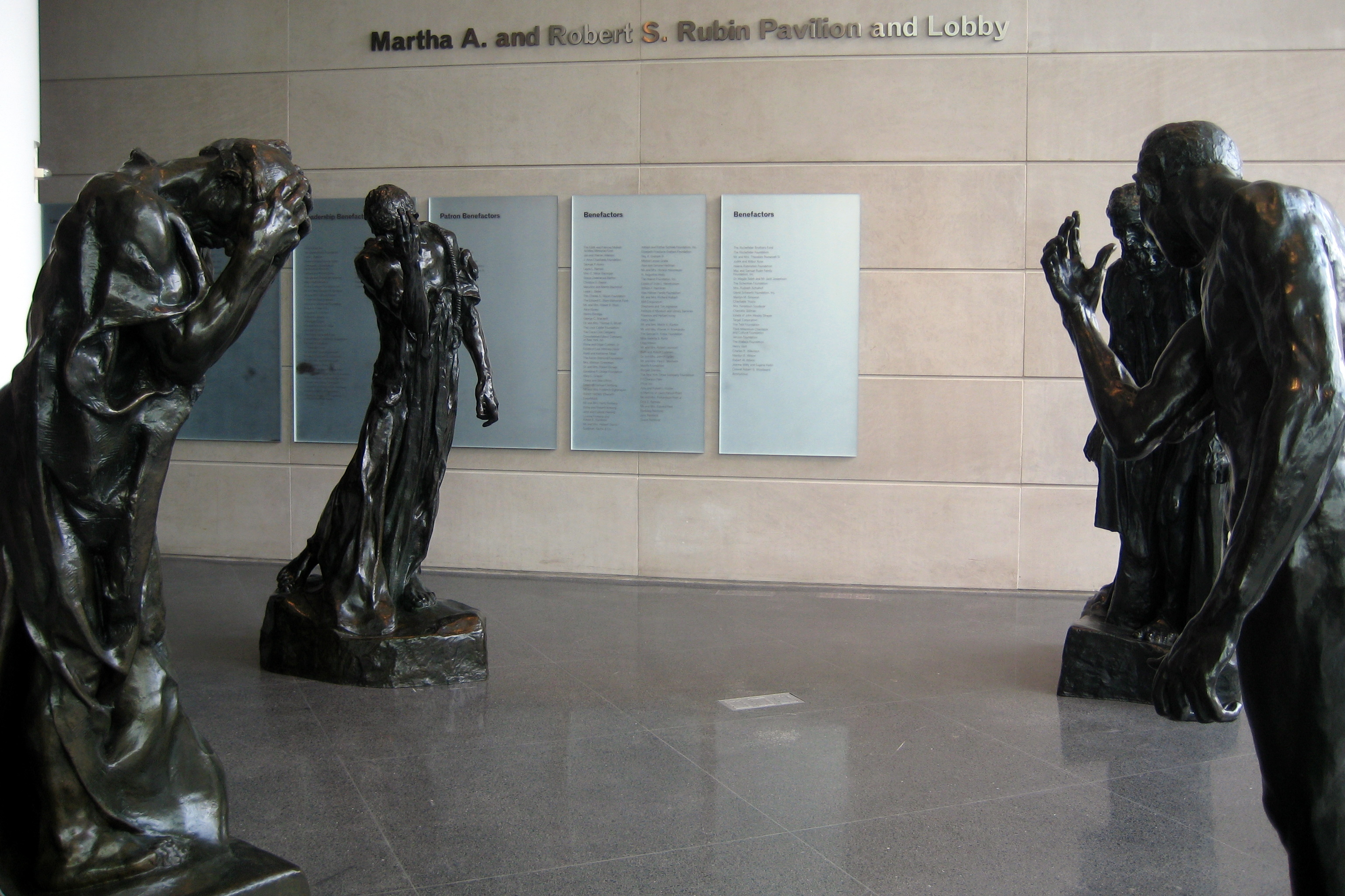
    NYC: Brooklyn Museum – Auguste Rodin’s Burghers of Calais
    visual art
    Image by wallyg
    Les Bourgeois de Calais (The Burghers of Calais) is one of the most famous sculptures by Auguste Rodin. It serves as a monument to the heroism of six burghers in Calais during a siege by the England in the Hundred Years’ War in 1347.

    After a victory in the Battle of Crécy, England’s King Edward III besieged Calais, an important French port on the English channel, and Philip VI of France ordered the city to hold out at all costs. Which it did for a over a year. Philip failed to lift the siege and starvation eventually forced the city to parlay for surrender. Edward offered to spare the people of the Calais if any six of its top leaders would surrender themselves. Edward demanded that they walk out almost naked, wearing nooses around their necks and carrying the keys to the city and castle. One of the wealthiest of the town leaders, Eustache de Saint Pierre, volunteered first and five other burghers–Jean d’Aire, Jacques and Pierre de Wissant, Jean de Fiennes, Andrieu d’Andres–soon followed suit. Though the burghers expected to be executed, their lives were spared by the intervention of England’s Queen, Philippa of Hainault, who persuaded her husband by saying it would be a bad omen for her unborn child. Rodin depicts a larger than life Saint Pierre leading the envoy of emaciated volunteers to the city gates, prepared to meet their imminent mortality.

    The monument was initially proposed by Omer Dewavrin, mayor of Calais, for the town’s square in 1884. Unusual in that monuments were usually reserved for victories, the town of Calais had long desired to recognize the sacrifices made by these altruistic men. Rodin’s controversial design echoed this intent–the burghers are not presented in a heroic manner, but sullen and worn. His innovative design initially presented the burghers at the same level as the viewers, rather than on a traditional pedestal, although until 1924 the city, against Rodin’s wishes, displayed it on an elevated base.

    Other casts stand around the world–the garden of Musée Rodin, the Victoria Tower Gardens, in the shadow of the Houses of Parliament in London; the Israel Museum in Jerusalem, the Rodin Museum in Philadelphia, the Metropolitan Museum of Art in New York City, the sculpture garden of the Smithsonian Hirshorn Museum in Washington D.C., the National Museum of Western Art in Tokyo, the Rodin Gallery in Seoul, and Glyptoteket in Copenhagen, to name a few. Some installations have the figures tightly grouped with contiguous bases, while others, like this one, have the figures separated. Some installations are elevated on pedestals, others are placed at ground level. At Stanford University’s Iris & B. Gerald Cantor Center for Visual Arts, null, concealing the bottom few inches of the bases, and spaced such that viewers can walk between the figures. The museum claims this is how Rodin wished them to be displayed.

    The Burghers display at the Brooklyn Museum includes a draped Pierre de Wissant, Saint Pierre, Andriue d’Andres, and a nude Pierre de Wissant.

    *

    Due to installations in the Iris and B. Gerald Cantor Gallery, twelve bronze sculptures by Auguste Rodin have been installed in the Rubin Entrance Pavilion. This newly excerpted presentation of the Museum’s large holdings by Rodin includes The Age of Bronze, a signature conception from the early years of the sculptor’s career, as well as other works from his most significant commissions, including The Burghers of Calais, The Gates of Hell, and the Monument to Balzac. These casts came to the Brooklyn Museum through the generosity of Iris and B. Gerald Cantor.

    The Brooklyn Museum, sitting at the border of Prospect Heights and Crown Heights near Prospect Park, is the second largest art museum in New York City. Opened in 1897 under the leadership of Brooklyn Institute of Arts and Sciences president John B. Woodward, the 560,000-square foot, Beaux-Arts building houses a permanent collection including more than one-and-a-half million objects, from ancient Egyptian masterpieces to contemporary art.

    The Brooklyn Museum was designated a landmark by the New York Landmarks Preservation Commission in 1966.

    National Historic Register #77000944

    In the Bike Lane
    visual art
    Image by nycstreets
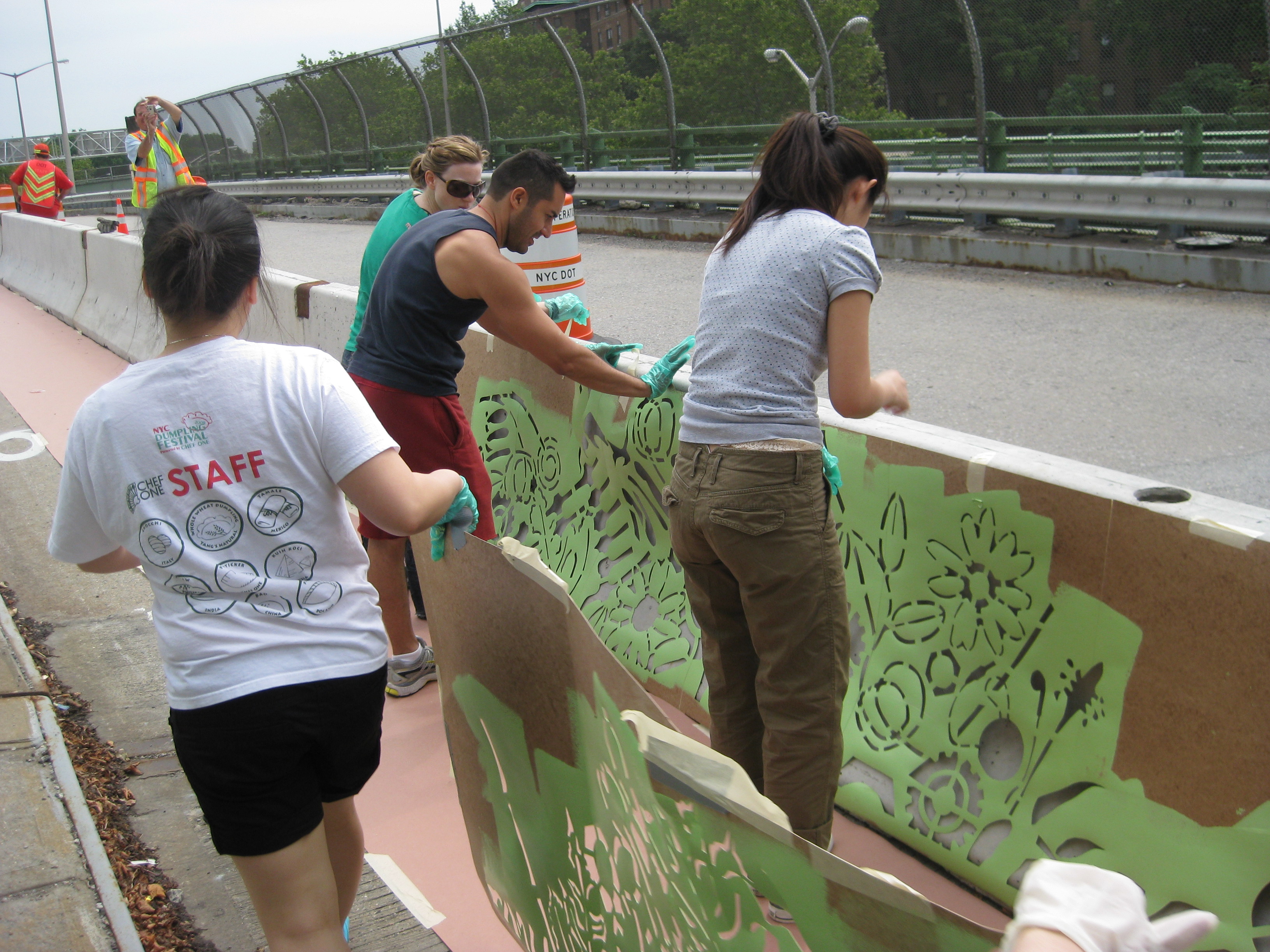
    Artist Andrea Legge received a BFA from the Ontario College of Art in Toronto and a MFA from the School of Visual Arts in New York City. She was a member of The Rivington School of Manhattan’s Lower East Side during the 1980s and served as Art Production Editor of the American ELLE magazine for a decade. In 2000, Andrea Legge co-founded the collaborative studio Legge Lewis Legge that focuses on public art and architecture.

    NYCDOT Urban Art Program, Barrier Beautification
    In the Bike Lane by Andrea Legge
    Presented with New York Cares
    Fort Hamilton Parkway between E. 5th St and Park Circle, Brooklyn
    www.nyc.gov/urbanart
    andrealegge.com/

    In the Bike Lane
    visual art
    Image by nycstreets
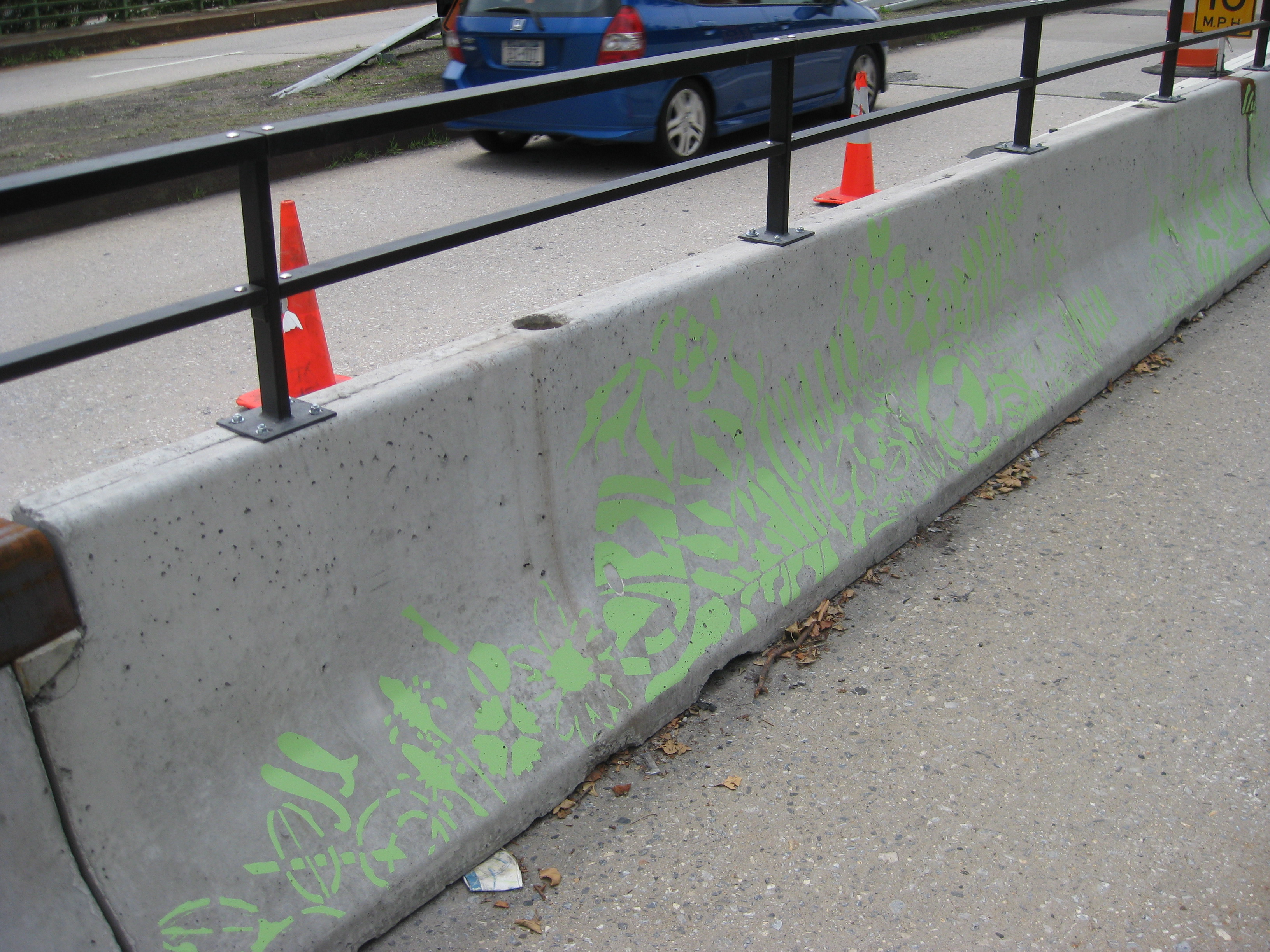
    Artist Andrea Legge received a BFA from the Ontario College of Art in Toronto and a MFA from the School of Visual Arts in New York City. She was a member of The Rivington School of Manhattan’s Lower East Side during the 1980s and served as Art Production Editor of the American ELLE magazine for a decade. In 2000, Andrea Legge co-founded the collaborative studio Legge Lewis Legge that focuses on public art and architecture.

    NYCDOT Urban Art Program, Barrier Beautification
    In the Bike Lane by Andrea Legge
    Presented with New York Cares
    Fort Hamilton Parkway between E. 5th St and Park Circle, Brooklyn
    www.nyc.gov/urbanart
    andrealegge.com/

  • How to Fix Animal Eyes

    Lesa shows you how to use Photoshop to fix animal white, green, or golden eyes by rebuilding the pupils. Thankfully, it’s easier than it sounds! This technique also works in Photoshop Elements.

  • Model Shot Ep 103: Photo on the Go with Joe McNally: Adorama Photography TV

    www.adorama.com Adorama Photography TV Presents Photo on the Go with Joe McNally. In this episode, Joe demonstrates how to achieve a line of sight TTL transmission at a distance while using colored gels to alter the color of the environment. Watch as he augments the color in a location by using artificial flash light while maintaining shutter speed in order to keep the ambient light. Joe will show you how to use a light box with a fabric grid, a red gelled flash, and a pop-up camera flash to create a compelling model shot. AdoramaTV features talented hosts including Mark Wallace, Gavin Hoey, Joe McNally, Joe DiMaggio, Tamara Lackey, Bryan Peterson, Rich Harrington Related Products Featured items from this episode bit.ly AdoramaTV related episodes bit.ly Learn More from the Adorama Learning Center bit.ly Phottix TTL Flash Remote Cord for Canon OC-E3 www.adorama.com Phottix TTL Flash Remote Cord for Nikon SC-28 www.adorama.com RPS Off-Camera TTL Coiled Flash Cord www.adorama.com Holga 12MFC Electronic Hot Shoe Flash with Built-In Color Filters www.adorama.com Holga Dedicated Holgon MF (Multiple Flash) Shoe Mount Electronic Flash www.adorama.com Harbor Digital 6-Piece Colored Gel Pack www.adorama.com Nikon D800 Digital SLR Camera Body www.adorama.com Flashpoint Soft Box, 32″” With Bracket www.adorama.com Lastolite Hot Shoe Ezy-box Softbox www.adorama.com Chimera 60 Degree Fabric Grid www.adorama.com If you have questions, share them with us at: adotv@adorama.com

  • Pirates Of the Carribean: Dead Man’s Chest

    Captain Jack Sparrow tries Kraken onto Elizabeth, but ultimately disrupts more than a wedding.. This is How It Should Have Ended. The way we think your favourite films should have ended! Visit mnc.tv for more endings. Daniel Baxter Tina Alexander Stephanie Fisher Tommy Watson
    Video Rating: 4 / 5

    Hope you guys like it! Hovik 3D Animation: full.sc RevossHD Light Scope: full.sc Editor School Vector Blur: full.sc Twitter: www.Twitter.com Facebook: www.facebook.com

  • Kermode Uncut: The 3D Guy Writes back

    www.bbc.co.uk/markkermode. About a month ago I saw Toy Story 3D ‘Did Somebody Actually Make a Good Case for 3D’ and I used this blog to say a few things about the film’s 3D effects. Imagineer my surprise when a Disney representative, none other than Pixar’s stereoscopic supervisor got in touch to put me right on their position…
    Video Rating: 4 / 5

  • browserFruits November #1

    Fotospecial: Herbstblätter

    Flickr

    500px

    Deutschsprachig

    • Michael Löwa fotografierte die letzten Gladiatoren, den Florentinischen Fußball „Calcio Storico Fiorentino“.

    • Die „Bonner Schule“ bietet am 24. und 25. November 2012 zwei kostenlose Basic-Fotografie-Workshops in Bonn an. Unter anderem unter der Leitung von Christopher Rausch.

    • Der Fotograf Kevin Erskine dokumentiert Tornados und deren Folgen. Eine kleine Bilderserie zeigt geo.de

    • Tim Flach macht erstaunliche Tierportraits. Stern.de hat eine schöne Fotostrecke anlässlich seines neuen Bildbandes.

    • Zeit Online betitelt die Serie von Stefan Bogner mit „Aufregende Kurven“. Zu sehen sind europäische Passstraßen.

    • Ein Foto-Essay zum Mississippi-Delta, einer der ärmsten Regionen der USA, gibt es auf Spiegel Online.

    ~

    International

    • Die Ausmaße des Hurricane Sandy werden in diesen Fotos sehr deutlich.

    • Wir bleiben in den USA: Sehr schöne New-York-Fotos von Stanley Kubrick aus den 40er Jahren findet Ihr hier.

    • Als man Sakir Gokcebag gesagt hat: „Mit Essen spielt man nicht!“, hat er wahrscheinlich nicht zugehört oder fühlte sich herausgefordert. Wie gut, denn sonst gäbe es diese Fotos nicht.

    • Julian Holtom über sein Portrait „Scars“ von Liara, die mit ihren Brandnarben sehr selbstbewusst umgeht.

    ~

    Neuerscheinungen und Tipps vom Foto-Büchermarkt

    • Schaurig schöne Halloweenbilder aus der Zeit von 1875 bis 1955 zeigt Haunted Air. Mit einem Vorwort von David Lynch.

    • Wem der Name Jamari Lior geläufig ist, wird auch wissen, dass sie keine Mühe scheut, um ihre herausragenden Portraits zu inszenieren. Und weil bald ein Nachfolgeband* erscheint, wollen wir Euch auf Ihr Buch „Modelfotograf werden“* hinweisen.

    • Kein Buch, sondern ein Kalender: Unsere Redakteurin Aileen Wessely versammelt 13 ausgesuchte Portraits aus ihren freien Arbeiten in ihrem neuen A3-Wandkalender, der bis Anfang Dezember wahlweise im Hoch- oder Querformat zum Selbstkostenpreis bei ihr erworben werden kann.

    ~

    Videos

    Sehr unterhaltsam wird hier erklärt, wie die Fotografie mit Blitz funktioniert und was es mit der Blitzsynchronzeit auf sich hat.

    ~

    Ausstellungen

    Gruppenausstellung
    Zeit: 10. – 11. November 2012
    Ort: Bonner Schule, Friedrichstraße 10, Bonn
    Link

    Kairo. Offene Stadt Neue Bilder einer andauernden Revolution.
    Zeit: 28. September – 23. Dezember 2012
    Ort: Museum für Photographie, Braunschweig
    Link

    New American Work – Andrew Moore
    Zeit: 27. Oktober 2012 – 26. Januar 2013
    Ort: Galerie f5,6, München
    Link

    Mehr aktuelle Ausstellungen

    * Das ist ein Affiliate-Link zu Amazon. Wenn Ihr darüber etwas bestellt, bekommen wir eine kleine Provision, Ihr bezahlt aber keinen Cent mehr.


    kwerfeldein – Fotografie Magazin

  • 2 STROKES ONLY

    Question. What do you get if you combine a private track , 5 awesome 2 stroke riders, a film crew with a passion for the smokers? Answer… 2 STROKES ONLY !!! Enjoy. Thanks to James Dunn (KTM UK) an awesome young talent and winner of a 2012 European 125 class moto amongst many other accolades, Matt Moffat (current leader of the 2012 Redbull Pro National open 2 stroke series (has won every round so far),Robbie Waller (Current leader of the Redbull Pro Nationals Open Junior 2 stroke class), Jordan Hind (winner of over 200 youth races on a smoker), Matty White (Local 2 stroke hero) with many wins and big scalps to is name. A shout out to Michael Bennett (aka Mad Mike !) MX photographer for some amazing stills from the day www.mike116699.co.uk and Buttercup Farm MX track for the use of the track (FIND THEM ON FACEBOOK). We hope you enjoy the film and watch out for the spin offs from the film “2 strokes only the ride of your life”, “2 Stokes Only How slow can you go?” coming to a PC near you soon. www.toofastmediagroup.com
    Video Rating: 4 / 5

    Gopi Shocked To See A Giant Gorilla Tinda Tandon’s Wife informs Inspector Chandramukhi Chautala that her Husband Mr. Tinda, who is a wild life Photographer was attacked by a giant Gorilla in Gorilla Island, while he was clicking photos in the jungle later, Tinda reveals Chautala that he saw a Girl lying unconscious in the jungle and just when he was about to save her, a Gorilla came from behind and started bashing him thus, Chautala sends Billu, Gopi, Gulgule and Bajrang in Gorilla island to find the Gorilla. Billu spots a cell phone’s sim card in the Jungle, there in Imaan Chowki, Hasina reveals Chautala that her colleague Churi had purchased a sim card on her name who is missing from since couple days. Chief Inspector Bajrang tries to collect some information in Churi’s house thus; they meet Churi’s Father who expresses his doubt on his Son-in-law Raja. Will Chautala and her team succeed in trapping the giant Gorilla? FIR presents to you a female inspector and her funny sub-inspector trying to solve cases. Their sincere attempts to crack the mysteries are hilarious and worth a hearty laugh. The sitcom is set in a Police Station where constables indulge in amazing antics. A space you must visit to experience an amusing and entertaining comedy.

  • Photoshop: The art of retouching | lynda.com

    This specific tutorial is a single movie from chapter Introduction of the Photoshop CS3 Portrait Retouching Essentials course presented by lynda.com author Chris Orwig. Watch more at www.lynda.com The complete course has a total duration of 10 hours and 19 minutes. Photoshop CS3 Portrait Retouching Essentials table of contents: Introduction 1. Retouching Roadmap 2. Correcting Color and Tone 3. Cleaning Up Images in Camera Raw 4. Cleaning Up Images in Photoshop 5. Structural Image Enhancements 6. Reducing and Removing Wrinkles 7. Enhancing Eyes 8. Enhancing Eyelashes and Eyebrows 9. Improving Hair 10. Improving Faces and Bodies 11. Fixing Teeth 12. Improving Makeup 13. Enhancing Skin 14. Softening Skin Conclusion
    Video Rating: 0 / 5

  • Hayloft

    Throughout the month of August, I helped my friend/colleague Joseph build an extra level of flooring and shelving in his barn’s hayloft. We clamped a Nikon D300 with a Nikkor 10.5mm ƒ/2.8 fisheye to the ceiling rafters of the barn, set to aperture priority mode and ISO 800 @ ƒ/8 with +0.7 exposure comp. The camera’s intervalometer was set to take a photo once every 30 seconds, resulting in 7910 frames, capturing almost 66 hours of work. Help with the work and cleaning in the hayloft was provided by Joe’s kids, sister-in-law and neighbours. Song is “The Kindest Man The World Has Ever Known” by Dave Whiteside, aka, The Sun, The Rain, The Appleseed. Listen to more of Dave’s music and purchase his EP, “Eucatastrophe,” @ www.myspace.com
    Video Rating: 5 / 5

  • North Atlantic Monolith

    Since the release of the James Cameron blockbuster film Titanic, photographers, tourists, and adventurers have been migrating to the eastern coast of Canada in a quest to view and photograph icebergs. Most all will return home never having seen one of these icy monoliths and that is a shame; with a minimum amount of research it is possible to fill hard drives with pictures rather than pockets with postcards.

    Newfoundland and Labrador, Canada’s easternmost province, continues to be the most easily accessible location in the world to photograph icebergs. Yet, the birth and journey of a North-Atlantic iceberg began approximately 12,000 – 3000 years earlier along the western coast of Greenland, and its 100 or so glaciers.

    As the glacier reaches its terminus along the shores of the West Greenland Sea, the continual scrubbing and scouring of waves and tidal action will break off huge slabs of the glacier in a process known as calving and ultimately result with the birth of an iceberg. From the major glaciers between the Jakobshavn and Humbolt ice fields it is estimated that upwards of 30,000 icebergs will be calved annually, yet slightly less than 500 icebergs will eventually reach the Grand Banks off eastern Newfoundland. It is also important to understand that nearly all of the icebergs that reach the Atlantic Ocean will have been calved along the west coast of Greenland and generally follow the same briny route.

    Once the newborn iceberg settles into the West Greenland Current it will be edged westward toward Baffin Bay, south through the Davis Strait and into the open waters of the Labrador Sea. The counter-clockwise estuarine circulation of the frigid Labrador Sea will push the southward bound iceberg past Baffin Island and along the shores of mainland Labrador until it eventually reaches the St. Anthony area and the northern coast of Newfoundland. It is somewhat ironic that the incubation of an iceberg has taken a minimum of 3000 years, the journey south to Newfoundland about three years, and its death mere months—if not weeks—once it journeys south of 48 degrees north latitude.

    Each degree of latitude translates to 60 nautical miles, and by reviewing the iceberg activity chart available from Environment Canada a little more closely, we will see that St. John’s, Newfoundland’s capital city, lies at about 47° 40’ (or 20 miles south of the 48th parallel). Therefore we can ascertain that our search for bergs should traverse no further south than this self-proclaimed oldest city in North America. Should we continue studying the chart we will notice that St. Anthony lies approximately four degrees further to the north, or about 240 nautical miles. Although this distance might appear at first glance to be quite insignificant, it is a huge leap in improving the likelihood of iceberg sightings.

    While I consider St. Anthony to be the best location to photograph icebergs it does require some effort to get there. The village of Twillingate, on the other hand, can be equally as profitable and unquestionably the most easily accessible. Located slightly more than a one-hour drive north of the central Newfoundland town of Gander, the village has several tour boat operators who specialize in iceberg watching. Twillingate is a small fishing town with several hotels and unique Bed & Breakfast accommodations whose proprietors are quite familiar and responsive to a photographer’s (unusual) requirements. In addition, Gander is the home of an international airport with connecting flights to a wide variety of air carriers, and the usual deluge of car rental companies. Consequently it is possible to be in contact with a tour boat operator in Twillingate one day and be there making photographs the next from anywhere in North America.

    Like most things in life, given the opportunity to rehearse and practice we should eventually get the task done properly. However, icebergs don’t offer many opportunities—relatively speaking—and for many photographers it is a one-shot deal. Therefore it would be prudent to study the photographs of icebergs that appeal to us to learn what the quality of that particular image is. The act of making the picture should then be an exercise of learned skill and not mere luck.

    Think of an iceberg as a building. Should you photograph that building and its vertical rise in the generally preferred light of early morning and late afternoon the image will be somewhat ‘flat’ due to the lack of shadows rendered from frontal lighting. Conversely, if you were to re-photograph the same scene between mid-morning and mid-afternoon when the sun was higher in the sky, shadows should be thrown across the building façade and thereby create textural detail. The iceberg is no different, and this same approach will render an image with the desired blueness and textural crispness that sends the message of coldness and purity that brings oooh’s and aaah’s at any AV show.

    Do your research and by having the necessary flexibility to get north when the icebergs are moving through, you too should have that euphoric experience of seeing and successfully photographing your first iceberg.

    URL Resources:

    Marine charts: http://ice-glaces.ec.gc.ca

    Satellite imagery: http://www.icebergfinder.com

    Post originally from: Digital Photography Tips.

    Check out our more Photography Tips at Photography Tips for Beginners, Portrait Photography Tips and Wedding Photography Tips.

    North Atlantic Monolith


    Digital Photography School