Disney Research Studios and ETH Zurich have published a study detailing a new algorithm that is able to swap faces from one subject to another in high-resolution photos and videos. Of note, this system is able to fully automate the face-swapping process, presenting the first instance of megapixel-resolution machine-generated imagery that is ‘temporally coherent’ and photo-realistic.
The new algorithm involves taking the face of a subject and modifying it using the face of another person, blending the two so that the face from one person is presented with the expressions and movements of another.
The system involves a multi-way comb network trained with images of multiple people, as well as a blending method that preserves contrast and lighting. ‘We also show that while progressive training enables generation of high-resolution images,’ the researchers say, ‘extending the architecture and training data beyond two people allows us to achieve higher fidelity in generated expressions.’
Key to the high level of quality is the ‘landmark stabilization algorithm,’ which Disney researchers describe as a ‘crucial’ aspect of dealing with high-resolution content. Though this isn’t the first instance of face-swapping in footage, the study points out that existing methods used to generate characters like the young Carrie Fisher in Rogue One are both time-intensive and quite expensive.
Artificial intelligence has the potential to change this, ultimately enabling creators to rapidly generate computer characters using live-action footage and input images of the target. Generating realistic faces remains a big problem, however, producing what is referred to as the ‘uncanny valley’ look that limits the use of this tech.
This makes Disney’s new technology particularly exciting, teasing a future in which creators will be able to generate photo-realistic, high-resolution, temporally-stable face swaps between two people. The researchers explain:
As our system is also capable of multi-way swaps — allowing any pair of performances and appearances in our data to be swapped — the possible benefits to visual effects are extensive, all at a fraction of the time and expense required using more traditional methods.
The study compares the face-swapping results from this new method to the results from existing algorithms, including DeepFaceLab and DeepFakes. Though the other algorithms were able to produce casually convincing results, they were unable to pass scrutiny and, in some cases, were either excessively blended or outright bizarre and uncanny.
This batch represents instances of failed face swapping
In comparison, the face swaps generated using the new method were realistic and maintained a high level of sharpness and detail at a 1024 x 1024 resolution, bypassing the soft, blurry results often seen when using DeepFakes. As well, the researchers note that DeepFakes has such heavy processing requirements that it was only able to generate a resolution of 128 x 128 pixels using an 11GB GPU.
When using morphable models, the researchers were able to increase the resolution to 500 x 500 pixels, but the results were typically unrealistic. Beyond that, the researchers were forced to train the conventional models for each pair of face swaps whereas the new algorithm could be simultaneously trained for all of the people used for the various face swaps.
However, the study points out that the new algorithm presents one big limitation also experienced by other, more conventional methods: the original head shape is maintained. Though the face swap may be very realistic, the face itself may not match the head shape properly, resulting in a generated character that looks a bit ‘off’ from what is expected.
Future research may result in a method for transferring the subject’s head shape in addition to their face, producing not only photo-realistic results, but also the correct overall appearance for a digitally-recreated actor. The biggest obvious use for this technology is in film and television, enabling studios to quickly and cheaply (relatively speaking) create 3D models of aging or deceased actors.
This technology joins a growing body of research on face-swapping and model-generating algorithms that focus on still images rather than videos. NVIDIA, for example, published a study in late 2018 that demonstrated the generation of photo-realistic portraits of AI models that involved source and target images of real people.
Around a year later, the same company published new research that performed a similar face swap, but one involving dogs instead of humans. We’ve already seen the use of these various AI technologies reach the consumer level — Let’s Enhance 2.0, for example, recently introduced a new feature that utilizes machine learning to reconstruct the faces of subjects in low-resolution images.
As for the new study from Disney Research Studios and ETH Zurich, the full paper (PDF) can be found on Disney’s website here.
The post Beginners Tips for Night Sky and Star Photography appeared first on Digital Photography School. It was authored by Phillip Van Nostrand.
Star Photography
My favorite type of personal photography is taking night shots of the stars (long exposure pictures). I am often busy shooting pictures of people at weddings, or apartments, or models, and it’s important for me to make sure I take pictures for fun regularly. Taking pictures for no one other than myself is highly rewarding, soul filling, and fun! I also love taking travel photos and HDR photos, in this article we will take a close look at exactly how you can take your own epic star photographs.
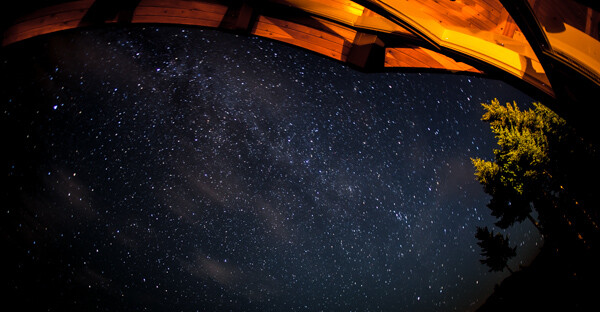
30 seconds at f/2.8, ISO 1250
What you need to take jaw-dropping pictures of stars
To take your star pictures, you only need three things:
a full-frame camera (for better ISO capabilities)
a fisheye lens (for the widest view of the sky)
a tripod (for stability during 15 second photos)
(Note: You can do this with a cropped sensor camera, without a tripod, and without a fisheye lens. It will just be a little harder and slightly less jaw-dropping)
25 seconds at f/2.8, ISO 1600
Camera settings
You can nail this shot almost every time with these settings: 25 second exposure, f/2.8, ISO 1600
If your lens doesn’t open up to f/2.8 you can try 30 seconds at f/4 with ISO 1600.
Note: this kind of photography won’t work if there is a full moon out (or even a half moon). Don’t compete with large light sources, the stars will be over powered.The best location for star photography is way out in nature, away from city lights that cause “light pollution.”
13.0 seconds at f/2.8, ISO 1600
Why to use these settings
The most important component of these settings is the 25-second exposure. An exposure longer than about 25 seconds will start to show star trails. Photographing star trails is a legitimate type of photography on its own, but not the type of photography you are trying to do here. Since you are limited to about 15-25 seconds max shutter speed, you still need to let in more light.
The largest aperture you can find on a fisheye lens is f/2.8, and still, your picture might not be quite bright enough to look stunning. So this is where the ISO comes into play. On a full-frame camera like the 5D Mark III or the Nikon D800, you can bump the ISO up to around 2000 without seeing much noise.
You’ll learn how to reduce noise in Lightroom in the next section for a super clean photo.
Editing in Lightroom
I do extensive retouching in Lightroom after I take my photos. I’ll usually boost the exposure up by a stop or more, and I’ll use Noise Reduction under the Detail section to reduce any unwanted “noise” (those pesky extra white, red or blue pixels that show up when you push the ISO too high).
Here is a standard star photo of mine and the Lightroom settings I used to create it:
25 seconds at f/2.8, ISO 1600
Here are the Lightroom settings I used to edit the above photo:
1) You can see in the first panel that I bumped the whites up to +46 and brought the blacks down to -52. I really wanted to emphasize the stars against the dark sky and this is a good way to do that. Pushing the clarity up to +55 also helps define the stars against the sky, making them nice and crispy. I boosted the saturation to bring out any colors that are in the sky.
2) In the second panel, you can see that I sharpened up the image a bit, also to emphasize the stars. At the same time, I brought up the noise reduction to 33 to smooth out some of the noise that might show up, and I brought up the color to 25 for the same reasons.
Pro tips
Here is where you can have fun with the editing. Play around with the split toning sliders to make the colors in your sky appear magical. In the photo above you can see a little bit of turquoise in the lower part of the sky, and that comes from boosting that color in the Shadows of the Split Toning slider here:
You can also affect the color of the sky by playing around with the temperature and hue sliders to get some pretty magnificent looking star photos. Take a look at this one photo rendered three different ways:
Another pro tip that you may have noticed in all of the photo examples I gave here is this – shoot your stars in context. It really tells a great story to see a silhouette of a pine tree or a house in the background, and it shows the magnitude of the scene when you have an object in the foreground to compare to the stars.
Lastly, make sure you know which direction the Milky Way is. You can use an app like Sky Map to see exactly what stars are in the sky above you.
Have fun shooting, and please share your pictures below!
The post Beginners Tips for Night Sky and Star Photography appeared first on Digital Photography School. It was authored by Phillip Van Nostrand.
Mirrorless cameras are becoming more and more popular not just with amateur photographers but with professional ones too. By doing away with the mirror system within the camera in favour of an electronic viewfinder and/or LCD screen the camera is able to be more compact, lighter and have smaller interchangeable lenses than its DSLR counterpart. Using a sensor system similar Continue Reading
The post Here Is Why Mirrorless Cameras Have Shutters appeared first on Photodoto.
The Nikon Z5 is the second camera to be launched explicitly as an entry-level step into the world of full-frame mirrorless. Its launch price isn’t quite as low as that of the Canon EOS RP, but it’s clearly got a similar audience in its sights.
And, because Sony seems determined to leave all its previous models on the market, it’s also likely to sell at a price that’s roughly comparable with the a7 II. The Sony was originally aimed at a higher price point (and audience) but is available at entry-level prices now that nearly six years have elapsed.
Resolution/Sensor tech
The Nikon Z5 uses an 24MP FSI CMOS sensor: very possibly the one used in the Sony a7 Mark II
The Nikon Z5 is based around a 24MP full-frame sensor. Nikon is clear that this isn’t the same chip used in the more expensive Z6 and is based on the older front-side illumination technology rather than the BSI tech that helps boost the Z6’s image quality.
Noticeably, this is the same distinction between the a7 II and the newer Mark III model, which is likely to give a reasonable guide to how much difference in quality we can expect to see. The Canon also uses conventional construction but utilizing an innovative dual pixel structure that underpins its autofocus system. The 26MP chip in the Canon isn’t a great performer in terms of dynamic range, so you’ll quickly encounter noise if you try to expand beyond what’s in the JPEGs.
Autofocus
We haven’t yet had a chance to test whether the Z5’s autofocus is an exact match for the Z6, but it possesses all the improvements Nikon has added to its Z cameras since their launch. That means eye detection AF and the easier-to-initiate subject tracking that came to the Z6 and 7 in mid-life firmware updates.
In previous testing we’ve found the Canon tracking and eye detection to be a little more precise than the Nikon (getting the focus exactly on the eye more often), but there’s not a lot in it. The Sony, although good when it was launched, looks much less impressive now: subject tracking tries to identify the subject as a whole, rather than letting you specify a part that you want to focus on, and eye detection requires that you hold down a custom button (the results are the most dependable of the three cameras, though).
Burst Speed
The Sony a7 II is the fastest shooting of the three cameras
None of these cameras are exactly speed demons. They all use older (slower readout) sensors and the RAM required to act as buffer is an obvious thing to skimp on, if you don’t want the entry-level model to completely cannibalize sales of the mid-range models.
As you might expect, then, the erstwhile mid-level Sony a7 II posts the highest figures, with 5.0 frames per second. This is going to be sufficient for a lot of day-to-day shooting but sports and wildlife enthusiasts will have to dig a little deeper to buy the next model up.
The Nikon isn’t far behind, with the promise of up to 4.5 fps bursts and the Canon claims four shots per second. It’s unlikely that difference is going to be meaningful for most photography.
Video
The EOS R has an AF system and articulating rear screen, which should be a bonus for video. Unfortunately, like the Nikon, it has a significant crop in 4K mode.
None of the cameras in this price is especially strong on the video front. The Nikon and Canon can only read out a small region of their sensors fast enough to capture high-res video. So, while the Nikon does enough to say 4K on the box, it has the same 1.7x crop that we criticized on the Canon.
This is still more than the Sony manages: it tops out at 1080/60p: a spec the Nikon will happily match. Likewise the Nikon matches the Sony in offering both mic and headphone sockets. We’ve not had a chance the Nikon’s autofocus yet, but we’d expect the Z5 to do a reasonable job in this regard.
Viewfinder/screen
The Z5 has a larger and higher resolution viewfinder than the EOS R (shown here) or the a7 II.
Despite being Nikon’s entry-level full-framer, it uses the same viewfinder panel as the company’s range-topping Z7. The 3.69M-dot OLED viewfinder is a distinct improvement over the 2.36M dot panels used in both the EOS RP and the Sony a7 II. Given how much of the Z5’s handling comes straight from Nikon’s DSLRs, the EVF is likely to be the primary way of interacting with the camera, so it’s nice to see Nikon resist the temptation to cut corners.
In terms of rear LCDs, the Z5 has a tilting 1.04M-dot touchscreen, which isn’t quite as flexible as the EOS RP’s fully articulating arrangement of a similar screen. However, there are plenty of photographers that prefer a screen that tilts on the optical axis, rather than flipping outward as the Canon’s does. The only objective disadvantage is that the Nikon’s screen can’t be turned in towards the camera for protection.
The Sony uses an older panel with a white dot at each location, so is fractionally lower in resolution (640 x 480 pixels, rather than 720 x 480) than the other two cameras. The more significant difference is that the Sony’s screen isn’t touch-sensitive, which has
Battery life
The Z5 uses a new EN-EL15c battery that’s back-compatible with the EN-EL15b used in the Z6 and Z7 (pictured)
The Nikon comes out on top when it comes to battery life. It uses a new, higher capacity version of the EN-EL15 used in the mid-range Z6 and is able to squeeze a creditable 470 shots per charge out of it. The Canon uses a smaller battery and its endurance suffers accordingly: it’s probably our biggest gripe about the camera, as it quickly impacts on your shooting.
The Sony falls between the two: it uses the company’s older, smaller NP-FW50 battery to achieve a respectable 350 shot-per-charge rating using the LCD. All three cameras can be charged over USB but the Canon demands you use a high-current USB-C charger.
Kit lens
The 24-105mm F4 L IS is a lovely option for the Canon EOS RP, but it’s big and adds significantly to the cost. The Nikon has the smallest kit zoom of the three.
Another potential advantage for the Z5 is the availability of a kit zoom designed specifically for an entry-level audience. We’ve not had a chance to put it through its paces yet but a very compact, retractable, 24-50mm F4.0-6.3 zoom is a really handy companion to this camera. It’s unstabilized but the body has 5-axis stabilization to make up for it. There’s also a rather less-compact 24-200mm F4.0-6.3 zoom if you’re after a do-everything lens.
The Canon also offers a do-everything zoom in the shape of the RF 24-240mm F4.0-6.3, but there aren’t any small ‘kit’ zooms to pair with the RP’s smaller body: the RF 24-105 F4.0-7.1 is more versatile than the Nikon zoom but its size, while not unreasonable, it not nearly so slight. The Sony, belying its more enthusiast roots, makes fewer concessions to portability and is often kitted with the 28-70mm F3.5-5.6. It has a slightly brighter aperture range than the others but it bigger and doesn’t go as wide. It’s not exactly blessed with the best build quality.
Price
The Sony a7 II was once a $ 1700 camera, but it lacks a lot of the refinements made in the six years since its launch.
New cameras always look expensive, especially if they’re squaring up against competition that’s been on the market for a while. Both the Canon EOS RP and the Sony a7 II are now selling for around $ 1000, body only, it’s worth remembering that they were launched for a lot more than that, if you’re trying assess the Z5’s launch price.
Given it’s being launched at a price $ 100 higher than the EOS RP (the lowest launch price of any full-frame digital camera) and $ 300 lower than the a7 II, it looks likely to be competitive once it’s been on the shelves for a while. The Sony, now entering its dotage, is regularly sold for $ 1000 or less, but being the least expensive doesn’t necessarily make it the best value.
Summary
What should be clear is that you now have a choice of very capable full-frame cameras for under $ 1500. The Nikon will look more expensive at first but its MSRP suggests it’ll settle to a price around that of the EOS RP if you can be a little patient.
Our initial impression is that the Nikon looks like the strongest choice: unlike the Sony it benefits from all of Nikon’s latest UI and performance improvements, but its specs haven’t been quite as aggressively pared-back as those of the Canon.
That said, this is a decision that should hinge on lens systems rather than individual bodies. So it’s worth looking both at the lenses bundled with the cameras and the options available if you look beyond that before you make pick a team. Sony has the most extensive selection of lenses but what matters most is whether the lenses you want are available. Things will look even more competitive once Nikon introduces its promised ‘S-Line 24-105mm’ zoom, as these lenses can make excellent additions to entry and mid-level bodies.
There’s enough that’s familiar in the Nikon that we’re not expecting any nasty surprises, but we’ll look at this comparison again once we’ve had a chance to fully review the Z5.
Alongside the entry-level Z5 full-framer, Nikon has announced a new compact zoom lens for mirrorless full-frame: the 24-50mm F4-6.3. It will be offered as a kit lens option with the Z5, but will also sell separately for $ 400, making it Nikon’s smallest and most affordable Z-series lens. The 24-50mm measures just 51mm (2″) long when retracted. Nikon describes the lens as ‘dust and drip resistant,’ though not fully weather-sealed.
The Nikon 24-50mm F4-6.3 will be available in August for $ 400. Later that month, the much-anticipated and long-delayed Nikkor Z 70-200mm F2.8 VR S will ship at an MSRP of $ 2599.
Press release:
EMBARK ON THE FULL-FRAME MIRRORLESS JOURNEY: NIKON UNVEILS THE Z 5, AN INNOVATIVE AND FEATURE-RICH MIRRORLESS FX-FORMAT CAMERA FOR EMERGING CREATORS
Nikon Expands the NIKKOR Z Lens Lineup with the Addition of the Extremely Compact and Versatile NIKKOR Z 24-50mm f/4-6.3 as well as the new Z TELECONVERTER TC-2.0X and TC-1.4X; Nikon Also Announces Free Webcam Utility
MELVILLE, NY (July 21, 2020) – Today, Nikon Inc. announced the Z 5, the new full-frame (FX-format) entry-point into its award-winning lineup of Z series mirrorless cameras. The Nikon Z 5 combines sophisticated features inherited from the Z 7 and Z 6 with the benefits of Nikon’s next generation Z mount at an unprecedented value. For those new to mirrorless or creators looking to push the limits of their craft with the power of full-frame, the compact Z 5 will exceed expectations. With an incredibly robust feature set, including in-camera vibration reduction (VR) image stabilization (IBIS) and the perfect balance of seamless automation and full manual control, creators can effortlessly share their artistic passions, travel adventures and so much more.
Nikon also unveiled the new NIKKOR Z 24-50mm f/4-6.3, the shortest, lightest and most affordable full-frame zoom lens in the NIKKOR Z lineup. Designed for on-the-go creators, the 24-50mm lens is the ideal companion for Z series users who want to capture it all – from vast landscapes and cityscapes, to street photography and striking portraits.
“The Nikon Z 5 offers the next generation of creators a gateway into the full-frame Z series lineup, opening the door to the limitless possibilities of mirrorless photo and video capture, while providing the means to share their creativity with others,” said Jay Vannatter, Executive Vice President, Nikon Inc. “With the addition of the NIKKOR Z 24-50mm f/4-6.3, Nikon is introducing the smallest full-frame NIKKOR Z lens to date, providing an extremely lightweight, versatile option to help users pursue all creative endeavors, regardless of which Z series camera they use.”
Nikon Z 5: The Full-Frame Journey Starts Here As the new entry point to Nikon’s full-frame mirrorless lineup, the Nikon Z 5 offers a lot of power and capabilities at an attractive price, empowering the next generation to begin their journey with the confidence to learn and grow as creators.
Incredible Image Quality: Featuring a powerful FX-format 24.3-megapixel CMOS sensor, the Z 5 is the gateway to the benefits of full-frame, helping creators to capture intensely detailed images, ultra-shallow depth of field and clean low-light shots with unrivaled consistency. From portraits that flatter, nighttime landscapes that astound and street shots that impress, the gorgeous tones, faithful colors, minimal noise, and revered Nikon color science all play a part to help users capture images that are true to their vision.
High Speed Performance and Processing: Engineered with the EXPEED 6, Nikon’s fastest image processor to date, the Z 5 is a dependable, high-performance tool designed for content creation. EXPEED 6 allows for a boost in processing power and energy efficiency while rendering subtle textures and small details with amazing results.
Stellar Low-Light Performance: With an ISO range up to 51,200 (expandable to 102,400), the camera effectively reduces noise, maintaining both high sensitivity and resolution to excel in low-light situations, making it ideal for shooting everything from low-light events to an all-nighter under the Milky Way.
Capture with Speed: With shutter speeds up to 1/8000, the Z 5 can capture fast-moving subjects with clarity including fast-action sports and wildlife. This higher maximum shutter speed enables photographers to better tame even the brightest mid-day light to unleash the potential of fast-aperture NIKKOR glass. When the moment strikes, the camera can also capture full resolution bursts at 4.5 fps with full AF/AE.
Silent and Smooth: The combination of the camera’s silent photography mode and In-Body 5-Axis VR stabilization provides quiet, stable shooting to document sensitive moments without distractions.
Vast Lens Selection: Whether shooting glamorous portraits from a studio on the sidewalk, long-distance wildlife, epic wide landscapes in the field or street photography, the growing lineup of NIKKOR Z lenses provides Z 5 users the versatility to capture incredible shots with sharpness across the frame and superior light gathering in any situation. For even more flexibility, the vast array of traditional F-mount NIKKOR lenses can be used via the Mount Adapter FTZ to enhance images with a unique focal length or beautiful bokeh, while gaining the benefits of in-body stabilization.
Dual UHS-II SD Card Slots: Equipped with two UHS-II card slots for overflow, backup or separating RAW and JPEG photos, the Z 5 enables photographers to shoot with extreme confidence when using widely available consumer SD cards.
Simple Yet Sophisticated for Expanding Creativity A great option for emerging creators getting started, the Nikon Z 5 is packed with powerful tools and user-friendly controls to help users explore and capture their artistry with ease.
Focus Anywhere: The Z 5 boasts 273[1] on-sensor AF points, to quickly and accurately track subjects throughout the frame, while Eye-Detection AF capabilities help precisely capture the eyes of humans and animals. The wide array of AF points covers nearly the entire frame, and multiple AF modes allows the user to have pinpoint control or fully automatic assurance to easily lock onto a subject.
Easily Shift Gears: The Nikon Z 5 offers the ability to effortlessly switch between manual mode for the ultimate in control, as well as a large variety of automatic creative modes to help mirrorless users capture truly distinct images and video.
Creativity Built-in: Equipped with 20 Creative Picture Controls, and advanced features like Focus Shift Shooting and multiple exposure mode, users can compose unique images, produce extraordinary depth of field, or combine several shots and layer images on top of each other with the in-camera image overlay function.
Advanced Video Capture: The Z 5 makes it easy to document any creative vision in 4K UHD/30p[2] or in 1080/60p (full-frame). When recording video, the PDAF system is rapid to react, allowing users to quickly lock critical focus on subjects, and is fully customizable to fit any production style. In-camera VR image stabilization and electronic VR reliably eliminate the shake when shooting video, plus users get the added benefit of focus peaking and the ability to capture stills while recording.
Flexible Recording Modes: In addition to the traditional interval timer and in-camera time-lapse modes, the Nikon Z 5 is equipped with a new Time-Lapse Movie mode that gives users the best of both worlds for more streamlined movie making – the ability to use images from interval timer mode and create a time-lapse in-camera.
Unique Lighting Options: For enhanced creative control, the camera features a hot shoe, and is fully compatible with the Nikon Speedlight wireless lighting system.
Get Connected: The Nikon SnapBridge[3] app makes it easy to remotely control the Z 5 or seamlessly transfer and share content to a smartphone, tablet, Mac, or PC thanks to built-in Wi-Fi[4] and Bluetooth[5] connectivity.
Rugged Reliability and Engineered for Versatility In addition to providing high-quality imaging capabilities, the Nikon Z 5 is compact and comfortable in-hand while promising the rugged reliability as well as innovative features and controls that Nikon is known for.
Legendary Nikon Build: Designed with a durable, weather-sealed exterior for worry-free use, the Z 5 employs the same magnesium alloy shell and robustness as the Z 6 and Z 7. Both the camera and NIKKOR Z 24-50mm f/4-6.3 lens are built with consideration for dust and drip resistance and are ready to tackle the next adventure.
Functional Operability: The camera sports a powerful, high-resolution 3.2-inch LCD monitor with the capabilities to tilt, touch, tap, swipe, and pinch for an intuitive and flexible user-experience. Meanwhile, the 3.6M-dot Quad-VGA EVF ensures users can see exposure, ISO, white balance and creative picture controls in real time, making the transition from optical viewfinders seamless for new mirrorless shooters.
Packed with Power: Powered by the new EN-EL15c battery, the Z 5 offers significant advancements in the number of shots per charge and is the first Nikon camera to enable constant power through the USB port, even with select portable USB power banks[6]. For added power and grip, the camera is also compatible with the MB-N10 hot-swappable battery pack.
Webcam Ready: When connected via the USB-C cord, the Z 5 can be used as a webcam, making the camera a great option for modern vloggers, influencers and gamers looking to improve their livestreaming capabilities.
NIKKOR Z 24-50mm f/4-6.3: Portable, Yet Powerful The NIKKOR Z 24-50mm f/4-6.3 is the latest addition to the rapidly expanding lineup of NIKKOR Z lenses and is the smallest FX-format NIKKOR Z lens yet. Optically designed to take advantage of the advancements of the wide Z mount, this lens delivers sharpness across the entire frame and a versatile zoom range for everyday use. The 24-50mm is less than three inches long when retracted, making it the perfect lens for shooters seeking a versatile yet compact option for lightweight travel and street photography. When used together, the Z 5 and 24-50mm lens are the ideal discrete travel kit that can easily be packed and carried for all-day adventures. This compact NIKKOR Z lens is also an enticing option for Z 6 and Z 7 users who want a small all-around lens for portraits, landscapes, and street photography.
New Z Teleconverters Take NIKKOR Z Lenses to New Lengths Designed for photographers and videographers who need more telephoto reach in their kit, the new Z TELECONVERTER TC-1.4X and Z TELECONVERTER TC-2.0X bring added versatility with 1.4x and 2.0x magnification to select NIKKOR Z lenses. These lightweight teleconverters are great tools for those photographing sports, wildlife and aviation, reducing the need to crop images and allowing for tighter compositions with maximum resolution.
The new TC-1.4X and TC-2.0X teleconverters maintain superior rendering performance and minimize various lens aberrations, while retaining focusing speed, VR functionality and minimum focusing distance. As an added benefit, the new teleconverters allow Nikon Z series cameras to retain functionality on all focus points up to f/11, making it easy to focus on and track subjects throughout the entire frame. Featuring the same robust construction as NIKKOR Z lenses, the teleconverters are designed with a fluorine coating on the front and rear elements to resist dirt and smudges, and offer a durable, weather-sealed body to protect against the elements.
When the teleconverters are used with the NIKKOR Z 70-200mm f/2.8 VR S (availability scheduled for late August), the focal length on the telephoto end is extended to 280mm (1.4x) or 400mm (2.0x) producing a significant expansion of this telephoto lens’ shooting range. These new teleconverters will also be compatible with applicable interchangeable lenses for Nikon Z mount mirrorless cameras that Nikon will release in the future.
New Webcam Utility Software for Nikon Cameras In August, Nikon will release a beta version of the Webcam Utility software for many Nikon DSLR and Z series mirrorless cameras, including the new Z 5. Initially available for Windows 10, the free software will allow compatible Nikon cameras to be used as webcams. When connected via USB, this free software will provide users with incredible sharpness, clarity and flattering depth of field for all of their livestreaming needs including teleconferencing and gaming.
For more information on how to use your Nikon camera as a webcam, please visit https://www.nikonusa.com/en/learn-and-explore/live-streaming-with-nikon-cameras.page
Pricing and Availability The Nikon Z 5 will be available in August in several configurations, including body-only for a suggested retail price (SRP) of $ 1,399.95*, a one-lens kit with the new NIKKOR Z 24-50mm f/4-6.3 for an SRP of $ 1,699.95* and a one-lens kit with the NIKKOR Z 24-200mm f/4-6.3 VR lens for an SRP of $ 2,199.95* for those seeking extra reach when photographing wildlife or travel adventures. Also available in August, the NIKKOR Z 24-50mm f/4-6.3 lens can be purchased separately for an SRP of $ 399.95*. The new Z TELECONVERTER TC-1.4X and TC-2.0X will have an SRP of $ 549.95 and $ 599.95 respectively and will be available in late August.
For more information on the latest Nikon products, including the new Z 5 and NIKKOR Z 24-50mm f/4-6.3 lens, as well as the full Nikon Z mount system, please visit?www.nikonusa.com.
Specifications, equipment, and release dates are subject to change without any notice or obligation on the part of the manufacturer.
*SRP (Suggested Retail Price) listed only as a suggestion. Actual prices are set by dealers and are subject to change at any time.
1. With recording of still images using the FX-format image area and single-point AF. 231 focus points with movie recording.
2. When using this mode, the frame is cropped approx. ×1.7.
3. Using the SnapBridge App System Requirements:
a. Android 5.0 or later or 6.0.1 or later b. A device with Bluetooth 4.0 or later (i.e., a device that supports Bluetooth Smart Ready/Low Energy) is required. c. The SnapBridge app is available for compatible iPhone®, iPad® and/or iPod touch®, and for smart devices running the AndroidTM operating system. The app can be downloaded free of charge from Apple’s App Store® and GooglePlayTM. SnapBridge can be used only with compatible cameras.
4. This camera’s built-in Wi-Fi® capability can only be used with a compatible iPhone®, iPad®, and/or iPod touch® or smart devices running on the Android™ operating system. The Nikon SnapBridge application must be installed on the device before it can be used with this camera.
5. The camera’s built-in Bluetooth® capability can only be used to connect the camera to a compatible smart device running the SnapBridge app, and to take advantage of SnapBridge features.
6. Anker PowerCore+ 26800 PD 45W is the recommended portable charger. Use a USB cable with two Type-C connectors supplied with the portable charger. For more information about the portable charger, please visit the manufacturer’s website: Anker.com/support
Nikon Nikkor Z 24-50mm F4-6.3 specifications
Principal specifications
Lens type
Zoom lens
Max Format size
35mm FF
Focal length
24–50 mm
Image stabilization
No
Lens mount
Nikon Z
Aperture
Maximum aperture
F4–6.3
Minimum aperture
F22–36
Aperture ring
No
Number of diaphragm blades
7
Optics
Elements
11
Groups
10
Special elements / coatings
2 ED + 3 aspherical elements, Super Integrated Coating
Nikon has announced that it will add two teleconverters to its mirrorless Z-series lineup this summer: the Z Teleconverter TC-1.4x and TC-2.0x. Both are weather-sealed, with fluorine coatings on front and rear elements to resist smudges, and retain autofocus capabilities with all AF points up to F11. The teleconverters will be compatible with ‘select’ Nikkor Z lenses, including the 70-200mm F2.8 VR S. It’s likely (but unconfirmed) that they’ll also work with the 100-400 and 200-600mm tele-zoom lenses currently on the Z-mount roadmap that should be released next year.
Both teleconverters are compact designs with a protruding front element meaning that, like recent F-mount equivalents, they cannot be ‘stacked’ or combined.
The 1.4x and 2.0x teleconverters will sell for $ 550 and $ 600, respectively, and will go on sale in late August. They will be sold alongside the previously-announced but delayed Z 70-200mm F2.8 S, which is expected to become available in the same timeframe.
Press release
EMBARK ON THE FULL-FRAME MIRRORLESS JOURNEY: NIKON UNVEILS THE Z 5, AN INNOVATIVE AND FEATURE-RICH MIRRORLESS FX-FORMAT CAMERA FOR EMERGING CREATORS
Nikon Expands the NIKKOR Z Lens Lineup with the Addition of the Extremely Compact and Versatile NIKKOR Z 24-50mm f/4-6.3 as well as the new Z TELECONVERTER TC-2.0X and TC-1.4X; Nikon Also Announces Free Webcam Utility
MELVILLE, NY (July 21, 2020) – Today, Nikon Inc. announced the Z 5, the new full-frame (FX-format) entry-point into its award-winning lineup of Z series mirrorless cameras. The Nikon Z 5 combines sophisticated features inherited from the Z 7 and Z 6 with the benefits of Nikon’s next generation Z mount at an unprecedented value. For those new to mirrorless or creators looking to push the limits of their craft with the power of full-frame, the compact Z 5 will exceed expectations. With an incredibly robust feature set, including in-camera vibration reduction (VR) image stabilization (IBIS) and the perfect balance of seamless automation and full manual control, creators can effortlessly share their artistic passions, travel adventures and so much more.
Nikon also unveiled the new NIKKOR Z 24-50mm f/4-6.3, the shortest, lightest and most affordable full-frame zoom lens in the NIKKOR Z lineup. Designed for on-the-go creators, the 24-50mm lens is the ideal companion for Z series users who want to capture it all – from vast landscapes and cityscapes, to street photography and striking portraits.
“The Nikon Z 5 offers the next generation of creators a gateway into the full-frame Z series lineup, opening the door to the limitless possibilities of mirrorless photo and video capture, while providing the means to share their creativity with others,” said Jay Vannatter, Executive Vice President, Nikon Inc. “With the addition of the NIKKOR Z 24-50mm f/4-6.3, Nikon is introducing the smallest full-frame NIKKOR Z lens to date, providing an extremely lightweight, versatile option to help users pursue all creative endeavors, regardless of which Z series camera they use.”
Nikon Z 5: The Full-Frame Journey Starts Here As the new entry point to Nikon’s full-frame mirrorless lineup, the Nikon Z 5 offers a lot of power and capabilities at an attractive price, empowering the next generation to begin their journey with the confidence to learn and grow as creators.
Incredible Image Quality: Featuring a powerful FX-format 24.3-megapixel CMOS sensor, the Z 5 is the gateway to the benefits of full-frame, helping creators to capture intensely detailed images, ultra-shallow depth of field and clean low-light shots with unrivaled consistency. From portraits that flatter, nighttime landscapes that astound and street shots that impress, the gorgeous tones, faithful colors, minimal noise, and revered Nikon color science all play a part to help users capture images that are true to their vision.
High Speed Performance and Processing: Engineered with the EXPEED 6, Nikon’s fastest image processor to date, the Z 5 is a dependable, high-performance tool designed for content creation. EXPEED 6 allows for a boost in processing power and energy efficiency while rendering subtle textures and small details with amazing results.
Stellar Low-Light Performance: With an ISO range up to 51,200 (expandable to 102,400), the camera effectively reduces noise, maintaining both high sensitivity and resolution to excel in low-light situations, making it ideal for shooting everything from low-light events to an all-nighter under the Milky Way.
Capture with Speed: With shutter speeds up to 1/8000, the Z 5 can capture fast-moving subjects with clarity including fast-action sports and wildlife. This higher maximum shutter speed enables photographers to better tame even the brightest mid-day light to unleash the potential of fast-aperture NIKKOR glass. When the moment strikes, the camera can also capture full resolution bursts at 4.5 fps with full AF/AE.
Silent and Smooth: The combination of the camera’s silent photography mode and In-Body 5-Axis VR stabilization provides quiet, stable shooting to document sensitive moments without distractions.
Vast Lens Selection: Whether shooting glamorous portraits from a studio on the sidewalk, long-distance wildlife, epic wide landscapes in the field or street photography, the growing lineup of NIKKOR Z lenses provides Z 5 users the versatility to capture incredible shots with sharpness across the frame and superior light gathering in any situation. For even more flexibility, the vast array of traditional F-mount NIKKOR lenses can be used via the Mount Adapter FTZ to enhance images with a unique focal length or beautiful bokeh, while gaining the benefits of in-body stabilization.
Dual UHS-II SD Card Slots: Equipped with two UHS-II card slots for overflow, backup or separating RAW and JPEG photos, the Z 5 enables photographers to shoot with extreme confidence when using widely available consumer SD cards.
Simple Yet Sophisticated for Expanding Creativity A great option for emerging creators getting started, the Nikon Z 5 is packed with powerful tools and user-friendly controls to help users explore and capture their artistry with ease.
Focus Anywhere: The Z 5 boasts 273[1] on-sensor AF points, to quickly and accurately track subjects throughout the frame, while Eye-Detection AF capabilities help precisely capture the eyes of humans and animals. The wide array of AF points covers nearly the entire frame, and multiple AF modes allows the user to have pinpoint control or fully automatic assurance to easily lock onto a subject.
Easily Shift Gears: The Nikon Z 5 offers the ability to effortlessly switch between manual mode for the ultimate in control, as well as a large variety of automatic creative modes to help mirrorless users capture truly distinct images and video.
Creativity Built-in: Equipped with 20 Creative Picture Controls, and advanced features like Focus Shift Shooting and multiple exposure mode, users can compose unique images, produce extraordinary depth of field, or combine several shots and layer images on top of each other with the in-camera image overlay function.
Advanced Video Capture: The Z 5 makes it easy to document any creative vision in 4K UHD/30p[2] or in 1080/60p (full-frame). When recording video, the PDAF system is rapid to react, allowing users to quickly lock critical focus on subjects, and is fully customizable to fit any production style. In-camera VR image stabilization and electronic VR reliably eliminate the shake when shooting video, plus users get the added benefit of focus peaking and the ability to capture stills while recording.
Flexible Recording Modes: In addition to the traditional interval timer and in-camera time-lapse modes, the Nikon Z 5 is equipped with a new Time-Lapse Movie mode that gives users the best of both worlds for more streamlined movie making – the ability to use images from interval timer mode and create a time-lapse in-camera.
Unique Lighting Options: For enhanced creative control, the camera features a hot shoe, and is fully compatible with the Nikon Speedlight wireless lighting system.
Get Connected: The Nikon SnapBridge[3] app makes it easy to remotely control the Z 5 or seamlessly transfer and share content to a smartphone, tablet, Mac, or PC thanks to built-in Wi-Fi[4] and Bluetooth[5] connectivity.
Rugged Reliability and Engineered for Versatility In addition to providing high-quality imaging capabilities, the Nikon Z 5 is compact and comfortable in-hand while promising the rugged reliability as well as innovative features and controls that Nikon is known for.
Legendary Nikon Build: Designed with a durable, weather-sealed exterior for worry-free use, the Z 5 employs the same magnesium alloy shell and robustness as the Z 6 and Z 7. Both the camera and NIKKOR Z 24-50mm f/4-6.3 lens are built with consideration for dust and drip resistance and are ready to tackle the next adventure.
Functional Operability: The camera sports a powerful, high-resolution 3.2-inch LCD monitor with the capabilities to tilt, touch, tap, swipe, and pinch for an intuitive and flexible user-experience. Meanwhile, the 3.6M-dot Quad-VGA EVF ensures users can see exposure, ISO, white balance and creative picture controls in real time, making the transition from optical viewfinders seamless for new mirrorless shooters.
Packed with Power: Powered by the new EN-EL15c battery, the Z 5 offers significant advancements in the number of shots per charge and is the first Nikon camera to enable constant power through the USB port, even with select portable USB power banks[6]. For added power and grip, the camera is also compatible with the MB-N10 hot-swappable battery pack.
Webcam Ready: When connected via the USB-C cord, the Z 5 can be used as a webcam, making the camera a great option for modern vloggers, influencers and gamers looking to improve their livestreaming capabilities.
NIKKOR Z 24-50mm f/4-6.3: Portable, Yet Powerful The NIKKOR Z 24-50mm f/4-6.3 is the latest addition to the rapidly expanding lineup of NIKKOR Z lenses and is the smallest FX-format NIKKOR Z lens yet. Optically designed to take advantage of the advancements of the wide Z mount, this lens delivers sharpness across the entire frame and a versatile zoom range for everyday use. The 24-50mm is less than three inches long when retracted, making it the perfect lens for shooters seeking a versatile yet compact option for lightweight travel and street photography. When used together, the Z 5 and 24-50mm lens are the ideal discrete travel kit that can easily be packed and carried for all-day adventures. This compact NIKKOR Z lens is also an enticing option for Z 6 and Z 7 users who want a small all-around lens for portraits, landscapes, and street photography.
New Z Teleconverters Take NIKKOR Z Lenses to New Lengths Designed for photographers and videographers who need more telephoto reach in their kit, the new Z TELECONVERTER TC-1.4X and Z TELECONVERTER TC-2.0X bring added versatility with 1.4x and 2.0x magnification to select NIKKOR Z lenses. These lightweight teleconverters are great tools for those photographing sports, wildlife and aviation, reducing the need to crop images and allowing for tighter compositions with maximum resolution.
The new TC-1.4X and TC-2.0X teleconverters maintain superior rendering performance and minimize various lens aberrations, while retaining focusing speed, VR functionality and minimum focusing distance. As an added benefit, the new teleconverters allow Nikon Z series cameras to retain functionality on all focus points up to f/11, making it easy to focus on and track subjects throughout the entire frame. Featuring the same robust construction as NIKKOR Z lenses, the teleconverters are designed with a fluorine coating on the front and rear elements to resist dirt and smudges, and offer a durable, weather-sealed body to protect against the elements.
When the teleconverters are used with the NIKKOR Z 70-200mm f/2.8 VR S (availability scheduled for late August), the focal length on the telephoto end is extended to 280mm (1.4x) or 400mm (2.0x) producing a significant expansion of this telephoto lens’ shooting range. These new teleconverters will also be compatible with applicable interchangeable lenses for Nikon Z mount mirrorless cameras that Nikon will release in the future.
New Webcam Utility Software for Nikon Cameras In August, Nikon will release a beta version of the Webcam Utility software for many Nikon DSLR and Z series mirrorless cameras, including the new Z 5. Initially available for Windows 10, the free software will allow compatible Nikon cameras to be used as webcams. When connected via USB, this free software will provide users with incredible sharpness, clarity and flattering depth of field for all of their livestreaming needs including teleconferencing and gaming.
For more information on how to use your Nikon camera as a webcam, please visit https://www.nikonusa.com/en/learn-and-explore/live-streaming-with-nikon-cameras.page
Pricing and Availability The Nikon Z 5 will be available in August in several configurations, including body-only for a suggested retail price (SRP) of $ 1,399.95*, a one-lens kit with the new NIKKOR Z 24-50mm f/4-6.3 for an SRP of $ 1,699.95* and a one-lens kit with the NIKKOR Z 24-200mm f/4-6.3 VR lens for an SRP of $ 2,199.95* for those seeking extra reach when photographing wildlife or travel adventures. Also available in August, the NIKKOR Z 24-50mm f/4-6.3 lens can be purchased separately for an SRP of $ 399.95*. The new Z TELECONVERTER TC-1.4X and TC-2.0X will have an SRP of $ 549.95 and $ 599.95 respectively and will be available in late August.
For more information on the latest Nikon products, including the new Z 5 and NIKKOR Z 24-50mm f/4-6.3 lens, as well as the full Nikon Z mount system, please visit?www.nikonusa.com.
Specifications, equipment, and release dates are subject to change without any notice or obligation on the part of the manufacturer.
*SRP (Suggested Retail Price) listed only as a suggestion. Actual prices are set by dealers and are subject to change at any time.
1. With recording of still images using the FX-format image area and single-point AF. 231 focus points with movie recording.
2. When using this mode, the frame is cropped approx. ×1.7.
3. Using the SnapBridge App System Requirements:
a. Android 5.0 or later or 6.0.1 or later b. A device with Bluetooth 4.0 or later (i.e., a device that supports Bluetooth Smart Ready/Low Energy) is required. c. The SnapBridge app is available for compatible iPhone®, iPad® and/or iPod touch®, and for smart devices running the AndroidTM operating system. The app can be downloaded free of charge from Apple’s App Store® and GooglePlayTM. SnapBridge can be used only with compatible cameras.
4. This camera’s built-in Wi-Fi® capability can only be used with a compatible iPhone®, iPad®, and/or iPod touch® or smart devices running on the Android™ operating system. The Nikon SnapBridge application must be installed on the device before it can be used with this camera.
5. The camera’s built-in Bluetooth® capability can only be used to connect the camera to a compatible smart device running the SnapBridge app, and to take advantage of SnapBridge features.
6. Anker PowerCore+ 26800 PD 45W is the recommended portable charger. Use a USB cable with two Type-C connectors supplied with the portable charger. For more information about the portable charger, please visit the manufacturer’s website: Anker.com/support
Nikon has announced the Z5, an entry-level full-frame camera that uses the Z-mount. The Z5 has much in common with the Z6 (priced $ 600 higher), including its in-body image stabilizer, autofocus system, and a lot of design aspects.
The Z5 has a 24MP FX-format CMOS sensor – not the BSI variant used in the Z6 – but features the same Expeed 6 processor. The Z5 has in-body image stabilization that can reduce shake by up to five stops (per CIPA).
While the Z6 features an all magnesium-alloy chassis, the Z5 employs polycarbonate for its rear and base plates, but remains sealed against dust and moisture, to the same level as the higher-end models. The top plate has been simplified, with a traditional mode dial in place of the Z6/7’s status screen. The Z5 is the same size and exact weight as the Z6, at 675 grams (1.5 pounds).
The Z5 features a large OLED viewfinder with 3.69 million dots as well as a tilting 3.2″ touchscreen. Unlike the Z6/7 it offers dual SD card slots that support UHS-II speeds. It uses a new EN-EL15C battery, which offers 470 shots per charge using the LCD and 390 shots with the viewfinder. The camera is backward compatible with other EN-EL15 batteries: just expect fewer shots per charge. The Z5 can use the same MB-N10 battery grip as the Z6 and Z7. The camera supports USB Power Delivery for charging and powering the camera during operation.
Video is less of a focus on the Z5. It can capture 4K/30p video, though there’s a 1.7x crop to contend with. Video recorded at 1080 uses the full width of the sensor. Nikon did not include any high speed video modes on the Z5. The camera has both headphone and mic sockets.
The Nikon Z5 will be available in three kits: body only for $ 1399, with the new 24-50mm F4-6.3 lens for $ 1699, and with the versatile 24-200 F4-6.3 VR for $ 2199.
EMBARK ON THE FULL-FRAME MIRRORLESS JOURNEY: NIKON UNVEILS THE Z 5, AN INNOVATIVE AND FEATURE-RICH MIRRORLESS FX-FORMAT CAMERA FOR EMERGING CREATORS
Nikon Expands the NIKKOR Z Lens Lineup with the Addition of the Extremely Compact and Versatile NIKKOR Z 24-50mm f/4-6.3 as well as the new Z TELECONVERTER TC-2.0X and TC-1.4X; Nikon Also Announces Free Webcam Utility
MELVILLE, NY (July 21, 2020) – Today, Nikon Inc. announced the Z 5, the new full-frame (FX-format) entry-point into its award-winning lineup of Z series mirrorless cameras. The Nikon Z 5 combines sophisticated features inherited from the Z 7 and Z 6 with the benefits of Nikon’s next generation Z mount at an unprecedented value. For those new to mirrorless or creators looking to push the limits of their craft with the power of full-frame, the compact Z 5 will exceed expectations. With an incredibly robust feature set, including in-camera vibration reduction (VR) image stabilization (IBIS) and the perfect balance of seamless automation and full manual control, creators can effortlessly share their artistic passions, travel adventures and so much more.
Nikon also unveiled the new NIKKOR Z 24-50mm f/4-6.3, the shortest, lightest and most affordable full-frame zoom lens in the NIKKOR Z lineup. Designed for on-the-go creators, the 24-50mm lens is the ideal companion for Z series users who want to capture it all – from vast landscapes and cityscapes, to street photography and striking portraits.
“The Nikon Z 5 offers the next generation of creators a gateway into the full-frame Z series lineup, opening the door to the limitless possibilities of mirrorless photo and video capture, while providing the means to share their creativity with others,” said Jay Vannatter, Executive Vice President, Nikon Inc. “With the addition of the NIKKOR Z 24-50mm f/4-6.3, Nikon is introducing the smallest full-frame NIKKOR Z lens to date, providing an extremely lightweight, versatile option to help users pursue all creative endeavors, regardless of which Z series camera they use.”
Nikon Z 5: The Full-Frame Journey Starts Here As the new entry point to Nikon’s full-frame mirrorless lineup, the Nikon Z 5 offers a lot of power and capabilities at an attractive price, empowering the next generation to begin their journey with the confidence to learn and grow as creators.
Incredible Image Quality: Featuring a powerful FX-format 24.3-megapixel CMOS sensor, the Z 5 is the gateway to the benefits of full-frame, helping creators to capture intensely detailed images, ultra-shallow depth of field and clean low-light shots with unrivaled consistency. From portraits that flatter, nighttime landscapes that astound and street shots that impress, the gorgeous tones, faithful colors, minimal noise, and revered Nikon color science all play a part to help users capture images that are true to their vision.
High Speed Performance and Processing: Engineered with the EXPEED 6, Nikon’s fastest image processor to date, the Z 5 is a dependable, high-performance tool designed for content creation. EXPEED 6 allows for a boost in processing power and energy efficiency while rendering subtle textures and small details with amazing results.
Stellar Low-Light Performance: With an ISO range up to 51,200 (expandable to 102,400), the camera effectively reduces noise, maintaining both high sensitivity and resolution to excel in low-light situations, making it ideal for shooting everything from low-light events to an all-nighter under the Milky Way.
Capture with Speed: With shutter speeds up to 1/8000, the Z 5 can capture fast-moving subjects with clarity including fast-action sports and wildlife. This higher maximum shutter speed enables photographers to better tame even the brightest mid-day light to unleash the potential of fast-aperture NIKKOR glass. When the moment strikes, the camera can also capture full resolution bursts at 4.5 fps with full AF/AE.
Silent and Smooth: The combination of the camera’s silent photography mode and In-Body 5-Axis VR stabilization provides quiet, stable shooting to document sensitive moments without distractions.
Vast Lens Selection: Whether shooting glamorous portraits from a studio on the sidewalk, long-distance wildlife, epic wide landscapes in the field or street photography, the growing lineup of NIKKOR Z lenses provides Z 5 users the versatility to capture incredible shots with sharpness across the frame and superior light gathering in any situation. For even more flexibility, the vast array of traditional F-mount NIKKOR lenses can be used via the Mount Adapter FTZ to enhance images with a unique focal length or beautiful bokeh, while gaining the benefits of in-body stabilization.
Dual UHS-II SD Card Slots: Equipped with two UHS-II card slots for overflow, backup or separating RAW and JPEG photos, the Z 5 enables photographers to shoot with extreme confidence when using widely available consumer SD cards.
Simple Yet Sophisticated for Expanding Creativity A great option for emerging creators getting started, the Nikon Z 5 is packed with powerful tools and user-friendly controls to help users explore and capture their artistry with ease.
Focus Anywhere: The Z 5 boasts 273[1] on-sensor AF points, to quickly and accurately track subjects throughout the frame, while Eye-Detection AF capabilities help precisely capture the eyes of humans and animals. The wide array of AF points covers nearly the entire frame, and multiple AF modes allows the user to have pinpoint control or fully automatic assurance to easily lock onto a subject.
Easily Shift Gears: The Nikon Z 5 offers the ability to effortlessly switch between manual mode for the ultimate in control, as well as a large variety of automatic creative modes to help mirrorless users capture truly distinct images and video.
Creativity Built-in: Equipped with 20 Creative Picture Controls, and advanced features like Focus Shift Shooting and multiple exposure mode, users can compose unique images, produce extraordinary depth of field, or combine several shots and layer images on top of each other with the in-camera image overlay function.
Advanced Video Capture: The Z 5 makes it easy to document any creative vision in 4K UHD/30p[2] or in 1080/60p (full-frame). When recording video, the PDAF system is rapid to react, allowing users to quickly lock critical focus on subjects, and is fully customizable to fit any production style. In-camera VR image stabilization and electronic VR reliably eliminate the shake when shooting video, plus users get the added benefit of focus peaking and the ability to capture stills while recording.
Flexible Recording Modes: In addition to the traditional interval timer and in-camera time-lapse modes, the Nikon Z 5 is equipped with a new Time-Lapse Movie mode that gives users the best of both worlds for more streamlined movie making – the ability to use images from interval timer mode and create a time-lapse in-camera.
Unique Lighting Options: For enhanced creative control, the camera features a hot shoe, and is fully compatible with the Nikon Speedlight wireless lighting system.
Get Connected: The Nikon SnapBridge[3] app makes it easy to remotely control the Z 5 or seamlessly transfer and share content to a smartphone, tablet, Mac, or PC thanks to built-in Wi-Fi[4] and Bluetooth[5] connectivity.
Rugged Reliability and Engineered for Versatility In addition to providing high-quality imaging capabilities, the Nikon Z 5 is compact and comfortable in-hand while promising the rugged reliability as well as innovative features and controls that Nikon is known for.
Legendary Nikon Build: Designed with a durable, weather-sealed exterior for worry-free use, the Z 5 employs the same magnesium alloy shell and robustness as the Z 6 and Z 7. Both the camera and NIKKOR Z 24-50mm f/4-6.3 lens are built with consideration for dust and drip resistance and are ready to tackle the next adventure.
Functional Operability: The camera sports a powerful, high-resolution 3.2-inch LCD monitor with the capabilities to tilt, touch, tap, swipe, and pinch for an intuitive and flexible user-experience. Meanwhile, the 3.6M-dot Quad-VGA EVF ensures users can see exposure, ISO, white balance and creative picture controls in real time, making the transition from optical viewfinders seamless for new mirrorless shooters.
Packed with Power: Powered by the new EN-EL15c battery, the Z 5 offers significant advancements in the number of shots per charge and is the first Nikon camera to enable constant power through the USB port, even with select portable USB power banks[6]. For added power and grip, the camera is also compatible with the MB-N10 hot-swappable battery pack.
Webcam Ready: When connected via the USB-C cord, the Z 5 can be used as a webcam, making the camera a great option for modern vloggers, influencers and gamers looking to improve their livestreaming capabilities.
NIKKOR Z 24-50mm f/4-6.3: Portable, Yet Powerful The NIKKOR Z 24-50mm f/4-6.3 is the latest addition to the rapidly expanding lineup of NIKKOR Z lenses and is the smallest FX-format NIKKOR Z lens yet. Optically designed to take advantage of the advancements of the wide Z mount, this lens delivers sharpness across the entire frame and a versatile zoom range for everyday use. The 24-50mm is less than three inches long when retracted, making it the perfect lens for shooters seeking a versatile yet compact option for lightweight travel and street photography. When used together, the Z 5 and 24-50mm lens are the ideal discrete travel kit that can easily be packed and carried for all-day adventures. This compact NIKKOR Z lens is also an enticing option for Z 6 and Z 7 users who want a small all-around lens for portraits, landscapes, and street photography.
New Z Teleconverters Take NIKKOR Z Lenses to New Lengths Designed for photographers and videographers who need more telephoto reach in their kit, the new Z TELECONVERTER TC-1.4X and Z TELECONVERTER TC-2.0X bring added versatility with 1.4x and 2.0x magnification to select NIKKOR Z lenses. These lightweight teleconverters are great tools for those photographing sports, wildlife and aviation, reducing the need to crop images and allowing for tighter compositions with maximum resolution.
The new TC-1.4X and TC-2.0X teleconverters maintain superior rendering performance and minimize various lens aberrations, while retaining focusing speed, VR functionality and minimum focusing distance. As an added benefit, the new teleconverters allow Nikon Z series cameras to retain functionality on all focus points up to f/11, making it easy to focus on and track subjects throughout the entire frame. Featuring the same robust construction as NIKKOR Z lenses, the teleconverters are designed with a fluorine coating on the front and rear elements to resist dirt and smudges, and offer a durable, weather-sealed body to protect against the elements.
When the teleconverters are used with the NIKKOR Z 70-200mm f/2.8 VR S (availability scheduled for late August), the focal length on the telephoto end is extended to 280mm (1.4x) or 400mm (2.0x) producing a significant expansion of this telephoto lens’ shooting range. These new teleconverters will also be compatible with applicable interchangeable lenses for Nikon Z mount mirrorless cameras that Nikon will release in the future.
New Webcam Utility Software for Nikon Cameras In August, Nikon will release a beta version of the Webcam Utility software for many Nikon DSLR and Z series mirrorless cameras, including the new Z 5. Initially available for Windows 10, the free software will allow compatible Nikon cameras to be used as webcams. When connected via USB, this free software will provide users with incredible sharpness, clarity and flattering depth of field for all of their livestreaming needs including teleconferencing and gaming.
For more information on how to use your Nikon camera as a webcam, please visit https://www.nikonusa.com/en/learn-and-explore/live-streaming-with-nikon-cameras.page
Pricing and Availability The Nikon Z 5 will be available in August in several configurations, including body-only for a suggested retail price (SRP) of $ 1,399.95*, a one-lens kit with the new NIKKOR Z 24-50mm f/4-6.3 for an SRP of $ 1,699.95* and a one-lens kit with the NIKKOR Z 24-200mm f/4-6.3 VR lens for an SRP of $ 2,199.95* for those seeking extra reach when photographing wildlife or travel adventures. Also available in August, the NIKKOR Z 24-50mm f/4-6.3 lens can be purchased separately for an SRP of $ 399.95*. The new Z TELECONVERTER TC-1.4X and TC-2.0X will have an SRP of $ 549.95 and $ 599.95 respectively and will be available in late August.
For more information on the latest Nikon products, including the new Z 5 and NIKKOR Z 24-50mm f/4-6.3 lens, as well as the full Nikon Z mount system, please visit?www.nikonusa.com.
Specifications, equipment, and release dates are subject to change without any notice or obligation on the part of the manufacturer.
*SRP (Suggested Retail Price) listed only as a suggestion. Actual prices are set by dealers and are subject to change at any time.
1. With recording of still images using the FX-format image area and single-point AF. 231 focus points with movie recording.
2. When using this mode, the frame is cropped approx. ×1.7.
3. Using the SnapBridge App System Requirements:
a. Android 5.0 or later or 6.0.1 or later b. A device with Bluetooth 4.0 or later (i.e., a device that supports Bluetooth Smart Ready/Low Energy) is required. c. The SnapBridge app is available for compatible iPhone®, iPad® and/or iPod touch®, and for smart devices running the AndroidTM operating system. The app can be downloaded free of charge from Apple’s App Store® and GooglePlayTM. SnapBridge can be used only with compatible cameras.
4. This camera’s built-in Wi-Fi® capability can only be used with a compatible iPhone®, iPad®, and/or iPod touch® or smart devices running on the Android™ operating system. The Nikon SnapBridge application must be installed on the device before it can be used with this camera.
5. The camera’s built-in Bluetooth® capability can only be used to connect the camera to a compatible smart device running the SnapBridge app, and to take advantage of SnapBridge features.
6. Anker PowerCore+ 26800 PD 45W is the recommended portable charger. Use a USB cable with two Type-C connectors supplied with the portable charger. For more information about the portable charger, please visit the manufacturer’s website: Anker.com/support
According to a report from XDA Developers, Google might be making changes to its Camera API in Android 11 that will prevent them from using algorithms to smooth skin, change skin color or alter the facial geometry of subjects.
Sharp-eyed XDA Developers Editor-in-Chief, Mishaal Rahman, noticed in Google’s Android 11 Compatibility Definition Document that the company is banning equipment manufacturers from ‘implementing facial tweaking algorithms during image processing.’ Although the relevant section — [C-0–12] in particular — has been removed from the documentation, the below screenshot from Rahman shows it said the ‘facial appearance [can] NOT [be] altered including but not limited to altering facial geometry, facial skin tone or facial smoothing.’
It seems that Google is banning OEMs from implementing facial tweaking algorithms during image processing. This means all images, by default, won’t have faces tweaked, but can still do it in post. So turning off beauty modes will *actually* turn it off. pic.twitter.com/NEmPK8iFsa
— Mishaal Rahman (@MishaalRahman) July 16, 2020
This stipulation targets smartphone manufacturers who are suspected of adding these types of ‘beauty filters’ to the first-party camera app, even after turning off specific ‘Beauty’ modes, such as the one found on the Vivo X50 Pro.
Based on the wording of the documentation, it appears as though third-party apps that offer these kinds of ‘beauty’ features and filters won’t be affected — only the manufacturer’s first-party app. However, that hasn’t been confirmed at this point.
The Royal Observatory (Greenwich) has announced the shortlisted photos for its Astronomy Photographer of the Year 2020 competition. This year marks the 12th year of the competition, which is sponsored by Insight Investment and is held in association with BBC Sky at Night Magazine.
A record-breaking 5,200 photographs were submitted from nearly 70 countries across the world. The competition will ultimately result in one overall winner and winners within nine categories (Skyscapes; Aurorae; People and Space; Our Sun; Our Moon; Planets Comets and Asteroids; Stars and Nebulae; Galaxies; and Young Astronomy Photographer of the Year), as well as two special prizes (The Sir Patrick Moor Prize for Best Newcomer Award and The Annie Maunder Prize for Image Innovation Award). The winning images will be announced on September 10, 2020.
We’ve rounded up a few of the shortlisted images and presented them in the accompanying gallery. You can find out more about the Astronomy Photographer of the Year exhibition on the Royal Museums Greenwich website.
About the image: Close to the Spring and Autumn Equinox, the Earth’s magnetic field aligns with the incoming solar wind to create a better chance for aurora activity. The photographer had been waiting for signs of solar storm near the equinox date hoping that the ‘Russell-McPherron effect’ would kick in. During the last weekend in September it seemed there would be favourable terrestrial and space weather conditions, so the photographer travelled with a friend to Iceland. They were not disappointed. The northern lights danced all weekend, with clear skies every night. This shot shows the famous Geysir of Iceland preparing to blow with the aurora behind it.
Gear: Sony ILCE-7S camera, 24 mm f/1.4 lens, ISO 2000, 2-second exposure
About the image: The photographer loves to travel, especially exploring the north and chasing the Northern Lights. Trying to capture how ordinary things can take magical forms under the lights, the photographer selected and lit this rocky outcrop and waited for the aurora to work its magic.
Gear: Canon EOS 6D camera, 14 mm f/2.8 lens, ISO 1600, 30-second exposure
About the image: After two weeks of storm, clouds and snow in the Lofoten Islands, the sky finally cleared up, providing perfect conditions for hunting the northern lights. The photographer waited patiently in their car for the light show to begin and on the first sign of the aurora borealis in the sky, he set up his camera at this famous overlook of the idyllic fishing village Hamnøy. The image is a manual exposure blend consisting of one base image for the sky and foreground plus a total of seven bracketed images to balance the highlights and shadows in the fishing village and water.
Gear: Nikon Z7 camera, Tamron SP 15-30mm F/2.8 Di VC USD 17 mm f/2.8 lens, ISO 800, 10-second exposure
About the image: This image depicts an object that many will recognise in the southern hemisphere skies – NGC 253, The Sculptor Galaxy. It is an intermediate galaxy located within the constellation Sculptor and is one of the brightest spiral galaxies visible to us. It is also one of the dustiest and currently undergoing a period of intense star formation. The photographer’s goals were to present this large and bright galaxy in a way that retains its subtle colouring and intricate textures throughout its disk.
Gear: RCOS 10″ telescope at f/9.1, AstroPhysics AP-900 mount, SBIG STL-11000 camera, L-RGB-Ha composite, 34 hours total exposure
About the image: This entry tries to catch the feel of stargazing through basic optical instrument – a kind of Galileo’s telescope. Special processing of the image includes converting to Lab, channel mixing, increasing contrast, and applying filters, with the aim of illustrating that images with limited colour range may be as stunning as full colour ones.
About the image: On 12th August, our moon occulted Saturn and its moons. The shadowed limb of the waxing gibbous Moon gradually hid the planet over several minutes. Shadowed mountains are visible against the bright planet and rings as an irregular edge where the planet is hidden. To Saturn’s left are two of its own icy moons, Tethys (lower) and Dione (upper), tiny specks in the darkness.
This is an image the photographer has long wanted to catch; the contrast of a big far away planet against the sharp details of the nearby Moon.
Gear: Celestron C14 Schmidt Cassegrain telescope at f/11, Celestron GCX-L mount, ZWO ASI290MM camera, Saturn: 2 x 30-seconds, Tethys and Dione: 4 x 30-seconds, Moon 1 x 60-seconds exposures
About the image: This image of the Moon at 39% illumination was captured through eleven videos of different areas, which were stacked and then stitched together. The saturation process revealed the mineral compositions in the Lunar Basalts on the surface. These vivid browns and blues are due to high concentrations of titanium and iron. The photographer loves the contrast along the terminator and the close-up detail and clarity of this image.
About the image: The photographer was inspired to imagine what the Crimean peninsula would look like in the distant past, when thousands of volcanoes erupted on Earth. She used lighting and long exposure to illustrate this. The resulting image sees everything combined into one large panorama image and processed in a photo editor.
Gear: Canon EOS 5D Mark IV camera, Sky: Canon 24 mm f/2.8 lens, ISO 3200, 22 x 20-second exposures. Foreground: Samyang 14 mm f/2.8 lens, ISO 1600, 23 x 20-second exposures
About the image: This image is the view of the Milky Way rising above the Moai at Ahu Akivi. Ahu Akivi is a particularly sacred place in Easter Island in the Valparaíso Region of Chile, looking out towards the South Pacific Ocean. The site has seven moai, all of equal shape and size, and is also known as a celestial observatory that was set up around the 16th century. The shot highlights the central bulge of the Milky Way, the constellation Scorpio, as well as the planets Jupiter and Saturn.
Gear: Canon EOS 6D Mark camera, Sigma art 14 mm f/1.8 lens, ISO 12800, 10 x 15-second exposures
About the image: After a long hike and a little bit of climbing to the top of the mountain, the photographer was able to see the Milky Way. He only had five minutes time to take the panorama shot before the clouds moved. The photographer and his friend are pictured standing on the edge, looking out at the sky and over the city of Füssen in Germany.
Gear: Nikon D810 camera, Sigma 14 mm f/1.8 lens, ISO 4000, 33 x 20-second exposures
About the image: Years ago, before over-fishing, Little Redfish Lake was called as such due to the vast numbers of salmon turning the lake a red colour. The red colouration is no longer seen because of salmon, but the colour of sunsets and airglow during the night still turn the waters a vibrant red. It is these beautiful warm echoes of red, combined with the mirror-like reflections of the Sawtooth Mountains in the distance and the alignment of the Milky Way with the mountains that make Little Redfish Lake one of the most spectacular places the photographer has ever shot at night. The photographer recalls that ‘we were fortunate enough that night to have the lakeshore to ourselves, just three of us, and a rather excited dog who tried his best not to run into our tripods! We spent the sunset here, waiting for the stars to come out and the Milky Way core to rise, marvelling at the red colour of the water.’
Gear: Sony A7riii camera, Sky: 50 mm f/2 lens, ISO 1600, 121-second exposure, Foreground: 50 mm f/1.4 lens, ISO 1600, 111-second exposure, Reflection: 50 mm f/1.4 lens, ISO 6400, 30-second exposure
About the image: Located in the heart of the desert in Southern Utah, the Cave of the Wild Horses, with its copious wildlife, petroglyphs, rock varnish, and framed view of the summer Milky Way in its entrance, makes for a fairy-tale place to take astrophotographs. This photograph is one of the most complicated that the photographer has taken to date due to the location of the cave and the number of foreground images taken. Getting to the cave involves a long hike through the desert, over sandstone plateaus, through brush and desert sand. Upon reaching the cave, the photographer decided that she wanted to take a large panorama in order to preserve the feeling of looking out of the cave to the sky beyond.
Gear: Sony A7riii camera, Sky: 50mm f/2.2 lens, ISO 1250, 90-second exposure, Foreground: 50 mm f/1.4 lens, ISO 1600, 120-second exposure
About the image: On the photographer’s trip to Australia, he travelled to the coastal town of Kiama, where he captured his first Milky Way image of the year – his first Milky Way image taken from the Southern Hemisphere. Once the sun set, the photographer made his way into the cave and waited for a few hours for the core of the Milky Way to appear. Being unfamiliar with the southern sky, the photographer was surprised to also see Jupiter appear soon after.
Nikon D600 camera, Sky: 24mm f/1.4 lens, ISO 6400, 15-second exposure, Foreground: 24mm f/8 lens, ISO 200, 30-second exposure
About the image: One of the attractive things about astrophotography is that one can always improve on a previous image of an object, by going deeper with a longer integration, by trying new processing techniques, by changing the scale and framing, by using a better gear. This gives endless possibilities. In this particular case, the photographer went back to an image he did last year, and added 19 hours of data to complete a 25-hour integration. It is a bicolor narrowband image of a well-known nebula, which is sculpted by a central Wolf-Rayet star. With the added data, the structures are revealed in more detail and depth, and the surrounding nebulosity expands well towards the borders of the frame. The result, a ghostly helmet that seems to float in outer space.
Gear: Astro-Physics 167 FLZ telescope at f/7.2, Astrodon 3 nm filters, Astro-Physics 1100 mount, Apogee Alta U8300 camera, Ha-OIII composite, 75 x 20-minute exposures
About the image: Photographed using narrowband filters to accentuate the energy levels occurring in each emission line, sulphur was mapped to red, hydrogen to green and oxygen to blue. An additional 4 hours per RGB channel were acquired and substituted into the image, particularly for the stars. While aptly titled the Statue of Liberty Nebula (NGC 3576), the irony is that this is a southern hemisphere object.At lower left in the image is NGC 3603 containing the Starburst Cluster.NGC 3576 is located in the Carina arm of the Milky Way at approximately 20,000 light years distant.
Gear: Planewave CDK 17″ telescope at f/6.8, Bisque Paramount ME mount, SBIG STXL11002 camera, RGB-Ha-SII-OIII composite, Total exposure 35.5 hours
About the image: This image captures the photographer’s favourite astrophotography field and one of the most vibrant, colourful nebulas in space. It shows many interesting deep-sky objects as Rho Ophiuchi the triple star surrounded by the blue reflection nebula IC 4604 on top-left, the red supergiant star Antares and one of closest globular cluster to the Solar System M4 to the right. This two panel mosaic was taken under the dark Namibian sky over two nights in August 2019.
Gear: Takahashi FSQ106 ED APO refractor telescope at f/5, Astro-Physics Mach1 GTO mount, Canon EOS 6D Cooling CDS Mod camera, ISO 1600, 13 hours total exposure
The post Fujifilm X-T4 Review: The Best APS-C Camera on the Market (For a Price) appeared first on Digital Photography School. It was authored by Jaymes Dempsey.
If you’re trying to decide whether the Fujifilm X-T4 is the right camera for you, then this comprehensive Fujifilm X-T4 review is exactly what you need.
For several weeks, I’ve been putting Fujifilm’s newest camera through its paces, with the goal of answering a few key questions:
What does the X-T4 offer over the X-T3?
How does the X-T4 compare to other options on the market?
And, ultimately, is the X-T4 worth the price?
All these questions, and more, will be answered in this review.
The Fujifilm X-T4 comes as the latest addition to Fujifilm’s flagship lineup, previously headed by the Fujifilm X-T3. Note that Fujifilm explicitly indicated that the X-T4 does not replace the X-T3, but enters the lineup as a sister model.
In many ways, the X-T3 and the X-T4 are the same; the ergonomics and aesthetics are exceedingly similar, plus you get 26 MP X-trans sensors, dual card slots, and 4K/60p video.
But there are also some fundamental differences. While there’s certainly still room for the X-T3 in a Fujifilm lover’s gear bag, the truth is, the X-T4 is the better camera (though significantly pricier!).
In fact, I’d go so far to say that the X-T4 is one of the absolute best cameras I’ve ever used, and certainly one of my favorites, thanks to its Fujifilm retro charm, as well as its generally strong performance across the board.
Fujifilm X-T4 | Fujifilm XF 16-80mm f/4 | 32.5 mm | 1/250s | f/8 | ISO 200
Fujifilm is in the business of making all-around cameras: Mirrorless models that can do pretty much anything at a high level, from action to landscape to video. The X-T4 is simply another level of this superb well-roundedness, giving a combination of top-notch handling, improved autofocus, blazing-fast continuous shooting speeds, high-powered video, and excellent image quality.
Here are a few key Fujifilm X-T4 specifications:
26 MP APS-C sensor
4K/60p video
Continuous shooting up to 20 fps with electronic shutter (15 fps with mechanical shutter)
3.68M-dot electronic viewfinder
500 shot-per-charge battery
Dual SD card slots
In-body image stabilization
Note that, in purchasing the X-T4, you also get access to Fujifilm’s very impressive array of lenses. Many of these are very reasonably priced, not to mention optically stellar, which is why I consider Fujifilm to be something of a dark horse in the photography world.
That said, there are some drawbacks to buying the X-T4.
While it’s a fantastic all-around camera, it has no particular specialties, which means that it’s probably not the right choice if you’re seeking to capture, say, high-level sports or nothing but detailed HDR landscape photos.
So to find out more about the X-T4, both the good and the bad, read on.
If you’re a long-time Fujifilm shooter, the design of the X-T4 will feel familiar to you. It’s very much in line with the X-T3’s thin, metallic form, though it’s gained a slight amount of bulk, presumably due to the inclusion of IBIS.
For non-Fujifilm shooters, however, holding the X-T4 for the first time may offer a bit of a shock.
First, it feels like a squashed brick; you get a very well-made body, compressed into a compact form. And while the X-T4 does offer a decent-sized handgrip, it’s not as large as what you might expect from a Nikon or Canon camera (and certainly not a Nikon or Canon DSLR), which might take some getting used to.
The Fujifilm X-T4 is weather-sealed, and it feels it; honestly, the whole body just screams durability, which means that you can feel comfortable taking the X-T4 in inclement weather (always important for serious outdoor and nature shooters).
I know I mentioned it above, but I really am a huge fan of the Fujifilm retro aesthetic, which somehow makes the X-T4 feel like less of a finely-crafted tool and more of a camera that works with you.
Handling
As with all Fujifilm cameras, handling is excellent, assuming you don’t mind the old-school dials and switches.
Note that this old-school aesthetic manifests in the form of a dedicated aperture ring on Fujifilm’s lenses, which means that you have to select the aperture by turning the ring on the lens rather than turning a dial on your camera. Also part of the old-school aesthetic is the dedicated ISO, exposure compensation, and shutter speed dials on the top of the X-T4.
I can see how this very external, dial-based handling would annoy some photographers. It’s certainly not built for speed and muscle memory in split-second action, but there’s something really wonderful about setting your shutter speed and ISO via dials on the top of the camera, as opposed to through your camera knobs or touchscreen.
The X-T4’s buttons are well-placed, and I like the focus mode dial on the front (also present on other Fujifilm models); it’s much easier to access in the heat of the moment.
A noticeable upgrade over the X-T3 here is the addition of in-body image stabilization, which allows you to get up to 6.5 extra stops of handholding. This is a huge deal for anyone who frequently shoots in low light, and is a fantastic addition to the X-T4 over the X-T3. In fact, if you haven’t used IBIS before, then you’re going to want to check the X-T4 out immediately. It’s a big help for handheld landscape photography, macro photography, walkaround photography, and much more, further increasing the X-T4’s versatility.
One last handling upgrade worth noting:
The X-T4 comes with a brand-new battery, one that’s rated at 500 images per charge. As with most battery ratings, this one seems to (happily!) undershoot reality. There were at least a few days when I shot over 500 images and still had significant charge left to work with.
For me, and for many shooters out there, this is a big deal. For one, if you’re shooting in adverse conditions, you want to swap batteries as infrequently as possible.
Plus, the better the battery life, the fewer batteries you need to take with you when traveling, for outdoor trips, etc.
The electronic viewfinder looks spectacularly life-like and features a 3.68M-dot resolution. Personally, I neither love nor hate EVFs (they can be great in some situations and terrible in others), but I do think that a minimum resolution of 3.68M-dots is required for good viewing, at least for me, personally, and the X-T4 brings that to the table.
There was never a time when I wished for an optical viewfinder while using the X-T4, and the clarity of the EVF was a huge benefit when working with Fujifilm’s Film Simulation modes (more on these later!).
You also get a fully-articulating rear LCD. This is useful for anyone who prefers to shoot without the EVF to their eye, but it’s especially important for macro photographers, architectural photographers, and landscape photographers in particular; basically, anyone who sets up their camera at odd angles.
With the X-T4’s articulating screen, you can get down-low perspective shots without having to get dirty (and without having to hurt your neck!).
Note that the X-T4’s screen does offer touch functionality, though it’s pretty much limited to setting the autofocus points. This is just fine in my book, because that’s really all I like to use touch screens for since it’s far faster than moving between points with the AF joystick.
Autofocus and Continuous Shooting
The Fujifilm X-T3 was a decent autofocus performer in its own right, but the X-T4 improves on this AF prowess, primarily in terms of tracking. Honestly, I’ve always been impressed by the X-T3’s focusing capabilities, which makes me all the more pleased with the X-T4.
Focusing on still subjects was extremely snappy, even in more difficult lighting situations.
In terms of tracking, I found the X-T4 able to follow predictably moving subjects with ease (e.g., cars), and while my keeper rate wasn’t 100 percent, I was very pleased with the results. Face and eye detection are a bit variable, especially in lower light, but are far from bad.
One of the great things about Fujifilm cameras is the continuous shooting speeds, which are blazing-fast by any metric. On the X-T4, you get 20 fps shooting using the electronic shutter, and this drops to a very respectable 15 fps using the mechanical shutter (up over the 11 fps mechanical shutter on the X-T3).
In fact, continuous shooting is one of the many reasons why the X-T4, and Fujifilm’s top cameras more generally, are such excellent all-around options. While they aren’t really designed as action cameras, you can certainly use them for fast-paced street photography, sports photography, and wildlife photography, assuming you can get the autofocus to work for you.
The X-T4 packs a 26 MP, APS-C sensor, and while it doesn’t offer many changes over the X-T3, it’s still pretty darn powerful.
I tend to be conservative in terms of my tolerance of noise levels, but I feel comfortable pushing the X-T4 to at least ISO 800. Really, noise doesn’t start to become noticeable until around ISO 1600, and images can remain usable through ISO 6400 or so, depending on your purpose.
This is a good performance, especially for an APS-C camera; to my eye, it’s around a half-stop better than the Sony a6600 and pretty much on par with the Nikon Z50. And while the X-T4 can’t quite compete with the full-frame heavy hitters, it’s still plenty useful for photographers seeking a camera that can handle itself in low light.
As mentioned above, one of the benefits of a Fujifilm camera is the film simulation modes, and here the X-T4 doesn’t disappoint. You get 12 high-quality options; it’s a lot of fun to toggle between them, just to see how the world will look with different types of film.
I find these modes to be especially useful for types of shooting where noticeable color grading is acceptable, such as street photography and portrait photography. However, you always have the option of experimenting with film simulation and making changes in post-processing if you’re not pleased.
At the time of writing, the Fujifilm X-T4 costs $ 1700 USD, which is $ 500 USD more than its X-T3 sibling, and is nearly $ 1000 USD more than the X-T30.
And this is where things get a little tricky because while the X-T4 does offer some serious upgrades over the X-T3, I’m just not sure it’s enough to justify $ 500. If I were trying to decide between the X-T3 and the X-T4, I’d feel more tempted by the X-T3, unless I desperately needed the IBIS or autofocus improvements.
Another issue with the X-T4’s price point is that it puts the camera on par with full-frame options such as the Nikon Z6, and only a few hundred dollars cheaper than the Sony a7 III. This isn’t going to make the X-T4 compelling for DSLR photographers looking to make the leap to mirrorless, or non-Fujifilm mirrorless shooters looking for a more powerful camera.
That said, if you’re already a Fujifilm shooter, or you’re a photographer who appreciates the unique design and all-around capabilities of the X-T4, the $ 1700 may be worth it.
But I’m an even bigger fan of the X-T4, mostly thanks to the addition of in-body image stabilization, which makes the camera even more impressive for low-light shooting. It’s the ultimate generalist camera for hobbyists and professionals, and it’s an excellent addition to any kit.
Is the X-T4 the best APS-C camera out there?
Truthfully, I think it is. You get excellent image quality, blazing-fast continuous shooting, great handling, dual card slots, good autofocus, and more.
My only reservation is the price, which feels a bit high compared to the X-T3. But you do get in-body image stabilization, as well as improved autofocus, so if you have the extra money to spend, go for it!
You won’t be disappointed.
?????
The post Fujifilm X-T4 Review: The Best APS-C Camera on the Market (For a Price) appeared first on Digital Photography School. It was authored by Jaymes Dempsey.