Das Bild des Tages von: Boris Bollow

Im Ausblick: Foto-Klischees, Unterwasser und ein Mann, sechs verschiedene Portraits.
kwerfeldein – Fotografie Magazin | Fotocommunity
Das Bild des Tages von: Boris Bollow
Im Ausblick: Foto-Klischees, Unterwasser und ein Mann, sechs verschiedene Portraits.
kwerfeldein – Fotografie Magazin | Fotocommunity
Students at HTW Berlin University of Applied Sciences have created a new semi-automatic tagging website called akiwi in cooperation with Fotolia and Pixolution. Users simply upload an image, which is compared to a library of more than 22 million photos, and keywords are suggested based on similar images and input from the user. Read more
Software developer Macphun has announced a new package designed to help photographers to combine multiple exposures into HDR images. Created in partnership with HDR specialist Trey Ratcliff, Aurora HDR provides tools for a wide range of effects via manual controls and a collection of pre-sets. Read more
The Samsung NX500 is the baby brother to the company’s superb NX1 mirrorless camera. It brings over many of the features of the NX1, including its 28MP BSI CMOS sensor and AF system, and puts them into a compact body at a price competitive with other midrange mirrorless models. Read more
You’ve probably seen those beautiful portraits where couples are embracing, and laughing naturally off-camera, or two children are skipping up the beautiful country lane-way, bathed in the most perfect light. Everything in the image looks flawless, yet it still seems like the photographer just happened to be walking past at the exact right moment to capture the perfect shot.
So why is it when I try and capture those perfect candid moments someone always has their eyes closed, hair is covering half of their face, or the lighting is wrong, or worse still an unsuspecting passerby in bright pink sweat pants walks through the background of the shot.
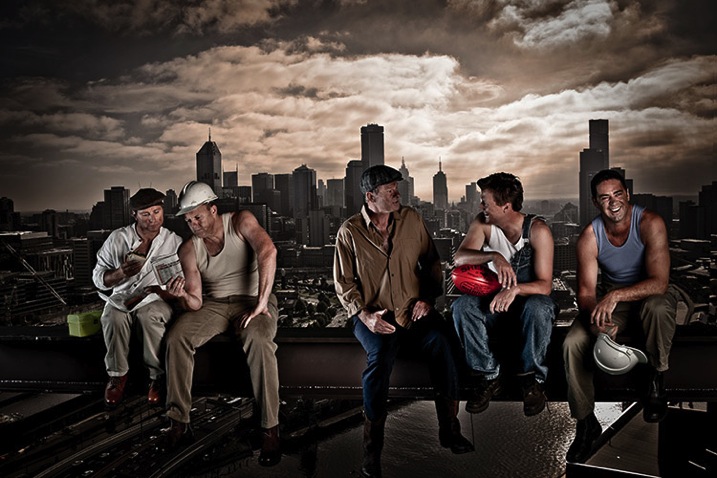
In this image I gave each model one action to repeat over and over, to achieve a natural candid feel. (The Footy Show cast – image courtesy Nine Network Australia)
Getting realistic and natural looking shots can be really tricky. If I set up the shot, and try and direct certain poses and reactions, the shots can look really stiff and contrived. If I try and get people to laugh on cue, it tends to look fake.
I can always leave it to chance in the hope that the people I’m working with do something worth photographing but this isn’t always an option. So what’s the best way to get people to look natural on camera? Here are my five favorite and most successful techniques to help you take more natural looking portraits:
People tend to mirror, and reflect the mood of the photographer, so if you are having a bad day or feeling grumpy, then your models are going to pick up on that vibe. If you want happy and excited looking expressions, then you need to have that vibe yourself. If you are not feeling it before the shoot, for whatever reason (stuff happens right?) then do whatever it takes to put yourself in a good mood. Listen to a funny podcast on the commute in, call a friend who makes you laugh, read funny stuff. Eat half a jar of Nutella (don’t judge me).
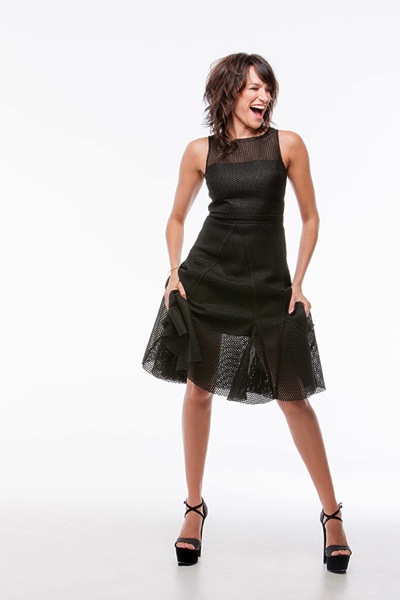
I’m constantly wisecracking through the shoot, and ever ready to capture the expressions as the joke hits. The best way to do this is to set up your models in the position you want them, start with serious poses, and then throw in a funny remark between frames.
You don’t even need to be that funny for this technique to work. You only really need two or three good jokes, or lines, that will crack a group of people up. I’ve been using the same lines for years and they still work. The important part is that you make them your own, and it’s something you would say, or feel comfortable saying.
 |
 |
To get this image of the Dalton family (above) I actually just started laughing with them. Laughing with your models is infectious. I felt a bit embarrassed doing it at the start, but soon discovered it was totally worth the genuine laughs, and reactions I got. (The Dalton Family/Foxtel)
Another great trick to make models laugh is I actually ask my models to laugh, and will start laughing with them. This always starts out really awkward, everyone laughs uncomfortably, and at first they are laughing at me. But, after a while, everyone is laughing with me, and I’m always able to capture some genuine and beautiful laughing shots.
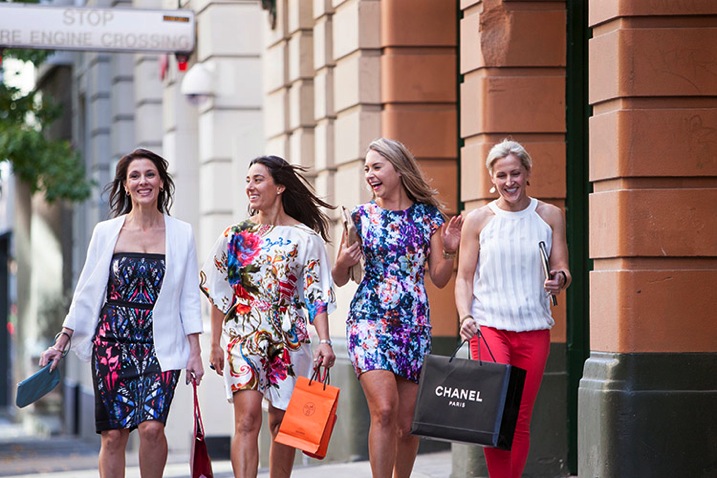
In this image, I gave each of the girls a specific action and eye-line, while they walked toward my camera. The client wanted a fun, positive, natural-looking shot. If this sort of image is left to chance, all the girls end up looking in the same direction, or have the wrong facial expression.
Try and give everyone in the group a set of actions to repeat as you shoot. This makes it easier to control the group, and keep the shape of the shot you are trying to get. I find I have greater success when I give each model only one action to repeat, and a direction to look toward.
An example of the direction I gave for the girls walking above would be:
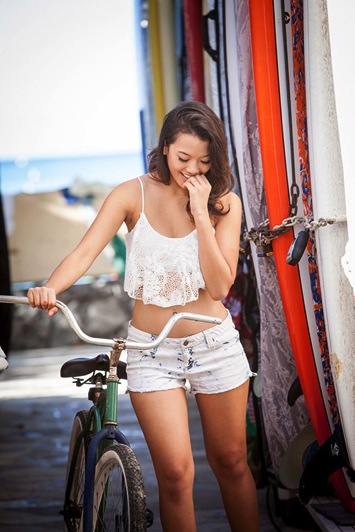
People perceive silence from a photographer as a sign that you are unhappy with what they are doing.
 |
 |
What’s your favorite technique for getting natural looking portraits? Do you have any great tricks we could all try? I’d love to hear about them. Please share any others in the comments below as well as your images of natural looking portraits you’re proud of.
googletag.cmd.push(function() {
tablet_slots.push( googletag.defineSlot( “/1005424/_dPSv4_tab-all-article-bottom_(300×250)”, [300, 250], “pb-ad-78623” ).addService( googletag.pubads() ) ); } );
googletag.cmd.push(function() {
mobile_slots.push( googletag.defineSlot( “/1005424/_dPSv4_mob-all-article-bottom_(300×250)”, [300, 250], “pb-ad-78158” ).addService( googletag.pubads() ) ); } );
The post 5 Tips to Help You Take More Natural Looking Portraits by Gina Milicia appeared first on Digital Photography School.
 |
|||
We took a crash course in barking, then asked our favorite #dogsofinstagram for their secrets to taking the perfect pup pic.
Read through the tips below, peep the “paw”esome photos and enter yourself in our #dogsofinstagram Giveaway.
Don’t have a dog (yet)? Share this post with friends who do, so they’ll post more photos of their furry friend for all to see (and to give them a chance to win big).
(…)
Read the rest of Photo Tips From Our Furry Favorites, the #dogsofinstagram! (722 words)
© Erin for Photojojo, 2015. |
Permalink |
No comment |
Add to
del.icio.us
Post tags:
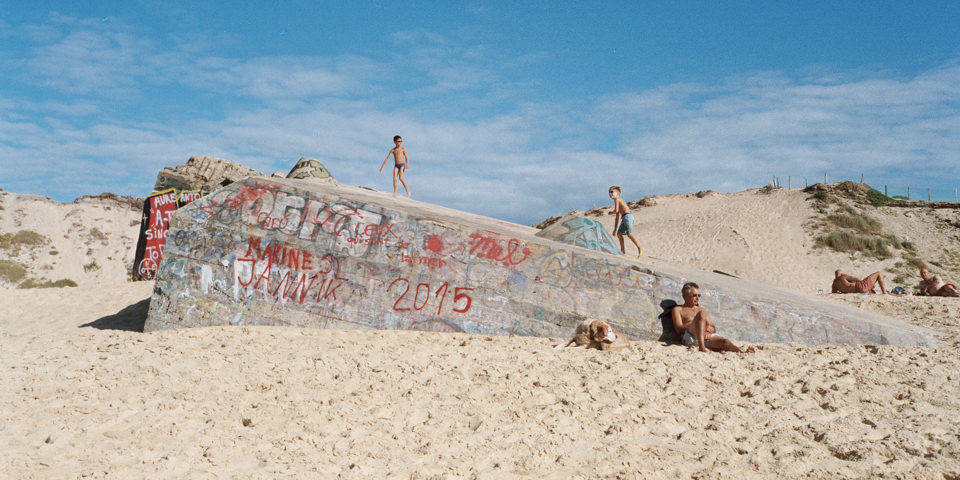
Ein Beitrag von: Philipp Wortmann
Die Serie „Les Blockhaus“ zeigt die Überreste deutscher Bunker an der französischen Atlantikküste. Die Bilder sind am Strand von Capbreton, einer Ortschaft nahe Hossegor entstanden. Wer etwas mit Brettsport anzufangen weiß, der kennt Hossegor als das Surf-Mekka Europas. Der Rest kennt es vielleicht von Straßenschildern auf dem Weg in den beliebten, 20 km weiter südlich gelegenen Ferienort Biarritz.
kwerfeldein – Fotografie Magazin | Fotocommunity
[ By WebUrbanist in Art & Installation & Sound. ]
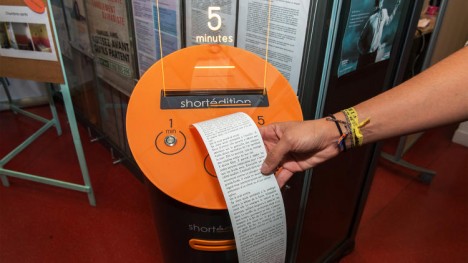
If your mobile device runs out of batteries on the streets of Grenoble, simply find one of these machines, specify a desired duration, and receive a free printed short story to read in a park or on a train.

Deployed by the publishers of Short Édition, these automated kiosks are online 24 hours a day with a selection of 600 short stories, works selected by a community of over 140,000 subscribers. Would-be readers are directed to select the length of story they wish to read, then wait a few moments while the tale is printed.
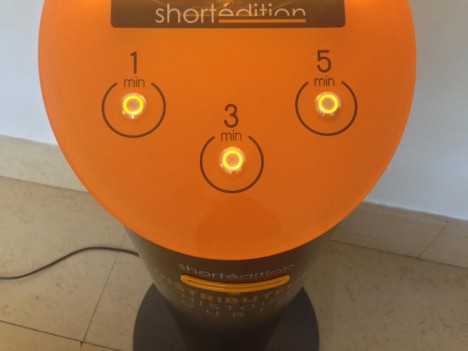
No one is suggesting we stop traveling with our cell phones on hand, but for people who need a break from the screen or desire some alternative entertainment, this provides another option. The project creates not just printed stories but focal points for urban interaction, changing the way we think about and connect with cities and one another.
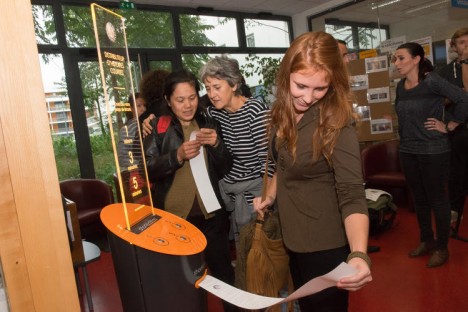
That said, the ‘stories’ component is still a critical component of this civic intervention: “Stories are an important part of our life. We need them to construct who we are as individuals. More and more people don’t take the time anymore to sit and read a book. This is a way to have a little ‘bite’ of a story, just for a couple of minutes.”

Some now-vintage models dispense art or books – other new machines can vend hot food, let you swap for new stuff, or work in reverse, giving you cash for goods.
Click Here to Read More »»

Donated boxes of right-sized clothing can be a boon for those who cannot afford another choice, but this clever approach empowers people in need to choose …
Click Here to Read More »»
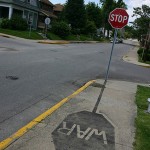
Agree with the war or disagree, this is a powerful image that brings the impacts home to your very own street corner.
Click Here to Read More »»


[ By WebUrbanist in Art & Installation & Sound. ]
[ WebUrbanist | Archives | Galleries | Privacy | TOS ]
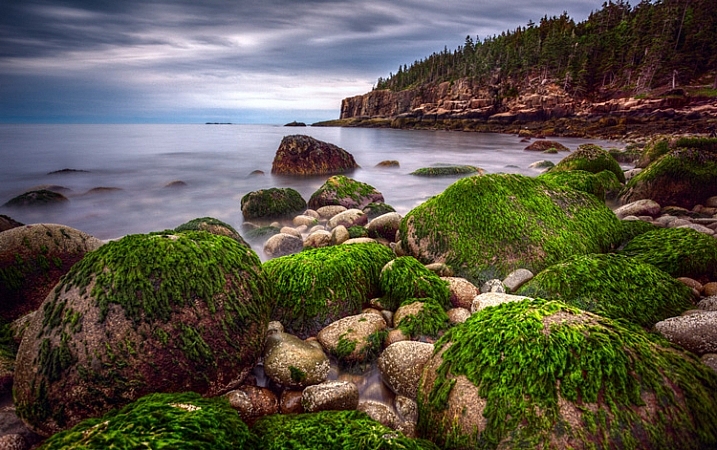
Turning the corner from taking snapshots into taking actual compositions is a hard thing to do. It doesn’t come naturally, and it takes experience. Another reason it is difficult to learn composition is that there is no one, hard and fast rule. You can get caught up in looking for various shapes, patterns, leading lines, and other compositional elements until your head is spinning.
To avoid all of this, I want to share one concrete technique for you to use when you are out shooting landscape photos. It is one way to go about setting up your shot, that will give you a path to setting up a successful composition. Of course, it isn’t the only way to set up your shot, and you won’t use this all the time, but it is great for helping when you are stuck.
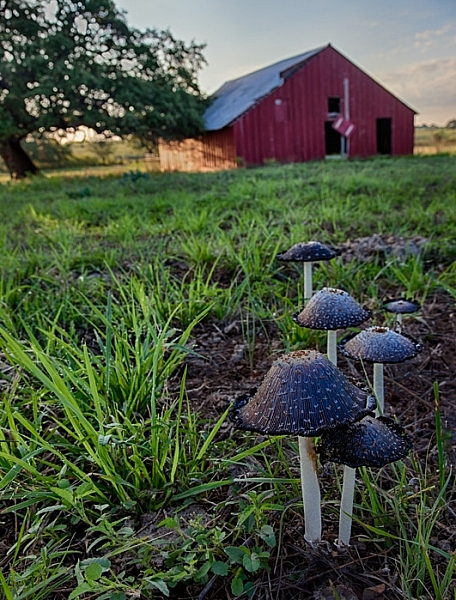
. . . the next time you are out shooting it a scenic location, just put on your widest angle lens and get right behind something on the ground to take the shot.
I mean right behind it. That something on the ground can be anything from a flower, to a rock, to a pattern in the sand. It does not matter. What matters is that you are down on your knees with your wide-angle lens right behind it.
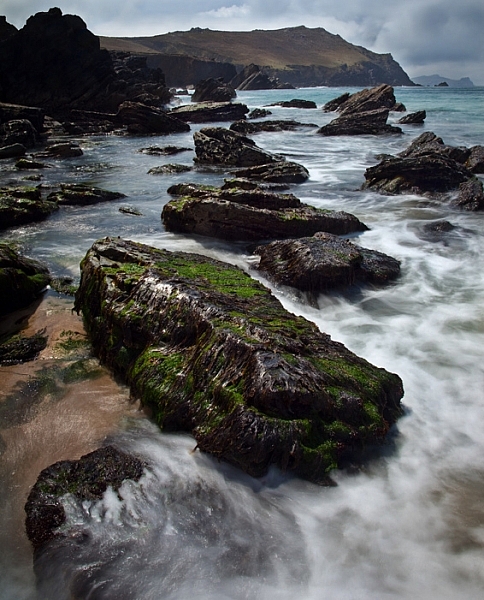
The wide-angle lens will give the foreground object an exaggerated sense of proportion, but will also pick up the background. By getting right behind something, you are adding a subject to your picture. You are creating a center of interest. You are going beyond just showing the general scenery. The background will still be in your picture as well, you just do not need to focus on that.
Another benefit is that it gives the viewer a sense that they can walk into the picture. It is providing a real foreground, that adds depth and interest to your photo.
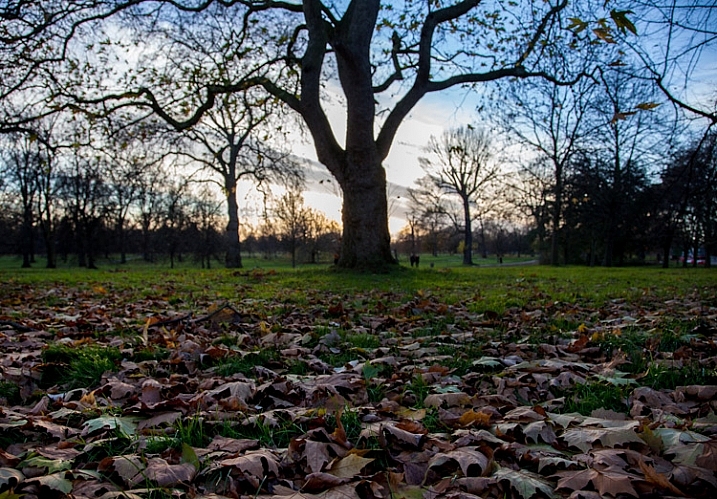
What typifies a snapshot, is standing at eye level trying to capture the entire scene before you. For many of us when we are just starting with photography, that just intuitively seems like the way to take pictures. We want to capture the whole scene, and not have it blocked by something on the ground immediately in front of us. The problem is that there is no foreground, subject, or center of interest to speak of. In addition, you are presenting the world in the exact same way as the viewer is used to seeing it, which is bound to be rather boring to them.
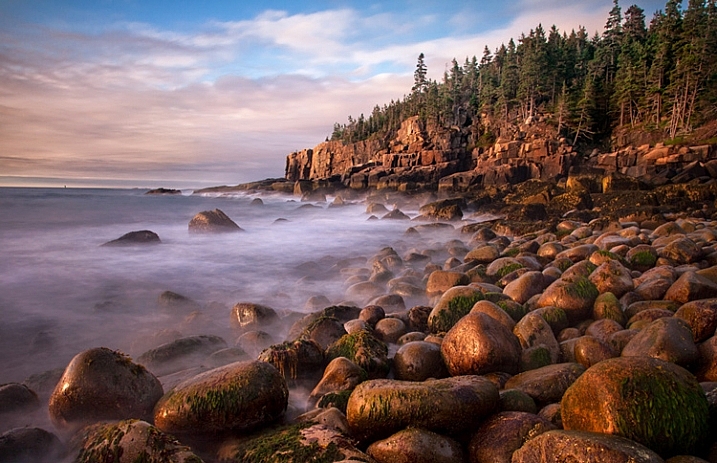
How you determine what items on the ground will work as your foreground elements, that is the hard part. There is no right answer. You will just have to look. In fact, it will not be obvious even when you are out in the field looking around. There are times when you might have to walk around while looking at the LCD in Live View mode, or with the viewfinder to your face to find something on the ground to use as a foreground.
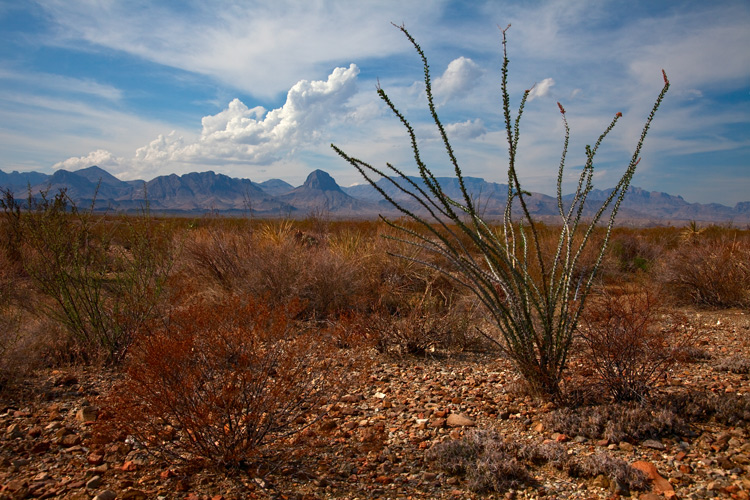
Here are some examples of things you can use as foregrounds in different contexts:
There are obviously a variety of subjects you can use. Go out and try it next time you are shooting, and if you come across a good item to use in the foreground, leave it in the comments and share your images with us.
googletag.cmd.push(function() {
tablet_slots.push( googletag.defineSlot( “/1005424/_dPSv4_tab-all-article-bottom_(300×250)”, [300, 250], “pb-ad-78623” ).addService( googletag.pubads() ) ); } );
googletag.cmd.push(function() {
mobile_slots.push( googletag.defineSlot( “/1005424/_dPSv4_mob-all-article-bottom_(300×250)”, [300, 250], “pb-ad-78158” ).addService( googletag.pubads() ) ); } );
The post One Compositional Technique to Transform Your Landscape Photos by Jim Hamel appeared first on Digital Photography School.
Das Bild des Tages von: Normen Gadiel

Im Ausblick: Ein simples, aber wirkungsvolles Portrait.
kwerfeldein – Fotografie Magazin | Fotocommunity