Blog

  • Puphaus & Meyou: 2 Designer Dog & Cat Houses for Modern Pets

    [ By WebUrbanist in Design & Furniture & Decor. ]

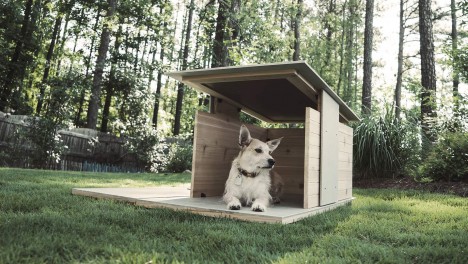
    designer backyard dog home

    Whether your furry friends are canine or feline, this pair of posh pet architecture companies have your Modernist domesticated animal needs (quite literally) covered.

    modernist cat furniture

    And for those domiciles home to both cats and dogs that do not share space, fear not: the Puphaus is made for the outdoor dog and Meyou created for the indoors cat.

    designer dog living

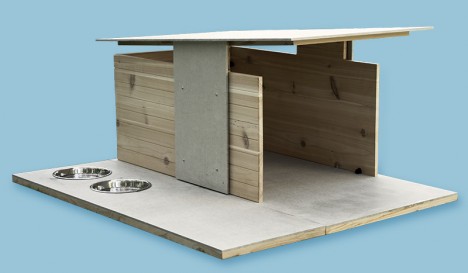
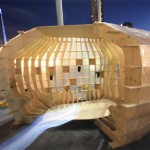
    First, the Puphaus borrows domestic architectural design elements but employs a tools-free approach for easy assembly, creating a backyard home for your pup that could be cooler than your own house.

    designer dog house

    “Sporting backgrounds in graphic and industrial design, dog-loving founders Roy Fleeman and Zach Griggs wanted to design & build something unique for man’s best friend: the Puphaus. Time to ditch the plastic igloos and give our pups some stylish new digs.”

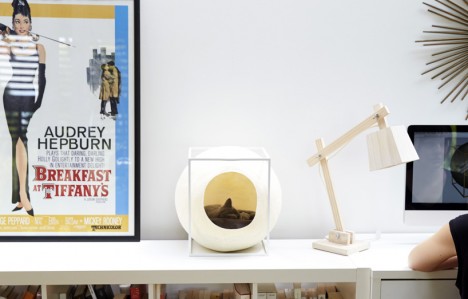
    modernist cat ball

    modernist desktop cat

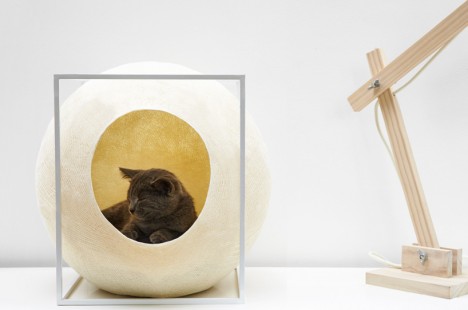
    The Meyou line of cat furniture by Parisian designer Aude Sanchez approaches the problem as a question of interior design, aiming to create habitats that will not just look good next to but also become part of your decorative scheme.

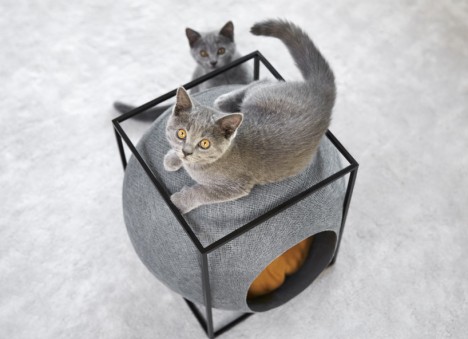
    modernist cat bed

    modernist cat observer

    The resulting cat cocoons are made for curious and playful kitties to use for shelter, napping, hiding or even sharpening their claws.

    modernist kitty stool

    The Ball, The Cocoon and The Bed are variations on the same design approach, each with slightly different layouts and features – they can work individually or as a set for various rooms.

    Share on Facebook


    [ By WebUrbanist in Design & Furniture & Decor. ]

    [ WebUrbanist | Archives | Galleries | Privacy | TOS ]


    WebUrbanist

  • Playable Landscapes: Custom Concrete 3D Puzzles of Cityscapes

    [ By WebUrbanist in Design & Products & Packaging. ]

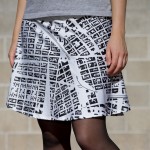
    3d city maps

    Pick any spot in the world and this company can print out a custom mould for a concrete pour, which, when cured, will make a 16- or 32-piece puzzle out of your favorite place.

    3d cityscape

    Using Open Street Map data, Logiplaces has already created a preliminary set of popular places voted up by fans for mass production, including downtown San Francisco and the Grand Canyon.

    Liked a traditional puzzle, the sides of each piece can be matched up to create the whole, but unlike most puzzles, it is the vertical rather than the horizontal shapes that allow for matching. It becomes a matter of figure and ground, connecting building scales and typographies rather than colors and 2D patterns.

    3d puzzles

    At this point, fully-custom selections are cost-prohibitive for consumers, but the goal of the company is to make these accessible to mass markets as well. “When we came up with the idea of LOGIPLACES, we believed it had the potential to go global with loads of different places to cover. However, right now, we would first like to see, what are your favourite places that we can start manufacturing, and of course, we’re interested in what our first consumers think.”

    Share on Facebook


    [ By WebUrbanist in Design & Products & Packaging. ]

    [ WebUrbanist | Archives | Galleries | Privacy | TOS ]


    WebUrbanist

  • Beginner’s Guide to Photographing Festivals

    Photographing-festivals-1

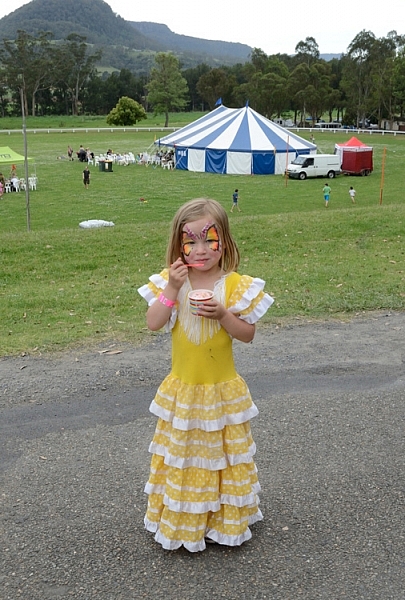
    Festivals are a great place to practice a wide variety of photographic disciplines for any photographer. With plenty of action in one central location, often over a couple of days or more, there’s a chance to try your hand at everything; portraiture, street photography, landscape, night photography, fast action, and more, as well as play with all kinds of lighting and subjects, and the chance to tell a photographic story.
    So much to learn about photography all in one place.

    Festivals are a great place to photograph everything from portraits to panoramas, and pretty much everything in-between.

    There is a festival for just about everything from the massive Burning Man Festival, to small food, wine, music festivals, there’s some bizarre festivals like Tunarama in Australia, where the key event is tuna tossing. Unfortunately I didn’t make it to Tunarama, so for this article I have used images from a small country town folk festival. Regardless of the kind of festival you choose, here are some tips to get you started – a beginner’s guide to photographing festivals.
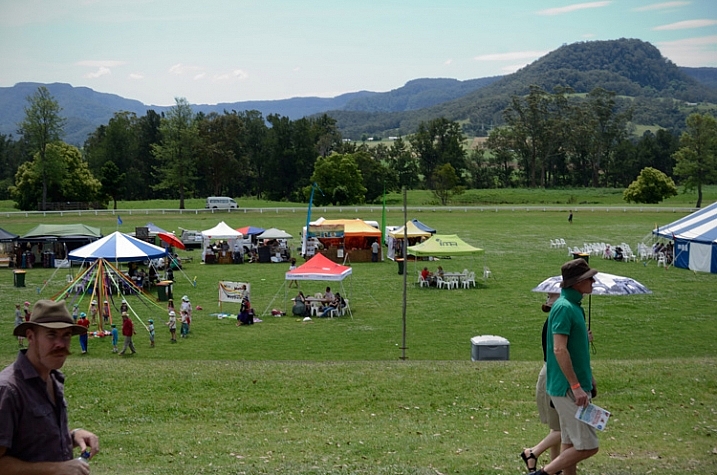
    There's so many different festivals for photographers to practice theirs skills at.

    Look up a local festival and get out there with your camera.

    Camera gear

    If you are a beginner reading this, chances are you have a DSLR with a standard kit lens, so you are good to go. I would highly recommend a zoom, but it’s not necessary, you can still get great images while learning a wide variety of photographic skills. For all these images I used either a standard kit 18-55mm lens, or a small point and shoot camera. If you have other lenses, take them, you’ll most likely have a chance to use them.

    A tripod will also come in handy if you are going to photograph at night. Many festivals have fireworks, or people twirling glow in the dark things, that need long exposures.

    Spare memory cards and batteries are pretty much essential, and a polarizing filter wouldn’t go astray for bright daylight.
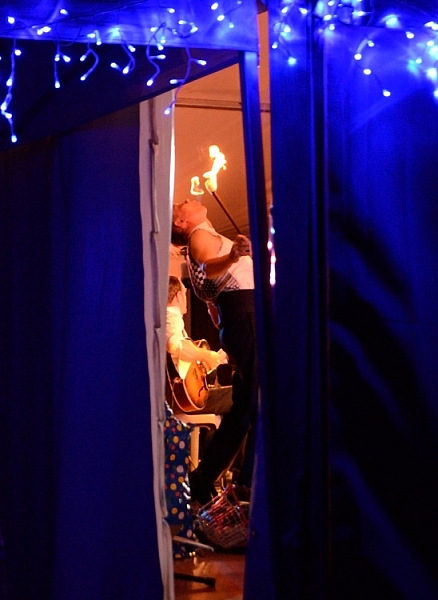
    Photograph your festival with any gear you have, even your phone.

    You really don’t need fancy camera gear to get some interesting images at a festival.

    Camera settings

    If you are a beginner, and not used to rapidly adjusting manual settings on the fly, I would recommend starting with Auto or setting your camera to Program Mode, or pick an appropriate “Scene mode” for night and low light. But also take the opportunity to experiment with manual settings. Read up on low light, street photography, fireworks, etc., before you go. Try to avoid using your flash.

    The bottom line though, in order to have a great time photographing a festival, and getting a few images you are really happy with, you don’t need anything more than your mobile phone – everything else is bonus. If you are using your phone, and I recommend you do so as well as use your camera, try looking up some free extra apps to experiment with.
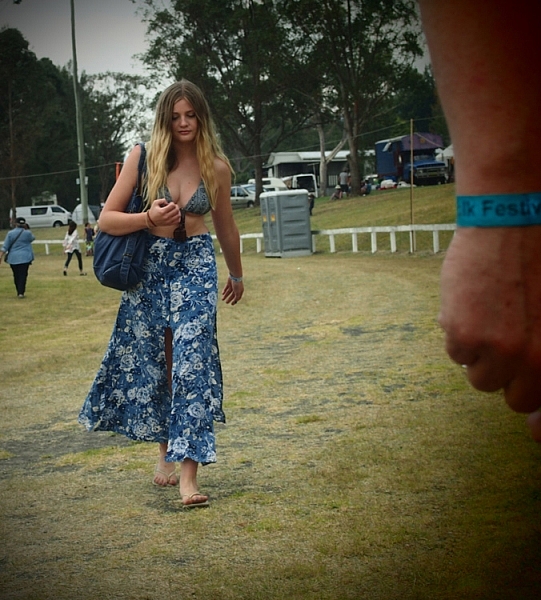
    Any gear will do for photographing a festival, even your mobile phone.

    This image was photographed using a small point and shoot with its auto filters.

    What to photograph

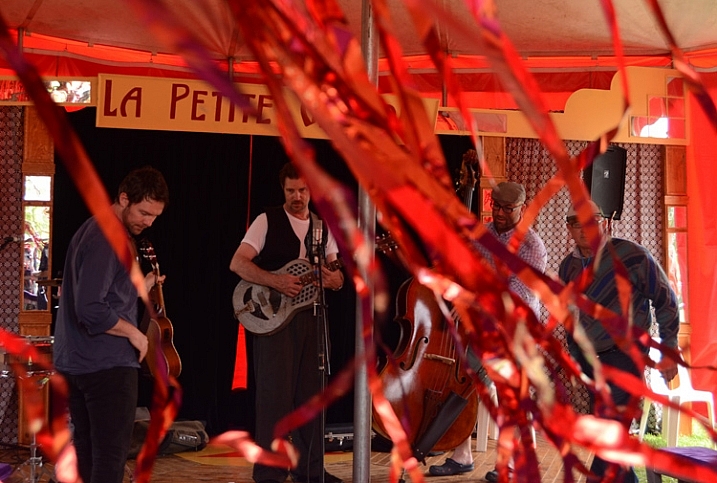
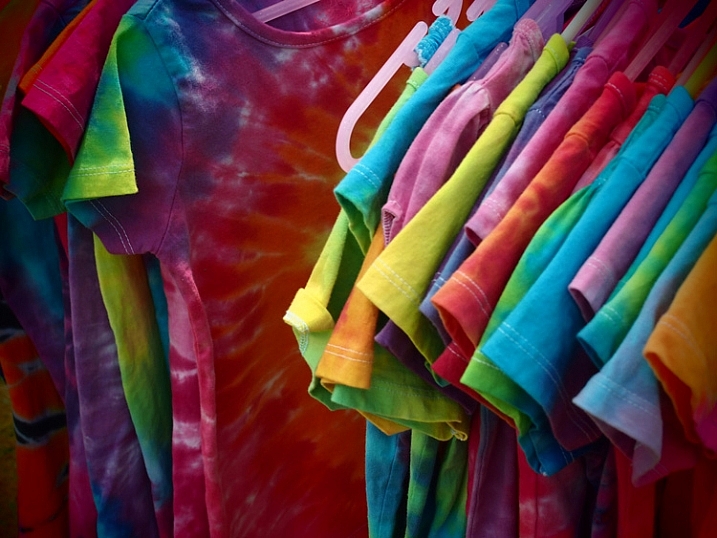
    Photography everything. Shoot non-stop from the setting up, to the live acts, parades, stall holders (vendors), the crowd, surrounding landscape, behind the scenes, people in audiences, details, packing up, and even what was left behind. Sometimes shooting from dawn until evening, in close, panoramic, and everything in-between.
    Photographing-festivals-12

    Photographing-festivals-7

    Photogrpahing-Festivals-19

    Try to tell a story

    You can capture a story in a whole series from a festival, or small series within a series, or within a single photograph.
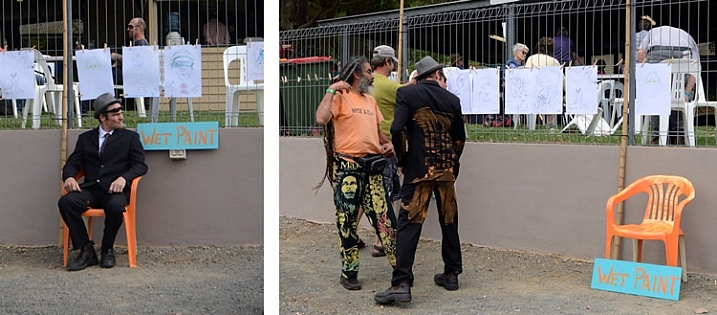
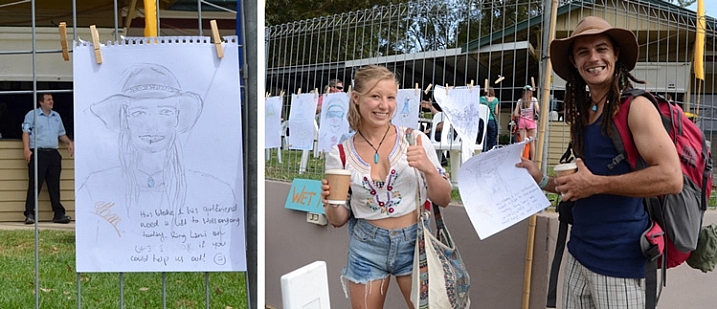
    Photographing-festivals-9b

    Small festival stories can be fun to capture

    These two pegged a drawing on the fence with a request for a lift to the next station. It worked!
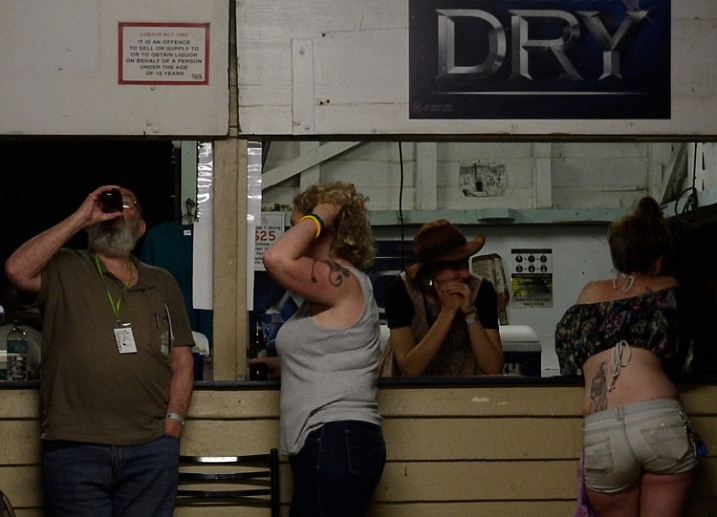
    Festivals are great to try capturing a story in one image or over many.

    Locals hanging out at the festival bar.

    Each festival I have been to, has a different feel. For example, a food and wine festival has a different crowd, and is more relaxed than a rock music festival.

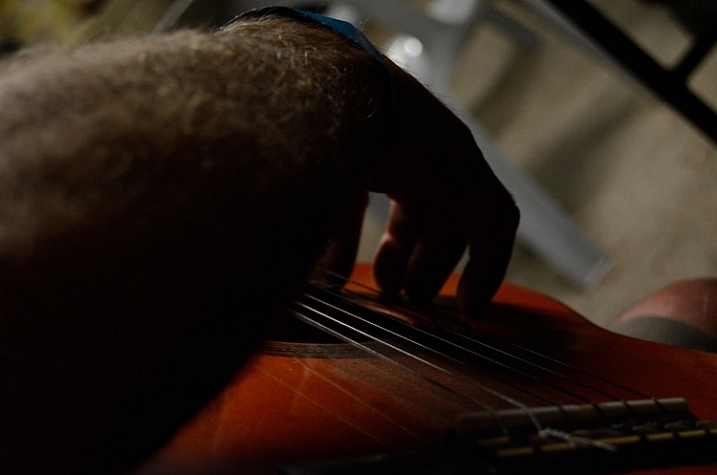
    Capturing small details and panoramas set the scene, give the viewer a sense of place. Then, capturing events, acts, and people give a sense of what is going on there. Capturing audience reactions and small details create a sense of really being there.
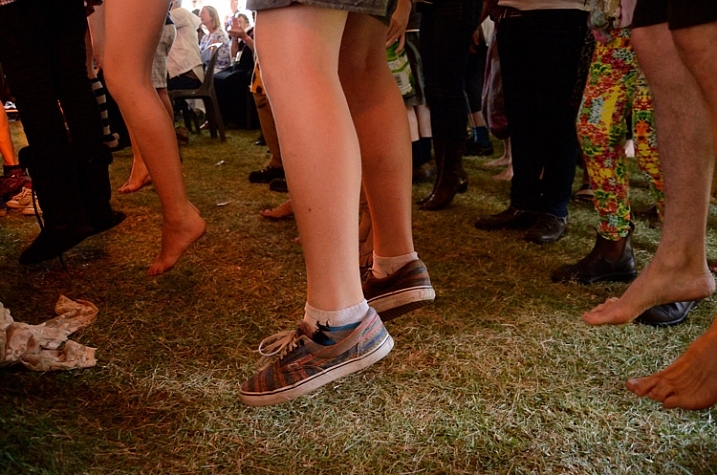
    Photographing-festivals-23

    Photographing-festivals-6

    Photographing-festivals-11

    Getting involved

    Festivals are often annual events. Depending on the event, there may be an opportunity to volunteer. While you may spend most of your time helping out, you could have access to back stage, or other areas behind the scenes. When you have a decent portfolio, you could volunteer as photographer to build up an excellent portfolio to apply as official paid photographer.

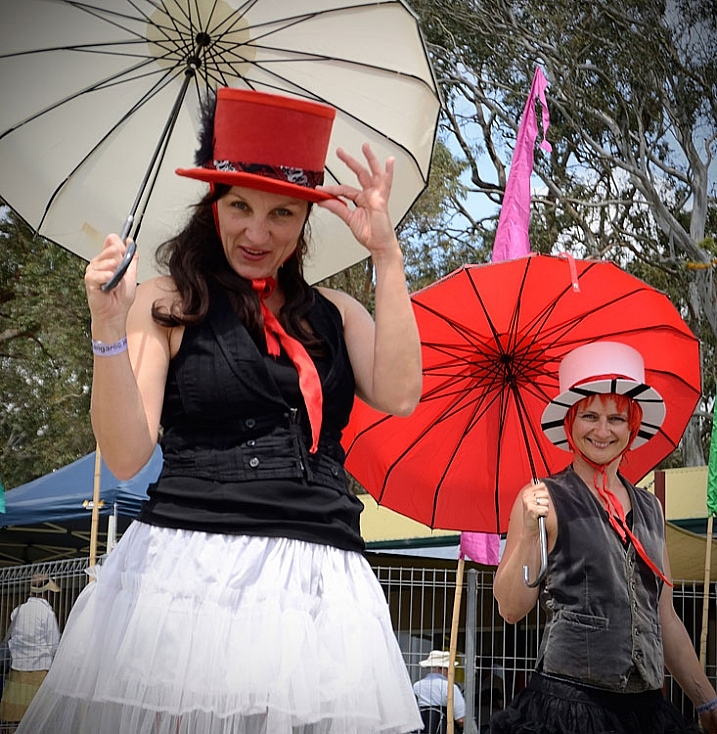
    The last festival I went to, I worked as an assistant to the artist in residence, dressed as a clown. This helped me to capture a lot of smiles, and some not so smiley expressions. Not everyone loves a clown.
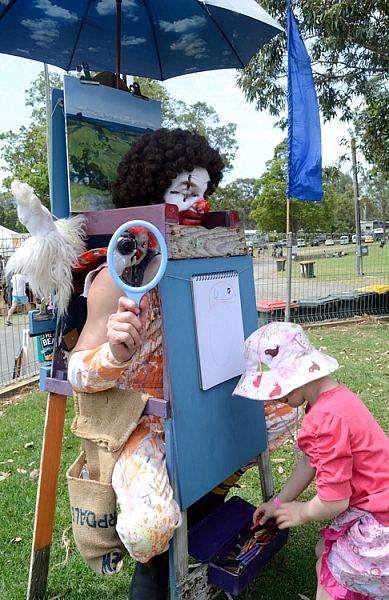
    Get involved in the festival you are photographing.

    Photographing as a clown was a new experience!
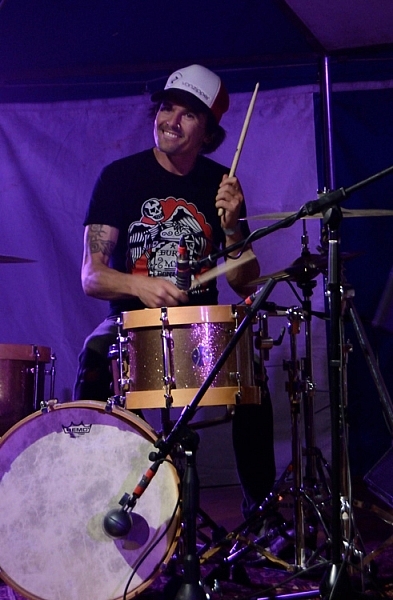
    This guy from the band 19-Twenty just noticed he was being photographed by a clown, and he didn’t miss a beat. I certainly wouldn’t have got that shot had I not been in my rather amusing costume.

    Don’t be afraid to approach people

    People photography is also a great thing to practice at a festival. It can be pretty intimidating approaching strangers, as it is to be approached by a photographer. But most people don’t really mind, and are often flattered.
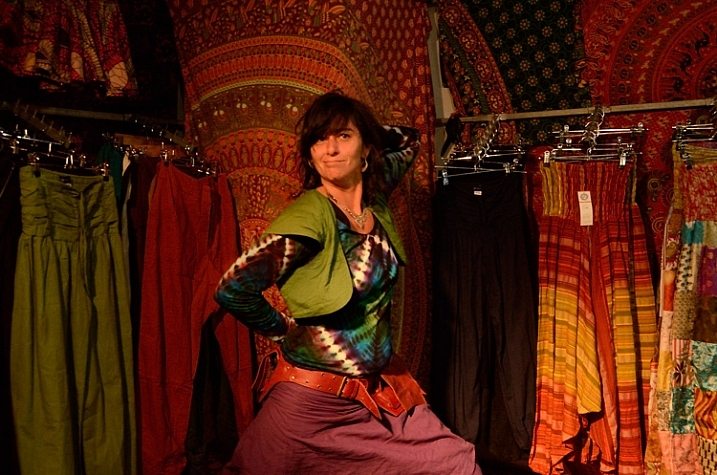
    Don't be afraid to approach strangers, most people are OK about it.

    Most people don’t mind having their photograph taken if you are polite about it. Some, like this lass, love it.

    So just ask, be honest with them, and let them know you are a beginner practicing at the festival. Perhaps even carry some cards or pieces of paper with your name, and a website, where they can see your images.

    If you’re too shy, sometimes a smile and a wave, pointing to your camera and giving them a hopeful questioning look will do the trick. Or you can try a street photography approach, capturing people more candidly, and naturally.
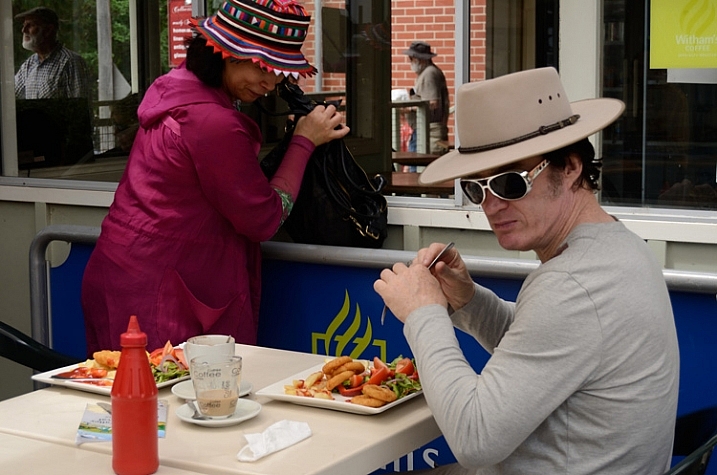
    Photographing-festivals-13

    Thank you Elvis, thank you very much.

    Keep doing the rounds

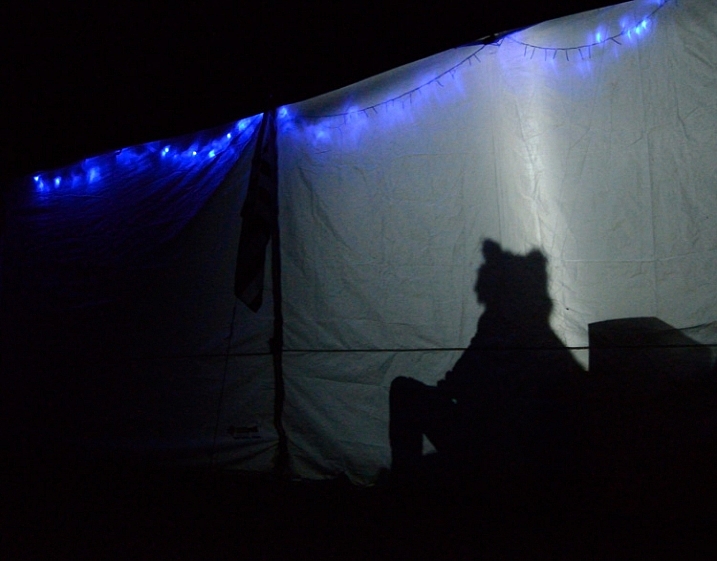
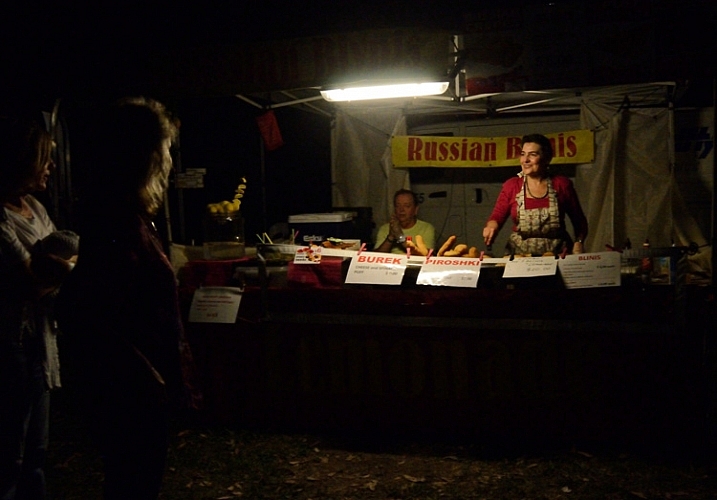
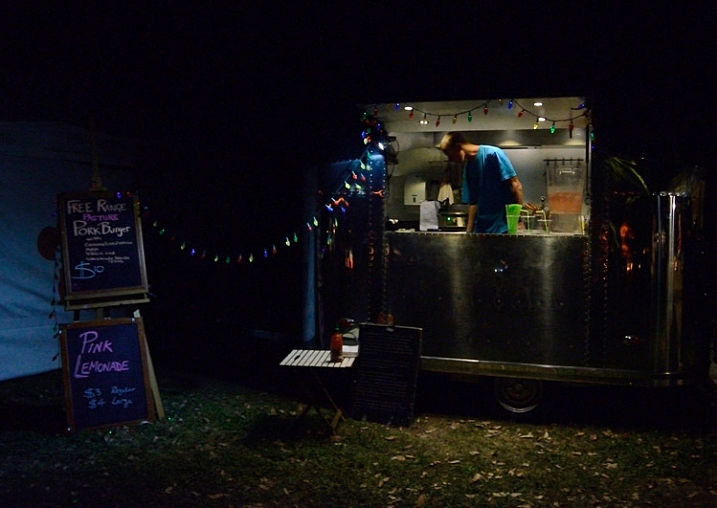
    Walking around the entire the festival over different times of day/night, can provide fresh images of the same spot as the light changes, and different people and characters pass by. A stall that doesn’t look like much during the day, could be lit up beautifully at night. Capturing stall holders when busy and quiet, can provide two entirely different moods.
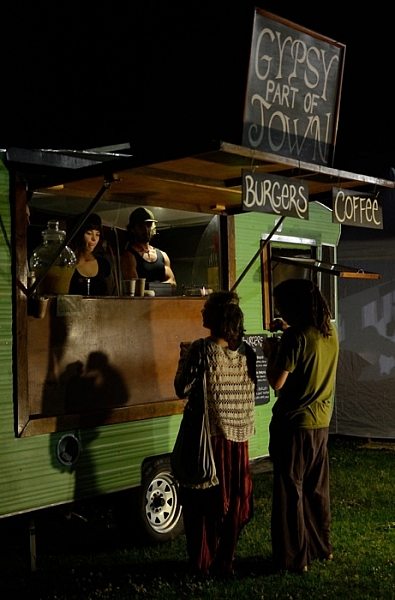
    Photographing-festivals-16

    Photographing-festivals-24

    Photographing-festivals-21

    Don’t get in the way

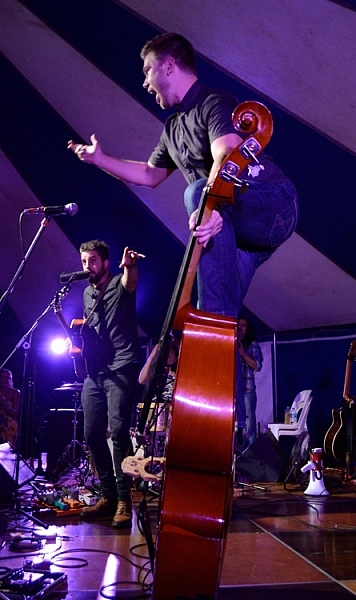
    Try not to annoy the live acts, and audience, by photographing all the way through the entire act, or getting in anyone’s way. A good general rule for band photography is to only photograph for the first three songs.
    Morris dancer with evil eye.

    Keep your eye out for moments, rather than just firing away. Look for different angles and interesting color compositions.
    Photographing-festivals-18

    Photographing-festivals-17

    The best tip I can give you is to have fun. Enjoy the festival, as well as photographing it. So much photographic fodder in one place, often with good food and music as well.

    So get out there, find yourself a fun festival, and start photographing. Please share your festival photographs with us in the comments below. Have you any tips to add for our readers? Any great festivals to recommend?

    googletag.cmd.push(function() {
    tablet_slots.push( googletag.defineSlot( “/1005424/_dPSv4_tab-all-article-bottom_(300×250)”, [300, 250], “pb-ad-78623” ).addService( googletag.pubads() ) ); } );

    googletag.cmd.push(function() {
    mobile_slots.push( googletag.defineSlot( “/1005424/_dPSv4_mob-all-article-bottom_(300×250)”, [300, 250], “pb-ad-78158” ).addService( googletag.pubads() ) ); } );

    The post Beginner’s Guide to Photographing Festivals by Lea Hawkins appeared first on Digital Photography School.


    Digital Photography School
  • Olympus shows gains in first half financials

    Olympus has released its Q2 results for the financial year ending March 2016, showing some positive growth in OM-D and PEN series camera sales in Japan and Europe. Read more

    Articles: Digital Photography Review (dpreview.com)

  • Holdfast Gear’s new Maven Strap is made with bison leather and brass hooks

    Holdfast Gear, a maker of high-end leather camera straps, has launched its new Maven Strap. The thin leather strap is designed for smaller cameras and is made from American Bison leather alongside a cream-colored glove leather lining and brass u-hooks. Read more

    Articles: Digital Photography Review (dpreview.com)

  • 4 Things You Should Know About Focal Length and Composition

    Lenses are the eye of your camera. The focal length of a lens (and your point of view) determine how much of the subject your camera sees.

    You may already be familiar with the basics, and understand the difference between, say, wide-angle and telephoto lenses, but let’s dive into the the topic a little deeper to see what’s really going on.

    focal length and composition

    There are four fundamental things to know and understand about the focal length and composition.

    1. Focal length is not as important as field-of-view

    There are two factors that determine the field-of-view of a lens:

    1. The focal length.
    2. The digital sensor or film size

    Field-of-view (sometimes called angle-of-view) is far more important than focal length, because it tells you how much of the scene the lens sees. However, as field-of-view changes according to sensor size, manufacturers tell us the focal length instead. Focal length is a fixed measurement that doesn’t change (it is literally the distance from the middle of the lens to the focal plane, which is the sensor).

    Here are some practical examples.

    Example #1 – 50mm prime lens

    A 50mm prime lens has a field-of-view of 47 degrees on a full-frame camera. This field-of-view approximates what we see with our own eyes. But what happens when you put the 50mm lens on an APS-C camera (crop factor of 1.6x)? The crop factor of the smaller sensor means that the lens now has a field-of-view of around 30 degrees, making it a short telephoto lens.

    This change in field-of-view means that you have to move further away from your subject in order to fit it in the frame, which also changes the perspective (giving the compressed effect that characterizes short telephoto lenses).

    If you want the equivalent of a 50mm lens on an APS-C camera you need to use a focal length of around 31mm, as it has the same field-of-view (47 degrees).

    A prime lens with that focal length doesn’t exist (you could choose between a 28mm or a 35mm depending on whether you wanted a slightly wider or a tighter field-of-view), but you can set that focal length if you have a zoom.

    focal length and composition

    50mm lens, full-frame camera. The lens has a field-of-view of 47 degrees.

    focal length and composition

    50mm lens, APS-C camera. The same lens has a field of view of 30 degrees with this camera.

    Example #2 – 21mm lens

    The same applies to wide-angle lenses. A 21mm prime lens has a field-of-view of around 92 degrees. That’s a nice wide field-of-view ideal for landscape photography, or creating images with dramatic perspective.

    But put it on an APS-C camera the field of view narrows to around 65 degrees. It’s still a wide-angle, but the effect is much more moderate. It now has nearly the same field-of-view as a 35mm lens does on a full-frame camera

    To get the same field-of-view as the 21mm lens (on a full frame) you would use a 14mm lens (on an APS-C camera).

    focal length and composition

    This photo was taken with a 14mm lens on an APS-C camera. It has the same field-of-view as a 21mm lens does on a full-frame camera.

    Example #3 – 16mm lenses

    It’s even possible to have two lenses with the same focal length, but different fields-of-view (on the same camera).

    A 16mm wide-angle lens has a field-of-view of 107 degrees – but a 16mm fisheye has a field-of-view of 180 degrees.

    They have the same focal length but each one is designed for a different purpose. The 16mm wide-angle is designed to keep straight lines straight. The fisheye doesn’t try to do that, and as a result has a much wider field-of-view.

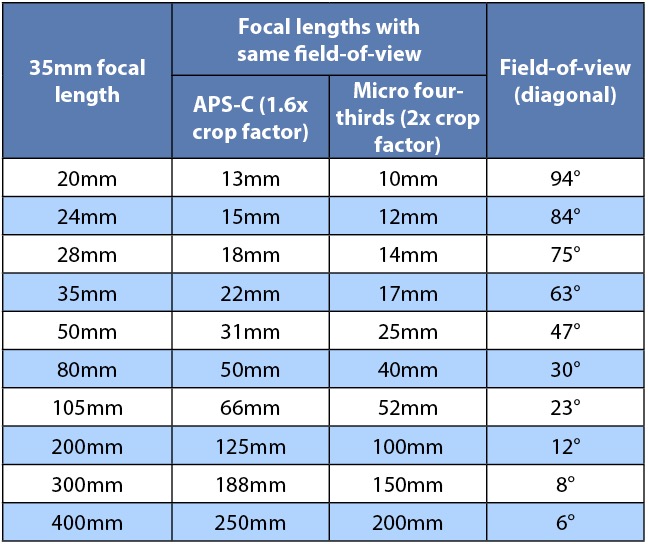
    This table shows the field-of-view of common focal lengths with full-frame, APS-C and micro four-thirds cameras.

    focal length and composition

    The next points explore the relationship between field-of-view and composition.

    2. Wide-angle lenses are lenses of inclusion

    You can think of any lens with a field-of-view wider than around 63 degrees as being a wide-angle. That’s 35mm or shorter on a full-frame camera, 20mm on APS-C, and around 18mm on micro four-thirds.

    Wide-angle lenses have two characteristics that affect composition:

    1. The wide field-of-view means that you have to move in close to your subject to fill the frame. But, at the same time wide-angle lenses also include quite a bit of the background. The shorter the focal length, the closer you need to get, and the more background is included.
    2. Wide-angle lenses also appear to have more depth-of-field at any given aperture setting than longer focal lengths (they actually don’t, it has to do with lens to subject distance which also changes with focal length).

    These two factors combine to make wide-angle lenses, ones of inclusion. You can always fit more into the frame with a wide-angle lens, no matter how close you get to your subject. The background is also more likely to appear more in focus, than it is with longer focal lengths. Getting in close, creates the dramatic perspective that some photographers love. It emphasizes line, and creates a sense of depth, that images taken with longer focal lengths can lack.

    The slightest change in your point of view makes a dramatic difference to the composition of the photo. The shorter the focal length, the more this applies. As wide-angle lenses include so much background it can be difficult to simplify the composition and remove all distractions. There’s no way around it, it’s just a characteristic you have to embrace.

    focal length and composition

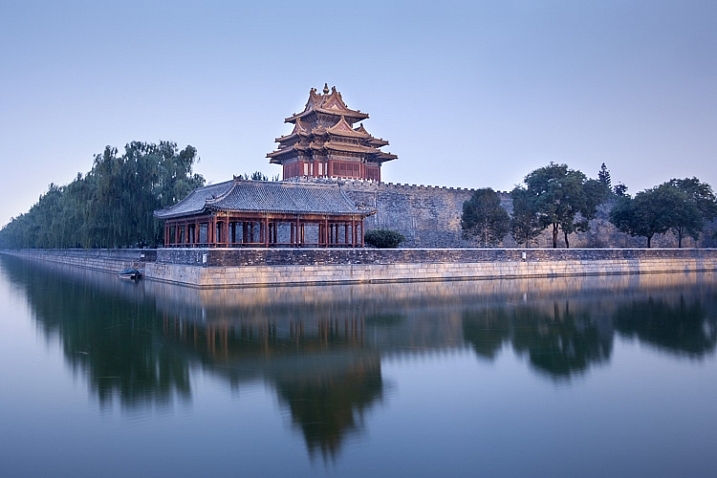
    This photo, taken with an 18mm lens (APS-C), includes the buildings, the city wall, the reflection in the water, the city trees disappearing into the distance, and keeps everything in sharp focus.

    3. Telephoto lenses are lenses of exclusion

    A telephoto lens is one that has a field-of-view of around 30 degrees or less. That’s around 85mm or longer on a full-frame camera, 50mm on an APS-C camera, and 40mm on micro four-thirds.

    Telephoto lenses are ones of exclusion. They have a narrow field-of-view. Fill the frame with your subject, and you won’t get much background in at all. It is also easy to throw the background out of focus by using a wide aperture, and making sure there is sufficient distance between your subject and the background.

    focal length and composition

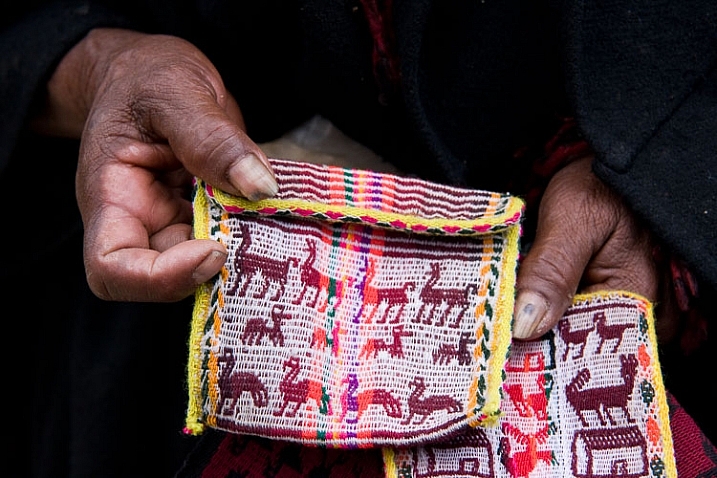
    This photo, taken with a 50-150mm lens set to 72 mm (APS-C), shows the woman’s hands and the textiles she is selling. There is not much in the background at all.

    4. Normal lenses occupy the middle ground

    Normal lenses, those with a field-of-view somewhere around 55 degrees, occupy the middle ground between wide-angle and telephoto. They don’t create images with the dramatic perspective that you can obtain with a wide-angle, nor do they exclude the background to the same extent as telephotos.

    If you have a normal prime lens you can open the aperture up to defocus the background, sometimes quite dramatically if you get close enough to the subject. But, you can also often stop down enough to get everything within the frame in focus.

    focal length and composition

    I took this photo with a 35mm lens, a normal lens on an APS-C camera. It lacks the dramatic perspective, and wide field-of-view of the photos taken with wide-angle lenses. But it includes more of the background and shows less compression than the photos taken with telephoto lenses.

    Your turn

    Can you think of anything else that photographers ought to know about focal length, field-of-view, and composition? If so, please let us know in the comments. I’d like to hear your thoughts.

    Note: this is the second in a series of articles on dPS this week talking about composition. See: Using Framing for More Effective Compositions and look for more over the next few days.


    Mastering Composition ebookMastering Composition

    My new ebook Mastering Composition will help you learn to see and compose photos better. It takes you on a journey beyond the rule of thirds, exploring the principles of composition you need to understand in order to make beautiful imag

    googletag.cmd.push(function() {
    tablet_slots.push( googletag.defineSlot( “/1005424/_dPSv4_tab-all-article-bottom_(300×250)”, [300, 250], “pb-ad-78623” ).addService( googletag.pubads() ) ); } );

    googletag.cmd.push(function() {
    mobile_slots.push( googletag.defineSlot( “/1005424/_dPSv4_mob-all-article-bottom_(300×250)”, [300, 250], “pb-ad-78158” ).addService( googletag.pubads() ) ); } );

    The post 4 Things You Should Know About Focal Length and Composition by Andrew S. Gibson appeared first on Digital Photography School.


    Digital Photography School

  • 12. November 2015

    Das Bild des Tages von: Obscure-Artwork

    © obscure artwork

    Im Ausblick: GoPro und Polaroid vor Gericht, ein Grashalm zuviel und wo ist Walter?
    kwerfeldein – Fotografie Magazin | Fotocommunity

  • Warum wir 2015 keinen Adventskalender haben

    © Chris Hieronimus

    Wer schon eine Weile bei uns liest, wird sich sicherlich schon auf den Dezember freuen. Seit 2011 haben wir für Euch jedes Jahr einen Adventskalender organisiert, bei dem es jeden Tag bis zum 24. Dezember Produkte zu gewinnen gab, die von verschiedenen Firmen und Künstlern gesponsert wurden.
    kwerfeldein – Fotografie Magazin | Fotocommunity

  • Schottland: Entrückte Welt

    ©  Alexander May

    Ein Beitrag von: Alexander May

    Nachdem ich mit Anja die Einzigartigkeit dieses Landes schon letztes Jahr, wenn auch nur für einen kurzen Moment, erfahren durfte, war die Zeit zurück in Berlin furchtbar eintönig und geprägt von Sehnsucht und Fernweh. So konnten wir gar nicht anders und buchten vier Wochen nach unserer Schottlandreise erneut einen Flug, Hütte und Auto für September 2015.
    kwerfeldein – Fotografie Magazin | Fotocommunity

  • Ricoh introduces designed-for-digital HD Pentax-D FA645 35mm F3.5 prime

    Ricoh has announced a new wide-angle prime for its Pentax 645D/645Z medium format digital bodies. This lens’ name is a mouthful: HD PENTAX-D FA645 35mm F3.5 AL [IF]. The top-line specs are that it acts as a 27.5mm (in 35mm terms) on a digital 645 body, has a minimum focus distance of 0.3m, giving a maximum magnification ratio of 0.25x. Read more

    Articles: Digital Photography Review (dpreview.com)