Blog

  • Your Next Purchases After You Get a New Camera

    Buying camera gear can be a daunting task, especially if you’re just starting out with photography basics. If you recently got your hands on a new camera, chances are you’ll need a few extra accessories before you’re ready to start shooting like a pro. So, before you start snapping away, go through this checklist and make sure you consider adding a few extra accessories to your photography kit, before taking it out for a spin. As a heads up, this article is written assuming you have a new digital (not film) camera.
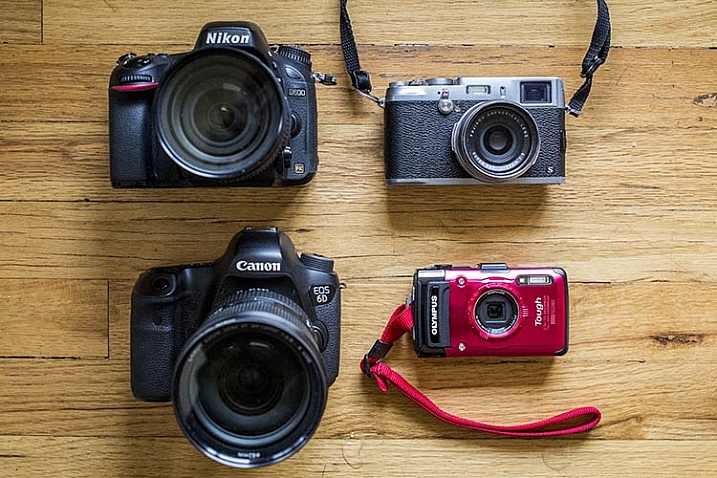
    new camera accessories

    The two cameras on the right are interchangeable lens cameras; the two on the right are not.

    1. Extra Lenses

    The very first thing you’ll want to do is take a close look at your camera and determine whether or not it is an interchangeable lens camera. If your camera can change lenses, it is considered one, and you will definitely want to think about adding a lens or two to your kit. However, if your camera’s lens cannot be removed, skip this section and move on.

    When evaluating which camera lenses to get first, it’s generally not a bad idea to start out with the kit lens that is usually sold with a new interchangeable lens camera (SLR or Mirrorless). These kit lenses are considered starters, and they are inexpensively priced and versatile. Most kit lenses are zooms, meaning you can take a close-up, or wide-angle shot, by simply twisting the zoom ring on the lens.
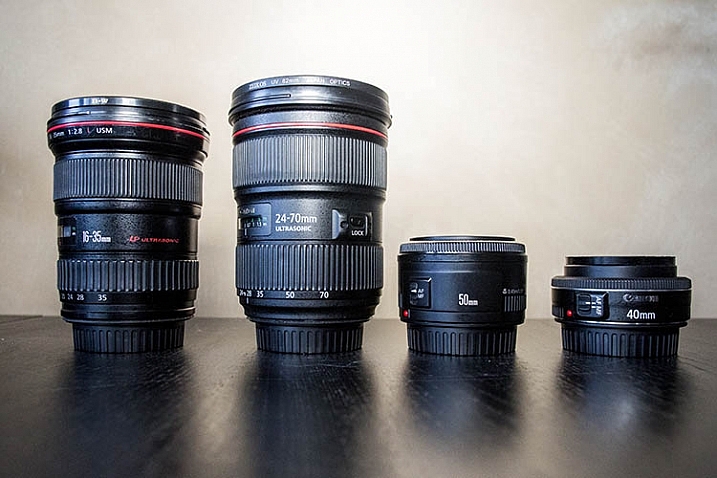
    new camera accessories

    The two lenses on the left are zooms; the two lenses on the right are primes.

    Another lens alternative, that most beginning photographers don’t usually know about off the bat, are prime lenses. They only have one focal length, meaning you have to physically move yourself to zoom in, or out, of a photo. The benefits of shooting with prime lenses are numerous including:

    • Quality: Most primes are slightly higher quality, and have crisper images than those taken with zoom lenses.
    • Size: Prime lenses are smaller, more compact, and weigh less than zooms.
    • Price: Prime lenses are usually pretty reasonably priced, compared to zooms of the same quality (maximum aperture).

    If you’re considering purchasing a prime lens to accompany your kit lens, start out with a 35mm or 50mm lens. In terms of composition, 35mm (on an APS-C or cropped sensor) is the closest focal composition of the human eye, meaning it will allow you to capture more or less the same amount of a scene that your eye sees. The only downside to 35mm lenses is that they tend to be a bit bulky and expensive, which is why the 50mm is often a preferred alternative at a fraction of the size and price.

    As a beginner shopping for prime lenses, ignore the different f-stops (i.e. f/1.4, f/1.8, f/2) specified for each lens and simply purchase the cheapest prime lens that fits your budget. Lenses hold their values well over time, so you can always sell it later when you’re ready to upgrade.

    2. Memory Cards

    Before you can shoot anything with your new camera, you need memory cards to store all of your photos on your camera. There are a number of different memory cards available, with the most common being the SD (Secure Digital card) and the CF card (Compact Flash card). Be sure to check your camera’s manual, and make sure you buy the right type of memory card. As a beginner, start out with 16GB or 32GB memory cards, and have at least two on you just in case. Also, keep an eye out for sales on memory cards, and stock up when prices are low. You can never have too many!
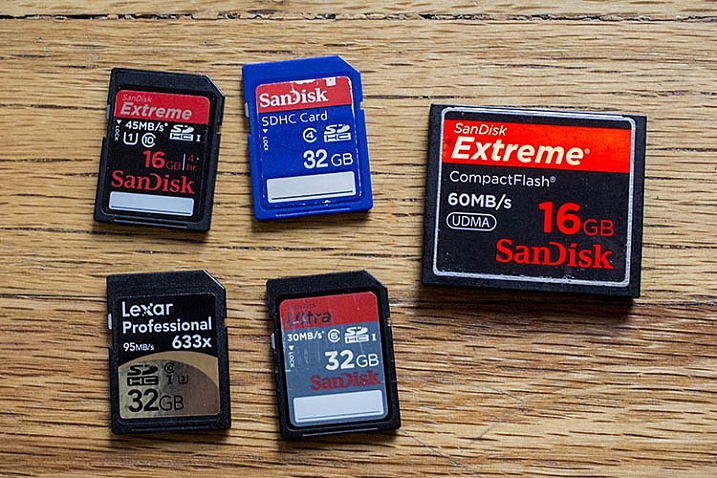
    new camera accessories

    SD memory cards are on the left. The large card on the right is a CF (compact flash) card.

    3. Memory Card Case and Reader

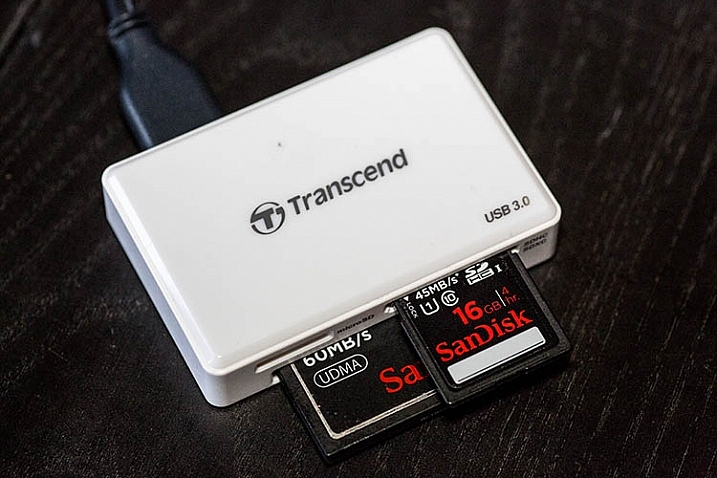
    After you purchase memory cards, consider also adding a case or wallet, dedicated to storing and organizing your extra memory cards, as well as a card reader to transfer images from your camera to your computer. Many laptops have built-in memory card readers, but these will generally only accept SD cards. Also, I’ve destroyed many of a memory card by incorrectly inserting SD cards into my laptop, so I always use a card reader. They’re inexpensive, compact, and can even transfer over several memory cards at a time.
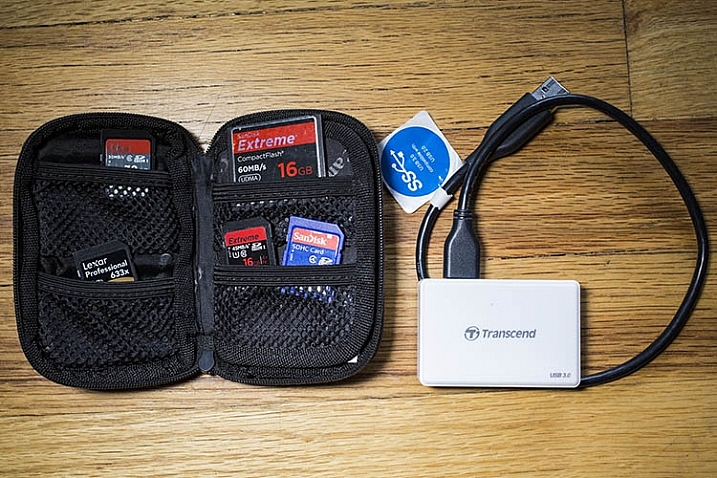
    new camera accessories

    new camera accessories

    A memory card reader in action.

    4. Ergonomic Camera Strap

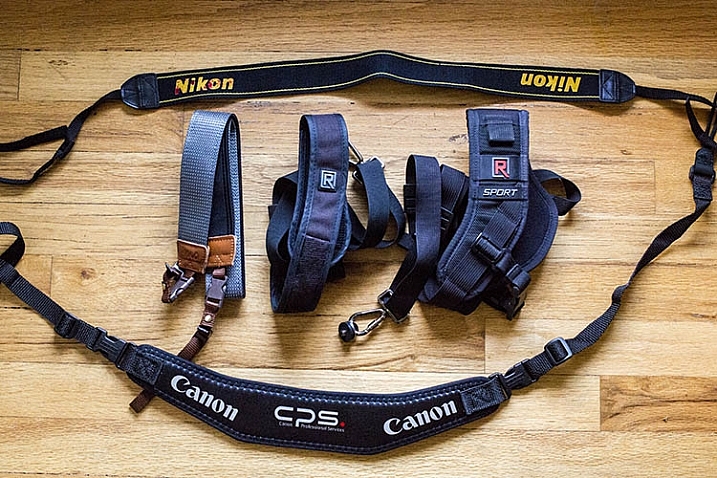
    While every brand new camera will come with its own default camera strap, there is also a variety of others available that can help you carry your camera in a flexible, stylish manner. One of the most popular alternative straps is the camera sling, which rests comfortably on your shoulder and keeps your camera hanging closer to your hip, rather than dangling around your neck in front of your chest. There are also rugged, sturdy camera wrist straps if you prefer keeping your camera at arm’s length.
    new camera accessories

    5. Adobe Creative Cloud Lightroom subscription

    Just like all of the items previously mentioned in this article, there’s certainly no shortage of photo editing software choices. But if you’re just starting out, you may as well start with the industry standard for photo editing: Adobe Lightroom.

    Considerably more user-friendly than Photoshop, Lightroom doesn’t let you do a ton of photo manipulations like putting your dog’s head on your cat’s body, but it does give you a plethora of tools to process your images. While Lightroom used to cost an arm and a leg, the new Creative Cloud subscription gives you unlimited access to the latest and greatest version, for a low monthly fee. Lightroom is used by pros and hobbyists alike, so if you plan to get serious about photography, take the time to learn how to edit photos in Lightroom.

    Over to you

    There are certainly plenty more recommended accessories for beginning photographers. You can see a list of the favorite photography gadgets of our dPS writers here.

    Would you add any others to the list? Let me know in the comments below.

    googletag.cmd.push(function() {
    tablet_slots.push( googletag.defineSlot( “/1005424/_dPSv4_tab-all-article-bottom_(300×250)”, [300, 250], “pb-ad-78623” ).addService( googletag.pubads() ) ); } );

    googletag.cmd.push(function() {
    mobile_slots.push( googletag.defineSlot( “/1005424/_dPSv4_mob-all-article-bottom_(300×250)”, [300, 250], “pb-ad-78158” ).addService( googletag.pubads() ) ); } );

    The post Your Next Purchases After You Get a New Camera by Suzi Pratt appeared first on Digital Photography School.


    Digital Photography School

  • New Year! New Followers! How to Make More Instagram Pals

    The empty champagne bottle says it all: 2016 has arrived!

    Begin the year by sharing your stellar shots with a wider audience on your fave photo sharing app.

    We’re talking, of course, about Instagram! We’ve got tips for making friends and finding new followers ’cause your awesome IG pics deserve to be seen.

    Go forth and have a picture-perfect start to 2016!

    (…)
    Read the rest of New Year! New Followers! How to Make More
    Instagram Pals (474 words)


    © Taylor for Photojojo, 2016. |
    Permalink |
    No comment |
    Add to
    Instagram Pals”>del.icio.us

    Post tags:


    Photojojo

  • CES Video: Nikon’s Mark Soares talks about the D5 and D500

    Today at CES Nikon announced two new DSLR cameras: the pro-oriented D5 and the enthusiast-oriented D500, which is possibly the longest-awaited successor to any camera we can remember, replacing the D300S after almost six years.

    Just after the announcement we slipped away from the CES crowds with Nikon’s DSLR product manager, Mark Soares, to get his take on the new bodies, a rundown of some major features, and insight into why Nikon chose to break the number sequence by skipping ‘400’ and calling the new DX flagship the D500 instead.

    Articles: Digital Photography Review (dpreview.com)

  • Eyes on the Skies: Ambarella brings fast 4K to drones with H2 and H12 processors

    Processor maker Ambarella has announced its two newest and most powerful chips. The H2 and H12 are 4K (UHD) capable processors, with the more powerful H2 able to compress 10-bit 4K/60p video using H.265 HEVC compression or 4K/120p with the less efficient H.264 AVC system. The company says it’s the drone market that’s now pushing the capabilities it needs to offer – way beyond what compact cameras tend to need.

    With the drone market in mind, the H2 also includes a 1.2Ghz quad core processor that allows it to handle the data required to keep a drone in the air. It can also output a low-delay Full HD video stream at the same time as compressing a 4K stream, allowing a near-immediate high res view to be sent to a remote operator.

    What we found interesting is not just that applications such as drones are so demanding (that makes sense), but that the expectations of the drone and sports camera markets are so far beyond what is being offered in the still camera market. One big difference between the two markets is that, with the continued decline of small-sensor compacts, most of the sensors used in stills photography are much larger than those used in action cams or drones, which makes heat management and data readout more challenging. Even with this difference, it’s interesting to know that 60p and 120p 4K processing is already ready for consumer devices.

    Ambarella vice president of marketing and business development Chris Day says that sales of processors for drone/flying cameras now makes up 10% of the company’s revenues, highlighting how fast-moving the sector is. ‘These things need Ultra HD video, high frame rates, great imaging, electronic stabilization and lots of CPU power. And, of course, this all needs to be with low power consumption: it’s pretty demanding but it’s a great fit for us.’ he says. Asked about the impact these technologies are likely to have on the conventional stills camera market, he points out the narrowing of boundaries between sectors: ‘companies such as DJI are starting to make their own cameras, rather than mounting conventional Sony or Micro Four Thirds cameras on there.’

    With fast, high quality, high bit-depth video likely to become more common on action cameras and flying cameras, it’ll be interesting to see how many of these capabilities start to appear on more conventional cameras in the coming months and years.


    Press Release:

    Ambarella Introduces Low Power 4K Ultra HD SoCs for Sports and Flying Cameras

    SANTA CLARA, Calif.–(UNDER EMBARGO – until Jan. 6, 2016 at 8:00 AM Eastern)–Ambarella, Inc. (NASDAQ: AMBA), a leading developer of low-power, HD and Ultra HD video processing semiconductors, today introduced the H2 and H12 camera System-on-Chips (SoCs) for a new generation of sports and flying cameras. H2 targets high-end camera models with 4K Ultra HD H.265/HEVC video at 60 frames per second and 4K AVC video at 120 frames per second. These high frame rates deliver smooth video during fast action shots and slow motion playback. H2 also includes 10-bit High Dynamic Range (HDR) video processing to handle high contrast scenes and supports DSLR quality photography. H12 targets mainstream cameras and offers 4K Ultra HD HEVC video at 30 frames per second. Both SoCs have extremely low power consumption allowing for the design of small form factor cameras, and feature advanced 3D electronic image stabilization, potentially eliminating the need for mechanical gimbals.

    “With the introduction of H2 and H12 we now provide a complete portfolio of 4K Ultra HD HEVC solutions for sports and flying cameras,” said Fermi Wang, President and CEO of Ambarella. “H2, our first 14nm chip, delivers 4Kp60 Ultra HD HEVC video with 10-bit HDR processing, as supported by the latest generation of 4K HDR televisions. H12 delivers 4Kp30 Ultra HD HEVC video for outstanding video quality at mainstream camera price points.”

    H2 features a new generation image processing pipeline which includes 10-bit HDR video processing and excellent imaging, even in challenging low-light conditions. The integration of a 1.2 GHz quad-core ARM® Cortex®-A53 CPU with floating point and NEONTM provides significant processing power for customer applications including flying camera flight control, video analytics and wireless networking. Its hardware de-warp engine supports wide-angle panoramic camera designs, while USB 3.0 connectivity provides fast upload of high resolution video. H2 supports live streaming of a second, low-delay, Full HD video stream for wireless monitoring and camera control.

    H12 supports both 4Kp30 Ultra HD HEVC and AVC video encoding. It integrates a 1GHz single-core ARM® Cortex®-A9 CPU with floating point and NEONTM to provide the processing power required for customer applications including flying camera flight control and wireless networking. Its de-warp capability allows the use of wide-angle lenses with minimal image distortion. H12 also supports the live video streaming of a second, low-delay Full HD video stream.

    Ambarella will demonstrate both H2 and H12 at a private event during the Consumer Electronics Show in Las Vegas, January 6 – 9, 2016.

    Pricing and Availability

    For pricing and availability please contact Ambarella at www.ambarella.com/about/contact/inquiries
    The URL for this news release is: www.ambarella.com/about/news-events.html
    The URL for the related image is: www.ambarella.com/about/news-events/press-images/H2-H12-press-images.html

    Articles: Digital Photography Review (dpreview.com)

  • Twitter QA: The Magic Lamp

    I get Twitter upstreams pretty often, and enjoy seeing photos from Strobist readers and answering questions when possible. I don't do full-blown critiques or portfolio reviews because of time restraints and an utter lack of any qualification to judge other photographers on my part. But a pic and a Q? Sure, I'm down for that.

    Reader Mans Duffani, from Benghazi, Libya tweeted the above photo—a beautiful portrait—to me. It's a great example of a strong photo that could have been made even better if Mans had taken a moment while shooting to consider the image from front to back. Read more »
    Strobist

  • Bike Autobahn: Germany’s 60-Mile Highway for Cyclists Only

    [ By Steph in Destinations & Sights & Travel. ]

    germany bike highway 1

    Germany is already home to the world’s best-known superhighway, the Autobahn, and now cyclists have 60 miles of breathtaking scenery reclaimed from disused railroad tracks all to themselves. Informally dubbed the ‘Bicycle Autobahn,’ the highway is currently under construction, with five kilometers freshly opened for public usage. Ultimately, it’ll connect 10 Western cities including Duisburg, Bochum and Hamm, as well as four universities.

    germany bicycle highway 2

    Up to 10 percent of Germany’s commuting is already done via bike, but until now, there hasn’t been an easy way for cyclists to get from one city to the next. Many of Germany’s biggest cities have bike paths on the roads, but they tend to be narrow, and don’t generally connect into longer routes. When cyclists want to ride around without worrying about cars, they have to go to parks like Münster’s popular Promenade or Munich’s Englischer Garten (pictured above and below.)

    germany bike highway 5

    Locally accessible to nearly two million people, this new protected roadway is closed to motor vehicles, making it a safe and pleasant ride for the entire stretch. Development group RVR, which funded the highway with assistance from the European Union and the state of North Rhine-Westphalia, estimates that the bike highway could take 50,000 cars off the road every day. RVR is currently working on getting the federal government to fund the rest of the route, instead of leaving the project languishing in the underfunded hands of regional governments.

    germany bike highway 3

    The city of Frankfurt is planning its own 18-mile bike roadway to Darmstadt, and Munich is extending its to a 9-mile stretch making the city easy to access from the northern suburbs. London has also declared its intention to convert its abandoned subway tunnels into a highway for cyclists and pedestrians.

    Photos via: Darren Johnson, Marcio Cabral de Moura, Anne Guegan, ptwo

    Share on Facebook


    [ By Steph in Destinations & Sights & Travel. ]

    [ WebUrbanist | Archives | Galleries | Privacy | TOS ]


    WebUrbanist

  • Samsung launches Galaxy TabPro S Windows tablet

    Samsung has launched a new convertible tablet at CES which appears to be squarely aimed at Microsoft’s Surface Pro model. Like the Surface Pro, the Galaxy TabPro S runs Microsoft’s Windows 10 operating system and can be used with a keyboard cover that attaches via a pin connector. While on the Microsoft device the keyboard cover is an optional accessory, with the TabPro S it is included in the package. Read more

    Articles: Digital Photography Review (dpreview.com)

  • Kodak revives Super 8 with part-digital cine camera

    $ (document).ready(function() { SampleGalleryV2({“targetContainerClass”:”sampleGalleryImageViewerContainer”,”galleryId”:”1172023458″,”isEmbeddedWidget”:true,”selectedImageIndex”:0,”startInCommentsView”:false,”isMobile”:false}) });

    For the first time in over thirty years, Kodak has announced plans to launch a Super 8 cine camera, introducing a model that mixes analogue and digital technology. The new camera, which doesn’t appear to have a name other than Kodak Super 8 Camera, will record its movies on normal Super 8 film cartridges but will offer a digital LCD flip-out panel as viewfinder. In keep with the old slogan ‘You Press The Button, We Do The Rest’, Kodak says that cartridges will be sold with processing included and that customers will receive the film back as well as access to a scan of the film that they can download for more convenient editing. 

    The camera comes with an integrated microphone for audio recording, and while the company hasn’t said specifically, it appears that sound is stored using SD memory cards via a slot on the camera’s rear. Super 8 film no longer comes with an audio track, so this seems the most likely solution. The camera is also equipped with three communication ports that may be used for streaming content out during recording, as well as for charging the battery. 

    The camera will be capable of shooting at 9, 12, 18, 24 and 25 frames per second. It will come with either a Ricoh 6mm or 6-48mm lens, but its use of a C-Mount means it will be compatible with an enormous range of existing lenses. There appears to be two designs of the camera, one with retro squared edges, and one rounder and more modern-looking. 

    Kodak currently offers three color negative Super 8 films under the Vision3 series: a 50 ISO daylight film and two tungsten emulsions rated at ISO 500 and 200. A black and white TRI-X reversal is also available. The films come in lengths of 50 feet and the cameras fit 72 frames of footage on to each foot, giving 3600 frames per cartridge. At 24 fps users will get two and half minutes of movie, and the cartridges take just a couple of seconds to exchange. 

    The Super 8 system first went on sale in 1965 with the intention of making home movies easier to produce. The cartridge made loading the film much more convenient and less prone to jamming the camera than previous hand-threaded systems, and the cartridge could inform the camera what type of film was loaded, so amateurs made fewer mistakes. Sound recording came in 1973 when a magnetic strip was introduced, but it was phased out again in 1997 as the substance used to bond the strip to the film was hazardous. 

    With its recording strips and automated cartridges the APS film system borrowed much from the ideals of Super 8, and this half digital, half film camera might remind us of Kodak’s Advantix Preview APS camera that recorded images on film but showed a digital preview on the rear screen.

    Kodak hasn’t announced officially how much the new camera will be, but the company’s chief executive, Jeff Clarke, is quoted in the Wall Street Journal Digits blog as saying that it will arrive in fall 2016 and will cost between $ 400 and $ 750. The film should cost between $ 50 to $ 75 per cartridge, including processing. He also says a lower-cost model will emerge in 2017. 

    For more information visit the Kodak website. 

    Articles: Digital Photography Review (dpreview.com)

  • Zeiss optics included in latest ExoLens accessory lenses for the iPhone

    Smartphone accessory lens manufacturer ExoLens is to introduce three new lenses that use optics and designs from Zeiss. The lenses will be a zoom macro adapter as well as wideangle and telephoto convertors that will screw into a frame that fits around the phone. The macro lens will allow focusing from as a close as 30mm, and will convert the effective focal length of the iPhone lens to a 40-80mm zoom in full frame terms. The wide angle adapter will offer 0.6x magnification to make the iPhone lens act as an18mm would, while the telephoto adapter has a 2x magnification that delivers the appearance of a 58mm lens. 

    Both converters allow focusing to infinity, from 50cm (the wideangle) and 36mm (the telephoto), while the zoom macro lens has a focusing range that’s restricted to 30-78mm. 

    Zeiss says that the Mutar-design converters have been calculated to suppress chromatic aberrations, especially fringing, and aspheric lenses have been used to ensure accurate drawing by reducing curvilinear distortions. Contrast is said to be maintained and T* coatings are used on all glass/air surfaces to keep flare under control. The wideangle converter uses four elements in four groups, while the telephoto version uses five elements in three groups. 

    The company has labelled the macro zoom lens a Vario-Proxar for its ability to vary the focal length of the camera lens and its ability to close-focus. Zeiss says it is the only continuous zoom accessory for smartphones, and that it maintains coverage of the entire sensor while zooming takes place. The magnification is such that objects as small as three centimetres can fill the frame, and the lens comes with a semi-transparent diffuser hood that simultaneously improves the quality of the light while providing a guide to the closest focus distance. 

    The metal frame that the lenses screw in to features a tripod socket as well as an accessory shoe for lights etc. 

    No prices have been announced yet, but Zeiss and ExoLens say the accessories will be available before the middle of 2016. Initially they will be made for iPhone 6/6s and 6 Plus and 6s Plus. 

    For more information visit the Zeiss and ExoLens websites. 


    Press release:

    ExoLens

    ZEISS and Fellowes Brands Launch Mobile Phone Accessory Photography Lenses

    Fellowes Brands, manufacturers of premium mobile photography accessories and ZEISS, international optics enterprise, present three new high-performance accessory lenses for mobile phones at the 2016 Consumer Electronics Show in Las Vegas

    ZEISS, one of the world’s leading companies in the fields of optics and optoelectronics, and the Fellowes’ ExoLens™ brand, an American innovator in mobile photography accessories, announce their collaboration in the design and development of accessory lenses for mobile phones. The companies will present the first jointly developed accessory lenses at the Fellowes booth (no. 31016) during the Consumer Electronics Show in Las Vegas from 6-9 January 2016.

    The first three lenses – wide-angle, telephoto and macro – are scheduled to be launched in late Q2 2016. The wide-angle and telephoto lenses offer excellent image performance with outstanding edge-to-edge contrast. The macro lens features a zoom function – unique for accessory lenses of this type – for flexible image composition. The new lenses can be used on the Apple® iPhone®1) with customized mounting brackets.

    Partnership between ZEISS and ExoLens™

    The collaboration between ZEISS and ExoLens™ represents an important step in the development of accessory lenses for mobile phones. ZEISS has been powering optical innovation in photography since 1890. With current products such as the professional camera lenses of the ZEISS Otus SLR lens family or the ZEISS Batis autofocus lenses featuring an innovative OLED display for mirrorless full-frame system cameras, the optics company continues to evolve and set new milestones in photography. ExoLens™ is a pioneer in the new and expanding space of mobile photography. The joint goal of ZEISS and ExoLens™ is to bring never before seen quality and versatility to this rapidly growing market. 

    “We are thrilled to announce our new relationship with ZEISS, who has been setting standards in optics for almost 170 years,” says John E. Fellowes, Chief Executive Officer of Fellowes. “Following the launch of our new ExoLens™ mobile phone photography line last year, our partnership with ZEISS will enable unique and innovative consumer lens solutions. ExoLens™ with optics by ZEISS will redefine quality in the mobile photography space, providing professional-grade results for end users.”

    “The impact of an image is decisively influenced by the lens and its technical properties,” says Dr. Winfried Scherle, Executive Vice President of Carl Zeiss AG and Head of the ZEISS Consumer Optics business group. “The collaboration with ExoLens™ gives us the opportunity to tap into new target groups and provide ambitious mobile phone photographers with high-quality tools to support their creativity.”

    ExoLens™ with optics by ZEISS

    The new lenses are characterized by their leading-edge design featuring smooth surfaces made of black anodized aluminum with white labeling. This is a systematic continuation of the distinctive, innovative product design that typifies current families of ZEISS camera lenses. The modern design offers excellent optic properties and the lenses meet even the highest aesthetic standards,” Scherle says. “The lenses of ExoLens™ with optics by ZEISS are the best currently available on the market,” he adds. “We have achieved the best possible technical balance between a small size, light weight and high image quality.”

    All lenses incorporate the proven T*® antireflective coating from ZEISS, which minimizes reflections at the glass-to-air surfaces and improves the transmission of light.

    The lenses are attached to the device-specific ExoLens™ machined aluminum bracket using a screw thread. The ExoLens™ bracket features a standard tripod mount (1/4”-20) as well as a cold shoe for mounting accessories. At launch, ExoLens™ with optics by ZEISS will be available for Apple® iPhone® 6/6s and Apple® iPhone® 6 Plus/6s Plus, with the goal of adding more devices in the future.

    ExoLens™ wide angle and telephoto lenses with optics by ZEISS

    The jointly developed lenses turn the integrated mobile phone lens into either a wide-angle or telephoto lens. The optical design used for both lenses bears the name MutarTM. This stands for an afocal system and is therefore different from traditional interchangeable lenses for system cameras. The lens has no focal length, i.e. the focus is set at infinity. This enables photography of objects from infinity to the close-up range, the limits of which are defined only by the technical properties of the mobile phone camera. This makes this optical design suitable for both landscape and detailed photography. Distortion would impair the composition as straight lines which are not imaged through the image center would be reproduced as curved lines. This adverse effect has been offset by the use of aspheric lenses in the optical design. Both lenses therefore offer image excellence and outstanding contrast rendition right to the edges. Chromatic aberrations are also corrected. Bright-dark transitions in the image, and highlights in particular, are largely free from colored artifacts. Protection against dust and water spray makes the wide-angle or telephoto lens perfect for the challenges of outdoor use. 

    Dramatic perspectives, exceptional angles or portraits in which the main subject is to be clearly isolated from the background are the specialties of the two lenses by ExoLens™ with optics by ZEISS.

    ExoLens™ macro lens with optics by ZEISS

    The macro lens complements the wide-angle and telephoto lenses and enables currently unparalleled close-up photography with a mobile phone camera. The optical design of the macro lens bears the name Vario-ProxarTM. “Vario” stands for the variability of the focal length (zoom), and Proxar for proximity. Like the wide-angle and telephoto lenses, the macro lens offers edge-to-edge image excellence and no discernible distortion or chromatic aberration. It is currently also the only accessory lens for mobile phones to offer a continuous zoom function, permitting the full-frame capture of objects with diameters of between three and twelve centimeters. An optionally attachable and semi-transparent diffusor serves as a spacer, allowing light to shine evenly on the object to be photographed and enabling convenient focusing, even with a short object distance and shallow depth of field.

    Articles: Digital Photography Review (dpreview.com)

  • UHD Alliance sets ‘premium’ standards that could prompt higher-quality 4K cameras

    As the industry starts to set quality standards, camera manufacturers may be pushed towards offering higher-quality 10-bit 4K recording. The UHD Alliance, a group made up from leading producers, distributors and device makers has defined the Ultra HD Premium brand that requires certain minimum specifications to be met for content production, streaming and replay.

    The most interesting detail is the requirement for 10-bit capture, distribution and playback, meaning cameras must be able to record 10-bit footage to meet the standard. We’re hoping this will mean higher bit-depth recording from 4K-capable cameras to allow their use in productions hoping to carry the Ultra HD Premium branding.

    At present, most cameras we encounter can only capture 8-bit files, limiting dynamic range and flexibility at the color grading stage.


    Press Release:

    UHD Alliance Defines Premium Home Entertainment Experience

    LAS VEGAS–(BUSINESS WIRE)–Enjoying a premium, full-featured Ultra High Definition in-home experience has been simplified for consumers as the UHD Alliance (UHDA), the inter-industry group charged with fostering the Ultra HD ecosystem and promoting the benefits of Ultra HD entertainment technology, today unveiled a consumer-facing logo to identify devices, content and services capable of delivering a premium experience to an exploding Ultra HD market that is expected to grow eightfold by 2019. The UHDA also announced the start of licensing of its ULTRA HD PREMIUM logo.

    Developed through the collaborative efforts of leading film studios, consumer electronics manufacturers, content distributors and technology companies, the Ultra HD Premium specifications reflect collective expertise from across the Ultra HD ecosystem, as well as significant input gleaned from experiential consumer testing.

    The UHDA’s ULTRA HD PREMIUM logo is reserved for products and services that comply with performance metrics for resolution, high dynamic range (HDR), peak luminance, black levels and wide color gamut among others. The specifications also make recommendations for immersive audio and other features. These advances in resolution, contrast, brightness, color and audio will enable certified displays and content to replicate the richness of life’s sights and sounds and allow in-home viewers to more fully and accurately experience the content creator’s vision.

    “The diverse group of UHDA companies agreed that to realize the full potential of Ultra HD the specs need to go beyond resolution and address enhancements like HDR, expanded color and ultimately even immersive audio. Consumer testing confirmed this,” said UHD Alliance President Hanno Basse. “The criteria established by this broad cross section of the Ultra HD ecosystem enables the delivery of a revolutionary in-home experience, and the ULTRA HD PREMIUM logo gives consumers a single, identifying mark to seek out so they can purchase with confidence.”

    To ensure products bearing the ULTRA HD PREMIUM logo are certified and conform to the organization’s specifications, the UHDA has designated multiple, independent centers around the globe to handle testing. Companies throughout the ecosystem will work directly with these centers to have their products tested and certified.

    The UHDA’s new ULTRA HD PREMIUM specifications cover multiple display technologies and reference established industry standards and recommended practices from the Consumer Technology Association, the Society of Motion Picture and Television Engineers, the International Telecommunications Union and others.

    “Ever-rising consumer adoption of Ultra HD TV sets will fuel strong growth for the entire Ultra HD ecosystem over the next few years,” noted Paul Erickson, senior analyst at IHS Technology. “Annual worldwide shipments of Ultra HD TVs are expected to grow nearly 719% over the next several years according to IHS’ forecasts, from nearly 12 million in 2014 to nearly 96 million in 2019, with over 300 million in use by the end of 2019. For the many mainstream consumers looking to make sense of the various terminologies, acronyms and feature descriptions at retail, standardization efforts such as the UHDA’s “ULTRA HD PREMIUM” can reduce consumer confusion and help ensure consistency of both buyer expectations and the delivery of the end experience – benefiting not only consumers, but also the industry as a whole.”

    Founded in January, 2015, the UHDA, has grown to more than 35 companies in two membership categories – Board and Contributor. In 2016, the UHDA will add a third member category, Adopter, for those who wish to license the Ultra HD Premium specifications. Collectively, the UHDA member companies will continue to lead the charge into this new era of home entertainment through advances in resolution, brightness, contrast, dynamic range, color and audio.

    Companies interested in the UHDA specification and the associated licensing terms can obtain the UHDA Information Agreement and/or licensing terms by going through: http://www.uhdalliance.org/contact-us/.

    ABOUT THE UHD ALLIANCE:

    The UHD Alliance (UHDA), comprising more than 35 member companies, is a global coalition of leading film studios, consumer electronics manufacturers, content distributors and technology companies aligned to foster the creation of an ecosystem that fully realizes and promotes the next generation premium in-home entertainment platform. Key characteristics of a robust next generation experience should offer 4K resolution as well as a mix of other features that include high dynamic range, wide color gamut, high frame rate and immersive audio, among other features. UHDA Board members are executives from: The DIRECTV Group Inc, Dolby Laboratories, LG Electronics, Netflix, Panasonic Corporation, Samsung Electronics, Sony Corporation, Technicolor, The Walt Disney Studios, Twentieth Century Fox, Universal Pictures and Warner Bros. Entertainment. To learn more about the UHD Alliance, please visit: www.uhdalliance.org

    “ULTRA HD PREMIUM” Logo
    “ULTRA HD PREMIUM” logo is trademark of the UHD Alliance, Inc.

    UHD Alliance Technical Specifications Overview

    The UHD Alliance has developed three specifications to support the next-generation premium home entertainment experience. The three specifications cover the entertainment ecosystem in the following categories:

    • Devices (currently, television displays, with other devices under consideration)
    • Distribution
    • Content

    A high level overview of each technical specification can be found below. Please join the UHD Alliance for full access to all technical and test specifications.

    Devices

    The UHD Alliance supports various display technologies and consequently, have defined combinations of parameters to ensure a premium experience across a wide range of devices. In order to receive the UHD Alliance Premium Logo, the device must meet or exceed the following specifications:

    • Image Resolution: 3840×2160
    • Color Bit Depth: 10-bit signal
    • Color Palette (Wide Color Gamut)
      • Signal Input: BT.2020 color representation
      • Display Reproduction: More than 90% of P3 colors
    • High Dynamic Range
      • SMPTE ST2084 EOTF
      • A combination of peak brightness and black level either:
        • More than 1000 nits peak brightness and less than 0.05 nits black levelOR
        • More than 540 nits peak brightness and less than 0.0005 nits black level

    Distribution

    Any distribution channel delivering the UHD Alliance content must support

    • Image Resolution: 3840×2160
    • Color Bit Depth: Minimum 10-bit signal
    • Color: BT.2020 color representation
    • High Dynamic Range: SMPTE ST2084 EOTF

    Content Master

    • The UHD Alliance Content Master must meet the following requirements:
    • Image Resolution: 3840×2160
    • Color Bit Depth: Minimum 10-bit signal
    • Color: BT.2020 color representation
    • High Dynamic Range: SMPTE ST2084 EOTF

    The UHD Alliance recommends the following mastering display specifications:

    • Display Reproduction: Minimum 100% of P3 colors
    • Peak Brightness: More than 1000 nits
    • Black Level: Less than 0.03 nits

    The UHD Alliance technical specifications prioritize image quality and recommend support for next-generation audio.

    UHDA Member Companies

    Company

    Membership Level

    The DIRECTV Group, Inc. Board Member Company
    Dolby Laboratories, Inc. Board Member Company
    LG Electronics Board Member Company
    Netflix, Inc. Board Member Company
    Panasonic Corporation Board Member Company
    Samsung Electronics Corporation Board Member Company
    Sony Corporation Board Member Company
    Technicolor Board Member Company
    The Walt Disney Studios Board Member Company
    Twentieth Century Fox Board Member Company
    Universal Pictures Board Member Company
    Warner Bros. Entertainment Inc. Board Member Company
     
    Amazon.com Contributor
    ARRI, Inc. Contributor
    Dreamworks Contributor
    DTS Contributor
    Fraunhofer Gesellschaft Contributor
    Hisense Contributor
    HiSilicon Technologies Contributor
    Intel Corporation Contributor
    Koninklijke Philips N.V. Contributor
    MStar Semiconductor, Inc. Contributor
    Nanosys Inc. Contributor
    Novatek Contributor
    NVIDIA Contributor
    Orange Contributor
    Realtek Semiconductor Corp. Contributor
    Rogers Communications Contributor
    Sharp Corporation Contributor
    Shenzhen TCL New Technology Co., Ltd. Contributor
    Sky UK Ltd Contributor
    THX Ltd Contributor
    Toshiba Lifestyle Products & Services Corporation Contributor
    TP Vision Europe B.V. Contributor

    Articles: Digital Photography Review (dpreview.com)