Blog

  • Leica Q In-depth Review

    The Leica Q (Typ 116) is a high-end, fixed-lens compact camera with a 24MP full-frame sensor and a 28mm F1.7 Summilux stabilized lens. It represents a new product line for Leica, and was the first full-frame Leica to incorporate an autofocus system.

    Leica – one of the most traditional of traditional camera manufacturers – has been pretty innovative in recent years, bringing us the luxuriously black medium-format S-series, the full-frame mirrorless SL, and the innovative, stylish (if not particularly likable) Leica T.

    The Q is styled in a similar way to Leica’s high-end M-series rangefinders, but with the addition of a high resolution electronic viewfinder and touch-sensitive LCD screen. Unlike the Leica T, where Leica made the touchscreen absolutely central to the handling experience, the Q’s touchscreen is essentially optional, and works in concert with several conventional (physical) control points. This combination of classic and modern is central to the Q, which melds manual control with electronic assistance fluidly in its ergonomics.

    The Q’s full-frame image sensor and fast wide-angle lens are its two most important features. In combination, our tests show that they are capable of extraordinarily sharp images. It also turns out that shooting with the Q is just, well, a lot of fun. A lovely mechanical manual focus ring makes focusing a pleasure, but fast and accurate autofocus is on hand if you’d prefer. Likewise for manual aperture and shutter speed control; both have dedicated dials, but both can also be left on ‘A’ for auto. Images can be composed on the rear LCD if you like, but a built-in EVF offers a bright and detailed view of the world beyond the lens. While the design of the Q is reminiscent of the Fujifilm X100T, philosophically its closest match is the Sony RX1R II.

    Leica Q key features

    • 24MP full-frame CMOS sensor
    • Fixed 28mm F1.7 ASPH lens with image stabilization
    • ISO 100-50000
    • 3.68M dot-equivalent LCOS electronic viewfinder
    • 3″ fixed touchscreen LCD with 1.04 million dots
    • 10 fps continuous shooting
    • 1080/60p HD video capture
    • Wi-Fi and NFC connectivity with dedicated Leica app
    • Magnesium-alloy body
    • Mechanical (leaf) and electronic shutter

    Leica may be known for making cameras that help photographers slow down their process, but the Q also has the ability to help speed things up. It offers 10 fps bursts, even when capturing full resolution DNG images. The camera is ‘smart’, offering both Wi-Fi and NFC, and has a dedicated app for remote shooting and viewing images. Video is captured at 1080p at either 30 or 60 fps.

    If the 28mm lens feels too wide, there is a feature called ‘digital frame selector’ that drops frame markers in the field of view, equivalent to your choice of 35 or 50mm. Of course you will lose some resolution cropping in. And for street shooters, options like face detect and touch-to-focus/touch-to-shoot (using the LCD) can be very effective, especially when shooting from the hip. Of course you can always pre-focus manually using the focus depth scale, if you prefer.

    Compared to Sony Cyber-shot RX1R II

    As mentioned above, in terms of specification, the Leica Q’s closest competitor is Sony’s Cyber-shot RX1R II. On paper, the main differences between the Leica and the Sony involve their sensors and the different lens specifications. You’ll find a detailed breakdown of key specifications below.

      Leica Q Sony RX1R II
    Sensor 24MP Full Frame CMOS 42MP Full Frame BSI CMOS
    Lens 28mm F1.7 35mm F2
    ISO range (expanded) 100-50,000 50-102,400
    Built-in viewfinder Yes Yes
    LCD specs 3″ touch LCD with 1.04M dots 3″ tilting LCD with 1.2M dots
    Burst 10 fps 5 fps
    Video 1080/60p 1080/60p
    Pop-up flash No No
    Hot shoe Yes Yes
    Macro mode Yes Yes
    Wi-Fi enabled Yes, with NFC Yes, with NFC
    Weight 640 grams 507 grams

    Pricing and Availability

    The Leica Q retails for $ 4250 and is available now.

    If you're new to digital photography you may wish to read the Digital Photography Glossary before diving into this article (it may help you understand some of the terms used).

    Conclusion / Recommendation / Ratings are based on the opinion of the reviewer, you should read the ENTIRE review before coming to your own conclusions.

    We recommend to make the most of this review you should be able to see the difference (at least) between X, Y, and Z and ideally A, B, and C.

    This article is Copyright 1998 – 2016 and may NOT in part or in whole be reproduced in any electronic or printed medium without prior permission from the author.

    Articles: Digital Photography Review (dpreview.com)

  • DPReview is hiring! Software development manager

    DPReview is hiring! We’re looking to add a Software Development Manager to our Seattle-based team. Bring your creativity, passion and talent to help us build the next generation of our web and mobile experiences. Responsibilities include building and managing our team of engineers, listening to audience feedback and driving DPReview’s technical vision. See all of the details below.

    Software Development Manager

    DPReview.com is seeking a talented, passionate, creative developer to help us craft the look, feel, and functionality of the world’s most popular digital camera website. The right candidate will be capable of defining the technical vision for the product, as well as leading the team in achieving that vision.

    Our engineers work closely with a small in-house product management and editorial team. Fast, scrappy development and testing, combined with regular (sometimes daily) deployment ensures that no one gets the chance to fall into a rut and that everyone has the opportunity to help shape projects from concept to delivery. You will listen to our audience, help drive our goals, and leverage our unique position in the photographic industry, and to constantly strive for better, smarter ways to deliver the content, services, and community tools that have made the site the success it is.

    You’ll be excited by the opportunity to build rich interactive user experiences on a large-scale public facing website. Your core focus will be to build the next generation of DPReview web and mobile experiences, including shopping and comparison tools for photographic gear, community and social features focused on photography enthusiasts, and special products in support of Amazon teams. DPReview has enough traffic to pose interesting performance challenges, so a solid knowledge of SQL, database design, and optimization techniques is important.

    While we are part of Amazon, DPReview has its own unique culture, with a small but cohesive team of editorial staff and developers. You’ll feel like you’re at a small startup, with lean, product-focused processes, but with all the upsides of working for a large company.

    DPReview.com runs primarily on .NET, but any solid experience with web technologies is sufficient. Also, we collaborate with other Amazon teams to develop features and widgets for Amazon.com, which provides the unique opportunity to show your work to a much larger audience than DPReview’s millions of daily visitors.

    Basic Qualifications

    • Equivalent experience to a Bachelor’s degree based on 3 years of work experience for every 1 year of education
    • 4+ years professional experience in software development
    • Computer Science fundamentals in data structures, algorithms, complexity analysis, databases, and web technologies
    • Proficiency in at least one modern server-side programming language (such as C# or Java) and a client-side language (JavaScript); HTML and CSS experience is assumed

    Preferred Qualifications / Experience 

    • Master’s Degree in Computer Science or related field
    • Build and manage a team of engineers. Recruit, hire, mentor, and coach technical staff
    • Ability to handle multiple competing priorities in a fast-paced environment
    • Demonstrated leadership ability as a lead software developer
    • People management, team building and mentoring experience
    • Experience taking a leading role in building complex software such as large-scale public websites that have been successfully delivered to customers
    • A track record of handling ambiguity well, translating loose product and project requirements into effective customer solutions
    • Hands-on expertise in many web technologies, ranging from front-end user interfaces through back-end systems and all points in between
    • Knowledge of professional software engineering practices and best practices for the full software development life cycle, including coding standards, code reviews, source control management, etc.
    • Strong UX intuition and demonstrated UI design skills
    • Solid database design experience with an emphasis on performance
    • Experience with systems administration

    Click here to find out more and to apply for this role – Software Development Manager

    Articles: Digital Photography Review (dpreview.com)

  • Shanghai Tower Timelapse Film Captures 4 Years of Construction

    [ By Steph in Art & Photography & Video. ]

    Screen Shot 2016-03-23 at 5.52.16 PM

    The second-tallest building in the world seems to appear out of nowhere, shooting into the sky as if of its own accord, in this stunning time-lapse video of the skyline in Lujiazui, China taken over a four-year period by filmmaker Joe Nafis. The 2,073-foot Shanghai Tower is surpassed only by the Burj Khalifa in Dubai and features a double-decker elevator offering the longest single elevator journey in the world at an amazing 1900 feet in under a minute. Its construction has made the skyline even more iconic, dwarfing all of the other buildings in the city.

    Screen Shot 2016-03-23 at 5.51.59 PM

    Screen Shot 2016-03-23 at 5.51.29 PM

    Every single shot taken by Nafis is a work of art – razor sharp, beautifully composed, dynamic – and seeing them all put together in the final video is breathtaking. The filmmaker spent 1,000 work hours taking and editing 350,000 photos to capture the process as each of the 128 floors is built.

    Screen Shot 2016-03-23 at 5.48.32 PM

    Screen Shot 2016-03-23 at 5.48.48 PM

    Screen Shot 2016-03-23 at 5.49.06 PM

    “Construction had already begun when I arrived in the city in 2009,” says Nafis. “The site was a large hole in the ground with construction crews milling around pouring concrete for the base. I began exploring the city looking for views and locations that would serve as groundwork for this video. In 2011, I secured a location with unobstructed views of Lujiazui where I could just glimpse the tower peeking behind the 185m (607 feet) Aurora Plaza.”

    Screen Shot 2016-03-23 at 5.49.33 PM

    Screen Shot 2016-03-23 at 5.49.48 PM

    Screen Shot 2016-03-23 at 5.50.32 PM

    “I maintained a camera there for the next 4 years until the tower was completed. In the meantime I took hundreds of thousands of photos from various viewpoints around the city filling up around 8TB in the process. In all, over 1000 hours were dedicated to this project in exploring, shooting and post-processing.”

    Share on Facebook


    [ By Steph in Art & Photography & Video. ]

    [ WebUrbanist | Archives | Galleries | Privacy | TOS ]


    WebUrbanist

  • How the Square Format Can Enhance Your Street Photography

    Square format and street photography

    In my last article about choosing the best lens for street and travel photography, you may have noticed that all the photos used to illustrate it, were in the square format. That’s not a coincidence. I recently discovered that I really like this aspect ratio for street photography. It’s made a big improvement to my photos, and I thought it would be interesting to go a little deeper into the reasons why.

    It started when I read a book by street photographer Willem Wernsen. I noticed that virtually all his photos were square, and I had an aha moment. There was something about the aspect ratio that worked really well. I couldn’t wait to try it out.

    The square format and street photography

    So, what is so good about the square format? I think it comes down to two factors. The first is to do with a fundamental weakness of the 3:2 aspect ratio of the 35mm format, that full-frame and APS-C cameras use. The long rectangle is difficult to use well, especially when the camera is turned on its side in the portrait orientation.

    You can learn more about this in my article Aspect Ratio: What it is and Why it Matters

    That’s why some photographers historically prefer using medium, or large format cameras, for landscape and portrait photography. These are two subjects where it seems especially difficult to compose within the 35mm rectangle, in the portrait orientation. The shorter rectangles of these cameras (not to mention the 4:3 aspect ratio of Micro four-thirds cameras) just seems to work better.

    Square format and street photography

    Keeping street photography simple

    The other factor is that the square format greatly simplifies the decision making process. Street photography is often about reacting quickly to the scene in front of you. The fewer decisions you have to make, the quicker you can do so. With the square format, there is no need to consider whether the composition would be better if you turned the camera on its side.

    Another benefit of the square format is that is seems much easier to create an effective composition within the square frame, than it does within the rectangular one. A good tip is to look for strong shapes, and simplify the composition as much as you can.

    square-format-street-photography-02

    Camera settings

    If you would like to try out the square format, it is relatively easy to do so, as most modern digital cameras let you select the aspect ratio. If your camera has an optical viewfinder it will probably display guidelines to let you know how to frame the scene. Check your user manual.

    If your camera has an electronic viewfinder you will see a cropped, square image. This, combined with the smaller size and quiet operation, makes mirrorless cameras ideal for street photography.

    Square format and street photography

    If you would like to shoot in black and white, as I have done for the photos in this article, then you can do so by setting your camera to its monochrome mode. Mirrorless cameras display the scene in black and white in the viewfinder, a great aid to composition. Digital SLRs display the photos in black and white when you play them back on the LCD screen.

    If you shoot Raw, most cameras will let you uncrop the image in Lightroom if you want to (the exceptions are Nikon and Panasonic, which crop the image even for Raw files). The key is to convert the Raw files to DNG when you import them into Lightroom. If you keep them in their native format, Lightroom won’t let you uncrop them.

    Using Raw also lets you convert your black and white files to colour if you wish to.

    Square format and street photography

    Your turn

    Have you tried using the square format for street photography? How did you get on with it? Please let us know in the comments, and share some of your photos.

    Square format and street photography


    Mastering Composition ebookMastering Composition

    My new ebook Mastering Composition will help you learn to see and compose photos better. It takes you on a journey beyond the rule of thirds, exploring the principles of composition you need to understand in order to make beautiful images.

    googletag.cmd.push(function() {
    tablet_slots.push( googletag.defineSlot( “/1005424/_dPSv4_tab-all-article-bottom_(300×250)”, [300, 250], “pb-ad-78623” ).addService( googletag.pubads() ) ); } );

    googletag.cmd.push(function() {
    mobile_slots.push( googletag.defineSlot( “/1005424/_dPSv4_mob-all-article-bottom_(300×250)”, [300, 250], “pb-ad-78158” ).addService( googletag.pubads() ) ); } );

    The post How the Square Format Can Enhance Your Street Photography by Andrew S. Gibson appeared first on Digital Photography School.


    Digital Photography School

  • Leica announces price and details of its 35mm F1.4 lens for the T system

    $ (document).ready(function() { SampleGalleryV2({“containerId”:”embeddedSampleGallery_3566641259″,”galleryId”:”3566641259″,”isEmbeddedWidget”:true,”standalone”:false,”selectedImageIndex”:0,”startInCommentsView”:false,”isMobile”:false}) });

    Leica has formally announced the specifications and price of the Summilux-TL 35mm F1.4 lens for its T-series mirrorless camera. The lens, which is available now, will cost $ 2395/£1650. Leica says that the lens performs at its best wide open, with maximum resolution achieved at F1.4 – though its own MTF charts suggest this is only true in the center of the imaging circle.

    Designed to suit the Leica T’s compact footprint, the Summilux-TL F1.4 can also be used on the Leica SL in crop-sensor mode.

    Made with a total of 12 elements in 8 groups and a closest focus distance of 0.4m, the lens acts as a standard focal length for the APS-C sensor of the T. Focus can be achieved manually as well as in auto mode, and the smallest aperture on offer is F16.

    The lens measures 77 x 70mm/3.0 x 2.7in, weighs 428g/15oz without the hood and will be available in anodized black or silver. Leica originally announced that it would make the lens when it released firmware 1.4 for the T at the end of 2015. We should expect a Leica APO-Macro-Elmarit-TL 60mm F2.8 ASPH in the autumn.

    For more information see the Leica website.


    Press release:

    LEICA SUMMILUX-TL 35mm f/1.4 ASPH.

    Introducing a new reference lens in the APS-C system category

    Leica Camera has today introduced a new addition to the Leica T Camera System portfolio – the Leica Summilux-TL 35mm f/1.4 ASPH. – an extremely fast prime lens with a classic focal length. Set to become the reference lens in the APS-C category, it offers exceptional imaging performance.

    The Leica Summilux-TL 35mm f/1.4 ASPH. delivers maximum sharpness, and superb resolution and colour reproduction when shooting wide open, throughout its aperture range, and at all distances from its closest focusing limit to infinity. It also produces stunning pictures with that unmistakeable ‘Leica look’ and a unique and beautiful bokeh.

    Considering the outstanding speed and extraordinary image performance, this 35mm lens is surprisingly compact – and, thanks to the internal focusing system, its overall length remains unchanged in use. Furthermore, the lens’ manual focusing ring enables the smoothest adjustments to be made when shooting.

    As with all other Leica lenses, the Leica Summilux-TL 35mm f/1.4 ASPH. has been designed by Leica’s own specialists in Wetzlar, Germany, and represents a perfect union of optical and technical expertise. This combination of cutting-edge technology and the highest quality materials ensures consistently excellent results

    As indicated by the ‘TL’ in its name, the Leica Summilux-TL 35mm f/1.4 ASPH. is the first of two new prime lenses for the Leica T Camera System that is fully compatible with the bayonet mount of the Leica T, as well as the L-mount of the Leica SL-System. The second TL lens, the Leica APO Macro-Elmarit-TL 60mm f/2.8 ASPH., will be available from Autumn 2016.

    Availability and pricing

    The Summilux-TL 35 mm f/1.4 ASPH. is available now in a choice of black or silver anodised finish from authorised Leica stockists in the UK, at a suggested retail price of £1,650 including VAT. A matching lens hood is also available at an SRP of £65 including VAT.

    Additional information can be found at uk.leica-camera.com

    Articles: Digital Photography Review (dpreview.com)

  • Power of Plywood: 15 Beautiful & Affordable Interior Applications

    [ By Steph in Design & Fixtures & Interiors. ]

    plywood student flat 2

    Long considered a sub-material that should always be covered with something else, plywood has come into its own as a visually striking surface option for interior applications. An affordable alternative to solid wood, plywood is easy to shape, readily available and comes in textures ranging from the smoothest birch panels to mottled pressboard, and it’s getting a starring role in everything from micro apartments to cafes and modern offices.

    Artist’s Studio in Tel Aviv

    plywood artist studio

    plywood artist studio 2

    plywood artist studio 3

    plywood artist studio 4

    Thin sheets of beautiful birch plywood make up a clever floor-to-ceiling arrangement of drawers, doors, cupboards and niches in this multifunctional artist studio by Ranaan Stern. The drawers are custom-sized to fit a collection of two-dimensional art pieces. The sliding door hides a folding bed, and features peg holes for displaying smaller works of art and hanging tools.

    All-Plywood Tiny Student Apartment
    plywood student flat 1

    plywood student flat 2

    plywood student flat 3

    plywood student flat 4

    Created in response to a need for affordable student housing, this environmentally friendly ‘smart student unit’ is made from cross-laminated plywood and packs a surprising amount of comfort and function into under 100 square feet, including a kitchen, fold-down table, hammock, stairs leading to a sleeping loft, and even a private bathroom.

    Modern Cabin Interior
    plywood modern cabin

    plywood modern cabin 2

    plywood modern cabin 3

    plywood modern cabin 4

    A striking, matte-black geometric cabin in the woods of Poland by Tomek Michalski looks dark and monolithic from the outside, but bright and cheerful inside. The designer used plywood for nearly all interior surfaces and built-ins, including the couch and bed platform.

    Transformer Apartment
    plywood transformer 1

    plywood transformer 2

    plywood transformer 4

    plywood transformer 5

    This faceted geometric wall pushes out into the space within a 645-square-foot apartment by Vlad Mishin. Behind those plywood panels are books, a television, a kitchen and doors to the bathroom and bedroom.

    Wall-to-Wall Shelving at Triangle House
    plywood wall to wall

    plywood wall to wall 2

    plywood wall to wall 3

    Raw plywood pressboard covers nearly all of the interior surfaces in Norway’s ‘Triangle House,’ from the stair treads to entire walls of floor-to-ceiling shelves.

    Next Page – Click Below to Read More:
    Power Of Plywood 15 Beautiful Affordable Interior Applications

    Share on Facebook


    [ By Steph in Design & Fixtures & Interiors. ]

    [ WebUrbanist | Archives | Galleries | Privacy | TOS ]


    WebUrbanist

  • 5 Best Nik Color Efex Pro 4 Filters for Amazing Photos

    How do you know which filter in Nik Color Efex Pro 4 you should use for processing your photos? With a total of 55 filters in Color Efex Pro 4, there is a lot of filters to explore. However, here is a little help. I have gathered 5 of the best and most powerful Nik Color Efex Pro 4 filters Continue Reading

    The post 5 Best Nik Color Efex Pro 4 Filters for Amazing Photos appeared first on Photodoto.


    Photodoto

  • In Defense of Flickr

    In Defense of Flickr

    I’ve read two articles this week that appear critical of Flickr and thought I’d take a moment to address both, as well as share some of my own thoughts on Flickr. I have been a heavy Flickr photographer for over a decade and for most of this past decade have been active on the site on a daily basis. I’m also active on a number of other photo related and social networking sites as well.

    The first article out comes from PhotoShelter’s Allen Murabayashi via Petapixel and is titled, “Flickr’d Out: The Rise and Fall of a Photo Sharing Service.” The second article comes from Wired by David Pierce and is titled, “Time to Give up on Flickr Everybody.”

    The primary objection in both articles seems to relate to Flickr’s recent decision to limit their desktop uploader to paid Pro accounts only.

    Personally speaking I don’t use Flickr’s desktop uploader. I would rather carefully curate my library of images on Flickr than use Flickr as a dumb dumping ground or shoebox for every single photo I’ve ever taken in my life. However, I do understand Flickr’s decision to limit this tool to paid accounts. Storage is not free and replicated enterprise storage is even more costly than your standard 2TB Western Digital or Seagate Amazon special.

    My guess (just a guess) as to why Flickr made this change has to do with the value proposition. If some Flickr users were simply using Flickr as a place to backup their desktop photos without really sharing photos or engaging in the site, this might have very limited value to Yahoo. Yahoo is giving users something of value by providing them with a free terabyte of storage for photos, but if free users are just dumping private photos to the site as a backup source and not engaging socially, this significantly diminishes the value to Yahoo. In my mind it makes sense to expect these users to pay for storage. Yahoo could just go on providing everyone this free storage for the goodwill it generates, but this would make it harder for Flickr to remain profitable longer term.

    Even though I do not use the desktop uploader, I am a paid Flickr Pro user and have been for over 10 years and will continue to be for probably as long as Flickr continues to exist and honor the terms of my original agreement with them. Flickr remains the primary library for my archive of images for several important reasons.

    1. Flickr is giving me an unlimited amount of photo storage as a paid-Pro member. Yes, that is right, as a legacy Pro account Flickr has given me *unlimited* photo sharing. Flickr now limits accounts to 1 terabyte, but for 99.9% of folks that still is effectively unlimited.

    Even if you filed up a terabyte though you could always simply open up a second Flickr account if you wanted.

    In my case I am actually one of those rare .1% that uses over 1 terabyte. Having uploaded almost 115,000 full sized DSLR high res photos to the site over the past decade my storage use currently stands at 1.07 terabytes of unlimited. If you are lucky enough to have one of the old skool Flickr Pro accounts I’d encourage you to never let it lapse.

    2. Flickr allows full high res original JPG uploads. A lot of people point to Google Photos’ free desktop uploader as a reason not to pay for Flickr Pro. However, there is one very important difference between Flickr and Google Photos. Google Photos downsizes and resizes your photos to a high quality web version. While this may be fine for looking at your photos on the web, if you ever need a high res original you will have to pay Google for storage.

    Google would charge you $ 9.99/month for a terabyte of high res original storage which would equate to $ 119.88/year vs. Flickr Pro at $ 49.99/year. When announcing the change for their desktop uploader Flickr also offered users a 30% discount so you can get Flickr Pro right now for $ 34.99/year. $ 35 a year for a terabyte of full, perfect JPG originals is a pretty good deal in my opinion and less expensive than Google Photos.

    I also use Google Photos in addition to my paid Flickr account and think it is a great service as well, but if you are using it as your primary cloud based backup, you should beware that your photos will be downsized unless you pay. In my case, I sell a lot of my photos and most image buyers need a high res original. It’s nice that I can just send them a link to the high res original on Flickr and they can easily download the photo directly from Flickr.

    3. Flickr let’s me organize my albums by keywords. Albums are very important to me. I have over 2,000 albums at this point. I have albums for my photos that have been favorited 100 times or more. I have albums for photos that have green as the primary color. I have albums of bands and musical acts that I’ve photographed. I have albums for each city of the 100 largest American cities that I’m currently photographing.

    Flickr let’s me create albums and collections both, but the key difference between Flickr and Google Photos here is that using Flickr’s API, Jeremy Brooks has built SuprSetr which will automatically scan all of my photos and group photos into the correct albums based on the keywords that I enter for my images as part of my workflow in Adobe Lightroom. This automation makes managing albums so much easier.

    4. Flickr allows me to share all of my images both publicly and privately. In my case 99% of the images I post to Flickr are public. I like using Flickr as public place to share my archive with the rest of the world. Google Photos services is really designed for private photos only.

    On Google Photos you have to share photos or albums manually and public photo sharing is much more difficult. I’ve also found that sharing photos can take up to an hour for a link to work on Google Photos and the whole sharing process is very buggy. I like the feedback that I get on my photos from the broader public on Flickr. I sort of look at Flickr as my own personal art gallery and love that people can browse my photos and favorite, tag and comment.

    You can keep photos private on Flickr as well, but it has a much better public option for photos than Google Photos.

    5. Flickr is social. Even though Facebook and Instagram are probably considered more social than Flickr, I still find Flickr to be a very social place. I have many old friends and many new friends that I’ve met on Flickr and interact with on a daily basis.

    I think Flickr lost a bit of their social when they redesigned groups and shifted the emphasis away from forums and hope that at some point they bring groups back to what they can and should be, but even without strong groups I find the daily social interaction I get from other Flickr users to be a very fun part of using the service for me.

    Every day I comment on photos and others comment on mine. I’ve met many people from Flickr personally as I’ve travelled around the country and have found it to be a wonderful engaging and social place for friendships.

    6. Flickr Pro is ad-free. This is huge in my book. It seems like every 7th photo I view on Instagram these days is a “sponsored” post. I hate it when I accidently favorite a photo on Instagram only to quickly notice that I just favorited an advertisement for Citigroup or Toyota or Dom Perignon. Advertising on both Facebook and Instagram is getting worse and worse every day it seems. I also don’t like how the ads try to target me.

    With a paid Flickr Pro account not only do I never see ads when using the site, but other people who are not Pro don’t have to see ads on my photo pages either. I like that Flickr doesn’t market to my friends as part of our Pro deal.

    By the way another one of my favorite social networks, Ello, also is ad-free. Photos on Ello look better than probably anywhere else on the web right now.

    7. Flickr has a good system for dealing with nudity and other more adult content. Nudity can be tricky. Google, Facebook and Instagram just ban it outright. Personally I think that the human body can be a beautiful thing and certainly a work of art. It’s not something that offends me.

    Flickr allows each user to set the limits for what they want to see. If you only want to see safe for work stuff, you can set Flickr to that for you. If you want to also view NSFW fine art or personal photos you can allow restricted content. By default everyone at Flickr is set to safe only, but if you want to see more provocative photos you can change your settings.

    8. Flickr has a very well designed web version and also a really strong mobile app as well. Even though I sometimes complain that Flickr’s mobile app limits the number of my contacts’ photos that I can see, in general it is very well done. It is fast and beautiful and very functional. They really did a terrific job with the app. Similarly the web based redesigns that Flickr has done over the last several years have been very positive in my opinion (even if I do wish there was *MUCH* more infinite scrolling).

    Flickr and Google Photos are not the only two web based services to consider for your photos. SmugMug is another nice paid option, especially if you want an ecommerce engine to sell photos (although less social than Flickr). 500px is worth looking at.

    Even though I hate the advertising and the massive downsizing of photos I still have accounts on Instagram and Facebook — although I try to spend as little time there as possible.

    Ello as mentioned previously is probably the social network I’m most excited about right now (seriously, look how beautiful photos look on Ello).

    I also think for pure cloud backup every photographer should be using Amazon’s unlimited photo storage. While Amazon’s download and search functionality could really use work, Amazon will actually store your RAW original files for free if you have a Prime membership.

    Don’t get me wrong, I don’t think everything at Flickr is perfect. I’ve been yammering on for years that they should offer a credible stock photography offering to anyone who will listen. I doubt that they could get this done under a corporate parent like Yahoo, but Flickr probably has the largest highly organized database of high quality images in the world today. If they could turn that into a stock photography business by partnering with (and rewarding) their photographers, I honestly believe it could be bigger than Getty Images, the current king of the multi billion dollar stock photography business.

    I also think that Groups on Flickr could be so much more powerful if only organized right and really focused on the discussion threads more than as dumping pools for images.

    Explore and interestingness could also be overhauled in some very powerful ways.

    Even as Flickr remains less than perfect it still remains in my mind the best place to host your primary archive of photos on the web for photo sharing and for that reason I take issue with the two posts I read this week suggesting the decline of Flickr. For me Flickr is alive and well and I’m looking forward to spending the next decade on the site much like the last.

    You can find me on Flickr here. Stop by and say hi some time — let’s be friends. :)


    Thomas Hawk Digital Connection

  • Ghost Loos: Visible Remains of London’s Underground Bathrooms

    [ By WebUrbanist in Abandoned Places & Architecture. ]

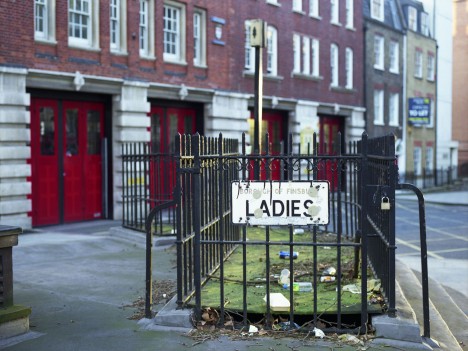
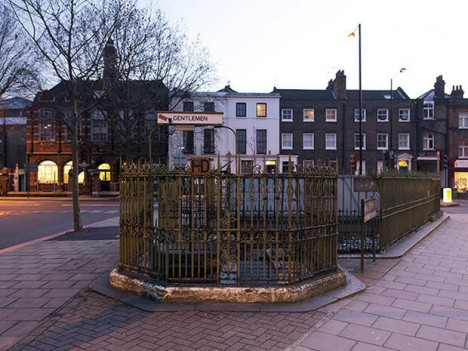
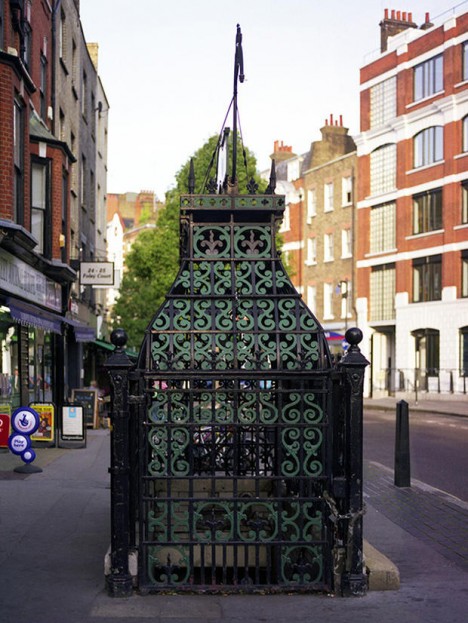
    underground toilet

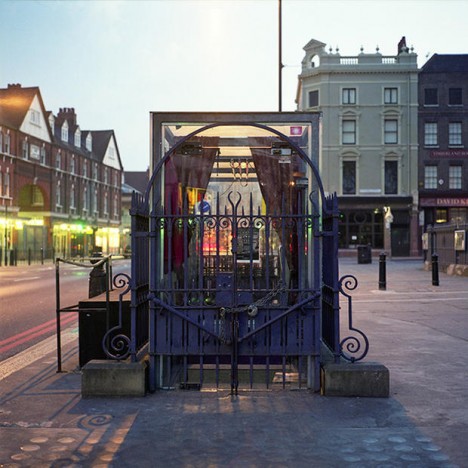
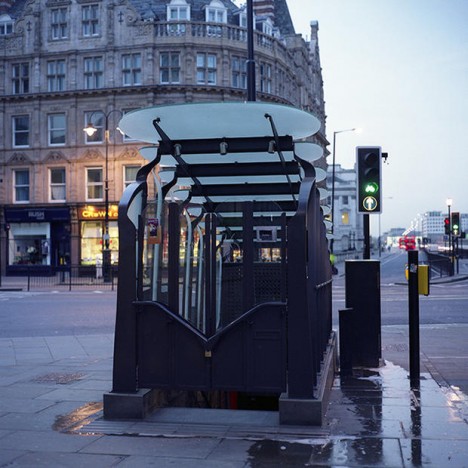
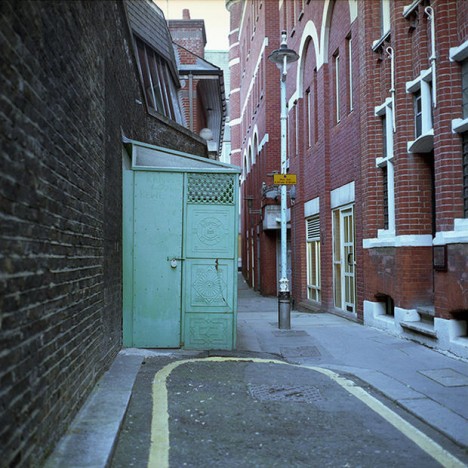
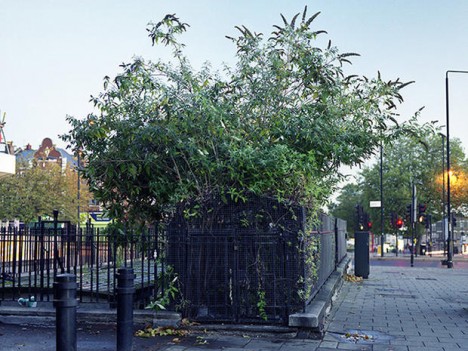
    Tentatively titled “Toilets at Dawn,” this photo series documents the strange phenomena of underground public bathrooms of urban London, now deserted but many dating back to Victorian times.

    abandoned loo gentlemen staircase

    Photographer Agnese Sanvito has taken to capturing these abandoned urban relics in the best light possible, often by shooting them in early-morning hours.

    abandoned historic bathroom ironwork

    Living, at the time, in a cesspool of industry and publicly-discarded human waste, Victorian Londoners gladly paid a penny or two to get out of the streets and into subterranean restrooms. Though most of these were neglected in the years following World War II, their surface remnants still stand in many places.

    abandoned bathroom entry space

    “They’re part of the fabric of the city, but because they’re not in use no-one pays attention to them, they are forgotten spaces,” says Agnese. “At the moment, I have just photographed those in the area that are near to me. It’s a work-in-progress, I don’t know where it’s going. Now my friends call sometimes and say, ‘I’ve found another one.’”

    abandoned bathroom station historical

    Once prominent and highly functional, most of these remainders go largely unnoticed in the bustle of the city, until you start spotting them, then searching out more.

    abandoned alley bathroom entrance

    Some are obscured trees, weeds or rubbish, but underneath you can still find gorgeous detailing and meticulous ironwork. Others have even been converted into everything from restaurants to private homes.

    abandoned bathroom london victorian

    Today, more conventional, above-ground, and generally less-exciting restrooms (some for free, others for a fee) have largely replaced these vintage curiosities.

    Share on Facebook


    [ By WebUrbanist in Abandoned Places & Architecture. ]

    [ WebUrbanist | Archives | Galleries | Privacy | TOS ]


    WebUrbanist

  • MediaTek launches Imagiq ISP for dual cameras

    Smartphones bearing dual cameras are on the rise, and MediaTek’s new Imagiq image signal processor is prepared to take advantage of them. Read more

    Articles: Digital Photography Review (dpreview.com)