Blog

  • Time’s running out to enter 2017 Sony World Photography Awards

    2017 Sony World Photography Awards Last Call for Entries

    Cash prizes and Sony gear are on the line as deadlines for entry to the Sony World Photography Awards are approaching. With a little less than a month left to enter, the competition has released some early contenders. Head to the competition website to learn more, and take a look at some of the early standouts here.

    Panopticon #1 The prison San Vittore Milan. © Jelena Kostich, Serbia, Entry, Open competition, Architecture, 2017 Sony World Photography Awards

    The project named after social theory Panopticon, originally developed by French philosopher Michel Foucault in his book Discipline and Punish. The ìPanopticonî refers to an experimental laboratory of power in which behaviour could be modified, and Foucault viewed the Panopticon as a symbol of the repressive, disciplinary society of surveillance. I made photographs of the prison San Vittore in Milan, Italy. To show the boundary that is standing between those ones outside the prison, and those once inside the prison. That those outside the prison can’t actually see what is going on behind the walls of the prison.

    2017 Sony World Photography Awards Last Call for Entries

    Untitled. © Adit Merkine, Israel, Entry, Open competition, Wildlife, 2017 Sony World Photography Awards

    I was laying on the bank of Kerkini Lake, Macedonia, Greece on 27 January 2016. This lake is known as the most important wintering habitat of the Dalmatian pelican in Europe. At this time of the year the Dalmatian pelicans are in their breeding plumage. It was in the mid-morning. A group of five Dalmatian pelicans came closer and closer, probably looking for some fish from the fisherman on shore. They stopped for a short time in a lined row staring at my camera, like posing for a family shot. It was very exciting and I took the shot.

    2017 Sony World Photography Awards Last Call for Entries

    GOTHS. © Peter Dench, UK, Entry, Open competition, Portraits, 2017 Sony World Photography Awards

    Two Goths share a portion of chips on Southend promenade, UK.

    2017 Sony World Photography Awards Last Call for Entries

    Malaysia Independence Spirit. © Mohamed Shaiful Azre Allias, Malaysia, Entry, Open competition, Motion, 2017 Sony World Photography Awards

    Hundred of student hoisted flags during 59th Malaysia Independence Day celebration at Merdeka Square on 31 August 2016 in Kuala Lumpur, Malaysia. Malaysia celebrates its 59th National Day on August 31. I took this photo using a telephoto lens and wait for the show to begin.

    2017 Sony World Photography Awards Last Call for Entries

    Waiting a Next Turn. © Mankichi Shinshi, Japan, Entry, Open competition, Culture, 2017 Sony World Photography Awards

    After I heard that it is “one of the most crowded places in the world,” I decided to visit the beach in Qingdao, China. But Qingdao in May was chilly and foggyóit was still off-season. I could sense that this place had at one point been full of exuberant people, and in the subsequent emptiness, I felt a sense of loss.

    This photo is the scene of wedding photo sessions around the sea. Although It was very bad weather, maybe they had to do that because of the full reservations of the popular spot in China.

    2017 Sony World Photography Awards Last Call for Entries

    Al Ain City. © Andrzej Bochenski, Poland, Entry, Open competition, Architecture, 2017 Sony World Photography Awards

    2017 Sony World Photography Awards Last Call for Entries

    Lava, Etna. © Placido Faranda, Italy, Entry, Open competition, Nature, 2017 Sony World Photography Awards

    Solidified lava river vs Forest – Volcano Etna, Sicily. Aerial view from a drone.

    2017 Sony World Photography Awards Last Call for Entries

    Feeding Frenzy. © Noel Guevara, The Philippines, Entry, Open competition, Wildlife, 2017 Sony World Photography Awards

    Wolf Snappers feeding on plankton. German Channel, Ngemelis Island, Republic of Palau. Taken in miso soup visibility but one of my favorite shots from the trip. I took this while the three Mantas we were shooting were making their huge U-turn for another pass at the cloud of plankton. This was at around 3 meters and the energy was electric all around.

    2017 Sony World Photography Awards Last Call for Entries

    X-flies. © Peter Csakvari, Hungary, Entry, Open competition, Still Life, 2017 Sony World Photography Awards

    Who killed the flies?

    Articles: Digital Photography Review (dpreview.com)

  • National Geographic announces 2016 Nature Photographer of the Year

    2016 National Geographic Nature Photographer of the Year

    National Geographic has selected the winners of its 2016 Nature Photographer of the Year competition. In addition to overall winners, there were also selections for landscapes, environmental issues, action and animal portraits. This year’s grand prize winner was Greg Lecoeur’s ‘Sardine Run.’

    Grand Prize + 1st Place for Action photography: Greg Lecoeur: ‘Sardine Run’

    During the sardine migration along the Wild Coast of South Africa, millions of sardines are preyed upon by marine predators such as dolphins, marine birds, sharks, whales, penguins, sailfishes, and sea lions. The hunt begins with common dolphins that have developed special hunting techniques to create and drive bait balls to the surface. In recent years, probably due to overfishing and climate change, the annual sardine run has become more and more unpredictable. It took me two weeks to have the opportunity to witness and capture this marine predation.

    2016 National Geographic Nature Photographer of the Year

    First Place, Animal Portraits: Varun Aditya: ‘Dragging you deep into the woods!’

    I shot this at Amboli, Maharashtra, India, on July 24, 2016, during a morning stroll into the blissful rain forest. Ceaseless drizzles dampened the woods for 10 hours a day; the serene gloom kept me guessing if it was night or day. The heavy fog, chilling breeze, and perennial silence could calm roaring sprits. And there I saw this beauty. I wondered if I needed more reasons to capture the habitat, for I was blessed to see this at the place I was at. I immediately switched from the macro to the wide-angle lens and composed this frame.

    2016 National Geographic Nature Photographer of the Year

    1st Place, Environmental Issues: Vadim Balakin, ‘Life and Death’

    These polar bear remains have been discovered at one of the islands of northern Svalbard, Norway. We do not know whether the bear died from starving or aging, but more likely if we see the good teeth status, it was from starving. They say nowadays that such remains are found very often, as global warming and the ice situation influence the polar bear population.

    2016 National Geographic Nature Photographer of the Year

    1st Place, Landscape: Jacob Kaptein, ‘Struggle of Life’

    Last year I participated in the Marius van der Sandt Beurs. This scholarship stimulates photography by young photographers. For a whole year I was guided by some excellent nature photographers to realize a project I wanted to accomplish. I chose a natural stream restoration project of a nature organization in the Netherlands. The first time I entered this patch of forest, I immediately saw this little beech. I came back several times to photograph it. One evening, just after sunset, all the light conditions were perfect. I stood in the cold water for more than an hour making many photos while I experimented with different shutter speeds.

    2016 National Geographic Nature Photographer of the Year

    2nd Place, Action: Tori Shea-Ostberg: ‘Approach’

    An EF2 tornado bears down on a home in Wray, Colorado, on May 7, 2016. As soon as we were safe, as the tornado roared off into the distance through a field before roping out, we scrambled up the hill to check on the residents. Thankfully, everyone was all right, and we were grateful for that. As I was checking in with a young woman coming out of the basement, we became very aware of a strong new circulation right above our heads. We needed to run for cover and did so before saying a proper goodbye.

    2016 National Geographic Nature Photographer of the Year

    2nd Place, Animal Portraits: Michael O’Neill: ‘Proud Mama’

    A female peacock bass guards her brood in a Miami, Florida, freshwater lake. She will protect her young fry from a variety of predatory fish until they are large enough to fend for themselves. This tropical freshwater species, also known as the peacock cichlid, was introduced in Florida in the mid-1980s from South America to control the tilapia population, another invasive species. Throughout its native range (and in Florida) it’s a prized sportfish known for its fighting spirit.

    2016 National Geographic Nature Photographer of the Year

    2nd Place, Environmental Issues: Chris McCann: ‘Outside Facebook HQ’

    Eighty percent of the San Francisco Bay Area wetlands—16,500 acres—has been developed for salt mining. Water is channeled into these large ponds, leaves through evaporation, and the salt is then collected. The tint of each pond is an indication of its salinity. Microorganisms inside the pond change color according to the salinity of its environment. This high-salinity salt pond is located right next to Facebook headquarters, where about 4,000 people work every day.

    2016 National Geographic Nature Photographer of the Year

    2nd Place, Landscape: Alessandro Gruzza: ‘Wild Rink’

    The first cold days of winter have frozen the surface of a pond, and the first snowfall has revealed its delicate beauty. In low-pressure conditions, southwest winds push the clouds against the vertical peaks of the Pale di San Martino. At dusk, a long shutter speed enhances the movement of the clouds around Cimon della Pala, one of the highest peaks in the Dolomites.

    You can see additional photos from the competition on National Geographic’s website.

    Articles: Digital Photography Review (dpreview.com)

  • Threading Rainbows: Spectral String Art Looks Like Strands of Light

    [ By WebUrbanist in Art & Sculpture & Craft. ]

    light-string-art

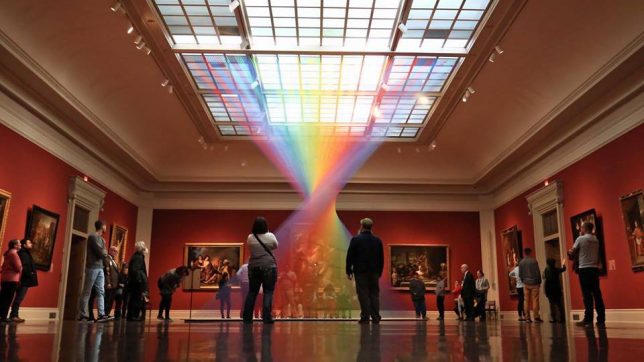
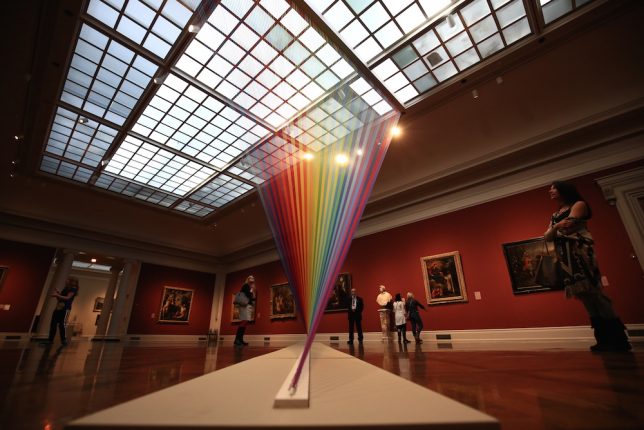
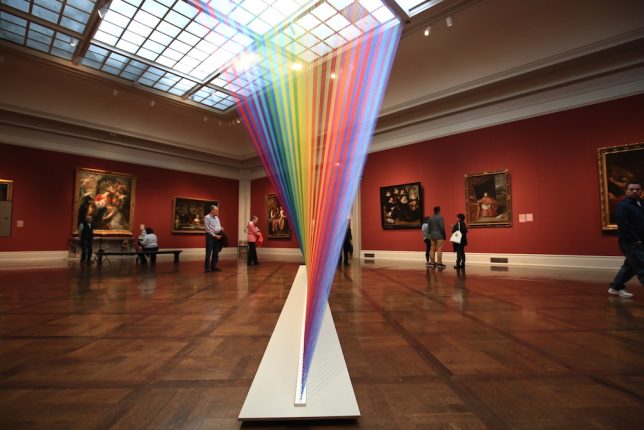
    Using a simple material palette of thread, wood and nails, artist Gabriel Dawe‘s latest cascading color creation combines thousands of threads to make a remarkable interior rainbow.

    twisted-thread-art

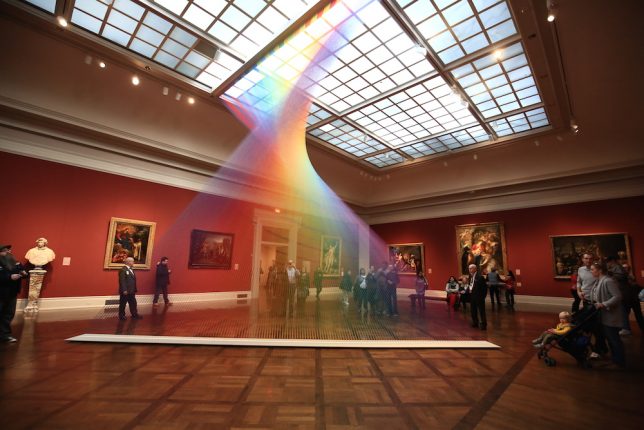
    Plexus #35 is on display at the Toledo Museum of Art (images by Andrew Weber), a featured highlight in the center of the Great Gallery illuminated against dark red walls and framed oil paintings via a skylight above.

    interwoven-museum-installation

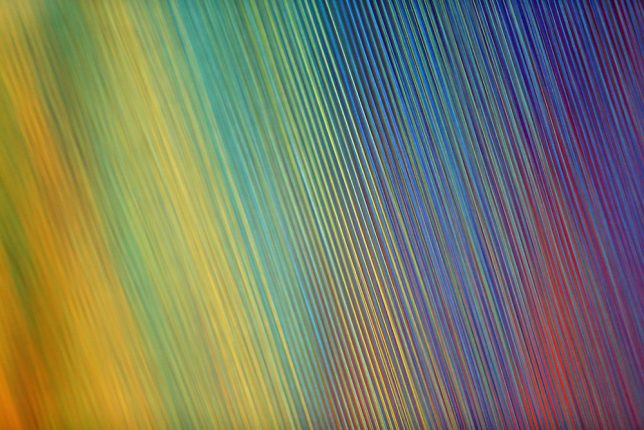
    The entire color spectrum is represented, meticulously organized strand by strand — a single twist between a pair of origin and termination lines ensures that the work appears different from every angle.

    soectrum-color-art

    Other works by Dawe feature similar themes in different hues and shades, often intricately woven to create overlaps. By comparison, this is one of his simplest pieces yet arguably one of his most powerful.

    color-art-twist

    “Originally from Mexico City, Gabriel Dawe creates site-specific installations that explore the connection between fashion and architecture, and how they relate to the human need for shelter in all its shapes and forms.”

    “His work is centered in the exploration of textiles, aiming to examine the complicated construction of gender and identity in his native Mexico and attempting to subvert the notions of masculinity and machismo prevalent in the present day.”

    Share on Facebook


    [ By WebUrbanist in Art & Sculpture & Craft. ]

    [ WebUrbanist | Archives | Galleries | Privacy | TOS ]


    WebUrbanist

  • A fresh look at Dorothea Lange’s censored photos of Japanese internment

    $ (document).ready(function() { SampleGalleryV2({“containerId”:”embeddedSampleGallery_2013785745″,”galleryId”:”2013785745″,”isEmbeddedWidget”:true,”standalone”:false,”selectedImageIndex”:0,”startInCommentsView”:false,”isMobile”:false}) });

    Dorothea Lange’s photos of Japanese interment in America are less well-known than her other Farm Security Administration works like ‘Migrant Mother’ – and there’s a reason for that. The unflinching view of the events captured in her photos landed them in the US National Archive, with many labeled ‘impounded,’ where they sat for decades.

    Following the attack on Pearl Harbor, the US government announced the mandatory relocation of people of Japanese ancestry, the majority of which were American citizens, to internment camps. Lange was commissioned to photograph the events, both as people were displaced from homes and business, and later as they reported to assembly centers and were ultimately sent to the camps.

    Lange’s photos painted a brutally honest picture of every phase of the internment, and were seemingly met with displeasure from the military as they were quietly impounded and archived. A 2006 book put the censored images front and center for the first time. You can see a few of the images here; Anchor Editions has published some information about the images and is offering prints with half of proceeds going to the ACLU. 

    Articles: Digital Photography Review (dpreview.com)

  • A fresh look at Dorthea Lange’s censored photos of Japanese internment

    $ (document).ready(function() { SampleGalleryV2({“containerId”:”embeddedSampleGallery_2013785745″,”galleryId”:”2013785745″,”isEmbeddedWidget”:true,”standalone”:false,”selectedImageIndex”:0,”startInCommentsView”:false,”isMobile”:false}) });

    Dorothea Lange’s photos of Japanese interment in America are less well-known than her other Farm Security Administration works like ‘Migrant Mother’ – and there’s a reason for that. The unflinching view of the events captured in her photos landed them in the US National Archive, with many labeled ‘impounded,’ where they sat for decades.

    Following the attack on Pearl Harbor, the US government announced the mandatory relocation of people of Japanese ancestry, the majority of which were American citizens, to internment camps. Lange was commissioned to photograph the events, both as people were displaced from homes and business, and later as they reported to assembly centers and were ultimately sent to the camps.

    Lange’s photos painted a brutally honest picture of every phase of the internment, and were seemingly met with displeasure from the military as they were quietly impounded and archived. A 2006 book put the censored images front and center for the first time. You can see a few of the images here; Anchor Editions has published some information about the images and is offering prints with half of proceeds going to the ACLU. 

    Articles: Digital Photography Review (dpreview.com)

  • Panasonic Lumix FZ2500 / FZ2000 real world samples gallery

    Straight-out-of-camera JPEG. 132mm equiv., ISO 125, 1/640 sec, F4.5. Photo by Carey Rose

    The Panasonic Lumix FZ2500 / FZ2000, the company’s followup to the popular FZ1000, comes with a whole new 24-480mm F2.8-4.5 lens in front of its 20MP 1″-type CMOS sensor. It also comes with a built-in neutral density filter, 4K video and 4K photo modes and Panasonic’s Depth-from-Defocus (DFD) technology for quick and accurate autofocus.

    We’ve taken advantage of some rare sunny weather in the midst of this Seattle winter to put together a samples gallery from this stills and video superzoom – take a look.

    See our Panasonic FZ2500 / FZ2000 real world samples gallery

    Articles: Digital Photography Review (dpreview.com)

  • Affinity Photo for Windows now available, Mac version updated to 1.5

    Following the beta announced last month, Serif has officially launched the finalized version of Affinity Photo for Windows. The new application follows in the footsteps of Affinity Photo for Mac and aims to offer photo editing capabilities similar to that of Photoshop, only at a lower $ 39.99 cost. In addition to the new Windows version, the Mac edition of Affinity Photo has received a substantial update to version 1.5.

    Affinity Photo for Windows launches with the same features arriving in Affinity Photo for Mac version 1.5, ensuring the two applications match each other for better cross-platform support. In addition to the features found in older versions of Affinity Photo, both the Windows and Mac 1.5 editions offer, according to Serif:

    • Macros to record and replay a set of commands
    • Advanced HDR merge producing deep unbounded 32-bit images
    • A full tone mapping workspace for both HDR and LDR images
    • Focus stacking to achieve large depth of field from multiple images
    • Full batch processing to process large folders of images in one go
    • An all-new way to edit 360 degree images
    • Direct PSD write-back
    • 32-bit editing including OpenEXR import & export
    • Automatic lens corrections based on profiles of thousands of lens & body combinations

    Anyone who owns an older version of Affinity Photo for Mac can download the 1.5 update for free now. The Mac and Windows versions are both priced at $ 49.99 USD, though Serif has dropped the price to $ 39.99 / £29.99 / €39.99 until December 22.

    Via: Serif

    Articles: Digital Photography Review (dpreview.com)

  • Have your say! DPReview Readers’ Choice Awards open for voting

    All five initial categories of our 2016 Readers’ Choice Awards are now open for voting. Help decide which cameras and lenses take home the ultimate bragging rights. Vote now

    Articles: Digital Photography Review (dpreview.com)

  • Art in the Shadows: Everyday Objects Cast Unexpected Shapes Onto Paper

    [ By SA Rogers in Art & Drawing & Digital. ]

    art-in-the-shadows-3

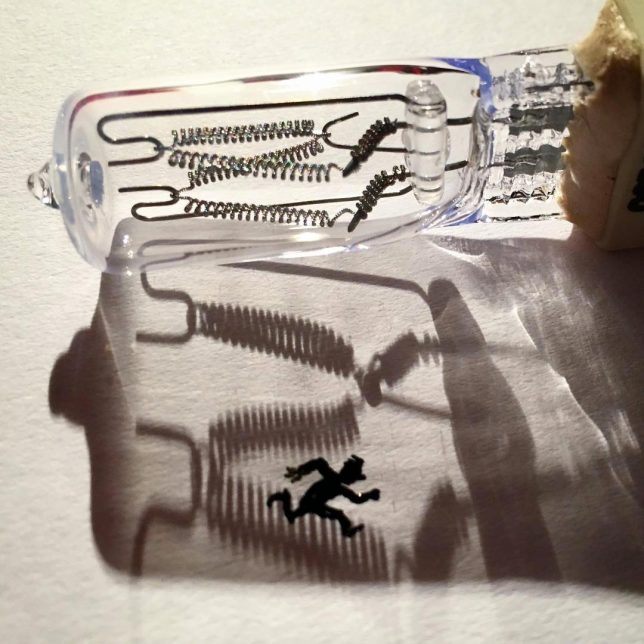
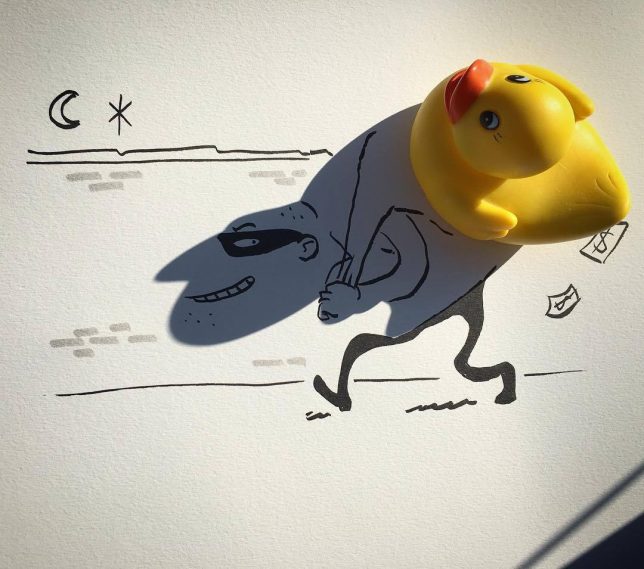
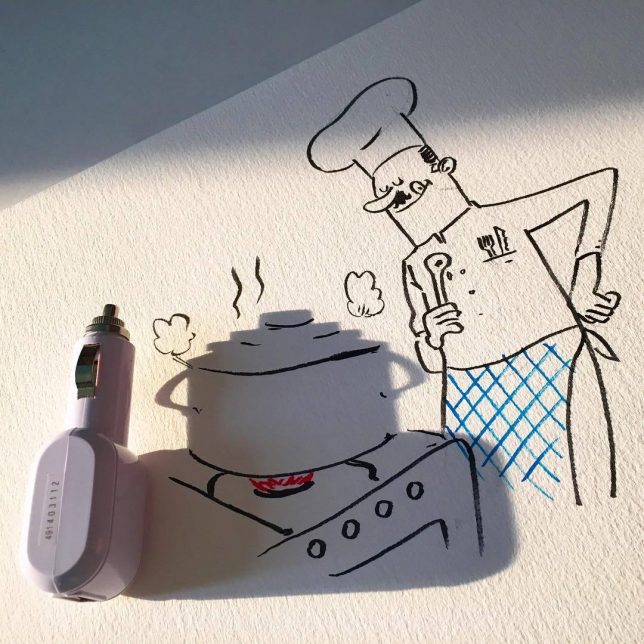
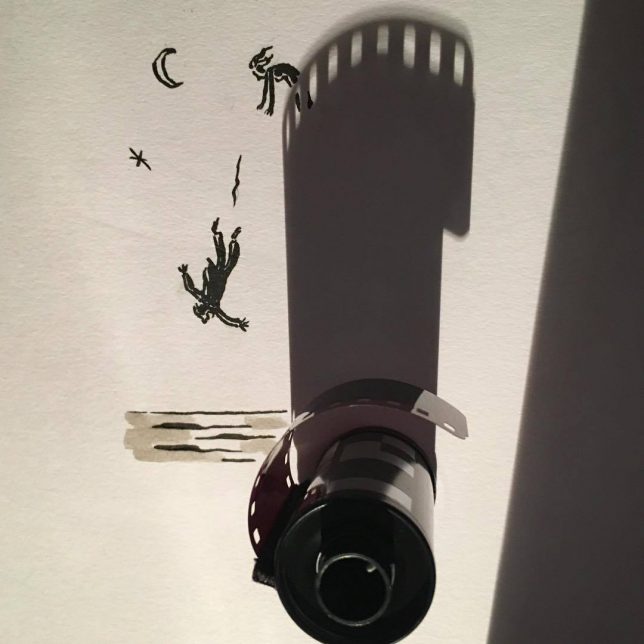
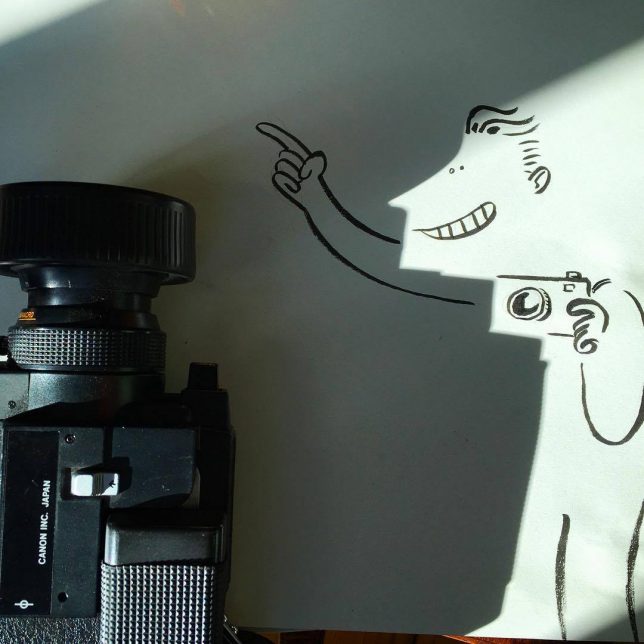
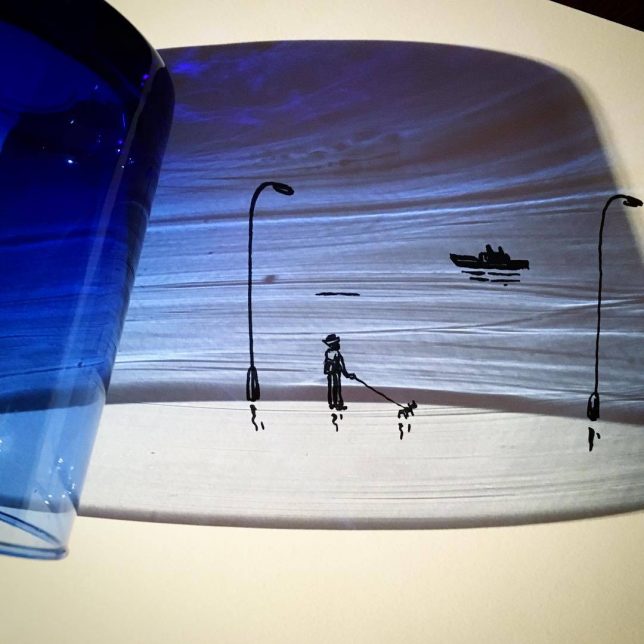
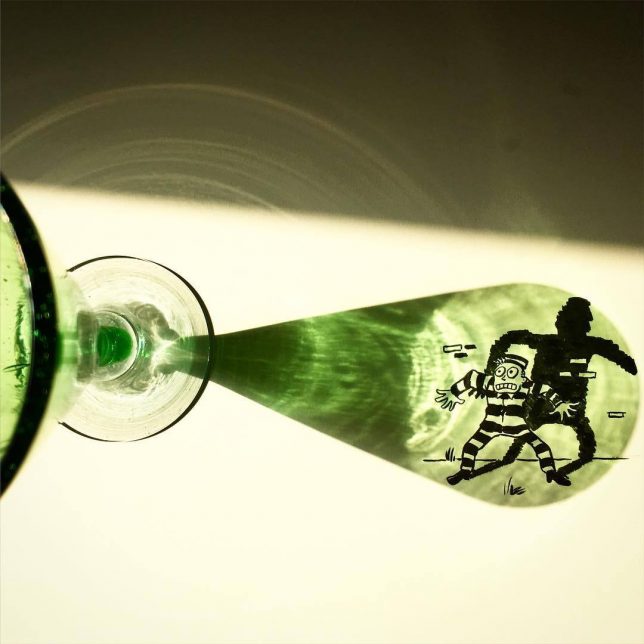
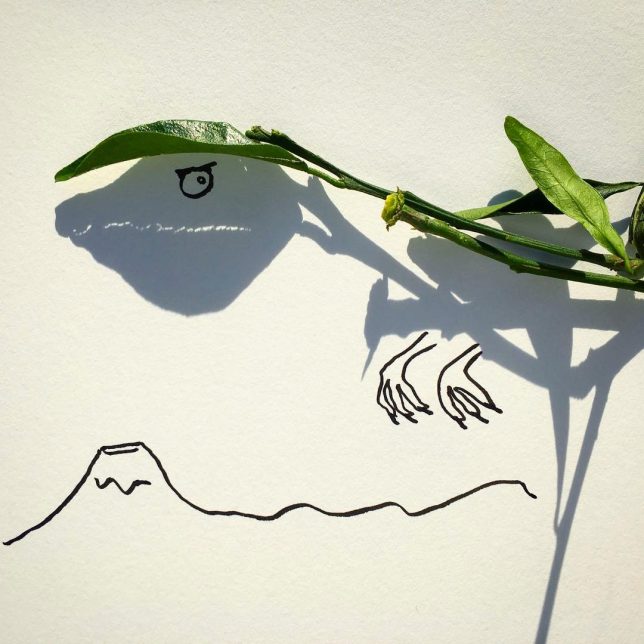
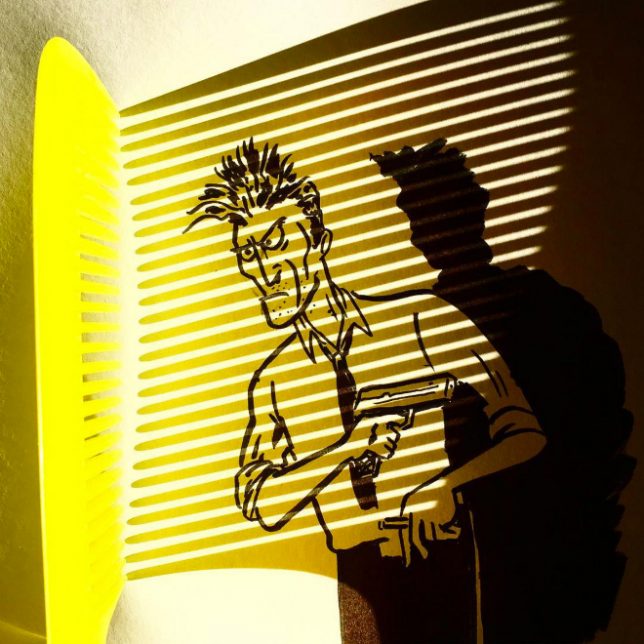
    Has doodling ever been more creative than this? While most people wouldn’t give a second’s thought to the shape an everyday object’s shadow casts upon adjacent surfaces, artist Vincent Bal looks at them and sees the beginnings of a character or scene. It might be a phone charger, a fallen leaf, a drinking glass or a Christmas ornament, but in its shadow, Bal sees far more than the object itself.

    art-in-the-shadows

    art-in-the-shadows-2

    art-in-the-shadows-5

    art-in-the-shadows-6

    art-in-the-shadows-7

    Each of Bal’s quick and clever illustrations is a testament to the creativity of an artist’s brain. Calling his work ‘shadowology,’ Bal plays around with silhouettes and light sources to find inspiration for sketches most people would never dream up. It takes the game of finding shapes in the clouds and applies an artist’s hand to the process, embellishing the shapes into something more.

    art-in-the-shadows-8

    art-in-the-shadows-9

    vincent-bal-2

    vincent-bal-1

    Calling himself a ‘filmmaker and doodler and procrastinator from Belgium’, Bal shares his work on his popular Instagram account and sells prints on Etsy.

    Share on Facebook


    [ By SA Rogers in Art & Drawing & Digital. ]

    [ WebUrbanist | Archives | Galleries | Privacy | TOS ]


    WebUrbanist

  • Have Your Say: Best Zoom Lens of 2016

    Have Your Say: Best Zoom Lens of 2016

    The end of the year is almost upon us, and as usual, 2016 saw plenty of new lenses released, including several excellent zooms. We’ve used a lot of them and tested some, but we want to hear from you – what were your favorite zoom lenses of 2016? 

    For the sake of a manageable list, we’ve omitted ‘kit’ zoom lenses and most variable-aperture telezooms from this poll. If there’s a particularly high-performing example of either type which you’d like to see represented in our final selection, or a late 2015 release that you think should be under consideration, leave a comment!

    Click through this slideshow for a reminder of the major releases and a chance cast your vote. Voting ends at midnight on December 31st.

    Canon EF 16-35mm F2.8L III USM

    The Canon EF 16-35mm F2.8L III USM is the third revision of Canon’s well-known ultra-wide zoom lens. It has 16 elements, one of which is dual surface aspherical, while the other is ground aspherical. The lens has a fluorine coating and is dust and water resistant. The minimum focus distance is 0.28m.

    Our early impressions of this lens are very positive indeed. It’s  costly piece of glass, but for Canon photographers looking for a versatile wideangle zoom, the 16-35mm F2.8 III is hard to beat. Is this one of your lenses of the year? Cast your vote and let us know.

    See full specifications, user reviews and more

    Olympus M.Zuiko Digital ED 12-100mm F4.0 IS Pro

    The M.Zuiko Digital ED 12-100mm F4 IS Pro is a powerful carry-everywhere zoom lens (24-200mm equiv.) that offers incredible versatility in a relatively small package. Combined with Olympus’ 5-axis IBIS in the new OM-D E-M1 II, it can offer up to 6.5 stops of image stabilization.

    On top of that, the minimum focus distance at the 12mm end is a miniscule 1.5cm from the front element of the lens, and 27cm at the telephoto end of 100mm. All of that power is housed in a splashproof, dustproof, and freezeproof body. Is this powerful zoom on your wishlist? Cast your vote and let us know.

    See full specifications, user reviews and more

    Nikon AF-S Nikkor 70-200mm F2.8E FL ED VR

    The Nikon EF-S Nikkor 70-200mm F2.8E FL ED VR is the company’s latest fast telephoto zoom. It offers up to four stops of shake reduction, a Silent Wave Motor, and assignable buttons on the lens barrel. It has six ED, one Flourite and one HRI elements as well as Nano Crystal and Fluorine coatings to make it easy to remove moisture and smudges from exposed elements. The lens is constructed of magnesium alloy and is sealed against dust and moisture.

    Early test results suggest that this lens is a high performer, but the swapping of focus and zoom rings has angered some commenters. What do you think? 

    See full specifications, user reviews and more

    Sigma 50-100mm F1.8 DC HSM Art

    Sigma’s 50-100mm F1.8 DC HSM Art provides a 75-150mm focal length range on the APS-C format DSLRs for which it’s designed. Offering a fast maximum aperture and standard ‘Art’-series construction quality the 50-100mm is solid, heavy and luxuriously engineered. 

    The 50-100mm features three FLD (F Low Dispersion) glass elements, one SLD (Special Low Dispersion) glass element, and one high-refractive index, high-dispersion glass element. Is it one of your favorite lenses of 2016?

    See full specifications, user reviews and more

    Sigma 12-24mm F4 DG HSM Art

    The Sigma 12-24mm F4 DG HSM Art is an ultra-wide-angle zoom for full-frame DSLRs, which features the largest aspherical glass molded element in the industry. The 12-24mm F4 also features lens elements made with FLD (“F” Low Dispersion) glass, which Sigma claims is equivalent to calcium fluorite in performance. 

    The 12-24mm is a big lens, measuring 132mm long, with a diameter of 102mm and a weight of 1,150g (40.6oz) but optically, we’ve been very impressed by its performance. Is this the third-party wideangle you’ve been waiting for? Cast your vote and let us know. 

    See full specifications, user reviews and more

    Sony FE 24-70mm F2.8 GM

    The Sony FE 24-70mm F2.8 GM is a premium standard zoom for the Sony A-mount. Construction comprises 18 elements in 13 groups, and features three aspherical elements, including an extreme aspherical (XA) element. An ED (extra low dispersion) and Super ED glass element help minimize chromatic aberration while maintaining high resolution and bokeh characteristics.

    It’s big, it’s costly, and it’s built to last. Is Sony’s FE 24-70mm F2.8 GM one of your picks for best zoom of 2016?

    See full specifications, user reviews and more

    Sony FE 70-200mm F2.8 GM OSS

    Sony had a big year this year, and alongside the 24-70mm F2.8 FE, it also released theFE 70-200mm F2.8 GM OSS telephoto zoom. Like the 24-70mm GM, this lens features XA, Super ED, and ED glass elements to help achieve high resolution and desirable bokeh characteristics. Construction comprises 23 elements in 18 group, and a ‘Nano’ anti-reflective coating ensures reduced flare and ghosting. An additional fluorine coating to the front of the lens help keep it clean, and the lens is dust and moisture resistant.

    Like it’s 24-70mm cousin, this 70-200mm F2.8 zoom is a premium lens, with construction (and price) to match. Does it make your list of standout zoom lenses of 2016? Click to the next slide and cast your vote!

    See full specifications, user reviews and more

    Vote Now!

    .


    Have your say

    $ (document).ready(function() { Poll({“pollId”:”0973815126″,”openForVoting”:true,”mainElementId”:”poll1″,”slot”:null,”isSingleChoicePoll”:false,”minNumberOfChoices”:1,”maxNumberOfChoices”:3}); })

    Have Your Say: Best Zoom Lens of 2016
    Your answers
    1. Required
    2. Optional
    3. Optional
    You need to login to vote

    Canon 16-35mm F2.8L III

    Olympus M.Zuiko 12-100mm F4.0

    Sigma 12-24mm F4 Art

    Sigma 50-100mm F1.8 Art

    Sony FE 24-70mm F2.8 GM

    Sony FE 70-200mm F2.8 GM

    Nikon AF-S Nikkor 70-200mm F2.8E

    Voting is easy – you pick your favorite products by dragging and dropping. You can pick up to three, and rank them in order of priority.

    Poll Rules:

    1. This poll is meant to be a bit of fun. It’s not sponsored, promoted or paid for in any way and DPReview staff don’t care how you vote, so please don’t start a flame-war in the comments. I.e., please don’t be a troll.
    2. It’s fine to vote for products that you haven’t used (some aren’t yet shipping, after all) but please don’t vote purely just to sandbag another product or brand. I.e., please don’t be a troll.
    3. Please only vote once, from a single account. Creating and voting from multiple accounts for a community poll of no consequence is a silly thing to do with your time. See points 1 and 2, above, about not being a troll.

    Articles: Digital Photography Review (dpreview.com)